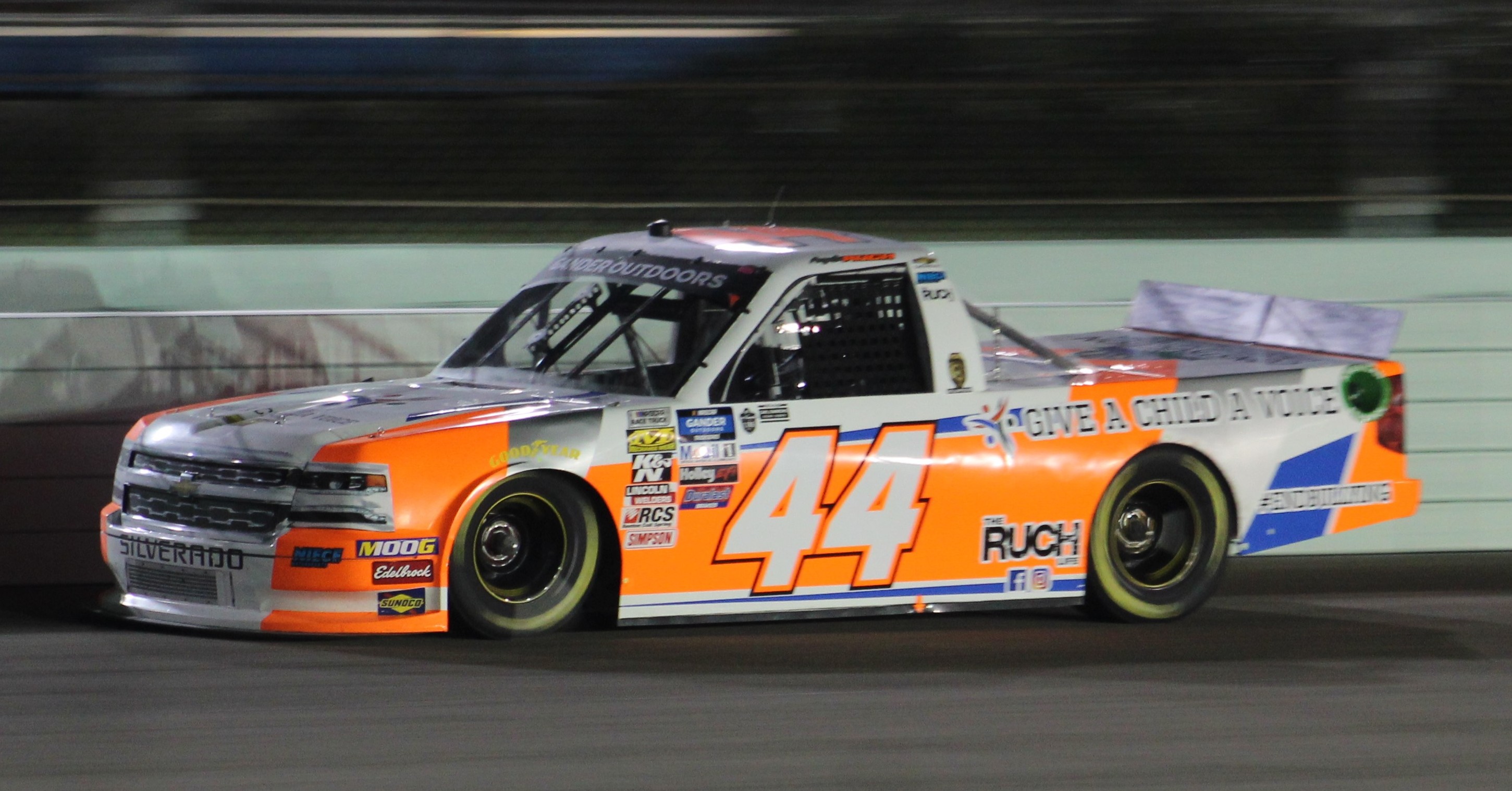
The Chevrolet Silverado is a large pickup truck made for work and towing. When it gets redesigned, it usually means the truck has new updates and features compared with the older version. That’s why it’s a big topic in car news.
The Mitsubishi Outlander is a popular SUV model. The show says it’s being redesigned, which usually means Mitsubishi is updating the car in major ways, not just small cosmetic changes.
Hybrid powertrains use both an electric motor and a gasoline engine (or another energy source) to move the vehicle. In this context, Mitsubishi is shifting away from full-battery electric plans toward hybrids, citing evolving US regulations—meaning compliance and cost/availability likely drive the strategy.
The Chevrolet Silverado 1500 is a major full-size pickup truck. The show says the 2027 version is redesigned, which usually means big updates that can change how it drives and what features it has.
The GMC Sierra EV is a pickup truck that runs on electricity instead of gasoline. It comes in different trims, which usually means different equipment and capability levels. It’s discussed a lot because electric trucks are a major shift in how people power and use pickups.
A product roadmap is basically a company’s plan for what new cars (and tech) it will bring out, and when. Dealers care because it affects what they can sell and how soon customers will see new vehicles on the lot.
A hybrid uses a gas engine and an electric motor together. It’s designed to use less fuel than a normal gas car, without requiring you to plug it in like a fully electric car.
This means Mitsubishi is backing off from making mostly fully electric cars. Instead, they’re choosing other electrified options that don’t rely entirely on charging from the grid.
A plug-in hybrid has a bigger battery you can charge at home or at a public charger. That lets it run on electricity for longer than a regular hybrid, as long as you’ve charged it.
A software-defined vehicle is a car that’s run more by software than by fixed hardware. That means it can get new features and improvements over time, sometimes even without visiting a shop.
It means the car’s computer can learn how you drive and then adjust how the transmission shifts. So it can get better at matching your habits instead of using one set of rules for everyone.
Infotainment is the car’s screen and audio system—things like music, navigation, and settings. With AI, it can also help you by understanding what you say and suggesting actions.
Large language models are AI tools that can understand and respond to human language. In a car, they help the vehicle understand what you mean when you talk to it, not just follow a few fixed commands.
Natural speech means you can talk to the car in a more normal, everyday way. Instead of saying exact phrases, you can speak more naturally and it still tries to understand you.
A voice command is when you say something like “do this,” and the car carries it out. The point here is that AI can understand more than just fixed commands—it can interpret what you’re trying to do.
In this context, battery means the big electric power pack in an EV. The car can manage it—like warming it up or controlling how much power you use—to help you get better range and safer operation.
Driving assistance refers to automated safety and convenience features that help the driver, such as collision avoidance, lane-related functions, and other semi-automated behaviors. The transcript suggests AI can tailor these systems as it learns your driving patterns and risk tendencies.
Actuation is the part where the car actually makes something happen—like moving a control or changing how a system operates. The AI decides, and then actuation carries out the decision.
Here, “capacity” means how much cars factories can make. They’re talking about whether China’s car-making ability is still ramping up or starting to slow down.
A brownfield site is an area that was already used before, like an older factory or industrial property. The idea is that it can be quicker to repurpose than building from scratch on brand-new land.
USMCA is a trade agreement between the U.S., Mexico, and Canada. It affects how easily cars and parts can be shipped and sold across those countries, and it can influence how companies plan where to build vehicles.
A “temporary wall” means using trade restrictions for a limited time to give local companies a chance to adjust. The point is to avoid making the protection permanent, because that can reduce competition and innovation.
Industrial policy is when the government tries to steer which industries grow by using programs, incentives, or regulations. In this context, it’s about helping the auto industry become more competitive and less dependent on imports.
LIVE
Welcome to Daily Drive.
For Wednesday, June 17, 2026, I'm Kellan Walker in Las Vegas.
Today on the show, Mitsubishi gives US dealers a look at the product pipeline they've been
waiting for.
Chevy's redesigned Silverado is here and we've got the details.
Instalantis takes a swing at the global robot taxi market.
Plus, Alex Partners, Mark Wakefield joins us from the Center for Automotive Research's
Management Briefing Seminars to talk about China's AI advantage and what USMCA renegotiation
could really cost the industry.
I think the more it focuses on US only, the worse it's likely going to be at focusing
on China.
Let's run through all the news you need to know to keep up in the auto industry.
Mitsubishi's dealers have been itching for a look at the automaker's future and now
they've got it.
At a June 5 meeting near Chicago, Mitsubishi previewed a wave of new models under its Momentum
2030 plan.
They include the brand's first modern EV arriving this fall, a rugged Pajaro-based SUV
potentially badged as the Montero, a redesigned Outlander and a pickup co-developed with Nissan.
Dealer's told Automotive News the shift is night and day from the brand's current
aging lineup.
Notably, Mitsubishi has dropped plans for future full-battery electric vehicles in
favor of hybrid powertrains, citing evolving US regulations.
We'll have more on this story in a minute with our own Ervash Kakaria.
Chevrolet is pulling the wraps off its redesigned 2027 Silverado 1500 and GM is counting on
it to be a hit.
The truck gets bolder styling, a tech-heavy interior and two new V8 engines, going on
sale late this year with seven trims.
The Silverado and its sibling, the GMC Sierra, combined for nearly a third of GM's US new
vehicle sales in 2025.
That makes a smooth production changeover critical as GM navigates tariff costs and
EV investment pressures.
Notably absent from the new lineup, a hybrid option.
And Stellantis is entering the global robotaxi race.
The automaker signed a non-binding agreement with Uber and Wave to deploy Level 4 autonomous
ride-hailing vehicles worldwide.
Stellantis supplies the vehicles, Uber brings its ride-sharing platform, and Wave provides
the software.
The partnership builds on an existing Wave-Uber deal to launch in London, Tokyo, and 10 other
cities.
The stakes are high.
A Goldman Sachs report puts the global robotaxi market at $400 billion by 2035.
And those are today's headlines.
You can find more details on all those stories at AutoNews.com.
Joining me now is Ervash Kakaria, Atlanta bureau chief here at Automotive News.
To talk more about his scoop about Mitsubishi's product blitz, Ervash, welcome back to Daily
Drive.
Thanks for having me, Kel.
Hope you're doing well.
All right.
Same to you, sir.
So, Mitsubishi's US sales have been sliding for years.
Do dealers actually believe this product roadmap will turn things around, or is there still
skepticism?
Yeah, there was definitely some concern from the retailers we spoke with after this meeting
about the actual execution of the plan.
They liked what they saw, one dealer referred to it as the differences night and day between
what's coming and what the brand currently has.
But they were not provided any details about the product.
They saw mock-ups, they saw some actual vehicles, but there were no details about the powertrain,
about the specs, the performance specs, or even the market timing, when are they coming
to market.
So, as some dealers told me, they've gone from talking about the product to at least
showing some of the product, but that's still quite a bit of a distance from actually delivering
that product to their showrooms, to dealer showrooms.
I was able to talk to some people and figure out estimates on when some of these models
will actually come to market, will come to stores, but at this point, it's a toss up
if this entire lineup actually happens, or if some of the models further out in the future
like the SUV, which is still under consideration, whether that actually arrives here.
Now, Mitsubishi is walking away from full EVs in favor of hybrids.
Now, what's driving that shift and what happens if regulators change course in two short years?
Yeah, like many automakers, Mitsubishi sort of realizes that at least in the near to midterm,
EV demand is expected to be somewhat suppressed as US regulations have changed.
So, they are sort of pivoting, they're not unique in this.
What's interesting though is that they're pivoting almost wholesale towards hybrids,
whether that's mild hybrids, whether that's traditional hybrids, or whether that's plug-in
hybrids. I'm told that basically all future product starting after 2027, all models arriving
after 2027 will be electrified only. So, they are not going to basically be delivering any
gas-only models or gas-only product. So, they clearly feel that hybrids are where the demand is,
and in terms of whether regulation changes, even if the next
administration is more favorable towards EVs, the leap from hybrids to EVs will be a lot quicker
and a lot less expensive than going from ICE-only to EVs directly, all electric vehicles directly.
So, they feel like other automakers that they can make that switch without much fuss if that's
what it comes to. All right, perfect. Erv Ash, thank you so much for joining me.
Thanks, Gil. Alex Partners Global Automotive Market Lead Mark Wakefield sat down with our
own Hannah Lutz on the sidelines of the Center for Automotive Research's Management Briefing
Seminars in Ypsilanti, Michigan. They've covered a lot of ground from how Chinese automakers are
using AI to redefine the in-vehicle experience to what it would actually cost the industry if
USMCA gets a major overall. Hi, I'm Hannah Lutz, Assistant Managing Editor of Content for
Automotive News. I'm at the Center for Automotive Research Management Briefing Seminars in Ypsilanti,
Michigan today, and Mark Wakefield of Alex Partners is joining me. He's Global Automotive
Market Lead at Alex Partners. So, welcome. Thanks for sitting down with us. Thank you, Hannah.
So, China has been a big theme here. You are on a panel discussing the competition with China.
What is the role—you didn't really get to this—what is the role of artificial
intelligence when we think about competition between the US or North America and China?
Well, China, from an automotive perspective, is not really thinking about the US for AI.
They've been putting AI mostly into infotainment for many years, and it's sort of a natural feature
that's assumed in most Chinese mid- to high-level cars now, to a degree that doesn't exist in US
cars. And pretty much every automaker is doing it there. They're now moving into—you've heard
of SDVs, those software-defined vehicles. They're now moving into sort of an AI-defined vehicle,
in the sense of instead of just being able to OTA changes, having more and more enablement of learning
in the vehicle. So, we've always had a degree of that, the machine learning of a transmission
that got used to you and did that sort of thing. It's taking that to a much higher level. And
it's doing it to compete with the other hundred-and-something automakers that they're competing
with. It's not really focused on what are the Germans doing or what are the Americans doing
in the vehicle. What does that look like in practice? What would the consumer experience
of a highly AI-influenced car be? The infotainment they would already be seeing,
and the connective was you're basically having an extension of both your mobile life, but as well
as the large language models that allow you to do natural speech and have a conversation with your
vehicle. So, it could suggest things of, if you said right now, if you're in a Ziker, you can say,
could you roll the right rear window down halfway? And it'll go,
do that. That's not a literal voice command like drive to, that's taking language and
applying it then in the vehicle. But there's also then the learning of how do you drive,
where do you drive, how to condition the battery, how to get charge out of this or that,
how to then help you get out of accidents and help you as learns your driving style,
that learns what you're doing badly. And where you, each of us, I might get an accident in
parking lots and you might get an accident on the highway or more propensity to do so.
As a vehicle learns, it can adjust its driving assistance. That's much more advanced AI because
now you're getting into stuff that matters versus pick the right song or what's the
temperature I like my car at. Yeah, and that's very personal based on what it's seen of your
driving. It's still very personal. Yes, which is, it's not entirely new because we have these
transmissions that do that, engines and other things, but it's to a whole other level when
you're actually got true AI empowered. And you've got like a central compute that has
actuation, but it's all actually available to that central compute to change something.
I want to talk about capacity, China's auto production capacity. Where does it stand
now and when do you see it tapering off or increasing?
So a lot of open capacity and a lot made of the exports from that capacity. One thing that's
often missed is the ones that are exporting are the more profitable and the ones that have
relatively less capacity. So the ones exporting have about a point and a half higher profitability
and they have about seven or eight points higher capacity utilization. So it's not the weaker,
absolutely desperate ones that are doing more of the exporting. And of course, exporting has
to be very deliberate. It's not like, oh, I've got a bunch of extra, I'll send them to the
discount bin in some continent somewhere. Deliberate based on orders or based on expectations?
Based on plans. You have to be registered. It's not something you just, oh, I've got a
bunch of extra. Where can I throw them? And so you're seeing learning also, particularly in Europe,
where some of the automakers didn't enter very well and they wasted a bunch of money. But they've
learned and they're improving that and you see that in Europe at the moment. You also see it in
South America. You see it in Central America. You see it in Northern Africa. You see these trial
and learns as they're going to it. They've, a few years ago, blew past Japan as the highest
exporter. And it's funny because the rest of the curves all look kind of the same and then the
China line is wildly different. It is a strategy and they do need to export because they make a
lot more money on the exports. They know also though it's not a permanent thing. It's not like
built in China and send everywhere approach. They know they're going to have to build plants in
Europe. You have to build plants in South America, North America, or buy them. Like in Europe to get
around the IAA or to get under the wire of IAA. They're trying to buy plants and reuse it.
If you're a government, there's an element of, this is great because I keep the employment
and yeah, it's faster, better, cheaper. So consumers should theoretically win.
So the element of the local politics of, yeah, okay, I'm hurting Germany because the engineers
don't engineer it anymore, but the 2000 people in the plant in this part of Spain get the benefit.
And so all politics are local and it gets down to then that decision. And the Chinese exporters
are definitely having this pathway of, yes, I plan to be making the cars where I sell them.
When will they actually see that in a significant way, building the cars in different countries
where they're sold? Starting to see that in Europe, but by 20, I mean there's a race to the end of
2028. So you're going to see a boom in Europe. You've already started to see some of that in
South America. They've bought the Ford plant. They've bought the plant in Spain. There's a
discussion on the Nissan plant in England. There's the new plant coming up in Eastern Europe that
BYUD is doing. But to get through the timeline, there's a lot that's just being done as brownfield
type stuff. It'll be interesting to see what happens in Mexico. And I think there's going to
have been a waiting game on how USMCA really goes. But other than North America, it's already
happening where you're seeing plants come up. As we see more of those plants in Europe or even
Mexico and South America, how do you think the US will respond or North America will respond?
Will the barrier get taller or will it start to lower because we see it happening elsewhere?
I think the time period, you don't want a permanent wall because then you end up in
a spot that's uncompetitive. You want a temporary wall that allows the industry to change,
but also trying to level playing fields and have an industrial policy that
allows you to over time have a competitive industry and have a more self-sufficient industry.
And that self-sufficient industry isn't likely to be one country. So the US is not...
be very uneconomic to try to make it an island. You have raw materials in Canada that could get
build processing capacity in the US, have the battery assembled in Mexico, and then have the
vehicle assembled in the US. That ought to be in everybody's interest in Washington and
in Ottawa and in the Mexico City to make that happen, and to do that as a way of truly addressing
the Chinese subsidy approach, the Chinese threat, instead of trying to get these suboptimal
or very expensive solutions. It would behoove the government to look at a North America solution
that's looking at the bigger picture versus the, okay, I mean, unlike the milk tariff or the whatever
thing that sort of is putting some noise into USMCA at the moment. The vehicles from Europe
getting exported over here, there's the argument that the Germans are trying to make of, well,
if I send one over there as a sedan and I have an SUV over in the US that's sent back,
can I get this neutralized? And they're not being very successful with that argument.
There's some validity to that argument because in a premium market, it doesn't make sense to have
the same vehicle built everywhere around the world because it's just not enough volume to make it
useful. So they're in a bit of a conundrum on that side, and you could easily see some requirements
being put in that depending on the Chinese content of a European vehicle makes it more punitive
than the current ones. But even the Europe is already trying to do this, like, how many
subsidies did you really get? And therefore, this is what the level playing field approach of the
current European side is. So that's the first level. The second level would be the vehicles
coming to the US from Europe. How much Chinese content is it? So you mentioned North America
working together, vehicles and parts passing through the US, Canada, and Mexico. And on July
1st, we'll have a formal renegotiation of the USMCA, the United States, Mexico, Canada agreement.
How would significant changes or even a dismantling of that North American trade agreement
affect competition with China? Yeah, I think the more it focuses on
US only, the worse it's likely going to be at focusing on China. I think everyone can see the
idea of having the RBC, the original value being updated and core, batteries being core,
and other things being added to update it and improve the sort of loopholes that you could send
in ECU to Toronto, and it would get updated and sent across, and now it's a Canadian part. Well,
it's not really. Similarly, you know, cheaper stuff going through Mexico and then showing up
as Mexican parts. Well, not really. So there's things to be done to certainly improve that piece.
But fundamentally, are you trying to make a North America supply base or are you trying to make a
US supply base? And I think anything that moves towards the US versus the North America
is basically accepting a handicap against China to do that. It seems like the Mexican and Canadian
governments are willing to do whatever they is needed around the Chinese piece. But you're seeing
some of the reactions like the 49.999 whatever vehicles, just under 50,000 vehicles from Canada,
wouldn't have happened with a belief that USMCA would be modernized and continued as a North
American base. From cost perspective, if you get above 45% US content, if you get above like 70-ish
percent RBC, you start getting pretty expensive and it starts adding to the cost of that.
So what I was saying earlier in that talk was at least if we're going to have tariffs,
why not use that tariff money to put it back into the critical minerals path,
into the processing, into making things better overall versus just going to the US Treasury.
And I think that sort of circularness to maintain a little better affordability and
competitiveness and set up the 10-year journey to have processing capacity and to have the
infrastructure that's needed would be a good direction to also see from it.
You know, what about a bilateral or two bilateral, I guess it would be three,
wouldn't it? Three bilateral agreements. How would that affect the North American supply chain if
it's the US and Canada, US, etc.? I don't think it would change too much because there's not
actually that much that moves from Canada to Mexico. So that's not as huge a deal. It's more,
it's not just a labor arbitrage of building the vehicle US versus Mexico. There is a significant
element of raw materials that are available in Canada and hydropower and nuclear power to
do the processing and to do some of these things that if you try to then replicate that,
it just becomes expensive to do. So it's a choice. It could be done. I think it's expensive.
So a bilateral that then doesn't sort of treat the block as a block and is focused
between the borders instead of China versus North America is just by nature going to be
suboptimal to fighting off the China piece plus keeping affordability and technology moving
in the US. So recent reports have said that the Trump administration wants to increase the
level of regional content in North American built vehicles to 82% to qualify for the USMCA
treatment and 50% of that value would need to come from the United States. What do you think of
that proposal? That's going to be expensive. That's tens of billions. But if it was stable for 15
years, it would be something to be blended in and the same sort of 3.75% MSRP rebate so that the
ports, you had other elements that blended it down over time, you could work towards this.
But if you then also took the money from those tariffs, the extra money from those tariffs
and reinvested it into like what happened in chips 20, 30 years ago and sort of a
pre-competitive cooperation around certain chips and technology plus investment into mining and
processing and the battery supply chain and the mirror supply chain, that would make some
sense. It would be costly to do that though, costly to do that shift. The 82 compared to
what's now isn't the same. It's also you can't really compare the two because the rules will be
much tighter on core and on what classifies for that. The labor piece as well, $16 an hour piece,
that was easily got around with, okay, I'll put some engineering and then it'll,
that actually worked the opposite of what it was intended to do. So that's likely going to be changed
too. And so it depends a bit on how some of the rest of the other terms go through to say exactly
how expensive that's going to be. But yeah, that's more than 10, less than $40 billion,
probably an annual cost. Wow. Okay. So most of the industry has been very adamant that
the US MCA is a good thing and it's really been the agreement that's helped the industry
plan for the next several years or the past several years also. Is there any part of the
US MCA though that has been detrimental or that could be improved in this renegotiation?
Many, many. Some of them get more sort of technical and small, but the ones I mentioned
like that the sort of routes for China to send something expensive into Canada and that it
becomes Canadian or cheap into Mexico and it becomes Mexican is a real problem. As I mentioned,
on the $16 an hour thing, that didn't work out at all like it was planned. So some of those things
can be changed. The sort of parts rebate then, the parts rebate on the tariff of the US components
isn't even, that's not US MCA, but that's the thing applied on top of it that likely is going to
come through in some manner. That's a fairly blunt approach to trying to incent US content.
An industrial policy generally be better if it was more targeted towards what made sense
to make where based on the installed capacity, natural resources, labor rates, geographic
difference in distance between assembly and the focus on assembly should be higher.
So where you put an assembly plant makes a lot more
difference to the jobs and even to the engineering jobs, but even to those local jobs
than does component manufacturing. So fighting for something to come out of instead of being done
by Lenomar or Magna in Ontario and have it done 200 kilometers south of there is adding industrial
cost to it. Trying to recreate the aluminum flows and nickel and cobalt from Canada that's
perfectly available is also sort of uneconomic. Having wire harnesses assembled in the US
means, doesn't mean more jobs, it means more robots doing that. And if those robots don't
come from the US, then you've then got something that the bill of materials looks good. And right
now the US MCA is very bill of materials focused, but you've got Matt, you've got tool and die,
you've got industrial equipment and all sorts of other stuff that's very expensive
being bought from China and shipped over here. US MCAs doesn't really deal with that whole
the bigger pictures. Okay, we'll watch for all of that. And my last question for you is,
when do you expect a result on the US MCA? If negotiations start formally on July 1st.
Well, not July 1st. It's a tough one. I wonder how much do the midterms play a role? Do you think
we'll see something before midterms? Not really a political analyst. So like a lot of the industry,
I think it's a wait and see for reading the tea leaves, not getting too excited if something's
on the 10 yard line or even on the one yard line, you're kind of waiting for things to be
inevitably going over the goal line before you're starting to make real industrial investments
and decisions. Alex Partner's global automotive lead, Mark Wakefield, spoke with our own Hannah
Lutz at Carr MBS in Ypsilanti, Michigan. That's daily drive for today. I'm Kellan Walker. Thanks
to Automotive News executive producer Jake Nier, as well as our own Ervash Karkaria and John Irwin
for their reporting for today's podcast. We also had reporting from Peter Siegel of our sibling
publication, Automotive News Europe. You can get the latest news on Mitsubishi's product plans,
the new Silverado, Stellantis's RoboTaxi push, and everything happening in the auto industry
at AutoNews.com. Come back tomorrow for a conversation with Mike Stanton, CEO of NADA,
about the FTC's advertising crackdown, Carvana's recent expansion, and how dealers are thinking
about Chinese brands in 2026. This is us taking a step back, getting educated, and taking a longer
term view in terms of our responsibilities to the industry and our country. We'd love to hear
from you. Let us know what you think of the show and the topics we covered today. Send us an email
at dailydrive at autonews.com or leave us a voicemail at 313-444-2774. And if you enjoy the
podcast, remember to like, leave a review, and subscribe so you never miss an episode.
About this episode
Mitsubishi lays out its Momentum 2030 roadmap, including an EV arriving this fall and new models like a Pajaro-based SUV and a redesigned Outlander—while also dropping plans for future full-battery EVs in favor of hybrids. Mark Wakefield of AlixPartners then turns to China’s vehicle AI edge and how export strategy is pressuring North America and Europe toward tighter local-content rules. He argues the US should modernize USMCA for North America-wide supply, not a US-only wall, and warns proposed content thresholds could get very expensive.
Mitsubishi previews a wave of new models for U.S. dealers. Chevrolet pulls the wraps off a redesigned Silverado 1500. Plus, AlixPartners Global Automotive Market Lead Mark Wakefield joins Automotive News from the Center for Automotive Research’s Management Briefing Seminars to discuss how China is redefining the artificial intelligence-powered vehicle and what a renegotiated USMCA could mean for North America’s competitiveness.