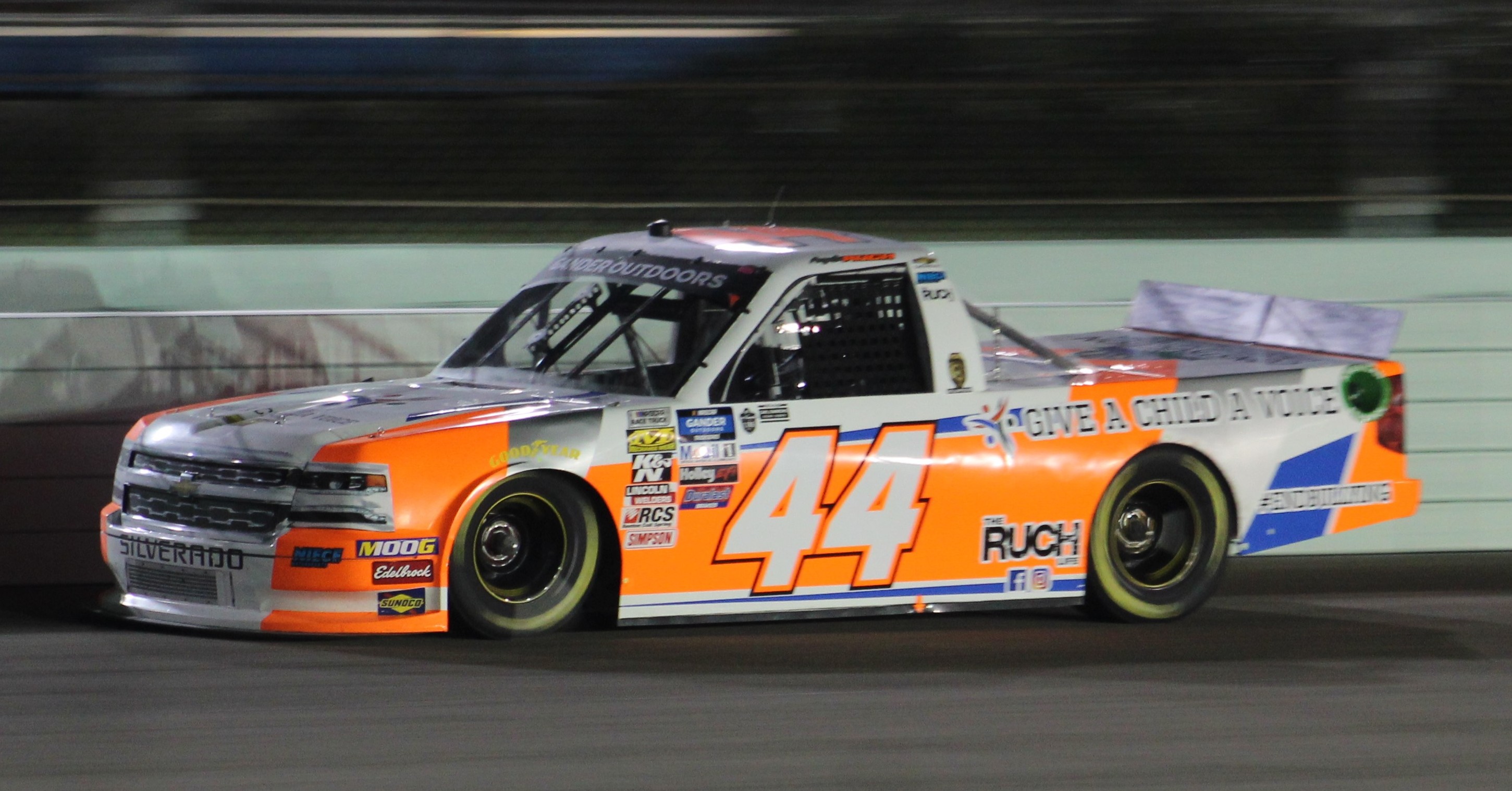
The Silverado 1500 is a Chevrolet pickup truck. “Light duty” just means the version meant for more everyday use, not the heaviest-duty work. The point here is that GM may stop building the Silverado 1500 at that plant.
Robotaxies are self-driving cars that act like a taxi or rideshare. The recall is because the cars were seen ignoring road-closure signs and entering construction areas on highways.
Ramp closure signs are roadside signals that tell drivers a highway on-ramp or off-ramp is closed, typically due to construction or safety hazards. The recall described here is tied to robotaxies failing to respect those signs and entering active freeway construction zones.
A recall is when a company says, “We found a problem,” and fixes it for the vehicles that are affected. It’s usually done to keep people safe. Here, Waymo says the issue has been fixed, but it’s still a second recall soon after the first.
NHTSA is a U.S. government agency that looks into vehicle safety problems and crashes. If they investigate something serious, it can lead to fixes or recalls to protect drivers and pedestrians.
“Training” here means teaching dealership staff how to do their jobs better—especially the steps they follow when working with customers. The reporter says more dealerships are investing in that kind of training.
An “enforcement action” is when a government agency formally steps in to punish or force a business to stop a problem. In this case, it’s about whether dealership ads match the real deal.
They’re talking about the dealership’s online ads. The concern is that the price shown on the website has to match what customers are actually charged.
They’re talking about ads on social platforms. The concern is that the price you see on one app can’t be different from the price you see on another.
Term
DAC fees
“DAC fees” are extra charges a car dealer adds to the deal. The key issue is whether those fees are included in the price the dealer advertises, or if the customer only finds out later.
The “out-the-door price” is the total you’d pay to actually buy the car—basically the final number at checkout. The point here is whether the dealer’s ad price really matches that final total.
“FTC” stands for the Federal Trade Commission. It’s a government agency that can step in when businesses advertise in a way that might be misleading—like car dealers advertising a price that doesn’t match what you actually pay.
LIVE
Welcome to Daily Drive.
For Friday, June 19, 2026, I'm Kellan Walker in Las Vegas.
Today on the show, GM's Oshawa plan is about to lose most of its production.
Waymo issues its second recall in a month and a federal investigation is now underway.
And after nearly 13 years, JLR's top North American executive is out.
Plus, our own Dan Shine sits down with two attorneys from Troutman Pepper Lock
to talk about the FTC's advertising crackdown on dealerships
and what it means for the industry going forward.
Other dealers could also look into this kind of practice.
So now you have that kind of over your shoulder.
It's not just the big regulator.
It's your competitor down the street.
Let's run through all the news you need to know to keep up in the auto industry.
GM's Oshawa plan in Ontario is losing production fast.
Industry analysts at Auto Forkast Solutions say GM is set to drop
the light duty Silverado 1500 from the plant before year's end,
leaving only the heavy duty variant.
AFS CEO Joe McCabe puts it plainly.
That's enough to keep the lights on, but just barely.
Annual output could fall from around 150,000 vehicles to 50,000.
Uniform local 222 President Jeff Gray says the union is extremely concerned
and still waiting on GM for answers.
Waymo is recalling nearly 3,900 robotaxies after the vehicles were found
driving past ramp closure signs and into active freeway construction zones.
It happened more than a dozen times since early April in California and Arizona.
Waymo has since updated its software and says the problem is fixed,
but this is the company's second recall in just over a month.
Last time, the vehicles were driving into flooded roads.
Separately, NHTSA is investigating after a Waymo vehicle struck a child near a Santa Monica school
back in January, causing minor injuries.
After nearly 13 years, Joe Eberhardt is out at JLR,
one of the longest runs of any North American auto CEO.
A company spokesperson confirmed he left to pursue new opportunities.
He'll stay on as a consultant through year's end,
focusing on JLR's growing partnership with Stellantis.
Chief growth officer Leonard Hornick takes over on an interim basis.
The timing is notable.
Eberhardt's exit comes as JLR bets big on the U.S. market and pulls back from China.
And those are today's headlines.
You can find more details on all those stories at AutoNews.com.
Joining me now is Paige Hodder,
retail reporter here at Automotive News,
who's been working on our upcoming Top 100 FNI section.
Paige, welcome to Daily Drive.
Thanks for having me.
All right, Paige, so the list is in its second year now.
Are there any trends emerging that surprised you as you were reporting this out?
So the biggest trend that came out in my coverage,
both of last year's list and this year's list, was training.
And last year, I was getting hints of stores are really starting to invest
in training as not something sort of sporadic,
but more like as a part of their day-to-day process.
And this year, looking at 2025 data, of course,
we really saw that come into fruition.
Stores are invested in training specifically to finalize
a standardized process for the FNI office.
So I spoke to sort of an analyst trainer who works with dealerships,
and she said that for a long time,
a lot of dealership FNI offices relied on sort of a superstar,
like someone who just could sell you anything.
And maybe a store had one of those guys,
and he kind of just carried the office.
And that was how they kind of got on for a while.
But now, especially as dealership groups are consolidating and growing,
and as the market's becoming more competitive, that doesn't cut it anymore.
And it definitely doesn't provide consistent profits and consistent growth.
And so dealership groups are really focused on like,
how can I make sure that all of my team members
are performing on a really consistent basis,
and what kind of process makes that happen?
Now, what's the one thing that separated the dealership groups
that climbed the rankings from those that fell?
It is that standardized process.
I talked to a couple different kinds of dealers for this project.
Some of them grew their revenue by double-digit numbers,
and they did that just by making some small changes.
One of them I spoke to had created a new management position,
someone specifically in charge of making sure everyone's hitting their benchmarks,
and everyone's keeping up to date with their training.
And that really paid off in their revenue year over year.
Another group I spoke to was sort of a different scenario.
On the surface, it looked like an easy sort of answer.
They had bought like 12 stores last year.
And so of course they had more F&I revenue.
But when you look under the surface, I spoke to the dealer there and he said,
every single one of the stores they bought had a different F&I process.
And so it was kind of a large undertaking to get all of those people on the same page
and making consistent profits, especially if someone had
been doing the same type of thing for a really long time,
maybe something that worked okay, but wasn't optimized,
wasn't the most efficient, effective.
And so they really wanted to make sure each F&I offices was doing the best it could.
And that required some really consistent training, some really intentional intervention.
And they said that they're just kind of starting to see those new stores really keep up
with the stores that had been following the process,
month and months after they acquired them.
Paige, before we end, how can people read more about all of this?
So the project goes live and it'll be online early next week.
I wrote a story breaking down all the strategies that the top growers on the list used last year.
There's also another story about the dealership groups that made it onto the
100 million club list.
And then I wrote another story about how you can make it on this list
and how you can compete with these groups and really get into the numbers.
And if you want a really deep dive into the list, you can go to our research and data center
where there's a breakdown of a lot of the different data points.
Perfect. Paige Hodder, thank you so much for joining me.
Thanks for having me.
Coming up, attorneys Brooke Conkel and Chris Capurso of Troutman Pepper Lock on the FTC's
warning letters to 97 dealerships and what dealers need to do now.
That's next on Daily Drive.
Navigation can go beyond just marks on the road.
And this week on shift, we're looking at the future of automotive navigation with AI.
Tom Tom, Senior Vice President of Product Engineering,
Manuela LaCarno Ajai talks about developing a map with real time information at the lane level.
It's not just knowing the traffic on the road, but the traffic per lane, for example.
Or if there is a hazard on the road, which lane the hazard is.
LaCarno Ajai also explains how AI can lead to better interactions with voice for navigation,
how Tom Tom is building trust with AI, and how automakers are reacting to the new technology.
Join us for shift, available this Sunday wherever you get your podcasts.
Welcome back to Daily Drive. I'm Kellan Walker.
The FTC sent warning letters to 97 dealerships back in March,
flagging six advertising practices it considers illegal.
The move caught a lot of people off guard.
This is, after all, a Trump administration FTC.
Since then, the agency has held two webinars with the industry,
released the full list of named dealerships, and left a lot of dealers wondering what exactly
they need to fix and who might come after them next.
Automotive news senior retail editor Dan Shine sat down with Brooke Conkel and Chris Capurso,
attorneys at Trotman Pepper Lock, who represent dealers.
They break down what the letters actually say, why state attorneys general may be
the bigger long-term threat and what every dealer should be doing right now to get their advertising
in order. Brooke, Chris, thanks so much for joining me on the FNI Friday edition of Daily Drive.
Thanks for having us. I want to talk about the FTC and they've been in the news with their
dealership work for a few weeks now. Guys going back to March when they sent out these 97 letters
to dealerships saying we think you might be violating one of six principles that we think
you shouldn't be doing and then this has become really kind of a shot across the
bout of dealerships and it's really I think gotten the attention of the retail automotive
retail community. Brooke, why would we be surprised by this action by the FTC? I think
there's an understanding that, oh, you know, there's going to be no regulation,
it's going to be the Fox guard in the hen house and, you know, while the Trump administration's
in office, but this came as kind of a shock to folks.
Dan, you're exactly right. And what we've heard from a lot of our industry contacts is,
wait guys, we thought we were in the clear and when you read the warning letters,
it really does sort of outline that the FTC's position is that we are still in
sort of a stated price universe and a lot of the elements of sort of the total cash price
that were defined in the car's rule, we're seeing those same threads in these warning
letters. And so I think it was a legitimate surprise to a lot of people that this current
iteration of the FTC is really viewing sort of the total price disclosure in the same way as
the prior administration did. Chris, since those letters went out in March, the FTC is,
you know, I guess I'm kind of asking why you think they've been doing a job as far as communicating
to dealers. Since those letters went out, they had a webinar that was kind of a
mess. They had a second webinar that I think went better. How would you gauge how well the FTC
is communicating about these letters and getting its message out to dealerships?
Yeah, I think, you know, to Brooke's point, the kind of surprise that the FTC is doing this type
of stuff, maybe you could see it coming from other signals, but like just kind of the general,
you know, this is the Trump administration, this is the second time we've been through this.
We weren't really expecting this type of action. And I do think, you know, the idea of webinar,
the idea of working with industry is something that, you know, it's always been something
leveled at the Democratic administrations and the regulatory agencies there where it's the
enforcement by blog post and you just kind of, they send out their proclamations from on high
and its industry deal with it. It's not very friendly. So I think the webinars were an attempt to
kind of work with industry in a way to kind of let them know what was going on. Now, as you said,
the first one didn't go well. The reviews were not great. And the second one, they brought in
the heavy hitters, you know, they brought in chairperson Ferguson, they brought in director
Mafferage to kind of go through all these things and NADA asked them some very pointed questions.
And, you know, to the extent they could answer, they tried to answer.
And I think that's them trying to kind of differentiate themselves from the prior
administration by saying, hey, you know, we're doing this type of stuff. But we understand that
industry has concerns that industry needs to know how to actually comply with these things.
And we're going to make an effort to try to help you out and help you try to see where we're coming
from. For so long, these 97 dealerships were anonymous. We didn't know who they were. And
if, you know, if they were big groups or just single stores. And then kind of out of the blue,
the FTC releases the list of the 97 on a Friday, I think I might add, like late in the day on a
Friday. What do you think the reason is behind that action? I mean, I don't think they don't,
I don't think they had to. I don't know if there was a lot of pressure for them to do that or
it was just kind of an odd, seemed like an odd action for them. What do you think they,
maybe was the prod behind that? Yeah, I think in part it shows sort of kind of a diversity of
options is that they're sort of looking at the industry as a whole. They're looking at the big
guys, they're looking at the mid-sized guys, they're looking at the little guys and saying,
to Chris's point, one of the things that they talked about in the NADA webinar was the question,
do you have the horses for this? And by kind of releasing the names of the dealerships,
one, they're kind of putting a target on those dealerships. So either from us, the FTC,
or from state regulators, or from plaintiffs lawyers, you guys have got to change your practices.
And then, you know, we still have that interplay of federal and state. And we don't often see
sort of a Republican-led federal agency pairing up with state AGs. But we may see
something like that coming. Chris, talk about UDAP and how that is at play. I guess maybe UDAP
for Unfair Deceptive Actions and Practices? Yeah, Unfair Deceptive Actions and Practices are,
yeah, if you want to go to the CFPB standard, the double AUDAP. UDAP. Yeah, you got to drag it out
to really emphasize the CFPB. But yeah, I mean, all of this from the FTC is under the guise of
their Section 5 UDAP authority. And the interesting part, and is exactly what Brooke alluded to,
state attorneys general have very similar authority, either exactly the same, Unfair Deceptive
Acts or Practices, or it's Deceptive Trade Practices or Misleading or Deceptive Trade.
There's some kind of power in all of the states attorney general to regulate this kind of behavior.
And it's then the question, okay, the FTC, a Trump FTC, has now said, hey, these practices
are UDAP. And UDAP is always kind of the, I call it the squishy standard. It's that you know when
you see it, there's not a law right on point to say that this isn't something we want to have
happened. So we're just going to put it under UDAP. We don't think it should be happening.
It's UDAP. And obviously, in the more, you know, democratic administrations, the UDAP standard is
much squishier. And it's, you know, they, they roll a lot of things into it. And you don't typically
see it being used kind of over aggressively in Republican administrations. But now we have this
edict from on high from the FTC with their UDAP authority saying, hey, these price advertising
practices are UDAP. The state AGs are fully within their power to say, hey, they've got a point.
We should be pursuing these same practices. And now we have a list of 97 people who
allegedly are doing it by the FTC. It's an interesting thing where, yes, this is the FTC
pointing out these specific practices under its own UDAP authority. But it's something that the
states could also get involved with. And interestingly enough, in the Lindsey action, which came out
just after, you know, the 97 letters went out, Chairperson Ferguson almost lamented the fact
that the FTC doesn't have the penalty authority that it used to, while saying that it was totally
right to take it away from us. Like we were misinterpreting the law that we had. Like we,
we don't have that authority, but we should is the way his concurrence went. So it was a very
interesting kind of trying to play both sides of the coin being, oh yeah, they were totally
right to take it away from us, but we need it. So it'll be interesting to see, to Brooke's point,
will they partner up with some state attorneys general who do have a little bit heftier penalty
authority? You know, it remains to be seen, but it kind of gets to this idea that federal state
UDAP is going to be an issue all over. And now we've got some evidence from the FTC that maybe
state AGs can roll with. So Brooke, if I'm a dealer, if I've got a, you know, one store, I have 20
stores and, you know, this has all kind of been going on for a few months. And what kind of clarity
do I, am I looking for? What are, what are dealers looking for from the FTC? What kind of clarity
from them do they want? I'm not sure that anybody in the industry is hoping for an enforcement
action, but oftentimes that is the way that you get that clarity, where the FTC points to specific
advertisements and says, this is what you did wrong. This is what it should have been. This is
the harm that it caused. And sort of creating that through line of this works, this doesn't,
this is how it should look. That, you know, provides that clarity. And, you know, in the prior
administration, so many folks in the industry were upset about sort of the direction that things had
gone. But that said, we have pretty clear standards of this works, this doesn't, this is a problem.
And I think that, you know, that's really what the industry is looking for, potentially without
an enforcement action, but really kind of drawing those lines of this is how the price was advertised,
this is why it doesn't match up. We're looking down the road, Brooke, a little bit further.
What should, I guess dealerships be thinking about going forward? That, you know, how are they going
to fix their, you know, advertising, their web advertising, their social media advertising?
What are kind of the fixes they need to be thinking about? Yeah, they're really kind of two
that really come to mind. And the first is, you know, going back to the letters that stated price.
What is included in the price? Are you including all required fees? Are DAC fees in there? Is
the consumer going to be able to walk into your dealership and purchase a vehicle essentially for
the price that was advertised plus taxes? Is that what they're going to be able to do when they go
into your dealership? And then second, just as you mentioned, it's consistency. It's dealers have
so many ways to advertise a vehicle these days that making sure that if you're making a change on
one medium, you're making it on another. So if the price is one place on Facebook and it's stated
differently on Instagram, that's a problem. And so really clarifying what your price is
and then making sure that that price is consistent, regardless of the medium in which you're advertising.
Chris, I'm going to ask you to get out your crystal ball, your crystal ball. See what I did there.
What does this mean going forward down the road a year? You know, are we going to hear
from the FTC? Is this going to be, are we going to see 97 letters again in the next six months?
Or is this maybe a little blip, just a little, again, a little warning shot? And the FTC will
kind of go back to sleep for the next two years. Yeah, it's an interesting question. And, you know,
Brookhead alluded to the NADA webinar where it was specifically asked, do they have the horses to
do this? And then rather brilliantly, you know, you mentioned, well, your other dealers could also
look into this kind of practice. So now you have that kind of over your shoulder. It's not just
the big regulator. It's your competitor down the street, which is its own level of paranoia that
the FTC kind of said, you know, we can't, like we can't do it all. So the guy down the road is
being cheating or tell us, rat him out. Right. And I mean, that's effective. Because if you think
somebody is looking at everything you're doing all the time, compliance all of a sudden comes to
the top of the mind rather than kind of being this background, oh, well, we have our policies and
procedures in place. We should be thinking about these things. But if someone's overlooking what
you're doing, then then it's a little bit scarier. I think over the next year, what I'd be looking for
is definitely the state angle and see if more state AGs start to look into this type of stuff.
Because I mean, we always discuss, like, AGs are political animals. And the more complaints they're
going to get, the more they're going to act on it. It's not a blue versus red issue. It's if
enough consumers think that price advertising is deceptive to them, they're going to complain about
it. And then the AG is going to act on it. And with all of this being in the news now, I mean,
it's such a headline, the 97 letters, right? Like, and the fact that deceptive price advertising
is coming out, you know, maybe more consumers are becoming aware of it. And then they complain.
And then the AGs are more aware of it because the FTC said something and now they're seeing the
complaints. And it's, oh, well, we got to do something about it. So I'd be curious in the
next year if they start to act a little bit more on the FTC front, I think we could see a few things.
But again, to the chairperson Ferguson's own point in his concurrence, they don't necessarily have
the penalty authority to deal with this stuff. They do have kind of the authority for, like,
redress and things like that. But I think it's a little bit harder in the advertising context
because, you know, you have to prove the injury. Did you buy the car based on that one advertisement
that you saw, you know, and in the redress could be just the difference between, you know,
the differences in the price, you know, it's a little bit more complicated than just slapping a
fine on somebody for a UDAP violation. So it'll be interesting to see how the next year plays out.
Speaking of, you know, state AGs near Leticia James in New York,
very active and I think just, you know, had some action against Nissan Motor Acceptance Corp.
Getting some refunds are going to audit the rest of the, you know, dealerships in New York State
to make sure they're doing that. I think so, like you said, they're political animals too,
they want to score points with voters. And, you know, and she's one of the more active,
I think we get a lot of press release from her about taking action against, you know,
dealerships and all. Brooke, I'll last question to you. And that's about people we haven't
talked about yet. And that's the consumer, you and me and everyone else who shops at dealerships
buy cars, lease cars, buy used car. How has all this impacted the consumer?
It's really interesting because, you know, Chris and I have seen data that consumers are
influenced by price disparities as minimal as $25. So when you're seeing, you know,
dock fees that are, you know, regulated by state, if those dock fees that are permissible are,
in some cases, up to $1,000. And so if those are not being disclosed in a full price, then
you're going to see those little differences make a big difference at the end of the day when you're
buying a car. And so we can bristle at some of the requirements in sort of the 97 letters,
what they have, what the FTC has outlined. But at the end of the day, a stated price regime
does work better for the consumer. It does lead to a better experience. And if it's done properly
throughout the industry, it levels the playing field. Because, you know, just as Chris mentioned,
you want good dealerships getting good customers. And so if we've got a level playing field of
everybody disclosing price in the same way, then that leads to better results in individual deals
and repeat customers. Brooke, Chris, really informative discussion. I really appreciate
your time. Thanks so much. Absolutely. Brooke Conkel and Chris Capurso of Trotman Pepper
Locke spoke with our own Dan Shine. That's Daily Drive for today. I'm Kellen Walker.
Thanks to Automotive News executive producer Jake Neer, as well as our own Paige Hodder and Richard
Truett for their reporting for today's podcast. We also had reporting from David Kennedy of our
sibling publication, Automotive News Canada. You can get the latest news on the FTC's dealer
advertising crackdown, GM's Oshawa plant situation and everything happening in the auto industry
at autonews.com. Come back over the weekend for our weekend drive edition of the show,
our own Michael Martinez and Larry Veluque break down the week's biggest stories,
including the UAW's convention this week and what it tells us about Sean Fain's chances of
winning another term as the union's president. Four years ago, Sean Fain was actually a sergeant
at arms at the constitutional convention assigned to the bowels of the convention center basement.
And four years later, he's literally at the top on the stage presiding over the convention. So
great rise. It's just, I think for some people, they wanted a little more reform out of that
reform game night. We'd love to hear from you. Let us know what you think of the show and the
topics we've covered today. Send us an email at dailydrive at autonews.com or leave us a voicemail
at 313-444-2774. And if you enjoyed the podcast, remember to like, leave a review and subscribe
so you never miss an episode.
About this episode
GM’s Oshawa output is slipping, while Waymo issues a second robotaxi recall after vehicles drove past ramp closure signs into active freeway construction zones. The show then pivots to dealership F&I, where training and standardized processes are replacing the old “superstar” approach as groups consolidate and competition rises. The big legal thread: the FTC’s March warning letters to 97 dealerships over alleged UDAP violations in price advertising, including inconsistent fee disclosure across channels like Facebook and Instagram—and what dealers should change next.