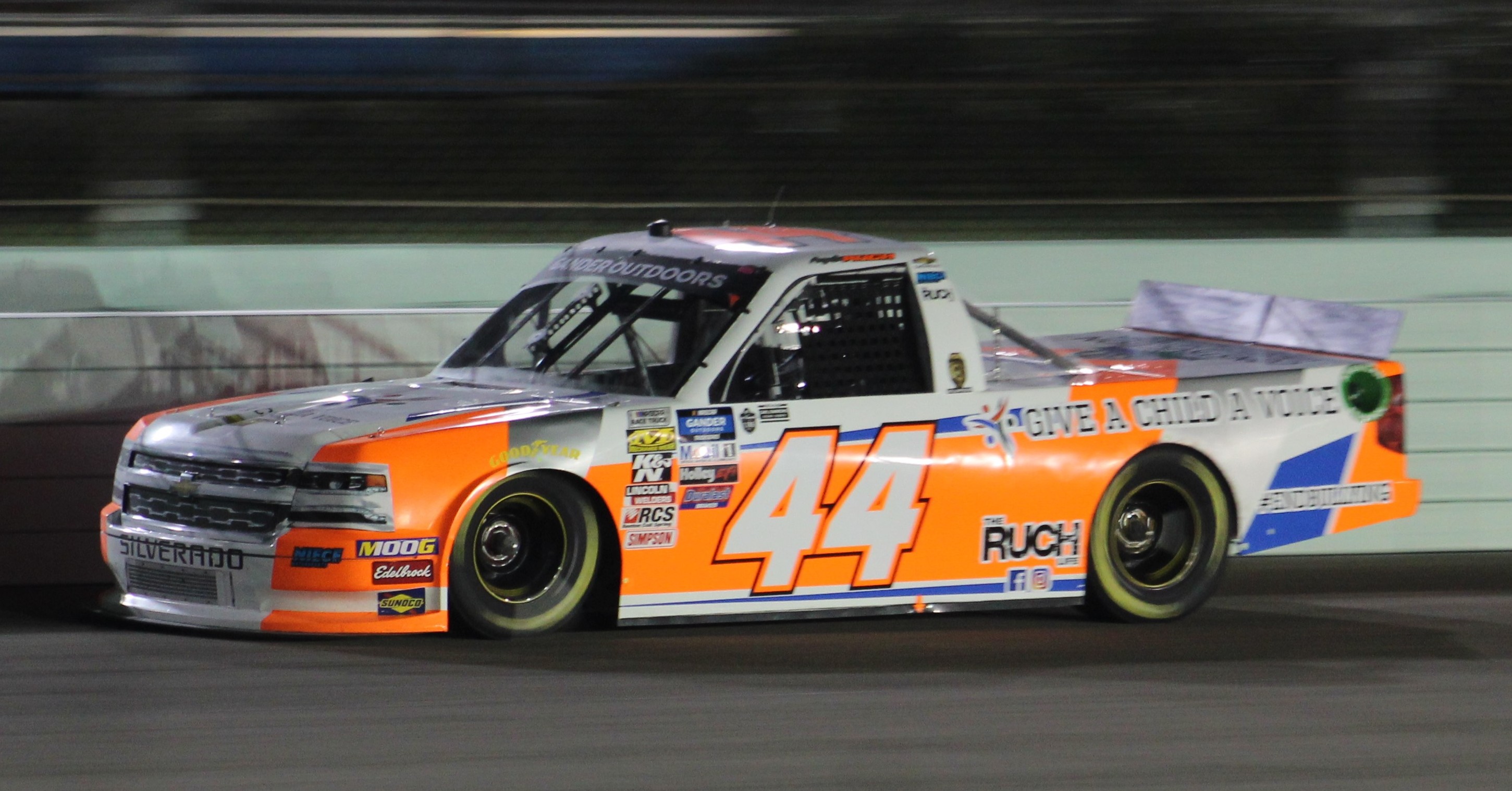
The Chevrolet Silverado is a large pickup truck used for towing and carrying things. The podcast mentions a Michigan plant that makes parts (axles) for the Silverado, which helps explain how the truck gets built. When factory production changes, it can affect how many trucks are available.
Rolls-Royce is BMW Group’s top luxury brand. It’s mentioned because BMW Group is rolling out new products across several brands over the next few years.
The BMW X7 is BMW’s big luxury SUV. BMW is redesigning it to look more like a wagon and more different from the typical boxy big-SUV shape, so it stands apart from the X5.
The BMW X5 is a popular luxury SUV. Here, the big news is a redesign, including changing the rear tailgate from a split design to one single piece, plus a more compact look.
A split gate tailgate is a rear hatch that’s split into two parts. Instead of opening as one whole door, it opens in sections—BMW says the X5 will switch to a single-piece tailgate.
Alpina is a brand that makes special BMW-based cars with more performance and luxury. Here, BMW says it wants to separate Alpina so it becomes its own standalone brand.
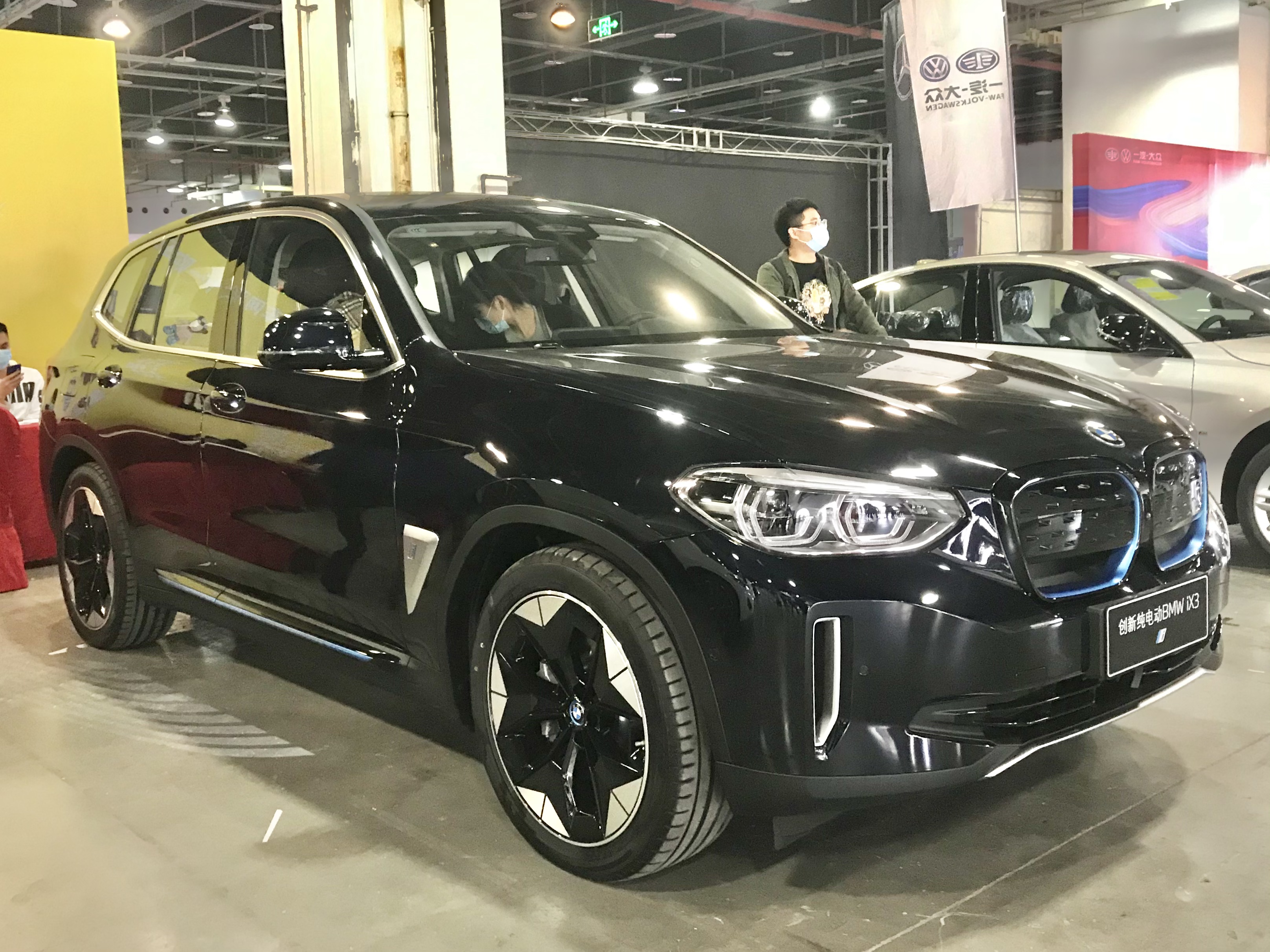
The BMW iX3 is an electric SUV built on the X3 platform. It’s meant to offer an EV option in the same general size and style of SUV. The podcast is discussing it as part of BMW’s effort to improve its electric lineup.
Term
Noia Classa
This “Noia Classa” sounds like BMW’s next vehicle design platform. The idea is to build cars in a way that works especially well for electric power, and then reuse that design for hybrid versions too.
Energy-efficient batteries help the car use electricity more effectively. That usually means better range and less energy wasted, especially important for EVs and hybrids.
They’re saying the carmaker controls the information the car creates. Even if you buy the car, you might have to pay a subscription or negotiate to access certain data or features.
A “fleet operator” is a company that runs lots of vehicles. Because they have many cars, they may have to negotiate with the carmaker to get access to the data those cars generate.
A “connected vehicle” is a car that can communicate over the internet. Because of that, it can share information about how it’s being used and what it needs, which companies can then sell as services.
“Gatekeeping” means one company can block or control who gets the car’s information. If the carmaker controls access, other businesses may not be able to compete fairly.
They’re saying owning the car doesn’t necessarily mean you own the information the car creates. The carmaker may require permission or payment to access that data.
The Driver Act is a proposed law about who should be able to access the information a car collects. Here, it’s described as aiming to let the vehicle owner access essentially all of it.
Cars collect lots of information while they drive. This term means that data the car makes itself, and the debate is about who gets to see it and share it.
The Repair Act is a proposed law about letting independent mechanics access some of the car’s information. The idea is to make it easier for shops outside the dealership to repair today’s cars.
Independent repair shops are regular mechanic businesses that aren’t the car’s dealership. The segment is saying they can struggle when they don’t have the same access to car data as dealers.
This phrase means today’s cars are run by computers, not just mechanical parts. Because of that, fixing them often depends on software and data access.
LIVE
Dealers, need more used cars? Fast? With Kelly Blue Book Instant Cash Offer, you can connect
directly with local sellers to win more inventory, improve look-to-book, and lower cost to market.
That's the Instant Advantage. Request a demo today at b2b.kbb.com slash ICO.
Welcome to Daily Drive. For Monday, June 1st, 2026,
I'm Kellan Walker in Las Vegas today on the show. The UAW was on strike at a major parts
supplier with this message, no contract, no axles. The US wants to rewrite the rules for USMCA auto
content and Canada might not get a seat at the table. And Toyota pulls the plug on a flagship
Lexus EV it was counting on to lead the electric push. Plus, Richard Ward from the American
Vehicle Owners Alliance talks about who really owns the data your car generates and why it's
turning into a billion-dollar fight in Washington. Let's run through all the news you need to know
to keep up in the auto industry. The UAW is striking against Dauke Corporation,
formerly American Axle, and it's a direct threat to GM's best-selling pickups.
Nearly 1,000 workers walked off the job at Dauke's Three Rivers, Michigan plant,
which makes axles for the Silverado and Sierra. UAW President Sean Fain announced the strike
on a Facebook livestream saying, quote, no contract, no axles.
GM says it's assessing the potential impact the two sides have been negotiating since March,
after workers authorized a strike last month. The Trump administration is pushing to raise
North American auto content requirements to 82% for vehicles to qualify for preferential USMCA
treatment, with half the value needing to come specifically from the US. That's a significant
jump from today's 75% regional content threshold. The proposal would also exclude Canadian parts
content from the totals entirely. Industry officials say Canada could end up facing a
take it or leave it deal after the US and Mexico hash out the details. That's according to four
people familiar with the US negotiating position, first reported by Reuters. Toyota has canceled
the Lexus LFZC, the flagship electric sedan it was counting on to lead its push toward
1 million EVs a year. The company says it's pulling the plug due to market demand fluctuations
and will redirect LFZC technologies to other projects. Toyota and Lexus sold fewer than 190,000
EVs last fiscal year, less than 2% of their global volume. It fits a broader pattern. Honda,
Mazda and Subaru have all recently canceled or delayed EV programs as well.
And those are today's headlines. You can find more details on all those stories at autonews.com.
BMW gave US dealers a first look at more than a dozen new and redesigned models during a private
meeting in Nashville last week. The lineup includes the IX3 EV arriving in September to take on Tesla's
Model Y, plus bold redesigns for the X5 and X7. Dealers left bullish, calling BMW's product
cadence incredible. Joining me now to talk about it is our own Ervash Kakaria who broke the story
for us at Automotive News. Ervash, welcome back to Daily Drive. Thanks, Gil. It's becoming a bit
of a habit here. We love having you. Describe the products that dealers saw in their reactions.
So it was BMW's Big Americas meeting. I believe it happens every two to three years and it was in
at Nashville's Music City Center. They had retailers from both North America, Central,
as well as South America. And dealers sort of got a preview of about more than a dozen. It's
coming to BMW, Mini and Rolls Royce showrooms over the next 24 to 36 months. The key vehicles that
were of interest to retailers, because again, these are volume models, was the X5 and the X7.
Both of those crossovers are getting redesigned. Interestingly, for those that follow this brand,
the X5 will ditch its popular split gate tailgate and it'll just be one unit. So that's definitely
going to get the attention of BMW Watchers who I believe really loved the split tailgate that
the X5 had. The X5 also appears to be looking a little more compact. Meanwhile, the X7 in its
redesign is becoming more wagon-like, as one dealer said. Unlike a lot of these large SUVs that
are boxy and have these curvy lines, the X7 is going to look a little distinct. And that's going
to create a separation between the large crossover, the X7 and the mid-size X5. It's going to create
more of a separation between these two key models, according to dealers. So, Irvash, what am I hearing
about Alpina? Yeah, this is a very interesting kill. So, BMW this year, BMW Group this year
announced that they were going to spin off Alpina as its standalone brand. And it would sort of fit
between the M brand and Rolls-Royce. Dealers said that essentially the Alpina models will get,
in terms of performance, they will be close to the M line, not as powerful as the M brand vehicles.
However, it would be significantly more refined and luxurious. Again, not Rolls-Royce level luxury,
but a notch down. So, this creates a separate brand identity for Alpina. Dealers at the meeting
were also shown Alpina variants of the X7 and the X7 series. So, a sedan and a crossover,
the dealers sort of described it as having distinctive grills, modified facials, and
significantly more luxurious interiors than their mainstream brands. And then one dealer also said
these X7 and 7 series version of Alpinas would be in the $200,000 to $350,000 range and that they
would sort of be built for speed, not sport. So, that kind of gives you a general idea of the
direction that BMW Group is going with Alpina. Wow. Now, you write that the IX3 addresses BMW's EV
shortfalls. What's the hope for that model? Yeah. So, the IX3 is a key model for BMW because it
competes in the sort of in the critical compact crossover EV segment dominated by the Tesla Model
Y, which I believe is still the most popular EV on the market. So, there's definitely a lot of
market share for BMW to capture with this IX3. The IX3 will also debut BMW's new Noia Classa
platform, which essentially is not EV only, it's more EV first that Noia Classa designs and technology
will also spread to the hybrids of the lineup. But they of course, you know, have much more cost
efficient and energy efficient batteries, more powerful motors. So, the IX3 will be a key test
for BMW's all new platform. Perfect. Irvash, you know, I like talking to you because you always got
the good stuff for me. Thank you so much for joining me. Thanks, Gil. Coming up, a fight is
brewing on Capitol Hill over who should own the data that personal vehicles generate. We'll hear
from dealers. Need more used cars? Fast? You're not alone. And waiting for inventory to show up
isn't much of a strategy. That's where Kelly Blue Book Instant Cash Offer comes in. Backed by
Kelly Blue Book's 100 years of trusted valuation expertise, Instant Cash Offer connects you directly
with local sellers so you can win more inventory right when you need it. And because the experience
is transparent and consistent from the first click, it helps build trust early before a customer
ever walks through your doors. That trust matters. It sets expectations up front,
reducing friction in the appraisal process. What that means for your team is more control over how
inventory comes onto your lot and more time focused on selling cars, not chasing them.
It's a smarter way to source inventory in today's competitive market and that's the instant
advantage. If you're ready to connect with local sellers, win more inventory opportunities,
and lower cost of market with an approach dealers rely on, check out Kelly Blue Book Instant Cash
Offer. Request a demo today at B2B.KBB.com slash ICO. Welcome back to Daily Drive. I'm
Kellen Walker. Vehicle data is increasingly valuable and automakers have been quietly
profiting from it. But a growing coalition of fleet operators, rental car companies,
insurance firms, and consumer groups says the data belongs to vehicle owners, not the OEMs.
Richard Ward is the executive director of the American Vehicle Owners Alliance,
a coalition pushing Congress to change the rules. He joined our own Molly Boygon on the shift podcast
to talk about the legislative battle taking shape in Washington, including two competing bills
who's fighting for what and what it means for the future of car ownership. Here's a piece of that
conversation. So for those who aren't familiar, can you explain what the AVOA is and who your
members are made up of? Absolutely. We are a coalition made up primarily of fleet operators,
rental car companies, insurance companies, a few companies like a safe light that depend on
vehicle data for the equipment and parts that they manufacture. We work across all those
industries to bring together around a very simple first principle of if it's the car you own or
purchased or leased, that data that the car is generating is yours. And so we often say my car,
my data. And it's something that has gained a lot of traction across the industry, across
consumer groups that are also members, across public fleet managers that operate their city or
county fleets, including first responders. And we really come together to advocate to Congress
and to the administration that when you purchase a vehicle, the data that comes along with it,
when you generate that data is in fact the owners. Right now, that's not the case. There's a number
of different debates going on around what some of the rules should look like and whether they
should be included in upcoming service transportation legislation at all. So before we get into the
legislation that's on the table, can you just say a little bit more about the status quo?
Like what happens when a vehicle changes hands and what happens with the data?
Currently, the data with respect to the status quo is completely owned and controlled by
the OEMs, the car manufacturers. And when you purchase a vehicle, if you're an individual
consumer, they maybe offer you a subscription for certain features. If you're like a fleet operator
or a rental car company and you're buying large quantity of cars, you're actually negotiating
with the OEM for the data and are being charged for it. So they're actually charging you for data,
the raw data that is actually you're generating. And so there's kind of two buckets here. OEMs do
produce a lot of fantastic products that is derived from the vehicle data and is often sold,
whether to repair shops, dealers, fleet owners. And that's one thing that certainly all of OVOA's
members they're willing to pay for. But that raw generated data, given how connected vehicles
have become and where they're going, that data has really become the lifeline for how they
operate. And the other concern is if the OEMs own and control all the data, they're very worried
about sort of over the horizon issues around potential gatekeeping of that data. They may
be willing to sell that data to their customers today, but we've certainly seen examples where
OEMs have entertained getting into insurance or renting cars. And now you are really sort of
threatening that competitive market. If you control all the data, if ownership becomes a condition
for the data, then you do truly own the vehicle. In the case of rental car companies,
are they paying to access the data that the vehicle is generating once it's already
in their purview basically? Correct, correct. Again, if the OEM takes that data and puts
together a product, the customer can decide if they would like to purchase that product or not.
And many of our members do. But the idea that the data that you're generating
from the vehicle that you already own is not yours and you don't have access to it
or control of it. A lot of members of Congress have sort of hyper started to focus on this
issue because there was an OEM story where they were selling this data to third party
brokers who were then selling it to insurance companies and customers had no idea why their
auto insurance rates were going up. And so one of the reasons why insurance is so active in our
coalition is because they want to make sure that the individual owner of that vehicle
is the one providing the consent now to insurance companies to share that data. And in return,
they can get additional bonuses or reduced rates for good driving and those types of things.
But they want to put the customer back in the middle, the owner of the vehicle,
back in the middle of that decision. And so leaving it all in the hands of the OEMs,
what we're unfortunately seeing is they're now more openly talking about how much money this
is going to bring into their companies. We're talking about hundreds of billions of dollars on
subscriptions. And that's all on the back of the vehicle owner. We don't want to be
subscription to death on the data that we believe we already own. And so it's a real challenge
right now. And it's only going to get more difficult as these cars produce more and more data.
Let's talk a little bit more about the conversation that's happening in Washington. So my sense is
that there are kind of dueling bills on the table. One that's representing AVOA's interest and one
that's representing the interests of the OEM. So is that correct first of all? And can you just
talk a little bit about what these different bills are trying to do? I would sort of break it down
into two groups. And the OEMs are generally opposed in both. The issue around what we're
working on with respect to the Driver Act, we have a full backing of our coalition and that
really talks about access to 100% of the vehicle-generated data. The other area is what I would call
the Repair Act, which is looking at a small subset of vehicle-generated data and the ability to be
able to share that data with independent repair shops because they are struggling to fix these
cars that are now basically computers on wheels and the dealers have a much greater advantage.
But the problem is that the dealers aren't everywhere and independent repair shops are
throughout the country and people who own vehicles within proximity to independent repair shops would
like to take their vehicles to those shops and not have to pay to have their cars towed sometimes
hundreds of miles away to a dealer to fix it. And the Repair Act issue has been around for
many years. We've seen the Repair Act introduced in several congresses and that is currently on the
table as we speak in terms of the surface transportation bill. The Driver Act is relatively
new. Again, it represents 100% of the data where we think Repair is somewhere in the 20% of the
range. And so if you were to just act on Repair, you're not going to be including about 80% of that
transportation, mobility, fleet ecosystem. And so there's been a lot of resistance from
the OEMs again because this will significantly eat into their revenue. We know OEMs have had
issues in the past. They've needed government bailouts. They've made difficult choices and
have lost money on EVs. And now all of a sudden they've come across how this data sort of the new
oil and they see a real opportunity to pad their pockets and sort of write their ships. But they're
doing it on the backs of their customers and we don't think that's right. To your question,
the OEMs have worked sort of an MOU around what's called the safe repair. And there's been some
fits and starts about trying to get legislation around that. But we mostly view that as their
effort to try to at least demonstrate that they could be for something. But the legislation has
never really materialized. I think what we'll see is they'll be working more off the repair bill
and trying to find consensus with stakeholders there. I think Driver Act has a real opportunity.
I don't know if we'll see it this year, but we are going to continue to fight for it. And if we
have to work to expand Repair Act to include all data, that's what we'll look to do.
We'd love to hear from you. Let us know to think of the show and the topics we cover today.
Send us an email at dailydriveatautonews.com or leave us a voicemail at 313-444-2774.
And if you enjoy the podcast, remember to like, leave a review and subscribe so you never miss an episode.
About this episode
A UAW strike at an axle supplier is framed as a direct threat to GM pickup production, while policy talk turns to proposed USMCA regional-content rules and Toyota’s cancellation of the Lexus LFZC. BMW then previews its iX3 and refreshed X5/X7 lineup, alongside a plan to spin off Alpina. The conversation pivots to a legislative fight over vehicle-generated data—who owns it today, how subscriptions and fleet deals work, and what the Driver Act versus the Repair Act would change.