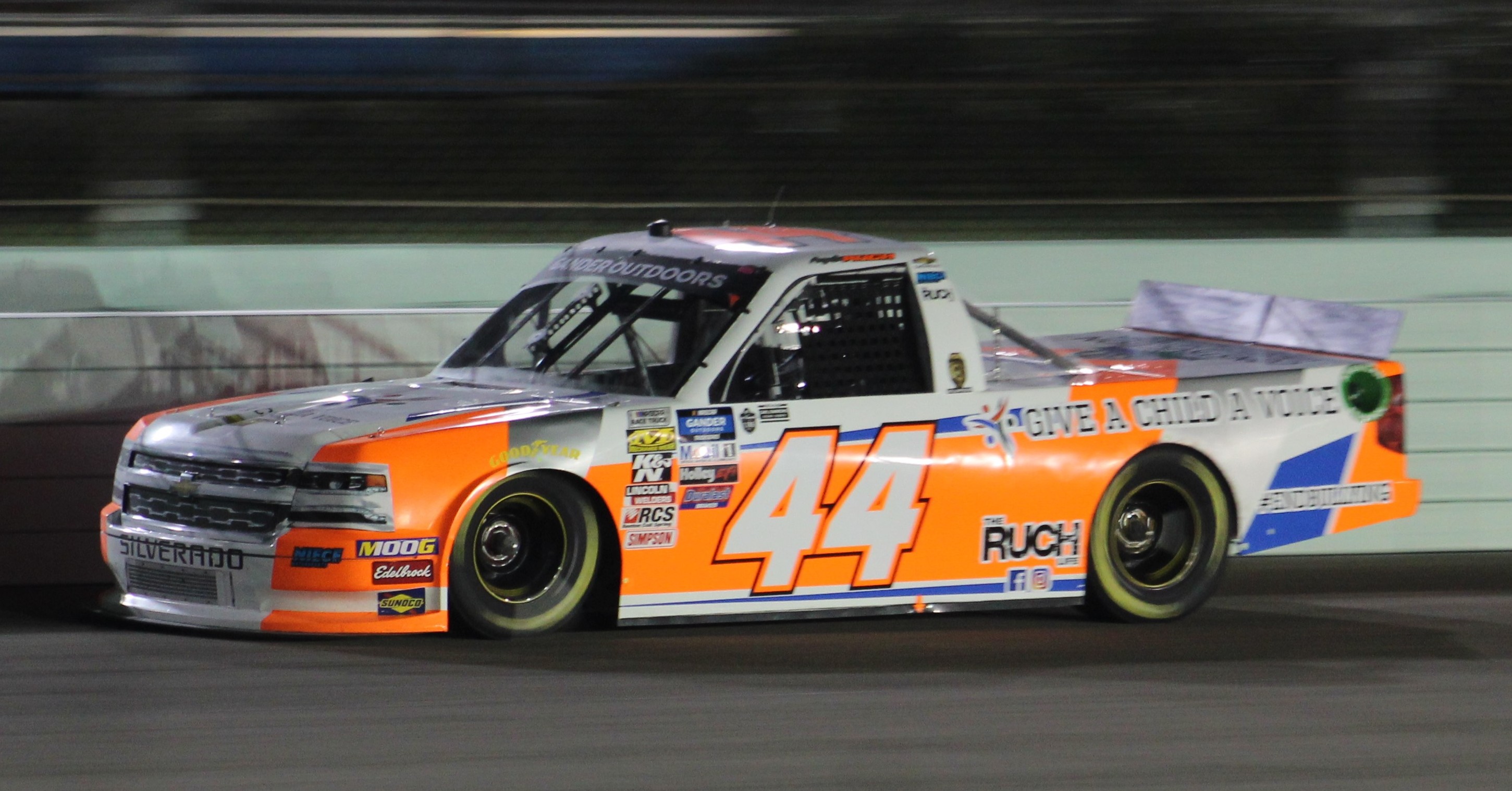
The Chevrolet Silverado is a large pickup truck made for work and everyday use. People buy it to tow trailers, carry cargo, and handle tough tasks. The podcast mentions it because it can affect how certain model years are doing in sales or pricing.
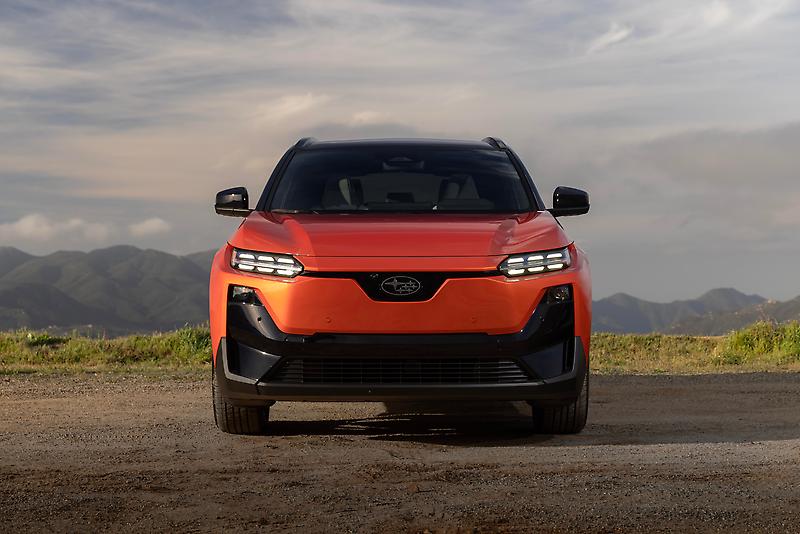
The Subaru Uncharted is a Subaru vehicle name mentioned in the podcast. The hosts use the phrase “uncharted waters,” which usually means they’re talking about something new or not fully known yet. The discussion likely focuses on what to expect from this Uncharted model or direction.
It’s a monthly score that shows how willing banks are to lend money for car purchases. If that score is higher, more people can get approved for loans, which helps dealers sell cars.
Negative equity is when your current car is worth less than what you still owe on it. If lenders will still finance that, it can make it easier to upgrade to a newer car.
Yield spread is basically the interest-rate gap between what lenders pay to get money and what they charge you for a loan. If that gap gets smaller, loans can get cheaper for the buyer.
It’s how quickly car prices are falling in the market dealers use to trade cars. If price drops are more predictable, lenders feel safer about the value of the car they’re financing.
USMCA is a trade agreement between the U.S., Mexico, and Canada. If it changes—like with tariffs—it can affect car parts and vehicle costs, which can trickle down to dealers.
LIVE
This podcast is brought to you by Reynolds and Reynolds.
There are three waves of AI transforming our industry.
Explore what they are, where AI technology is headed,
and what these emerging innovations mean
for automotive retailers at rayray.com
slash ai-waves for more info.
Welcome to Daily Drive for Friday, June 26th, 2026.
I'm Jake Nier in Detroit, in for Kellan Walker.
Today on the show, the new vehicle market
is holding steady at the halfway point of 2026.
A new report says the industry's redesign rate
has fallen to roughly half of its normal pace
and the window to grab market share is now.
And another shareholder revolt in Japan,
this time with Honda.
Plus, Cox Automotive chief economist Jeremy Robb
talks about the state of the market midway through 2026.
We really need to get some resolution,
see oil tankers moving,
start to refill a lot of the stockpiles
that were depleted over time.
And then, you know, if we can get gas prices back down
for consumers, that will be really impactful for inflation.
Let's run through all the news you need to know
to keep up in the auto industry.
The US new vehicle market is holding steady
heading into the second half of 2026,
even with $4 gasoline and ongoing Iran war pressures.
Cox Automotive projects a June selling rate
of 16.1 million vehicles
with the full year on track around 15.8 million.
But the market stability masks a major shakeup in share.
Ford and GM are both expected to lose ground,
while Toyota, Hyundai Kia, Stellantis and Honda gain.
Cox senior economist Charlie Chesbro says
Toyota could even overtake GM
as the top selling automaker in the US by year's end.
We'll hear from Cox chief economist Jeremy Robb
in just a little bit,
who digs deeper into the state of the market
midway through 2026.
With those challenges as the backdrop,
it's survival of the freshest.
That's how analyst John Murphy
characterized the state of the industry
during his inaugural Murphy Automotive Product Pipeline Report.
It finds the industry's redesign rate
has fallen to just 7.1% roughly half its normal pace,
pushing average vehicle age toward a record high.
Speaking at an automotive press association event
in Detroit Thursday,
Murphy said quote,
the valley on product introductions has never been deeper.
Between model year 26, 27 and 28,
we are seeing sort of a crushing depression.
And the only reason model year 27 ticks back up
is you have a Silverado and Sierra in it.
The reality is the rest of the industry
is hurting in a huge way.
Murphy forecasts hybrids will climb
from 19% of new vehicle volume today
to 27% by 2031,
and says automakers refreshing their portfolios
now stand to take significant market share
from rivals going quiet.
And we've been talking about shareholder uprisings in Japan.
Seems like all week here on the show.
And we've got another one to add to the list.
Honda CEO Toshihiro Mibe survived a shareholder vote
to remove him from the board
at Honda's annual meeting in Tokyo Thursday.
That's despite leading the automaker
to its first annual losses since going public in 1957.
His aggressive EV push triggered
more than $9 billion in write-offs.
Honda has since pivoted to hybrids
targeting 2.5 million hybrid sales by 2030.
Proxy advisors, ISS and Glass-Lewis
both recommended reappointing him
and Mibe is predicting a profit rebound.
And those are today's headlines.
You can find more details on all those stories
at autonews.com.
On Thursday's show,
we talked about the Trump administration's decision
to ban Polestar from the US market after this model year.
That news sent many dealers scrambling
to figure out what was happening
and what it meant for them.
Our own Irvox Karkaria has been talking to some of them
and joins me now to describe what he's hearing.
Irvox, great to hear from you again here on Daily Drive.
Hey, thanks for having back.
So I assume your day took a turn
when this news broker, Vax,
what have you been hearing so far from dealers?
Yeah, I mean, there's as expected Polestar has 32 stores
and maybe a little fewer than 30 dealers in the US.
And they've been, as one dealer said,
absolutely devastated, shell shocked.
They had no heads up on this decision.
There was a call, I believe, at 10 a.m. Eastern yesterday
in which they were informed.
No details were shared.
They were very light on details.
Essentially, they were told that we're leaving the country
because this decision came down
where we did not get authorization
from the Trump administration for an exemption
to this rule that US automakers cannot have
China-tied technology for connected vehicles,
both technology and hardware.
So the dealers basically are extremely frustrated
with Polestar, understandably.
They've invested tens of millions of dollars
in these stores, in this brand,
and then suddenly Polestar backs up and says,
we're out of the market.
Until recently, they've been telling dealers,
we have a solution.
We'll get around this compliance issue, not to worry.
And then, boom, this just falls out of nowhere
on a Thursday morning.
Many, obviously, it's too soon,
so many of them are scrambling to figure out
what they want to do with their stores.
One of the dealers I spoke to, incidentally,
has his store on the market
because he's in the middle of moving to a larger store.
And his point was like, we needed to move
because we're getting an increase in sales,
increase in service.
And now, hopefully, he hasn't signed a new lease
or a new deal on a new space.
But this shows a number of dealers I spoke to
are basically said, this doesn't sound right
because, oddly, Volvo has received authorization
that gives them an exemption
for the same China technology issue.
And they're both owned by the same Chinese company, Zhili.
They both have similar technology in their vehicles,
at least in their current vehicles.
So the dealers, understandably, are asking,
what happened with Volvo?
Why did Volvo get the exemption
and why aren't we getting the exemption?
And that's a question that Polestar doesn't have an answer for,
or at least isn't willing to reveal.
I talked to some folks and Polestar is basically
saying that they aren't going to appeal this decision
and, essentially, they're going to be out of the market next year.
And that explanation, this idea that they're not appealing,
is sort of leading to an environment
where there's more questions than answers, right?
And to fill that gap,
there's some conspiracies floating around, is that right?
And not to say that we endorse any of these conspiracy theories,
but they exist.
Absolutely.
I mean, the dealers I spoke with are like,
is this some sort of a face-saving move by Polestar
to exit a market in which they really won't do well?
Only 6% of Polestar's volume is in the US.
Is this a way to leave the market and say,
okay, this is out of our hands?
And maybe it also helps with some negotiations with the dealers.
If they left on their own accord,
maybe it would be harder to tell the dealers that
you're on your own, you've got to figure out what to do with your investments,
as opposed to saying, well, the government has banned us,
so we're really sorry.
Each dealer is now going to have one-to-one conversations with the brand
to figure out or negotiate some kind of an exit plan
to recoup some of their investment.
Again, this is not a group thing.
This is a one-on-one cases, case-by-case basis,
because some dealers have mall stores,
other dealers have more expensive, traditional showrooms and service centers.
And it'll be interesting to see if this is America.
It'll be interesting to see if there's a lawsuit.
So if nothing changes and they are blocked from selling Polestar's after this model year,
what do they do?
Do they sell other brands?
What options do they have?
So all Polestar retailers are also Volvo retailers.
That was being a Volvo retailer was the condition of getting the Polestar franchise.
So, I mean, I guess as a retailer, they could go and try to find another brand, another franchise,
but that doesn't happen right away and that's a very expensive process.
So in many cases, I think a large number of Polestar stores are really in malls, so they're leased.
So either they get subleased or they negotiate with the mall owner to essentially get out of their lease.
For the ones with the largest stores, they'll probably sell it.
They'll probably put it on the market, just like this Polestar dealer has done,
where he's putting his property on the market hoping to find a larger space.
Well, Irv, it seems like this is some uncharted waters that we're waiting in right here.
So it's going to be really interesting to see how this plays out.
I know you'll be all over it.
Thanks so much for your reporting on this and for joining us today.
Absolutely. This story is not over, so stay tuned. Thank you.
Coming up, Cox Automotive Chief Economist Jeremy Robb talks about what's really driving the auto
market at the halfway point of 2026 and what dealers need to be thinking about for the rest
of the year. That's next on Daily Drive.
Three waves of AI are transforming our industry as we know it today.
Here from A.J. McGowan, Vice President of Research and Development at Reynolds & Reynolds
on all three ways of AI and automotive, where we're heading,
and what the latest cutting edge innovations mean for automotive retailers.
So I want you to picture what it would be like on that same Tuesday morning that we talked about
earlier with a full agenic infrastructure in place. Your service manager wouldn't start the day
by reading reports. Ray hands them three ROs that need attention and tells them why.
Your sales manager wouldn't spot check calls. Ray already routed the ones that mattered.
The GM doesn't reconstruct yesterday. Ray reconstructed it overnight and gave them a
summary. And your controller doesn't have to pull the deal level analysis every Friday.
Ray runs it on Thursday and flags anything that's worth a conversation.
Decisions can get made earlier in the day with better information by fewer people.
That's what the agenic wave actually feels like in your store.
It feels and sounds a little bit like science fiction, but at the end of the day,
it's not. It's just a faster Tuesday. If you're interested in exploring how AI can
improve operations at your dealership, visit rayray.com.ai-waves. That's r-e-y r-e-y.com.ai-waves.
Welcome back to Daily Drive. I'm Jake Neer. We've been tracking the state of the auto market all
week, resilient sales numbers on the surface, but a fragmenting consumer base underneath,
with affordability pressures squeezing lower-income buyers out of the market entirely.
Cox Automotive chief economist Jeremy Robb spoke with Automotive News senior retail
editor Dan Shine at the Cox mid-year report and digs into all of it from the Middle East
conflicts drag on gasoline prices to credit availability to what USMCA renegotiations could
mean for the second half of the year. I'm Dan Shine, senior editor at Automotive News,
here at the Cox Automotive mid-year report with chief economist Jeremy Robb. Jeremy,
six months into 2026, what are the key takeaways, highlights that you've seen so far?
Yeah, I think one of the things we talked about today, especially related to automotive, is the
automotive market is quite resilient in the face of everything that's been thrown at the US economy.
You know, we're seeing used car sales on a year-to-date basis are down a little bit,
but not a lot. And that's against what was a really strong year last year, especially if you
think about last year up to about this time, where we had that tariff-induced demand pulling
forward a lot of new car sales. And we're actually starting to see our week-over-week
numbers right now be stronger on a year-to-year basis. So a lot of resiliency in the new car
market, some of that may be helped out by the stock market itself, what's going on with the
wealth effect and things like that. The used car market is still running at pretty seasonal
normal trends. We still see a lot of demand there from an affordability standpoint overall.
And just everything is going on. Prices are up a little bit. There's more EVs in the marketplace.
So it's a decent part of the economy when we look at a lot of more broad picture,
and especially how inflation and the consumer has been impacted over the last couple of years.
If we had this conversation back in January, would you, back in January, were you as optimistic
or hopeful as the first six months have turned out? Are you surprised that we are where we are now?
I am a little surprised. I think in January, I was pretty optimistic,
but a lot of that was driven from these bigger tax refunds we were going to see.
And through January and February, at Mannheim, we measure vehicle values every week. We were
seeing significant strength versus where we would normally be in January and February and wholesale
vehicle values. And that's held up even now through that period of time. Those tax refunds,
I think they were coming into the economy. Consumers were going to use them for a wide
variety of reasons. And then we got the Middle East crisis. And then consumers have had to use a lot
of their extra money to go and spend on higher gasoline and things like that. But even in the
face of that, we've seen resiliency in the auto market from a sales trend. So I would say I am
a little bit surprised because of where I thought we were going and then the conflict. And we just
kept waiting for something like that to impact us. You also talked a lot about kind of this
fragmenting, I guess, a little bit of the market, that there is the high-end wealthier
consumer who's non-plus by any of the cost of anything, for the most part,
and they're continuing to buy new vehicles. But there's also, I think,
seems more and more people who are just kind of getting out of the new vehicle market completely.
How big a concern should, I guess, dealers and manufacturers look into that?
Well, I think in the US, it's very true. When you think about an average vehicle price of
around $50,000, it's pretty expensive. And it's more, even people that can't afford that,
I talk to people every day, they're like, I'm not spending $50,000 on a new vehicle.
Clearly, there's a lot of high-income consumers that can pay well above that. And a lot of high-end
trucks, SUVs, big cars, they may be running closer to $80,000. And that's a pretty robust
market. It might be slowing down a little bit right now, but it's still really strong. But
are you pricing out a core consumer? I think, to a certain extent, at least on the margin,
if we think about the margins of consumers and demographic changes and younger people and their
sensitivity to pricing and things like that, looking for better value, that over the next decade
or two, if we don't do something to address some of the cost pressures, on the new vehicle side,
we could be impacting overall just SAR rates for where we see that going too. On the US side,
though, we're clearly seeing more consumers wanting to trade down. And what we're seeing is
like higher-income consumer groups making up a higher mix of the total population of used vehicles
sold and tells you that's trading down. And then at the lowest end of consumers, and those are the
ones that really are impacted the most by higher inflation, higher gas prices and things like that,
it's continued to price them out. So you're not seeing the net effect slow everything down
because you're getting this higher end coming in to the pool, but that lowest income consumers
is really struggling to own and operate their own vehicle, not just from the cost of the car,
but gas, insurance, all the things. I think he kind of said it was affordability and it's not
just the sticker price alone, it's all the other things that go with owning a vehicle.
Absolutely. Insurance costs have really, and maybe two years ago that was much more front and center,
especially on the vehicle side, those costs have gone up a lot. You think about technology and cars,
repairing cars, scrapping rates from insurance companies, those are higher because
it just doesn't make as much sense to try to repair the car with all the sensors in it.
That's increased insurance overall as that happens on a macro scale for consumers. It
matters more to your overall, not your monthly payment. We talk a lot about monthly payment,
but what matters is monthly, am I spending for insurance? Am I making big repairs on a car?
Do I have to go replace the tires? All these things. That's happening while your cost of rent,
shelter, or increasing cost of food has gone up, cost of energy electricity. Electricity costs
are hitting an all-time high, almost like the last two months. Now too, partially driven by
data centers and things like that, that matters in the summer when people are trying to turn on
their AC units. That's where when you talk about the economy and the consumer overall,
it can get real negative easily. On the auto side, from a cost of the vehicle's perspective,
it's not mattering quite as much, but the overall cost definitely matters.
Fed, I think it was last week, kept rates steady as expected, but also indicated that there is
potential rate hikes in the future, which was some kind of surprise to everyone.
How big a role does interest rates play in vehicle sales and whether people get into
finding new vehicle or not? Play a big role. Maybe a little bit of a lesser role than in
the past, because we've seen more consumers that are, if they can pay cash for the car,
they will. That may sound crazy to a lot of people of $50,000, but it's true. People do that.
But there's still the vast majority of new cars are financed and used cars or used retail cars
are also financed overall. Interest rates are very impactful on demand overall.
The last few years, we've seen higher interest rates. We've actually seen the total loan base
decline a little bit. There's actually fewer loans out there than we had a few years ago right now,
but if we start to see if interest rates probably not going to go down in the future,
as the Fed stated and all, but the Fed also said they were hyper and focused on inflation,
and I think they were very transparent in that. I think if they focus on that and they're more
able to get inflation under control, then a year or two from now, we might be talking about
seeing lower interest rates. A bright spot you talked about is credit availability.
And how does that impact vehicle sales for a dealer out there?
Our credit availability index, we put out every month. It's at about a three-year high right
now. It's up pretty substantially year over year. We've seen more lenders willing to finance negative
equity. We've seen those longer terms continue to grow out there too. And one of the things
we've been seeing more recently too is a narrowing of the yield spread, which means the cost of
borrowing for a lender and then what they're going to charge the consumer. And that's good
when you see that because that means the overall cost is the compression is a little bit more.
I think what's happening with those lender bases, we've had a lot of them
really worried over the past few years. You think about 2022 and 2023, we were coming off
really high vehicle prices. We saw a lot of depreciation in vehicle values in the used vehicle
market in 2022 and 2023 correcting from the pandemic. That burns lenders. And so they were
more cautious that point in time they pulled out. Now we've been seeing more normal rates of wholesale
depreciation, which they can model in a little bit better. And then they may be thinking about the
economy, unemployment is pretty low. We're at positive US GDP growth, things like that. If
they think that's going to be steady, all that factors into their desire to lend to consumers.
And if there's more desire to lend out there, then dealers can finance more transactions and
make that sale. What are you looking at in the second half of 2026? The USMCA is it again the
Middle East and how that all worked itself out. More tariffs. What are some of the things that
you're looking at that you think might, again, impact dealers as we go back into the second
half of 2026? I think the USMCA stuff will come to the four more in the next few months and see
how that breaks and plays out. And what impacts that has over, it's going to have a longer term
impact when it comes through. The one thing I'm really interested in that's partially related
to the Middle East conflict is the midterm elections coming up in November. And I think
that could have all sorts of ramifications for the economy. But I think also for the auto industry,
too, as we think about where the pendulum may swing in terms of the overall Congress, Senate,
White House in the next few years and what that means for the automotive industry.
But the number one thing is going to be following the Middle East conflict. And it appears like
we're moving to see some resolution for some things, which is really important and is going to
matter a lot. But it's really put a lot of uncertainty in the marketplace overall. And that
uncertainty drives a premium into insurance rates and things like that. And we hear there's
progress being made. But we want to believe, but everyone's like caveatting that a little bit too.
So we really need to get some resolution, see oil tankers moving, start to refill a lot of the
stockpiles that were depleted over time. And then if we can get gas prices back down for consumers,
that will be really impactful for inflation. Finally, what's the key takeaways for dealers?
What do dealers need to be thinking about for the rest of this year?
Yeah, I think there's good consumer demand out there. We can see that going on. You need to
be sure whether you're a new car dealer or a used car dealer. Consumers have more data than
they've ever had. And trying to mask that between consumers, I don't think is the way to go. Just
be upfront, be transparent. I think that's the biggest thing you could do to get the transaction
moving because of all the data that everybody has out there. And I think consumers want cars,
they want to change out their car. Even in the used marketplace, we've probably seen a lot of
consumers that have hesitated over the past five or six years that are ready to move and
not pay this big repair bill on a 10-year-old car. There's been a lot of people on the sidelines
for the last two years. Yeah. And as we move through the end of this year and into next year,
we're going to continue to see that number one supply chain into the used marketplace,
those off-lease maturities, they're going to grow. They may grow, they're going to be more
tilted towards EVs and other types of products, but all the products are going to grow out there
too. So I do think there's going to be a little bit more supply input. Deeders need to be willing,
if they know those are products they can sell quickly in their consumer base, wherever they are,
if they're focused on those, they need to be ready to get that car and maybe
be a little bit more aggressive on it because it'll be a competitive market.
Jeremy, I really appreciate your time. Absolutely. Nice to be here.
Cox Automotive Chief Economist Jeremy Robb spoke with our own Dan Shine. That's daily drive for
today. I'm Jake Nier in for Kellan Walker. Thanks to our own Irv Aksh Karkaria, Larry Velikwet,
Hans Grimel, Naoto Akamura, and Michael Martinez for their reporting for today's podcast.
You can get the latest news on the mid-year auto market outlook,
poll stars, U.S. ban, and everything happening in the auto industry at AutoNews.com.
Come back over the weekend for our weekend drive edition of the show,
our panel of automotive news journalists breaks down the biggest stories from the past week,
including, of course, poll stars upcoming ban in the U.S. We certainly had franchises and brands
pull out of the U.S. before. We've never had one thrown out that I can remember.
We would really love to hear from you, so let us know what you think of the show and the topics
we covered today. You can send us an email at dailydrive at autonews.com or leave us a voicemail
at 313-444-2774. And if you enjoy the podcast, remember to like, leave a review, and subscribe
so you never miss an episode.
About this episode
Cox Automotive’s midyear outlook with Jeremy Robb sets the tone: redesigns are slowing, average vehicle age is trending higher, and Cox projects a June selling rate of 16.1 million vehicles. The discussion connects affordability pressures—insurance, repair economics, and interest rates—with a market that’s still resilient on the surface. Then the show pivots to retailers: Polestar dealers scramble after a Trump administration decision bans Polestar from the U.S., leaving dealers to negotiate exit plans and question why Volvo received an exemption.
Cox Automotive Chief Economist Jeremy Robb joins Daily Drive to break down the state of the auto market at the halfway point of 2026. A new report says the industry’s redesign rate has fallen to roughly half its normal pace, and the window to grab market share is now. Plus, Automotive News’ Urvaksh Karkaria talks about what Polestar dealers are saying now that the brand is blocked from the U.S. market.