The Ford Escape is a smaller SUV designed for everyday driving. The podcast is talking about how well it’s been selling compared to other SUVs. When one model loses sales and another gains them, it changes the overall market share.
The Toyota RAV4 is a popular compact SUV. A “redesign” usually means Toyota updated the model, and that affects how quickly they can build and sell it. During the ramp-up, sales numbers can swing a lot compared to the previous year.
“Production ramp up” means a factory is gradually building more cars over time. Early on, there may not be enough cars to meet demand yet, which can make sales numbers look different than usual.
The Ford F-150 is a large pickup truck made for hauling and everyday driving. The podcast mentions that a factory that builds it recently started running again. When a factory restarts, it can change how many trucks are available to buy.
“EV reckoning” refers to the moment when automakers have to confront real-world results for electric vehicles—like demand, charging readiness, pricing, and production costs. The host frames it as something companies are still working through, which is why hybrids are getting more attention.
A “dealer relationship” is how the car company and local dealerships work together. The host’s point is that Toyota listened to dealers, which helped it choose the right products for customers.
“EV head fake” means “a misleading bet on electric cars.” The idea is that some companies sold EVs as the answer, but the market didn’t move as fast as they expected, so they ended up shifting toward hybrids.
“EV mandates” are government rules that require car companies to sell more electric cars. The host is saying some companies tried to follow those rules without getting dealers fully behind the plan.
Here, “franchises” means local dealerships that sell a specific brand under the automaker’s agreement. The host says those dealerships are doing well and selling lots of cars.
The Rolls-Royce Phantom is a very expensive luxury car, built mainly for comfort and prestige. It’s the top model in the brand’s lineup. The podcast brings it up to talk about which automakers take bigger, more noticeable approaches.
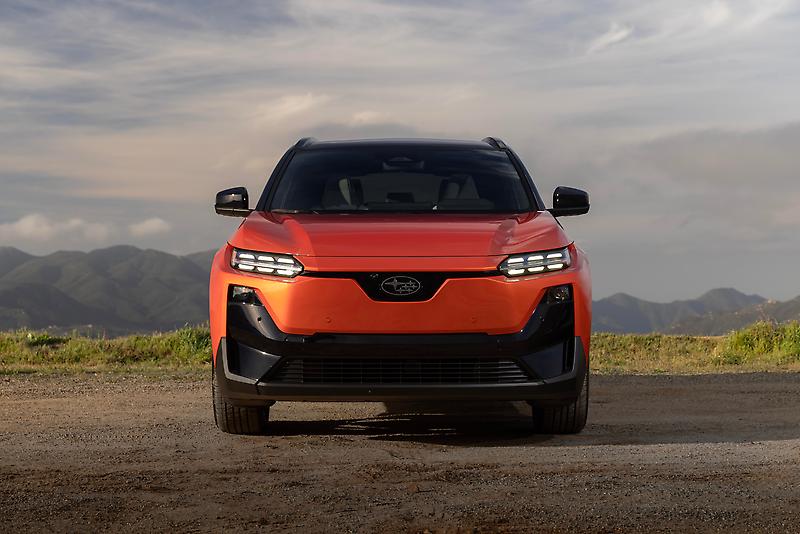
The Subaru Uncharted is a specific Subaru vehicle model. The podcast says you can’t sell it anymore, which is unusual and not something they’ve seen often. That matters because it changes what people can purchase.
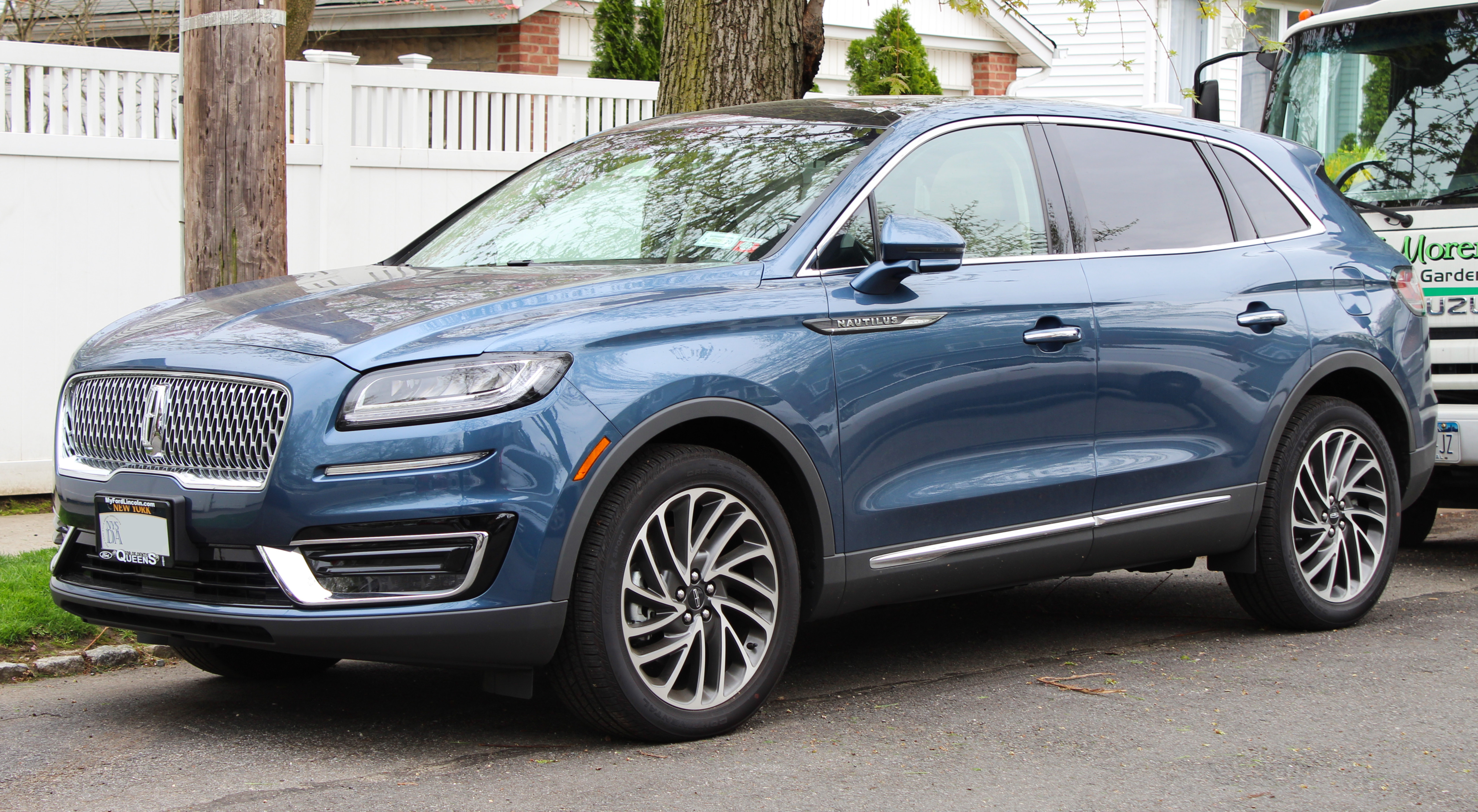
The Lincoln Nautilus is a mid-size luxury SUV. The podcast says it’s now imported from China and mentions authorization paperwork related to it. That can affect how the vehicle is brought into the market and how available it is.
“Quality issues” means the car doesn’t meet expectations—either it’s built with problems or it doesn’t work as reliably as it should. The host suggests the pandemic changed how teams worked, which can lead to mistakes or delays.
The host is saying the pandemic changed how car teams worked. Because people couldn’t collaborate in person, some parts of the design process were harder, and that can cause problems later.
LIVE
This podcast is brought to you by Reynolds and Reynolds.
There are three waves of AI transforming our industry.
Explore what they are, where AI technology is headed,
and what these emerging innovations mean
for automotive retailers at rayray.com
slash ai-waves for more info.
Welcome to this Weekend Drive edition of Daily Drive
for the fourth week in June, 2026.
I'm Jake Nier in Detroit, in for Kellan Walker.
Today on the show, the auto market is holding steady
at the midpoint of 2026, but underneath the surface,
a major share shift is underway that could knock GM
off the top of the sales charts.
A new report says the industry's product pipeline
is thinning out fast, and the automakers
that stay busy now will take market share
from rivals going quiet.
Whole-star dealers are reacting to the news
that their brand is being forced out of the US
and the word coming back is devastated.
And Ford just pulled off one of the biggest quality reversals
in recent memory from 23rd three years ago
to the top mass market brand in JD Power's IQS study.
Joining me today to talk about all of this and more
is Michael Martinez, who covers Ford in the UAW for us
at Automotive News.
Mike, great to have you on.
Thanks, Jake.
And Larry Veliquette, who covers Toyota, Subaru,
and Mazda for us.
Larry, great to have you on here.
I'm sorry, I should say, Larry Legend.
Keep that going here on Daily Drive.
How are you doing, man?
Good, Jake, how you doing?
I'm great, I'm great.
It's great to be here with you guys.
It's nice to see you in front of the curtain for once.
There you go, yeah, absolutely.
Well, Larry, let's start with the big picture.
We're getting close at least to the very midpoint of 2026.
You wrote a sales preview for this midpoint,
and I'm curious, Cox Automotive's midyear read
on where things stand is pretty interesting.
The headline number looks fine,
but tell me what's happening underneath that number.
So yeah, the headline number,
it looks like they're predicting about a 16.1 SAR for June,
which would be fairly consistent
for what it's been this year.
And that really is the surprising thing
for all the turmoil that we're going through
in the industry.
Sales have largely stayed where they are.
Now, the underlying subtext here
is that underneath that top line number,
there's a lot of movement.
We are going to see some pretty large market share swings
among the top automakers.
Hyundai Kia continues to be hard charging
and they have a pretty good opportunity
to finish ahead of Ford, which is stumbled this year
because of the, as Mike can talk about,
the loss of the escape largely.
Stalantis picked up market share for the first time
since 2019, looks to do that
when sales results come in next week.
And one of the most surprising things
is that GM stumbles a little bit in the quarter,
but Cox pointed out that by the end of the year,
that I think the direct quote was,
GM is going to be looking over its shoulder
because Toyota is going to be coming on heart.
And Toyota's got a chance to take the sales ground this year.
Yeah, I wanted to ask you about that, Larry.
Cox senior economist, Charlie Chesbrough flagged that
as something that would be pretty remarkable.
I mean, we've talked a lot in the past
about the Toyota versus GM sales title.
Is this all kind of track with what you're seeing
on your Toyota beat, Larry?
I am going to be very surprised if this actually,
if Toyota actually finishes above GM this year.
And I'll tell you why.
The production ramp up of this redesigned RAV4
is going to take out, we talked about this last week,
going to take out probably 55 or 60,000 vehicles
off its sales total this year, just on RAV,
which is remarkable in itself, right?
When you're talking about a one model
that could be down 60,000 units year over year,
just as they ramp up.
I'm going to be very surprised if they do that.
Now, they have the third plant that's starting up,
that'll add probably 40,000 back into the mix,
but they're still going to be down 55,000.
So I'll be surprised.
Toyota really, I'll be honest with you,
I don't think they want to be,
I don't think they want to win the sales ground.
They did it in January 22, in 21,
that they topped General Motors.
That was the first time they had done it,
that General Motors had lost in 90 years.
And it stung General Motors, they did not like that.
It was a result of the chip crisis at the time.
Toyota felt it later than what General Motors did.
General Motors felt it earlier.
Toyota felt it the next year,
and they were way down, and they haven't come close since.
But the thing about Toyota is,
they're not going to deviate from their plan, right?
Their plan is to get X volumes, et cetera.
And if they happen to top General Motors, great,
but they're not going to gin up numbers to do it.
It's not like the luxury race, the end of the luxury race,
and Mike has watched this every year.
The luxury automakers, when we report yearly sales,
getting them to actually deliver their results
is always a pain,
because they always want to see what the other guy did first,
in case they have to boost their numbers
to win the luxury crown, it's ridiculous.
You're not going to see that this year.
Well, Mike, as Larry mentioned,
Ford is on the losing end of this share picture,
and they're expected to give more ground
between now and the end of the year.
Was it something that you said here on the show,
or is this all your fault?
I'm sure a lot of folks in Dearborn will say that,
but I'll admit, I'm sure there's probably some listeners
saying, hey, Martina was a couple of weeks ago,
weren't you talking about the interview you did
with Andrew Frick, where he said,
hey, we think the market's still really strong,
we're seeing great support for large utilities
and large trucks, people aren't moving away from them,
despite the affordability crisis,
and yet there's these predictions,
they're gonna lose a ton of share.
Larry alluded to it, it does come down
to the removal of vehicles like the Escape,
and also the Edge a couple of years ago.
You have two pretty popular crossovers
that were in the sweet spot of the market,
size-wise, volume-wise, Escape alone is what,
130, 140,000 units per year, you're taking that out.
We reported a few weeks ago that they are getting people
to move up to Explore, but still,
that product isn't gonna appeal to everyone.
Also, you have to look at the aluminum elephant
in the room that has sort of been the subtext
of every Ford story we've talked about
for months on the show, and that's
the F-150 novella situation.
That plant just got going again within the past month,
Ford's just going to be able to start
to get F-150 inventory back in line,
and you talk about a volume player,
that's number one, may not be for long,
according to some of these forecasts,
but Ford builds a ton of these trucks
and to be constrained on top of losing
a few key products in key segments,
it makes sense that their share is gonna go down.
So sort of related to this, Mike,
you wrote about the report formally known
as Car Wars this week.
This is the debut of now independent analyst,
John Murphy's Murphy Automotive Product Pipeline Report.
What's the key takeaway here?
Well, he's noticing a few interesting trends.
One is that the pace of new vehicle introductions
is very low compared to industry average.
It's gonna tick up towards the end of the decade,
but we're sort of in a product desert right now
in terms of new vehicle introductions,
but among the stuff that is being introduced,
and this probably won't come as a shock to people,
it's a lot of hybrids.
We're sort of still dealing with the EV reckoning
at this point, and we've seen how a lot of companies,
not Toyota, a lot of companies have pivoted
to focus on hybrids.
Toyota's reaping the rewards of staying the course,
and that is one thing he pointed out, John Murphy,
is that Toyota's in a really good position here.
He also called out their dealer relationship
and said part of not falling for that EV head fake
was that they listened to their dealers,
and he compared them to companies like Ford,
who maybe did not and tried to push through EV mandates
without the blessing of that network.
And he said, you have franchises
that are very profitable right now
that have higher throughput than anybody else,
and that's a testament to that relationship.
So I'd say there are probably not a lot of big wow moments,
it's a lot of stuff we probably would expect,
but his numbers do sort of bear out
a lot of the trends we've been talking about for a while.
Larry, you've got nicknames for this report.
Yeah, but I'll get to those in a second.
All right, wow, it's a tease to stick around, everybody.
Stick around, everybody, after the break.
No, I just want to point out
that the reason that we're at this drought
is because of the election, right?
We had this election in 2024,
we brought in a new administration,
that administration's policies caused automakers
to tear up their investment plans
and rip up what they were gonna do.
And we've said it many times,
this industry does not move quickly.
And when we asked it to turn on a dime,
we being the electorate asked it to turn on a dime,
it doesn't turn on a billion dimes, right?
It takes a long time to turn and it has consequences.
The reason we don't have product right now
or new product right now is because of the 2024 election
and the changes that were implemented because of that,
except for those automakers that stuck out their plans
and are now reaping the awards.
Now, in terms of the nickname,
I would just say, so John Murphy used to be
with Bank of America, he called this report
which he delivers every year like clockwork.
You used to call it car wars,
but grand opportunity goes off on itself,
but does he call it Murphy Strikes Back
or Revenge of the Murphy?
No, no.
And then ride that into the ground for the next 30 years?
No, he doesn't.
So real missed opportunity there.
Larry, I always pegged you more of a Star Trek guy.
Oh, I totally am.
Okay, so Larry, you said something really interesting
there before the Star Wars thing.
Thank you, I tried, yeah.
This is an interesting kind of crossroads here
for the industry in that case.
So people don't wanna refresh their products
because they don't know what's coming policy-wise, right?
But what Murphy is saying here is, do it.
If you want upside, if you wanna gain market share,
go do it.
So are the bold, riskier automakers
possible winners in this situation
because no one else is willing to pull the trigger?
Wait, are you calling Toyota bold?
It's the phantom automakers,
it's who decides to be bold, right?
Who decides to say, okay, here's our moment to strike
because no one else is going to.
Well, there's that.
That's certainly one way to interpret it.
Another way is that automakers who listened to shareholders
or who chased their share value
trying to be the next Tesla got caught way out ahead
of their skis when the market turned.
And they are now paying the price for that
because they chased stockholders and share value
instead of, like Mike mentioned,
what John said, listening to their dealers
and what was selling, what consumers wanted.
So I think that's really the case here.
I don't ever wanna be in a position to call Toyota bold.
That's not what they do.
Your own automakers are catching some strays here today, guys.
Yeah, that's not what they're known for.
And Jake, I would say, yeah,
maybe it's not so much about being bold
as it is being smart,
which is a thing that has never really changed.
Just because you come out with a product
and you maybe have the only new thing on the block,
the row of dealerships,
doesn't necessarily mean it's gonna sell well.
You still have to be strategic
about the segments you're playing in
and the types of products
that you're offering in those segments.
But is it fair to say that maybe it's time
for some calculated risks?
Absolutely.
I mean, you take a look at what some of these companies
are doing with the background of the threat of China, right?
And I think you could argue some of those
are calculated risks in terms of manufacturing processes
that they've never tried before or low-cost vehicles.
They have been scared to dip their toes into
and we'll see whether or not those are hits,
but yeah, I think they are taking risks.
Yeah, you know what?
I'm gonna jump in here, Jake.
And I'll tell you where,
I've been arguing this for 10 years now,
where there's white space, a small compact pickup.
Slate is gonna try this with its own compact pickup,
but it's a stripped-down model and it's gonna be cheap.
And we're gonna test whether cheap and EV
can do the same thing as cheap ice in a market.
But that small compact pickup,
nobody wants to pull the trigger on it
because they can't figure out a way to make money on it.
Yeah, I feel Slate's gonna be its own separate show.
Yeah, I think so.
I was gonna say, you guys have no idea
how much I wanted to talk about Slate this week.
There was just too much news.
I wanted so bad to have a whole segment about Slate.
It just, we'll have to maybe try to work that in next week
because Kel will still be out
and God, I've got some thoughts
and I wanna hear what you guys think.
But yeah, Larry, you do like those small compact pickups.
Yeah, like the small compact pickups that don't exist, right?
And the ones that do.
And the ones that do, yeah.
Yes, all right, guys.
Well, coming up, we are gonna talk about
maybe some of the more shocking news of the week
and it has to do with Polestar
and whether they'll be even around here in the US
in several months,
that's coming up next year on Weekend Drive.
Three waves of AI are transforming our industry
as we know it today.
Here from AJ McGowan,
Vice President of Research and Development
at Reynolds and Reynolds
on all three waves of AI in automotive,
where we're heading
and what the latest cutting edge innovations
mean for automotive retailers.
So I want you to picture what it would be like
on that same Tuesday morning
that we talked about earlier
with a full agentic infrastructure in place.
Your service manager wouldn't start the day
by reading reports.
Ray hands them three ROs that need attention
and tells them why.
Your sales manager wouldn't spot check calls.
Ray already routed the ones that mattered.
The GM doesn't reconstruct yesterday.
Ray reconstructed it overnight and gave them a summary.
And your controller doesn't have to pull
the ideal level analysis every Friday.
Ray runs it on Thursday and flags anything
that's worth a conversation.
Decisions can get made earlier in the day
with better information by fewer people.
And that's what the agentic wave
actually feels like in your store.
You know, it feels and sounds a little bit
like science fiction,
but at the end of the day, it's not.
It's just a faster Tuesday.
If you're interested in exploring how AI
can improve operations at your dealership,
visit rayray.com slash AI dash waves.
That's R-E-Y R-E-Y dot com slash AI dash waves.
Welcome back to Weekend Drive.
I'm Jake Nier and I'm joined by Larry Veliquette
and Michael Martinez.
Larry, we got to talk about Polestar.
We covered the U.S. ban earlier this week,
the Trump administration denying Polestar's
right to sell vehicles here in the U.S.
after this model year because of its Chinese ownership
and other connections to China.
Our own Irvach Karkaria had a story out this week
with Polestar dealers saying they're devastated.
What's your read on this situation?
This is an interesting show to watch
and it's gonna be for the next several months.
What happens if you're,
it's not your company that yanks your franchise,
it's the government that says,
you can't sell this anymore.
This is uncharted territory as far as I can remember,
whether these dealers are just out the investments
that they made in these facilities.
We certainly had franchises and brands
pull out of the U.S. before.
We've never had one thrown out that I can remember.
So it's fascinating.
I don't know whether or not is there an action
that dealers could take in the court of government claims
against the government because of this decision?
It's fascinating and the more fascinating part
is why Volvo, its sister brand Volvo got its certification
but Polestar did.
I'd really, really like somebody to explain that one to me.
Volvo and Polestar both own by Zhili, Chinese company.
And yeah, like you said,
Volvo can continue to keep selling here as of right now.
Polestar cannot.
Mike, what are your thoughts?
I would really like to know why.
I think there's conspiracies out there.
I don't know that there's a definitive answer
from anybody involved in these talks,
but I think we can only assume at this point
at the end of the day,
it does appear to be the government picking favorites
because there's no other explanation
when you're owned by the same parent company.
And I get that there's legitimate software
and technology concerns with Chinese vehicles.
I get that, but at the same time,
I'm not sure there's, you can be happy with this decision
if you're a fan of the free market
because it is the government picking
and choosing a winner and a loser here.
Just personally on my beats,
I'm really intrigued.
Lincoln, Ford through Lincoln has had to apply
for one of these authorizations for the Nautilus.
As you remember, they now import that from China.
So I would assume, maybe I shouldn't,
I would assume the government would grant that exemption.
But yeah, I'm not really sure.
Although I do think if we're trying to look
at this big picture, I think it really shows us,
we talk a lot about the threat of China,
shows us just how hard it's going to be
for them to sell in the US,
particularly under this administration.
I know in the past, Trump's made some comments saying,
oh yeah, sure, let them come in.
But all the rules and barriers to entry right now
are pretty prohibitive.
So yes, the US automakers need to prepare
if it is ever an eventuality.
But I think this is just another example
that shows there's a lot of hurdles
that have to get over to clear that path.
We'll have more on this as the story develops,
but I do want to get to Ford, Mike.
You were on the show earlier this week
talking about Ford and its initial quality study win
from JD Power.
Talk about some of the stuff we didn't get
to talk about on Thursday.
Walk me through how Ford actually was able to pull this off.
I don't want to brag, Jake,
but we have been writing about some of these factors
throughout the years and the pages of automotive news.
Go ahead, Mike, you work hard every day.
You get a chance to brag.
You don't want to brag.
Come on, man.
We did do a deep dive last year on Bryce Curry,
their top manufacturing exec who came from Johnson Controls.
He instituted bus tours of its US plants
and he walks the floor.
He brings people from all different departments
on these bus tours.
They'll walk the plant floor.
He literally ate food off the floor
after issuing a challenge to people
to clean the plants better.
I remember this, yes.
And it's really just a big way to share best practices
and it's worked.
People have been able to find efficiencies
and make vehicles better than they were before.
Liz Dores, another example.
She's the chief supply chain officer.
She's been holding the suppliers feet to the fire,
getting them to promise to stay at their own high level
of quality to match Ford's.
She's gotten more buy-in from them.
She's brought them to the plants before vehicles
hit production to walk the floor
and see what's actually going on.
And then there's a really interesting factor.
I didn't get too much into,
but I'd like to in the future.
Ford said they basically rehired a bunch
of technical specialists, hundreds of them.
They call them the gray beards.
So you can imagine they're more senior veteran,
former employees that were rehired
to teach all the young whippersnappers
what they were doing wrong.
And most interestingly, to fix what AI was getting wrong.
These AI systems were not trained properly,
the company found, and they were missing
a lot of very obvious defects
or things that would prevent defects.
So they had all these old guys come back in,
type away on the computer,
show the young people what to do in the vehicles themselves
to fix everything.
So score one for humans versus robots.
I think it's a pretty cool story.
Sounds a little gendered to me though.
Do they call the women the gray beards too?
Or is it all men?
That's a fair point.
Take it off with your born.
That's really interesting though.
I mean, that seems like something
that is really thinking outside the box
to address sort of a unique issue here.
And I think at the end of the day,
it is forward admitting
what they were doing was not working.
This was a multi-year process, by the way.
All this started 234 years ago.
And we complain rightfully so about their poor quality.
But if you take a step back,
if you were in that position,
everything they should have been doing
to try to turn it around, they did do.
And I think that led to them being number one.
It's just one study.
It's just one metric.
We're talking 90 days of ownership.
You gotta go well beyond 90 days.
We know people keep vehicles longer and longer.
But this is a really, really good first step
to show that maybe things have changed
for the better there.
Normally it takes longer than 90 days
for your car to get recalled, right?
Ha ha ha ha.
Fair point.
It's true.
For a point, a lot of these recalls
deal with older models, which is a point
Ford's making that's, hey, give us time
to get all these new processes in place,
all these new vehicles that have been coming out
the past few years, should be better.
We'll hold them accountable for that.
Now, I do, before you move on, Jake,
I do just, I stopped to look something up
while Mike was talking.
I just wanted to put this in perspective for, you know,
myself and the other gray beards out there.
I looked it up.
Ford introduced quality is job one in 1981.
Hmm.
1981.
Now, I was, I was in, I was a freshman in high school.
One of us was alive then.
Yes, yes.
Now, one of us was alive.
That's when Ford introduced quality is job one.
And I don't know when it stopped being quality.
When it stopped being job one,
but they barely rediscovered it and good for them.
You know, it's, it's great that they won.
I will say that the, one of the keys,
and Mike pointed out in the story about the issue
that infotainment plays on IQS and it's significant.
and apply it to the company that you are covering Toyota.
Well, one of the companies you're covering Toyota,
which actually ranked below average on this year's IQS.
It had 181 problems per 100 vehicles
against a study average of 175.
So again, that's 181 versus 175 problems.
For the, for the brand that John Murphy just held up
as sort of the gold standard of listening to dealers
and playing the long game, how do you square that?
It's actually pretty easy.
A, it's a infotainment is a big thing.
A lot of IQS is people not understanding their vehicles.
Right, you get a new vehicle and, and you don't know
how it works because your salesperson didn't take the time
or you didn't have the time to fully explain your vehicle.
Larry doing some victim blaming here.
No, I'm, I'm doing a little victim blame as part of it.
Just kidding.
Infotainment, but you know, Toyota's got
its own quality problems.
It's, it's got an engineering call going on
that is serious and, and keeps getting more serious.
And you know, they're still trying to figure out
what the heck's going on with the, with the Tundra
and the Lexus GX engine.
They've got some serious quality issues
like everybody else, many of these things.
And, and I know we've, we've talked about this before.
The pandemic continues to weigh how we designed vehicles
during the pandemic, whatever, when everybody was staying
home from work, that work went on, it went on remotely.
And a lot of the hands on work and collaborative work
that was happening prior to the pandemic
that had to be split up and done remotely
during the pandemic, that has consequences.
And it has consequences for everybody, including Toyota.
Well, guys, let's leave it there for now.
I have a feeling we're going to pick up a lot
of these conversations going forward.
And I really appreciate all the insights today.
It's been a really busy week and I'm glad that we're glad
that we are heading into the weekend now.
Larry and Mike, thanks so much for joining me today.
Thanks, Jake. Go Tigers.
That's all for this weekend drive edition of Daily Drive.
I'm Jake Nieher in for Kellan Walker.
You can get the latest on the mid-year auto market outlook,
Polestar's US ban, Ford's quality turnaround
and everything happening in the auto industry
at AutoNews.com.
We'd love to hear from you.
Let us know what you think of the show
and the topics we covered today.
Send us an email at dailydrive at autonews.com
or leave us a voicemail at 313-444-2774.
And if you enjoyed the podcast, remember to like,
leave a review and subscribe so you never miss an episode.
About this episode
Market talk swings between steady overall sales and big midyear share shifts, with Cox Automotive pointing to “about a 16.1 SAR for June.” Hosts connect the churn to a thinning product pipeline, slower new-vehicle introductions, and Ford’s quality rebound—backed by JD Power IQS. The discussion then pivots to Polestar’s U.S. sales ban, where dealers are “devastated,” and the hosts debate whether the government is “picking favorites.”