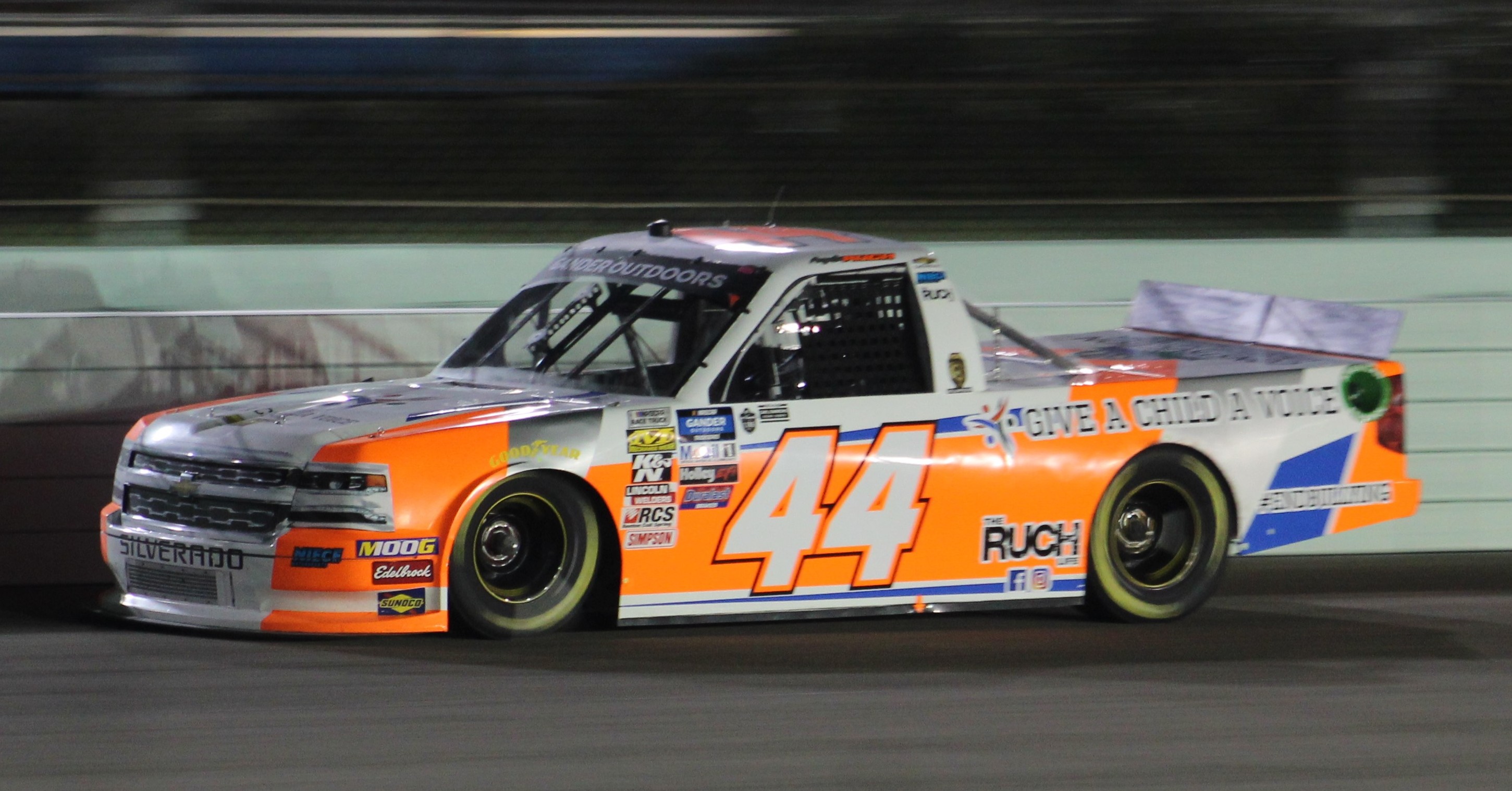
The Chevrolet Silverado is a very popular GM pickup truck. When factories can’t get key parts, it can slow down building these trucks, which hurts sales and profits.
Axles are part of what connects the truck’s power to the wheels. If a supplier can’t deliver them because of a strike, building trucks can slow down—so stockpiling helps for a short time.
“Detroit three” is a nickname for the biggest old-school American car companies. When people talk about strikes against them, they mean Ford, GM, and Stellantis.
Choke points are the “most stuck” parts of a process where a delay causes everything else to slow down. If you hit those, you can stop production faster.
Sean Fain is a top leader in the UAW, the union for many auto workers. Here, the hosts are saying he tends to push hard during strikes to get better pay and benefits.
USMCA is a trade agreement between the US, Mexico, and Canada. The key point here is that it can affect whether cars get lower tariffs based on where parts and value are made.
North American content means how much of a car has to be made using parts or value from the US, Mexico, and Canada. If the requirement goes up, companies may need to change where they source parts.
A US specific floor is a minimum amount of a car’s value that has to be made in the US. Here, the proposal is saying at least half of the value would need to come from US production to get the trade benefits.
A carve out is an exception to a rule. In this case, it sounds like tariffs would be partially eased for cars, but not fully—so automakers could still face some added costs.
They’re talking about a specific date—July 1st—when trade rules are formally reviewed. The idea is that changes to car trade requirements could be decided or clarified around then.
The Maverick is a smaller pickup truck that’s meant to cost less and use less fuel than big trucks. Automakers have to decide if it’s profitable and practical to keep making it. That’s what the discussion is getting at.
“US content” means how much of the car or truck is made with parts from the US. If the rules require more US-made parts, it can cost automakers more money, and that can raise the price for buyers.
Electric pickups are EV versions of pickup trucks. The host is saying people expected them to sell really well, but results so far haven’t matched the hype.
Hybrids are cars that use both gas and electricity. The idea here is that when gas is expensive, hybrids can look like a better deal than fully electric cars for some buyers.
The Escape is a smaller SUV that’s meant for everyday driving. The podcast says Ford removed it from the lineup, which suggests Ford is changing what it wants to focus on. That’s why it’s part of the conversation.
The F-150 is a large pickup truck that comes in many versions. The podcast is saying that even if Ford is changing other models or options, people are still buying well-equipped F-150s. That helps show demand is still strong.
The Explorer is a midsize SUV, meaning it’s bigger than a small car but not as large as a full-size vehicle. It’s a popular model, so its sales can help show whether SUV demand is staying strong. That’s why it’s mentioned in the market talk.
The F-150 Raptor is a stronger, more performance-oriented version of the F-150 pickup. It’s meant for off-road driving and comes with more premium features. The podcast is pointing out the kind of equipment and pricing it’s aiming for.
The Ranger is a pickup truck that’s generally smaller and usually less expensive than Ford’s biggest truck. The podcast is using it as part of a wider discussion about how Ford is choosing what to sell and to whom. That’s why it comes up in the lineup talk.
The G-Class is a luxury SUV that’s also built to handle off-road driving. It’s known for offering comfort features even though it’s rugged. The podcast mentions it as a reference point for what “premium” off-road vehicles are trying to deliver.
“Same zip code” is a way of saying “the same kind of customers.” The hosts mean the Bronco is aiming at buyers who are shopping in the same price/identity space as the G-Wagon.
The Jeep Wrangler is a popular off-road SUV. The hosts mention it because it can be loud, and they’re saying Ford wants the Bronco to be a better daily/trip vehicle too.
“Detuned” means the engine is programmed to run in a different way than the highest-output version. Here, they’re saying it’s tuned to be quieter, while trying to keep the same kind of punch.
“Raptor” is Ford’s more aggressive off-road truck. They’re using it as a reference point for how fast it feels, then saying the Bronco version is adjusted to be quieter.
Carhartt is a clothing brand that makes workwear—clothes designed for trades and tough jobs. The segment is saying Ford is using that brand to market the Super Duty to the kind of customers who wear that style of gear.
Ford Super Duty is Ford’s heavy-duty truck line meant for serious work like towing and hauling. The hosts are saying it matches the audience that workwear brands like Carhartt target.
Filson is an outdoor gear and clothing brand. The hosts are saying Ford is pairing a premium Bronco with Filson because the Bronco buyer is likely into camping and fishing.
The Lincoln Navigator is a big luxury SUV from Lincoln. It’s meant to feel upscale inside, and it’s one of the newer models the host points to as a positive for the brand.
The Lincoln Corsair is a smaller Lincoln SUV. The host is saying Lincoln has fewer models now because it’s been discontinued or removed from the lineup.
The “G wagon” is the Mercedes-Benz G-Class, a very rugged luxury SUV. It’s known for being tough off-road, and the host wants Lincoln to make something that could compete with it.
“Body-on-frame” means the car has a separate heavy-duty frame underneath, and the body bolts to it. It’s often used on trucks and off-road vehicles because it’s built to take more abuse.
“Four by four” means the car can drive all four wheels. That helps it grip better when the road is slippery or uneven, like on trails or in bad weather.
The Bronco is an SUV made for off-road adventures. The podcast is saying that some versions may not be as strong off-road as the top Raptor model. Instead, they might be more about style or everyday use.
The Sierra EV is a pickup truck that runs on electricity instead of gasoline. The podcast is talking about how it’s trying to feel more upscale compared with other electric trucks. That’s why it’s mentioned in the comparison.
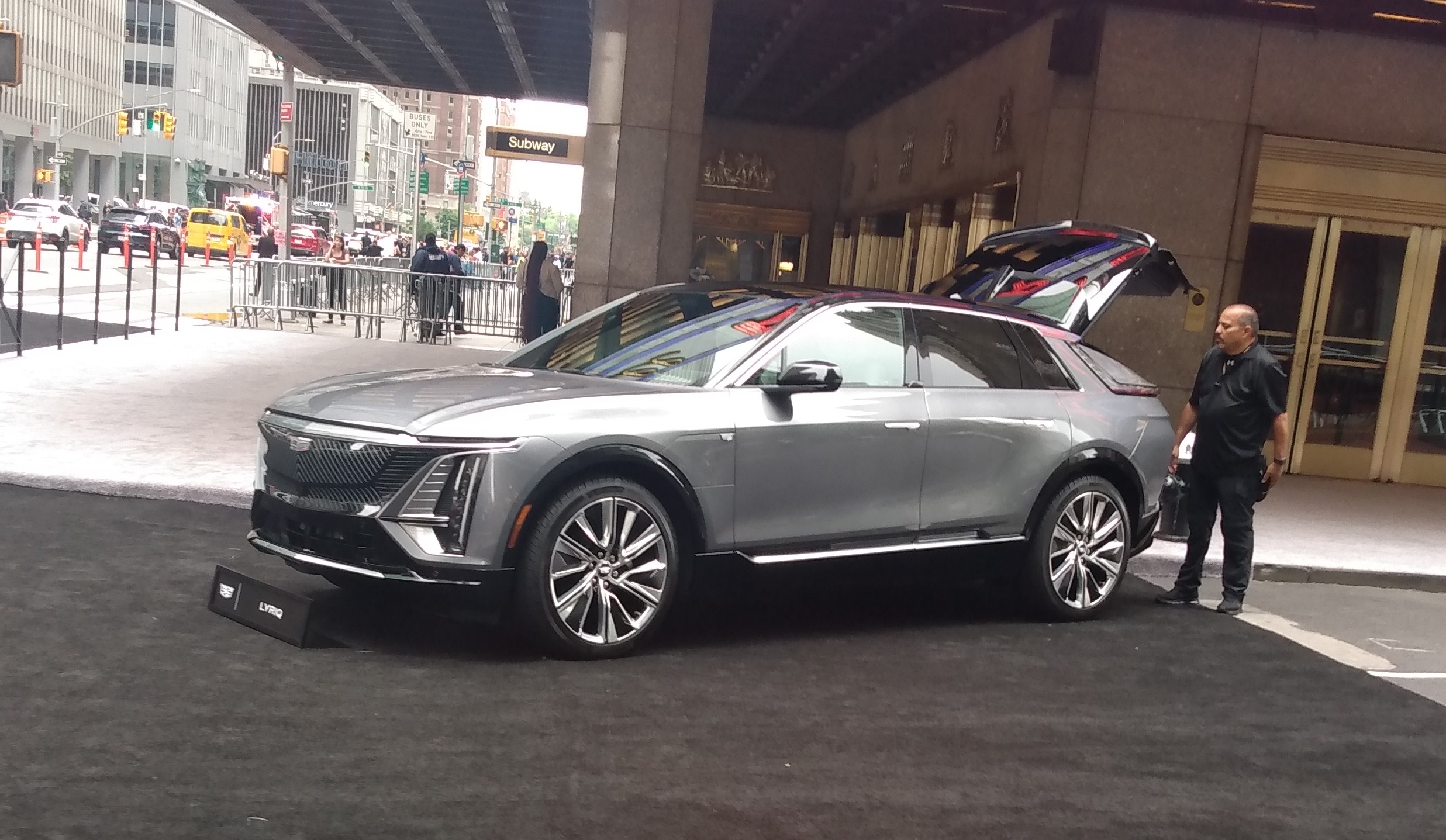
The Lyriq is Cadillac’s electric SUV, meaning it uses electricity instead of gasoline. The podcast mentions it in connection with its introduction and how it was presented. That’s part of the conversation about Cadillac’s electric plans.
Jim Farley is a senior auto executive. Here, they’re using his “no boring products” idea to explain that Lincoln wants to make its cars and branding feel more exciting.
LIVE
Dealers, need more used cars? Fast? With Kelly Blue Book Instant Cash Offer, you can connect
directly with local sellers to win more inventory, improve look-to-book, and lower cost to market.
That's the Instant Advantage. Request a demo today at b2b.kbb.com.
Welcome to this weekend Drive edition of Daily Drive for the first week of June 2026. I'm
the job at the supplier formerly known as American Axel. More trade and tariff developments ahead
of next month's USMCA review, and we got a look at May sales. Here to talk with me all about it
is Michael Martinez, who covers Ford in the UAW for us at Automotive News. Mike, how you doing,
buddy? Doing great. Kelly, how are you? Doing all right. And Hannah Lutz,
assistant managing editor here at Automotive News. Hannah, welcome back to weekend Drive.
Hi, Kyle. Thanks for having me. All right, so lots to get into this week. Let's start with
the labor story that's got the most writing on it for GM. Mike, the UAW walked off the job at the
Doubt Corporation this week, formerly American Axel, at a plant in Three Rivers, Michigan,
that makes axels for the Silverado and Sierra. UAW President Sean Fain made it plain, no contract,
no axels. How serious is this and what's the leverage play here for both sides?
It could be very serious, depending on how long this lasts, because all those axels,
most of them go into GM trucks, heavy duty and some light duty as well. And as we know,
those are the money makers, GMs, trying to catch Ford right now because Ford has some pickup issues,
so they're trying to take advantage and this will make it harder for them to do so.
But you talk about leverage and honestly, in situations like this, the leverage is almost
the same thing and it's staying out as long as possible. For the union, you want to break the
company and really get them to come to the bargaining table and give you what you're asking for
by holding out your labor. But for the company, you want to keep the workers out as long as
possible because they're not getting those regular paychecks. And traditionally, a lot of times,
contracts are up in the fall and the longer you stay out, the worse the weather gets,
morale starts to wear a bit, the longer you go on. So you get more leverage at the negotiating table.
Obviously, a different situation here as we get into summer actually might be kind of nice hanging
out on the picket line from a weather perspective. So I don't know that that incentive is there, but
once these workers go a couple of weeks without a regular paycheck, if they don't have savings,
it may start to hurt. So again, same thing, you want to stay out as long as possible.
None of that bodes well for GM. Now, Hannah, as a former GM reporter, how worried do you think
the folks at GM headquarters are considering this could threaten their money makers, the Silverado
and the Sierra? They're probably pretty worried. I mean, this is yet another disruption to
production and it could be another cost for them amid tariffs and all the other things the
industry has gone through over the past several months and years. But the supplier is trying to
keep going. They began stockpiling the axles at offsite warehouses back in January. That's what
our colleague Kurt Nagel reported. And they have about two weeks of inventory. So that puts them
in a good spot at least temporarily. And then this really jumped out at me that about 250
management level employees have been assigned to work 12 hour days to keep making these parts.
So clearly, they are thinking about their customer and trying to make sure these
pickups can be built for as long as possible until a contract is renegotiated. And the strike
could halt assembly of more than a thousand trucks a day at GM's flint assembly plant.
So I'm sure it's on everybody's minds and they're trying to come to a solution quickly.
Now, Mike, does this feel like the strike could get resolved quickly or is it a longer haul?
No, it doesn't. And I think it's at least going to last those two weeks or whatever
stockpile GM has because we know anything about Sean Fain. When he goes on strike,
he knows what it takes to hurt the company. Think back to when he struck the Detroit three.
He knew what the choke points were. He knew what plants would do the most damage the fastest
to get what his side wanted. And, you know, Kyle, I was thinking about this.
Under the perspective of could this be a sneak preview of what we might see with the Detroit
three in 2028? But more thought about it, the more I think this is sort of a throwback to that
2023 strike. Because you look at this, it's about getting better wages and health benefits
for these supplier workers. I think they're making 22 bucks an hour, which quite frankly,
you know, they might as well go to McDonald's make that much. I think they're asking for 30,
which would still be on the low end. And we know that Sean Fain held out for significantly higher
wage rate for the Detroit three. He's going to do the same thing here, I'm pretty sure.
So I think everybody should expect a pretty bitter and long fight.
Fain has sort of become like a strike strategist of sorts. He's, like you said, like always picking
at the really hot button topics, the things that will will hurt the automaker the most.
And don't forget he's up for reelection in a couple months this fall. So
going on strike, staying on strike, winning a good deal will help boost him politically. So
he has extra incentive to make this hurt. If he doesn't get reelected, Mike, could you see him
getting like a consulting gig? I'm sure he'll be fine either way. I there was talk, you know,
before the last election that if Biden won again, or if Kamala Harris won that he would
seek a job in the administration. So I don't know. He's very politically
active with the UAW. So maybe that would be the route he goes.
So Hannah, this week also brought another wrinkle in the trade picture. The Trump
administration is pushing for 82% North American content and USMCA with a 50% US specific floor
and Canada may not even have a seat at the negotiating table. Then on top of that,
a new tariff proposal came out with a carve out for autos, but not a complete one.
How are you making sense of all of this heading into the July 1st formal review?
Yeah, Kyle, there's a lot to unpack there, a lot going on with trade as usual. So the Trump
administration asked Mexico to raise the level of regional content in North American built vehicles
to 82% to qualify for the preferential trade deal. And they want 50% of that value produced in the
US. So reports suggested that the US would put that same requirement in front of Canada as a sort
of take it or leave it. And you know, although the formal negotiations start July 1st, there's a lot
of informal talks going out. So this is where this came out of an informal talk. And those
content rules would be a big change. The current rule is that 40% of passenger car content must be
made in plants that pay at least $16 an hour, which effectively eliminates Mexico. So that means
40% must come from the US and Canada. So we'd go from 40% made in some combination of the US and
Canada to 50% exclusively made in the US. So that would be a really big shift for Canada. And we'll
know more about all of this after the USMCA negotiations when they officially start July 1st.
Separately, the Trump administration announced new duties on 60 trading partners. So I'll start
with how the auto industry mostly sidesteps this development. And then I'll explain how some parts
are affected vehicles and many auto auto parts that fall under sectoral tariffs or the section 232
tariffs are exempt from this update. Steel, aluminum and copper are also exempt because they
fall under sectoral tariffs. And products that comply with the USMCA rules, which we just referenced
are also exempt. But imports of auto products not covered by the parts tariffs, that could be
electronics, interior materials, sub assemblies, those would be subject to the proposed duties
of 10% or 12.5%. And those could start in July. So it's a lot, a lot of details there and a lot of
different scenarios and situations depending on the vehicle and the part. But for the most part,
the auto industry is unaffected by this update. Yeah, that's a lot to unpack. Mike,
the affordability piece is striking to me. Now, our own John Irwin reported this week that more
than two thirds of sub $35,000 vehicles are built outside the US and international automakers built
nearly nine out of 10 affordable vehicles made domestically. If these content rules tighten,
where does this leave buyers at the lower end of the market? Well, you know, we were just talking
about the UAW. You want to know why all those sub $35,000 vehicles are built outside the US
because they don't have to pay their workers 40 bucks an hour and give them platinum healthcare
plans and all that overtime down there. There's different labor standards, different labor rules.
So that's why. But the upshot is if what the administration wants in terms of boosting
that American content goes into play, we may lose a lot of those sub $35,000 vehicles. And for
anybody who is a proponent of free trade, this is not a good start to this review period. Allegedly,
reportedly what's happening, what the administration wants. It just makes things a lot more complicated
and automakers forward building the Maverick would have to really reconsider. Is it worth it? Because
they'd have to boost the US content significantly, that would raise the price. Should we just bring
it here anyway? Or should we just jack up the price five or 10 grand? GM has a lot of their low
cost vehicles there too. So it's not a good start if you're a consumer looking to lower the price of
your monthly payment on a new vehicle in the future. And also that one point you mentioned that Canada
isn't really at the table in terms of this specific ask. That's not good either, because they're
sort of going to isolate Canada and the industry gets a lot of its parts from up there. So
not inspiring start to what could be a critical period right now.
And I think it's notable too that this report that John wrote about came from Auto's Drive America.
It was their research and they represent international automakers that sell in the US and that builds
in the US. So like Toyota, Honda, Volkswagen, etc. And they are coming out and saying to the
administration like please keep USMCA as it is for the benefit of everyone.
All right, coming up, we'll talk Mays sales and a Ford-Philson collaboration that had Mike
Itching to write a column about it. That's next on Weekend Drive.
Electric pickups were supposed to be a breakout segment, but so far the results have been
underwhelming. So who actually wants an electric truck? Pickup buyers are typically
not going to be the type of people that are excited about electric vehicles.
On this week's episode of the Automotive News Shift podcast, we hear from EV and charging
analyst Lauren McDonald of Charge Nomics. He breaks down why big electric pickups have struggled,
why things might be different for a smaller, more efficient electric truck, and why high gas prices
could boost hybrids more than full EVs in the near term. I'm Molly Boygon. Join me on Shift,
available this Sunday wherever you get your podcasts.
Dealers, need more used cars? Fast? You're not alone. And waiting for inventory to show up
isn't much of a strategy. That's where Kelly Blue Book's Instant Cash Offer comes in.
Backed by Kelly Blue Book's 100 years of trusted valuation expertise, Instant Cash Offer connects
you directly with local sellers so you can win more inventory right when you need it.
And because the experience is transparent and consistent from the first click,
it helps build trust early, before a customer ever walks through your doors.
That trust matters. It sets expectations up front, reducing friction in the appraisal process.
What that means for your team is more control over how inventory comes onto your lot
and more time focused on selling cars, not chasing them. It's a smarter way to source
inventory in today's competitive market, and that's the instant advantage. If you're ready
to connect with local sellers, win more inventory opportunities, and lower cost of market with an
approach dealers rely on, check out Kelly Blue Book Instant Cash Offer. Request a demo today
at b2b.kbb.com slash ICO. Welcome back to Weekend Drive. I'm
Kellan Walker with Michael Martinez and Hannah Lutz. So let's get into May sales.
The first monthly gain of 2026, but not exactly a barn burner. Global data's preliminary numbers
show light vehicle sales were just up 0.6% with fleet doing most of the heavy lifting.
Retail was barely up at all. Hannah, what's your read on where the market is right now?
Yeah, those aren't very strong results, even though it's a little bit of a lift.
Last year, there was some momentum as consumers tried to get ahead of the tariff price increases
potentially. And at the end of the EV tax credit, now we're seeing this big cooling really as the
price of everything climbs and people have to have to budget. Molly Boygon reported this week
that auto sales had a relatively minor impact considering the inflation hitting a three-year
high and overall consumer confidence declining. So for now, the auto industry could be kind of
cushioned because people need cars. But how long can this really last? I think that is what everybody
is waiting to find out in this industry. Mike, Ford was a drag down 14% on weaker truck and SUV
volume. What's going on there? Ford's relatively simple. They obviously got rid of the escape
crossover, which is a big volume driver at the end of last year. So that's hurting them.
Truck sales are down because of that continued fallout from the novellas fire last September
that we've talked about a lot. So sort of you expect, you know, the number that they put out.
Ford says if not for escape, they would have only been down 1%. So you're flat down slightly,
not too bad. But you know, I think it's interesting that story Molly wrote. I mean,
we had a 16.2 million SAR in May. That's really not that bad. As she wrote, there's a lot of
warning signs out there, but the industry doesn't seem to be affected by it as much. And you talk
about Ford. Ford says for all this talk of affordability concerns and rising prices, most of
their customers don't really care that much. They're still buying big trucks and SUVs, and they're
not affecting to smaller products, even though Ford's cutting those options. They still have some
smaller products. They're not moving there. They're still buying those well appointed F-150s and
expeditions and explorers. So as long as that holds out, the market's going to continue to do well.
Ford still says we could reach 16.5 million vehicle sales by the end of this year. That would be an
increase over last year. So the sky isn't falling according to them. And we're seeing that in the
numbers month after month. Yeah, maybe a small fluctuation here or there. But all things considered,
not that bad. Mike, as we mentioned, Ford had a tough May overall, but there is some Ford news
this week that is a bit more upbeat. Now, the 2027 Bronco Philson, a collaboration with an
outdoor clothing brand, starts in the mid $70,000 range. Raptor tuned V6, premium leather seats,
first ever ventilated front seats on a Bronco. Ford is clearly going after the Land Rover and
Mercedes G-Wagon class territory. What's the play here? Kelley, you're a Seattle boy at heart.
You have any Philson jackets in the closet? You know what's crazy? I actually do. I have one and
I haven't worn it in five years because I live in the dead of the desert now. This is not bad stuff.
It's good stuff. This vehicle looks pretty nice. Now, there's no actual Philson products inside
of it. A lot of it's Philson inspired, quote unquote. But this is Ford seeing an opportunity
in the off road market that they haven't tapped yet in the six years Bronco has been back. And
that's the premium side of the market. You referenced some of the players there. Now,
I don't know that this is going to get them there. Even the chief engineer told me he said,
well, we'll be in the same zip code, quote unquote, as a G-Wagon, for example. So again,
I don't know that there'll be a lot of cross shop, but they see there's opportunity to make more margin
on an insanely popular product that they've had for the past half decade plus. And this vehicle
seems to check a lot of boxes for the off roaders. Now, anybody who drives a Bronco or a Wrangler
Jeep for that matter, you know, they're loud. It's not really a pleasant driving experience.
You're doing it because you want to have that vehicle at the destination, at the trail.
They're trying to make the driving experience getting there better. They reduce noise by 20%.
I'm not really sure the metric that they started from, but they say it's a lot quieter.
That Raptor engine you mentioned, it's still going to give you the same acceleration and
power as a Raptor, but they basically detuned it to make it quieter. So a lot of nice leather
wrapped accents, it seems like it'll have a market for sure. And Ford just had that other
event with Carhartt, that was for the F-150, right? Super Duty. Yeah, these two collaborations that
are kind of similar. Yeah, I mean, every company wants to have authentic branding, marketing
experiences with partners where it makes sense. And they, for Ford, they say Carhartt,
a workwear brand based in Detroit, you know, makes sense with a Super Duty,
which is like the workhorse of his truck lineup. A lot of blue collar workers taking that on the
job. Filson and Bronco, a premium Bronco, Filson sort of a premium outdoor clothing jacket hat
experience. They make fly fishing bags when you're going out camping on the river.
So they like to think their Bronco customers would be inclined to purchase a Filson jacket.
Mike, you wrote a column about this specifically that there's a Lincoln angle here. What's that
all about? Yeah, I'm telling you, producer Jake might want to clip this for social media,
because I have a take. All right, let's hear it. No, seriously though, when was the last time we
talked about Lincoln, either on this show or just for those who are listening to this podcast in
general? When was the last time Lincoln was super relevant? It's been a while. Listen, I've been on
that journey with them. I've been covering this company for over a decade. In the mid 2010s,
they did sort of come back from the brink. They had really nice vehicles, excellent interiors. They
had this whole quiet flight DNA that they built the brand around. EVs sort of undercut them because
every EV is quiet, even if it's just a base mass market product. But anyway, they've kind of stagnated
since the pandemic. Yes, the new navigator is really nice. They lost the Corsair. They're down to
three products. So I think Lincoln needs a shot in the arm. They need a showstopper. Ford's saying
there's a lot of opportunity in the premium off road space. That's what this Bronco Filson is
supposed to do. I'm saying use it as a test run to do a true G wagon fighter, make it a Lincoln
brand four by four body on frame off roader. Let's do it. But when I think of Lincoln,
Cadillac, I think of luxury, right? So do you think that's a little outside of the scope for
Lincoln to go into the off road space? It would be, but that's the point. They need to do something.
They were celebrating a couple years ago that they finally surpassed 100,000 sales units.
It's small potatoes. They need, like I said, that jolt of adrenaline. It's not in their
wheelhouse today. That quiet flight, quiet luxury idea is still guiding their designers.
But you mentioned Cadillac, Lincoln. It's not just luxury, it's American luxury.
Maybe redefine what American luxury means. What outside of the luxury market, what does American
mean for vehicles? Large trucks, SUVs, again, the off-roading space is insanely popular. More
and more people are getting into it. Do a luxury off-roader. Now it's not going to be as capable
as a Bronco Raptor. Maybe it would just be for show, just like truck buyers don't do truck things.
I'm sure, you know, G wagon buyers aren't going off-roading constantly, but this could scratch
an itch that Ford seems to think is out there. And like I said, I think it would get a lot of
people talking, which is what Lincoln needs. Yeah, I see where you're going with it. I think
thinking about GM and comparison. GMC is not the level of luxury that Lincoln, I mean Cadillac
would be more of a comparison. But the GMC Sierra, I think is pretty, you know, premium or like a
luxury version of a full-size pickup. And, you know, they market that as it can be an off-roader.
Same with the Hummer. When I went on the Hummer Drive, there was an off-roading course that's
much more rugged than probably anything out of Lincoln might be. But it shows that these like
really expensive, high-class, like refined type of vehicles can do that potentially.
Now, I see the skepticism in Kell's eyes. I see that he's not buying it. Go ahead.
Because when I think of off-road Lincoln vehicle, I'm like, oh, we're making off-road vehicles now
for boomers. I remember, and producer Jake, correct me if I'm wrong, this might have been
four years ago, we had interviewed the lady that was head of the, I did interview with the lady,
she was the head of the marketing for Cadillac. And this is when they were gonna put the lyric out
and do that whole thing. And I specifically told her, I was like, you guys are trying to make me
not think of my grandfather when I think of a Cadillac. And she goes, no, she goes, you're
exactly right. She goes, we're trying to get this younger audience, their commercials were
for the lyric were very colorful, very like had EDM music and was trying to gain this younger
audience. Now, I feel like if Lincoln were to do something like this, that would be the route
they would have to take. Because when I think of Lincoln, and I think most people, when they think
of Lincoln, they think of old folks, you think of your grandparents, you think of your parents,
your aunts and uncles, right? Got two things for you. One, what if I told you the youngest buyer
for Lincoln, or the vehicle that attracts the youngest buyer is their biggest vehicle, it's
the navigator. So the young buyers are already interested in maybe something a little bigger,
maybe a larger SUV. But again, I just I don't think this is that farfetched, because what if I
told you this almost happened four years ago, there's a little reporting nugget for you. I
never did a story on this because needed to firm some things up. But according to people who were
in the room, Lincoln executives showed a group of dealers, a bunch of future product, some of it,
which has come to pass, including that new navigator. In the corner, there was a very clear
boxy SUV, it was under a silk, and they never removed that silk. And I the only thing I don't
know if they just meant it as a design exercise to say, Hey, here's what we're thinking about,
or if it really was a sneak preview, but it was very clear to the dealers who saw it what it was,
it was a Lincoln Bronco, Bronco Lincoln, whatever you want to call it, even if not a Bronco, at least
an a boxy off roader. Apparently, Lincoln do it didn't do it at the time, because the top brass
within the company didn't think it fit with the design ethos of Lincoln. But what I'm saying now,
Jim Farley has the no boring products mantra. Lincoln has a new president who told me back in
January, he wants to take the branding quote a more exciting and emotional direction.
I think this would fit. All right, Hannah, Mike, this was great. Thank you so much for joining me.
Thank you. Thanks, Joe. All right, that's all for this weekend drive edition of Daily Drive.
Thanks to automotive news executive producer Jake Nier for his help on today's podcast.
You can get the latest news on the UAW strike,
USMCA trade negotiations and everything happening in the auto industry at autonews.com.
We'd love to hear from you. Let us know what you think of the show and the topics we cover today.
Send us an email at dailydrive at autonews.com or leave us a voice mail at 313-444-2774.
And if you enjoy the podcast, remember to like, leave a review and subscribe so you never miss an episode.
About this episode
A UAW walkout at a Michigan axle supplier is framed as a leverage play—“no contract, no axels”—with potential knock-on effects for GM truck output. The hosts connect strike timing to inventory and quantify how disruption could reach “more than a thousand trucks a day” at Flint. They then pivot to USMCA and tariff proposals, including higher North American content and a partial auto carve-out, and discuss how those rules could influence pricing and even EV vs hybrid demand. Sales updates and Ford’s Bronco Filson follow.