Annotations will appear as you listen
0:00
59:36

Car
Ferrari 250
Car
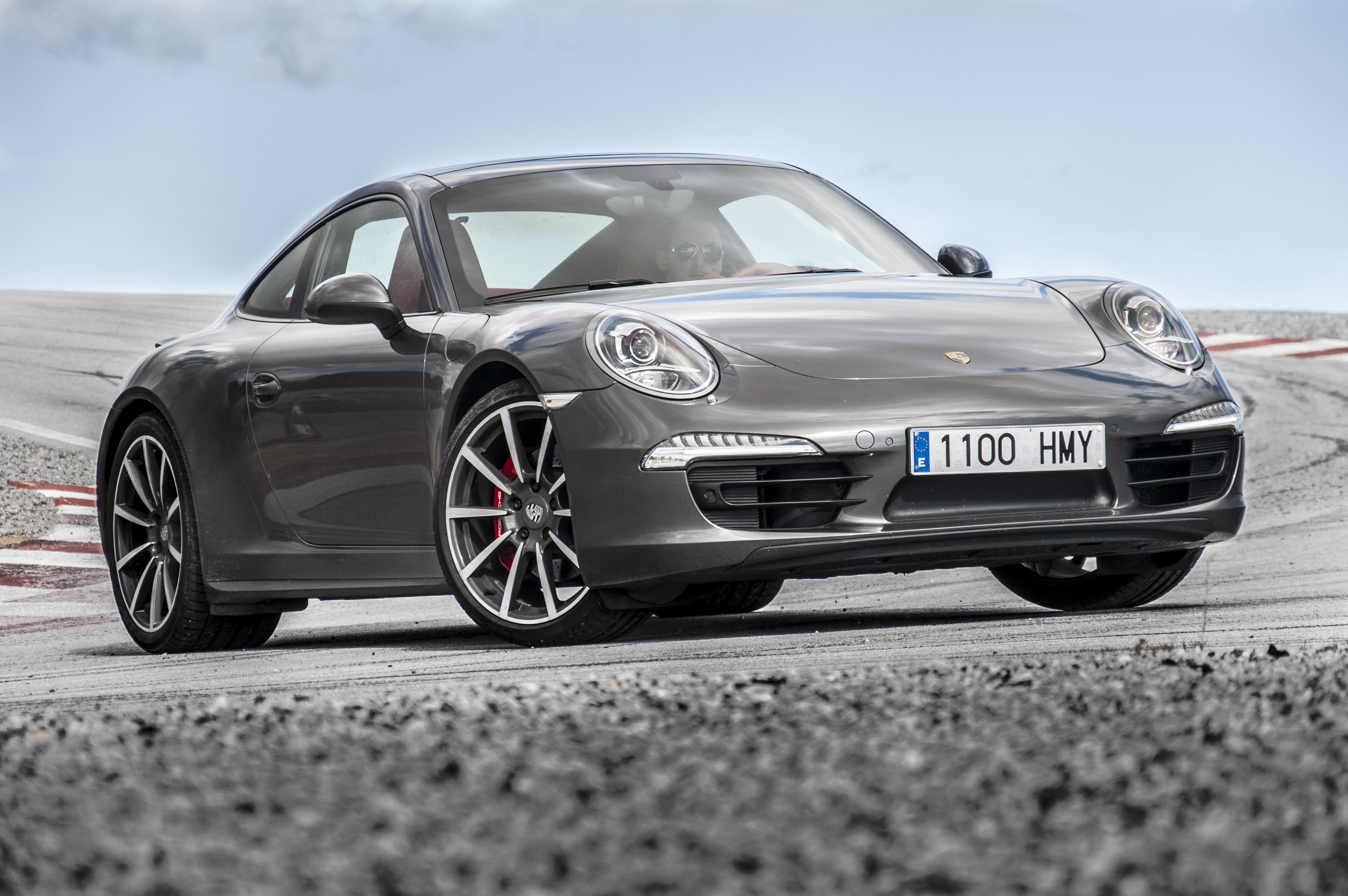
Porsche 911


Car
Jaguar Etype


Car
Ford Taurus


Car
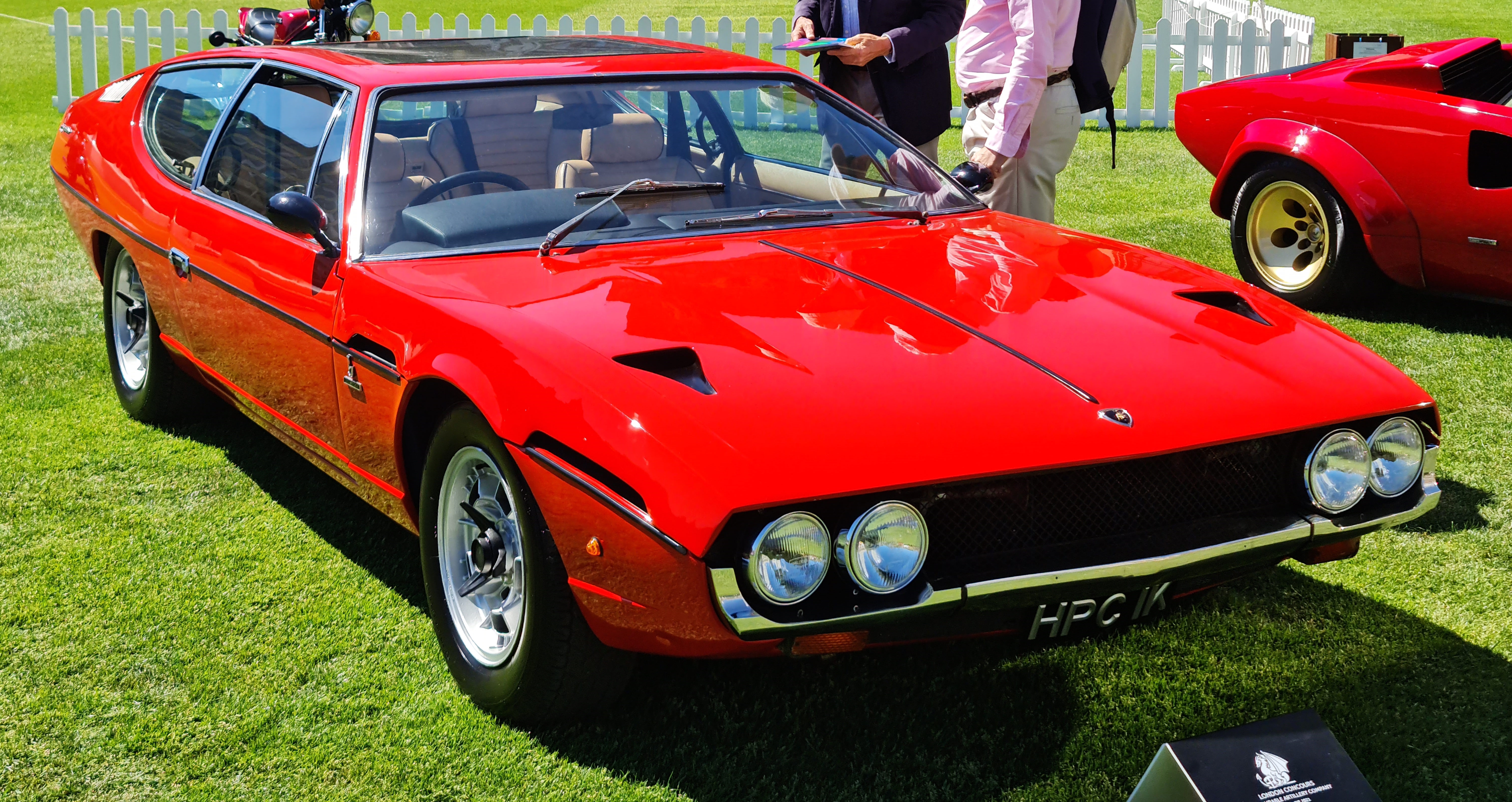
Lancia Stratos

Car
Audi Quattro


Car
Dodge Charger


Car
Porsche Cayenne

Car
Lamborghini Urus

Car
Tesla Cybertruck
LIVE
I had that dream again.
My small business needs to hire, but I don't use LinkedIn,
and I hire an energy vampire.
But also, they're a literal vampire,
and suddenly my team is spending all their time
sharpening wooden stakes and buying bulk silver
and rehearsing ancient chants, and then I wake up.
Don't let hiring nightmares ruin your dreams.
LinkedIn Jobs' new AI assistant takes insights
from over one billion professionals
to create a short list of the best fits for you.
Post your job for free at linkedin.com slash quality.
Start hiring today with LinkedIn.
Hey, how you doing, everybody?
Today we're talking one of the coolest car brands around.
You know them.
You love them.
Ferrari loves to hate them.
It's the one and only Lamborghini.
We're gonna find out how this company started.
How did Ferruccio Lamborghini go from building tractors
to building some of the baddest cars on the planet?
We're gonna find out.
Let's get into it.
Ah!
1963, Maranello, Italy.
Ferruccio Lamborghini, founder of Lamborghini Trattori,
is dissatisfied with his Ferrari 250 GT,
and he needs Ferrari to know.
He can look past the noisy interior and rough ride,
but the car's clutch is a thorn in his side.
To Ferruccio, this clutch is inferior
and has no place being in a top-of-the-line sports coupe.
In fact, he's had to bring it to Maranello
multiple times to be rebuilt.
Ferruccio sits down with Enzo Ferrari
with a simple request.
Maybe consider redesigning his car's clutch?
This does not sit well with Il Commandatore,
and the meeting soon erupts into a shouting match.
Then, Enzo mutters a few words that would change the future
of the Italian sports car industry forever.
Stick to making tractors.
How did Ferruccio get his start making tractors,
then pivot to supercars?
Which Lamborghini model was the first to beat a Ferrari?
And how did the company survive
so many financial disasters?
Grab an espresso and buckle up.
This week, PASCAS on Lamborghini.
["PASCAS"]
Welcome back to PASCAS, everybody.
My name is Nall, and Sykes joined
by Bart Bidlingmeyer.
What's up?
Hey guys, how you doing?
And Joe Weber.
Spaghetti alla bucatini.
Those are two types of spaghetti, one of my sayings.
I thought you...
Spaghetti alla bucatini.
I tried, guys.
Well, you do...
Spaghetti is my favorite.
What you do is you take the spaghetti
and you put it inside the patini.
That's spaghetti alla bucatini, wow.
Very high in it.
Do you know any Italian, Joe?
I know, I know this one guy, Giuseppe.
I called Joseph, our editor, Giuseppe, and he goes,
that doesn't even mean Giuseppe, and I go, yeah, it does.
I know Italian from...
I know Italian that's been like...
It's like Spanglish, just from my grandma and, you know.
In Italian?
In Italian.
But we have a bunch of little isms that we say
in our family, like, gulufiduzu,
which means like ass face.
Every...
It's basically you take an Italian word
and you put a U on the end
and that's like a Sicilian ism.
But for the longest time, my great-grandma
called the bathroom, the Baccauzzi.
We're like, oh, that just means bathroom in Italian.
And then we realized that she was saying back house
with an accent.
So like, out house.
Gotcha.
Yeah.
Nice.
Yeah, but yeah, we say like,
Asjadu is like heartburn.
Oh, I got Asjadu from the beat balls.
We say like, I don't know,
there's like, I can't think of them now,
but in the moment, yeah.
There's probably like 40, 50 of them that I say regularly
and Emily's like, what'd you just say?
Baccauzzi.
And you, Bart, do you know any Italian?
Just pasta.
What's your favorite pasta, Bart?
I really like bucatini.
Bucatini is awesome.
I really like a pappardelle.
I was gonna say, that's my second favorite.
Dude, that's such a good-
Nice white noodle.
Yeah.
It's like Italian Patsy U.
There's also, I think it's something
between a fusilli and a bucatini.
It's a hollow curved, real tight-
What's that, ridges?
There is one.
There's so many.
I know.
I do like the one with ridges,
but also there's the one without.
And also just an angel hair,
Primavera would be,
that's just very good with a shrimp.
Angel hair is pretty low on my list.
Yeah.
But I think everything's got the right,
you need to use a different sauce
and different ingredients with each pasta,
which I, so like, yeah.
I love the-
I enjoy the freshness and simplicity
of an angel hair where it's,
especially when you cut it on to break it up
into little pieces before you cook it.
No.
No, no, no.
I think the best noodle for mac and cheese
is the curved, the corkscrew one.
With the ridges.
With the ridges.
Yeah, yeah.
It holds the most sauce.
Yeah.
The ridges hold sauce.
Yeah.
That they do.
This is not a pasta podcast though.
This is a history podcast.
This is what we're talking about the-
Pasta cast.
Pasta gassa.
Pasta gassa.
Ooh, okay.
We are talking about Lamborghini today,
so maybe we should go around and say
what our favorite Lamborghini is.
Yeah, sounds good.
Coontosh.
Coontosh?
Yeah.
Okay.
Because of everything, from what it symbolizes,
I know it's not, at the time,
it was certainly technologically pretty impressive.
Not so much anymore.
Yeah.
But I think, yeah, just, such a cool,
and that's again, that was what was the poster.
Right.
You know, like, wow.
I think everything since then,
of course, beautiful, wonderful cars,
but they all kind of, they needed that.
They needed the Coontosh.
Absolutely.
It's kind of funny how they've been basically
the same car for the last 50 years.
You know, my favorite is-
Well, sorry, I mean, in that way,
like the Coontosh is almost like the 9-11
of Lamborghini, if you will.
Like that's the, that side profile,
that shape, like the mid-engine,
just philosophy has like trickled all the way down
into the, what do they even call it these days?
Their flagship.
Oh, Rivolto?
Rivolto.
Yeah.
Nice, Joe.
Yeah, a really good memory, by the way.
Thanks for random stupid shit.
But what I meant is like,
it's been the same wedge shape with scissor doors
and a V10 or a V12.
V12, yeah.
For the longest time.
It's just been so good.
And then like the biggest jump in technological advancement
was all-wheel drive, and that made it so good.
So I think my favorite, just my heart wants to say
the Diablo, but I think the Mercilago
with a gated shifter is the best one.
I'm with you on that.
When I was like 12 years old,
me and my buddy Andrew would be playing
Need for Speed Carbon, listening to Dane Cook on CD.
And I was like, I want to be a stand-up comedian.
I want to move to LA.
I will get rich and famous,
and then I will buy a Lamborghini Mercilago.
Oh, that's fun.
So like, this is the part where he humps the stool.
Yeah.
Yeah.
I'll hump a stool too.
And then get my Lamborghini.
It's as simple as that.
Yeah.
So anyway, but the Mercilago is still my favorite one.
I remember when you got on stage
and you humped that stool and everybody was like,
boo, we've seen it.
But he still got the Mercilago.
I did do stand-up like three times.
That was a lot of fun.
Yeah.
You got a good reaction too.
Yeah, dude.
Yeah, at the belly room, at the comedy store.
Yeah.
Crushed it, dude.
You did.
That was still chasing that high.
That's what it is.
You're like, you go out night after night
and you're like, I just want that first big laugh.
Let's get into the history of Lamborghini.
On April 28th, 1916,
Ferruccio Lamborghini was born
in a small farming town outside Modena
in northern Italy.
Ferruccio's parents were grape farmers,
which meant he spent his formative years
working in the family vineyard,
helping grow and harvest grapes for local wineries.
But as time went on,
Ferruccio became increasingly more interested
in machines than grapes.
In fact, he would regularly disassemble
perfectly functioning farm equipment
and put them back together just to see how they worked.
As he reflected later in life, quote,
from a very young age,
I knew how to fix anything that moved or didn't move.
Inspired by his interest in all things auto,
18-year-old Ferruccio chose to study engineering
at Fratelli Tadea Technical School near Bologna.
He wasn't the most brilliant all-around student,
but Ferruccio's passion for experimenting with engines
combined with his farm bread practical thinking skills
proved to be more than enough to excel
at the most important thing,
learning how to build automotive machines.
As he finished college, Lamborghini's mechanical towns
turned out to be even more useful than he expected.
World War II brought with it the desperate need
for guys on the ground
who could repair broken war machines.
Enter Ferruccio, who was drafted
into the Royal Italian Air Force
and assigned to be a mechanic on the Isle of Roads.
Which I didn't understand.
That was under, I mean, still under Greek Roads.
Very close to Turkey.
Oh, is it? Okay.
Yeah, because the Axis powers as some appeasement,
the British agreed to let like the Nazis,
and I guess the Italians take over the Mediterranean
to kind of like keep them busy.
This is your stuff.
Wow.
You know, they were preparing to defend Britain
and their allies.
Like when I went to Crete,
I got to, I took a ride with a taxi driver.
He was taking my wife and I to a beach
and he actually showed us a few different options
and gave us like a history lesson basically
of the island.
It was awesome.
That's really cool.
Apostolos was the driver's name.
And he explained that, you know,
a lot of these Greek Isles,
like if they weren't under Greek control,
like, you know,
they kind of have their own national identity,
like Cretians consider themselves Cretian
rather than Greek.
Right.
Greek Cyprus has Greek Cypriots,
but they also have Turkish Cypriots.
Interesting.
Yeah.
So anyway, like long history,
like the Nazis were not the first people
to occupy these islands.
Like all, a lot of these islands have been occupied
by many different Ottomans for them.
The Italians.
Just a bunch of couches everywhere.
Yeah.
And the Italians here in Rhodes.
So, yeah, anyway.
So Ferruccio Lamborghini stationed on Rhodes
being one of those Italians.
During his time in the war,
Ferruccio worked on everything
from transport trucks to massive generators
and often had to scavenge parts
and it improvised repairs
which only expanded his mechanical knowledge.
Even after Mussolini was overthrown
in Italy's switched sides in 1943
and Ferruccio was taken prisoner by the Nazis,
his experience in the shop
proved to be incredibly valuable
as he avoided the horrors of grueling work camps
by being assigned to maintain machinery for the Germans.
I don't really know like the Italian side of World War II
as much as I should.
I don't mean either.
But I didn't realize that Mussolini fell
like a couple of years before the war ended.
Mussolini was overthrown.
I didn't know that either.
Following the end of World War II
and his release from captivity,
Ferruccio Lamborghini returned home
and opened an engineering workshop.
Italy was in shambles after the war
and they desperately needed their agricultural industry
to get back on track.
So Ferruccio decided to return to his farming roots
and focus on creating tractors
out of old military equipment.
Lamborghini Trattori was born.
Like a baby.
Oh, nice.
He was born.
Two years later in 1948,
Lamborghini debuted his new machine, the Garioca.
This ultra-modern tractor could not only quote,
pull twice as hard at half the size according to Lamborghini
but also maximize gas mileage
thanks to its new fuel atomizer,
which started with gas, then switched to a distillate fuel.
I don't know, that just seems like a carb, doesn't it?
Yeah, but it sounds like it must be mixing
maybe ethanol with gasoline.
You know, it's making something before it hits the carb.
Checking quotes atomized it, I think it's a gimmicky name.
I don't have the answer, but that's what it sounds like.
Sounds good to me, Bart.
Well, yeah, distillate fuel would be ethanol, right?
By 1949, Lamborghini's two, three and four cylinder tractors
were being used across Italy.
Along with their revolutionary power and fuel efficiency,
the machines also had interchangeable components
which helped with a variety of farm and construction work.
Business boomed for Ferruccio throughout the 1950s
as Lamborghini Trattori became an industrial powerhouse
in Italy and the rest of Europe.
It was during this run of success
when Ferruccio's taste for the finer things led him
amassing a collection of the best sports cars of the time.
In his garage, he had Alfa Romeo's, Lancia's,
a Mercedes 300 SL, he had two Maserati 3,500 GTs
and a Jaguar E-type and of course, a few Ferraris.
Lamborghini admired Ferraris but after the engineer
he also had a few ideas for how to improve them.
In an interview, Ferruccio did in 1991,
he said, quote, all my Ferraris had clutch problems.
When you drove them normally everything was fine
but when you're going hard,
the clutch would slip under acceleration.
It just wasn't up to the job.
Lamborghini modified his 250 GT extensively, quote,
I bought a bigger clutch from Borgen Beck
and had it fitted in the tractor factory workshop.
We then discarded Ferrari cylinder heads.
I had them replaced by heads of our own design
with twin camshafts.
That's nuts.
Then we put the engine back in the 250 GT
and fitted it with six horizontally mounted carburetors.
Damn.
Yeah.
That's awesome.
That's crazy.
We would be doing 230, 240 kph is about 150 miles an hour
and then we would start to pull away from them.
My Ferrari was at least 25 kph faster than theirs
thanks to our four cam conversion.
Good Lord.
Lamborghini certainly had solutions to offer.
So in 1963, he drove his 250 GT 30 minutes
to Ferrari headquarters to talk to the man himself.
From the interview, Lamborghini recalled, quote,
the problem with the clutch was never cured.
So I decided to talk to Enzo Ferrari.
I had to wait for him for a very long time.
Ferrari, your car's.
He was making buccatini.
I'll, I'll, I'll spaghetti.
Spaghetti.
Ferrari, your cars are rubbish.
I complained.
Ilca mandatory was furious.
Lamborghini, you may be able to drive a tractor,
but you will never be able to handle a Ferrari properly.
You stick to building tractors.
You don't know anything about sports cars.
Oh my God.
I feel like he went to, to kind of help him out.
You know, like, hey, you know, I did these things
and I think you might.
And then I feel like Ferrari took offense to that
and that's how it escalated to.
Yeah, well, your car is a crap.
Yeah.
And well, I mean, Enzo famously had a very big ego
was, was, you know, a narcissist.
I wonder if the shoe is on the other foot.
Right.
If Ferrari came and was like, your tractors suck.
Like, can you switch this up?
Would Lamborghini be as receptive as he thinks?
I have a feeling, probably not.
Probably not.
These are some fiery Italian, you know, entrepreneurs
coming out of post-war Italy.
Like they're just going to argue.
Lamborghini said, quote, this was the point
when I finally decided to make a perfect car.
After a showdown with Enzo,
Ferruccio wasted no time in following through
with his lofty threat to make a sports car
that could rival Ferrari.
Consider this, Ferrari is at the pinnacle
of sports car manufacturing with cutting-edge technology
trickling down from their championship
winning mortar sports team.
And this tractor manufacturer has convinced himself
that he has what it takes to make a better car.
One thing Ferruccio knew you wanted to do differently
than his new rival was to avoid the money pit
that is high-level motorsports.
Quote, I didn't care much about racing, said Lamborghini.
I cared about building something better, something perfect.
This was the last time Enzo ever said a word to Ferruccio.
In May of 1963, Lamborghini opened a 12-acre manufacturing
plant in the Santa Agata Bolognese
and named it Automobili Ferruccio Lamborghini S.P.A.
This plant is located between the cities
of Modena and Bologna in a region of Italy
known as Tere di Motori or Engine Country.
It's funny that every country has, like, Motown.
Motown or what was the Russian one where Lada was built?
It was like Motori or something like that.
It was named Engine Country because Maserati, Ducati,
and Ferrari were all headquartered around the area.
Ferruccio needed engineers and lucky for him,
he didn't have to look far because it turned out
that he wasn't the only guy that Enzo Ferrari
had managed to piss off.
Shortly after their infamous meeting,
a group of Ferrari's most trusted designers and engineers,
legends Giotta Bizzarini and Carlo Citi among them,
approached Enzo and told him that his wife, Laura,
was getting too involved in his business affairs.
It didn't take long for Enzo to decide who to support.
I actually know a Laura Ferrari.
Really?
Yeah, I was an improv group with her for a long time.
Any relationship?
No.
Oh.
Enzo promptly fired all the engineers on the spot,
which was some good fortune for Lamborghini.
With a factory built and a stable
of experienced mechanical minds on hand,
Ferruccio-
Why don't you just stick to building tractors?
You'll never be able to build a car.
You don't have the right people.
Here's the people.
Not great, man.
Yeah.
Ferruccio just needed the right designer.
With tons of brilliant designers in Italy at the time,
the decision came down to pure vibes.
Lamborghini said of Franco Scaglioni,
quote, he arrived at my place in a big shiny Mercedes,
immaculately dressed and accompanied
by a breathtakingly beautiful secretary,
quote, your car will be ready in a week, he told me.
So I gave him the job.
Scaglioni penned the design for the GTV concept
while Giotta Bizzarini built the engine.
Dude, what a player.
Just going to a job interview.
Yeah.
With some high candy.
Come on, dude.
I'm still on the guitar guys being turned on by Les Pauls.
Look at the curves.
He got out of Mercedes with a nice suit
and a Les Paul on his shoulder.
He was John Bonamassa.
We'll be right back after these messages.
Every day at Sierra, you'll find top brand apparel, footwear,
and gear for 20% to 60% less than department and specialty
store prices.
And during clearance time at Sierra,
those incredible prices are 40 divided by 2.5
carry the one even lower.
And when you shop clearance at Sierra,
you can save a whole lot more on everything you need
to get active and outside.
That's a lot of saving.
Epic brands, fast selection, teeny tiny prices.
That's Sierra.
Visit your local Sierra store
today or shop online at siara.com.
Looking to create the bath you've always dreamed of
without all the hassle?
The Home Depot makes it easier.
Shop fully styled rooms and curated collections
to bring your vision to life.
Use digital tools to preview flooring
and finishes in your space
and get everything you need from tubs to tile
delivered fast and priced right.
The Home Depot.
Dream baths built here.
Now back to the show.
The Serene, who himself had worked on the Ferrari 250 GT
which was the catalyst for this entire situation
designed a three and a half liter aluminum V12.
It featured four valves per cylinder,
six downdraft Weber carburetors
and a four cam design which is a poke
at Ferrari's single overhead cam per bank.
The prototype engine Beatsudini developed
can make 400 horsepower and rev to a staggering
11,000 RPM.
Holy shit.
In the 60s.
So, okay.
I'm stuck on the overhead cam thing.
Okay.
Explain to me like I'm a huge dumb idiot.
Okay.
Why couldn't you just have more lobes
on a single overhead cam
instead of having two different cams
controlling the rockers?
You know what I'm saying?
I don't know this engine
but you can also have more exhaust port.
Your exhaust valve and your intake valve
you can have two of each.
I don't know if that's what you did.
That's what I'm assuming that there's
there's a two intake exhaust.
Yeah, because there's four valves per cylinder.
So then the cams that are controlling
the valves going up and down.
Why do you need two cams?
Just to take pressure off of one cam?
Well, because you're going to have
you've got an intake valve
and the exhaust valve that are alternating.
So if you've got two, if you have two cams,
it's to make use of the room of the head
because you've got the holes in it for the cams.
So if you've got the exhaust,
you can have an intake and exhaust valve
on the same side.
You could have an intake and an exhaust
and then on the other side
you can have an intake and an exhaust.
You could also change it up
and just do exhaust on one side.
Exhaust on the other.
But it gives you those more options
so that you can get more airflow
and you can use different timing
depending on which cams you want to...
Okay, that makes sense.
It also...
I mean, depending on which valves.
I don't know what you're saying.
Yeah.
If you were to have one overhead cam
and still four valves per cylinder,
it would kind of limit you
because you'd have to put them pretty close together.
You wouldn't do it because...
You can put them further apart
or play with the spacing if you need to.
Okay, I get it.
A single cam runs down to do push rods.
So you're pushing up on different sides
to push down the valves.
The evolution of that was like,
well, we're going to do overhead cams
so we don't have to use a single cam with push rods.
Now you don't have push rods,
so there's less to fail.
And so all Ferrari did was take that idea
and say we can use more valves now.
So now we have double overhead cam.
Lamborghini said that.
Yes, sorry.
Lamborghini said we can evolve that
to have double overhead cam.
Okay, so Lamborghini just improved on Ferrari's design.
Yes.
Okay.
I mean, literally,
because it was the same designers that worked at Ferrari.
Yeah.
So they're like,
you got a pretty good idea.
Like, let's keep going with that.
Let's follow that and improve upon.
That's cool that they were able to recognize that
and be like, oh, this is,
because Bizarini was the one who developed the Ferrari engine.
Well, I wouldn't even be surprised if Ferrari was like,
stop, this is good, you know?
And like, we have an engine.
So we're going to use this engine.
And I have the sense that that's the kind of boss he was.
Well, yes, he was,
because he was a guy that would pit people against each other
all the time.
And I wonder if he was like,
we have our racing team.
They have their racing engine.
And like, they know what they're doing.
They haven't come up with this.
So like, your idea isn't right now.
Of course, I don't know if that is all conjecture.
It's all conjecture, but it wouldn't surprise me.
Anyway.
And I love a racing engine.
There's more to fail.
Yeah.
So maybe he was like, this is the solution.
We're sticking with it.
Yeah.
Something I do all the time is like, yeah,
it wouldn't surprise me.
And then my brain just says, well, that's how it happened.
But 400 horsepower from an aluminum V12 back in the 60s is crazy.
That's a lot.
That's a lot.
The Lamborghini 350GTV debuted in October of 1963
at the Turin Auto Show,
nearly months after the argument with Ferrari.
After the initial.
That's a crazy.
That dude must have been heated.
After the initial reception,
the body design was slightly tweaked
and the engine was detuned for better reliability.
The 350 GT, as it was now called,
made 280 horsepower.
Zero to 60 came in 6.4 seconds,
easily on par with other luxury sports cars of the time.
However, the true victory of this made in model
was its smooth handling and eye catching design.
It really is, I think, stunning.
It's sick.
It looks like something that Mr. Incredible would drive.
Lamborghini was able to achieve such a stunning design
of the 350 GT with aluminum alloy panels
that were mounted directly onto the curvy tube frame body,
which meant the chassis was still very light,
but also very rigid.
The 350 GT was the first car to feature
the famous Lamborghini Bull logo,
which comes from Ferruccio's astrological star sign, Taurus.
Quote, with the 350 GT,
I wanted to show Ferrari that you don't need to be uncomfortable
to go fast, said Ferruccio.
Wow.
Yeah, he said, he must be a Scorpio.
The car was a success.
120 units were sold over the next two years.
Such a tourist thing to say.
Which might not sound like a lot,
but for a company who'd never built a luxury sports car
before, it was fantastic.
The 350 GT established Lamborghini
as an exciting new addition to the world of grand touring cars.
But more importantly, it inspired Ferruccio and his team
to continue to push the limits of design and engineering
on their next model.
Hell yeah.
Which is, any guesses?
I mean, I read the script, so.
Okay, well.
The bark though, barking guess.
I don't know the timeline.
Well, you're going to know.
Please.
You're going to know.
On the heels of their successful debut,
Lamborghini wanted to make an even bigger splash
in their design.
To further improve balance and handling on the road,
chief engineer Gian Paola Dallara
dreamed of building a Formula One inspired mid-engine
supercar.
Mid-engine?
I didn't know that Dallara did it too.
Either.
Dallara famously made chassis for Formula One.
They make a lot of chassis still.
Yeah.
For a lot of spec racing series.
The problem was that Ferruccio didn't think
a mid-engine car was practical for road use.
However, the ambitious young team
worked on the chassis in secret
and eventually presented Ferruccio with a
near-complete rolling prototype.
What's the Italian word for skunk?
I don't know.
What did your grandmother say?
Skunku.
Skunku.
After a few moments of eager anticipation,
he gave them to go ahead to build the prototype.
Which, again.
He said, fine.
Build it, but make sure it works.
Nice.
I feel like it's a difference of
leaning on people, pitting them against
each other.
Or understanding what you want
and how to allow the people who know how
to do it to give it to you.
Yeah.
Trust your crew.
Yeah.
Designed by 20...
Also, don't f***ing worry about race cars.
Because that's...
Yeah.
Yeah.
Designed by 27-year-old Marcello Gandini,
the Miura named after...
I was going to say the Miura.
...named after the famous Spanish fighting
bull breeder Don Eduardo Miura
was ultra-sleek.
It had pop-up headlights and a unique
low-profile stance.
Yeah, this guy makes the bulls f***.
They came with cars after him.
It's...
Yeah.
There's this, like...
It's not easy.
Romantic view that he names them
all after, like, fighting bulls.
But it's just, like...
Yeah.
A guy that owned a bull.
Yeah.
He makes them bang.
He puts on that big plastic glove.
Yeah.
When the P400, as the car was called at the time,
unveiled in Geneva in 1966,
the car made an immediate impact.
Its stunning design and stated performance
stole the show and orders poured in
before production even began.
Quote,
The Miura shocked the world,
said automotive historian Carl Ludwigzen.
It made Lamborghini a serious name overnight.
The funny thing was, though,
Lamborghini didn't even have a finished car.
The one displayed at the show was assembled
just days before,
when they placed a prototype body
on a rolling chassis.
Despite the last-minute shenanigans,
the Miura changed everything.
And today is seen as being the first
supercar ever.
As Jeremy Clarkson said,
Quote,
The Miura is not just a car,
it's a turning point.
After the Miura's success,
Lamborghini doubled down on research and development
and appointed Paolo Stanzani
as technical director in 1968.
Stanzani's first model was the Espada,
a V12 four-seater GT car,
and theorama, another front-engine GT.
However, these projects strained Lamborghini's finances,
and they needed a new halo model
to generate excitement
and showcase some new technology.
Yeah, those are like the two models that no one
even really...
I like that you guys ever been in a Miura?
No, I've seen one.
James rode in one.
Yeah, that guy...
I mean, that was a while ago.
I was like early, early.
He took me for a spin.
Was it cool?
Yeah.
But it's just crazy to get into.
Is it tiny?
It looks amazing.
You see it in person.
You're like, oh, man.
And especially if you put yourself in the shoes
of someone when they butted.
But it's just very difficult to get in.
Once you're in there, it's comfortable.
You're almost lying down.
It's so low.
It's pretty cool.
It is fairly close to the dimensions
of that launch of Stratos Zero.
Not dimensions, but like the...
Oh, wait.
Yeah, I would say this.
Not the Zero, the Stratos production car.
Looks very similar.
And it just seemed like you'd have to lay down
on it to actually drive it.
I think the craziest thing about that car
is that the engine is mounted sideways.
Oh, it's like transverse.
Transverse mounted V12.
That's crazy.
Yeah, really weird.
That's how they made it fit.
Yeah.
By the early 1970s, automotive technology
had caught up with the Lamborghini Miura.
Sure, it was beautiful, but it had its downsides.
You had poor rear visibility,
unstable high-speed handling,
and a very hot and tight cabin.
Ferruccio wanted the next car
to be more stable and comfortable,
but also radical and completely futuristic.
So work began on project LP112.
Unlike the Miura's transverse V12,
the LP112 featured a longitudinally
mounted V12 positioned ahead of the rear axle.
It also had a unique gearbox placement
in front of the engine with a drive shaft
running back through the oil pan,
which allowed for better weight distribution
and a shorter wheelbase.
That's crazy.
Interesting.
So you got the engine.
This is not transverse.
No.
This is longitudinally mine.
Yeah.
And then the gearbox,
it's a rear mid-engine.
The gearbox is in front of it,
going to, I would imagine, a stick shift.
And then the drive shaft goes back through the oil pan.
That's really weird.
I would imagine there's some sort of loss of power
if you're just kind of snaking it back.
Maybe.
That's very interesting.
I did not know that about this car.
I mean, I don't know what this car is.
Once again, Lamborghini called upon Marcello Gandini
to design this futuristic machine.
His design would go on to be Lamborghini's
signature shape across all their future models.
The concept was stunning.
It had a radical wedge shape with an ultra-low stance
and sharp angles.
It was the first Lamborghini to feature scissor doors.
The prototype, called the Kuntas LP500,
premiered at the 1971 Geneva Motor Show
to a completely stunned crowd.
Road and track said, quote,
it looks like it could fly and sounds like it already has.
The Kuntas is more than a car.
It's a declaration of war on the ordinary.
I'm actually not really sure what a plane looks like anymore.
Motor trend said, quote, holy s***, what the f*** is that?
They're like, oh, you speak Italian.
Marcello Gandini said, quote, we worked at night
and we were all tired.
So we would joke around to keep our morale up.
There was a profiler working with us
and he performed all the little jobs.
He spoke almost only Piedmontese.
One of his most frequent exclamations was Kuntas,
which literally means plague, contagion,
and is actually used more to express amazement
or even admiration, like goodness.
He had this habit.
Like tabarnac.
It's hilarious that there's just a bunch of dudes
working on this car, screwed around,
one of them's in there just like...
Keep saying Kuntas.
Let me just call it that.
That's pretty good.
It is a good, yeah.
Despite all the excitement,
Lamborghini still had a problem.
They had to make a usable production model
of the Kuntas, a process that took years
because a number of changes the design team
was forced to make.
The prototype's aluminum monocoque
was swapped with a steel space frame,
Nacoducks were reshaped,
and the design bulked up for durability.
Cooling issues forced the addition of
massive side air intakes
and a periscope style rear view slot
was added to improve visibility.
What?
That's sick.
These timely, expensive changes placed
immense financial strain on Lamborghini,
stress which would only get worse
in the coming years.
In the early 1970s,
volatile markets and numerous wars
significantly changed the global landscape.
Everything from gas prices to manufacturing
capabilities were negatively affected,
and the oil crisis of 1973
categorically rocked Lamborghini's
already precarious financial situation.
In the midst of the chaos,
Ferruccio sold 51% of the company
to Swiss businessman Georges Henry Rossetti.
Rossetti took over,
and the production version of the Kuntas...
Georges Henry.
That's probably right.
There's an S at the end of George here.
Georges Henry Rossetti.
Yeah, Georges Henri.
Georges Henri Rossetti took over,
and the production version of the Kuntas
was finally released in 1974,
featuring essentially just a bored out
version of their previous V12.
Now at four liters it made 370 horsepower,
with a curb weight of around 3,000 pounds
this car was incredibly ahead of its time.
However, being iconic doesn't guarantee
financial success.
Even though the Kuntas sold well,
there are only 157 units
initially produced,
and the company wasn't set up
for a shift to mass production.
All those years of R&D had paid off
in terms of their final product,
but the time and money they sacrificed
basically offset the financial gains
the Kuntas brought in.
By late 1974,
Ferruccio Lamborghini found himself
completely disillusioned with the automotive industry
and decided to sell his remaining shares.
Quote,
I was tired of the car business.
I wanted to return to my roots,
to my land,
to my vineyards.
I had nothing more to prove.
And then,
I killed Enzo Ferruccio.
After Ferruccio's departure,
Lamborghini went through a litany
of managerial changes
and more financial difficulties.
Georges-Jean-Rizetti failed to write the ship
and by 1978,
Lamborghini filed for bankruptcy.
Fortunately in 1981,
two Swiss brothers Jean-Claude
and Mimran swooped in
and bought the brand.
To keep the company afloat,
the Mimran brothers decided to limit new models
and instead release new and improved versions
of the Kuntas.
It's a pretty sound logic.
You did all the R&D,
you just stick with it.
We haven't said this yet,
but they basically used the same version of the V12
for so long.
They just kept bumping up the displacement,
making it more reliable.
It's not like modernizing.
But the same basic principle
went into most of these engines.
It's like a Chevy small block.
We'll be right back after these messages.
AI is incredible.
They can teach you how to fry an egg
and even write a poem.
Pirate style.
But it knows nothing about your work.
Slackbot is different.
It doesn't just know the facts.
It knows your schedule.
It can turn a brainstorm into a brief.
And it doesn't need to be taught.
Because Slackbot isn't just another AI.
It's AI that knows your work as well as you do.
Visit slack.com forward slash meet Slackbot to learn more.
Now back to the show.
The LP500S,
which featured a bigger 4.8 liter V12,
was released in 1982,
followed by the 450 horsepower
LP5000 Quattro Vivoli
in 1985,
which bumped displacement up to 5.2 liters.
All the while,
the Countach started to look more and more like a spaceship.
First with fender flares,
then a big wing.
The wing's sick.
Then there's like the 50th,
was it, 25th anniversary edition.
These versions of the Countach helped Lamborghini
explode onto the pop culture scene
in the 1980s.
Movies and TV shows like Miami Vice
captured the imagination of teenage boys
and Uber rich car collectors alike.
Outside of the Countach,
Lambo's most bonkers release of the 1980s
was something entirely different,
but equally shocking.
Originally designed as a military prototype,
the LM002
was a luxury off-road SUV
powered by a Countach 5.2 liter V12.
The Rambo Lambo
as it came to be nicknamed
was genuinely obscene.
The 6,000 pound behemoth
boasted 444 horsepower
and can go 0-60 in 7.8 seconds.
The interior was fully leather
and had particularly strong air conditioning
which came in handy for customers
like the Saudi Royal Family
and Sodom Hussein's son Uday.
But even if Lamborghini was still
making eye-catching vehicles,
their accounting was still a mess.
In 1987, the Mimran brothers
decided enough was enough
and sold Lamborghini to the Chrysler Corporation
to welcome the Italians with open arms.
Quote,
We're not here to Americanize Lamborghini,
said Leigh Iacocca.
We're here to unleash it.
That's so...
Why does Chrysler talk like that?
You know?
Now this makes a lot of sense.
If Kineskis and the other Dodge leadership
I think they're just trying to be
Iacocca.
That's a good point.
Yeah, because you have to talk like a citizen.
Our new charger isn't here
to restrain you with its EV.
It's meant to unleash you.
Yeah.
Electrify your senses.
They just have to talk like...
It's not a mandate for electric.
It's a mandate for freedom.
Yeah.
Yeah.
After releasing the Kuntas 25th anniversary edition
in 1988,
Chrysler began on its successor,
Project 132, which would go on to be
Lamborghini Diablo.
Released in January of 1990,
the Diablo stayed true to the brand's
signature scissor doors and V12 engine,
but featured smoother styling
and a larger cabin.
Though more refined than the Kuntas,
the Diablo still had incredible power.
Its 5.7 liter V12 produced
492 horsepower
and made the Diablo the first
Lamborghini to break 200 miles per hour.
The Kuntas, I think,
is the cassette tape
that was compact disc.
That's really good.
The Diablo VT version,
released in 1993,
introduced all-wheel drive
to a road-going Lamborghini for the first time.
Despite plenty of buzz about the Diablo,
Chrysler didn't think Lamborghini
was growing fast enough to justify long-term investment,
so they sold the company
to an Indonesian investment group
called Megatech in 1994.
That's such a 90s name.
Yeah.
From a 90s movie.
Yeah.
You name your company
just some arbitrary
name.
The family business is going to be sold to Megatech.
We can't buy it.
The gang at Megatech
decided to lean into the Diablo platform,
producing a number of variants throughout the 90s.
And adding quite a bit of
tech.
A more lightweight...
A mega amount of tech.
The more lightweight and powerful version came in 1994,
with the Diablo SE30.
In a 95, the Diablo SV
featured a rear-wheel-drive version
that prioritized raw power
over comfort.
And this one has a really cool script
on the side.
Super sick.
Like on a Dixie
paper cup.
Does that stand for a soup of aloché
or anything like that? Probably.
Spaghetti,
a convertible
VT Roadster also appeared
that year alongside race-specific
versions like the SVR
built for a one-make racing series.
Late in the 90s, Lamborghini introduced
more racing.
Late in the 90s, Lamborghini introduced
more extreme versions like the Diablo GT,
a track-focused road car
with 575 horsepower
and advanced aerodynamics.
Even though the Diablo was a success,
Megatech continued to lose money.
It was producing only a few hundred cars
a year, and development costs for future models
were becoming unsustainable.
To make matters worse, the 1997 Asian
financial crisis devastated Indonesia's economy.
Megatech faced
pressure to offload foreign assets
like Lamborghini to shore up losses,
and in 1998, decided
to sell Lamborghini to Audi.
Audi's takeover was a game-changer
for the brand. Game-changer.
Game-changer. Like the Chick-Chulat 3.
Game-chulat 3.
Three blades?
Audi
and their parent company Volkswagen
provided the financial stability,
engineering expertise,
and production discipline that
Lambo had lacked basically since its inception.
The first Audi-influenced
Lambo was the Diablo VT6.0.
Released in
2000, the VT6
was engineered with a focus on improved
build quality and refined styling
which showcased a new era for the brand.
Though the Diablo was
Lamborghini's only model throughout
the entire decade, its many iterations
kept it fresh and competitive.
It's like a sea urchin
going into my ear whenever you say that.
And now
with Audi firmly in control.
Sea urchins don't do that.
And now, and with Audi
firmly now in control, a strong foundation
was set for the next generation.
In 2001, Lamborghini launched
its first all-new model under Audi
the Murcielago
with scissor doors, wedge design,
and namesake derived from another
legendary Spanish fighting
bull. It was still very much a Lamborghini
but also more reliable
and well built than its predecessors.
Powered by a 6.2-liter V12
producing 572 horsepower
the Murcielago was fast but
surprisingly stable and user-friendly
and proved that Lamborghini was maturing
under Audi leadership. The real statement
came in 2003 with the introduction of
the Gallardo. Available in all-wheel
drive or rear-wheel drive, coupe
or spider formats, gated manual
or with paddle shifters, the Gallardo
also offered a more practical 5-liter
V10 and was priced far lower
than the Murcielago. As a result, the Gallardo
became the best-selling Lamborghini at the time
with special editions like the Superleggera
and LP564
keeping the model
fresh until the end of its production run
in 2013. That's later than I
thought. Yeah. Meanwhile, the Murcielago
evolved into the LP640
in 2006 and the
670 horsepower SV
in 2009. I think Top Gear
made a segment with one of these things
out in Dubai somewhere with like
one of those orange, that orange car
very, very cool.
I think that's
just the sickest ever. And the chocolate
here is so good.
It's got like phylo-dough and pistachio.
During
this time, Lamborghini became a legitimate
competitor to Ferrari and appearances
in movies like the Fast and the Furious
franchise and the Batman trilogy
only increased Lambo's global popularity.
After the success of the Gallardo
and the Murcielago, Lamborghini unveiled
the Aventador in 2011
featuring a new 6.5-liter V12
producing 690 horsepower
the Aventador, named after
another famous fighting bull
had a carbon fiber monocoque chassis
and debuted Lamborghini's now signature
hexagonal design pattern.
This is, like, Aventador sounds
like a cool bull thing
bull-related thing, you know?
What is the bullfighter called?
The Matador.
Matador. It kind of sounds like Matador.
Ferrari should come out with a car called
the Matador.
That's the guy who gets gored.
Not if he wins.
It's just good at avoiding other cars.
And then he stabs the hump
and then everyone cheers.
To replace the Gallardo
as its V10 entry model
the company released the Huracan
in 2014 with a dual clutch
transmission, advanced electronics
and refined driving dynamics
the Huracan was even more driver friendly
than the Gallardo, but still scary fast.
High performance versions like the
Huracan Buda Farmante push the car
to Nurburgring lap records.
Together the Aventador and Huracan
brought Lamborghini into a new
golden age of high performance road cars
and gave the company even more freedom
to push the boundaries of design and power.
By the time 2018
rolled around, SUVs
had become one of the most popular car types
for at least 20 years. Porsche had proven
with the Cayenne that a luxury SUV
could be a cash cow without
sacrificing brand integrity. We talked
about that a couple weeks ago in our Porsche series.
It pulled it off wallously.
Though purists scoffed at the idea
initially Lamborghini decided to develop
their first ever SUV
the Urus.
Powered by a 641 horsepower
twin turbo V8, this crossover
SUV combined Lamborghini performance
with Audi tech and luxury.
0-60 comes in 3.5 seconds
and it handles like a sports car, but it also has room
for up to 5 people. This is a phone car
Maserati
has their
SUV
the toenail
but
there's other
this level
supercar SUV
and none of them come close
to the Urus.
I think the pro sangue
is pretty close and the red
is amazing.
The reason I'm saying is for the handling
of it.
I don't drive it the way
I would have to to know this
but everybody says
it feels like it is a
it doesn't feel like it's an SUV
it feels like it's a Lamborghini
whereas the other ones are like it feels like a nice
SUV that can zip.
Lamborghini lent us a Urus
a couple
like a year and a half ago.
About a year ago.
I took it off the stunt road
it was, dude, yeah, it hauls ass
it's really planted for an SUV
and also
driving to work and stuff
I just feel
I'm not the target audience
in that car I think. I felt very
but also people say that it snow
ice, rock
it actually does everything
and still
feels like it's a track.
I would love to put some 34 inch tires
on one of those
The hack is to get an RSQ8
because it's
basically the same car
for like $120,000 less
Is it really that much less?
Yeah. Oh yeah.
I think the RSQ8 is
a little above 150
but then like the Urus is like 300
or something. Much like the Cayenne did for
Porsche, the Urus was a massive
commercial success and quickly became the brand's
best-selling model. At the same time
Lamborghini began developing hybrid and
electrified platforms. The Scion
FKP37 which debuted
in 2019 was the first
hybrid Lamborghini. It was a limited
production V12 hypercar with
super-capacitor technology instead of a
traditional and themed ion battery.
So I think super capacitors
they can hold energy
really big amounts of energy but not for very
long, right? But they
release them way faster than a normal
battery. So you're draining it
way quicker but it's like more power.
They can't store it.
Right.
But they can't like hold it
for as long as a battery. Yeah I think so.
If you drink a ton of water all at once
you gotta go really quick.
If you just sip throughout your day
you're not gonna have to go to the end of it.
That's a good tip.
Exactly. Lamborghini had made it clear
new technology would be embraced but power
would not be sacrificed.
Proof of that promise came in 2022
when Lamborghini unveiled the Aventador's
replacement, the Rovuelto
with an even more extreme design full of
sharp angles, Y shaped LED
lighting and exposed mechanicals
much like a
I was gonna say like a streamers
office.
Much like an
e-boy
stream den.
I got a $50 headphone
folder.
It came with a headset with little cat ears on it.
I do like the headlights though.
Have you seen one of these in the wild yet?
Yeah.
Like you've seen it in the studio.
That was in the wild though.
No I know.
What I think is interesting is it's been
now almost three years
and you would think all the other
Lamborghinis around here you see them.
Well I've only seen
one Scion and it was
the XB.
It's very boxy.
Sean Lee took us to like an auto
detailing spot that is like super
meticulous and very expensive.
Yeah.
That was crazy dude.
And there's a Scion there.
Yeah.
Scion.
And there's also like a Bugatti
Belied.
That was insane.
And it was just in South Bay
or something like that?
It was like Orange County.
Which makes sense.
That's right.
That was crazy dude.
I think there's a lot of
electrified lineup aiming for full
hybridization by the end of this year
and the first fully electric Lamborghini
by 2028.
I think Ferrari
is having some issues with electrification
because like the point of the Ferrari
is the sound right?
You know Ferrari is so well known for their exhaust note.
I don't
know if Lamborghini will have
as hard a time selling
an EV to their customers.
I think it's like
it's not as pure as in my head
is not as strong as someone who's like a Ferrari
period.
It's for different things.
It's for design, comfort, handling
looks, you want to turn heads.
Yeah.
Like if Lamborghini
all they need to do is build something
as like
crazy as a Cybertruck
in terms of looks.
Not like literally looking like a Cybertruck
in that thing whereas Ferrari
they're kind of in a tougher spot.
I don't really think there's
as hardcore of a Lamborghini
purist. I don't think so either.
When you talk about what is an identity of a company
and going through this
episode
the identity of Ferrari is tradition
right? Do what I said
this is what we do
racing
and Lamborghini is
we are going to be on the cutting edge
of design and performance
and it keeps
when people are like
a Lamborghini
SUV that's
sacrilege it's like no
Lamborghini has always been like we are the biggest
and the best and we're going to do everything
over the top and what's more over the top
than
the Urus.
That's innovation
cutting edge so I think that part
of the brand identity looks
that just cutting edge
period I don't think they're going to
have to your point. And they also
time selling
and making it still be a Lamborghini.
The idea of a really insane looking
Lamborghini SUV is
very exciting to me. Yeah and they've
already done it in the 80s
and people are like whoa that's crazy
but I love it you know like and people still
talk about the Rambo Lambo even though
it's just like basically a military vehicle.
And it's sales favorite.
So they sell like 10 of them or something. Yeah they're not many.
Wow
very cool. Yeah because anyway
I agree to that to your point
about having difficulty because oh
it's not a true Ferrari. Oh it's not a true
whatever. I don't think you get
to say that with Lamborghini. Cause if it's different
it is Lamborghini. Exactly. Wow that's
cool. That is really cool.
It makes it way more free.
When James
and Jesse went to Italy
to go visit the Lamborghini factory
they came back and like kind of described it
as like it I mean obviously
it's a fully fledged
manufacturing plant but the attitude there
was more of like a tuner
or like hot rod shop where they're like.
Well it's also when you pick your car
you pick everything wheels
interior
fabric
leather. Well I guess they use I forget
it's a fake leather that they say
it's even better than leather.
It's even better it's a fake leather
than real leather. Well it began as a
rebellious upstart. Lamborghini is now
one of the most profitable and culturally
influential supercar brands on the planet.
Over 10,000 cars are sold
annually and the Eurus SUV
has doubled global sales since its release
in 2018. That's impressive.
From the humble vineyards of
Ferruccio Lamborghini's youth to the
stable Audi Volkswagen leadership today
Lamborghini's bold
spaceship like design has always set it apart
from more conservative brands like Ferrari
and McLaren. Lamborghini is more
than a car maker it's a cultural force
that represents singular performance
extreme design and
unapologetic excess.
Nice. Boom.
Lamborghini's.
Lamborghini baby that's the story
I'm so hype on Lamborghini now.
Yeah. I want that Lamborghini EV
in the lot.
It's just such a different
fundamental ethos from the
beginning. Yeah.
This a cooler dude
that ends up Ferrari.
He's trusting his team more.
He's taking bigger swings and they're paying off
and
yeah.
I just I think it's such a cool company.
All right. Thank you guys so much for listening.
Follow Bart at Bids Bartow. Follow Joe
at Joe G Weber. Follow me and Nolan J. Sykes.
Big thanks to our writer this week
Luke Clomping and thanks to Edgar
and Audrey behind the camera always doing
a great job keeping us rolling here
at past gas and thank you
most of all for listening. We will see you
next week. We're talking
guy named John Fitch.
Don't know what that's about.
You know what that's about. Yeah.
You know I read all these scripts. I know I know you do.
All right.
Well looking forward to that finding out who John
Fitch is
to be a good one. So stick around.
Thank you guys so much for listening. We'll see you next time.
About this episode
Exploring the origins of Lamborghini, this episode dives into how Ferruccio Lamborghini transitioned from tractor manufacturing to creating iconic supercars. The story begins with his infamous clash with Enzo Ferrari over clutch issues, leading to Lamborghini's determination to build a better sports car. Highlights include the development of groundbreaking models like the Miura and Countach, the impact of financial crises, and Lamborghini's evolution under various ownerships, culminating in today's hybrid and electric innovations. The episode is packed with fascinating anecdotes and insights into the brand's bold identity.
AMC Matador
Audi Quattro
Dodge Charger
Ferrari 250 GTO
Ford Taurus
Jaguar E-Type
Lamborghini 350 GT
Lamborghini Aventador
Lamborghini Countach
Lamborghini Diablo
Lamborghini Espada
Lamborghini Gallardo
Lamborghini Huracan
Lamborghini LM 002
Lamborghini Miura
Lamborghini Murcielago
Lamborghini Urus
Lancia Stratos
Mercedes-Benz 300 SEL 6.3 (W109)
Porsche 911
Porsche Cayenne
Tesla Cybertruck
Original notes
Thanks to Allstate for sponsoring today’s episode! Click here [https://bit.ly/42UctMw] to check Allstate first and see how much you could save on car insurance.
Thanks to Hankook for sponsoring today's video! Click here [https://bit.ly/4nAkmPy] to learn more about Dynapro tires!
This week on Past Gas: the feud that built Lamborghini. How did a tractor builder spark the greatest rivalry in supercar history? When Ferruccio Lamborghini told Enzo Ferrari his clutches were junk, Enzo fired back with an insult that changed the automotive world forever. From tractors to the Miura to the Countach, Lamborghini became Ferrari’s loudest, flashiest rival — and survived bankruptcy, scandals, and near-collapse along the way.
Learn more about your ad choices. Visit podcastchoices.com/adchoices
Past Gas
Donut Media
0:00
59:36