
Legends Unleashed at Le Mans: inside the 2026 Classic and Paragon's 993 GT2 Evo class win!
About this episode
Lava orange, late-night endurance, and a 918 Spyder ride that feels like “a spaceship” set the tone for a Le Mans Classic 2026 weekend. Hosts and guests compare paddock and grid atmosphere, explain the 90s GT grouping (including Paragon Porsche’s Mark Sumter in a 993 GT2 Evo), and dig into why GT1-to-GT2 EVO changes happened after reliability issues. The conversation also covers Porsche Experience Centre access, scrutineering details, and the vivid spectacle of glowing brakes and turbos at night.
The smell of high-octane fuel, the echoes of flat-sixes down the Mulsanne Straight, and the absolute pinnacle of historic motorsport. Welcome to our Le Mans Classic 2026 Special!
In this very special episode of 9WERKS Radio, we pack our bags and head across the Channel to the legendary Circuit de la Sarthe. We had the immense privilege of embedded access with the team at Paragon Porsche to follow a truly thrilling campaign: Mark Sumpter piloting his iconic, fire-breathing Porsche 993 GT2 Evo to a spectacular class victory. We take you behind the pit wall to experience the tension, the strategy, and the raw emotion of winning at Le Mans.
But the track action didn’t stop there. The 2026 event delivered an absolute sensory overload of motorsport royalty. We get up close and personal with the ultimate legends of endurance racing, tracking the sights and sounds of the homologation-special Porsche and McLaren GT1s, screaming 993 and 964 RSRs, and the legendary water-cooled 996 GT3 RS and Cup cars. Plus, we look back at the thunderous Group C era, the iconic 917s, and the modern-classic monsters of LMP1.
Whether you were there trackside or want to live the weekend vicariously through us, grab your headphones, turn up the volume, and join us for the ultimate celebration of Porsche motorsport heritage.
Available now on Spotify, Apple Podcasts, and YouTube.
LINKS & RESOURCES
Support Our Partners & Sponsors:
- Shorade UK (Official Partner): As 9WERKS’ premier body repair partner and an official Porsche Recommended Repairer, Shorade sets the absolute industry standard for factory-perfect structural repair, paintwork, and detailing. Entrust your pride and joy to the true experts: Visit Shorade UK
- Heritage Parts Centre: In a market that deeply rewards condition and authenticity, keeping your Porsche mechanically flawless is paramount. From service essentials to deep restoration components, Heritage is the enthusiast's choice. Get 10% off your next order with code '9WERKS10' at checkout! Visit Heritage Parts Centre
Shop & Join the 9WERKS Community:
- 9WERKS Shop: Upgrade your wardrobe and garage space with our curated collection of premium apparel, accessories, and enthusiast goods: Browse the 9WERKS Shop
- The 9WERKS Collective: Access our dedicated discussion forum, exclusive member events, and community benefits: Join Here
- 9WERKS Marketplace: Find verified community and specialist listings to buy or sell your next Porsche: Explore the Marketplace
- Official Website: 9werks.co.uk
- Follow Us on Instagram: @9.werks / @9werks_lee / @993Andy

Porsche 356
"...er one destination for all Porsche parts from the 356 to the 997 inclusive get up to 10% off your baske..."
The Porsche 356 is an older Porsche sports car from the early days of the brand. It’s known for being a small, lightweight car with an engine placed in the back. People talk about it a lot because it’s a classic and parts can be important for repairs and restorations.
The Porsche 356 is an early Porsche sports car that helped establish the brand’s identity with an air-cooled, rear-engine layout and a lightweight approach. It’s often discussed because it represents the roots of Porsche engineering and is a highly sought-after classic for parts, restoration, and enthusiast history. In a parts-focused segment, it also makes sense because sourcing components for older 356s is a big part of keeping them on the road.

Porsche 918 Spyder
"Excellent, well it's worth people knowing that kind of over the years through osmosis, you've been slowly indoctrinated in the Porsche brand, shall we kick off by asking you for a favourite Porsche model? Yes, I'm going to go bullsy, the 918 Spyder and the reason being is, I think I've said this on a podcast before, is actually I was really lucky and I was taken out by one of the German technicians and he drove it but I was in the passenger seat, wow what a car, it was a spaceship, one moment"
The Porsche 918 Spyder is a very special Porsche supercar that uses both gas and electricity. It’s known for feeling extremely fast and futuristic—like it can switch from normal driving to “rocket ship” mode quickly.
The Porsche 918 Spyder is a halo plug-in hybrid supercar from Porsche, known for combining an electric motor with a high-revving gasoline engine. It’s famous for delivering “supercar” acceleration while still being able to run in electric mode at low speeds.
lava orange
"Favourite Porsche colour? I absolutely adore lava orange, I think it's really striking, it's not the most classic colour for people to have but I just think it looks incredible on the road, especially in the summer."
“Lava orange” is a named Porsche paint color. It’s a bright orange that really stands out, especially in sunny weather.
“Lava orange” is a specific Porsche paint color name. It’s known for being a vivid, attention-grabbing shade that can look especially striking in bright summer light.
maritime blue
"I love that but that's for sentimental reasons but in terms of catching my eye it's always lava orange, though I do like maritime blue as well. Love that, love more colours than I do, more finish off with Porsche legend."
“Maritime blue” is a specific named blue paint color used by Porsche. It’s not just “any blue”—it’s a particular shade Porsche calls out by name.
“Maritime blue” is another named Porsche paint color. Color names like this matter because Porsche uses specific, repeatable shades across model years and special editions.
circuit de la Sartre
"We'll get stuck into what is going to be a very full on day here at Circuit de la Sartre following Marc Sumter in I think yeah Group 8 but there's plenty to see here so we'll get stuck in"
“Circuit de la Sartre” is the race track where the cars are running. The podcast is using it as the backdrop for the racing they’re watching.
“Circuit de la Sartre” is the track venue being used for the racing segment in this episode. The host references it as the place where the next set of racing will come out, tying the discussion to on-track action.
Group 8
"We'll get stuck into what is going to be a very full on day here at Circuit de la Sartre following Marc Sumter in I think yeah Group 8 but there's plenty to see here"
“Group 8” is a race category. It helps define what kind of cars are competing together in that event.
“Group 8” refers to a race classification/grouping used for historic or endurance-style competition. It indicates which category the car and driver are competing under, which affects eligibility and how results are organized.
Le Mans Classic
"the general consensus from the group is Le Mans Classic this year is around 30% quieter than previous years which has been good where it means nobody's had to queue for anything you know food, loo, beer, no queues"
“Le Mans Classic” is a big historic race event connected to Le Mans. It’s where classic cars race, and the host is saying this year felt less crowded.
“Le Mans Classic” is the historic racing event associated with the Le Mans circuit, featuring classic cars and period-correct competition. In this segment, the host compares this year’s attendance/queue levels to previous years.
Porsche Experience Center
"good to visit the Porsche Experience Centre just now as well it's the usual isn't it you flash a key if you want to sit upstairs you have to spend 200 euros on a package of lunch which is madness"
The “Porsche Experience Centre” is a Porsche visitor attraction. In this story, they’re talking about special access—like paying for a package—to go to a different area.
The “Porsche Experience Centre” is Porsche’s branded visitor facility where customers can access guided experiences and premium access options. Here, the host mentions using a key and paying for a lunch package to access an upstairs area.
GT1 Evo
"you had the 993 with the original livery that Tony had to design and then the GT1 Evo as well so really cool"
“GT1 Evo” means an upgraded, later version of a top-level race car in the GT1 category. They’re saying it’s part of the special GT1 display at Le Mans Classic.
GT1 Evo refers to an evolution-specification of a GT1-class race car, typically meaning an updated version of the original GT1 rules-era car. In this segment, it’s mentioned alongside a 993 with an original livery as part of the GT1 ensemble at Le Mans Classic.
Dunlop
"we'll check in a little bit later on what a soundtrack as we sit just by the Dunlop bridge I'll turn this off now we'll check in a little bit later on"
Dunlop is a well-known tire brand that’s been involved in racing for a long time. Here, they’re using “the Dunlop bridge” as a reference point around the Le Mans track.
Dunlop is a major motorsport tire brand, and “the Dunlop bridge” is a named landmark used to orient viewers around the Le Mans circuit. The mention is mainly about location and atmosphere rather than a technical tire discussion.
plateau 8 grid 8
"okay so that was lap one of plateau 8 grid 8 which is GT cars of the 90s so you got 964 RS, 993 RS, 993 GT2"
This is how the event organizes cars into numbered groups for the start. In this case, “plateau 8 grid 8” is the section for 1990s GT cars, which is why you hear about the 964 and 993 models.
“Plateau 8 grid 8” is an event-specific way of organizing cars into groups for staging and starting based on class/era. Here, it’s explicitly tied to “GT cars of the 90s,” helping listeners understand why those specific 964/993 cars are together.
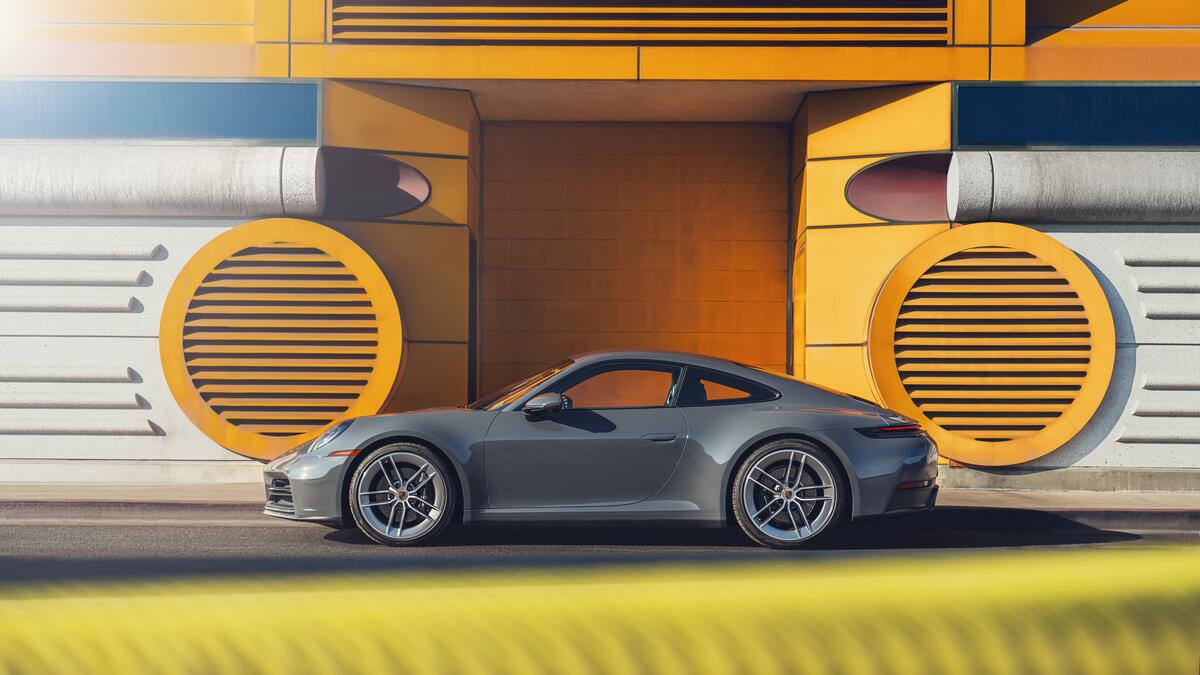
Porsche 993 GT2 Evo
"so you got 964 RS, 993 RS, 993 GT2 which is the car of interest for us this year Mark Sumter at Paragon Porsche racing his 993 GT2 Evo in there that was lap one here at Le Mans at 4 grid 8"
This is a special Porsche 911 from the 993 generation, built to be fast on track. Here, they’re talking about Paragon Porsche racing’s 993 GT2 Evo and where it placed during the early running at Le Mans Classic.
The Porsche 993 GT2 Evo is a 911-based race-focused variant from the 993 generation, known for its high-output turbocharged performance and track-oriented setup. In this segment, it’s specifically mentioned as the car of interest for Paragon Porsche racing at Le Mans Classic 2026.
Mark Sumter
"993 GT2 which is the car of interest for us this year Mark Sumter at Paragon Porsche racing his 993 GT2 Evo in there"
Mark Sumter is the person driving the Porsche 993 GT2 Evo for Paragon Porsche racing in this segment. They mention him right when they talk about the car’s lap and grid position.
Mark Sumter is identified in the segment as the driver associated with Paragon Porsche racing’s Porsche 993 GT2 Evo. The host uses his name to connect the car’s on-track running to a specific team and driver.
24 hour
"well look you've done really well now I know you're a seasoned pro at Le Mans the 24 hour and the classic"
This is the “24-hour” endurance race format—cars run for a full day. Winning depends on strategy and keeping the car running reliably, not just one fast lap.
The “24 hour” refers to the 24 Hours of Le Mans endurance format, where cars run continuously for a full day. In this kind of race, driver stints, pit strategy, and mechanical durability are central to winning.
class winner
"Mark Sumter class winner at Le Mans right it's good isn't it it's incredible that's incredible"
In endurance racing, cars are often split into different groups (classes). Being a “class winner” means you were the best in your group, even if you weren’t necessarily first overall.
A “class winner” is the top finisher within a specific competition class rather than overall first place. Endurance races like Le Mans group cars by rules such as performance potential and eligibility, so class victories are a major achievement.
podium
"I actually got on the podium as well it's just good we need to photoshop a big crowd of people because there was a bit too much tarmac beneath me"
“Podium” means you finished near the very top—typically top three. It’s the spot where the winners get celebrated after the race.
“Podium” refers to finishing in the top positions that earn a ceremonial place on the winners’ platform. In racing coverage, it usually implies a top-three finish in the relevant overall or class results.
Spa
"we I think I wouldn't normally but we'd had a I only did two laps at Spa which was our last meeting so you sort of you only you know you remember your last meeting and it didn't go well"
Spa is a famous race track in Belgium. It’s known for tricky corners and big elevation changes, so it’s a good test of how well a car really drives.
Spa refers to Circuit de Spa-Francorchamps in Belgium, a track known for fast corners, elevation changes, and variable weather. It’s commonly used as a benchmark circuit for how well a car handles and how stable it feels under braking and through long sweepers.
paddock
"for me to be in this paddock you know it really is a massive privilege in the classic I think [744.8s] whether you're driving or spectating I think that's the big appeal of the classic is it takes"
The paddock is the team area at a race where cars are kept between sessions. Fans can often get closer to the cars and see what’s going on behind the scenes.
A paddock is the secured area at a race event where teams park, service cars, and interact with guests and media. The speaker contrasts driving versus spectating and emphasizes that the classic event brings people into the paddock to see the cars up close.

McLaren F1
"but people come to see the cars in my paddock we're also lucky to have a few stars as well so we had Emmanuel Collard [766.8s] you know driving a McLaren F1 so that's pretty cool"
The McLaren F1 is a famous, very rare supercar. Here it’s brought up because a driver is attending with one, showing how special cars and people gather around Le Mans events.
The McLaren F1 is a legendary supercar known for its lightweight design and distinctive three-seat layout. In this segment, it’s mentioned as a star guest in the Le Mans classic paddock, highlighting how rare, high-end race cars draw attention even outside the main modern grid.
Emmanuel Collard
"we're also lucky to have a few stars as well so we had Emmanuel Collard [766.8s] you know driving a McLaren F1 so that's pretty cool"
Emmanuel Collard is a professional race car driver. The host is saying he’s here at the event driving a McLaren F1.
Emmanuel Collard is a professional race driver known for endurance and GT racing. In this segment, he’s specifically mentioned as driving a McLaren F1 at the Le Mans classic paddock.
sister car
"he was telling me I didn't know but he said oh I I raced a sister car so [793.0s] when my car was new in 1995 and he said I think I raced your car and then we were looking"
A “sister car” means a second race car that’s basically the same as the one you’re talking about. It’s used when teams have multiple cars built to the same rules and spec.
A “sister car” is an identical or closely related race car built for the same program—often sharing the same spec, chassis, or setup. The speaker uses it to clarify that two similar cars existed and that the driver may have raced the other one when the car was new.
Stefan Ortelli
"he said oh I I raced a sister car so [793.0s] when my car was new in 1995 and he said I think I raced your car and then we were looking I said [798.6s] no you didn't race this he said our race was Stefan Ortelli"
Stefan Ortelli is a professional race driver. Here he’s mentioned because the speaker is trying to match which driver raced an identical “sister” car back in the 1990s.
Stefan Ortelli is a race driver associated with endurance and GT competition. The speaker uses his name to explain a “sister car” racing connection—suggesting Ortelli raced an identical car when the speaker’s car was new.
restrictors
"there were three EVOs so they they they raced them without any restrictors and they had wider track and different things"
Restrictors are like a built-in limiter on a race car’s engine. They reduce how much air (and therefore power) the engine can make, which can improve reliability and keep cars closer in speed.
Restrictors are intake or airflow limits fitted to race cars to cap engine output and keep performance in check. The speaker says the EVO cars were raced “without any restrictors,” which helps explain why they were making very high power and then became unreliable.
650 horsepower
"they soon realized that that actually running those cars at sort of 650 horsepower was just too much so they were so unreliable"
Horsepower is how much power the engine can produce. The speaker is saying that at around 650 horsepower, these cars were pushed so hard that they became unreliable.
Horsepower is a measure of engine power, and in endurance racing it strongly affects both speed and how hard the car is stressed. The speaker links roughly 650 horsepower to the cars being “too much,” contributing to unreliability after an accident and subsequent learning.
unreliable
"so they were so unreliable that within two or three races they they pegged them all back and ran all the cars as GT2s"
In racing, “unreliable” means the car breaks or can’t keep running for the whole event. The speaker says the cars couldn’t last when run at that aggressive setup, so they changed the spec.
In endurance racing, “unreliable” means the car can’t consistently finish races due to mechanical failures or systems that can’t survive sustained stress. The speaker says the high-power GT1/EVO configuration led to failures within a couple of races, prompting a rules/spec adjustment back to GT2.
circuit de la sade
"I said to Jay I just don't think it gets any better than that racing round circuit de la sade to a setting sun it's absolutely amazing"
This sounds like the track used for Le Mans in France. The speaker is describing how amazing it feels to race around that circuit, especially at sunset.
“Circuit de la sade” appears to be a mis-transcription of the French circuit name “Circuit de la Sarthe,” which is the track complex used for the 24 Hours of Le Mans. The speaker is describing racing around that circuit at sunset, emphasizing the atmosphere and drama of endurance racing.
Paragon Porsche Club
"standing with Jay and a couple of other the guys and girls from the Paragon Porsche Club was your first race Saturday evening"
Paragon Porsche Club is a group of Porsche fans the speaker mentions while they’re at the event. It’s more about the people and atmosphere than car tech here.
The Paragon Porsche Club is a Porsche enthusiast group mentioned in the context of the speaker standing with other members at the track. It’s relevant as a community marker, but the segment doesn’t go into technical details about the club itself.
slipstream
"and I tucked straight under his rear wing and [1010.0s] actually you can feel the car accelerate a bit because you're in his wake"
Slipstream is the “draft” you get when you drive close behind another car. The lead car pushes air out of the way, so you don’t have to fight as much wind drag.
Slipstream is the reduced air resistance you get when you follow closely behind another car. In racing, it can make your car feel like it accelerates more easily because the air behind the lead car is moving faster and is less turbulent.
chicane
"and then I did obviously [1014.4s] he was pulling away from me but I did the first chicane second chicane and then through to Indian [1020.1s] apolis by the time I got to the Porsche Curves he's gone"
A chicane is a part of the track where you have to weave through a couple of turns. It’s usually there to slow cars down and make the driving more technical.
A chicane is a sequence of tight turns designed to slow cars and change direction quickly. At circuits like Le Mans, chicanes are key braking/turn-in points that test car control and driver precision.
Porsche Curves
"and then through to Indian [1020.1s] apolis by the time I got to the Porsche Curves he's gone but I did half a lap under the you know"
“Porsche Curves” is a named set of corners on the Le Mans track. It’s the kind of landmark drivers use to describe where they are on the lap.
“Porsche Curves” refers to a named section of the Le Mans circuit associated with Porsche’s presence and branding at the track. It’s a recognizable corner complex where drivers transition from one part of the lap to the next at speed.
seven different classes
"it's kind of the spirit of the 24 hour so the racing goes through the night but it's like [1061.7s] lots of like different classes and it's like a relay really yeah"
“Different classes” means the race has multiple groups of cars with different rules. That matters because faster cars can catch and pass slower ones during the same race.
“Different classes” means cars are grouped by rules such as era, performance level, or technical category, so they compete within their own bracket. In multi-class racing, faster cars may lap slower ones, which changes traffic strategy and driver focus.
debrief
"so you've got three hours yeah so you have a bit of a debrief and all of a sudden you've only got two hours"
A debrief is a short team meeting after a driving segment. The driver and crew talk about what went well, what didn’t, and what they should adjust next.
A debrief is a quick post-session or post-stint review where drivers and engineers discuss what happened—car behavior, tire wear, braking/traction issues, and what to change next. It’s a core part of endurance strategy because decisions must be made between short driving windows.
fireproof
"so you change your fireproof I actually changed my to bought two sets of overalls [..] I changed into some dry because it gets cold otherwise you go off"
Racers wear special fire-resistant clothes so that if there’s a fire after a crash, the fabric won’t catch immediately. It gives rescue teams more time to get the driver out safely.
In endurance racing, drivers wear fireproof clothing (typically fire-resistant overalls and underwear) to reduce burn risk during a crash. It’s designed to resist ignition and slow heat transfer long enough for the driver to be extracted.
stints
"because the the the discipline is similar to the 24 hour where there's you know you've got drivers doing stints they go well I've got you know four and a bit hours so what do I do"
In long races, a driver doesn’t drive the whole time. A stint is the period they drive before handing the car to another driver.
A stint is a continuous block of driving time in endurance racing before the driver swaps out. Because races run for many hours, teams rotate drivers to manage fatigue and keep lap times consistent.
Indianapolis
"Jay and I were two man behind me I called it watching you we went to like Indianapolis at the time and our nars around there"
Indianapolis is a famous place for racing in the U.S. The speaker is just comparing what they felt there to what they’re describing now.
Indianapolis is a major U.S. racing venue and city associated with IndyCar and endurance-style racing. In this context, it’s used as a reference point for where the speaker previously experienced similar driving consistency.
flow state
"I just felt you were mist consistent every lap was the same it's like a flow state I don't know if you could do loads of testing"
A flow state is when your brain feels totally locked in—like everything clicks and you’re driving on autopilot. Drivers often describe it as being super focused and consistent.
A “flow state” is a mental condition where a driver feels fully absorbed and time seems to disappear, often leading to very consistent performance. In racing, it’s associated with stable inputs, predictable traction, and reduced distraction.
gear
"Jay if I came back here next week there's one or two corners where I would maybe try different gear [1215.5s] or something but you've almost locked in once you've qualified"
“Gear” just means what speed/ratio the transmission is set to. In a race, picking the right gear helps the car accelerate and stay in the right power range for each corner.
In racing, “gear” refers to which ratio the gearbox is using at a given moment. Choosing the right gear affects acceleration, engine speed, and how smoothly the car can carry speed through corners.
brake at 180 meters
"I know you know once I know it's you brake at 180 meters I can do that every lap [1272.5s] I'm pretty good at that and the car's really consistent"
That means the driver uses a fixed distance marker to start slowing down before a corner. Doing it the same way every lap helps the car turn in consistently.
“Brake at 180 meters” describes a braking reference point measured by distance. Using consistent braking markers helps drivers repeat the same corner entry speed and improve lap-to-lap consistency.
night stint
"you're racing in the dead of night ... how how as I'm talking about that race too you're racing in the dead of night [1301.8s] you know we because we were in the holding era for nearly an hour because it was delayed a little bit and that was somewhere where you I did sort of have some long blinks"
A “night stint” is the part of an endurance race you drive at night. It’s harder to stay focused because visibility and fatigue are tougher, so consistency takes more effort.
A “night stint” is the portion of a race driven during nighttime conditions, often with driver changes in endurance racing. Night driving increases fatigue and makes it harder to maintain concentration and consistent braking/turn-in points.
holding era
"I definitely think that that one [1301.8s] you know we because we were in the holding era for nearly an hour because it was delayed a little [1306.1s] bit and that was somewhere where you I did sort of have some long blinks"
This sounds like a delay period where the race isn’t running normally. When that happens, it can be harder to stay sharp and ready to drive consistently when you get going again.
“Holding era” appears to refer to a race control “hold” period where the race is paused or slowed due to delays. In endurance racing, these interruptions can disrupt rhythm and make it harder to stay mentally locked in for the next driving phase.
brake disc glowing
"such a spectacle mark because you know you've got as the cars are coming into the corner where we were [1343.6s] you know brake disc glowing your car spitting flames from back it's just incredible to look at"
When you brake hard over and over, the brake parts can get so hot they start to glow. It’s a visual clue that the car is working the brakes a lot in that corner.
A brake disc (rotor) can visibly glow when it gets extremely hot from repeated hard braking. In racing, that’s a sign of heavy brake use and high thermal load coming into a corner.
engine problem
"because we'd had some technical problems and the the team really have been [1378.9s] under the cost to turn the car around we had a major engine problem after spa and by the time"
In a race, an engine problem means the motor isn’t behaving correctly—maybe it’s not running right or something is broken. The team then has to figure out what’s wrong and fix it as quickly as possible so the car can keep racing.
An engine problem in endurance racing can mean anything from a mechanical failure to a major performance issue that forces the team to change parts quickly. Because races are long and rules limit repairs, teams often have to diagnose fast and then execute a tight turnaround plan.
scrutineers
"and you know yeah it's good and he's still having to deal with like things that I don't even like the scrutineer and you know other technical things that he has to get through over the weekend"
A scrutineer is the person officials send to inspect the race car. They check that the car follows the rules so nobody gets an unfair advantage.
A scrutineer is an official who checks race cars to make sure they meet the event’s technical and safety rules. In endurance racing, this can include verifying parts, measurements, and permitted equipment before and during the weekend.
auxiliary lights
"we had four extra auxiliary lights who had some pointing at apexes and some pointing forwards and he noticed in the rule that actually you only allow the maximum of four lights"
Auxiliary lights are extra headlights or lamps added to the race car. The key point here is that the rules limited how many you’re allowed to run.
Auxiliary lights are extra lamps mounted on a race car beyond the standard lighting. In this case, the team used four additional lights with different aiming directions, but the rules limited the total number allowed.
maximum of four lights
"he noticed in the rule that actually you only allow the maximum of four lights so he checked that with the scrutineer off his own back"
That’s a rule saying you can only have up to four extra lights on the car. If you run more than allowed, officials could penalize you—especially if someone else notices.
This refers to a specific technical regulation limiting the number of auxiliary lights a car may run. The host highlights how easily a small rule misunderstanding could lead to disqualification or loss of results if another team reported it.
FATurbo express
"can we finish obviously wearing these lovely t-shirts can we talk about the the FAT yeah I mean it's I actually met the guys that had fat so it was FATurbo express"
FATurbo express is presented here as a motorsport sponsor tied to a delivery company identity in France. The name is used to connect the team’s Porsche to the sponsor’s presence at Le Mans.
Chris Harris
"[1591.8s] than it was in period yeah so it's cool you know and obviously Chris Harris has been racing this [1596.8s] weekend and he's good friends with Ferdy so he's always wearing all the FAT livery..."
Chris Harris is a famous car journalist who’s especially into Porsche. Here, they say he was racing at the Le Mans Classic event and is friends with the person they’re talking about, which is why he’s connected to the FAT car.
Chris Harris is a well-known Porsche-focused automotive journalist and broadcaster. In this segment, he’s described as racing at the Le Mans Classic weekend and as a friend of Ferdy, which explains why he’s associated with the FAT car and its livery.
FAT livery
"...he's always wearing all the FAT livery and and stuff [1602.2s] so yeah I love you know the look the thing I'm quite proud to drive the FAT car..."
In racing, a “livery” is the car’s paint scheme and decals—basically how it looks on track. “FAT livery” means the specific FAT-branded design they were running.
A “livery” is the car’s painted graphics and visual theme used for racing. “FAT livery” here refers to the specific branding/graphics package associated with the FAT logo and car identity.
Ferdy
"...Chris Harris has been racing this weekend and he's good friends with Ferdy so he's always wearing all the FAT livery and and stuff [1612.4s] Ferdinand Porsche basically it's pretty cool..."
They mention “Ferdy” as someone Chris Harris knows, and later they connect it to Ferdinand Porsche. The point is that this person has a Porsche-heritage link, which makes the message and the car’s branding feel extra meaningful.
“Ferdy” is referenced as the person Chris Harris is friends with, and the speaker later connects that to “Ferdinand Porsche.” This implies Ferdy is associated with the Porsche enthusiast/heritage context surrounding the FAT branding and the car’s story.
Ferdinand Porsche
"[1612.4s] Ferdinand Porsche basically it's pretty cool yeah please you're right like the the brand is really [1617.9s] from a Porsche enthusiast point of views really come into our conscience..."
Ferdinand Porsche was the influential Austrian-German engineer and founder figure behind Porsche’s early engineering legacy. The host’s mention frames the FAT car’s branding as something that resonates with Porsche enthusiasts because it ties back to that heritage.
grid eight
"...watching grid nine or [1671.6s] it was grid eight of beg your pardon sunset on the Saturday night..."
“Grid” is the starting order for a race. “Grid eight” means the car started in the 8th spot.
In racing, “grid” refers to the starting positions for a session, and “grid eight” means the car started from the eighth position on the grid. The host uses it to describe a specific moment during the Le Mans Classic weekend.
golden hour
"...just pure golden hour looks amazing that was just such a spectacle [1682.1s] just pure golden hour looks amazing that was just such a spectacle..."
“Golden hour” is that beautiful time near sunset when the light looks warm and cinematic. They’re saying the cars looked especially amazing in that lighting.
“Golden hour” is the period shortly after sunrise or before sunset when sunlight is softer and warmer, creating dramatic visuals. Here it’s used to describe the track spectacle as the cars run during sunset lighting.
glowing brake discs
"[1706.7s] in the night you've got the added drama of like glowing brake discs flame spitting out the back [1711.3s] of the car glowing turbos amazing to see..."
When brakes get used hard for a long time, the rotors can get extremely hot. At night, they can even look like they’re glowing.
“Glowing brake discs” describes brake rotors heating up so much during hard use that they can appear illuminated. It’s a vivid endurance-racing detail that signals sustained braking loads and track activity at night.
glowing turbos
"[1711.3s] of the car glowing turbos amazing to see a bit of a transportation back in time [1718.02s] ..."
“Glowing turbos” refers to turbochargers becoming visibly hot enough to glow, typically from exhaust heat during aggressive driving. In endurance racing, this can happen when boost and exhaust temperatures stay high for long periods.
Request an Explanation
Heard something you'd like explained? We'll add it to this episode.
Sign in to request explanations for terms you heard.
Want to learn more?
Browse our glossary for plain-English explanations of automotive terms, jargon, and concepts.
Help improve this episode
See something that's not quite right? Our annotations are AI-generated and can sometimes miss the mark. Click the flag icon on any annotation to suggest a correction.