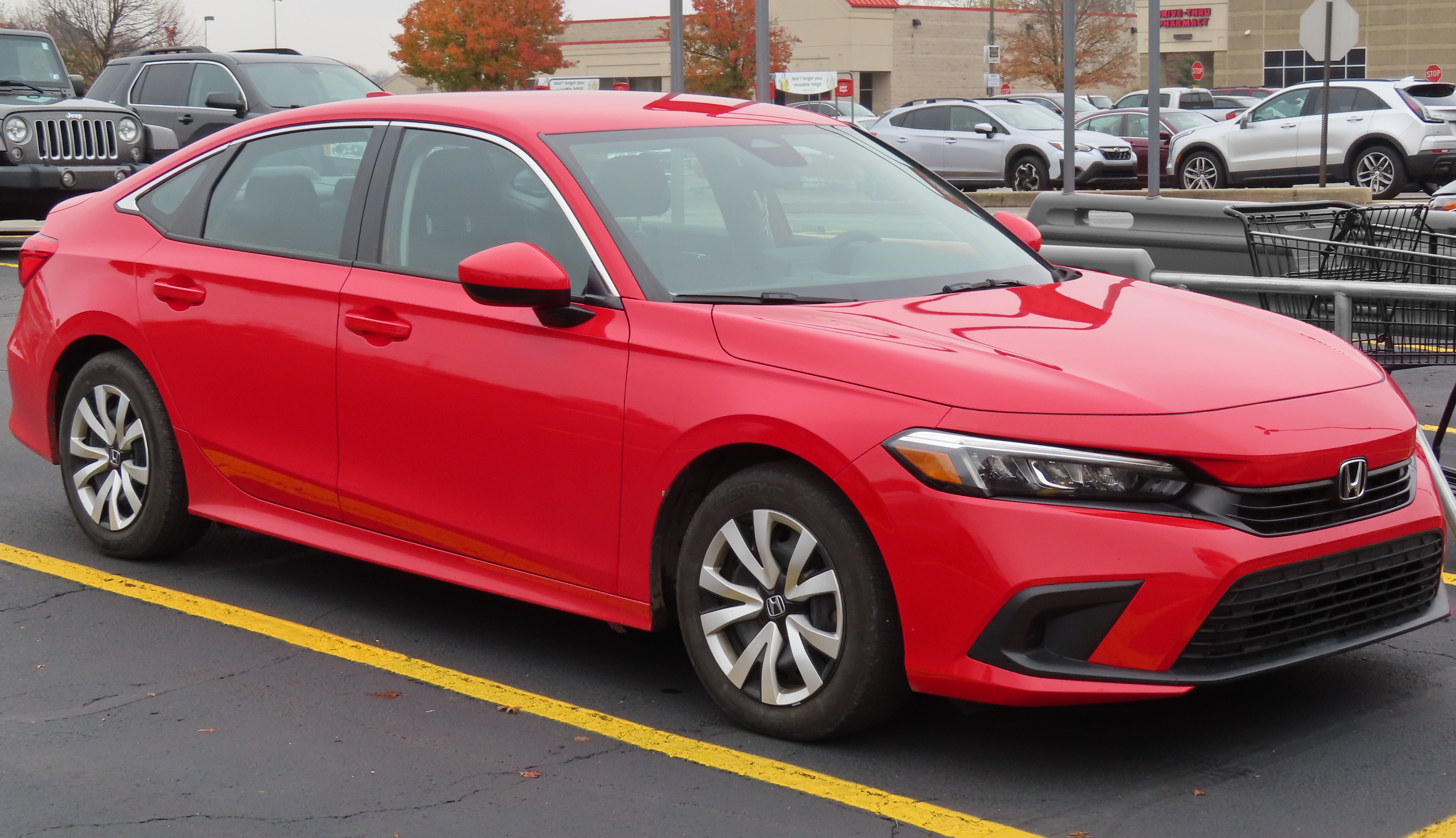
A CVT is a special kind of car transmission that changes gears smoothly without you feeling the shifts. It helps the car use less gas and drive more smoothly.
A 'lemon' is a car that keeps having the same problem and the dealer can't fix it even after trying several times. If this happens in the first year you own it, the law might let you get a new car or your money back.
A trade-in is when you give your old car to the dealer to help pay for a new one. The dealer uses the value of your old car to lower the price of the new car.
A bumper to bumper warranty is a promise from the car company to fix almost anything on your car if it breaks, except for things that wear out like tires or brakes.
Carfax is a report that tells you about a car's past, like if it was in accidents or had problems, but it might not have all the information.
LIVE
Hey folks, Lenny Lawson here, the Car Guru.
I've been driving an EV around this week, happens to be our mobile service van.
I've been promoting Gateway, it has a bunch of billboards on the side, it says mobile
service and we had some furniture at the house that we had to put into storage, so
I said I'm going to take the mobile service van and drive it around, get it exposed, it's
like a rolling billboard.
And so I just decided to try it out and drive it a little bit more than what I actually
needed to because it's an EV and it's got very limited range, 100 miles, I know.
What good is that?
Well, if you're in a town and you drive less than 100 miles, then I guess it's okay because
you don't have to buy any gas.
But Ford kind of crammed these down the dealer's throats, you know, sometimes we would just
look out there and there'd be a truck unloading two or three of those things and I would
go to my sales manager, did you order those?
No, I didn't order them and then I go to another one and said, did you order those?
And he said, no, I wouldn't order those things.
Somebody ordered them because Ford doesn't typically build stuff and ship it to you unless
you order it.
So what I think happened is that the district representative for our region called one of
my sales managers when he was at a moment of weakness and they said, I'll give you 10F150s
if you take one EV transit.
And he said, don't tell Lenny.
And so it showed up.
Well, this was the last one.
We couldn't give it away.
So I ended up buying it and putting mobile service stickers all over the side of it.
We had to equip it also so that we could actually do mobile service.
And really the only thing we've used it for at this point is to do recalls.
Now let me ask you this, if you're working in an office or, you know, some business and
you find out that you have a recall on your vehicle, would you appreciate it if we came
to your office and did the recall right out there in your parking lot?
Yes, I think most people would.
They don't want to have to make an appointment and come to the dealership and do that.
So anyway, we have this van now that we can go all over, well, we can't go too far, but
we can go all over a green county, I guess, maybe up to Johnson City and back or more
astounding back.
I think it's a 60 mile round trip and do a safety recall as long as it's not too extensive.
We can't rebuild a motor or put on, you know, new brakes.
We can't even change your oil.
We don't want to mess up your parking lot.
So we have it, so it's used to do recalls and to go to my house and pick up furniture
we don't want anymore.
And it's doing a great job at that.
So what are we doing today?
Well, we're going to play true or false.
So I've gone into the mailbag again and yeah, it fills up after about 60 days of mailbag
fills up.
Now I answer all the questions that people have immediately, but I save them.
I put them in the mailbag.
It's a little file that I have in my notes app on my Apple Mac just in case you needed
to know that.
So I'm going to ask a question and you have to tell me whether my answer is true or false.
Now unfortunately I can't hear your responses, but this will be, you know, we're going to
answer some questions probably for you that maybe you've had swirling around in your head
about your car life or your specific vehicle that you have and whether or not you're supposed
to do this or do that or not do this or that.
Most people just ignore their cars and so that's the easiest thing to do I guess is
just ignore it.
Let somebody else take care of everything, but that's not the smart thing to do.
That's not the my car guru way to handle things.
So that's what we're going to do.
We're going to play true or false and we'll start that here in just one minute.
Okay, this is the car guru and we were playing true or false, so I'm going to read a statement
and answer it.
You tell me whether it's true or false.
Are you ready?
Just keep your hand real close to the button.
So what is the biggest quality issue on vehicles today?
And the answer is or isn't transmission problems.
Is that true or false?
Well, in a sense it's true because the industry as a whole is having some transmission heart
burn and a lot of it has to do with the efforts to get vehicles to get much better fuel economy.
That's why continuously variable transmissions exist called a CVT.
You may be driving them.
I don't know a Honda CR-V, Toyota RAV4, Honda Civic, a Subaru, a lot of those vehicles
have CVTs.
Are they bad?
No.
Not if you keep them serviced.
But another thing that's happened is just these multi-speed transmissions like 10-speed
automatic.
Can you believe that?
I've got a 1957 Chevrolet sitting down here that has a two-speed automatic and it shifts
once and then when it downshifts it's just got one place to go, to low.
That's it.
Now these 10 speeds, they shift a lot and the reason is because of the biggest quality
issue on vehicles today and that's electronics.
I know that's a broad subject, but all of the computers on your vehicle, no matter what
you're driving, that's going to be the place where you're going to have the most problems.
So that answers question number one.
Okay, question number two.
Your car is a lemon if you have to take it to the dealership more than four times for
the same problem, true or false?
Most people would call that a lemon and they'd be pretty upset.
It could be the dealership's fault though and in that case it's not a lemon, it's a training
issue.
But it's only a true lemon legally if you have to do that, take it back four times for
the same problem.
They can't fix it, but it happens in the first year or 12 months of ownership.
After that it doesn't qualify for the federal lemon law.
Now it might qualify for some state lemon law statute, but as far as federal, nope.
Okay, here's a good one.
If you buy a car and finance it and you find out that somebody at the dealership lied to
you, then you can legally take it to the dealership, pull it into a parking place and hand them
the keys and tell them that you don't want it.
Is that true or false?
That is false.
Now you might be able to pull that off and you might walk into a dealership that is really
afraid of you for one reason or another.
Maybe you're an attorney, maybe you make some serious threats and they reversed the deal,
but more than likely if you take it to the dealership and park it, it's going to stay
parked and then within the first next 30 days you are going to get a phone call from the
lender and say, how come you haven't made a monthly payment?
And you're going to say, well, I turned the car in, I gave them the keys back, I don't
want it.
They lied to me.
You have to understand at this point that the bank doesn't care.
They paid for that car.
You didn't.
You haven't made your first monthly payment, but you still owe the bank money.
There's no direct connection between the dealership and the bank or even Ford Motor Credit or
Toyota Motor Credit.
They're coming after you for the money.
But what if the factory buys it back?
Maybe the dealer takes it back, then that note has to get paid off by somebody.
It's not just going to go poof and go away, especially if you had to pay off on your
car.
If you had to pay off on your former trade-in, then you may owe it to somebody different,
the people that just financed the vehicle, you owe it to them now, but something has
to give.
That is a very gnarly situation to have to navigate.
It really is, because so many transactions have happened.
You bought the vehicle with the dealership, you signed all the paperwork, maybe you paid
down payment, you had a trade-in.
They sold your trade-in to another person, and that title has finally made it back from
the bank where you had it financed, and they've given that title to somebody else who also
financed the car, and now you're wanting your money back.
It's just, like I say, it's a gnarly problem to try to fix, so no, don't just take the
car back to the dealership, park it and hand them the keys, because you're still on the
hook for it.
Okay, here's a true or false question that just happened last week at Gateway Ford.
So if a grandfather cosigns for a grandson who is of legal age, but he doesn't want his
name on the title, the bank and the dealership will allow him to do that.
True or false?
Well, first question is, why would he not want his name on the title?
Well, it's because of the perceived release of liability.
If that grandson goes out and kills somebody in a car, grandpa doesn't want his name on
that title because he thinks that that will release him of liability.
Well, it might, but if you have a really good lawyer, he's gonna not only look at whose
name is on the title, but also whose name is on the bank note, but the truth of the
matter is, or the fact of the matter is, the bank nor the dealership is gonna allow a person's
name to be on the note and not on the title.
We had this very situation, grandpa just, he was not gonna have it, he's not gonna
cosign a note if his name has to be on the title.
And I get it.
Oh, okay, here's a good one.
If you go to a dealership and test drive a vehicle, and while you're on the test drive,
you total it, you're in the clear.
The dealership's insurance will cover the damage, true or false.
That is false.
You are driving another car, you more than likely, if you have full coverage insurance,
you have drive other car coverage.
You are liable first.
Secondly, the dealership's insurance will cover, but they will subordinate, meaning
they are second in line to the responsibility of the person driving the car.
Now, this may have happened to you in the past, and again, it has a lot to do with the
laws in your particular state, in the state of Tennessee, you're driving somebody else's
car and you total it, it's on you.
Now, if you have no coverage, then the dealership's insurance will cover it.
But I don't know, do people just love to shirk responsibility when they do something dumb?
I mean, I would, if I wreck somebody's car, I'd say, you know, my insurance will take
care of this is my fault.
And other people say, ain't my car, this has happened to us over my 47 year career in a
car business.
Yeah, I've had people wreck cars, I haven't had one totaled, but I tell you what, I'd
rather it have been totaled, because, well, I mean, and I'd rather them not be hurt, obviously,
but the, the, it's tough to sell a car that's new, that's been wrecked.
You know, our body shop at the time, we don't have a body shop now, but our body shop at
the time would have fixed the car.
And then we would have to disclose that to the, to the next person.
And I don't know about you, but I don't want to buy a wreck car.
Now, some people will, if they can get a big enough discount.
So you are on the hook, if you do something like that.
Okay.
Next question, again, another wrecked car question.
If you wreck your vehicle, your insurance company has the right to tell you where you
have to get it fixed, true or false.
Well, let's just say that you've had some experience with damaged vehicles and you have
this shop that you've always done business with and you know the people, you like them,
you trust them, they, they know how to make paint match.
They get everything right the first time.
That's where you want to get your car fixed.
But no, insurance company says, no, you got to go to one of our preferred shops.
That's false.
You do not have to, you have the right to get your vehicle fixed wherever you want to get
it fixed.
Now, if the preferred shop writes an estimate and that's what they say they can fix the
car for, then the other shop has to fix it for that same amount.
Or if it's any more expensive, then you have to pay the difference out of pocket.
But yeah, you can decide where your car is going to be fixed.
And if you don't like a particular body shop that they're trying to send you to, then you
do not have to follow their guidelines.
Aren't you glad you know that?
Okay, next question.
So you're trying to buy a car, you've finalized the deal and it's time to pay for it.
And you whoop out a credit card to charge the car on because you want to earn all these
fabulous points that you're going to get, you know, cruise to Cancun or whatever.
Well, the dealership doesn't want your credit card and can turn it down.
True or false?
That's true.
You know, one of the reasons that people are or businesses, I should say, are charging
more for the use of a credit card is because it costs them anywhere from two and a half
to three and a half percent of the amount that you're charging on the card in fees.
I mean, last year alone, our credit card fees at Gateway Fort were in excess of $150,000.
That was an expense that I didn't have 10 years ago.
I mean, I had it, but most people didn't put everything on cards.
Now nobody has cash.
Nobody has any money in the bank.
Well, some people do.
But most people don't.
And so they charge it.
They want to charge everything, but the dealership can refuse that on a couple of grounds.
Number one, they don't want to pay the fees unless you do.
Maybe they'll let you charge it if you pay the fees.
The other thing is if you're not happy with that deal, you can call your credit card company.
I mean, you've already taken delivery of the car.
You can call your credit card company and said, don't honor that.
They committed fraud and that transaction is canceled as far as the credit card is concerned.
Now, of course, if you wrote a check, you could stop payment on a check.
But what a lot of people don't understand is when they go into a dealership and buy a car,
they sign all the paperwork, they are legally bound to abide by the contracts that they have signed.
It's just not something that you can turn around and say, well, I don't want this thing
and show up the next day and the dealership has to let you out of it because they don't have to.
Now, they may want to if they want to preserve the relationship.
Take the heat level down a little bit, find out what the real problem is.
Sometimes, you know, the customer just has a little buyer's remorse.
They need to think about it a little bit longer.
And so you let them go home and they come back in a few days.
So OK, we're ready now.
I think that's the best way to do it.
I think the best thing you can do is to help somebody make a good decision.
And don't force them into anything.
Pressure is exerted because the dealership wants to sell the car today.
I get that.
I want to sell a car today and I want it to stick.
I don't want somebody to bring it back.
But if they do, I want to find out why.
What's the problem here?
But just so you know, the dealership does not have to let you out of it.
And in order for you to get out of it, you're going to have to file a lawsuit and go through a court.
And in the meantime, you signed a bank contract and the bank wants their monthly payments as agreed.
You signed for that separate transaction.
Now that's different from actually committing to buy the car from the dealership.
The bank contract, you know, that's not between you and the dealership.
That's between you and the bank or the credit union.
And they want their money because they have funded that deal.
What I mean by that is they have written a check to the dealership for the amount financed.
If you paid anything down, if you had a trade in, you know, the dealership writes a check.
If you had a payoff, they have to write that check and send it to the people where you had that car financed.
Again, it's a complicated transaction and it's one that doesn't need to be approached lightly by the consumer.
I mentioned the other day that the marketing funnel and how people, they're just kind of thinking about a car and or really it's not even on their radar,
but they see an ad, they respond to it, they rush into the dealership and, you know, a day ago, they weren't even thinking about a new car.
The next day they're driving one and they've got a payment due in 30 days and then all of a sudden buyers remorse kicks in.
And they say, we can't do this, but you've already done it and you just can't jump out of it.
There are consequences of your irrational behavior.
OK, one more right after this break.
OK, I am back.
You know, there are a lot of truths and falsehoods and plenty of opportunity for misunderstandings.
When it comes to your car life and with your interactions with, well, anybody in the auto industry, from an auto parts store to an independent repair shop to a dealer.
One of the big areas is when it comes to bumper to bumper warranties.
You ever heard that one?
So true or false, the good thing about bumper to bumper warranties is they cover everything between the front and the rear bumper.
Well, if you get that one wrong, you better bring somebody with you when you buy your next car.
No, that's false.
It's I know it's deceptive.
A bumper to bumper warranty should cover everything, including the paint and the trim and the glass.
You know, just anything that happens should be covered.
I've actually had people come in with a busted windshield.
I mean, it's obvious that something hit it and they expected to be covered.
How about a bumper to bumper warranty?
You know, yeah, but you've also got car insurance and, you know, the warranty doesn't cover a busted windshield, sir.
Now, if more folks would spend a little bit more time reading the warranty book, they would understand what's covered and what's not.
And when they buy an extended service contract, it's not a warranty.
It's that extra coverage that a lot of people choose to buy.
And I understand it because stuff is expensive to fix.
I would recommend that if you're buying a new car that you buy an extended service contract, as long as it's not too expensive.
If you want to know if it's too expensive, then send the information to me.
423-552-2020, I'll tell you if you're being ripped off or not.
And you can do it the day before you go in to the dealership to finalize your deal on that new Honda Accord or that Hyundai, whatever.
Just send me the VIN number of the vehicle that you're buying.
And I'll tell you what you should pay for an extended service contract.
And make sure that whatever you buy doesn't just cover the engine and the transmission and the major components.
Make sure it covers the computers on your vehicle, that big infotainment screen, which now has replaced a lot of the instrumentation on a vehicle.
I mean, heck, a Tesla doesn't have any instrumentation.
It's just got this big iPad in the middle of the dash, which I despise.
I like gauges and instruments.
That's just, that's just me.
But if you have to replace those things, they're expensive.
They can cost more than the transmission.
So, and also I forgot to mention buying on a used car as well, especially on a used car, because you don't know, you don't know how that car has been treated.
You don't know what kind of issues it's had, especially if they didn't pull the warranty history and the history on car facts or auto check, which are very incomplete.
I mean, if you want to know if a car has been a good car or a bad car, call the dealership that sells that brand, speak to a service advisor and have them pull the warranty history on that vehicle.
They'll tell you if it was a problem vehicle.
So, true or false, was this beneficial?
I hope you said true.
If you need more information at any point in your car life, my cell phone number, the only one I have, 423-552-2020.
And make sure you send me your email address and I'll send you a copy, a free copy of the MyCarGuru guidebook, 32 pages of automotive brilliance to help you be able to navigate buying, selling, trading, servicing cars.
So, this is what I do and I do it for you.
Thanks for listening and I'll see you next time.
About this episode
Lenny Lawson shares his experience driving an EV service van and discusses the practical limitations of electric vehicles. He then plays a true or false game answering common car-related questions from his mailbag, covering topics like transmission issues, lemon laws, dealership financing myths, cosigning liabilities, insurance responsibilities during test drives, and rights regarding vehicle repairs. The episode blends personal anecdotes with practical advice, debunking misconceptions and helping listeners better understand car ownership challenges and dealer interactions.