Life's A Drag - NHRA Potomac Nationals preview with Elon, Abby and the great Kelly Clontz
About this episode
Memorial Day weekend chaos sets the tone, with rain slowing the Indy 500 and the hosts pivoting into NHRA Potomac Nationals preview talk. They unpack what makes Maryland International Raceway special—new track energy, a Thursday night fan fest, and track logistics like a long shutdown area. Predictions land on Leah Pruitt for Top Fuel and a Funny Car “crapshoot,” while Kelly Clontz shares her pro stock motorcycle goals, a power-outage hiccup, and invites fans to a New Market signing. The show also spotlights pro stock motorcycle “major moments” bracket fun.
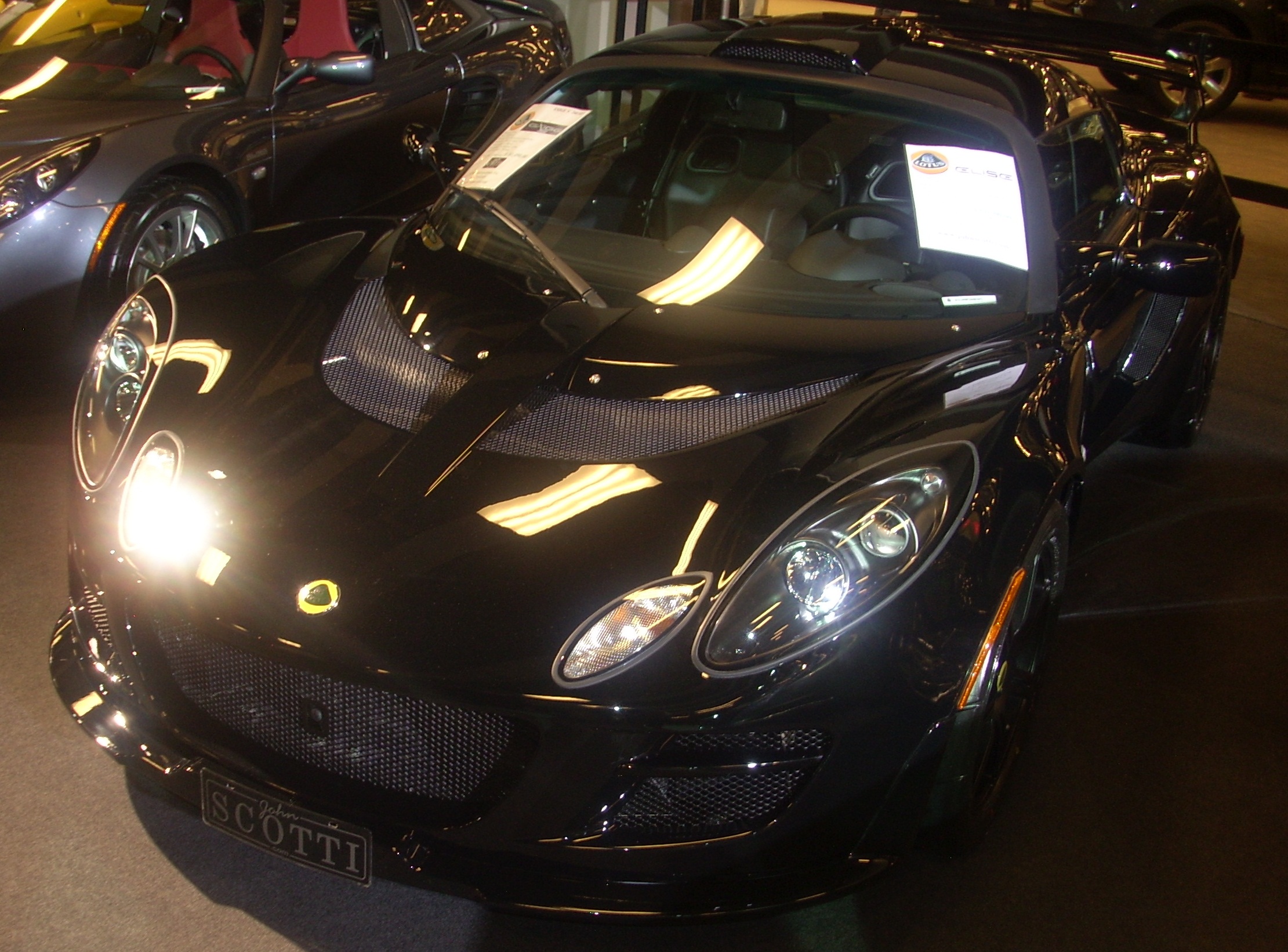
Lotus Elise
"It might be a story. Well, Elise, you'll have to talk to her about it this weekend..."
The Lotus Elise is a small two-seat sports car made for fun driving. It’s designed to be light and handle well, so it feels quick and responsive. People talk about it when they want to discuss a specific driving experience or ownership story.
The Lotus Elise is a lightweight, two-seat sports car known for its agile handling and driver-focused feel. It often comes up in conversations because its simple, performance-oriented design makes it a memorable “enthusiast” car. In a podcast, it may be mentioned as part of a story about driving character, ownership, or a specific Elise-related experience.
Dale Worsham is going to be racing funny car this weekend
"Dale Worsham is going to be racing funny car this weekend. Super excited about that."
They’re talking about who will race in the “funny car” class this weekend. In drag racing, that class is a big deal and it affects who qualifies and advances.
This segment is about the NHRA “funny car” class, which is one of the top categories in American drag racing. The hosts are previewing who’s competing and how the weekend’s entries could shake up qualifying and eliminations.
Maryland International Raceway
"So if you got a top field register in the Maryland area, haul that thing over to Maryland International Raceway. We have a spot for you."
They’re talking about the race track in Maryland where the event is happening. Qualifying runs at the track decide how cars line up for the next rounds.
Maryland International Raceway is the track venue being referenced for the NHRA event. In drag racing, the track location matters because it’s where qualifying runs determine starting positions for the eliminations bracket.
top field register
"So if you got a top field register in the Maryland area, haul that thing over to Maryland International Raceway."
They’re talking about getting a top team/car into the event. If the field is full, only certain entries may get accepted for qualifying.
“Top field register” appears to refer to a high-priority entry/registration for the event—essentially, a top-level team or car that should be included in the field. In NHRA-style events, field size and entry status can affect whether a team gets into qualifying.
number one qualifier
"So you're already just going to just concede the number one qualifier to Sean Langdon or Doug Coletta."
The “number one qualifier” is the fastest car in qualifying. That usually means they start at the top spot and can have an easier route through the bracket.
The “number one qualifier” is the driver/team who posts the fastest qualifying performance and earns the top starting position for eliminations. In drag racing, qualifying results strongly influence the matchup path through the bracket.
Leah Pruitt
"[736.3s] I feel like Leah Pruitt could find her way back in the winter circles. [740.1s] She's been, I mean, I think she's maybe fourth in points right now."
Leah Pruitt is a professional drag racer. In this segment, the hosts are saying she could be close to winning again and are predicting her success in Top Fuel.
Leah Pruitt is an NHRA drag racer discussed here as a points contender. The hosts talk about her momentum and the idea that she could return to winning form in the Top Fuel class.
top fuel
"So she's my pick for top fuel. [778.9s] Funny car."
Top Fuel is one of the NHRA drag racing categories. It’s the class with the quickest, most powerful dragsters, built to accelerate extremely fast over a very short distance.
Top Fuel is the NHRA drag racing class for the fastest, most powerful dragsters. Cars run on specialized fuel and use a purpose-built dragster chassis designed for maximum acceleration over a short sprint.
Jack Beckman
"but I [792.7s] could easily see a Jack Beckman win. [796.4s] I could easily, you know, I'll just say Jack Beckman."
Jack Beckman is a Funny Car driver in NHRA drag racing. The hosts think his team will get things sorted and he could win.
Jack Beckman is an NHRA Funny Car driver mentioned as a likely winner. The discussion frames him as a strong pick because the team is expected to get back to form.
Erica Enders
"[814.6s] I'm going to say Erica Enders. [820.3s] I'm actually back post luck wins for elite."
Erica Enders is a professional NHRA drag racer. The host is picking her because they believe she and her team are working through things and could be ready to win.
Erica Enders is an NHRA driver named as the speaker’s pick. The segment suggests she’s in a position to contend based on recent progress and team adjustments.
NHRA Potomac Nationals
"So go ahead over to NHRA.com and check out those plain HRA odds. Cause I bet they're pretty, pretty good on, I mean, they're not as good as they used to be for Erica and Angie earlier,"
This is a big drag-racing weekend run by NHRA near Washington, D.C. Teams race in rounds, and the winners keep moving on until the final.
The NHRA Potomac Nationals is a drag-racing event on the NHRA schedule held in the Washington, D.C. area. In drag racing, fans track qualifying and eliminations to see which teams advance toward the final rounds.
Antron Brown
"man, Antron Brown has been running really good. So I think I'm going to go with a little Antron Brown. I'm going to go with."
Antron Brown is a well-known NHRA drag racer in the Top Fuel category. The hosts are saying he’s been performing strongly lately.
Antron Brown is a top NHRA Top Fuel driver known for consistent championship-level performance. When the hosts say he’s “running really good,” they’re referring to his recent results and momentum in the Top Fuel class.
Ron caps
"Ron caps or Spencer Hyde and funny car. Spencer Hyde is my heart. Ron caps is my head a little bit and also my heart."
The transcript seems to be mangling a driver’s name. The host is basically choosing between two Funny Car racers: Spencer Hyde and another driver whose name is unclear here.
“Ron caps” appears to be a mis-transcription of a Funny Car driver’s name mentioned in the segment. The context suggests the host is comparing two Funny Car picks—one being Spencer Hyde and the other being this “Ron caps” driver.
Spencer Hyde
"Ron caps or Spencer Hyde and funny car. Spencer Hyde is my heart. Ron caps is my head a little bit and also my heart."
Spencer Hyde is a Funny Car driver in NHRA drag racing. The host is rooting for him as their favorite pick.
Spencer Hyde is an NHRA Funny Car driver. The host’s “heart” comment indicates Hyde is their favorite pick in the Funny Car field for this event.
pro stock
"So funny car pro stock. I,"
Pro Stock is a category of drag racing with specific rules for the cars. The goal is to launch hard and run consistent quarter-mile times against another car.
Pro Stock is a class in NHRA drag racing where cars are built to strict rules and compete in head-to-head eliminations. It’s known for very consistent, repeatable performance and for drivers who can nail reaction time and traction.
Greg Anderson
"I think Greg Anderson is also coming into this race with a little chip on his shoulder for the red light against Aaron Stanfield, even though he didn't have a really good car,"
Greg Anderson is a famous drag racer. Here they’re talking about how he was determined to do better on the start after a previous mistake.
Greg Anderson is a well-known NHRA Funny Car driver and team leader. In this segment, the hosts discuss his mindset coming into the race after a prior “red light” and how he focused on launch timing.
red light
"I think Greg Anderson is also coming into this race with a little chip on his shoulder for the red light against Aaron Stanfield, even though he didn't have a really good car,"
A “red light” in drag racing is when the driver starts too late and the race counts it as a mistake. It can get you disqualified even if you’re fast after launch.
In drag racing, a “red light” means the driver reacted too slowly to the starting signal and the car is disqualified for a false start. It’s a key part of qualifying and eliminations because reaction time and timing are everything.
Aaron Stanfield
"I think Greg Anderson is also coming into this race with a little chip on his shoulder for the red light against Aaron Stanfield, even though he didn't have a really good car,"
Aaron Stanfield is another drag racer. In this conversation he’s the guy Greg Anderson was racing against, including a start-line moment that didn’t go right.
Aaron Stanfield is an NHRA drag racer mentioned here as Greg Anderson’s opponent. The discussion centers on a prior starting-line issue (“red light”) and a later race where Anderson overshot the timing.
hit the tree
"He just knew he had to hit the tree and we actually were fortunate to be able to talk to him after the race and we touched on a little bit."
In drag racing, the “tree” is the set of starting lights. “Hit the tree” means you time your launch so you start at the right moment and don’t get a foul.
“Hit the tree” refers to timing your launch to the drag-racing starting light system (the “Christmas tree”). Drivers try to trigger their reaction lights precisely so they leave the line at the optimal moment without fouling.
Gregory Spreckman
"And yes, always you should be taking notes for Gregory Spreckman and so that's, that's a constant"
Gregory Spreckman is a person the host mentions as the reason to take notes. The clip doesn’t explain who he is beyond that.
Gregory Spreckman is referenced as someone the speaker says they should be taking notes for. The context suggests he’s involved in the show or coverage, but the segment doesn’t provide enough detail to identify his exact role.
four wide
"So we got an extra, you know, we order all the plaques at the same time, a little inside baseball. So we got an extra Charlotte four wide plaque."
“Four wide” means four vehicles race side-by-side at the same time from the start. It’s a special format that makes the event more exciting while still using the usual elimination bracket.
In drag racing, “four wide” refers to running four cars or motorcycles at the same time on a multi-lane starting setup. It’s a spectacle format that increases the number of matchups shown per round, but it still follows bracket-style elimination rules.
drag race bracket bonanza
"So we have the drag race bracket bonanza pro stock motorcycle major moments bracket is open right now. Yes. Go to drag race bracket bonanza.com."
“Drag race bracket bonanza” sounds like a bracket-style game or feature where drag racing moments are compared against each other. It’s set up like a tournament where winners advance.
“Drag race bracket bonanza” appears to be a bracket-style fan voting or content format focused on drag racing moments. The “bracket” framing suggests matchups and progression through rounds, similar to how sports tournaments narrow down winners.
friction
"The number one source of friction in your engine is not what you think... More friction and temperature means more wear and less horsepower."
Friction is the resistance created when parts rub against each other inside the engine. More friction usually means more heat and faster wear, which can hurt how well the engine makes power.
In engine terms, friction is the resistance to motion between moving parts (like piston rings and cylinder walls). More friction typically means more heat, which increases wear and can reduce effective power output.
piston rings
"Piston rings rubbing against the cylinder walls generate more friction than any other part of the engine."
Piston rings are small rings on the piston that help seal the engine so power can be made efficiently. If they rub too much, they create extra friction and heat, which can wear the engine faster.
Piston rings are the thin metal rings on a piston that seal the combustion chamber and control oil consumption. In a drag-racing context, their contact with the cylinder wall is a major source of mechanical friction, which can increase heat and accelerate wear.
Total Seal
"Fortunately, the team at Total Seal knows how to reduce friction and wear through innovative piston ring design. If it takes a piston, Total Seal could build a better ring."
Total Seal is a company that makes aftermarket piston rings. Their goal is to reduce rubbing and wear so an engine can run better and last longer.
Total Seal is an aftermarket performance brand known for piston ring designs aimed at reducing friction and wear. The pitch here is that improved ring geometry/materials can help engines run cooler and last longer, which matters in high-load drag racing.
diesel particulate filter
"Looking to replace your OEM diesel particulate filter or diesel oxidation catalyst?"
A diesel particulate filter is an exhaust part that catches soot from a diesel engine. If it gets clogged, the vehicle may need a replacement filter.
A diesel particulate filter (DPF) traps soot (particulate matter) from a diesel engine’s exhaust. Over time it can clog, so replacement or aftermarket options are common when emissions systems need service.
diesel oxidation catalyst
"Looking to replace your OEM diesel particulate filter or diesel oxidation catalyst?"
A diesel oxidation catalyst is an exhaust cleaner that helps reduce harmful emissions. It usually works alongside the diesel particulate filter.
A diesel oxidation catalyst (DOC) is an emissions-control component that helps convert certain exhaust pollutants into less harmful substances using a catalyst. It’s often paired with a DPF in modern diesel aftertreatment systems.
DPFX fit
"Look no further than DPFX fit a complete line of aftermarket diesel particulate filters and diesel oxidation catalyst designed as an exact fit OEM replacement..."
DPFX fit is a brand that sells replacement exhaust emissions parts for diesel trucks. They’re advertising filters/catalysts made to fit like the original equipment.
DPFX fit is presented as an aftermarket supplier for diesel emissions components, specifically diesel particulate filters and diesel oxidation catalysts. The ad emphasizes “exact fit OEM replacement” coverage across truck classes.
OEM replacement
"...designed as an exact fit OEM replacement with all makes coverage for light, medium and heavy duty trucks."
OEM replacement means the part is made to replace the original factory part. That’s important for emissions parts so everything fits and works correctly.
“OEM replacement” means a part intended to match the original equipment manufacturer’s fitment and function. In emissions systems, exact-fit compatibility matters because sensors, mounting, and exhaust flow characteristics affect performance and emissions compliance.
tethers
"But I also, you know, Matt Hagan, you know, has been very [2038.3s] outspoken about tethers and about safety."
“Tethers” are safety straps/devices used in drag racing. They help keep the car under control if something goes wrong at high speed.
In NHRA drag racing, “tethers” are safety devices used to help control a car’s rear-end behavior if something fails at speed. They’re designed to reduce the chance of the car becoming unstable or parts separating during a run.
Wally
"…to be able to hoist the first Wally and a diamond one at that. I mean, that, that's, that would be everything right there."
“Wally” is the trophy NHRA winners get. Saying they want to hoist a Wally means they want to win the event.
“Wally” is the common nickname for the NHRA trophy awarded to winners in drag racing events. When the guest says they want to “hoist the first Wally,” they mean winning the event’s top trophy.
grudge race scene
"The Richard Gadson has talked about how popular pro stock motorcycle is there, like in the grudge race scene and you talked about you growing up there, how has the ground swell"
The “grudge race scene” refers to informal or semi-formal drag matchups where riders/teams race head-to-head for bragging rights, often outside the main points-focused event structure. It’s a culture term that describes how fans and competitors build rivalries and hype.
thunderstorms
"We'll do that tonight while we're shuffling all the things to, we're not going to load unload because they say the rain, there might be some thunderstorms coming."
Bad weather like thunderstorms can cause delays at drag races because the track can get slippery. That makes it harder for cars or bikes to launch cleanly, so they may hold off until conditions improve.
Thunderstorms can disrupt drag racing because wet track conditions reduce tire grip and can make launches inconsistent. Promoters often delay or adjust schedules to keep the event safe and fair.
pit
"I mean, it's going to be crazy over here in our pit. There's going to be so many people."
The pit is the area where the racing teams work on the car between runs. It’s basically the team’s “garage area” at the track.
In drag racing, the pit is the team area where crews park the cars, prep them between rounds, and handle logistics. It’s where you’ll see staging prep, quick adjustments, and crew coordination before the next run.
carry drag racing
"sharing the same love of any carry drag racing. First ever here at Maryland international race."
They’re talking about drag racing—cars racing in a straight line. The “carry” wording sounds like a mis-hear in the transcript.
The phrase appears to be a transcription error for “car drag racing,” meaning drag racing with production or race cars competing in straight-line acceleration. In NHRA context, it implies the standard drag-racing competition format with staged runs and eliminations.
Request an Explanation
Heard something you'd like explained? We'll add it to this episode.
Sign in to request explanations for terms you heard.
Want to learn more?
Browse our glossary for plain-English explanations of automotive terms, jargon, and concepts.
Help improve this episode
See something that's not quite right? Our annotations are AI-generated and can sometimes miss the mark. Click the flag icon on any annotation to suggest a correction.