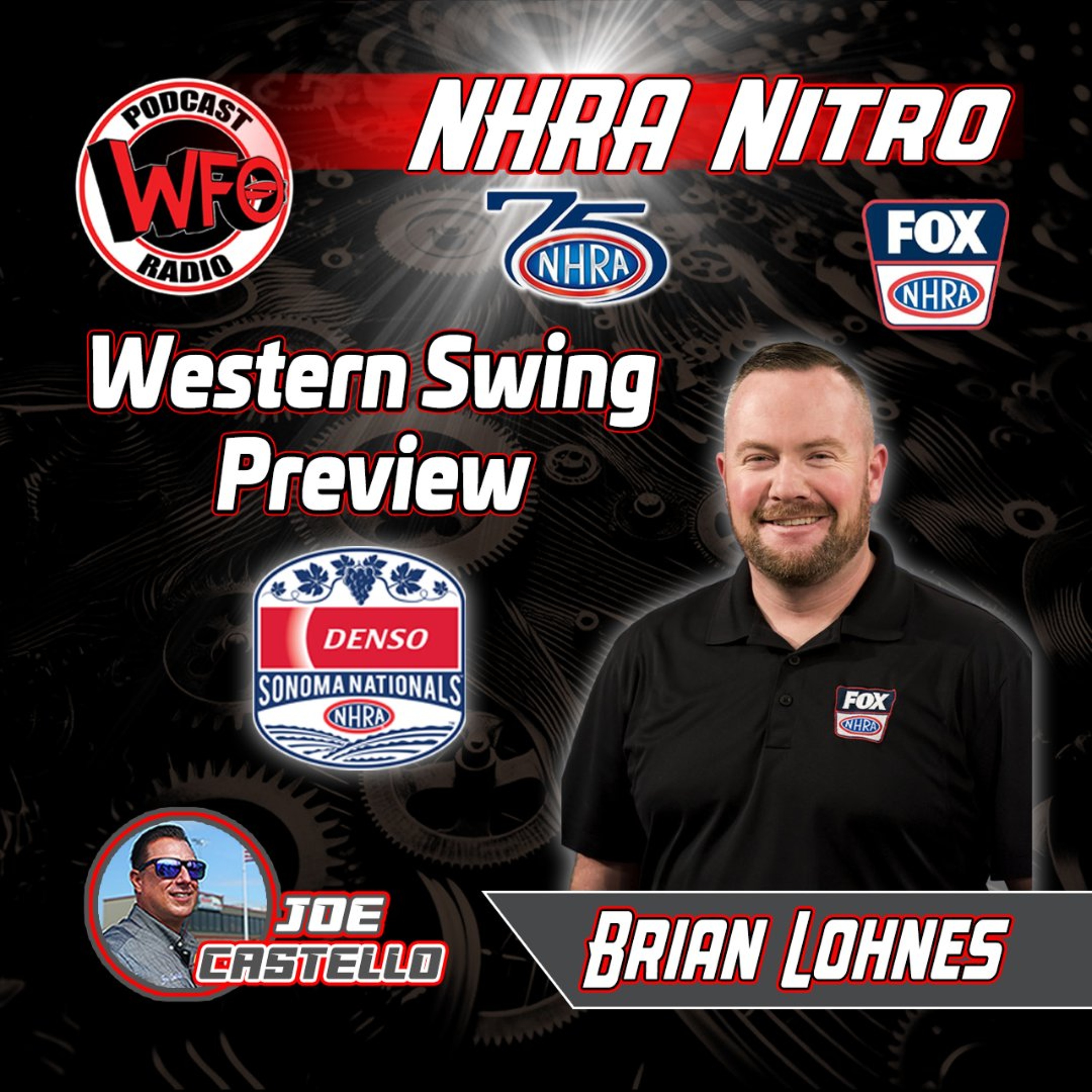
NHRA on Fox's Brian Lohnes joins WFO Radio before the NHRA Western Swing
About this episode
Sonoma Raceway sets the tone for the NHRA Western Swing opener, with Friday night conditions expected to mirror last year’s big-speed runs—hosts talk 343 mph milestones and hope to see 345 again, while also setting realistic ceilings. The show then shifts to Top Fuel and Pro Stock storylines, including Maddie Gordon’s breakout and Norwalk’s turning-point moments. Late-season points, clutch-disc inventory, and playoff threats get debated, alongside broader concerns about venue stability and drag racing’s future.
friction
"More friction and temperature means more wear and less horsepower."
Friction is the “drag” created when engine parts rub against each other. More friction usually means more heat and faster wear, which can hurt how well the engine performs.
In engine terms, friction is the resistance to motion between moving parts, like piston rings sliding on cylinder walls. Higher friction typically increases heat and wear, which can reduce power output over time.
piston rings
"Piston rings rubbing against the cylinder walls generate more friction than any other part of the engine."
Piston rings are small metal bands on the piston that help seal the engine so power-producing gases don’t leak past. They also scrape/control oil on the cylinder wall, and because they move constantly, their design affects how much the engine wears out.
Piston rings are the thin metal rings mounted on a piston that seal the combustion gases and help control oil on the cylinder wall. They also create friction as they slide along the cylinder, so ring design strongly affects wear and efficiency.
cylinder walls
"Piston rings rubbing against the cylinder walls generate more friction than any other part of the engine."
Cylinder walls are the inside surfaces of the engine block where the piston moves up and down. The piston rings ride on these walls, so if they get worn or damaged, the engine can lose efficiency and wear faster.
Cylinder walls are the inner surfaces of the engine block where the pistons travel. Piston rings run along these surfaces, so surface finish and wear directly influence friction, oil control, and long-term engine health.
piston ring design
"Fortunately, the team at Total Seal knows how to reduce friction and wear through innovative piston ring design."
Piston ring design is how the piston rings are built—shape and materials included. The idea is to make them seal well and rub less, so the engine lasts longer and doesn’t lose power.
Piston ring design refers to how the ring’s shape, materials, and surface features are engineered to seal combustion gases and manage oil. Better ring design can lower friction and wear while maintaining sealing performance.
Total Seal
"Fortunately, the team at Total Seal knows how to reduce friction and wear through innovative piston ring design."
Total Seal is a company that makes piston rings for engines. The host is saying their ring designs are meant to reduce friction and engine wear.
Total Seal is an aftermarket performance and sealing-parts company best known for piston rings. In this segment, they’re credited with reducing friction and wear via piston ring design.
Western Swing
"NHRA Nitro as we get ready for the Western swing. It's a two way race swing."
The Western Swing is a series of NHRA races in the western U.S. that are scheduled close together. The host is saying it’s a fast, exciting run of events.
The Western Swing is a stretch of NHRA events held across the western United States in a short sequence. The host emphasizes it as a back-to-back set of races leading into and out of Sonoma.
NHRA Nitro
"NHRA Nitro as we get ready for the Western swing."
“NHRA Nitro” is a reference to NHRA drag racing, especially the nitro-fueled cars that are known for huge power and loud, dramatic runs. Here it’s just setting up the next races on the schedule.
“NHRA Nitro” refers to the NHRA drag racing coverage and the nitro-fueled classes that are a major part of the NHRA’s identity. In this segment it’s used as the lead-in to the Western Swing schedule.
after dark qualifying session
"We got the D cell power systems after dark qualifying session on Friday night."
An after dark qualifying session is when qualifying runs happen at night instead of during the day. It’s usually more of a show, and it can make the racing feel more intense and exciting.
An after dark qualifying session is a drag-racing qualifying format held at night, often with special lighting and a more dramatic atmosphere. It’s commonly used to create a spectacle and highlight the cars’ performance under race-like conditions.
Brian Lones
"My guest on this show, NHRA on Fox, Brian Lones. We're going to break it all down."
Brian Lones is the guest on the show, coming from NHRA coverage on Fox. He’s there to talk through the upcoming NHRA races and storylines.
Brian Lones is the guest mentioned from “NHRA on Fox.” He’s positioned as the person who will help break down what’s happening heading into the NHRA Western Swing.
Maddie Gordon
"Everything that's going down, the Maddie Gordon phenomenon, the emergence of new media sensation, Sadie Glenn."
Maddie Gordon is being talked about as a big standout in the NHRA news. The host is treating her as a major storyline for this stretch of races.
Maddie Gordon is referenced as the subject of a “phenomenon,” implying she’s a standout figure in the NHRA storyline being discussed. The segment frames her as a notable driver or emerging name.
Sadie Glenn
"the emergence of new media sensation, Sadie Glenn."
Sadie Glenn is described as a new media sensation, meaning she’s getting a lot of attention right now. The host is saying she’s one of the big names in the current NHRA conversation.
Sadie Glenn is mentioned as a “new media sensation,” suggesting she’s gaining attention beyond traditional motorsports coverage. In this segment, she’s part of the broader set of NHRA storylines the hosts plan to cover.
funny car points
"We're going to talk about the funny car points. We're going to talk about the odds to win the championship and anything else"
In NHRA, drivers earn points at races. “Funny car points” are the points specifically for the Funny Car class, and they add up over the season to decide the champion.
In NHRA drag racing, “funny car points” are the championship points earned by Funny Car teams at each event. Those points accumulate across the season to determine who’s leading the championship standings.
Jesse Converters
"we'll go in depth about the folks at Jesse Converters, Global Emissions Systems Incorporated, catalytic converters over the road trucks, direct OE replacements."
Jesse Converters is a company that makes exhaust emissions parts, especially catalytic converters. They’re mentioned as part of the show’s featured brands.
Jesse Converters is referenced as a company involved with catalytic converter products. The segment frames them as part of the show’s sponsor/partner lineup for emissions hardware used on heavy-duty trucks.
catalytic converter
"we'll go in depth about the folks at Jesse Converters, Global Emissions Systems Incorporated, catalytic converters over the road trucks, direct OE replacements."
A catalytic converter is a part in the exhaust that helps clean up the car’s fumes. It helps reduce pollution by changing harmful gases into less harmful ones.
A catalytic converter is an emissions-control device that uses catalysts to convert harmful exhaust gases into less harmful ones. In the context of “over the road trucks,” it’s about meeting emissions rules while keeping exhaust flow and drivability acceptable.
Global Emission Systems Incorporated
"Jesse Converters, Global Emissions Systems Incorporated, catalytic converters over the road trucks, direct OE replacements."
Global Emissions Systems Incorporated is a company that makes emissions-related parts. In this segment, they’re tied to catalytic converters for trucks.
Global Emissions Systems Incorporated is mentioned in the context of catalytic converter products for over-the-road trucks. The name suggests a focus on emissions compliance hardware for commercial vehicles.
direct OE replacements
"catalytic converters over the road trucks, direct OE replacements. That's the DPF X fit, the G sport brand that's high performance."
This means the replacement part is made to match the original factory part. It’s intended to bolt in and work the same way, rather than requiring custom work.
“Direct OE replacements” means aftermarket parts designed to fit and function like the original equipment (OE) component. For catalytic converters, that usually implies correct mounting, fitment, and emissions compliance so the truck can be serviced without major modifications.
DPF X-Fit
"That's the DPF X fit, the G sport brand that's high performance. They've even had it on the dyno with a pro stock engine, lost no horsepower."
“DPF X fit” sounds like a specific emissions-part option that’s made to fit a certain way. It’s basically a named product/fitment system for installing the part correctly.
“DPF X fit” appears to be a specific product/fitment designation related to emissions hardware for heavy-duty vehicles. The key idea is that it’s a named fitment system (not just a generic part name), likely tied to how the component is packaged and installed.
stock engine
"They've even had it on the dyno with a pro stock engine, lost no horsepower. We'll talk about them a little bit later on in the show."
Pro Stock is a drag racing class with very powerful, purpose-built engines. Saying it was tested on a Pro Stock engine means they checked the product on a serious performance setup.
A “Pro Stock engine” refers to the NHRA Pro Stock class, where engines are highly regulated but built for maximum power within the rules. Mentioning it in a dyno context implies they tested the emissions product’s impact on measured horsepower.
Larisse Motorsports Insurance
"Of course, Larisse Motorsports Insurance. I am a customer of Larisse Motorsports Insurance. Can't wait to get the Pontiac back out on the track later on this year."
Larisse Motorsports Insurance is an insurance company focused on motorsports. The host mentions they personally use it.
Larisse Motorsports Insurance is referenced as a motorsports-focused insurance provider. The host says they’re a customer, indicating the company supports racing participants with coverage.
torque converters
"Total seal piston rings. You heard about them, FTI performance transmissions and torque converters. Paul Lee's company, they're located in the land, Florida and PowerGlide"
A torque converter is a part in an automatic transmission that helps the car get moving smoothly. In racing, it’s tuned to help the engine launch hard and stay in its best power range.
A torque converter is a fluid coupling used in automatic transmissions to transfer engine torque to the drivetrain. In drag racing, torque converters are tuned to multiply torque at launch and match the engine’s powerband for quicker acceleration.
FTI Performance Transmissions
"Total seal piston rings. You heard about them, FTI performance transmissions and torque converters. Paul Lee's company, they're located in the land, Florida and PowerGlide"
FTI performance transmissions is a company that builds racing transmissions and related parts. In drag racing, the transmission setup can make a big difference in how hard the car launches.
FTI performance transmissions is mentioned as a provider of race-built transmission and torque-converter solutions. In drag racing, transmission and converter setup strongly affects launch behavior and how well the car stays in the engine’s optimal RPM range.
power glide transmission
"Paul Lee's company, they're located in the land, Florida and PowerGlide transmissions for extremely powerful race cars all the way up through Pro Modified."
PowerGlide is the name of a type of automatic transmission. In drag racing, people use it because it can be upgraded to handle big power.
“PowerGlide” is a well-known GM automatic transmission family commonly used in drag racing because it can be built to handle high power. When someone mentions “PowerGlide transmissions,” they’re usually talking about a race-prepped automatic platform rather than a stock street unit.
red line
"So FTI can hook you up literally or find folks at Redline. Hussey performance.net."
Redline is mentioned as another place to find people or help related to the racing parts being discussed. The segment doesn’t give enough detail to pin down exactly what it is.
Redline is mentioned as a place to find “folks” (likely a shop or network) related to the transmission/converter discussion. Without more context, it’s best treated as a brand/company reference rather than a specific technical component.
drag racing
"Like, and it's that that drag racing kind of tribal primal experience where you just go there and most people don't say anything."
Drag racing is a type of racing where cars race in a straight line over a short distance. The goal is to get to the finish first, usually by accelerating as hard as possible.
Drag racing is a motorsport where two cars compete over a short, straight course to see who accelerates fastest and crosses the finish line first. Because it’s mostly about acceleration and traction, teams focus heavily on launch, gearing, and engine output.
mile per hour
"But now we have a 300 and 45 mile per hour car out there and the conditions and the altitude and everything."
Miles per hour (mph) is a way to measure speed. In drag racing, speeds like this help show how strong the car is by the time it reaches the end of the track.
Miles per hour (mph) is a unit of speed used to describe how fast a car is traveling. In drag racing, top speed and elapsed performance are key indicators of how well the car is accelerating and how much power it’s making at the end of the run.
altitude
"But now we have a 300 and 45 mile per hour car out there and the conditions and the altitude and everything."
Altitude is how high a place is above sea level. At higher altitude the air is thinner, so engines may make less power unless they’re adjusted for it.
Altitude affects engine performance because air density drops as you go higher. Thinner air means less oxygen for combustion, which can reduce power unless the car is tuned or equipped to compensate.
condition
"But now we have a 300 and 45 mile per hour car out there and the conditions and the altitude and everything."
In drag racing, “conditions” means things like weather and track grip. If it’s hotter, colder, windier, or the track is slicker, the car may not accelerate as well.
In drag racing, “conditions” usually refers to track and weather factors like temperature, humidity, wind, and surface grip that influence traction and engine output. Small changes can noticeably alter launch performance and how consistently a car hits its target times/speeds.
in-car radios
"And, you know, her in car radio, which we have accessed all the in car in car radios and we've gotten some of that stuff on the air."
In-car radios are the radios inside the race car. They let the driver and the crew talk to each other during the event so the team can give real-time instructions.
In-car radios are communications systems used so drivers and teams can talk during a race. In drag racing, they’re especially important for relaying setup changes, launch notes, and what the car is doing on each pass.
semi-finals
"I just remember vividly at Gainesville this year when she went to the semifinals, she won the second round, towing the car to return road."
Semifinals are the round right before the final. If you win in the semifinals, you advance to the last race of the event.
Semifinals are the penultimate round in a drag racing elimination bracket, where the remaining cars are narrowed down to the final. Winning a semifinal run puts a team into the championship round.
Gainesville
"I just remember vividly at Gainesville this year when she went to the semifinals, she won the second round, towing the car to return road."
Gainesville is a well-known NHRA drag-racing track in Florida. It’s the kind of race stop where teams see how their cars are performing early in the season.
Gainesville refers to the NHRA drag racing event at Gainesville Raceway in Florida. It’s a major early-season venue where teams often gauge how well their cars are working before the rest of the schedule ramps up.
return road
"she won the second round, towing the car to return road."
The return road is the path the race car uses after it finishes a run. The car then heads back toward the starting area so it can race again.
The return road is the track area where a drag car goes after crossing the finish line to get back to the staging lanes for the next run. It’s part of the race-day flow and affects how quickly teams can prepare for the next pass.
Monster Energy
"one of the things that was interesting is the fact that monster energy actually includes her in their television advertising,"
Monster Energy is a drink brand that sponsors racing. You’ll often see its logo and hear about it in racing broadcasts and ads.
Monster Energy is an energy drink brand that sponsors motorsports teams and events. In drag racing coverage, it often shows up in TV advertising and branding around the sport.
air failure
"I've never seen a fuel car have an air failure that doesn't result in them just pushing the car back and down the return road."
“Air failure” in drag racing usually points to a loss of compressed air used to operate critical systems (for example, for starting, shifting, or controlling components). When that happens, teams generally can’t keep the car running safely, so they recover it by pushing it back rather than continuing under power.
fuel car
"I've actually, the more I think about it, I've never seen a fuel car have an air failure that doesn't result in them just pushing the car back and down the return road."
A “fuel car” here means a drag-race car that uses specialized racing fuel (not normal street gasoline). If something goes wrong, the team often has to stop and move the car back safely.
In NHRA drag racing, a “fuel car” typically refers to a car running on specialty fuels used in categories like Top Fuel and Funny Car (rather than gasoline). These cars are designed for extreme acceleration, and fuel-system issues can quickly force teams to shut down and recover the car safely.
starting line
"You've been down there at the starting line when, when a team realizes that happens, people just put the fuel bottle back, they push the car back"
The starting line is where the cars line up to launch and start their timed run. If something breaks right there, the run can be over very quickly.
The starting line is the staging and launch area at a drag strip where cars line up, stage, and begin their timed run. In NHRA, what happens at the starting line is critical because a mechanical or control-system issue can end the run immediately.
blower oil
"along and they used every second cannibalizing a line from the blower oil or just really amazing stuff."
Some drag race engines use a forced-air device (a blower) to make huge power. “Blower oil” is the special oil that helps that blower keep working reliably when it’s under a lot of stress.
In drag racing, especially Top Fuel and Funny Car, a supercharger/blower is used to force more air into the engine. “Blower oil” is the lubricant used in that supercharger system to keep it running under extreme heat and speed.
top fuel championship
"[1099.1s] HRA posts odds for the top fuel championship the other day."
“Top Fuel” is the NHRA drag racing category with the quickest cars. The “top fuel championship” means the season-long race where drivers earn points at many events to win the overall title.
“Top Fuel” is the NHRA drag racing class for the fastest, most powerful cars, and the “top fuel championship” is the season-long points battle among drivers in that class. It’s typically decided by accumulating points across multiple events rather than a single race result.
electronic problems
"[1168.8s] is that they were trying to solve a problem last year. [1171.8s] They were trying to overcome something, which I believe is an electronic problem [1174.8s] that finally they were able to get ironed out at Norwalk and that let them open the"
An “electronic problem” means something in the car’s computer/sensors wasn’t working right. In drag racing, that can hurt how the engine runs, and fixing it can make the car much more consistent and fast.
In drag racing, an “electronic problem” typically means a malfunction or calibration issue in the car’s control systems—such as sensors, engine management, or related electronics—that can affect how the engine and fuel/ignition systems respond under extreme conditions. Fixing it can dramatically improve consistency and performance.
Indy
"All the cars except for Dan Wilkerson tested at Indy. It was very hot, so I'm not sure if they got the, you know, direct translation information from that test to Sonoma conditions."
“Indy” means Indianapolis, a big NHRA drag-racing event. Weather and track conditions there can be different from other tracks, so what works at Indy might not work the same way elsewhere.
“Indy” here refers to Indianapolis, which is a major stop on the NHRA drag racing calendar. Track conditions and weather can strongly affect traction and engine performance, so results from Indianapolis don’t always translate cleanly to other venues.
US Nationals
"But we're going down a stretch and of course we get to Indy and it tends to it tends to heat up very toasty at the US nationals. It's an interesting thing that the problem, if you go down and actually break the numbers down on Ashley's car and look at where the struggle is,"
The “US nationals” is a big NHRA event. Hot weather can make the cars behave differently—especially grip and engine performance—so it matters a lot for race-day results.
The “US nationals” is a major NHRA national event, and it’s known for hot, demanding conditions. In drag racing, heat can affect engine power, cooling, and tire grip, which is why teams pay close attention to how testing translates.
semi-final round
"Sometimes we see a lot of cars in different categories that lose a lot of semifinal rounds, especially in the fuel categories. So what does that tell us about about what's going on there?"
“Semifinal rounds” are the late races in the bracket, when only the best teams are left. If a team keeps getting knocked out there, it usually means something isn’t working well enough at the highest level—either the driver or the car’s setup/performance.
“Semifinal rounds” are the later elimination races where the field is much smaller and competition is at its highest. If a team repeatedly loses at this stage, it often points to a gap in either driver execution or the car’s ability to make a performance improvement between rounds.
fuel categories
"Sometimes we see a lot of cars in different categories that lose a lot of semifinal rounds, especially in the fuel categories. So what does that tell us about about what's going on there?"
“Fuel categories” means the different NHRA class groups based on what kind of fuel the cars use. Different fuels can change how the car needs to be tuned and how it behaves, especially when conditions change.
“Fuel categories” are NHRA classes grouped by fuel type (for example, nitro vs. other fuels), which affects how the cars are tuned and how they perform. Because these cars can be more sensitive to setup and conditions, teams may show different patterns of success across rounds.
qualifying spot
"Justin's problem is not that their problem is qualifying position. They're averaging, if my memory is correct, they're averaging about a number 11 qualifying spot, which is it just makes your life so incredibly difficult because you look at who you then have to race in first rounds."
A “qualifying spot” is your rank from the timed qualifying runs. That rank decides your first-round opponent, so a worse spot can mean you have to race a stronger car immediately.
A “qualifying spot” is the rank a car earns during the qualifying runs, which determines who it faces in the first elimination round. Lower (worse) qualifying positions can force teams into tougher matchups right away, making advancement harder even if the car is competitive.
qualifying position
"If and when the Ashley car is able to get themselves in a stronger qualifying [1466.2s] position, you're going to see that thing do what we have seen it do several times."
Your “qualifying position” is where you place based on your timed runs. That placement affects who you race early in the bracket and can change your chances of winning rounds.
A “qualifying position” is the rank you earn from your timed qualifying runs. In elimination racing, that rank determines your lane/opponent path and can strongly affect how often you advance past the first round.
countdown
"But I think the key to what we're going to watch out of the next four races, [1493.8s] going into the countdown with Justin Ashley is going to come down a qualifying position."
The “countdown” refers to the NHRA season’s playoff-style points stretch where drivers fight to qualify for the championship rounds. Performance and qualifying position become especially important as the field narrows.
Will Smith
"I think the other thing I just bring up in top fuel is just Will Smith, how impressive Will Smith has been. Yes. Delightfully, delightfully impressed."
Will Smith is a professional NHRA drag racer. In this segment, the host is praising how well he performs when it really matters.
Will Smith is an NHRA Top Fuel driver discussed here for his standout performance. The host highlights his ability to execute at the highest level, including how he approaches limited opportunities during a race.
Justin
"I ask him about exactly that, like, hey, man, what's, you know, some people are wondering, like, did Justin give him some, you know, tips? Are they setting the car up the same as Justin's car or whatever?"
Justin is mentioned as someone who may be helping with race strategy and car setup. In drag racing, small tuning choices can make a big difference in how consistently a driver performs.
Justin is referenced as the person whose tips and car setup might be influencing Will Smith’s performance. In NHRA terms, this kind of comment usually points to the role of the crew chief/engineer and how the car is tuned for traction, launch, and consistency.
Ron Kapps
"Ron Kapps all of a sudden in a field that we would say on a regular basis, like it's wide open, it's wide open. ... But Ron Kapps, they have they have seized control of the points lead."
Ron Kapps is a major name in NHRA drag racing. The episode is talking about his team leading the season standings, which matters because it can set you up to win the regular-season title.
Ron Kapps is a well-known NHRA Top Fuel team owner/driver figure whose team is discussed here as taking control of the points lead. In drag racing, the “points lead” is crucial because it determines who’s positioned to win the regular-season championship and qualify for the Countdown to the Championship.
points lead
"But Ron Kapps, they have they have seized control of the points lead. Yeah. And we've watched it."
The “points lead” just means your team is currently in first place in the season standings. You earn points at races, and the team with the most points is leading the season.
In NHRA, the “points lead” refers to being first in the season standings based on race results. Because points accumulate over multiple events, teams can “seize” or “carry” the lead into later races to improve their odds of winning the regular-season championship.
120 point thing
"It's it's to your point, sneaky, the 120 point thing. When I was getting ready and working on my stuff for this race, it was sneaky to think, wait a second, he's 120 up."
The “120 point thing” is a reference to a points gap—how far ahead a driver/team is in the standings. The host is emphasizing that if you can maintain most of that advantage through upcoming races (like Indy), you can still have a strong shot at the regular-season championship.
regular season championship
"but if you can carry 90 of it into Indy, you got a great shot at being a regular season champion, let alone growing it. Right. And it's three wins, right?"
A “regular season champion” means the team finishes the main part of the season with the best points total. It’s a separate goal from the final championship decided later.
A “regular season champion” in NHRA refers to winning the title based on accumulated points during the regular portion of the season. It’s distinct from the postseason championship, which is decided through later playoff-style rounds.
clutch disc combination
"They lost their clutch disc combination and they spent a lot of time working and it appears that now they have it back and it's all about clutch disc allocation and do you have enough to get you to the end?"
In racing, a “clutch disc combination” refers to the specific clutch disc setup the team is running—often including the disc type/material and how it’s paired with the rest of the clutch hardware. Teams choose combinations to match the car’s torque, launch strategy, and track conditions, and they’ll swap or reconfigure when performance or durability isn’t where they need it.
clutch discs
"They lost their clutch disc combination and they spent a lot of time working and it appears that now they have it back and it's all about clutch disc allocation and do you have enough to get you to the end?"
The clutch disc is the part that helps connect the engine to the transmission. If it’s worn or the wrong setup, the car may not launch or shift as consistently as the team wants.
A clutch disc is the friction plate inside a manual-style clutch that engages and disengages power between the engine and the transmission. In drag racing, clutch disc wear or damage can directly affect how consistently the car launches and how well it can shift under hard acceleration.
clutch disc allocation
"and it appears that now they have it back and it's all about clutch disc allocation and do you have enough to get you to the end?"
Clutch disc allocation is basically how the team decides when to use their clutch parts. Since the clutch wears out from hard launches, they have to plan so they don’t run out at the wrong time.
Clutch disc allocation is how a drag racing team budgets and schedules clutch disc sets across races. Because clutch discs wear out under repeated hard launches, the crew chief has to decide how many discs to use now versus save for later rounds in the season.
crew chief
"it takes I mean, the amount of self control it takes for a crew chief for the great crew chiefs, especially in this era of the sport, to be able to manage that idea, to be able to manage the inventory."
The crew chief is the team’s main decision-maker. They guide the car setup and strategy, and they decide what to try (and what to save) during the weekend.
A crew chief is the lead engineer/strategist for a drag racing team, responsible for race-day decisions and overall setup direction. They coordinate the crew, manage parts and testing plans, and make calls about what to try when performance isn’t ideal.
inventory
"to be able to manage the inventory. [1774.1s] And it's not simply like, OK, I got six more of these and two more of these."
Here, “inventory” means the spare parts the team has available. The crew chief has to manage what they have so they can keep the car running through the whole event schedule.
In this context, “inventory” means the team’s on-hand supply of critical race parts—like clutch components—ready to install between rounds. Managing inventory is a strategic part of drag racing because parts can be limited, expensive, or slow to replace during a busy stretch of events.
Norwalk
"I was hoping for the Wilkerson car to see a better norwalk for them. After what we saw at a Bristol, it's like, OK, like, plant the flag, baby."
Norwalk is a specific drag-racing track/event location. The host is hoping the Wilkerson team performs better there than they have recently.
Norwalk refers to the Norwalk drag racing venue (commonly associated with Norwalk, Ohio) where NHRA events are held. Track conditions there can be different enough that teams talk about “a better Norwalk” as shorthand for getting the car to perform well at that specific stop.
Bristol
"After what we saw at a Bristol, it's like, OK, like, plant the flag, baby. Like you get the flag right there, like let's just plant it in the ground."
Bristol is another drag-racing stop the host is talking about. They’re saying what happened there sets expectations for how teams should perform elsewhere.
Bristol is a reference to a specific NHRA event venue known for its distinct track characteristics. The host compares what happened at Bristol to what they expect next, implying that track-to-track differences matter to results.
hot track management
"And when we have seen them be exceptionally good at hot track management, we seem to be very good in those environments."
When the track is hot, the tires grip differently. Hot track management is how the team adjusts the car and driving strategy so it still launches hard and runs consistently.
Hot track management is the strategy teams use to keep performance consistent when the track surface is warm. In drag racing, track temperature affects tire grip and how the car’s tune (like launch and traction settings) needs to be adjusted run-to-run.
Dallas
"[2045.0s] in great conditions at Pomona, at Dallas, those races. [2049.6s] You got to be able to have you got to be able to have that in your toolbox."
Dallas is another NHRA race stop mentioned in the Western Swing. Like any track, it has its own conditions, and those conditions can affect how well the cars launch and run.
Dallas here refers to an NHRA Western Swing stop at a track in the Dallas area. In drag racing, the specific venue matters because weather and track prep can change traction and engine performance from one event to the next.
Pomona
"[2045.0s] in great conditions at Pomona, at Dallas, those races. [2049.6s] You got to be able to have you got to be able to have that in your toolbox."
Pomona is a famous drag racing venue in California where NHRA races are held. Track conditions at that event can make a big difference in who runs the fastest and advances.
Pomona refers to the NHRA event held at the Auto Club Raceway in Pomona, California. It’s a major stop on the drag racing calendar, and track conditions there can strongly affect how well cars perform and how championships play out.
pro stock
"[2053.2s] Let's talk pro stock. [2054.8s] All right."
Pro Stock is a specific category in drag racing. It uses cars that are based on real production models, but they’re heavily modified and tuned for extremely consistent acceleration down the strip.
Pro Stock is a drag racing class where teams race highly prepared, production-based cars in head-to-head eliminations. The cars are built around strict rules for engine displacement, weight, and tire size, and they’re known for very consistent, repeatable quarter-mile performance.
Matt Hartford
"[2064.4s] Matt Hartford, as you know, they've been that you've given him credit [2066.8s] and he's taken a beating sometimes. [2068.8s] Right. Yeah, so let's start there. [2071.3s] Matt Hartford has got his best chance to win a world championship"
Matt Hartford is a racing person involved in Pro Stock. They’re talking about his chances for a championship and how well his team has been running in recent rounds.
Matt Hartford is a Pro Stock team figure associated with championship-level competition. In this segment, he’s discussed as having a strong chance at winning a world championship based on recent performance and how the team has been competitive across rounds.
whole shot
"[2094.0s] that day and I just texted Matt, I said, Hey, man, sometimes you get to tip [2100.8s] your hat to a guy and just tip your hat and nod because that's that's [2100.8s] what Stanfield earned in that final."
A whole shot is when a car launches first and gets out to an early lead. In drag racing, that early advantage can be huge because it’s hard to catch up once you’re behind.
In drag racing, a “whole shot” means the car gets the jump at the start and is clearly ahead from the launch through the early part of the run. It’s a key momentum moment in eliminations because it can force the other driver to chase the gap.
NHRA Insider
"[2110.7s] what Stanfield earned in that final. [2113.7s] But yeah, I mean, I jokingly said on the NHRA Insider a few weeks ago, [2116.9s] I said, I need to see this guy lose more in the second and third round"
NHRA Insider is an NHRA-related show or segment where people talk about drag racing. The host is saying he mentioned this idea there before.
NHRA Insider is a media segment/show associated with the NHRA (National Hot Rod Association). It’s referenced here as the place where the speaker previously made a comment about results and matchups in Pro Stock.
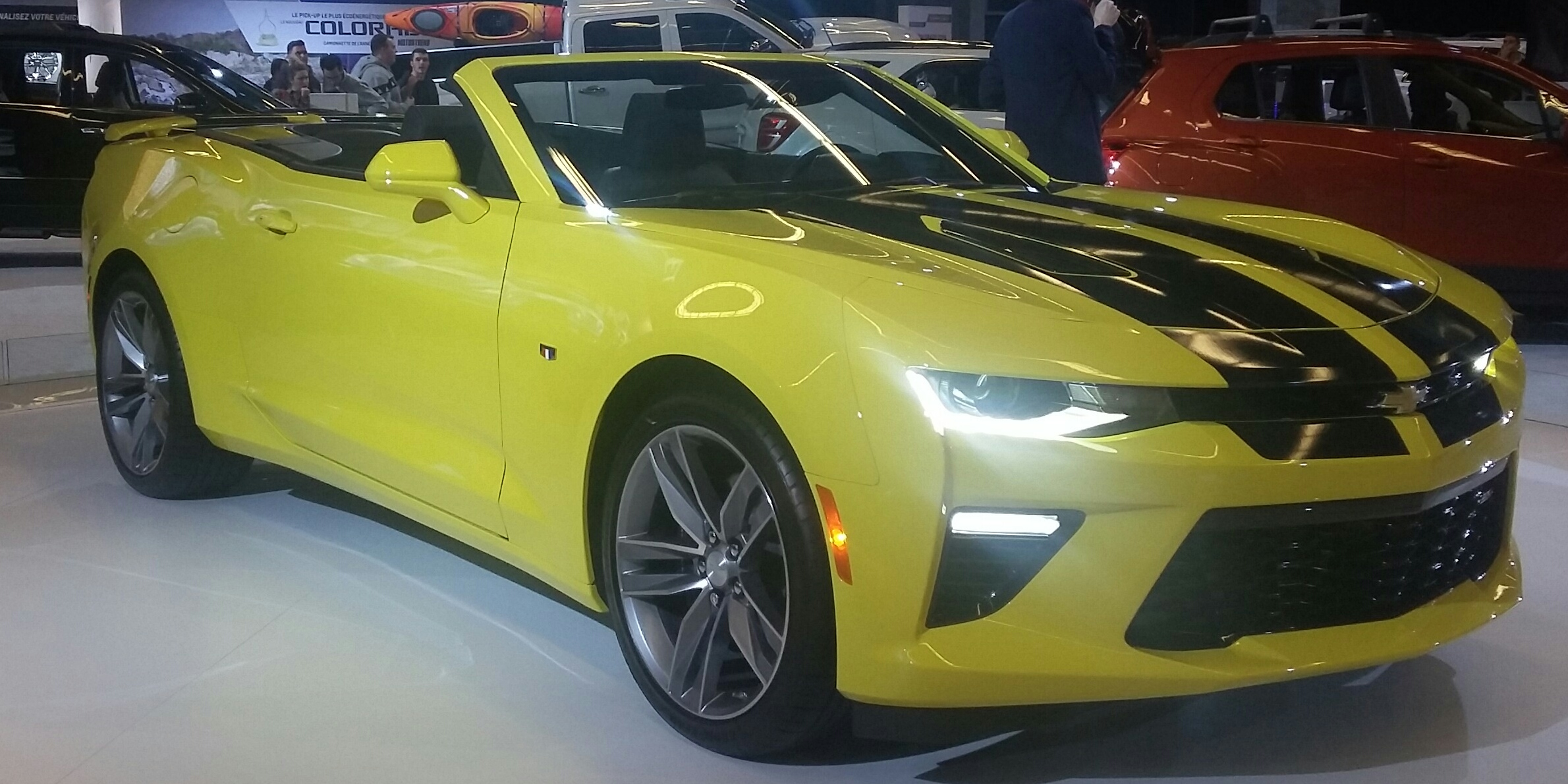
Chevrolet Camaro
"...y 2015. It's a it's not the newest five star body Camaro that you can run. It's the a generation or two ba..."
The Chevrolet Camaro is a sporty two-door car made by Chevrolet. The podcast is talking about an older Camaro (around the 2015 timeframe) instead of the newest version. People mention it because it can still be a fun performance car even if it’s not the newest model.
The Chevrolet Camaro is a performance coupe built by Chevrolet, known for its sporty styling and engine options. In the podcast context, a 2015-era Camaro is being discussed as an example of a “generation or two” older car rather than the newest top-rated body style. It likely comes up because it’s a common platform for enthusiasts who want a capable car without needing the very latest design.
aerodynamics
"And, you know, it to a degree speaks to the fact that the aerodynamics [2228.2s] on these cars are so close, he's not at a disadvantage."
Aerodynamics is how the car’s shape affects the air around it. Less drag can help the car go faster, and better stability helps it stay controlled at speed.
Aerodynamics is how air flows around a car, affecting drag (how hard it is to move through air) and downforce (how much it pushes the tires onto the road). In drag racing, small aerodynamic differences can change top speed and stability, especially at high speed.
chassis
"And the chassis they have has had 6.7 trillion runs made on it. [2237.6s] But guess what?"
The chassis is the main frame/structure of the car. In racing, it matters because it affects how the car hooks up and stays stable.
A chassis is the car’s main structural foundation that everything mounts to—suspension, drivetrain, and body. In racing, the chassis setup strongly influences handling, traction, and how consistently the car performs run after run.
elapsed time
"Eric Anders has a quicker average Sunday elapsed time than both Greg Stanfield and Aaron Stanfield have."
Elapsed time (ET) is how long it takes a drag car to go from the start to the finish. Lower ET means the car is faster.
Elapsed time (ET) is the measured time from the start line to the finish line in drag racing. When the host says someone has a quicker average Sunday elapsed time, they mean their average race-day ET in eliminations.
qualifying E.T.
"But but qualifying is not that car strong suit. Greg Stanfield is a hundredth better on average and qualifying E.T. than his son is,"
Qualifying E.T. is the time a driver runs during the qualifying sessions. It helps decide where they start in the bracket for the races that follow.
Qualifying E.T. is a driver’s elapsed time during the qualifying rounds that determine starting positions. In drag racing, qualifying performance matters because it can affect matchups and lane choice, even if race-day performance is even more important.
KB cars
"Right down now, Aaron is the biggest threat to the three KB cars at the top of the points right now than anybody else."
“KB cars” means the KB team’s cars in Pro Stock. The host is saying one driver is currently the biggest threat to the KB cars that are leading the championship points.
“KB cars” refers to the KB-branded Pro Stock cars associated with the KB team/driver program in NHRA. In the points race, the host is saying Aaron is the biggest threat to those top KB cars currently leading the standings.
win light
"Kenny Delco gets a winlight, man."
A winlight is the light that comes on to show who won that race. If your car gets the winlight, you move on to the next round.
A winlight is the indicator on the drag strip that shows which car won a round. When a driver gets the winlight, it means they advanced in the elimination bracket.
first round
"Number one in the first round, that's that is the nature of this business."
The first round is the earliest head-to-head race in the tournament. Win it and you move closer to the final race.
The first round is the opening elimination matchup in a drag-racing event. Performance in the first round matters because it determines who advances through the bracket toward the final.
reaction time
"It was gobsmacking to watch it happen when you look down and you see the reaction time and you see Kenny's double one and you look over."
Reaction time is how fast the driver launches after the lights tell them to go. In drag racing, even tiny delays can cost the race.
In drag racing, reaction time is how quickly the driver responds after the starting signal. It’s measured in fractions of a second and can make or break a pass even if the car is fast.
double one
"It was gobsmacking to watch it happen when you look down and you see the reaction time and you see Kenny's double one and you look over."
“Double one” is drag-racing shorthand for running two consecutive “one” numbers—typically referring to the car posting a very strong performance figure in back-to-back rounds (often in the context of elapsed time). The speaker is using it as a sign of consistency and momentum.
shook the tires
"Had they not shook the tires, they could have gotten the round went pretty easily and you'd had a hard hard Delco final."
“Shook the tires” means the tires weren’t gripping cleanly, so the car wobbled or slipped. That usually makes the car slower and less consistent.
“Shook the tires” describes traction problems where the tires lose grip and the car destabilizes during launch or acceleration. In drag racing, that can slow the car down and cost the round.
red light
"Last year, Richard Gadson went on to win the championship red light into Matt Smith double one, really going after it."
In drag racing, a red light is when the racer starts too late at the starting line. Even if they’re quick after that, the run is usually counted as a loss.
A red light in drag racing means the rider/driver left the starting line after the allowed start signal, resulting in an automatic loss for that run. It’s one of the biggest mistakes because it can happen even if the car or bike is fast once moving.
Richard Gadson
"Last year, Richard Gadson went on to win the championship red light into Matt Smith double one, really going after it."
Richard Gadson is a well-known motorcycle drag racer in NHRA Pro Stock. The hosts mention him here because of a notable race moment and result.
Richard Gadson is a top NHRA Pro Stock Motorcycle rider known for winning championships. In this segment, he’s referenced for a specific race outcome involving a red light and then continuing to win.
Matt Smith
"Last year, Richard Gadson went on to win the championship red light into Matt Smith double one, really going after it."
Matt Smith is another motorcycle drag racer in NHRA Pro Stock. Here he’s mentioned as the opponent in a matchup involving Richard Gadson.
Matt Smith is an NHRA Pro Stock Motorcycle competitor. The segment references him in the context of a head-to-head moment with Richard Gadson, emphasizing competitive aggression.
Sonoma
"This is one of my favorite elements about Sonoma. The bikes going there just for this all-star race, but the bikes just work so well, big speeds there also."
Sonoma is a race track where NHRA events happen. The host is saying the track seems to suit these pro stock motorcycles and supports very fast runs.
Sonoma refers to the Sonoma Raceway venue, which hosts NHRA events and is known for track characteristics that can suit high-speed motorcycle racing. The host notes that the bikes “work so well” there and highlights the high-speed nature of the racing.
Gage Herrera
"I want to hear some Richard Gadson grudge, race or mentality stuff. I want to hear some Gage Herrera grudge, race or mentality stuff."
Gage Herrera is a motorcycle drag racer in NHRA Pro Stock. The host is basically saying fans want to hear what drives him and how intense his racing mindset is.
Gage Herrera is an NHRA Pro Stock Motorcycle rider. The host calls out his “grudge, race or mentality” as something fans want to hear, framing him as a personality-driven competitor.
third in the order
"Now that can't happen this year because Matt is third in the order. So he'll be able to make a pick avoiding, um, you know, avoiding that fate."
“Third in the order” means you’re ranked/positioned so you get to choose or be matched in a specific spot. That affects who you’ll race early, which can make the rest of the bracket easier or harder.
“Third in the order” refers to the lane/opponent selection position in an elimination bracket. Being third changes who you can be paired with, which can strongly influence your path through the event.
pick
"So he'll be able to make a pick avoiding, um, you know, avoiding that fate. But if you look at the lineup in the seating, I do believe two MSR motorcycles will probably have to face off in that first round."
A “pick” is when you choose who you’re going to race next (or which matchup you end up with). Teams try to pick an opponent they think they can beat.
A “pick” is the selection of which opponent you’ll face (or which pairing you’ll accept) based on your position in the bracket. In elimination racing, this is a strategic move to avoid the strongest cars early.
lineup in the seating
"But if you look at the lineup in the seating, I do believe two MSR motorcycles will probably have to face off in that first round. I don't believe in any speck of my imagination."
This is basically the event’s matchup order—who is lined up to race whom. Where you sit/where you’re placed in the order can affect your early opponents.
“Lineup in the seating” is a bracket/selection reference—how the field is arranged for matchups based on order or seeding. In elimination events, that arrangement determines who gets paired against whom.
MSR motorcycles
"But if you look at the lineup in the seating, I do believe two MSR motorcycles will probably have to face off in that first round. I don't believe in any speck of my imagination."
“MSR motorcycles” means a specific racing team’s motorcycles. The host is saying two bikes from that same team could end up racing each other early.
“MSR motorcycles” refers to a racing team/brand identity in motorcycle drag racing. When the host says two MSR motorcycles may face off in the first round, they’re pointing to an internal matchup between entries from the same program.
FAFO
"But then again, Greg Anderson, FAFO out there. I talked to Greg about that."
“FAFO” is slang that basically means “try it and see what happens.” Here it suggests a bold, risk-taking attitude about race strategy.
“FAFO” is slang for “f*** around and find out,” used to describe a fearless, high-risk approach. In racing talk, it implies someone is willing to gamble on strategy rather than avoid tough matchups.
Greg Anderson
"But then again, Greg Anderson, FAFO out there. I talked to Greg about that."
Greg Anderson is a famous drag racer. In this conversation, he’s being used as an example of a driver who makes a tough, aggressive decision.
Greg Anderson is a well-known drag racing driver/team figure, referenced here in the context of aggressive bracket strategy. The host is using him as an example of someone who would make a bold choice rather than play it safe.
bracket racer
"[2883.9s] and I'm a bracket racer. [2885.1s] But when it comes to focusing on a sport for a mass audience like on XM,"
Bracket racing is a way to race where everyone is given a target time to hit. You win by being as close as possible to that time, not necessarily by being the absolute fastest.
A bracket racer competes using a handicap system where drivers try to match a pre-set target time rather than just running the fastest possible pass. The winner is typically the car that gets closest to its dial-in time without going faster than the target.
NHRA national event
"[2929.8s] So this is the name tag that I was given at my first IHRA national event. [2936.6s] 24 years ago, 23 years ago, Bill Bayer's seen"
IHRA is another organization that puts on drag racing events. An “IHRA national event” is one of their bigger races where competitors follow IHRA rules.
IHRA (International Hot Rod Association) is another drag racing sanctioning organization that held its own national events and class structure. The speaker references an IHRA national event to explain where they got a specific name tag and how long they’ve been involved in organized drag racing.
race tracks
"[2950.7s] Well, I got to be measured. [2953.6s] What I say, the health of drag racing depends on cars going down the racetracks."
A racetrack is the track where race cars run. The host is saying drag racing stays healthy when cars are able to make runs down the track.
In drag racing, racetracks are purpose-built facilities with lanes, timing systems, and safety infrastructure designed for straight-line acceleration runs. The host’s point is that drag racing’s health depends on cars actually making passes down these tracks.
Bill Bader
"Yeah, and I think, you know, when I worked it, at the IHRA with Bill Bader, his slogan was IHRA and damn proud of it."
Bill Bader is referenced as a leader and editor connected to IHRA drag racing coverage, known for being direct and demanding high effort. The host credits him with shaping the series culture and setting the tone for how people should perform.
IHRA experience
"And that's the part of the IHRA experience that I'll always carry with me. Was this the attitude of we're not trying to be anybody else by ourselves."
IHRA is a drag racing organization. When the host says “IHRA experience,” they mean the vibe and attitude people had while working and racing in that series.
The IHRA (International Hot Rod Association) is a drag racing organization, and “IHRA experience” here refers to the culture and competitive mindset within that series. The host is emphasizing the community attitude—being proud of IHRA and striving to do your best rather than copying other organizations.
match race
"Famously, when Clay Millican was dominated in the IHRA series, Bill Bader came up with the idea to have I think it was $150,000 match race between himself and Larry Dixon,"
A match race is a one-on-one race between two drivers. It’s usually set up as a special showdown, not just part of a normal points event.
A match race is a head-to-head drag race between two specific competitors, rather than a full bracket or points-based event. It’s often used to settle bragging rights or create a special, high-stakes showdown.
Clay Millican
"Famously, when Clay Millican was dominated in the IHRA series, Bill Bader came up with the idea to have I think it was $150,000 match race between himself and Larry Dixon,"
Clay Millican is a drag racer. The host says he was dominating in IHRA, which is what led to the story about a big head-to-head race.
Clay Millican is mentioned as a drag racer who was “dominated” in the IHRA series at the time of the story. In context, this sets up why the match race idea was proposed.
Larry Dixon
"Bill Bader came up with the idea to have I think it was $150,000 match race between himself and Larry Dixon,"
Larry Dixon is named as the other competitor in the proposed high-dollar match race. The host frames it as a notable, memorable showdown idea tied to IHRA history.
HRA cars
"that now tune on professional championship level and HRA cars is astounding. The amount of guys I remember and, you know, guys that were my old,"
HRA cars appears to refer to drag racing cars competing under a specific sanctioning/series acronym (likely a regional or organizational label). The speaker is contrasting earlier IHRA experience with later competition at a higher professional championship level.
Nitro Methane
"Certainly welcome anybody whether it burns gasoline, alcohol, or nitromethane to come."
Nitromethane is a special fuel drag racers use because it helps the engine make a lot more power. It’s different from regular gasoline and is common in high-level drag racing.
Nitromethane is a high-energy fuel used in top NHRA drag racing classes. It contains oxygen within the fuel itself, which allows the engine to burn more fuel/air mixture and produce significantly more power than gasoline under similar conditions.
alcohol
"Certainly welcome anybody whether it burns gasoline, alcohol, or nitromethane to come."
In this context, “alcohol” means a type of fuel drag racers use instead of gasoline. It can help the engine run cooler and behave differently when making power.
In drag racing, “alcohol” usually refers to alcohol-based fuels (often methanol blends) used in certain NHRA classes. These fuels can help with cooling and combustion characteristics, which affects how the car makes power and manages heat.
sanctions
"[3883.5s] Because, again, they have made, there's been statements made by the NHRA. [3888.0s] They're going to continue to sanction and they're going to continue to operate, [3890.5s] you know, the sports and stuff like that."
A sanction is official approval from the racing organization. If an event is sanctioned, it follows that organization’s rules and safety standards.
In motorsports, a sanctioning body “sanctions” events by approving the race under specific rules, safety standards, and eligibility requirements. When the NHRA says it will continue to sanction, it means events will still be run under NHRA governance rather than becoming unsanctioned or differently regulated.
Piedmont Dragway
"[3938.3s] One story that blows my mind that nobody's brought up is Piedmont Dragway. [3942.8s] Home with the big dog. [3944.1s] Piedmont's been around for 50 plus years."
Piedmont Dragway is a specific drag racing venue the host calls out as having major recent changes. The speaker notes it was purchased and knocked down, and that it has been running as a dirt drag strip, which is a big operational shift for a drag facility.
Request an Explanation
Heard something you'd like explained? We'll add it to this episode.
Sign in to request explanations for terms you heard.
Want to learn more?
Browse our glossary for plain-English explanations of automotive terms, jargon, and concepts.
Help improve this episode
See something that's not quite right? Our annotations are AI-generated and can sometimes miss the mark. Click the flag icon on any annotation to suggest a correction.