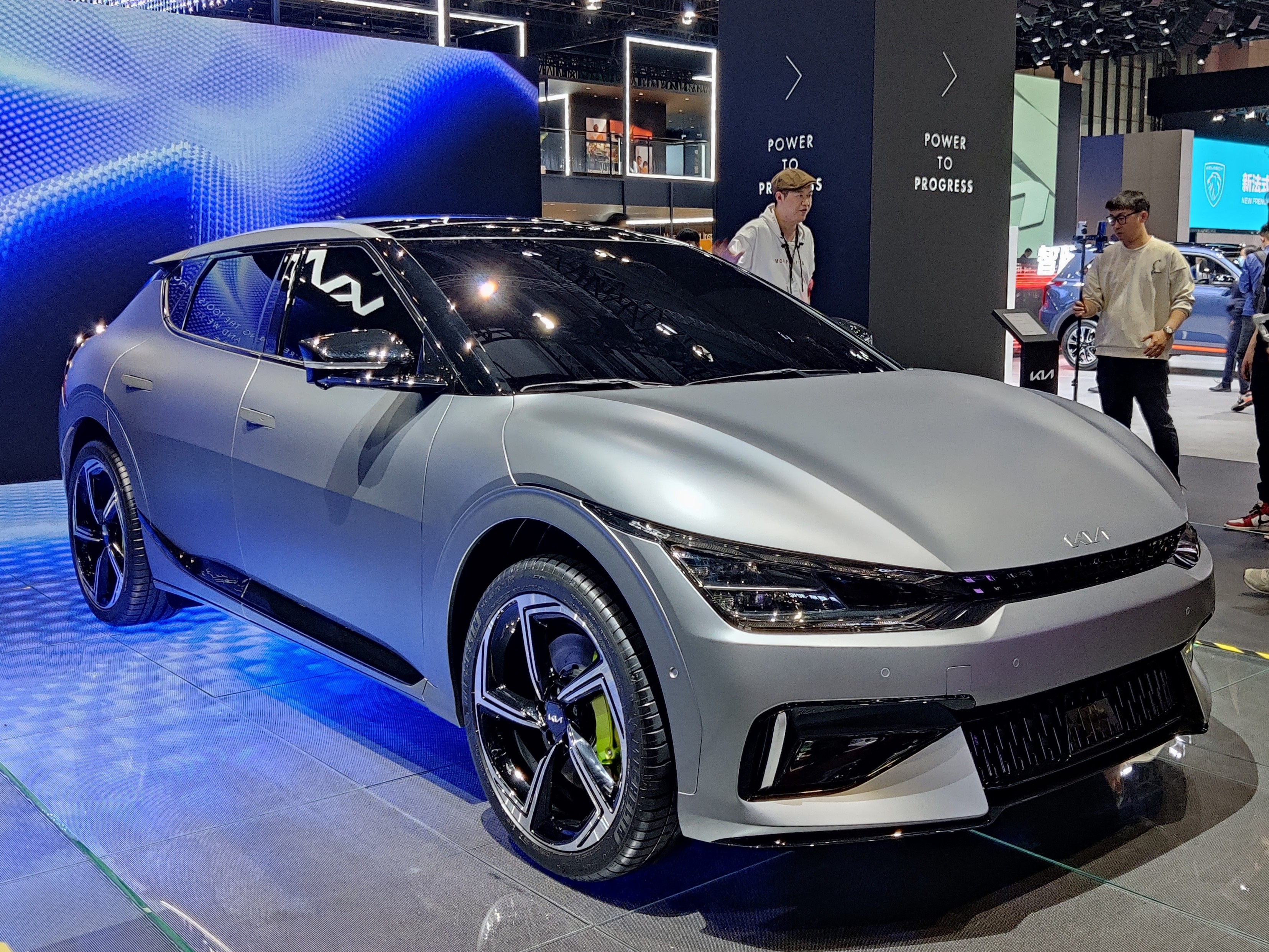
The Kia EV 9 is an all-electric SUV. Instead of using gasoline, it runs on a battery and electric motors, and the hosts are using it for a long trip with charging stops.
The Cadillac Escalade IQ is an electric Cadillac Escalade. The hosts say it had an electrical problem—lights came on and it wouldn’t start—so it’s an example of how EVs can behave when something goes wrong during a long drive.
An integrated charge control unit is the electronics that manage how the vehicle charges—controlling communication and power flow between the charger and the battery system. The hosts describe symptoms consistent with a failure of that unit (all the lights on, no-start behavior), which is why the car became a “hiccup” during the trip.
Most cars have a small 12-volt battery that powers the electronics and helps the car start. If the car acts up electrically, people may disconnect and reconnect it to reset things.
ICCU is a control box in some Hyundai electrified vehicles that helps manage charging and how power flows. If it’s not working, the car can act like it won’t start or won’t power up correctly.
The stop-start button is what you press to turn the car’s power back on (or control the start/stop behavior). Here, pressing it again made the car start working normally.
Kilowatts are a measure of how much charging power the station can deliver. More kilowatts usually means faster charging, but the car may not accept the full amount.
Electrify America is a company that runs public fast-charging stations for electric cars. In this segment, they’re talking about how some of its chargers charged faster than others.
Oglala, Nebraska is where this charging station stop happened. The hosts are saying that at this location, using the wrong cable can cause slower charging.
Fast-charging cables and connectors use cooling to keep power electronics and the cable from overheating. When cooling isn’t adequate, the station can throttle the charge rate to protect equipment.
The Kia K4 is a Kia car model. In this part of the episode, the host is talking about how the steering wheel blocks part of the climate controls, so it’s harder to see or adjust settings quickly.
“GT Line” is a higher-trim version that usually adds sportier look and extra features. It may not be the most powerful version, but it’s meant to feel more “sporty.”
This means the car uses an automatic gearbox with 8 different gear ratios. More gears can help the engine feel smoother and keep it from revving too high on the highway.
Paddle shifters are the small levers on the steering wheel that let you change gears yourself. You can use them to keep the car in a gear you like instead of letting the automatic choose.
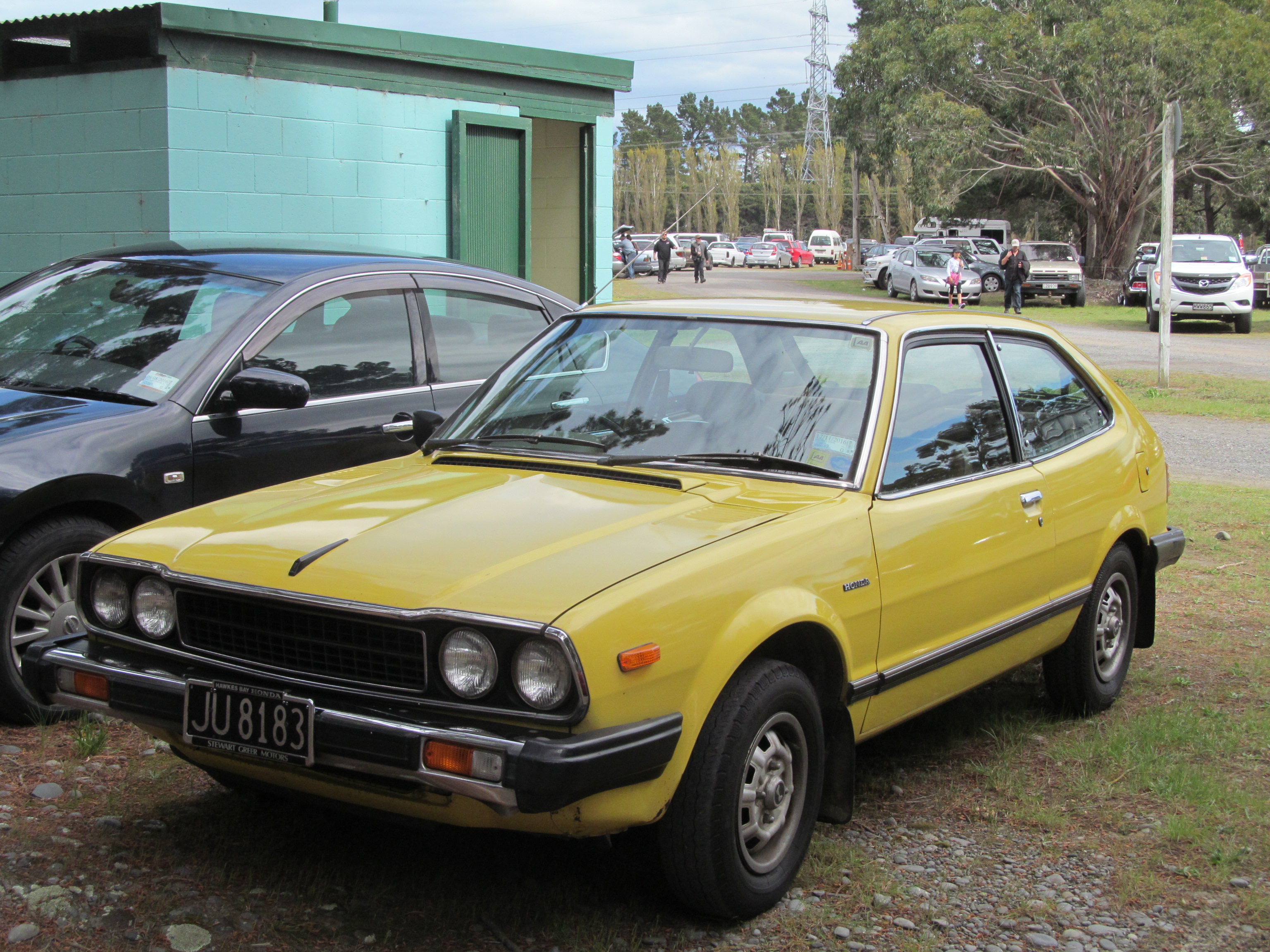
The Honda Prelude is a Honda model that’s meant to feel sporty and fun to drive. Here, they’re discussing the newest Prelude and how its hybrid system is tuned to still feel like a sporty coupe.
A hybrid system uses both a gas engine and an electric motor. The idea is that the electric motor can handle a lot of the driving, which can make the car feel smoother and more responsive.
This is a feature that tries to make a hybrid feel more like a normal manual or automatic with real gear changes. When you use the paddles or sport mode, it changes engine behavior to imitate shifting.
The Honda Accord is a regular-size family car (a sedan) made for daily driving. It’s popular because it’s comfortable and usually efficient. The podcast mentions it because it shares similar engine performance details with other Honda models.
The Honda Civic is a smaller everyday car that many people use for commuting and errands. It’s known for being efficient and easy to live with. The podcast brings it up because it has similar engine power and torque specs to other Honda cars mentioned.
Car
Toyota hybrids
They’re comparing Honda’s hybrid to the way Toyota hybrids usually work. The point is to explain whether the electric motor or the gas engine does most of the work.
Nissan’s e-Power is a hybrid setup where the electric motor is what moves the car. The gas engine mainly helps by generating electricity rather than directly driving the wheels.
In a series hybrid, the gas engine mainly acts like a power source rather than turning the wheels directly. The electric motor is what actually moves the car most of the time.
A crate engine is an engine you can buy as a complete package to install yourself or through a shop. They’re saying Honda sells a Type R version as a crate engine that could potentially be swapped into the Prelude.
The Civic Type R is Honda’s high-performance version of the Civic. The host is describing how it handles turns, including braking while turning and using the paddles to feel more like a manual.
“Type R hardware” means the special performance parts Honda uses on its Type R cars. The host is saying those parts are a big reason the car feels so good when you turn and brake.
Trail braking means you’re still braking a little while you start turning into a corner, then you ease off the brake as you go through. Drivers use it to help the car rotate and feel more stable while turning.
The Honda S2000 is a small two-seat sports car made for fun driving. It’s known for feeling lively and responsive when you rev the engine. The podcast brings it up because someone is clarifying whether a car was actually an S2000.
This is a Mercedes-Benz electric car (the CLA 350 EV). The big question with EVs is: how many miles you can drive before the battery runs low. Here, they’re comparing what the EPA says it can do versus what a test drive actually got.
An EV range test is a structured way to see how many miles an electric car can drive on a charge. Different testers can get different results because they may drive at different speeds, use different routes, or follow different rules.
EPA is a U.S. agency that sets standardized testing rules for things like EV range. The point is that the “official” miles you see on paper come from a specific test method, not necessarily the same way everyone drives or charges.
The “range number” is the miles an EV is expected to go on one charge. It can change depending on how the test is done, which is why the host compares EPA results to Edmunds’ results.
A tire pressure monitor tells you what your tire pressures are and warns you if they’re off. It helps keep tires properly inflated for safety and efficiency.
“Peak charging” is the fastest charging power the car can take from a charger at its best point. After that, the car often slows down to protect the battery, so the average charging speed is usually lower than the peak.
Effective charging speed is a “how much range do I get” number. It turns charging power into something you can feel—like miles of driving added per hour of charging.
The Mercedes-Benz CLA is a small luxury car from Mercedes-Benz. It’s known for its stylish shape, and the host is saying they like it and want to drive one.
The Mercedes-Benz GLC is a Mercedes SUV. The host is talking about different body styles and suggesting the GLC could be a good option if they expand the lineup.
The Dodge Charger Daytona is a special, performance-oriented version of the Charger. The host mentions it while talking about why Charger prices go up when a model is selling well.
A muscle car is a type of car known for being quick in a straight line. The host is saying EVs fit that style because they can accelerate hard without needing revs.
“Full self-driving” is a name Tesla uses for software that can do a lot of driving work. But it still needs a human to watch and be ready to take over, because it can’t handle every situation safely on its own.
Tesla is the car company being talked about. The discussion is about how Tesla labels its advanced driving software and whether the name makes it sound more independent than it really is.
“Assisted driving” means the car helps you drive, but it doesn’t fully replace you. You’re still expected to pay attention and take over if the system can’t handle something.
In self-driving development, “training” means using large datasets so the system learns patterns from examples. “Annotation” is the labeling work (often by humans) that marks what’s in the data—like pedestrians, vehicles, or near-miss events—so the software can learn and be evaluated correctly.
A “near miss” is when the car almost hits a pedestrian but doesn’t. These are critical for self-driving testing because they show where the system might be unsafe.
Waymo is a company that builds self-driving cars. The point here is that even their system can have trouble in real-world situations, like bad or unusual weather.
Cognitive load means how much your brain has to think and process at once. The idea is that human drivers use lots of real-life context automatically, while self-driving cars have to figure it out from data.
The Rolls-Royce Spectre is Rolls-Royce’s electric car. It’s the brand’s top-of-the-line EV, and the hosts are talking about an updated version with more range and more power.
The Rolls-Royce Ghost is a very high-end luxury sedan. It’s the kind of car people buy for a smooth, comfortable ride, and the host is just mentioning it as something they drove before.
WLTP is a standardized testing method used in Europe to estimate how far an EV can go on a charge. It’s a lab-style number, so your real range can be different depending on driving conditions.
Term
infinity mode
“Infinity mode” sounds like a special driving setting that changes how the car responds and how much power it will use. The host is linking it to the car’s higher power output.
The Hyundai Ioniq 5 is an all-electric car from Hyundai. In this segment, they’re talking about how well it’s selling compared with the same time period last year.
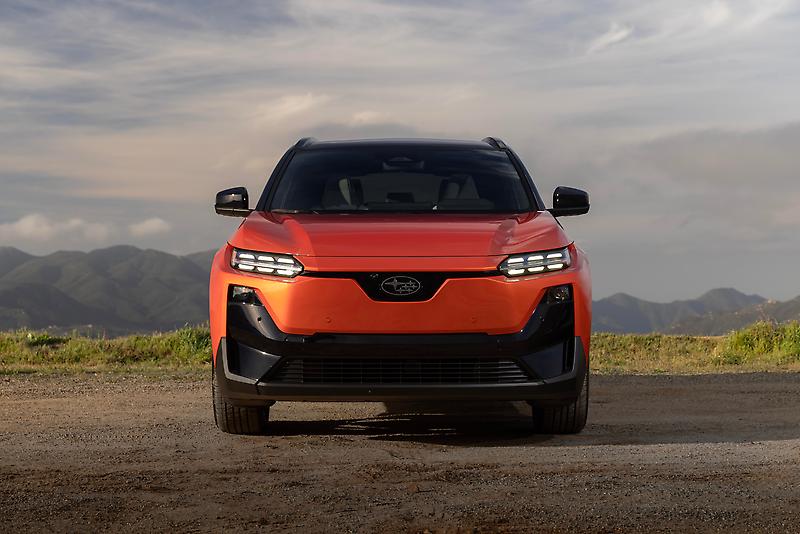
The Subaru Uncharted is a type of Subaru vehicle described as a wagon-style option, with a shorter coupe-like shape. The podcast mentions it while explaining what the model is and how it relates to another named vehicle. It’s essentially about the car’s body style and positioning.
The Subaru Outback is a popular Subaru model known for being practical and good in bad weather. In this conversation, it’s the comparison point for an upcoming electric version of that vibe.
The Toyota Corolla Cross is a small Toyota SUV/crossover. The host says a related new model is being tested in Brazil and that the front portion looks like the Corolla Cross you can buy now.
They’re talking about the Hyundai Santa Cruz, a small pickup that’s built on the same general design as the Tucson. The host thinks Hyundai should have offered a hybrid version, not just gas.
A plug-in hybrid is a car that uses both a battery and a gas engine. You can charge the battery by plugging it in, and the host is saying people think they’re popular, but sales/impact may not be as strong as expected.
A charging station is where you plug a car in to recharge its battery. The host is talking about using that setup and what kind of range or efficiency they got.
A modem is the part that lets the vehicle connect to the internet using a cellular signal. The host is talking about whether the truck has that built-in connection.
A companion app is the phone app that works with the car. In this discussion, they’re worried the app might collect information and share it with other companies.
This is about sharing or selling information the car collects to other companies. The host is saying regulators have stepped in when people weren’t told clearly enough what was happening.
GM is mentioned as a car company that got in trouble over how it handled customer data. The host says regulators thought GM didn’t explain things clearly enough.
The FTC is a U.S. government agency that protects consumers. In this segment, it’s mentioned because it helped push back on companies that didn’t clearly explain how they were using or selling data.
Diagnostic service means the car can report health or error information, sometimes through an app. The host is saying the connected truck could provide that kind of info remotely.
Term
charging everything
They mean controlling how and when the car charges. The host is listing charging management as an app feature.
“Lifted” means the truck sits higher than stock. The host is describing customization options like raising the suspension.
Term
opt out
“Opt out” means you can say “no thanks” to certain data being collected or shared. With connected cars, it usually relates to whether the car sends information back to the company.
They’re talking about a normal physical key you use to lock/unlock and start the car. They’re wondering whether the car will still use that instead of more phone/keyless technology.
The Mazda CX-5 is a compact SUV, meaning it’s bigger than a sedan but still relatively easy to drive. The podcast mentions it because it was part of crash-test coverage and interviews. That kind of testing helps show how safe a vehicle is in an impact.
A side impact test is when a car is hit from the side on purpose to see how safe it is. The goal is to check whether the car’s side structure can protect people inside.
Side impact crashes are crashes where another vehicle hits you from the side. Safety depends a lot on how strong the car’s side is and whether the cabin stays intact.
A light truck is a category of vehicle (like many pickups and similar vehicles) that typically has a higher mass and different front-end geometry than passenger cars. In side impacts, that can change where the striking vehicle’s structure contacts the struck car’s side.
The door sill is the strong metal part along the bottom of the door opening. In a side crash, it matters because it helps protect the space where people sit.
The Ford Explorer is a family-sized SUV, meaning it has more room and a higher driving position than a typical sedan. The podcast mentions an older one because it had a dent, which matters for condition and value. It’s likely being used as an example of what to look for.
Crash dummies are special mannequins used to test car crashes. They have sensors to measure how hard the car hits you, but they’re not exactly like a real person.
Off-axis loading is when the crash hits you from an angle, not head-on. If the dummy isn’t built to handle that angle well, its measurements may not match what would happen to a real person.
This is using computer simulations to study crashes. Instead of building and crashing lots of cars, you can test many scenarios virtually—if the simulation is realistic.
Simulation means using computers to recreate a crash virtually. The idea is to try lots of situations quickly, then check the results with real-world testing.
Human body models are computer versions of the human body used to study crashes. They can show more detail than a mannequin, like how internal parts might be affected.
The Mazda CX-70 is an SUV made by Mazda, meant for everyday driving with room for passengers. In the podcast, it’s mentioned because it’s part of a group of similar SUVs people came to see. The speaker is describing how it fits into the lineup.
The Mazda CX-90 is a larger SUV with three rows of seats, so it can fit more passengers. The podcast mentions it as part of a group of vehicles people came to see or talk about. It’s being referenced in a lineup/marketing context.
The “insurance institute” here is the IIHS, a group that tests cars for crash safety and gives safety ratings. Automakers pay attention to it because its results influence what gets improved.
IHS is an organization that’s involved in how vehicle safety is evaluated. The speaker mentions it to show that safety progress is a team effort across companies and evaluators.
Crash test dummies are special mannequins used in crash tests to collect measurements. They help engineers understand how safe a car is for people in real crashes.
Telematics data is information a car can send about what happened—like where it was, how it was driving, and sometimes crash details. Researchers use it to understand real-world accidents better than test-only data.
Term
moderated front overlap test
This is a crash test where only part of the front of the car hits something. Because the impact is partial, the car’s structure is stressed differently, so safety results can change.
In crash testing, they use a special mannequin that measures how hard the crash forces are. Putting one in the rear seat lets them judge how safe the back seat is.
These are airbags meant for people sitting in the back. Because they’re built into the seat, they can be positioned to protect rear passengers more effectively in a crash.
Pretensioners are mechanisms that quickly tighten your seat belt when a crash begins. That helps keep you from moving forward as much before the belt fully takes the load.
Energy absorption is how the car “soaks up” crash energy instead of letting it all hit the people inside at once. Better absorption can mean lower forces on your body.
The BMW X5 is a popular SUV. In this discussion, it’s used as an example of a vehicle that did well in a safety crash test, especially for protecting occupants in that scenario.
Term
airbags and the seat belts
Seat belts and airbags are both safety systems that protect you in a crash. The belt helps hold you in place, and the airbag adds extra protection during the impact.
A whiplash crash test is a safety test that checks how a car seat protects your head and neck in a rear-end crash. It looks at how much your head and neck jerk around. The seat and headrest are designed to reduce that motion.
In crash testing, a sled is a track-mounted platform that moves a test setup forward to simulate impact forces. It lets engineers repeat the same collision conditions more consistently than a full vehicle crash. That repeatability is important when comparing seat designs or dummy positions.
The dummy position is where the crash-test mannequin sits in the seat. If it’s moved forward or back, the headrest and seat can protect it differently. Engineers adjust this to better match how people actually sit.
LIVE
[SPEAKER_04]: This is episode 456 of wheel bearings.
[SPEAKER_04]: I am Sam Papua, Samage from Telemetry.
[SPEAKER_04]: And I am Roberto Baldwin from SAE International.
[SPEAKER_04]: And we are in the midst of day one of Operation Frodo EV-2026, possibly the first, and possibly the only electric condition of operation.
[SPEAKER_03]: I think things are going fine.
[SPEAKER_03]: Just the one little boo-boo.
[SPEAKER_04]: So you may notice here, between us, behind us here, that's the Adore.
[SPEAKER_04]: And we've also got Simon and Alvin and Tutsi in the far back.
[SPEAKER_04]: We are currently driving across, we just left Oberla, Nebraska from our second, second charging stop of the day.
[SPEAKER_04]: We are in the middle of transporting 16 rescue dogs taking them from Omaha where we started off the morning and we will end up in Portland on Wednesday.
[SPEAKER_04]: We are currently in a Kia EV 9.
[SPEAKER_04]: We've got a convo a four EVs that we're using.
[SPEAKER_04]: We've got the CV 9.
[SPEAKER_04]: Behind us is a Hyundai Ionic 9.
[SPEAKER_04]: We also have a Cadillac Escalade IQ that I drove.
[SPEAKER_04]: from my home in Epsalani, Michigan to Omaha on Friday and Saturday, but 720 miles, and that one is getting its battery replenished right now as we speak, and we've also got a loose gravity.
[SPEAKER_04]: And so far we've only had one minor hiccup, we thought we might have lost the [SPEAKER_04]: all of the lights came on it had it showed all the hallmarks of a blown integrated charge control unit basically all the morning lamps were on it's that electrical system failure we could not get it to start or do anything and fortunately Harvey breaks who's one of our crew he he had some tools with them because he's actually going back Harvey lives in Madison he's going
[SPEAKER_03]: a bird.
[SPEAKER_04]: He's not even speeding, I'm actually going under the speeding birds on you.
[SPEAKER_04]: Harvey is buying a BMW motorcycle from our friend Jeff Jerspied who Jeff lives in Oregon and he's going to ride that back from Oregon all the way back to Wisconsin after we're done with this trip.
[SPEAKER_04]: So he brought some tools along with him just in case.
[SPEAKER_04]: You know, you probably won't need them, but, you know, at least, you know, it's an analog bike.
[SPEAKER_04]: So, who knows what's going to happen, you know, at least it'll be fairly easy to fix.
[SPEAKER_03]: A long trip, especially with an older bike, you should always just have a wrap of tools.
[SPEAKER_04]: Yeah, just the breaches, you know, things like that.
[SPEAKER_03]: Something's good to have.
[SPEAKER_03]: It's always good to have.
[SPEAKER_04]: Yeah, you never know what you're going to need.
[SPEAKER_04]: So, uh, we're, let's see, we have, we've covered, uh, what, about five, [SPEAKER_04]: 400 miles, I think so far today.
[SPEAKER_04]: And aside from that little booboo with the, Oh, I never did finish telling you what happened with the I am.
[SPEAKER_04]: I guess that's like cliffhanger.
[SPEAKER_04]: Please tune in to our next episode.
[SPEAKER_04]: I think who shot J. I got talking about the tools that forgot about the time day.
[SPEAKER_04]: So, we, [SPEAKER_04]: I pulled the cover off the 12-volt battery and disconnected that using Harvey's, one of Harvey's wrenches, waited a minute, reconnected it, car still wouldn't start up.
[SPEAKER_04]: So we thought, we reached out to Hyundai, we thought maybe the ICCU was dead and it was going to be stranded, we'd have to be put on a flatbed and taken [SPEAKER_04]: hundreds of miles to a dealer somewhere to get repaired, but, and so Harvey and Nick Miles, who is the leader of this crew, found a car rental place about 30 miles back the opposite direction we were going, they went to rent a car just in case, because we have 16 dog kennels that we were transporting and all the stuff, and, shortly after they
[SPEAKER_04]: Um, our, our other friend Paul Eisenstein, hit the stop start button in the Hyundai One more time, and all of a sudden it powered right back up again like nothing was wrong.
[SPEAKER_03]: like it's ready to rock.
[SPEAKER_04]: Yeah.
[SPEAKER_03]: And then we we stopped again and we charged and that's where the problem in the last time.
[SPEAKER_03]: No, it's right behind us right now.
[SPEAKER_04]: Yeah.
[SPEAKER_04]: No issues.
[SPEAKER_04]: It's all.
[SPEAKER_03]: It's all good.
[SPEAKER_03]: Like a little hiccup.
[SPEAKER_03]: It's like ha ha.
[SPEAKER_03]: Because you can't have a story without drama and you can't have any sort of road trip without some sort of side-quested adventure.
[SPEAKER_03]: And that was our side-quested adventure.
[SPEAKER_03]: Just actually hanging out with dogs in the parking lot and eating subway.
[SPEAKER_03]: Yeah.
[SPEAKER_03]: Exactly.
[SPEAKER_04]: And this last charging stop, we also had a not a full-blown crisis, but just a minor pickup with the Kia and the Hyundai arrived first, and we got in plug-in, plug-in, charge, we were cranking along 230 kilowatts, it was an electrify America station where at four chargers, two of which are 150 or 350 kilowatts, and we plugged these two into the 350 kilowatts, they charged up real quickly.
[SPEAKER_04]: but then the the Cadillac arrived about 10 minutes behind us plugged into one of the 150 chargers, but it wouldn't charge over 60 kilowatts.
[SPEAKER_04]: So when we were done charging, well, no, it got the 61 if you.
[SPEAKER_04]: Oh, yes, okay, sorry, 61 was the peak.
[SPEAKER_04]: So once we got once it finished with the charging the Hyundai up to 90 percent, we moved out one other way, [SPEAKER_04]: plugged in and it was still only going 60 61 kilowatts even on a 350 kilowatt charger and I charged it the other day at 350 kilowatts without any problem at all so I don't know what the issue well I think we know what the issue yeah there are two cables on there we unplug that cable plugged in the other one same and same unit not a different new which is unplug one cable plugged in the other 270 kilowatts right up the bat so you're a spirit what's the name of this town again?
[SPEAKER_03]: Uh, Oglala.
[SPEAKER_03]: If you're Oglala, uh, and you're on charge number three, use the cable on the left.
[SPEAKER_03]: Correct.
[SPEAKER_03]: People on the right is not getting proper cooling.
[SPEAKER_03]: And when the charging station when the cables don't get proper cooling, they limit them to like 75 kilowatts or something.
[SPEAKER_04]: Yeah, or 61.
[SPEAKER_03]: I can't really 61 now.
[SPEAKER_04]: Yeah.
[SPEAKER_04]: So you used a cable on the left.
[SPEAKER_04]: So the gravity, when it got there a few minutes later, it plugged into the other 350 kilowatt charger.
[SPEAKER_04]: It was going at 350 kilowatt, it's no problem at all.
[SPEAKER_04]: So that one was working fine.
[SPEAKER_04]: So yeah, if you're using charger number three at the E.A.
[SPEAKER_04]: station at the Walmart, and Oglala, Nebraska, use the cable on the left.
[SPEAKER_03]: on the right and no bueno.
[SPEAKER_04]: Yeah.
[SPEAKER_04]: So right now we are on our way to Cheyenne Wyoming where we'll be spending the night tonight for moving on to Salt Lake City tomorrow.
[SPEAKER_04]: But let's let's get into some of the stuff that's been going on the usual stuff that we talk about So did you drive anything this best I did but I clearly I'm not going to have notes or information other than I drove the car And I realized give this your general impression.
[SPEAKER_03]: There we go.
[SPEAKER_03]: So I got the key a K for Wagon hats back whatever they want to call.
[SPEAKER_03]: It's a little station wagon and I loved it [SPEAKER_03]: It's, you know, it's not fast, it's not powerful.
[SPEAKER_03]: I got the GT lines, so it's like the fast is powerful.
[SPEAKER_03]: If you use the paddle shifters, it's fun in the mountains, it's fun on the twisties.
[SPEAKER_03]: It's front will drive, so you know, it's front will drive, so you get that going for you.
[SPEAKER_03]: But overall, I love that car because it's a wagon, but also, you know, it's a good little Kia.
[SPEAKER_04]: It's a little mini wagon.
[SPEAKER_03]: Yeah, it's a little mini wagon.
[SPEAKER_03]: There's plenty of space.
[SPEAKER_03]: I put stuff in it.
[SPEAKER_03]: I put, I went and bought dog food with it.
[SPEAKER_03]: I did other things with it.
[SPEAKER_03]: It's long food.
[SPEAKER_03]: It's like it's a giant bag.
[SPEAKER_03]: So out of by, I'd let you stuff.
[SPEAKER_03]: I put it in the back of the car.
[SPEAKER_03]: I've been driving it around all week.
[SPEAKER_03]: When I fly back.
[SPEAKER_03]: to the Bay Area tomorrow night.
[SPEAKER_03]: I'm doing half of the operation Frodo.
[SPEAKER_03]: It'll be waiting for me at the little part, parking place at the airport.
[SPEAKER_03]: And I am delighted, I don't know a little sad, it'll be going away on Tuesday.
[SPEAKER_03]: But yeah, KK4, station wagon.
[SPEAKER_03]: If you, I think it starts like 24 for the hatchback.
[SPEAKER_03]: It's more expensive than the regular one, than the regular K4 that's a Dan.
[SPEAKER_04]: But let's worth it for that better looking back end and the extra utility.
[SPEAKER_03]: Yeah, you can put more stuff in the back.
[SPEAKER_03]: It's not a huge vehicle, but it's the low-cost gas vehicle that America needs right now.
[SPEAKER_03]: That's what I've decided.
[SPEAKER_03]: Because everyone, I've got to get across over here.
[SPEAKER_03]: Get this, and it's nice, it's low, it's low slung.
[SPEAKER_04]: It's a proper car.
[SPEAKER_03]: It's a proper car.
[SPEAKER_03]: It does have the weird, we're driving the EV and I right now, where the climate controls are being obstructed by the steering wheel.
[SPEAKER_03]: Yeah, the K4 has that as well.
[SPEAKER_03]: Yeah, that's the exact same screen, same steering wheel.
[SPEAKER_03]: I don't know why kids thought that was a great idea.
[SPEAKER_03]: Anyway, so yeah, so I can see how what our temperatures are, but everything else is a bit obstructed.
[SPEAKER_04]: Kids have been making really great cars for the last several years.
[SPEAKER_04]: But it seems like on every one of these great cars.
[SPEAKER_03]: There's always just there's got to be one strange little quirk in the ergonomics Yeah, they can't that yeah, yeah, we can make you can make perfection because perfection would put them in point with the universe They would never have anything game for [SPEAKER_03]: Yeah, yeah, you won't have anything to aim for for the next one for the refresh.
[SPEAKER_03]: Yeah, so yeah, Kia K4, stay track it.
[SPEAKER_03]: Again, I don't have the specs or anything with me because I'm driving and it was the GT line, the turbo.
[SPEAKER_04]: I had the GT line.
[SPEAKER_04]: It's about $190.995 horsepower.
[SPEAKER_04]: Yeah, it's an 8-speed automatic transmission.
[SPEAKER_03]: So many speeds.
[SPEAKER_03]: Usually the paddle shift there's, and it's the kept going up and up and up and up.
[SPEAKER_03]: And up and up and in the background, do you like third and fourth gear?
[SPEAKER_03]: And that was like, what is, how many speeds is this thing got?
[SPEAKER_03]: eight eight auto so if you know anything above five it's just various types of overdrive at this point but yeah can you keep a K-4 wagon well can I say it's comfortable I sit in the back seat tall person behind tall person probably not a great idea but I think it's a great car if you're [SPEAKER_03]: You know, you're not a bunch of basketball players and you just need a nice inexpensive good car and you don't want to just, you don't want to join Team crossover.
[SPEAKER_04]: Alright, I also had a non-crossover this past week.
[SPEAKER_04]: I had the Honda Prelude, the new Prelude, and you know, to everybody that's been hating on this thing because it's a hybrid, you know, [SPEAKER_04]: get over it, just get over it, I think this is a great looking car, great looking little coupe.
[SPEAKER_04]: The thing is the prelude and it's first five generations, it was never a sports car, it was always a sporty coupe, and that's exactly what this car is, it is a sporty coupe, but it's a fairly quick sporty coupe.
[SPEAKER_04]: It's got Honda's hybrid system in the same system that's in the CRB, the Accord, the Civic, 200 horsepower, 232 foot-pounds, torque, and it's got their S plus simulated shifting system in there.
[SPEAKER_04]: That's also going to be coming to the least of the Civic, I don't know about the other models.
[SPEAKER_04]: But because, you know, the way Honda's hybrid system is configured, you know, they have, it does most of the work with the electric motor.
[SPEAKER_04]: So I'm like at most Toyota hybrids and do most of the work with the gas engine and, you know, have a relatively smaller electric motor.
[SPEAKER_04]: This thing, out of that 200 horsepower, 181 horsepower is coming from the electric motor.
[SPEAKER_04]: And then there's 140 horsepower, two liter or four cylinder.
[SPEAKER_04]: And, [SPEAKER_04]: The base, essentially, it works more like Nissan's or they call the e-power system.
[SPEAKER_04]: It works, most of the time, it's working as a series hybrid, and the engine is just driving the second motor as a generator, and the 181 horsepower motor is driving the car, and then at higher speed, tire load conditions is a clutch that will under those certain conditions [SPEAKER_04]: But it works really smoothly, it's, you know, much, in general, much quieter, much more refined feeling and it drives more like an EV, which is good, but in the case of the prelude, because it's sporty car, they give it a little more engine noise, the way they're controlling the engine is more, you know, they're controlling it, they're doing simulated shifting.
[SPEAKER_04]: You know, so revving the engine up and down to correspond to simulated shifts kind of like a Hyundai I like five-end, but it's not as loud as the Hyundai, which is funny because the Hyundai's all electric, and it's much louder inside than the Pradohood, which is hybrid, where you're actually hearing an actual engine.
[SPEAKER_04]: And it's not really simulated noise.
[SPEAKER_04]: It's actual engine noise that you're hearing.
[SPEAKER_04]: And you're hearing the engine rev up and down as you, when you put it in sport mode and hit the S plus button, you tap the paddles.
[SPEAKER_04]: And it simulate shifting.
[SPEAKER_04]: So it's rubbing the engine as if it was connected to an 8 speed transmission and shifting.
[SPEAKER_04]: But, you know, it's actually a lot of fun to drive, especially because it has the suspension and the brakes from the Civic Type R. So, you know, Honda says they're not going, they have no plans to ever do a prelude Type R, which is fine, you know, but it's not really needed.
[SPEAKER_03]: Yeah, it's a niche car, why make a niche year?
[SPEAKER_04]: Exactly.
[SPEAKER_04]: So, you know, this, you know, this is a [SPEAKER_04]: If you must have a prelude type R, Honda sells a Type R crate engine.
[SPEAKER_04]: You can buy a Type R engine direct from Honda in a box, and because the front structure of this thing is basically the front end of a Civic, it'll bolt right in there, and you can get the six-speed manual transmission from a Type R. All those parts will fit in this car, and I would be shocked if
[SPEAKER_04]: this November at SEMA if there isn't at least one company that has built a prelude type R from a Honda Crayed engine but like I said you don't really need it it's got great the front seats are great they're very supportive you know there's not there's only a couple of adjustments basically four-ralf height and the seat back angle [SPEAKER_04]: not a lot of fancy stuff, keep it simple.
[SPEAKER_04]: The back seat, if you're no more than about three to half, four feet tall, you can fit back there, other than that, you don't want to sit in the back seat.
[SPEAKER_04]: The best thing to do with the back seat, just fold it down, you have a big hatch back in the rear, you have lots of cargo space.
[SPEAKER_04]: you know I put my dog seat cover down across the back and when I took my dog to the vet earlier this week and he was flying back there you know strapped him in he was perfect so he had lots of room so the Civic the Honda Prelude I had the one I had was in the I think it's [SPEAKER_04]: Deep blue.
[SPEAKER_04]: No, not deep blue.
[SPEAKER_04]: I forget that some it's some shade of blue.
[SPEAKER_04]: It's a lighter shade of blue that looks really good.
[SPEAKER_04]: Like a robin's egg It's darker than a robin's egg But but not like a real dark blue.
[SPEAKER_04]: So it's it's a it's a kind of a distinct color looks fantastic I like it.
[SPEAKER_04]: I like I like the way this car looks.
[SPEAKER_04]: I really like the way it drives [SPEAKER_04]: The chassis is a suspension really good because, you know, like I said, it's all type R hardware under there.
[SPEAKER_04]: So, you know, when you're going into a corner, you can trail brake this thing into a corner.
[SPEAKER_04]: It feels really good.
[SPEAKER_04]: You can have the back end, you know, just, you know, you can manipulate the back end with your foot on the brake and the accelerator.
[SPEAKER_04]: And it's just a lot of fun to drive.
[SPEAKER_04]: And I said, you can, you can simulate manual shifting with the paddles.
[SPEAKER_04]: It's an easy car to drive around, but it's a lot of fun.
[SPEAKER_04]: It's not cheapest car, and a large part because of the fact that it has all those type R suspension and brake components on there.
[SPEAKER_04]: So it's $42,000.
[SPEAKER_04]: There's basically, there's only one real option on there.
[SPEAKER_04]: They have what they call a two-tone, which has a black-fandered roof.
[SPEAKER_04]: You don't really need it.
[SPEAKER_04]: just, you know, just get the base model and 42 grand, you know, that's about 5 grand cheaper than a Civic Type R. It's, you know, a little more than a Civic Sport, a Civic Sport hybrid.
[SPEAKER_04]: So it's like right in between those two.
[SPEAKER_04]: And by, you know, I said, not inexpensive, but by today standards, it's fairly reasonable.
[SPEAKER_03]: I'm hearing from a lot about a motjournalist that I've driven at recently who are like, I really liked it.
[SPEAKER_03]: I haven't driven it so I don't know.
[SPEAKER_03]: But I'm hearing, I'm hearing from the rumbling from the rest of the other automotive journalists that I talked to is that they also really enjoyed the car a lot.
[SPEAKER_03]: So, yeah, I think, you know, it came out and I think people sort of kind of forgot what the period was.
[SPEAKER_03]: It was never a sports car.
[SPEAKER_03]: It was never an S2000.
[SPEAKER_03]: It was never, [SPEAKER_03]: It's like in the angry if the Dell soul came out and like you didn't have a powerful engine I owned a Dell soul.
[SPEAKER_03]: It did not have a powerful engine But it was nice to drive around and there's a lot of leg room.
[SPEAKER_03]: There's a ton of room and a little car And it was great that you can put the you take the the hard top off and they had a little Holder in the trunk that only used up like this much trunk space So you could still put all your stuff in it.
[SPEAKER_03]: It was a great.
[SPEAKER_03]: It was it was a really nicely engineered vehicle But if they bring it back [SPEAKER_03]: And it doesn't have power, don't get angry about that, because it never had time.
[SPEAKER_03]: People called it the Dell Slow for a reason.
[SPEAKER_03]: Yeah.
[SPEAKER_03]: It was not a quite car, but it was enjoyable car.
[SPEAKER_04]: So the color I had is Boost Blue is the color.
[SPEAKER_04]: They also have it in Race Red and there's a gray, a black and a white.
[SPEAKER_04]: But get either the red or the Boost Blue.
[SPEAKER_03]: Yeah, the Boost Blue, that looks pretty.
[SPEAKER_04]: Yeah.
[SPEAKER_03]: Almost killed us, but I looked at there.
[SPEAKER_03]: I was looking at your screen.
[SPEAKER_04]: All right, let's move on to some other stuff.
[SPEAKER_04]: Let's see, oh, the Mercedes CLA.
[SPEAKER_04]: Did you have driven the CLA, right?
[SPEAKER_03]: Yes, I've driven the hybrid extensively, and I've driven the electric vehicle for a little while.
[SPEAKER_03]: The electric one is better.
[SPEAKER_04]: Yeah.
[SPEAKER_04]: As is usually the case when you have those options.
[SPEAKER_04]: Edmunds just had a CLA 350 EV, and they have their standard EV range tests that they do with all the cars that they test.
[SPEAKER_04]: The CLA 350 is rated at 312 miles range by the EPA.
[SPEAKER_04]: Guess how much?
[SPEAKER_04]: I guess how far Edmunds went with this thing.
[SPEAKER_03]: like $3.20 something?
[SPEAKER_04]: $3.40.
[SPEAKER_04]: $3.85.
[SPEAKER_04]: They beat the EPA, range number by 73 miles.
[SPEAKER_03]: So when you do your EPA numbers, there's like it.
[SPEAKER_03]: There's two different ways to do it.
[SPEAKER_03]: Like, loose it and Tesla both do one way.
[SPEAKER_03]: So it's sort of gooses their numbers a bit.
[SPEAKER_03]: While everyone else kind of does a different way.
[SPEAKER_03]: And typically, the Germans and the Koreans, they're vehicles typically be EPA by a little bit.
[SPEAKER_03]: and U.S. like for GM, those are usually like dead on, right?
[SPEAKER_03]: Like they have like, it's like, you know, a mock yield be within like a, like a few miles above the range.
[SPEAKER_03]: That is like ridiculous that it's so much higher than what the EPA number was.
[SPEAKER_03]: Like, did everyone just take a nap that day?
[SPEAKER_03]: But they forget to carry a one pretty much, I think.
[SPEAKER_04]: I mean, driving that escalate IQ from Detroit to Omaha.
[SPEAKER_04]: They claim 450 miles of range for that one because it's so heavy.
[SPEAKER_04]: It doesn't actually have an official EPA range number because it weighs over 9,000 pounds.
[SPEAKER_04]: GM says it'll go about 450 and I went when I stopped on Friday night to charge it, I had driven 370 miles and had I think 17 miles range left and showing about about 50 miles and that was all highway driving.
[SPEAKER_04]: So that was basically no city driving for for that whole stretch.
[SPEAKER_04]: And I got You know, so that would have worked out to about 410-ish miles, 410, 415 miles Which is actually really good.
[SPEAKER_04]: Of course, you know, that thing has Got 200 plus kilowatt hour battery back and a wheel there.
[SPEAKER_03]: This big.
[SPEAKER_04]: Yeah, that's a 24 inch wheels with [SPEAKER_04]: I was going through some of the settings screens and there was a page for the tire pressure monitor.
[SPEAKER_04]: The tire pressures on the front wheels is 70 PSI, 79 PSI pressure on the rear wheels on the rear tires.
[SPEAKER_03]: That's insane.
[SPEAKER_03]: It's like demo jet numbers.
[SPEAKER_04]: Or like a semi.
[SPEAKER_04]: That's what [SPEAKER_04]: You know, that, you know, that was 410 415 miles with 200 over 200 kilowatt hours of battery.
[SPEAKER_04]: You know, there's a lot less battery in this Mercedes CLA.
[SPEAKER_04]: The other thing that they did was they tested the charging capability.
[SPEAKER_04]: You're gonna make me spit out my drink.
[SPEAKER_03]: I mean, it's almost like the Disneyland effect.
[SPEAKER_03]: So if you go to Disneyland, I guess Disney where I'd never been in Disneyland world.
[SPEAKER_03]: But the plan was if you have a sign that says, it'll be 45 minutes from this point, the reality is it'd be like 35 minutes or 40 minutes.
[SPEAKER_03]: It'll be less time.
[SPEAKER_03]: than what they were telling you, you want to under promise it over the liver.
[SPEAKER_03]: So you feel like, oh my god, this line went so much quicker.
[SPEAKER_03]: Thank you Disney people.
[SPEAKER_03]: And so this is like almost the same thing.
[SPEAKER_03]: That's where they're like, oh it's only going to change it for you for early.
[SPEAKER_03]: And then it charges like 4.50.
[SPEAKER_04]: So at 349 kilowatts, that works out to an effective charging speed of adding 654 miles of range per hour, which is pretty impressive.
[SPEAKER_03]: I really like that CLA too.
[SPEAKER_03]: Yeah.
[SPEAKER_03]: I really like that car.
[SPEAKER_03]: It's really nice.
[SPEAKER_04]: So hopefully I'll get a chance to drive one of these soon because I like, it looks good and I'm looking forward to trying this one out and seeing how far, well it's just small really to use for operation Frodo because we need space for the crates but maybe when they have a wagon or a crossover version on that platform, it's the new GLC, GLC is a good idea.
[SPEAKER_04]: So maybe, maybe GLC.
[SPEAKER_03]: I've only driven that in the sand, [SPEAKER_03]: how well that uh we driven it on sand dunes which is a bonkers thing to say about on EV.
[SPEAKER_03]: So where did you drive it sand dunes?
[SPEAKER_03]: What about the road?
[SPEAKER_03]: Nope.
[SPEAKER_03]: Zero driving on the road only on sand dunes outside of Las Vegas.
[SPEAKER_04]: So, sticking with EVs for a moment, our good friends, it's the Lantzus.
[SPEAKER_04]: They announced pricing for the 2020-27 model year chargers.
[SPEAKER_04]: You know, it's not unusual for pricing to creep up a little bit year over year.
[SPEAKER_04]: And that was certainly the case this year.
[SPEAKER_04]: So, let's see, for the base charger RT with the standard output, 6-dollar, hurricane 6-dollar, it actually stayed [SPEAKER_04]: state the same say unchanged for the base model so for two-door forty nine nine ninety five four-door fifty one nine ninety five to pan two thousand dollars to two extra doors For the RT plus again pricing stays the same for the charger scrap pack [SPEAKER_04]: pricing also stays the same keeps growing down the table here um... dodged charger de tonus cat pack uh... twenty twenty six mile a year fifty nine nine ninety five twenty seven mile a year seventy two thousand four hundred ninety five dollars where is twenty thousand dollars could you where you where you where that money come from what what are you getting and you know if they come with another it's not said it comes with a late two thousand's voyage
[SPEAKER_04]: I mean, you know, it's such a hot selling car.
[SPEAKER_04]: You know, of course you got to raise the price.
[SPEAKER_04]: You know, when your car is popular, oh, wait.
[SPEAKER_04]: We're talking about the charger Daytona.
[SPEAKER_04]: Never mind.
[SPEAKER_03]: I don't, and I haven't, I haven't driven the car.
[SPEAKER_03]: And everyone I know who has driven is like, it's not that bad.
[SPEAKER_03]: Yeah.
[SPEAKER_03]: I really think it's, it's, I think it, it's really, and to me, a muscle car makes the most sense for an EV, because muscle cars go fast straight line, the end.
[SPEAKER_04]: Yeah, but this one definitely goes fast in a straight line.
[SPEAKER_03]: And it makes noises, you know, it's like the large pickup truck, you know, they, you know, full-sized pickup truck people want their own engine, right?
[SPEAKER_03]: Yeah, that's, that's when most of the car people want.
[SPEAKER_03]: They want room room engine, right?
[SPEAKER_03]: And they don't want to show up the cars in coffee with an electric.
[SPEAKER_04]: Well, they have the frats on a kegsaw system I was I was driving past one Where was it in a parking lot the other day, and it was just sitting there idling and you know you can hear the rumpling Yeah, it's actually it's a pretty cool sound.
[SPEAKER_04]: I like it, but it's [SPEAKER_04]: But yeah, I mean, it's a great cruiser.
[SPEAKER_04]: You know, it's not a sports car.
[SPEAKER_04]: It's definitely a muscle car, but it's also great for just cruising on the hot.
[SPEAKER_04]: Like what we're doing here, driving across Nebraska.
[SPEAKER_04]: This is a straight level road that costs for about a million miles.
[SPEAKER_03]: I can see the next states over.
[SPEAKER_04]: I mean, there's South Dakota over there and Colorado's down that way.
[SPEAKER_04]: And if you look in the mirror, you can still see Iowa back behind us.
[SPEAKER_03]: It's so flat.
[SPEAKER_03]: As someone has born and raised in California and lived in the mountains for a lot of that, this is, it's a little nervous.
[SPEAKER_03]: Like I enjoy being able to see like often a distance of mountain range that'll protect me from invading mountain awards.
[SPEAKER_04]: All right, let's let's delve into Tesla a little bit, so a couple of things, Tesla renamed full self driving in China, it only in China.
[SPEAKER_04]: because they got sued by a bunch of Chinese owners taking into court for misleading advertising misleading marketing over the name full self-driving because in case you were wondering, Tesla's are not actually capable of being fully autonomous without somebody sitting behind the wheel, keeping an eye on it, monitor or somebody in [SPEAKER_04]: in Tesla's case, sitting remotely in a control center, watching the live video stream from the car and paying attention and taking over remote control anytime, you know, when those, you know, it works really great a lot, most of the time.
[SPEAKER_04]: right up until it does something really terrible.
[SPEAKER_03]: It works great until it doesn't and then it doesn't and then they're like oh no and you know to be honest like tell a tell a presence sort of or tell like you know control of of any self-driving vehicle on the that's going to be a thing for a very long time Yeah, like because there's there's always going to be something that confuses these vehicles So you need a person with a phone and we're like gone last [SPEAKER_04]: So Tesla, the FSD in China, now if you buy a Tesla in China, FSD is now called Tesla assisted driving.
[SPEAKER_04]: So if you're watching China, it's a perfectly appropriate name.
[SPEAKER_04]: Because that is exactly what it is.
[SPEAKER_04]: It's an assisted driving system.
[SPEAKER_03]: I don't know why they're fighting it so hard against the just saying it's assisted driving and that's what it does.
[SPEAKER_04]: And then there was one other story related to FSD, there was a Reuters piece this week.
[SPEAKER_04]: They interviewed [SPEAKER_04]: 10 people who until relatively recently were working on FSD, working on training and annotation of the data.
[SPEAKER_04]: Of those seven of those people said, I wouldn't trust FSD to drive me around.
[SPEAKER_04]: So, yeah, not good, you know, and apparently from, you know, the data, the video clips that they get back from cars, there are a certain class of those video clips that are very restricted access because, you know, a lot of these are clips where very near misses with pedestrians, for example, and there's only a very limited [SPEAKER_04]: few members of the team that are allowed to look at those analyze those and then work on software updates you know, or do annotation with those clips.
[SPEAKER_04]: But yeah, the people, you know, the people they talk to is, yeah, this is not ready to be a robot taxi and I think it's going to be a long time before it is.
[SPEAKER_03]: It's hard.
[SPEAKER_04]: Yeah.
[SPEAKER_03]: I don't know why it's so hard for them.
[SPEAKER_03]: Way too.
[SPEAKER_04]: Waymo has a hard time with it too.
[SPEAKER_03]: Yeah, everything.
[SPEAKER_03]: Waymo's gets stuck all the time.
[SPEAKER_03]: Where are we?
[SPEAKER_03]: I don't know.
[SPEAKER_04]: Yeah.
[SPEAKER_03]: And they've had a bunch of weird issues with recent weather.
[SPEAKER_03]: Waymo.
[SPEAKER_03]: It's hard.
[SPEAKER_03]: It's not an easy thing.
[SPEAKER_03]: Remember, you have the context of your entire life in your brain while you're driving.
[SPEAKER_03]: cars don't have that.
[SPEAKER_05]: Yeah.
[SPEAKER_03]: You can train them on like hey, this is what this picture means.
[SPEAKER_03]: Here's, you know, if this and that, this is a lot, it's far more difficult to sort of take.
[SPEAKER_03]: I don't think people realize like the cognitive load that your brain has while you're driving, even like little eedy bitty things that you are not, you're not conscious of that make you a better driver than a full self-driving car, that's, yeah.
[SPEAKER_04]: Have you driven the Rolls-Roy Spectre yet?
[SPEAKER_03]: No, I drove what's the last thing I drove with Rolls-Royce?
[SPEAKER_03]: I don't know.
[SPEAKER_03]: It was like most five.
[SPEAKER_03]: Yeah, the goats.
[SPEAKER_03]: That's what it was.
[SPEAKER_03]: It was during COVID.
[SPEAKER_03]: So I'm just driving Rolls-Royce Ghost.
[SPEAKER_03]: I went up to uh, was it no Mount Diablo.
[SPEAKER_03]: I know I was just driving I would like just me fire myself for a big heavy luxury sedan.
[SPEAKER_04]: It's actually a surprise especially the black badge.
[SPEAKER_04]: This is surprisingly good card to drive.
[SPEAKER_03]: It's really nice and then it has the little stars and it was really, yeah, I really, I actually quite enjoyed it.
[SPEAKER_03]: I would be a driver for a very rich jerk in this car.
[SPEAKER_04]: Well, Rolls Royce has just launched, I have driven this vector.
[SPEAKER_04]: I had about a half hour with it a couple of years ago at Rolls Royce, BMW test fast and amazing car.
[SPEAKER_04]: If you got half a million dollars [SPEAKER_04]: go for a specter.
[SPEAKER_04]: It's fantastic.
[SPEAKER_04]: Well, there's now a series two specter.
[SPEAKER_04]: Rolls Royce does this from time to time.
[SPEAKER_04]: They will do updates and bump the series up.
[SPEAKER_04]: So the specter series two is out now.
[SPEAKER_04]: And they have increased the range of it by 18%.
[SPEAKER_04]: So it's now rated at 390 miles of range on the WLTP cycle in Europe.
[SPEAKER_04]: So that's probably about $3, $20, $3, $3, $3, $3, $3, $3, $3, $3, $3, $3, $3, $3, $3, $3, $3, $3, $3, $3, $3, $3, $3, $3, $3, $3, $3, $3, $3, $3, $3, $3, $3, $3, $3, $3, $3, $3, $3, $3, $3, $3, $3, $3, $3, $3, $3, $3, $3, $3, $3, $3, $3, $3, $3, $3, $3, $3, $3, $3, $3, $3, $3, $3, $3, $3, $3, $3, $3, $3, $3, $3, $3 [SPEAKER_04]: So it's also the most powerful Rolls Royce they've ever launched delivering 500 kilowatts which is about what 660 or 670 horsepower in when it's in the infinity mode yes infinity mode and so if you're looking for the highest end of high end luxury EVs Rolls has
[SPEAKER_03]: that was more range yeah i'm assuming if if that's what was keeping you from buying this vector you're like oh i don't know it's a lot of money for that much range oh you know what 18% more boom i'm guessing they're probably more than some of the some of the updates from the noia class uh some of the updated motor technology power electronics batteries um so um ill [SPEAKER_04]: EV sales, you know, everybody figured, you know, when the tax credits went away last fall, EV sales were just going to collapse, and they, in fact, they did collapse for several months, you know, because they raised, they went up, yeah, a few months before, a week or months before.
[SPEAKER_03]: So yeah, yeah.
[SPEAKER_04]: So you had a pull ahead of sales in the fourth quarter and the first quarter of this year, right up until the end of February.
[SPEAKER_04]: And then I don't know, something happened at the end of February.
[SPEAKER_04]: And fuel prices started to go up.
[SPEAKER_04]: And all of a sudden people started looking around and said, oh, wow, six bucks a gallon, seven bucks a gallon for gas, or five bucks a gallon in Michigan for regular.
[SPEAKER_04]: You know, what can I do about that?
[SPEAKER_04]: Oh, there's a EVs.
[SPEAKER_03]: That are a lot less expensive So I say I cold it I said you can't talk about EV sales until like March.
[SPEAKER_04]: Yes, and that's exactly what happened.
[SPEAKER_04]: You nailed it.
[SPEAKER_04]: You nailed it.
[SPEAKER_03]: I know how numbers So I have the base level of how Found the numbers in the sales of cars were base level [SPEAKER_04]: So it's a lot of the manufacturers are only reporting quarterly sales right now, but there's still some that are reporting monthly sales like Hyundai and Kia and Subaru for example.
[SPEAKER_04]: And so the Hyundai Ionic 5, they're best selling EV, it so far, year to date.
[SPEAKER_04]: sales are up 16% compared to the first five months, you know, so through the end of May of 2026, 16% better sales than they were in the first five months of 2025.
[SPEAKER_04]: Wow.
[SPEAKER_03]: That's I bought one of those.
[SPEAKER_03]: So yeah, I guess you're welcome on today.
[SPEAKER_04]: And, and the, yeah, so you contributed to that.
[SPEAKER_03]: There we go.
[SPEAKER_03]: Look at with you, with your own finally, I contribute into capitalists society.
[SPEAKER_03]: Finally.
[SPEAKER_04]: I own Excel's are down because they've actually just continued that, except for this, 6th Ann, for the North American market.
[SPEAKER_04]: So those are, they're in a sell down period.
[SPEAKER_04]: So that, yeah, I'm not gonna talk about those.
[SPEAKER_03]: They were, they were, yeah, they were sold.
[SPEAKER_03]: People didn't like the way it looked.
[SPEAKER_03]: That's true.
[SPEAKER_03]: And let's be frank.
[SPEAKER_04]: Yeah.
[SPEAKER_03]: It drove wonderfully.
[SPEAKER_03]: Yeah.
[SPEAKER_03]: It's a wonderful EV.
[SPEAKER_03]: If you are happy with the way it looks, and I think most people were not.
[SPEAKER_04]: And the ionic nine, a three-row crossover, which is still replying.
[SPEAKER_04]: Elgating, that's yeah, it has not broken down yet, it's still there.
[SPEAKER_04]: Yeah, they're replying us, those, it's not really a fair comparison because they just started sales in May of last year, but so far this year, they've sold 4,000 in one, you know, it's 302 last year through the end of May, but yeah, that was like two weeks of sales.
[SPEAKER_03]: 7 million percent up and like you just started making something don't tell me that 7 million more percent.
[SPEAKER_04]: But here also, Evianine sales are way up from May, year to date.
[SPEAKER_04]: for the EV-9, 5,736 compared to 4,025 last year, EV-6 sales are down a little bit, but the EV-9 is more than making up for that, and in Subaru, the Sultara, the Subaru now has three EVs on the market.
[SPEAKER_04]: They have the Saltera, the Trail Seeker, which is the wagon, essentially a wagon version of the Saltera, and the Uncharted, which is the Coupe, the shorter Coupe version, basically their re-batch version of the Toyota CHR.
[SPEAKER_04]: And Saltera sales are down a little bit, year to date, down 7.6%, but...
[SPEAKER_04]: trial seeker doing well start so you know they've literally just started sales in April and they are up they've sold 1483 so far and then 1792 on chartids in the first two months so total U.V.
[SPEAKER_04]: sales for for Subaru are actually up about 40 percent [SPEAKER_03]: It's super, you know, it's not a Ford, it's not a, you know, it's higher than Mazda but lower than everyone else.
[SPEAKER_03]: Yeah.
[SPEAKER_03]: It is weird little sweet spot.
[SPEAKER_03]: And of course, all super people love all superiors.
[SPEAKER_03]: That is our way.
[SPEAKER_03]: But I, you know, the trail taker has a, that's the wagon in the right.
[SPEAKER_04]: Yeah.
[SPEAKER_03]: Not only if that's why they, but that's why that was doing so well.
[SPEAKER_04]: Yeah, I mean, the trail seeker is basically what the outback used to be, but it's electric.
[SPEAKER_04]: So it's an electric out, if you like the old outback, not, you know, as opposed to the new current generation model, which is still a really good car.
[SPEAKER_04]: Yeah, I'm still a good car.
[SPEAKER_04]: It just looks, it just depends on what you think of the design.
[SPEAKER_03]: Which again, it's a Subaru.
[SPEAKER_04]: No one's ever bought a Subaru because it's pretty, that is true.
[SPEAKER_04]: Although, I do like the look of the trail seeker.
[SPEAKER_04]: I like the design of the trial secrets, so EV cells, you know, for a lot of brands are actually up this year because people recognize that, hey, you know, when fuel prices are up, these things actually make sense.
[SPEAKER_04]: And, you know, I think, you know, I haven't looked at used EV cells.
[SPEAKER_04]: But I think those are the ups and downs.
[SPEAKER_03]: Someone sent me a link, it was like the weekend, it was yesterday, so it was the weekend.
[SPEAKER_03]: And someone sent me a link about EV, use DV sales, because we were talking about use DVs on blue sky.
[SPEAKER_03]: And at charts and information, I used reply, don't make me look at charts on my day off.
[SPEAKER_03]: So, but it did look like, yeah, EV, the dealerships are having problems keeping use DVs in, in, in, in, in, in, in, in, in, in, in, in, in, in, in, in, in, in, in, in, in, in, in, in, in, in, in, in, in, in, in, in, in, in, in, in, in, in, in, in, in, in, in, in, in, [SPEAKER_03]: and their inventory.
[SPEAKER_03]: I know that they were really, they got e-mailing us about us bringing back our ionic five early because they wanted to be able to sell it.
[SPEAKER_03]: So yeah, usually the market I think is doing good.
[SPEAKER_03]: I think you're doing all right.
[SPEAKER_04]: And then last thing, the Toyota Cross Toyota Corolla Cross pickup, this thing has been spotted or is it here?
[SPEAKER_04]: It's been spotted testing in Brazil.
[SPEAKER_03]: So, you know, it's getting me past this big truck, okay?
[SPEAKER_03]: It's like one giant truck, I'm this long highway and I'm past it right now.
[SPEAKER_04]: So, you know, up to the back of the doors, it looks just like any other Corolla Cross that we have on the market today.
[SPEAKER_03]: It's like, hey, remember the Santa Cruz?
[SPEAKER_03]: Well, not Toyota is making one.
[SPEAKER_04]: So, yeah, it looks like this might be Toyota's answer to the Ford Mabric.
[SPEAKER_03]: And it will sell more than Hyundai did because it's Toyota and Toyota people.
[SPEAKER_04]: And I'll bet you Toyota, I don't want you with a hybrid and perhaps only as a hybrid.
[SPEAKER_03]: Yeah, that's, yeah.
[SPEAKER_04]: I think that's the biggest mistake that Hyundai made with the Santa Cruz they never put the hybrid in there.
[SPEAKER_04]: because the Santa Cruz is basically a Tucson with a pick-up bed and you can get a Tucson hybrid they should have put that in the Santa Cruz I should have just come out well, I don't know, plug-in hybrids always seem like they're doing well, but they're really not that Yeah, it's all beefed [SPEAKER_03]: electric vehicles out cell P.S.
[SPEAKER_04]: Yeah, but hybrids do really well.
[SPEAKER_03]: But hybrids do really, people love a hybrids because they're like, well, gas is really high.
[SPEAKER_03]: And I would really like a hybrid because I don't want to spend so much for gas.
[SPEAKER_03]: And you know, hybrid, you know, we meet that with that.
[SPEAKER_03]: I'm the plug it in or learn.
[SPEAKER_04]: saying that like charging station that prelude you know driving that prelude around you know it's on performance tires I was not day being it and I was I got 38 miles per gallon with that thing damn yeah so there you go so that's all the stuff we've got for right now but I did earlier report oh let's talk about the slate thing I did oh okay tell [SPEAKER_03]: The slight truck doesn't have a modem.
[SPEAKER_03]: So I reached out to the slide and I was like, hey, tell me a little bit more about the decision I have to put the modem in the vehicle.
[SPEAKER_03]: I'm assuming it's cost.
[SPEAKER_03]: And then there is a companion app, and will you be using that app to sell data to third parties?
[SPEAKER_03]: Automakers, they get your data, they take off the third parties.
[SPEAKER_03]: GM got a lot of trouble for this because, you know, the FTC in California both said, hey, you didn't get people, you know, the correct amount of information about how much data you were selling when you told them to agree to this.
[SPEAKER_03]: So they got in some trouble five years, they can't sell data.
[SPEAKER_03]: So it's curious, you know, it's a new startup.
[SPEAKER_03]: You want to get revenue somewhere.
[SPEAKER_03]: So, [SPEAKER_03]: is, you know, wood slate be selling the data from this companion app that attaches to a truck, you can set up charging everything, climate controls, a bunch of other stuff, diagnostic service, will it be said?
[SPEAKER_03]: And the top, the, the, the top, the, no.
[SPEAKER_03]: And then there's like a whole paragraph of wall, you know, we, you know, slate, we believe in, [SPEAKER_03]: You know, our customers are not, you know, we're not here to sell data, we're essentially slate once to sell you accessories.
[SPEAKER_03]: They want to say wraps.
[SPEAKER_03]: They want to sell you extra thing, you know, to make it into SUV, make it into, you know, rip, get it lifted, you know, add a Bluetooth speaker.
[SPEAKER_03]: They want to sell all that.
[SPEAKER_03]: The data, they're just like, now we're not going to sell data.
[SPEAKER_03]: You know, they'll still be collecting data.
[SPEAKER_03]: based on, you know, and that'll be for diagnostics for service for, you know, for stuff like, you know, regular car stuff that you kind of need for an EV, but you didn't even need to use the phone to drive the car.
[SPEAKER_03]: You can leave your phone at home.
[SPEAKER_04]: If you want to drive a, if you don't want, they won't get any data if you do that.
[SPEAKER_03]: Yeah, they won't get any data, but, you know, occasionally you go out and you can do something to, to probably update them in case they're, you know, diagnostics, and especially when the car is new every car has problems.
[SPEAKER_03]: But it was pretty eye-opening, and I talked to EFF to electronic front-tier front-tier front-tier front-tier front-tier front-tier foundation about it.
[SPEAKER_03]: And they were like, wow, this is what we like to see.
[SPEAKER_03]: And this is great because it's very much just as you know.
[SPEAKER_03]: Especially in the world of fewer and fewer expectations for privacy, this company is like, hey, yeah, we're going to be collecting stuff, but it's we're not going to be selling to insurance brokers, I guess so, to, you know, just for ads because you always go to a circle K or you always go to Walmart or you always go to, they're not going to do that.
[SPEAKER_03]: That all stood me and the FF person who I talk to, that doesn't mean that a last forever.
[SPEAKER_03]: Because privacy policies, especially in the tech world change, constantly.
[SPEAKER_04]: The first thing you read, if you actually read a privacy policy, this is a subject to change at any time.
[SPEAKER_04]: Yeah, that was the hardest.
[SPEAKER_03]: Now, so, slate.
[SPEAKER_03]: You know, the current CEO, former Amazon, [SPEAKER_03]: So, right now, they're saying, you know, we're not going to sell this data, will that change?
[SPEAKER_03]: We don't know, will the CEO, like in two years, say, you know what, maybe we do want to get a little extra money.
[SPEAKER_03]: These vehicles and sell this data and people have to opt in.
[SPEAKER_03]: Maybe they'll get a new CEO, maybe they'll get acquired, maybe they'll, you know, they'll have an IPO, there's all these different things.
[SPEAKER_03]: I mean, Google, when they launch, was like, hey, we're not going to just let people pay for ranking.
[SPEAKER_03]: Right up until they started letting people pay for ranking, 23 and me was, you know, once it went into the bank.
[SPEAKER_03]: And then, of course, the slate crashes and burns after five years, two years, one year, what happens at data?
[SPEAKER_03]: That's something happened in 23 and me when they went into bankruptcy.
[SPEAKER_03]: States were actually telling people to delete your accounts, because we don't know where this data is going to end up with, you know, this, this company is in bankruptcy.
[SPEAKER_03]: So, [SPEAKER_03]: It's a good thing, and hopefully it continues to stay a good thing, and I would like to think that other automakers are sort of looking at this small company that seems to, as has caught the attention of weird nerds like myself, [SPEAKER_03]: You know, I, I, I, the idea that, you know, that there's no motive in the car, it makes me very happy, the idea that they're not selling my data makes me very happy.
[SPEAKER_03]: I, I have an ionic five.
[SPEAKER_03]: I know what to deal is.
[SPEAKER_03]: I know how the data is, is, is, is, is, is, is, is, is, is, is, is, is, is, is, is, is, it's, it's, it's, it's, it's, it's, it's, it's, it's, it's, it's, it's, it's, it's, it's, it's, it's, it's, it's, it's, it's, it's, it's, it's, it's, it's, it's, it's, it's, it's, it's, it's, it's, it's, it's, it's, it's, it's, it's, it's, it [SPEAKER_03]: And I would rather, if you can opt out of most of that, I would like to, and I think Slade is doing that.
[SPEAKER_03]: And we'll see if that's a hit with, you know, if that's a, is that a thing that'll get people to buy a guitar?
[SPEAKER_03]: I mean, [SPEAKER_03]: For me, you know, privacy nerds, maybe, you know, if you need a car, you're like, I don't, I don't really, I don't want an EV and I don't really want to tracking me.
[SPEAKER_03]: Cool, but is that a huge swap of the buy and public?
[SPEAKER_03]: I don't know, but it's still a good thing for now, for now.
[SPEAKER_04]: Again, because there's no modem built into the car, all you gotta do is just not connect your phone.
[SPEAKER_03]: You don't have to take your phone with it, and I thought, I asked, wait, I'm like, do I have, do we still have to take your phone with you to drive a car?
[SPEAKER_03]: I'm like, no, leave your phone at home.
[SPEAKER_03]: You can do all that, you can go, you know, are they going to have a traditional manual key?
[SPEAKER_03]: I think it's like, it's like, goes into something, okay.
[SPEAKER_03]: Yeah, I was always kind of like, wait, how's this key work?
[SPEAKER_03]: Could it slide into something, I don't know if it's a charger if you need it.
[SPEAKER_03]: Needs a slide in.
[SPEAKER_03]: I mean, if I had a manual key like my BRZ, that'd be pretty gold.
[SPEAKER_03]: It's just turning, it just doesn't, like you don't have the, verb room.
[SPEAKER_04]: Yeah.
[SPEAKER_04]: All right.
[SPEAKER_04]: Anything else?
[SPEAKER_03]: Uh, no, that's it.
[SPEAKER_04]: Okay.
[SPEAKER_04]: Well, Teddy and Alvin and Simon and Tutsi say so long for now and got a couple more things coming up after this.
[SPEAKER_04]: So keep watching.
[SPEAKER_04]: I've got a segment with Nick Miles.
[SPEAKER_04]: I'm going to be a bit more about the history of Operation Frodo and what we're doing here.
[SPEAKER_04]: And then Nicole recorded a couple of interviews last week when she went to IHS.
[SPEAKER_04]: She talked about her visit to IHS to see the crash test of the Mazda CX5, but she recorded a couple interviews while she was there.
[SPEAKER_04]: She talked with Joe Nolan, who is the Chief Operating Officer of IHS, and Jennifer Morrison from Mazda, who is their Chief Safety Strategy Officer.
[SPEAKER_04]: or director's safety strategy, something like that.
[SPEAKER_04]: You'll hear that when you listen through to that part.
[SPEAKER_04]: So keep stay tuned for that.
[SPEAKER_04]: That's all coming up next.
[SPEAKER_04]: But for now, see ya.
[SPEAKER_04]: Bye from...
[SPEAKER_04]: We're filling the brass car, somewhere in the brass car.
[SPEAKER_03]: The brass car is such a wide stage.
[SPEAKER_03]: It is a huge, huge state.
[SPEAKER_03]: But I could see rain in the forecast.
[SPEAKER_04]: So I'll see it over there to the, to get us.
[SPEAKER_04]: Yeah, I'm going to get us.
[SPEAKER_04]: But yeah, I mean, this is the thing that especially Europeans don't get about America, you know, driving across America.
[SPEAKER_04]: And this, this is one of the reasons why we're doing this, this trip right now with EVs, you know, transporting these dogs.
[SPEAKER_04]: You know, we usually do this with gas vehicles.
[SPEAKER_04]: but our hybrids, but we're doing this with EVs to show that, yeah, it can be done, you know?
[SPEAKER_04]: This is a huge, huge country.
[SPEAKER_03]: It's so much country and this country.
[SPEAKER_03]: I'd give it across those country two, three times, three times?
[SPEAKER_03]: I don't know, I'd give it a little gag, I'd give it a little gag, coast to coast twice and then to Kansas once.
[SPEAKER_04]: We are at this Walmart on a great, drizzly morning here in Omaha.
[SPEAKER_04]: Quite a bit different from yesterday, but Nick, you are the founder of Operation Photo.
[SPEAKER_04]: Tell us all what is Operation Photo?
[SPEAKER_00]: So, and I have to excuse my voice, because I lost my voice yesterday.
[SPEAKER_00]: Operation Frodo is really a movement of dogs from areas where there's too many, too areas where there's very little.
[SPEAKER_00]: So, we are car lovers.
[SPEAKER_00]: We mostly are car journalists by trade or PR people.
[SPEAKER_00]: And we also love dogs, so why not combine what we do for a living with our passion.
[SPEAKER_00]: And we're helping with the help of automotive companies.
[SPEAKER_00]: take beagles, especially beagles who are in excess in the Midwest, and move them west.
[SPEAKER_00]: The actual charity which owns Operation Frodo is animal rescue rigs, and we found it that to try and help rescue, and she build out their vehicle fleet without having to use the money they raised to rescue dogs to actually use it to buy vehicles.
[SPEAKER_00]: So it's really just an excuse to spend time with dogs.
[SPEAKER_04]: And who can use another excuse to spend more time with dogs?
[SPEAKER_04]: You have a few dogs in your household.
[SPEAKER_04]: How many do you have?
[SPEAKER_00]: I have six currently.
[SPEAKER_00]: Two of those are rescue vehicles from the first operation Frodo.
[SPEAKER_00]: The little Lord Frodo himself who has become quite a little fat man.
[SPEAKER_00]: And his sister, Calandriel, we call her Gala for short.
[SPEAKER_00]: They are definitely the loudest animals in our house, but it's an amazing tale.
[SPEAKER_00]: We went to get one dog and ended up with two.
[SPEAKER_00]: We brought four back.
[SPEAKER_00]: And we had quite a tragic time bringing them back, minus 70 degrees.
[SPEAKER_00]: There was people dying on the roads because the conditions were so tragic.
[SPEAKER_00]: And people are worried about our safety.
[SPEAKER_00]: There was six original volunteers that helped do this the first time and when we got home Christmas Eve started getting phone calls and everyone was like, when are we going to do it next year?
[SPEAKER_00]: So guess what?
[SPEAKER_00]: Operation Frodo was born.
[SPEAKER_00]: We do it every year at least once a year.
[SPEAKER_00]: It seems to be two or three times a year.
[SPEAKER_00]: kind of proud that Sam you put together the first operation photo EV.
[SPEAKER_00]: We're doing it electric Just why not add another level of complexity into rescuing dogs?
[SPEAKER_04]: You know if you're gonna do something you might as well make it a little bit challenging you know challenge yourself and So that's what we're doing here [SPEAKER_00]: it's fun, exciting.
[SPEAKER_00]: One of our biggest challenges this time is to see if all the dogs actually make it because we have a pretty poor record of people adopting dogs throughout.
[SPEAKER_04]: And to be clear, the dogs always make it to a home.
[SPEAKER_04]: it's not like we ever lost any.
[SPEAKER_04]: It just didn't necessarily end up in the homes that was originally anticipated.
[SPEAKER_00]: Yeah, the intended homes are always the ones they end up going to.
[SPEAKER_00]: We've had, I think, three dogs which were intended to go one place and actually ended up going another place because [SPEAKER_00]: They were adopted by either a person on the drive, Paul Eisenstein, or by an associate of someone on the drive.
[SPEAKER_00]: The last time Andy Hadrick came back, flew all the way back to Portland, went and picked up a dog from Lee Asher in the Asher house, drove it all the way back to Michigan to it a forever home because he just wanted to make sure it found its right person.
[SPEAKER_04]: yeah well that's that's great to hear and i am honored to be a part of this effort uh... this is now my third operation photo i've done the last two December trips um... help you guys organize this one get to get the EVs get charging support from uh... from EV go um... and get get the roots figured out and this is this is a great thing to be part of you know we show show that also mentioned that there is a call companies involved is Cadillac Kia Hyundai and you said this
[SPEAKER_00]: as well as EV go.
[SPEAKER_00]: And of course the rescue is passing big rescue of the harlan, down the initiating rescue, cascading big rescue, Utah big rescue and Seattle big rescue.
[SPEAKER_00]: And we have other rescues now talking to us and kind of want to get involved.
[SPEAKER_00]: Not just vehicles.
[SPEAKER_00]: We have a ranch or coast crew.
[SPEAKER_00]: It means society in San Diego and talking to us and Midwest brew who are in Chicago.
[SPEAKER_00]: So [SPEAKER_00]: The names, the words getting out there.
[SPEAKER_00]: The fact that we've been on MSN's homepage a bunch of times that we're getting hundreds of millions of views thanks to other journalists like you sound.
[SPEAKER_00]: So it's starting to get and it's a little bit like the witch's cauldron.
[SPEAKER_04]: It's a public.
[SPEAKER_04]: It's a movement.
[SPEAKER_04]: We're going to make it happen.
[SPEAKER_04]: We're going to make sure that as many dogs have, have loving homes as possible.
[SPEAKER_00]: Absolutely, you could always go to addimalrescueregs.com RIGs.com, find out more, donate help, volunteer.
[SPEAKER_00]: We're always willing to say, anybody if in scrubbing cages, driving or just cuddling dogs, which is my professional.
[SPEAKER_00]: That's what I've got.
[SPEAKER_04]: I mean, everybody's got to have a use in the world.
[SPEAKER_04]: Absolutely.
[SPEAKER_04]: All right, thank you, Nick.
[SPEAKER_04]: Thanks, Adam.
[SPEAKER_01]: So first, just tell me your name and your title.
[SPEAKER_05]: So my name is Joe Nolan.
[SPEAKER_05]: I'm the Chief Operating Officer for IHS.
[SPEAKER_01]: And how long have you been doing this?
[SPEAKER_05]: I started working here in 1992.
[SPEAKER_01]: 92, that was your I got married.
[SPEAKER_01]: You've been here for a while.
[SPEAKER_05]: Yeah.
[SPEAKER_01]: So what is the mission of the IHS?
[SPEAKER_01]: What are you trying to do?
[SPEAKER_05]: So the mission of the Institute, the entire organization, which was founded in 1959, was to reduce harm on the nation's highways.
[SPEAKER_05]: The mission statement has varied over time, [SPEAKER_05]: which was built in 1992, was designed specifically to have an outsized influence on vehicle design for safety.
[SPEAKER_05]: And so we have a crash lab and outdoor test tracks and photography equipment, all of this things that we can do our own research.
[SPEAKER_05]: not the government, not the automakers, and understand what changes in vehicles would result in a safety benefit for real world people, and then we would start to run those tests and use the power of consumer information to convince the auto industry to make changes to those vehicles, and it's been a fantastic success.
[SPEAKER_01]: So it was interesting when I first thought of, like, crash tests, what I always, in my head until I started really listening to you guys in today.
[SPEAKER_01]: It's just to tell me as a consumer, when you don't want to buy a car aid because it crashed terribly, and you want to buy a car bee.
[SPEAKER_01]: And I always looked at it very much just, it's a purchase decision thing to help with a purchase decision, which it absolutely does.
[SPEAKER_01]: People are going to gravitate towards safer cars.
[SPEAKER_01]: But you guys are really using this as a tool to encourage automakers, like, if your car is not doing well, [SPEAKER_01]: you need to look at these things to make it safer because it's safer for the public of publics more likely to buy them.
[SPEAKER_01]: So you really are influencing what the automotive industry is doing for safety.
[SPEAKER_05]: Yeah, absolutely.
[SPEAKER_05]: Um, you know, so our very first test program caught the auto industry a little bit unaware because... And when was that when was the first...
[SPEAKER_01]: It was in 1995, okay?
[SPEAKER_05]: In that period, the people that did crash testing with a government regulatory crash test, and then [SPEAKER_05]: and they did it in their own laboratories.
[SPEAKER_05]: And that was the whole ecosystem of craft.
[SPEAKER_05]: And all of a sudden, this insure group shows up, and they say, hey, we're going to get into the crash testing business, too.
[SPEAKER_05]: And I mean, no judgment.
[SPEAKER_05]: intended, but they just didn't know what to make of us.
[SPEAKER_05]: They're like, what's going on with insurance, helping these crashes and cars?
[SPEAKER_03]: Like, what's this all about?
[SPEAKER_05]: Right.
[SPEAKER_05]: And it was a bit of a challenge.
[SPEAKER_05]: The first number of years.
[SPEAKER_05]: We had the demonstrate that we had the technical expertise, the epidemiology, and the research, and the field data.
[SPEAKER_05]: Excuse me.
[SPEAKER_05]: the crashes that we were simulating in the laboratory and to press the case that these are important to you to incorporate into your car.
[SPEAKER_05]: And so that took a little while.
[SPEAKER_01]: Like, how long from the time you guys show up and you're the new kids on the block?
[SPEAKER_01]: And no one knows what to make of you.
[SPEAKER_01]: To send me an automakers thing, hey, hey, hey, okay, we saw what you did here.
[SPEAKER_01]: We need that information to help us make our car better.
[SPEAKER_01]: How many years would you say it?
[SPEAKER_01]: Took for them to take you seriously?
[SPEAKER_05]: Who's about five years?
[SPEAKER_05]: Yeah.
[SPEAKER_05]: He's seven and you're someone more polite about it than the others.
[SPEAKER_05]: You know, with a standard statement that says our vehicle meets or achieves all safety standards.
[SPEAKER_01]: That's great, right?
[SPEAKER_05]: But then we introduced our second test.
[SPEAKER_05]: And the data for that one, it was rock solid.
[SPEAKER_05]: It was our side impact test.
[SPEAKER_01]: Okay.
[SPEAKER_05]: And it just happened to be work that we were doing, looking at what's killing and injuring people in side impact crashes.
[SPEAKER_05]: and what could be done for self-protection in the car?
[SPEAKER_05]: What can the car do to help better protect you?
[SPEAKER_05]: And the one thing that really jumped out from the field accident data was the outcome for a passenger car, which was the bulk of the fleet.
[SPEAKER_05]: Was significantly worse when the striking vehicle was a light truck.
[SPEAKER_05]: I think up truck or an SUV and this was when SUV started getting out of the truck for hunters right about you know off road to people movers and the results were dramatic and the risks were highly increased.
[SPEAKER_05]: They're heavier vehicles, their body structure is higher, so they skip the really important load carrying sections on the side of a car.
[SPEAKER_01]: Oh, yeah, okay.
[SPEAKER_05]: It's just the door sill.
[SPEAKER_01]: Yeah, yeah, yeah, yeah.
[SPEAKER_05]: Because everybody over there tried to rub it.
[SPEAKER_05]: And so that puts all the impact onto the B-pillar, that center post.
[SPEAKER_05]: And we were just crushing it.
[SPEAKER_05]: Some cars all the way into the center line of the car.
[SPEAKER_05]: Wow.
[SPEAKER_05]: And then to add that insult to injury because the also had tall hoods, okay?
[SPEAKER_05]: It looks like the driver's head comes out the window and hits the hood of the car, the truck.
[SPEAKER_01]: Yeah.
[SPEAKER_05]: But it's really from a physics standpoint, it's dealing the way around.
[SPEAKER_05]: The occupants head is the nurse, he keeps it there.
[SPEAKER_05]: And then the hood of the vehicle comes in and actually hits direct head strikes.
[SPEAKER_05]: and in our display area, we actually have one of those old R&D tests, and if you look on this striking vehicle, that must be an old Ford Explorer, there's a dent in it.
[SPEAKER_01]: And that's when the dummies head.
[SPEAKER_01]: So, a test like that comes out, it's really damming test on how automakers are just building their cars, and they say I got a change.
[SPEAKER_05]: Well, and it wasn't an indictment of [SPEAKER_05]: the car, what it is pointing out was that the, the fleet is changing.
[SPEAKER_05]: And so cars, cars didn't change.
[SPEAKER_05]: But they had to because the, the partners that might hit them are becoming more aggressive.
[SPEAKER_05]: And so cars had the up there game, more than they had been for years and years and years, because the fleet was changed.
[SPEAKER_01]: So as you're doing that, that like the fleet changing caused this test to be more important than it was probably when cars were more sedans, right?
[SPEAKER_01]: Because it answered less likely to do that to each other than a sedan and a truck.
[SPEAKER_01]: So that kind of thing could happen again and again and again as the industry changes.
[SPEAKER_01]: How hard is it for you guys to [SPEAKER_01]: look at things and figure out, okay, the vehicles have changed and designed this way or that way.
[SPEAKER_01]: And we now have to come up with a new task to accommodate the new world that we're in.
[SPEAKER_05]: It's not as complicated I think as you think because we, as I think you think, we are constantly sort of going back to the field data and saying, watch out there, watch engineering and killing people and one of the more recent times where we asked that very question, hey, the fleet might change radically.
[SPEAKER_01]: Right.
[SPEAKER_05]: Was electric vehicles?
[SPEAKER_01]: Did that pose significant challenges to your testing?
[SPEAKER_05]: Evies are, in general, at least a thousand pounds or not, more ahead of year.
[SPEAKER_01]: Yeah.
[SPEAKER_05]: So right off the get-go, mass disparity is a problem for the lighter view.
[SPEAKER_05]: Just always is, doesn't matter what, what power train you've got.
[SPEAKER_05]: So right off the get-go, we're like, all right, we're going to be increasing some of the fleeting compatibility.
[SPEAKER_01]: Right.
[SPEAKER_05]: It was made worse by some of the early, [SPEAKER_05]: designs for automakers when they said, hey, we've got a good idea.
[SPEAKER_05]: We're going to take our biggest SUV product and we're going to electrify it.
[SPEAKER_05]: So it now rolls in at 8 or 9,000 pounds.
[SPEAKER_01]: And like the trucks in the design and electric truck, oh gosh.
[SPEAKER_05]: Yeah.
[SPEAKER_05]: And the shame of it is, is that there was opportunity because the lightest vehicles, if you look at just weight or completely, you're far better off bumping up the weight of the light vehicles a little bit.
[SPEAKER_05]: to help even out, to despair.
[SPEAKER_01]: So the way to the way to difference isn't so great, I getcha.
[SPEAKER_05]: Yeah.
[SPEAKER_05]: And so if all of the small vehicles were electrified, that actually would help normalize the way you could.
[SPEAKER_01]: Yeah, okay.
[SPEAKER_05]: But we didn't do that.
[SPEAKER_05]: We went the other way.
[SPEAKER_05]: Uh, anyhow.
[SPEAKER_05]: So that's when we looked at, but what we learned was, [SPEAKER_05]: If anything, EVs, because the batteries typically are about to weigh down at the floor level, the structure, the crash structure, the support those, is also really low.
[SPEAKER_05]: So they actually became more car-like.
[SPEAKER_01]: Oh, because all that weight.
[SPEAKER_01]: Because all that structure is so low.
[SPEAKER_01]: Okay.
[SPEAKER_05]: Yeah.
[SPEAKER_05]: And so other than the mass disparity issue, there wasn't really anything new for us to withdraw.
[SPEAKER_05]: And so we looked, we investigated, and we said, [SPEAKER_01]: So that's cool, so if you had to look, you're looking through a crystal ball and you're trying to imagine what's going to happen in the future.
[SPEAKER_01]: What do you think the next big challenge that you guys are going to have with cars in terms of testing and like, you know, we had these, we have trucks that are bigger now than instead of all the small cars.
[SPEAKER_01]: Do you see something coming down the line that's going to be a challenge coming up that you're going to have to rethink things and figure it out?
[SPEAKER_05]: One of the long-term challenges is to be more comprehensive in our testing, and crash dummies while we report them being really sophisticated, they're directional.
[SPEAKER_05]: They're not reliable in any of what was called off-axis loading, so if it's a frontal crash test dummy, and you're, let's say, at a 10 or 15 degree type of angular motion, you start to lose fidelity to a real human.
[SPEAKER_05]: and the same for side impact, the design for the perpendicular impact, but what if it's a 45 degree impact, then you can start getting, and so let alone just the limit, the limitations of the dummies that exist, and [SPEAKER_05]: And if you look at the the locus of people right that are out there there's big people talk call people wide people narrow people And then on top of that they sit in all sorts of different seating configurations of people right we climb more some like to be you know less reclined That's an infinite number of crashes
[SPEAKER_01]: which is an expensive proposition to buy an infinite number of vehicles.
[SPEAKER_01]: It's not realistic.
[SPEAKER_05]: But it is realistic in the computer-rated modeling world.
[SPEAKER_01]: So that will start to have a bigger impact as you try to figure out some of that stuff to model it.
[SPEAKER_05]: Yep, and that's our long-term vision from a crash-worthiness standpoint is that [SPEAKER_05]: we, we will develop ultimately a suite of conditions that an automaker would test in simulation.
[SPEAKER_05]: And then we would just randomly choose one and be able to do physical audits to keep people, you keep them honest.
[SPEAKER_01]: Keep them honest.
[SPEAKER_05]: Yeah.
[SPEAKER_05]: To the extent that we can, eventually they're going to be simulating actual human body models.
[SPEAKER_05]: Wow, which is a set of trying to use a surrogate already, which is a dummy.
[SPEAKER_05]: They're using an actual human body model and they're improving like crazy.
[SPEAKER_01]: Wow.
[SPEAKER_05]: And you can get so much more granularity out of knowing what organs are being stressed and if the heart and the ill-aordered and the difficult.
[SPEAKER_01]: So it's going to be instead of physical dummying.
[SPEAKER_01]: It's going to be how much you can make that more and more human.
[SPEAKER_01]: Give every last detail about what my insides are, not just how it's hitting me on the outside of my body, on the forces anymore.
[SPEAKER_05]: And we'll be much better at injury risk prediction, because right now we've got to make this leap where you've got a mechanical device that you then tie to somebody on mechanical corridors.
[SPEAKER_01]: Yeah.
[SPEAKER_05]: But it's very limited.
[SPEAKER_05]: And even if you add 100 sensors, that's not going to capture every... Every single human body.
[SPEAKER_01]: And how far away do you think that is?
[SPEAKER_05]: I think we're already starting now in a brand new whiplash test.
[SPEAKER_01]: Okay.
[SPEAKER_05]: Where the automakers are now allowed to submit their simulation results.
[SPEAKER_01]: Okay.
[SPEAKER_05]: And this is a test that simulates a front and rear whiplash lower severity.
[SPEAKER_01]: Yeah.
[SPEAKER_05]: And so the only thing the automaker has to model is the seat and then the dummy in it.
[SPEAKER_05]: So they're modeling the dummy in DC and you know, in this, you know, and that's, you know, that's a baby step, but it is us accepting simulation and we're developing the procedures.
[SPEAKER_05]: to have a third party due to intellectual property is.
[SPEAKER_05]: Right.
[SPEAKER_05]: Have a third party be the interlocutor who gets in.
[SPEAKER_05]: They do the evaluation with non-disclosures and all that.
[SPEAKER_05]: Right, right, right.
[SPEAKER_05]: They feed us back summary results.
[SPEAKER_05]: I've received if we ran the test.
[SPEAKER_05]: So that's process is just starting now.
[SPEAKER_05]: But I would hope, in 10 years, we were released.
[SPEAKER_05]: we're getting some additional results.
[SPEAKER_05]: And I would love to see it in formal crashes where you've got just such diversity in age and stature and bone mineral density, you were an aging population.
[SPEAKER_01]: So this can get down to a much more granular level.
[SPEAKER_01]: Option what the crash system is, despite being $4 million a pop, [SPEAKER_05]: Yep.
[SPEAKER_01]: There are limitations.
[SPEAKER_01]: That's awesome.
[SPEAKER_05]: But it's financially like for us to embark on becoming a computer modeling powerhouse is extraordinarily expensive and it's completely like out of our wheelhouse.
[SPEAKER_05]: Yeah.
[SPEAKER_05]: Definitely going to want to do partnerships with that.
[SPEAKER_01]: but that's next.
[SPEAKER_05]: I think it's cool.
[SPEAKER_01]: Amazing.
[SPEAKER_01]: Thank you very much.
[SPEAKER_01]: That was perfect.
[SPEAKER_01]: That was exact.
[SPEAKER_05]: Well, yeah.
[SPEAKER_01]: You're a handler.
[SPEAKER_01]: Okay.
[SPEAKER_02]: So first say your name and your title for me, please.
[SPEAKER_02]: I am Jennifer Morrison and I am the director of the Occult Safety Strategy at Mazda.
[SPEAKER_01]: And we are here at the I-I-H-S.
[SPEAKER_01]: It was totally say that too quickly and everyone thinks I'm dropping one eye, so an unseation is important.
[SPEAKER_02]: Sometimes I just say the insurance is too, or the insurance is too high-way safety.
[SPEAKER_01]: Okay, that works too.
[SPEAKER_01]: It's all helpful.
[SPEAKER_01]: So, we were here to get to see something that I've always wanted to see, which is a car get crashed.
[SPEAKER_01]: And I love you guys and Mazda, but we just watched your car get crashed, and it was kind of awesome.
[SPEAKER_01]: It was, wasn't it?
[SPEAKER_01]: So, what made you decide to bring us crew of journalists and influencers down here to see this?
[SPEAKER_01]: I love that question.
[SPEAKER_02]: It has been years in the making.
[SPEAKER_02]: So, I joined Mazda eight years ago, and I had been to crash just before, because I, previous career with NITSA and NTSB, [SPEAKER_02]: But I've been enjoying, really, joining these crash tests with our engineering team.
[SPEAKER_02]: And we had been winning all of these awards, the top safety picks, the top safety pick pluses.
[SPEAKER_02]: Even going back at decade ago, 2016, 2017, we were doing really well, but we really just weren't doing a good job of telling people about it.
[SPEAKER_02]: So as I started to attend four of the tests and just kind of look around, like this place is gorgeous.
[SPEAKER_02]: This is science and engineering at its best.
[SPEAKER_02]: I have to bring this to the masses.
[SPEAKER_02]: I have to be part of that.
[SPEAKER_02]: So over the past few years, I've been working with our wonderful partners within Mazda's marketing and PR teams and our engineers to get the buy-in to establish and use our great relationships with the media.
[SPEAKER_02]: and we brought our President and CEO Tom Donnelly here a couple of years ago, we brought in our marketing team.
[SPEAKER_01]: Did they all get to see a car get crashed?
[SPEAKER_02]: They all got to see a car get crashed.
[SPEAKER_02]: Tom came for the CX90, our marketing team came for the CX70, and this is the third version of that world like we need to bring in media.
[SPEAKER_02]: Of course, everyone was a little nervous about it at first like are you sure you're going to do Why would you nervous about it?
[SPEAKER_02]: Like you know anything can happen in tests Okay, you know like are you sure you must be so confident if But as you saw today, we're not speculating on how the vehicle did It's really not even all about necessarily Mazda here This is about automotive safety advancement at large What the insurance institute is doing for the industry [SPEAKER_02]: what drives us collectively as an industry, whether that's IHS or a car company, how we work together, how this is done everything from the crash of white insensors, which you guys got to see down here.
[SPEAKER_02]: Yeah.
[SPEAKER_02]: Yeah.
[SPEAKER_02]: A crash test dummies that are $250,000.
[SPEAKER_01]: The numbers involved.
[SPEAKER_02]: The numbers were insane.
[SPEAKER_01]: I was like, you know, dummies is a quarter of a million dollars.
[SPEAKER_01]: I knew they were going to be expensive, but that's a lot.
[SPEAKER_01]: And then you're taking it and you're basically throwing it at a thing to.
[SPEAKER_01]: Yeah, possibly get smashed bits in the process.
[SPEAKER_02]: This has been such a cool day for me.
[SPEAKER_02]: It's a long time coming.
[SPEAKER_02]: There were 31, 32 members of the media.
[SPEAKER_02]: Maybe a few more that were here.
[SPEAKER_02]: I think almost 40 members of this video.
[SPEAKER_01]: It was a big crew people.
[SPEAKER_01]: And different parts of media too.
[SPEAKER_01]: We've got lifestyle.
[SPEAKER_02]: We've got content creators for social media.
[SPEAKER_02]: We've got our traditional reporters.
[SPEAKER_02]: We've got podcasts.
[SPEAKER_02]: It's been incredible.
[SPEAKER_02]: I'm gonna, I'm gonna, like, turn into a puddle and the end of the day.
[SPEAKER_02]: But I'm really, I'm trying to enjoy it and sit in every moment.
[SPEAKER_01]: I thought it was just like, because I always see videos.
[SPEAKER_01]: I've seen a million videos of crash tests.
[SPEAKER_01]: And it's one thing to see in a video when you see it in person.
[SPEAKER_01]: And I videoed it again and posted it, you cannot get how impressive.
[SPEAKER_01]: in a good and a bad way it is to see in here that crash.
[SPEAKER_01]: You literally feel it in your chest when that hits and you get a sense of how violent that is but knowing that this very violent thing is happening so that if it ever got forbid happens to you in a car they've done all these little things to try to make it safer and better for you.
[SPEAKER_01]: They had an example as we were walking around and I forgot which vehicle it was when they were first doing the side impact and [SPEAKER_01]: Another OEM had not changed their car race and it just bam went right through But you guys have already reacted to things because you knew it was coming because they communicate with you It's never a great surprise.
[SPEAKER_01]: So it's not like you know exactly what's happening, but they give you Hey, we're kind of leaning this direction [SPEAKER_02]: It's very data driven.
[SPEAKER_02]: So that's where there's a lot of alignment between the automotive industry, certainly the OEMs that are listening.
[SPEAKER_02]: And so they're looking at the data that's coming in from insurance claims.
[SPEAKER_02]: That they have no one else has.
[SPEAKER_02]: It's a huge network of data coming in from insurance claims.
[SPEAKER_02]: So they know what types of accidents people are getting into, how injured people are in accidents.
[SPEAKER_02]: And what we have from the automotive industry, we also have vehicle telematics data now.
[SPEAKER_02]: So we can also see from our vehicles, [SPEAKER_02]: crashes people are getting into.
[SPEAKER_02]: They have the injury data.
[SPEAKER_02]: We have more of the facts at the crash.
[SPEAKER_02]: And this is allowing us all to be smarter and study things and oftentimes walk a very parallel path.
[SPEAKER_02]: In the case of today, rear seats safety, right?
[SPEAKER_02]: The vehicle that the moderated the moderate front overlap test adds that rear dummy.
[SPEAKER_02]: The reason that dummy is there is because we were seeing in the data that there's still a lot of injuries in the rear seat.
[SPEAKER_02]: We needed to make sure that we were having more energy absorption taken into consideration in the rear seat, and that means [SPEAKER_02]: rear row airbags that are built into the seat, seat belts and pretensioners and just overly good geometry for passengers and occupants in the rear seat and that side impact one was another example that you saw that that was a year ago where the X5 was the only vehicle to be able to do good in that test, the good rating right out of right at the introduction of the test because we were again walking that same path.
[SPEAKER_02]: We were seeing injuries [SPEAKER_02]: inside impacts that we thought we could mitigate by having a stronger structure, everything from the types of metals that we use to the type of welding that is used in manufacturing, and then of course the airbags and the seat belts.
[SPEAKER_02]: all of that is a whole system.
[SPEAKER_02]: And we were thinking about that as they were thinking about it.
[SPEAKER_02]: So we didn't have to make any design changes.
[SPEAKER_02]: We knew that the row already there.
[SPEAKER_01]: How often does it happen?
[SPEAKER_01]: Like that was something you were already on track with knowing that was an issue, right?
[SPEAKER_01]: Seeing it on your own when they said, hey, we're going to make this part of our testing because we're seeing an issue too.
[SPEAKER_01]: How often is it that you guys [SPEAKER_01]: are sort of made aware of something that maybe you didn't think of.
[SPEAKER_01]: Like, hey, we're going to start testing this and you think, oh, wait.
[SPEAKER_01]: Yeah.
[SPEAKER_01]: Maybe we need to look at that more closely.
[SPEAKER_01]: That happens.
[SPEAKER_02]: I have a good example of it.
[SPEAKER_02]: Yeah.
[SPEAKER_02]: Right.
[SPEAKER_02]: So right now, I adjust the next to crash test.
[SPEAKER_02]: They're thinking about improving is their rear impact, their whiplash crash test.
[SPEAKER_02]: Okay.
[SPEAKER_02]: So that is done on the sled.
[SPEAKER_02]: They just used the seat because we were impacting with flashes really about this seat.
[SPEAKER_02]: That's what absorbs the energy.
[SPEAKER_02]: Okay.
[SPEAKER_02]: Right.
[SPEAKER_02]: So there is what there was a whiplash test that was in the books for a while.
[SPEAKER_02]: There's going to be a new version of that.
[SPEAKER_02]: And Mazda hadn't, we've, we've, we've run the test ourselves.
[SPEAKER_02]: We thought we were doing pretty well.
[SPEAKER_02]: But I just was going to increase the speed of that test.
[SPEAKER_02]: Okay.
[SPEAKER_02]: That's going to be difficult.
[SPEAKER_02]: And we have the setting of the dummy position.
[SPEAKER_02]: It really also is like how people drive and sit in a vehicle in Japan, maybe versus the United States.
[SPEAKER_02]: Oh, okay.
[SPEAKER_02]: So you've been sitting our dummy a bit further back in the seat, so closer to the seat, more engaged in the seat.
[SPEAKER_02]: Okay.
[SPEAKER_02]: Whereas the set position for the dummy in IHS is a protocol now.
[SPEAKER_02]: It's a little bit further forward.
[SPEAKER_02]: So there's more opportunity there for the whole body to move back and um.
[SPEAKER_02]: So they did test RCX50 and they accomplished that rating and it did get a poor rating.
[SPEAKER_02]: Okay.
[SPEAKER_02]: So we both understand that we were impacted.
[SPEAKER_02]: It's important.
[SPEAKER_02]: We both studied it.
[SPEAKER_02]: But their methodology was a little different than ours.
[SPEAKER_02]: Okay.
[SPEAKER_02]: These were a little different than ours.
[SPEAKER_02]: So we are going to need needing to reconsider that and think about our seat structure.
[SPEAKER_02]: think about how we're setting dummies and seat for testing.
[SPEAKER_02]: Make some countermeasures, make some adjustments, so we'll be running more.
[SPEAKER_01]: Do you view that when that happens and you get your vehicle tested?
[SPEAKER_01]: It's a new thing you haven't had tested before and you're like, CRED.
[SPEAKER_02]: Yeah.
[SPEAKER_01]: It didn't quite do what we didn't.
[SPEAKER_01]: Is your initial instinct like, ah, they found something, like, what's your feeling when you see that or do you really truly view it as an opportunity?
[SPEAKER_02]: I mean, like, my first reaction is usually like, oh, that's not good.
[SPEAKER_02]: I don't like seeing that red.
[SPEAKER_02]: I don't like seeing that red.
[SPEAKER_02]: I don't like seeing the red rating.
[SPEAKER_02]: I want all green.
[SPEAKER_02]: Yeah.
[SPEAKER_02]: I really want, like, like, most overture.
[SPEAKER_02]: Right.
[SPEAKER_02]: I want all the best ratings.
[SPEAKER_02]: But it is an opportunity because [SPEAKER_02]: that means that they're not doing that for no reason.
[SPEAKER_02]: They're doing that because they saw something in their insurance data and root impacts are awful.
[SPEAKER_02]: They don't necessarily have as many fatalities and so it's terrible injuries, neck injury, it's back injury.
[SPEAKER_02]: So if they're seeing that in the insurance data and they're very transparent with why and what they're doing, [SPEAKER_02]: then obviously they have a reason.
[SPEAKER_02]: So we listen to them and then I can use that in my conversations with our engineering teams and saying listen, there's really a good reason for this and oftentimes it's not huge changes.
[SPEAKER_02]: There's logical, manageable change that can happen and if that results in someone not getting a terrible neck injury, then it's worth [SPEAKER_02]: the momentary pain of the of the red ring, the red four.
[SPEAKER_01]: I'll take it.
[SPEAKER_02]: I think all I mean as an engineer too, I think all problems are fixable.
[SPEAKER_02]: So I just see it as a problem I can fix.
[SPEAKER_01]: I probably can text excellent.
[SPEAKER_01]: That's perfect.
[SPEAKER_01]: Thank you so much your time.
[SPEAKER_01]: That was easy.
[SPEAKER_01]: There we go.
About this episode
From a Nebraska-to-Portland EV road trip to crash-test science, the hosts cover charging throttling, EV range math, and real-world reliability. They recount a Hyundai no-start that cleared after a 12-volt reset and another stop-start attempt, then explain why Electrify America cables can slow to “like 75 kilowatts.” The show also pivots to connected-car privacy, Tesla “assisted driving” naming, and how safety testing is shifting toward simulation and better crash data.
This week Robbie and Sam are on the road as part of Operation Frodo Electric 2026, transporting rescue dogs from the midwest to the Pacific Northwest in a fleet of EVs and they recorded live from a Kia EV9 somewhere on I-80 in Nebraska.
This week Robbie drove the Kia K4 hatchback and Sam had the Honda Prelude.