
About this episode
From a Nebraska-to-Portland EV road trip to crash-test science, the hosts cover charging throttling, EV range math, and real-world reliability. They recount a Hyundai no-start that cleared after a 12-volt reset and another stop-start attempt, then explain why Electrify America cables can slow to “like 75 kilowatts.” The show also pivots to connected-car privacy, Tesla “assisted driving” naming, and how safety testing is shifting toward simulation and better crash data.
This week Robbie and Sam are on the road as part of Operation Frodo Electric 2026, transporting rescue dogs from the midwest to the Pacific Northwest in a fleet of EVs and they recorded live from a Kia EV9 somewhere on I-80 in Nebraska.
This week Robbie drove the Kia K4 hatchback and Sam had the Honda Prelude.
Advertising Inquiries: https://redcircle.com/brands
Privacy & Opt-Out: https://redcircle.com/privacy
charging stop
"[40.9s] [SPEAKER_04]: We are currently driving across, we just left Oberla, Nebraska from our second, second charging stop of the day. [53.3s] [SPEAKER_04]: We are in the middle of transporting 16 rescue dogs taking them from Omaha where we started off the morning and we will end up in Portland on Wednesday."
A charging stop is when you stop to recharge the EV’s battery. On a long trip, where and when you charge can make the drive easier or harder.
A charging stop is a planned pause to recharge an electric vehicle’s battery using a public or route-based charger. In long-distance EV travel, the number and timing of charging stops strongly affect how smoothly the trip goes.

Kia EV 9
"[66.9s] [SPEAKER_04]: We are currently in a Kia EV 9. [70.1s] [SPEAKER_04]: We've got a convo a four EVs that we're using. [73.7s] [SPEAKER_04]: We've got the CV 9."
The Kia EV 9 is an all-electric SUV. Instead of using gasoline, it runs on a battery and electric motors, and the hosts are using it for a long trip with charging stops.
The Kia EV 9 is a three-row electric SUV built around an all-electric powertrain, so it relies on battery energy and electric drive instead of a gasoline engine. In this segment it’s part of their multi-vehicle “Operation Frodo EV-2026” road trip, showing how an EV handles long-distance travel and charging logistics.

Cadillac Escalade IQ
"[78.9s] [SPEAKER_04]: We also have a Cadillac Escalade IQ that I drove. [83.2s] [SPEAKER_04]: from my home in Epsalani, Michigan to Omaha on Friday and Saturday, but 720 miles, and that one is getting its battery replenished right now as we speak, and we've also got a loose gravity. [100.3s] [SPEAKER_04]: And so far we've only had one minor hiccup, we thought we might have lost the [SPEAKER_04]: all of the lights came on it had it showed all the hallmarks of a blown integrated charge control unit basically all the morning lamps were on..."
The Cadillac Escalade IQ is an electric Cadillac Escalade. The hosts say it had an electrical problem—lights came on and it wouldn’t start—so it’s an example of how EVs can behave when something goes wrong during a long drive.
The Cadillac Escalade IQ is an electric version of the Escalade nameplate, meaning it’s designed as a large, family-oriented EV rather than a smaller commuter EV. Here it’s notable because the hosts describe a real-world electrical failure symptom (all the lights coming on) and then a no-start condition, which is the kind of issue that matters on long road trips.
integrated charge control unit
"[100.3s] [SPEAKER_04]: And so far we've only had one minor hiccup, we thought we might have lost the [SPEAKER_04]: all of the lights came on it had it showed all the hallmarks of a blown integrated charge control unit basically all the morning lamps were on it's that electrical system failure we could not get it to start or do anything and fortunately Harvey breaks who's one of our crew he he had some tools with them because he's actually going back Harvey lives in Madison he's going [137.9s] [SPEAKER_03]: a bird."
An integrated charge control unit is the electronics that manage how the vehicle charges—controlling communication and power flow between the charger and the battery system. The hosts describe symptoms consistent with a failure of that unit (all the lights on, no-start behavior), which is why the car became a “hiccup” during the trip.
12-volt battery
"I pulled the cover off the 12-volt battery and disconnected that using Harvey's, one of Harvey's wrenches, waited a minute, reconnected it, car still wouldn't start up."
Most cars have a small 12-volt battery that powers the electronics and helps the car start. If the car acts up electrically, people may disconnect and reconnect it to reset things.
A 12-volt battery is the small auxiliary battery most cars use to power electronics and start-up systems. Even in modern cars with larger high-voltage systems, the 12V battery is often what you disconnect or reset when troubleshooting a no-start or weird electrical behavior.
ICCU
"So we thought, we reached out to Hyundai, we thought maybe the ICCU was dead and it was going to be stranded, we'd have to be put on a flatbed..."
ICCU is a control box in some Hyundai electrified vehicles that helps manage charging and how power flows. If it’s not working, the car can act like it won’t start or won’t power up correctly.
ICCU (in Hyundai EVs/hybrids) is the integrated charging control unit that manages charging and power conversion between the vehicle’s high-voltage system and the rest of the car. If the ICCU fails, the car may not power up normally, and it can look like a “dead” or unresponsive system even when the 12V battery is fine.
flatbed
"we thought maybe the ICCU was dead and it was going to be stranded, we'd have to be put on a flatbed and taken hundreds of miles to a dealer somewhere to get repaired..."
A flatbed is a tow truck that carries the car on a platform instead of dragging it. People use it when they’re worried about towing safely.
A flatbed is a tow truck style where the vehicle is loaded onto a platform, keeping the wheels off the ground. It’s commonly used when the car might have electrical or drivetrain issues and you want to avoid additional damage from towing.
stop start button
"Um, our, our other friend Paul Eisenstein, hit the stop start button in the Hyundai One more time, and all of a sudden it powered right back up again like nothing was wrong."
The stop-start button is what you press to turn the car’s power back on (or control the start/stop behavior). Here, pressing it again made the car start working normally.
The stop-start button is the control used to command the vehicle’s start/stop function (often for engine start in hybrids or for powering the vehicle’s systems). In this story, pressing it again after a reset suggests the car’s power state was temporarily “stuck” and then recovered.
kilowatts
"we were cranking along 230 kilowatts, it was an electrify America station where at four chargers, two of which are 150 or 350 kilowatts"
Kilowatts are a measure of how much charging power the station can deliver. More kilowatts usually means faster charging, but the car may not accept the full amount.
Kilowatts (kW) measure charging power—how fast energy is delivered to the battery. Higher kW generally means faster charging, though the car and the charger can cap the actual rate.
electrify America
"it was an electrify America station where at four chargers, two of which are 150 or 350 kilowatts"
Electrify America is a company that runs public fast-charging stations for electric cars. In this segment, they’re talking about how some of its chargers charged faster than others.
Electrify America is a fast-charging network for electric vehicles in the U.S. The hosts are discussing how specific chargers at an Electrify America site delivered different maximum charging rates.
Oglala, Nebraska
"Uh, Oglala. If you're Oglala, uh, and you're on charge number three, use the cable on the left."
Oglala, Nebraska is where this charging station stop happened. The hosts are saying that at this location, using the wrong cable can cause slower charging.
Oglala, Nebraska is the specific town where the hosts are giving instructions for which charging cable to use. They’re describing a real-world charging limitation tied to the station’s setup there.
proper cooling
"People on the right is not getting proper cooling. And when the charging station when the cables don't get proper cooling, they limit them to like 75 kilowatts or something."
Fast-charging cables and connectors use cooling to keep power electronics and the cable from overheating. When cooling isn’t adequate, the station can throttle the charge rate to protect equipment.
Cheyenne Wyoming
"So right now we are on our way to Cheyenne Wyoming where we'll be spending the night tonight for moving on to Salt Lake City tomorrow."
Cheyenne, Wyoming is where they’re going to spend the night. It’s part of their EV trip planning between fast-charging stops.
Cheyenne, Wyoming is the next overnight stop the hosts mention after leaving the charging area. It frames the route planning around fast-charging needs for an EV road trip.

Kia K4
"[570.3s] [SPEAKER_03]: Yeah, the K4 has that as well. [572.7s] [SPEAKER_03]: Yeah, that's the exact same screen, same steering wheel. [607.0s] [SPEAKER_03]: Yeah, so yeah, Kia K4, stay track it."
The Kia K4 is a Kia car model. In this part of the episode, the host is talking about how the steering wheel blocks part of the climate controls, so it’s harder to see or adjust settings quickly.
The Kia K4 is Kia’s compact/entry sedan concept, and this segment focuses on its interior ergonomics and driver visibility. The host also discusses how the steering wheel blocks parts of the climate-control interface, which affects how quickly you can adjust temperature while driving.
turbo
"[609.9s] [SPEAKER_03]: Again, I don't have the specs or anything with me because I'm driving and it was the GT line, the turbo. [616.0s] [SPEAKER_04]: I had the GT line."
A turbocharger helps the engine make more power by pushing extra air into it. That can make the car feel quicker when you accelerate.
A turbo (turbocharger) forces more air into the engine, which can increase power without increasing engine size. In everyday driving, it often improves acceleration, especially when you press the throttle.
GT line
"[609.9s] [SPEAKER_03]: Again, I don't have the specs or anything with me because I'm driving and it was the GT line, the turbo. [616.0s] [SPEAKER_04]: I had the GT line. [617.3s] [SPEAKER_04]: It's about $190.995 horsepower."
“GT Line” is a higher-trim version that usually adds sportier look and extra features. It may not be the most powerful version, but it’s meant to feel more “sporty.”
“GT Line” is a trim/appearance package used by some automakers to add sportier styling and equipment. It doesn’t necessarily mean the car has a true performance GT engine or drivetrain, but it often changes wheels, exterior accents, and interior features.
8-speed automatic transmission
"[619.0s] [SPEAKER_04]: Yeah, it's an 8-speed automatic transmission. [622.0s] [SPEAKER_03]: So many speeds. [623.1s] [SPEAKER_03]: Usually the paddle shift there's, and it's the kept going up and up and up and up."
This means the car uses an automatic gearbox with 8 different gear ratios. More gears can help the engine feel smoother and keep it from revving too high on the highway.
An 8-speed automatic transmission uses eight forward gears to keep the engine operating in its most efficient or responsive range. With more gears, the car can often hold lower engine revs at highway speeds and still accelerate smoothly.
paddle shift
"[623.1s] [SPEAKER_03]: Usually the paddle shift there's, and it's the kept going up and up and up and up. [627.1s] [SPEAKER_03]: And up and up and in the background, do you like third and fourth gear?"
Paddle shifters are the small levers on the steering wheel that let you change gears yourself. You can use them to keep the car in a gear you like instead of letting the automatic choose.
Paddle shifters are controls behind the steering wheel that let the driver manually request gear changes without using a traditional gear lever. They’re commonly used to hold a gear for stronger acceleration or more engine braking on descents.

Honda Prelude
"I had the Honda Prelude, the new Prelude, and you know, to everybody that's been hating on this thing because it's a hybrid, you know, [SPEAKER_04]: get over it, just get over it, I think this is a great looking car, great looking little coupe."
The Honda Prelude is a Honda model that’s meant to feel sporty and fun to drive. Here, they’re discussing the newest Prelude and how its hybrid system is tuned to still feel like a sporty coupe.
The Honda Prelude is a long-running Honda nameplate best known for sporty, driver-focused styling and handling. In this segment, the speaker is talking about the new Honda Prelude, specifically its hybrid powertrain and how it still aims to feel like a sporty coupe.
hybrid system
"It's got Honda's hybrid system in the same system that's in the CRB, the Accord, the Civic, 200 horsepower, 232 foot-pounds, torque, and it's got their S plus simulated shifting system in there."
A hybrid system uses both a gas engine and an electric motor. The idea is that the electric motor can handle a lot of the driving, which can make the car feel smoother and more responsive.
A hybrid system combines an internal-combustion engine with an electric motor to move the car. The speaker describes Honda’s hybrid setup as doing most of the work with the electric motor, which affects how the car accelerates and how it feels compared with a traditional gas-only coupe.
S plus simulated shifting system
"It's got Honda's hybrid system in the same system that's in the CRB, the Accord, the Civic, 200 horsepower, 232 foot-pounds, torque, and it's got their S plus simulated shifting system in there."
This is a feature that tries to make a hybrid feel more like a normal manual or automatic with real gear changes. When you use the paddles or sport mode, it changes engine behavior to imitate shifting.
Honda’s “S plus simulated shifting” is a software/drive-mode feature that mimics the feel of gear changes even though the car may not be using a traditional stepped gearbox. In this segment, it’s tied to rev-matching and paddle inputs to create a more conventional “shifting” sensation in a hybrid/EV-like drivetrain.
torque
"It's got Honda's hybrid system in the same system that's in the CRB, the Accord, the Civic, 200 horsepower, 232 foot-pounds, torque, and it's got their S plus simulated shifting system in there."
Torque is the “pulling strength” of the engine or motor. Higher torque usually helps the car feel quicker when you accelerate.
Torque is the twisting force an engine or motor produces, and it strongly influences how quickly a car accelerates, especially at lower speeds. The speaker quotes torque alongside horsepower to describe the Prelude’s hybrid output.

Honda Accord
"... system in the same system that's in the CRB, the Accord, the Civic, 200 horsepower, 232 foot-pounds, torq..."
The Honda Accord is a regular-size family car (a sedan) made for daily driving. It’s popular because it’s comfortable and usually efficient. The podcast mentions it because it shares similar engine performance details with other Honda models.
The Honda Accord is a midsize sedan known for balancing everyday comfort with efficient, practical performance. It often comes up in discussions about powertrains and drivability because it’s widely sold and used as a benchmark for mainstream engineering. In the podcast context, it’s mentioned alongside other Honda models in relation to a specific engine output and torque figure.

Honda Civic
"...he same system that's in the CRB, the Accord, the Civic, 200 horsepower, 232 foot-pounds, torque, and it'..."
The Honda Civic is a smaller everyday car that many people use for commuting and errands. It’s known for being efficient and easy to live with. The podcast brings it up because it has similar engine power and torque specs to other Honda cars mentioned.
The Honda Civic is a compact car that’s known for being practical, efficient, and widely available in multiple trims. It’s frequently discussed because its engines and drivetrains are used as reference points for mainstream performance. In the podcast, it’s grouped with the Accord and other models while talking about specific horsepower and torque numbers.
Toyota hybrids
"So I'm like at most Toyota hybrids and do most of the work with the gas engine and, you know, have a relatively smaller electric motor."
They’re comparing Honda’s hybrid to the way Toyota hybrids usually work. The point is to explain whether the electric motor or the gas engine does most of the work.
The speaker compares Honda’s hybrid behavior to Toyota’s hybrid approach to explain how much work the electric motor does versus the gas engine. This is used as a reference point for how the Prelude’s power delivery will feel in everyday driving.
e-power system
"And then there's 140 horsepower, two liter or four cylinder... [SPEAKER_04]: The base, essentially, it works more like Nissan's or they call the e-power system."
Nissan’s e-Power is a hybrid setup where the electric motor is what moves the car. The gas engine mainly helps by generating electricity rather than directly driving the wheels.
Nissan’s e-Power system is a hybrid strategy where the wheels are driven by an electric motor, while the engine primarily generates electricity. The speaker uses it as an analogy for how the Prelude behaves—mostly electric-motor-driven, with the engine acting as a generator.
series hybrid
"But because, you know, the way Honda's hybrid system is configured, you know, they have, it does most of the work with the electric motor... So I'm like at most Toyota hybrids... [SPEAKER_04]: It works, most of the time, it's working as a series hybrid, and the engine is just driving the second motor as a generator, and the 181 horsepower motor is driving the car"
In a series hybrid, the gas engine mainly acts like a power source rather than turning the wheels directly. The electric motor is what actually moves the car most of the time.
A series hybrid is a hybrid layout where the engine doesn’t directly drive the wheels; instead, it powers a generator (or charges the system) while the electric motor(s) propel the car. The speaker says the Prelude mostly works like a series hybrid, with the engine acting to generate electricity and the motor providing the driving force.
Type R crate engine
"So, you know, this, you know, this is a [SPEAKER_04]: If you must have a prelude type R, Honda sells a Type R crate engine."
A crate engine is an engine you can buy as a complete package to install yourself or through a shop. They’re saying Honda sells a Type R version as a crate engine that could potentially be swapped into the Prelude.
A “crate engine” is an engine sold as a complete unit (typically shipped ready to install) rather than being assembled in the car. The speaker claims Honda sells a Type R crate engine, and that it could be swapped into a Prelude because the front structure is similar to a Civic’s.
Civic Type R
"The chassis is a suspension really good because, you know, like I said, it's all type R hardware under there. So, you know, when you're going into a corner, you can trail brake this thing into a corner. ...just get the base model and 42 grand, you know, that's about 5 grand cheaper than a Civic Type R."
The Civic Type R is Honda’s high-performance version of the Civic. The host is describing how it handles turns, including braking while turning and using the paddles to feel more like a manual.
The Honda Civic Type R is a hot hatch built for track-style driving, and this segment highlights its chassis and braking hardware. The host specifically says it has “Type R hardware” and talks about trail braking, manipulating the rear end, and using paddle shifters—typical behaviors you’d associate with a performance-focused Type R.
type R hardware
"The chassis is a suspension really good because, you know, like I said, it's all type R hardware under there. So, you know, when you're going into a corner, you can trail brake this thing into a corner."
“Type R hardware” means the special performance parts Honda uses on its Type R cars. The host is saying those parts are a big reason the car feels so good when you turn and brake.
“Type R hardware” refers to the performance-specific parts Honda fits to its Type R models, especially chassis and braking components. Here, the host links those parts to the car’s cornering confidence and braking/handling behavior.
trail brake
"So, you know, when you're going into a corner, you can trail brake this thing into a corner. It feels really good."
Trail braking means you’re still braking a little while you start turning into a corner, then you ease off the brake as you go through. Drivers use it to help the car rotate and feel more stable while turning.
Trail braking is a driving technique where you keep braking pressure while turning into a corner, then gradually release the brake as you approach the apex. It helps balance the car’s weight distribution and can improve turn-in feel on performance cars like the Civic Type R.

Honda S2000
"...never a sports car. [SPEAKER_03]: It was never an S2000. [SPEAKER_03]: It was never, [SPEAKER_03]: It's l..."
The Honda S2000 is a small two-seat sports car made for fun driving. It’s known for feeling lively and responsive when you rev the engine. The podcast brings it up because someone is clarifying whether a car was actually an S2000.
The Honda S2000 is a lightweight, two-seat sports car best known for its high-revving character and driver-focused design. It’s often discussed by enthusiasts because it represents a pure, performance-first approach rather than a practical daily vehicle. In the podcast context, it’s mentioned in a back-and-forth about whether something was “never an S2000,” implying a correction or clarification about a car being discussed.

CLA 350 EV
"Edmunds just had a CLA 350 EV, and they have their standard EV range tests that they do with all the cars that they test. The CLA 350 is rated at 312 miles range by the EPA."
This is a Mercedes-Benz electric car (the CLA 350 EV). The big question with EVs is: how many miles you can drive before the battery runs low. Here, they’re comparing what the EPA says it can do versus what a test drive actually got.
The Mercedes-Benz CLA 350 EV is an electric version of the CLA line, and its key spec is how far it can go on a charge. In this segment, the host compares the car’s real-world range test results to the official EPA range rating.
EV range tests
"Edmunds just had a CLA 350 EV, and they have their standard EV range tests that they do with all the cars that they test. The CLA 350 is rated at 312 miles range by the EPA."
An EV range test is a structured way to see how many miles an electric car can drive on a charge. Different testers can get different results because they may drive at different speeds, use different routes, or follow different rules.
EV range tests are repeatable procedures used by reviewers to estimate how far an electric car can go in practice. This segment contrasts Edmunds’ range testing with the EPA’s published method, which is why the host says the car “beat the EPA” number.
EPA
"The CLA 350 is rated at 312 miles range by the EPA. ... They beat the EPA, range number by 73 miles. ... Like, did everyone just take a nap that day?"
EPA is a U.S. agency that sets standardized testing rules for things like EV range. The point is that the “official” miles you see on paper come from a specific test method, not necessarily the same way everyone drives or charges.
EPA refers to the U.S. Environmental Protection Agency’s standardized testing used to publish official EV range numbers. The segment explains that different test procedures can produce different results, so real-world range may be higher or lower than the EPA figure depending on how the test is run.
range number
"They beat the EPA, range number by 73 miles. So when you do your EPA numbers, there's like it."
The “range number” is the miles an EV is expected to go on one charge. It can change depending on how the test is done, which is why the host compares EPA results to Edmunds’ results.
A “range number” is the advertised or tested distance an EV can travel on a full charge under a specific test protocol. In this segment, the host highlights that the EPA range number and a publication’s own range testing can differ because the testing method isn’t identical.
tire pressure monitor
"“I was going through some of the settings screens and there was a page for the tire pressure monitor. The tire pressures on the front wheels is 70 PSI, 79 PSI pressure on the rear wheels…”"
A tire pressure monitor tells you what your tire pressures are and warns you if they’re off. It helps keep tires properly inflated for safety and efficiency.
A tire pressure monitor is the system that measures tire pressures and alerts the driver when they’re too low or too high. In this segment, the host is reading the monitor’s screen to report different PSI targets for the front and rear tires.
kilowatt peak charging
"“Again, Mercedes claims 320 kilowatt peak charging. They saw a peak of 349 kilowatt.”"
“Peak charging” is the fastest charging power the car can take from a charger at its best point. After that, the car often slows down to protect the battery, so the average charging speed is usually lower than the peak.
“Peak charging” refers to the maximum power level the car can accept from a fast charger at its best moment. It’s usually expressed in kilowatts (kW) and matters because charging speed can taper off after the peak as the battery warms and the battery-management system limits current.
effective charging speed
"“So at 349 kilowatts, that works out to an effective charging speed of adding 654 miles of range per hour…”"
Effective charging speed is a “how much range do I get” number. It turns charging power into something you can feel—like miles of driving added per hour of charging.
Effective charging speed is a practical way to express how quickly a charging session adds usable driving range. Instead of just quoting charger power in kilowatts, it converts that into “miles of range per hour” based on the vehicle’s energy use and charging behavior.
Mercedes-Benz CLA
"I really like that CLA too. Yeah. I really like that car. It's really nice."
The Mercedes-Benz CLA is a small luxury car from Mercedes-Benz. It’s known for its stylish shape, and the host is saying they like it and want to drive one.
The Mercedes-Benz CLA is a compact luxury sedan/coupe-style car known for its sleek, low-slung design and front-wheel-drive packaging. In this segment, the host is reacting to it as a car they like and want to try driving.

Mercedes-Benz GLC
"So hopefully I'll get a chance to drive one of these soon because I like, it looks good and I'm looking forward to trying this one out and seeing how far, well it's just small really to use for operation Frodo because we need space for the crates but maybe when they have a wagon or a crossover version on that platform, it's the new GLC, GLC is a good idea. So maybe, maybe GLC."
The Mercedes-Benz GLC is a Mercedes SUV. The host is talking about different body styles and suggesting the GLC could be a good option if they expand the lineup.
The Mercedes-Benz GLC is a compact luxury SUV built on Mercedes’ crossover platform strategy, typically offered with multiple powertrains. Here, the host is discussing the idea of a wagon/crossover version on the same platform and specifically calls out the new GLC as a “good idea.”
sand dunes
"I've only driven that in the sand, how well that uh we driven it on sand dunes which is a bonkers thing to say about on EV. So where did you drive it sand dunes? What about the road? Nope. Zero driving on the road only on sand dunes outside of Las Vegas."
Sand dunes are loose sand hills where traction is tricky. The host is saying they only drove the car off-road on dunes, not on regular roads.
“Sand dunes” refers to off-road driving on loose, shifting sand, which is a very different traction and stability challenge than pavement. The host emphasizes they drove an EV only on sand dunes (not on the road), highlighting how EVs can be tested in extreme traction conditions.

Dodge Charger Daytona
"You know, when your car is popular, oh, wait. We're talking about the charger Daytona. Never mind."
The Dodge Charger Daytona is a special, performance-oriented version of the Charger. The host mentions it while talking about why Charger prices go up when a model is selling well.
The Dodge Charger Daytona is a high-profile Charger variant associated with performance and marketing hype. In this segment, the host pivots to it after discussing Charger pricing, implying it’s a particularly popular model that can command higher pricing.
muscle car
"I really think it's, it's, I think it, it's really, and to me, a muscle car makes the most sense for an EV, because muscle cars go fast straight line, the end."
A muscle car is a type of car known for being quick in a straight line. The host is saying EVs fit that style because they can accelerate hard without needing revs.
A muscle car is a car category built around strong straight-line acceleration, typically emphasizing big engines and simple, effective power delivery. The host argues that muscle-car behavior—going fast in a straight line—matches well with how EVs deliver torque.
full self-driving (FSD)
"All right, let's let's delve into Tesla a little bit, so a couple of things, Tesla renamed full self driving in China, it only in China... because they got sued... over the name full self-driving because in case you were wondering, Tesla's are not actually capable of being fully autonomous without somebody sitting behind the wheel... or somebody in... a control center... taking over remote control anytime..."
“Full self-driving” is a name Tesla uses for software that can do a lot of driving work. But it still needs a human to watch and be ready to take over, because it can’t handle every situation safely on its own.
“Full self-driving” (FSD) is Tesla’s marketing name for an advanced driver-assistance feature set that can handle many driving tasks, but it’s not truly fully autonomous. The key point is that a person must remain responsible—either in the driver’s seat monitoring the system or, in some cases, remotely watching and taking over.
Tesla
"All right, let's let's delve into Tesla a little bit, so a couple of things, Tesla renamed full self driving in China... So Tesla, the FSD in China, now if you buy a Tesla in China, FSD is now called Tesla assisted driving."
Tesla is the car company being talked about. The discussion is about how Tesla labels its advanced driving software and whether the name makes it sound more independent than it really is.
Tesla is the automaker discussed here in relation to its driver-assistance branding and how it’s marketed in China. The segment focuses on Tesla’s “full self-driving” naming and the argument that it should be described as “assisted driving” because a human must supervise and take over.
assisted driving
"So Tesla, the FSD in China, now if you buy a Tesla in China, FSD is now called Tesla assisted driving... It's an assisted driving system."
“Assisted driving” means the car helps you drive, but it doesn’t fully replace you. You’re still expected to pay attention and take over if the system can’t handle something.
Assisted driving describes driver-assistance systems that help with tasks like steering, speed control, or lane keeping, while the human driver remains responsible. In this segment, the speaker argues that Tesla’s China naming (“Tesla assisted driving”) better matches what the system actually does.
training and annotation
"They interviewed 10 people who until relatively recently were working on FSD, working on training and annotation of the data. Of those seven of those people said, I wouldn't trust FSD to drive me around."
In self-driving development, “training” means using large datasets so the system learns patterns from examples. “Annotation” is the labeling work (often by humans) that marks what’s in the data—like pedestrians, vehicles, or near-miss events—so the software can learn and be evaluated correctly.
near misses with pedestrians
"…a lot of these are clips where very near misses with pedestrians, for example, and there's only a very limited few members of the team that are allowed to look at those analyze those and then work on software updates…"
A “near miss” is when the car almost hits a pedestrian but doesn’t. These are critical for self-driving testing because they show where the system might be unsafe.
“Near misses with pedestrians” are situations where the vehicle comes very close to a person without a collision. These events are especially important for autonomous-systems training and validation because they reveal how the system behaves under high-risk uncertainty.
Waymo
"Waymo has a hard time with it too. Waymo's gets stuck all the time. And they've had a bunch of weird issues with recent weather."
Waymo is a company that builds self-driving cars. The point here is that even their system can have trouble in real-world situations, like bad or unusual weather.
Waymo is a self-driving technology company known for deploying autonomous vehicles and running large-scale testing. The transcript highlights that even Waymo can struggle with real-world edge cases like getting “stuck” and handling unusual weather conditions.
cognitive load
"Remember, you have the context of your entire life in your brain while you're driving. cars don't have that. You can train them on like hey, this is what this picture means."
Cognitive load means how much your brain has to think and process at once. The idea is that human drivers use lots of real-life context automatically, while self-driving cars have to figure it out from data.
“Cognitive load” is the amount of mental effort and information-processing your brain has to do while driving. The host’s point is that humans constantly use context from everyday experience, while a self-driving system must infer everything from sensors and learned patterns.

Rolls-Royce Spectre
"Have you driven the Rolls-Royce Spectre yet? ... Well, there's now a series two specter. ... So the specter series two is out now."
The Rolls-Royce Spectre is Rolls-Royce’s electric car. It’s the brand’s top-of-the-line EV, and the hosts are talking about an updated version with more range and more power.
The Rolls-Royce Spectre is Rolls-Royce’s fully electric flagship, built around an EV powertrain rather than a traditional internal-combustion engine. In this segment, they discuss its “Series Two” update, including a claimed range increase and higher output.

Rolls-Royce Ghost
"So I'm just driving Rolls-Royce Ghost. I went up to uh, was it no Mount Diablo."
The Rolls-Royce Ghost is a very high-end luxury sedan. It’s the kind of car people buy for a smooth, comfortable ride, and the host is just mentioning it as something they drove before.
The Rolls-Royce Ghost is a large, ultra-luxury sedan from Rolls-Royce, known for its comfort-focused ride and quiet, chauffeur-style driving. In this segment, the host mentions driving it during COVID as a comparison point to other Rolls-Royce models.
WLTP cycle
"So it's now rated at 390 miles of range on the WLTP cycle in Europe. So that's probably about $3, $20, $3, $3, $3, $3, $3, $3, $3, $3, $3, $3, $3, $3, $3, $3, $3, $3, $3, $3, $3, $3, $3, $3, $3, $3, $3, $3, $3, $3, $3, $3, $3, $3, $3, $3, $3, $3, $3, $3, $3, $3, $3, $3, $3, $3, $3, $3, $3, $3, $3, $3, $3, $3, $3, $3, $3, $3, $3, $3, $3, $3, $3, $3, $3, $3, $3, $3, $3, $3, $3, $3 [SPEAKER_04]: So it's also the most powerful Rolls Royce they've ever launched"
WLTP is a standardized testing method used in Europe to estimate how far an EV can go on a charge. It’s a lab-style number, so your real range can be different depending on driving conditions.
WLTP (Worldwide Harmonized Light Vehicles Test Procedure) is a standardized test method used in Europe to estimate EV range and fuel economy. When the host says the Spectre is “rated at 390 miles of range on the WLTP cycle,” they mean that number comes from this specific testing protocol, not real-world driving.
infinity mode
"delivering 500 kilowatts which is about what 660 or 670 horsepower in when it's in the infinity mode yes infinity mode"
“Infinity mode” sounds like a special driving setting that changes how the car responds and how much power it will use. The host is linking it to the car’s higher power output.
“Infinity mode” here appears to be a named driving mode that changes how the Spectre delivers power—specifically, it’s mentioned right alongside the peak output figure. In practice, named modes on EVs often adjust throttle response and power limits for different driving styles.

Hyundai Ionic 5
"And so the Hyundai Ionic 5, they're best selling EV, it so far, year to date."
The Hyundai Ioniq 5 is an all-electric car from Hyundai. In this segment, they’re talking about how well it’s selling compared with the same time period last year.
The Hyundai Ioniq 5 is a battery-electric crossover built on Hyundai’s E-GMP platform. It’s notable here because the hosts are using its sales numbers as an example of which EVs are still gaining traction despite shifting incentives and fuel prices.
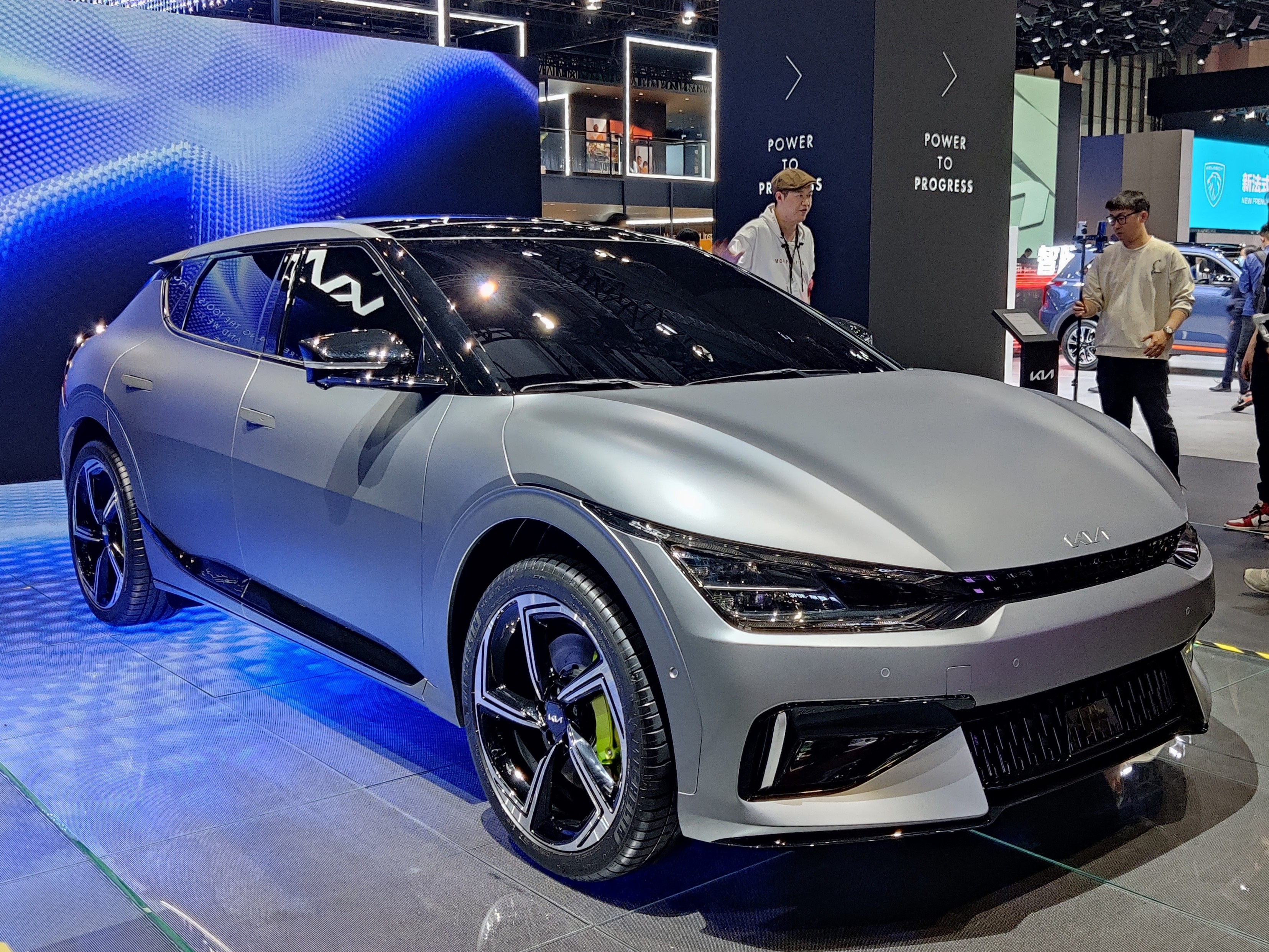
EV-6
"for the EV-9, 5,736 compared to 4,025 last year, EV-6 sales are down a little bit, but the EV-9 is more than making up for that"
The EV-6 is Kia’s electric crossover. They mention it because its sales are down compared with the EV-9.
The Kia EV-6 is a mid-size electric crossover that’s being referenced as part of Kia’s EV lineup. The hosts compare its sales trend to the EV-9 to explain which model is driving overall EV demand.
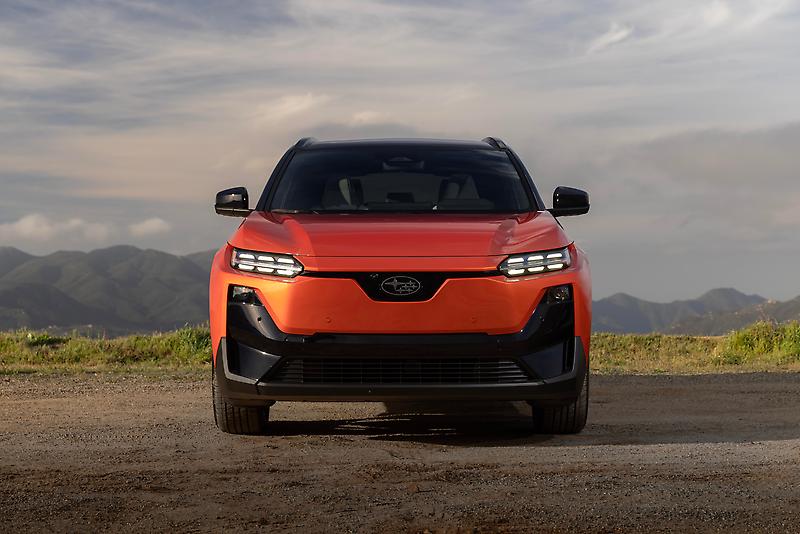
Subaru Uncharted
"...sentially a wagon version of the Saltera, and the Uncharted, which is the Coupe, the shorter Coupe version, b..."
The Subaru Uncharted is a type of Subaru vehicle described as a wagon-style option, with a shorter coupe-like shape. The podcast mentions it while explaining what the model is and how it relates to another named vehicle. It’s essentially about the car’s body style and positioning.
The Subaru Uncharted is described in the podcast as a wagon version of the Saltera, with the Uncharted being the shorter coupe-style variant. This suggests it’s a niche, lifestyle-oriented model concept focused on a specific body style and practicality mix. In the context, it’s mentioned as part of a naming/vehicle lineup explanation.

Toyota Chr
"and the Uncharted, which is the Coupe, the shorter Coupe version, basically their re-batch version of the Toyota CHR."
They compare one Subaru EV to the Toyota C-HR. That’s basically to say it’s in the same general “compact crossover” size/category.
The Toyota C-HR (often written as CH-R) is referenced as a size/shape comparison for Subaru’s Uncharted coupe. It’s a compact crossover, so the comparison is about proportions and market positioning rather than shared technology.

outback
"Yeah, I mean, the trail seeker is basically what the outback used to be, but it's electric. So it's an electric out, if you like the old outback..."
The Subaru Outback is a popular Subaru model known for being practical and good in bad weather. In this conversation, it’s the comparison point for an upcoming electric version of that vibe.
The Subaru Outback is Subaru’s wagon-like crossover that’s popular for its all-weather practicality and rugged styling. Here it’s used as a reference point for how the TrailSeeker is “basically what the outback used to be,” but in an electric form.
EV
"I like the design of the trial secrets, so EV cells, you know, for a lot of brands are actually up this year... ...the dealerships are having problems keeping use DVs in, in, in... and their inventory."
EV means electric vehicle. It’s a car that runs on electricity from a battery instead of using gasoline.
EV stands for electric vehicle, meaning the car is powered primarily by an electric motor and a battery rather than a gasoline engine. The speaker connects EV demand to fuel prices and discusses how dealerships are struggling to keep EV inventory.
fuel prices
"I like the design of the trial secrets, so EV cells, you know, for a lot of brands are actually up this year because people recognize that, hey, you know, when fuel prices are up, these things actually make sense."
Fuel prices are what people pay for gas. When gas gets expensive, electric cars can start to look like a better deal.
Fuel prices are the cost of gasoline/diesel, and they can strongly influence consumer interest in EVs. In this segment, the speaker argues that when fuel prices rise, EVs “make sense” because electricity can be cheaper per mile than gas.

Toyota Corolla Cross
"And then last thing, the Toyota Cross Toyota Corolla Cross pickup, this thing has been spotted or is it here? It's been spotted testing in Brazil. So, you know, up to the back of the doors, it looks just like any other Corolla Cross..."
The Toyota Corolla Cross is a small Toyota SUV/crossover. The host says a related new model is being tested in Brazil and that the front portion looks like the Corolla Cross you can buy now.
The Toyota Corolla Cross is Toyota’s compact crossover, and the speaker is discussing a new variant that’s being tested in Brazil. They say it looks like the Corolla Cross “up to the back of the doors,” implying a shared body architecture with the existing model.

Hyundai Santa Cruz
"I think that's the biggest mistake that Hyundai made with the Santa Cruz they never put the hybrid in there. because the Santa Cruz is basically a Tucson with a pick-up bed and you can get a Tucson hybrid they should have put that in the Santa Cruz"
They’re talking about the Hyundai Santa Cruz, a small pickup that’s built on the same general design as the Tucson. The host thinks Hyundai should have offered a hybrid version, not just gas.
The Hyundai Santa Cruz is a compact pickup/crossover hybrid that’s closely related to the Hyundai Tucson platform. The host’s key point is that Hyundai’s biggest mistake (in their view) was not offering a hybrid version in the Santa Cruz lineup.
plug-in hybrids
"I should have just come out well, I don't know, plug-in hybrids always seem like they're doing well, but they're really not that Yeah, it's all beefed"
A plug-in hybrid is a car that uses both a battery and a gas engine. You can charge the battery by plugging it in, and the host is saying people think they’re popular, but sales/impact may not be as strong as expected.
Plug-in hybrids (PHEVs) are hybrid vehicles that can be charged from an external power source, not just by the engine and regenerative braking. The host is arguing that plug-in hybrids “always seem like they’re doing well,” but may not actually translate into strong real-world results.

Tucson Hybrid
"because the Santa Cruz is basically a Tucson with a pick-up bed and you can get a Tucson hybrid they should have put that in the Santa Cruz"
They compare the Santa Cruz to the Hyundai Tucson. The idea is that since the Tucson can be hybrid, the Santa Cruz should have been hybrid too.
The Hyundai Tucson is being used as the reference point for what the Santa Cruz is “basically” based on. The host notes that you can get a Tucson hybrid, implying the Santa Cruz should have shared that powertrain option.
charging station
"saying that like charging station that prelude you know driving that prelude around you know it's on performance tires I was not day being it and I was I got 38 miles per gallon with that thing"
A charging station is where you plug a car in to recharge its battery. The host is talking about using that setup and what kind of range or efficiency they got.
A charging station is the external infrastructure used to recharge a vehicle’s battery (especially relevant for plug-in hybrids and full EVs). The host connects it to real-world driving by describing how far they went and how the car behaved when using charging.
modem
"The slight truck doesn't have a modem. So I reached out to the slide and I was like, hey, tell me a little bit more about the decision I have to put the modem in the vehicle."
A modem is the part that lets the vehicle connect to the internet using a cellular signal. The host is talking about whether the truck has that built-in connection.
A modem in a vehicle is the cellular communication module that enables the car to send and receive data over a wireless network. In this segment, the host is discussing whether the truck has a modem and what it enables through connectivity features.
companion app
"And then there is a companion app, and will you be using that app to sell data to third parties?"
A companion app is the phone app that works with the car. In this discussion, they’re worried the app might collect information and share it with other companies.
A companion app is a smartphone application that pairs with a connected vehicle to control or monitor functions remotely. The host raises concerns that the app could be used to collect data and potentially share it with third parties.
sell data to third parties
"And then there is a companion app, and will you be using that app to sell data to third parties? Automakers, they get your data, they take off the third parties."
This is about sharing or selling information the car collects to other companies. The host is saying regulators have stepped in when people weren’t told clearly enough what was happening.
Selling vehicle data to third parties refers to monetizing information collected from the car and its connected services (often via the companion app). The host connects this to regulatory scrutiny, implying that consent and disclosure matter.
GM
"GM got a lot of trouble for this because, you know, the FTC in California both said, hey, you didn't get people, you know, the correct amount of information about how much data you were selling when you told them to agree to this."
GM is mentioned as a car company that got in trouble over how it handled customer data. The host says regulators thought GM didn’t explain things clearly enough.
GM (General Motors) is referenced as an automaker that faced regulatory trouble related to how it handled customer data and disclosures. The host cites the FTC and California as part of the enforcement context.
FTC
"GM got a lot of trouble for this because, you know, the FTC in California both said, hey, you didn't get people, you know, the correct amount of information about how much data you were selling"
The FTC is a U.S. government agency that protects consumers. In this segment, it’s mentioned because it helped push back on companies that didn’t clearly explain how they were using or selling data.
FTC stands for the Federal Trade Commission, a U.S. government agency that enforces consumer protection and privacy-related rules. Here, it’s cited alongside California regulators in a discussion about whether automakers properly disclosed data practices.
diagnostic service
"so, [SPEAKER_03]: is, you know, wood slate be selling the data from this companion app that attaches to a truck, you can set up charging everything, climate controls, a bunch of other stuff, diagnostic service, will it be said?"
Diagnostic service means the car can report health or error information, sometimes through an app. The host is saying the connected truck could provide that kind of info remotely.
Diagnostic service refers to remote or app-based access to vehicle health information—often including trouble codes and system status. In this segment, it’s listed as one of the connected features the truck could support via its companion app.
charging everything
"so, [SPEAKER_03]: is, you know, wood slate be selling the data from this companion app that attaches to a truck, you can set up charging everything, climate controls, a bunch of other stuff"
They mean controlling how and when the car charges. The host is listing charging management as an app feature.
“Charging everything” is shorthand for managing the vehicle’s charging schedule and settings through connected services. It’s mentioned as part of what the companion app could control.
climate controls
"you can set up charging everything, climate controls, a bunch of other stuff, diagnostic service, will it be said?"
Climate controls are the car’s heating and air-conditioning. The host is saying the app could let you adjust those settings remotely.
Climate controls are the vehicle’s heating and air-conditioning systems, which can often be adjusted remotely on connected vehicles. The host lists them as an example of functions managed through the companion app.
wraps
"They want to say wraps. They want to sell you extra thing, you know, to make it into SUV, make it into, you know, rip, get it lifted, add a Bluetooth speaker."
Wraps are vinyl sheets put on the outside of a car to change its look. The host is saying the company wants to sell accessories like that.
Wraps are aftermarket vinyl coverings applied to a vehicle’s exterior to change appearance or protect paint. The host mentions wraps as an example of accessories the company might sell through its connected ecosystem.
lifted
"They want to sell you extra thing, you know, to make it into SUV, make it into, you know, rip, get it lifted, add a Bluetooth speaker."
“Lifted” means the truck sits higher than stock. The host is describing customization options like raising the suspension.
A “lifted” truck typically means it has been raised using suspension lift components to increase ground clearance and fit larger tires. The host lists it as an accessory outcome the company might sell.
opt out
"And I would rather, if you can opt out of most of that, I would like to, and I think Slade is doing that."
“Opt out” means you can say “no thanks” to certain data being collected or shared. With connected cars, it usually relates to whether the car sends information back to the company.
“Opt out” here means choosing not to participate in certain data collection or sharing. In connected cars, this is often about limiting telematics data—like location or driving-related information—sent back to the manufacturer or service providers.
traditional manual key
"You can do all that, you can go, you know, are they going to have a traditional manual key? I think it's like, it's like, goes into something, okay."
They’re talking about a normal physical key you use to lock/unlock and start the car. They’re wondering whether the car will still use that instead of more phone/keyless technology.
A “traditional manual key” refers to a conventional physical key you insert or turn to unlock and start the car. The speaker contrasts this with newer keyless or phone-based access systems that can enable more connectivity and convenience features.

Mazda Cx5
"...r visit to IHS to see the crash test of the Mazda CX5, but she recorded a couple interviews while she w..."
The Mazda CX-5 is a compact SUV, meaning it’s bigger than a sedan but still relatively easy to drive. The podcast mentions it because it was part of crash-test coverage and interviews. That kind of testing helps show how safe a vehicle is in an impact.
The Mazda CX-5 is a compact crossover SUV aimed at buyers who want a practical size with a more engaging driving feel. It’s frequently discussed in safety and crash-test contexts because it’s a mainstream model. In the podcast, it’s mentioned in relation to IHS crash testing and interviews recorded during a visit.
side impact test
"But then we introduced our second test. And the data for that one, it was rock solid. It was our side impact test."
A side impact test is when a car is hit from the side on purpose to see how safe it is. The goal is to check whether the car’s side structure can protect people inside.
A side impact test is a crash test where a vehicle is struck from the side to evaluate how well the passenger compartment protects occupants. It focuses on side structures like the doors, pillars, and floor/rocker areas that take the crash load.
side impact crashes
"It just happened to be work that we were doing, looking at what's killing and injuring people in side impact crashes. and what could be done for self-protection in the car?"
Side impact crashes are crashes where another vehicle hits you from the side. Safety depends a lot on how strong the car’s side is and whether the cabin stays intact.
Side impact crashes are collisions where the primary force comes from the side of the vehicle rather than the front or rear. Because the occupant is closer to the struck structure, side crashes heavily depend on door and sill strength and how well the cabin resists intrusion.
light truck
"Was significantly worse when the striking vehicle was a light truck. I think up truck or an SUV..."
A light truck is a category of vehicle (like many pickups and similar vehicles) that typically has a higher mass and different front-end geometry than passenger cars. In side impacts, that can change where the striking vehicle’s structure contacts the struck car’s side.
door sill
"It's just the door sill. Yeah, yeah, yeah, yeah. Because everybody over there tried to rub it."
The door sill is the strong metal part along the bottom of the door opening. In a side crash, it matters because it helps protect the space where people sit.
The door sill is the lower structural area along the bottom edge of the door opening. In side impacts, it’s a key load-carrying section that helps keep the cabin from collapsing inward.

Ford Explorer
"...n this striking vehicle, that must be an old Ford Explorer, there's a dent in it. [SPEAKER_01]: And that's w..."
The Ford Explorer is a family-sized SUV, meaning it has more room and a higher driving position than a typical sedan. The podcast mentions an older one because it had a dent, which matters for condition and value. It’s likely being used as an example of what to look for.
The Ford Explorer is a midsize SUV designed for family use, with seating space and versatility for everyday driving. It’s often discussed because it’s a high-volume model and shows up frequently in real-world condition examples. In the podcast, it’s specifically mentioned as an “old Ford Explorer” with visible body damage (a dent), likely as part of a story or inspection.
crash dummies
"One of the long-term challenges is to be more comprehensive in our testing, and crash dummies while we report them being really sophisticated, they're directional."
Crash dummies are special mannequins used to test car crashes. They have sensors to measure how hard the car hits you, but they’re not exactly like a real person.
Crash dummies are instrumented mannequins used in vehicle crash tests to measure how forces act on the body. They’re designed to represent human injury risk, but they don’t perfectly match real humans in every crash angle and posture.
off-axis loading
"They're not reliable in any of what was called off-axis loading, so if it's a frontal crash test dummy, and you're, let's say, at a 10 or 15 degree type of angular motion, you start to lose fidelity to a real human."
Off-axis loading is when the crash hits you from an angle, not head-on. If the dummy isn’t built to handle that angle well, its measurements may not match what would happen to a real person.
Off-axis loading means the crash forces are applied at an angle rather than straight-on (or perfectly aligned with the dummy’s intended direction). Because many dummies are “directional,” their readings can lose accuracy when the impact is angled, which affects how well test results predict real-world injuries.
fidelity
"They're not reliable in any of what was called off-axis loading, so if it's a frontal crash test dummy, and you're, let's say, at a 10 or 15 degree type of angular motion, you start to lose fidelity to a real human."
Fidelity here means “how accurate” the dummy’s results are compared to a real person. With angled crashes, the dummy can become less accurate.
In crash testing, fidelity describes how closely dummy measurements match what happens to a real human body. When impacts are angled (like off-axis loading), fidelity can drop, meaning the test becomes less representative of real injuries.
computer-rated modeling
"But it is realistic in the computer-rated modeling world. So that will start to have a bigger impact as you try to figure out some of that stuff to model it."
This is using computer simulations to study crashes. Instead of building and crashing lots of cars, you can test many scenarios virtually—if the simulation is realistic.
Computer-rated modeling refers to using computer simulations to predict crash outcomes instead of physically testing every scenario. It’s useful for exploring many vehicle and occupant conditions, but it depends on how accurate the models and assumptions are.
simulation
"we, we will develop ultimately a suite of conditions that an automaker would test in simulation. And then we would just randomly choose one and be able to do physical audits to keep people, you keep them honest."
Simulation means using computers to recreate a crash virtually. The idea is to try lots of situations quickly, then check the results with real-world testing.
Simulation in crashworthiness testing means using virtual models of vehicles and occupants to predict how a crash will unfold. The goal is to test a wide range of conditions efficiently, then validate with physical audits to confirm the simulation is trustworthy.
surrogate
"Wow, which is a set of trying to use a surrogate already, which is a dummy."
A surrogate is a stand-in. Here, it means using a dummy instead of a real human to measure crash forces and injuries.
A surrogate is a substitute used to stand in for something else—in this case, using a dummy to represent a human in crash tests. The discussion contrasts surrogate dummies with more advanced human body models that aim to better match real anatomy and injury mechanisms.
human body models
"To the extent that we can, eventually they're going to be simulating actual human body models. Wow, which is a set of trying to use a surrogate already, which is a dummy."
Human body models are computer versions of the human body used to study crashes. They can show more detail than a mannequin, like how internal parts might be affected.
Human body models are digital representations of the human body used in crash simulations to estimate how tissues and organs respond to forces. Compared with traditional crash dummies, they can provide more detailed, anatomy-specific predictions—like which organs are stressed—if the model is validated well.

Mazda Cx70
"...ame for the CX90, our marketing team came for the CX70, and this is the third version of that world like..."
The Mazda CX-70 is an SUV made by Mazda, meant for everyday driving with room for passengers. In the podcast, it’s mentioned because it’s part of a group of similar SUVs people came to see. The speaker is describing how it fits into the lineup.
The Mazda CX-70 is a midsize SUV positioned as part of Mazda’s larger crossover lineup, aimed at buyers who want a family-capable vehicle with a more specific configuration. It’s mentioned in the podcast as part of a set of vehicles (CX-90 and CX-70) connected to who attended or participated in an event. The “third version” wording in the context suggests it’s part of an evolving model strategy.

Mazda Cx90
"...a car get crashed. [SPEAKER_02]: Tom came for the CX90, our marketing team came for the CX70, and this i..."
The Mazda CX-90 is a larger SUV with three rows of seats, so it can fit more passengers. The podcast mentions it as part of a group of vehicles people came to see or talk about. It’s being referenced in a lineup/marketing context.
The Mazda CX-90 is a three-row midsize SUV designed to bring Mazda’s driving feel to a larger family format. It’s often discussed in the context of marketing events and model lineup changes. In the podcast, the CX-90 is mentioned alongside the CX-70, with the speaker describing who came for each vehicle.
insurance institute
"It's really not even all about necessarily Mazda here This is about automotive safety advancement at large What the insurance institute is doing for the industry"
The “insurance institute” here is the IIHS, a group that tests cars for crash safety and gives safety ratings. Automakers pay attention to it because its results influence what gets improved.
The “insurance institute” refers to the Insurance Institute for Highway Safety (IIHS), a major U.S. organization that conducts vehicle crash tests and publishes safety ratings. The speaker frames it as a driver of industry-wide safety advancement.
IHS
"What drives us collectively as an industry, whether that's IHS or a car company, how we work together, how this is done everything from the crash of white insensors, which you guys got to see down here."
IHS is an organization that’s involved in how vehicle safety is evaluated. The speaker mentions it to show that safety progress is a team effort across companies and evaluators.
IHS is referenced as part of the safety-testing ecosystem that evaluates and drives improvements across the industry. In automotive safety discussions, it’s typically tied to organizations that help standardize how vehicles are assessed and how results are communicated.
crash test dummies
"Yeah. Yeah. A crash test dummies that are $250,000."
Crash test dummies are special mannequins used in crash tests to collect measurements. They help engineers understand how safe a car is for people in real crashes.
Crash test dummies are instrumented mannequins used to measure what happens to occupants in a collision—like forces on the head, chest, and legs. The speaker highlights their cost to emphasize how serious and data-driven modern automotive safety testing is.
vehicle telematics data
"And what we have from the automotive industry, we also have vehicle telematics data now. So we can also see from our vehicles, crashes people are getting into."
Telematics data is information a car can send about what happened—like where it was, how it was driving, and sometimes crash details. Researchers use it to understand real-world accidents better than test-only data.
Vehicle telematics data is information collected from a car using onboard sensors and connectivity (like GPS and crash sensors) and sent to a backend system. In safety research, it can help correlate real-world crashes with vehicle behavior and outcomes.
moderated front overlap test
"The vehicle that the moderated the moderate front overlap test adds that rear dummy. The reason that dummy is there is because we were seeing in the data that there's still a lot of injuries in the rear seat."
This is a crash test where only part of the front of the car hits something. Because the impact is partial, the car’s structure is stressed differently, so safety results can change.
A front overlap crash test evaluates how well a vehicle protects occupants when only part of the front end hits an obstacle. The “overlap” portion matters because it changes how forces travel through the structure, so results can differ from full-width frontal tests.
rear dummy
"The vehicle that the moderated the moderate front overlap test adds that rear dummy. The reason that dummy is there is because we were seeing in the data that there's still a lot of injuries in the rear seat."
In crash testing, they use a special mannequin that measures how hard the crash forces are. Putting one in the rear seat lets them judge how safe the back seat is.
A “dummy” is an instrumented crash-test mannequin used to measure forces and injury risk in a specific seating position. Adding a rear dummy means the test is designed to evaluate rear-seat protection, not just front occupants.
rear row airbags that are built into the seat
"We needed to make sure that we were having more energy absorption taken into consideration in the rear seat, and that means rear row airbags that are built into the seat, seat belts and pretensioners..."
These are airbags meant for people sitting in the back. Because they’re built into the seat, they can be positioned to protect rear passengers more effectively in a crash.
Seat-integrated rear row airbags are airbags designed to deploy for rear-seat occupants, with the airbag packaging located in or near the seat. Their placement can improve protection by better matching where rear occupants’ heads and torsos move during a crash.
pretensioners
"...rear row airbags that are built into the seat, seat belts and pretensioners and just overly good geometry for passengers and occupants in the rear seat..."
Pretensioners are mechanisms that quickly tighten your seat belt when a crash begins. That helps keep you from moving forward as much before the belt fully takes the load.
Seat belt pretensioners are devices that rapidly tighten the seat belt at the start of a crash. By removing slack sooner, they help keep occupants properly positioned and reduce forward movement before the belt loads fully.
energy absorption
"We needed to make sure that we were having more energy absorption taken into consideration in the rear seat, and that means rear row airbags..."
Energy absorption is how the car “soaks up” crash energy instead of letting it all hit the people inside at once. Better absorption can mean lower forces on your body.
Energy absorption is how a vehicle’s structure and restraint systems manage crash forces by deforming in a controlled way. In safety engineering, more effective energy absorption generally helps reduce the peak forces transmitted to occupants.

X5
"...and that means rear row airbags that are built into the seat, seat belts and pretensioners and just overly good geometry for passengers and occupants in the rear seat and that side impact one was another example that you saw that that was a year ago where the X5 was the only vehicle to be able to do good in that test, the good rating right out of right at the introduction of the test..."
The BMW X5 is a popular SUV. In this discussion, it’s used as an example of a vehicle that did well in a safety crash test, especially for protecting occupants in that scenario.
The BMW X5 is a midsize luxury SUV, and it’s mentioned here because it performed well in a side-impact-related test at the time the test was introduced. The point is that the vehicle’s structure and restraint systems were strong enough to earn a “good” rating early on.
airbags and the seat belts
"We were seeing injuries inside impacts that we thought we could mitigate by having a stronger structure, everything from the types of metals that we use to the type of welding that is used in manufacturing, and then of course the airbags and the seat belts."
Seat belts and airbags are both safety systems that protect you in a crash. The belt helps hold you in place, and the airbag adds extra protection during the impact.
In crash safety, airbags and seat belts work together as a coordinated restraint system. Seat belts manage occupant position early in the crash, while airbags add additional cushioning and help reduce head/torso impacts.
whiplash crash test
"They're thinking about improving is their rear impact, their whiplash crash test. Okay. So that is done on the sled."
A whiplash crash test is a safety test that checks how a car seat protects your head and neck in a rear-end crash. It looks at how much your head and neck jerk around. The seat and headrest are designed to reduce that motion.
A whiplash crash test is a vehicle safety evaluation focused on how the head and neck move during a rear-end impact. The goal is to measure injury risk from the rapid forward-and-back “whip” motion. Results can drive changes to seat and headrest geometry and how the seat absorbs energy.
sled
"So that is done on the sled. They just used the seat because we were impacting with flashes really about this seat."
In crash testing, a sled is a track-mounted platform that moves a test setup forward to simulate impact forces. It lets engineers repeat the same collision conditions more consistently than a full vehicle crash. That repeatability is important when comparing seat designs or dummy positions.
dummy position
"And we have the setting of the dummy position. It really also is like how people drive and sit in a vehicle in Japan, maybe versus the United States."
The dummy position is where the crash-test mannequin sits in the seat. If it’s moved forward or back, the headrest and seat can protect it differently. Engineers adjust this to better match how people actually sit.
The dummy position refers to how the crash-test mannequin is placed in the seat before the impact. Small changes in fore-aft location can significantly affect how the headrest and seatback interact with the dummy during a whiplash event. That’s why engineers tune the setup to match real-world seating posture.
Request an Explanation
Heard something you'd like explained? We'll add it to this episode.
Sign in to request explanations for terms you heard.
Want to learn more?
Browse our glossary for plain-English explanations of automotive terms, jargon, and concepts.
Help improve this episode
See something that's not quite right? Our annotations are AI-generated and can sometimes miss the mark. Click the flag icon on any annotation to suggest a correction.