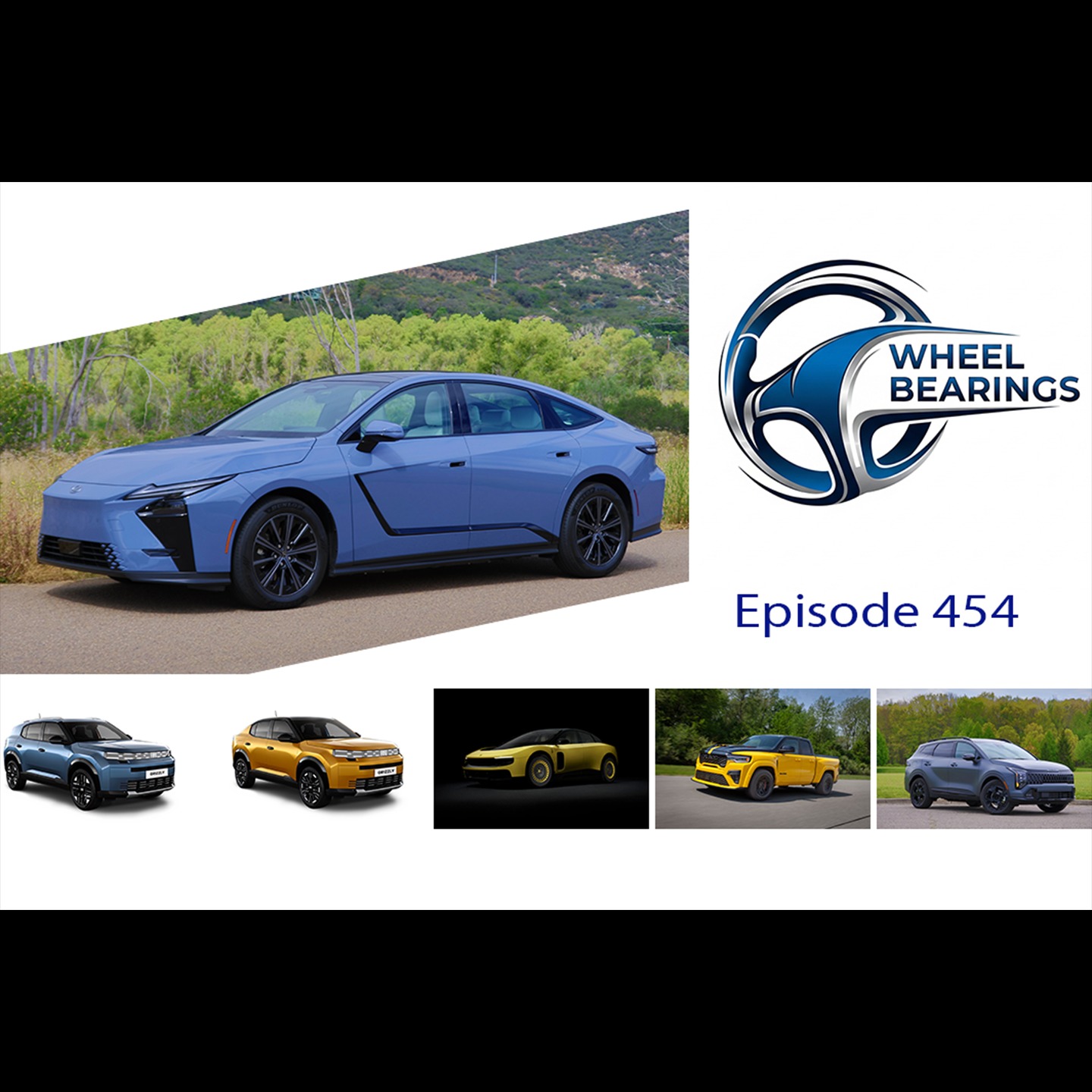
About this episode
Range anxiety, connector standards, and charging logistics take center stage as the hosts compare EVs and plug-in hybrids—down to adapter compatibility and real-world efficiency. The conversation then widens to electrification strategy and road-fee debates, before shifting into Lexus ES electrification: how the EV is tuned to feel like a Lexus, how hybrids are packaged for refinement, and how marketing plans focus on getting shoppers into the car. Along the way, they also cover Stellantis lineup moves and EV/auto industry missteps.
This week Nicole was driving the 2026 Subaru Solterra and Sam had the Kia Sportage plug-in hybrid.
In recent days, both AMG and Ferrari have revealed new four-door GT models with over 1,000-hp electric propulsion and the response has been very different between the two. Stellantis had their big investor day last week and announced a bunch of new products and Sam got to try out a couple of European models and see a bunch of secret stuff. Citroen is also bringing back the 2CV. Rich Rebuilds bought an $800 Audi A8 with slight corrosion issue.
Watch out for AI images for ride share damage and whatever you do don't buy a Lordstown Endurance.
Links
The 777 HP 2027 Ram Rumble Bee is The Most Powerful Muscle Truck Ever!
2027 Mercedes-AMG GT 4-Door Coupe Recreates Signature V8 Thrills-signature-v8-thrills/
AMG Goes Electric with the Mercedes-AMG GT 4-Door Coupe
Grande Panda | FIAT | Stellantis Media
Stellantis Announces FaSTLAne 2030
A State Trooper Sold Me This $87,000 Luxury Car for $800
Citroën Is Bringing Back The 2CV Because EVs Got Too Expensive
I Bought the Ultra-Rare Electric Truck You've Never Heard Of
2028 Ferrari Luce First Look: Ferrari’s First EV Revealed—So Long, Comfort Zone
Advertising Inquiries: https://redcircle.com/brands
Privacy & Opt-Out: https://redcircle.com/privacy

Jeep Wrangler
"...o regular charger that Russ uses to plug into his Wrangler. So it doesn't have the extra you know how there'..."
The Jeep Wrangler is an SUV designed for off-road driving. It’s known for being able to drive on rough trails and for having an open-air style. The podcast brings it up because someone is talking about plugging in their Wrangler.
The Jeep Wrangler is a rugged off-road SUV famous for its removable doors and open-air driving options, along with strong trail capability. It’s frequently discussed because it’s a popular choice for people who want a vehicle that can handle rough terrain. In this episode, it’s mentioned alongside charging hardware used with the Wrangler.
CCS
"I wanna say C C D, that's not it... CCS, thank you. ... J1772... and then there's the two pins at the bottom... on the but ours just has the circle. ... J1772. ... When it has the extra two little pins on the bottom."
CCS is a common charging plug used for electric cars. It’s designed so the same basic plug can work with both regular AC charging and faster DC charging. The “extra pins” are what let it do the fast DC charging.
CCS (Combined Charging System) is a standardized way to plug into DC fast chargers and also support AC charging. The connector has multiple pin types: the AC pins plus additional DC pins, which is why people talk about “extra two pins” for CCS versus simpler plugs.
J1772
"yeah, C C S is the combined one. So it's a J seventeen seventy two plus the two D C pins. The seventeen seventy two is just the the five pins for the A C charging."
J1772 is the standard plug shape used for slower, regular AC charging. With CCS, the car can use that same plug area for AC, and then the extra pins enable faster DC charging.
J1772 is the common AC charging connector standard used by many plug-in vehicles. In the CCS setup, J1772 provides the AC portion (the “five pins for the AC charging”), while CCS adds extra DC pins for fast charging.
DC pins
"So it's a J seventeen seventy two plus the two D C pins... Right. Which I think we are again... But so I didn't haven't run into this before... the adapter they gave me had the CCS. It had the two extra DC pins on the bottom."
DC pins are the part of the charging connector that lets the car accept fast charging. If an adapter only matches the AC side and not the DC side, the car may not charge the way you expect.
DC pins refer to the additional connector contacts used for direct-current (DC) fast charging. They’re what distinguish CCS from a connector that only supports AC charging, which is why an adapter with the wrong pin set can’t charge the car correctly.
AC adapter
"Exactly. So the DC adapter won't work. You just have to have the AC adapter."
An AC adapter is for regular charging (slower charging) that uses the AC plug standard. If you use the wrong adapter, the charger and car may not be able to connect properly.
An AC adapter is used when a car needs the AC charging interface (typically aligned with J1772) rather than DC fast charging. In the transcript, the key point is that the wrong adapter type (DC/CCS-specific) won’t work if the charging setup expects the AC-capable connector.

Ionic five
"I can confirm that I have both an A C and D C adapter in the back of my new Ionic five."
The Hyundai Ioniq 5 is an electric car. The important takeaway here is that it can require the right charging adapters, and the host says their car came with both AC and DC adapters so they’re prepared for different chargers.
The Hyundai Ioniq 5 is an electric vehicle that uses standardized charging connectors, so having the correct AC and DC adapters can be the difference between charging smoothly and getting stuck. The speaker confirms they have both adapters in the back of their Ioniq 5.
handshake
"So I went and it did the handshake much better. Some on occasion I've had trouble getting things to to non-Tesla vehicles to like Tesla chargers, but this one worked just fine."
The “handshake” is the quick conversation between the car and the charger to confirm they’re compatible. If that step doesn’t go smoothly, the charger might not start or might be harder to use.
In EV charging, a “handshake” is the communication step where the car and charger exchange information (like compatibility and charging limits) before power flows. If the handshake fails or is slow, charging can be unreliable—especially when using adapters or non-native charger networks.
Tesla charger
"Some on occasion I've had trouble getting things to to non-Tesla vehicles to like Tesla chargers, but this one worked just fine."
A Tesla charger is a charging station from Tesla. Some non-Tesla EVs can charge there, but you may need the right adapter and the setup can be awkward, like lining up the car so the cable reaches.
A Tesla charger refers to Tesla’s charging network hardware, which historically used different connector standards than many non-Tesla EVs. The segment highlights that non-Tesla cars may need the right adapter and can have trouble lining up or getting a reliable connection depending on the charger type and cable length.
charge port
"You sh actually you shouldn't have to do that because they they moved the charge port this year. When they switched to the next they moved the charge port to the right front fender."
On an electric car, the charge port is the spot where you plug in the charging cable. If the port is on the “wrong” side for the charger, the cable might not reach unless you park differently.
A charge port is the physical inlet on an EV where you plug in the charging cable. Its location matters because it determines which side of the car you need to park relative to the charger so the cable can reach.
steering wheel
"It's not especially exciting. ⁓ I I like it better than the old one because it the the way they changed the ⁓ the steering wheel and sort of tunnel that where you see the instrument cluster. It used to be something where the steering wheel really blocked it."
The steering wheel is the driver’s primary control interface, and in modern cars its shape and position can affect sightlines to the instrument cluster. Here, the hosts mention a design change that reduces how much the steering wheel blocks the view.
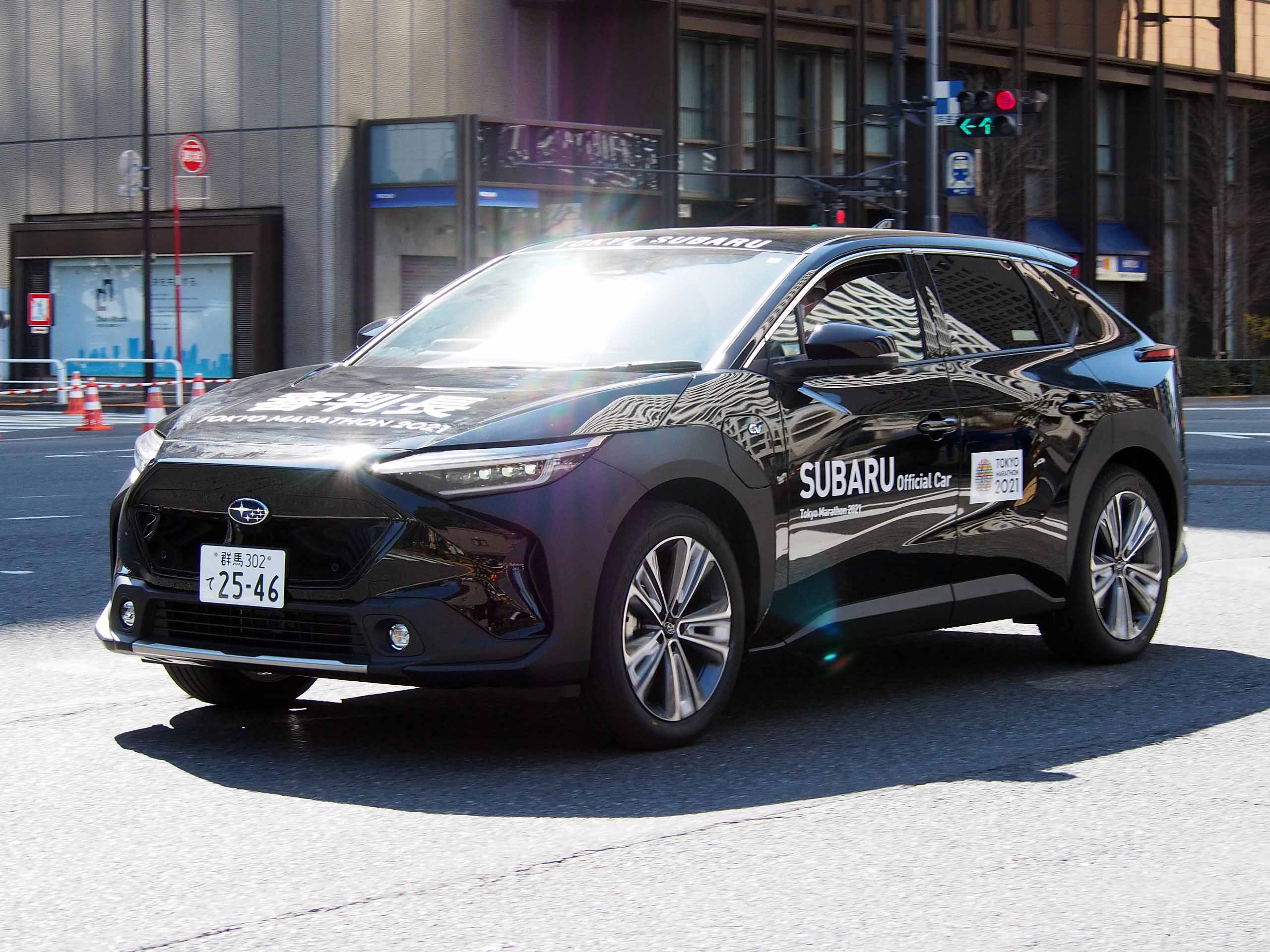
Solterra Soltera
"... it goes, you smash the gas and your little Subar Soltera will zoom zoom very nicely. And ⁓ it's zoom zoom...."
The Solterra is an all-electric SUV made by Subaru. It’s meant for everyday driving, but it uses an electric motor instead of gasoline. The podcast mentions it because it accelerates quickly when you press the gas.
The Solterra is Subaru’s battery-electric SUV, designed to bring EV power to a family-sized crossover format. It’s discussed in the context of how quickly it responds when accelerating. In this episode, it’s mentioned with a “zoom zoom” style description of its performance feel.
Subaru Soltera
"It's plenty powerful, you know, it it goes, you smash the gas and your little Subar Soltera will zoom zoom very nicely. And ⁓ it's zoom zoom. ⁓ starting price on brand right now, right? ... It's not, so the thing is I kind of feel like this is a this is an Eevee for Subaru people... The Soltera is. That's my summation of the Subaru Soltera."
The Subaru Soltera is an all-electric Subaru. That means it runs on electricity instead of gas, and the conversation here is about how it drives and how practical it is for daily stuff like carrying groceries.
The Subaru Soltera is Subaru’s electric vehicle (EV) aimed at people who want Subaru styling and practicality without gasoline. In this segment, the hosts focus on how it drives, how charging logistics worked at a station, and how much cargo space it has for everyday errands.
plug in hybrid
"right. Well, I ⁓ I had the Kia sportage plug in hybrid. ⁓ and it was the ⁓ the X line prestige or something like that."
A plug-in hybrid is a hybrid car with a battery you can charge at home. It can drive on electricity for a while, then it uses gas like a normal hybrid when the battery is low.
A plug-in hybrid (PHEV) is a hybrid car with a battery large enough to be charged from an external power source, not just by the engine or regenerative braking. That lets it drive a meaningful distance on electricity alone before it switches to using the gas engine more often.

Kia sportage plug in hybrid
"right. Well, I ⁓ I had the Kia sportage plug in hybrid. ⁓ and it was the ⁓ the X line prestige or something like that."
This is a Kia Sportage that can run partly on electricity. You can charge it at home, and then it uses gas when the battery runs low or when you need more power.
The Kia Sportage plug-in hybrid is a compact SUV that combines a gasoline engine with an electric motor and a battery you can recharge from an outlet. In this segment, the host focuses on the Sportage’s plug-in hybrid setup and how it drives day-to-day on electricity versus switching to hybrid mode.
mid cycle refresh
"the changes they did to the ⁓ to the sportage last year for the the mid cycle refresh, it's got you know a little bit blockier front end than it did when this generation first launched."
A mid-cycle refresh is when a car gets updated a couple years after it first comes out. Usually it’s mostly styling and some features, not a totally new car.
A mid-cycle refresh is an update automakers do partway through a model’s life, typically around a few years after launch. It often includes styling changes (like a new front end) and sometimes tech or feature updates, without fully redesigning the platform.
thirteen point seven kilowatt hour battery
"it's ⁓ it's a relatively modest size battery compared to some of the other more recent plug in hybrids like the RAV four. So it's ⁓ it's a thirteen point seven kilowatt hour battery."
A 13.7 kWh battery is the size of the plug-in hybrid’s electric energy storage, measured in kilowatt-hours. Larger kWh generally means more potential electric-only driving range, though real-world range also depends on speed, temperature, and how the car is driven.
rotary shifter
"And the yeah, see the the shifter is a rotary shifter, ⁓ same as the one they have in the E V six and some other models."
A rotary shifter is a gear selector you move by turning a knob or dial. It’s just a different way to choose Park, Drive, and Reverse.
A rotary shifter is a gear selector you rotate (often like a dial) instead of using a traditional straight lever. Many modern automatics use it to save space and create a more compact center console layout.
head up display
"It's had a head up heads up display. ⁓ it's got full sunroof, ⁓ you know, panoramic sunroof in this one."
A head-up display shows important driving info in front of you, usually on the windshield. That way you don’t have to look down as much.
A head-up display (HUD) projects key driving information—like speed or navigation prompts—onto the windshield or a transparent screen. It helps drivers keep their eyes on the road instead of constantly looking down at the instrument cluster.
panoramic sunroof
"It's had a head up heads up display. ⁓ it's got full sunroof, ⁓ you know, panoramic sunroof in this one."
A panoramic sunroof is a big glass roof opening. It lets in more light and makes the cabin feel more open.
A panoramic sunroof is a large glass roof opening that typically spans much of the cabin, improving light and open-air feel. It’s often paired with power operation and sunshade controls.
electric range
"it's rated at thirty three miles of electric range. ⁓ I took it on my usual loop and got thirty six miles before it ⁓ finally started the engine."
Electric range is how far the car can go using only electricity. It’s an estimate, and your actual range can be higher or lower depending on how you drive.
Electric range is the estimated distance the vehicle can travel using only battery power before it needs to run the engine. Plug-in hybrids often quote an EPA-style electric range, but the host also compares it to real-world results from their own driving loop.
miles per gallon
"it did it averaged ⁓ about f ⁓ fifty six miles per gallon in total over the week."
Miles per gallon (MPG) is how efficiently the car uses gas. With plug-in hybrids, the MPG number doesn’t always tell the whole story because you may also be using electricity.
Miles per gallon (MPG) is a fuel-economy measure that tells how far the car goes per unit of gasoline. For plug-in hybrids, MPG can be misleading because it may not fully account for the electricity you used to charge the battery.
total mileage you know, divided by the amount of fuel you use
"I averaged eighty two point four miles per gallon. ⁓ which you know they the way they calculate this is just your total mileage you know, divided by the amount of fuel you use."
They’re describing how MPG is calculated: you take how far you drove and divide by how much gas you used. For plug-in hybrids, that MPG doesn’t count the electricity you used to charge the battery.
The host explains how the MPG calculation works: it’s based on total distance traveled divided by the amount of fuel consumed. They also clarify that this MPG figure doesn’t include the energy from electricity used to charge the battery, which is important when comparing PHEVs.
hybrid mode
"so, you know, it's got a smooth, comfortable ride. you know, when it's running in hybrid mode, it's it's very quiet still."
Hybrid mode is when the car is running as a hybrid, using gas and the electric system together. It’s the mode you’re in after the battery isn’t fully driving the car by itself.
Hybrid mode is the operating state where the car relies on its hybrid powertrain strategy—typically using the engine and electric motor together, or primarily the engine once the battery is depleted. The host notes that in hybrid mode the car stays quiet and smooth, emphasizing how it transitions from electric driving to blended operation.
C V T
"There's no C V T no E C V T so you don't have any of that kind of droning sound that you s often get on Toyota hybrids."
CVT means the car doesn’t use fixed gears like a normal automatic. Instead it smoothly changes ratio, and some people hear/feel it as a droning sound.
CVT stands for continuously variable transmission, which uses pulleys/belts to provide an infinite range of gear ratios rather than fixed steps. Because of how it controls engine speed, some drivers describe the sound/feel as a “droning” effect compared with a geared automatic.
six speed automatic transmission
"under full acceler it's it's a you know it's ⁓ a Hyundai Kia hybrid system. So it's got a conventional six speed automatic transmission in there."
This is the car’s automatic gearbox with six different gear ratios. It shifts gears normally, and it can feel different from cars that use a CVT.
A six-speed automatic transmission is a traditional multi-gear automatic gearbox that shifts through six ratios. The host contrasts it with continuously variable transmissions (CVTs) that can feel different because they often keep the engine at a more constant RPM.
wireless Android auto
"you've got two twelve point three inch displays, one for the instrument cluster, one for the infotainment, ⁓ you know wireless Android auto, wireless car play"
Wireless Android Auto means you can connect your Android phone to the car without a USB cable. Then you can use apps like maps and music on the car’s display.
Wireless Android Auto lets you connect a compatible Android phone to the car’s infotainment system without plugging in a cable. It’s a convenience feature that supports navigation, music, and some phone functions through the car’s screen.
wireless car play
"wireless Android auto, wireless car play, there's a wireless charging pad"
Wireless CarPlay lets you use your iPhone in the car without plugging it in. Your maps, calls, and music show up on the car’s screen.
Wireless Apple CarPlay allows an iPhone to connect to the car’s infotainment system without a cable. It mirrors supported iPhone apps onto the dashboard screen for navigation, calls, and media.
wireless charging pad
"wireless Android auto, wireless car play, there's a wireless charging pad, what else?"
A wireless charging pad charges your phone without plugging in a cable. You just set the phone on the pad.
A wireless charging pad uses electromagnetic induction to charge a compatible phone without plugging in a cable. It’s typically integrated into the center console or dashboard area for convenience.
destination charges
"it's fourteen forty five. ⁓ speaking of destination charges, ⁓ I was looking up something else last week. ⁓ did you did you know that ⁓ the destination charges on pretty much everything have gone up yet again"
Destination charges are the extra fee you pay to get the car from where it’s built to the dealership. It’s basically part of the delivery cost, and it can go up when shipping gets more expensive.
Destination charges are fees automakers add to cover the cost of transporting a new car from the factory to the dealer. They’re usually listed on the window sticker and can change over time with shipping and fuel costs.
four door electric cars
"so ⁓ in the past week we've had ⁓ the the launch of two new high performance, ⁓ very expensive four door electric cars."
This just means electric cars that have four doors. The hosts are pointing out that EVs are now coming in bigger, more practical body styles too.
“Four-door electric cars” refers to EVs with a sedan-like body style (or crossover-like layout) that still uses electric powertrains. The episode uses this to frame the trend of high-performance EVs that aren’t just two-door sports cars.
2027 Mercedes AMG GT four door coupe
"⁓ and the twenty twenty seven Mercedes AMG GT four door coupe ⁓ coupe."
The 2027 Mercedes-AMG GT four-door coupe is a Mercedes performance car with four doors. The discussion focuses on how powerful it is and also on the look of the front grille trim.
The 2027 Mercedes-AMG GT four-door coupe is highlighted as a very high-power, four-door electric performance car. The hosts also comment on its styling details—especially the “piano black” trim in the grille area—showing how the design language is part of the appeal.
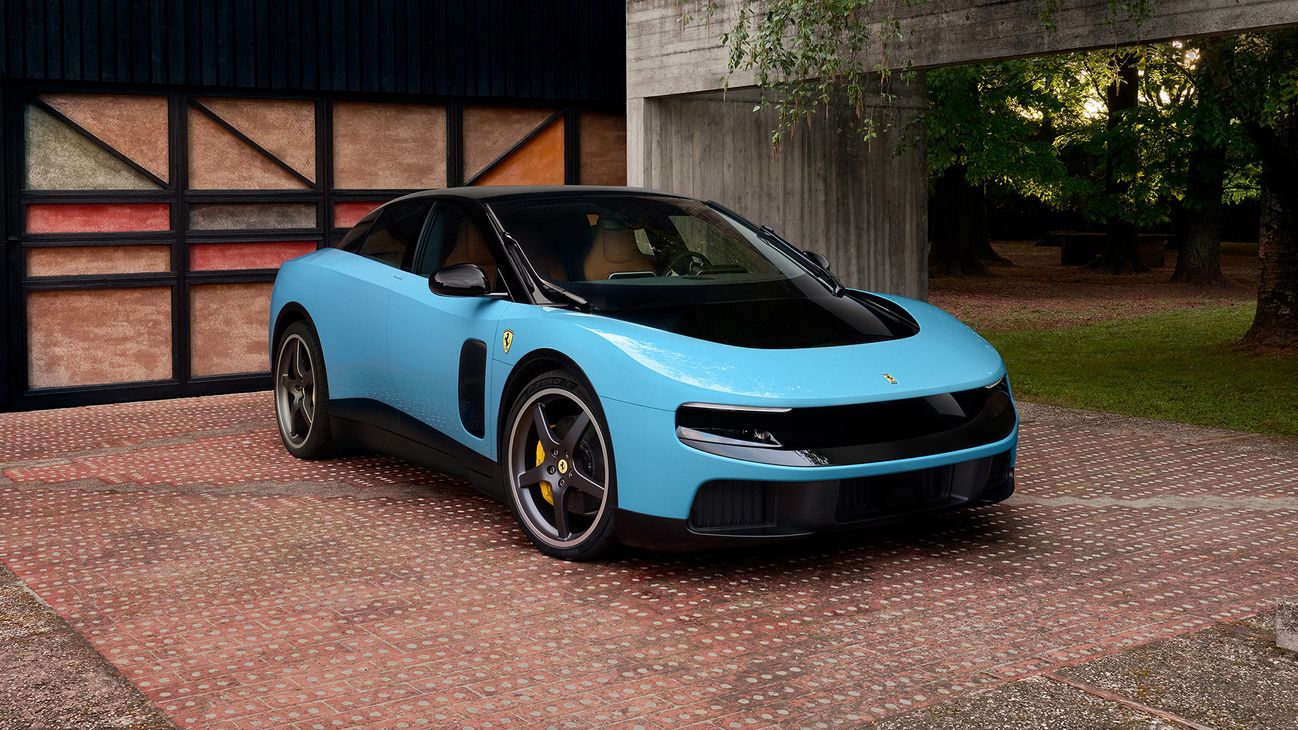
Ferrari Luce
"Okay. I'll I'll add that. ⁓ the and the other one ⁓ is a Ferrari. ⁓ so we got the Ferrari Luce that has now been f completely unveiled"
Ferrari Luce is a new Ferrari model that the hosts say has been fully revealed. They’re talking about it as an electric car—so it’s part of Ferrari moving into EVs.
Ferrari Luce is discussed as a newly unveiled Ferrari electric car, and the episode frames it as part of Ferrari’s shift toward electrification. The key point here is that it’s positioned as a high-performance, very expensive four-door EV.
piano black
"like the G T the AMG G T. I I except for the weird piano pi piano black like in the grill and in the back"
“Piano black” is a very shiny black coating on parts of the car. It can look great, but it often shows smudges and scratches more than flatter, matte black trim.
“Piano black” is a glossy, mirror-like black finish used on some car trim pieces. It can look striking, but it also tends to show fingerprints, dust, and micro-scratches more easily than matte finishes.
paddle shifters
"…the driver was doing the paddle shifters and it was really it I was like wow that's really cool."
Paddle shifters are little switches on the steering wheel that let you “change gears” without moving your hand to a gear stick. In some cars, especially EVs, they’re more about changing how the car feels than actually using real gears.
Paddle shifters are small levers behind the steering wheel that let the driver manually command gear changes without using a traditional gear lever. On an EV, they’re often used to simulate “gears” or change the car’s response feel rather than changing a conventional gearbox.
torque
"…there's so much torque w when he did a burnout… Because there's so much torque. It's like 1153… torque is one thousand four hundred seventy five."
Torque is the force that makes the car accelerate. EVs can deliver a lot of it right away, so the car can feel like it pulls hard instantly.
Torque is the twisting force that makes the wheels push the car forward. EVs often produce very high torque instantly, which is why the hosts talk about it feeling like “insane” pull and why traction can be affected during hard launches or burnouts.
burnout
"…there's so much torque w when he did a burnout… Even in the pasture, you could tell it was like there's none of that little tug…"
A burnout is when you spin the tires on purpose, usually to heat them up or show how much grip you have. It often happens when the car has more power than the tires can hold.
A burnout is when a driver forces the tires to spin while the car is stationary or moving very slowly, usually to heat the tires or demonstrate traction limits. In the transcript, it’s used to illustrate how the car’s torque overwhelms grip and how quickly traction can be lost.
market share
"And when there is that transition and when the when people finally do like you know they it hits a tipping point like in Norway, China and other places where EVs are on the on the uptick, ⁓ you're gonna be you you're gonna be left behind because you've given up market share. I I always talk about how people are are are s essentially surrendering market share to Hyundai."
Market share just means how much of the car-buying market a company is winning. If more people buy one brand’s EVs, that brand’s market share goes up.
Market share is the portion of total sales in a market that a brand or company captures. The hosts use it to argue that if automakers delay EVs, they risk losing customers to brands that are selling more EVs.
EVs
"And when there is that transition and when the when people finally do like you know they it hits a tipping point like in Norway, China and other places where EVs are on the on the uptick, ⁓ you're gonna be you you're gonna be left behind because you've given up market share."
EVs are cars that run on electricity from a battery. Instead of burning gasoline, they use an electric motor to move the car.
EVs are electric vehicles—cars powered primarily by electric motors and a battery, rather than an internal-combustion engine. The discussion here is about how EV adoption is accelerating in markets like Norway and China.
Hyundai
"I I always talk about how people are are are s essentially surrendering market share to Hyundai. Because Hyundai just keeps making EVs, they keep doing really well, and people keep buying them."
Hyundai is a car company. In this conversation, they’re being used as an example of a brand that keeps making EVs and selling a lot of them.
Hyundai is a major automaker that’s portrayed here as gaining EV customers by continuing to invest in electric models. The point is that consistent EV product momentum can translate into real sales dominance.
Genesis
"And I think that's the same thing with or Genesis. And I so I think the same thing's, you know, Mercedes has the same idea."
Genesis is a luxury car brand. Here it’s mentioned alongside Hyundai as another brand that’s pushing EVs.
Genesis is Hyundai Motor Group’s luxury brand, and it’s mentioned as part of the broader EV push. The hosts are grouping Hyundai/Genesis together as brands that are moving aggressively toward electric powertrains.

Hyundai Genesis
"...na buy? And I think that's the same thing with or Genesis. And I so I think the same thing's, you know, Mer..."
Genesis is Hyundai’s luxury car brand. It makes cars that are meant to feel more upscale than typical everyday models. The podcast mentions it while talking about how the brand name fits expectations.
The Hyundai Genesis refers to the Genesis brand/model line, which focuses on luxury cars and SUVs. It’s discussed because it represents Hyundai’s push into higher-end vehicles with more premium features. In this episode, it’s mentioned as part of a conversation about whether a name or brand fits what people expect.
sport mode
"he he put it they put in sport mode, they did the you know back and forth on the bridge, it felt very tight."
Sport mode is a button that makes the car feel more aggressive. It usually makes the throttle respond quicker and can change how the car drives and slows down.
Sport mode is a driving setting that changes vehicle behavior—typically sharpening throttle response, steering feel, and transmission or motor mapping. In EVs, it often also affects how aggressively the car accelerates and regenerates energy.
chassis control
"I still think the TyCon is probably the best chassis control in the on in you know, if they at this point the TyCon's been out for what, six years, five years, a long time. So someone needs to be able to to to surpass their chassis control"
Chassis control is how well the car manages grip and stability when you’re turning or driving hard. It’s basically what makes the car feel tight and controlled instead of loose.
Chassis control refers to how a car’s suspension, steering, brakes, and stability systems work together to keep it composed and predictable. The hosts are comparing how different EVs feel in terms of tightness and handling precision.
solid state
"I asked a few months ago ⁓ some folks at Mercedes, the their new CTO, I forget his ⁓ unfortunately I forget his name, about ⁓ solid state and it didn't really have an answer for me, to be honest. I think the you know they're working with partners for solid state"
Solid-state batteries use a solid electrolyte instead of the liquid or gel electrolytes found in most current lithium-ion packs. The hosts connect it to EV benefits like higher energy density and potentially less battery weight, which can improve range and reduce the “heft” of EVs.
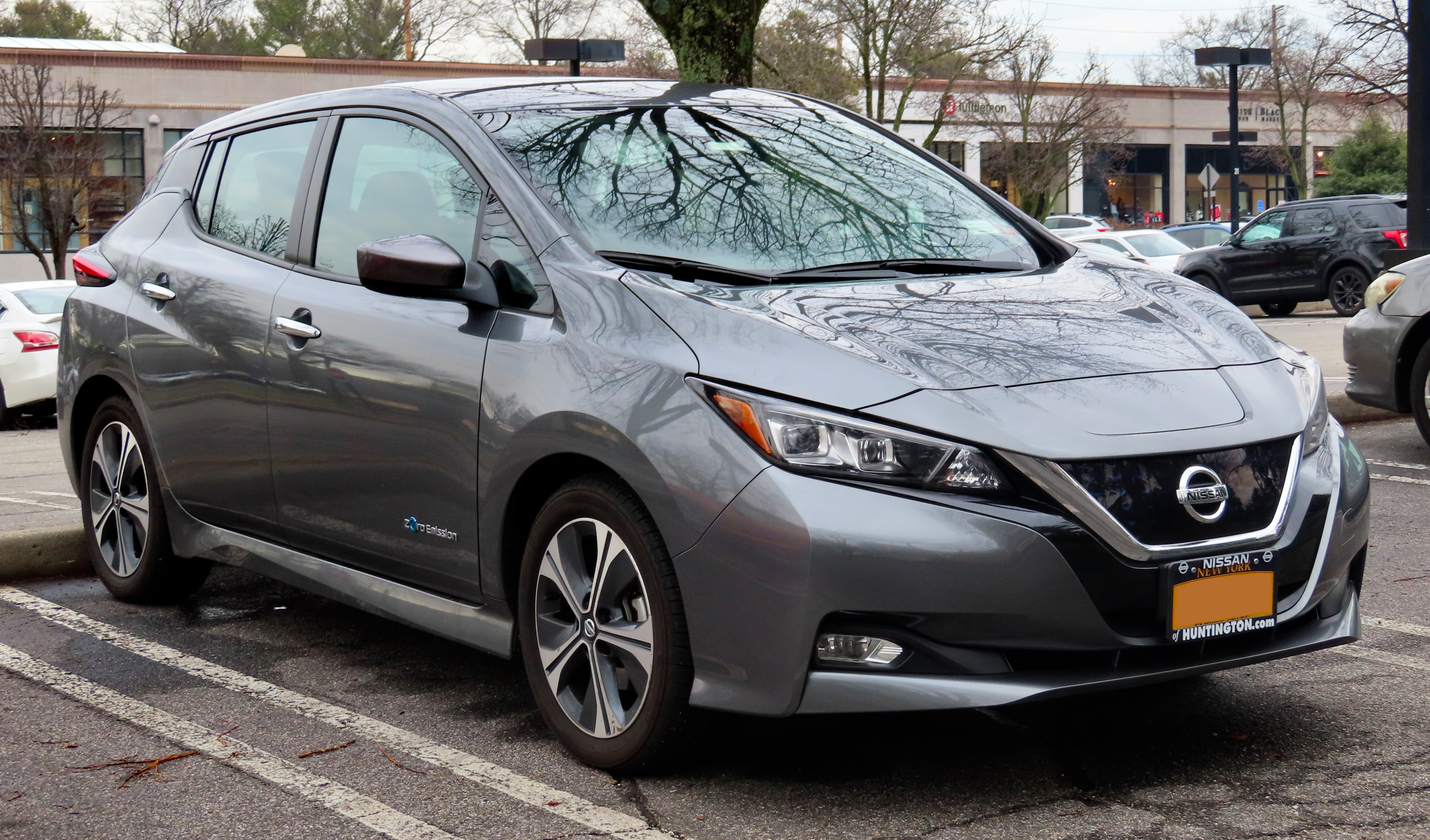
Nissan Leaf
"... between a Jaguar eye paste and a squished Nissan leaf. Roberto Baldwin (31:32) It it is the coolest loo..."
The Nissan Leaf is an all-electric car, meaning it runs on a battery instead of gasoline. It’s designed for everyday driving and is commonly used for commuting. The podcast mentions it as part of a comparison about which car looks or feels cool.
The Nissan Leaf is a battery-electric compact car that’s widely known as an early mainstream EV. It’s often discussed because it represents a practical, everyday alternative to gas cars, especially for city and commuter use. In this episode, it’s referenced in a comparison about what the speaker considers “cool.”

Jaguar Eye
"...hich it looks like kind of like a cross between a Jaguar eye paste and a squished Nissan leaf. Roberto Baldwin..."
Honda
"It it is the coolest looking Honda EV I've seen so far. like the way it looks."
Honda is a car brand. Here it’s used as a comparison for how the electric car looks.
Honda is mentioned as a benchmark for EV styling, with the host saying the “luche” looks like a “coolest looking Honda EV.” The point is brand identity and how the design language reads to people.

Ferrari Off Ferrari
"... off everything but you know what it doesn't give off Ferrari vibes. That's weird to me. That's weird. So that'..."
The Ferrari FF is a high-end sports car meant for fast, comfortable long drives. It’s known for having all-wheel drive, which helps it grip the road. The podcast brings it up while discussing how it looks or feels compared to what people expect from Ferrari.
The Ferrari FF is a grand tourer from Ferrari that’s known for combining high performance with all-wheel drive. It’s a notable model because it was designed to deliver traction and stability for fast, long-distance driving. In the episode, it’s mentioned in a conversation about whether it gives “Ferrari vibes.”

Porsche Cayenne
"...know, the Porsche's, you know, the Mican, the the Cayenne, everyone's like, this is the stupidest thing, th..."
The Porsche Cayenne is a luxury SUV that’s meant to drive more like a sports car than a typical family SUV. It’s built for people who want comfort and performance together. The podcast mentions it because the speakers are talking about how people react to it.
The Porsche Cayenne is a luxury performance SUV that blends everyday usability with Porsche-style driving dynamics. It’s frequently brought up because it’s one of the brand’s most visible models and has a reputation for being sporty for an SUV. In the episode, it’s mentioned in a discussion about what people think of certain Porsche models.
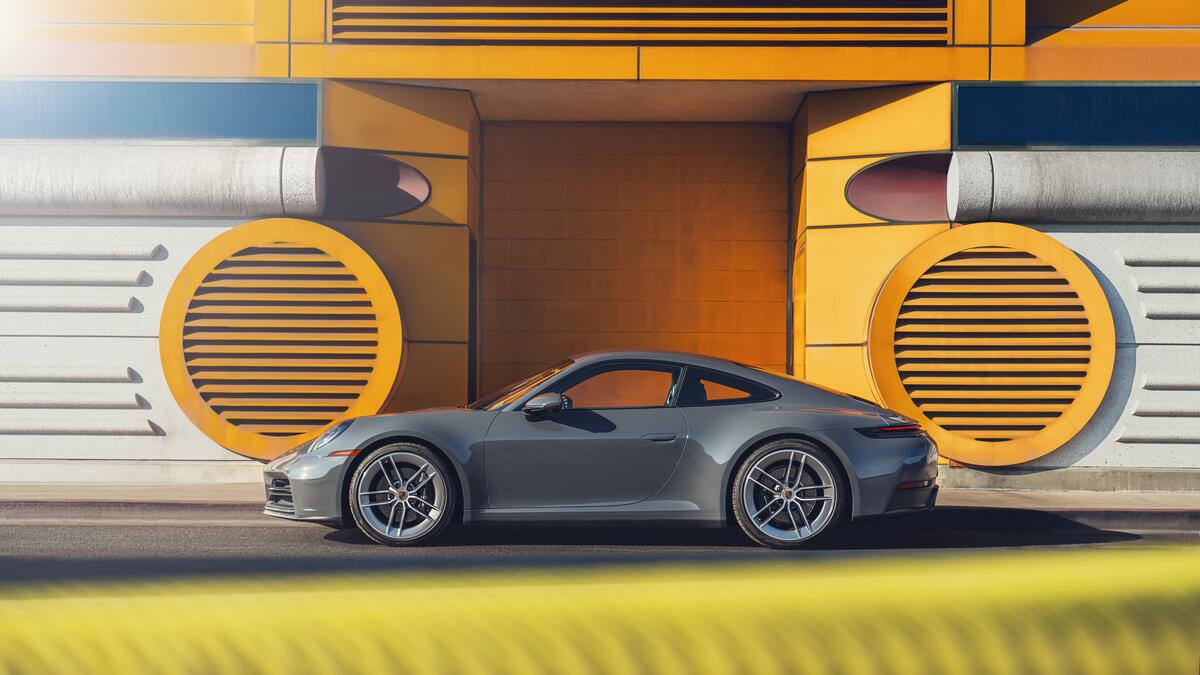
nine elevens
"...they can make all those nine elevens because of of how many they can make one thousand iterations of the nine eleven"
They’re talking about the Porsche 911, Porsche’s iconic sports car. The point is that Porsche sells a lot of 911s, so the company can afford to expand into other body styles like SUVs.
The hosts reference the Porsche 911 as the model family that sells in huge numbers, which they use to explain why Porsche can “make all those” 911s. It’s part of the argument that volume and brand strategy influence what gets built—even when enthusiasts complain.
V Tech EV
"Throw throw some Honda power, make a V Tech EV, I don't care."
“V Tech” is a reference to Honda’s VTEC variable valve timing system, which changes valve timing for better performance. Here it’s used as shorthand for “Honda-style tech,” and the host is joking about wanting a similar approach in an EV.
launch mode
"I didn't know I there was no instructions on how to put in launch mode. So I called Ferrari."
Launch mode is a special setting that helps the car accelerate harder when you start from a stop. It changes how the car responds to the gas so the wheels don’t just spin.
Launch mode is a driving setting (common on performance cars) that optimizes throttle mapping, traction control, and sometimes transmission behavior to maximize acceleration from a standstill. The host’s anecdote highlights that even owners may need guidance to use it correctly.
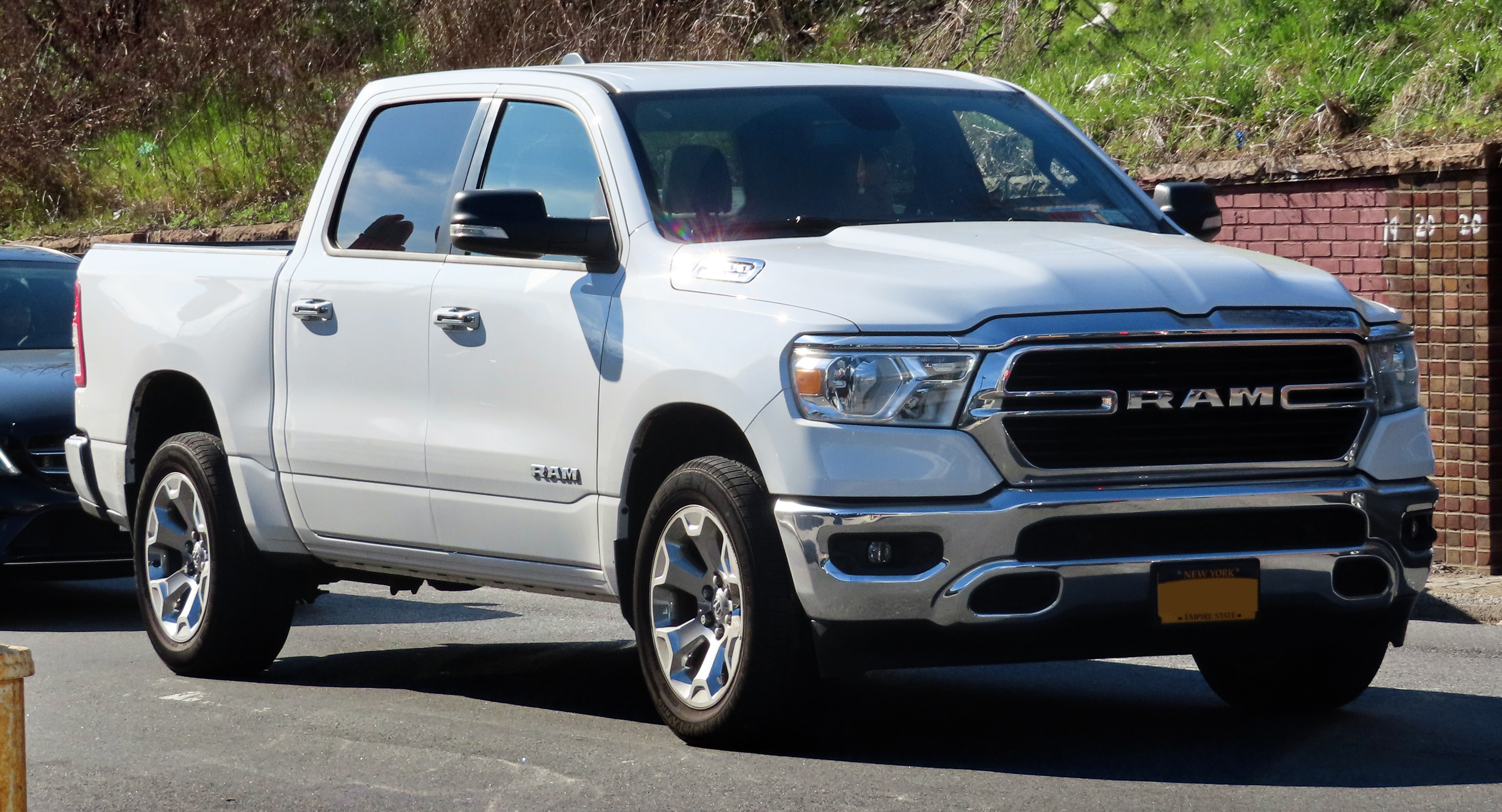
Ram fifteen hundred Rumble B
"And he had three hot V eight powered trucks to unveil. ⁓ they they they launched the the Ram fifteen hundred Rumble B line up. Which is actually there's actually four, but they ha they only had three of them there to show us. So Yeah."
This is a special Ram 1500 pickup version. The big idea is it’s built like a “muscle truck,” with a V8 engine and different versions depending on how powerful you want it to be.
The Ram 1500 Rumble B is a special-edition version of the Ram 1500 pickup built around a V8 muscle-truck formula. In this segment, they’re specifically talking about a short-bed quad cab layout and multiple V8 variants (including Hellcat-powered and track-pack options).
quad cab
"They've got three different cab variations that they sell on the fifteen hundred. So they've got the the standard cab. The quad cab, which is a four door but with a relatively compressed rear seat area. So not really that comfortable for for adults."
A quad cab is a pickup with four doors, but the back seat is usually smaller than in a full four-door crew cab. It can be okay for kids or short trips, but adults often find it tight.
A quad cab is a pickup-cab configuration with four doors, but the rear doors are shorter and the rear seat area is more cramped than a full crew cab. That’s why the host notes it’s “not really that comfortable for adults.”
crew cab
"The quad cab, which is a four door but with a relatively compressed rear seat area. So not really that comfortable for for adults. ⁓ and then the crew cab."
A crew cab is the “bigger back-seat” version of a four-door pickup. It usually has more room for adults in the back than a quad cab.
A crew cab is a pickup configuration with four full-size doors and a larger rear seat than a quad cab. The segment contrasts it with the quad cab’s tighter rear seating space.
Hemi
"It's all V8 engines. So you can get the base model, the base Rumble B with the five point seven liter Hemi, which is three hundred and ninety-five horsepower."
“Hemi” is a type of V8 engine design. It’s known for good breathing and strong power, and here it’s what powers the different Ram truck versions they’re talking about.
“Hemi” refers to Chrysler’s hemispherical combustion-chamber engine design, which helps improve airflow and combustion efficiency. In this segment, it’s used to describe the Ram 1500 Rumble B’s V8 options (5.7L and 6.4L Hemi variants).

Challenger Hellcat
"...t. ⁓ And ⁓ or you can get the ⁓ SRT which has the Hellcat engine in it. and then there's also a track pack ..."
The Challenger is a performance car from Dodge with a powerful engine in many versions. Some versions are built to be especially fast, including track-focused trims. The podcast mentions it while talking about the different performance options and styling details.
The Challenger is a Dodge muscle car known for offering high-performance engine options and track-oriented packages. In this episode, it’s mentioned alongside trims such as SRT and Hellcat, which are associated with stronger performance. The discussion also references hood scoops and vents as part of the car’s visual and performance identity.
Hellcat engine
"And ⁓ or you can get the ⁓ SRT which has the Hellcat engine in it."
The Hellcat engine is a very powerful V8 used in performance Dodge/Chrysler cars. In this truck, they’re saying the SRT version uses that same kind of high-performance engine.
The Hellcat engine is Dodge/Chrysler’s high-output supercharged V8 family (commonly associated with the “Hellcat” badge). Here it’s mentioned as the SRT powerplant option for the Ram 1500 Rumble B, tying the truck to a performance-focused engine.
rear wheel drive mode
"so they all have standard all wheel drive, but they also have ⁓ you know, on the drive modes they have a rear wheel drive mode. So it's not they don't call it two wheel drive, they call it rear wheel drive. So you can go drifting with it."
Even though the truck can be set up for all-wheel drive, it can switch to sending power mainly to the rear wheels. That makes it easier to do things like burnouts and drifting.
A rear wheel drive mode lets a truck send power primarily to the rear axle even if it’s equipped for all-wheel drive. The host connects this to driver behavior—using the mode to enable drifting and burnouts.
drifting
"So you can go drifting with it. ⁓ and you know, smoke the rear tires all the time. ⁓"
Drifting is when the rear tires slide sideways on purpose while the driver keeps the car under control. It’s often done on purpose for fun or show.
Drifting is a driving technique where the driver intentionally over-rotates the car so the rear tires slide while maintaining control. The segment frames it as something the truck can do thanks to its rear-drive mode and power.
premium
"When gas is five, six, seven dollars a gallon and you know, eight or more for premium which you're gonna need in that SRT."
Premium is a higher-grade gasoline. Some powerful engines need it to run properly without pinging/knocking, and the host is saying that version will likely need premium.
“Premium” refers to higher-octane gasoline, which many high-compression or high-performance engines require to avoid knocking. The host specifically ties premium fuel to the SRT/Hellcat-powered version’s higher fuel requirements.
Auburn Hills
"they had a little ride and drive program out at their headquarter North American headquarters in Auburn Hills."
Auburn Hills is a place in Michigan where car companies have offices. In this segment, it’s where the event with test cars took place.
Auburn Hills is a city in Michigan that’s closely associated with major U.S. automaker operations and corporate offices. Here, it’s where the ride-and-drive program was held at the company’s North American headquarters.

Jeep Cherokee
"The only one of the North American market vehicles I hadn't driven yet was the new Cherokee. I took that for a short lap and it was fine."
They mention the new Jeep Cherokee as the one they hadn’t driven yet. It’s part of the lineup they were checking out during the event.
The Jeep Cherokee is referenced as the only North American market vehicle the speaker hadn’t driven yet during the ride-and-drive program. The segment doesn’t provide technical details, but it frames the Cherokee as part of the North American lineup being evaluated.

Fiat Grande Panda
"I drove two of those. one was the Fiat Grande Panda. So they have two versions of the the panda that they sell in Europe... and it's a mild hybrid. It's a one point three liter four cylinder engine with a forty eight volt mild hybrid system on it."
The Fiat Grande Panda is a small crossover made for everyday driving. Here they’re talking about a 1.3-liter engine plus a mild-hybrid setup that uses a 48-volt system to help the car use less fuel.
The Fiat Grande Panda is a small European crossover that’s designed to be practical and efficient rather than fast. In this segment, it’s described as having a 1.3-liter four-cylinder engine plus a 48-volt mild-hybrid system, which helps it feel more responsive and improve efficiency.

Chevrolet Volt
"...e liter ⁓ four cylinder engine with a forty eight volt mild hybrid system on it. And this thing is so co..."
The Chevrolet Volt is a car that can run on electricity, but it also has a gasoline engine. When the battery gets low, the gas engine helps keep things going. The podcast mentions it while talking about its hybrid system and how it works.
The Chevrolet Volt is a plug-in hybrid electric vehicle that uses an electric motor for driving, with a gasoline engine that can generate electricity when the battery is low. It’s significant because it was designed to reduce gasoline use while still easing range anxiety. In this episode, it’s described with its engine and mild-hybrid system details.
mild hybrid
"and it's a mild hybrid. It's a one point three liter four cylinder engine with a forty eight volt mild hybrid system on it."
A mild hybrid is a car that has a small electric assist. It helps the gas engine, but it usually can’t run the car on electricity alone.
A mild hybrid is a hybrid system that uses an electric motor to assist the engine, but it typically can’t drive the car by itself like a full hybrid or plug-in hybrid. In this segment, it’s paired with a 48-volt system to improve efficiency and smoothness during acceleration and stop/start situations.

Dodge Neon
"...⁓ that I was driving had ⁓ this wild ⁓ green like neon green lighting and ⁓ some other interesting mater..."
The Dodge Neon is a compact car. Some versions were made to be more interesting to drive than a basic commuter car. The podcast mentions it because someone described a Neon with custom lighting and interior styling.
The Dodge Neon is a compact car that was offered in a variety of trims over the years, including performance-oriented versions. It’s often remembered for its distinctive styling and for being a common entry point to enthusiast driving. In this episode, it’s mentioned in a description of a particular Neon with unusual lighting and interior details.

Opel Astra
".... ⁓ the other one that I drove ⁓ was the the Opal Astra ⁓ wagon ⁓ plug in hybrid. Which also fantastic lo..."
The Opel Astra is a compact car, and the version mentioned here is a wagon with a plug-in hybrid powertrain. That means it can run on electricity and also use a gas engine. The podcast mentions it because the speaker liked how it drives.
The Opel Astra is a compact car line, and in this episode it’s specifically mentioned as a wagon plug-in hybrid. It’s brought up because the speaker describes it as having excellent driving feel and overall appeal. The context suggests the conversation is about how well the plug-in hybrid setup works in a practical body style.

Jeep recons
"they they did have a couple of jo jeep recons out there that... but nobody was allowed to drive in or even sit in or anything. They were just they were just parked there so they could look fun."
They mention some Jeep “Recons” that were on display at the event. The important part is that people could look at them, but they weren’t allowed to sit in or drive them.
“Jeep recons” refers to Jeep-branded vehicles shown as part of an event lineup, but the segment doesn’t give enough detail to identify a specific Jeep model. The context suggests they were presented as future or concept-style products that attendees could look at but not drive.
Stellantis
"Antonio Felosa, the new CEO... announce... some high level stuff about Stellantis' strategy going forward and how they're gonna cut costs and... focus on four main global brands."
Stellantis is a big car company that owns multiple brands. Here they’re talking about the company’s plan for the future and which brands will focus on what.
Stellantis is the automaker behind brands like Jeep, Ram, Peugeot, and Fiat. In this segment, it’s discussed in the context of an investor day strategy update—cutting costs and focusing on a set of global brands.
Antonio Felosa
"So, you know, they had Antonio Felosa, the new CEO, come up and talk... announce... some high level stuff about Stellantis' strategy going forward..."
Antonio Felosa is the person they say is Stellantis’ new CEO. He’s the one who talked about the company’s big-picture plan for the future.
Antonio Felosa is identified in the segment as the new CEO who spoke at Stellantis’ investor day. The discussion credits him with outlining high-level strategy, including cost-cutting and brand focus.

Dodge Ram
"... four main global brands. ⁓ you've got ⁓ Jeep and Ram and Peugeot and Fiat. So, you know, Peugeot is go..."
The Ram is a full-size pickup truck designed for work and hauling. It’s built to carry loads and tow trailers. The podcast mentions it while listing brands.
The Dodge Ram (commonly known as Ram) is a full-size pickup truck line built for towing, hauling, and everyday utility. It’s frequently discussed because it’s a major player in the truck market and comes in many configurations. In this episode, it’s mentioned as part of a list of global brands being discussed.
Tim Caniskis
"And then Tim Caniskis came out and he laid out the plan... for the North American brands. And we finally got to see what they're doing with Chrysler."
Tim Caniskis is described as the person who presented the North America plan. They connect him to what’s coming next for the Chrysler lineup.
Tim Caniskis is mentioned as the person who laid out the plan for North America at Stellantis’ investor day. In this segment, he’s tied to the rollout of new Chrysler models and how the North American lineup will evolve.

Chrysler airflow
"they're adding three new models to the Chrysler lineup. the airflow, which we've seen as a concept, but the the the one that they're gonna build is looks completely different from the concept they had a couple of years ago."
They talk about the Chrysler Airflow as something that started as a concept. The point is that the production version will look quite different from the concept they showed earlier.
The Chrysler Airflow is discussed as a concept that’s evolving into a production model with a different final look. The segment emphasizes that the built version will differ from the earlier concept shown a couple of years prior.
Fiat Grizzly
"there's gonna be two two variants built by Fiat. They're versions of the Fiat Grizzly. So it's a compact crossover. one is... more traditional crossover shape. The other one is a fastback."
The Fiat Grizzly is a compact crossover they say will come in two styles. One is more traditional, and the other is a fastback, and they even compare its shape to the Polestar 2.
The Fiat Grizzly is described as a compact crossover with two variants: one more traditional crossover shape and another with a fastback profile. The segment also notes that the greenhouse shape resembles the Polestar 2, highlighting how the design language is being compared to existing EVs.

Ford Capri E V
"that yeah, that was as soon as everybody saw it, so yeah, it looks like a Polestar Two. Or or the current Ford Capri E V that they sell that Ford sells in Europe."
They also mention the Ford Capri EV as another example of the kind of shape they mean. It’s basically a “looks like this” comparison for the car’s profile.
The Ford Capri EV is mentioned as another styling reference for the Fiat Grizzly’s fastback variant. The point is that the Grizzly’s cabin-and-roof shape is being compared to an existing European EV silhouette.
fastback
"The other one is a fastback. And the the greenhouse on that looks very much like a Polestar two."
A fastback is a car shape where the roof smoothly slopes toward the back. It usually looks more streamlined than a boxier crossover design.
A fastback is a body style where the roofline slopes continuously down toward the rear, usually with a more aerodynamic look than a traditional hatchback. In this segment, it’s used to distinguish one Fiat Grizzly variant from a more conventional crossover shape.
greenhouse
"And the the greenhouse on that looks very much like a Polestar two."
In car design, the “greenhouse” means the glass part of the cabin—like the windows and windshield. People use it to talk about the car’s roof and window shape.
In automotive design, the “greenhouse” is the cabin’s glass area—windshield, side windows, and rear glass—plus the surrounding roofline. It’s often used to describe how the car’s roof and glass shape affect visibility and the overall silhouette.

Polestar two
"And the the greenhouse on that looks very much like a Polestar two."
They compare the Fiat Grizzly’s shape to the Polestar 2. The comparison is about the cabin glass area and overall silhouette.
Polestar 2 is referenced as a design comparison point for the Fiat Grizzly’s fastback variant. The segment specifically says the “greenhouse” (the cabin glass area) looks very similar to the Polestar 2.

Jeep Compass
"Roberto Baldwin (49:50) I'm always surprised that compass still exists. Every time someone says compass I'm..."
The Jeep Compass is a compact SUV meant for regular daily driving. It’s built to handle typical roads and some light off-road conditions. The podcast mentions it because the speaker is talking about how common it is.
The Jeep Compass is a compact SUV positioned for everyday driving with available Jeep-style off-road capability features. It’s frequently mentioned because it’s a common, mainstream Jeep model. In this episode, it’s brought up as something the speaker is surprised still exists.

Dodge Omni
"...h. It's the Dodge GLH. ⁓ do you guys remember the Omni GLH from the nineteen eighties? Sam Abuelsamid (5..."
The Dodge Omni is a small car that was made in the 1980s. The podcast specifically mentions the Omni GLH, which was a more performance-focused version. It’s brought up because the speakers are comparing memories of that older model.
The Dodge Omni is a compact car from the 1980s, and the episode specifically references the Omni GLH. The GLH name is associated with a performance-oriented variant, and it’s brought up as a remembered example. In this episode, it’s mentioned as part of a “do you remember” style comparison.
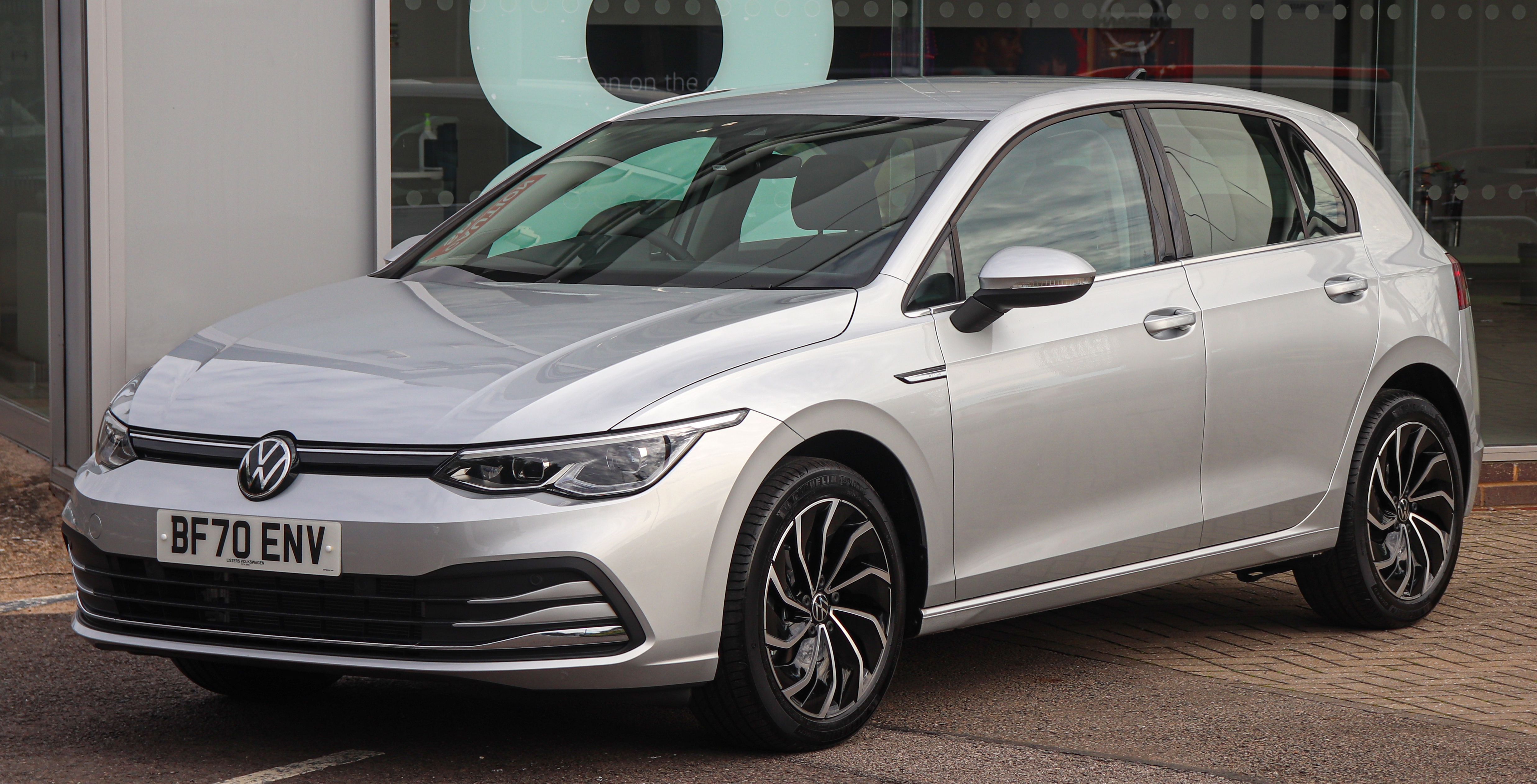
Volkswagen Golf
"...t was ⁓ Chrysler's take on on the the original VW Golf. It was o yeah, it was basically a clone of the g..."
The Volkswagen Golf is a compact car that’s designed to be easy to live with day to day. It’s been around for a long time and comes in different versions. The podcast mentions it because another car is being compared to the Golf’s original design idea.
The Volkswagen Golf is a compact car that’s known for being practical, efficient, and widely available in many configurations over the years. It’s significant because it became a benchmark for the compact segment. In this episode, it’s referenced as a baseline for how another car was described as a “clone” of the original Golf.
internal combustion engine
"but it will also in twenty later in twenty twenty seven they will get a version with an internal combustion engine as well."
An internal combustion engine is the traditional type of engine that burns fuel (like gasoline) inside the engine to make power. They’re saying a later Recon version will use that kind of engine.
An internal combustion engine (ICE) is an engine that burns fuel inside the engine to create power. The segment contrasts an expected Recon launch with a later version that will use an ICE, implying a shift from an electrified setup to traditional gasoline/diesel power.

Dodge Dakota
"...for RAM Sam Abuelsamid (51:36) They confirmed the Dakota and the Rampage is also coming. So we're gonna ge..."
The Dodge Dakota is a midsize pickup truck. It’s the kind of truck people use for hauling and everyday utility. The podcast mentions it because the speakers say it’s coming back or being reintroduced.
The Dodge Dakota is a midsize pickup truck that was known for being a practical alternative to larger full-size trucks. In the episode, it’s mentioned in the context of upcoming returns or new releases, alongside the Rampage. The discussion implies Dakota is being brought back or reintroduced in some form.

Jeep Wagoneer
"...e got the the the full size ⁓ the ram take on the wagoneer. Nicole Wakelin (52:04) Yeah. Could very much wel..."
The Jeep Wagoneer is a large SUV meant for families and lots of space. It’s designed for comfortable everyday driving, not just off-road. The podcast mentions it while comparing big SUVs to other large truck-based options.
The Jeep Wagoneer is a full-size SUV positioned for comfort, space, and family-friendly utility. It’s discussed in the episode as a large SUV concept, including a comparison to “the Ram take on the Wagoneer.” The mention suggests the conversation is about big, premium SUVs and how they’re packaged.
sheet metal
"but it doesn't have any of the Wagoneer sheet metal. so it's not a big box on wheels like the Wagoneer."
Sheet metal is the car’s outer body panels—things like the hood, fenders, and doors. If a vehicle doesn’t use the same sheet metal, it likely has different exterior shapes even if it’s in a similar size category.
Sheet metal refers to the stamped metal body panels that form the car’s outer surfaces, like doors, fenders, hoods, and roof sections. When the hosts say a new model doesn’t have Wagoneer sheet metal, they mean it won’t share the same exterior panel tooling and shapes.
Dodge Challenger
"...f scoops and vents that you have on the hood of a Challenger Hellcat and a Charger the old Charger Hellcat. So..."
The Dodge Challenger is a two-door car built for performance and a bold look. Some versions are made to be especially fast and track-capable. The podcast brings it up while talking about styling and performance options.
The Dodge Challenger is a two-door muscle car known for its powerful engines and classic, aggressive styling. It’s often discussed in terms of performance trims like Hellcat and track-focused packages. In this episode, it’s mentioned alongside hood features and performance variants.

Charger Srt
"...efreshed version of the Wrangler. they also had a Charger SRT, which they didn't say what was under the hood, b..."
In this part of the episode, “Charger” is being talked about as a model name tied to performance versions. The speakers are discussing trims and what might be under the hood. The excerpt doesn’t clearly spell out the exact details, but it’s part of a performance-focused conversation.
The Charger mentioned here is a refreshed version of the Jeep Wrangler, and it’s also referenced alongside a Charger SRT with unspecified engine details in the excerpt. The key point is that the episode is discussing different performance-oriented trims and how they’re positioned. It’s brought up in the context of what’s under the hood and how the models are related in the conversation.

Jeep Gladiator
"... Abuelsamid (53:45) and ⁓ we also saw and the the gladiator is now gonna be called the Wrangler Gl Gladiator,..."
The Jeep Gladiator is a pickup truck that’s designed for off-road driving. It’s meant to combine the ability to handle trails with the usefulness of a truck bed. The podcast mentions it while talking about how it’s related to the Wrangler name.
The Jeep Gladiator is a midsize pickup truck built by Jeep, combining off-road capability with a truck bed. It’s discussed because it offers Wrangler-like toughness in a pickup format. In the episode, it’s mentioned in a naming/context discussion related to the Gladiator and Wrangler.
shark nose
"like the convoy, where they had the old Jeep J ten style front end, the shark nose front end that was leaning forward like they had on the pickups in the nineties."
“Shark nose” is just a descriptive term for a front end that looks sharp and pointy. They’re saying Jeep is bringing that aggressive front styling to newer models.
“Shark nose” is a styling nickname for a front-end design with a more aggressive, pointed shape. In this segment, the hosts say Jeep is applying that look—seen on older pickups in the 1990s—to the Gladiator and Scrambler.

Ford Ranger
"...now, it's about the same overall length as like a Ranger Colorado Canyon, but it's wider, so you got a wid..."
The Ford Ranger is a midsize pickup truck. It’s designed to be useful for hauling and everyday driving. The podcast mentions it while comparing its size to other similar trucks.
The Ford Ranger is a midsize pickup truck known for being versatile and widely used for work and everyday driving. It’s often compared by size and proportions because different markets and generations can vary. In this episode, it’s mentioned in relation to overall length and width compared with other trucks.
V8 engine
"and of course, because it's wider, you could probably also fit a V8 engine in it."
A V8 engine is a type of engine with eight cylinders. When people say a truck could fit a V8, they mean there’s enough space in the vehicle to install a bigger, more powerful engine.
A V8 engine is an internal-combustion engine with eight cylinders arranged in a “V” shape. In pickup/truck design discussions, fitting a V8 is often about packaging space—especially width and engine bay room.

Dodge Copperhead
"And then the last thing that we saw was the Dodge Copperhead. ⁓ which yeah, ⁓ yeah, back in the late nineties they had a concept, called the Copperhead, which was a a two seat Miata type roadster, which looked really cool, but ⁓ they never built that."
The Dodge Copperhead was a concept car from the late 1990s that never got built. Here, they’re saying Dodge is bringing the name back for a new car that’s meant to feel like a Viper-style successor.
The Dodge Copperhead is referenced as a late-1990s concept that never made it to production. In this segment, the host says the name is being reused for a spiritual successor to the Viper, with styling cues like a big rear wing and a front end resembling the current Charger.
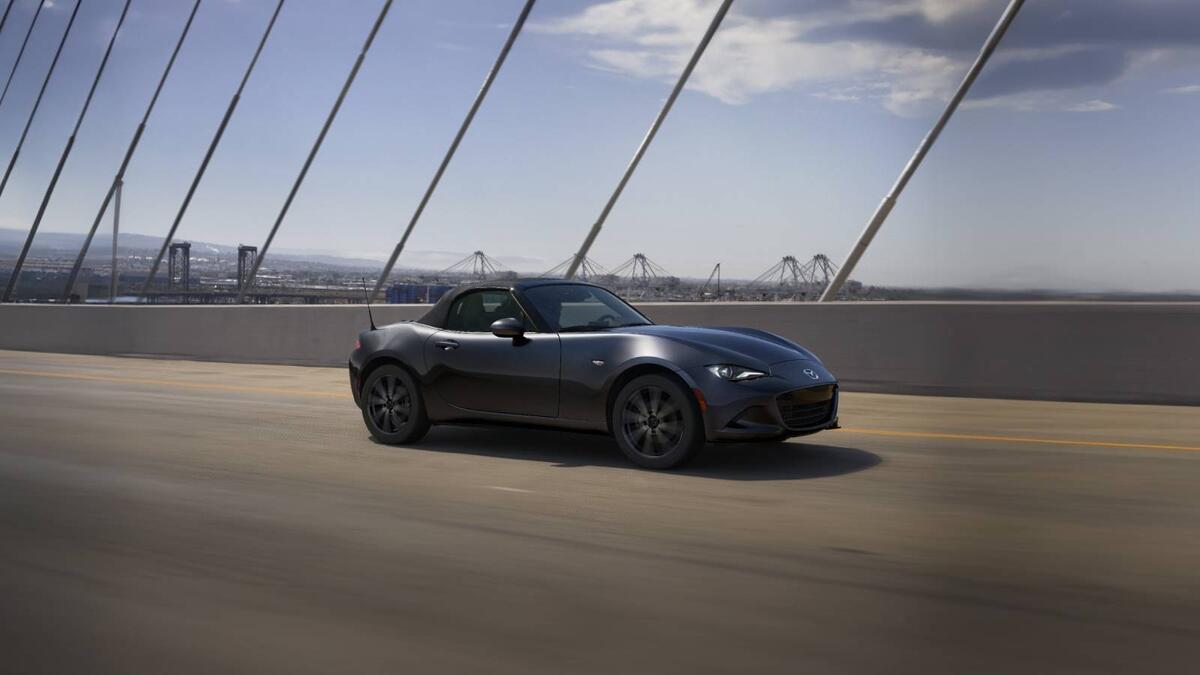
Mazda MX-5 / Miata
"...pt, called the Copperhead, which was a a two seat Miata type roadster, which looked really cool, but ⁓ th..."
The Mazda MX-5 Miata is a small two-seat sports car. It’s designed to feel nimble and fun to drive, especially on twisty roads. The podcast mentions it when describing a similar-looking two-seat roadster.
The Mazda MX-5 Miata is a lightweight two-seat roadster focused on fun, responsive handling. It’s significant because it’s built around a simple, driver-focused formula that many enthusiasts recognize. In this episode, it’s referenced as the basis for a “two-seat Miata type roadster” concept.

Viper
"on what is essentially the spiritual successor to the Viper. ⁓ they you know they didn't give us any technical details, but yeah, it's got a big wing on the back."
The Viper is a famous Dodge sports car known for being very intense and not always easy to drive. In this segment, they’re using it as the comparison point for how the new Copperhead might behave.
The Dodge Viper is used as the benchmark for what the Copperhead successor is trying to evoke. The hosts discuss its reputation for being difficult or aggressive to drive, including the idea that early Vipers were especially challenging if you drove them hard.
level two plus plus automation
"they they also announced that they're partnering with Wave and Qualcomm to put in level two plus plus automation into their cars starting in ⁓ well they're doing level two plus with Wave starting next year and then the two plus plus point to point stuff in twenty twenty eight."
“Level 2” automation means the car can do some driving tasks, like controlling speed and steering in certain conditions. “2+ / 2++” usually means it’s getting more capable, but you still have to pay attention and be ready to take over.
“Level 2+” and “Level 2++” refer to higher tiers of driver-assistance automation under common SAE-style autonomy naming. The key idea is that the car can handle more driving tasks than basic cruise control, but the driver still remains responsible for supervision.
Qualcomm
"they they also announced that they're partnering with Wave and Qualcomm to put in level two plus plus automation into their cars"
Qualcomm is a tech company that makes chips and other electronics. Here, they’re mentioned as a partner helping Stellantis add more advanced driver-assist features to cars.
Qualcomm is named as a technology partner for in-car automation. The host links it to adding “Level 2+ / Level 2++” driver-assistance capabilities in Stellantis vehicles.
Wave
"they they also announced that they're partnering with Wave and Qualcomm to put in level two plus plus automation into their cars starting in ⁓ well they're doing level two plus with Wave starting next year"
Wave is a company mentioned as a partner helping with driver-assist technology. They’re working with Stellantis to bring more automation features to cars.
Wave is mentioned as a partner for driver-assistance/automation software integration. In this context, it’s tied to “Level 2+” automation starting next year.
EV based
"[4758.6s] is gonna be an E V based on the lo based on the Leap Motor B ten. ⁓ and that'll be coming out I think mm late next year."
“EV-based” means the car is built to be electric from the beginning. That helps engineers place the battery and motors in a way that works well, instead of just modifying a gas-car design.
“EV-based” means the vehicle is designed around an electric powertrain from the start, rather than being converted from a gasoline platform. That usually affects the battery packaging, drivetrain layout, and how the chassis is engineered for weight distribution.

Audi A8
"[4951.0s] Yeah. ⁓ so anyway, ⁓ Rich ⁓ Rich bought ⁓ an old ⁓ Audi A eight ⁓ for that was originally eighty seven thousand dollars. he got it for eight hundred bucks from a state trooper in Massachusetts."
The Audi A8 is a big, upscale Audi sedan. In this story, it’s interesting because the car looked okay outside, but underneath—especially the front structure—it was badly corroded.
The Audi A8 is Audi’s full-size luxury sedan, known for its aluminum-intensive construction and typically sophisticated suspension and drivetrain options. In this segment, it’s notable because the hosts discuss how severe corrosion affected the front subframe even though the body looked decent.
Request an Explanation
Heard something you'd like explained? We'll add it to this episode.
Sign in to request explanations for terms you heard.
Want to learn more?
Browse our glossary for plain-English explanations of automotive terms, jargon, and concepts.
Help improve this episode
See something that's not quite right? Our annotations are AI-generated and can sometimes miss the mark. Click the flag icon on any annotation to suggest a correction.