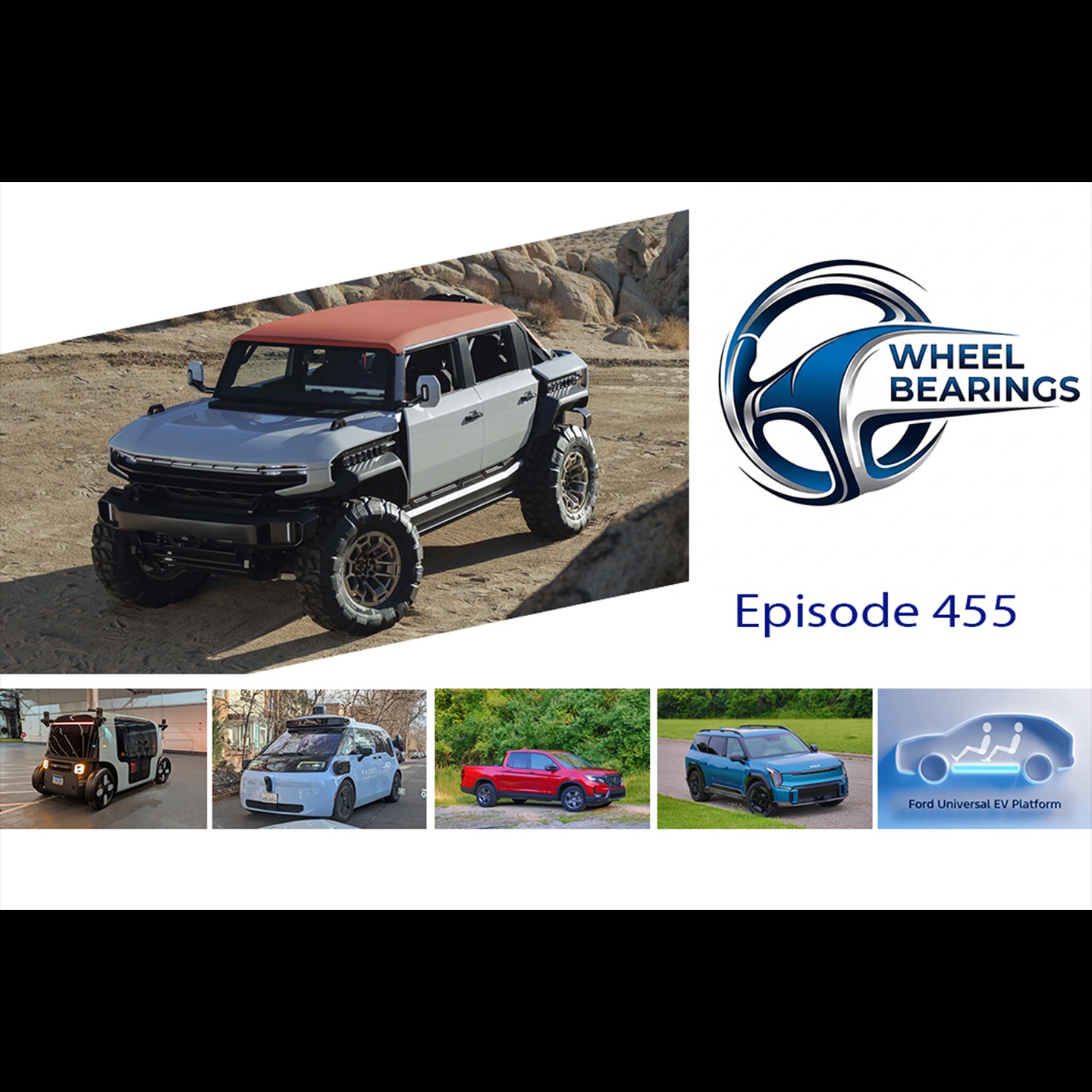
About this episode
Cruising isn’t just about speed—it’s about comfort, utility, and the tech details that make everyday driving feel right. The hosts start with Subaru’s redesigned Outback Wilderness, praising its rugged practicality and all-wheel drive while calling out a rough CVT auto stop restart and awkward wireless charging placement. They then widen the lens to EV ownership logistics (charging standards, adapters, and reliability), and finish with a crash-testing deep dive from IIHS—how instrumentation, barriers, and structural design changes translate into safer outcomes.
This Nicole drove the new Subaru Outback Wilderness, Robbie had the Mercedes-Benz EQS 400 SUV and Sam had the Kia EV9.
In the news, GM opened a new Pasadena design studio and showed off a couple of GMC Hummer concepts. Waymo is having some challenges with its Robotaxis while Zoox is making improvements. Slate will announce final pricing in a few weeks and Mitsubishi is partnering with Nissan for a new truck for North America. Honda is pausing production of the Ridgeline and Ford is decontenting the Bronco Sport and planning to revive the Escape as an EV. Mercedes could get barred from the US market if a new bill becomes law and Volvo gets approvals to keep selling its vehicles. Nicole went to see a crash test at IIHS.
Links
GM officially opens new Advanced Design Pasadena Studio, reveals GMC HUMMER X truck and SUV concepts
Viewer video shows Waymo stuck in floodwaters as flash flood warning hits Atlanta - YouTube
Same Driver, new vehicle: Welcoming our first riders trips in the Ojai
Mitsubishi's Getting Serious About Trucks in North America Again: TDS
Production of Honda Ridgeline Pausing Through 2028
2026 Ford Bronco Sport First Look: A Lot Less Stuff, But at Least It’s Cheaper
Mercedes-Benz may be shut out of U.S. market under bill aimed at Chinese automaker ownership
Ford Escape Revival Set For 2029 On Universal EV Platform
Testing The Hansshow Tesla Supercharger Extension Cable Didn't Turn Out As Expected
Watching the Mazda CX-5 IIHS Crash Test Changed My View on Safety
1959 Chevrolet Bel Air vs. 2009 Chevrolet Malibu IIHS crash test
Advertising Inquiries: https://redcircle.com/brands
Privacy & Opt-Out: https://redcircle.com/privacy

2026 Subaru Outback Wilderness
"While I was at home, I drove the 2026 Subaru Outback Wilderness, [126.8s] which has been a fun little car to have this week. [129.0s] So this is the seventh gen. So it's all new. It's all redesigned."
This is a more rugged version of the Subaru Outback. It’s meant to handle rougher roads better than the regular models, and in this episode the host also talks about the updated interior screens and the engine/transmission setup.
The 2026 Subaru Outback Wilderness is a higher-ruggedness trim of Subaru’s Outback, built around the idea of doing more off-pavement than a typical wagon. In this segment, the host highlights its new-generation redesign (including a large touchscreen and digital instrument cluster) and the Wilderness-specific positioning for “more rugged” driving.
12.1-inch touchscreen
"They have new interior stuff, new upgrades, like the 12.1-inch touchscreen and a 12.3-inch instrument cluster. [139.8s] There's more cargo room."
That’s the big screen in the middle of the dashboard. It’s where you control things like music, navigation, and many car settings.
A 12.1-inch touchscreen refers to the large central infotainment display used to control media, navigation, vehicle settings, and driver-assistance menus. The host mentions it as part of the Outback’s redesigned interior for the 2026 model year.
12.3-inch instrument cluster
"They have new interior stuff, new upgrades, like the 12.1-inch touchscreen and a 12.3-inch instrument cluster. [139.8s] There's more cargo room."
This is the screen behind the steering wheel that shows your speed and other driving info. In this Outback, it’s a larger digital display.
An instrument cluster is the driver’s gauge display behind the steering wheel, and a 12.3-inch unit indicates a larger, more prominent digital screen. The host cites it as part of the 2026 Outback Wilderness’s updated interior tech.
Wilderness trim
"The wilderness trim is like it's on the higher end. [145.7s] It's 44.995 as far as lineup goes. [148.3s] But that gives you, makes it a little bit more wilderness,"
Wilderness is Subaru’s more rugged version of the Outback. It’s meant to be better suited for rougher roads and light off-roading than the regular trims.
“Wilderness trim” is Subaru’s higher-ruggedness package for the Outback line, aimed at buyers who want more off-road-capable styling and equipment than the standard trims. The host frames it as being more rugged for off-roading than the rest of the lineup, without taking it to extreme trails.

Wrangler Rubicon
"...ow, it's still not like you're going to go do the Rubicon. It's just a little bit more rugged for you."
The Wrangler is an off-road SUV. The podcast is saying it’s tougher than a typical SUV, but it’s not only for the hardest trails. Driving on rough ground can make wheel bearings wear faster.
The Wrangler is Jeep’s iconic off-road SUV line, known for rugged capability and a design that supports trail driving. In the podcast, it’s referenced as something “more rugged” but not necessarily intended for the most extreme routes like the Rubicon. Wheel-bearing discussions often come up with off-road vehicles because rough surfaces and articulation can accelerate wear.
2.4-liter turbo four-cylinder
"There's a 2.4-liter turbo four-cylinder and there you get 260 horsepower and 277 pound-veed-a-torque. [168.4s] A CVT with the worst auto stop that I have encountered in ages."
This means the car uses a 2.4-liter engine with four cylinders, and it has a turbo to make it feel stronger. The host then connects that to how the car drives, especially when the engine shuts off and restarts.
A 2.4-liter turbo four-cylinder is an engine with four cylinders and a turbocharger that forces more air into the cylinders for stronger output. In this segment, the host pairs it with the Outback Wilderness setup and then discusses the power figures and how the drivetrain behavior (CVT + auto start-stop) affects the driving feel.
CVT
"There's a 2.4-liter turbo four-cylinder and there you get 260 horsepower and 277 pound-veed-a-torque. [168.4s] A CVT with the worst auto stop that I have encountered in ages."
A CVT is a type of automatic transmission that can change ratios smoothly instead of using fixed gears. In this case, the host says the car’s stop-and-start behavior felt rough when it turned back on.
CVT (continuously variable transmission) is a gearbox that can smoothly change the engine’s effective gear ratio without fixed steps. The host specifically complains about the CVT’s integration with auto start-stop—when the engine restarts, it causes a noticeable jolt.
auto stop
"A CVT with the worst auto stop that I have encountered in ages. [173.7s] Like when it would start and stop, most of them now have gotten better, right?"
Auto start-stop is a system that shuts the engine off when the car is stopped (like at a light) to save fuel, then restarts it when you’re ready to move. The host describes a rough restart event—especially noticeable when you press the gas right as the system is transitioning—resulting in a jolt.
cubic feet
"You've got room for five. You've got 34.6 cubic feet and room behind the rear seats and 80.5 when you fold them down."
“Cubic feet” is how car reviewers measure how much space there is to store things. Bigger numbers mean you can fit more gear behind the seats or in the back.
“Cubic feet” is a volume measurement used to describe cargo space in the trunk or behind the rear seats. Here, the host quotes cargo capacity figures to show how much stuff the Subaru can carry.
all-weather floor mats
"And I got back in and there's these nice all-weather floor mats and the water's coming in the car. And when I opened the door, because it's dumping rain, I closed the door and it's just you don't even know that it rains."
All-weather floor mats are tough mats that catch mud and water so it doesn’t ruin the carpet. They’re made for wet or snowy days and are usually easy to hose off.
All-weather floor mats are rubber or heavy-duty mats designed to trap water, slush, and dirt instead of letting it soak into the carpet. They’re especially useful in heavy rain or snowy conditions because they help keep the cabin dry and easier to clean.
aquafobic
"It's completely aquafobic. It was aquafobic. But it did not in any way harm the Subaru outback wilderness."
“Aquafobic” here just means “doesn’t like water.” The host is saying the car’s interior doesn’t get stained or marked when it’s wet.
“Aquafobic” is being used here as a descriptive, non-technical way to say the interior resists water—meaning water doesn’t leave lasting marks or soak in. The host’s point is that the Subaru’s surfaces and mats don’t show the typical “water dot” staining you might see on other interiors.
all wheel drive
"And of course, you've got that all wheel drive. So when the weather is coming like it was yesterday or the snow comes back, which it feels like it could today, you're going to be all set."
All-wheel drive means the car can send power to more than one set of wheels. That helps it grip better on slippery roads like snow or rain.
All-wheel drive (AWD) sends power to more than just the front or rear axle, improving traction when roads are slippery. It’s especially helpful in snow, rain, or uneven surfaces because it can reduce wheel spin.
Trailseeker
"Right. Now it's an SUV. [546.3s] That's called the Trailseeker now."
“Trailseeker” is Subaru’s name for a more adventure-oriented version of the Outback. Here, it’s being used to describe the newer, more SUV-like direction.
“Trailseeker” is a trim/branding name Subaru uses to signal a more adventure-leaning Outback configuration. In this context, it’s part of the shift from a wagon identity toward an SUV-like, outdoors-focused look.

Subaru Trailseeker
"Right. Now it's an SUV. That's called the Trailseeker now. Yeah, right."
The Subaru Trailseeker is an SUV version meant for outdoor or rough-road use. The podcast is talking about it as a new name or updated version. If you drive it on rough roads, wheel-related parts can wear faster.
The Subaru Trailseeker is a trim or model concept within Subaru’s SUV lineup aimed at more outdoor-focused driving. The podcast mentions it as “called the Trailseeker now,” indicating a naming or packaging change. Wheel-bearing topics can connect because trail-oriented trims are typically used on rougher roads where wheel and suspension components take more stress.
torque
"So it has three and 55 horsepower, 500 and ninety pound feet of torque."
Torque is the “pulling power” that helps the vehicle get moving. Higher torque usually means it feels stronger when you accelerate, especially from a stop or slow speeds.
Torque is the twisting force an engine or motor produces, and it strongly influences how quickly a vehicle accelerates from low speeds. The transcript mentions a torque figure, which is a key performance spec alongside horsepower.
horsepower
"So it has three and 55 horsepower, 500 and ninety pound feet of torque."
Horsepower is a number that describes how powerful the vehicle is. It helps explain how fast it can go, but how it feels depends on torque too.
Horsepower is a measure of how much work an engine or motor can do over time, and it’s often used to describe overall power output. In practice, horsepower and torque together help explain how a vehicle feels across different speeds.
range
"I just realized that I haven't done the math on how well the drive. How well on its its range yet."
Range is the estimated distance a vehicle can travel before it needs to be recharged or refueled. For electric vehicles, range depends on battery capacity and real-world factors like speed, temperature, and driving style.
rear wheel steering
"It has the rear wheel steering at 10 degrees. And so, you know, I went to the stores a couple of times, had to buy a bunch"
Rear wheel steering means the back wheels can also turn a little. That helps the car turn into tight spots—like parking—without you having to do as many awkward maneuvers.
Rear wheel steering is a system that turns the back wheels by a small angle to help the car rotate and change direction more easily. At low speeds it can tighten the turning circle for easier parking, while at higher speeds it can improve stability by reducing unwanted yaw.

S class
"It's big and squishy and comfortable. It's got the it's got the hyper screen, not the super screen. It's in the new, you know, S class."
The Mercedes-Benz S-Class is a top-of-the-line luxury car. Here, they’re talking about the big dashboard screen and how the car shows driving/navigation info.
The Mercedes-Benz S-Class is the automaker’s flagship luxury sedan, known for high-end comfort and advanced driver interfaces. In this segment, the host is specifically talking about the S-Class’s infotainment/driver display experience, contrasting different screen names.
MBUX
"It's MBUX, which, you know, I think, you know, I'm a fan of MBUX because it's just a big map and then little widgets of things you need. That's it. That's all people want."
MBUX is Mercedes-Benz’s dashboard computer system. It’s designed to show navigation and key controls on the screen in a way that’s easier to use while driving.
MBUX is Mercedes-Benz’s infotainment and user-interface system. The host describes it as map-first with “widgets” that show relevant controls and information as you drive, aiming to reduce the need for constant swiping.

new EQS
"But there you go. Now, the new EQS, the sedan and those will be in all the new Mercedes Benz CLA, GLC, those are on 800 volt architectures."
The EQS is Mercedes-Benz’s electric luxury sedan. In this part, they’re using it to talk about how Mercedes is building upcoming electric cars on different electrical “voltage” systems.
The Mercedes-Benz EQS is the brand’s electric flagship sedan, positioned as a high-tech luxury EV. Here, the host uses the EQS as the starting point for discussing Mercedes EV platform voltage and what future models will share.
800 volt architectures
"Now, the new EQS, the sedan and those will be in all the new Mercedes Benz CLA, GLC, those are on 800 volt architectures. This is still this is still the 400 volt architecture."
This means the EV is built with a higher-voltage electrical system. In general, higher voltage can help the car charge faster and move power more efficiently—if the charger and car are designed for it.
“800 volt architectures” refers to an electric vehicle’s high-voltage electrical system design. Higher voltage can enable faster charging and more efficient power delivery compared with lower-voltage EV platforms, assuming the car and charging infrastructure support it.
400 volt architecture
"CLA, GLC, those are on 800 volt architectures. This is still this is still the 400 volt architecture."
This is the EV’s lower-voltage electrical design. The host is comparing it to higher-voltage EVs, which often aim for faster charging and better efficiency.
A “400 volt architecture” is the lower-voltage electrical platform used by many EVs. The host is contrasting it with 800 volt systems, implying that the newer Mercedes EVs will move to higher voltage for improved charging/power behavior.

Chevrolet Volt
"CLA, GLC, those are on 800 volt architectures. This is still this is still the 40..."
The Chevrolet Volt is a plug-in hybrid, meaning it can drive on electricity and also use gas when needed. The podcast is talking about differences in the car’s electrical system related to charging and power. How you drive and charge can affect wear on parts around the wheels.
The Chevrolet Volt is a plug-in hybrid electric vehicle that can run on electricity and also has a gasoline engine to extend range. The podcast references electrical architecture—specifically 800-volt systems versus a different setup—indicating a discussion about charging and power delivery characteristics. Wheel-bearing discussions can connect because charging habits and driving patterns affect tire wear and suspension loading.
200 kilowatts
"So it charges at 200 kilowatts, which for 400 volts, that that's good. Good, fine, whatever."
That “kilowatts” number tells you how fast the charger can put energy into the battery. Bigger number usually means faster charging, as long as the car supports it.
“Kilowatts” is a measure of electrical charging power. Higher charging power generally means you can add more energy to the battery faster (assuming the car and charger can support it).
400 volts
"So it charges at 200 kilowatts, which for 400 volts, that that's good. Good, fine, whatever."
“Volts” is the electrical voltage of the EV’s battery system. Higher voltage can help the car charge efficiently and sometimes faster, because it can move power with less current.
“Volts” refers to the battery’s electrical system voltage. EVs with higher voltage can deliver the same power with lower current, which can help reduce losses and enable faster charging with thinner cabling and components.
AC charging
"It's AC charging, you're charging at home or charging at a slow charger [928.0s] and AC charge at 9.6 kilowatts as a read the adjustable region on the paddles."
AC charging is the kind of charging where the power comes in as alternating current, and the car converts it for the battery. It’s typical for home charging and slower chargers.
“AC charging” means the charger supplies alternating current, and the vehicle converts it to the battery’s DC power internally. It’s commonly used for home charging and slower public chargers, compared with DC fast charging.
9.6 kilowatts
"and AC charge at 9.6 kilowatts as a read the adjustable region on the paddles. [934.4s] And they're extreme region is just extreme is all hell."
9.6 kilowatts is how fast the charger is feeding power into the car during AC charging. Higher numbers usually add range faster.
9.6 kW is the charging power level they’re seeing for AC charging. For AC charging, this number helps you estimate how quickly the battery will gain range compared with slower (or faster) AC setups.
all wheel steering
"Handles really well for how big it is, just being that all wheel steering probably helps."
All wheel steering means the car can steer more than just the front wheels. That can help it turn more easily at low speeds and feel steadier when driving fast.
“All wheel steering” is a system where more than just the front wheels steer, often improving low-speed maneuverability and high-speed stability. It can make a large vehicle feel easier to place in tight spaces and more composed through corners.
118
"Let me double check that. [999.6s] No, it's 118. [1001.6s] It has 312 miles of range."
That “118” number is likely how much energy the battery can store. A bigger battery usually means more driving distance, but driving style and efficiency still affect it.
In this context, “118” is almost certainly the battery capacity in kilowatt-hours (kWh), which indicates how much energy is stored. More kWh generally allows for more potential range, though efficiency and charging behavior also matter.
kilowatt hours
"I'm not mathing 312 miles of range. [1015.6s] 116 kilowatt hours. [1016.6s] That's about 2.9 ish miles per kilowatt hour."
Kilowatt-hours (kWh) tell you how much energy is in the car’s battery. A bigger number usually means the car can go farther, but it also depends on how efficiently the car uses that energy.
Kilowatt-hours (kWh) measure the amount of energy stored in an EV’s battery. More kWh generally means more potential driving range, though real-world range also depends on efficiency and driving conditions.
miles per kilowatt hour
"[1015.6s] 116 kilowatt hours. [1016.6s] That's about 2.9 ish miles per kilowatt hour. [1025.6s] So Robbie does math."
“Miles per kilowatt-hour” is a way to measure how efficiently an EV uses its battery. If the number is higher, the car goes farther on the same amount of battery energy.
“Miles per kilowatt-hour” is an efficiency metric for EVs that describes how many miles you can drive per unit of battery energy. Higher miles/kWh means the vehicle is using energy more efficiently.

Mercedes-Benz GLC
"It's, you know, the new vehicles are more efficient. [1048.6s] You're going to, you know, the GLC, I think it's still that bulbous EQS design though. [1054.6s] So that's, you know, you got to figure that out."
The Mercedes-Benz GLC is a luxury SUV. In this conversation it’s mentioned as part of a comparison about how EV range and efficiency can differ from one model to another.
The Mercedes-Benz GLC is a compact luxury SUV line, and in this segment it’s used as an example of how different EVs/efficiency targets can vary by vehicle. The host is comparing range/efficiency expectations across Mercedes models.
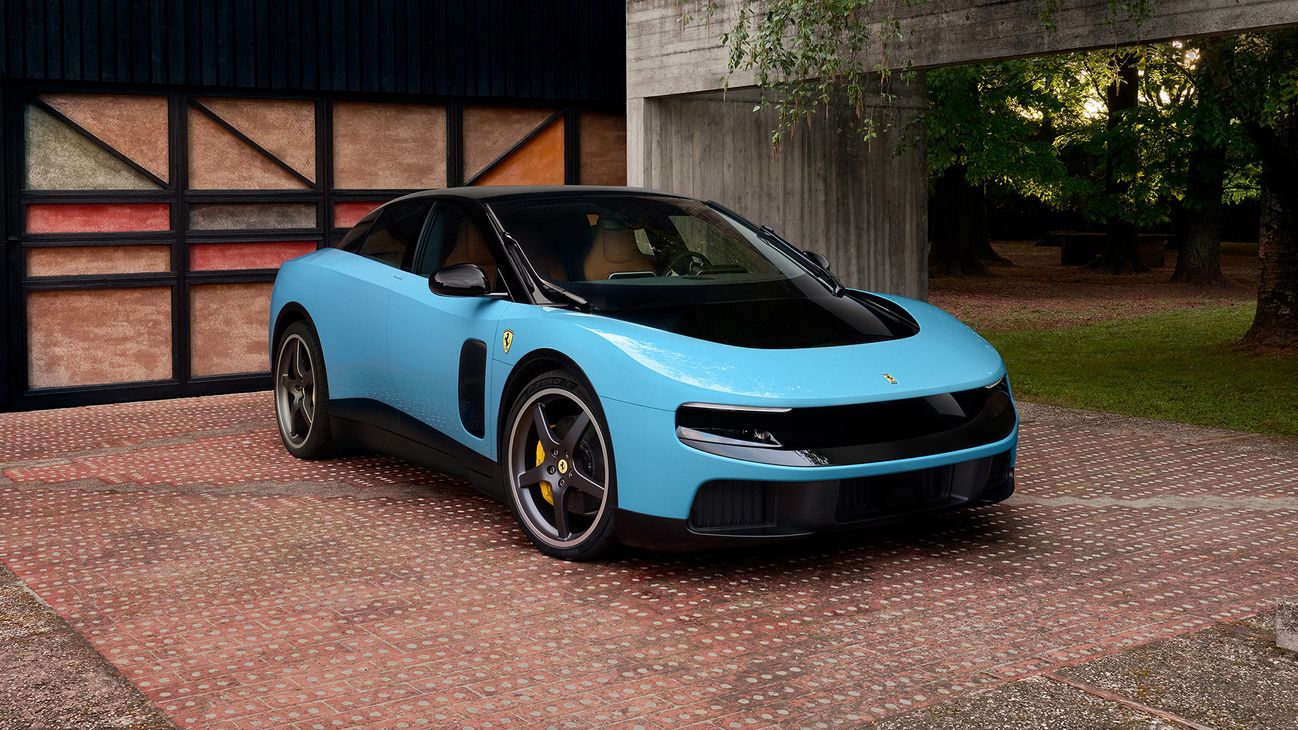
Ferrari Luce
"...ving up. So maybe that's Ferrari's excuse for the luce. Maybe."
The Ferrari Luce is mentioned as a name that might be used for a future Ferrari. The podcast is speculating about it rather than describing a specific car you can buy today. There aren’t enough details here to talk about its maintenance or parts.
The Ferrari Luce is referenced in the podcast as a rumored or discussed name, with speculation about why Ferrari might use it. The context suggests it’s part of a conversation about upcoming or hypothetical models rather than a confirmed, widely documented vehicle. Since it’s not described in detail, wheel-bearing relevance is limited here.
suggested retail price
"So the suggested retail price for this vehicle is $90,000, $9,950."
Suggested retail price is the manufacturer’s listed price for the car. Your final cost can be higher once you add taxes and fees.
Suggested retail price (often similar to MSRP) is the manufacturer’s listed price for a vehicle before taxes, registration, and dealer-specific charges. It’s used as a baseline for comparing what a specific car costs versus the sticker price.
exclusive trim
"And that includes this thing, this exclusive trim, $3,000."
Trim is the version of the car with a specific set of features. “Exclusive trim” usually means a more premium option package that costs extra.
A trim level is a specific equipment package (features and options) offered for a model, and an “exclusive trim” implies a higher-end or more limited configuration. The host is saying this particular trim adds a set dollar amount to the price.
rear axle steering
"But the rear axle steering was, hold on, it's hard to, things aren't lining up."
Rear axle steering means the back wheels can steer a little too. That helps the car turn more easily in parking lots and can feel steadier when you’re driving faster.
Rear axle steering is a chassis feature where the rear wheels can turn (usually by a small angle) to improve low-speed maneuverability and high-speed stability. It can make the car feel more agile in tight spaces and reduce the amount of steering input needed at speed.
degrees
"Well, they do have, they have rear axle steering, it's like 4.5 degrees. Oh, okay. That's the standard. But if you really want to go for it to 10 degrees, you should."
In this context, “degrees” is how much the wheels can turn left or right. More degrees usually means the car can turn more tightly.
When discussing steering systems, “degrees” refers to the maximum angular deflection of the wheels (how far they can turn). Higher degrees generally mean tighter turning capability, which is why the segment links more degrees to parking and “circles.”
enhanced steering
"But if you really want to go for it to 10 degrees, you should. Okay. So it's enhanced steering. Yeah. So yeah, so you get 4.5 degrees of rear axle steering."
“Enhanced steering” means the car’s steering system can be set to do more than the basic version. In this case, it’s about letting the rear wheels turn more for tighter maneuvering.
“Enhanced steering” here refers to a higher-output configuration of the rear axle steering system, allowing a larger steering angle than the standard setup. In the segment, the speaker contrasts the standard 4.5° with an optional setup up to 10°.
Mercedes EQS SUV
"Yeah, so, but, you know, overall, you're still getting that real fancy, comfortable Mercedes feeling. It does feel heavy. 118 kilowatt hour battery pack will do that. But it handles really well..."
The Mercedes EQS SUV is an electric luxury SUV. Because it has a big battery, it can feel heavy, but it’s still designed to drive smoothly and handle nicely.
The Mercedes EQS SUV is an all-electric luxury SUV built around a large battery pack and an emphasis on quiet, smooth ride quality. In this segment, the hosts discuss how the car feels heavy (a common trait of EVs due to battery mass) and how it still handles well despite that weight.
third row
"Did you try climbing into the third row? Oh, gosh, no. I don't, there's no point in that unless it's a van, who cares? ... it's kind of like the third row of the Highlander."
The third row is extra seating behind the second row. On many SUVs it’s there for emergencies or occasional trips, but it can be tight and not very comfortable for regular use.
A third row is an extra set of seats in some SUVs that’s meant for additional passengers. In practice, third-row space and usability are often limited, so many owners treat it as occasional-use seating rather than everyday comfort.

Toyota Highlander
"... you know, it's kind of like the third row of the Highlander. It's there, but not really all that useful."
The Toyota Highlander is a family SUV that can seat more people. The podcast is saying the third row exists, but it may not be very comfortable or practical. Carrying more people and using the vehicle often can increase wear on parts near the wheels.
The Toyota Highlander is a midsize three-row family SUV designed to carry more passengers than a typical two-row crossover. In the podcast, it’s mentioned specifically in terms of the third row—described as present but not especially useful. That matters for wheel-bearing discussions because heavier loads and frequent passenger use can increase wear on suspension and wheel components.
adaptive cruise control
"Like, for, I think there's a lot of people who get adaptive cruise control and then never use adaptive cruise control. Like, they just never use it."
Adaptive cruise control is cruise control that “watches” the car in front of you. It can slow down when traffic gets slower and speed back up when the road opens again.
Adaptive cruise control is a driver-assistance system that automatically adjusts your car’s speed to keep a set following distance from the vehicle ahead. Instead of holding a constant speed like traditional cruise control, it can slow down and then speed back up as traffic changes.

Mitsubishi Outlander
"...ia. Well, I was supposed to have had a Mitsubishi Outlander last week, but when it got returned back to... Di..."
The Mitsubishi Outlander is a midsize SUV. The podcast is mentioning it because it was expected to be used or reviewed but didn’t work out as planned. How a vehicle is driven and maintained affects wear on wheel-related parts.
The Mitsubishi Outlander is a midsize SUV designed for family use and everyday comfort. In the podcast, it’s mentioned as a vehicle that was supposed to be available but was returned, indicating it’s part of a testing or ownership segment. Wheel-bearing discussions often focus on how different SUVs are used and maintained, since driving conditions strongly affect bearing wear.

Kia EV9 GT line
"So instead, they got me a Kia EV9 GT line. Okay. Basically, the EV9 for 2026, the only thing essentially that has changed... is the charge port, which is now an AXJ3400 charge port rather than a CCS port."
The Kia EV9 GT line is an all-electric family SUV with three rows of seats. The big point in this segment is that its charging plug is different, so you may need the right adapter to charge it at home.
The Kia EV9 GT line is a three-row, battery-electric crossover, and it’s notable here because the discussion centers on its charging hardware. In this segment, the host explains that the EV9 for 2026 uses an AXJ3400 charge port instead of a CCS port, which changes what adapters you may need at home.
AXJ3400 charge port
"Basically, the EV9 for 2026... is the charge port, which is now an AXJ3400 charge port rather than a CCS port."
An AXJ3400 charge port is the specific type of plug your EV uses to charge. If your home charger uses a different plug type, you’ll need an adapter to connect them.
An AXJ3400 charge port is a specific electric-vehicle charging connector standard used on certain vehicles. In this segment, it’s contrasted with CCS, and that difference matters because it determines which home chargers and adapters will work.
CCS port
"Basically, the EV9 for 2026... the charge port, which is now an AXJ3400 charge port rather than a CCS port. ...they put a CCS adapter in here..."
CCS is a common charging plug type for many EVs. If your car has a different plug than CCS, you may need an adapter to use your usual charger.
CCS (Combined Charging System) is a common EV charging connector used in North America for both fast charging and, depending on the setup, other charging scenarios. Here, the host says the EV9’s charge port changed away from CCS, which affects compatibility with existing chargers and adapters.

Genesis GV70
"...ndai Motor Group vehicles, I'm not sure about the GV70 EV, but everything else pretty much that they're ..."
The Genesis GV70 is a compact SUV from a luxury brand. The podcast is talking about whether there’s an EV version and how the lineup is organized. Like any SUV, how you drive affects wear on parts near the wheels.
The Genesis GV70 is a luxury compact SUV positioned for comfort and a more upscale driving experience. The podcast mentions it in the context of whether an EV version is part of the lineup, suggesting discussion about which variants exist and how they fit in. Wheel-bearing conversations can come up because luxury SUVs are often driven in a mix of commuting and longer trips, which affects tire and wheel component wear.
J1772 charger
"Well, it's good until you go and try and plug in your home J1772 charger and realize, oh, they put a CCS adapter in here, but they didn't put a NAX adapter in here."
J1772 is the common plug used by many home EV chargers. In this segment, the host couldn’t use their J1772 charger without the right adapter for the EV9’s charging port.
J1772 is the standard connector used by most Level 2 home EV chargers in the U.S. The host explains that their home J1772 charger didn’t directly match the EV9’s setup, so they had to buy an adapter to charge at home.
NAX adapter
"...they put a CCS adapter in here, but they didn't put a NAX adapter in here. So I had to go on Amazon and order one so I could charge the car at home."
A NAX adapter is a piece you use to connect your EV to a different kind of charging plug. The host says the car had one adapter type but not the one needed for their home charger, so they ordered it.
NAX (as used in this segment) refers to an adapter type that allows the vehicle’s AXJ3400/AX-style charging interface to work with other connector standards. The host specifically notes they were missing a NAX adapter for their home charging setup and had to order one.

Hyundai Ioniq 9
"It looks pretty distinctly different from a Hyundai Ioniq 9, which shares most of its underpinnings."
The Hyundai Ioniq 9 is a Hyundai electric vehicle. The host is saying it uses a lot of the same core engineering as a Kia, even though the outside design looks different.
The Hyundai Ioniq 9 is an upcoming/positioned Hyundai EV that the speaker says shares most of its underpinnings with a Kia. In other words, it’s a platform/architecture relationship—different styling, similar core engineering.
frunk
"If you happen to get one with rear-wheel drive, you get actually a surprisingly decent, like, 3.5 cubic foot frunk. If you get the all-wheel drive version..."
A frunk is a storage compartment in the front of an EV—basically a trunk up front. It’s where you can put things like charging cables and small bags.
A frunk is the “front trunk” on many electric cars, where the space in front of the cabin is used for storage instead of an engine bay. Because EVs package components differently, frunk size can vary a lot between trims and drivetrain layouts.
rear-wheel drive
"If you happen to get one with rear-wheel drive, you get actually a surprisingly decent, like, 3.5 cubic foot frunk."
Rear-wheel drive means the power goes to the back wheels. The host is pointing out that this layout can leave more space in the front for storage.
Rear-wheel drive (RWD) means the car’s power is sent to the rear wheels. The speaker ties this to packaging: with RWD, there’s more room for a larger frunk because there’s no front motor taking up space.
captain's chairs
"And this one, the one that I had, the GT line, had the second row captain's chairs with the Ottomans that can come up."
Captain’s chairs are separate seats in the middle row instead of one big bench. They can feel more comfortable and make it easier to get to the third row.
Captain’s chairs are individual, separated seats (usually in the second row) rather than a single bench. They’re often paired with a third-row access strategy and can improve comfort, but they can also affect how the cabin is packaged.
Ottomans
"The GT line, had the second row captain's chairs with the Ottomans that can come up. So it's got the Ottomans on the front seats."
Here, “Ottomans” means built-in footrests for the back seats. The host says they’re designed so they won’t move while you’re driving, which helps prevent distractions or unsafe movement.
In this context, “Ottomans” refers to built-in footrests in the second-row seats that can fold up or extend for a more lounge-like seating position. The host also notes a safety/logic behavior: the footrest won’t move while the car is in drive.
dual 12.3 inch displays
"it's got the standard dual 12.3 inch displays under a single sheet of glass. And then there's also the smaller, I think it's about a 5 inch display in the middle for some of the climate control stuff."
That means the dashboard uses two big screens, each about 12.3 inches. One screen shows the driver info, and the other usually handles things like music, navigation, and settings.
“Dual 12.3-inch displays” refers to two separate 12.3-inch screens used for the driver’s digital interface. In many modern cars, one screen serves the instrument cluster while the other handles infotainment, and they’re often visually integrated under one glass cover.
climate control
"And then there's also the smaller, I think it's about a 5 inch display in the middle for some of the climate control stuff. So you've got the instrument cluster in front of you, infotainment on the right, and then the small control panel, touch panel to control some of the, you know, which, if you want air blowing up or at your feet or wherever, you know, so some of the climate control stuff in there."
Climate control is what keeps the car’s cabin comfortable. It controls heat or A/C, how strong the fan is, and where the air blows (like toward your feet or your face).
Climate control is the system that manages cabin heating, cooling, and airflow. It typically includes temperature regulation, fan speed, and air distribution (like directing air to the face or feet), often with electronic controls and multiple user settings.
infotainment
"So you've got the instrument cluster in front of you, infotainment on the right, and then the small control panel, touch panel to control some of the, you know, which, if you want air blowing up or at your feet or wherever, you know, so some of the climate control stuff in there."
Infotainment is the car’s main screen system for things like music and navigation. It’s where you also manage settings and connect your phone.
Infotainment is the car’s integrated system for media and information, typically including audio, navigation, phone connectivity, and vehicle settings. It’s usually controlled through a touchscreen and/or physical buttons/knobs.
touch panel
"and then the small control panel, touch panel to control some of the, you know, which, if you want air blowing up or at your feet or wherever, you know, so some of the climate control stuff in there."
A touch panel is a screen you control by tapping. In a car, it’s used for settings, but it can be annoying if you have to look at it while driving.
A touch panel is a control surface that you operate by touching the screen rather than using separate buttons. In cars, touch panels are often used for secondary functions like climate shortcuts or quick settings, but they can be harder to use safely if they require looking away from the road.
dual zone temperature control
"So you have physical toggles on the center stack for temperature, you know, the dual zone temperature control, the fan speed. And then there's the little roller for the volume control."
Dual zone temperature control means the driver and passenger can set different temperatures. So one person can be warmer or cooler without affecting the other.
Dual zone temperature control lets the driver and front passenger set different cabin temperatures. The system uses separate temperature targets and blends heating/cooling so each side of the cabin can be adjusted independently.
center stack
"So you have physical toggles on the center stack for temperature, you know, the dual zone temperature control, the fan speed. And then there's the little roller for the volume control."
The center stack is the dashboard’s middle section with the main controls. It’s where you adjust things like temperature and fan speed.
The center stack is the main vertical control area in the middle of the dashboard, typically housing the infotainment screen and climate controls. It’s where many cars place physical buttons, knobs, and toggles for quick adjustments while driving.
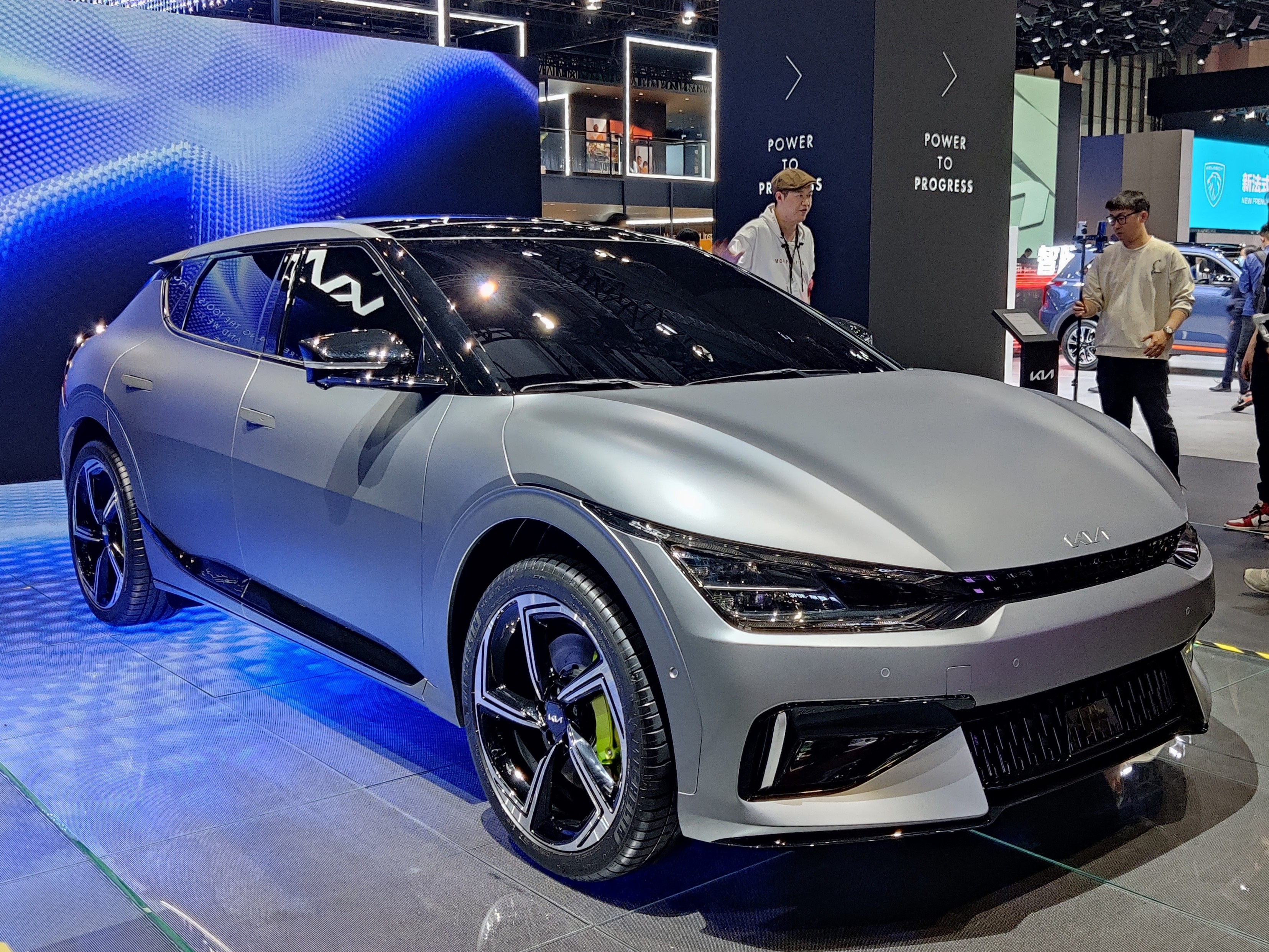
Kia EV6
"...et with the smaller ones like the Ioniq 5 and the EV6, but still very, you know, very quick. And as wit..."
The Kia EV6 is an electric SUV. The podcast is saying it’s quick compared with some other smaller electric vehicles. Driving style and road conditions still affect how fast wheel-related parts wear.
The Kia EV6 is an electric crossover that’s known for quick acceleration and modern EV technology. The podcast groups it with other smaller EVs and mentions it being “very quick,” which frames it as a performance-oriented EV choice. Wheel-bearing topics can still apply because EV torque and frequent city driving can influence tire and suspension wear patterns.
thermal management
"And as with all the Hyundai Group vehicles, they've got good thermal management on the battery. So they will, they'll maintain a high rate of charge all the way"
Thermal management is the system that keeps the battery at the right temperature. If the battery stays in a good temperature range, the car can charge faster and more consistently.
Thermal management is how an EV controls temperatures of its battery (and often power electronics) to keep performance consistent. Good battery thermal management helps the car sustain high charging power instead of throttling early due to heat.
state of charge
"pretty much all the way to about 70% state of charge. So, you know, I have, I have charged an EV9 in the past"
State of charge (SoC) is the battery’s current charge level, usually expressed as a percentage. Charging speed typically slows as SoC rises, so the host’s point is that the EV9 can still charge quickly up to around 70% SoC.
rebates and incentives
"you can get some pretty good deals on these things. If you shop around, there's, you know, dealers are offering some pretty good rebates and incentives on these things."
Rebates and incentives are discounts that can lower what you actually pay for a car. The host is saying you might be able to get the EV9 for a few thousand less if you negotiate or shop different dealers.
Rebates and incentives are manufacturer- or dealer-offered discounts that reduce the effective purchase price of a vehicle. The host suggests shopping around can lower the EV9’s final cost by several thousand dollars.
West Point, Georgia
"And, you know, the EV9s are built in West Point, Georgia. So Georgia."
West Point, Georgia is where the car is made. The host is pointing out the EV9’s factory location.
West Point, Georgia is the location of an automotive manufacturing facility where vehicles are assembled. The host notes the EV9 is built there, which can matter for supply and production timing.
amber lights on the top of the windshield
"Well, the current production Hummer is 86.7 inches wide, which is why it has to have the amber lights on the, on the top of the windshield because anything over 85 inches, you have to have those amber lights on the top of the windshield."
Those amber lights are there so other drivers can clearly see the vehicle’s outline. The wider the vehicle is, the more visibility rules it has to meet—so it gets lights mounted up high.
These are clearance/marker lights mounted high on the vehicle. The speaker is tying them to a legal width threshold (over 85 inches), meaning wider vehicles must be more visible to other drivers.

F-150 Raptor
"... still about five inches wider than a Ford Bronco Raptor, which is already a very wide vehicle."
The Ford F-150 is a large pickup truck. The podcast is comparing how wide it is compared to another truck. Width can affect how easy it is to drive and park, especially on rough or tight roads.
The Ford F-150 is a full-size pickup truck, and the podcast uses it to compare overall width against another off-road-oriented vehicle. That kind of measurement matters for real-world driving—fit, clearance, and maneuvering—especially when going off-road or on narrow trails. Wheel-bearing discussions can be indirectly related because wider, off-road-capable setups often see more uneven tire wear and higher suspension loads.

Ford Bronco Raptor
"Which is, which is still about five inches wider than a Ford Bronco Raptor, which is already a very wide vehicle."
They’re comparing the Hummer’s width to the Ford Bronco Raptor. The point is that the Raptor is already wide, so it helps you understand just how big the Hummer feels in tight spaces.
The Ford Bronco Raptor is a wide, off-road-focused version of the Bronco line. Here it’s used as a comparison point for how wide the Hummer is, emphasizing how vehicle width affects real-world maneuvering.
Ford F150
"Yeah. This is why going off-roading with something like say a, you know, a Raptor, an F-150 Raptor or a TRX is generally not, it's fine on the, in the desert, but it's not a vehicle you"
The Ford F-150 is a large pickup truck. The podcast is saying that some versions can handle off-road driving, but it may not be the ideal choice for very extreme off-road use. Rough roads can also cause more wear on parts over time.
The Ford F-150 is a full-size pickup truck built for work and everyday driving, with versions that can handle off-road use. The podcast mentions it in the context of off-roading—suggesting that while it can be used in rough conditions, it’s not always the best choice for extreme desert driving compared with purpose-built off-road variants. That kind of discussion often ties back to wear items like wheel bearings because rough terrain can accelerate suspension and drivetrain stress.

Hummer HX
"Back in 2009, they had a concept called the Hummer HX. So this was when the original iteration of Hummer, before Hummer went away, before GM went through bankruptcy..."
A “concept” car is a design study that shows what a brand might build someday. The Hummer HX was GM’s idea for a smaller, Jeep Wrangler–sized Hummer that would be easier to drive than the big original Hummers.
The Hummer HX was a concept vehicle from Hummer (GM-era) that previewed a future Hummer design. In this segment, it’s described as being “Wrangler sized,” meaning it was intended to be compact and off-road capable rather than the huge H2-style footprint.
Jeep Wrangler
"...ally. They had the Hummer HX concept, which was a Wrangler sized vehicle. And I think that's the vehicle tha..."
The Jeep Wrangler is a rugged SUV designed for off-road driving. The podcast is using it as a reference point for vehicle size and purpose. If you drive it on rough trails, some parts like wheel bearings can wear faster.
The Jeep Wrangler is a rugged, off-road-oriented SUV built around a simple, durable layout and strong trail capability. In the podcast, it’s referenced as a size benchmark for a concept vehicle, meaning the Wrangler’s proportions and purpose are being used to describe what another vehicle might be like. Wheel-bearing topics can come up because trail use and frequent low-speed articulation can increase bearing loads.

Hummer H3
"Oh, because remember the H3? We're just going to kill Hummers. Remember they had the H3 where they were talking about how it was smaller."
The Hummer H3 was the smaller Hummer compared to the bigger ones. It was meant to feel more manageable, but the host suggests the advertising and vibe were a bit odd.
The Hummer H3 was a smaller Hummer model compared with the larger H2 and the original full-size Hummer. In this segment, it’s referenced as part of the brand’s attempt to reposition Hummer as less oversized—though the host also calls the marketing “weird,” implying it didn’t land well.

Hummer H2
"Like they had the H3 where they were talking about how it was smaller. Like they had a short dude... It was sort of a weird ad. But it was smaller than the H2..."
The Hummer H2 was one of the big, bulky Hummers. The host is using it as a size reference to explain how the later H3 was smaller.
The Hummer H2 was the larger, more full-size Hummer model that sat above the H3 in size and presence. The host uses it as a comparison point to explain that the H3 was smaller than the H2, and that the original Hummer was even larger.
FlexFab
"But something they mentioned in the press release here is about what they call FlexFab. So, flexible manufacturing technology that they say enables fast, small batch on-demand production similar to 3D printing but for metal."
FlexFab is a manufacturing method a company is promoting for making metal parts in small quantities quickly. It sounds a lot like 3D printing, but the hosts aren’t sure if it’s actually the same kind of process.
FlexFab is a named “flexible manufacturing” approach described in a press release as enabling fast, small-batch, on-demand production. The hosts compare it to 3D printing, but for metal parts, and they question whether it’s truly additive manufacturing.
flexible manufacturing technology
"So, flexible manufacturing technology that they say enables fast, small batch on-demand production similar to 3D printing but for metal."
Flexible manufacturing just means a factory setup that can make different versions of a part without taking forever to retool. Here, they’re saying it helps them make small batches quickly.
Flexible manufacturing technology refers to production systems designed to switch between different product designs quickly and efficiently, often to support small batches. In this segment, it’s presented as enabling fast, on-demand metal production similar in spirit to 3D printing.
stamping tools
"They'll specialize stamping tools, multiple designs with the same machines. They don't really get into any detail about what exactly that is or how they're doing that."
Stamping tools are the dies and tooling used to form sheet metal into specific shapes by pressing it. The hosts mention that FlexFab would “specialize stamping tools” and run multiple designs using the same machines, implying a hybrid approach between tooling-based forming and flexible production.
additive manufacturing
"[3021.6s] You're going to hurt your head. [3022.6s] Multiple designs from the same machines. [3023.6s] It's got to be additive manufacturing because it's multiple designs. [3027.6s] Yeah. [3028.6s] They just don't want to say 3D printing."
Additive manufacturing means making a part by building it up in thin layers, like stacking slices. It’s different from cutting a part out of metal because it can create complex shapes more easily.
Additive manufacturing is a process where parts are built up layer-by-layer instead of being machined from a solid block. In automotive contexts, it’s often used for prototypes and complex shapes because it can reduce tooling and enable more design variation.

Tesla Model
"...e corner, somebody's got one. They used to have a Tesla Model Y and they got rid of that and got a Hummer. Wow,..."
The Tesla Model Y is an electric crossover SUV. The podcast is just noting that someone used to have one and then changed to a different vehicle. Like any car, how you drive affects wear on things near the wheels.
The Tesla Model Y is a compact electric crossover designed for everyday use with an emphasis on electric power and convenience. The podcast mentions it as a prior vehicle someone had before switching to another model, which is often how charging and ownership experiences get discussed. Wheel-bearing conversations can still be relevant because EVs and crossovers are driven frequently in stop-and-go conditions that can affect tire and wheel wear patterns.
delivery window
"What that does is that puts you in the queue to order your vehicle. Then you have 30 days to lock in your delivery window."
A delivery window is the range of dates when the company expects to bring your car to you. You’re basically reserving a spot in their schedule.
A delivery window is a scheduled timeframe during which the manufacturer expects to deliver your specific vehicle. It’s often tied to production slots and order queues, so locking it in helps you plan around when the car will actually arrive.
$50 deposit
"You haven't put the people who put the $50 deposit down, they get first dibs essentially. And I put my $50 deposit down at the event, within minutes."
A deposit is a refundable or non-refundable payment you make to secure priority for an order. In this context, the speaker says people who put down the deposit get first access to the ordering/production slots.
roll cage
"You want to put a roll cage in there? Knock yourself out. Knock yourself out, buddy."
A roll cage is a strong metal frame inside the car that helps protect you if the car flips or crashes hard. It’s often used in cars that get driven aggressively or on tracks.
A roll cage is a reinforced metal frame installed inside a vehicle to protect occupants during rollovers or hard impacts. It’s common in track and off-road builds because it adds structural strength and provides mounting points for harnesses.
modular vehicle
"It is the goofy nerd modular vehicle."
A modular vehicle is built so you can swap or remove sections more easily than on a normal car. That makes it more friendly for customizing—like turning it into an open-air setup or adding safety gear.
A modular vehicle is designed so owners can more easily change or remove parts of the body or interior. The speaker’s examples—taking doors off, removing a rear wall for open-air use, and adding a roll cage—point to a platform meant for customization and offbeat builds.

Volkswagen Id Buzz
"...he excitement that, you know, maybe the ID... The ID Buzz had, except they're actually delivering it in a t..."
The Volkswagen ID. Buzz is an electric van. The podcast is talking about how people are excited and when deliveries are happening. Vans often carry more weight and drive in busy traffic, which can wear wheel-related parts faster.
The Volkswagen ID. Buzz is an electric van built for people and cargo with a focus on EV practicality. The podcast mentions excitement and delivery timing, which points to it being discussed as an upcoming or newly arriving vehicle. Wheel-bearing topics can still apply because vans often carry heavier loads and see frequent stop-and-go driving, both of which can increase wear on wheel components.
old technology
"By the time they deliver it with old technology, you know, we can... Relitigate the ID Buzz and everything that went wrong with that."
The host means the car would have used earlier EV tech if it launched sooner. They’re saying that what felt “new” at the time might have seemed less impressive later.
“Old technology” here is shorthand for earlier-generation EV hardware/software that would have been used if the ID Buzz had launched much earlier. The point is that by the time it finally arrived, expectations had shifted, so the same approach felt outdated.
Rivian R3
"...ack, you know, that looks kind of like a two-door Rivian R3. And then there's a, you know, more like a wagon ..."
The Rivian R3 is a smaller Rivian electric vehicle that the podcast describes using body-shape comparisons. It sounds like it comes in different styles, like a two-door or wagon-like form. Any car driven regularly will still need wheel-related maintenance as parts wear.
The Rivian R3 is discussed as a smaller, more compact-looking Rivian electric vehicle, with the podcast comparing its shape to a two-door Rivian R3 and a wagon-like variant. This frames it as a different body style within Rivian’s lineup rather than the larger R1T pickup. Wheel-bearing topics can still be relevant because any EV with frequent daily use will experience tire and wheel component wear over time.

Ford Flex
"And I find that very appealing. [3741.6s] Oh yeah. [3742.6s] I missed, the Ford Flex was a great car."
The Ford Flex is a Ford vehicle with a very boxy, unusual look. The hosts are saying the front of the car they’re talking about reminds them of the Flex, and they liked the Flex a lot.
The Ford Flex is a distinctive, boxy crossover/wagon from Ford known for its tall, upright styling and roomy interior. In this segment, the hosts compare the front-end shape of something else to the Flex, and then mention the Flex as a “great car,” implying it’s a design reference point.
open air kit
"[3761.6s] See, I like the open air kit. [3763.6s] Yeah, where it's just open. [3766.6s] If you scroll down, if you scroll over."
An “open air kit” is a set of parts that lets you open up the vehicle so more air and light come in. It’s like turning part of the car into an open-air setup by removing certain panels.
An “open air kit” is an aftermarket or accessory setup that lets you remove or open sections of the vehicle’s body panels to create an open, more convertible-like cabin. In this discussion, it’s tied to removing parts behind the cabin to change how the rear area and seating work.
rear bulkhead
"[3766.6s] If you scroll down, if you scroll over. [3768.6s] Just take out the rear bulkhead. [3769.6s] Yeah, you don't need any of that stuff."
A rear bulkhead is a wall/partition panel behind the back seats. If you remove it, the layout changes—like where the rear seats would go and whether that area can be used for storage instead.
A rear bulkhead is a structural or partition panel behind the passenger area that separates the cabin from the cargo area. Here, the host says you can remove the rear bulkhead, which affects where rear seats mount and how the space can be used (storage vs. seating).

AMG GT
"which it's not as good as driving, obviously, but you can feel, you can get a good idea of like how, you know, [3883.6s] a pretty good idea of how this thing, I mean, I got a ride along in the AMG GT, [3888.6s] and I'm still waiting for my video, it seems to have been lost, unfortunately."
The AMG GT is a sporty Mercedes made by AMG, the brand’s performance team. It’s the kind of car you’d expect to feel fast and exciting even just sitting in it.
The Mercedes-AMG GT is a performance coupe built by Mercedes-Benz’s AMG division, known for its sporty handling and V8-powered character in many trims. In this segment, the host mentions getting a ride-along in an AMG GT to understand what it feels like to sit in the car.
Ford Pro
"It was Ford Pro invited me out there, they were doing their annual Ford Pro fleet preview. So this was mostly for, you know, fleet owners, fleet managers, upfitters, you know, all the people that are customers of Ford Pro,"
Ford Pro is Ford’s part of the company that focuses on work vehicles for businesses. They help companies buy and set up trucks for jobs.
Ford Pro is Ford’s commercial-vehicle business unit focused on helping businesses run fleets. In the segment, it’s positioned as the channel for electric trucks and for working with upfitters to add job-specific equipment.
fleet preview
"So I went out to Las Vegas for a couple of days this week. It was Ford Pro invited me out there, they were doing their annual Ford Pro fleet preview."
A “fleet preview” is when a car company shows new trucks or vans to businesses that buy lots of vehicles. It’s meant for companies that need them for work, not just individual drivers.
A “fleet preview” is an event where a manufacturer or its commercial arm shows upcoming vehicles and programs to businesses that buy cars in bulk. The focus is usually on total cost of ownership, upfitting options, and how the vehicles fit real work use.
upfitters
"So this was mostly for, you know, fleet owners, fleet managers, upfitters, you know, all the people that are customers of Ford Pro, which is their commercial vehicle business unit. ... they’re going to be supporting that, you know, and working with upfitters to get equipment."
Upfitters are businesses that customize a truck for a particular job. For example, they might add tool racks or storage in the bed so it’s ready for work.
Upfitters are companies that modify a base vehicle to add specialized equipment for a specific job—like racks, tool storage, or bed-mounted systems. The segment ties upfitters to Ford Pro’s electric-truck rollout and to how Mavericks are configured for professional use.
electric truck
"although they did say that the new $30,000 electric truck, the universal EV is going to be available through Ford Pro starting next year."
An electric truck is a truck that runs on electricity from a battery instead of gas. In this segment, they’re talking about making one available for business fleets.
An electric truck is a pickup or commercial truck powered primarily by an electric motor(s) and a battery pack instead of a gasoline engine. The segment frames it as part of Ford Pro’s plan to make an electric truck available through its commercial sales and upfitter ecosystem.

Maverick
"And, you know, when I walked around the upfitter pavilion at this event, there were several Mavericks out there, you know, equipped with all kinds of stuff to mount in the bed for the, you know, for professionals to use... But one of the, one of the things they also mentioned about the Maverick is that they are increasing capacity for Maverick hybrids."
The Ford Maverick is a small pickup truck that many people use for work. Here, the host says lots of buyers choose the hybrid version, and it’s common among tradespeople and businesses.
The Ford Maverick is a compact pickup that’s especially popular with professional users because it’s practical and can be configured for work with bed-mounted accessories. In this segment, the host highlights the Maverick’s popularity in the “professional community” and notes that a majority of sales are Maverick hybrids.
hybrids
"But one of the, one of the things they also mentioned about the Maverick is that they are increasing capacity for Maverick hybrids. They're raising it to currently, you know, about 55, 56% of all Mavericks sold are hybrids."
A hybrid uses two power sources—an engine and an electric motor—to help save fuel. The host says more than half of Mavericks sold are the hybrid version.
A hybrid vehicle uses both an internal-combustion engine and an electric motor/battery system to improve efficiency and reduce fuel use. Here, the host is specifically talking about Maverick hybrids making up about 55–56% of Maverick sales.
Las Vegas
"Also, while I was in Las Vegas, I decided they, you know, a bunch of them, people from Ford were going out to see no doubt at the sphere."
Las Vegas is the city in Nevada where the host was. They’re talking about local plans and where the robo taxi can take you.
Las Vegas is the Nevada city where the host discusses meeting Ford people and then choosing to ride a robo taxi instead. In this context, it’s also the geographic area where the Zooks service has defined pickup and drop-off locations.
Zooks Robo taxi
"Instead, I went and pulled up the Zooks app on my phone and took another ride in a Zooks Robo taxi."
A robo taxi is a self-driving-style taxi you can summon with an app. Instead of a human driver, the car uses technology to handle the driving, though it may only work in certain areas.
A “robo taxi” is a ride-hailing vehicle intended to operate with little or no human driving input, typically using automated driving software and sensors. Here, the host describes taking a ride in a Zooks robo taxi and notes limitations like where it can pick up and drop off.
the strip
"There was like literally seven places that you get picked up and dropped off with the Zooks Robo taxi. [4145.6s] You know, with the Luxor hotel at the south end of the strip and the resorts world at the north end of the strip"
“The Strip” means the main hotel-and-casino area along Las Vegas Boulevard. The host is saying the robo taxi only serves certain spots along that area.
“The Strip” is the nickname for the main stretch of Las Vegas Boulevard lined with major hotels and resorts. The host uses it to describe the robo taxi’s limited service footprint—pickup/drop-off points near specific hotels at the south and north ends.
Zook's cast capability
"And then other things that they added, they've now, they added what they call Zook's cast capability. [4354.6s] It's basically just Bluetooth."
“Zook’s cast” is a way to connect your phone to the car so you can play your music through the car speakers. It’s basically like using Bluetooth to pair your phone to the vehicle.
“Zook’s cast” is a vehicle feature that lets your phone connect to the car to stream audio. In this segment, the host explains it works like Bluetooth pairing so music from your phone plays through the car’s speakers.
Request an Explanation
Heard something you'd like explained? We'll add it to this episode.
Sign in to request explanations for terms you heard.
Want to learn more?
Browse our glossary for plain-English explanations of automotive terms, jargon, and concepts.
Help improve this episode
See something that's not quite right? Our annotations are AI-generated and can sometimes miss the mark. Click the flag icon on any annotation to suggest a correction.