
Matt Bowers on OEM Pulse Check, Lafontaine on Underutilized Incentives | Daily Dealer Live
Car Dealership Guy Podcast
Matt Bowers on OEM Pulse Check, Lafontaine on Underutilized Incentives | Daily Dealer Live
Car Dealership Guy Podcast · Sep 8, 2025
Annotations will appear as you listen
0:00
59:33
LIVE
We're doing better as a result of social media presence.
It doesn't do those three things, then it's on the chopping block.
It's in return on investment discussion.
Hey, everybody.
Welcome to another edition of The Daily Dealer Live.
I'm your host, Sam Dark.
And back with us today, co-hosting is the car dealership guy
himself, Yossi.
What's up?
Sam Dark.
Great to be here, man.
Good to have you.
Good to be here with our entire Daily Dealer Live audience.
And for those joining us always,
we are live across all CDG social media platforms.
Post your comments today.
We'll bring them into today's show.
Your comments not only changed the trajectory,
but actually at a depth.
It's super fun to see what will come up today.
And what a show we have in store for you, our audience today.
Coming up today, we've got Matt Bowers on an OEM pulse.
Talk about plans he has within his auto group.
Plus, we come back to the Michigan geography.
LaFontaine joins a GM there to talk
about underutilized incentives,
talk about how he's bullish on a couple different OEMs
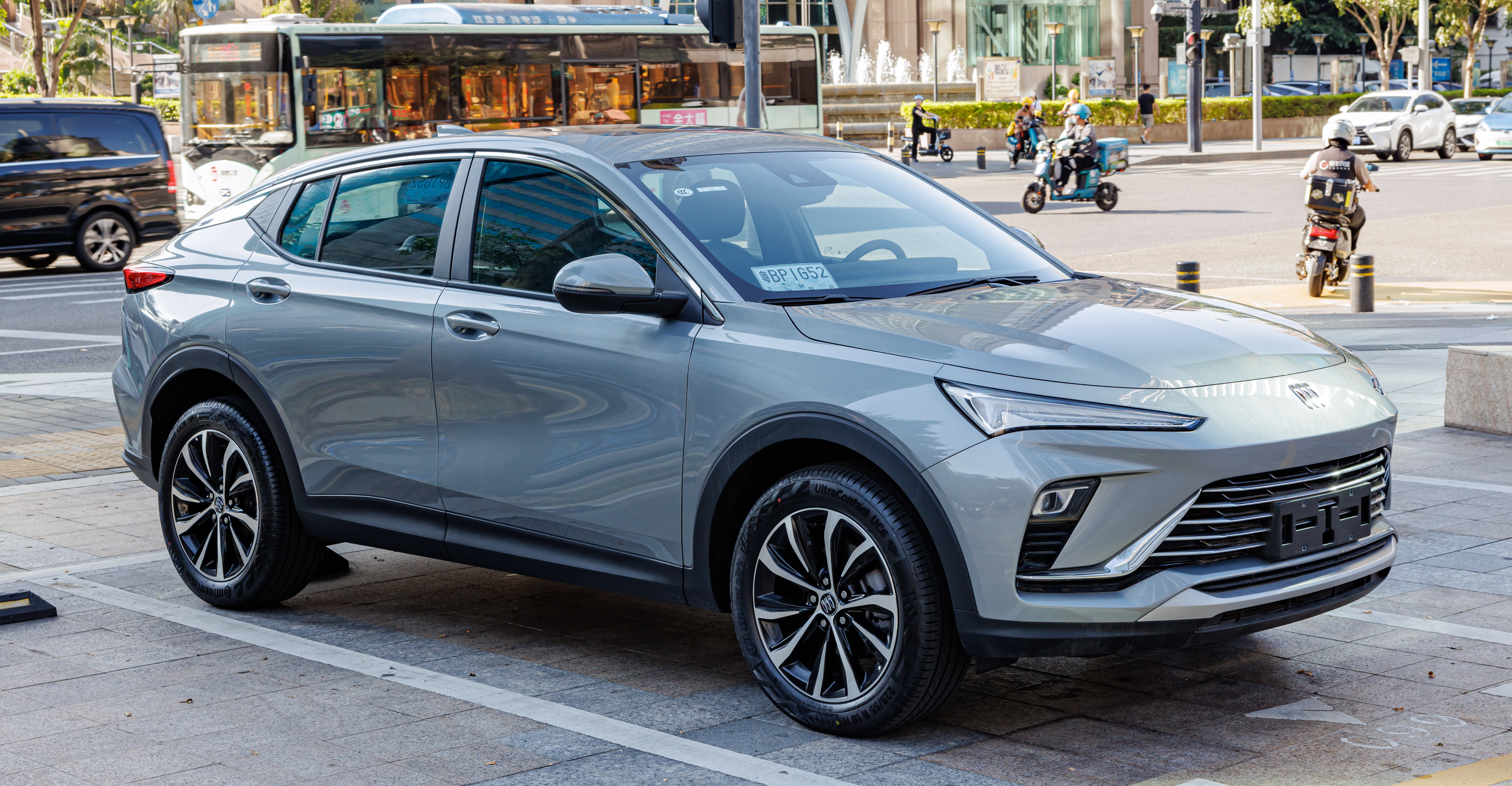
among which, or Buick.
We'll talk about that.
But first, let's dive into today's biggest headlines.
All right, first up today.
You've heard this in the news.
More than 300 Hyundai workers were detained in Georgia
after a raid by US Immigration and Customs Enforcement,
also known as ICE.
They'll be sent home to South Korea.
The raid hit Hyundai's $7.6 billion EV battery
joint venture with LG Energy Solutions,
where ICE alleged many of the workers
had crossed illegally or overstayed visas.
Officials in the South Korean capital of Seoul
said they'll review visa systems for US investment projects
to prevent a repeat incident.
Meanwhile, President Trump's Borders are Tom Homan
told CNN's Jake Tapper on State of the Union
that more immigration raids like the one
at the Hyundai plant could follow.
What's the bottom line here?
Well, President Trump's immigration enforcement
could yield friction with global auto investment,
automakers risk raids, regulatory heat, and union scrutiny
if they don't lock down those labor practices.
Next up today, Tri-Color Auto Group.
They're a major use car chain and a subprime lender.
They were taken over by an unidentified bank on Friday.
So spending operations across Texas, Arizona,
and California, Univision, Dallas,
obtained HR documents showing 80 to 90% of staff
placed on temporary leave with pay frozen
but health insurance intact.
Employees were told they weren't fired,
just dismissed until at least October 6th
when a decision will be made on who if anyone can return.
By the way, that's fascinating to me.
Hey, you're on leave and we'll let you know
a little bit later whether we're coming back,
including they shot down corporate email.
That's turned off.
They're stating that their email systems
are undergoing a quote internal procedure.
And for customers, uncertainty is mounting.
The auto group has issued over $5 billion in loans
since 07 across 65 retail centers,
many targeting Hispanic borrowers who rely on itins,
otherwise known as individual taxpayer identification numbers,
rather than social security numbers.
Thousands of active borrowers now face questions
about servicing their loans and vehicles in repair.
And immigration politics are adding fuel to this fire.
President Trump's second term crackdown
has made Texas the epicenter of ICE arrests,
raising fears for TAGS core customer base.
While no direct link has been confirmed,
the timing has heightened industry speculation
that immigration enforcement could be destabilizing
lenders serving these communities.
Beneath the surface, TAGS model carried risks long
before this raid, high loan-to-value ratios,
elevated interest rates, and heavy exposure
to credit-invisible borrowers,
with defaults rising other subprime lenders
like Automotive Credit Corp earlier this month
are already pausing origination,
suggesting systemic strain across the sector.
We at CDG News reached out to tricolor auto groups,
press team for clarity on customer service continuity
and loan transfer procedures,
but we have yet to receive a response.
We'll get back to you and update our audience
once we get it.
I know you're not a Texas guy,
but you gotta bring the tricolor.
Tricolor.
Tricolor.
I like that.
That's a good-
That was the one former employee of mine
used to tell me like, I was like, oh, tricolor?
He's like, tricolor.
Tricolor.
So you know this auto group, you know?
See, is this a big deal?
I've heard of them.
Yeah.
Yeah.
They're a big deal in Texas.
I mean, they're not a small group,
but this was a scoop from the weekend.
Actually, it was Friday night.
People love doing these things on Friday nights, of course,
because everyone's out, of course.
So it's an unfortunate situation, clearly,
but we don't really know the details yet,
and no one has responded yet.
So, you know, TBD.
Yeah.
Well, Yossi, one of the most exciting features offered
by CDG out there to our audience
is the CDG Bicell Tracker.
You can go to cdgbicell.com for updates to that tracker
and to follow M&A activity daily.
And we've got one today for our audience.
So Chris Turner sold Mid Hudson Subaru.
I'm going to get this wrong.
And Wapingers Fall, New York to VIP Automotive Group
on September 4th, with all real estate included
in the deal, this per Percidio Group.
VIP now has nine locations across Long Island,
New Jersey, and New York, including three Subaru rooftops.
We love Subaru, and plans to expand the shop
and parking of this most recent acquisition
to handle strong buyer demand.
This marks Percidio's third Subaru deal of the year
as the brand's growth streak keeps it
a premium acquisition target for regional dealership groups.
And again, anybody wanting to catch up
on all the Bicell M&A activity,
go to cdgbicell.com.
Sam, we need to make a jingle.
The CDG.
We do.
CDGbicell.com.
We need to make a jingle for that.
So we'll get that added in a couple episodes.
Let's do it.
It's coming up.
Watch out.
All right, finally up to a general motors
has filed a patent.
You're gonna love this, you know,
see for tech that would generate
a quote driver retirement score
by monitoring elderly drivers behavior,
tracking things like reaction time,
fatigue, turn signal use, traffic sign compliance,
and even honks from other motorists.
The system could create reports recommending
when a driver should stop driving
and if enabled notify family members.
However, a patent doesn't guarantee
the feature will ever make it to market.
What's the big picture here?
It's another sign of how automakers
are looking to expand vehicle data collection
into areas for beyond,
far beyond mobility,
raising new questions about privacy.
Yeah, you think.
Oversight and the role of tech
in tracking driver behavior.
Do you know what this makes me think of?
Two things.
Number one, have you ever driven down the road
in a rental car or whatever
and you get that little beeping thing
that says, hey, it's time to take a rest.
And it's not necessarily that,
you just might be driving distracted, right?
So all of a sudden, if I'm 70 years old,
am I gonna be told I can't drive anymore?
Cause I had a couple of bad days of, you know,
those little alerts.
And then two, in populations of older communities,
are you gonna see a wave of people unable to drive?
Like this is fascinating to me.
We'll see if people will still be driving
and by when, I mean, at this pace,
all G's going, it feels like, you know,
more and more of these vehicles are going,
adding autonomous features, you know, and whatnot.
So TBD.
So maybe it'll say, hey, you can't drive anymore,
but I will.
And then the car will just take over
and do its own thing fast.
There we go.
So Yossi, you and I both get in our entire teams
at CDG a ton of requests from auto dealers
wanting to join the show,
to share opinions and viewpoints
about all things automotive.
Having that voice is important to us here
at the Daily Dealer Live.
And we've got a place for you to go, cdgguest.com.
Go there, fill out the intake form.
You'll get the chance to meet Michelle,
who handles all of our scheduling.
She'll have a quick call with you
to talk about topics, viewpoints
and vet you to bring you onto the show.
So if you have an interest in joining the show,
please go there and fill out the intake form to join.
Again, cdgguest.com.
All right, first up today,
let's turn without further ado to the owner
of Matt Bauer's Auto Group, Matt Bauer's.
Welcome to the show.
Hey, guys.
Matt Bauer is welcome.
We can.
Good to be here.
How are you feeling, Matt?
I'm good.
I'm good.
I'm very good.
It's another week.
It's like Groundhog's Day.
Every day is sort of like the same day, you know?
Like people ask me what I'm doing.
I tell them everything, right?
What are you doing?
Everything.
How's business, Matt?
It's not bad.
It's, you know, I guess it's brand by brand.
It's a little different.
But overall, like I said before on the show,
we're having a better year this year
than we did last year overall.
Not that we don't have our bad days or weeks
or off months here and there and stuff like that we do.
But overall the business, our business
at my particular dealership group
is better than last year
for a variety of reasons, I suspect.
Matt, what's driving that performance primarily?
Probably consistency, you know, in some,
you know, I'm a group that promotes a lot of people.
I've discussed that before.
We promote a lot of people.
So if that is your philosophy,
if your philosophy is to start
with a core group of people and then add process
and then promote around that,
unless you do something to change any of that formula,
theoretically you should get better year after year
after year as the people gain experience.
And as your processes are passed down
from one group to the next, you know, over time,
I think that that's a little bit to do with it probably.
Matt, you've been involved
in lots of buy-sell activity recently,
you know, whether buying or selling.
Can you give us an update on what you're working on?
A lot.
I sold a dealership recently in Alabama,
in South Alabama, which I had,
I've sold dealerships before for a variety of reasons.
This one I sold, which led to a bunch of stuff
that I forgot about when you sell dealership,
you know, like I had a lot of people call me
and ask me if I was selling everything
or, you know, this, that and the other stuff like that.
And it was just really a decision I made.
It was a Nissan dealership in a town in my opinion
that had too many Nissan dealerships.
And it was an area that I wasn't particularly interested
or able the way I wished you to grow in over time.
And so I sold it to the perfect people,
which would be the people right next door to me
who own a lot of stuff there.
That's, that's their home base, their core area.
So it was, you know, a creative deal for them
and their company.
And it, you know, allowed me to go do some other stuff.
So I'm doing, right now I have three,
three pending, I have three APAs
in three different states actually,
which is sort of a, I wouldn't say a philosophical shift,
but it's a, you know, as you do this, you learn.
I learned, and I've said before when Yossi interviewed me,
I sort of told my story.
I gave people like, here, here's the, here's, you know,
don't buy stores that are too little, right?
Like don't do that.
I don't care if I say that a million times,
some dude's gonna buy some store this too little tomorrow
and tell me why, you know, I'm gonna,
I'm gonna draw from some town I've never heard of
and from some other place I've never heard of.
And it's like, all right, just go buy a real good store,
right?
But don't do that, you know,
I don't like buying stores that are in neighborhoods
that add complexity.
Let's call it or let's just call out dangerous neighborhoods.
Okay.
Everybody has a chance to do that.
I did that, and I choose to not do that
if I can avoid that.
And then I don't like buying stores in towns
that stores have been sold over and over and over.
Like you get the package on the store
and it's got temporary banners on the package.
And then you go to Google and it's got the last dude
and then it's like, you know, somewhere like that.
But one mistake I made, that can, you know,
I come on here and I tell the truth as I see it.
I tell the truth, okay?
And some of that sounds good for me
and some of it, quite frankly, doesn't, okay?
But I respect our business enough and the people in it.
Why am I gonna sit up here
and say a bunch of stuff that's not exactly the truth?
I'm gonna tell people the truth
because somebody might find themselves
in the same situation that I'm in right now.
There was no roadmap to success when I started doing this.
The dealers that I looked to for mentorship,
they looked at me like the competition, right?
So they wouldn't, you know, they wouldn't tell me the truth.
So I did too many deals in one area,
I would say one geographic area.
You know, and what happens when you do that?
I mean, good things happen.
I get good tables at restaurants all over where I'm from,
you know, I go to the Circle K
and the cashier at the Circle K will know who I am.
My ex-girlfriends are probably very jealous of me and whatnot,
but you sort of run out of people over time, okay?
Depending on the city that you're in,
you run out of people, okay?
And it also limits, you know,
I would say your overall possibilities later.
What I should have done is I should have done,
you know, stores where I'm at in a platform setting
and then maybe gone to do three or four other platforms,
you know, as time went on
and then over the length of time I own them,
you know, how some will identify themselves
as being easier, easier to run than others.
And then you sort of focus in on those
and that's what I should have done for a variety of reasons.
When you do too many meals in one area,
you take on risk that you don't need to take on,
but you do it voluntarily.
I did it in the reason why people do that,
I found out is just it's ego, you know,
and that's a lot to do with it.
Do you think that is the...
So you're talking about concentration
of stores right now in markets.
And I think that do you think that this is just some bias
from your personal experience
or do you think this is like a truism in the industry?
Because one could make the case, you know,
you dominate a specific market or region,
that concentration is actually to your benefit,
you get more operating leverage, do you not see that?
And also I want to follow up with,
are you signaling that you may be having
more transitions on the horizon
if that's a strategy that you're not in favor of moving forward?
Everybody's experience is their own.
And yeah, we dominate, you can dominate a certain area,
but at some point, you know,
it takes a really good dude to run a Volkswagen dealership
and I'm not picking on Volkswagen,
you could pick a brand or Mazda Volkswagen,
any of these, you know, any brand like that.
It takes a good dude to run that,
just like it takes a good dude to run a big Chevrolet
or Ford or Toyota or whatever.
So you have to use up a good piece on something like that
versus some other thing that has higher possibilities
to make money for you, okay?
And so I'm just saying in the area
that I'm in specifically, you know,
there's not, you know,
I don't know how good the other dealer,
like you run out of people,
let's leave it like that without getting myself
into a tremendous amount of trouble.
So Matt, you, other than regional concentration
and diversification, are you thinking
about additional brand diversification?
Or ask differently, what brands are you looking at?
No, my philosophy on that, right.
My philosophy on that hasn't changed.
I look at deals very simply,
I look at deals on their face and say, you know,
what is going to return me the most money
in the shortest length of time?
And then assuming that all brands are cyclical in nature,
which they've proven to be, okay?
You know, Subaru is extremely hot right now.
Like you couldn't give away a Subaru dealership
in the South 10 years ago.
You know what I mean?
So, Honda IKEA, you know,
these were not major players 10 years ago.
And they will be other people that emerge over time.
So for me, I look at it very simply
as what is going to bring me the most,
it's my own money.
See, to me, it's my own balance sheet and a bank.
It's just that simple.
Okay, I also, which is very unique,
I think the way I think,
I don't look at dealerships and say, okay,
I'm buying this dealership for $6 million
and it's going to be worth $20 million when I'm done.
I assume all of them will be worth zero when I'm done.
Okay, that's the way I prefer to look at them.
It keeps you from speculating,
it keeps you from building in assumptions
that you can't influence or control.
I can only influence however on the store.
I can't influence the decisions that the car manufacturer
is going to make which could dictate their future value
and stuff like that.
Like I see dudes do that.
When people talk about, you know,
trying to balance my portfolio,
I don't look at it like a portfolio.
These are all unique individual deals
that got to work on their face.
People that talk like that
are not typically dealing with their own money.
So yeah, guys like me,
when I go compete and this still remains the truth,
I've never been in a competitive setting
to buy a car dealership, you know,
like here's a broker, here's a car dealership,
here's an offering memorandum
and I'm going to send it out
to the biggest guys in the region of the country.
I've never been in a situation where I had more money
than the other people looking at it, not one time.
In my career and I suspect not ever.
So if that's the case,
I'm forced to make educated bets
on what I'm looking at.
Timing has to do with that,
but I have to make bets
because I have to be able to know things
and take advantage of situations
that other people might not notice or see.
Okay, whether that's a geographic area
that I know of or a brand
that I might have certain insight into
that I believe is correct.
And so if you think you have an advantage,
you need to try to take advantage of that advantage.
And that would be my only advantage
is just understanding the day-to-day car business
better than some of the people I compete against.
Matt, in the span of the next three to five years,
do you see your group becoming more diversified
or more concentrated?
You're clearly favored diversification.
And will that come by way of divestitures or acquisitions?
I think both can be true.
And I just speak the truth, right?
You know what I mean?
If I say the word divestitures,
so my phone will not stop ringing, okay?
For the next eight weeks, okay?
You know what I mean?
And so, but I think either could be true.
I think that I'm looking for stores
that make an impact to me financially
to the people around me.
And I'm looking to not be involved with stuff
that's a pain in my ass, quite frankly, okay?
Even if it's in my hometown,
or even if it's whatever, okay?
People, you'd be amazed of the justifications
that people, you know, I make mistakes, believe me.
I don't get it all right.
I mean, look at my first wife, mistake, okay?
Look at, you know, I've made other mistakes, okay?
Right?
So it's not like I'm fallible over here.
I think the difference between me and some others,
when I make a mistake, I recognize it, not move on.
But I don't care how.
Can I just add one thing?
I think the reason people listen to you
and you tend to ruffle lots of feathers
is because you say the truth.
You say the truth.
And I think because you say the truth,
you've built a reputation
that when you say something it carries weight.
And so when you post about different things
or chat about different topics,
there's a reason some people feel uneasy about it
because you're saying in many parts
the quiet part out loud.
Sam, you were gonna say something?
Well, I was just gonna pressure test both sides of this.
So Matt, you're saying, hey, on one side,
I wanna avoid stores and situations
that are a complete pain in the ass.
Who are those?
Where are those?
What are those?
And then I'm gonna ask the question of insights,
but go with the pain in the ass.
What are you avoiding today in the marketplace in 2025?
Oh, what am I avoiding?
Okay, I'm avoiding, okay, well,
to know what a pain in the ass looks like,
you have to have been part of it.
Okay, and then how did you, okay.
And all of them share the same common things,
in my opinion.
It usually starts with some obligation I feel to do this.
This could start with the car manufacturer a lot of times.
Like look, I've been in a situation
where I need the car manufacturer's help.
I wanna be a good partner of theirs,
which means sometimes taking on challenges
in their network.
That's how I've built a reputation.
I didn't say, okay, what's the easiest stores?
What is a problem for you?
I'm gonna go fix it and you're gonna go get promoted.
Okay, right?
Like that is how this is gonna work.
Okay, I would be like dealer network gone right.
Okay, that's the whole.
Well, sometimes you just don't have the ability
to deal with certain things.
So car dealerships that I've been part of,
that I'm the longer part of,
were either brought to me by the car manufacturer
and they were in some dire straits,
or I have three other facility projects to do
and here's a fourth, okay.
You know, and I just don't have the ability
and the team to get to it anytime soon.
So what happens is you do it
and you don't get to it soon
and it becomes a point of contention.
So, or I feel like it's in my hometown
or in some area that I'm known to be in
and I feel an obligation to do it, okay.
Mainly to satisfy my own ego, to be real about it.
You know?
No, go ahead, Sam.
So some interesting comments coming on.
Brett Sutherland says, I agree 100%
with what you're saying.
Nate the truck driver, first wife made me cackle
and then somebody flipped you a little bit
of shit on the reverse side.
She probably thought he was the mistake.
So that's a reference to your earlier first,
but it is interesting.
Uh-oh, now I lost Matt.
Hopefully I didn't make him upset with that one,
but it's interesting to me,
you'll see Matt talks about how these OEMs cycle
over time and it is interesting.
We see that historically and I would love
to get Matt's perspective on,
as in the cycle and churn of OEMs,
there are probably ones that he believes in more
and feels more comfortable with and more confidence in.
He even just talked about this.
He's willing to take a project from an OEM,
engage in that project with the support of the OEM
and turn around a bad situation.
So Matt is not afraid of hard work.
He's not afraid of getting in, getting his hands dirty.
I'm curious in today's marketplace,
in that churn and that cycle of OEMs,
how does he find the opportunity?
I think that's what would be fun to get from Matt.
Yeah, and we'll see if we get him back on,
but I think in addition to that,
as I mentioned, he comes on and he says the truth.
And I think people really respect that.
And I think that's why when he had a conversation
about at the time was a sale lease backed
and he had a conversation about private equity backed buyers,
acquiring dealerships,
he had various of opinions on both topics,
but in both situations,
there was a lots of outreach to him
and just lots of things happen behind the scenes.
And because people do, his word does carry weight,
whereas you and I both know there's lots of operators
in our industry that are not as candid
and are not willing to say it how it is.
There's risk in this industry
and being totally candid, being vulnerable.
You give up, sometimes I think you could argue,
you give up some of your competitive edge.
I think folks would agree,
but that's the purpose of this
is sharing those insights right here.
I think there's, so obviously it's self-serving,
but I do think that if you play long-term enough,
you do gain a bigger edge.
The reason I say this is because I see with several people
that have come on our platform and others
where it creates a very virtuous flywheel for you.
You get talent is attracted to you,
suddenly you're offering information,
people wanna work with you.
There's a thing about trust that is contagious and attractive
and people wanna work with people that are trustworthy.
And so on a long enough time horizon,
I do think it's at your benefit
to be open, honest and authentic.
And I do believe we just got back on,
so where we will get in here in just a second.
Was that me?
Oh, there you are, Matt.
Yeah, I'm not sure what that was,
but let's just keep the conversation going.
So we did lose it for a second there.
Matt, I wanna ask you about Stellantis.
Is this a brand you are in the midst of acquiring?
Do you have any deals on that?
Are you interested?
Then I wanna transition to Stellantis Carvana,
something that you and I had also spoken about.
What's your thoughts there?
Yeah, I mean, I think when we left off,
we were talking about making certain bets
on stuff like that.
And I think right now,
yeah, I'm buying, I'm a buyer of Stellantis stores.
I have two under contract right now
and two more with offers I think that are viable offers.
So if I can get in, let's say an A market, right?
Like an A market with a brand that's,
I think Stellantis's troubles were,
I think last year, maybe at the end of last year,
right before NADA in my opinion
was when sort of bottom happened.
The bottom.
This year, my particular store is having a good year.
There's been some issues with car flow and stuff like that.
But my store, and again,
if I have a good store in a good town, I do know that.
But I think overall,
I think there's a lot of positive indications
out of them to be a car dealer.
Like for the next decade, let's say,
I think they're gonna bring back models
that are gonna add maybe 20 to 30%
to their overall volume,
which they deleted by their own doing
in the last couple of years.
So yeah, I'm a buyer of Stellantis stores
I would call them A markets or good towns.
When you think about the strategy of a Carvana
acquiring that Stellantis store,
which we briefly discussed,
I spoke about on the platform several times.
What's your perspective on something like that
and what it could mean for the future?
I mean, it's the least surprising thing ever,
in my opinion.
Carvana is a,
there's a lot of vertical integrations in their company
via auctions, via the use car platform.
And effectively,
I think there's more conversations than you know of,
that we're talking about.
I don't think it's just Stellantis.
I think that they have people,
I suspect, I don't know,
I have no insight at all into Carvana
or anything like that.
So I'm just purely speculating out here.
I would bet,
it would be a good bet too,
that Carvana has people working daily, weekly,
with network people from car manufacturers.
And I would also bet
that they're not looking to get their foot in the door.
They're looking for major metros,
they're looking for Phoenix, right?
So if you call the network guy to car manufacturer
and said, hey, what do you have that you think I could buy?
He's probably gonna give you the stuff
that he knows that's the easiest stuff.
Like, here's this little guy in this little bitty town,
you never,
they're coming to them proactively and saying,
okay, these are towns we wanna be in.
We wanna be in Texas, sure.
We wanna be in Dallas, Texas, Dallas, Fort Worth,
or Houston, Texas.
We wanna be in Arizona,
but we wanna be in Phoenix, right?
Like, they are smart enough to understand
what I was talking about earlier.
They're trying to do major metros with towns,
with big populations,
where they can be the most effective
with the advantages that they currently have.
The question is that,
I think the car manufacturers framework agreements
are gonna come into play here.
How dedicated are the car manufacturers
to actually enforcing those framework agreements
or learning from the past, let's say,
is one thing.
And the second thing is that,
it's sort of a risky move that I think that Carvana is doing
because when you go publicly,
you go try to go by car dealerships,
that's gonna get a lot of more eyeballs
on what you're doing.
So it's almost like being in a mafia,
where like the old school mafia guys,
they didn't do anything.
They didn't dress fancy, right?
They weren't out there, okay?
They're about to be really out there if they do this,
which is gonna put them under greater scrutiny, let's say.
And it's also gonna open the door for a lot more people
to try to copy what they're doing, quite frankly.
Which somebody will have success with, I'm assuming.
What's your prediction, Matt?
When do these acquisitions start to fall, if this happens?
And I know you don't have an inside track,
but if you had to guess.
I would say now.
I would say from what I know,
it's not like they're looking forward to doing this,
maybe at some point in the future.
If they could put them in stores in Dallas, Texas,
I think they'd do it tomorrow.
So in what other brands, I don't think it's just,
there's no easy brand, sometimes like anything else,
when the brand is having a cycle, a down part
of their cycle, their rules become more relaxed,
let's call it, right?
You know what I mean?
Like they become more flexible and open to ideas.
So there's the obvious people that have had a tough year
to the last couple of years,
but I don't think it's restricted to them.
I think Carvana would buy any mainline brand there is.
I think those conversations are happening right now,
in fact.
That's what I'm saying.
It's an interesting point you make if this happens
and Carvana gets a big piece of any OEM framework agreement
aside, it almost turns into a direct to consumer model
if they get enough of one OEM, right?
Is that a risk?
I don't know that that's gonna happen.
Again, that the framework agreements
when they were instituted a long time back
were meant to prevent that.
I mean, private dealers deal with framework agreements.
I do, I do, you know, in certain times, right?
So, yeah, I mean, but if you think about it,
they have a lot of synergy, but,
but just it's the time old adage here, okay?
If it was just you had the most money, right?
Or the most scale, we would all be out of business.
Automation would have put us out of business
a long, long time ago.
Warren Buffett, right?
What's that?
Or a Warren Buffett.
I mean, there are deep pockets.
Yeah, it is a big, big fragmented industry, okay?
And so, and then you have to have people
to deal with customers, okay?
Right?
You're talking about, you know,
Carvana does a lot of business.
You're talking about doing a different kind of business now
in scale, dealing with manufacturer warranties,
you know, like who do they have to deal with that?
Who do they have to go collect?
I mean, the simplest part of the car business
is selling used cars, quite frankly.
Like you sell them in one piece,
you get paid in one piece.
There's not 20 ways to get paid.
New cars, I've shown people outside of this industry
what that looks like.
This is what this looks like.
Here's the money we have to have.
Here's the money we pay.
And this is how we get paid back.
And people are like, yeah, no, pass.
I don't wanna do this.
It's complicated.
So they're gonna have to get all that stuff right
with effectively no learning curve at all.
Could they do it?
Yeah, but I mean, look,
finishing fourth place in Phoenix
isn't like scaring the shit out of people
or not like that, you know what I mean?
So let's go see them do it and do it right.
But I think they're gonna get their chance.
I think that I'm gonna end up competing against them
along with a lot of other people, you know?
And my plan is just the same plan
I've had with everybody else is with them.
I'm gonna take what they do good
and I'm gonna try to rip it off and implement it
and then I'm gonna take what they don't do well
and what they can't do well
and I'm gonna live right there.
Yeah.
There you go.
I'm not talking about something
literally baseball teams either.
Yeah.
No, they got somebody good.
I'm gonna go hire them, stuff like that.
So that's what they have to look forward to.
Yeah.
Well, Matt Bowers, owners of Matt Bowers Auto Group,
we appreciate you being on the show
to share your perspective.
I just have one last question.
I have to ask this, this is from earlier.
You mentioned the cycle of these OEMs, right?
And we see that.
You mentioned your ability to go after a project
in partnership with an OEM to turn a store.
Is there one or two OEMs in today's market,
September of 2025, that you would run towards that with?
Because maybe if struggling, they've got the right idea.
I mean, Chrysler-Stlanis is one.
You've mentioned it.
Is there any other?
You know, look, that was the age old model
that the car manufacturers had.
They needed guys like me.
Yeah.
I could tell you other stories.
I could tell you during COVID,
I had one car manufacturer come to me and tell me,
hey, I said, hey, I'm trying to do you a favor.
We don't need you to do us a favor, right?
We have people lined up around the corner to be our deal.
Right?
Like, there was a time period where car manufacturers
needed people like me, quite frankly,
or a lot, and a lot of others
to go fix their most difficult network problems
to their favor, reposition stores, stuff like that.
Less so today.
There's stuff we didn't talk about.
There's a lot more money being thrown at this industry
via institutional capital and other stuff.
And there's a lot more competition on the dealer side.
There's a lot more people want to be in the car business
in retail automobiles than there ever has been, in my opinion.
Yeah, no doubt.
So I mean, other brands I'm bullish on,
I think General Motors for sure.
Look, I like the domestics.
I like where this is.
I like how this is lining up now.
Will they be able to execute and come together?
I don't know, but I can tell you this,
they have a great opportunity, right?
They have an advantage if they choose to take the advantage.
They ran towards the EV thing during COVID.
If they really take the administration, the philosophy,
if they take that and run with it and embrace it,
they have a chance to get ahead
with some other car manufacturers
that are gonna have greater problems, I'd say.
And on that, Map Hours, again,
we appreciate you being here,
sharing your perspectives.
As Yossi, you say 100% candid about everything automotive
and your experience growing your automotive empire.
So, Map Hours, thanks for being on the show.
Thanks for having me at any time.
I appreciate it.
Thank you.
Thanks, Matt.
It's a fascinating combo.
It always is with that.
Yeah, Matt's always great.
And he's always moving.
He's always moving.
Yeah.
I mean, he's always gotta buy or sell
or something going on.
So it's always interesting with Matt.
And you know what's interesting is when we talk to him,
you can tell he is candid.
He's saying what he's thinking.
But there's also always a lot of stuff going on,
like he's churning.
Yeah.
There's a lot of ideas, right?
There's a lot of things going on in his mind, so.
Don't stop.
All right, let's talk dealer pay, Yossi.
Dealer pay designed to increase productivity
and customer attention.
Dealer pay is a dealer-specific payments acceptance
solution with over 25 years of experience
as a trusted payments partner for dealerships
across the United States.
Visit dealerpay, dealer-pay.com forward slash
to learn more.
And we appreciate dealer pay for supporting today's content.
Everything brought to you from Matt Bowers all the way down
today.
So thank you, dealer pay for supporting the show.
Dealer pay is doing some great things, big supporter.
Yep.
All right, so now, Yossi, we turn back
to Michigan, which is where I am right now.
High atop our Honda store in Kalamazoo, Michigan.
We turn to the other side of the state, the Detroit
metro area, to bring on Andrew Ruck, general manager
of LaFontaine Cadillac Buick GMC of Highland.
Andrew, welcome to the show.
Great to be here.
That was a great transition talking about GM
and their opportunities.
Yeah, yeah.
So speaking of which, right?
So before we ask, actually, let's ask how's Biz
and as part of that, maybe tell our audience a little bit
about yourself and the group you work with.
Absolutely.
So business has been phenomenal.
Again, much similar to Matt's
looking at a great year this year.
We're on a four, five-month consecutive just growth
after growth this year, but much better than last year,
trying to get back to those near COVID numbers,
but definitely much more sustainable for the future.
But actually have several connections
to several people that you've had on, actually started
at Mercedes-Benz with Doug Horner.
Ben's a bowtie, yeah.
And then was recruited up to Michigan.
So I've been here for eight years with the LaFontaine
Automotive Group all here at their largest location.
And you are at that location, the number one Buick store.
You've achieved that accomplishment.
Your top five Cadillac, top 10 GMC nationally.
Tell us about Buick, number one.
How'd you get there?
And what do most dealers not know in September of 25
about Buick that maybe they should rethink?
Absolutely.
Ryan LaFontaine, our owner, he's very bullish
on up and coming brands.
In fact, when Pontiac went out of business,
we were number one in the country.
And Pontiac, it was our first year,
and then the franchise was gone.
So much following into that, how do you replace Pontiac?
So Buick became a primary focus at that point.
And since then, it's just been growing year after year.
In fact, eight of the last 10 years,
we've been number one in Buick.
Just very bullish on the brand.
It fits in a very specific part of the GM portfolio.
It's affordable, it's luxury.
They always come with a large amount of standard equipment.
So it fits the general market well.
And it's a brand that has seen its ups and downs
over the years.
And it really is just bringing the consumer to the brand
and showing them what Buick's really about.
Very cool.
So it's interesting, you are as a general manager,
you are onsite, you roll up your sleeves,
you're one of the GMs that works every day.
You live in the different departments,
in sales, service, parts, body shop.
Tell us a little bit about your schedule
for those GMs and dealers listening
that are wanting to end up being number one at GMC,
top 10 in your other brands as well.
How do you balance those different demands
in different departments?
What does the Monday look like
and your week look like to balance those?
So my, and what I always train my team on
is make sure you get all 12 hours in a 12 hour day.
So it's making sure that every minute counts
and it's starting early.
The service department's easy,
park near your service department,
walk through your service department when you come in,
talk to your technicians, talk to your advisors.
It's really easy to start your day
if you're starting on the big side and the service side.
And then those morning cuddles
get everybody ready for the day,
whatever's transitioning,
make sure everybody knows about it.
And then at that point,
just kind of settling in for the day
and getting into your formal routine.
So for me, it's always variable.
I came up with the variable size.
That's the easiest.
Most general managers get stuck there.
So I try to get in and out of the variable side
as quick as possible between new
and used in the three different brands
that we have at this store.
And then it's moving on to body shop
has been my number one growth point
that I've been focusing on this past year.
So really digging in into their numbers,
seeing how many cars have been dropped off,
how many are being returned.
And then for us, it's been developing relationships.
I mean, body shop dealerships that have those,
it's been a rough year.
I mean, you look across the industry,
claims are down, repairs are down,
body shops, they're not an easy part of the business.
So for me-
Wait, Andrew, I was gonna say,
what are you doing to grow
the collision business right now though specifically?
Cause you didn't mention you're investing in that yet
and it's been a tough year.
So how are you growing that?
So it's really just boots on the ground hand to hand.
It's all those basics that we forget about over the years.
So we realized that, you know,
we were not seeing the return.
Our customers were getting the repairs.
An easy way to track it is when you get gap claims.
You know, if I get a gap claim
and that car wasn't in my body shop,
then I've got a huge breakdown.
That's a problem.
Yeah, but that was the first one that we identified.
So put signage up at the store, my body shops off site.
You know, we've put a lot of money in advertising.
We have a mobile body shops ban.
So every customer that comes through my service department,
we're looking at scratches.
We're looking at small repairs.
We either do them onsite
or we'll send a mobile body shop ban
that we put together that services our own stores
but also services our customers in the community.
And then just getting up to the insurance agents,
tow companies, it's really simple
when you deep dive it
and see what all the connections are.
Do you do EVs in the body shop?
Oh yes, that was a huge commitment.
So we reported last week on CDG news,
the fact that EVs are,
I think it was 20, 30% more expensive
than gas engines to repair.
And that leads to increased cost of insurance and whatnot.
What are you seeing as a trend in EVs and repairs there
that maybe other dealers could capitalize on as well?
Yeah, I mean, it requires a huge investment
to start with.
So getting your return on that,
you'll have to figure it out of what it looks like.
But a lot of these, depending on where you're at,
these EV manufacturers,
they're struggling to find body shops
that they can work with.
And they really wanna stick with their OEM partners.
So, we noticed specifically with Polestar for example,
they can go to the outside, the third party body shops
but they really wanted to find a dealer connection.
So that was one,
I mean, we're pulling from multiple states
and the insurance companies and the manufacturers
are picking up those funds to get them
to a place that's going to repair them properly.
So, yeah.
So, you're managing and leading all these departments.
I wanted to ask a little bit about how you interact
with the dealer principal, Ryan,
because you've got a ton of different rooftops.
And as we get into that,
is there one KPI or metric in your store?
Again, a top 10 store, number one in Buick,
that predicts a successful month better than any others
as you look at creating that net result
at the end of the month.
Yeah.
So, Ryan, one of his home bases,
he has several over the state.
We're all in Michigan, all 57 franchises that we have,
they're all here in Michigan.
But luckily-
Wow, 57?
I didn't know that.
57 franchises.
They're big.
Yeah.
Top 25, I believe, in the country.
So, we're just a quiet little family-owned dealership
that stays in Michigan and kind of keeps to ourselves.
But, no, so one of Ryan's home bases is here.
So, it's 10 feet above my office,
go up the stairs, he passes.
If he can be in the middle of anything, he will be.
So, if there's a conversation going on, an interview,
he's extremely hands-on and I'm very fortunate.
But with that also comes the microscope too.
So, as a big group, there's that fine line
between running as a corporation
and running independently.
And I get the autonomy with this store to do that.
So, normally, Ryan and I just spent more of our money
or got this really great idea of what are your thoughts
and then we set up some time to talk about it.
But for me, I think the biggest paradigm shift for us was,
we were always celebrating wins, number ones
and highest profits.
It was really when we moved to, what did we miss?
So, how many cars didn't we sell?
How many arrows didn't come through the shop?
So, once we started finding that,
there's lots of little statistics.
Once we dug into it, I have more customers
coming into my service department
that I didn't sell than I do sell.
So, it's all these little tiny pieces
that are adding that product to the store.
I think you're making a good point.
It's like, survivorship to bias, right?
What are we, to your point, we're looking at what we sold
but we should be looking at what we didn't sell
because that's what needs to work.
That's where we need to figure out what went wrong.
What we sold is, it's done, right?
Things worked out there.
That's a very good point.
That's simple, yet it's profound
because more businesses need to be doing that.
Yeah, and in GM even, it's now a requirement
as part of their manufacturer program
to pick up a small additional percent.
They actually have a program, the sales lord,
where they actually come back and tell you
if it went into your CRM and they bought somewhere else,
they love telling you that they went somewhere else.
So, that's been another deep dive
to help add on to that metric.
So, your number one Buick,
but your top 10 Cadillac and GMC, your other brands,
is there anything that Buick is getting really right
that you would transition or translate
across to your other brands
or recommend that the OEM did?
It's Buick, I will tell you, as a brand
from the top down.
It's very hands-on brand.
We spend a lot of time in dealer meetings,
even our local marketing area.
When we meet, the president comes in,
meets with us, it's very hands-on.
Even when we're doing everything from the dealer awards,
Brian passes those on to me,
so I can have one-on-one time
with the General Motors executives.
And Buick, you can just tell
that they're paying attention, right?
You've seen the transitions over the years.
I think it was two years ago,
they were the number one selling
as a percentage female-based brand.
Now they've taken over as one of the number one
as far as age goes.
So you're seeing that the dependability
and the pricing is speaking volumes.
And even when it comes down to their newest initiative,
it's been subprime and first-time buyers.
So that's a GM financial back program.
They're buying extremely deep
when it comes to both of those.
And they've got very minimal requirements for it.
So I think just Buick,
you can tell us on the leading edge of General Motors
and they've done a phenomenal job
of giving us the feedback that we need.
And that completely revamped lineup has been a huge help.
I don't know if you've seen a Buick in VISTA before,
but not many people can recognize it on the street.
So once they figure out it's a Buick,
it's pretty easy to sell after that.
I'd love to also know about Cadillac.
I know you're also a strong Cadillac dealer.
And we haven't talked much of it on the platform.
I'm curious to know how you're performing there,
what's working, what's not working.
Yeah, Cadillac, but very similar.
So we've seen a lot of growth.
Actually, us and another dealer group
are competing in the state of Michigan,
always for number one in our region
and then staying in that top five.
And a lot of it has come down to Buick as,
Cadillac has seen a lot of growth on its side as well.
Again, with the EV push,
it's been a huge conquesting opportunity.
So EV, for all the things that it is and it isn't,
for Cadillac, it's been a huge conquest opportunity.
So we're getting a lot of new people
into the Cadillac showrooms that we haven't seen before.
So you think of the other EV nameplates
that are out there, they attract a different buyer.
And I think it's really helped the Cadillac brand
create that awareness and bring people into the showrooms
that for us has been a huge success.
Andrew, a couple of questions from online.
Brian Benstock, he says,
do you feel that your experience with Buick
has made you a better dealer with your other franchises?
Would you say your Buick experience
has improved your result everywhere else?
GMC, Cadillac, others?
Yeah, for us, it's always market share.
So where can we find it?
That mid-level, small SUV-sized market
has always been a huge
brand or group of vehicles that people chase after.
Buick is one where you've really got to pay attention.
The marketing dollars really matter.
So I've spent more time diving into market segments
and growth shares just to make sure
that we're finding the right pieces.
Then same with demographics too.
I mean, as you get these feedbacks,
Buick's been very good about telling you
who your buyers are.
So making sure that you're getting your fair share
of those buyers and then finding those,
you know, the outlying demographics
that might get close to what they're already seeing.
You know, I'll also add,
as someone who has never considered an electric SUV,
when I saw the Cadillac SUV IQ,
I mean, I've done a triple take at this point.
I'll be honest with you.
And I asked a friend of mine who owns one,
said, hey, what is that like?
And you know, how do you like it?
He's just was raving about it.
This guy's pretty critical.
So I'm very, I'm very impressed, right?
It's, I might have to have a conversation with you
after the podcast.
But in all seriousness,
it's something that's been, you know, you're right.
When you're saying, you're talking about conquesting
and you know, customers that traditionally buy EVs,
like I'm sort of exhibit A.
I don't own one, but I can tell you that
it definitely taps into a new market
because the range is just unbelievable.
You don't have to think about that stuff.
And you know, it's super quiet, great performance.
And the thing looks really, really sharp.
Yeah. Cadillac has done a phenomenal job.
And it's, it's another one where you get somebody
in the vehicle and they drive it
and the rest kind of takes care of itself.
So the second one would be the Vistik.
That's a huge endorsement from Cardioship guy GM.
I know you're listening.
Send me one.
So, hey, so Andrew, one other question is,
we get towards the end of our time here.
Lauren Klein online said,
that's a very competitive market for GM,
very competitive.
To be fair, Detroit Metro area
is a different marketplace in auto sales overall.
How, how is it different?
And how have you adapted your kind of style
as general manager or your team style
to accommodate the marketplace?
Yeah, especially where I am.
I'm in a little tiny patch
and it's Ford is number one where I am.
So I've really got, have to expand
and our dear motto is yes, no matter what it is.
This many people don't live here.
We've really got to sell outside of our market
to make sure that we get those.
But, you know, lease penetration
in the Detroit markets up over 50, 60%.
You know, it's really, yeah, really special times.
I mean, it can get above 70%.
So, there's a lot of competition.
Everybody works for one of the big three.
So, you know, how do you get
long time Ford buyers into a GM?
It's really all about process.
And it's everything from hunting's huge in Michigan.
So, the opening night, we have ladies' night
that we bring all the wives in
and we more of a view it around that
so they can test drive, we wind and dynam.
And then it just, it's those little tiny touches
that make the difference.
But it really is that hands-on approach.
You've got to be every single car,
every single customer, every single time.
So, turning a little bit to your lead generation sizes
we wrap up here, just a couple,
maybe 20 seconds or less.
Do you have a BDC?
How big is your BDC?
What are they slated?
What's their responsibility?
And then I'll ask an AI question, BDC.
Yeah, so for us it's four people of this particular store.
And they really run behind the sales staff.
So, for us, you know, during COVID
we relied too much on the BDC.
We pulled back, went back to the sales staff
so that we could have that more hands-on approach.
Just making sure nothing falls through the cracks.
Yeah, and then there's a lot of talk in our world right now.
AI-driven technologies that help us
deliver our best selves to our customers.
Is there anything that's interesting to you
in the AI tech world, whether it's BDC, sales,
or Bolton, what does your tech stack look like that way?
It's as complicated as it can get.
And I got to thank you guys for the show.
The AI bots, I watched that episode last week
and it sent me down a rabbit hole, but yeah.
Wait, which one did you watch?
That was the one where you had the marketing manager
that was talking about if your website was online.
Daniel Kim, maybe?
Daniel Kim.
I think so. I believe so.
Yeah, we've done a couple, but yeah.
You know, I can tell by the listens
what dealers are trying to kind of learn from
and because obviously all the episodes do great.
Again, lots of listens, but some episodes do outperform.
And you can see by the trend line
like this peak people's interest,
this one is particularly educational, et cetera.
Yeah, as much as you can get on your tech stack and AI,
that sent me down a rabbit hole.
I've got an outside person coming in
to look at all of ours because it's the wave of the future.
And I gotta tell you, I mean, even in my personal life,
I've started adopting it
and you're using AI in ways you've never used it before.
AI has also helped us bring down that BDC as well.
So we use a lot of the tools that you suggest
on your podcast as well.
You've ran through quite a few of them.
So you've got them in every piece.
Well, I think you're smart to be a little bit skeptical
and to adopt it as you see the use case,
not search for a solution in search of a problem,
but rather find creative and interesting ways
to implement it and adopt it.
So Andrew Ruck, General Manager of LaFontaine.
Appreciate you being on the show.
Thanks for joining us and sharing your perspectives today.
Thank you. Thanks, Andrew.
Thank you.
Fascinating.
There were a couple of interesting comments that came in online.
Colin Kubik said the wine and dine during opening day
is brilliant.
Brian Benstock had a bunch of different comments,
including love this, that data is eye-opening
where lost customers purchased.
You keyed in on that, Yossi.
That's a fascinating part of the conversation.
So a lot of good interaction today from our audience.
Excellent.
I see another comment, even.
Strong, great guy, love it.
Great guy.
You've got some fans out there in the CDG.
Great show, Sam.
That was fun.
Excellent show.
Next up is Wednesday.
So Yossi and our Daily Dealer Live audience,
thanks for watching Daily Dealer Live
where we break down those biggest moves
in the car business as they happen.
Don't forget we're live here every Monday.
That's today, Wednesday.
We'll be back on Friday.
So if it's your world, hit like, subscribe,
turn on those notifications
so you never, ever, ever miss a beat.
We'll see everybody next episode.
About this episode
Matt Bowers discusses the current state of his auto group, emphasizing improved performance through consistency and effective management. He shares insights on recent dealership sales, the importance of geographic diversification, and the evolving landscape of OEM relationships. Andrew LaFontaine follows, highlighting Buick's resurgence and strategies for growing their collision business amidst a competitive Detroit market. The episode dives into the significance of understanding customer demographics, leveraging technology, and the impact of EVs on dealership operations.
Original notes
Today's show features:
Matt Bowers, Owner of Matt Bowers Automotive Group
Andrew Ruck, General Manager of Lafontaine Cadillac Buick GMC of Highland
This episode is brought to you by:
Dealer Pay – Designed to increase, productivity and customer retention, Dealer Pay is a "dealer-specific' payments acceptance solution with over 25 years of experience as a trusted payments partner for dealerships across the US. Visit https://dealer-pay.com/ to learn more.
-
Check out Car Dealership Guy’s stuff:
CDG News ➤ https://news.dealershipguy.com/
CDG Jobs ➤ https://jobs.dealershipguy.com/
CDG Recruiting ➤ https://www.cdgrecruiting.com/
My Socials:
X ➤ https://www.twitter.com/GuyDealership
Instagram ➤ https://www.instagram.com/cardealershipguy/
TikTok ➤ https://www.tiktok.com/@guydealership
LinkedIn ➤ https://www.linkedin.com/company/cardealershipguy/
Threads ➤ https://www.threads.net/@cardealershipguy
Facebook ➤ https://www.facebook.com/profile.php?id=100077402857683
Everything else ➤ dealershipguy.com
Car Dealership Guy Podcast
Car Dealership Guy
0:00
59:33