The “driver market” just means which Formula 1 teams are trying to sign which drivers. If one top driver becomes available, other teams start making moves too.
Max Verstappen is one of the top Formula 1 drivers. Here, they’re talking about what would happen if he left his current team and which other teams might try to sign him.
Adrian Newey is a famous Formula 1 technical mastermind who designs race-winning cars. The hosts are implying that his involvement could make Aston Martin a tempting destination for Verstappen.
Red Bull is the Formula 1 team Max Verstappen races for. The hosts are saying that if he left, Red Bull would have to rely on younger drivers to fill the performance gap.
Fernando Alonso is a top-level Formula 1 driver with a long career and championships. They’re using him to illustrate how driver transfers could affect multiple teams at once.
Racing Bulls is a team connected to Red Bull that helps develop younger drivers. The hosts are saying it could supply talent if Red Bull’s main lineup changed.
Person
Hajar
“Hajar” is mentioned as a junior driver in the Red Bull setup. The episode doesn’t give enough detail here to be sure exactly who that refers to.
Toto Wolf is a key decision-maker in Formula 1 team management. The point here is that if Verstappen were suddenly available, Mercedes’ leadership would immediately try to sign him.
Zach Brown is a senior leader connected to McLaren in Formula 1. They’re mentioning him to show that McLaren would take a potential Verstappen opportunity seriously.
Person
Andrew Estella
The host mentions Andrew Estella as someone at McLaren who would want to talk to Verstappen. It’s basically about who would be involved in signing a top driver.
“Driver structure” means how a Formula 1 team plans its drivers—who races now and who’s being developed for later. The idea is that changing one piece can throw off the whole plan.
Term
contractual mess
When a team wants to change drivers, it can run into contract problems. That can mean money, timing, or legal terms that make the switch harder than it sounds.
Term
Adrienne Ui era
The speaker is talking about a new period of leadership at Aston Martin. Alonso wants to see proof that the team’s direction will actually work before committing long-term.
Honda is mentioned as the engine partner behind the scenes. If the car is struggling, the engine side (and how well it’s integrated) can be a big reason.
Aston Martin is a car company that also has a Formula 1 team. The host is wondering whether they’d allow a top driver to do other racing (like GT events) and still miss some F1 races while the team develops the car.
A GT race is a type of racing for cars that are closer to normal road cars than pure race prototypes. The host is talking about whether an F1 team would let a driver also race in those events.
A development year means the team is mainly working on improving the car and learning what to change. The host is asking whether it would be okay for a driver to miss some races if the team is still in that improvement phase.
Person
Philando Alonso
This appears to refer to Fernando Alonso, the Spanish Formula 1 driver known for long career longevity and strong racecraft. The discussion focuses on how a team would assess Alonso’s pace at age 44 and manage the risk of disrupting existing driver/team performance dynamics.
Concept
gamble when you're taking on a new driver
In F1, bringing in a new driver can be risky because it’s not just about talent. The driver has to work well with the team and adapt to how the car is set up, and that can take time.
A “performance clause” is a contract rule that depends on how well a driver does. If the driver meets certain targets, the contract can continue or change in some way.
George Russell is a Formula 1 driver. In this segment, they’re talking about his contract and how it might affect who Mercedes could sign in the future.
Kimi Antonelli is a young Formula 1 driver being talked about as a Mercedes prospect. The hosts are basically saying Mercedes believes in his long-term potential.
Term
rip up their contract
They mean ending a contract early. In Formula 1, you usually can’t just do that without paying a big cost or penalty.
Person
Fred Vercer
This likely refers to Fred Vasseur, who runs Ferrari’s Formula 1 team. They’re discussing whether he would want a major driver change, given how Ferrari is currently set up.
Person
Charlotte Clairs
This sounds like they mean Charles Leclerc, a Ferrari driver. They’re mentioning his multi-year contract as part of why Ferrari’s driver lineup is hard to change quickly.
A multi-year deal is a contract that lasts for several years. In racing, it means the team can’t just swap drivers overnight without dealing with the contract terms.
Person
John Elkin
This likely means John Elkann, who is in charge at Ferrari. The point here is that he has enough influence to shape big decisions, including who Ferrari tries to sign.
Mercedes is a top Formula 1 team and manufacturer, especially dominant in the late 2010s and early 2020s. Here, the host contrasts Mercedes’ current strength with Alonso’s situation, implying team performance timing matters for title opportunities.
Spa is a well-known Formula 1 race track in Belgium. It has lots of hills and long climbs, so it’s physically demanding and makes it harder to keep speed and energy under control.
The Belgian Grand Prix is the Formula 1 race that takes place at Spa in Belgium. It’s famous for being tough because the track has big hills and long stretches.
Kemmel Straight is a long straight section at Spa, right after the big uphill part. It matters because it’s hard to stay fast there, and it affects when drivers can use extra power.
Term
Eau Rouge Radeon
Eau Rouge is one of Spa’s most famous uphill corners. It’s a steep, fast section that can really test the car’s grip and how you manage speed and energy.
In modern F1, “electrical energy” refers to the limited energy available from the car’s hybrid system (stored and deployed to boost performance). Drivers must meter it carefully because it’s constrained by the battery’s state and the rules on how much can be used over a lap.
Race tracks are split into sections called sectors for timing. Sector three is one of those sections, and the host is saying it’s where you may need to save or use extra power depending on the track layout.
Term
Blanchermont
Blanchermont is a fast part of the Spa track. Because it’s quick and flowing, it affects when drivers can best use extra hybrid power.
The “bus stop” is a well-known braking area at Spa where cars slow down a lot before the final part of the lap. It’s important because it changes how you plan speed and power for the corners afterward.
“Lifting” and “coasting” are throttle-management techniques used to reduce fuel/energy demand. In qualifying, the speaker suggests it won’t be as necessary, but in the race it can help create opportunities to recover energy (“harvest”) and manage battery levels.
They’re comparing how much power the drivers will actually feel during the stint. Even if peak numbers sound huge, what matters is how much extra power is available to use when you need it.
The rear wing is the spoiler on the back of an F1 car. It’s there to push the car down onto the track so it sticks better at high speed. If there’s an issue with it, the car can become less stable and that can be dangerous.
Air flow is how the air moves around the car as it drives. F1 cars rely on that airflow to create grip and stability. If something on the car changes, the airflow can take a moment to behave properly again.
An air efficient car is designed to cut through the air with less resistance. That helps it stay fast on straight sections because it doesn’t slow down as much from drag.
End of straight speeds are how fast the car is right before it has to slow down for the next corner. It’s a useful way to judge whether the car is strong on straights, not just in corners.
Lewis Hamilton is one of the most famous and successful Formula 1 drivers. In this discussion, they’re wondering if he’ll race his own teammate as hard as he races rivals.
Person
Charlotte Claire
“Charlotte Claire” sounds like it’s meant to be Charles Leclerc. The hosts are talking about how Leclerc and Hamilton could battle each other on track within the same team context.
Term
safe great racing
They’re talking about racing aggressively but responsibly—staying close without causing crashes. The goal is to keep both cars running while still fighting for position.
Wheel-to-wheel action means two cars are racing side-by-side very closely. It’s the kind of racing fans like because it’s competitive, not just following in line.
“Trading rubber” is racing slang for two cars going back and forth while their tires are still giving grip. It usually means the battle is close and neither driver is clearly pulling away.
Team orders are when a racing team tells its drivers what to do, like who should pass and who should hold back. Here, the hosts think they won’t be told to follow strict instructions all the time.
Term
age old adage
They’re referring to a long-standing racing rule: teammates should race hard, but don’t crash into each other. It’s about protecting both cars so you don’t lose points.
Zandvoort is a famous Formula 1 track in the Netherlands. The hosts are saying it might be a better match for Hamilton’s driving style than for Leclerc’s.
Singapore is a track used for the Singapore Grand Prix, and it’s known for being a street-style circuit. The hosts are comparing it to other races to guess which drivers might have the edge.
Baku is a Formula 1 track in Azerbaijan. Because it’s a street circuit, cars often get stuck behind others, and that can make qualifying and races much more unpredictable.
Silverstone is a major Formula 1 race track in the UK. It’s known for fast, flowing corners, so the car’s grip and stability at speed can make a big difference.
In qualifying, traffic means other cars are on the track while you’re trying to set your fastest lap. If you get stuck behind someone, you can lose time and end up starting worse on race day.
A tire problem means the tires aren’t working the way they should—maybe they’re overheating, damaged, or losing grip. In F1 that can make the car feel slow or unstable almost immediately.
A turbo problem means the turbocharger isn’t boosting properly or has an issue. In an F1 car that can cut power and make acceleration feel weak or inconsistent.
Term
inter-team rivalries
Inter-team rivalries are when drivers from different teams are competing closely. In Formula 1, that kind of rivalry can affect how teams plan races and how drivers push each other.
Senna was a famous Formula 1 driver known for being extremely fast and competitive. The speaker mentions him because he had a well-known rivalry with a teammate.
Prost was another top Formula 1 champion. The host is using him alongside Senna to talk about how intense teammate rivalries can still lead to great results.
Concept
team apart
This is about when two drivers push so hard against each other that the team stops working smoothly. Instead of everyone focusing on the same goal, it can turn into conflict that hurts results.
Formula One is the main global race series with teams and drivers competing for championships. Here, it’s being discussed because the race calendar could be affected.
A differential is what lets the two rear wheels turn at slightly different speeds. The “settings” change how the car decides who gets more drive, which can make the car feel more stable or more eager to turn.
Term
preload on the differential
Preload is like a built-in “push” that makes the differential less willing to let the wheels act completely independently. More preload means the car forces the wheels to behave more similarly, which changes how the car turns.
Torque is the turning force from the engine. The “split of torque” is how that force gets divided between the left and right wheels, which affects traction and steering feel.
Oversteer is when the rear of the car feels like it’s sliding outward more than you want. It often means the rear tires are losing grip before the front tires.
Understeer is when you turn the steering wheel but the car doesn’t rotate enough, so it tends to go wide. It usually happens when the front tires can’t grip as well as the rear.
This is about what happens when you go from pressing the gas to lifting off it (or vice versa). That change can strongly affect traction and steering feel, especially in a corner.
F1 cars let the driver change certain settings using buttons and switches on the steering wheel. Hughes is saying preload (and thus handling balance) can be adjusted from there.
“Diff setting” is about how the car decides how to send power to the wheels. By changing it, the team can make the car feel more stable or more eager when you accelerate out of a turn.
A “torque map” is the engine’s programmed response to your right foot. Different maps make the car deliver more or less pull at the same throttle input.
That means the gas pedal isn’t connected to the engine by a physical cable. Instead, electronics interpret your pedal input, which makes it easier to change how the engine responds.
A “wet weather map” is an engine setting meant for rain or slick track. It helps the car put power down more smoothly so the wheels don’t spin as easily.
“Declared a wet race” means officials officially treat the event as rain/wet conditions. That can allow certain pre-approved changes to how the car’s engine behaves.
“Locked in” means once the team picks the engine setting for the race, it can’t be changed on the fly. Only special situations allow a different setting.
LIVE
If there was a prospect for Aston Martin of getting this to happen, they more or less
let him write his own contract. It's not ridiculous as it may seem. What you've got to think about
is the scale of challenge it represents to Max and what that could mean to him if he makes it work
in a similar way to when Michael Schumacher lined a Ferrari which at the time was absolutely
nowhere and he turned that around and it stood as an achievement that he really is really more
proud of than anything else he'd done in his career. Well Mark here we go again for another
episode of your F1 show. Now last time out we were talking about Silverstone and the outcome
from Silverstone and there was some suggestion really that it may have been the final nail in
the coffin really for Max Verstappen and Red Bull and this leads me really to where we'll start
this time which is the theme of your latest MPH column talking about Verstappen talking about
Alonso and silly season that may be upon us with contracts. So first of all welcome back to your
show. Thank you thank you it's very nice of you to have kept it warm for me. I've always
kept the seat warm as you know that's my main job in life keep seats warm but anyway so we have
got the Belgian Grand Prix coming up and I suspect we'll be talking about that near the end and I
suspect we'll be talking about similar issues that we saw at Silverstone last time out but
let's start off then with your your article talking about Verstappen talking about Alonso
both drivers at very very different stages of their Formula 1 careers. Yeah and both sort of at
a crossroads for about different reasons but both really you know not making any secret of how much
their contemplating what their future moves are going to be in the next year and beyond and it's
yeah it's I think Silverstone rather than being a final nail in a coffin I think it failed to
give him max the reassurances that he was hoping for so it's sort of put an even
a bigger red line under that question and it's it's sort of less sure what his direction might be
than it was before Silverstone but at the same time you've got Alonso contemplating you know
whether he continues in Formula 1 at all whether he retires it's really down to how much faith he
has in a similar way to Verstappen how much faith he has in the team that where he's at
but his cases options are rather more limited of course due to his age so yeah it's just looking
at that and looking at the potential impact upon the driver market and there's a bit of a
thought exercise involved in it but it's it's not a it's not ridiculous as it may seem the
theme that they'd go on to develop which may sound outrageous at first but when you think about the
the the discussions that will be going on behind closed doors it's not as
out there as an easy mythic yeah and the the topic or the thing you were alluding to there is that
Verstappen could leave Red Bull and go and join up with his old mate Adrian Newy Aston Martin paving
the way for Fernando Alonso to drift across to Red Bull yeah well the second part I think
is maybe less likely and I don't think that's based upon any discussions that have happened
the first part however I think is very much all part of the the list of options that Max
has in front of him and his management will for sure be looking at all of those options and
weighing the pros and cons and of course one has impact upon the other and yeah it would it would
leave Red Bull with a little bit of a hole even though they have you know a good a good line
up in their junior squad he sends the Hajar plus whoever they promote from Racing Bulls probably
wouldn't be quite the heavy hitting lineup that a top team needs as Hajar still you know putting
putting all the pieces together to become a fully rounded world-class performer his
peaks are very good at the moment but it's still early so I think that if it still
aspires to be a top team it is going to need a heavy hitting driver there and most of the other
heavy hitting drivers are lying on you know committed elsewhere yeah so let's stay with Max
Verstappen then so we've said and you've said as well before that Max Verstappen could really pick
any team almost you know he could say he would interest any team anyway there would be discussions
if suddenly he became available Toto Wolf would certainly be wanting to talk to him I'm pretty
sure that Andrew Estella and Zach Brown would be wanting to talk to him over at McLaren as well
I mean there would be doors that there would be Fred Versailles as well but there's complications
with each particular team because it could upset their dynamic within that driver structure
yeah they exist like the three top teams other than Red Bull you know Mercedes Ferrari McLaren
it really gets very very complicated at any of those with three options but
that's not to say it can't happen there it really is just how much desire there is
on the part of a team to to have them and while they would all absolutely understand the value
that he brings it's got to be offset against the the contractual mess that it would create
with the existing drivers and what the the adversary in the team would be like once that
change had been made so there are complications that's not to say it couldn't happen and it really
you know if if the desire is there these things can happen very very quickly
so I don't think we can discount any any of the options at the moment
if we look at me it sounds like the Alonso thing is is mere or pure speculation an idea of what
could happen it wouldn't be you know inconceivable but it's it's more hypothetical
is there any basis to the Max Verstappen thought process of him going to
to Aston Martin apart from the fact that Fernando might leave Aston Martin I think his contract
up at the end of the year as well same as Lance Stroll but he'll stay there as long as daddy's
got the keys to the building I'm sure but what about that is there any basis is there rumors
going on that that this is a potential or a likely outcome it's a potential outcome
and it would be initiated more by Max choosing to go rather than Alonso leaving and Max replacing
that would be it would be initiated by by the availability of in the willingness of Max to go
um that would then you know I don't think um Alonso would would really
struggle to understand the logic of of that if the if the team was presented without opportunity
I think regardless of Max's plans though Alonso is still waiting to be convinced about
the you know the Adrienne Ui era at Aston Martin because it's it's got off to a
fairly catastrophic start as we all know um you know Honda's taking it's gotta take some
of the blame for that as well but it's um yeah within the time scale that Alonso's gonna be
looking at 44 years old he can't afford to be thinking well this is a really long-term project
that's gonna come good four or five years down the line he doesn't have that amount of time
so he's gotta be convinced that it's gonna come good like sooner rather than later so 2027
preferably um yeah that's that's down to what he sees and what how he judges what he sees
and talks so he's gonna be having but um the the um the idea of Max joining would uh I think
would would sort of override that um regardless of what he decided I think that would just
suddenly if that's option suddenly came in that would decide it for him
yeah and he put in your article as well he would have limited and you said it was limited options
Alonso maybe going back to Endstone developing that maybe that maybe that's a possibility I don't
know there's a contract up there as well isn't there Alping I think that Pierre Gasly's on till
2028 but Franco Colopinto's on a year by year or certainly runs to the end of this year anyway
so there is an opportunity it's not it's such a big way up isn't it what about if
Bustappan decides to go to Aston Martin he's shown that not impatient because he's been relatively
patient I think with with what he wants with Red Bull and he's been pretty open about you know he
wants to see results but he's you know he's given them a bit of time isn't he going to Aston Martin
that seems to be an even bigger gamble going to a team that's completely unproven when you're already
quite outspoken about a team not performing would that not be dynamite for Formula 1 if
Bustappan goes there would that not show everyone hang in a second he believes that Nui has got this
right I think well so what you've got to think about is the scale of challenge it represents to
Max and on what that you know could mean to him if he makes it work in a similar way to when Michael
Schumacher left Bennett and where he just won two-wilt titles on the trot and when the Ferrari
which at the time was absolutely nowhere was down in the dumps and really had fallen a long
way behind in its facilities and he turned that around and that that what that did for his standing
was enormous and it stood as an achievement that he really that he was really more proud of than
anything else he'd done in his career that he'd he'd been a part of that turning Ferrari from
this has been team with a glittering facade in there were you know the the best team in the
world absolutely dominant so yeah I mean plugging himself into another competitive car which Max
could easily do or even if Red Bull even if he remained at Red Bull and the Red Bull returned
to its previous form it's really in a sense just repeating himself isn't it so it's it's
racking up the numbers in terms of his success and his career but he's he's always maintained that
the the big dream for him was winning the world championship and once he'd achieved that that
was it now he ticked the box and all the other stuff was nice the the subsequent titles and
race would he liked it and that's why he was doing it but it was just an effect of indulgence
because it wasn't his target to you know get more wins than anybody else more titles it was just
the love of doing it and the love of computing and the the satisfaction he gets from being successful
but it might come a point where he thinks what what could how could I challenge myself
what if I went over there and that has it would have to have a realistic chance of becoming something
great um and that's what he would need to be convinced of even if it's down right now
all the money's there all the budgets there Idran new is there it's got a you know Honda's
a partner which is struggling at the moment but it's it's he's had great success with him in
the past they they love him at Honda yeah it's not it's you know it that might just appeal to him
a little bit more than plugging himself into a Mercedes or Ferrari or a McLaren that it's you
know it's or staying a red bull um certainly if what he's saying about the satisfaction he gets from
more just doing more of the same is is true then um if he could be convinced of the potential of
Aston Martin I think that would have more appeal to to be honest yeah I mean we know that he had
strong relationship with helmet Marco he had a strong relationship with with Christian Horner
didn't he uh red bull until things started to go a bit sour there and it seemed to be a bit of a
power struggle between Marco and Horner but we also had a very strong relationship with with
Adrian new it seems new he was able to provide him cars that could win him those crucial races
that won in world championship so is it purely do you think for Max Verstappen looking at who's
available that he could work with he's won four world titles he's been there done it got the t-shirt
now who could he work with and merely go on a project he doesn't need the money he doesn't need
this and also if he went to Aston Martin is it inconceivable that maybe they would allow him to
disappear off and do the odd GT race from time to time and miss a Grand Prix in a development
year like 2027 if it's still a development year for Aston Martin or is that a big no no I think
if there was a prospect for Aston Martin of getting Verstappen then more or less let him write
his own contract you don't think absolutely let him do whatever he wanted to do um just just to
get him on board for sure yeah um and that's more or less what uh what Lauren Stroll did with
Adrian new to get Adrian new on board so uh yeah I'm sure the same would apply to to getting Max
what about Philando Alonso we spoke in fair bit about Max Verstappen let's just quickly turn to
Philando Alonso how could a prospective team if Max says right I'm going to pull the pill on this
that I'm going to go to Aston Martin and and Philando says all right well I'll give it another
go I'll go to another team how does another team assess his pace he's 44 years old still relatively
young I say still yeah but he's 44 years old how does anybody assess his pace compared to what
they've currently got and then how would they balance what they've currently got with taking
Alonso on and upsetting that dynamic that I've mentioned before there's always a gamble when
you when you're taking on a new driver um but I think that he's done enough even if you just look at
these his season to date there's been enough little pointers to suggest that he's still
absolutely a top driver um now when you get to the last 10th or half a 10th and you're
competing against you know the Max Verstappen's and the Lewis Hamilton's and the Kimmy Antonelli's
Charlotte Claes these guys I don't know that's that's that's unknowable until you're actually in that
situation where you're where you can do a you know a real life comparison but
there's no question that he's still an absolute elite performer and I think if Red Bull found
itself in a situation where it's got it it's a little bit out of sync with all the other top
drivers it um contract um and it would be a one-year deal though plus options probably something
out of there why not I think um it would be the perfect solution if they found themselves in that
hole as a result of of max leaving um it's still not certain that he is gonna end up leaving um
and I'm still pretty sure that he hasn't decided one way or the other yet but he can if he wants to
contract you'll yeah there's a lot of drivers in that performance clauses aren't there I think George
Russell you mentioned Kimmy Antonelli a moment ago George Russell said I think earlier in the season
that his contract essentially it's a multi-year deal but there are performance clauses in that
contract although he will meet those and they will meet all those performance um clauses left
or he will stay on for 2027 so also staying actually just stay with Mercedes for a second
because if George Russell's saying he's going to stay and this was earlier in the season I think
April he said this if George Russell's saying he'll be at Mercedes in 2027 and Toto Wolfe has put
you know is backing his young guy as well in Kimmy Antonelli that appears to be that Mercedes
is a closed door if max said okay I am leaving Red Bull would that door suddenly would it crack open
ever so slightly and would the natural person to leave be George Russell and then third part of
question how would Toto Wolfe bring Max Verstappen in alongside Kimmy Antonelli who is you know he's
really seems to be uh but favoring because it's supposed to be equal pegging at Mercedes but
certainly throwing his weight behind I think the um the desire for Toto to have Max on board
was greater last year um when Kimmy Antonelli not yet uh fully developed his potential and
wasn't clear exactly how how he was going to pan out um that there's no question about that now
so yes the if a vacancy had to be created and you had to pay somebody an awful lot of money
to um to rip up their contract uh then yeah that that person would be Russell
and yes then then Toto would have the added headache of right try how do you
operate these two guys um together at the same time without sort of pulling the team apart
so I don't think he's gonna be thinking no I I definitely don't want them I think but I don't
think you'd be aggressively aggressively pursuing that option um because it would be
incredibly complicated and he's also got the confidence of Antonelli's performance
for a long time in the future so I wouldn't say no he's definitely not going to
be at Mercedes just because simply because the existing drivers are contracted I
don't think that necessarily follows it's just as I say in the piece the contracts are usually
they can just be the starting point of negotiation that doesn't mean but what's written in the
contract is what's going to happen it can just be yeah we've said this and we're not going to do
this now so we're now negotiating the price of um breaking it so it's not possible but I don't think
that he would value the uh the recruitment of a staff and as highly this year as he would have
done last year just because of the situation is a no reflection on max at all he's I don't think
is his standing is any different to what it was it's it's sky high but I think just the situation
has changed it's a really good article go to multiple magazine dot com have a look for the
mph column it's all about Alonso Verstappen and where they might end up one thing
we haven't really talked about we'll just briefly touch upon this is Ferrari in this scenario
Max Verstappen potential to go to Ferrari Fred Vercer would he be welcoming there
he's got Lewis Hamilton who's re-found or rediscovered his form Charlotte Clairs on a multi-year deal
as well I think Lewis Hamilton's runs until uh end of 27 uh so again maybe wrong time for that for
Ferrari definitely the wrong time especially now that Lewis has made the breakthrough back to
competitiveness um you know again a year ago with Lewis looking a little bit iffy and questioning
whether he's going to you know be able to get back to his old form then yeah maybe but now
now I mean it did they're they're both on major contracts Lewis especially of course
I think it's um that would be a very very difficult thing and I don't think Freddy would
be in the least bit interested in doing that however above Freddy John Elkin the guy that was
you know very much in favor of bringing Hamilton on board was in alignment with Freddy um
there's always you know you never know what's going to be
fated Ferrari thrust upon you from above so yeah maybe but again I think chances that I saw him
yeah John Elkin's the chairman isn't he was he was the CEO for a bit wasn't he a Ferrari so he's
got a fair bit of power he can wield around like as I check out the article it's a really good read
if Verstappen and Alonso both leave Formula One what impact would that have on the sport and
who do you think would leave with the biggest regrets I think um they would they would both
leave a big a big space yeah you would you would feel it and the sport would would feel it but the
sport goes on regardless and you know every two weeks there's something happening and
it evolves and people people forget um so it would recover um but it would yeah it would
definitely hurt them and I think in terms of regrets I think Max would leave with none
and he's he's he's very happy with everything he's done um Alonso yeah I think Alonso would
have a lot of regrets about how he's um conducted his career out of the car and the choices he's
made obviously because he he could have won many more titles than he definitely is Lewis Hamilton's
always wrong phrasing I'm sure but has always jumped ship at the right times it seems when he
when he left his own jump ship twice was but but each time when he left McLaren he went to Mercedes
and he had that very poor season or they had a very poor season and then all of a sudden they
became amazing Mercedes and he's left joined Ferrari arguably okay he's joined
Ferrari at the wrong time because Mercedes are absolutely flying at the moment but
Fernando Alonso seems to have as you alluded to just there joined the the wrong team at the wrong
time or the right team at the wrong time or the wrong team at the right time or you know
but it seems to be that doesn't it so it's it's um it's a shame really because he could have had
many more world titles as you say what would he do though if he left Formula One if he does retire
from driving could he be a team principal would that sort of work for Alonso or just a mentor
where would he go with that I don't think he'd aspire to be a team principal I think um but yeah
the idea of a mentor or someone um he could still be involved in the Austin Martin F1 project
using his experience uh to to help out along um but he would still be racing something he'd be
for sure still racing something whether it's sports cars or whatever you know
Dakar all the things he's showing interest in and completed in already I'm sure he'd find he'd
find plenty of takers for his services yeah I'm sure he would be a great TV pundit wouldn't he
he'd be outspoken that's for sure he'd be uh he'd be Nico Rosberg on acid as they always say when
someone's outspoken I think it'd be fantastic anyway let's hope that I think let's just hope
that they everybody remains in the sport that should be there a lot of contracts up at the
end of this season or a rolling contract and things which I'm sure will come to a little bit
later on now what we'll do now is we'll go to the next Grand Prix as Spa is coming up this weekend
the Belgian Grand Prix at Spa a phenomenal place I love that track I ran it Mark on my feet I ran
Spa recently and I can tell you it's it's more hilly than you'd ever imagine if you just watch
on tv and I've been there many many times it's the first time I ran up the Kemble straight
and it is a long long haul up there so I imagine this round this race coming up is going to be one
of those energy zapping energy zapping races that we saw like at Silverstone you have the long uphill
Eau Rouge Radeon up to the top of Kemble straight to look calm there are five straight line mode
areas around there aren't I think it is yeah five and it's five yeah and it's just going to be
what it's going to be energy power saving all the time super clipping what's going to happen
you'll have to be very judicious with how you deploy the the electrical energy because obviously
it's right even without all the inclines it's over four miles long so it there's not enough
energy it's spread very very thinly around that track more thinly than anywhere else so
um yeah it's it's going to be like that uh you could in theory use up your full allocation
of electrical energy just go on from the start finish line up to look on on the end of sector
one so obviously they are not going to do that that's not going to be the quickest way to to do the lap
so you're going to have to conserve there you're going to have to conserve in
sector three after either the long run up to through Blanchermont and up to the bus stop
because the bus stop and the calm at the end of sector three and one respectively other the two
overtaken spaces places so yeah that's going to be very tactical on how you use it which leaves
the middle sector which is all the curves and the sweeps the long sweeps where you're probably
not going to be deploying at all you're probably going to be going through there just on the
internal combustion engine you might be doing a little bit of harvesting especially in the
race through places like Puan because you're not going to be vulnerable to be an overtaken
because of the corners are also interconnected there are no overtaken spaces through there
so yeah good place to harvest so that you can either defend or attack up to the bus stop in the
sector yeah there's probably going to be a bit of yo-yoing if you've used used a big chunk of
energy to get past someone in sector one you're going to be depleted in sector three in the guy
you've just passed is going to have more than more battery than you so yeah it's going to be like that
um it's still it's still going to be an extreme driving challenge and the
I think the the nature of the track is still going to be you know a hell of a challenge in
qualifying it's going to it's I don't think we're going to have it's not going to be necessary to
do much lifting coasting in qualifying it's just it's more in the in the race you'll see that as
they try to harvest a little bit so yeah it's going to be a bit like a bit of a 3d chess game in
terms of how they all deploy that's just yeah that's just what we've got with this current for them
yeah a bit of yo-yoing happened potentially maybe coming out the chicane the final chicane of the
bus stop as you say coming out the final chicane heading up to the source you might see some overtakes
and some yo-yo re overtakes into the source or something heading down the hill towards O'Reilly
it's going to be interesting but it is it going to be entertaining do you think that
the way the drivers are going to be going through the the middle sectors where they're able to maybe
harvest a bit more running on the power unit alone do you think they'll be able to mask all the
harvesting that's going on the frustrations that the drivers may be feeling do you think that the
tv might mask that somehow I don't think it'll be apparent on tv in terms of you know how much
they're being how much they're harvesting in the middle sector I don't think that would be apparent
certainly the drivers will be nothing that they're going through with you know a bit more than 500
horsepower rather than a thousand horsepower though they'll definitely notice that but
now I think tv tends to flatten everything out and then the perspective it gives is you know
drama will still still be visual it certainly flattens out the hills of spar as well no doubt
last time out and about twice this season in recent times we've seen red bull have an issue with
the rear wing we talked about it last time and you explained what was going on with the with the
rear wing itself have they had a fixed you know if they've worked on anything with the car they will
for sure have been working on it flat out they need to understand this because it's um it's a safety
issue um for sure they will absolutely whether they've nailed it um I've no idea and I guess they
won't know until uh till they start running it but uh yeah for sure that will have been the the
number one priority between Silverstone and now you spoke last time about how the the air flow
over the car needs to almost sort of re-engage once the the wings have changed the air has to
work itself out surely the simplest way around is just getting the drivers to break
five meters earlier 10 meters sooner not great for racing performance but that
that's the that's the only obvious one to me that yeah or to manually operate it which some
drivers do some drivers choose to manually operate it rather than um rely on the brake and it's only
you know it's split second difference um could get I mean that that could be the work around
until they finally nail it if they haven't nailed it uh so yes like bad options then
okay what about racing then itself who we like to see at the sharp end it's uh you know who's
going to be at the top is it going to be Mercedes is it going to be Ferrari and can Ferrari perform
well at Spa I think so yeah I think um Mercedes obviously goes in in the racers favorites as ever
but yeah the the deployment of the Ferrari is not as good but it's got a very air efficient car so
it'll it'll still fly down those straights so yeah it'll it'll stop it'll not accelerate for as long
but it can it can still achieve um good end of straight speeds or middle of straight speeds
because of that the speed starts to actually um starts to decrease slowly as the the electrical
energy gives up but yeah so your your peak speed is now usually middle of straight but which we
say end of straight speed just because that with what we're used to I think it'll still be very
competitive in straight lines speed um yeah it's it won't deploy for as long and that will make it
less raceable probably but I think it'll still be quick let's quickly talk about teammates and
battling then so George Russell Kimmy Anthony we know that they're fighting it out we've got
Charlotte Claire and we've got Lewis Hamilton going toe to toe do you think we're going to see
these inter-team battles these sensational battles between these two rivals within their own team
are we going to see Charlotte Claire and Lewis Hamilton going at it you know toe to toe in in
safe great racing for the rest of the season is that as Anthony is suddenly going to pull
ahead of Russell is Russell going to bring him back in what do you envisage I think
we've seen it on at both teams I've seen we've seen plenty of wheel-to-wheel action um anything
back to Canada with Anthony and Russell actually trading rubber um Hamilton and Claire have traded
rubber earlier in the season in China in particular so yeah I think if they if they achieve similar
level of performance on a given weekend it's inevitable yeah I think it's not going to just be
strict team orders I think they're going to be allowed a certain degree of freedom to
assert themselves so yeah I think we're there's going to be plenty more of that
as long as they raced with the age old age old adage of just don't take your teammate out that's
the one rule isn't it that's the race fairly but don't take each other out if another big if
capital if for you if Lewis Hamilton and Charlotte Claire can remain on form both firing as they are
with that Ferrari and Charlotte Claire you know puts his brake issues and stuff away who wins out of
if I gave you 10 pounds right now and I'm not endorsing gambling but if I gave you 10 pounds
let's go Mark which of these drivers given equal off they go at the end of the season which one's
going to be ahead of each other so we're starting at zero points now and it's might as well yeah we
like it if gone um what would circuits do we have coming up if you'd be looking at the sequence of
circuits and where they've historically been strong or weak it would would be down to that not
not the their overall caliber which is so similar I would say um you could spar he wouldn't really
different you got hungry there's there's Zandvoort isn't there there's yeah hungry I would say is more
a Hamilton track than a Leclerc track um Zandvoort probably not much difference Singapore they've
both been brilliant around there um Baku's more Leclerc track Austin probably Lewis um
Mexico I don't know not much different Brazil yeah
probably Hamilton on balance just just it would be that close I think um
just just on current form just where it looked like a ride at Silverstone and if we said right
they're both now firing on also and there's how will it go in in the remaining tracks yeah but
you know 11 bit of traffic in qualifying for one and not the other or you know one tire
problem for one another or one turbo problem then you know it's it goes massively in the
direction of the other one it's actually close it's that close it's it's such an interesting one
isn't it but is there's no way of knowing but it's going to be very I think it'll be very close
who knows but it's a we like and if now to start across all the topics going on in
Formula One just go to the Motorsport Magazine and subscribe to the F1 newsletter by doing that
you'll get a newsletter into your email inbox and you can read all the stories as they happen
talking about teammates that brings me nicely I think Mark somehow by hook or by crook to
a topic that's in Motorsport Magazine at the moment the latest issue and it's well worth
having a look at you can also find the topic at motorsportmagazine.com talks about F1's greatest
teammates so sometimes they're friendly teammates as teammates quite a lot of the times they're
fiery aren't they when you have these inter-team rivalries partnerships combined to bring vast
success to the teams like Senna and Prost that was a fiery one Moss and Fangio Schumacher and
Barrichello as well Hamilton Rossberg there's a whole load of them and you can check out the
article for yourselves see who's on the list and here's the key bit vote as well please vote for
your favorite or your greatest lineup and there's a really nice motorball gift hamper up for grabs
so go and do that Mark while we've got you here who do you think is the greatest driver pairing
and what do you think makes a great driver pairing is it percentage of race wins percentage of
podiums or is it how they work together what's the dynamic gone give us your thoughts I think
I think the important thing for it to have any meaning is that the car is a
world championship contending car so for example when you had Fernando Alonso on Jensen
Button and a McLaren that was struggling to get out of Q1 didn't mean anything fantastic lineup
but didn't mean anything so it has to be you know proper tile contending car
that to really bring the pressures out and just to see that the patterns are performed
I think probably the strongest one has been Senna Prost Fangio Moss runs out very close but
Moss was very early in his career I don't think he was quite the Sterling Moss he subsequently became
later in his career they think peak Moss versus Fangio would have been a lot more fiery as it was
you had the master and the pupil so that that worked beautifully because he had the best
the acknowledged best and the the coming man best and one was happy to learn from the other
uh so that was the one that worked best but in terms of uh how how much they were able to fight
each other and you know the challenge that each represented to the other I'd say always Senna
Prost was the best we've ever seen um there's been some other great ones um and interesting is when
you have a great driver that's prepared to be in that season and number two so it's somebody
that could easily go head to head with the other guy but contractually he's agreed to be the number
two um and I think one of the greatest ones of those is Tony Brooks when he was paired with
Moss at Van Wall in 57 and 58 I think you saw it with Jill Villeneuve, Judy Schechter in 79
where Villeneuve had agreed to be number two to the new signing Schechter who came with the
you know the the intention was to make him the world champion and Villeneuve was only in his
second full season so um after that all bets were going to be off and he was going to be allowed to
to you know fight fight for himself um and Ronnie Peterson in 1978 in support of Mario Andretti
similar thing he contractually agreed he'd be number two because he needed a top car to
re-establish himself after a few years in in poor cars and so agreed and uh yeah tragically he
didn't get the survivor but they finished 12 in the championship. Some of the lineups
that you've mentioned well particularly the one that's strength that comes to mind is this
Frost Senna one could be deemed as a destructive partnership because they were not
close in any way but they could also argue that their partnership meant that they made each other
better. Yeah it's actually that I think there's there's always a delineating um
line where with the team's interests are separate from the drivers and this really brings it out
when you're in this situation in a top car with 22 guys fighting like that and yes it pushes
them onto higher personal levels of performance um but it can rip the team apart and um you know
McLaren was uh struggled to to you know really um to to be a cohesive place would not not divide it
it managed to do it but it was uh yeah it was very difficult and I think you saw it
it was accommodated more easily at Williams in like the Mansell Piquet era because Williams just
on that bothered really about the the the drivers fighting each other they did as long as they won
the constructors championship they didn't have that much interest really they sort of just shrugged
their shoulders um was uh McLaren wasn't that sort of environment um but yeah at Mansell Prost at
Ferrari that was another fiery one and uh yeah did didn't last but uh yeah it's always fascinating
whichever whichever way it plays out. Yeah certainly is there's loads and the Rossberg Hamilton won
ultimately destructive the way it worked out and things but did spur on Hamilton arguably he improved
his performances because he was pushed by Rossberg Rossberg gave everything to win that world title
didn't he and then had to step away because of the strain on him but you can go and you can vote
on your own Mark has given you his thoughts you go to motorsportmagazine.com and vote for your
favorite driver pairing your greatest driver pairing and when the competition closes somebody's
going to win a fantastic motorsport hamper a gift hamper so go and check that out for yourselves
still a couple of viewer questions to come Mark before we do that though there's a big question
Mark over the end of the world endurance championship season with Qatar and Bahrain
maybe being dropped there in uh end of the October and November aren't they period for
the world endurance championship and with what's going on the Middle East there's no certainty that
Formula One's going to be able to go out there as well with the big finale as well with Abu Dhabi
and Qatar so what about contingency plans does F1 got enough time to sort out these contingency plans?
Yeah but there would be very much um uh compromised practical um solutions so
currently being discussed are two Las Vegas's and two Bakus um we've seen it before
across from Bahrain although we had two different circuit layouts um yeah Porta Mars still hanging
around there's an outside chance but the the advantage of doing a double hit at one track
is the logistical one that's where everything already is so yeah I think it would probably end
up looking a bit like that. Is there still time for these decisions to be made or do they have to
act now? If they do it that way there's still time yeah um but with a little bit of reorganization
but yeah it's it's all determined by freight logistics in effect so yeah back into the season
yeah it just pencil pencil it in at the moment don't don't uh don't commit to it.
What about 2027 then what happens there because we're in July I had to look at my calendar it's
not that long away 2027 the calendar has to be released soon. You're talking about geopolitics
so you took wasted time trying to second guess what how that will play out um it'd be nice if
it wasn't playing out at all um but there we are it's that's not the remit of of the sport so um
yeah it's all up in the air everything at the moment. It'll be round three location forward slash
another location it could be very confusing anyway well um we'll bring you all the news
as always when the calendar is released and all the changes as they come if you're
subscribing to the F1 newsletter it's view of question time though Mark and we've only got
time for two as always thank you very much to every single audience member whether you're
listening whether you're watching for getting your questions into us we do love them and
we do read each and every one here we go Mark first one's from Rich Rich says hi Mark I know
you love what if questions as I understand it Toto Wolf has hankered after Max Verstappen since
2014 and he still saw that he lost out to Red Bull in signing him how do you think it would have
played out if he had managed to get Max back in 2014 before we finish this he goes on to say love
the column and the podcast so he's buttering you up well thank you bloody enjoying it um
the the the thing that decided um Max in favor of Red Bull was they could offer him
Formula One drive immediately in um the the junior team so um EU and straight from F3
to Formula One uh and that was Mercedes couldn't match that um so I think the plan would have been
to have um run him in Formula Two in 2015 um and then do probably have placed him in one of
their customer teams as they later did with George Russell um the Williams team back then
was a lot more competitive than when they put George Russell in it I think that would probably
ended up being his initial Formula One berth in 2016 and obviously there would have been then
just a case of when when when could this slot him into the um to the main team uh so that would
have been interesting because potentially they would have had uh a hankered Verstappen lineup
and uh yeah it would have been one of those fascinating what ifs uh but yeah one of the
best ones um interesting um themed up to manage that's just happened alongside that'd be an
interesting lineup I think anyway uh great question now the next question final question
is from Graham Graham Wally says hi Mark I've been watching motor racing since the late 1950s
but the phrase is you and your fellow scribes bandy about leave me confused you refer to the
talk map and adjusting the differential in last week's MPH column please can you explain these
comments and tell me what these two items change of the car and is it controlled within the cockpit
or by the team can they adjust them during the race so the differential settings is to do with the
amount of preload on the differential and preload applies to the split of torque between the two
rear wheels within the through the clutches within the differential um so it's how how much
you the differential varies how much top goes to the inside wheel and how much to the outside
wheel um so a high preload will tend to increase understeer or reduce oversteer in that initial
transient part of the corner because the the big effect is between on and off throttle so in that
initial part where you've come gone from full throttle to off throttle so a high preload will
increase you understeer or reduce you oversteer and lower preload allows the rear wheels to
differentiate more between left and right inside and outside and that will tend to give you a sharper
turning um you can choose how much preload you're running from controls on the steering wheel
and you can also control how much that preload changes through the corner and there the maps so
that map does that thing that map does that thing so you'll quite often hear the suggestion from
the race engineer for example of diff setting too meaning just switch to that map other times uh
you'll hear use your toggle switch at turn four for example which just momentarily switches it to
a different map to that which you've selected and then reverts to the selected one um so yeah that's
all control from the cockpit the torque map is about how the throttle position is calibrated to
the amount of torque that the engine's delivering so it's it's relatively easy to vary because the
throttle is not mechanically linked but it's wireless um so you can have a more or a less
aggressive delivery of the torque at different points of the throttles rather um you have to
choose which map you're going to use for the rest of the weekend before qualifying and after that
it's locked in you can't change it unless unless it's um declared a wet race in which case there is a
wet weather map um but uh yeah that's not once you've chosen it you can't uh you can't alter it
yeah as you say it's worth mentioning it's worth always knowing that that changes to the car during
the race have to be done by the driver as part of regulations you can't somebody can't run along and
make a change to the to the setting so it has to be done generally via the steering wheel isn't
mark and there's so many different um buttons and knobs and twists and permutations to that
great questions two questions to choose from but you can always chuck one of my questions in if you
want to as well mark favorite question um did you ask the one about the the torque split and the
differential split was that you yeah that was me definitely yeah that was the best
question all right well done graham you've got it mark as always thank you very much indeed
okay thank you thank you all for the uh the interest and the responses well as always thanks very
much there to mark and thanks to you as well for tuning in don't forget like subscribe set your
notifications so you never miss an episode and tell your friends about this the motorsport f1 show
with mark use get your questions in for next time as well go to motorsportmagazine.com
or put your questions in the comments below the youtube video the latest issue of the motorsport
magazine is out it's available in the shops you can go to motorsportmagazine.com and see it for
yourself already alluded to the fact there's a competition where you can win a fantastic motorsport
magazine gift hamper all you have to do is vote on your favorite or your greatest driver pairing
they're all in there for you to have a look at and it's well worth a read there's so much more
in the magazine as well including the wild beginnings of kanam on a series that was wild
beyond compare and there's also a look at fords world cup winning monday that's all there for
you available in the shops or at motorsportmagazine.com as always thanks so much for tuning in we'll see
you next time
just kick the table so i'm going to redo this because i've got a wobble in the camera here we go
okay good always starts well 50 seconds in and we're redoing it okay here we go
About this episode
Max Verstappen’s potential move to Aston Martin is framed as a career challenge: the hosts compare it to Michael Schumacher’s Ferrari turnaround and weigh whether Aston could convince him of championship potential. They explore contract timing, performance clauses, and how a Verstappen domino effect could unsettle other teams’ plans. The conversation then pivots to the Belgian Grand Prix at Spa—where long, hilly laps make hybrid “electrical energy” deployment highly tactical, driving overtakes, yo-yoing, and safety considerations.
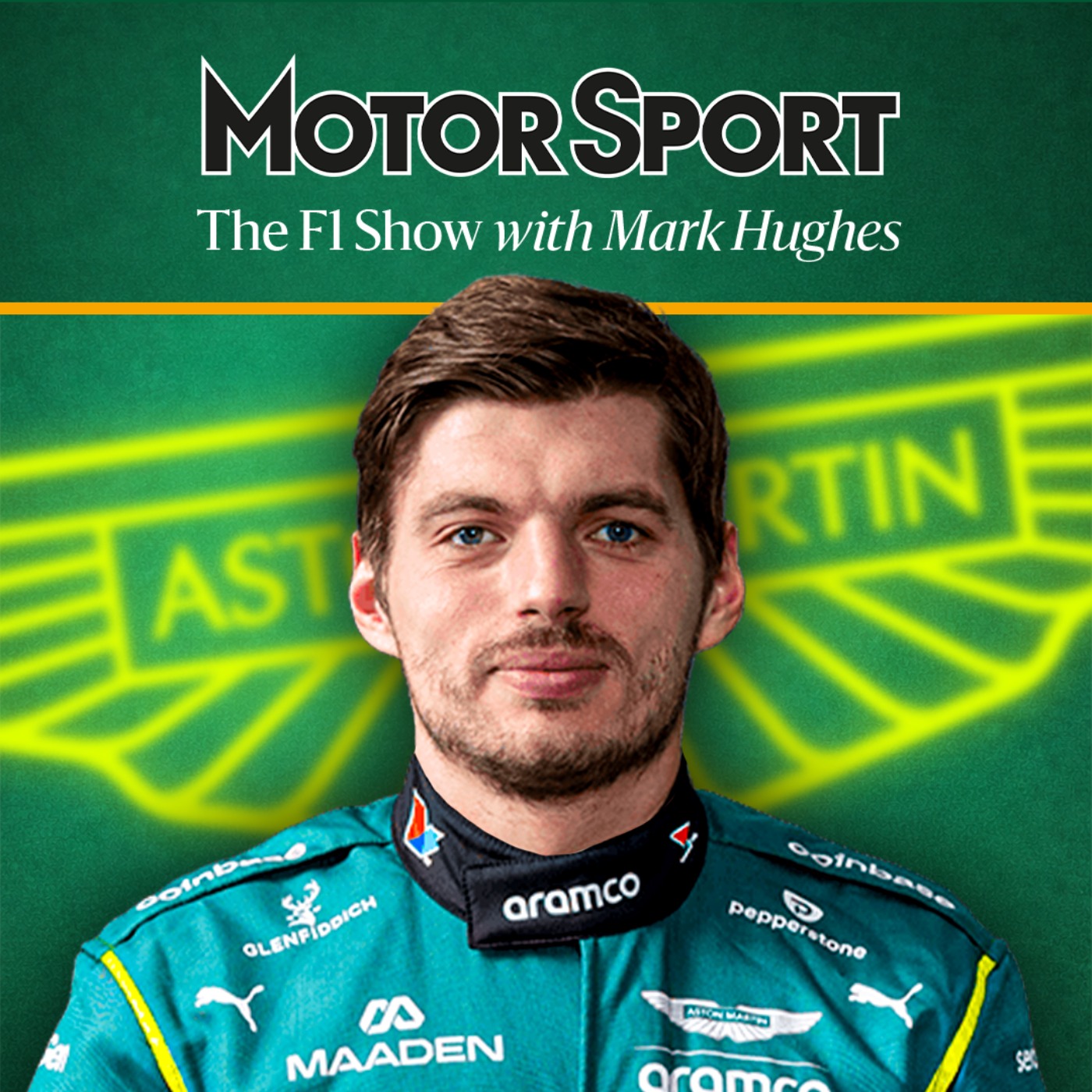
Max Verstappen may be the best driver in Formula 1 at the moment. So why would he even consider moving to current backmarker Aston Martin?
Hear Mark Hughes' compelling case in the latest episode of the Motor Sport F1 Show, as he sets out why the four-time champion is considering his future, and why he'd pick the Silverstone-based team over the likes of Mercedes, Ferrari and McLaren.
There's also Fernando Alonso to consider: what happens to him if he's displaced by Verstappen? Mark has an intriguing suggestion.
But it's not just silly season on the agenda ahead of the Belgian Grand Prix which will demand more electrical energy than the current generation of cars can provide. Can Spa provide a great race, even if cars spend much of the lap recharging their batteries?
Mark and presenter Bryn Lucas also discuss who will win the team-mate batle between Lewis Hamilton and Charles Leclerc, now that they both seem to be in tune with their Ferraris. How do they compare with the greatest team-mates in F1 history?
Plus your questions answered: What if Toto Wolff had signed Verstappen for Mercedes in 2014; and what's really happening when drivers tweak the torque map and differential on their cars?
Subscribe now for every weekly episode and tell us what you want to know from Mark. Send us a message on social media or find this podcast at https://go.motorsportmagazine.com/4gLZJPr and drop your questions in the comments. He'll answer a selection of the best every week.
Read Mark's column every Wednesday at https://go.motorsportmagazine.com/4gLZJPr