May 1, 2026 | Preview of top 100 dealership groups in used-vehicle sales; Ford brings back employee pricing for all
Automotive News Daily Drive
May 1, 2026 | Preview of top 100 dealership groups in used-vehicle sales; Ford brings back employee pricing for allAutomotive News Daily Drive · May 1, 2026
Ford is letting more people buy cars at a price similar to what employees get. It’s a temporary discount meant to boost sales, and they’re promoting it around the U.S. 250th birthday.
Employee pricing is a special discount that usually insiders (employees) get. If a company offers it to everyone, it’s basically a big sale price designed to get people to buy sooner.
The Ford F-150 is Ford’s best-known full-size pickup truck and is specifically included in the employee-pricing promotion mentioned in this segment. The hosts note that certain high-performance versions are excluded, which can affect which buyers qualify for the discount.
If aluminum is hard to get, carmakers can’t build as many vehicles as they want. That can mean fewer trucks on lots and less flexibility for discounts.
Tariff refunds are payments back to companies when tariffs are taken back or ruled not allowed. For car shoppers, it can affect how much money automakers have to offer discounts or keep production moving.
Stellantis is another major automaker. Here, they’re talking about how much money they expect to receive related to tariffs, and how that helps their finances.
GM is one of the big automakers involved in this tariff story. They expect some money back from tariffs, but they also think tariffs will still cost them a lot this year.
A post-tariff hangover is what happens after people rush to buy before prices rise. After that rush ends, sales can dip because fewer people are still buying for the same reason.
Market share is the percentage of total sales in a market that a brand captures. The hosts note that even with monthly sales declines, Hyundai and Kia claim they’re gaining market share—meaning they may be selling less in absolute terms but still outperforming competitors relative to the overall market.
Nissan is the car company behind the changes discussed here. They’re backing away from building EVs in Mississippi and shifting to gas vehicles instead.
An electric vehicle is a car that’s powered mainly by electricity from a battery. The story here is about Nissan deciding the plan to build EVs wasn’t worth it anymore.
“Truck-based” means the new vehicles are built using the same kind of underlying design as pickups. Here, Nissan is switching from electric plans to gas vehicles built on that truck-style foundation.
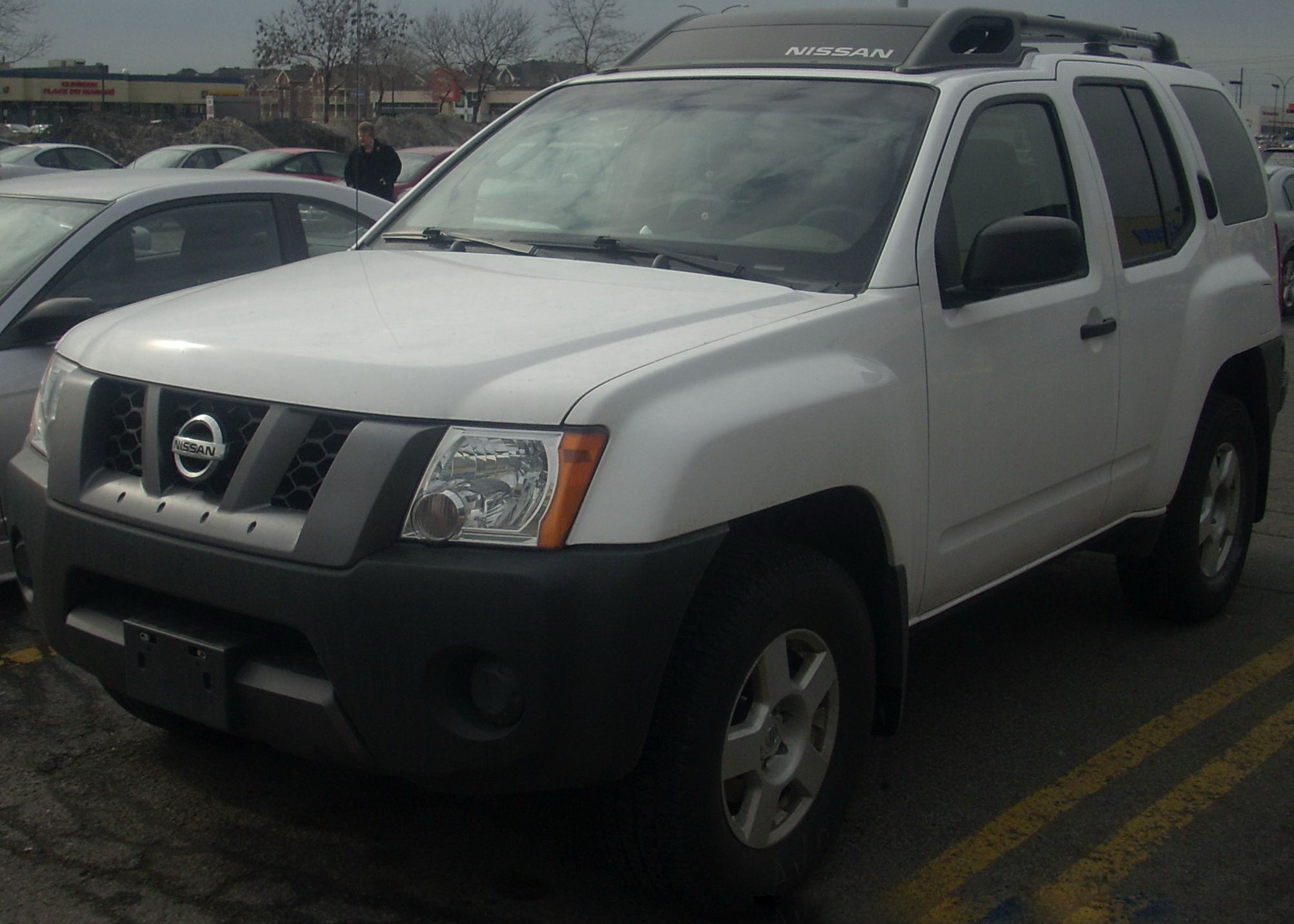
The Nissan Xterra is an SUV model that’s been around for years and is built with a more outdoorsy, rugged vibe. Here, Nissan says it will bring it back and build it in Mississippi.
Charging infrastructure is the system of places and equipment where EVs can plug in and recharge. The hosts are saying the earlier EV push depended on more charging being available.
Some cars are built with the body attached to a separate metal frame underneath. That setup is common on trucks and rugged SUVs because it tends to handle bumps and heavy use better, and it can make it easier to build related vehicles.
“Components sharing” means different car models use many of the same parts. That usually makes the cars cheaper to build and can help them reach the market faster.
Concept
launch these products on time
“Launching on time” means getting new cars into production when the company planned to. If it slips, it can be due to parts not arriving, factories not being ready, or other production problems.
They’re previewing a list that ranks the biggest dealers by how well they sell used cars. The discussion focuses on why used sales matter more right now.
It means the car’s features are run more by software than by fixed electronics. That can make it easier to add or improve features later with updates.
Concept
STV space race
They’re describing a competition among automakers to lead in the software side of cars. The idea is that whoever gets there first can set the rules for how cars improve and add features over time.
Concept
Frankenstein's monster of IP
They’re talking about the legal rights behind technology—like patents and software ownership. The “Frankenstein” comparison suggests it’s a patchwork of different companies’ tech and permissions.
They’re saying to compare today’s situation to what happened during the pandemic. The pandemic changed how many new cars were available, and that ripple effect pushed more shoppers toward used cars.
A new-car shortage means fewer vehicles were available for sale, which tends to raise prices and improve dealer profitability on the remaining inventory. When new supply is constrained, buyers often shift to used cars, increasing used prices and demand.
“Invoice” is the price a dealer pays the manufacturer for a vehicle. “Rebate” is manufacturer money that reduces the buyer’s effective price; “invoice minus rebate” describes a common way to talk about how close sales pricing is to the dealer’s cost after incentives.
CPO means “certified pre-owned.” It’s a used car that’s been checked and backed by the manufacturer or dealer, usually with some extra warranty protection.
“Price parity” here means certified pre-owned cars can be priced similarly to new cars for the same model. That reduces the usual price gap that makes CPO attractive versus buying new.
Concept
decontented new car
“Decontented” means the new car has fewer features than it used to. The idea is that a well-equipped used car could be a better buy than a new one with less equipment.
OEM is the carmaker itself. When the carmaker offers rebates or incentives, it can change what buyers choose between new cars and certified used cars.
Concept
late model CPO business
“Late model” just means newer used cars. “Late model CPO business” is dealers selling certified used cars that are relatively recent, which can get harder if new cars get big discounts.
“Appreciating” means used-car prices went up. If used cars cost more, they can start competing more directly with new cars.
Concept
units out of the market
“Units out of the market” means fewer cars were available during that period. When supply is tighter, used cars can become harder to find and sometimes cost more.
An auction is a marketplace where dealers bid against each other to buy cars. The speaker is saying dealers can’t source some of the same late-model inventory as easily as before.
MSRP is the price on the window sticker that the manufacturer recommends. If new cars get priced higher and include more features, it can shift what buyers look for in the used market.
The used vehicle market is where people buy and sell used cars. The discussion is about why that market has been growing and how pricing/incentives affect it.
It just means how a dealership finds used cars to sell. They can buy from auctions, other dealers, or online listings—whatever gets them the best cars at the right price.
It means how long the dealership keeps a used car on the lot. The longer it sits, the harder it can be to sell at a profit, so dealers often need to lower the price or replace inventory faster.
MMR is a pricing guide for used cars. It helps dealers estimate what a car is worth at auction by looking at recent sales.
Term
late model used
“Late model” just means the car is newer than most used inventory. The point here is that dealers were overpaying for newer used cars at auction.
Concept
service lanes (buying out of service lanes)
It means the dealership looks at cars that come in for service and finds opportunities to buy them for resale. For example, a customer might bring in a car, and the dealership ends up acquiring it as part of the process.
It’s a service from Kelly Blue Book that gives an estimated cash offer for a used car. Dealerships can use it to quickly buy cars instead of waiting for traditional listings or auctions.
In dealer talk, “retail” means the price dealers sell used vehicles for to end customers (as opposed to wholesale pricing). The speaker notes retail prices didn’t drop even though the benchmark market was improving.
Concept
forecasted having 2,000 used cars in inventory
This is about dealer inventory forecasting—estimating how many used cars they expect to have on hand and how many they expect to sell. The episode uses the forecast vs. actual numbers to explain how pricing and demand are playing out.
Turn rate is how quickly a dealer sells through its inventory over a period of time. A higher turn rate generally means cars are moving faster, reducing the time capital sits in unsold stock.
Wholesale is when cars are sold to businesses, not to regular shoppers. If wholesale prices are dropping, dealers often have more room to adjust what they charge customers.
Concept
used package
A “used package” here is a special report about used-car dealers. It looks at what the best dealers do differently to sell more cars and earn more profit.
Autonews.com is the website referenced for additional reporting, rankings, and deeper analysis related to used-car dealer practices and market conditions. It functions as the source listeners are directed to for the full study.
LIVE
Welcome to Daily Drive for Friday, May 1st, 2026.
I'm Jake Nier in Detroit, in for Kellan Walker.
Today on the show, Ford brings back employee pricing for everyone, Detroit automakers await
more than $2 billion in tariff refunds, and sales slip for Hyundai, Kia, and Mazda as
the post-tariff hangover sets in.
Plus, a preview of automotive news' 2026 top 100 dealers ranked by used car sales.
Let's run through all the news you need to know to keep up in the auto industry.
Ford is bringing back employee pricing for everyone through July 6th, and this time,
they're tying it to America's 250th birthday. The automakers calling it American Value for
American Values. Now remember, Ford pulled the same move last year when tariff uncertainty
had shoppers sitting on their hands. The automakers Andrew Frick tells us in automotive news that
this is about celebrating the semi-quincentennial, but it's also about growing their customer base
in a market that's looking pretty flat. The deal includes the F-150, even though inventory is tight
from aluminum supply issues, what's not included, raptor models, and high performance variants.
Meanwhile, Ford, GM, and Stellantis are about to get a pretty nice check from the US government.
More than $2 billion in tariff refunds. This comes after the Supreme Court ruled in February
that many of President Trump's tariffs were unconstitutional, Ford's already counting on $1.3
billion. GM and Stellantis are each expecting around half a billion dollars. The automakers say
this money couldn't come at a better time. It'll help cushion the blow from surging commodity
costs tied to the war in Iran. But don't think tariffs are going away. GM still expects to pay
up to $3.5 billion in tariffs this year. And remember last year's buying frenzy?
Shoppers rushing to beat the tariffs? Well, the hangover is definitely here.
Hyundai and Kia both saw sales slip for the second straight month in April,
Mazda's down for the ninth month running, off 17%. But here's the twist. Despite those
monthly drops, the Korean automakers say they're actually gaining market share this year. The
secret weapon? Hybrids. They now make up a third of Hyundai's sales. The industry's projected
annual sales pace fell to around 16 million vehicles down from 17.2 million last April,
when everyone was essentially panic buying before those tariffs kicked in.
And those are today's headlines. You can find more details on all of those stories at AutoNews.com.
Nissan has told US suppliers it's canceling plans to build electric vehicles in Mississippi,
pivoting instead to gas-powered truck-based vehicles. The move ends a $500 million EV
investment announced in 2021. The Canton, Mississippi plant will now build a revived XTERRA
SUV starting in late 2028, followed by the redesigned Frontier, and a three-row mid-size SUV.
Joining me to talk about all of it is Ervach Karkaria, who got the scoop for us at Automotive
News. Ervach, welcome back to daily drive. Hi, Jake. Glad to be back. So as we know,
many automakers are pulling back their EV plans. That's no surprise. But what's Nissan's specific
calculus here? Yeah, so Nissan, like its peers, basically did the math and realized the math does
not math. They had these ambitions of building 200,000 EVs by 2028 in the US. These plans were
drawn up in the heyday of EV excitement when the US government was fully backing the technology
with incentives and investment in charging infrastructure. All that has collapsed and
has taken demand with it. Nissan figured that this investment, if they had made it,
would never recoup itself, or it would take more than a decade, I guess. So they've just
cut their losses and canceled the plan. Now, this was sort of a gradual thing. We've been
reporting for the past year that these EVs, they had initially planned to build two crossovers and
two sedans, one each for the Nissan and Infinity brands. So the sedans got axed first, and then
the following a few delays, and then the crossovers were also delayed. And then in September,
automotive news essentially confirmed that this project was dead. And this week,
they basically told suppliers that officially have canceled the plans.
I guess the silver lining kind of makes itself here in some ways, right? That they have to cancel
this big investment, but it also opens up this opportunity in Canton. They don't have to build
out more manufacturing capacity locally to pull off this really sort of cornerstone of their
turnaround plan, which is these body on frame platforms. Talk about the significance of that
for Nissan and its dealers. Yeah. So I think last year, maybe a little before that, they sort of
came up with this new strategy of body on frame. And I guess they want to build these vehicles
in the US for a number of reasons. These are sort of made for US kind of product,
truck like rugged vehicles. And they obviously had conveniently had a production plant that
is relatively underutilized. It only builds the frontier and sedan. So they were able to slot
it into that. But this is an interesting product or range of products, if Nissan can actually
execute it on time and in the right way. So they've developed this new body on frame platform.
It will, as you said, support five vehicles. The most interesting one, if not the highest volume,
is the XTERRA. So they're bringing back the XTERRA, you know, as iconic Nissan product SUV.
They're going to make it affordable like the old version, but it's going to be more rugged.
I've seen the product in Japan or rather renderings of the product in Japan. And
it's going to create a lot of buzz. It's going to drive excitement into the brand,
which is really one of the one of the big things Nissan needs. They've got the product,
the problem is nobody considers them or very few people consider them. That's changing now.
So we shall see. And then this this platform is also, you know, going to have a lot of
components sharing. According to supplies, I spoke with about 70% of the components are going to be
common across the five vehicles. Everything, I believe, forward of the B-pillar will be similar.
What that means is it reduces complexity and manufacturing, can get these products
to market to production faster, and also lower the cost, which is important for, you know,
product like XTERRA. So on paper, you know, this is a good plan. Again, the devil is in the details.
Can Nissan launch these products on time? That's something that they've been challenged with.
For years. So DVD. Nissan, as always, keeping our friend and colleague, Irvax Karkaria busy
over there in Atlanta and overseas on his reporting trips. You could find all of Irvax's
reporting on this and other things over at AutoNews.com. Irvax, thanks so much for joining us.
Thanks for the time, Jake. Coming up, a preview of automotive news's
2026 Top 100 dealers ranked by used car sales. That's next on Daily Drive.
The auto industry talks a lot about the software defined vehicle,
but the STV space race is already creating clear winners and losers.
It's kind of a Frankenstein's monster of IP. On this week's episode of the automotive news
shift podcast, I'm joined by Alex Euler, consulting director at SBD Automotive.
We break down who's leading in the STV race, why Tesla and other EV only brands have an edge,
and whether newer EV automakers can keep their lead as legacy brands try to catch up. Plus,
we'll hear about the latest Chinese tech on display at the Beijing auto show this past week.
I'm Molly Boygon. Join me on shift, available this Sunday, wherever you get your podcasts.
Welcome back to Daily Drive. I'm Jake Neer. Automotive news is set to release our 2026
Top 100 dealers ranked by used car sales. This year's data shows many dealers are selling
more used vehicles than new ones, and they've had to adapt their strategies to meet that shift.
Automotive news is Rudy Shorke has this preview, and we also hear from our own Mark Holmer and
some of the subjects that he interviewed for this piece. This year's data shows that many
dealers are selling more used vehicles than new ones. We dive into why dealers are increasingly
betting on used cars, how they've had to adapt to meet that focus, and how it's impacting their
sales. We also look at strategies used vehicle dealers are using to find success and profitability,
whether it be diversifying sources amid low supply, building their reputation as a used car
dealer or matching their inventory to their demographic. This year, many dealers push beyond
the traditional one to one used to new sales mix. Consumers are gravitating towards less expensive
vehicles as the average price of a new car tops $50,000. Dealers are leaning on used vehicles
during this affordability crisis. 31 of the automotive news's top 100 used dealerships surpassed
the one to one average in 2025, up from 27 dealerships in 2024. Here's what Patrick
Jaynes, Assistant Vice President of V-Auto Inventory Management Solutions at Cox Automotive
and a former used car dealership manager thinks is pushing dealers and buyers to the used vehicle
market. The affordability factor is, I mean, you know, we're not dealing with low interest rates
like we had before, and now we're dealing with fuel prices and some pain around
the inflationary impacts of that. So I think consumers certainly are looking for the used
car alternative. And as a result, I talked to a number of dealers recently that said,
I remember back in the day, everybody wanted to have under $15,000 used cars, you know,
because those things would really sell well, they provided a low payment to, you know, somebody
that could just get into a vehicle. And now they're like, I can't keep under $30,000 used cars on my
lot. I'm like, wow. But literally, you know, because there is no new car alternative to
anything below 30 grand to speak of, right? So like that is become the affordability vehicle
that consumers are looking for. And I guess when you get into late model used cars, some of the
premium luxury brands, and then there's maybe more competition against the new car alternative.
But what is there to compete against if someone's looking for that, you know, under $30,000 payment?
And even though the rate might be a little bit higher on a used car versus a new car,
there's no, you know, alternative to compare to, if I should I get into, you know, a really
decontented cheap new, or should I get into a used car? That one I just described, I don't think
exists, you know, in any kind of volume out there. I mean, with all the OEMs kind of, you know, going
away from cars, more SUVs and trucks and more higher price point new vehicles.
How long is the trend been going now? And how long do you think it will continue?
Well, I keep coming back to the, you know, I need to, you know, benchmark everything off of the
pandemic. But the pandemic created a shortage of new cars, which created a higher margin
opportunity for dealers. So they were making, you know, before, you know, we're selling them
well below invoice minus rebate minus, you know, whatever. And kind of, I remember a time when,
you know, you had that late model used car, that CPO car, if you will, right? Boy, you better be
careful, because if that thing, you know, where you were in it got too high, it would literally
compete with new cars, you know, maybe even a a decontented new car, the same model, if you had
a CPO car that had some equipment, they might be priced at parity. And so you to be really careful
if, if a OEM put big incentives on a vehicle, it could step on your late model CPO business.
And that was a real thing. I don't think we've seen that kind of situation for a while. Now,
now used cars have been kind of appreciating, you know, that the prices have come up certainly
since the pandemic. But the fact that the dealers are also making a nice margin on those new cars,
I don't think dealers feel that pressure as much like they did before that, boy, if my OEM throws a
$8,000 rebate on this vehicle, it could actually cut into my late model used business. So there's
a little of that going on. I also believe that we took, I've heard from eight to as high as 10
million units out of the market back during the pandemic would be today's use cars, right? Those
three four year use cars that would be really perfect in the wheelhouse, those cars, you know,
aren't necessarily there. We don't have the ability dealers going to go to the auction and buy those
kind of late model new car kind of trade offs that they had before. So I think that there isn't as
much conflict from an affordability standpoint going on with the new cars anymore. The fact that
those OEMs went very upscale in MSRP and in content and in, you know, kind of the high end of their
trim levels. We know there was a lot of that happening because those were more profitable
vehicles. I think that's left a little bit of a void for use cars to step in there even though
use cars aren't going for nothing. I mean, they're holding their values quite well. They're still
able to come in there and offer just a better value for buyers that are out there. So the
affordability thing is still a big deal. And these are just some of the reasons behind the
growth of the used vehicle market. In our top 100 use vehicle package, we dive into the changing
landscape and how dealers are adapting. The data also reveals that smaller dealers are
excelling in the use vehicle market. During the COVID-19 pandemic, many dealers found that
used vehicles often brought more money per sale than new vehicles that made use vehicles a reliable
revenue source for many dealerships. For more insight into these trends, look to autonews.com.
For this year's top 100 use dealership package, automotive news asked many dealers what strategies
they're using to find success. Many dealers are expanding their used vehicle sourcing,
looking for cars on Facebook marketplace, for example. Others are focusing on their reputations
or making sure their inventory meets the needs of their demographic. Jeff Neeson, CEO of Van Horn
Auto Group of Sheboygan, Wisconsin, talks about some of the strategies his dealers use to maximize
used vehicle sales. Every year, there's a dip come December, January in the used car market.
So when you're holding that used car inventory, if it's 60 days old, you're losing money on it,
right? You just got to blow it out of there. But because the market's falling, you just replace
it and you kind of burn through it. And that's the way of the world, at least in the Midwest,
in the cold months. That didn't happen this year. There wasn't a dip in January. The MMR
was staying 100% or north of 100. However, retail on our end wasn't really following it.
So guys were paying what we would call obscene amounts of money at the auction for late model
use. So 2024, 2025, we'd have a number on every single car going through. And these guys are
paying four, five, six grand more than our number. We don't have a number it's priced so we can buy
it and bring it home and make five grand on the car. That's not reality, right? We have them priced
knowing where we're going to transact that as a percentage of the market. And they were just
so obscene. I finally just pulled and I said, look guys, you got to back off. You can't continue
to pay for this stuff because we're going to get killed. If we sell them within 30 days where we
think we're going to sell them, we're going to lose money. And if you don't, and it's 60 days later
and say the market starts to drop, it's going to be really ugly. So what did we do? We didn't just
say, okay, we're going to buy less cars. It forced us to start concentrating a lot more on, frankly,
the areas we should have been concentrating on more already anyway, which is buying out of our
service lanes, buying from Facebook Marketplace, Kelly Blue Book Instant Cash Offer. We have used
Kelly Blue Book Instant Cash Offer in our Sheboygan area already with pretty good success.
But our stores are kind of spread out throughout southeastern Wisconsin.
They're not all within like a 10, 20 mile radius. The farthest store is about two hours north
and then another one about two hours southwest. So we really started concentrating on
inventory acquisition through other lanes, not auction lanes, right? Don't get me wrong. We're
March through the auctions, but we probably normally would have bought 650 somewhere around there.
To be clear, you're anticipating lower use vehicle sales for 26.
Yeah, that was the adjustment. Originally going into 26, we said, okay, use car supply is going
to increase again year over year. Intern prices should come down, which means we'll be able to
continue buying and then we're going to sell more. And what we saw happen early in the quarter was
the prices weren't coming down. They were actually going up and retail wasn't going with it. So
we intentionally backed off. Going into March, we had forecasted having 2,000 used cars in
inventory. We went in with 1,500. So that's a material difference, right? So we had forecasted
2,000 in inventory and selling 1,250 used. We only had 1,500. And in turn, we sold
1,000 used. So our actual turn rate on the inventory we have was better than what we had
forecasted with the higher rate. If you follow what's going on right now, last week was the first
week this year that the MMR has actually gone down. So MMR went down half a percent last week
and retail did not follow. So what's going on there? We know one thing to be true for
sure. When you've got a market for a particular vehicle, the stuff that's priced the lowest
clears the fastest, clears the market, right? So when that happens, the lower price stuff is
leaving, which means the higher price stuff is left. So then you could see how retail might
actually not follow suit down right away because the only way it follows suit down is if the guys
that have stuff priced too high start to lower the price. Keep in mind that those guys that have
stuff priced too high are the same guys that were paying 105 percent of MMR for a car in January
when we decided not to do that. So I'm kind of looking at it right now as we're watching it very,
very closely. My cousin's on this stuff every single minute of every day. If that MMR drops again,
of course, us and every other dealer that has a used car that's 60 days old is going to have some
potential liability there because retail is going to start to come down. But the fact that
wholesale is going, I almost feel like what we normally see happen in January is actually happening
right now. And if it is, we're going to be in a really good spot because we can go buy everything.
The top 100 used package dives into all the core practices used by those selling the most used
vehicles and finding the most profit. Dealers who depend on used vehicle sales increasingly
know how important their reputation is to their business. For more information on how
used vehicle dealers develop a good reputation in the market, look to autonews.com. This year's
package also takes a look at the used vehicle market as a whole. We examine how the affordability
crisis and other factors are impacting demand and how dealers are adapting. And we investigated
the strategies helping these top dealers succeed. This year's package offers a unique peek into
the realities of dealers rising to the top of the used vehicle market. We break down what challenges
used dealers are facing and how they're adapting and what strategies are helping them profit the
most from their sales. For the full rankings, deeper analysis and additional reporting, visit
autonews.com. That's Daily Drive for today. I'm Jake Nier in for Kellan Walker. Thanks to
automotive news journalists, Irv Aksh Karkarya, Michael Martinez, John Irwin and David Phillips
for their reporting for today's podcast. You can get the latest news on used car sales,
product strategy and everything happening in the auto industry at autonews.com.
Come back over the weekend for our Weekend Drive edition of the show.
Our panel of automotive news journalists will talk about the week's biggest news stories,
including Ford's decision to bring back employee pricing for the July 4th holiday.
They claim it's all about celebrating America. I think probably there's more to the story.
We'd love to hear from you. Let us know what you think of the show and the topics we covered today.
Send us an email at dailydrive at autonews.com
and leave us a voicemail at 313-444-2774. And if you enjoy the podcast, remember to like,
leave a review and subscribe so you never miss an episode.
About this episode
Ford is rolling out employee pricing for everyone through July 6, with the promotion tied to America’s 250th birthday and including the F-150 but not Raptor or other high-performance variants. The conversation also tracks tariff refunds, Nissan’s shift away from EV plans in Mississippi, and a broader used-vehicle market that’s being shaped by affordability pressure, tight supply, and dealer sourcing changes. One dealer group says auction competition is still intense even as wholesale values begin to soften.