
Geely
Geely is a car company from China. In this episode, they’re described as being the first Chinese brand to sell electric cars in Canada, starting with a specific EV model.
software-defined vehicles
A software-defined vehicle is a car where lots of important features are controlled by software. The concern is that more software means more ways hackers could potentially break in, and a single flaw could impact many cars at once.
cybersecurity problem
In this context, cybersecurity problem refers to the risk that hackers could access a vehicle’s connected systems or software. The segment emphasizes the scale of the threat by citing the large amount of onboard code and the idea of many potential “entry points.”
Lotus Elutra
The Lotus Elutra is an electric SUV/crossover. The show says it’s the first electric model being shipped from Geely’s group into Canada under the new trade arrangement.
Cherry
Cherry is a Chinese automaker mentioned as planning to come to Canada. The hosts are basically saying multiple Chinese EV brands are preparing to compete there.
BYD
BYD is a Chinese car company. The episode says it’s getting ready to sell EVs in Canada along with other Chinese brands.
lines of code
“Lines of code” is a way to describe how much computer programming is inside the car. The more code a system has, the more chances there are for mistakes or weaknesses that hackers could exploit.
entry points
“Entry points” are the openings a hacker might use to get into a car’s computer systems. The episode’s point is that modern cars have many possible openings, so one weakness could be widespread.
cyberattacks
Cyberattacks are digital break-ins or disruptions that can hurt a company’s operations. The segment says the auto industry is losing a lot of money to these attacks, and they’re happening more often than a few years ago.
Tier 2 and Tier 3 suppliers
In car-making, there are different levels of suppliers. Tier 2 and Tier 3 are deeper in the chain, and the point here is that hackers often target these smaller or less-visible companies first.
tariff strategy
A tariff strategy is a plan for dealing with taxes on imported goods. Here, Nissan is trying to pay fewer tariffs by building more cars in the US.
Nissan
Nissan is a car company, and here they’re talking about how Nissan lowered the extra taxes (tariffs) they pay. They did it by building more cars in the US instead of importing them.
Made in America strategy
A “Made in America” strategy is an approach where an automaker increases the share of vehicles built in the US to reduce trade barriers and improve supply-chain control. Here, Nissan increases domestic production at its Smyrna, Tennessee and Canton, Mississippi plants to grow the portion of US sales built in-country.

redesigned Rogue
The Nissan Rogue is one of Nissan’s biggest-selling cars. When they say it’s getting a redesign, it usually means Nissan will update it with changes to keep it modern and competitive.
e-power hybrid
Nissan’s e-Power is a hybrid system where the gas engine mainly acts like a generator. The car still drives using an electric motor, so it can feel smoother than some traditional hybrids.
body on frame platform
Body-on-frame means the car has a strong “skeleton” frame underneath, and the body is attached on top. It’s common on trucks and some SUVs because it can handle heavy-duty use well.

Nissan Frontier
The Nissan Frontier is Nissan’s midsize pickup, and it’s one of the company’s key US-made vehicles mentioned in the segment. In pricing and financing strategy, pickups like the Frontier are often treated as “utility vehicles” that respond strongly to incentives.

Nissan Pathfinder
The Nissan Pathfinder is Nissan’s midsize three-row SUV, and it’s listed alongside the Rogue as a US-made sales focus. The segment ties its sales push to pricing cuts and financing incentives, which are common levers for large family SUVs.
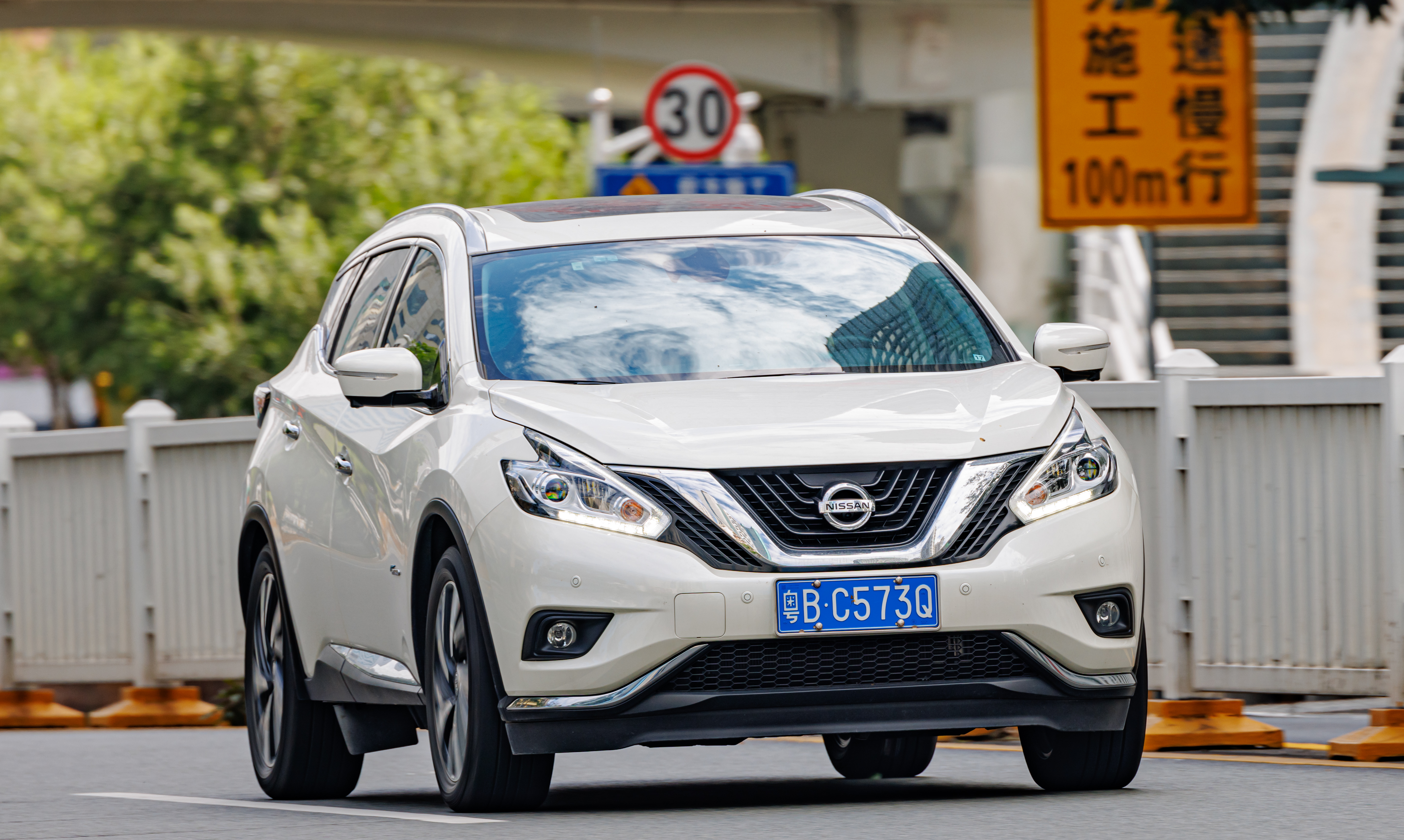
Nissan Murano
The Nissan Murano is Nissan’s midsize crossover SUV, included here as part of Nissan’s US-made lineup. The segment frames it as one of the vehicles benefiting from broader sales and production efforts.
0% financing for 60 months
“0% financing for 60 months” is an incentive where the buyer pays no interest over a five-year loan term. Automakers use these offers to lower the monthly payment burden and stimulate demand, especially for higher-volume “utility” models.

Kicks
The Nissan Kicks is a compact crossover that the segment says Nissan produces in Mexico for the US market. It’s included in the tariff-cost discussion because increasing US-sourced components can reduce the effective tariff burden on imported vehicles.
tariff bill
A “tariff bill” is the total cost a company pays in import duties due to tariffs. The segment explains that by using more US-sourced components, Nissan can reduce the tariff impact on vehicles built in Mexico.
25% tariff
A “25% tariff” means imported vehicles or parts face an additional 25% duty cost. The segment argues Nissan is effectively absorbing that cost for the Mexico-built models until the tariff changes, which helps explain why prices aren’t rising as much as they otherwise might.
Volvo Cars
Volvo Cars is the automaker being discussed through its engineering leadership in this segment. The host references Volvo’s high SDV readiness score and asks its technology executive what “SDV ready” actually means.
SDV readiness scores
SDV readiness scores are a way to judge how “ready” a carmaker is to make cars that rely heavily on software. It’s basically a checklist-style score for the systems and processes needed for that approach.
S&P Global Mobility
S&P Global Mobility is a company that does automotive research and publishes industry data. Here, they’re mentioned because they released scores about which automakers are ready for more software-driven cars.
level 3, 4, 5
These “levels” describe how automated a car is. Higher numbers generally mean the car can drive more of the job by itself, with less help needed from the driver.

EX60
The Volvo EX60 is a Volvo model that’s being built around advanced software. The idea is that the car can gain features over time, not just at the factory.
open network
In this context, an open network refers to the vehicle’s internal communications being designed to allow data exchange and software access across systems. The speaker emphasizes that the car can be both read from and written to, enabling updates and new functionality.
read and write possibility
It means the car can share information out (read) and also accept changes back in (write). That’s how software updates can add features or adjust behavior.
domains
In car software, “domains” means different big areas controlled by computers. The speaker is saying updates can improve more than just the entertainment screen.
infotainment domain
“Infotainment domain” is the car’s computer system for things like the screen, music, and navigation. The speaker is saying SDV is bigger than just updating that part.
domain based systems
Domain based systems split the car’s electronics into separate groups, like one group for the engine-related stuff and another for the cabin and entertainment. Each group has its own computer that controls its functions. As you add more features, coordinating all those groups can get complicated.
sensors and actuators
Sensors are what the car uses to “sense” what’s going on. Actuators are what make things happen, like moving parts or adjusting systems. Together they connect the car’s physical world to the computers that control it.
ECUs
ECUs are the car’s computers. They take information from sensors and then control parts of the car that do something physical. Many cars have several ECUs working together.
tier one
A “tier one” supplier is a major automotive electronics or systems vendor that supplies complete subsystems (often including software) to automakers. In the transcript’s context, tier ones commonly write much of the vehicle code, while the automaker focuses on system integration and coordination. This supply-chain structure strongly influences how vehicle software is developed and maintained.
zonal architecture
Zonal architecture means the car is organized into sections (zones) like different areas of the body. Instead of grouping electronics only by function (engine vs cabin), the system is grouped by where things are in the car. That can make it easier for the car’s computers to coordinate actions.
domain architecture
Domain architecture is how a car’s electronics are grouped. Instead of organizing by where components are located, it groups them by what they do (like engine-related systems vs cabin systems). How you group these systems affects how complicated it is to add new features.

Toyota A90
The Toyota Supra is a sports car made for driving fast and feeling connected to the road. It’s often discussed when people talk about how a company improves its performance cars over time. The “step forward” idea usually means updates to how the car is built or how it drives.