Project Orca is Toyota’s name for a new big factory plan in Texas. The hosts say it’s a $2 billion project aimed at getting incentives and expanding production.
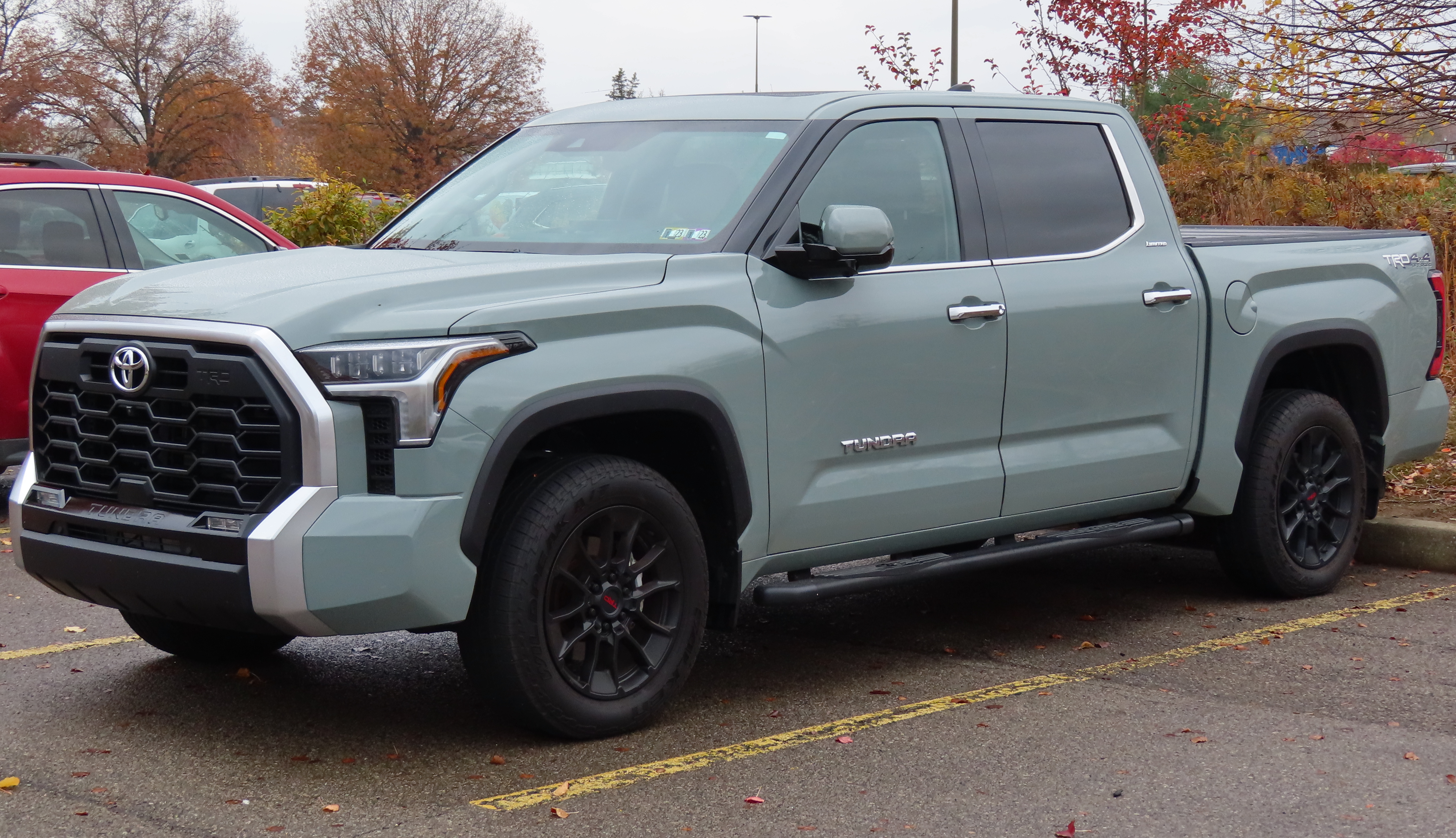
The Toyota Tundra is a full-size pickup truck. They’re saying the new plant will be built next to the current Texas factory that already makes the Tundra.
The Toyota Sequoia is a large SUV. The hosts mention it because the current Texas factory already builds it, and the new plant is planned right next door.
A unibody car is built with the body and frame as one connected structure. If Toyota builds a “unibody plant,” it means the factory is geared toward making cars that use that construction method.
The Toyota RAV4 is a popular compact SUV. They’re speculating the new Texas plant will help produce more RAV4s (and possibly related models) starting around 2030.
Term
TMA cave frame platform
A platform is the shared “base” that different cars can be built on. They’re saying Toyota’s setup could let the new plant build multiple vehicles that share the same underlying structure.
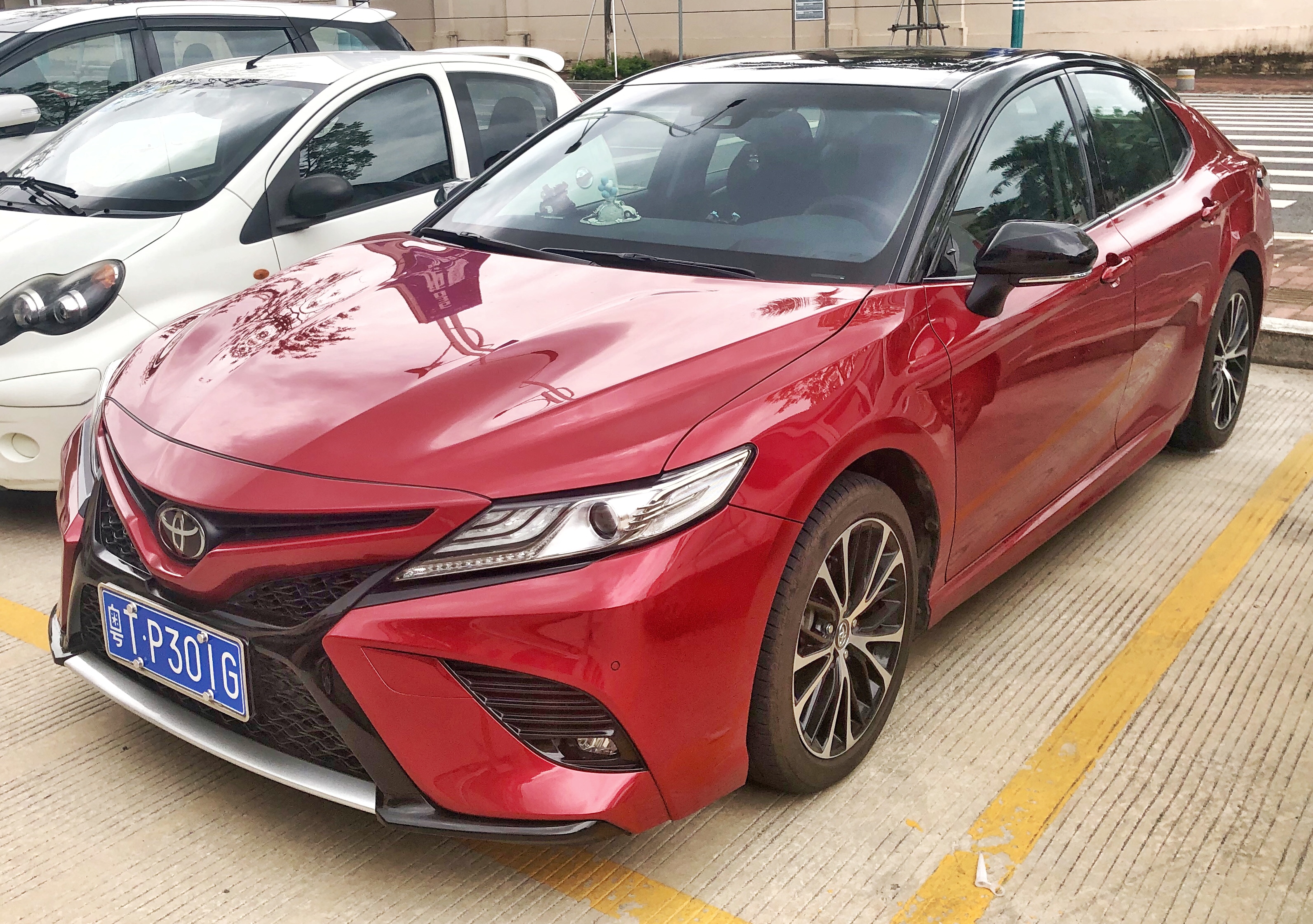
The Toyota Camry is a midsize sedan. They’re saying the new plant could be set up to build more Camrys depending on how flexible Toyota makes the production line.
The Ford Maverick is a smaller pickup truck meant to be practical and relatively budget-friendly. The podcast mentions it because it’s selling well and getting a lot of attention. That can affect what Ford focuses on next and what buyers see in showrooms.
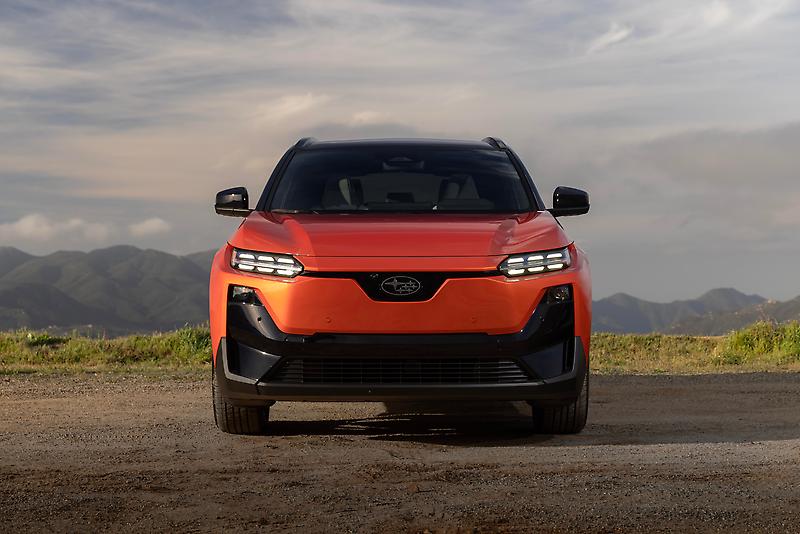
The Subaru Uncharted is a Subaru vehicle name mentioned in a group with other similar cars. The podcast is treating it as part of a set of comparable options. The key point is that it’s one of the models being compared or listed together.
The Toyota C-HR is a small SUV-style vehicle. It’s meant to be easier to handle and park than bigger SUVs. The podcast brings it up as part of a group of similar vehicles being discussed together.
The Subaru Trailseeker is a Subaru vehicle name mentioned in the same group as a couple of other cars. The podcast suggests these options are very similar for the discussion they’re having. So it’s mainly being used to explain the lineup and how the choices compare.
It means fewer people are buying electric cars than expected. If that’s the case, companies often push back new EV plans because they don’t think they’ll sell enough to make money.
A write-down is when a company admits, in accounting terms, that something they invested in is worth less than they thought. Here, it’s tied to electric-vehicle plans.
Tariffs are extra taxes on things brought in from other countries. For car companies, that can make imported cars cost more, so they may build more cars locally instead.
GM is an automaker being used as an example. The idea is that GM aimed to go electric sooner, then backed off because it turned out to be tougher than expected.
The government sometimes gives a tax break when you buy an electric car. If that tax break goes away, the car can cost more to the buyer, so fewer people may buy them.
Registrations are basically the paperwork count of new cars being added for driving. Looking at EV registrations helps show whether people are actually buying more or fewer electric cars.
When gas prices jump, driving a gas car becomes more expensive overnight. That often makes people pay closer attention to how much fuel their car uses and whether an EV would save money.
Fuel economy is a measure of how much it costs to drive. For gas cars it’s often MPG, and for EVs people usually think in terms of energy use and cost per mile.
Used EVs are electric cars that people sell after owning them for a while. If not many people want to buy them, the market can get stuck and prices may drop.
LIVE
Welcome to this Weekend Drive edition of Daily Drive for the third week in May, 2026.
I'm Kellan Walker in Las Vegas.
This week, we're talking about Toyota considering a new $2 billion assembly plan in Texas, Ford
cracking down on suppliers over quality and cost, and major EV strategy shifts from Honda,
Mazda, and Subaru.
Joining me as always, Michael Martinez, who covers Ford in a UAW for us at Automotive
News.
Mike, welcome back to the show.
Thanks for having me.
And Larry Velikwet, who covers Toyota, Mazda, and Subaru.
Larry Legend, how you doing, bud?
I'm a little tired this week.
Are you?
That's that's how I'm doing.
Yeah, I know why I'm a little tired.
I know I know why.
That's a great segue.
You out here breaking all this news.
So let's let's start with Toyota.
Larry, you broke the story and I believe you've predicted Toyota would need another U.S.
plant. Walk us through what we know about Project Orca.
I know it's got a fantastic name, right?
Project Orca is a cool name for it.
It is, but it isn't.
It is, but it isn't.
Where's the whale?
No, no, it's it's on the the case is all black and white.
It is.
You got me.
You got me. OK, yeah, it's a whale of a plant.
And it's and it's the need is all black and white.
Actually, yeah.
Actually, so what this is, Project Orca is a 2000000000 dollar plant
that Toyota has applied to the state of Texas to to get some incentives for.
It's going to be built right next door to the existing Toyota truck plant
where they build the Tundra and the Sequoia right now.
Now, right now, we don't know exactly what they're going to build,
but we have a strong, strong suspicion that this is going to be a unibody plant,
a flexible unibody plant that will allow them to build both unibody.
We're hoping we believe it's going to be the long promised
RAV for compact pickup, as well as some other products.
And depending on how flexible that they make this,
they can really build almost anything in that size, that that midsize
TMA cave frame platform that they have.
So that means more Camry's.
That means more RAV fours.
If they want to, it's all just sequencing at that point.
The project's not going to come online until 2030.
Going to take them that long to build.
It's a planned 2.2 million square foot expansion.
And they'll employ about 2000 people.
Now, you said, Larry, that your prediction that they are possibly
looking at building a plant to build a unibody vehicle.
Mike, what does that mean for Ford if Toyota jumped into the compact pickup game?
Well, I think I'm always a fan of more competition in any segment
because I think that breeds innovation.
And it makes everybody beyond their A game.
Otherwise, they're going to lose shares.
They're going to lose customers.
So Ford's absolutely dominating with the Maverick right now.
And they could use a little competition.
I think it's smart for Toyota.
I think there's plenty of room in that segment for more competitors.
I think there's still plenty of runway that people will continue
to snap up these type of products.
One, as prices continue to rise and two, as vehicles continue to get bigger and bigger.
Some people don't want a truck the size of a school bus,
which is what it feels like with some of these things.
So compact pickup, I think is an excellent idea.
I think Ford's probably not going to be happy because it probably will mean
they'll lose a little bit of sales and share, but it should help everybody
make a better product.
I just want to know what Larry Stradamus here's next prediction is
because we he had the new Toyota plant was a week's months ago.
I just want to know what his next one is that I'm going to retire.
So, Mike, our sibling publication cranes
to trade business reported Ford is putting suppliers on a no bid list
if they have quality problems and pushing parts makers to sign
three year cost savings plans.
What's driving this crack down?
Well, it's pretty obvious to anybody who's been watching or listening
for any amount of time that Ford doesn't exactly have the best quality out there.
They've led the league in recalls for years.
They're continuing to do so in 2026 and they need to do something.
And part of that something is going to the supply base
because whether you call it whining or not taking accountability or whatever,
I think everybody can realize that at least some issues
are maybe not Ford's fault.
They could arise from the suppliers, a bad part, a defective part.
And they're trying to fix that as much as they can.
So how do they do that?
They tighten the screws a bit and say, you need to meet a certain minimum
quality level in order for us to do business with you.
And if you're not going to agree to do that, we'll pull the rug out from under you.
We'll take away business, we'll take away future opportunities.
So, you know, is it harsh?
Maybe is it necessary?
Probably.
This is not unusual, right?
But it takes two to agree to these contracts.
And that means if you're a supplier, you have to go back to the OEM and say,
OK, we can we can commit to these terms.
We can improve our quality.
You have to commit to not sending change orders and you have to commit
to volumes that are going to allow us to make money because we're not here
to lose money on this part.
You know, we have to maintain our books.
We have to make a profit as well.
And the way to do that is to have a relationship that works for both of us.
And a lot of times when I mean, we've watched this over the decades,
right, at these automakers, when they get into quality issues,
they get into supplier relations issues.
This is why supplier relations are a thing that we watch so closely.
Those that have good supplier relations issues, whether the storms when they happen
and those that don't, they get beat up on the waves time and time again.
It is a, you know, just a truism in this business.
So having them go to the dealers with the, you know, with this tough love,
it's great. But they also have to, you know, they got to look in the mirror too
and say, no more change orders.
We're going to work together.
We're going to do it collaboratively, etc.
It's a two way street.
Now, that's a great point.
Now, Mike, you talked with Ford's Chief Supply Chain Officer, Liz Dora,
last week before this news broke.
She was talking a lot about all of the things Ford needs to do to improve
supplier relations.
Then this comes out.
Is there a disconnect here?
I don't think it's a disconnect because I don't think improving a
relationship should be contingent on letting the supplier's own quality
standards be too lax.
I think it's perfectly fine.
If you look at any business, you know, whether it's a restaurant,
whether it's automotive, if the people you get parts or food or whatever
the good is comes from, if it's not up to your standards, it's only going
to reflect poorly on you.
The customers will stop buying Fords.
People at restaurants will stop eating there if they're getting sick from the
food. So I think it's perfectly fine.
You can do both things.
You can demand higher standards and improve your business relationship.
And to Larry's point, Ford's trying to do that as much as possible.
We mentioned a few shows ago about how they promised to offer three-year
windows into their product development process.
As much as that may change, the effort to at least do that will be greatly
appreciated.
They just set up a help desk that's meant to give suppliers easier access to
Ford representatives to solve problems.
They have a two-way scorecard they've implemented to help diagnose and fix
issues faster.
So some of the things Larry mentioned, Ford is promising to do.
We'll see if they follow through on it.
But at the end of the day, the suppliers need to hold up their end of the
bargain because if they do, if Ford wants to get better, where it
should be quality-wise, there's a lot that needs to change.
And we've talked before about some of the ways they're using AI to improve
quality, the different testing they're doing on their products, but it needs to
extend beyond them to every partner in the vehicle development process.
Larry, question.
Now, unlike Ford, Toyota's supplier relations are stellar and have been for a
long time.
Could you ever imagine a scenario where Toyota would do something like this to
control the cost or quality?
And how would they approach this?
Well, you know, it's funny you asked that because if you noticed in the interview
that we did with Terogawa, he talked about having to go back to his suppliers
right now because they need help on their tariff costs.
They need cost control.
And the difference, I think, is that they're going to go in instead of saying,
you know, to pick apart, we're no longer going to pay you a dollar for this.
We're only going to pay you, you know, 88 cents, which is how some other
automakers would handle this and, you know, figure it out.
They'll go in and say, we need to get the cost down to 88 cents.
What can we do?
What do we do together to get the cost down?
What do you need?
What do we need?
Is it how do we get you to be profitable at 88 cents instead of a dollar?
And that's how they'll go into it with these collaborative approaches, which is
why, you know, why they get the technology first, why, you know, if a supplier
develops something, they'll go to their best customers first with it because,
you know, they want that working relationship.
They appreciate that working relationship.
It pays dividends instead of coming in, you know, all the time with the, you know,
with the the acts and saying, hey, we need, we need more, more.
So it's something just as simple as talking to them instead of at them and
approaching them in a collaborative sense.
And that could change the whole way the industry does all this, like supplier,
manufacturer, relation stuff.
Is it that simple?
It is that simple.
And every time that, you know, what happens is over the years, different
automakers have tried this, right?
They roll out these big, these big initiatives.
We're going to work with our suppliers more closely.
We're going to be collaborative and kind.
And that, you know, and they, they do these big initiatives and I've seen it many
times covering former automakers.
They come in, they roll out these big initiatives and eventually, you know,
this is a cyclical industry.
Things take a downturn and all that goes out the window because, you know,
somebody's bottom line is hurting and or suppliers are making too much money.
There was that, there was an instance in during a call.
God, I don't remember what year it was when Sergio Marchione said, our suppliers
are making too much money.
We, we got to go back and fix that, right?
Just, just, uh, that's not, that's not the relationship that anybody's looking for.
Everyone's just checking for everyone's pockets.
That's crazy.
Yeah.
Yeah.
And, and can be over a nickel.
Wow.
Literally can be over a nickel apart, depending on, you know,
on what you're talking about.
It gets really, really minute.
Wow.
Interesting stuff.
Now coming up, we'll talk all things EVs, more cancellations, lower sales,
but signs that the market might be poised for a comeback.
That's next on Weekend Drive.
New EV sales slipped in April, but the used EV market is telling a very different story.
On this week's episode of the automotive news shift podcast, I'm joined by Stephanie Valdez-Sridhi,
director of industry insights at Cox Automotive and Elena Chickatelli, host and producer of
the EVs for everyone podcast.
We break down why new EV sales declined last month, even as used EV sales surged nearly
17% from a year ago.
Looks like a new car, smells like a new car, but it's 40% cheaper.
Plus, my co-host, Hannah Lutz, joins me to talk about the biggest tech issues discussed at this
year's Automotive News Leading Women Conference.
I'm Molly Boygon.
Join me on shift, available this Sunday, wherever you get your podcasts.
Welcome back to Weekend Drive.
I'm Kellan Walker with Larry Bellaquette and Michael Martinez.
All right, guys, let's talk about EVs.
Larry, two of the brands you cover, Subaru and Mazda, both announced EV cancellations this week.
Mazda delayed its first dedicated EV by two years, and Subaru is putting its EV plans on
ICE entirely.
First of all, Larry, was it something you said?
No, no, because thankfully this news happened in Japan, so that was probably something Hans said.
We'll blame it on him.
Actually, so a little clarification, Subaru didn't pull a plug on all of its EVs.
What they pulled the plug on was the EV that they were going to do solely in-house,
right, which is the, they're working with Toyota, and we have Toyota Busy Woodland,
Wagon, and the Toyota CHR on the one side, and the Subaru Uncharted,
and Subaru Trailseeker on the other side.
Now, these are four identical vehicles, right, co-developed by Subaru and by Toyota,
that are on sale right now.
Those are EVs.
They just arrived.
They're not going anywhere, and the Subaru-Sulterra and the Toyota Busy, they're not going anywhere.
So it's not that Subaru is getting out of the business.
It's just saying that their solo project is on hold.
And similarly with Mazda, which is a late mover in this, they delayed their solo project.
So the reason is pretty simple.
It's money.
You know, it's money and a lack of buyers.
They, for both of those Japanese brands, the US is its biggest, most important market.
And EV demand, despite what the Iran war is doing to the economics of it,
EV demand is still low.
They don't think that these vehicles are going to be profitable.
If they arrive when they were originally planned.
So now we're going to, we're just going to delay them, which frankly is better,
because you're going to, you're going to have more time for the technology to evolve
for the electrical cost, you know, the battery cost to get a little cheaper.
This will work out in the end.
Now, Honda posted its first loss since 1957, nearly $10 billion in EV write downs,
that comes with news that Honda will drop its 2040 combustion-free goal.
And it's teasing 15 new hybrids.
Mike, what's your reaction to all of that?
I'd say this, your worst loss in about 70 years is not good.
But the only thing worse than that would be a second consecutive loss.
And it seems like Honda is taking the very tough but necessary steps to avoid that.
So I don't know that they should be commended, but it says something to be able to take
responsibility to stop the bleeding.
And based off of everything they're saying now,
seems like they have a good plan to do that.
One thing that stuck out to me and Hans' story on this, this past week,
was I believe their procurement rate for hybrids in the U.S.
is something like 16% right now, which in an era of tariffs
is going to lead you to your first loss in 70 years.
And they're promising to up that I think almost to 70% within a few years
and then 90 by the end of the decade.
So that's something that they need to do.
We've talked recently about how the import brands need to bring more in-house built in the U.S.
to try to change the narrative on what will be the story for years now with these tariffs.
They're probably not going away in whatever form.
A pivot to hybrids we've seen with other brands is the smart thing to do.
You mentioned backing off that goal of no combustion engines by 2040.
I think we were able to call that a little too aggressive in the media for years,
whatever brand it was.
I mean, look at GM.
They wanted to be all EV by 2030, 10 years earlier.
So 40, a couple of years ago, 40 was maybe the more pragmatic approach.
But even then, I think those of us who weren't in it were saying that's a little unrealistic.
And now they recognize that because all the warning signs that were there a few years ago
still are.
So that's smart to back off.
It shouldn't mean you stop and we will see them come out with some EVs eventually,
increase their hybrid mix.
The slow and steady route seems to be the better option right now.
Kel, can we talk about Honda for a minute?
Of course.
Honda has struggled with EVs for a long time.
They've tried it, et cetera.
But I think, I actually give them a lot of credit for this, I think that of any company,
of any automaker, Honda is probably the one that had the most to lose with EVs, right?
Honda, at its core, is an engine company.
It's an engine company from tiny engines to cylinder engines all the way up to its largest
V6 turbos.
It is an extraordinary engine company.
Their engines are fantastic.
Every engine they make.
If you're talking about a lawnmower or some piece of yard equipment, if it's got a Honda
engine, you're buying it at a premium.
And the same thing with their cars, right?
These were cars designed around fantastic internal combustion engines.
And what did electrification mean for them?
It meant giving up the thing that they do best, that they are one of the greatest companies
in the world at.
That's an existential crisis right there.
And if they made some missteps going down that road, I can't blame them for it.
You never want to put yourself out of business and put what you do best, have to stop what
you do best.
And had they just said, initially, look, you know what, it's been a great run.
We're going to do engines until they're no longer allowed.
We're still going to make the best dam engines that we can.
That would have been understandable too.
I really think this is the core reason why they've struggled so much with this
and why they've had these missteps.
Now, Larry, we also saw some positive signs for EVs.
New registrations were down 25% in March, but it's actually the best month since the
federal tax credit was killed.
What's happening there?
Have you been to a gas pump recently?
No, you have not because you're already in an EV.
That part right there.
They're right there.
Yeah, that's right.
Yeah, that's exactly what's going on.
We are seeing a slow motion replay of 2007 again.
We get a fuel price spike and people start looking at the money going out of their pocket
books and looking at the fuel economy in their vehicles.
Those numbers just sometimes don't add up.
It's funny, back in January before this war started, we brought up how there are all these
used EVs coming into the market and there weren't going to be sufficient buyers.
And so they were going to be a smoking deal because there weren't going to be
sufficient buyers for them.
Well, guess what?
Smart dealers are out there right now grabbing those things up as they're coming off at least
and putting them out there.
And they're making money on them because there are enough people who are thinking,
you know what?
For this time, that's making the car payment.
What you're saving on gas.
If you're using an EV as a second vehicle and you have access to charge it,
there are buyers out there for these and that's why we're seeing this.
Mike, what are your thoughts?
Yeah, this is black and white.
It's simple.
It's the rising prices from the war in Iran.
Although I would say and said it before on the show,
even though EVs didn't live up to the hype or the demand that everybody expected,
there is still a market for them.
There are still certain segments of the population where it makes a whole lot of sense
to drive an EV.
And now that things are sort of settling in terms of the landscape for EVs,
people are used to the fact they're not getting that $7,500 anymore.
Like Larry said, you do the math.
You see if it pencils out.
You see if it's right for you.
If you're trying to haul stuff in the country multiple times a week, you don't need an EV.
If you live closer to a city, if you need a good, reliable second vehicle,
it could be a great option.
He mentioned dealers trying to grab those up.
Even if the war ends tomorrow and prices start to stabilize over the next month,
it would still be smart to have that wide variety of powertrain offerings on your lots.
Because for some people, this would be a great opportunity.
All right.
Good stuff.
Mike Larry, as always, thank you so much for joining me, fellas.
Thank you, Cal.
Thanks, Cal.
That's all for this weekend drive edition of Daily Drive.
Thanks to Automotive News executive producer Jake Neer for his help on today's podcast.
You can get the latest news on the EV market, Ford supplier relationships,
and everything happening in the auto industry at AutoNews.com.
Come back on Monday for more about the evolving EV landscape with Elena Chickatelli
of the EVs for Everybody podcast and Stephanie Veldez-Streedy of Cox Automotive.
We'd love to hear from you.
Let us know what you think of the show and the topics we cover today.
Send us an email at dailydrive at autonews.com or leave us a voicemail at 313-444-2774.
And if you enjoy the podcast, remember to like, leave a review,
and subscribe so you never miss an episode.
About this episode
Toyota’s “Project Orca” is on the table: a $2 billion Texas plant proposal tied to incentives, planned next to the existing Tundra/Sequoia factory and likely aimed at flexible unibody production. The hosts then pivot to Ford’s supplier crackdown—placing problematic suppliers on a no-bid list and tightening quality and cost expectations. EV coverage follows, with new sales down while used EVs rise, plus Honda’s EV write-downs and a broader shift toward hybrids as tariffs and low demand reshape timelines.