
May 16, 2026 | Weekend Drive: Toyota's $2B Texas plant; Ford's supplier crackdown
About this episode
Toyota’s “Project Orca” is on the table: a $2 billion Texas plant proposal tied to incentives, planned next to the existing Tundra/Sequoia factory and likely aimed at flexible unibody production. The hosts then pivot to Ford’s supplier crackdown—placing problematic suppliers on a no-bid list and tightening quality and cost expectations. EV coverage follows, with new sales down while used EVs rise, plus Honda’s EV write-downs and a broader shift toward hybrids as tariffs and low demand reshape timelines.
Automotive News reporters Larry Vellequette and Michael Martinez discuss Toyota’s potential $2 billion Texas assembly plant, Ford cracking down on suppliers over quality and costs, and the latest electric vehicle strategy shifts from Honda, Mazda and Subaru.
Project Orca
"Actually, so what this is, Project Orca is a 2000000000 dollar plant [87.7s] that Toyota has applied to the state of Texas to to get some incentives for."
Project Orca is Toyota’s name for a new big factory plan in Texas. The hosts say it’s a $2 billion project aimed at getting incentives and expanding production.
Project Orca is Toyota’s internal name for a major Texas manufacturing investment. The segment frames it as a $2B plant project designed to qualify for state incentives and expand production capacity near Toyota’s existing truck plant.
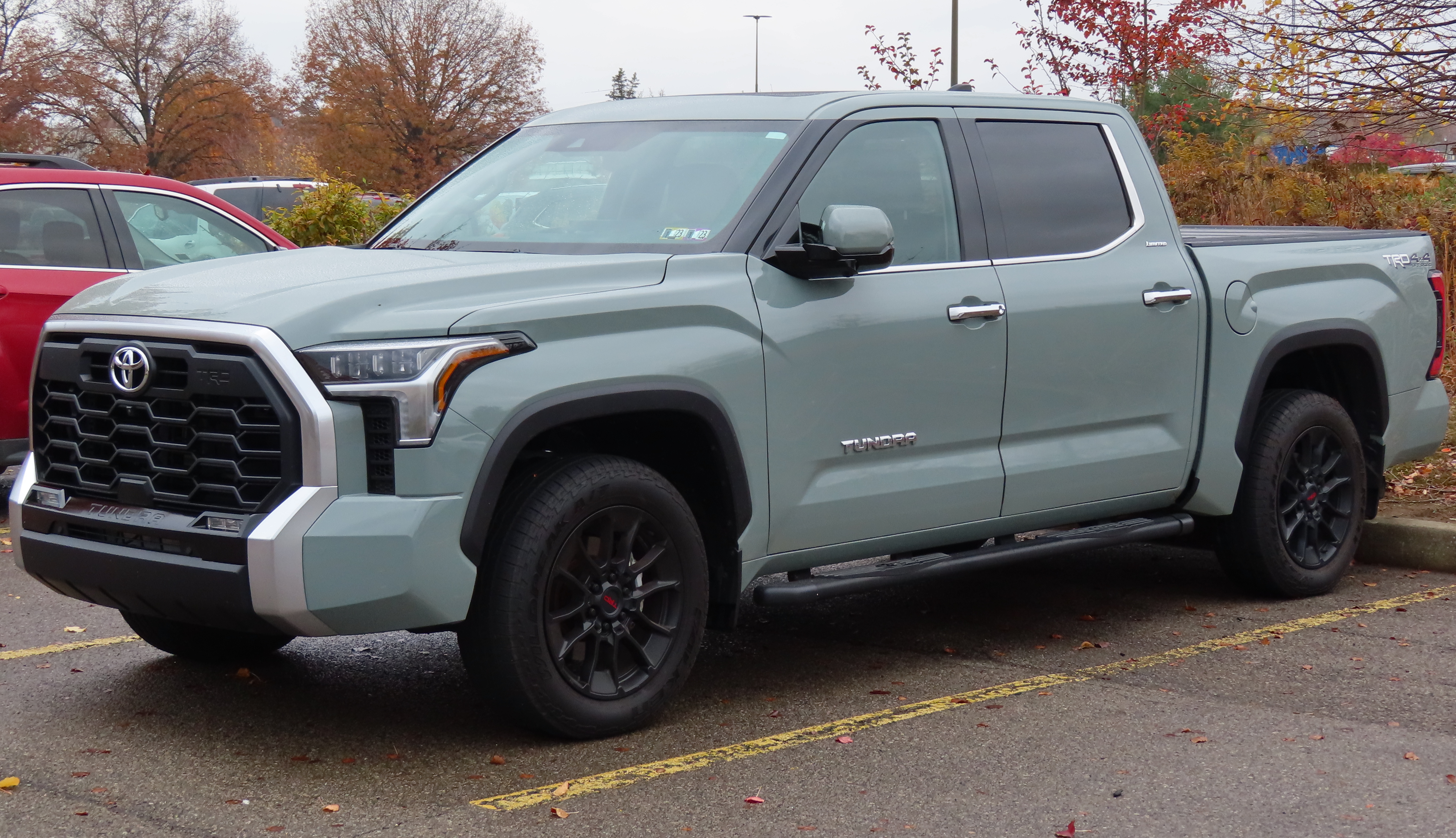
Toyota Tundra
"It’s going to be built right next door to the existing Toyota truck plant [99.5s] where they build the Tundra and the Sequoia right now."
The Toyota Tundra is a full-size pickup truck. They’re saying the new plant will be built next to the current Texas factory that already makes the Tundra.
The Toyota Tundra is Toyota’s full-size pickup truck. In this segment, it’s mentioned as being built at the existing Toyota truck plant in Texas, which helps explain why the new plant is being placed nearby.

Toyota Sequoia
"It’s going to be built right next door to the existing Toyota truck plant [99.5s] where they build the Tundra and the Sequoia right now."
The Toyota Sequoia is a large SUV. The hosts mention it because the current Texas factory already builds it, and the new plant is planned right next door.
The Toyota Sequoia is Toyota’s full-size SUV. It’s referenced here because the existing Texas plant that makes the Tundra and Sequoia is the neighbor to Toyota’s new $2B “Project Orca” facility.
unibody plant
"but we have a strong, strong suspicion that this is going to be a unibody plant, [110.7s] a flexible unibody plant that will allow them to build both unibody."
A unibody car is built with the body and frame as one connected structure. If Toyota builds a “unibody plant,” it means the factory is geared toward making cars that use that construction method.
A unibody is a vehicle structure where the body and frame are integrated into one unit, which is common for most passenger cars and crossovers. The hosts say Project Orca is suspected to be a “unibody plant,” meaning Toyota would be set up to build that kind of structure at scale.

Toyota RAV4
"We’re hoping we believe it’s going to be the long promised [120.2s] RAV for compact pickup, as well as some other products."
The Toyota RAV4 is a popular compact SUV. They’re speculating the new Texas plant will help produce more RAV4s (and possibly related models) starting around 2030.
The Toyota RAV4 is a compact crossover/SUV and one of Toyota’s core volume models. The segment suggests Project Orca is likely intended to build the long-promised RAV4 for the compact pickup idea, tying the plant’s flexibility to higher output of popular models.
TMA cave frame platform
"they can really build almost anything in that size, that that midsize [132.1s] TMA cave frame platform that they have."
A platform is the shared “base” that different cars can be built on. They’re saying Toyota’s setup could let the new plant build multiple vehicles that share the same underlying structure.
A platform is the shared underlying vehicle architecture—hard points, mounting locations, and major structural components—that multiple models can use. The hosts mention a “cave frame platform” (as spoken) associated with Toyota’s TMA, implying Toyota can build different vehicles in the same size class using common structure.
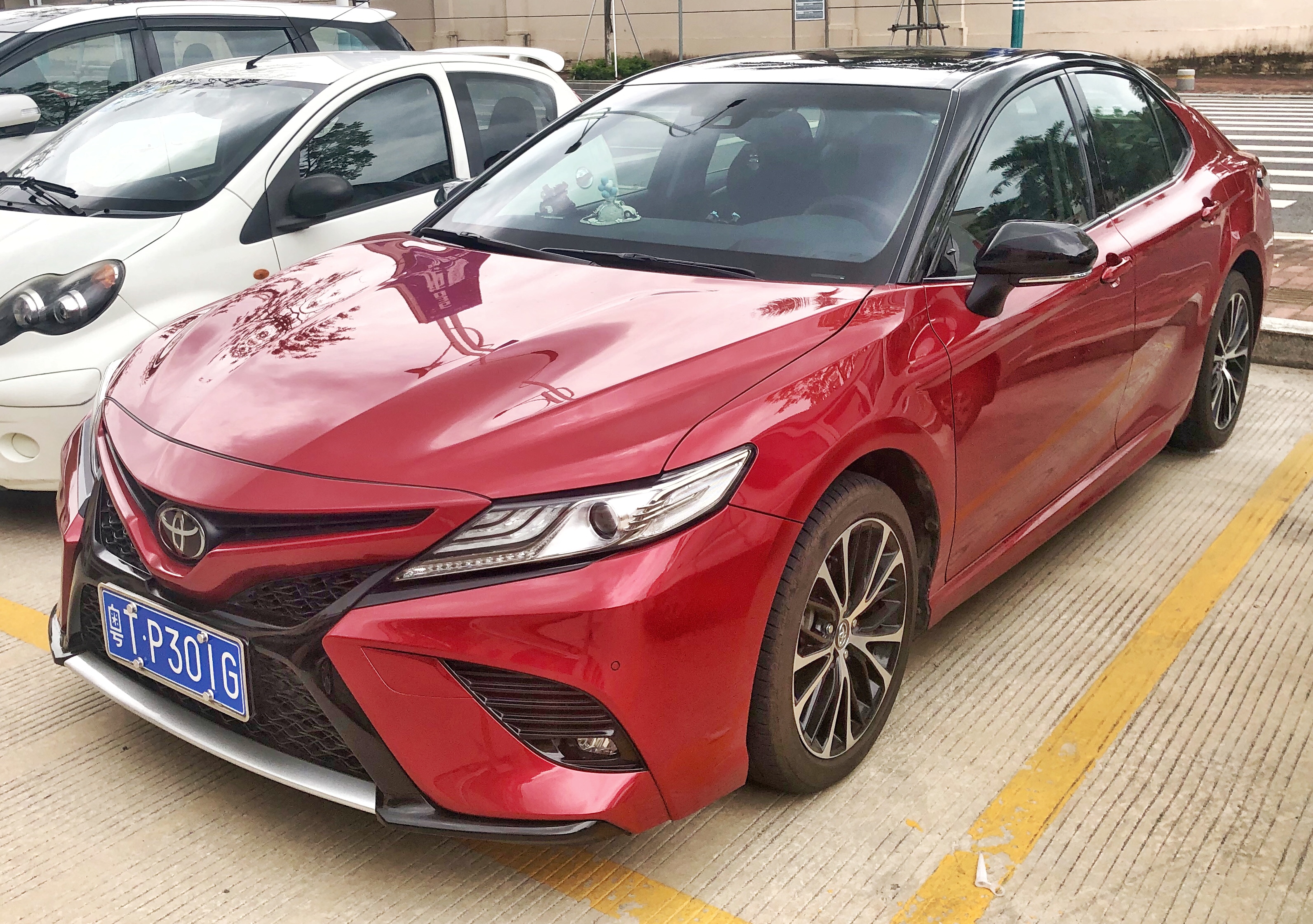
Toyota Camry
"So that means more Camry’s. [138.3s] That means more RAV fours."
The Toyota Camry is a midsize sedan. They’re saying the new plant could be set up to build more Camrys depending on how flexible Toyota makes the production line.
The Toyota Camry is a midsize sedan that’s historically been a high-volume model for Toyota. The hosts connect the plant’s flexibility to potentially producing more Camrys, implying the factory could support multiple vehicle types on shared manufacturing processes.
sequencing
"If they want to, it’s all just sequencing at that point. [143.1s] The project’s not going to come online until 2030."
Sequencing just means deciding the order of production. If the plant can handle multiple models, Toyota can “sequence” which one gets built when.
In manufacturing, sequencing is the planned order in which different vehicle variants move through the production line. The hosts use it to suggest that once the plant is flexible enough, Toyota can schedule different models (like Camry vs. RAV4) through the same facility.

Ford Maverick
"...stomers. So Ford's absolutely dominating with the Maverick right now. And they could use a little competitio..."
The Ford Maverick is a smaller pickup truck meant to be practical and relatively budget-friendly. The podcast mentions it because it’s selling well and getting a lot of attention. That can affect what Ford focuses on next and what buyers see in showrooms.
The Ford Maverick is a compact pickup truck designed to be more affordable and easier to live with than larger trucks. The podcast highlights it as a standout seller, suggesting it’s drawing strong customer interest in its segment. That’s why it’s discussed—its popularity can influence Ford’s strategy and how other trucks are positioned.
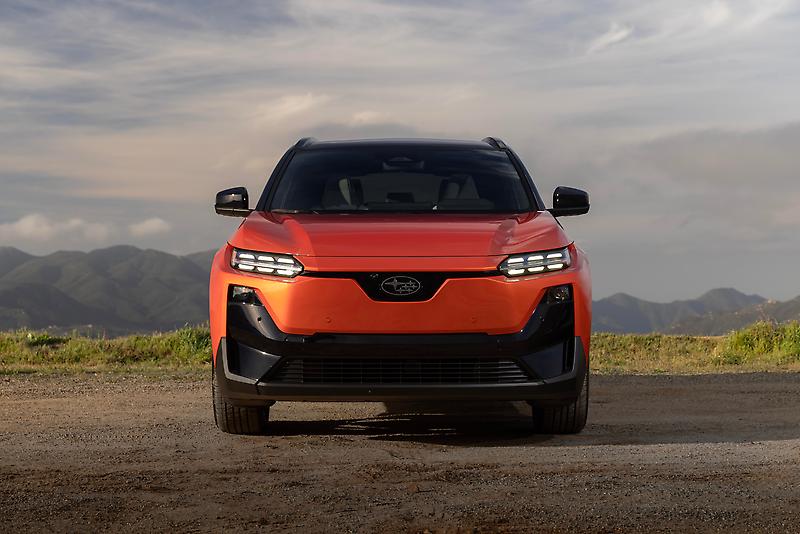
Subaru Uncharted
"...nd the Toyota CHR on the one side, and the Subaru Uncharted, and Subaru Trailseeker on the other side."
The Subaru Uncharted is a Subaru vehicle name mentioned in a group with other similar cars. The podcast is treating it as part of a set of comparable options. The key point is that it’s one of the models being compared or listed together.
The Subaru Uncharted is a Subaru model name used in the podcast’s lineup discussion, placed alongside the Toyota C-HR and the Subaru Trailseeker. The context suggests these are being treated as closely related or comparable options within a set. That’s why it’s discussed—its naming and positioning matter for how the lineup is presented.

Toyota Chr
"... and we have Toyota Busy Woodland, Wagon, and the Toyota CHR on the one side, and the Subaru Uncharted, and Su..."
The Toyota C-HR is a small SUV-style vehicle. It’s meant to be easier to handle and park than bigger SUVs. The podcast brings it up as part of a group of similar vehicles being discussed together.
The Toyota C-HR is a compact crossover SUV, typically aimed at drivers who want SUV styling and practicality without the size of a full SUV. The podcast groups it with other models in a way that suggests a comparison or lineup discussion. That’s why it’s mentioned—its role in the lineup helps frame what buyers can choose from.

Subaru Trailseeker
"...he one side, and the Subaru Uncharted, and Subaru Trailseeker on the other side. Now, these are four identical ..."
The Subaru Trailseeker is a Subaru vehicle name mentioned in the same group as a couple of other cars. The podcast suggests these options are very similar for the discussion they’re having. So it’s mainly being used to explain the lineup and how the choices compare.
The Subaru Trailseeker is another Subaru model referenced in the podcast’s lineup, grouped with the Toyota C-HR and the Subaru Uncharted. The context indicates the cars are being described as very similar or “identical” for the purpose of the discussion. That makes it relevant because the podcast is likely focusing on how these trims or variants are positioned rather than major mechanical differences.
EV demand is still low
"And EV demand, despite what the Iran war is doing to the economics of it, [900.8s] EV demand is still low. [902.3s] They don't think that these vehicles are going to be profitable."
It means fewer people are buying electric cars than expected. If that’s the case, companies often push back new EV plans because they don’t think they’ll sell enough to make money.
“EV demand is still low” refers to weaker consumer purchasing of electric vehicles than automakers planned for. When demand is low, companies may delay launches because they can’t count on enough sales to justify the investment and manufacturing ramp.
EV write downs
"Now, Honda posted its first loss since 1957, nearly $10 billion in EV write downs, [928.8s] that comes with news that Honda will drop its 2040 combustion-free goal."
A write-down is when a company admits, in accounting terms, that something they invested in is worth less than they thought. Here, it’s tied to electric-vehicle plans.
An EV write-down is an accounting adjustment where a company reduces the book value of EV-related assets because expected future results (like sales or profitability) are worse than previously assumed. It’s a signal that EV investments aren’t tracking to the business case management expected.
combustion-free goal
"Now, Honda posted its first loss since 1957, nearly $10 billion in EV write downs, [928.8s] that comes with news that Honda will drop its 2040 combustion-free goal."
This is a company promise to stop selling cars that burn fuel in the engine. If they drop it, they’re changing their long-term plan.
A “combustion-free goal” is a long-term corporate target to eliminate internal-combustion engines (gasoline/diesel) from the lineup. When Honda drops such a goal, it usually reflects a shift in strategy due to slower-than-expected EV adoption or profitability challenges.
hybrids
"that comes with news that Honda will drop its 2040 combustion-free goal. [933.8s] And it's teasing 15 new hybrids."
A hybrid uses a gas engine and an electric motor together. It can help reduce fuel use without relying entirely on charging like a pure electric car.
Hybrids are vehicles that use both an internal-combustion engine and an electric motor/battery to move the car. They’re often positioned as a bridge technology when full EV adoption is slower or when charging infrastructure is still developing.
tariffs
"is something like 16% right now, which in an era of tariffs [982.9s] is going to lead you to your first loss in 70 years."
Tariffs are extra taxes on things brought in from other countries. For car companies, that can make imported cars cost more, so they may build more cars locally instead.
Tariffs are taxes placed on imported goods. In auto supply chains, tariffs can raise the cost of importing vehicles or components, which can push automakers to shift toward locally built models like hybrids or EVs.
no combustion engines by 2040
"You mentioned backing off that goal of no combustion engines by 2040. [1024.0s] I think we were able to call that a little too aggressive in the media for years,"
That phrase means a plan to stop selling gas-powered cars by 2040. The hosts are saying the deadline may be too hard to meet as conditions change.
“No combustion engines by 2040” refers to a policy-style target to end sales of vehicles powered by internal combustion engines (gasoline/diesel) by that year. The transcript frames it as an overly aggressive timeline that some automakers are adjusting due to real-world constraints.
GM
"[1030.4s] I mean, look at GM. [1031.7s] They wanted to be all EV by 2030, 10 years earlier."
GM is an automaker being used as an example. The idea is that GM aimed to go electric sooner, then backed off because it turned out to be tougher than expected.
GM (General Motors) is used here as an example of an automaker that set an earlier EV-only ambition than the market could support. The point is that GM later adjusted its timeline after seeing “warning signs” that full EV plans were harder than expected.
federal tax credit for EVs
"New registrations were down 25% in March, but it's actually the best month since the federal tax credit was killed."
The government sometimes gives a tax break when you buy an electric car. If that tax break goes away, the car can cost more to the buyer, so fewer people may buy them.
A federal tax credit is a government incentive that reduces your tax bill when you buy an eligible electric vehicle. When that credit is “killed” or removed, the purchase price effectively rises for many buyers, which can slow EV sales and registrations.
EV registrations
"New registrations were down 25% in March, but it's actually the best month since the federal tax credit was killed."
Registrations are basically the paperwork count of new cars being added for driving. Looking at EV registrations helps show whether people are actually buying more or fewer electric cars.
“Registrations” are the official counts of vehicles newly added to the road in a given period. Tracking EV registrations helps gauge real consumer demand trends, especially when incentives or fuel prices change.
fuel price spike
"We are seeing a slow motion replay of 2007 again. We get a fuel price spike and people start looking at the money going out of their pocket"
When gas prices jump, driving a gas car becomes more expensive overnight. That often makes people pay closer attention to how much fuel their car uses and whether an EV would save money.
A fuel price spike is a sudden increase in gasoline or diesel prices. It can change buyer behavior quickly because people start comparing the cost of driving a gas car versus an EV using fuel economy and charging costs.
fuel economy
"books and looking at the fuel economy in their vehicles. Those numbers just sometimes don't add up."
Fuel economy is a measure of how much it costs to drive. For gas cars it’s often MPG, and for EVs people usually think in terms of energy use and cost per mile.
Fuel economy is how efficiently a vehicle converts energy into distance—typically measured for gas cars as miles per gallon (MPG). In EV discussions, people often compare “energy cost per mile” instead, but the idea is the same: estimating ongoing driving costs.
used EVs
"back in January before this war started, we brought up how there are all these used EVs coming into the market and there weren't going to be sufficient buyers."
Used EVs are electric cars that people sell after owning them for a while. If not many people want to buy them, the market can get stuck and prices may drop.
Used EVs are electric vehicles sold on the secondary market after their original purchase. The supply-demand balance matters: if there aren’t enough buyers, used EV prices can fall and sales can stall even if the vehicles are “good deals.”
Request an Explanation
Heard something you'd like explained? We'll add it to this episode.
Sign in to request explanations for terms you heard.
Want to learn more?
Browse our glossary for plain-English explanations of automotive terms, jargon, and concepts.
Help improve this episode
See something that's not quite right? Our annotations are AI-generated and can sometimes miss the mark. Click the flag icon on any annotation to suggest a correction.