Ram is a brand that makes pickup trucks. Pickup trucks are built for hauling and towing, and they’re popular with people who need a work-capable vehicle. The podcast is talking about how the company plans to keep improving and selling these trucks.
Dealer fraud is when scammers or dishonest activity interfere with car sales at dealerships. The hosts say it’s happening often enough that it affects day-to-day operations and can cost dealerships a lot of money.
Experian Automotive is a company that does automotive-related research. In this segment, they’re the source for the survey numbers about how many dealers worry about fraud.
Residual value is what a car is expected to be worth later—like at the end of a lease. If that number is low, it often means the car won’t hold its value well, which can hurt sales of new cars too.
Fleet sales are when companies buy lots of cars at once, often for rentals or company use. Those cars later show up as used cars, which can lower used-car prices and make new-car deals less compelling.
Cannibalizing sales means one thing is taking customers from something else. In this case, lots of used Mitsubishi cars make it harder to sell new Mitsubishi cars.
Edmunds is a car research website that tracks pricing and value trends. When they cite Edmunds data, they’re using that kind of market information to support the point.
A “platform” is the basic shared design a car is built on. If a company keeps using the same platform for a long time, the cars may feel less modern than rivals that get newer designs sooner.
The Mitsubishi Eclipse Cross is a compact SUV. The host is saying it’s based on an older design, which can put it at a disadvantage versus newer models from other brands.
The Mitsubishi Outlander is Mitsubishi’s main seller here. The host is saying it’s been refreshed more recently than the other models, but the overall lineup still isn’t competitive enough.
“Electrified” means the car uses electricity in some way, like a hybrid. The host is talking about a bigger SUV-style vehicle with three rows of seats that Mitsubishi said would be coming.
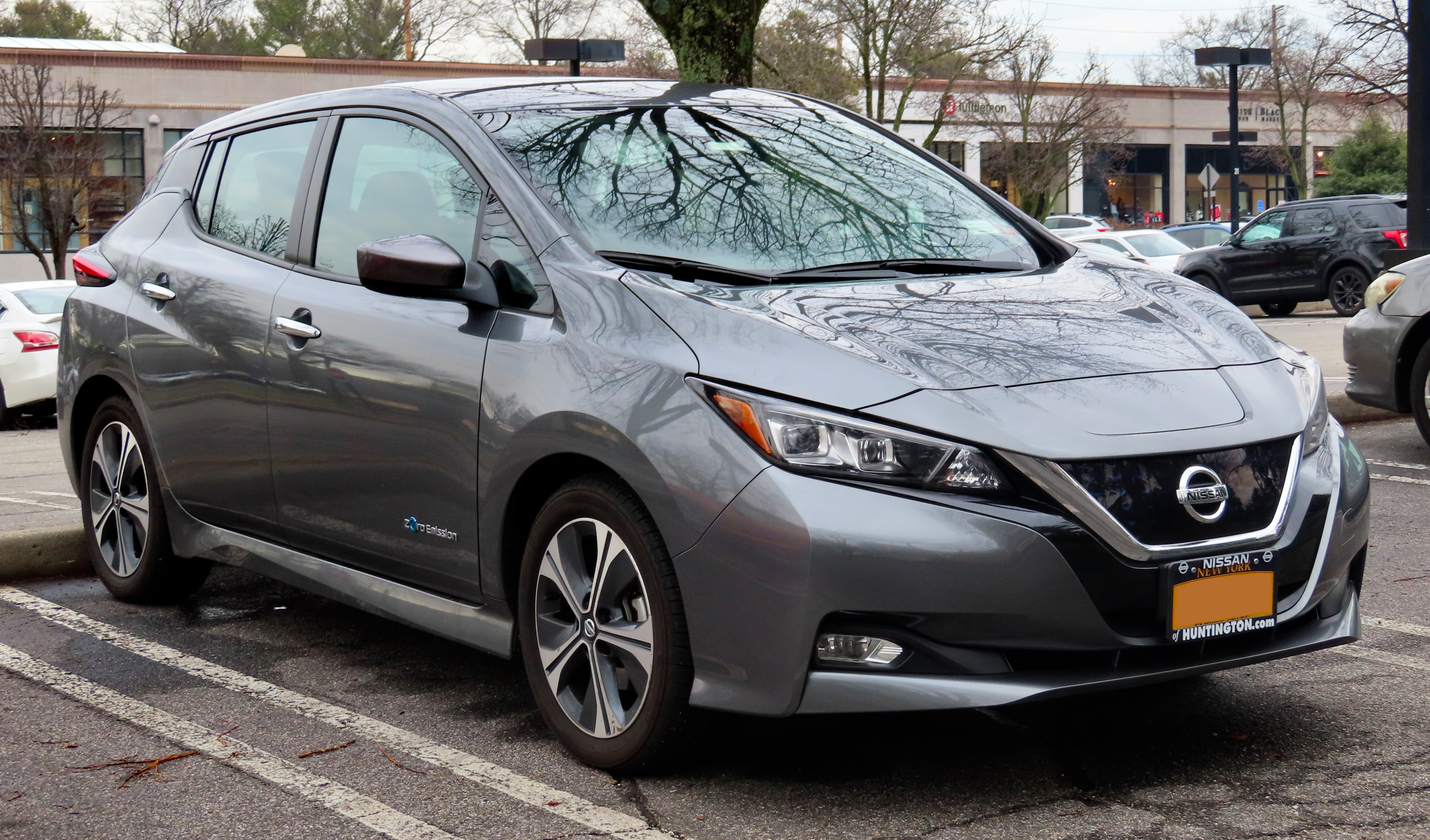
The Nissan Leaf is an electric car that runs on a battery instead of gas. A “rebadged” version means another company might sell a very similar car under a different name. The question in the podcast is basically who would want that version if it’s still the same basic electric car.
A tariff is a government tax on imported products. The idea here is that selling cars built in the US can help lessen how much that tax hurts the final price.
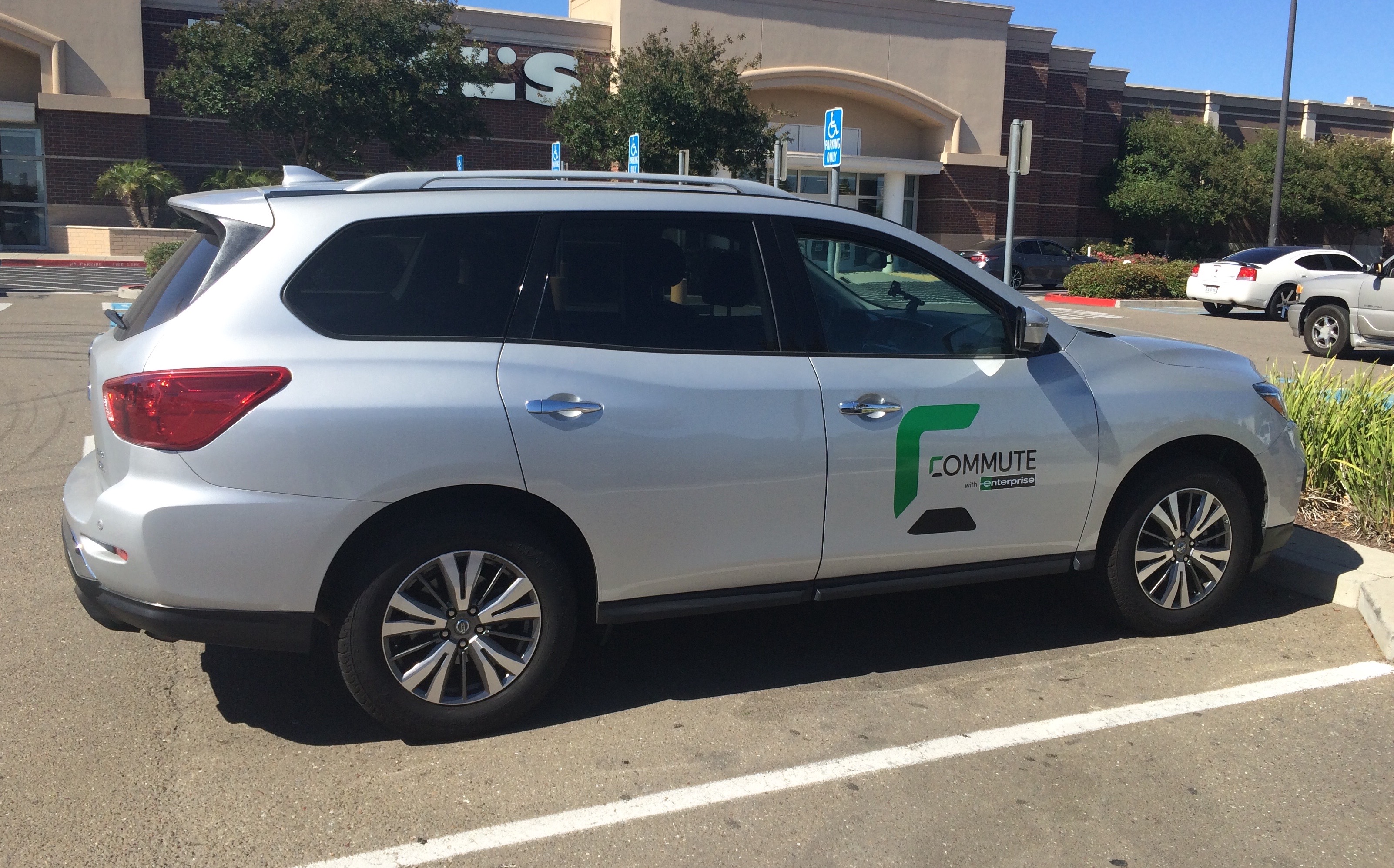
The Nissan Pathfinder is a popular mid-size SUV. The hosts are saying Mitsubishi might base a future crossover on the Pathfinder, which could help them launch faster and cheaper.
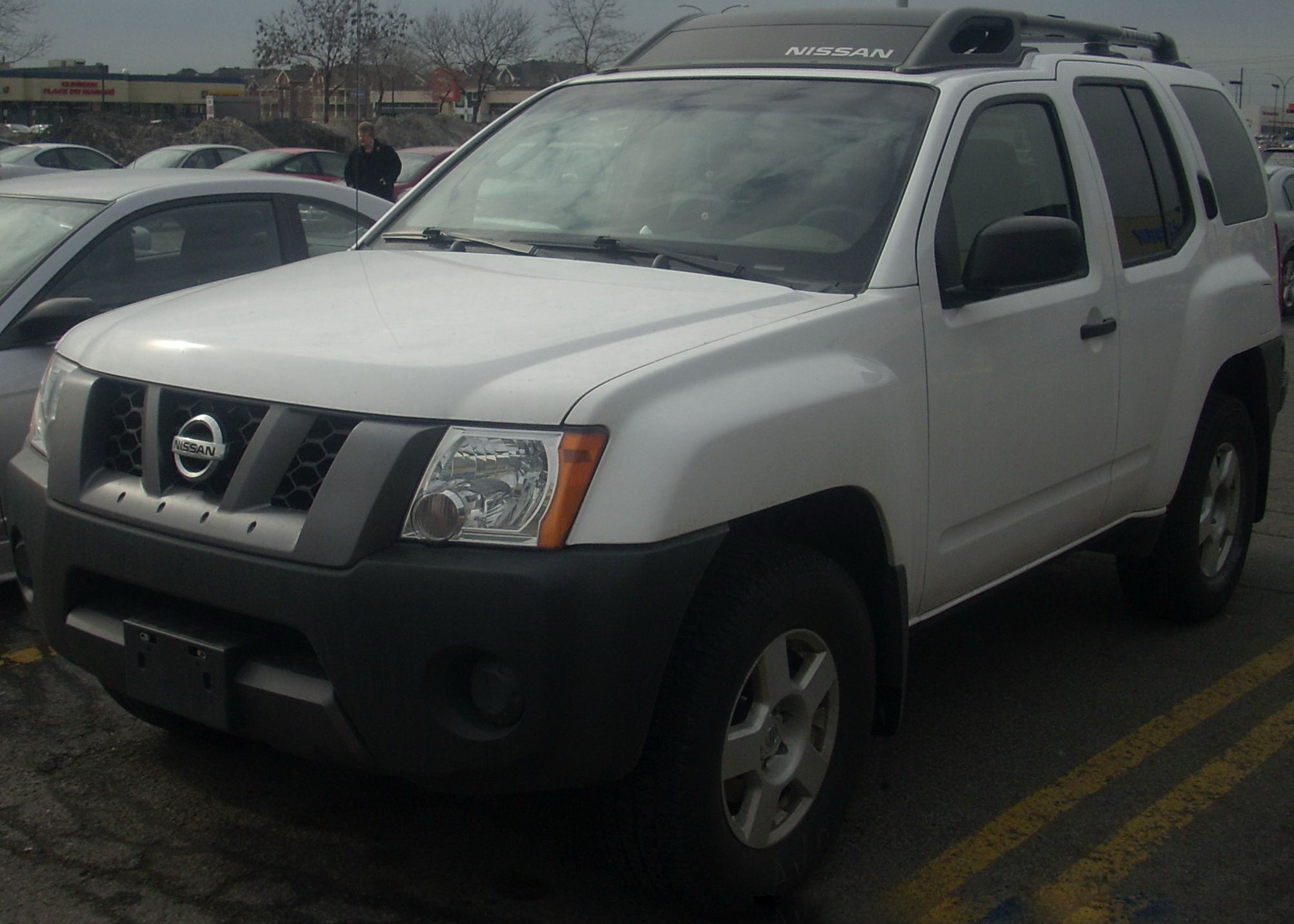
The Nissan Xterra is a tougher, more off-road-oriented SUV. The discussion suggests Mitsubishi could use it as a starting point for a new crossover built by Nissan.
A reciprocal tariff is a government tax on imported cars that’s meant to match what the other country charges. In this case, the host says a 25% tax makes it expensive to ship US-made cars into Canada.
LIVE
Fraud is no longer just a risk for auto dealers,
it has become part of everyday operations.
Experian Automotive's Fraud Protect solution
helps you catch income, identity, and trade in fraud
in real time without slowing down the sale.
Stop fraud, keep deals moving,
Experian Automotive's Fraud Protect.
Welcome to Daily Drive.
For Thursday, May 21st, 2026,
I'm Kellan Walker in Las Vegas.
Today on the show, Stalantis will launch
nine new models under 40 grand.
Nissan is looking to import Chinese-made vehicles
to Canada, and Volkswagen pushes back
on Chinese partnership rumors.
Plus, Mitsubishi has cut 56 dealerships since 2019.
We'll talk about what's driving the shrinking network.
The used car sales are really what these
Mitsubishi dealers can sell anymore.
Basically, they've become used car stores.
Let's run through all the news you need to know
to keep up in the auto industry.
Stalantis is trying to win back buyers with a promise.
Nine new vehicles under $40,000 in North America
by the end of the decade.
Two of those will even come under 30 grand.
The automakers betting big on its household names.
Jeep, Ram, Peugeot, Fiat, and its commercial division
are getting 70% of a $70 billion global investment pot.
CEO Antonio Filosa says the strategy
is about making those investments count.
This replaced where we see the strongest combination
of market opportunity, brand strength, and attractive retail.
The plan which Stalantis is calling, Fastlane 2030,
includes 11 all-new vehicles for North America.
The company's aiming to grow regional volume by 35%
while hitting operating margins of eight to 10%.
We'll have more on this and other news
from Stalantis Investor Day in a minute.
Nissan is exploring the possibility of importing
at least 3,000 to 4,000 vehicles a year
from China to Canada.
The math is pretty straightforward.
Canada is allowing 49,000 China-made EVs this year
at a 6% tariff, while US-built Nissan's
face a 25% tariff to enter Canada.
That's according to Nissan America's chairman,
Christian Mounier.
The automaker wants to tap excess capacity
at its Dongfeng joint venture
and is eyeing low-cost vehicles for Canadian buyers,
including an entry-level EV for Quebec's
strong electric vehicle market.
And Volkswagen is not in talks with Chinese companies
to deal with overcapacity at its European plants.
That's according to CEO Oliver Bloom,
who is pushing back on speculation
that the automaker might partner with Chinese brands.
He told workers there are no talks happening right now,
though he did acknowledge VW has excess capacity
that needs addressing.
The company has cut 50,000 jobs in Germany
over three years of belt tightening.
And Bloom warned that VW's old playbook,
exporting cars from Germany to the world,
is being replaced by a need to build locally
in key markets like China.
And those are today's headlines.
You can find more details on all those stories
at AutoNews.com.
Joining me now to talk more about the news so far
as of recording time from Stellantis' investor day
is Nick Bunkley, director of automaker coverage
at Automotive News.
Nick, welcome back to Daily Drive.
Thanks for having me.
All right, Nick, so nine vehicles under 40 grand by 2030.
Now, how does Stellantis plan to pull this off
while also making money?
Well, that's kind of the thing to watch here, right?
Because we've been hearing more and more talk about
needing more affordable vehicles
as prices have gone up.
And Stellantis, like a lot of automakers out there,
has followed that trend
because the more they can have people pay,
the more they make on these vehicles.
And they all obviously wanna make the most money they can.
But now with affordability becoming such a big concern,
they feel that they need to have more vehicles
in those lower ranges again.
And to do that, they're just gonna have to
basically share platforms, share parts,
use their global scale that they created with this merger
from a couple of years ago
to basically make it less expensive
to make these vehicles than it used to be.
Now, Stellantis is putting a lot of eggs in four baskets,
Ram, Jeep, Peugeot, and Fiat.
What does this mean for the other 10 brands?
Well, so what they've said so far
is essentially that they're keeping everything.
They've got this whole kind of unwieldy looking roster
of 14 brands that they ended up with
after the 2021 merger.
They're focusing on these four brands,
Jeep and Ram being the two at the center
of their plan in the U.S.
But the other brands, they're not going away,
they're just kind of becoming a little more off to the side,
just not the major pieces, which they haven't been all along.
So it's kind of continuing the strategy,
but just sort of more formalizing where the big sales are
is where the investment is going to be.
Now, finally, anything else you've seen
or watching for during Stellantis' investor day?
Well, with those brands, the four brands in the U.S.,
Jeep, Dodge, Ram and Chrysler,
it is interesting to see how they plan to move those forward.
They're expecting all four to notch
some fairly sizable sales gains over the next five years.
They're looking to add like 500,000 sales
in North America between the four of those.
And Ram in particular is the one
where they expect the most growth.
They're looking for Ram to gain 60% in sales by 2030,
which would make that the biggest brand here
rather than Jeep, which is the biggest one now.
So they have some pretty ambitious product plans for Ram.
They've talked about a compact pickup,
which was new to us today,
midsize that we knew was coming,
but they talked more about that.
They have an SUV coming for Ram.
So it's interesting to see there's been a lot of focus
on Jeep over the last few years,
but Ram is sort of the big story here.
All right, Nick Bunkley, thank you so much for joining me.
All right, thank you.
Coming up, our own Irvash Karkaria joins the show
to talk about why Mitsubishi's dealer network is dwindling.
That's next on Daily Drive.
Fraud is no longer just a risk for auto dealers.
It has become part of everyday operations.
According to Experian Automotive,
nearly nine out of 10 dealers say fraud is a top concern
and 70% say it's on the rise.
We're talking about real deals slipping through,
costing dealerships 10, even $20,000 per incident.
And it's not just one type of fraud.
You've got forged income documents,
fabricated salaries, synthetic identities,
even trade-in scams.
The worst part, catching fraud often slows everything down,
adding friction to deals
and frustrating legitimate customers.
That's where Experian Automotive's
Fraud Protect solution comes in.
It's designed specifically for dealers,
helping you quickly detect income, identity,
and trade-in ownership before it hits your bottom line.
No guesswork, no unnecessary delays,
just faster, more consistent verification
so you can protect your profits
while keeping the buying experience smooth.
Because the goal isn't just to stop fraud,
it's to keep good deals moving.
Experian Automotive's Fraud Protect, no more,
risk less, sell smarter.
Welcome back to Daily Drive, I'm Kellan Walker.
Yesterday on the show,
we reported that Mitsubishi has cut
56 dealerships since 2019,
shedding 16% of its US network.
CEO Mark Chaffin told our own Irvash Kakaria
that the company terminated about 35 franchises
in the past 18 months alone.
Nearly 60% of Mitsubishi's first quarter sales
went to fleet buyers.
Our own Jake Nier talked about it
with our own Irvash Kakaria,
Atlanta bureau chief for us at Automotive News.
Irvash, welcome back to Daily Drive.
Hi Jake, great to be back.
So what are dealers telling you
about why Mitsubishi's fleet strategy
is causing so much friction at the retail level?
Yeah, for sure.
So, Mitsubishi, like many brands,
many of these smaller brands, mass market brands,
heavily rely on fleets to achieve the volume that they need.
In the case of Mitsubishi,
according to some internal Q1 data that we looked at,
nearly 60% of the vehicles that they sold
in the first quarter of this year went to fleets,
primarily rental fleets.
And this is a big problem for two reasons.
One is Mitsubishi has direct relationships
with the rental fleet companies
and strikes deals with them to take cars,
often beating their own dealers
in terms of what the dealers can offer those cars for.
So it's really taking away from the dealerships,
it's taking business away from the dealerships.
The other thing is this heavy reliance on fleet
is also affecting residual values.
And that, again, is affecting new car retail sales.
And here's how it works.
The more rental fleet sales they have,
then there's this huge supply of lightly used,
relatively lightly used used cars.
And then the used cars, prices take a dive,
which then widens the gap between the new car prices
and the used car prices,
so that the customer is basically swayed
to buy a one to two year Mitsubishi car
instead of buying the new brand.
So it hurts the dealers both immediately
when they lose the new car sales to the rental companies,
but then on the back end,
when they can't sell new cars
because the used Mitsubishi are cannibalizing sales.
So I looked at some Edmunds data
and essentially Mitsubishi has some of the lowest
real residual values in the industry
with one year old vehicles retaining just about 69%
of their original sticker price.
And like I said, that kind of creates a situation
where the used car sales
are really what these Mitsubishi dealers can sell anymore.
Used cars are basically, they've become used cars stores.
I talked to several Mitsubishi dealers
and they all said the same thing.
And one retailer said that,
he sells 10 new vehicles a month
and more than 90 used vehicles
versus 90 used vehicles to stay profitable.
So essentially, these Mitsubishi stores
are really used car businesses with the Mitsubishi logo.
That's interesting.
And is that what seems to be the driving force behind
this sort of, is Exodus the right word of dealers?
Yeah, I mean, you know, they've lost what, 56 dealers
about 17%, dealerships are about 17%
or 16% of the network since before the pandemic.
Now, some of this is Mitsubishi also trying
to get rid of the low performers.
And the CEO has told us Mitsubishi Motors North America CEO
said that they've got about 30 new dealerships in the pipeline
and that these new stores would, they say,
they expect to have, you know,
whatever three to five times the volume
of those that have left.
So definitely the pressure on the new car business
is affecting these dealers and frustrating them.
But I think the fundamental problem Mitsubishi has
is that they just do not have competitive products
on the market.
They've essentially got three models,
one of which the Outlander Sport is on a 15 year platform,
Eclipse Cross, I believe is about eight years old.
And then the Outlander,
which is their best seller is relatively new
with a four to five redesigned about four to five years ago.
And you know, Mitsubishi has said and has told dealers
that we have all this new product coming up,
including a electrified three row crossover,
a passenger van, they've said that.
But then again, they haven't really provided to dealers
or to us, to me, when I questioned Chaffin,
I was like, when are these cars going to come?
And they just, you know, either they don't provide it
or they are not sure, you know,
if they'll meet their timeline.
But essentially Mitsubishi said that they want to
essentially launch four new cars, four new models
between last year through the end of the decade.
They are getting an EV, basically a rebadged Nissan Leaf.
It's questionable, you know, who's going to buy that
at this, you know, in this stage of the market.
But that's coming out in the summer.
But then again, they have some, you know,
variants of existing models like a two wheel drive,
you know, Outlander sport and some other models
to basically lower the starting price.
You mentioned Nissan and Alliance partner with Mitsubishi.
We'll talk a little bit more about their news
in a second today.
But I am curious, Nissan also sort of went through
or has gone through similar issues in the past.
How have they approached it?
And is there any sort of kind of crossover
for how Mitsubishi could think about this issue?
Absolutely.
I mean, Nissan appears to be in some kind of a revival,
a business revival in the US, you know,
after struggling for the past, you know,
56 years again with the dated lineup,
finally the new product is coming to market.
And that's, you know, obviously helping with sales.
They had the, I believe the 14th consecutive month
of retail sales growth in April.
So yeah, they've got their new product
that's starting to essentially deliver results
at the retail level.
Mitsubishi obviously is a smaller company in the US.
They don't have the breadth of the lineup that Nissan does.
So in a way, they are more challenged.
But for sure, you know, Mitsubishi should take a page
out of Nissan's book, like the new Nissan America's
leadership led by Christian Bonnier.
I mean, not only are they bringing new product,
but they've gotten very aggressive
about essentially pushing their US made cars,
US built cars, which also happened to be their crossovers,
their popular crossovers.
And so that's helping them, you know, offset the tariff.
Now, in the case of Mitsubishi, they don't make any cars here.
There was some talk about them potentially building up,
bringing out this mid-sized crossover,
which would either be based on the Pathfinder,
the next generation Pathfinder or the XTERRA,
and it will be built by Nissan.
But again, I have heard nothing from Mitsubishi
or from my insiders at Nissan
that any such project is in the works.
So, you know, there are different beasts,
but I think Mitsubishi should or can learn
from Nissan's revival.
Now, it remains to be seen how sustained Nissan's revival is,
where in the early innings,
maybe in a year from now if the momentum continues,
that's one thing, but that remains to be seen.
Now, the news that you covered from Nissan today
is interesting.
We talked about this at the top of the show today.
Nissan is thinking about importing thousands of vehicles
a year from China to Canada.
Why is Canada the target?
Why is it suddenly a more attractive market
for Chinese made Nissan's than the US?
Sure, so it's kind of an opportunistic play.
I talked to Christian Monier,
the Nissan America's chairman yesterday,
and he kind of hinted that, you know,
again, it was like they were taking advantage
of Canada's decision to allow Chinese EVs to be imported.
Sort of the play is that it's hard for a Nissan
or any automaker to export their US-made cars
to Canada because there's a 25% reciprocal tariff
on those cars.
Canada, with China, they've kind of reached an agreement
where Chinese-made cars can be imported into Canada
up to 49,000 units this year.
It increases slightly every year after that.
And more importantly, the tariff is only 6.1%
versus the 25% tariff that US-made vehicles face.
So for Nissan and maybe some other automakers,
this is a good way to absorb the excess production capacity
that Nissan has in China.
They have a joint venture with Dongfang.
So it's a way to absorb excess capacity
while also shipping Chinese-made cars to Canada
is more profitable than shipping US-made cars
just because of the cost of production.
So a couple of things.
A, it absorbs excess capacity in China.
It leads to incremental sales for Nissan in North America.
And it also, more importantly,
all those sales are also more profitable
because it's coming from a low-cost country.
So is there a risk here though?
I mean, Nissan is taking these unfamiliar Chinese models
into a new market, into Canada.
Is that a risk for the automaker?
Absolutely.
So there are some business risks
and then there are some geopolitical risks.
On the business risk side,
Nissan will have to bring these Chinese vehicles
up to Canadian safety standards.
So there is some investment there.
Emissions is less of an issue because these are EVs.
The other thing that they have to, as you mentioned,
have to consider is that these are unknown vehicles,
unknown models to the Canadian audience.
So there's gonna be some marketing investment.
Now granted, the volumes are relatively low.
They've said that they are looking to import
at least three to 4,000 vehicles
to justify the investment that they would need to make
in marketing and safety standards.
And again, when you told me that they're very early
in the process, they're still investigating it.
So by no means is this a done deal.
The other concern that Nissan has also
is by importing these Chinese made vehicles into Canada,
it could annoy the Trump administration
and US lawmakers that for several reasons
are very against EVs, Chinese made EVs entering the US.
Now granted, this is in Canada,
but still there's also some general concern
that could Canada's decision to allow
these Chinese imports also complicate the USMC
and negotiations that the US is having with Canada
and Mexico, though I believe that the Canadian officials
have said at least publicly
that they don't expect it to have any effect.
Sometimes what they say is not
what's actually happening behind the scenes you never know,
but Urvax Carcaria, I really appreciate you joining us
to talk about these stories and keep them coming.
My pleasure, thanks for having me.
That's Daily Drive for today, I'm Kellan Walker.
Thanks to automotive news reporters, Vince Bond Jr.
and Nick Bunkley for their reporting for today's podcast.
You can get the latest news on Stellantis' Investor Day,
Mitsubishi's dealer network and everything happening
in the auto industry at AutoNews.com.
Come back tomorrow for a look at how service centers
are dealing with a new shortage of engine oil
due to the Iran War.
75% of our additives for all synthetic vehicles
oils and components is made either in the Middle East
or Korea, so it's here and there's a shortage
and there's a problem.
We'd love to hear from you, let us know what you think
of the show and the topics we covered today.
Send us an email at dailydrive at autonews.com
or leave us a voicemail at 313-444-2774.
And if you enjoyed the podcast, remember to like,
leave a review and subscribe so you never miss an episode.
Thank you.
About this episode
Stellantis’ turnaround gets concrete: Fastlane 2030 calls for “11 all-new vehicles for North America,” plus a push to “share platforms, share parts” and focus on Ram, Jeep, Peugeot, and Fiat. The show also breaks down dealer economics, where fraud is widespread—“nearly nine out of 10 dealers say fraud is a top concern”—and Mitsubishi’s network keeps shrinking. Mitsubishi’s fleet-heavy sales and weak retention help explain the “exodus,” while Nissan’s Canada strategy hinges on tariff math and importing Chinese-made EVs.