USMCA is a trade deal between the U.S., Mexico, and Canada. It includes rules about where parts are made, so companies can avoid extra import taxes if they meet those rules.
A “core part” is a key type of vehicle component that trade rules treat as critical. If a core part like a battery doesn’t meet the required North America content, the car may not qualify to avoid extra import taxes.
This means that, to qualify under USMCA, a battery has to be made with enough value coming from North America—here, 75%. If companies can’t reach that level, they may have to pay extra taxes.
A “carve out” is a special exception to a rule. In this case, it would mean making a specific allowance for battery technology so the rules are easier to meet.
Concept
foolery afoot
This phrase is basically saying “something shady might be going on.” The speaker is suggesting some companies may be trying to make their sourcing look compliant when it isn’t.
“Enforcement levers” means the ways the government can check whether rules are followed and punish cheating. The speaker is saying those tools might not be strong enough to stop everything.
Volvo is a car brand mentioned because it has extra challenges complying with new rules about what computer parts can be used in connected cars. The show says Volvo’s ownership ties make that harder.
Connected vehicles are cars that can send and receive data over the internet (or cellular networks). This segment is saying the government is restricting certain foreign computer parts used in those connected features.
Tesla is a car company mentioned because it uses Chinese-made chips (as of 2024). That matters because the government rule discussed here restricts certain Chinese hardware/software in connected cars.
A software ban means the government is limiting what software can be used in certain car systems. The show says it starts with model year 2027, so companies have to adjust how they build and source those systems.
General Motors is a big car company. Here, they’re mentioned because they’re planning to build a Buick successor in the U.S. instead of relying on China production.
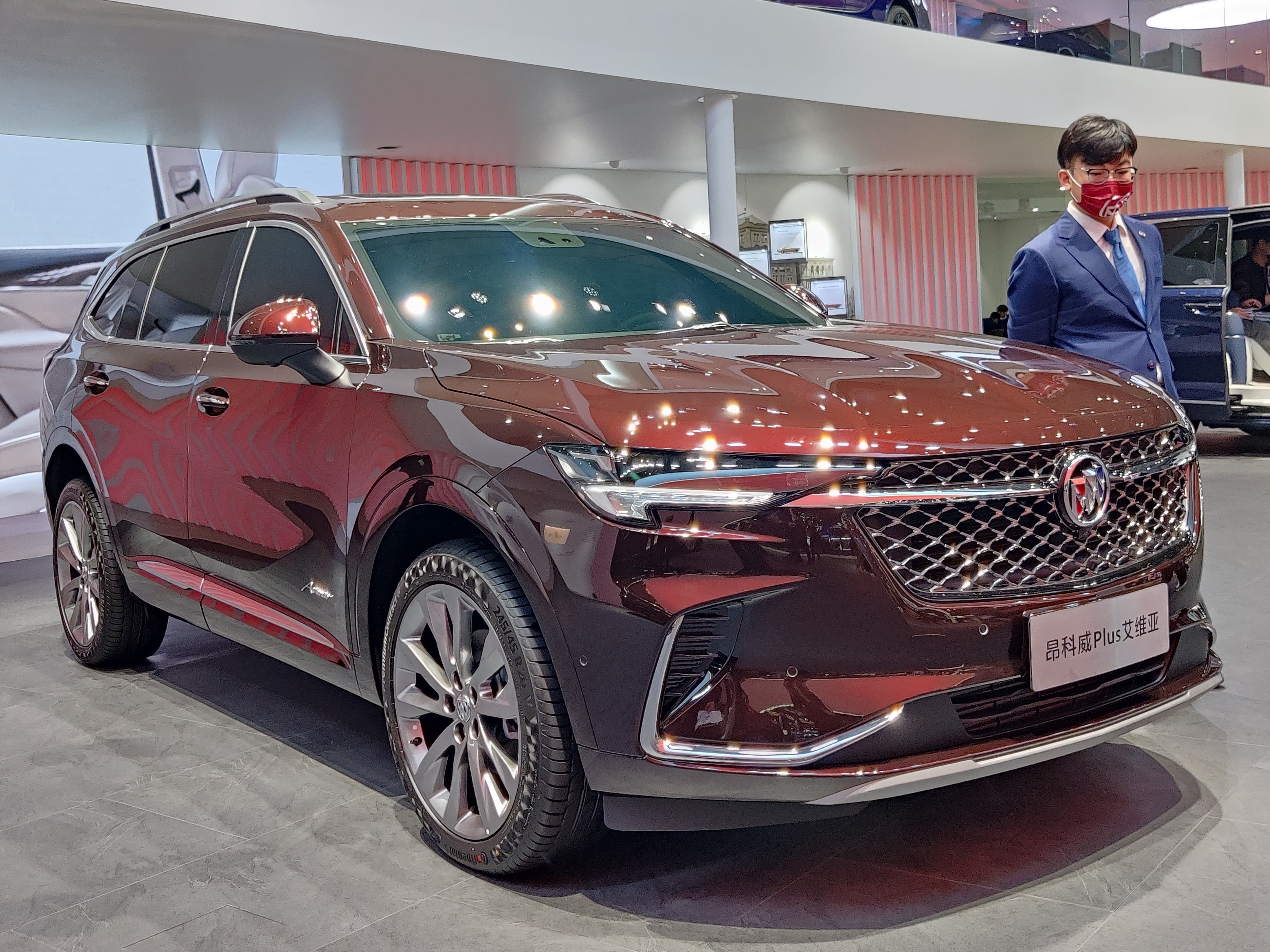
The Buick Envision is a GM SUV that’s sold in the U.S. It’s being used here as an example of a car GM currently builds in China, but plans to replace with a new version made in the U.S. to help with trade costs.
Tariffs are extra taxes on imported products. If a car is built in China and shipped to the U.S., tariffs can make it more expensive—so companies may shift production to the U.S.
LIVE
Welcome to this Weekend Drive edition of Daily Drive for the 5th week in May, 2026.
I'm Kellen Walker in Las Vegas.
This week we saw some big product announcements, got a better picture of the looming motor
oil shortage, and continued to peel back the layers of the trade and tariff environment
ahead of USMCA negotiations.
Now Mike and Larry are out this week, so we have a fresh panel of automotive news journalists
joining me today to break it all down.
Lindsey VanHully is deputy editor covering EVs and electrification.
Lindsey, welcome back to Weekend Drive.
Hey, Kell.
Happy to be here.
And Molly Boygon covers tech and innovation for us, and she's the co-host of the Automotive
News Shift podcast.
Molly, great to have you with us.
Great to have you, Kell.
We're in full May semper swing over here.
All right.
Well, let's start off with the latest emerging supply crisis affecting the industry.
The main ingredient for synthetic motor oil is running low, and we learned this week that
we could see major shortages starting in June, which starts Monday and could last more than
a year.
Molly, what do you make of this in the context of all of the shortages we've seen in recent
years?
Kell, this just goes to show how disruptive the blockage of the straight-up form moves
has been for the auto industry.
There's been a lot of news coverage of rising gas prices.
We at Automotive News have covered helium shortages, which is relevant for the production
of different electronic components in the vehicle, and now this is about to hit the
dealerships.
And so Nissan and Toyota sent bulletins to their dealers about rationing oil supply and
instructions for using alternatives.
There were different memos sent out to dealerships, alerting them that they may experience shortages
for this.
So it's just another effect of this very, very disruptive and at this point, long-standing
blockage of the straight-up form moves.
Now, Lindsay, as someone who has covered auto retail in the past, what do you think this
means for dealers and their customers that this lasts as long as experts think it could?
I mean, none of this is good.
Nobody wants to have a shortage of a critical component like motor oil.
Right now, what dealerships are saying is the supply is adequate for the time being.
Many of them are trying to top off their storage tanks as best they can to get ahead of this.
But does it mean price hikes down the road?
Does it mean just if some of the supply is rationed that it might be harder to find?
I think all of those seem like potential longer-term possibilities.
And I think the question becomes just how long does this last and what are automakers
and dealers able to do?
It certainly sounds, as Molly said, like there are some alternatives and workarounds already
underway to try and prevent this from being a major issue.
Another thing I'd just like to add, so this is for gas prices, which is different.
And there are different sort of calculations that go into the price of gas.
But after the gas price shocks driven by the Russian invasion of Ukraine several years ago,
it took about 10 months for prices to return to pre-war levels.
So that just goes to show you, even as Lindsay is saying, even if the shortages are eliminated
tomorrow, there's all kinds of contracting and shipping and logistics that's organized in advance.
So it's not like someone can just flip a switch and return
motor oil or any other derivatives of crude oil and byproducts to their normal levels.
Now, this all ties back into trade and geopolitics, which has been the topic of our multi-week series
of coverage for us here at Automotive News.
Now, Lindsay, we talked quite a bit about the Gordy Howe Bridge this week,
the second span between Detroit and Windsor, Ontario.
Remind us why this is such a big deal for the North American auto industry.
Yeah, I mean, the Detroit and Windsor crossing is one of the busiest international crossings.
At some points, the busiest international crossing between the US and Canada.
And hundreds of millions of dollars of goods cross the bridge, the ambassador bridge,
the only bridge right now between the two countries between Detroit and Windsor, Ontario every day.
And so part of what has been really in the works for a long time and has now been constructed
and waiting to open is a second bridge nearby between the two cities that is meant to really
alleviate backlogs, help with bottlenecks and traffic snarls, just increase the ability of
shipping to move between Detroit and Windsor. There is a vulnerability that happens when you
have one crossing like the ambassador bridge. And we saw it back in 2022 when protests in Canada
led to a trucking blockade that pretty much halted crossings for close to a week.
And so the industry is really looking at this bridge to help just alleviate some of those
traffic snarls on the Canadian side. There's slow traffic, there are stop lights to be able
to get across that bridge. And so the goal really is to have that second crossing to help
eliminate that bottleneck. It's caught up in some of the trade issues right now between the US and
Canada. President Trump has talked about delaying the presidential permit that would be needed to
open the bridge. And so it remains sort of unclear when that will happen. But the Michigan side,
the Canadian side, the auto industry is all really supportive of and really waiting for this crossing.
So Lindsay, I have a question for you since you're a local, you live in Michigan,
I live on the West Coast. So forgive me if this question is ignorant. But is there something
that the industry could do in the meantime, if the Gordy Howe bridge doesn't open? Like is there
a backup? Is there a workaround, other bridges or even possible ferries to go over the Detroit
River? What else could be done? Well, the ambassador bridge has been the only crossing, bridge crossing
between the two cities for decades. And so really the Gordy Howe bridge not being open
doesn't change any of that current dynamic. It's meant to help alleviate some of those bottlenecks.
There are other crossings, you know, to the north in Port Huron and Sarnia, Ontario is the
Bluewater Bridge. And a lot of truck traffic passes through there. It's depending on where you want
to go. It's a longer crossing, you know, it could add time and length to that. But there are other
crossings between Michigan and Canada that are alternatives. Okay. Now, Molly, zooming back out
to the state of North American trade ahead of USMCA negotiations, how important do you think
opening these bottlenecks at international borders will be when it comes to preventing future shortages?
Like Lindsay was saying, this bridge delay is sort of indicative of some of the larger issues
emerging between the US and Canada, you know, ahead of the USMCA negotiations.
And in general, it's just really important for the whole continent to kind of be on the same page
and to be collaborative in terms of the state of trade and the movement of goods across borders,
which is why you have so many auto industry stakeholders advocating for things like
trilateral agreements, meaning, you know, agreements that span the entire continent rather
than separate agreements between different parties in North America, US, Canada and Mexico.
So opening the bridge and in general, just keeping open lines of communication and movement of goods
across the border is going to be absolutely key for the functioning of the domestic auto industry.
Perfect. Coming up, we'll talk more about our trade and tariff coverage ahead of USMCA negotiations.
And we'll talk about how automakers are adapting to a US ban on Chinese hardware and software.
That's next on Weekend Drive.
Who owns your car's data? You or the automaker? On this week's episode of the Automotive News
Shift podcast, I'm joined by Richard Ward, Executive Director of the American Vehicle Owners
Alliance. That's a coalition that's been backing legislation that would give vehicle owners
unrestricted access to raw vehicle data. And Ward says the principle is simple.
If it's the car you own or purchased or leased, that data that the car is generating is yours.
And so we often say, my car, my data. We talk about what's at stake for consumers, fleets,
repair shops and insurers and why this fight is only intensifying as vehicles generate more and
more data. I'm Molly Boygon. Join me on Shift, available this Sunday wherever you get your podcast.
Welcome back to Weekend Drive. I'm Kellyn Walker with Molly Boygon and Lindsey Van
Hulley. So Lindsey, as we talked about in the first part of the show, our series on trade and
tariffs continues into next week. What was new this week? We took a look globally. A lot of our
focus has really been around the upcoming review of the United States, Mexico, Canada Agreement,
and really the state of North American free trade. This week we zoomed out and we took a look at
some of the global agreements between the US and the European Union, Japan, South Korea,
and the details of those and how they differ from what's in place in North America.
We also looked at just the impact on automakers and the things that they have tried to do for
really the first year. What we saw was automakers really trying to absorb as much of the tariff
cost as possible rather than passing it on through price increases. And there are a lot of analysts
and experts who say that's just not feasible for the long term. And I think there's some discussion
right now and expectation that this is going to begin to be passed through into vehicle
prices, maybe destination fees. And so really looking at the things that automakers have done
to try to cope with the tariff costs. Some have talked already about increasing production,
moving production here in the US. That obviously takes a lot of time. There's a lot of investment
and work with suppliers that needs to happen in order to stand that up. It's not a quick move.
Some are looking for cost reductions with suppliers, but suppliers are already
dealing with their own tariff cost issues. And so that's not necessarily an always an easy thing
too. And with consumers, the price increase portion comes as vehicle prices are already
creating affordability concerns. And so the question becomes, how much do you pass through
while still keeping vehicles affordable to consumers? So there are a lot of different
strategies and really the impact is pretty wide reaching. Now, Molly, what are you looking at
most closely as we get closer to these USMCA negotiations? There's a few things that I'm
watching. Number one is there's some contention from industry stakeholders that the rules don't
acknowledge the reality of manufacturing a modern vehicle and all of its software and hardware
components and battery parts. So for example, batteries are currently listed as a core part.
So they have to meet a 75% regional value threshold in order to be USMCA compliant and
avoid the duties. And there are people in the industry who say that's just not possible. To
manufacture 75% of a battery in the United States, it's just not going to happen anytime soon.
So are they going to adjust then the definition of something like a core part or carve out
allowances for things like battery technology? That's one thing I'm watching.
Another thing is there's some contention from different materials suppliers that there is
some foolery afoot that people are claiming that they're sourcing their things like steel
from the United States. And in fact, they're actually sourcing their steel from abroad and
they're moving it into the United States to basically pretend like it's USMCA compliant.
I've actually heard mixed reviews on how much that's happening. And I've also heard mixed
reviews on whether or not there's actually anything more that the United States can do.
Like the requirements are pretty stringent on that already. So if people are up to no good,
then basically the enforcement levers for that are limited. So I'll be watching that.
And I'll also be watching, in addition to the sort of side letters and the different
provisions of the actual agreement, the different parties will have the option to either renew the
agreement or establish a yearly renewal cycle. So in other words, they would continue to review
the USMCA every year. I'll definitely be watching to see if that happens because that would be
really challenging for the industry. And it basically ensures that we have a USMCA negotiation
and maybe even an auto news trade package every year as we're sort of trying to move
ahead with this agreement and establish manufacturing in North America.
Now, Lindsay, tee us up for what to expect from our trade coverage next week.
Yeah. And I think, you know, we have one story coming from reporter John Irwin on Monday that I
think builds on what Molly was just talking about is really what happens with free trade in North
America, right? And there's a lot of policy changes as we know that have happened between
tariffs, the trade deals, you know, pulling back on electrification ending some of the consumer
tax incentives that are sort of isolating the United States from policies in other markets,
you know, Europe and Asia. And the question is really, you know, is the US sort of at risk of
becoming isolated on the global stage? And there's a lot of discussion about how, you know,
how the United States versus a North American sort of trading block can compete, you know, with
China, with other markets, with advanced technology, like electrification, if they're
not keeping pace the same way that other markets are. So look for that story on Monday. And we also
have a LinkedIn live conversation on Monday. Details are at autonews.com. But we'll be sitting
down with some experts to talk about the entire series, the USNCA negotiation and really all of
the things that the industry will need to know as that moves forward. And Molly, you joined us on
Daily Drive earlier in the week to talk about Volvo's big win, getting approval to keep importing
vehicles to the US despite a ban on Chinese software and hardware. Volvo is majority owned by China's
Geely. But I'm curious how other companies are dealing with this ban on Chinese products in vehicles.
Yes. So this was the subject of a story that I wrote for automotive news, a follow up to the
Volvo news on May 26. So auto industry companies are sort of taking different tax and they're going
to have to take different tax to meet the Commerce Department's rule, which bans Chinese hardware
and software in connected vehicles. As you say, Volvo had a particularly large hurdle to overcome
with this because of the Geely ownership stake. But there are many manufacturers that have ties
to China. So for example, GM and Ford both assemble vehicles in China that are then shipped to the
United States. Tesla as of 2024 was using a Chinese chip manufacturer. And so it remains to be seen
whether these companies are going to seek authorizations from the Commerce Department
to what extent they're moving supply chains, moving around organizational structures to
accommodate this. But the software ban is taking effect in model year 2027. So there's been some
moves already underway and we'll certainly be hearing more about this as automakers and suppliers
attempt to comply. And one of those moves actually, Molly, that you point out is General Motors.
You know, they build the Buick Envision in China right now that's sold in the US. They've actually
said that they're planning to build that a successor to that vehicle in the US starting in 2028.
And I think it connects back to our discussion on trade too, right? Because tariffs are certainly
higher on China built vehicles. And so having that domestic manufacturing of that Buick Compact
crossover also helps GM with its tariff costs. Perfect. Molly, Lindsey, it's so great to have
you both on the show. When you guys are both here, it's so professional and we just get the job done
unlike when those other two jackals are here. But I'm so happy that you guys joined me this week.
So glad to be here, Cal. Thanks. Thanks very much. That's all for this weekend drive edition of
Daily Drive. Thanks to Automotive News executive producer Jake Nier for his help on today's podcast.
You can get the latest news on trade and tariffs, USMCA negotiations and everything
happening in the auto industry at AutoNews.com. Come back on Monday for a conversation about
who owns driver vehicle data, the owner or the automaker. Leaving it all in the hands of the OEMs,
you know, what we're unfortunately seeing is they're now more openly talking about
how much money this is going to bring into their company. We're talking about hundreds of billions
of dollars on subscriptions and that's all in the back of the vehicle owner.
We'd love to hear from you. Let us know what you think of the show and the topics we covered today.
Send us an email at dailydrive at autonews.com or leave us a voicemail at 313-444-2774.
And if you enjoy the podcast, remember to like, leave a review and subscribe so you never miss an episode.
About this episode
A flashing motor oil warning light becomes a trade-policy story as hosts connect a looming synthetic oil shortage to tariff and USMCA disruptions. Dealers are already getting guidance, including rationing and alternative instructions, while supply chains can’t be fixed overnight. The discussion widens to border bottlenecks—why a second Detroit–Windsor bridge matters—and to USMCA compliance challenges like the 75% battery regional value rule. The show also covers connected-vehicle rules restricting Chinese hardware/software and automakers shifting production to manage tariff costs.