
May 30, 2026 | Weekend Drive: Motor oil warning light flashes as trade tensions heat up
About this episode
A flashing motor oil warning light becomes a trade-policy story as hosts connect a looming synthetic oil shortage to tariff and USMCA disruptions. Dealers are already getting guidance, including rationing and alternative instructions, while supply chains can’t be fixed overnight. The discussion widens to border bottlenecks—why a second Detroit–Windsor bridge matters—and to USMCA compliance challenges like the 75% battery regional value rule. The show also covers connected-vehicle rules restricting Chinese hardware/software and automakers shifting production to manage tariff costs.
Lindsay VanHulle and Molly Boigon of Automotive News join host Kellen Walker to break down the looming synthetic motor oil shortage, the biggest trade and tariff issues ahead of USMCA negotiations and how automakers are adapting to the U.S. ban on Chinese hardware and software.
USMCA
"Now, Molly, what are you looking at most closely as we get closer to these USMCA negotiations? There's a few things that I'm watching."
USMCA is a trade deal between the U.S., Mexico, and Canada. It includes rules about where parts are made, so companies can avoid extra import taxes if they meet those rules.
USMCA is the United States–Mexico–Canada trade agreement that sets rules for how much of a vehicle and its parts must be made in North America to qualify for preferential treatment. In this segment, it’s discussed in terms of avoiding duties by meeting “regional value” thresholds for components like batteries.
core part
"So for example, batteries are currently listed as a core part. So they have to meet a 75% regional value threshold in order to be USMCA compliant and avoid the duties."
A “core part” is a key type of vehicle component that trade rules treat as critical. If a core part like a battery doesn’t meet the required North America content, the car may not qualify to avoid extra import taxes.
A “core part” is a category of vehicle components that USMCA treats as especially important for determining whether a vehicle qualifies as compliant. Because batteries are listed as a core part here, they must meet a regional value threshold to avoid duties.
75% regional value threshold
"So they have to meet a 75% regional value threshold in order to be USMCA compliant and avoid the duties."
This means that, to qualify under USMCA, a battery has to be made with enough value coming from North America—here, 75%. If companies can’t reach that level, they may have to pay extra taxes.
The “75% regional value threshold” is a requirement that a specified percentage of a component’s value must originate within the USMCA region. For batteries, the segment claims that hitting 75% regional content is difficult, which could affect whether vehicles qualify to avoid import duties.
avoid the duties
"So they have to meet a 75% regional value threshold in order to be USMCA compliant and avoid the duties."
“Duties” are extra taxes you pay when parts are imported. The idea here is that meeting USMCA rules can help companies avoid those added costs.
“Duties” are import taxes charged when goods cross a border. The segment frames USMCA compliance as a way to avoid those extra import costs by meeting required regional content rules for components.
carve out
"So are they going to adjust then the definition of something like a core part or carve out allowances for things like battery technology?"
A “carve out” is a special exception to a rule. In this case, it would mean making a specific allowance for battery technology so the rules are easier to meet.
A “carve out” is an exception or special allowance carved out of a broader rule. Here, the segment suggests adjusting definitions or creating allowances for battery technology so companies can meet USMCA requirements more realistically.
foolery afoot
"Another thing is there's some contention from different materials suppliers that there is some foolery afoot that people are claiming that they're sourcing their things like steel from the United States."
This phrase is basically saying “something shady might be going on.” The speaker is suggesting some companies may be trying to make their sourcing look compliant when it isn’t.
“Foolery afoot” is a colloquial way to describe suspected rule-bending or misrepresentation. In the segment, it’s used to allege that some suppliers claim US-sourced steel while actually sourcing it abroad and then importing it into the U.S. to appear compliant.
enforcement levers
"And I've also heard mixed reviews on whether or not there's actually anything more that the United States can do. Like the requirements are pretty stringent on that already. So if people are up to no good, then basically the enforcement levers for that are limited."
“Enforcement levers” means the ways the government can check whether rules are followed and punish cheating. The speaker is saying those tools might not be strong enough to stop everything.
“Enforcement levers” are the practical tools authorities can use to verify compliance and penalize violations. The segment argues that even if companies are “up to no good,” the available enforcement tools may be limited.
Volvo
"Volvo news on May 26. So auto industry companies are sort of taking different tax and they're going to have to take different tax to meet the Commerce Department's rule, which bans Chinese hardware and software in connected vehicles. As you say, Volvo had a particularly large hurdle to overcome with this because of the Geely ownership stake."
Volvo is a car brand mentioned because it has extra challenges complying with new rules about what computer parts can be used in connected cars. The show says Volvo’s ownership ties make that harder.
Volvo is an automaker discussed here in the context of compliance with a Commerce Department rule affecting connected-vehicle technology. The segment says Volvo has a “particularly large hurdle” due to Geely’s ownership stake, implying ownership ties complicate how it meets the hardware/software restrictions.
connected vehicles
"So auto industry companies are sort of taking different tax and they're going to have to take different tax to meet the Commerce Department's rule, which bans Chinese hardware and software in connected vehicles."
Connected vehicles are cars that can send and receive data over the internet (or cellular networks). This segment is saying the government is restricting certain foreign computer parts used in those connected features.
Connected vehicles are cars that use internet connectivity to exchange data with services and other systems. In this segment, the discussion is about a Commerce Department rule that bans certain Chinese hardware and software used in those connected-vehicle systems.
Tesla
"GM and Ford both assemble vehicles in China that are then shipped to the United States. Tesla as of 2024 was using a Chinese chip manufacturer. And so it remains to be seen whether these companies are going to seek authorizations from the Commerce Department"
Tesla is a car company mentioned because it uses Chinese-made chips (as of 2024). That matters because the government rule discussed here restricts certain Chinese hardware/software in connected cars.
Tesla is an automaker and technology company mentioned here as an example of a manufacturer with supply-chain ties to China. The segment says that as of 2024 Tesla was using a Chinese chip manufacturer, which is relevant to the connected-vehicle hardware/software restrictions.
software ban
"But the software ban is taking effect in model year 2027. So there's been some moves already underway and we'll certainly be hearing more about this as automakers and suppliers attempt to comply."
A software ban means the government is limiting what software can be used in certain car systems. The show says it starts with model year 2027, so companies have to adjust how they build and source those systems.
A software ban here refers to a government restriction on using certain software components in connected-vehicle systems. The segment notes it takes effect for model year 2027, which forces automakers and suppliers to rework compliance plans and supply chains.
General Motors
"And one of those moves actually, Molly, that you point out is General Motors. You know, they build the Buick Envision in China right now that's sold in the US."
General Motors is a big car company. Here, they’re mentioned because they’re planning to build a Buick successor in the U.S. instead of relying on China production.
General Motors (GM) is a major automaker that produces vehicles and components globally. In this segment, GM is highlighted for planning to shift production of a Buick model to the U.S. starting in 2028 to reduce tariff impact.
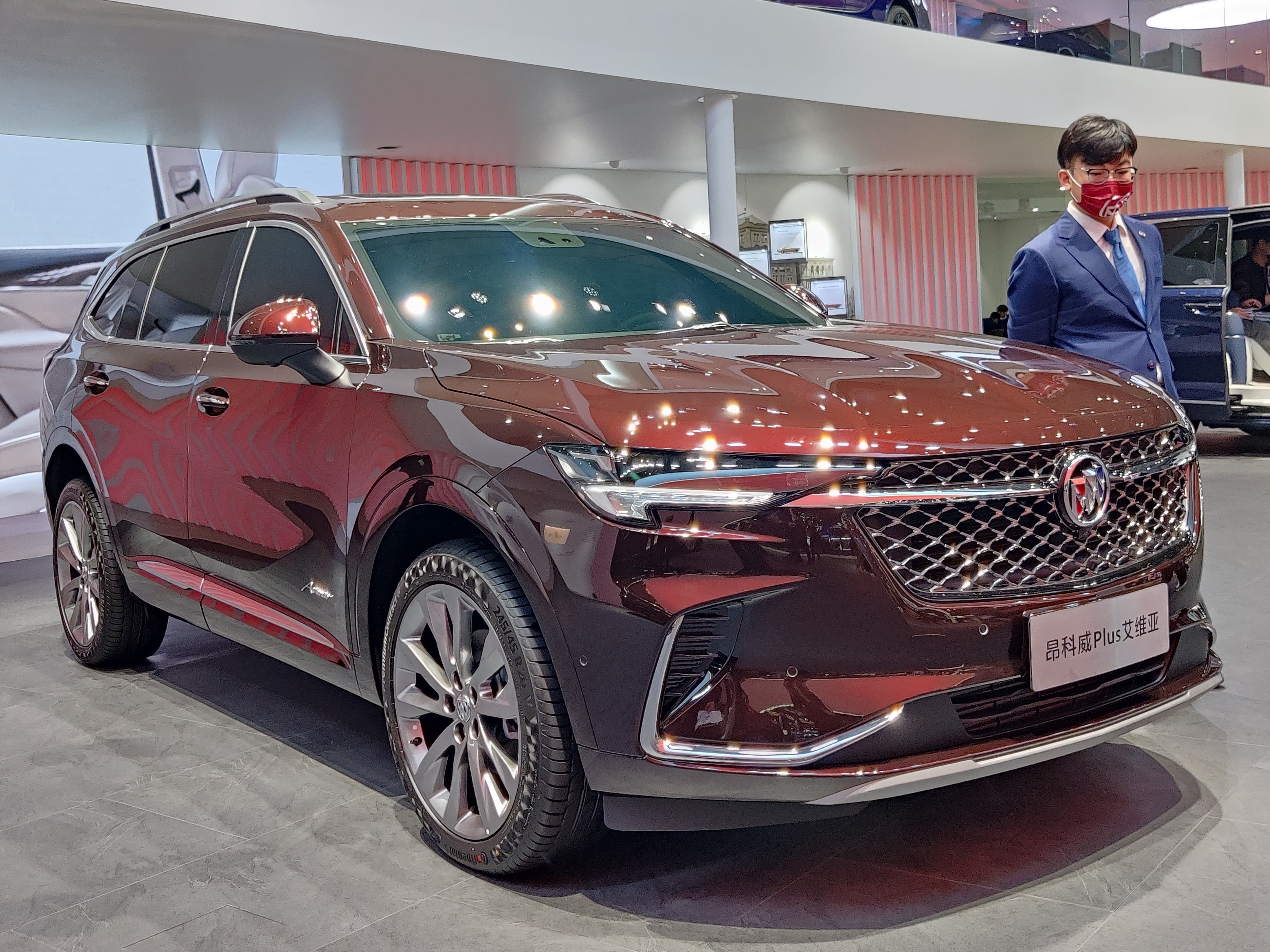
Buick Envision
"And one of those moves actually, Molly, that you point out is General Motors. You know, they build the Buick Envision in China right now that's sold in the US. They've actually said that they're planning to build that a successor to that vehicle in the US starting in 2028."
The Buick Envision is a GM SUV that’s sold in the U.S. It’s being used here as an example of a car GM currently builds in China, but plans to replace with a new version made in the U.S. to help with trade costs.
The Buick Envision is a compact crossover SUV made by General Motors (GM). In this segment, it’s used as an example of a China-built model that GM sells in the U.S., and then plans to replace with a successor built in the U.S. starting in 2028.
tariffs
"And I think it connects back to our discussion on trade too, right? Because tariffs are certainly higher on China built vehicles. And so having that domestic manufacturing of that Buick Compact crossover also helps GM with its tariff costs."
Tariffs are extra taxes on imported products. If a car is built in China and shipped to the U.S., tariffs can make it more expensive—so companies may shift production to the U.S.
Tariffs are taxes added to imported goods, which can raise the cost of vehicles built outside the country. The segment links higher tariffs on China-built vehicles to GM’s decision to plan more U.S. manufacturing for a Buick successor.
Request an Explanation
Heard something you'd like explained? We'll add it to this episode.
Sign in to request explanations for terms you heard.
Want to learn more?
Browse our glossary for plain-English explanations of automotive terms, jargon, and concepts.
Help improve this episode
See something that's not quite right? Our annotations are AI-generated and can sometimes miss the mark. Click the flag icon on any annotation to suggest a correction.