Pickup inventory refers to how many pickup trucks dealers have on their lots (and in the pipeline) to sell. When inventory is low, sales can be constrained even if demand exists; when inventory is higher, a brand can capture market share from competitors who are supply-limited.
The Ford F-150 is a very popular pickup truck. Here, the hosts are saying Ford hasn’t been able to make enough of them, so dealers don’t have as many trucks to sell.
This is a factory that makes aluminum parts used to build vehicles. If it has a major problem like a fire, carmakers can’t get the materials they need, so they can’t build as many trucks.
Market share means how much of the total truck sales a company gets compared to competitors. If one brand can’t supply trucks, another brand can temporarily take a bigger slice of sales.
“Ramp back up” means restarting production and gradually making more again after a shutdown. It usually takes time before the factory is back to full output.
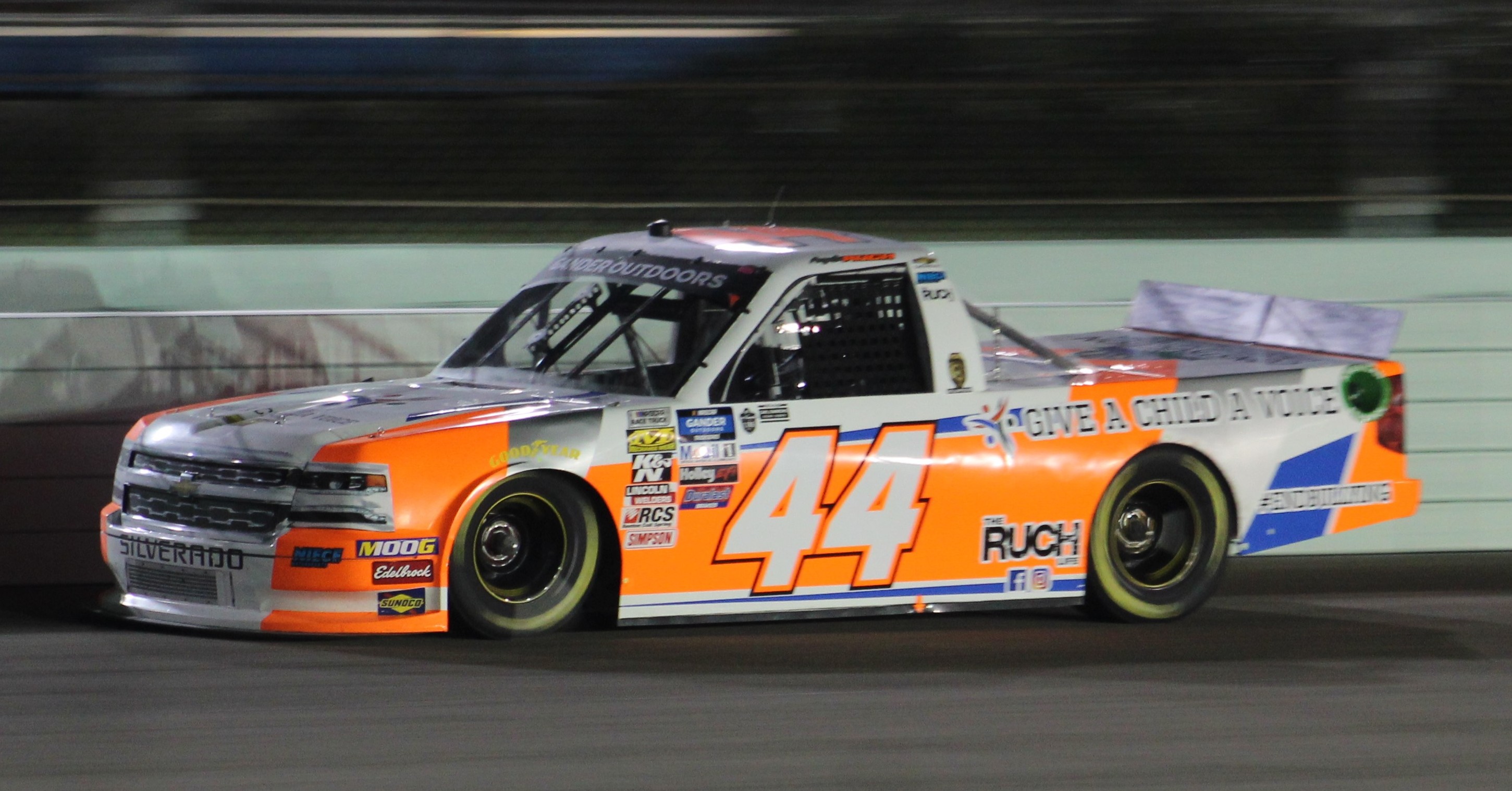
Silverado and Sierra are GM’s main big trucks. When they’re redesigned, it can be harder to keep enough trucks on dealer lots while production shifts to the new versions.
Silverado and Sierra are GM’s big full-size pickup trucks. If they’re getting redesigned, it can change when factories make them and how many trucks are available for dealers.
“Build inventory” means making enough vehicles so dealers have cars and trucks to sell. If factories are switching to new designs, it can be harder to keep those lots stocked.
Factory downtime is when the factory stops making cars or trucks for a while. It often happens when the plant is switching over to build a newer version.
Heavy duty trucks are the tougher, work-oriented versions of pickups. They’re built for things like towing and heavy use, so factories may prioritize them at certain times.
Light duty trucks are the more normal, everyday-use versions of pickups. When factories are preparing new models, light-duty production can be delayed while they focus on other variants.
A collision center is a repair shop for cars that were in accidents. It focuses on fixing the body and damage so the car is safe and looks right again.
Massano Auto Group is the dealership business in Pennsylvania that John Massano runs. They sold their accident-repair operation, and that’s what the discussion is about.
A body shop is where accident damage to a car’s body is repaired. It’s the part of the repair process that fixes dents, panels, and the car’s exterior.
“Core competency” means the main thing a business does best. The point here is that dealers might focus on selling cars and regular service instead of collision repair.
The “collision business” means repairing cars after crashes. The quote is saying you can’t do it casually—you have to commit to doing it properly.
Concept
rental business
They’re comparing collision repair to the car rental business to explain how it’s a different kind of operation. Rentals have their own rules and logistics, just like collision shops do.
Modern cars use lots of small devices to “see” and measure what’s happening around you. After a crash, those devices may need careful setup so the safety features work right again.
It means the repair shop is approved by the car brand. That approval usually comes with strict rules for how repairs are done and what parts are used, especially for safety systems.
This is a repair shop that an insurance company has a deal with. It can make the claim process easier, but it may not require the same brand-specific repair steps as a manufacturer-approved shop.
A “totaled” car is one where the cost to fix it is judged to be too high. With newer cars, repairs can get expensive because there are many electronics and safety systems that must be restored correctly.
Mercedes is another car brand mentioned as an example. The speaker’s point is that their certification covers brands like Mercedes, but newer cars can be expensive to repair because of the safety and sensor systems.
These are parts approved by the car brand for repairs. Using them helps ensure the car’s safety and electronics work the way they’re supposed to after a crash.
Airbags are the safety cushions that deploy during a crash. If they go off, the car’s safety system often needs more work to make sure everything is safe again.
A joint venture is when two companies team up to run something together instead of doing it all alone. Here, the dealer and a collision shop worked together so repairs and related support were handled as one coordinated setup.
Driving Force Collision is the body shop/repair shop the dealer worked with. They handled the collision repairs, and they were part of the coordinated plan between the two businesses.
A stay bonus is extra pay to get employees to keep working for a set period. In this case, it was used to help retain staff during the transition so operations wouldn’t stall.
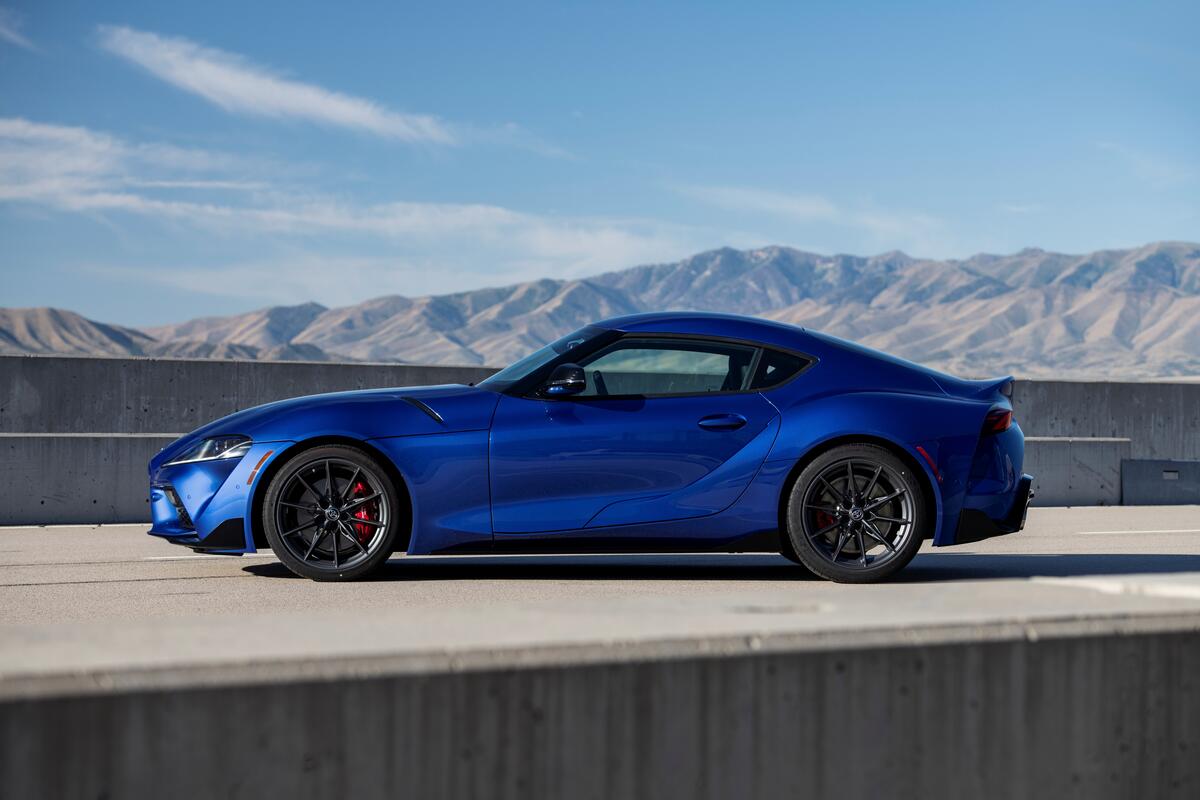
The Toyota Supra is a sports car designed to be fun to drive and go fast. It’s the kind of car people pay attention to when there are updates about production or sales. In this episode, it’s mentioned as part of the broader automotive news being discussed.
A collision repair center is where cars are fixed after accidents. It’s not just “getting it to run”—it’s also fixing the body and making sure everything lines up and is safe.
BMW is referenced as an example of a manufacturer whose certification can be lost if the required BMW-trained technician leaves. That highlights how brand-specific approval can tie a collision center’s staffing to each automaker’s rules.
A technician shortage means there aren’t enough trained people to do the work. In crash repair, it can be especially hard to find the right skilled workers.
LIVE
Dealers, could there be untapped revenue on your lot?
Protective Asset Protection works with dealers to unlock new revenue streams
through reliable protection products across most vehicle types.
Visit protectiveassetprotection.com slash automotivenews to learn more.
Welcome to Daily Drive. For Friday, May 8th, 2026, I'm Kellan Walker in Las Vegas.
Today on the show, federal court strikes down Trump's global tariffs.
Toyota posts a billion-dollar loss despite record U.S. sales,
and GM pushes to boost pickup inventory to capitalize on dwindling F-150 supplies.
Plus, a Pennsylvania dealer explains why he sold his collision center
and why more dealers might follow his lead.
Let's run through all the news you need to know to keep up in the auto industry.
A federal trade court has struck down President Trump's 10% global tariffs as unlawful.
It's the second major blow to his tariff strategy
after the Supreme Court blocked earlier levies in February.
A divided panel at the U.S. Court of International Trade granted a request
by small businesses and two dozen mostly Democrat-led states to vacate the tariffs.
Trump imposed the duties in February under Section 122 of the Trade Act of 1974,
a provision that had never been used before.
The court said Trump's justification didn't hold up, finding he failed to properly identify
balance of payments deficits as the law requires.
Toyota's North American business, usually a cash cow, just posted a $1.2 billion loss.
That's despite setting sales records in the U.S. in the fiscal year that just ended.
The culprit? An $8.6 billion tariff bill, plus billions more poured into EV and truck plant
upgrades. New CEO Kanta Khan says the automakers do everything strategy, battery electric,
hybrid, plug-in, hydrogen is getting too complex and expensive. He's simplifying the lineup to cut
cost. And there's more bad news, the Iran war could cost Toyota another $4.2 billion this year.
And General Motors is working to boost pickup inventory on U.S. dealership lots, aiming to meet
demand and capitalize on Ford's production problems. Ford has been dealing with an undersupply of
F-150s since a September fire at an aluminum supplier plant. Dave Weston of Morningstar says
GM should pick up a lot of share in the second quarter. Joining me now to talk more about it is
John Irwin, who covers GM for us at Automotive News. John, welcome back to Daily Drive.
Thanks for having me on.
All right, John. So how long does GM really have to take advantage of this opening?
Yeah, it's going to be interesting to see how long. They have at least a few weeks,
a few months maybe, where Ford is expecting, and Novellis expects to get production going
back at that plant for aluminum production at some point. As soon as this month,
obviously it'll take time to ramp back up and to get supplies back up to where Ford would like.
So there's at least a little bit of time here in the second quarter for GM to maybe
look to gain some market share on Ford. But obviously, GM is coming from a point as well for
very different reasons, trying to build up its own inventory of pickups. So
how much they'll be able to, I don't know, but analysts I've spoken to said that's a real opportunity
for GM and it's something that executives at GM are really focused on getting inventory back up,
not only to match demand that they're seeing for their pickups. Pickup demand has been pretty
resilient, even in spite of high gas prices and affordability concerns and everything else.
Not only to meet that demand, but to maybe try while Ford is down a little bit to eat in a little
bit more to their market share. Ram will be doing the same thing though, obviously, and they're
coming from a spot unlike GM and unlike Ford, where they're not necessarily also coming from a spot
of low inventory. Obviously, there'll be a little bit of shifts. It'll be interesting to see in
the second quarter, once we get the second quarter sales numbers for all three companies,
kind of how that market share shakes out. If it's significant at all, whether it lasts is
another question too, once companies kind of end up getting supplies where they want it to be. But
there's at least an opening for now to try to eat in a little bit for Ford's market share and
GM's going to do it again to try to do that. You mentioned GM is also preparing to launch
redesigned Silverado and Sierra pickups later this year. Does that complicate their push to
build inventory right now? Yeah, we've already seen that this year, part of the reason that
their inventory is low is because they're the first quarter, there was some factory downtime
to help for heavy duty production for the next generation trucks. And yeah, later this year,
they'll certainly at some point be downtime for factories before the next generation light duty
vehicles as well. So yeah, it does make things a little complicated. It's something that while
they're making these vehicles now, making these trucks now, they want to maximize production
while they're still able to. But it's something that listening on the call, the earnings call
in late April with Mary Barra and Paul Jacobson. It seems like something they feel pretty good
about that they're able to manage it. Obviously, this isn't GM's first time having to work through
a redesign and keep inventory levels steady. And that sort of thing that we demand. But
it'll be interesting to see kind of long term where the market shakes out. There's something
where Mary Barra and Paul Jacobson have both mentioned, there's a lot of uncertainty right
now about kind of the second half of the year, what the economy looks like, what the market
looks like. There's a lot of upside, if the war and around were to end and gas prices were to
come back down at some point pretty quickly, there's a lot of upside there in terms of demand.
But that would obviously, on the other side, if you're GM, you have to increase production to
meet that demand, which presents its own challenges. On the flip side, if energy prices persist,
there could be all sorts of economic ripple effects there that would
trigger them into the market for trucks and for new vehicles overall.
So yeah, it's a lot to manage obviously as you're also looking ahead to launching the
redesigned trucks. So there's a lot to juggle, but GM is feeling pretty good about where it's at.
Yeah, just right now putting the pedal to the metal as far as production goes.
Perfect. John Irwin, thank you so much for joining me.
Thank you.
Coming up, John Massano, dealer principal of Massano Auto Group in Pennsylvania,
explains why he decided to sell his collision center and partner with a consolidator instead.
That's next on Daily Drive.
Dealerships today face tighter margins, shifting consumer expectations,
and affordability pressures tied to broader economic uncertainty.
At the same time, consolidation and digital retailing are changing how products are sold
and supported. That's why many dealers are reexamining how asset protection fits into
long-term profitability and business goals. For more than 60 years, protective asset protection
has worked alongside dealerships across the country, delivering trusted FNI solutions
like vehicle protection plans, maintenance programs, limited warranties, guaranteed asset
protection, and more, helping dealerships generate revenue while helping customers
protect what matters most. In addition to protection products, dealers have access to
programs, tools, and proven training designed to support a wide range of business models.
From digital retailing capabilities to dealer wealth building programs,
Protective's approach is centered on partnership, giving dealers the flexibility to explore
what fits their operation today and how it may support growth over time.
If you're a dealer and interested in tapping new revenue streams through protection products,
Welcome back to Daily Drive. I'm Kellan Walker. Collision repair is getting more complex and
more expensive. Cars packed with sensors require manufacturer certified equipment and text,
but insurance companies keep totaling vehicles instead of fixing them.
That's part of why John Massano, dealer principal of Massano Auto Group in Pennsylvania,
decided to sell his collision center last year. Massano spoke with automotive news
senior retail editor, Dan Shine, about the decision whether he has any second thoughts
and why more dealers might follow his path. John, thanks so much. Are you surprised that more
dealerships aren't kind of falling your lead trying to find a partner like you found to,
you know, kind of take on your collision business, but still kind of be a partner?
Or was it just, were you just kind of thinking you were kind of fortunate
and it's not for everyone and it won't happen for everyone like that?
You know, it's interesting. I would think more people would do this, but I was in that boat.
I wasn't going to sell until I did. So I think everyone has to find their own path and seek
their own level with this and it really becomes a realization. Can you run this body shop?
Can you scale it? That was another decision that we had to make. Are we going to scale this?
Are we going to add 23 or four? And that's when I made this decision too.
We don't want to go that way, but we went this way. I think the more that dealers look at this,
they'll look at maybe concentrating on their core competency, which is sales and service.
Yeah, yeah. I know I've talked to people in the collision business, you know, maybe this
maybe for the stories last year. And one of them, I always would think of this quote he said to me,
if you're going to be in the collision business, you got to be in the collision business.
You know, it's a hard work. It can be profitable and it can be rewarding,
but you can't half-ass it.
Now, and you know, it's interesting, it's automotive and in a sense, it's service,
but it's not the tradition that we know, automotive service. It's a different type of
business also reminds me a little bit of the rental business that we were in a while back.
Of course, rentals is cars, etc. But that's a different business on the peripheral end of it too.
And, you know, we were in the business since the early 80s and went through a lot.
It was just time was right, the consolidation. Hey, there's consolidation in obviously the
dealership world. Absolutely. But I think there's spots for single-point dealerships.
We have three dealerships plus a used car, Supercenter, and we're in the town of Redding,
Pennsylvania. So we feel we can carve out a nice niche for ourselves in that area.
And I think also cars are getting more complex. Putting them back together is more complex. It
takes, you know, more sophisticated equipment, a little more patience. I mean, everything has to
be just right for all those sensors and everything else to work again. And that's very labor-intensive.
And that's also why we move forward to manufacturer certification versus insurance preferred shop.
Because we were going to take a shot at that because we realized that was going to be the tip,
the very top of automotive collision repair to carve out that niche in our world. But the problem
that it happens, which I'm sure you're seeing from maybe being so close to the industry,
they total out these cars. So if we have a BMW or Mercedes, hey, it's great. We're certified
for it. And it was a $40,000 repair. But obviously you have to use manufacturer certified parts,
which is great. And you've got to absolutely get these cars back perfect because of all the sensors.
They're looking at the time the consumer and the consumer waiting, put them in a rental car,
and they're saying, you know what, let's just total these out. I don't know where they go
after they're totaled out. I could surmise they go to an area or a country that doesn't need all of
the sensors going on. And maybe if a light's on in the dash, they just clip that little light.
But that's for a fuse. That's not for me to worry about. But that was really in this kind
of strategic chess match. That was the checkmate that made us say, listen, we're going to sell
because the consolidators are better at that than us. They know that business.
And you still can have, if cars get totaled, which they seem to be because it began because
they're so complex. And sometimes if all the airbags go off, they may say, well, hell,
it's not worth putting all those back in. You have an opportunity still for those customers who
are told, sorry, your car is totaled, to walk across the street or wherever to your dealership
and buy something new or something off the use lot. Absolutely. And that's why we considered our
sale, not just a buy sale, but a joint venture with Driving Force Collision. And we worked
hand in hand with them as far as we said, providing them parts, providing the upper level service
repair when it's needed. And they obviously fixed the vehicles. And of course, if one of our
customers does have a total, they'll just send them to us. So really, really, truly was a win-win
scenario for us. And we're very, very happy with the whole process, Driving Force, focused advisors,
everybody all the way through. Do you happen to ever hear from some of your dealer, principal friends
who may say, hey, I know you did this, I'm considering selling, getting into a partnership
with the kind of pick your brain a little bit about how it went. What do you think?
Yes, it's interesting because in this process, in the sense we went backwards, we call dealers who
did this, then we did it, and now dealers are calling us to say, how did you do this? How did
it work? Yes. And as you know, well, the dealer world is extremely friendly where people think we
might be competitors, we are competitors, of course. But listen, if you need something, every
dealer is willing to help out. Yeah. And I'm going to guess no regrets on this. You're happy with
your decision and you wouldn't go back or change anything. No, no. And the no regrets as far as
that was taking a lot of my time. Now I can focus on the automotive end of it.
Financially, it made sense for us. The only issue that I was worried about was our co-workers that
we in a sense left behind, but Driving Force extremely professional. And then we also gave
our co-workers, based on longevity and skill, stay bonuses. So if we closed in May, we gave them,
I think it was a 90 day stay bonus. You stay to 90 days and we'll give you a nice bonus to
share in that sale to keep the process moving. Nice. And you probably couldn't have done it.
And I might say, oh, if you wish you would have done it sooner, but it seemed like
you had to take those certain steps to get to where you were in 2024 for the men to make
sense as opposed to back in 2018 or 2020 for you to do this. Yeah. You know, the timing is right.
Maybe we all do a lot on our gut, but look, we're here every day. So, but the timing was right that
we made that move to become manufacturer certified. Maybe we could have done it five years earlier.
I don't think the intensity of the consolidation was as much. I think the timing was perfect all
the way around with it. And you said kind of getting the collision in part off of your plate
so you could focus sales and service. Have you noticed an improvement in those areas
that your process, your product, your sales, your services is going better because you're
able to focus on that more? Yes. And it wasn't just me focusing on it with some of our service
and parts people focusing on it. So we took all of that off our plate and then worked
within our departments. And yes, definitely more productive because some of the problems
that happened or situations, I'm going to say a problem, situations at the body at the
collision repair center were almost unsolvable. Like trying to find, we had a great manager down
there, but now we had to have a bench. Where do we find that next manager? I always worried
if I got a manager or anybody that was too far out of the area that one day, and we hired them,
one day they'd come to me and go, you know, I'm tired of this drive. And then that put you so
far back because each manufacturer required one or two texts to be certified. So if we lost our
BMW tech, we would lose our certification. So we tried to do some redundancy there,
but it was, you know, finding that most highly skilled coworkers like we had was very tough.
Right. You hear a lot about the technician shortage and people think in the service department,
but that's in the collision industry as well. Yes, yes, very much so. And they're artists,
you know, the neat thing about them in the collision world, I think it is having a resurgence
because that it's so technical and such an art, such a craftsman art that I think ladies and
gentlemen going into that can be so proud of what they do. And of course, the money, the money's there.
And we, the manufacturers and everybody else are doing the training and pay for the training.
We had to send a lot of people to, let's say, Houston for two weeks straight. So we lost
their productivity, but they came back, you know, well-drinked. Well, this is great stuff.
John, I really appreciate you jumping on with me. Interesting perspective on collision and kind of
where that industry is kind of headed a little bit, at least in the dealer world.
Yes, yes, very interesting. And like I said, the timing's in our gut. So I think dealers use a lot
of, they look at a lot of financial models, but sometimes your gut from being here every day
gives you a good guide. It's a good North Star way to go with all this stuff.
That's Daily Dry for today. I'm Kellan Walker. Thanks to Automotive News executive producer
Jake Nier, as well as around John Irwin and Hans Grimo for their reporting for today's podcast.
You can get the latest news on service and parts, GM's pickup push, and everything happening in the
auto industry at autonews.com. Come back over the weekend for our weekend drive edition of the show.
Our own Michael Martinez and Larry Bellaquette talk about the week's biggest stories,
including more about our look at Ford's Skunk Works project in California.
What's really interesting to me is the rationale behind this, right? You know, this is our way to
fight China. You know, I was impressed by what they were doing, but if anything, it's not big enough.
We'd love to hear from you. Let us know what you think of the show and the topics we cover today.
Send us an email at dailydrive at autonews.com or leave us a voicemail at 313-444-2774.
And if you enjoy the podcast, remember to like, leave a review, and subscribe so you never miss an episode.
About this episode
A court blocks Trump’s 10% global tariffs as unlawful, and Toyota explains a $1.2 billion North American loss tied to an $8.6 billion tariff bill plus EV and truck upgrades. GM tries to capitalize on constrained F-150 supply, while also managing low inventory around factory downtime and upcoming pickup redesigns. Then the show shifts to collision repair: a Pennsylvania dealer sells his collision center, citing rising complexity, manufacturer certification requirements, and insurers increasingly totaling vehicles instead of fixing them.