The Chevrolet C10 is a classic, vintage pickup truck made by Chevrolet from the 1960s through the 1980s. It is a simple, rugged utility vehicle that has become highly popular today as a collectible classic car.
A modern electric family SUV made by a Chinese company called Leapmotor. It can come as a pure electric car or with a small gas engine that acts as a generator to keep the battery charged on long trips.
An electric car that has a small gasoline engine on board. The engine doesn't turn the wheels; it just acts as a generator to charge the battery so you don't run out of power.
A small, skinny spare tire kept in the trunk of a car to use in an emergency. It is only meant to get you slowly to a repair shop, not for normal driving.
The Audi 100 is an older, mid-sized luxury sedan made by the German company Audi from the late 1960s to the mid-1990s. It was the predecessor to today's Audi A6 and was known for its comfortable ride and advanced aerodynamics.
The spacing and pattern of the bolts that hold a car's wheel onto the hub. If this measurement doesn't match perfectly, you won't be able to bolt the wheel onto the car.
Car
Mercedes-Benz Actros
A massive semi-truck made by Mercedes-Benz, commonly seen pulling large trailers on highways in Europe and other parts of the world.
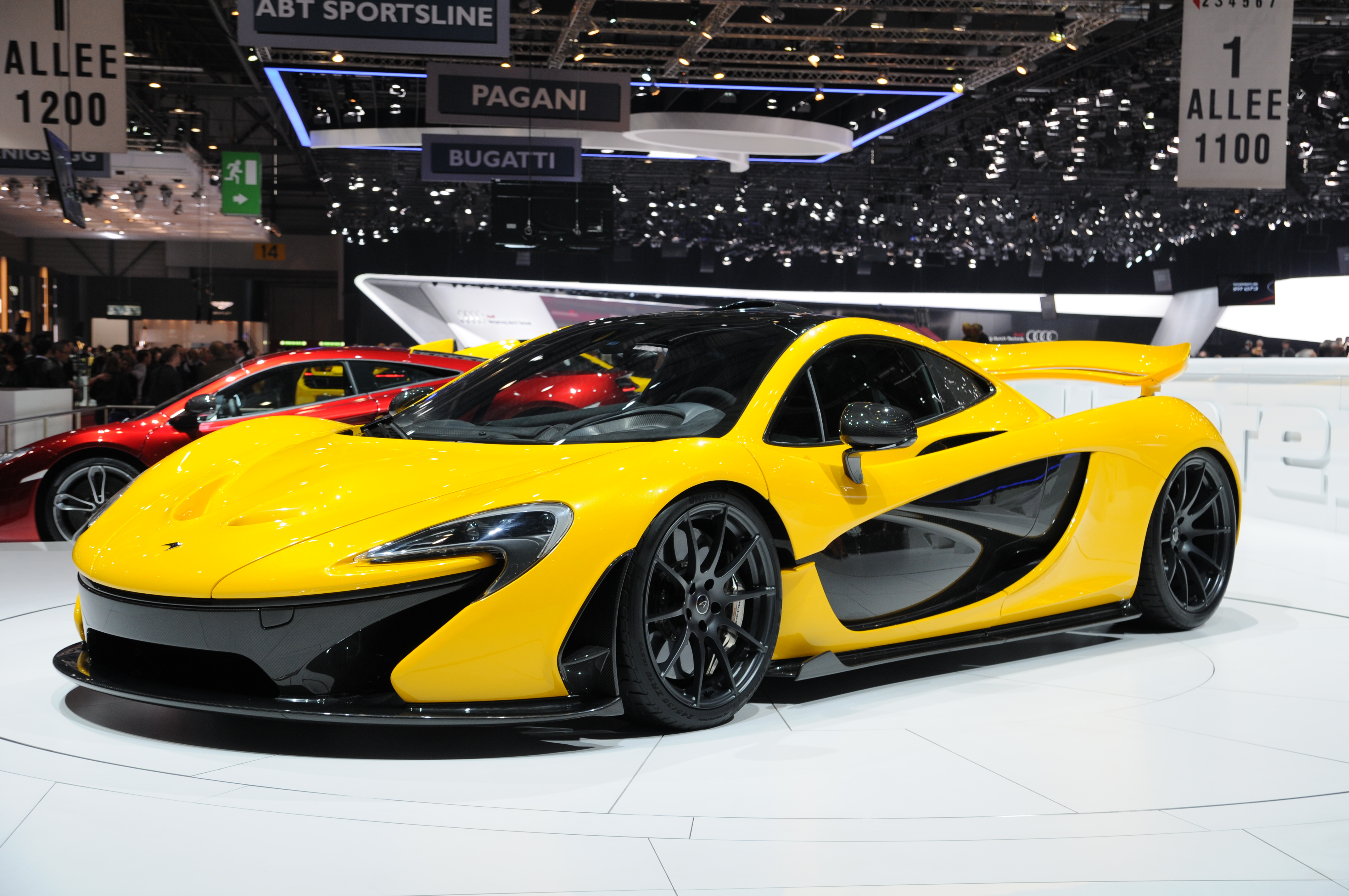
A multi-million dollar, ultra-high-performance hybrid supercar from McLaren. It is incredibly fast, lightweight, and uses Formula 1 technology to deliver extreme track performance.
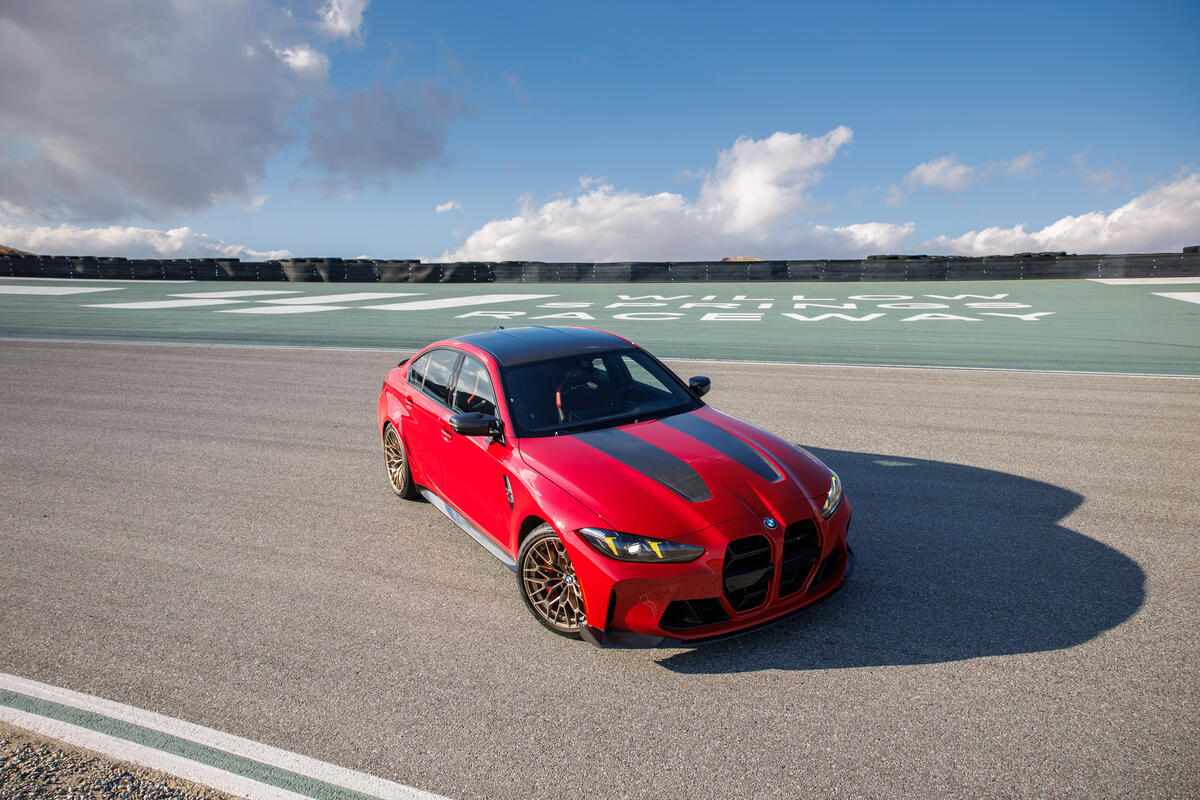
The BMW M3 is a highly upgraded, high-performance version of the standard BMW 3 Series compact luxury sedan. It is built by BMW's special performance division to be extremely fast and agile, making it popular for both daily driving and racetrack use.
Ferrari's ultimate, top-of-the-line hybrid supercar. It uses a high-tech V6 engine and electric motors to go incredibly fast while sending power to all four wheels.
A specialized part of a high-performance car's suspension that helps keep the car flat and stable when it is pushed down by wind force at very high speeds.
An iconic, ultra-rare supercar from the 1990s where the driver sits in the middle of the car with two passenger seats slightly behind on either side. It is famous for being incredibly fast and pure to drive.
A mechanical system in the back of a car that helps prevent the tires from spinning uselessly on slippery surfaces, ensuring both wheels get power to push the car forward.
One of the most famous and successful Formula 1 drivers of all time, who won seven world championships and dominated racing in the 1990s and early 2000s.
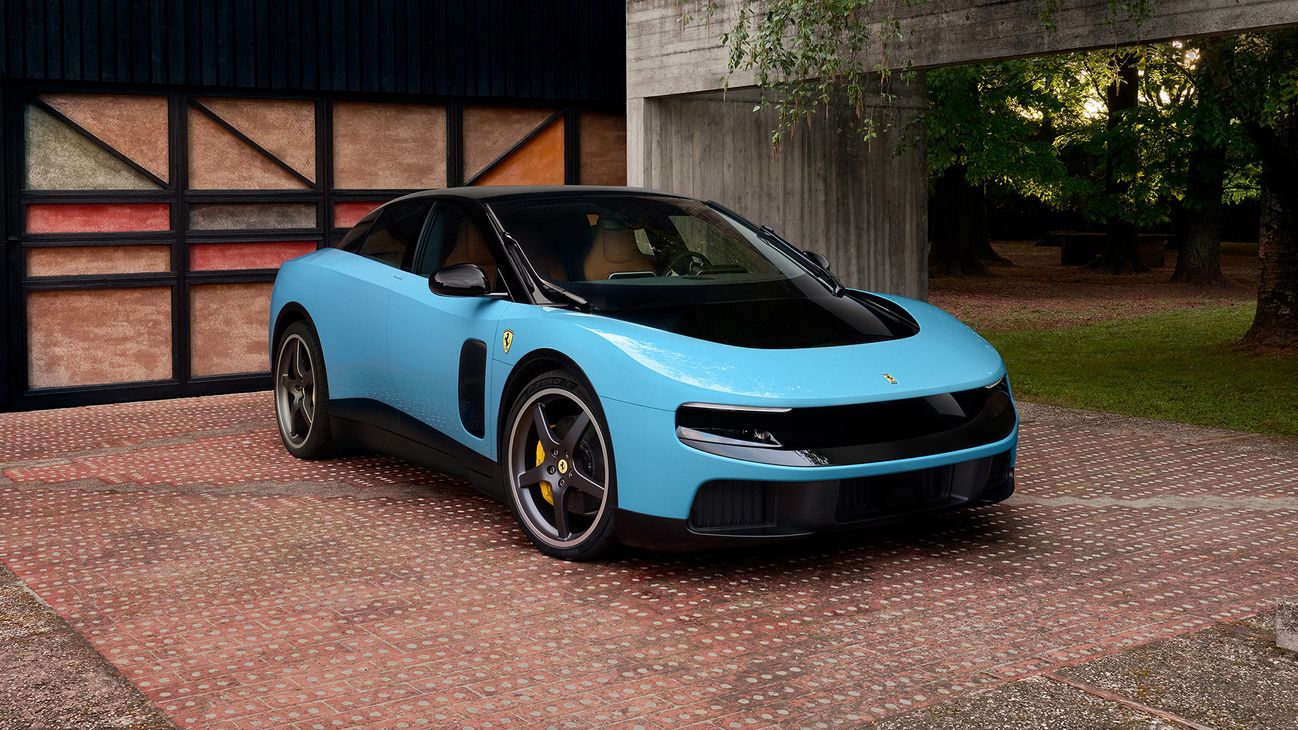
This is a luxury sports car made by Ferrari designed for comfortable, long-distance road trips rather than just racing. It features a more spacious interior and smoother ride while still offering a powerful engine and high speeds.
The Porsche 911 is a famous two-door sports car made by the German company Porsche, known for having its engine in the very back of the car. It has been made for over 60 years and is celebrated for being both a fast sports car and practical enough to drive every day.
A law that forces car companies to sell a specific percentage of electric or zero-emission cars, aiming to phase out gasoline and diesel vehicles over time.
The brilliant founder of Lotus Cars who became famous for building incredibly light, fast race cars by focusing on saving weight rather than just adding horsepower.
An organization in the UK that represents car manufacturers, tracks how many cars are built and sold, and works with the government on car-related laws.
The most famous American motorcycle company in the world, known for its loud, heavy cruiser bikes and classic biker culture.
Car
Caterham Aero 7
A futuristic-looking concept sports car built by Caterham to see if they could make their traditional, boxy cars more aerodynamic. It never went into full production.
Delighted to say I'm joined by industry minister Chris McDonald.
Chris, welcome to the podcast.
Thanks for telling me, yes, where we are today, am I?
Well, we're here at Lotus at Hethel in Norfolk for a very special reason.
So Lotus are opening their new Performance Hub,
which is essentially a facility that will enable Lotus to develop
new models themselves, but also to collaborate with other low volume producers as well.
So the whole Lotus facility here was founded on the vision of one man, Colin Chapman.
He wanted to set up a car company after the Second World War.
And in 1966, he brought that facility here.
And I think no matter how entrepreneurial you are, if you wanted to do that now,
it would be really hard to do it.
There's a lot of regulation, cost, finance, supply chain management.
And with this Hethel facility, Lotus are giving other businesses
the opportunity to be able to create low volume car manufacturing.
And what I really like about that is it sort of cements the position of Lotus here,
but it also creates a real global centre for the UK
in terms of high performance car manufacturing as well.
And what is the role in government in
places like this and exclusively this place as well?
Well, for just sort of, you know, look from the kind of top level
from a manufacturing perspective, manufacturing can only flourish in a country
if there's this real strong connection between industry and government.
And I know that myself because I worked in industry for 20 odd years.
And a lot of that time I spent trying to campaign, spent a decade
campaigning for an industrial strategy.
We've actually got one now. We've had it for 12 months.
Advanced manufacturing is in there and automotive is in there as well.
But, you know, seeing you've got an industrial strategy is one thing.
You've actually got to put your money where your mouth is and make life easier
for manufacturers. And there's two big things we've been working on in the last year.
So one is about the cost of doing business.
And for manufacturers, really, energy costs have been a big problem in the UK
for a long time. So I brought forward a scheme this last year
called the British Industrial Competitiveness Scheme.
And I realised like not all you listeners are going to be so familiar with that.
But essentially, it's a scheme to reduce the cost of energy for manufacturers,
advanced manufacturers. It gives them a 25% discount on their electricity costs.
That helps us to get into a competitive level for manufacturing compared with Europe.
And you might imagine a business like Lotus, do they really care about that?
They make very high value, very high value vehicles.
But actually, the profit margins aren't huge.
You know, the electricity costs are a big cost and they do make a big difference.
And then the other thing we're trying to do is make sure that people have access
to their markets so they can sell their cars effectively.
And we have to admit, you know, since we came out of the EU, that's been harder.
So we've worked really hard on that and managed to get a better position there.
But we've also opened up some new markets in the Far East and in the Gulf
and in the US as well by negotiating closer train arrangements too.
And I mean, what that means, like it's all very high level, isn't it?
But what it means at a very practical level on the ground, business like Lotus
has then got the confidence to invest in something like the Hethel Centre here
or their new manufacturing facility or relatively new manufacturing facility
that they've got here. They've got the confidence to invest.
They know that they can invest in the design, the engineer and make the cars
and sell them at a good price in the market as well.
So that's that sort of long term collaboration you need between government
and industry to make it work.
What do you what's your what's your thoughts on the state of the UK automotive
industry at the minute? Where would you where would you like it to be?
Where at what point would you think that that is a successful UK automotive industry?
So what I think is it's too small and if we just let it go the way it is,
it becomes subcritical.
I think we're we're at a point where I wonder, could it could it ever go any
smaller and actually still be sustainable?
And that's why when I came into the job, I've set targets in different
I'm responsible for loads of different bits of industry and government,
but I've set a clear target for the automotive industry.
We have to get volume up to one point 3000000 units a year.
And, you know, in their own way, Lotus are doing that as well.
They've got a facility here that can make 10,000 vehicles
and as well as the sort of high performance sports cars
that they're they're they're bringing forward new models.
They'll be able they'll be able to do that.
So they do that in their own way.
But actually, volume isn't what drives a business like this.
But if you look at our big manufacturers like Nissan, Toyota, BMW,
Stelantis, essentially for them, they've got to get productivity up
to a reasonable level to hit the economies of scale in their factories.
And if we don't do that, then the supply chain won't be there.
That would then support the high performance low volume producers
like, you know, Bentley McLaren, Lotus, etc.
And it's that it's that sort of criticality of the supply chain
is the bit that concerns me the most.
And that's why we've got I've got a volume target
because then we can pull that pull that supply chain bit through.
So I'm working with the with the trades
through with that through the automotive council.
So we've got a series of measures in place to help with that.
Mention some of the stuff we're doing on cost of doing business in the market.
But the other thing is support and innovation as well.
So we've got this program called Drive 35.
And it's all about how we can support businesses to electrify car businesses
to electrify again, Lotus have got some great examples of that.
But that transition to electric vehicles being a leader in that area
and then help them to get those volumes up in the in the factories.
And we had a bit of good news today as well.
So the new figures are out from the SMMT
and automotive manufacturing is up two percent from in May.
So that's moving in the right direction.
And it will be like gradual increment and improvement like that.
But I want to see us get up to 1.3 million units by 2035.
If you've mentioned infrastructure
when you were giving presentation earlier, productivity hinges on it so much, doesn't it?
Tell us a bit more about what we can do.
Yes, you're absolutely right about that.
So the productivity does hinge on infrastructure.
And anyone who's knocked about in the UK for, you know, more than five minutes
realize that we've really under invested in infrastructure for a very long time.
And part of that is, you know, government making money available for infrastructure.
But just like the cost of infrastructure is so huge.
I mean, I think, you know, the whole legacy around DHS,
two second national disgrace, frankly, if we can't build a high speed railway line.
So the immediate action that we've taken as government
is massive reform of the planning laws.
Because we have to accept it as a country.
We need to build a building infrastructure.
We need water, we need rail, we need, you know, new factories to be built.
I mentioned in my speech as well, I want to increase UK productive capacity.
That's part of my job.
That means we have to be able to build new factories.
And it's not lost on me that this whole Hethel site here in Norfolk is only here.
Because the founder of the business couldn't get planning permission in the place.
He first wanted to build it.
Well, it's been an amazing success.
But we can't let that get in the way of entrepreneurs.
So we published a 10 year infrastructure plan.
We're investing heavily in infrastructure as well.
We're reducing the cost of infrastructure by, as I mentioned, things like planning.
And then that gives companies like Lotus and other companies in the automotive sector
the confidence to invest on the back of it as well.
You've got to make all these costs of doing business more certain,
more cost effective access to markets.
And then that's how we can generate more manufacturing in the UK.
Our thanks to Chris McDonald and now back to the podcast.
I've written a column, Indian motorcycle.
Big fan of India.
I've read this text.
I've nearly bought, well, you know, I checked the configurator and I specter for you.
And I thought about it a lot and I really like some of them.
Anyway, they they were sold by Polaris to a private venture capitalist company in February.
And they installed a new CEO who spent quite a lot of his time working for Harley.
But then they also employed an agency to get involved with paid marketing or paid content
or whatever you want to call it.
Right. But anyway, paid, anyway, they paid people on social media to say stuff.
Yeah. And some of those people have said not amazing stuff about Harley Davidson.
And then Indian have come out themselves and said, look, we're an all American company.
We support the people who matter.
I think they phrased it and they said, you know, Harley gets involved in political
grandstanding and DEI and making stuff overseas.
Harley do make some bikes overseas, but they're predominantly for export to avoid Terrence.
Yeah. And Indian did make some stuff overseas, but wasn't selling enough for them.
So it doesn't anymore anyway.
It was all a bit it was all a bit slagging off of Harley Davidson in a way that I didn't
like because it just politicized and cultured.
The phrase they use cultures have changed.
We haven't. And I don't like that very much.
And I did my my thing is that automotive advertising is really good at not slagging
off other people. Yeah. It's just a car manufacturer going, here's the dream.
Here's a compact crossover.
You two could go surfing in it and have a great time with the young, beautiful bit,
your friends. Yeah.
And that's what politicians don't understand, because trading insults doesn't actually
change anybody's mind. It doesn't change minds.
So I'm really annoyed that the automotive sector in any form
is taking lessons from politics rather than the other way around.
Yeah, you're so right about that.
Really wise me up because I'm less likely now to buy an Indian motorcycle
because I don't I don't want to be.
I don't want to buy one motorcycle and somebody tell me that I'm forgive the
language and values. I don't want somebody to tell me I buy one motorcycle
my fascist or another motorcycle and somebody tell me I'm a libtard.
I don't I just want a motorcycle.
Yeah, that I like.
Yeah, I just want to ride a motorbike and there aren't enough of us to go round
to Stoke Division like this.
I think it's really I really was it really wound me up.
Anyway, that was well, I think I think that's such a good point.
The one about, you know, people not being convinced by by one side
slagging off another. They just they just don't change up people's minds like that.
So they'll hide you win and all just hate everyone.
Yeah, it has to stop.
You saw the Katerham Aero seven at the BMM the other day.
Yeah, they just they get hold of interesting stuff and feature it.
And it was it was in one of the four years there.
And it's interesting car.
Can I go right there?
Well, they both are they both are.
No, this has class wants to go straight on.
What does he I'm not sure what he wants.
I think he is trying to get. Oh, God.
Is he going to go with a genuine piece of road rage here?
Well, we might do.
It's just some there's some pretty tough driving on the off of this range
driver's court. Look at this smoking idiot as well.
It's got every fault that guy.
Yeah, he's got it all going on.
I bet if I checked the MOT history of that car, not that I'm a great one
to talk, give him my cars, but I bet it won't come out.
Brilliant. Anyway, the Aero seven was a concept.
Yeah, it was it was a thing before the long term owners of.
Oh, God, now I did look at it.
Oh, it was the Fernandez years.
Yeah, it was a Fernandez years. That's right.
He was going to find he was trying to find a new reason for a new direction
for Katerham and it.
And the idea was to to improve on the arrow
because everybody says and knows that the the aerodynamics of a lot of a seven
are pretty rubbish. Yeah, God, this bloke has
his stuff that every probably taking every box.
Still, we've left to be honest.
And and it it didn't we're going to spend some dollars on it.
It was going to work. It wasn't it was going to be expensive.
And it didn't work and everybody thought it was ugly anyway.
But it was just it's just a fascinating relic.
And I love the way museums get hold of this kind of stuff
and and celebrate the the you know, the the failures as well as the same.
Yeah, it's an honourable
intent, isn't it, to try and improve the arrow of a car that's got poor arrow.
Yeah, yeah, yeah, yeah.
And I liked what what you were saying in your what
actually Peter from the Museum was saying the other day, which is
available on this pod.
Yeah, a couple of weeks ago, you know, museums are
they're a kind of independent
trusted source of stuff, aren't they?
You know, a place of record, which I thought was right.
Anyway, that podcast is available still on this channel.
It was good, wasn't it, Peter?
Peter Armstrong, Peter Armstrong, the PMM CEO.
That's available on this podcast channel.
Short one this week, because Steve and I are just arriving at the office.
Yeah, we'll be back next week with some more my week in cars.
This pod is brought to you with our sponsor, Anderson Anderson dashy.com
for all of your home charge and needs.
Thank you, mate.
Oh, mate, it was a lot of fun.
Here we are at arriving at work at 501.
501, yeah, just in time to go to the pub.
I'll see you next time.
See you next week.
About this episode
Experience the raw thrill of the new McLaren W1 as the hosts detail a first drive of this 1200-horsepower, rear-wheel-drive hypercar at Mugello. They dive into McLaren's weight-saving obsession, from the direct-mounted steering rack to the fixed carbon seats. The discussion also covers a listener's frustrating roadside encounter with incompatible Volkswagen wheel hubs, a quick look at the Leapmotor C10, and an exclusive interview with UK Industry Minister Chris McDonald at Lotus headquarters. It's a fascinating look at the contrast between pure analog engineering and modern automotive complexity.
In this week's episode of the Autocar podcast My Week In Cars, we drive the McLaren W1 hypercar, the latest Ultimate series car from the Woking carmaker, and only the third McLaren to have a '1' moniker. Meanwhile Mitsubishi returns to the UK, the ZEV mandate looks like being amended, and industry minister Chris McDonald MP talks to us from Lotus's Hethel HQ, from where there is news too.
Prior and Cropley also have your letters and chat about the archive. And for details of a special offer which gives you SIX issues of Autocar for just £6, click here.