The Tesla Model S is an electric car, meaning it runs on electricity instead of gasoline. It’s a sedan, so it’s a regular passenger car shape, but with an electric power system. The podcast mentions it because someone is considering trading into a different kind of car.
Some parts on cars are made of plastic, and sunlight can make them look dull or faded over time. You can make them look better for a while, but it often comes back.
A test drive is when you drive the car to see how it feels and whether anything seems wrong. It’s an important step before agreeing on a purchase or trade.
A trade-in is when you give your current car to the dealer and they credit you toward the next car. The dealer decides what it’s worth based on condition and demand.
A manual transmission is the kind where you shift gears yourself with a clutch and a stick. Some drivers like it because it feels more connected to the car.
“Breaks” is almost certainly a transcription of “brakes,” another key safety-related wear item. Worn brake pads/rotors can require service soon, so dealers often estimate that cost when determining trade-in value.
Tires wear out over time, and if they’re getting low, it can cost money to replace them. That’s why dealers consider tire condition when valuing a used car.
A buyer’s order is the dealership’s written breakdown of the deal. It shows what the car costs, what they’ll give you for your trade, and what you’ll owe after taxes and fees.
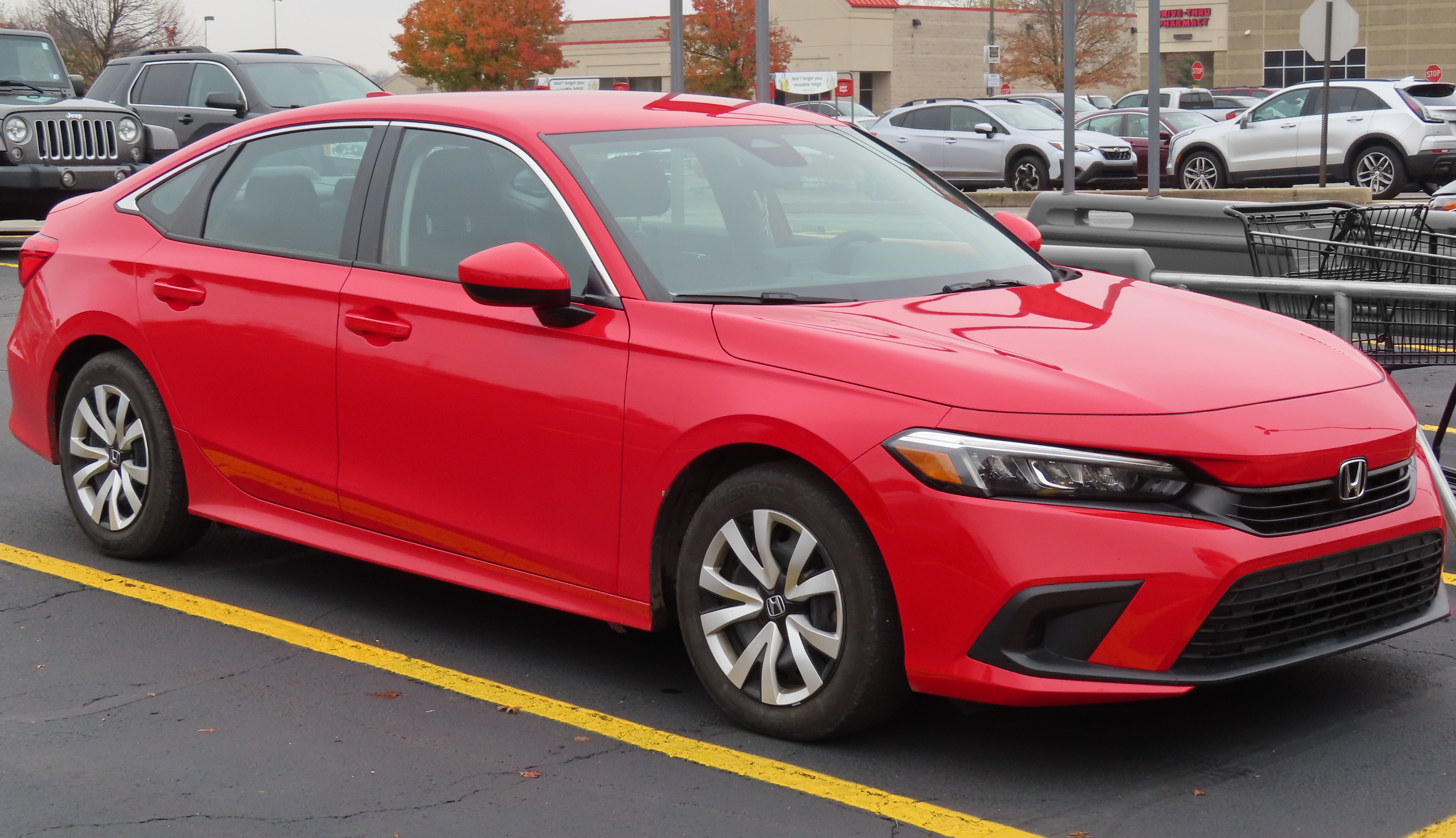
The Honda Civic is a very common car, so it’s usually easier for a dealer to price and sell. That can make the trade-in part of the deal feel more straightforward.
Sales tax is the government tax added to the cost of the car. Whether it’s based on the full price or only the difference after your trade depends on where you live.
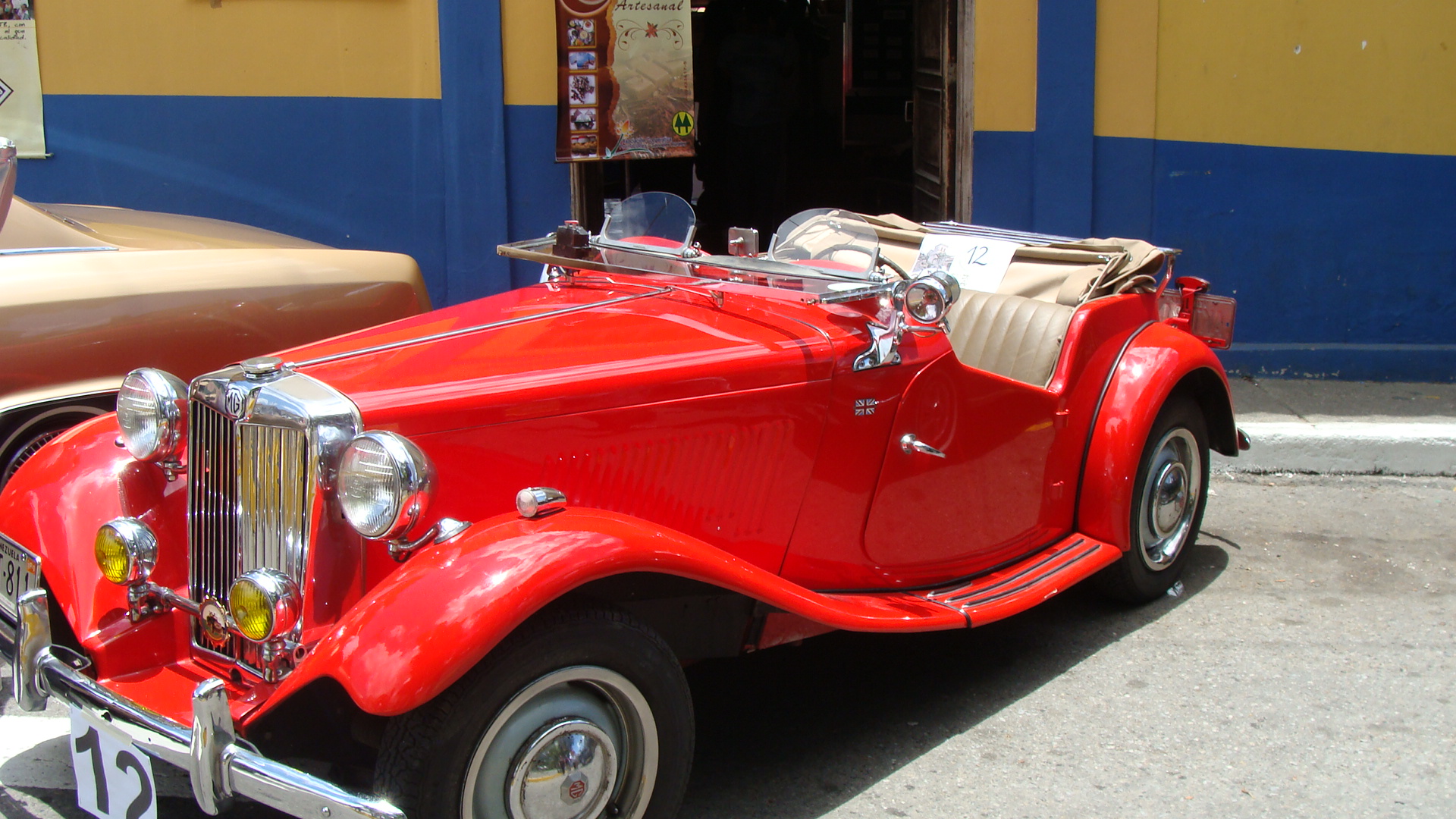
The car originally came from the UK market. That can mean it was built and set up for the way people drive there, and it can be part of the car’s history.
The speaker is saying the car was made on a specific day in 1950. That kind of detail helps prove the car’s history and can be important for collectors.
This is just the stuff that keeps the car working: oil for the engine and other fluids for things like cooling and brakes. With older cars, you often have to check these more carefully because leaks and wear are more common.
Grill badges are decorative emblems mounted on the front grille to add branding, styling, or personalization. On older cars, they’re often used to enhance curb appeal and give the car a more “finished” look.
“Old records” refers to the paperwork trail that documents a car’s history—such as service receipts, maintenance logs, and prior ownership information. For vintage cars, having complete documentation can increase buyer confidence and help preserve value.
The speaker is connecting dealership ownership to having more cars available—both as inventory and as personal collection. This is a common dynamic in the collector world: cars are easier to acquire, move, and store when you already run a dealership.
Restoring a car means fixing up an old car to look and run like it should. The host is saying it usually costs a lot, and you may not get that money back when you sell it.
An auction is where cars are sold to the highest bidder. The host is saying he bought the car through that process, and the price can jump based on other bidders.
Concept
restoration costs vs resale value
He’s basically saying: even if a car gets restored, the money you spend doesn’t always turn into money you make when you sell it. In his example, the numbers didn’t work out.
A “good restoration” means fixing up an old car so it looks right and lasts. With older cars, the hardest and most expensive part is often dealing with rust.
They mean buying a car and keeping it for a long time. The idea is that the car can hold its value (or grow) instead of being sold right away.
LIVE
Hey folks, Lenny Lawson here, the car guru with a fresh, I mean, hot off the presses
experience because it just happened a few minutes ago right before I started this program.
A father and a son came in, the son has a an older model Honda Civic and he wants to
trade that Honda Civic with an SI model, which is the high performance little hot hatch.
Anyway, he's wanting to trade it for a late model Jeep.
And so the Jeep really wasn't detailed yet.
It wasn't ready to show to somebody, but they really are limited on time.
So we brought it around and all of the plastic, you know, Jeeps have a lot of plastic on them
around the fenders and the bumpers and so forth.
And that plastic fades over time.
And this was faded.
And so it wasn't ideal, but I told him we can really spruce that up.
There's no permanent fix unless you paint them.
And I don't know how permanent that is because the paint likes to peel off those plastic parts.
So what people do is they use armor or some some product like that to make them look good
for a period of time and then it fades out and then you do it again.
So he knew about that.
He felt OK.
So father and son went on a test drive and while they're on a test drive,
we're looking at their trade in.
And so the trade in is a Honda Civic SI manual transmission.
I think it would be a good seller.
So we look at the vehicle because it needs tires and probably needs breaks and stuff like that.
We look at it at $5,000, which is wholesale book value for that trade.
They come back.
I've already prepared a buyer's order for them to look at, which includes the selling price,
the trade value, their cash buyers.
So there is no payment, no down payment required, no four square negotiating techniques
done here at Gateway Ford or Gateway Nissan.
No, we do it the straightforward, old fashioned way with honesty.
OK, anyway, enough of a sales pitch.
So I presented them with the numbers and they were really nice.
They were not upset.
I gave them the rationale for while we're paying him what we want to pay him for his trade.
And he said, well, I'm not trading for that much.
I'll just sell my Honda Civic myself.
I said, OK, you have it sold.
He said, yeah, I can get $10,000 for it.
What was my response?
My response was this, then that's what you need to do.
That's fantastic.
And that definitely reduces the difference.
And if you have the customer that's buying your vehicle.
Come in and buy it from us, which we would give you $10,000 for your trade.
We turn around sell it to him for 10,000.
So, you know, it's just a clean transaction and you'll save about $750 on the sales tax.
Now, this applies in Tennessee.
I don't know what how it works in your state.
But in Tennessee, you pay sales tax on the trading difference.
Some states make you pay the sales tax on the selling price of the car
and don't give you any credit for the trade in.
I wouldn't want to live there, but still, our sales tax is kind of pricey.
Seven and a half to seven and three quarters percent plus two and a half
percent of the first sixteen hundred dollars.
That's it's not as complicated as it sounds, but we have no state income tax.
I think that's why all these people are moving here from California
and Michigan and New York, and our town is just booming
with people moving in, buying up these farms.
You know, 10 years ago, you could buy land for anywhere from five
to maybe 10,000 an acre if it was close to town.
Now it's twenty five thousand an acre.
And that's a bargain to a lot of these people who have just sold their
two point seven million dollar homes that they paid
one hundred and ninety nine thousand four twenty years ago.
How did I get off on that tangent?
OK, so we're trying to trade with these people and he's not having it.
He's he's nice and he's he I understand where you're coming from.
I explained it to him.
And so they're going to go think about it, whether they really want the Jeep.
And whether he really wants to sacrifice his little Honda Civic Si.
And see if that friend is still willing to pay that for the trade.
See, a lot of people will say, yeah, I'd love to buy your vehicle.
If you sell it, I'll give you ten thousand dollars for it.
And then you go and tell them that you're ready to sell it to them.
Oh, no, I was I was just thinking about maybe in six months, I can't do it now.
Or oh, I have to go to the bank and see if I can borrow that much money on that car.
Give me the VIN number.
You know, oh, I've got to check and see what my insurance cost on that.
No, I'm not ready to do it now.
And then they end up coming back to the dealership and we negotiate another number.
You know what, I give more for the car.
Yeah, probably to put a deal together.
But he was just so set on ten thousand.
I know I couldn't give that for it.
And there was no negotiation because he had it sold, supposedly.
And so we'll just start over when he comes back and we'll follow up with them
and see if they've changed their mind or made a decision.
That's what we do.
You know, too many salespeople don't bother to follow up.
They'll say bye bye to somebody and not call them the next day.
Not call them the day after that.
Finally, they say the sales manager says, Hey, have you called those folks?
See what? If they're ready to trade.
Oh, no, boss, I forgot.
Then he calls them and the next thing you if you hear him talking on the phone,
he'll say, Oh, you did.
And that means that they bought someplace else.
So follow up salespeople.
If you're listening to this show, which you should be,
because this show gives the new car dealers advice,
unbiased advice for the general public.
And this is what the general public needs to do to combat
the crooks and the bandits out there because they're out there.
OK, I'll be back in just one minute.
And like I said, I am back.
I bought the coolest little car on Friday
from some wonderful people from Johnson City.
I mentioned this car on the previous program 1950 MGTD.
And it's just it's basically a car that was designed in the thirties.
I mean, it has the the same type of grill,
the headlights that are off to the side.
It's got fog lights on the bumper.
It just looks like, well, like a miniature model A Ford, I guess.
And I just love it.
My problem is I'm six, three, two, thirty.
And I have a hard time getting into it.
I'm trying to develop a technique that doesn't look so idiotic.
Getting in and getting out.
There's no tilt steering wheel, and it's a big steering wheel.
Once I get in, I'm fine.
I can straighten out my seats and then I just have to get used
to driving on the right hand side.
Yes, this car was originally sold in England.
I did some research on it.
It was actually built June 5th, 1950.
I found this website that has all kinds of MGT information.
And mine's a TD.
They had a TATB, TC, TD, TF, you know, there was a bunch of T's.
And this one's a TD.
I think they built them from 48 to 52 or something like that.
But I'm learning about it.
You know, about this car to tinker with.
Originally, she was wanting me to sell it for her.
It was her dad's car.
He acquired the car from his dad.
They bought it in Johnson City.
And there was a dealership there that Dan Plank, you may have heard of it.
They're not there anymore.
They've been gone for a long time, but he bought the vehicle there.
And or his dad did, gave it to him.
Him, name is Wendell.
My brother's name is Wendell.
See, the stars were aligning here.
And so he kept the car from 1957.
Until he passed away.
And now his daughter sold it to me this past week.
And I intend to keep it.
I'm going to take care of it.
I'm going to nurture it back to health.
And that car will be driven and will be shown.
And you know what appeals to me the most about it?
I think, well, it's not that it's just a neat looking little car.
It's the history.
It's the family connection.
I like old British cars because they're extremely unreliable.
Yeah, that's what I said.
Extremely unreliable.
But that's what makes them cute.
But yeah, it has beautiful green leather seats or leatherette.
I haven't figured that out yet.
A green dashboard, a huge beige steering wheel.
And beautiful gauges, a very short windshield.
Look it up MGTD 1950.
Beautiful grill.
Oh, it has a green grill.
She said that her dad was a Green Bay Packers fan.
But it's not Green Bay Packers gold.
It's definitely a kind of a pale yellow with a green grill and lots of chrome.
So I've got new tires that are going on it.
We had to figure out what to do about the oil and all the fluids.
I see back in 1950, they had this, they actually used paper filters.
And, you know, the way it's described to me is that they filter most of the oil,
but never all of it.
And so it's not the best system in the world.
So I ordered a better system.
It's a $199 kit that you can install on the car and you can actually
use a modern oil filter that will filter all of the oil.
And to me, that's important.
So we're changing all the fluids, making sure the brakes are safe.
I just called my insurance agent.
I said, add this to the policy.
He said, you're kidding, right?
I said, no, this is my thing.
Add it to the policy.
He said, what's the stated value?
And I told him what I thought it was worth just in case I have an accident and I'm out there.
But yeah, it is a really cool little car.
Now I'll take pictures of it and put it on my Facebook page.
Lenny Terry Lawson is my Facebook page if you want to become Facebook friends.
And I'll let you into the club, the Lenny Lawson Club.
Let's see what else are we talking about today?
Oh yeah, another thing I talked about with these folks when they came in and we,
I gave her a check and she gave me the title and a bunch of other cool things.
Oh, a cool thing.
These cars, one of the things that a lot of people do with older cars that have these
pretty grills on them as they put grill badges on them.
So these are like, like jewelry for a car and you mount it to the grill and they're just so cool.
Let me grab one here.
Okay, I got it.
This one is beautiful.
It has a, the British flag and it has Queen Elizabeth in the middle of it and a crown on
top of it with on top of this big silver circle and it says H M Queen Elizabeth crowned June 1953.
That sucker is going on the grill and I've got several others here that are also people will
think I'm a citizen of Great Britain, but I am not.
Okay, where was I going?
Oh yeah.
So so many cars that exist antique cars are sitting in somebody's garage.
You may have one.
You probably never drive it.
It has become a storage shelf for a lot of stuff.
I can't tell you how many times people have called me say, hey, Lenny, listen to your radio show.
Can you come and look at an old car we have?
And I say, well, sure, give me your address.
We arrange a time and so forth.
And so I show up, they open the garage.
No, they haven't bothered to get it out of the garage.
I have to dig it out.
You know, this isn't American Pickers, you know, that's not really what what I enjoy doing is going
through all of your stuff, but that's what happens.
People use it.
You know, they just put it away and they just don't think about it.
It's just really hard to think about giving away or selling moms or dads favorite old car.
But once you do, it probably feels good because you got a little extra money in your pocket.
And hopefully the car is going to have new legs.
People are going to use it.
They're going to drive it.
You're passing on the love.
That's the way I've always looked at it.
When I sold a car to somebody and I've sold hundreds of vintage cars in addition to the
hundreds of thousands of, you know, every day Chevrolets and Toyotas and you name it.
You know, when you put somebody in an old car and they haven't had it,
it's new to them unless they're just planning on flipping it.
It's going into another home and it'll probably go into a place of honor and they'll enjoy it
and they'll drive it on weekends and drive it through the mountains and go to Asheville and
different places and maybe join a car club.
And if you don't give them the opportunity to do that, then I think that's wrong.
But my daddy owned a car.
Well, take pictures of it.
You know, take a bunch of real good pictures of it, frame them, put them in your house
and keep all the old records.
That's the thing that I encourage folks to do is just keep the memorabilia stuff.
But don't keep the car unless you're going to use it.
Now, it's your right to keep it.
I'm not telling you that you shouldn't.
I mean, if it's that important to you, then keep it.
But get it out.
Let other people see it.
That's the joy.
Take it to a car show.
Get out and drive it.
You know, the problem, and we talked about this too with these folks from Johnson City, is
it's really easy to have vintage cars when you own a car dealership.
I realize that.
I mean, I've got three in my Ford showroom, two in my Nissan showroom, four or five up at the
storage building I have at G2, which is our green outdoor business.
And I've got one, two, three, four at home.
I mean, it's not like I'm some kind of big car collector.
That may sound big to you, but I really don't have anything really expensive.
I'm not like these guys that collect Ferraris and Packards and, you know, have
beautiful display buildings for their stuff.
No, I'm pretty basic.
I try to buy stuff that I will enjoy driving and looking at.
So I've got two cars from the 30s, none from the 40s.
Let's see, two from the 50s had one until Friday.
Two from the 50s, two from the 60s, none from, no, wait a minute.
Yeah, one from the 70s, and then it goes dark.
The 80s, I didn't like any of those cars.
The 90s, like them even less.
2000s, cars are starting to get better, a little bit more interesting.
Bringing the horsepower back.
And so, let's see, 2010s, they're okay, you know, still more horsepower.
Mustangs, really getting hot again.
Camaros, Dodge Challengers or Chargers, you know, engine and horsepower.
Trucks business is exploding.
And, you know, it's funny what people choose to collect is they want to collect stuff from their
era. It's just like this kid that was trying to trade the Civic for the Jeep.
Civics are really big with that young group.
They like, you know, some Mitsubishi's like Eclipses and Civics,
certain, you know, Hot Rod Corollas, if there is such a thing.
But yeah, they like stuff like that, but I tell you what, these young kids,
they go nuts over that 280Z that I have, that's 78, 280Z.
And I understand it because it's, well, so much of this is artwork.
And you may not see it that way, but people who have gears in their heads,
yep, that's what they see when they look at some of these old cars.
So I'm just kind of in a good mood about this MG because it's, I need projects like that,
but not too intensive a project. That's why I have sworn off restoring cars. I'm done.
That 1934 Ford Model 40 Faten that I have in the showroom.
So I bought it at auction. The guy that sold it was an Olympic participant.
The 1960 Olympics, I think it was in Tokyo. And he was a javelin thrower.
And he was the NCAA national champion in 1958 and 1959 in the javelin.
And so he decided to go for the Olympics where he finished 12th.
But one of the things that he really liked was the whole concept of sports equipment.
So he built a sports equipment company. He even invented a new type of javelin.
And that javelin is still used today, but he built up this big collection of cars and
he had gotten up in his nineties and decided, okay, I've got to unload these. So I bought it
at auction, talked to the guy that restored the car. He spent 150. Now this is not counting the car.
He spent 115,000 on the restoration. When I bought it at auction, I had it bought at 26,000.
Ended up, some guy jumped in and started bidding it up a little bit. Bought it for 34.
That's a pretty big loss. That's why I don't restore cars anymore,
because you can't make money doing it. There for a while, you can make money restoring Ford Broncos
and certain Mustangs. Trying to think what else? Oh yeah, FJ Cruisers or the FJ 40 Toyota,
you know, from the late 60s or mid 60s up into the late 70s, early 80s. Those FJ Toyotas.
You could restore those, but I mean, a good restoration on one of those,
if it didn't have a lot of rust was 75, 80,000. It's just gotten too expensive and there's not
enough people to have the skills to do it. Okay, I'll be back in just one minute.
Well, this has been a rambler of a shove. I've just been kind of sitting here thinking and talking
and feeling rather jubilant and I'm excited about the opportunities that I have to continue to
mess around with old cars and help people buy and sell. If you've got something you want to get
rid of and you need some advice on what to do with it and where to go with it,
feel free to text me 423-552-2020 or send me an email to LennyLawson2020 at gmail.com.
And I've had a lot of success selling vintage cars for people a whole lot more than I've sold for
myself. I'm one of those kind of buy and hold guys. It's part of my 401k, I guess. That's how
I justify it to my wife anyway. You're buying another car? Yes, it's for our 401k. Oh, okay.
But yeah, take advantage of my knowledge, my experience. I've only been doing it for 48 years.
What do I know? Well, thanks for listening to this edition of My Car Guru and I'll see you next time.
About this episode
Lenny Lawson opens with a real-time dealership story: a father and son want to trade a manual Honda Civic Si for a late-model Jeep, but the trade value and sales-tax math (Tennessee taxes the difference) become the sticking point. Lenny stresses straightforward pricing, the importance of follow-up, and how buyers often “say yes” then stall. He then celebrates buying a 1950 MG TD from a family connection, sharing his plans for tires, fluids, and oil-filter upgrades. The episode also covers why old cars get stored, how to preserve memorabilia, and why he’s sworn off costly restorations.