
Miscellaneous ramblings of a certified car nut and some reflections on building my car collection
About this episode
Lenny Lawson opens with a real-time dealership story: a father and son want to trade a manual Honda Civic Si for a late-model Jeep, but the trade value and sales-tax math (Tennessee taxes the difference) become the sticking point. Lenny stresses straightforward pricing, the importance of follow-up, and how buyers often “say yes” then stall. He then celebrates buying a 1950 MG TD from a family connection, sharing his plans for tires, fluids, and oil-filter upgrades. The episode also covers why old cars get stored, how to preserve memorabilia, and why he’s sworn off costly restorations.
Email Lennie at [email protected]

Tesla Si Model
"...c and he wants to trade that Honda Civic with an SI model, which is the high performance little hot hatch. ..."
The Tesla Model S is an electric car, meaning it runs on electricity instead of gasoline. It’s a sedan, so it’s a regular passenger car shape, but with an electric power system. The podcast mentions it because someone is considering trading into a different kind of car.
The Tesla Model S is an all-electric luxury sedan known for strong performance and advanced technology. In the podcast context, it’s mentioned as a potential trade target, showing that electric vehicles are part of the same conversation as traditional performance cars. That can affect how buyers compare features, range needs, and overall ownership costs.
plastic fades over time
"...all of the plastic, you know, Jeeps have a lot of plastic on them around the fenders and the bumpers... And this was faded."
Some parts on cars are made of plastic, and sunlight can make them look dull or faded over time. You can make them look better for a while, but it often comes back.
Many modern vehicles use exterior plastic trim and cladding that can fade due to UV exposure and weathering. Once it’s faded, the appearance can be improved temporarily with dressings, but the underlying plastic can continue degrading.
test drive
"So father and son went on a test drive and while they're on a test drive, we're looking at their trade in."
A test drive is when you drive the car to see how it feels and whether anything seems wrong. It’s an important step before agreeing on a purchase or trade.
A test drive is when a buyer evaluates how a vehicle drives and checks for issues like noise, vibration, and braking feel. For trade-ins, it’s also a chance to confirm the car’s condition before finalizing the deal.
trade in
"...we're looking at their trade in. And so the trade in is a Honda Civic SI manual transmission..."
A trade-in is when you give your current car to the dealer and they credit you toward the next car. The dealer decides what it’s worth based on condition and demand.
A trade-in is when you sell your current vehicle to the dealer as part of buying another vehicle. The dealer typically assigns a value based on market demand and the car’s condition, then applies that value toward the new purchase.
manual transmission
"And so the trade in is a Honda Civic SI manual transmission. I think it would be a good seller."
A manual transmission is the kind where you shift gears yourself with a clutch and a stick. Some drivers like it because it feels more connected to the car.
A manual transmission means the driver selects gears using a clutch pedal and gear shifter. It’s often preferred by enthusiasts because it gives more direct control over engine speed and gear selection.
breaks
"...because it needs tires and probably needs breaks and stuff like that. We look at it at $5,000..."
“Breaks” is almost certainly a transcription of “brakes,” another key safety-related wear item. Worn brake pads/rotors can require service soon, so dealers often estimate that cost when determining trade-in value.
tires
"...because it needs tires and probably needs breaks and stuff like that. We look at it at $5,000..."
Tires wear out over time, and if they’re getting low, it can cost money to replace them. That’s why dealers consider tire condition when valuing a used car.
Tires are a major wear item and can strongly affect a used car’s value and safety. If tires are near the end of their life, dealers often factor in the cost of replacement when pricing a trade-in.
trade value
"I've already prepared a buyer's order for them to look at, which includes the selling price, the trade value, their cash buyers."
Trade value is how much the dealer says your current car is worth. That number can change how much tax you end up paying.
Trade value is what the dealership offers you for your current car when you buy another vehicle. It directly affects the final amount you pay because taxes are often calculated based on the trade difference (depending on state rules).
buyer's order
"I've already prepared a buyer's order for them to look at, which includes the selling price, the trade value, their cash buyers."
A buyer’s order is the dealership’s written breakdown of the deal. It shows what the car costs, what they’ll give you for your trade, and what you’ll owe after taxes and fees.
A buyer’s order is the dealership document that lays out the deal details—typically the selling price, trade value, taxes/fees, and any discounts. It’s the paperwork you use to verify the numbers before anything is finalized.
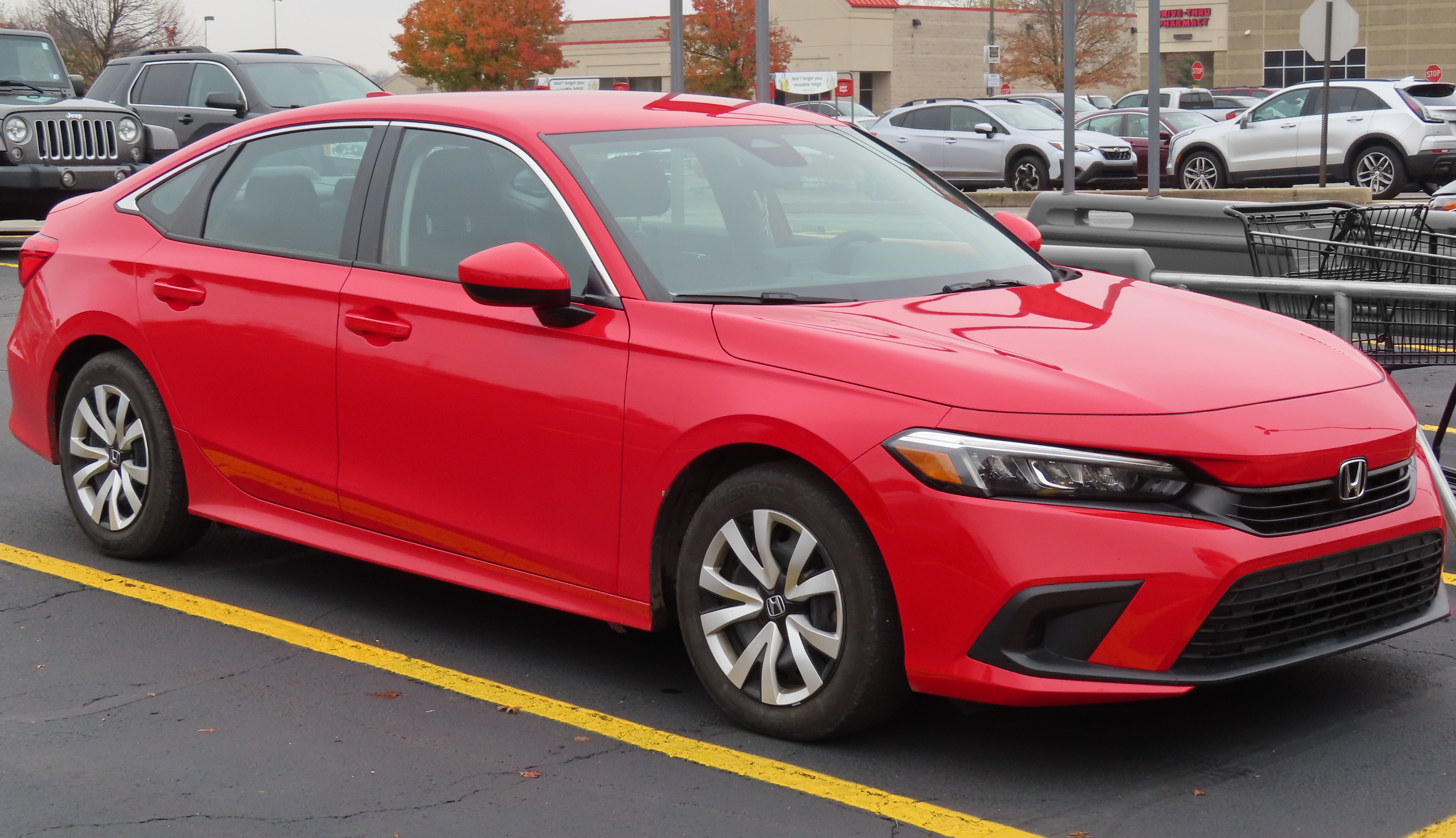
Honda Civic
"He said, well, I'm not trading for that much. I'll just sell my Honda Civic myself."
The Honda Civic is a very common car, so it’s usually easier for a dealer to price and sell. That can make the trade-in part of the deal feel more straightforward.
The Honda Civic is a common compact car used as a trade-in example in dealership negotiations. Its popularity often means it’s easy to value and resell, which can affect how confidently a dealer can offer a trade value.
sales tax
"So, you know, it's just a clean transaction and you'll save about $750 on the sales tax."
Sales tax is the government tax added to the cost of the car. Whether it’s based on the full price or only the difference after your trade depends on where you live.
Sales tax is the tax charged on vehicle purchases, and the exact calculation can vary by state. In trade-in situations, some states tax the “trade difference” while others tax the full selling price.
VIN number
"Give me the VIN number. You know, oh, I've got to check and see what my insurance cost on that."
VIN is like a car’s fingerprint. It helps companies confirm exactly which car you’re talking about so they can price it and check details.
VIN stands for Vehicle Identification Number. It’s a unique 17-character code that lets dealers and insurers look up the exact vehicle history, trim, and specifications.
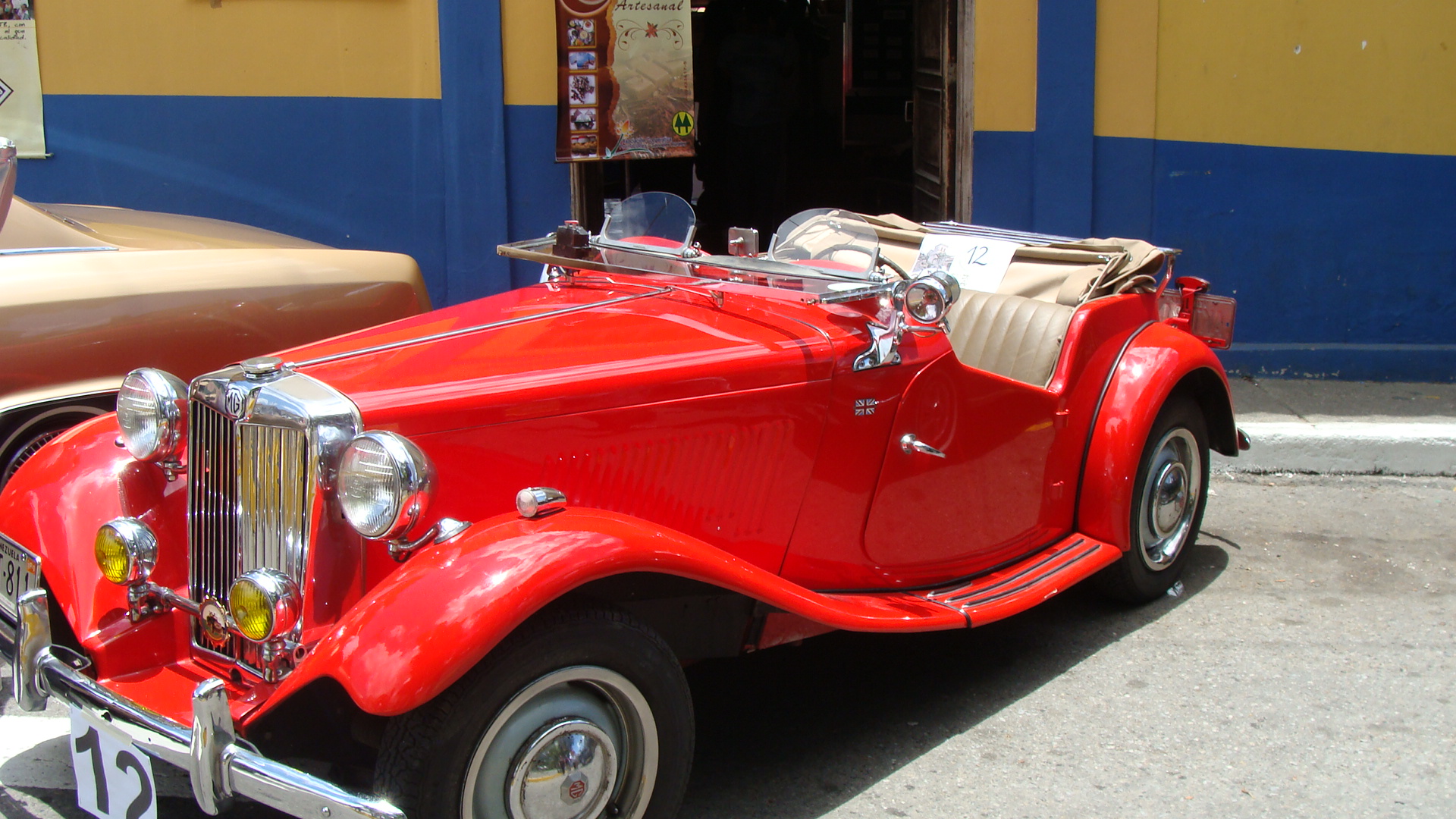
1950 MGTD
"I bought the coolest little car on Friday from some wonderful people from Johnson City. I mentioned this car on the previous program 1950 MGTD."
This is a classic MG roadster from 1950. It’s a small British car with a very old-school look and driving experience.
The MG TD is a classic British roadster produced by MG in the late 1940s and early 1950s. A 1950 example is part of the TD’s original production era and is known for its simple, vintage styling and open-top driving feel.
fog lights
"It's got fog lights on the bumper. It just looks like, well, like a miniature model A Ford, I guess."
Fog lights are extra lights meant to help you see better in bad weather. They’re usually mounted lower on the bumper.
Fog lights are auxiliary lamps designed to improve visibility in poor weather like fog, heavy rain, or mist. On classic cars, they’re often mounted on the bumper and can be part of the period-correct styling.

Model A Ford
"It just looks like, well, like a miniature model A Ford, I guess. And I just love it."
The Model A Ford is a very old classic Ford. The speaker is basically saying the MG TD looks like a smaller version of that kind of vintage car.
The Ford Model A is a landmark early-1930s American car, and it’s often used as a reference point for “classic” proportions and styling. The speaker is comparing the MG TD’s small-roadster look to the Model A’s vintage front-end vibe.
originally sold in England
"Once I get in, I'm fine. I can straighten out my seats and then I just have to get used to driving on the right hand side. Yes, this car was originally sold in England."
The car originally came from the UK market. That can mean it was built and set up for the way people drive there, and it can be part of the car’s history.
Saying the car was originally sold in England points to its market origin, which can matter for things like specification, lighting, and how the car was set up for left-hand traffic. For collectors, original-market provenance can also affect authenticity and value.
built June 5th, 1950
"I did some research on it. It was actually built June 5th, 1950."
The speaker is saying the car was made on a specific day in 1950. That kind of detail helps prove the car’s history and can be important for collectors.
A specific build date is a provenance detail that helps confirm the car’s production timeline and can support authenticity for collectors. For vintage cars, build dates are often tied to chassis/body records and can be useful during documentation or restoration.
oil and all the fluids
"So I've got new tires that are going on it. [620.2s] We had to figure out what to do about the oil and all the fluids. [623.7s] I see back in 1950, they had this, they actually used paper filters."
This is just the stuff that keeps the car working: oil for the engine and other fluids for things like cooling and brakes. With older cars, you often have to check these more carefully because leaks and wear are more common.
“Oil and all the fluids” refers to the car’s consumables and working fluids—engine oil, coolant, brake fluid, transmission fluid (if applicable), and sometimes power steering fluid. Older cars often have more frequent fluid checks because seals, hoses, and gaskets can age and start leaking or degrading.
title
"Oh yeah, another thing I talked about with these folks when they came in and we, I gave her a check and she gave me the title and a bunch of other cool things."
A car title is the legal document proving ownership. During a purchase or sale, the title transfer is what completes the ownership change.
grill badges
"These cars, one of the things that a lot of people do with older cars that have these pretty grills on them as they put grill badges on them."
Grill badges are decorative emblems mounted on the front grille to add branding, styling, or personalization. On older cars, they’re often used to enhance curb appeal and give the car a more “finished” look.
selling an old car to give it "new legs" (getting it back on the road)
"But once you do, it probably feels good because you got a little extra money in your pocket. And hopefully the car is going to have new legs. People are going to use it."
He’s saying that once you sell the old car, it can start being used again instead of just sitting. A new owner might fix it up and actually drive it.
“New legs” is a collector-friendly way of saying the car will be used again after being sold. The concept is that a change of ownership can lead to renewed maintenance, repairs, and actual driving instead of long-term storage.
car club
"and they'll enjoy it and they'll drive it on weekends and drive it through the mountains and go to Asheville and different places and maybe join a car club."
A car club is a group of people who like cars and get together. They might plan drives or events so owners can enjoy their cars with others.
A car club is a group of enthusiasts who share a common interest in certain makes, models, or types of cars. Clubs often organize drives, meetups, and events, which can be a big part of why owners keep and enjoy older cars.
old records
"take pictures of it. You know, take a bunch of real good pictures of it, frame them, put them in your house and keep all the old records."
“Old records” refers to the paperwork trail that documents a car’s history—such as service receipts, maintenance logs, and prior ownership information. For vintage cars, having complete documentation can increase buyer confidence and help preserve value.
car show
"That's the joy. Take it to a car show. Get out and drive it."
A car show is an event where people bring cars to show them off. It’s a fun way to meet other car lovers and see lots of different vehicles.
A car show is an organized event where owners display vehicles to the public and often compete for awards. For collectors, shows are a way to share the car’s story, meet other enthusiasts, and validate the car’s condition and presentation.
car dealership inventory
"it's really easy to have vintage cars when you own a car dealership... I've got three in my Ford showroom, two in my Nissan showroom..."
The speaker is connecting dealership ownership to having more cars available—both as inventory and as personal collection. This is a common dynamic in the collector world: cars are easier to acquire, move, and store when you already run a dealership.
horsepower
"2000s, cars are starting to get better, a little bit more interesting. Bringing the horsepower back. And so, let's see, 2010s, they're okay, you know, still more horsepower."
Horsepower is a way to describe how much power the engine makes. More horsepower usually means the car can feel quicker or more exciting to drive.
Horsepower is a measure of an engine’s power output and is often used as a shorthand for performance. The speaker’s timeline implies that later decades brought more power and more interest in performance-oriented cars.
trucks business is exploding
"And so, let's see, 2010s, they're okay, you know, still more horsepower... Trucks business is exploding."
The speaker is saying truck sales are booming. That usually means more people are buying trucks, so dealerships sell more of them.
“Trucks business is exploding” indicates a surge in demand for pickup trucks (or trucks broadly) in the market. For dealers and collectors, that typically means more inventory turnover, more sales volume, and often more variety in trims and powertrains.
restoring cars
"but not too intensive a project. That's why I have sworn off restoring cars. I'm done. That 1934 Ford Model 40 Faten that I have in the showroom."
Restoring a car means fixing up an old car to look and run like it should. The host is saying it usually costs a lot, and you may not get that money back when you sell it.
Restoring cars means bringing an older vehicle back to original condition or better, often through bodywork, mechanical rebuilds, and interior refurbishment. The speaker argues that restoration can be financially risky because the resale value doesn’t always match the money spent.
bought it at auction
"So I bought it at auction. The guy that sold it was an Olympic participant. The 1960 Olympics, I think it was in Tokyo."
An auction is where cars are sold to the highest bidder. The host is saying he bought the car through that process, and the price can jump based on other bidders.
Buying a car at auction is a common route for collectors, especially for rare or older vehicles. Auction pricing can differ from private-sale pricing, and bidding wars can quickly change the final purchase cost.
restoration costs vs resale value
"He spent 150. Now this is not counting the car. He spent 115,000 on the restoration. When I bought it at auction, I had it bought at 26,000. Ended up, some guy jumped in and started bidding it up a little bit. Bought it for 34."
He’s basically saying: even if a car gets restored, the money you spend doesn’t always turn into money you make when you sell it. In his example, the numbers didn’t work out.
The speaker gives a cost comparison: he paid a relatively low auction price, then the car had an expensive restoration, and the final auction price ended up much higher due to bidding. His takeaway is that restoration doesn’t reliably produce profit, even when the work is done well.
good restoration
"You could restore those, but I mean, a good restoration on one of those, [1205.6s] if it didn't have a lot of rust was 75, 80,000. It's just gotten too expensive and there's not"
A “good restoration” means fixing up an old car so it looks right and lasts. With older cars, the hardest and most expensive part is often dealing with rust.
A “good restoration” implies returning a classic car to a high-quality, correct, and durable condition—often including bodywork, rust repair, and proper mechanical refresh. For older Toyota FJ-series vehicles, rust-free examples command far higher prices because the labor and metalwork are the hardest parts to do well.
buy and hold guys
"And I've had a lot of success selling vintage cars for people a whole lot more than I've sold for [1260.5s] myself. I'm one of those kind of buy and hold guys. It's part of my 401k, I guess."
They mean buying a car and keeping it for a long time. The idea is that the car can hold its value (or grow) instead of being sold right away.
“Buy and hold” describes an investment-style approach where you purchase vehicles and keep them long-term rather than flipping them quickly. The speaker frames vintage cars as a store of value—like a long-term asset—rather than a short-term trade.
Request an Explanation
Heard something you'd like explained? We'll add it to this episode.
Sign in to request explanations for terms you heard.
Want to learn more?
Browse our glossary for plain-English explanations of automotive terms, jargon, and concepts.
Help improve this episode
See something that's not quite right? Our annotations are AI-generated and can sometimes miss the mark. Click the flag icon on any annotation to suggest a correction.