A deep dive into the current state of the EV market with political strategist Mike Murphy, who discusses the impact of government policies on EV demand and dealer profitability. The episode explores the challenges faced by dealers as they navigate the complexities of EV sales amid changing consumer attitudes and infrastructure issues. Ivy Johnson and Christian Crane join the conversation to share insights on dealership marketing and the importance of video MPIs in enhancing customer trust. The discussion highlights the need for innovative strategies in a competitive landscape, especially with the looming threat from Chinese automakers.
Today's show features:
Mike Murphy, Founder of EVs for All America
Christian Crain, VP of Operations at Crain Automotive
This episode is brought to you by:
Overfuel – Dealers: You’re torching $30 of every $100 in marketing spend when your site flunks Google’s basic performance test. Why keep using outdated website technology that's killing your profits? Overfuel is the new technical standard in automotive websites, proven to grow sales by 30%+. Whether you need more revenue or better support, they’ve got you covered. Go to https://overfuel.com/ and use code CDG500 in the comment box for $500 OFF.
CDG Circles – A modern peer group for auto dealers. Private dealer chats. Real insights — confidential, compliant, no travel required. Visit https://cdgcircles.com/ to learn more.
Car Dealership Guy is back with our second annual NADA Party—happening in Las Vegas on Thursday, February 5th. It’s the hottest ticket at NADA 2026. Spots are limited and unfortunately we can't invite everyone —so RSVP today at https://carguymedia.com/cdglive and we hope to see you in Vegas!
--
Check out Car Dealership Guy’s stuff:
CDG News ➤ https://news.dealershipguy.com/
CDG Jobs ➤ https://jobs.dealershipguy.com/
CDG Recruiting ➤ https://www.cdgrecruiting.com/
My Socials:
X ➤ https://www.twitter.com/GuyDealership
Instagram ➤ https://www.instagram.com/cardealershipguy/
TikTok ➤ https://www.tiktok.com/@guydealership
LinkedIn ➤ https://www.linkedin.com/company/cardealershipguy/
Threads ➤ https://www.threads.net/@cardealershipguy
Facebook ➤ https://www.facebook.com/profile.php?id=100077402857683
Everything else ➤ dealershipguy.com
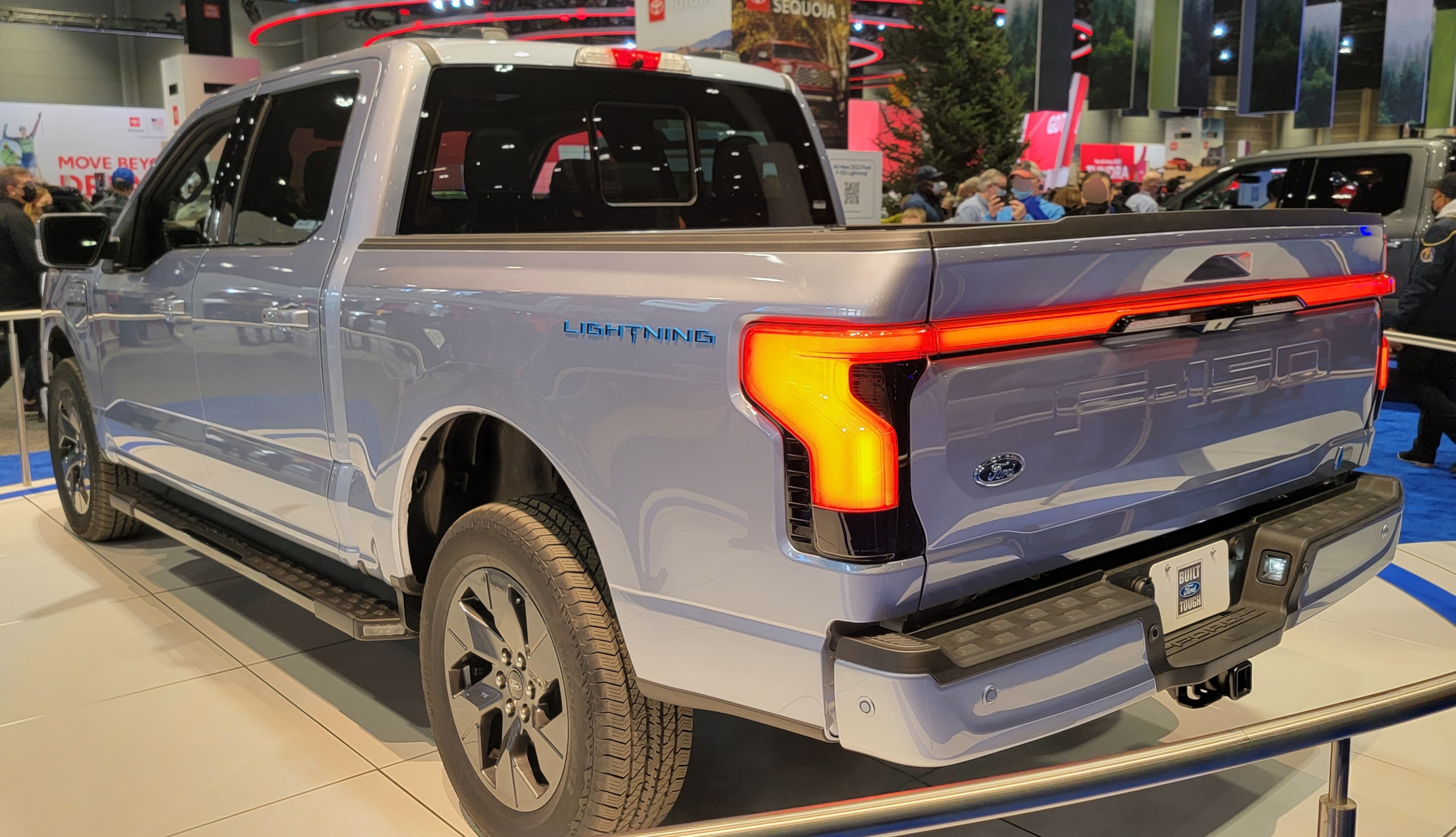
"Ford is ending the production of the all electric Ford F-150 Lightning. This is big news."
It’s Ford’s electric pickup truck that runs on batteries instead of gasoline, aiming to give drivers a zero‑emission option for hauling and towing.
The Ford F‑150 Lightning is a fully electric version of Ford’s best‑selling pickup truck, designed to replace the gasoline‑powered F‑150 with a battery‑driven powertrain.
"the automakers will offer free zinc reinforced ignition cylinder protectors"
It’s a metal piece put into the keyhole that makes it much harder for thieves to break in by drilling or picking the lock.
A zinc‑reinforced ignition cylinder protector is a hardened insert placed in the keyhole to prevent drilling or picking, enhancing vehicle anti‑theft security.
"Hopefully this remedy closes a painful chapter for Hyundai, Kia, its dealers and its customers."
Hyundai makes many different kinds of cars, like small city cars and big SUVs. They’re a big company from South Korea.
Hyundai Motor Company is a South Korean automobile manufacturer known for producing a wide range of vehicles from compact cars to SUVs and commercial trucks.
"Next up today, the Trump administration is proposing a reset of federal fuel economy rules and the S&P Global says the ripple effects could land both automakers and consumers over the next several years..."
The government sets rules that say cars must use less gas or electricity so we can save money and help the environment.
Fuel economy rules are government regulations that set minimum average fuel efficiency standards for vehicles sold in a country. They aim to reduce fuel consumption and emissions.
"Next up today, the Trump administration is proposing a reset of federal fuel economy rules and the S&P Global says the ripple effects could land both automakers and consumers over the next several years under the proposal EV adoption wouldn't be baked into fuel economy targets..."
EV adoption means how many people are buying electric cars instead of regular gas cars. It depends on rules, prices, and how many charging stations there are.
EV adoption refers to the rate at which electric vehicles are being purchased and used by consumers, often influenced by regulations, incentives, and technology availability.
"[483.7s] And it actually is good looking product, particularly in the EV space."
Electric vehicles, or EVs, run on batteries and electric motors. The "EV space" is the part of the car market that sells these battery-powered cars.
The "EV space" refers to the market segment of electric vehicles, which are powered by batteries and electric motors instead of internal combustion engines.
The BMW iX is a new electric car from BMW that looks like a big SUV. It runs on batteries instead of gasoline and has two electric motors to power all four wheels.
The BMW iX is a fully electric SUV introduced by BMW in 2020. It features a large battery pack, dual‑motor all‑wheel drive, and a minimalist interior design that showcases BMW’s shift toward electrification.
"[690.7s] The polar bear swam to America to hug the guy for buying a leaf.
[693.7s] From day one, they made these things dogma vehicles."
The Nissan Leaf is a small electric car that runs on batteries instead of gasoline, so it doesn’t produce exhaust fumes. It’s popular for city driving and short trips.
The Nissan Leaf is a fully electric compact hatchback that debuted in 2010, known for its affordability and zero-emission driving.
"[1471.7s] Ford Power Promise is a really smart program."
It’s a deal Ford offers so people can buy or lease electric cars more easily, sometimes giving them free charging stations at home.
Ford Power Promise is a program that allows Ford dealers to offer customers financing or leasing options for electric vehicles, often with incentives like free charging equipment.
"[1478.7s] the dealer takes the responsibility to put the level two charger in."
It’s a charger you plug into a 240‑volt outlet, like the ones used for big appliances, and it charges an electric car faster than a regular wall outlet.
A Level 2 charger is an electric vehicle charging system that delivers 240 V AC power, allowing a car to charge faster than a standard household outlet but slower than DC fast charging.
"[1620.7s] So you mentioned consulting with and talking to a lot of the OEMs."
An OEM is the company that makes a car or parts before they are sold. Think of it as the original maker of the vehicle.
OEM stands for Original Equipment Manufacturer, the company that designs and builds a vehicle or its components before they are sold under another brand.
"[1682.7s] But they answer a consumer need, which is either lower fuel or plug-in hybrids, where you buy."
A plug‑in hybrid can be plugged into a charger. It runs on electricity for short trips and switches to gasoline when the battery is low.
A plug‑in hybrid (PHEV) is a type of hybrid vehicle that can be charged from an external power source, allowing it to drive on electric power alone for a limited range before the gasoline engine engages.
"[1700.7s] Because an EV rev is an EV with a gas backup engine, which means it's EV first."
EV rev means the car mainly runs on electric power but has a small gasoline engine just in case you need more range.
EV rev refers to an electric vehicle that includes a gasoline backup engine, allowing it to operate as a pure EV for most driving and switch to the engine when necessary. It prioritizes electric power while retaining a fuel backup.
"But we're spending a lot of time with God damn hydrogen, you know."
Hydrogen is a gas that can be used in special cars to make electricity. The car’s engine turns the hydrogen into power, and the only waste is water vapor.
Hydrogen fuel cells generate electricity by combining hydrogen with oxygen, producing only water as a by‑product. They’re being explored as an alternative to battery electric vehicles for long‑range and quick refueling.
"So I think the infrastructure didn't really agree with them on the price part. We see a lot of range anxiety."
Charging infrastructure is the places where you can plug an electric car to recharge its battery, like charging stations in parking lots or at home.
Charging infrastructure refers to the network of electric vehicle charging stations, including public chargers, home wall plugs, and fast-charging points that allow EV owners to replenish their batteries.
"I think the price is a problem, but it's more of the infrastructure and the range issue is what we see."
Range anxiety means worrying that an electric car might not have enough charge to get you where you need to go before you can find a place to recharge.
Range anxiety is the fear that an electric vehicle will run out of battery power before reaching a charging station, limiting its usability.
"[2374.7s] Well, I'm the VP of operations over Crane Automotive.
[2378.7s] We've got 22 locations now throughout the state of Arkansas and about 1500 employees.
[2388.7s] And we're pacing to sell just over 45,000 vehicles this year."
Crane Automotive is a company that sells cars and trucks in Arkansas. They have many stores and employ about 1,500 people.
Crane Automotive is a regional automotive dealership group operating multiple locations in Arkansas, selling new and used vehicles.
Select text to request an explanation
We're doing better as a result of social media presence. It doesn't do those three things, then it's on the chopping block. It's in return on investment, discussion. Hey everybody, welcome back to another episode of The Daily Dealor Live. I'm your host, Sam Darken. Welcome to this video.
Thanks for watching. We've got a heck of a show coming up today as a little setup for that. EV demand didn't fall off a cliff by accident. When government rebates faded, demands softened. When charging infrastructure isn't there, buyers hesitate. And when politics hijacked the conversation, entire segments of the market walk away. Is that what's up with EV? Is that what?
What happened? Well, today we're bringing in Mike Murphy, a political punditist strategist and head of EV for all America. So you know his take on that. He's also a Republican, which is a fascinating stance, to break down what's really happening behind the EV headlines. And why dealers are being asked to carry risk for decisions? They didn't make. Then we've got Ivy Johnson, who will pull back the curtains on dealership marketing waste. Finally, Christian Cranes. He's COO of a 22 store group.
Sharing what it looks like when operator stop chasing mandates and start protecting profit from video MPIs to technology that actually reduces friction. This isn't about ideology. It's about risk reality and dealer survival. But before we go there, let's hit today's industry headlines. All right, first up today. Ford is ending the production of the all electric Ford F-150 Lightning. This is big news. Just came out Monday after.
Monday show taking a $19.5 billion write down as it retools its EV strategy. The lightning was once framed as Ford's next possible model T moment, but sales have been sliding amid tougher competition weaker incentives and softer demand for large full EV trucks, rather than scrapping the name plate entirely Ford plans to reintroduce the lightning as an extended range EV using a gas generator and an electric battery and deliver more than 700 miles.
The sales of range hybrid much workers from lightning production are being shifted to gas and hybrid F-150 lines. Meanwhile, Ford still plans a mid size fully electric pickup in 2027 looking ahead. Ford is now projecting that 50% of its global volume will be a broad mix of hybrids, ER EVs or EVs by 2030.
Next up today, Hyundai and Kia have reached a settlement with 36 states to resolve a long-riding complaints that millions of their vehicles were too easy to steal because they lack standard anti theft protections.
Under the settlement, every new Hyundai and Kia sold in the US will now include engine and mobilizer technology closing the gap that fueled years of thefts and viral how-to videos.
The vehicles already on the road, the automakers will offer free zinc reinforced ignition cylinder protectors, not making that up, expanding fixes beyond earlier software updates that didn't fully solve the problem.
Not that we want to announce that the agreement also includes a $4.5 million in consumer restitution for theft-based related losses plus another $4.5 million paid to the states to cover investigative costs.
Eligible owners can claim up to $4,500 for a total loss or $2,250 for partial damage.
I guess that covers deductibles with claims open through March 31st, 2027.
It'll be interesting to see to insurers come in and scoop up those rebates. I don't know.
Hopefully this remedy closes a painful chapter for Hyundai, Kia, its dealers and its customers.
Next up today, the Trump administration is proposing a reset of federal fuel economy rules and the S&P Global says the ripple effects could land both automakers and consumers over the next several years under the proposal EV adoption wouldn't be baked into fuel economy targets and automakers would still be able to lean on alternative fuel alternative fuel vehicles to meet compliance.
Obviously lowering near-term pressure to go fully electric. Sorry about that. The bigger shift is classification.
Many crossovers SUVs and even minivans could be reclassified as passenger vehicles instead of light trucks making fuel economy math tougher across both categories.
At the same time, the rules assume $0 fines for missing cafe targets which effectively removes enforcement teeth and reduces urgency for automakers to aggressively hit the goals.
Zooming out fans of the proposal believe the new rules will make vehicles more affordable but critics say all they will do is introduce more uncertainty into long term product planning and finally up today.
US automakers and their lobbying partners are escalating concerns about China's rapid global expansion and automotive retailing arguing the playing field is fundamentally tilted by heavy Chinese state subsidies and excess capacity.
Recently, the Alliance for Automotive Innovation asked Washington to draw a hard line blocking Chinese automakers and battery makers from setting up US manufacturing and keeping existing bands on Chinese vehicle tech firmly in place.
For context, Chinese brands are already pushing aggressively into Europe with lower price EVs and hybrids while Canada is openly debating whether to relax its own China tariffs.
That puts pressure on US policymakers who are trying to balance trade protection, national security and rising affordability concerns at the same time.
What's the big picture here? Well, if Chinese brands ever gain a foothold in North America, market expectations would swing overnight but the barriers are still high and the outcome is far from settled but the challenge lurks and looms.
That's a wrap on today's industry news.
You Lee, welcome.
Hey, dude, we've had a couple shows.
It's awesome.
As I get on the comments out there, the conversations we've had over the past few episodes on stair steps.
We're seeing a ton of comments online on that.
Love to hear your thoughts or a little listening audience brokers, particularly in the East Coast as OAM struggle or push for additional volume.
White hot conversation and then also on transparent pricing, advertising the right price and establishing a relationship with consumers on value, not on the low price sticker shock reverse.
All our huge topics to all our listening audience are reminder today's episode is being streamed across all CDG social media platforms, post your comments.
We'll bring them into today's show and it'll help drive the conversation.
Fun stuff, you Lee.
Excited to get it going.
Yeah, well actually to that extent, let's actually go to our first guest today.
First Mike Murphy, founder of EVs for all America, Mike, welcome to the show.
It's great to be here. I'm a man and a listener, so this is great.
Oh wow, you are. That's fantastic.
Thank you for thanks for saying that.
So we read a little bit about China.
I was going to go one direction, but let's actually go to China.
It's interesting.
I've often thought we had Ohio State Center, Bernie Moreno on here in New York a while back ago.
And he was talking about there would never be a day where Chinese product would be allowed to come into the US.
And then I traveled overseas and I saw Chinese product all over the place.
And it actually is good looking product, particularly in the EV space.
Are we at a risk of not competing in a free market against China where at some point if the market opens up,
we're going to be swallowed up because we're behind.
Yeah, I mean, you know, the fact is that Chinese did sell 90,000 cars in America last year.
They were Lincoln nodalists and Buick envisions.
They're catching up on the brits who are just over about 100,000.
So it's a huge threat.
They made 30 million vehicles last year.
We made 10.
They're the leading auto manufacturer there.
They're number one. They're the number one exporter.
And the problem is when we go to a pure protectionist thing,
we're going to wind up with really shitty products.
Oh, excuse me.
I don't know.
You're right. No, you can say shit.
No, you know, fine.
No, so, you know, the problem is in the short term if we let them in, they're going to kill us.
Yeah.
When a Chinese auto worker can make $9 an hour, and UAW worker can make 80 with benefits, we were unsustainable.
The reason I'm a nut for EVs is I grew up in Detroit around the car business.
I was, I'm old, but I was in high school in the 70s when the Japanese invasion came.
And the Japanese were allies.
They were fair competitors for the most part.
And we survived that and made the industry better.
I would like to get to a situation where we can compete with the Chinese,
because otherwise, we're going to be in Fortress, US market,
and they're going to nominate the rest of the world.
I think what people don't understand is the Chinese strategy is political.
Let's flood the market with cars and let's deindustrialize our geopolitical opponents.
And if that happens, it's going to be really bad for the US.
So people say, why are you such a nut for EVs?
You know, you don't look very green to me.
And I go, no, I'm a wrench head from Detroit.
By the way, my average is four miles per gallon.
Can I set this up just a little bit?
Yeah, yeah.
I think it's more, you're from Detroit.
You're a Republican strategist.
You are Republican tried and true.
You've been on campaigns for people from Romney through McCain, Arnold Schwarzenegger, although California has a little bit of an exception.
Like, it's insane that you would be pro EV.
Why are you pro EV?
And why is EV such a politically charged topic?
Well, that is the question.
And the reason I'm pro EV is a couple of, I get out here to California.
We charge many bar prices for gasoline out here.
We have a seed gas tax.
Seven bucks spike a gallon.
So as much of a wrench head as I am, I kind of fell in love with the EV powertrain.
There's a lot to say for the elegance of 510 moving parts.
And so I got one.
Not a Tesla.
I got a BMW IX and I loved the damn thing.
And I started looking at the future trends in the auto industry.
And I saw that Republican consumers led by Republican pals of world I know well,
and reflexively don't like EVs.
So I took my own money breaking every consultant rule.
And I went out and did a campaign style survey like we do in a campaign.
And took a look at the problem.
And these cars, these machines have become politicized, which is insane.
You don't pick your toaster or your dishwasher based on some political opinion.
And a lot of it goes back.
I like to blame the white polar bear.
Remember when they launched the Nissan.
Oh, yeah.
Nissan car.
A lot of stuff.
The polar bear swam to America to hug the guy for buying a leaf.
From day one, they made these things dogma vehicles.
You know, virtue projectors.
Not how you sell cars.
And all the polling we show we have on EV shows when you sell the attributes,
a lot less maintenance, no gas, average family spends two thousand bucks a year on gas.
All these and they, you know, they're fun to drive.
If you give one to somebody for a weekend and they don't have to tone anything,
you got a good shot at a sale.
Instead, we're, we've divided it on fighting over politics.
Oh, they're, they're green cars, they're democratic cars.
And since 40% of car commerce is right to center people, new and used,
we cannot succeed in electric vehicles unless we get over that.
So that's why I started EVs for all America.
Red and blue.
Mike, Mike, it's fascinating because when I was a kid,
the conspiracy theory was that there was some massive conspiracy out there in government
to keep people or business to keep people from more fuel-efficient vehicles.
Right.
Right.
There was always the person that was under witness protection for, you know,
knowing the, the code to turning water into gasoline.
Yeah, well, there's the old bad movie with Harlem Brando, the formula,
the secret gasoline.
Yeah.
Of course, yeah.
It's funny.
Yeah.
That was kind of a conservative Republican concept.
And then it flipped to your point on that ad or an idea about that ad.
That's fascinating, right?
Well, and it's, it's coming up the market.
Well, the Chinese are running the table.
And that's a very project that 10 years.
Farley said there's no future for the Ford Motor Company if we can't compete globally in EVs.
I was astonished to hear that one.
He said that by the way.
That's a public company boss to say that.
Now he just had to take a 19 billion dollar write-off.
He had no choice.
Yeah.
You know, the Chinese will write anybody a check to start a car company making ice and EVs.
Here, Trump, and I'm a Republican, but I'm not a Trumper.
I've been anti-Trump since I dealt with him back in the 90s in New Jersey
when my client was the governor in New Jersey, Christie Whitman.
Trump, Trump sandbag in the American auto industry.
Between these tariffs and letting the Chinese run wild with subsidies and killing ours,
it is not good.
And people don't, you know, we asked, we pulled Republicans only about EVs.
And we asked him a question, which country makes the most cars in light trucks in the world?
A third of them said USA number one.
A third said Japan number one.
Only a third knew it was China.
And when we told them about that, they freak out because they understand for national security.
My favorite statistics is right before World War II, the Brits made about 500,000 light vehicles.
French made about 400,000, Germans made about 440,000.
Before Pearl Harbor, we made 4.7 million in the US.
I had relatives on those lines.
That's how we won World War II, American assembly lines.
One of the auto CEOs told me, you know, right now if the Pentagon calls me for 10,000 tanks,
I'm going to tell them to call China.
Yeah.
It's a year, worships.
But Mike, that's part of Trump's play with the tariffs.
It's to bring manufacturing back to the US and increase our industrial manufacturing capability.
And he often will cite, he won't, but his apologists will cite pre-World War II industrial might.
And we've lost that.
It's been exported.
So without that, how do you, I guess there's two questions in here.
How do you accomplish what he's trying to do, void of tariffs, and bring that manufacturing might back?
Let's go there first, then.
Right.
Well, first of all, Trump doesn't understand the North American manufacturing footprint that it's integrated.
Mexico, US and Canada.
So when he talks about foreign competition, he goes and targets the home town team, which is those three countries.
That's one.
Two, Trump's on a shot clock.
Anything he wants to do is going to be, he's going to lose the Congress next year.
I mean, I think about an 80% chance.
So his political power after a year one is going to start sliding.
And what I know some of the, because you know, I spent a lot of time talking to auto executives with our data,
about breaking down these walls and sales, the, the Democrats will be back in some form.
And then you're going to get mildly standards again.
So they're going to get whips all 9 EVs, which again is bad.
That this jerking this is bad.
We ought to have this low policy and we ought to eventually have subsidies that fade out.
But you can't give these guys, you know, steroids, then yank the needle,
then ask them to lift twice as many weights.
And I mean, we have the government policy is so schizophrenic.
It's a mess.
And you know, Trump says he'll create more US manufacturing.
Most of the auto capex spent in the last two years.
And it's been a huge pile, particularly in Georgia and Michigan, is EV manufacture.
I mean, go check out that Hyundai plant in Georgia.
That's the most modern auto plant in the world, even the Chinese aren't there.
And so when you cold turkey all that stuff, you see four.
They're now trying to convert their battery plant to, you know, power grid as a backup.
They might be able to succeed.
But you can't have people spend 10 year capex billions and then yank the plug.
And then in two years, another party comes in and says, hey, we want higher mileage standards.
It's insane.
We're self defeating.
Well, the Chinese run the table everywhere.
Yeah.
Here's what I would say that's interesting is let's back up and make the argument for EVs
to our auto dealer audience.
Because in my world in the upper midwest in Illinois, where you saw pictures of Teslas stranded in a terrible snowstorm, right?
And stock, you couldn't charge them.
You couldn't do anything with them to Texas during their ice storm when the politician went to Mexico to escape it, right?
Like EVs have their shortfall.
And in my footprint, there's less demand for them.
As an auto dealer, we'll meet the demand everywhere that it is.
But it is interesting.
Federal rebates go away.
The demand goes down.
There's this huge expectation that these off-lease EVs are going to flood the market and further reduce the ability to purchase.
What's your message to auto dealers about why EVs when the market doesn't seem to show the demand that we've been pushing for the past three, four years?
Right.
You know, we have to fix the market.
No doubt about it.
That's getting over the political brand baggage and the dump politics of it.
We got to get a subsidy back.
We're pushing here in California for a $3,500 conquest credit.
If you switch to ice, either newer use, there's $3,500 very consumer.
But you know, at the real incentive for dealers, we're about to do a research study on this.
I'm curious what you guys think and your listeners.
You can send comments to EVs from america.org.
I was talking to the US head of one of the big import car companies.
And I said, you know, your dealers, there's not a lot of incentives to sell in EV.
If you're the salesman, the customer will take a month to figure out the home charging.
They're going to go to the Walmart, wait two hours.
They're going to ding you on the post-sale questionnaire.
So, you know, you're scared.
The dealers sink when that car rolls off.
There's no service revenue for there.
There'll be new tires.
But I'm competing with tire world down the street.
No margin.
You know, what's in this for me?
So, I asked this guy, the US president, I said, what if instead of giving people $5,000 in our subsidy?
We gave him $2,500.
We gave the dealers two grand for every newer used EV they sell.
And I had always ever pitched that before.
He thought about for a minute and said, you know, car dealers are really good at selling cars.
If you pay them to do it.
So, I make them sell a lot.
So, we're exploring some subsidies for the dealers to make up for all that loss service revenue.
But in a free market, why subsidize it at all?
Is there a greater good that you're trying to drive towards?
We'll come back to, hey, it's cleaner energy, even though they're expensive batteries.
A dealer would tell you that the dumps where these batteries go after they're wasted is a toxic landfill.
It's such a...
Yeah, that's been true.
Recycling's coming fast because there's too much value in the battery to dump it.
We just have an industrialized area.
That's going to solve itself.
The thing for the dealers is, if you want to make your quarter next year,
EVs are not going to save you.
Unless you're in a couple of really good counties, like here in LA County.
I mean, we sell one out of three EVs in America here.
I think you can make some money competing with your competition in a market where nobody else is trying to sell EVs.
And you run a good digital.
And you're the EV guy in Kansas City for Cadillac or whatever.
I think you can carve out a niche.
But on the macro side, we got to create more demand.
And that's what the subsidies help do.
If we don't do the subsidies, everything will be fine until the Chinese show up for really cheap cars.
And nobody says the Chinese is going to use a dealer model.
That's part of the trend.
We see the scout fight.
There's a big fight in Washington state with Rivion trying to go direct.
And I pulled that.
80% people say, no, dealers shouldn't have the...
They should have to compete with direct sales.
So the EV product, most 80% people get an EV stick with it.
So if you get them into the EV, they do have longevity.
The problem now is price.
That's dropping.
And I think the most interesting dealers in the country on EVs will be Mercedes and BMW and the some extent Nissan stores next year.
Because the Germans have been getting killed in China in the domestic market.
Used to be a cash call.
They couldn't sell enough.
Some extent GM too.
So they've got their first China killers coming out.
The BMW IX-3 is going to be about 60 grand, 400 mile range.
It charges like a demon.
It's Chinese quality.
And it'll be in this market.
Mercedes has an equivalent one.
The new leaf.
That thing's a killer.
300 miles at 32 grand.
And decent charging.
So the better products are coming now.
And the dealers are going to learn from those.
Because I think if we can get the politics out of it, and it's what we're working on,
then a man's going to rise.
And you still have to offset that service lane revenue, though, you know, which is you guys no more than anybody is a big part of a lot of successful dealers.
And when nothing breaks, it's a consumer argument.
It's not a EVs are good for me because I got more transactions coming argument.
So we got work to do.
You can't force the dealers to sell them, but I think you can incentivize them.
And that's the consumer incentive too.
You know, people don't need the 35 or 7500 to afford the EV.
They want to be paid a bonus to take the charging risk that they all feel when they buy the car.
The reason we like 3500 for states to do, like California, more affordable for the state.
Conquest only to target the money.
And if you're trying to close the lease deal, 100 bucks a month on a 36 month lease give or take is a good selling tool.
Because you guys again, no better than anybody cars are sold on payments.
So we're trying to find a smaller but more practical subsidy for about five years.
Because otherwise our firms will not our companies and the Europeans who make and sell here.
Biggest exporter of cars in America is BMW Spartan bird.
The president of the is funny.
The chancellor of Germany likes to say drives an American made car.
It's a BMW of some care.
Anyway, without a little help.
If it's pure free market and the Chinese government's right and blank checks it.
Hey, go wipe out for it.
You don't have to make any money.
We're covered the tab.
It's not a fair fight.
And so fair free enterprise.
If the Chinese had to make money, we could do great.
Yeah.
And so actually to your point, going back, you said Chinese wouldn't necessarily respect our distribution model.
There's already evidence of that in Australia.
BYD went into the country, had franchise agreements with local dealers.
Didn't like how the product was being marketed in place, shelf space.
And they came in and they took over those, you know, those points.
I mean, it is not particularly democratic in their own way.
No.
No.
So, but the US will win ultimately and we will win ultimately by creating a better product.
The problem is they truly are just flooding that market.
So, to that point, how do you create more demand in the EV space?
If we agree, it's better for our economy.
If we agree, it's better for the US, our power outlook.
How do you create true demand?
Not subsidized, but true demand among the American consumer and American dealer.
Well, you keep chasing lower prices.
The new, for all the sadness about the lightning, the new Ford platform with that new manufacturing plan.
Take half the parts out of it.
That will get copied.
They're on a way to win there.
So, 27, 28, 29, I think is going to be good.
So, lower prices and change the marketing.
If I see another green leaf on a car, my head is going to explode.
The green stuff, by the way, people who care the most about climate change,
they like EVs, but you know why they like them?
No gas.
And, you know, they want to know about charging.
So, the marketing has been all wrong.
They're getting it.
I talked to a lot of auto CEOs and, you know, they're understanding that selling these things is a dogmanage.
You sell them on that.
Ford Power Promise is a really smart program.
If I had a store in a good EV market, I would do that in a minute, which is,
the dealer takes the responsibility to put the level two charger in.
The other thing we need is multi-family.
If you're in an apartment building or condo, it's really hard to own an EV.
We've done a lot of polling on this.
It's not too hard to put level two in apartment buildings.
A lot easier than the fast charging station.
It will have a huge, it'll open up a huge new market.
There are 8 million people in California who live in 10 plus unit apartment and condo buildings.
And none of them can buy an EV.
And this is a 25% EV sales state.
So, we got market barriers.
We got a change in incentives.
I think dealers should get a small spiff in the next couple of years for every EV they sell to offset service.
And we got to get the red and blue thing out.
And the good news is, we've tracked it for three years.
We do a big poll every year.
The Republican EV hostility is going down.
Slow but steady.
And part of that's Elon.
He blew up the Tesla brand.
Yeah.
Which looks terrible in our polling, by the way.
The Tesla is like on fire.
So it's dumpster fire among people most interested in buying EVs.
Despite pretty good products.
But among Republicans who hate EVs, they all like Elon Musk.
And it's been softening their hatred for EVs.
We've had about a 15 point movement.
Yeah.
Yeah.
It's interesting because the green leaf you mentioned to quote a line from Acre man that escalated quick.
Like it went from being popular to not popular, right?
And it is still politically divisive.
Can the state of California as a state without federal subsidy afford to provide those rebates that you're talking about?
I'm not sure the state can.
You know, I'm spending a lot of time yelling at the governor.
Who's pro EV.
He had one in like, you know, you know, yeah, I think he'd need one God help them once upon a time.
But they're looking at it.
We have a budget crunch here, but we have some money.
It's a matter of priorities.
I'm less interested in some of the things they like to blow money on here, which haven't worked.
And get to practical stuff like, you know, a $3,500 dollar conquest credit.
Probably about 600 million year.
Sounds like a lot of money.
California.
Yeah.
Not so much.
You know, we're the, we're the 10th largest EV market in the world if we were a country.
So, you know, we're, we're the only state up at our level.
There are a couple that are close like Washington and Hawaii and Massachusetts and Colorado.
So you mentioned consulting with and talking to a lot of the OEMs.
And in those conversation politics is a factor.
The OEMs that have won these past five, ten years in the EV fight, you could argue would be ones like Toyota.
And maybe Honda and Subaru, ones that have exercised some production discipline related to going full EV.
They're not.
They've leaned in on hybrid technology.
What's your messaging to CEOs of these OEMs about the politics?
Is it right out?
Is it get more creative?
What are you telling them?
I'm banned at the gate from Toyota.
Because in the Washington fights to keep the subsidy, they are, they are not on the team and they're very influential.
Now, you know, when defining it, the way I think you did, which is a fair way to define it, business win.
They've done great with hybrids.
Hybrids are kind of a great sales trick because they, on one hand, they're more complicated.
They break down more.
You know, most automotive engineers bring up hybrids that kind of stiffen a little.
But they answer a consumer need, which is either lower fuel or plug-in hybrids, where you buy.
I'm getting an electric car out the risk, except I'm never going to plug it in.
So what I've really got is a gas car with a bunch of electric junk in the trunk.
I'm paying for it.
I used 10% of the time.
That's why I like these e-reps.
Because an EV rev is an EV with a gas backup engine, which means it's EV first.
It's a better engineering solution.
They caught on in China.
I think the EV rev pickup trucks are going to do pretty well.
I don't know if Ram can ever industrialize theirs.
They've been promising it for years.
But Ford will get one out the door, and I'll bet you'll see one from General Motors, too.
So, you know, what I tell the OEMs is you got to make a fundamental decision.
Do you want to create enough EV brand and sales to be a player 10 years from now in the coming winter?
And we got extra capacity.
We got a playing room for bankruptcy.
I'll tell you a funny story about Toyota.
So, I have this slideshow of all the data I do.
A lot of it's on our website, and we're going to put the new one out in January.
So, I was invited to SAE in Washington, and I took my road show there.
I had about 800 SAE, you know, auto-government affairs and a lot of engineering people in the room.
I did my routine about attitudes on EVs, how to get over them, what people like and hate.
So, I'm walking out of the joint.
These two guys jump out from behind a display, and hey, come with us.
You know, they're looking around.
We're Toyota engineers.
Can we have a copy of your presentation?
Because we show a lot of the brands.
Toyota is always number one.
Strongest mass market brand in the U.S.
So, like, if we could only get these clowns in Toyota City, let us build a great EV.
We'd wipe Tesla out.
Our dealer network, our ability, engineering, and they were right.
But we're spending a lot of time with God damn hydrogen, you know.
So, it was very funny.
So, I had to, like, slip them a copy, like pouring or something.
You know, it was a big fact or whatever.
It was a secret Russian meetup.
But here's the thing Mike, you said if you define success like I did business,
that is how you define success at Toyota and among these OAMs.
It's not a profitable non-charity, charitable organization.
You've got to turn a profit.
You Toyota by every metric has one.
How would you define success?
I would.
I look at share.
If I were at Toyota, and I'm sure there's somebody like this in the C-suite,
I'm looking at Asian sales.
And I'm watching the Japanese start to eat Toyota double digits annually.
And I'm like, you know, hey, Godzilla is coming guys.
And these EV products are coming.
And we're not competitive in EVs.
And there've been squawks coming out of there that they're going to be.
Their slowness has paid off for them.
Yes.
But they got to wake up because the Chinese can hurt them too.
They are not invincible.
It's same with Honda and Honda.
They're all...
They've all got the same problem.
If they go hog wild for EVs now, they lose so much money.
Wall Street will come in and murder the management team.
Because there are a lot of people in Wall Street who are like, we don't care.
What we can do is double the stock for 36 months, and then I'll buy a yacht.
I'm out of it.
And the next board bastard will handle the chapter 11 here at GM.
But there's enough.
This is an emotion-driven industry.
People don't work in autos because it's easy.
They work because they love this incredibly hard industry at every level.
Retail all the way up to the C-suite.
The Farleys of the World have to balance the cost and not being eaten by the folks
who would love to put 10 bucks a share on Ford stock for three years and then don't care.
And...
I mean, his dad was some Ford employee.
Whether or not Ford will be here in 10 years.
So, you know, they're pulling back on the stick now because the market's pulling back.
And I'll do my Trump bashing for a minute.
He's not helping.
The Chinese government is writing blank checks.
Wipe out American auto industry.
How much?
And, you know, Trump's talking about a time machine in 1938, which doesn't exist anymore.
So...
So it's interesting that model of wiping out.
That's the same model Wal-Mart used and all these other large companies used to knock out smaller competition.
And it would be a shame if we were, if we were, you know, victims of that same strategy because...
And we built the strategy, Mike.
So what we built the modern EV battery, too, and then some CATL guys, you know, listen.
Here's my scariest stat.
By 2035, it is estimated by most credible people that the Chinese will provide 47% of the value added manufacturing in the world.
Wow.
We would be probably in the teens.
And by the way, you want to make a big drone that can do a lot of damage in the thousands, you need auto plants.
You know, big, complicated manufacturing at scale.
We're great at it, by the way.
In the fair fight, we can do okay.
And the Europeans who like to build here and the Koreans who are really good and the Japanese are really good, we can all do great at it.
But we have a geostrategic competitor who's writing a blank check.
We buy expensive aircraft carriers.
They buy an auto industry designed to wipe out everybody's else's industrial base.
They bought a few aircraft carriers themselves.
They're trying, they're not great.
But they're good.
Like everything they do.
So final coming back to that CEO question.
As you talk to the CEOs of OEMs of the large automotive manufacturers that do business in the U.S.
As it relates to EVs, what is your advice in this current environment considering politics and the shifting wins of politics going back and forth?
How do OEMs and dealers more specifically win today in EVs and hybrids?
I give them a couple pieces of advice.
One, sell the attributes.
Two, move your marketing spend.
Put a bunch of EVs in every store.
Let them burn down the miles to use and give them to people for a weekend.
That was an original Tesla Stragiory work.
You can't sell an EV in a 20-minute test drive.
They got to experience it.
Second, all the most successful EV stores in America have one thing in common at the retail level.
They make the sales consultants drive EVs as their personal vehicles for humans.
It's sink or swim.
It's like what the State Department does.
You want to learn Turkish?
We're going to send you to Turkey and put you in immersion for six months.
So you got to have a different kind of marketing.
You got to sell attributes.
You got to give the dealers better incentives to make it worth the pain of the training, the service lane.
There's some CAPX you got to spend.
You can't send a trainer in there for an afternoon.
They got to drive the car.
You got to give them special programs because remember two ways to sell EVs.
In your market, be the EV king and do a lot of digital marketing.
People are Google searching for it.
Or you got to get good at the 35% of buyers are curious and interested in EVs but not sure.
Only sales people can close that.
Only if they're really well trained and really well incentivized.
And then finally, 80% of EVs in America are sold in just 15 states.
Go there.
We ask a question on our polls.
Do you have friends or relatives who drive an EV?
If they say yes, I don't care if the Republican Democrat communist whatever they are,
they rate EVs and every question we ask about EVs, 15 to 20 points higher.
So go where they can see the fish and they have friends with them.
Go to those 15 states.
Forget on the fence.
It's gone till the Democrats and God knows what they're doing.
But go to the state capitals and get the $3,500 there.
Get the money for multifamily charging to open up those millions of apartment buyers.
And, you know, work the markets where you've got a foothold, which is still pretty big.
Yeah.
Well, Mike Murphy, founder of EVs for all America, Republican, pro EV, barely Trump hating right-winger.
I'm aware of that.
Pro some government spend even inside of eyes.
We appreciate your perspectives today.
And truly, thanks for being on the show.
He's a great show.
I love it. Thanks for having me.
Thanks Mike.
Yeah.
Yeah, that's not something you see every day.
Is it?
I love it.
That was a fun conversation to hear that perspective.
Yeah.
Listen, that has been in the back of my mind.
Ever since we spoke with Bernie, I'm just like the senator.
I'm like, look, the Chinese are going to get so far ahead.
We're going to pop ourselves into a competitive atmosphere.
Like, that's the great democratic economic reason for dealers and for our economy to be.
Not all in unhealthy-wise, unevis, but to build a better product than they do.
Yes.
Because if the world demands it, we'll ultimately end up winning.
And you hate to see them take over this place.
I love Dave Rogers says EVs break, and those repairs are profitable.
They have less maintenance.
EVs need time to evolve, let's stop forcing the issue.
I agree with them.
EV, auto, Alex in Utah and in Nashville would probably also agree with that perspective as well.
So let's talk overfuel, usually.
Most dealership websites suck.
They're slow.
They're clunky and hated by both shoppers and Google.
Well, overfuel.
Cracked the code, lightning fast AI powered sites.
Built to attract, convert and dominate every search experience.
Overfuel.
We appreciate you supporting today's content, including that super interesting conversation
that we just had.
And I was excited when I saw him on the list today because I'm like,
I watched him on Meet the Press earlier when I was a kid.
And he sort of has, he's got that radio voice as well.
So that was fun having a conversation there with Mike Murphy.
But anyway, overfuel.
Thanks for supporting today's show.
All right.
Next up, I believe we have Ivy Johnson, CEO of Johnson Advertising LLC.
Although there was some conversation.
All right.
Christian Crane VP of operations at Crane Auto Christian.
Welcome to the show.
Thank you for having me.
I'm a big supporter of you guys, but now a really big fan of Mr. Murphy.
Oh, really?
Tell us why.
I listen to him talk for hours because I agree with a lot of the stuff he says.
He's passionate about it.
In particular, what do you agree with?
Yeah, I think that will one, the fact that the government has gotten so involved
in the mandates with the EVs has kind of slowed the production down a little bit.
And I think as much as they could stay out of it and let the automakers and dealers kind of work it out,
it would provide a lot more success in the future.
And then the infrastructure part is a huge problem for us.
And you know, smaller states like Arkansas were unlocated.
And, you know, we've got so many apartment buildings that our residents wouldn't have a place to charge their EVs overnight.
So I think the infrastructure didn't really agree with them on the price part.
I think it's more of a, we see a lot of range anxiety.
I think the price is a problem, but it's more of the infrastructure and the range issue is what we see.
It's a great conversation to have post federal EV rebates because we are going to see a norm somewhere.
And I think I'm tired of talking EVs.
A lot of people are tired of talking it, but he makes a fascinating argument as it talks about,
as he talks about us being competitive in a global market, usually.
Yeah.
Well, Christian enough EV talk right now, right?
So we had you on the pot earlier this year and we want to dive into that.
But before we do, why don't you tell us how is biz in your neck of the woods and give us a little background on yourself.
Yeah.
Well, I'm the VP of operations over Crane Automotive.
We've got 22 locations now throughout the state of Arkansas and about 1500 employees.
And we're pacing to sell just over 45,000 vehicles this year.
And we think that we do know that that's up year over year by a good amount,
but we're starting to plateau a little bit.
We took some really aggressive approaches to selling new vehicles and strategically selling used.
And last year and earlier this year and shot our volume up tremendously, but we've kind of plateaued a little bit.
Primarily Kia Hyundai and General Motors and Ford dealers.
And so we're seeing a little bit of a slowdown in the market for new Hyundai and Kia product.
And so it's kind of been a little bit slower for us this last quarter.
So that increase in volume you talk about as you've kind of got this meteoric share.
Which OEM is a tied to?
And what was that strategy change that led you to that?
Does that have anything to do with stair step?
We've talked a lot about stair step.
Yeah.
Well, stair step has been a major player.
We've got six Hyundai dealerships.
Yeah.
And that was the first Hyundai in their pet programs where one of the first dealer manufacturers that we've dealt with
that's had an aggressive stair step.
And we think that, you know, we've got most of the Hyundai dealerships in Arkansas.
So we're kind of competing with ourselves to sell volume.
But what we did, it was a little bit different.
We did not different, I'm sure.
A lot of companies have done this as we've gone after the Honda's and the Toyota's.
And especially Toyota right now with their lack of inventory.
Yes.
And that's we've been able to play that game as good as possible.
But it becomes very unprofitable when you don't hit the number.
Right.
You're losing money to sell these new vehicles.
And then they give you these really aggressive goals.
And if you don't hit it, then it doesn't make sense to play along.
Yeah.
But we're playing.
Yeah.
What are you using in your tech stack to, you know, dial in and focus on getting it right?
What are you using?
Who are you using?
Walk us through some of the things you've implemented over the year.
Yeah.
So we've actually, we're on rentals and rentals right now for our DMS.
And we use the auto for our inventory management.
But we've taken an approach of just trying to centralize all of these systems and softwares.
You know, I was telling somebody the other day we've got, we're going to do about $1.6 billion in revenue in 25.
Why are we having...
Why do we have a group text every night where our general managers send out our numbers?
How we did that day.
It just didn't make any sense to me why that was still a thing.
And so what we've done, and I talked about this a little bit on our podcast,
is we've hired some software developers to create our own reporting tools
and centralize every software and every vendor that we can use into one system.
And so that's been really helpful as far as reporting tool goes.
Because if you can't get reports on it, you can't manage it, and you can't fix it.
What do you call this system?
What do you call this program that you create?
Yeah, we call it crane vision.
And it's not for sale.
I like it.
I like it.
Tell us a little bit about that because you and I are seeing a trend right now
where large operators are utilizing either AI technology or just technology,
they're relying in-house to create tools to better serve themselves
that brings together different vendor partners.
And it can be a challenge, but it can be a huge benefit.
Tell us a little bit about how it works and maybe some of the challenges in creating this technology.
Yeah, I mean, we've got, so we created it through Amazon QuickSight.
And so if any dealer out there wants to do it, that's the one to use.
But really, I think what it does for everybody on our dealership level
is it just creates some consistency on what people are using for reporting.
You know, we've got all of our receivable schedules and everything on one software
where we're not having to print out all of our CIT and warranty receivables and everything
and go through it all.
We've got all of our notes in one area, which our DMS doesn't really allow for us to do that easily.
I think some of the bigger challenges that we've seen from it, though,
is getting these large vendors and companies to allow us to integrate.
Get the data. Even though it's your data.
It's your data, Christian.
So tell us.
It should be.
It should be.
How long did it take to develop it?
How much did it cost?
And before we go into some of the tech or the data issues,
how long have you been using it and what's been the economic benefit?
So how long did it take to create?
How much did it cost you to innovate it?
And then how long have you been using it?
What's the economic?
Yeah, we're still.
So this got started real quick.
I'll tell you.
We purchased some dealerships and done dealings with Pinsky Automotive.
And we're big, big fans of theirs.
And so they've got it.
I don't know what they call it, but it's something similar.
And they've had it for forever, really.
It's, it's like their hub for all employment related things.
And so they use that.
And so we had that idea.
And it's still something that we're working on every day.
So it took about, I'd say, six months to get operational.
That we could start relying on it and having our general managers and sales managers
and service managers.
Everybody really using it.
It took about six months, but we're still, you know,
perfecting it every day.
And it's really, it really has been a huge impact on us.
It's made a, it's made a pretty positive financial impact as far as just understanding
creating ways to clearly put the data out to people who might not understand it already.
Right?
If you had to quantify the impact, what would you say?
Exactly.
Is it, is there a way to quantify it?
It's probably tough.
Not really.
I mean, you could go look at our, you could look at some reports from, you know,
before we started using it on our receivables and see that we're picking up things a lot quicker.
You could go look at all of our, how quickly we're closing our rows,
or how quickly we're getting cars through the shop.
But as far as just putting a number on it, I think there's too many factors outside of that,
so name names for us.
Who were the best partners at helping you get access to your data?
And then who was the biggest challenge as you went through this process?
Yeah, well, I made a mistake on our last podcast of naming names.
So I would say that our DMS has tried as hard as they can to work with us.
But they're not capable of doing as much as we want them to be able to do to give us our data
and actually push back some data.
I think that's a problem.
And they've got a lot of control and they've got not just this DMS, but DMS is in general,
have the dealers handcuffed.
I would say the easiest company that we've worked with is Cox,
you know, getting stuff into the auto or getting stuff from the auto into crane vision was a very simple thing.
I love crane vision.
The last company that we've, it was really easy and they were just quick was podium.
You know, we were using podium and we were paying way too much.
And we actually went to digital dealer and met with them over there.
And we're like, why is this so expensive?
You know, and they told us it was because of an integration fee.
So what we did was we pulled, that we took the DMS out of it,
pulled some of our data and have an API just uploading it directly to podium.
And so we were able to cut our costs to about quarter, but it was.
So on this platform, Christian, we want to highlight vendors that are doing a great job at helping us apply data to create this crane vision is awesome.
I want Ziegler vision at Ziegler.
We need CDG vision.
We continue to have it.
But truly, you've got to be able to have partners that are willing to work with you on that data.
So props to Cox auto props to podium and the others that helped you to create this.
And props to you guys for ideating it, you know, with Penske and thinking, hey,
there's got to be a better way for us to engage with our data.
We have talked with so many vendors and technology providers on this show that say our data is so fragmented.
We're unlike any other industry.
Maybe there's few industries that are as fragmented as we are.
And the key to the future is being able to utilize that data more on one platform than another.
So we appreciate you sharing that.
I will say, I will say, you know, we've we've looked at.
There's been a lot of time talking with a really up and coming DMS.
Yeah.
And they've just now gotten over about 12% I think 15% of the whole franchise dealership market.
And they seem to be really capable.
And what they really strive on is putting everything in one place,
which is what we want.
Right.
And what all of you are talking on them.
Yeah.
And they're doing a great job with it and it seems legit.
All right.
All right.
Before we pivot away because we apologize, we just we got to keep going here.
You talked to us a little bit about video MP guys in your submission and backstage.
Yeah.
We've recently tied commissions to requiring video MPIs.
We've talked about it a lot on the show where you and I are going to actually do a contest in January.
For the best video MPI service sales across organizations as a way of connecting with customers.
Why did you tie commissions to it?
What's the result been?
And has there been an economic impact to that decision?
Yeah.
Well, I think video MPIs is something that we as a business should have been doing 10 years ago.
And utilizing technology that every every DMS or every service software has.
And making it a standard.
And so I think that the customer has such a poor view on a car dealership.
So whether they're buying a car, or they're going to take it in for service, they feel as if.
The dealer is going to screw me over in some form of fashion, right?
So lack of transparency.
Yeah.
When you can really take that lack of transparency out of the equation.
And you've got the tech videoing the problem, right?
And getting underneath the car and showing them every.
Every issue that estimate estimate has.
It really makes the customer understand why they need to do it.
And especially if it's a safety issue.
You hear from the tech directly instead of some advisor that you've got.
You've hired two months ago who's never done it before trying to, you know,
fumble his words around to get it figured out.
So that was the first thing was we got on the MPIs video and PIs.
And then we had an issue where, you know, the advisors didn't see the the value even.
I mean, they should have because it was going to increase their hours per hour.
So it's pretty obvious.
Yeah.
But they didn't see the value or they were lazy.
And so we, we tie, we were in the process and working on this even more.
As tying their actual percentages of the their gross created is tied to.
How, how many video MPIs on a percentage basis for customer pain.
Wants you are sent to the customer.
And, and we think obviously anything that you put in the pay plan will be their job description.
And so.
No road towards it.
As long as we can get that video out.
I think there's, you know, we as a company believe there's about 50% of ability for 50% increase in labor growth.
And about point four hours pro.
Yeah.
It's crazy to think about that at the end of 2025 there's still people that don't see the value.
I mean, I think as car dealers, we take things for granted.
I mean, in the biz as long as I've been in, I can't tell you that I've ever sat and waited for an oil change in my adult life, right?
Like you hand the keys when you get to work.
They freshen up the car when you're done.
You leave it.
We're forgetting about the consumer experience that doesn't work at a dealership.
Doesn't spend all day there.
And they've probably never seen the underside of their car.
So it's, it's really shocking.
You know, we talk about dry eyes.
Staying in the service lane here, we talk about, you know, use cars, use car acquisition.
Every show.
It's probably the, the second most important piece, right?
What are you guys doing differently to dial in on that use car acquisition?
Yeah, we've actually created a, it's funny that we're talking about this now, but we, we have a, a campaign and we've created a, a website where we call accredited buys cars.
And I'm sure that's similar with a lot of groups, but we're promoting that on all social media in the state.
And so we, we've done that.
We've got an in house buying team, which is at our corporate office.
About three people that are just communicating through our CRM with these customers that wanted to sell their car.
And, and what we've, what we're, our goal is in any part of the business, but especially this is let's create frictionless processes for the customer.
And so, you know, any, any car dealership group can go set up a website.
It will use KBB's appraisal tool to get a lead and then try to sell them, but what we want to do.
And, and, and I'm sure set very many other dealers want to do.
It's just very hard to do is create a good Carvana like experience where we'll come to you to pick it up.
We'll have the check ready where it'll be completely painless.
You already have an idea as to what you're, you're going to get for that vehicle.
And then we have that customer, right?
And we've got, we've got their data and we can target them going forward for sales and, and, and hopefully service in the future.
And we see varying strategies here. Are you staying strictly retail on your acquisition? Are you going after any any?
We'll take anything anything. Yeah, we'll take anything because we think that if we can just touch the customer.
We want, you miss every shot you don't take, right? So we want all of our costs.
We want every customer that we can possibly have. And if we can go buy a car, that's $2,000 and doesn't run.
And we can go sell it at the auction. We have a customer touch and we think we can impact, you know, five other customers.
So Christian, thinking about next year, you lead an enormous number of stores.
You've got multiple OEMs. You're a well-established brand. Your auto group is in your marketplace.
What are you working on or what are you leaning into that you did really well in 2025 to kick off 26 and in big style?
Yeah, I think that's a great question. I think we are goal, and I've got a 2026 goal board up here, but we'll show it to us.
I don't think you want to stay in it. We want me to stand up and try.
But, you know, one thing that we've worked on pretty dramatically is our traffic management process.
And that's going to be one of our main focuses on the variable side going forward in 26.
We've hired brand ambassadors, I guess, or brand specific traffic managers for our corporate office.
And we've worked very well with DriveCentric, our CRM, to be able to manage from a corporate standpoint and redo the way that we have our work plan set up.
And honestly, touch the customer less and not annoyed them as much, but just get the message across in one text versus six in one day.
Yeah, you know, we've talked about that Christian on this show a lot. We in automotive are horrible at that.
We're terrible. Like you've got one process to contact the customer in the service drive and something delivers the RO and you got the other birthday greet like we feel like it's it's it's just surrounding the customer with us.
But to the extent those messages are disconnected from each other, it's it comes across as insincere and it fails to get missus actually creates the worst doing thing Christian.
Especially if you have a an AI sending the text for you. So if you've got like automated. I mean, we're all consumers. We all get those text messages every day.
And it's just terrible. And I don't want I don't want us to get any more bad look.
We got to bring them all together somehow about that customer that's in the drive. They've been there for two hours when they're supposed to be there for 20 minutes.
They get a used car appraisal at the two hour mark. And then at the two and a half hour mark, they get a happy birthday text.
I'm like, I'm here. Come say happy birthday to me and get me out of here. Right. So Christian Crane, we want to have you back to tell us more about your journey. And what you do in 2026.
We absolutely appreciate you being here today on daily deal alive. Christian Crane VP of operations. Crane automotive.
Thanks for being on the show and sharing your perspectives on things you're working on. Thanks for having me guys. Thanks for your share.
That was a fun episode. There was a lot of good banter. So just a few comments from our audience out there.
So Lauren Klein says podiums always been so amenable to being a dealer advocate. And I agree with that they share freely, I think eager super fans has time to rock and roll and make follows on all the leads that you that you had and didn't sell.
So you can sell step up on your follow calls with sales people into a month in q4 2025 or inclined video APIs or a no brainer and anyone not doing them is just stubborn. I will tell you I talked to a lot of dealers.
They're like, you guys keep talking about it. Why do you talk about it? Because everybody should be doing it. Not everybody is eager K Tio every deal from this point to the end of the month. Don't let customers walk until managers talk to your customers.
How about creating a great customer experience? We agree with that eager K. Dan C says fragmented approach. And then Lauren Klein says poor quality messages go straight to spam. And then also I love this. This makes me happy Jeff maize 1949 says way to go all political on here. And by the way, Jeff, everybody watching the show you would know it's political for a moment.
But that was truly fun because how many Republicans do you see pro all in EV in automotive. We're all in free market. We want anything that will generate money help our employees create a better work life balance.
We're all in on that. So it's fun to challenge somebody with a very different viewpoint. And I actually ended up agreeing with a lot of what he said. Yeah.
So good, uh, good times today. Good show. So thank you everybody for watching daily deal alive. We break down the biggest moves in the car businesses. They happen. Don't forget we're here live every Monday. Wednesday, Friday, one PM Eastern noon central 11 mountains. So if this is your world hit like hit subscribe. Turn on those notifications so you never ever miss a beat to it now. We'll see you next episode. Everybody. Thanks for being here. Thanks guys.
You
Request an explanation for:
3 cars
3 cars featured
Request an Explanation
Heard something you'd like explained? We'll add it to this episode.
Sign in to request explanations for terms you heard.
Want to learn more?
Browse our glossary for plain-English explanations of automotive terms, jargon, and concepts.
See something that's not quite right? Our annotations are AI-generated and can sometimes miss the mark.
Click the flag icon on any annotation to suggest a correction.