When they say your life goes before your eyes, it's a fairly accurate state.
If the physical exertion, if I can get through that, it will delay whatever pain getting to my head.
When I was falling, I remember thinking, go out like a man.
Don't yell and scream. Don't flail. Just fall. Get dead.
And let everybody tell a cool story about you, how you handle it like a man.
Welcome to Dealer Out of Office. We're your hosts. I'm Frank Zambo.
I'm Jake Burkle, and we are here to talk to you about Dealer's interests outside of the office.
Now watch this drive.
Welcome to the first edition of Dealer Out of Office. I am one of your hosts, Jake Burkle,
alongside the man, the myth, the legend, Frank Zambo. We got a good one today, buddy.
It's our first attempt that we don't know what we're doing.
We don't. This is our first attempt at a podcast, and lucky for us, we have a certified badass
ex-Navy Seal on the podcast for our very first one. So, yeah, we're excited, and yeah, Jake.
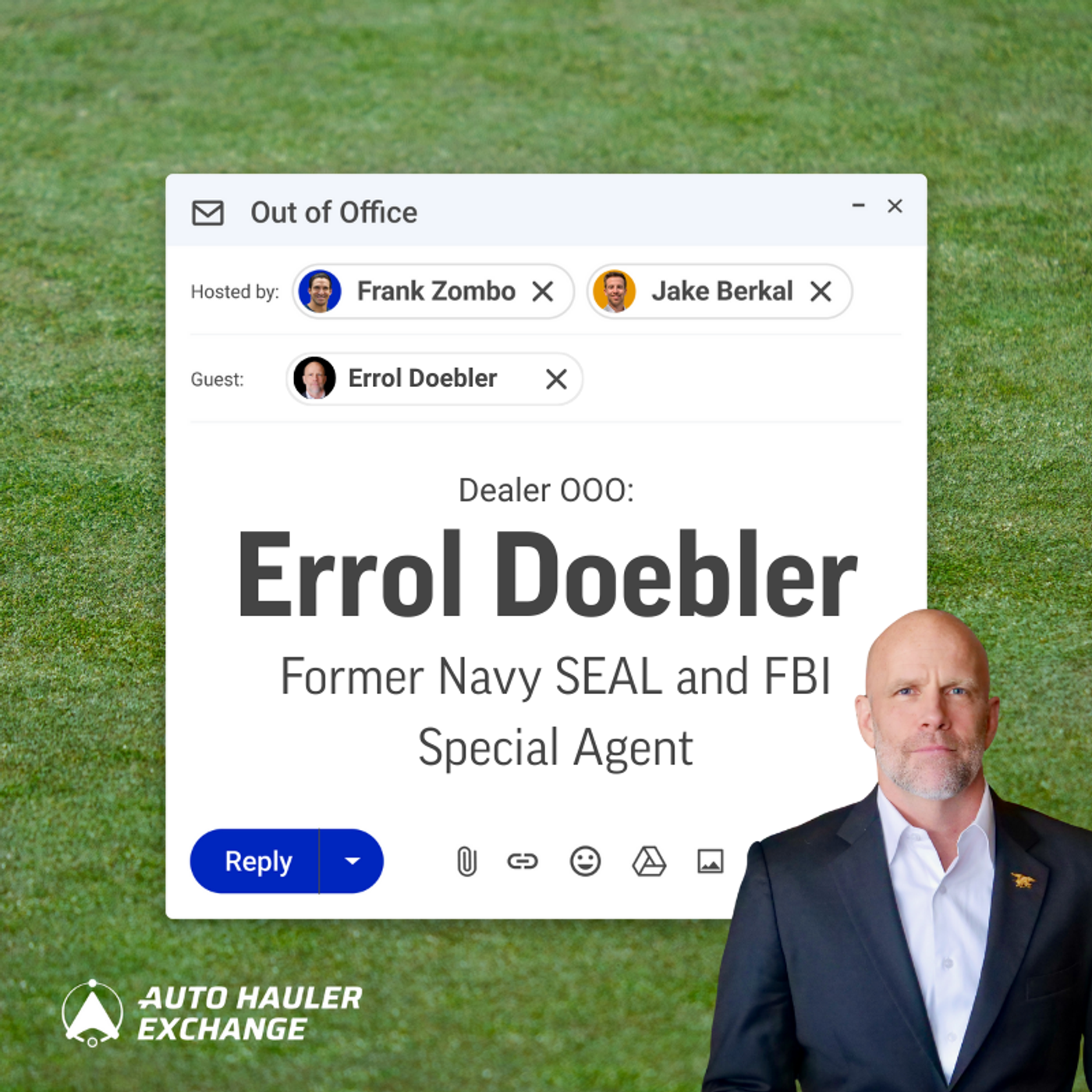
Yeah, to that. So, you know, Errol Dobler, former Navy Seal, FBI agent, and now a leadership
consultant. We're happy to have him on. Errol, welcome to the show, man.
It's good to be here, boys. And so, always good to be the primary guest on the podcast,
but just so you know, I've been on about a thousand of these. So, if you get caught up,
I can carry you the whole way, all right? Don't do the work.
He's got us beat already. You got to think, too, like in everything I've ever watched,
like a Netflix series comes out, they always have their first episode. It's like their
biggest, baddest, has the most action, and then it kind of tears off from there. So,
this is what I expect to be our most interesting, entertaining podcast.
All bad help from here. Yeah, that's it. So, Errol, let's start off
kind of early on. Like, what's the background before we get into the Seal teams? Like,
what were you like as a kid? What did you know you were going to be a Seal? Kind of,
let's start ground zero here. Yeah, well, I'm from New York, and everybody from New York,
whether you ask them or not, will always tell you, I'm from New York. So, New Yorkers
are a very proud bunch, and I'm from Long Island, which is even more proud, right?
So, I grew up on Long Island, South Shore of Long Island, on the water, you know,
pretty good, you know, middle-class childhood. I played all the sports, but, you know,
I started playing hockey really young. So, I started playing hockey like four,
and then did everything else after that. You know, I ended up going, my primary sports
in high school were football and lacrosse. And, you know, at the time, this is, I'm pretty old,
right? So, I graduated high school in 1986. So, at that time, I was good enough to play
good Division III football, right, even just being small. You didn't have to be huge.
But, you know, lacrosse was more of my sport. So, I ended up going to the Naval Academy
for lacrosse. And, you know, it's not a, it's not the family business. Military wasn't my family
business. There were some folks in my family that served, but it wasn't like a thing, right?
You know, all we have is a military. And I just, my next-door neighbors went to the Naval
Academy. And, one day, they just bought over one of those brochures, right? It was like a
little coffee table book. And I was just flipping through it as a young kid and I was like, oh,
this is cool. And that was the first time I started thinking about the SEAL teams. And,
again, back then, this is, when I first got this, this was probably like 1981. So, obviously,
you didn't go online and learn about the SEAL teams. They were truly an enigma back then.
Nobody really knew what the heck that was all about. And there was just this one picture
in this catalog on the Naval Academy with these dudes in their like little shorts, their UDT shorts,
and just hanging out there. And it had like a paragraph. And I'm like, who the hell are these
guys? And, you know, so there was just something about the lack of detail. And so I went to the
library and, you know, went to the card catalog and tried to look for anything for SEAL teams. And
then what was that? Like, you'd scroll through that machine and it would give you the old newspaper
clippings, whatever the hell that was. We're the wrong people to ask on that one, man.
You weren't even born yet, Errol. So, yeah, I know. I know. So, but that's the, so then I
found like an article. But then that left my mindset. And when my lacrosse coach asked
me, where did I want to go to school? I hadn't really even given it much thought, right? Now,
the obvious places for lacrosse players from Long Island, you know, Johns Hopkins,
Syracuse, University of Maryland, right? Those are the big ones that you always thought about.
But for some reason, just the Naval Academy flew out of my mouth. And he's like, all right,
we'll get the coach down here. And coach came and watched me and they offered me. So,
I didn't need to get a congressional appointment, right? Normal people go in.
And they've got to get this congressional appointment for athletes and like the prior
enlisted, they have the Naval Academy prep school, where they can just send you
if they want. And all you have to do is graduate from there and then you can get
the appointment to the Naval Academy. So, I went there with all the other
athletes and prior enlisted guys. And then, you know, that's your indoctrination to the Naval
Academy, the military. It was super rigorous academically and militarily. And then, you know,
then we went to the Naval Academy. So, that's kind of me in a nutshell growing up.
So, one question, what positions did you play? And second, what was it like balancing? I
mean, you talked about how rigorous, you know, not just being in a military school,
but also a sport and an academic. So, what was, you know, what was like balancing all that together
for you? Yeah. So, in football, I was an outside linebacker in fullback. I loved playing football.
And, you know, in hockey, I was a center and defenseman. And then lacrosse, I was a midfielder,
but then moved to close defense in college. Short stick? Well, so I was a little bit of
everything in college. So, my first year, I was a short stick midi, D midi. The second year,
they moved me to crease defense, where, you know, I started on both of those. My third year, they
moved me back to short stick midi. And then senior year, they moved me back to crease defense.
So, it was just kind of the needs. I was, I was like, one of those guys, if they needed
somebody in that spot, it was good enough for them to be there. He can, he can do it.
The Naval Academy, especially the prep school, that was a huge adjustment for me because I was,
I was smart enough, but I was a terrible student. And I've got a young son right now.
I was 12. And I see so much of myself and him when it comes to school work, because he's
pretty smart. He's quick on his feet. And I watch him blow off his homework. And you know,
so I'm all over him for that. So I, you know, my parents didn't stay on me
at school. So by the time I was a senior, like, you know, in high school, like cutting class,
and it was like I wasn't even in school. Right. So any good habits I had
for studying were gone. And when I got to the prep school, it was,
I just, it was a different academic world. The standards were super high. The speed was super
high. I ended up graduating. And then when I got to the Naval Academy, I'm like, well,
I'm good to go because that was really hard. The Naval Academy, the academic requirements
were off the charts, even compared to the prep school. Like I'd carry 23 hours, my first two years,
a semester. So for the first two semesters, it was 23 hours, 23 hours, 21 hours, 21 hours. It
wasn't until I was a senior in my second semester that I only had like 15 credit hours.
And I had, after the first set of grades came out, the first half of the first semester of my
freshman year, I had a 0.8 grade point average. I was failing everything except for, I had a D
in my class. So you had to pick it up pretty quick. So, you know, that was, so to your question,
Jacob, you just had, you either learn to manage your time or you got booted. It was as simple as
that. There was no, there was no runway. And I went to a couple of academic boards. Thank God,
I was an athlete, right? Because some of the kids who weren't there for something special like
athletics and, you know, if they, if they weren't cutting it academically and had nothing
else to offer, they were gone. You know, at least I was, you know, they were like,
well, I was a lacrosse player. He's pretty good. And that's what they bought him here for.
Let's give him some runway. Yeah, whether it's fair or not, that's, that's how it was. Yeah.
Errol, talk to us about, so you're getting towards the end of college. And now you're like,
all right. And I'm sorry, my understanding is your naval academy, you're playing sport.
And then towards the end of that, now you have to serve, correct? And now you're like,
or do I go into the Navy? Or do I want to be a Navy SEAL? Now you're starting to learn more
about the SEALs as an option. Or you talk about that whole process where you, how you went through
that. Yeah, it's an interesting process. So you are required to serve five years after you
graduate. And if you're a pilot, it's like seven years. And what happens is, based on your
class rank, they call you in and you have what's called service selection night. And there's a huge
board with all the ships that you could go on. If you wanted to be a pilot, right, it would be
for flight school, submarine school, marine corps, supply corps, Navy SEALs. And they called you,
it was like, your day went on. Like, so you'd be, you know, right after the last class, it started.
So they'd be like, okay, numbers one through 20, reports to the hall for your service selection.
So if you were had a good, you know, if you had good grades, you got to, you had to pick
in the litter, right? And then they would, and there were a certain number of billets,
they would run out eventually. So like, there's plenty of ships that will never run out.
They might have only, but you know, they'd have like maybe a hundred pilot billets, right, which
is a lot, you know, X number of submarine billets, but it was a lot. And they only had that year
10 SEAL billets. And, and I knew, right, who was wanted to be a SEAL and everybody was looking at the,
you know, you go to a guy like, Hey, you don't really want it that bad to try to talk him out of it.
And I was going to be about 12, right, if it all went to pass. And so I was waiting and then,
you know, I got word that the 10th one was picked. And I was devastated. Now, here's the
funny part. My class rank was so low. So they would have a party, right, and they don't have
a lot of parties at the Naval Academy, but they had, you know, they had beer there. And if you were
21, you could drink. And it was really exciting for people. Not only was the party over after I
picked my service selection, they had cleaned up. It wasn't even like, there was some,
you know, some beer, you know, some cardboard, or some paper cups on the floor. It was spotless.
You know, I rolled in, I'm like, Oh my God, I was like 10 from the bottom. So anyway, I go in,
and there's nothing but ships up there. And I had one of my professors and this was a turning
point in my life. And he was like, What's wrong? And I told him, you know, it's like F this,
man, I don't want to be on a ship. He says, Well, what do you want? I want to be SEAL.
And he goes, Okay, he goes, pick that ship. And it was the USS Monogahila AO 178 was an
oiler. Like, so imagine not being want to be on a ship. And then somebody's saying,
be on an oiler. And I'm like, does that thing even have any weapons on it? He's like,
that's not what you care about. He said, if you care about getting to the SEAL teams,
you need to be on a ship that's out to sea all the time. And I'm like, that's the opposite of what
I want. He's like, I know. But if you go out to sea all the time, you'll get your surface warfare
qualifications faster than anybody. And that will look good when you will try to laterally
transfer over to the SEAL teams, because it's going to be very competitive and you've got
to have something to stand out. And it was the best advice I'd ever gotten because
when I laterally transferred, you know, you've got to put in a package to the SEAL command.
And there was like 30 packages for that year for guys like me who were not in the SEAL teams
who wanted to laterally transfer from where they were. And they were taking two.
And, you know, I got picked. And one of the reasons after I asked was like, what was it?
They're like, you've got your qualifications in like nine months. That's unheard of.
It takes most people two years. So that was kind of my progression to the SEAL teams up.
But I was on a ship before that. And that's how it goes picking your things.
So I didn't even get to go to the party.
One of the most intriguing things to me about the Navy SEALs is now you've made your decision to go.
Now you talk about Hell Week. Someone like me, like I went through training camp.
I try to do some dueathalons. And the mental toughness aspect of this is pretty amazing.
You know, just running long distances for me is like a mental grind. Getting through training
camp, you know, those type of things. The most amazing thing to me about a Navy SEAL
is the fact that you guys made it through Hell Week and the mental grind that took place
physically, mentally, everything. Can you talk about how you prepped your mind, your body
for something like that once you're accepted? And then talk about, please talk about Hell Week
about your experiences there. And then that satisfaction of you've cleared it.
That kind of, that's amazing to me.
Now it's a good question. And again, it was a different time. So I went to,
I reported to Buds, which is SEAL training. Buds stands for Basic Underwater Demolition SEAL
in 1993. And the story I told you about that paragraph on the SEAL teams, it didn't get
much better about learning about the SEAL teams before that. So all you know is that it's
six months long and 70% of the people quit and it can get cold. That's all you know.
And right. And like, it's going to be really physically tough. So, you know, you're nervous.
So I was just in, I'm like, well, minimally, I will be in the best shape of anybody.
And that's, and then once you get there, you realize that's the minimum requirement.
Like I was in pretty good shape. I wasn't even the guy in best shape.
Like the absolute physical ability the guys who showed up at Buds, like being able to do
multiple sets, maybe 10 sets of 20 pull-ups, I've never seen anything like it in my life.
Right. So that was the first thing, like, okay, just be physically fit. Because I knew
enough to know if I'm, if the physical exertion, if I can get through that, it will
delay whatever pain getting to my head, right? In between my ears, right? So,
hey, this doesn't bother me. I'm running 10 miles or I'm swimming five miles. It doesn't
bother me. I'm good. Therefore, I can stay mentally sharp. So that was the first thing.
But then, then you quickly realize just again, the pace that they put you at. Now,
Hell Weeks, I mean, I'm sorry, Buds is six months long. Hell Week, which is, you know,
the thing everybody knows about, that's in the first phase. That's like in week five. It's early.
So you will lose, of all the people you'll lose in your class, it'll be pretty much by the end
of the fifth week of 26 weeks. So we started our class with 200 people. And at the end of
Hell Week, five weeks later, we were down to 10. So imagine the rate of people quitting every day.
It was, so when you quit, you ring the bell, ding, ding, ding. It's like all you heard all day
was the bell ringing. You're like, Jesus, who just quit? So, and it was just because, again,
everybody was a physical stud. But when you put in just the pace of what they did it, it was you
woke up early in the morning, and it was a work day, right? So it was like, not nine to five, but,
you know, maybe we met at five in the morning for a muster, went to breakfast,
and then the day would end at about five at night. And then you had your night,
which you would just go right to bed. So it, you know, you'd go home and you just like,
go to sleep and be like, oh my God, the next day. So one funny story is I remember
they would, and they used the cold I went through in the winter class. So I went through that in
January of 94 is when it actually started. So anyway, and so they just use the cold
to get you, right? So one day in the winter in San Diego, the waves are huge. So one day we're
supposed to just do like an ocean swim at the end of the day. And it was like 10 foot waves,
right? 12 foot waves, just crushing. And they were like, no, everybody go get your boats.
And what they would do is you probably, I don't know if you've seen like the guys paddling
out into the surf, right? And going over the waves, they were just like, okay, if you get out and come
back your day is over. Because they knew nobody was going to be able to paddle. Anyway, so now we've
got to get our boats set up and ready to go. And I was the kind of senior guy. So I was in charge
of my class. And one of the guys that I really counted on his name was Pat. And I can't
remember his last name, but I'll never forget just a thunder stud. And he comes running up to
me and he's like, or sorry, I got to talk to you. And I look at him. I'm like, are you fucking kidding
me? Do you see what's going on? Can this wait? He's like, yeah, yeah, no problem. And he runs away.
And next thing I hear, ding, ding, ding. And I go, everybody stop. Where's Pat? And they're like,
he just quit, man. And I was like, oh my God. So anyway, we've got to finish. It takes
three hours for anybody to get past the surf. That's how rough it was. So just imagine paddling
into a 10 foot wave getting smashed, regrouping, right? So anyway, it's over. And I go to Pat's room.
And I go, Pat, what, why didn't you tell me what you were going to do? I would have,
you know, I would have talked to you. He's like, Oh, no, no. He's like, there was, I was
just telling you as a courtesy, there was nothing you were going to tell me to stop me from
quitting. I go, why? He goes, did you see that water? Right? Did you see that? Who does that?
So my point is, you never knew what was going to get somebody to quit. You just never knew.
And, you know, during hell week, it rained all week. And you, I remember a guy next to me,
they put us in the water. It was a night. It was so cold and they just make you lock arms and sit in
the water. And they're like, okay, you'll get out when somebody quits. And one of my good friends
was hooked on next to me. He's like, that's it. I'm out. And I'm like, Jesus Christ, we just started.
We just started. He's like, five days of this, are you kidding me? And all I said to him was,
do what you want to do. But can you just try to make it to the next meal? Just try because they feed you
four times a day. That they have to do because you burn like, I think they're like 15 to 20,000
calories a day. Because you're never, you're never not moving. I'm like, man, if you want to quit,
quit just, can you make it to the next meal? And that meal was midnight. He was like, I don't
know if I can, but I'll try. And he did. And then he made it. But that was the guys who
mindset of like, now make it to the next meal. Now that's what it became. Just make it to the next
meal, right? Because you knew that was a break. But you know, it was again, just guys quit. We
went into hell with 40, right? So we went down to 200 to 40 at the beginning of hell week. And
then at the end of hell, we attend. So it was still 30 guys quitting. The bell was just constantly
ringing. You just never knew who was going. And then what they would do is somebody would quit,
right? And it would be at night. Everybody always quit at night. There was never a
quitter in the daytime. They always quit. And it was like that when the sun was going down,
you could just see it in guys' faces. So they would get somebody to quit. And they put them in
the van and they'd keep the van open and they'd have the heat on in the van. And they had coffee
and donuts for the quitters. So then they would make us go sit right next to the van.
You know, then they inevitably somebody else was like, like, can I have coffee and donuts?
Well, baby, it's all yours. So it was, but you know, those are fun stories. But to your point
about mindset, there was a couple things that I learned. When you do something like that, there's
got to be an inherent desire deep inside of you to do it, right? Every single person that
goes to Bud's is a stud, right? They just are. But not everybody had it so deep in their bones
that they wanted it that no matter what they did, they weren't going to quit. That's how hard it
is. It's one of the few things that I say, did you ever see something on TV about Bud's? Like,
yeah, it looks really hard. I'm like, it's harder in person. Normally, they kind of make
it exaggerated. Not that. You know, and just a quick two quick examples of what I mean by that is
at the end of hell week, like with like an hour to go, they got you got you running out of the
boats on your heads, right? You're all swollen because you're retaining water. It says you're
a mess. And they're walking us by all the helmets that quit under the bell. And it's
supposed to be very emotional for you. Well, I remember my shin splints were so bad
that I literally felt like my shins were going to snap. I was sure of it. I'm like, wow,
my shins might literally snap in half. And I was like, well, I hope somebody's there to help me
when they do because I'm not quitting, right? That was the mindset. When you do a 15 meter
underwater swim, that's one of the requirements. And that's even before hell, we can guys
quit for that. But I remember during practice, I never made it. I never made it to 50 meters.
And they give you some time to practice. And I was like, well, how am I going to pull this
rabbit out of the hat? Like, I'm not going to get better at it because I'm going to be more
nervous. I'm going to burn more oxygen. And then I remember thinking to myself, oh, I just
won't come up. I'm just not coming up no matter what. So I'll, I'll drown and I hope
somebody saves me. And it was that mindset that actually relaxed me and I made it no problem
because my mindset was it does not matter what happens. I will not quit. That's how bad I wanted
it. So there needs to be that, I think that inherent desire deep inside. Am I making sense?
I know I rambled on a little dude, you got me ready to run through a wall right now.
It makes the most sense because if you're able to push yourself to a point of I'm willing to drown
myself, like, yeah, I don't think there's any further amount of mental toughness you can go
because you're literally like killing yourself. And I did. And it wasn't even dramatic for me.
It was like a light bulb went off. I'm like, Oh, I just won't come up. That's it.
They'll have to kick me out because I will not quit. They'll have to say you failed.
Therefore, we kick you out. And I was like, if you were going out, you were going out on
your own. On my own. Yeah, story about this too. So there's a guy, the 50 meter underwater swim
really messed with guys heads. So we would, there was the area where we had our cages and
you'd have your gear and you're always running it out of there. And so we were there to get
our stuff before we ran over to the pool. And I see a guy pull out a bottle of vodka.
And I look at him and I go, What are you doing? And he's like,
you're not going to rat on me. Are you? I'm like, No, but what are you doing? Like,
you're going to drink? Like, I don't, are you okay? Do you have a problem?
He's like, dude, we got the 50 meter underwater swim coming up.
He just did a couple shots to relax himself. It's like being golf. That's what I need.
Between the ears, you got to clear that space. Frankie sober on the golf course is no good.
Yeah. And then there's another guy who, when we ran over vomited like three times every time
it was like clockwork. If we were like, we would have three practices. So we'd be running
over and all of a sudden you hear, it's unbelievable what it did to people. But anyway,
I mean, you got 200 people that tried out. You got America's brightest and best doing it.
You make it to the final 5% which I'm sure maybe other folks may have quit to that point. So the
1% of the 1% I've been told by some other folks in the around the state. There's like three
type of Americans that try out for the seals and you tell us what your take is on it is you have
like your triathletes, the ones that are like, I want to just see how far I can make it. You know,
you got your patriots and then you got some crazy dudes who are just their killers in a way
and you need those kind of guys, but you, but it's like a legal way, not that they're that
sick, but the legal way to kill people for your country. So it's like, what is your take on
the type of people that you encountered those because they are, there is something loose up there to get
to that point to be able to drown yourself. Like talk a little bit if you could about that.
I can talk to it because it's an interesting question. My thought on that, even as it goes
beyond the type of person that goes to seal training, right? So I was an FBI SWAT operator
as well. I, you know, I'm a combat veteran. When I was in the FBI, they attached me to the 75th
Ranger Regiment for combat operations for like four months. And I think we averaged literally a
combat operation. It wasn't quite every other day. It was like every two and a half days.
So we were just constantly in combat with the enemy. And what I often thought, because
when I was in the FBI, I did a good job when I was working cases of recruiting sources,
I was able to recruit bad guys without holding something over. That's usually the way to do it,
right? Like, you know, okay, Frank, you're a criminal, you run drugs, I caught you. And now
guess what? You can either go to jail or work for me, right? And by the way, I had that with
a guy and he goes, what kind of jail time do you think I get? I'm like, you're gonna get
10 years. He's like, I'll do the 10. I was like, are you kidding me? Anyway, so, but
my point is, as I got to know a real criminal element, and even as I got to know terrorists,
because I went and interviewed terrorists in Kazakhstan, like literal murderers,
who I was able to establish rapport with. And I was always like, why am I able to do this?
And my thought was now to get to your question, there's a line, right? And you've got your bad guys
on this line, and they're towing it. And they're on the bad guy side. And then you've got your
good guys on this side, and a lot of us toe that line. So it's two guys towing the same line.
You're just on opposite sides of good and evil. But essentially the mindset is the same in that
I'm willing to do awful things for my cause. My cause happened to be a patriotic cause,
a love of country, a love of duty. And oh, you mean to tell me there's a way I can get after
guys like this, and do that duty? Okay, sign me up for that. So I don't know as it's coming out of my
mouth how proud I am of what I'm saying, but it's the answer to your question. Now as far as the
type of guys, I couldn't really answer to the three categories. But I think I did kind of address
really where that mindset is in a lot of us who go this round. And I do think
buds and over the last, you know, all of a sudden you see GIG, you know, that kind of stuff. And
that's gotten more of like, the physical, I think it's gotten more, the attention's been
brought to more of the training aspect in the hell week. But probably when you were there,
it wasn't as like you said, you didn't even know much about it by the time you got there.
Now I feel like every American out there, that Navy Seals came out when I was a senior,
Charlie Sheen. That was the first, like, commercial thing. I remember being like,
God damn it. Why is this coming out? Because now there's gonna be five extra guys who want to do it.
Yeah. But now it is. It's something that every American knows of the sacrifice that you guys
go through and the mental toughness you guys go through. And yeah, that's amazing. So,
so, Errol, we've talked, you know, we talked through buds. Now, you know, you said several
tours, you know, if you want to talk through that, I know we have some stuff we want to get to
because of what you're currently doing, which Frank and I have both experienced firsthand
and has been incredible. So we want to get to that. But take us through quickly kind of like,
all right, you know, Seals is over. You are a Navy Seal. Now we're deployed. And then kind
of, you know, if you have stories for that, I know everyone loves to hear them. I know
some people don't like to talk about them. I'll leave that one up to you and then kind of that
transition out of the Seals as well. Yeah, for sure. And here's the funny thing, right? When people
say, you know, what can you talk about? Maybe you can't talk about it. I always just say,
I'll talk about everything because you don't know what I'm not telling you anyway, right? So I
never, right, you know, I'm not going to tell you what I can't tell you. I never go the
route like, well, I can't tell you that, you know, I'll just tell you and it's always
plenty. So, but so I was in the SEAL team for a member during peacetime. So there wasn't a ton
of action for us. So my first deployment was with SEAL Team 4, which we forward deployed to Panama.
And, you know, then you go out to various countries in, in South and Central America.
And at that time, you're mostly just training with that host countries, you know, special
forces or whatever it is. My second deployment, I was on what's called an amphibious readiness group.
So we deployed and this was with SEAL Team 1. So we were stationed on a ship. And we actually got a
call for an op, which we were like, holy crap, all right, let's get something. It was a classic
Navy SEAL op, right? There was a tanker that was identified that it was going wherever it was
going. It wasn't supposed to be going with people on it who weren't supposed to be on it,
with stuff on it that they weren't supposed to have, right? That's how you get past all that.
And, and they said, you know, all right, doble this platoon is in the area, have them take
down that ship in 48 hours. And so we were pumped, like, okay, we got one. And
so we, we had a day to rehearse, which is always a benefit, right? Always a bonus.
And now imagine, right, this ship takedown is the big tanker goes, and we've got two squads on
our fast boats, and we kind of sneak up to the side of it, right, without them knowing we're
there. And you get your biggest guy, he's got a big grappling hook on a big long pole with a
caving ladder, and he throws it up, hooks the grappling hook onto the side of the ship, the
ladder falls down, and you climb up it all without the bad guys knowing you get on board.
And then we, you go to the bridge, you go to the, you go to the engine room, those are the
areas you got to control. And that's how it's done. And the sea state, you guys ever
watch Seinfeld? Remember the one where he was hitting golf balls into the, into the ocean? And he
was like, the sea was angry that day, my friends, right, whenever he was describing to get that.
Anyway, that's, that's the best way I could describe it. The sea was angry that day, my friend.
And so as we were down ready to launch our boats, the commanding officer called me up
to the bridge. And he goes, well, what are you, what are you going to do? And I'm like,
we're going to go rehearse. And he's like, in this, and I go, yeah, in this, he goes, no,
I won't allow it. It's too dangerous. And I go, okay, I said, if the sea state is like this
tomorrow, are we going to be ordered to go on the up? And he goes, well, I would imagine,
yeah. And I just stared at him. Like literally just stared at him. And you could feel the unspoken
conversation. Because I was saying, you cannot send us on an up in this sea state without letting us
rehearse it. You can't. And he kind of got what I was going, he's like, you really going to do it?
And I'm like, that's what we're here for. It's like, okay. So to make a long story short,
it was awful. Like, even for seals who do this and really get off on it. I remember thinking,
I may have made a mistake, I may be pushing the envelope too far. And that's saying a lot.
Because it was my call, I could have aborted any time. And we would get up, we got up next to
this ship. And you could see that the cre, the waves would go up like maybe five feet high,
and then they'd go down. And you could see underneath the hull of the ship. So one wrong move
by our guy driving our boats, we would get sucked under the boat, the big tanker. That's how big
the sea state was. It was petrifying. And in hindsight, I probably should have
aborted the up, but I didn't. And because my mindset was, this is why they pay us this.
This is why we're seals. And I think most guys would have done what I did anyway.
When I got to the top of the ladder, the guy who was holding the ladder at the bottom got thrown,
right? Because the sea state was so heavy. He got knocked off, he let go of the ladder.
When our boat hit the top of the wave, the ladder hooked onto the cleat. Just one in a million
chance. So now it's hard point, the ladders hard pointed to two spots here on the cleat and then
up top with the with the grappling hook. So now the boat's got to go down into the crest of the
wave. So it goes down. The caving ladder explodes. Well, I was just about to pull myself over
when it exploded. And I fell 30 feet into the into the boat. Now,
when they say your life goes before your eyes, it's a fairly accurate state. Because it probably took
me two seconds to fall that distance. But the number of things that went through my mind
felt like a day, right? I thought about, like, I remember where I lost my car keys. No, I'm
just kidding. But like, I thought about, you know, I remember thinking about my dad,
how upset he was going to be. And I was really like, man, I hope he's going to be okay.
And I remember thinking, you know, from a leadership standpoint, and this is probably
what saved my life. And I'm not saying aren't I cool? Because this is what I thought. It's
just what I thought. When I was falling, I remember thinking, go out like a man. Don't
yell and scream. Don't flail. Just fall. Get dead. And let everybody tell a cool story about you. How
you handle it like a man. And that probably saved me because I just fell, right? And when I fell,
the final thought was, can I survive this, right? After I'd gone through a bunch of things,
I'm like, is there any way I survived this? Because what I thought was going to happen
was I thought I was going to fall in between the boats. And then I would have gotten sucked
underneath the big boat and got chewed up by the propeller. And I remember, I literally remember
thinking, man, I hope that happens fast because that is going to be awful. I just remember thinking
how awful it was going to be. The other thing that I thought was happened was I was going to
just get impaled on either an antenna, a radar mount, a gun mount, something, right? Because
they were all over the boat. I hit and I hit the one spot, the engine cover, that didn't have
anything to impale me on it. When I hit it flat, I bounced up in the air probably about 10 feet
and my arm was dangling. So that was off the side and it just snapped, right? So imagine
falling like this, this hits the side, my arm snaps. So I was up in the air and then you talk
about how quickly training kicks in. It's not a, you know, you go to your lowest level of training,
right? It's football, it's, you know, Jake, I know you played hockey, it doesn't matter.
And I say this in my leadership stuff. Where do you go when you don't have time to think?
When chaos is the only thing around you, you go to what you know, the question is what do you know,
right? Now let's start establishing what you know. Well, for us, I knew training. I knew I was
alive. I went through the scenarios again in my head about what could happen. I could still
fall in between the two boats, in which case I'm dead. I could fall on the other side of our
boat, in which case I had, I couldn't swim because my arm was dangling. So I was like,
okay, don't die, try to swim, pull your CO2 cartridge because we have these inflatable vests,
you pull a cartridge, right? And then, you know, wait for the cavalry. And I said, if I land on a
gun mount or something, I won't get killed. I'll be fine. It'll just hurt. I ended up just
landing right back down where I hit. It was amazing. And so I was the last one that
was going to go. And on the boat were the Coxon, his assistant, right? The guy driving the boat,
his assistant. And between them, they were probably like 36 years old. That's how young they were.
And then my guy who dropped it, who was also probably only 19 years old. And I was an old guy
at the time. I was like 29. And they were all just standing there, like, like it didn't even
happen. And then I looked at my arm and it was bleeding. I'm like, Oh my God, I hope that's
not an artery that I snapped or whatever. And I was like, hey, somebody give me a, you know,
an ace bandage. Like, ace bandage came out of my head and like one hit me in the face.
Like they didn't even walk over to give me aid. They threw me something. So I'm like,
ah, I started doing it. And, you know, one of the guys finally snapped that. I was like,
hey, let me do that. I'm like, no, I'll do it myself because what I was afraid of was
it was going to hurt so bad that he started wrapping me up. I'd be like whack, you know.
So I said, I'll just do it myself. And fast forward, I get up to the ship and they're
going to bring me in. And I walked away from it, right? And the corpsman is there and he's like,
all right, let's get you in quick. Let's get you checked out. And I was kind of making jokes
because I just, I didn't know what else to do. So he started making jokes and I'm like, hey,
I'm making jokes for some weird reason. I go, we've got about a minute before this shock wears
off and this really starts to hurt. So please stop fucking around. We got to get some drugs
in me. And so they pump me full of drugs. They send me over to the hospital ship because
we were in a battle group. And there's chaos, right? And everybody's yelling and screaming. And
finally I hear somebody say, Hey, if I'm not needed here, I'm leaving. And I'm like, everybody stop
talking. Now these were, I was a lieutenant, which is an 03. So it's a mid rank for officers.
Everybody else there was like an 06. They were like captains and doctors, right? And I'm like
telling everybody just, Hey, everybody be quiet. I go, who just said that? Who said that they were
going to leave? And some guy goes, I did. Why? I go, because you're the only one who's not losing
their mind. I want you here. And he goes, you heard him, gentlemen, everybody leave. Well,
turn down, he was the anesthesiologist. So he was the most important person there anyway.
So anyway, now everything's settled down and he's looking at me and he goes,
you're the seal who just fell 30 feet into the boat, right? And I go, yeah.
And he looks around. He goes, how much morphine does this man have in him? And the corpsman,
whatever number he said, I can't remember what it was. The anesthesiologist goes,
great. Because that's enough to knock a horse out. And I remember being like, that's weird.
And so I knew that they were going to have to do something with my arm. And I was just really
nervous. Like, this is going to hurt. And I'm like, doc, I think my arm isn't bad shape.
Can you give me something so it doesn't hurt when with whatever you do? He goes, son,
he goes, trust me, nothing's going to hurt because you may not wake up. So don't worry
about it. And literally I passed that two days later, I came to this guy was like,
you might die from an overdose of morphine. So anyway, I got medically discharged.
And then so let me stop there, right? I'm just I'm rambling on the story.
Let me stop there. If there's anywhere you want to jump. We could do a whole show of stories
like that, I'm sure. But I know we want to get to kind of moving on through the whole thing,
right? So you're medically discharged. And then how does how does the private
sector work, you know, into the FBI and then, you know, transition and, you know,
I know we want to transition to kind of what you're doing now.
Yeah. So I'll take a little more expeditious route to this because there's not as many
good stories, but there's, but so I'm out of the Navy. And, you know, I had suffered. So that
fall really jacked my head up. And I had had another fall, about four months prior to that,
where we were training and we were going through a door. And on the other side of the door,
there was no floor. So I took like a 10 foot header, like imagine just diving 10 feet on the
concrete on your head, right? This is on the latter part of your career, correct?
You're late twenties, you're kind of already know what you're getting out, right?
Well, no, at that point, I was planning on staying in. I already had my next assignment.
So this was during the workup, the deployment that I just described where I got injured.
This happened. And I barely missed like a day of training. I broke both my wrist. And at that
time, you just didn't tell anybody you got hurt, right? You know, very much like an NFL
mindset, because my corpsman, he's like, let me see your wrist. And he touched him. I was like,
he's like, Jesus, they're broken. I'm like, wrap them up. And that's it. And don't say a
fucking word. He's like, okay. And but the head injuries, you know, nobody was talking
about traumatic brain injury back then. So I just wasn't myself, you know, for a really,
really long time. But that said, I call a friend of mine. And I'm like, I got to get a job. I have
no idea what to do. Because again, I already had my next assignment ready, waiting for I was going to
go to Hawaii for seal delivery vehicle to do a platoon there. And then I was going to screen
for seal team six. And he's like, go into sales. I'm like, okay, what am I going to sell?
It's like sell copiers. Michael, why would I sell copiers? He's like, because it's the
Vietnam of sales. If you can sell a copier, you can sell anything. And he goes, but most importantly,
they'll take anybody. So it's not going to be hard. So that's what I did. I sold copiers,
which I love that job. Not because I like copiers, but the guy I worked for was awesome.
The company was awesome. It was like lightning in a bottle. There was a bunch of really good people
on my team. We just became we still talk to this day. And that's 25 years ago. So anyway,
and then I left that job and I like software sold software. That was like a big deal, right?
Because that's when software was cert come out and they gave you a really big base salary
and commission. It was so anyway, I am in New York City. And I'm about to close at that time.
It was a consolidated Edison. It was going to be a $3 million deal. I had had a new boss who
wanted to fire me because he wanted to bring all his own people. And I'd only been there
the last of the year. And I remember I told the boss of the company, if he fires me, that's
fine. But I'll go to Con Edison, which is who the deal was with. And that deal is over. And he's like,
ah, we could probably still salvage it. I go, no, you can't. I go because I got in because my dad
used to work there and he introduced me to the chairman. And that's the only reason we got
the call. And I will immediately tell my father to call in and say, don't do the deal. And
he'll do it and they'll listen, which was true. And the guy was, I remember he goes, well played.
He goes, okay, you're on. So we were in the city ready to close the deal.
The bat boss started to kind of warm up to me a little bit. Maybe I was a little hard on it.
This is going to be a great deal. And I went and got a cup of coffee. And somebody goes,
a helicopter just ran into the World Trade Center. We all go to street, look out like, oh,
wow, that's scary. It was 9 11. Right. Go back to the hotel. Because that was the first thing
everybody was saying was a helicopter that flew into the end. You just look out and you saw
the smoke. And it was like, wow, that's awful. And all the venti latte, you know, then you
go back up to the, you know, then everything happens, right? And we were downtown. And I
remember this is how focused I was. And I'm not proud of this story, but I'll tell it anyway.
Literally, the towers are collapsing. And I call con Edison. I'm like, you know, I have an appointment
at 11. I'm assuming all appointments for offer today. They were like, yeah, everything is canceled
for the day. And anyway, so then you the whole thing, right? You settle in, you're there,
everything falls. You know, my brother-in-law was killed. He was in he worked for Canterford's
Gerald. I remember I ran all the way uptown to find my sister. And then we spent, you know,
that night. It was, it was horrific. Because, you know, we went to the hospitals and we
gave the picture, the whole thing. It was the worst. You know, and everybody at the
hospital, they were amazing. So anyway, my point is that day, I was like, okay, I got to get back
into this fight. So I got myself medically cleared, which is another fun story. I put my
application in for the FBI and the CIA. And I was like, you know, whoever gets to me first,
or, you know, approves me first. That's who I'm going with. And it was the FBI. And I,
so I went to the FBI Academy and I literally, I requested New York City, Central Asian terrorism,
which was Afghanistan, Pakistan. And then the former Soviet republics, Uzbekistan, Kazakhstan,
Kyrgyzstan, all those. I got it. Day one, 2003. I was in the middle of that fight, you know,
the war on terror as an FBI agent. And that was, so that's how I got there.
And I'll pause.
No, that's, that's wild. So are you back? You're back overseas as a part of the FBI? I mean,
you're training is still there, you know, your muscle memory, right? What was kind of that
transition? Like, I mean, I'm assuming there's still part of you that was, you know, you're,
once a seal, always a seal, right? But now you're working a different, you know,
different entity. How hard was that to, to differentiate between the two? You know, I was
pretty good when I left the SEAL teams and then in the private sector. I didn't reflect too much on it,
right? I didn't really have a hard time adapting. Because I was quite frankly, I was just happy
to be alive, right? It's literally a perspective thing. I was like, I could be dead. You can
complain all you want, but Jesus, this could be a lot worse. So I had some pretty decent
perspective. So I didn't have a hard time with that transition. And then when I got
interestingly enough, though, when I got into the FBI, so I, you know, after like two years,
I tried out for the SWAT team. So I got, I'm like, you know, I got to be on the SWAT team.
And that was great. That was a great combat unit. We did operations all the time, high risk
arrest. It was awesome. But you're still required to collateral duty, right? So you're still, you're
still a case agent. And that's your primary. And what I found was what ultimately hurt me
was my mindset of being so aggressive, right? With working cases. Like I was just super
aggressive. And I worked, I found great cases. I recruited sources that nobody thought could
be recruited. And I put together really aggressive operational plans for certain things.
And what I found was the FBI, their go to is not aggressive. It's just not.
And I started to butt heads with a lot of people. So weirdly enough, the transition out
of the SEAL teams became harder for me when I joined the FBI. Because I had such a mindset
of mission accomplishment, dangers a part of the job, you mitigate it as much as you can.
But hey, that's the way it goes. And not everybody shared that. And so as, I just can't
go out and do what I want, right? There's certain things I've got to get approval for
to do. And the red tape and bureaucracy in the FBI is stifling. So I started to really butt heads
with people. If I could do it again, I would have done it a little different, but I wouldn't
have been less frustrated. So that was actually a tougher transition realizing thinking I was
going into the same type of environment. And it wasn't, it was a different environment. Now,
thank God I was on the SWAT team, because that was the same type of environment. So I got my fix
of my people, so to speak. And a few times, I would have a boss and we were of like mine,
and he'd sign off on everything. Yep, go for it. Go for it. Go for it. And so that was good.
So if you had a good boss, you could really get some things done. And then when you had a
bad boss, they would stagnate. So yeah, that was, and that's why I left the FBI, ultimately. I was
just sick and tired of doing battle, where I didn't feel like I should have had to have done battle,
getting approval to do good aggressive cases. I just got tired of it.
So from there, Errol, you knew then you wanted to get into something, something else. And
we've all experienced the ice cold leadership training. Can you talk about, you maybe sealed FBI,
you saw the way things should be run, or how to attack certain situations, and maybe things,
how or leadership that you didn't like, how did you, what did you take from all that to then
teach organizations like ours or companies like ours, how to implement some of the things you
learned throughout your years. So when I knew I wanted to leave the FBI, I was really caught
between a rock and a hard place. I didn't know what I was going to do. And I was like,
I was like, I'm not going back to sales to hold the back, right? I'm not beating, you know,
I'm not beating the street anymore. Because I'm too old for that. And nobody's really going to
hire me as a sales manager. And I was like, I suppose I could be a mercenary. And I mean
mercenary, not like a joke, right? There's plenty of like contracting out people do it all the time.
And I was like, I don't know that I want to do that. I guess that's I have no choice. And I was
talking to my brother in law. And I was just venting my frustration. And he was looking at me like
I had three heads. And finally, I'm like, what are you looking at me like that for? He goes,
Errol, I pay a guy a ton of money with like a tenth of your qualification to talk to him
about leadership. And I remember I literally went, that's a thing. I didn't even know that this world
existed of consultation for leadership and management. I had no idea. So I said, well,
hell, I think I could do that. And he was like, I think you could probably do that. So
if you're going to do that, you've got to be able to articulate what you stand for,
right? From a leadership perspective, you know, you can't just go up like, Hey, I'm
I'm really cool. Let's talk and maybe I can help you out. You know, and you know, you grow as
you do it, but I had to establish what do I believe as a leader. And even though my ability
to articulate it has improved, we started Ice Cold Leader in 2016. So, you know,
we're going to be going on our 10th year here soon. What I believed was you go to what you know
in times of chaos and struggle, because that's when leadership matters, you go to what you know,
what do you know? And then I went back and I just replayed all the dangerous situations
that I had been in, both in the FBI, right? And in the SEAL teams, in combat, in SWAT,
you know, knocking on a door and having a guy come out with a broken bottle in the FBI,
having to draw down on him and be like, Oh my God, I might have to blow this guy away
and then be able to think of ways to defuse the situation. And then in a split second say,
Okay, now I'm going to kill you. Right. And I didn't, I didn't have to shoot that guy,
talked him out of it. But that in my mind was leadership. Where does your head go
when you have no time to think? What is your thought process? And I remember it's going,
well, it was always about emotion. It all started with the emotion. If I could recognize how I was
feeling, I could make an adjustment. If I was scared to death, which I was most of the time,
I could say, Okay, I'm afraid. But in this situation, what's my intuition telling me to
do with this fear? And then it was a lot of trial and error, right? Like, well, sometimes I would
lash out unnecessarily. Well, that didn't work. So I started to say whatever the emotion is,
I've also got to be aware of my intuitive action on that emotion. And then I've got to
decide, is that an appropriate behavior for the situation? And then what's my plan to get
through it? And that was it. I'm like, it's a process. I can teach people this process.
I can share with them, in my view, these are the steps to how to train yourself to in an emergency
situation immediately fall back to this. And you'll get through it, you will make conscious
decisions, not always the right decision, but a conscious decision. And that's okay,
because you can make mistakes. But if you're doing it very thoughtfully following this process,
and you decide, and you make a wrong decision, you can at least go back and say, Hey, what part
of the process did I skip? Usually it's I just I was angry, and I went red, and then just acted
randomly, usually starts with emotion. So that's what I started to present to people,
right? And, you know, at the time, early on, it was very difficult because all I had was these
combat stories. And I had some private sector experience, which helped my credibility a little
bit. But, you know, you do a good job, people, you know, start to hire you back. And then the
more companies I worked with, then I was able to just relay success to us like, you know,
you guys auto hauler, I'm talking about you guys, all the time to other clients, right? Like, hey,
I've got this one client, and here's what they do. And here's how they use this. And here's the
adjustments they make. So now I tell fewer combat stories. And I tell more stories about some of
my clients, and those successes, following the process. But that was the road to get
to where I am now. So right now, me and my wife, we run it. And that's it. That's where we are.
Yeah, that's awesome. I mean, firsthand, personally, professionally, it's been a privilege
to work with you. Noticing things in my life that I honestly, I was like, I probably would never
have taken account of without work without having worked with you. So thank you for that.
I know, Frank, I'm probably talking for you on that one.
100%. Like being cognizant of my emotions. I talked to you about before, like even around my kids in
stressful situations, because that's four little kids getting ready for football practice or something
like that. And cleats won't go on the right way. And we're running five minutes behind. You just
want to freak out, you know, I mean, it's like, you know, work related, whatever it is, but it
relates to a lot of different things in your life and your day to day. And that's, you know,
and that's what I try to tell people this, it doesn't have to be some big revelation in your
world that turns it upside down, right? For you, Frank, what you took was that. And that's enough.
That makes you better at everything you do, but especially with your kids. And Jacob, you were
the, you were kind of the same in the same boat, right? It was more of a presence thing, but it
came back to your kids, right? So once you find, and that's the beauty of the process,
everybody goes through the same process, but they'll find what's important to them and latch
on to it. And then good, we win. Everybody will get something different out of it, but I love it when
guys and gals go home with it. Because then, because that's really important. That's what
matters. How am I around my kids? Am I losing my shit around my kids for something stupid?
What kind of example am I setting? And then it's easy to say, okay, well, Frank,
now just apply that at work, right? Just apply how often you're about to lose your mind at
work, right? And then catch it, right? And that's all it was. Just one little thing, right? So
no, it's everything. So I first hand, one of the one of the greater things I've been through
in my personal professional career. Now, my final two questions is we're kind of coming up on
on the last little bit here and you're a busy dude. What is Errol Dobler's favorite thing to
do outside of the office? Number one, number two, where can people find you? Where can they connect
with you if they want to get a little more information about ice cold leader? So I've got
three young kids, right? My son is 12, my daughter is 11. My other daughter is six. I'm not going
to be so lame to go. And I just love going and watching them play. I do. But if you,
in an honest moment, when you say, what's your favorite thing to do outside the office?
The rare occasion that I'm home alone and I can eat two bowls of honey nut Cheerios and watch
a Jason Bourne movie, right? Just for now. The moment just to sit there and do this.
That's kind of my favorite thing to do. That said, the kids are in sports.
That's our life right now. And it is fun. Where do you find me? icecoldleader.com.
I've got the book, Ice Cold Leader, Leaving From the Inside Out. The website's pretty good.
Talks about our program. We do the virtual coaching, which you guys have done. We do
in-person stuff and we didn't get a chance to talk about the ice baths and stuff, but we try to
apply that to the methodology. So anything you need to learn about Ice Cold Leader,
we've got a great newsletter. The newsletter is actually getting popular. My wife runs the newsletter
and what she's done is, right, there's typically a blog by me, but then she goes and finds the
news of the week for an issue, you know, you know, a bell is going through this and it will
relate to the, to whatever the topic is on the blog, you know, my take on it. So there's a lot
of business stuff in there as well. So the newsletter, you can subscribe to the newsletter.
You find that at icecoldleader.com as well. So that's, that's about it. You know,
I'm on LinkedIn a lot, Instagram more. I mean, I'm on that less. So yeah,
we will give everybody a warning. I mean, you never got a warning about how we going into
buds and things, but I'll give everyone a warning that you will have to do like two weeks of ice cold
showers if you're going to go through the program, which those first couple are pretty miserable.
That was the, by far the worst part, right? It's just a tool. It's a tool for a lot of
different things. So we try to apply it as best we can. Well, Arrell, thank you so much for
being, you know, our first guest on the other office. Thank you for your service. I could,
I can say that a thousand times and we probably could have other two hours of just talking old
stories, but this was a treat. I hope everyone enjoys it. I just thank you again for helping
us again personally, professionally and jumping on today. Well, it's my pleasure and I appreciate
you guys trust me enough to get on to the opening, the opening episode. Thank you so much.
About this episode
Errol Doebler, a former Navy SEAL and FBI agent, shares his incredible journey from childhood in New York to elite military training and his subsequent career in law enforcement. He discusses the mental and physical challenges of SEAL training, including the infamous Hell Week, and reflects on a near-death experience during a high-stakes operation. Transitioning to the FBI, he faced the bureaucratic hurdles of federal law enforcement, ultimately leading him to establish Ice Cold Leader, a leadership consulting firm that applies lessons from his military background to help others thrive in high-pressure situations.
In the inaugural episode of Dealer OOO, hosts Jacob Berkal and Frank Zombo welcome Errol Doebler, a former Navy SEAL and FBI agent, to discuss his remarkable journey from military service to leadership coach. Errol shares insights into the rigorous training and mental toughness required to become a Navy SEAL, including his experiences during Hell Week. He reflects on how 9/11 spurred his decision to apply to the FBI and the transition from Navy SEAL to FBI Special Agent. The conversation also touches on personal development, family life, and Errol's current work with the Ice Cold Leader program, which focuses on leadership and emotional awareness.