The Dacia Spring Electric Cargo is an electric small vehicle set up to carry items for work. It’s meant for practical, everyday short trips rather than long-distance travel. The podcast brought it up because it’s a new electric cargo-focused version of the Spring.
WLTP range is the official test number for how far an EV should go on one charge. It’s measured in a standardized way, but your real range can be higher or lower depending on how you drive and the weather.
Steering ratio is how much you have to turn the steering wheel to get the wheels to turn. If it feels “nice,” it usually means the car responds quickly and doesn’t feel vague when you steer.
The Renault ZOE is a compact electric car from Renault. It’s been sold for several years, so it’s a well-known EV model. The podcast mentioned it because they were talking about Renault’s newer electric plans alongside the ZOE.
The Renault 4 CV is an older Renault car from the past, not a current EV model. It’s mentioned when someone is talking about Renault’s history and how the lineup has changed over the years. In your excerpt, it seems to be part of a timeline of different Renault models.
The 5 E-Tech Electric is Renault’s small electric car. It’s built for normal daily driving and is meant to be easy to live with. The podcast mentioned it because there’s a facelift (an update) to the newer version.
Connected services are online features that use the car’s internet connection to deliver functions beyond the basic infotainment system. Examples typically include real-time traffic, remote app features, and over-the-air updates, depending on the manufacturer’s setup.
Car
Renault R5
The Renault R5 is a small Renault model. Here it’s mentioned because its dashboard screen layout is simpler—just a horizontal screen—compared with the newer setup being discussed.
A horizontal screen is the infotainment display placed like a TV in landscape mode. They mention it to explain how one car’s screen layout differs from another’s.
A vertical screen is a dashboard display mounted tall (like a phone). They’re using it to explain that the newer system uses both a tall screen and a wide screen.
“Google built-in” means the car has Google features built into its screen and software. Instead of relying only on your phone, the car can use Google services like maps and directions directly.
An infotainment system is the car’s main screen and software for things like music, navigation, and apps. It’s what you use to control a lot of the car’s tech from the dashboard.
Phone mirroring is when your phone’s screen gets shown on the car’s display. The car is basically “sharing” what your phone is doing, instead of running everything itself.
Android Auto lets you connect an Android phone to your car so you can use apps and navigation on the car’s screen. It’s meant to be easier and safer to use while driving.
“Google Maps embedded” means the car has Google Maps built in. That way, navigation can work directly through the car’s system instead of relying only on your phone.
Daytime running lights (DRLs) are lights that automatically turn on during daylight to improve a vehicle’s visibility to other road users. They’re typically designed for daytime conspicuity and may use specific LED signatures for styling.
A “lighting signature” is the unique look of a car’s headlights and lights. Changing it is basically a styling update so the car has a recognizable face, especially after dark.
They’re describing a taillight design that looks more “three-dimensional,” not flat. It’s meant to look especially cool at night because the layers and shapes catch the light.
“Electric mobility” just means using electric cars instead of gas cars. Here, they’re talking about helping people get comfortable with charging and the EV routine.
They’re saying the car is offered with a simplified setup—basically one main battery and one motor configuration. That makes it easier for people to choose, especially if they’re new to electric cars.
Term
techno version
“Techno version” is just the name of one equipment level (trim) for the car. It means you get a certain set of features, and they’re saying it’s still pretty well loaded.
Term
SPL pin
“SPL pin” sounds like the name of the highest equipment version of the car. The speaker’s point is that this version is the most fully loaded.
LFP is a type of EV battery. It uses a chemistry called lithium iron phosphate, which is generally considered safer and long-lasting. It’s one of the common battery types automakers use in EVs.
A bi-directional charger can do two-way charging. It can charge the car, but it can also send power from the car back out to your home or the grid. That can be useful for backup power or energy programs.
They’re quoting how long it takes to charge from 15% to 80%. Charging isn’t equally fast at every battery level—near the top it slows down. Using a percentage range makes it easier to compare EV charging speeds.
“10 to 80” means they’re measuring charging time from 10% up to 80%. That’s a common way to compare EVs because charging tends to slow down near 100%. 80% is also a practical level for quick trips.
Term
peak in terms of 165, 165
That “peak” number is about the fastest charging power the car can take. Higher peak power can help you add energy quickly at the start of a fast-charge session. But charging usually slows down as the battery gets fuller.
They’re talking about the car being able to download apps like a phone. Instead of only using built-in menus, you can add things such as streaming services through Google’s app ecosystem.
These are apps that let you watch video in the car using an internet connection. The hosts mention using them while waiting or charging, when you’re not driving.
They’re talking about a range number—about 300 miles—that people often see as “enough” for real-life driving. The point is whether the car can actually hit that kind of distance in everyday use.
This is the same idea as “300 miles,” just in kilometers. It’s a benchmark people use to judge whether an EV can go far enough without frequent charging.
They mean the EV’s range in normal daily driving, not in a lab test. Real-world range can be lower because conditions like speed and weather change how efficiently the car uses energy.
The Renault Megane is a popular compact car. In this segment they’re talking about the electric version and how it fits everyday life—how far it can go on a charge and how much space it has for people and luggage.
A complete charge means charging the EV battery from a lower state up to (near) full capacity. The segment uses it to argue that, for typical commuting, one full charge can cover a whole week of driving.
Full range is the distance the EV says it can drive when the battery is fully charged. They’re saying it matters most when you’re planning longer trips.
Charging speed is how fast the car can recharge its battery. If it charges quickly, you spend less time plugged in—especially when you’re driving farther than usual.
Term
battery sample management
Battery sample management is the car’s way of checking the battery’s condition and readings while charging. The idea here is that better monitoring helps the car charge faster and more efficiently.
A premium sound system means the car has a nicer stereo than the basic one. It usually sounds clearer and more powerful, and it’s meant for people who care about audio quality.
A 360 camera shows you a view around the whole car, which helps with parking and avoiding obstacles. “Active driver assist” means it’s not only a camera picture—it also helps you with safety guidance.
ADAS is the car’s “driver help” technology. It can assist with things like avoiding crashes and helping you stay in your lane, making everyday driving safer.
Term
AI
In cars, “AI” usually means smarter software that can understand what you say and help the car respond more naturally. It’s often used for voice assistants and other “smart” features.
Gemini is the name of an AI assistant the hosts mention as coming to cars. The idea is that your voice assistant will be able to talk more naturally, like a conversation, not just follow single commands.
The Renault Megane E-Tech is an electric version of the Megane model line. It’s designed for everyday driving and includes modern tech features. The podcast brought it up because they were talking about connectivity—things like how the car connects to apps or services.
“Connectivity” here means the car’s built-in internet and online features. The idea is that it should work smoothly so you can get in and drive without having to constantly manage settings.
Facial recognition means the car uses a camera to recognize who’s sitting in the driver’s seat. Then it can automatically set things like your preferred driving position so you don’t have to adjust them every time.
Driver presets are saved “profiles” for different drivers. The car can remember your preferred settings, and switch to them automatically when it knows who you are.
A driver recognition system figures out who’s driving by using sensors (like a camera). Then it can automatically set the car to match that person’s saved preferences, so you don’t have to adjust everything every time.
In this context, “parameters” means specific adjustable settings the car can change for the recognized driver. The hosts list examples like mirror sitting position and lighting ambiance, implying the system personalizes multiple comfort/visibility and cabin settings at once.
A “Google account” connection means the car can use your Google login to bring in your apps and preferences. Here, they’re saying the car can connect the recognized driver to the right Google account.
A “profile” is a saved set of preferences for a specific driver. If the car supports five profiles, it can store settings for up to five people and switch to the right one automatically.
Term
steering direction
“Steering direction” is basically how the car steers and how it feels when you turn the wheel. They’re saying they made small tuning changes so the steering feel stays consistent with the Megane’s identity.
They’re saying the EV gets an updated battery. That’s important because it can help the car drive farther and also charge more easily/faster than before.
“Chargeability” is basically how well the battery takes a charge. If it’s “better,” the car should charge more efficiently and/or faster than the previous version.
Term
electric catchback market
They mean the market for electric hatchbacks—EVs with a rear hatch and a practical, compact shape. They’re saying the new Megane is meant to be a top benchmark in that category.
Reno Ireland is mentioned as the earlier organization handling the car in Ireland. The host suggests that the original Megane didn’t get much traction there partly because of how the importer setup changed.
Cedar Motors is mentioned as the new company handling the car’s importing in Ireland. That can change how the cars get sold and supported in that country.
“On the road” price means the full amount you’d expect to pay to have the car registered and ready to drive. It’s usually more than the sticker price because it includes fees and taxes.
Person
Jochim Guller
The speaker names Jochim Guller as a BMW executive. It’s basically saying this announcement is coming from BMW leadership, not just a marketing spokesperson.
The BMW i3 is BMW’s all-electric small car made for city driving. This part of the podcast talks about a new version you can order first, and it mentions how fast it charges and how far it can go on a charge.
M Sport is BMW’s option package that makes the car look and feel more sporty. In this case, the “first edition” version uses the M Sport styling both outside and inside.
The BMW 3 Series is a mid-size car made by BMW that’s meant to be comfortable for daily driving. It’s commonly talked about when BMW adds new features like better screens and charging-related improvements. The podcast likely mentioned it because of those updates.
A head-up display shows important info on the windshield, like speed or navigation cues. That way you don’t have to take your eyes off the road to check the dashboard.
This is a charging feature/option for the car that helps it charge faster when you’re using AC power. Here, they say it doubles the AC charging speed from 11 kW to 22 kW if your charger supports it.
The Dacia Spring is an affordable electric car. The point is that it’s meant to be practical for everyday use—enough seats and a real trunk—without costing a fortune.
They’re saying the Dacia Spring will use the same basic “underbody design” as the Renault Twingo. That can help keep the car cheaper to build and can affect how much space it has.
Car
MG4 Urban
The MG4 Urban is another affordable electric car. The hosts mention it as an example of one that feels a bit more complete inside, so some buyers might pay a little more for that.
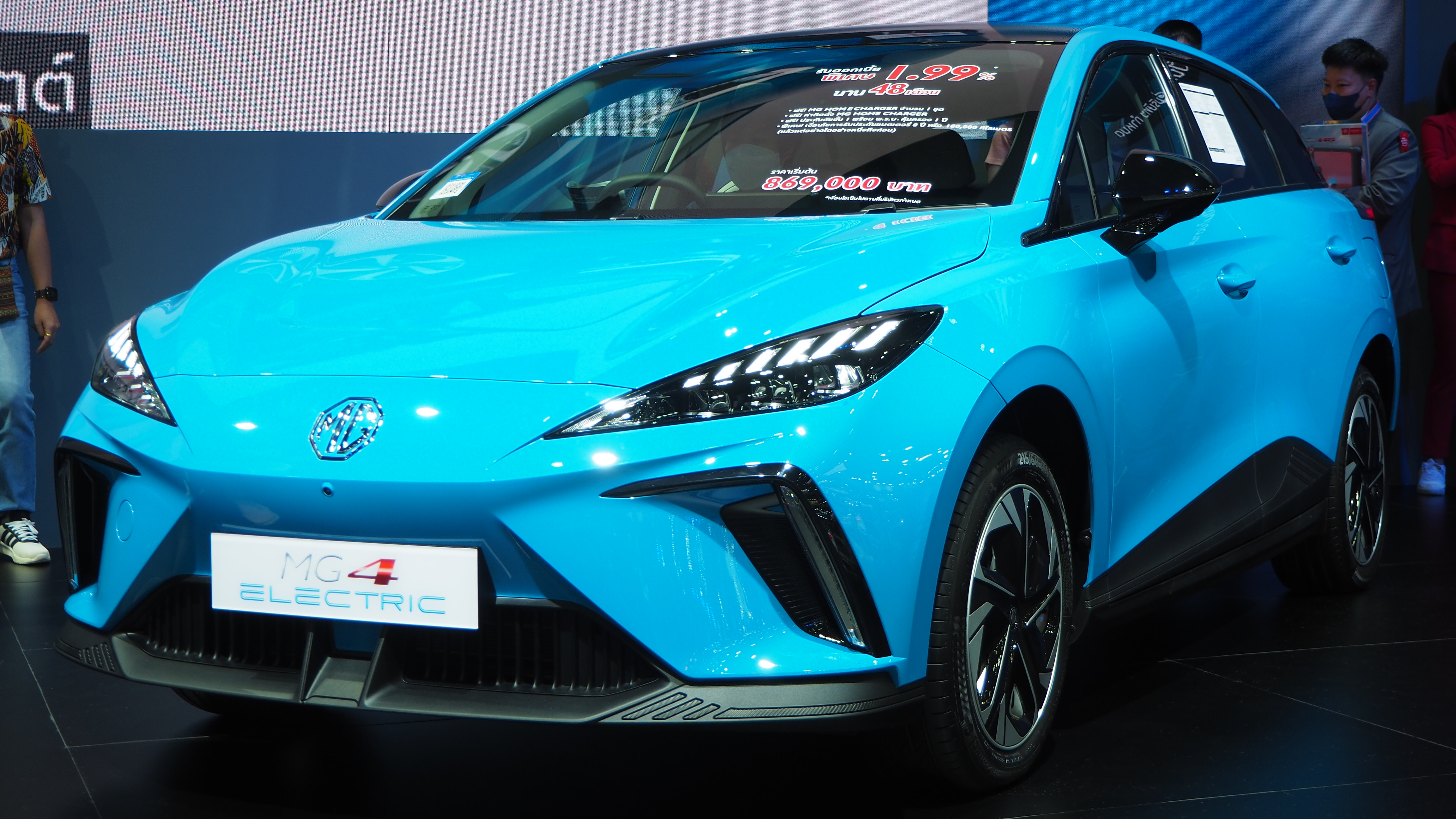
The MG4 is an electric hatchback made by MG. The podcast mentioned the MG4 Urban and said it would be shown at the Paris Motor Show, which usually means new versions or features are being revealed. It’s likely being discussed as an affordable, practical EV option.
The Paris Motor Show is a big car event in Paris where new cars are shown to the public and press. The hosts are saying they’ll check out the new model there.
Electric cars don’t use a normal gearbox, so they can’t shift gears the usual way. “Virtual gears” are software-made shift sensations that mimic what you’d feel in a gas car.
The Hyundai IONIQ 5 is an electric Hyundai crossover. The host brings it up because it already uses similar ideas to make the car feel more like it’s shifting gears.
The Hyundai IONIQ 6 is an electric car. The host mentions it as another example of EV software that can mimic gear changes to make driving feel more engaging.
This is the car playing designed sounds through the speakers. It’s meant to make the driving feel more exciting, even though the car doesn’t have a traditional engine.
That “105 kilowatt hour” number is how big the car’s battery is. A bigger battery usually means you can store more energy for driving farther, depending on how efficiently the car uses it.
This is the charging plug on the car used for quick charging. The host says the Taycan’s fast-charging port is being updated to use the NACS plug style.
“NACS native” means the car is set up to use the NACS fast-charging plug directly. That usually makes charging simpler because you may not need an adapter.
Because electric cars don’t shift like gas cars, some add “virtual” shifting. It’s a simulated feel—through the car’s behavior and sounds—so it feels more like a multi-gear performance car.
A virtual rev counter is a screen gauge that looks like the RPM meter in a gas car. In an electric car, it’s simulated so you still get a familiar “engine speed” style indicator.
The Porsche Taycan is Porsche’s electric car. It’s designed to feel exciting to drive, and this part of the podcast talks about new features that change how it sounds, shifts virtually, and how the screen helps with navigation and charging.
AI-supported voice pilot means the car can understand voice commands using AI. Instead of only following a few fixed phrases, it’s meant to handle requests more naturally.
An optimized charging planner helps you plan EV charging stops on a trip. It tries to pick the best chargers and timing so you spend less time figuring it out.
Term
over the update
This is about updating the car’s software remotely. Instead of going to a shop, the car can get improvements over the internet.
The Cooper Raval VZ is an electric car that’s meant to be the more affordable option. They talk about how big the battery is and how far it should go on a charge, and they also mention the expected price after government rebates.
SEI grants are money-off incentives that help lower the price of an electric car. Here, they’re saying the price they quoted already assumes you get that help.
A VRT rebate is a tax break related to registering a car. They’re saying the price they’re quoting is after you benefit from that rebate.
Term
driver display wireless
“Wireless” means you may be able to connect your phone or use the car’s screens without plugging in a cable. The host is pairing this with Android Auto and Apple CarPlay support.
Rain sensors detect when it’s raining and can automatically control the windshield wipers. That way you don’t have to manually adjust them every time the weather changes.
Flush door handles are door grips that sit smoothly with the car’s body instead of sticking out. They can look cleaner and may help the car cut through the air more easily.
The BMW 7 Series is BMW’s top luxury car. It’s meant to feel very comfortable and upscale, especially for rear passengers. Here they’re talking about a refreshed version that’s been updated a lot—almost like a new car.
The “kidney grille” is BMW’s recognizable front grille design. When they say it’s re-profiled, they mean the shape has been redesigned, which changes the look of the car’s front end.
This is BMW’s description of the headlight design—styled so the light units look like separate “crystal” pieces. It’s mainly about how the car looks, and it usually goes along with more advanced lighting behavior.
LIVE
Welcome back to the Nevo EV News Podcast.
If it's Tuesday, it must be Nevo EV News Day.
On this week's episode, we're going
to be focusing on the all new Renault
McGahn, which we had a look at a couple of weeks ago
under embargo until the start of this week.
I also got to interview two of the executives
responsible for that.
Sylvain, who looks after the interior, which
is the Google connected stuff.
And then Benjamin, who's the project leader at Renault
Group for the Renault McGahn.
So stay tuned for that.
We've also, since the last podcast,
had the BMW i3 price announced.
We've also seen that the new Dacia Spring
has been announced.
Porta Taycan to get stimulated, not stimulated,
simulated gears in their eShift and the Irish price
for the Cooper Revell.
Last but not least, today, we were
on Dublin Airport for the launch of the all new BMW 7 series.
So stay tuned for that.
For those who don't know, my name is Derek Riley.
And on this podcast, we chat about all things electric vehicles.
Niveau's Ireland's home of electric motoring.
And we'll be covering where we were this week, what we've
been driving, and what we've been doing between the podcasts.
If you haven't already subscribed or followed us
wherever you're listening to, please do so.
And if you enjoyed the episode, please leave us a rating
and a comment.
It really helps us out.
And it doesn't cost you anything.
So let's get stuck in straight after the ads.
So the all new Renault McGahn.
Before we jump into the interview,
it is a mid-cycle facelift.
But what they've done is they've nipped, tucked,
and they have slimmed down the offering to what people actually
want, more range, more design, dynamic design, more electric,
know-how, and enriched and useful technology.
So the video is going to be linked in the description
of the podcast, which you can head over to the Niveau EV review
pod, the Niveau EV review YouTube channel,
and have a look at the video there.
So if you're interested in seeing whether it's like that.
The site profile hasn't really changed.
It's going to be now two trims, techno and a spree alpine.
You're going to get 19 and 20 inch wheels.
Top trim is going to get massaging seats,
a premium sound system.
It's going to have a bigger battery, 67 kilowatt hour battery
with a 500 kilometer WLTP range.
Boot is still the same at 440 liters,
but it is very practical.
The car itself, because of that bigger battery,
is 20 millimeters taller.
So there is a small bit of dynamic changes going on there.
So it'll be interesting to see if the drive is the same,
because the McGahn drove very well.
Steering ratio was nice.
It was a nice suspension setup on the road.
The McGahn was launched originally into 2022,
the McGahn E-Tech Electric.
And it was the first of the new electric Renault.
We've had Zoe for a number of years,
and then the new McGahn came along, then followed by Scenic,
then Renault 4, Renault 5.
And now we're back to get this facelift version.
So before we chat much more about the actual...
We don't have an Irish price yet, is another thing.
We, as mentioned, it has one battery,
it has one electric motor, and it has two trims.
So let's jump into the interview with Benjamin and Sylvain.
Hello, my name is Benjamin Kotleski,
and I am product leader on the new McGahn.
Excellent, Benjamin. And your colleague?
Yes, hello, and I'm Sylvain Marionneau.
And I am in charge of launching operations
for Open R-Link Multimedia System
and connected services for the Renault brand.
Excellent. Sylvain, we were just in a presentation with yourself,
and it's not just the Open R-Link, it's the award-winning Open R-Link.
You were saying how it has been well received within the industry,
even back in 2022.
Yes, yeah, that's right.
And your question is?
In the sense of it has been an evolution,
but even back when it started in 2022,
it was already a very good user interface.
Yes. The customer liked it,
and the industry seemed to like it as well.
Yes, that's right, and they really ranked it
as one of the best multimedia experience among all the cars.
And even with the R5, when it was launched,
the SBD Automotive Institute said
that it was the first multimedia system among all competitors.
Because McGahn has the horizontal screen and the vertical screen,
R5 is just the horizontal screen, so it's a slightly different layout.
Yes, but behind the scene, it is the same system.
And built on the pillar of Google, Google built-in.
Yes, with Google built-in, but with also Renault knowledge
of how to make a car and how to make an infotainment system.
So Google is built-in, it bears the right name,
deeply integrated into Renault's system.
And some of the journalists today,
Sabine, were asking, is Apple still available?
And phone mirroring is different to what's the architecture behind it.
Yes, of course, we still have a phone mirroring within the car
with Android Auto and Apple CarPlay.
On top of what we have with Google Maps inside the car,
but we really recommend our users to use Google Maps embedded
because this is the way they will have the best experience
with the routing and also navigation,
vocal assistant and also with all the apps that we provide.
We'll come back to that now.
Over to your colleague, Benjamin, new McGahn.
I really liked original McGahn.
It is very still silage on the road,
but the updated Renault McGahn is nipped and tucked at the front and the rear.
Can you explain some of the elements like the new daytime running lights?
Sure. Before going to that, you are not the only one on McGahn
because this is the number one purchase reason for our customers.
So a car that has a distinctive and bold character.
And in fact, we wanted to reinforce this aspect.
That's why we have a sportier and more dynamic design.
So fully aligned with its DNA.
And so with that, we have updated the front lighting signature
with a completely new bumper as well at the front.
And the rear as well, we keep exactly the same identity
of McGahn and we had as well some what we call in design,
some 3D effect in the rear lighting that is very nice in the dark.
People will go and see my video over on YouTube if they want to see it.
Then you also talked about how you've analyzed the buyer from McGahn
and a really interesting stat.
Seventy percent, I won't finish the stat, I'll let you finish.
Yes, exactly. Seventy percent of our customers are new in the electric world.
So it means that we need as well to reassure and to help
customers in this transition to electric mobility, which is new.
In fact, it is new in the experience, in the global experience,
the way we charge the vehicle.
So some people know very well, but some people need to be reassured,
accompanied. And that's why on new McGahn, we have chosen simplicity.
So we have a very lean lineup, one battery, one engine,
one electric motor and two versions, 112
And with that, people are choosing from the techno version,
the car and attractive offer to the SPL pin, which is the all equipped version.
And the techno version is still very well equipped.
You've got lots of creature comforts in there.
So you've picked like a mid to high level and then the top level trims
because when you did service as well in the original McGahn,
you could see people were spending more, wanting more of the extras.
Exactly. On current McGahn, we have
so it helps, it is a conquest tool.
So it is a tool while this is a vehicle
that is helping as well to attract new customers from at the brand.
At the same time, this is a vehicle on which we have
younger and with higher revenues, customer compared to to the brand.
And then, so as you mentioned, we are simplifying
the line up and at the same time, we are putting more value in the vehicle.
So the car offered techno is very well equipped.
So, for example, we have the double inch screen
so for all the Google services and features, we have as well.
So, well, a better perceived quality in the entire.
And we have all what is needed for his EVC segment
in terms of electric features.
So we have the new, the new battery,
67 LFP kilowatt hour battery with 11 kilowatt
bi-directional charger and a significant improvement
in terms of charging capacity.
So we have now a 15 or 15 to 80 percent in just 25 minutes.
10 to 80 is 26 and the better peak in terms of 165, 165.
Exactly. Going back to Sylvain and your point about the onboarding
and to Benjamin's point of 70 new percent, new EV drivers.
We had an interesting in your presentation about the new my R&L
T app and the day you order the car, you're starting to engage
with the brand and engage with the app.
You can see where your car is, not literally, but within the order process.
And when you're going to get it delivered, that interaction is really interesting.
And you were saying that an EV driver is even more invested
in using that app for their car management.
Yeah, that's right.
Well, as long as he's waiting for his car,
he can look at some very interesting information
sorry, within the app.
Like, for example, he can watch some videos about EV.
You know, if a user, a new user of EV car
might want to see how this works, how I can charge,
how can I can set a routine inside inside my car,
even though he does not have the car in hand.
So it's very important that before, even before having the car in hand,
he can watch all these things and play with the app and see what he can do with it.
But then afterwards, when he has the car in hand
and he has also the my R&L app in hand, he can play with it
and manage his charge, manage his preconditioning,
prepare his trips, get the car fully connected
so that he really has a very simple and fluid everyday usage.
Good. You're developing these amazing cars
and that onboarding process can sometimes be overwhelming in a dealership
because there's so many new things.
So it's great to see Renault actually thinking about, OK,
we've got a couple of weeks or months before the customer gets the key
and they can start preparing, doing the homework,
is what you said in the presentation.
That's right. They have homework while waiting for their car.
And that's very important.
And actually, we give them this small flyer saying,
hey, you have to create your my R&L account.
And also, by the way, the Google account so that you can use it
when you get your car at car handover and be prepared with all your credentials
when to fully connect your car on the day of delivery.
Our goal is that when the customer leaves the dealership,
everything works properly and the car is 100 percent working,
I mean, in terms of connectivity.
So of course, we need the help of the customer.
He has some hard work, what this is what I said.
But then also the dealers are really engaged on that.
We give them very dedicated guidebook
to of what they have to do with the customer on the day of the handover.
And even if they do not have to do, if they do not have time
to do everything during the handover,
they the customer can come back for a second handover
and be like
guided to finish what has not been finished during the handover, if ever.
You've been there since 2022 on the current rental McGahn.
And with that app store connectivity via Google,
it was around 50 apps at that stage, but now it's over 100.
It's amazing to see the evolution of that ecosystem.
Yeah, yeah, yeah.
So of course, this is on Google side to have new apps publisher
pushing apps and selecting also all the apps that are really
useful for the trips inside the car and for the journeys.
But yes, and probably this is not the end.
The 100 is not the end of it.
So if you really count within the car, you might have more than that
and it will increase.
And we are also increasing also the categories of applications
that we put inside this catalogue.
And for a recent time, we have been putting inside the catalogue
some video streaming apps so that, you know, while waiting for your children
or maybe while charging, you can have some watch your best
and Netflix video or prime video or this YouTube channel for Nevo as well.
There's also a good check up the latest.
Yeah, you can do back to back to Benjamin.
Sounds like you may not need to stop and charge as often
because with the 67 kilowatt hour battery, you've crossed a couple of key
milestones with regards to in people's heads, whether it's 300 miles
or 500 kilometers, that seemed to be a barrier that people felt.
We need that range in real world.
We know that's not the case.
Yeah, exactly.
Because in fact, what we see on Kent Megan is that our customers
are driving 44 kilometers per day on average.
So a complete charge is is sufficient for the whole week.
So the full range is more interesting, let's say for long trips.
But for long trips, so first of all, we are reaching this 500
kilometer or 300 miles level, which is for the customers,
a kind of psychological level that can say, OK, that can be my primary vehicle.
That can be a vehicle that I can take on longer trips.
But for those of you who has already experienced electric mobility,
the key factor is the charging speed.
And on that, this is what I was mentioning just before.
We are significantly improving the thing with a 25 percent of improvement
with all the figures I gave.
But something which is as well important is that through the
our electric wood planner, we have the impump, which is embedded
on each and every new Megan.
And with the battery sample management, we are optimizing the charging time.
In fact, very good.
What I loved about the Megan is also the practicality as well.
You still have that 400 and forty liter boot.
It's a great size, the rear legroom, the rear space.
So it's a real all rounder and it was class leading in its time
because before this was Zoe and the original Megan, the current Megan,
as it is, was the start of that new wave of Renault.
And it's interesting that we're now in that second generation of that new wave.
Everything is being refined.
And with that target audience, it's even interesting to see that the
likes of the sound system, it's now a premium sound system versus the original one.
So you can see where people are spending more times in their care,
but they want that premium level of equipment, touch and feel.
Exactly. So as you mentioned, we have a very interesting ratio
between dimensions and huminess inside the vehicle with the trunk,
as you mentioned, with the Neroom, which is at almost 21
centimeter for the non expert.
This is comfortable and this is centered on the on the sea segment.
And at the same time, as you mentioned, we have now so the two versions,
techno car for and the SPL pin, which is the all equipped version
with all the best of the technology of Renault included.
So the premium sound, all the ADAS with active driver assist 360 camera.
So everything which is for the customer experience and as well for the safety,
the everyday safety massage seats, et cetera.
We have also this standard on the SPL pin version and options in some countries.
Moving back to the interior and the connectivity,
we're starting to see a lot more AI being utilized across some of the brands.
And again, today we talked about at some stage, we will be starting to see Gemini,
more conversational.
I've been looking enough to experience in this in a couple of other models
and other brands, but Sylvan, tell me about that evolution of that voice
assistance. It's not going to be about changing the radio anymore or opening
the windows. It's much more conversational now.
Yeah, it will be a much more conversational driving assistant and very helpful
because it's not just asking a question to Google, actually.
It's asking open question about the trip where you are, where you're going
and giving more general information about
what you would like to know about all of this.
And this is just like a multi-turning conversation that you will be able to have
just as if you had a passenger next to you,
you will be able to interrupt him, Barton, because he, you know,
that you would ever do this. Yeah, yeah, you can do that.
You can do that with Google and with Gemini, because maybe he gives you too
much information and you want to change the topic.
And you can also talk to him with
in several languages.
You can ask a complex question
so that he will be able to process and give you the proper answer
with regard to what you are looking for.
And also, sometimes, you know, you don't know exactly what you're looking for.
You're searching something on the Internet,
but you don't have the precise address of where you're going or maybe
you want, you know, to have to see what can come out of Internet.
And it's going to help you on that.
And because it understands the context and the intent of the user,
it will be able to find the proper answer for you.
I like the example that you gave because it knew where the driver was
in that location and they were looking for an activity for their children.
And I gave some examples as to these are some activities nearby.
And so you might be in a new area country and you have no reference.
Yeah, that's like having the person in the car beside you.
That's the local with the expert. Yeah, that's the point.
So you you can already experience that on your smartphone, of course.
But here it is more integrated into your car and with the trip that you are doing.
And of course, if you want to find maybe the best things to do in a town
that you are crossing, yeah, you can ask them and I and it's safer as well
because it's voice, it's hands on the wheel, eyes on the road.
That's what we say.
It's all it's helpful, but still maintaining safety inside the car
because you do not have to click on the central screen and ask your question
and see where you can ask your question. You just ask it and that's it.
What I love to another example you gave with regards to Google Maps
was an area that you focused on today.
It has evolved so quickly.
I was surprised how long Google took because of the eV space,
but there's so much customization now.
If you want to do it, if I'm driving an eV with Google Maps,
like the new Redome again, it will say the example you gave was Paris to Barcelona.
It was a number of different stops and how long it would take at each stop.
But you can start tweaking the parameters and filters
within this Google Maps system now where you can say,
I want X amount of percentage when I arrive or I don't want to spend this network.
I want to go to this network that it's really getting.
It doesn't it can be complicated if you want it or it can be very easy.
Yeah, that's right.
Because as Benjamin said, we have various users.
Some of them are very used to using eV, so they are very advanced.
But some of them are newcomers.
So we really need to make the experience as simple as possible.
Anyway, look at it so that it looks as fluid as possible.
But if ever you want to control things because, you know,
you are very knowledgeable about where you are, what are the stations that you want and so on,
you can still make some feel, put some filters inside the car and make it the way you want.
Some final questions and we'll stay with the event to start
with the biggest challenge in the connectivity team with the Renault Megane.
And the follow up question will be your favorite part of the new Renault Megane.
This gives Benjamin some time to think about this.
What was the biggest challenge?
The biggest challenge among all of this is to make sure that we keep it simple
because, you know, technology is technology and you might want to do technology
because you like technology, but we make technology just for our customers.
And really, if we want them to use it,
we need it to be simple and fluid.
So this is our biggest challenge so that they do not have too many tasks to do
and they use it just it's just straightforward for them.
I think the partnership with Google has helped immensely with that
because it's been such a lot of people use Google Maps.
You give the figure it's 2000000 users, 1000000 search requests a day.
Yeah, nominal numbers.
Yeah, and it's also a very familiar interfaces that we have within the car.
Of course, we have set it the way we wanted to set it at Renault side
with the autonomy that we want inside the car.
We we've done it our way, but of course, it is Google behind the scene.
So the best of both worlds, I would say the best of Renault and the best of Google.
Yes, that's right. Best best of both worlds.
If you were to look at the car and I know you're going to be biased
with regards to the connectivity and open or but what's your favorite element
of the new Renault again?
Let me think.
I think the connectivity offer is one of the best.
Yeah, because surprising.
Yeah, no, no.
Well, boy, I could have chosen or you could what you did.
But yeah, the connectivity offer is going really to make things more fluid
for the customer because, you know, you want to enter your car,
just drive and not think of anything else.
And then it will work like that, just like that.
Thank you very much, Benjamin.
One area that I didn't focus on before we wrapped up before the two questions
was the five individual driver presets with the facial recognition.
This is something interesting that you're also bringing to the case
with Renault again, the new Renault again. Exactly.
So we have with the the T-R-SR regulation, we have a new
entire camera on Renault and we have chosen to go at Renault to go even
further and to enable very visible and tangible features for the customers.
So this is the driver recognition system.
So it's simple.
The person, the driver is just sitting in its megan and then the vehicle
recognize the person and then adapt up to nine parameters automatically.
So it can be the sitting position of the mirrors,
as well as its favorite lighting
ambience, let's say, and the Google account with all the apps associated.
So it's it's it's and we can set up five profiles per vehicle.
So this is this is very interesting.
And this is part of the improved global improved technology on the model.
Excellent. So your two final questions, the biggest challenge
overall for Renault Megan and your favorite element.
Well, I like the the answer from from Sylvain.
But more globally, what I like about about Megan is that
so we have described everything that has changed.
But there is one specific element that did not change.
This is part of its identity and DNA.
This is the drawing pleasure.
And this is the thing that we have not changed.
So we have so our engineering team have applied
very subtle changes on the steering direction
to keep exactly the same dynamics as the current megan,
which is one of its strengths for for sure.
So what I like is the consistency,
the fact that it is a very Korean product,
a product that is a vehicle that is more simple
for the customers.
We saw that with more value as well.
And with better electric performances,
the new battery, better range, better chargeability.
And on top of that, improved technology, of course, with what we have seen.
But on top of that, we keep this DNA
of the Megan with the new Megan.
And this this is how we we want to keep
to be and to stay the reference on the electric
catchback market. Very good.
Thank you very much both for your time.
Welcome. Thank you. Thank you very much.
Thanks very much to Marta in Reno, Ireland, for arranging that interview
and to Benjamin and Sylvain for their time at the launch.
And look forward to driving that megan over the coming months
before it comes back to Ireland.
We didn't see much of the original Megan in Ireland
because it was it fell between two stools, really.
Reno Ireland got taken over by Cedar Motors as a new importer.
And as it was being let go by Reno Ireland,
they were looking at megans going, well, we're not going to order a lot of stock
here now if we're going to be handing over to Cedar Motors and Cedar Motors
just for taking it over and they need to get their feet on the table and understand.
So Megan was a car that really didn't see a lot on Irish roads.
But this new Megan, I am expecting it to be
definitely more of a hit than the last one through no fault of its own.
I think it was a great size, well executed, Google built in as we've already
talked about, et cetera, et cetera.
So best to look to the Renault Megan and look forward to, as mentioned,
driving the newer version.
Next up on the podcast, we have the BMW i3 price announcement.
Again, I got a chance to look at this and the video went out back in March.
The starting price for the BMW i3 X drive will be coming in August 2026
and priced from 66,685 euros on the road pricing.
And there is a first edition, if you're interested in that,
and that will be priced at 72,855 euros on the road pricing as well.
So BMW enters an exciting new era of driving pleasure with its second
Naya class of model, the new BMW i3.
Since its unveiling in March, the trailblazing all-electric saloon
has already generated strong consumer demand.
And from today, consumers have the customers have the early opportunity
to place an order with the new BMW i3 X drive 50.
First edition with WLTP of a range of 785, 758 kilometers,
going all the way up to 906 kilometers, depending on what spec and battery go for.
Jochim Guller, member of the board of management of BMW Group AG
for customer brands, sales said the new BMW i3 is groundbreaking care for us.
It's a fully electric model and will be competing in the high volume segment.
And therefore, it's extremely significant to the BMW Group.
At the same time, we can already tell from a high level of interest
in this model that it will be very well received by our customers.
The start of orders on the June 18th first edition form
ahead of its official market launch. It's an important next step here.
Building on the BMW i3 X drive 50's comprehensive standard specification.
The first edition adds further standard fit equipment based on the M Sport model
and includes M Sport exterior and interior design elements
alongside features such as the BMW iconic glow, the BMW 3 3D head up display
and the AC charging professional, which increases the AC charging rate
from 11 kilowatts to 22 kilowatts.
The BMW i3 X drive first edition is available to order from BMW retailers now.
And as mentioned, priced at 72,855,000 euros on the road
as at the official market launch in autumn 2026.
The BMW i3 would be priced from 66,685
and offers a single charge range of up to 912 kilometers WLTP.
So looking forward to seeing that looking forward to driving the BMW i3.
So stay tuned to the channel and the podcast for that.
New Dacia Spring announced and we saw kind of teasers from it.
It's launching its second generation of the home 100% electric city care.
This will be made in Europe.
The new spring opens a new chapter for the brand while building
on the continuity of a model that has become a benchmark.
Didn't really take off an air-lander, but it did in fairness to it.
It did do very well in continental Europe introduced in 2021.
Spring has already won over nearly 210,000 customers across Europe.
Confirming the relevance of some simple, accessible, no-nonsense electric mobility.
True to the Dacia spurt, the new spring will keep the essentials.
100 electric power trail, four real seats and a proper boot.
Universal and instantly recognizable name spring will evoke the spring season.
Symbol of renewal and positive energy assets with new spring.
Dacia continues to pursue a clear ambition paving the way
for electric vehicles assembled, assessed, accessible to all.
It came into Ireland and it launched at the Nevo Electric Vehicle Show
very keenly priced at under 17,000 euros.
But there's the wind got taken out of its sail with the Hyundai Insta
that launched at just under 19,000 euros.
So interesting to see.
It's going to be based on the Twingo platform,
whether we're going to see Twingo in Ireland, whether we're going to see this spring in Ireland.
It's just if it's too cheap, I just feel the Irish buyer
once will pay a little bit extra in the monthlies to get something a bit more
range, a bit more comfort,
bits and bobs inside in it, like the Insta, like the MG4 Urban.
So yeah, we'll see it at the Paris Motor Show.
So we'll have a look around it.
It's not going to be a rebadged Twingo.
It's going to be a totally ground up, same platform as Twingo,
but it's it's not going to be looking like a Twingo.
It is going to be very much angular, boxy, little SUV.
So looking forward to seeing that in the coming months at the Paris Motor Show,
no doubt, or if not before that.
Porsche have the updated Taycan.
The Model Year 2027 updates the e-shift with virtual gears.
Porsche is intensifying the driving experience of the all 2027
Taycan variants courtesy of the new e-shift system with virtual gear changes.
We would have seen this obviously in the Hyundai IONIQ 5 or IONIQ 6.
And it's a more emotive electronic sport sounds.
The new new generation of infotainment featuring a modern operating concept
enhanced smartphone integration and voice control with artificial intelligence
rounds off the update.
So the performance battery plus the 105 kilowatt hour battery
now comes standard across all variants.
The passenger side DC fast charging port now has NACS native.
If you're in the North America market listening to here,
if you are listening to my podcast in the North America market,
jump into the comments and let me know whether it's on Apple or Spotify
or wherever you're listening to.
The driver side AC port remains the same and experience of the senses.
It says the e-shift with virtual gear changes and more emotive
Porsche electronic sport sounds and the new infotainment system
with AI voice control, including intelligent navigation and teams up.
So we're talking about enhancing every aspect of the Taycan available
and all models that e-shift option will give a more emotional driving experience.
Version virtual gear changes with perceptible
perceptible shift motion and reinterprets Porsche's electric
sonic sound sport sound and new virtual rev counter combines
to create a multi sensory driving experience.
Paddles on the GT sports steering wheel can be used to switch between eight
simulated gears. The system is activated by the additional mode switch
on the steering wheel by introducing comprehensive innovations in the model
or change or strengthening the Taycan and all relevant areas.
The latest models offers more emotive driving experience and more intuitive
and customizable operations says Kevin Geek, head of the Taycan model lineup.
The new generation infotainment software digital interaction
operating concept offers a modern minimalist design 3D vehicle model
in actual color of the customer vehicle, freely configurable widgets,
improved voice control with AI supported voice pilot.
Apple CarPlay Android Auto has also been expanded and navigation sets
the new standards with precise online route calculation,
3D building displays and optimized charging planner.
Possibility of over the update of the infotainment system is now
plus a smartphone tray with magnetic ring mount, which we're starting to see
a lot of new vehicles like the Škoda peak up to 25 watts of charging power.
Complete the update.
So stay tuned for that Porsche Taycan with the 2027 year modeling up.
Cooper has announced the Raval Irish prices and that is starting at
23495
So we got to drive the Cooper Raval VZ and the link is going to be in the
description. It's up on the Neville Review YouTube channel.
That's going to be the entry level price.
And that's after the SEI grants and the VRT rebate.
And you'll get up to 318 kilometers range
thanks to this 37 kilowatt hour battery.
There will be a 52 kilowatt hour battery given a range of 400
fifty kilometers, but Cooper Ireland aren't announcing that full range
and specification details until closer to the launch date in a late
August, early September.
And the range topping 226 horsepower VZ version would be priced
we think in around 35000 euros, as mentioned in the video.
And so that gives you kind of a line up as to where we're going from twenty
three and a half all the way up to 35
That 23 and a half 23495 price will come
with a 2012 point nine inch touchscreen Google Android software
based and also ten point 25 inch driver display wireless
Apple on Android Auto and Apple CarPlay.
Keyless start rear parking sensors, climate control, LED headlights,
3D rear edge to edge light with the Cooper logo, rain sensors, light sensors,
high beam control, flush door handles, so you're getting a lot.
Mark Lanlow, brand director with Cooper Ireland says the Ravel opens
an exciting new chapter for Cooper at the entry price of 234
95 It delivers striking design, genuine driving enjoyment,
everyday usability and at a price that makes electric mobility more
accessible than ever. More importantly, it shows all of this
while without compromising the character that defines our brand.
We expected to introduce Cooper and an entire new audience and show that
choosing an affordable electric car no longer means settling for something
ordinary. So and if you're interested in listening to more from Marcellano,
you Marcellino, Martha, you know, you can listen back to a podcast that we
did when I'm here on the channel a couple of months ago, which was very
well received, actually, and just looking at the stats for the podcast.
Last but by no means least today, this morning, we were at Dublin Airport
for the launch of the all new BMW seven series. Now it is a midlife
refresh, but it is there's so many updates on it.
It is pretty much a brand new car, pretty much.
So you're going to new face design with a re profiled kidney grill, much more
boxy. You're going to be a full dynamic light carpet when you're opening the
door, individual crystal headlights, new two tone color combinations up to five
different variations. You could have frosted on the top glass on the bottom
metallic, you could have the rice versa, you can have an individual color, all
that kind of stuff inside. You're getting a high material quality fit and finish,
crystal clarity and individualization again.
It's really like an executive lounge and the front for your driver slash
chauffeur, you're getting the panoramic eye drive and the BMW passenger screen.
The first time that you're getting a screen for the passenger and any BMWs,
you're also getting the Noia class with the BMW operating system X panoramic
vision. And if you're sitting in the rear, you're getting that upgraded 8K BMW
theater screen, increased range, battery, electric and plug and hyper power
change options. So it's not just full electric, you're using the new cylindrical
motor from Noia class, sorry, the cylindrical batteries,
unrival driving dynamics with the comfort with two axle air suspension,
motor assist coming soon. This is total hands off. And if you've watched my
BMW iX3 video, you can see me experiencing that and then updated automatic doors as well.
So really peak luxury from the BMW 7 series or i7 specifically here on the channel.
Price is starting off in Ireland at 129,990 for the i7 50x drive, then that jumps up to
M Sport or M Sport Pro. And then there's an ultimate addition as well for that
i7 50x drive that goes to 170,680. If you want to go all the way up to the M70,
i7 x drive ultimate addition, that is going to set you back 2,000, 200,000,
234,700, so nearly a quarter of a million euros. So it is top top trim, top top luxury.
So hopefully you've enjoyed this week's episode of the Nevo EV News Podcast.
If you haven't already subscribed, please do. So jump into the comments,
let me know, leave a rating wherever you're listening to this. If you're listening to the
car, take two seconds when you finish your journey to jump in and leave a star rating or
leave a episode rating. I'd really appreciate it. And I look forward to chatting to you next week.
Thank you very much.
About this episode
Renault and BMW take center stage as the hosts break down the new Renault Megane EV facelift—covering trims, wheel sizes, infotainment with Open R-Link and embedded Google Maps, plus battery and charging claims like a 67 kWh pack and 15–80% in 25 minutes. They also discuss driver personalization, onboarding via the app, and charging/range psychology. BMW’s refreshed 7 Series and the BMW i7 arrive with Dublin Airport launch details and Irish pricing, while Dacia Spring and other EV updates round out the news.
Welcome back to the Nevo EV News Podcast. If it's Tuesday it must be Nevo EV News Day. My name is Derek Reilly and on this podcast we chat all about EV. Nevo is Ireland's home of electric motoring and we'll be covering where we were this week, what we've been driving and what we've been doing between podcasts. If you haven't already subscribed or followed us wherever you are listening please do so and if you enjoyed the episode, please leave a rating and comment, it really helps us out and it doesn't cost you anything. Let's get stuck in.
New Renault Megane and interview with Sylvaine Marionneau-Perrève and Benjamin Kotlowski