Discussion centers on Tesla's brief launch and quick cancellation of a $60,000 all-wheel-drive Cybertruck trim lacking key features like air suspension, raising questions about Tesla's inventory and future plans for the model. The hosts analyze Elon Musk's cryptic '10 days' tweet hinting at limited availability or a short-term pricing strategy. The episode also covers a landmark legal case where Tesla was found 33% liable for a fatal Autopilot crash, resulting in a $243 million judgment, highlighting growing scrutiny of Tesla's autonomous driving technology and its real-world consequences.
In the Electrek Podcast, we discuss the most popular news in the world of sustainable transport and energy. In this week’s episode, we discuss the new Tesla (temporary) Cybertruck, Cybercab news, Ford wanting China in the US, and more.
As a reminder, we’ll have an accompanying post, like this one, on the site with an embedded link to the live stream. Head to the YouTube channel to get your questions and comments in.
After the show ends at around 5 p.m. ET, the video will be archived on YouTube and the audio on all your favorite podcast apps:
We now have a Patreon if you want to help us avoid more ads and invest more in our content. We have some awesome gifts for our Patreons and more coming.
Here are a few of the articles that we will discuss during the podcast:
"We're going to start out by a new Cybertruck being launched this week. I was very excited about it for a good half a day because after half a day, Elon already canceled it or sort of. So for those of you that haven't followed, last night, Tesla updated its online configurator for the Cybertruck and launched a new all-wheel-drive Cybertruck at $60,000, starting at $60,000."
The Tesla Cybertruck is a new kind of electric pickup truck that looks very different from regular trucks. It can drive all four wheels and is made to be strong and useful for work or everyday driving.
The Tesla Cybertruck is an all-electric pickup truck produced by Tesla, known for its futuristic design and durable exoskeleton. It features various drivetrain options, including an all-wheel-drive variant, and is aimed at combining utility with electric vehicle technology.
"The range is also adjusted though, it's 325 miles, if I'm not mistaken, yeah, 325 miles. So the two main things you're losing here is the little bit of range and the air suspension"
Range means how far an electric car can go before it needs to be charged again.
Range refers to the maximum distance an electric vehicle can travel on a single full battery charge.
"So the two main things you're losing here is the little bit of range and the air suspension"
Air suspension is a special system in some cars that uses air to make the ride smoother and lets the car raise or lower itself.
Air suspension is a type of vehicle suspension that uses air springs instead of traditional coil springs, allowing for adjustable ride height and improved comfort or handling.
"Tesla had planned for a capacity, Gigafactory takes us about $250,000 a year. So when you're running about less than 10% of your production capacity,"
A Gigafactory is a very big factory where Tesla makes batteries and cars to sell to lots of people.
Gigafactory is Tesla's large-scale manufacturing facility designed to produce batteries and electric vehicles at high volume to reduce costs and increase production capacity.
"even though it's, there's already an all the drive Cybertruck."
All-wheel drive means the vehicle can send power to all four wheels at the same time, which helps it drive better on slippery or rough roads.
All-wheel drive (AWD) is a drivetrain system that powers all four wheels of a vehicle simultaneously, improving traction and stability, especially in challenging road conditions.
"I mean, is it possible that these are just software locked? Like they, they pulled some of the battery capacity."
Software locking means the car has parts that can do more, but the computer inside stops it from using all of them. This can be changed later by updating the car's software.
Software locking is a method where certain features or capacities of a vehicle are restricted or disabled via software, even though the hardware is physically capable. This can be used to manage performance, battery capacity, or unlock features later.
"resell value is also important. So you want to know like what's happening with the program right now."
Resell value means how much money you can get if you sell your car later. It helps you know if a car keeps its value over time.
Resell value refers to the estimated price a vehicle can be sold for after initial purchase, which is important for buyers considering the long-term cost of ownership.
"Uh, first off, big news on the first Tesla autopilot fatal accident liability case, uh, that happened in Florida last year. Tesla for the first time went to trial on a fatal case involving a crash of, uh, on autopilot and was found 33% liable for it."
Tesla Autopilot helps the car drive itself a bit by keeping distance from other cars and staying in the lane, but the driver still needs to pay attention and control the car.
Tesla Autopilot is an advanced driver-assistance system that offers features like adaptive cruise control and lane-keeping. It is designed to assist drivers but requires active supervision and is not fully autonomous.
"And sometimes people crash into a Tesla that's, uh, self-driving or, uh, on autopilot or AFSD, I should say, it's not really self-driving and, uh, there's no responsibility,"
AFSD means Full Self-Driving, a set of features in Tesla cars that help the car drive itself, but the driver still needs to pay attention and be ready to take over.
AFSD stands for Full Self-Driving, Tesla's package of driver-assistance features aiming to enable autonomous driving in the future, though currently it requires driver supervision and is not fully autonomous.
"autopilot, you know, was playing to have emergency braking system that should have detected the crash and should have activated to Tesla based on its, what, what the Tesla was communicating to customer,"
This system helps stop the car quickly if it thinks a crash might happen, even if the driver doesn't press the brakes.
An emergency braking system automatically applies the brakes when it detects an imminent collision to help prevent or mitigate crashes.
"vehicle without having truly solved autonomy yet. Um, but my, my agreement on that set, I think it's very interesting is that this is like the, the most blatant case of Tesla putting the cart in front of the horse, but it's, um, not the first one when it comes to autonomy."
Autonomy means a car can drive on its own without a person controlling it.
Autonomy in vehicles refers to the ability of a car to drive itself without human intervention, using sensors, cameras, and software.
"we've seen this happen with Tesla many times before with the removing of the stall, uh, whether it be the turn signal stock or the, um, drive, uh, gear, uh, stock,"
It's the little stick next to the steering wheel that you push up or down to show other drivers you want to turn.
The turn signal stalk is a lever on the steering column that drivers use to indicate their intention to turn or change lanes.
"we've seen this happen with Tesla many times before with the removing of the stall, uh, whether it be the turn signal stock or the, um, drive, uh, gear, uh, stock,"
It's the stick you move to choose if the car goes forward, backward, or stays still.
The drive gear stalk is the lever used to select the vehicle's driving mode, such as park, reverse, neutral, or drive.
""the yoke steering wheel is also very similar situation. Like, uh, unless you put drive by steering, like in the Cybertruck,""
A yoke steering wheel is a steering control shaped more like a video game controller than a round wheel. It lets you see more of the dashboard but can feel different when turning the car.
A yoke steering wheel is a non-circular, often rectangular or U-shaped steering control that replaces the traditional round steering wheel. It is designed to provide better visibility of the dashboard and can offer a futuristic driving experience, but it can also change the steering feel and ergonomics.
"And there's kind of a regulatory battle now between Tesla and Waymo there. Waymo basically wants to distance itself as much as possible from what Tesla is doing..."
Waymo is a company that builds self-driving car technology, which means cars that can drive themselves without a person controlling them.
Waymo is a subsidiary of Alphabet focused on developing autonomous driving technology and self-driving cars.
"They it's not an autonomous robotaxi service. There are drivers behind the wheel."
A robotaxi is like a taxi that drives itself without a driver. You can use an app to call one, and it will take you where you want to go on its own.
A robotaxi service is a ride-hailing service that uses autonomous vehicles to transport passengers without a human driver. These services aim to provide convenient and driverless transportation.
""...with a lot of customization available after the fact. So you can buy the truck and then customize it here...""
Vehicle customization means changing or adding things to your truck after you buy it to make it look or work the way you want.
Vehicle customization refers to modifying or upgrading a vehicle's features, parts, or appearance after purchase to better suit the owner's preferences or needs.
"...is and saying, oh, all we have to do is release a Maverick that's very configurable"
The Ford Maverick is a small truck that’s easy to drive and can carry things like a big car but isn’t too big itself. People like it because it’s affordable and you can choose different options to fit what you need. It’s good if you want a truck but don’t want something huge.
The Ford Maverick is a compact pickup truck introduced as a versatile and affordable option in Ford's lineup. Its configurability and smaller size make it appealing for urban drivers who need utility without the bulk of a full-size truck. It's often discussed for its practicality and modern features in a competitive market segment.
"a refresh of the Polestar 2. So, not entirely new model, but mostly new model..."
The Polestar 2 is an electric car that looks nice and has lots of modern features. It’s made by a company related to Volvo and is good for people who want a clean, quiet ride. The new version has some improvements to make it even better.
The Polestar 2 is a fully electric compact sedan from Polestar, Volvo’s performance EV brand, known for its Scandinavian design and tech-forward features. The recent refresh updated its styling and technology, keeping it competitive in the growing electric vehicle market.
"...in Q4 you have the new long groove variant of the Polestar 4. So, again, not completely new models yet."
The Polestar 4 is a new electric car that looks like a small SUV with a sporty shape. It’s designed to go far on a single charge and be fun to drive. It’s coming out soon and is part of a new group of electric cars.
The Polestar 4 is an upcoming electric SUV coupe from Polestar, offering a sportier design and longer range options. It’s part of Polestar’s expanding lineup aimed at combining performance with sustainable electric mobility, expected to launch in late 2024.
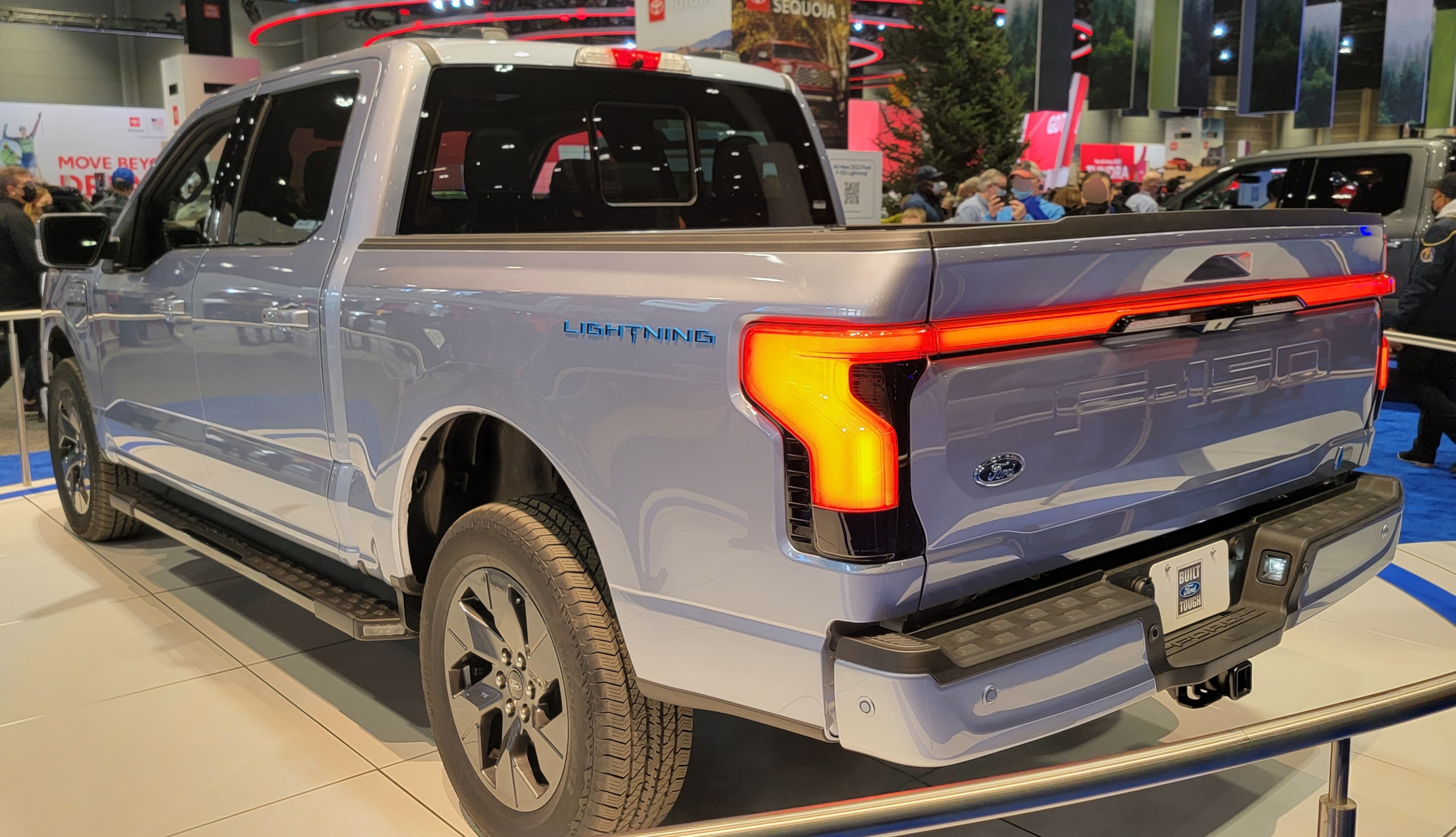
"What did I have last? I think it was an F-150 lightning with blue crews. Maybe about a year and a half ago."
The Ford F-150 Lightning is a big truck that runs on electricity instead of gas. It can do many things a normal truck does but is better for the environment and can save money on fuel. People talk about it because it’s one of the first electric trucks from a big company.
The Ford F-150 Lightning is the all-electric version of Ford's best-selling F-150 pickup truck, combining traditional truck capability with electric powertrain benefits. It represents a major shift towards electrification in the pickup market and is notable for its performance, range, and innovative features like vehicle-to-grid capability.
"Here's a question. Has anyone tested a Tesla Semi with an electric assisted trailer?"
The Tesla Semi is a big truck that runs on electricity instead of diesel fuel. It’s made to carry heavy loads while being better for the planet. People talk about it because it’s a new way to move goods without pollution.
The Tesla Semi is an all-electric Class 8 semi-truck designed to revolutionize freight transport with zero emissions and advanced technology. It’s significant for its potential to reduce operating costs and environmental impact in the trucking industry, often discussed alongside innovations like electric-assisted trailers.
"in a few months BYD is opening an EV factory in Hungary with 200,000 EV yearly capacity"
An EV factory is a place where electric cars are made. They have special equipment to build the batteries and electric parts.
An EV factory is a manufacturing plant dedicated to producing electric vehicles. These factories often include specialized assembly lines for electric drivetrains and battery packs.
"one, Fred, how has the BYD shark been? we've seen some social media driving around"
The BYD Shark 6 is an electric car made by a company from China. It’s getting popular because it looks good, drives well, and doesn’t use gas. People are sharing videos about it online because it’s a new and interesting car.
The BYD Shark 6 is an electric sedan from Chinese automaker BYD, known for its advanced battery technology and competitive pricing. It’s gaining attention on social media for its performance and modern design, representing BYD’s growing influence in the global EV market.
"it's more about the approach of making it focus on efficiency which I think is the way to go"
Making a vehicle efficient means it uses less fuel and is better for the environment, so it costs less to drive and pollutes less.
Focusing on efficiency in vehicle design means prioritizing fuel economy, reduced emissions, and overall better use of energy to make the vehicle more environmentally friendly and cost-effective to operate.
"...een maybe a few hotels that have this legislation charger and that's it so"
The Dodge Charger is a big car that can go very fast and has a strong engine. It’s popular with people who like cars that feel sporty but can still carry a family. Sometimes it’s talked about when rules about cars are changing.
The Dodge Charger is a full-size sedan known for its powerful engine options and muscle car heritage. It remains popular for its blend of performance and practicality, often discussed in contexts involving legislation or regulations affecting muscle cars or performance vehicles.
Select text to request an explanation
One, we are live on the episode of the Electric Podcast.
I am Fred Lambert, your host, and as usual, I'm joined by Seth Winscham.
How are you doing this week, Seth?
I'm good.
All right.
Now, I can actually talk to you this week.
We had some issues with the live broadcast last week, but looks like the internet situation
is a little bit easier this week, and the stream yard stuff is always pretty heavy
on the internet.
I don't know why they're like, when we have like Zoom calls and everything, it's
fine, but the stream yard, not so much.
But we're back to our regular show this week.
Let me mute my notification right now so that I can focus entirely on the show.
All right.
We're going to start out by a new Cybertruck being launched this week.
I was very excited about it for a good half a day because after half a day, Elon already
canceled it or sort of.
So for those of you that haven't followed, last night, Tesla updated its online configurator
for the Cybertruck and launched a new all-wheel-drive Cybertruck at $60,000, starting
at $60,000.
So compared to the $70,000 rear-wheel-drive Cybertruck that was decontended, when Tesla launched it
last year, we right away, we said, this is not going to work.
It's going to be canceled very soon, and sure enough, I think it was only online
for about four months before Tesla canceled the vehicle because it didn't have suspension,
no cover, or at least mechanical technical cover that you had to manually open it.
It didn't have the outlets in the back.
It was like crazy, crazy decontended, a smaller range too.
Everything that makes sense for just a $10,000 difference in price.
Now we have a $20,000 difference in price, and all of these features except for the
active air suspension are still in there, which I think is a giant difference maker here.
The range is also adjusted though, it's 325 miles, if I'm not mistaken, yeah, 325 miles.
So the two main things you're losing here is the little bit of range and the air suspension
for $60,000, which it's not the $40,000 that Elon Tesla originally announced with the Cybertruck,
but it's getting closer to the ballpark at least.
So I wasn't going to say that this is going to save the Cybertruck program, I think like that.
For those who don't know, the Cybertruck is selling as of last quarter at about 5,000 units a quarter.
That's roughly 20,000 units a year.
Tesla had planned for a capacity, Gigafactory takes us about $250,000 a year.
So when you're running about less than 10% of your production capacity,
normally a vehicle program doesn't survive on that because it just doesn't make sense.
You're underutilizing your productive assets and it gets canceled.
Though we do suspect that Tesla is going to try a lot of things before canceling that
just because it makes Elon look so bad that there's Cybertruck, because he's been the champion of that vehicle program.
But then what happened next set, it's Elon on Twitter ended up sending out a tweet,
he quote tweeted Wes Morrill, who's the head engineer on the Cybertruck program.
Wes had just announced Cybertruck now started $60,000 instead of $80,000.
And then Elon responded with only for the next 10 days.
No follow up, nothing else.
So what does only for a next 10 days means?
Because Wes tweet was specifically mentioning the price of the, but it's also a new trim,
even though it's, there's already an all the drive Cybertruck.
It's, you know, there's less range, there's no air suspension, it's a different trim.
So does he mean that this is only the price for the next 10 days?
Or is this version of the Cybertruck only going to exist for 10 days?
We don't know.
And I do have some theories and I'd like to know your take on it set.
So this is very close to the existing Cybertruck.
So meaning that this doesn't have to do much to do to make this truck different.
We don't even know if the battery pack is different.
It might just be soft for a lock.
Tesla has done that before.
So maybe a different battery pack.
Maybe not just the air suspension is the main thing, but the air suspension for
those don't know, so this has active damping like the other ones.
So it's, it's a fairly small modification to make, even though I can have a big impact,
but it's in terms of the production process, it's not that big of a deal.
So my take on it, I see two potential things happening.
Well, one main thing I think Tesla is trying to reduce inventory.
So it's trying to not, not finish inventory because this is obviously a new new
vehicles that they're building, but maybe that they have a certain
quantities of Cybertruck parts that they want to, you know, finish and
then sell out to either end the production of the Cybertruck or to get
rid of what they have now for a potential refresh of the Cybertruck
program because it badly needs something.
Like if, if you want to keep it alive, you have to do something bigger
than, than this change here.
So I think it's one of those.
What do you think?
I mean, is it possible that these are just software locked?
Like they, they pulled some of the battery capacity.
They pulled the air suspension and yeah, even the air suspension could
be software lock, you're right.
Right.
So is it possible that they're just taking inventory from somewhere, you
know, much more expensive vehicles, locking up some of the features and
selling them at a discount.
And then those people that buy them, you know, hey, unlock the
rest of your battery, unlock your suspension for a price.
But the only thing that would point not to that is that did every
day, they talk about July, June, I think June.
All right.
So that would point to new production.
Right.
Unless they're just tweaking the software to do that.
I don't know.
Yeah.
Um, it is weird that they try and included so much of the, you know, the
standard build that in this, and it all wheel drive, especially for 60
K is actually a pretty good price when they were talking 40 K for the
real rear wheel drive, um, you know what, however, like 55 years ago
when they announced this thing.
So 60,000 for a all wheel drive cyber truck is actually kind of
close to what they were originally promising.
Yeah, it's the same ballpark.
It's a similar ballpark.
It's not, well, I mean, obviously they would sell a lot more at 40,000,
but for your right, for the specs, for the features, you could
argue it's a ballpark.
And then the biggest comparison obviously is between the, um, previous
and still current all wheel drive version, uh, $20,000 difference for
the suspension, uh, a little bit more range is not that big of a deal.
Quite obviously.
So, um, this, there's something going on here is just not clear what it is.
And obviously Tesla is not saying anything.
Uh, but it's, I don't think it's helping the program much, uh, because
even the, the situation is kind of putting buyers in the, uh, you're
not, you know, when you're spending $60,000, $80,000 on a truck, uh,
resell value is also important.
So you want to know like what's happening with the program right now.
It's just this, is it just, is the trims going to still exist next quarter
or, or Q three, or is it just a pricing situation?
It could be Tesla just trying to like boost, uh, the man, uh, for, for
the cyber truck short term with, uh, this sort of, uh, discount to create
urgency within the next 10 days.
We don't know.
I think it's bigger than that.
I think it's more like inventory related to say it's trying to, you know,
get through, get rid of some inventory of the parts level.
And then, then something is going to happen.
Maybe not in 10 days, but, uh, in by the time they produce all of
these and deliver them, which sounds like it's going to be June.
So maybe in the second half of the year, we see either the end of the
program, I'm less likely on that just because of, you know, I think
it would be a big fail for Elon.
Uh, and he wouldn't really take that or a refresh, just how much refresh
can you put in a program that's like not even three years old at this point?
I don't know, but one thing is sure is that you, you need it.
It's just, this is not working right now.
Yeah, it'll be interesting to see what happens.
Yeah, we'll keep you guys updated.
Uh, then we have a couple of, uh, news that we'll discuss related to Tesla's
autonomy effort because that's mostly what Tesla is doing these days.
It's related to autonomy.
Uh, first off, big news on the first Tesla autopilot fatal accident
liability case, uh, that happened in Florida last year.
Tesla for the first time went to trial on a fatal case involving
a crash of, uh, on autopilot and was found 33% liable for it.
And, uh, the victims were awarded $243 million.
Um, and, uh, yeah, there was, it was really an historic case because
it is the first time that Tesla went to trial over such case before
that Tesla had dismissed, uh, or in, in, uh, one case, the, the
settlement and this that was prior to that very not prone to do
settlements, but then after the first judgment, we saw a series of similar
cases from 2018 to 2020 crashes that, you know, it takes a lot of
time to go through the entire, uh, court process, um, being settled by Tesla.
So this, this case completely changed the game regarding Tesla's, uh, liability
in, in court regarding, uh, crashes related to its, uh, advanced driver
assist system, specifically autopilot because against, because of the timing
if it's the launched in late 2020.
And most of these cases are about crashes that are older than that.
But now, uh, the 242 million dollar judgment as the, uh, went to ask
a federal court to overturn it.
And, uh, today, uh, the, uh, judge of that bloom in Miami, uh,
throw the case away saying that Tesla didn't have any, wasn't adding any
new arguments that justify setting the case aside.
Uh, there's still an appeal process that's possible, but, uh, it's
going to, it's becoming obviously harder for Tesla.
It's, uh, they are quickly exhausting their way to avoid, uh,
paying this 243 million dollar settlement.
Uh, this is, this is a big deal.
Like, uh, we said and I were talking about it today.
I'm, I'm going through all, and it's, uh, crash information
right now from Tesla's ADS system is like, we're, we're just
seeing the peak of the iceberg here because like I said, most of
the crashes based on the data we have happened after 2020.
So 2021, 2022, 2023, the biggest, the most amount of crashes were
in 2024 and 2025.
And then we're just not even two months into 2026.
And there's already a bunch of them.
So these, not all of them, because I'm sure some of them
are Tesla's clearly not responsible.
And sometimes people crash into a Tesla that's, uh, self-driving
or, uh, on autopilot or AFSD, I should say, it's not really
self-driving and, uh, there's no responsibility, but in some
of those cases, like this one, even though this, and what's
crazy about this one, like obviously the, the stakes
were high.
Someone died that was outside of the, of the car.
I was not related to the Tesla driver and someone else was
gravely injured.
Uh, so obviously that, but in terms of the liability that
Tesla has, which was only 33% of liability, which I think is,
is fair, honestly, because the driver was also clearly at fault.
Well, the driver was using autopilot, drove their phone,
meaning they were using their phone on autopilot and was
reaching down to grab their phone.
And as they were doing so, they ran a red light and, uh,
or blinking light and, um, crash into the victim's
vehicles and, and the victims.
So the, the, the main development with this case and the
jury verdict is that the Tesla was liable one, because
autopilot, you know, was playing to have emergency
braking system that should have detected the crash and
should have activated to Tesla based on its, what, what
the Tesla was communicating to customer, shouldn't even
have been able to activate autopilot in these, uh, in
these specific roads since it was supposed to be a
highway system.
And three, Tesla was also found to have misled customers
into thinking that they could not pay as much
attention in this, even though there's, it was kind of
using the contrast between what Tesla is saying in
its user manuals and it, and it's, uh, uh, allured to
the customer versus what Tesla is saying to, um, uh, in
its marketing effort.
So those two have been quite a bit contrasted and that
led to the situation with the customers here.
And now you can apply that to a bunch of other cases,
literally hundreds of them, potentially even thousands
of them, and that, uh, the, the liability here, like
I'm still working through this, all this data, but
I think it's minimum in the billions of dollars,
potentially in the tens of billions of dollars.
It's, uh, absolutely huge.
Um, moving on, Tesla announced this week that, uh, they
are, uh, distorted production of the cyber cab, even
though we're not sure it's going to be called cyber
cab because of the previous, uh, trademark issues that
we discussed, but for now we'll call it cyber cab.
Uh, they said that the first one rolled off the
production line in, uh, in Gigafactory, Texas.
Now it doesn't mean that continuous production is
starting.
That's not expected until April, even Elon Musk
said that, uh, the ramp up is going to be, uh, very
slow and, but the first one is being produced, uh, even
though the, uh, has not solved autonomy yet, which
is the, the craziest part here is that, um, they're
producing, there's, there's sort of starting slowly
production of a steering wheel less, pedal less
vehicle without having truly solved autonomy yet.
Um, but my, my agreement on that set, I think
it's very interesting is that this is like the, the
most blatant case of Tesla putting the cart in
front of the horse, but it's, um, not the first one
when it comes to autonomy.
Like we've seen this happen with Tesla many times
before with the removing of the stall, uh, whether
it be the turn signal stock or the, um, drive, uh,
gear, uh, stock, um, Tesla said at the time that
they were doing this because of autonomy, like the
time is around the corner, you don't really need
those if it's autonomous.
And then they backtracked on that specifically for
the turning signal stock, but also, um, to some
degree for the drive gear and, um, the, the
yoke steering wheel is also very similar situation.
Like, uh, unless you put drive by steering, like
in the Cybertruck, uh, it's, uh, a sort of
steer by, uh, by a warrior, like, like in the
Cybertruck doesn't really make much sense to
have a yoke steering wheel.
You kind of need that to have, uh, uh, be somewhere
like if you're going to do full turn, uh, on the
ratio with the, with the steering wheel, doesn't
make sense, but, um, Tesla has a clear tendency
of doing these hardware changes first and then
hoping that autonomy happens.
And this is no different.
Um, I don't know if you remember, um, when
they unveiled the, uh, the Cybert cab in, uh, the
Wii robot event in 2024, MKB HD, uh, did the
little video on it and said that he would, he
was going to shave his head if, um, if Tesla
would deliver this car for $30,000 or less to
consumers by 20, 20, who's seven?
Yeah, it's a pretty safe bet, I think.
Um, and 20, 20, in the, no, I mean, at
$20,000, that's not going to happen, obviously.
But, um, you know, the bigger thing is like they're
going to have all these cars without steering
wheels and, and the software is not going to be
safe enough to run.
And I guess they could still have follow
vehicles.
I don't know.
I don't know what, what they're going to do
with all these steering wheelless vehicles
with, while they're fixing their software.
Yeah, my take on this is that these are
entering production and could be used in
Tesla's, you know, pilot robotaxi programs.
Whether it be training cars or remote
operation, I think, I think it's feasible
right now, but the, the MKB HD bet was
specifically about delivering these to
consumer vehicles.
And I think that's what brought the most
headlines when Tesla on the old days is
like, a lot of people thought they would
be the molo twos that they were expecting
the cheaper $30,000 Tesla is like, oh,
that could be it.
And Elon sort of ended at that by saying
that we're going to sell them to consumers
for $30,000 or less.
And, but he specifically said that as in,
you're going to have it in, in like a
use it in the robotaxi fleet.
Like it's going to be a personal robotaxi.
But now that the enter production, a lot
of the Tesla fans were like, oh, when
KB HD is going to have to shave his head.
And then Elon got involved too and says,
yeah, it's going to happen.
By the end of this year, we're going to
deliver it out to consumers.
And which I think it's probably the
biggest relief for MKB HD that Elon
actually says that is if you, if you
track Elon's prediction, and especially
the end of the year ones, when it
comes to autonomy is just never happens.
I think the only thing like everyone
that's hoping to see Marques's bear
cranium, you, I think the only
hope you can have is that maybe just
to prove Elon right, they deliver a few
of these to like our core Tesla fan in
Austin and then they tell them you can
only drive them in the same geofence
area as the robotaxi in Austin with
the same software that's running on
the existing robotaxi there.
And that's it, which I think would
be nuts, like would be just purely
an OPTIQ win and no real value.
Again, it would be apt to be delivered
to some hardcore fans that just don't
care about, you know, you're saying it
would be nuts, it would just be for
optics and just just the hardcore fans.
You're basically guaranteeing they're
doing it. That's like, yeah, just, I
just convinced myself by saying that
you're right. I just convinced
myself that they could do it.
But I mean, not my point is like
they could do it like that.
But if I was MKB HD and I'm not, I
would not shave my head if they do
that because like obviously it's
quite the stretch if they do that.
It's like it's not it's not in the
spirit of the bed that, you know,
Tesla would deliver it through unsupervised
self-driving vehicle to consumer
by the end of the year.
It's just it's just not going to
happen.
Yeah, so that did that.
Oh yeah.
And I still just, just for
AI is good at something.
Sorry, Mark.
The other big news this week when it
comes to FSD is now Tesla, even
though Tesla lost the we reported
on that in December, the case with
the California DMV about
misdeeding autopilot and full
self-driving where the
still avoided the, the, the
predictive damage that come with
that, that case, which was a 30
D band, a minimum of 30 D band
under California sales because
Tesla is now fully dropping
autopilot from its marketing and
full self-driving has now been
completely changed to
supervised full self-driving.
And now with the end of
Tesla selling
full self-driving as
as a package that
in the future will become unsupervised
now is just a subscription
base. So there's no promise of update.
Well, they tell you that you're
going to update it, but there's
you're paying for what you get right
now. So there's no promise
of you don't pay for
a future on supervised version.
The the
avoid the comply
now to the request of California's
DMV to stop misdeeding people
into thinking that they're buying
a full self-driving vehicle or
something that will become unsupervised
full self-driving.
So it's kind of it's good for
this to avoid that.
And a lot of the stuff and
took this as a win. But at the
core of it, Tesla
had to make some really significant
changes because of this case.
So I think I think it's
overall good.
It's one of the rare regulators
out there that's actually pushing
Tesla to do better right now.
So I'm going to I'm going to give
this as a win for the California
DMV for this one.
And I mean, I was pretty
confident to that it would they
would comply because
having a 30 day salesman for
Tesla in California by far
the biggest market in the U.S.
for Tesla is I don't
think they wouldn't even consider
that.
All right, we have four more pieces
of news that you want to discuss
right now. And then we're going to
jump into the comments section.
So if you guys have comments or
questions for us, you can put them
in the comments section right now
where there it is on YouTube,
LinkedIn, Facebook, X,
whatever. We're going to take your
comments in just a few minutes.
But the next one I want to discuss.
Oh, yeah, this is a big one.
So this is also with California.
But this time with the California
public utilities commission, which
has the oversight over the self
driving permits there.
And this is one of the best way
to really track through progress
for Tesla's full self driving
level four on supervised
levels.
Because California has pretty
strict laws there. So for those
I've been following like in Texas,
it's it's free for all.
Basically, there's some regulators,
but it's minimal.
And that's what allowed Tesla to
run their service right now with,
you know, the supervisor in the
passenger seat or in a training
car or in a kind of
call center somewhere.
But in California, Tesla is not
doing that because if they do that,
they need to classify their vehicle
as level four.
They need to share the data
about their vehicle, this engagement
rate, crash rate and everything.
And they just simply don't want
to do that or you're not
and then you have to ask why
they don't want to do that.
And the only reason I wanted that
is because it would make them
look awful.
But they are
still actively lobbying
and commenting on proposed laws
to change the regulations
in in in California.
And there's kind of a regulatory
battle now between Tesla
and Waymo there.
Waymo basically wants to distance
itself as much as possible from
what Tesla is doing, meaning that,
you know, Tesla likes to be
compared to Waymo because it looks
good for them.
But and they claim
to be competing with them.
But Waymo is like, we need
to differentiate Tesla's
robotaxi, which shouldn't even
be called robotaxi according to
Waymo because it's a level
two system and our level four
system.
So these days are doing with that
and our agreements in the last
filing this week were very
interesting where
they use the example
of the December blackouts
that was in in San Francisco,
where they're operating and they're
like, look, our system is better
than Waymo's because we were
able to keep operating the blackout
while Waymo's couldn't.
But then you look at the reasons
that they gave for that, which
are kind of obvious when you think
about it, is that
they were not they're not
autonomous vehicles.
They it's not an autonomous
robotaxi service.
There are drivers behind the wheel.
And that's because the drivers
are behind the wheels that they
were able to keep
operating through that day.
So the reason that Waymo couldn't
operate anymore is that Waymo
does use remote operator.
I think they call it remote
assistant operator because they
are not actually, you know,
controlling the vehicles.
But in certain edge cases,
the vehicle asks the operator
to look at the situation and
take a decision for them.
And in the case of the blackout
with a lot of the lights
not working anymore, they
had to tell them whether they
could go or not in some
intersection because of it.
And since, you know, the entire
I don't know if it was the entire
city, but a large portion of the
city at this problem.
And there's a big Waymo fleet
there. They had not enough
capacity of those remote
assistant operator to keep
operation going smoothly.
Meanwhile, Tesla, they
just had to take the wheels
to people that were behind the
wheels and do it.
So, so Tesla basically
makes the argument that their
system is better because of
that. But the at the
same time, the they have to
concede that it's not an
autonomous system.
And so basically the problem
with this filing there is that
they're trying to make the
argument that they have a
better system at the level
to level, which I don't think
anyone is making a counter
argument to that, because
they do claim, by the way,
to use obviously drivers.
They're not supervisors, by
the way, and in tests as
findings, they refer to them
as drivers in the driver's
seat, and also remote
operators. They do also use
remote operator, which the
the the pride themselves
apparently Waymo use some of
them that are outside the US.
And this says that they're
only using people in the US
with driver's license in the
US. But basically, Tesla
wants to market the system
as autonomous at the
marketing level. But the
regularity level, they want to
clearly be level two for the
reasons that I previously
mentioned. And so the spat
right now is mostly about Waymo
wanted to have a distinction
between the two at the
marketing level and Tesla says,
you know, people know what
they're getting into. And I
don't know that that's a
really good argument,
because the only place that
Tesla is making this
argument is in those filings
everywhere else, you know,
if you go on X and you look
at Elon Musk and Tesla's
points on this, it's the
refer to it as a rubber
taxi. I think I think on the
only other place that I've
seen them more clearly
listing the San Francisco
B area stuff, not as
rubber taxi is in the
earnings report. And the
earnings report, they do
reference it as a right
hailing system, which which
tells you a lot. If you
know, if in the regulatory
filing and earnings report
places that are, you know,
subject to more scrutiny
from regulators, especially
like SEC, and in this case,
the CPUC, you, that's
probably what the marketing
should be based on, not
something else. We posted
the whole filing on the
electric. If you guys want
to check out the, because
everything I just said is
basically just from Tesla's
own words.
Moving on, Ford is
apparently, according to
reports, making the
argument with the Trump
administration that Chinese
EV technology should come
to the US. In what form
exactly? That's less clear,
but the way that I read
the report, which from
Bloomberg, the kind of
making the argument that
China made in the early
days of foreign automakers
coming to China and now
Canada doing the same thing
with China is they want
to partner with the one
Chinese automakers to come
to the US and partner
with American automakers
to learn from them.
Ford CEO Jim Farley has been
quite clear that he's been
more than impressed really
by Chinese EV technology
and he started a whole
program, a little
short work program at Ford to
probably not replicate the
technology is not like probably
the right word, but it's pretty
close to that. They want to
have similar technology that's
cheap but high tech also
to create cheaper electric
vehicles in the US.
But they are quite
open about the fact that
Chinese expertise would be
very useful with that.
Now, I don't think that the
government
mentioned much about the
Trump response there
or the Trump administration
response, but I think we can
guess what it was.
Yeah, Trump's
pretty cool.
Probably not very open to it
based on what
on existing
Chinese
and US relationship
lately.
From Slade this week, Slade
the Jeff Bezos
backed electric
small pickup truck
company that
they plan to announce their
exact pricing in June
and that the base
version of the truck is
still expected to start in the
mid $20,000
range.
So maybe 25
to 27, something
like that would be interesting.
Slade is going with
a very, like the blank
approach is
right. It's a very blank
Slade truck.
I don't think that we have much
spec yet, but it's
you can expect a decent range,
electric range
with a lot of customization available
after the fact. So you can
buy the truck and then customize
it here, but it's
also a very
small sized truck
and the idea is
to kind of do a bit
of what Ford wants to do
at the higher range Chinese
TV style in the $30,000 range, but
even cheaper and more
bareborn.
How do you feel about Slade?
Are you excited at all or are you just
wait until you can see it?
It's a new company, so
it does take a while to spool up.
It's not even like
a new company like Scout is a new company
coming from a Volkswagen
expertise.
So look at
Rivian, how long it took Rivian
to kind of spool up. And then you
also have to consider like, all right,
Ford is looking at this and saying, oh,
all we have to do is release a Maverick
that's very configurable
and very modular.
Let's spend a few
months and build one of those.
It feels like
other companies could build something
similar, but that being said
it's like, I've seen
so much
social media hype, like it's gotten
a lot of hype, so
if nothing else, it's waking up the market to
a product that very well
would be
a blockbuster.
Hopefully, the other companies
are seeing this and saying, okay, let's
build this.
And then also, hopefully, Slate
can get something together pretty quickly.
Yeah.
I'm with you on that.
Obviously, the U.S. is falling behind
when it comes to electrification
and it does seem that
part of the solution to the problem
is finding a way,
I guess it's not really a solution, but it's
a direction towards a solution
is finding a way to electrify the pickup
market in the U.S.
If you don't electrify the pickup market
in the U.S., you want to electrify the U.S. market
unless you can change
buying habits at a higher level
in the U.S., which is
most of the time more difficult
than trying to solve it
at the product level.
So, yeah,
at least it's one more
potential solution, so I'm all for it.
Let's see if
they can make an impact
on it.
All right, last piece of news
before we jump into the comment section
is from
Polestar. So, I'm actually going to
test out a few Polestar
next week.
I don't know how much I can say about that,
so I won't go into details, but in
two weeks maybe I'm going to have
something for you about that.
But they announced this week they wanted
to remind us that
the company is still going strong
when it comes to Polestar.
And there's always this,
it's backed by a big company obviously
with, you know, Geely.
I'll always forget how you pronounce that.
Geely, okay.
With Geely.
So, there's always
a chance that they stop supporting it,
but so far so good, so far they seem
to be behind it and
this is another example of it
that they say that they are releasing
four new models in the
next three years.
Though
one of them is
a refresh of the
Polestar 2.
So, not entirely new model, but mostly new model.
So, you have
the
Polestar 5 customer delivery
that are starting.
And then in Q4 you have the new
long groove variant of the Polestar 4.
So, again, not completely new models yet.
And then you have the Polestar 7
that's going to come in
2028.
They are already at
190,000 car sold since
reviving the brand.
So, that's something to be proud of.
And when I
drove the Polestar 4, I was
quite impressed by it.
I really liked the vehicle.
It's a revive of the
brand, so it's not exactly
a new brand, but it's new for most
people.
Sometimes it's tough to
find yourself a place
in the market when you have to shell out
high-five figures
for our new engine vehicles.
Yeah, I think one of the problems with Polestar
is that
people see that they're very similar to
Volvo's and Volvo's got a more established
brand.
So, why not just get the Volvo version, but now
I think they're differentiating themselves a little bit more.
So, that's...
Volvo are already pretty good.
I think they're just a little more aggressive,
a little bit more fun at Polestar.
Alright, not a lot of comments yet,
but there is still time to jump in there.
So, if anybody has a comment,
please add.
Rob
685 says,
I love the four blue crews on my Mach-E.
I won't have a car without it now.
So, I'm stunned by Tesla's decision
to eliminate autopilot.
And Robo taxis are four times worse
than drivers
crying, laughing, and moji.
Yeah, I have to admit that
I've been a while since I've used blue crews.
My last Mach-E
test drive was probably two years ago.
So, I don't know how much it has improved.
Have you got sometimes
with the blue crews last year?
It's been a while, I haven't.
What did I have last? I think it was
an F-150 lightning with blue crews.
Maybe about a year and a half ago.
The good news for people who are
well, we don't know we haven't
re-announced it yet, but we have
a new effort for
more in-depth reviews at Electric
and we have first ones
should come out in the next week or so
and then we're going to have a good pace
of reviews coming out
and Ford is not
in the list just yet, but I'm sure it should be soon.
And
we're going to give you a lot more details
and deep dive into all of these
different ADAS systems
such as blue crews.
Alright Ian Smith says, what are your thoughts
on the Ford worker who heckled Trump
receiving no reprimand from the company
or the UAW. One aspect
that the media overlooks about this incident
is that it wasn't really
his fault. Trump actually became
enraged when he realized the 14-year-old
Escort they had scheduled him to see
was an automobile.
Okay, okay, funny one.
I don't think there was no repercussion
from the company or UAW.
I think he was suspended.
I don't know if he was fired, but I know he was suspended.
I do know that he raised like
$800,000 on GoFundMe.
That's what he never did.
Yeah, probably
even if he got fired, he's not a problem
for him.
Here's a question.
Has anyone tested a Tesla Semi with an electric
assisted trailer?
What are your thoughts on combining an electric
assisted trailer?
I don't know why you would do something like that
because the Tesla Semi's
have quite a bit of battery already
and
they have assisted trailers
for my campers
which are nice
because a typical
EV isn't really
built to carry a camper
but the Tesla Semi is
so I don't know what you think.
Yeah, I don't think it makes sense
for the most part.
I'm sure you can name a bunch of
specific scenarios that
make sense for specific
trucking applications.
But in general
your weight
is important.
In the US
there is now
a $2,000
pound exemption
for electric trucks so at least you can get up to
$80,000 for your capacity
even though your tractor is a little bit heavier
you can still have
if it's within $2,000
you still have the same capacity
for your load
and you're paid by load when you're trucking
so the load is important if you're going to have
batteries on top in your trailer
as well as
your tractor
you just lose a lot of load
and also then you make your trailer more
available and sometimes truckers
depending on the type of trucking
you're going to switch trailer all the time
and that
has complexity at the connection level
but also at the logistic level of
who owns the trailer that's assisted
so if it's all within
a company's own distribution system
and the total capacity
will never
exceed $82,000
regardless of the tractor capacity
yes, it could make sense
if you have a very long haul
but in the term
like I said, it already has
a decent
325 miles or 500 miles of range
depending on the capacity
so you don't really need that
alright
in a few months BYD is opening
an EV factory in Hungary
with 200,000 EV yearly capacity
how big an impact do you expect this to have
on the European EV market
what do you think?
huge impact
because I think BYD is
amongst the Chinese automakers
that still have the biggest
tariffs
in Europe
so they all have different tariffs
based on negotiation
with the
EU
and how much
these seem to be backed by
the Chinese government
there might be some changes on that
because they are looking at the price added
instead of
tariffs
but
if BYD set up production
for 200,000 units in Hungary
they're going to produce their vehicles
that are most likely to sell
in Europe and then
they're going to sell them in Europe
so they're going to price them
in a way that makes sense for the European market
and most likely they're going to do well
and it's going to take
sales from other people
alright, two questions
one, Fred, how has the BYD
shark been? we've seen some social media
driving around
the pickup around Mexico
he says he lives in New Mexico
and has been contemplating just driving down
to Old Mexico
and taking a look
and then two thoughts on Ford's video this week about
the future truck
the video of the truck
I looked at it pretty closely
but it's not very high
the details that's telling us about
the actual vehicle
it's more about the approach of making it
focus on efficiency
which I think is the way to go
if you want the cheapest vehicle possible
make it as efficient as possible
and then you're going to have less battery in there
and the battery is a big part of your cost
so all these things make sense to me
for the BYD shark
I'm loving it
the more I drive it
you guys know me
I'm not big on PHEVs
the plug-ins are not really my thing
but
first of all here in Tulum
specifically
an electric vehicle will not make sense
just based on the charging infrastructure
it's just not there
electricity is also pretty expensive
it is improving
last time I was in Tulum was like three years ago
and the
the place is not recognizable
it's just growing so fast
it's being gentrified like crazy
but
I saw the first
they're building a giant
like still Costco size
looking
it's not Costco but in the same
like membership type of
store
and I saw that they are building charging station there
so they are definitely
going that way slowly
the only one I've seen
I've seen maybe a few hotels that have
this legislation charger and that's it
so
right now I'm in an Airbnb
last week I was in another Airbnb
and I could plug my BYD shark
if I parked it just perfectly
and just make the cable
reach an outlet
this one I have like I'm in a bigger building
and there's just no way I can charge it
so I cannot charge it
so it's not ideal and if you're not
on a TV then it's basically a gas truck
that's a little bit more efficient
but
if you are using it correctly
you do get about 100 kilometers of range
out of it and closer to
600, 800 depending on your
efficiency with
a full tank of gas
so I do see this truck
or this type of truck in the US
being a potential solution
at least a bridge solution to electrifying
the US market faster
like I said with Slater on the earth
you need solution
for the pickup market to be electrified
and I think that would be
a way to help
these truck buyers
dip their toes in the EV market
because most of the time if you're using
your truck to go to work
and your work is less than 100 kilometers
you're going to get there on all electric
and then if on the weekend you need to tow your boat
to go to the lake or something
you can do it with the gas
it's going to be pretty efficient at the end of the day
so I think it's a great solution
yeah and obviously Ford
has thought that
hey, PHEVs might be good for
pickups
they're starting to look at that too
any chance Elon is just
lying about 10 days
I think you could probably just stop about
any chance Elon is just lying
is pretty good
chances are pretty good
FSD continues to improve
who decides when it becomes officially
level three or four is that Tesla
or the government
about boat, Tesla needs to
have the balls to take
responsibility for the system
at either of those levels
and then get it approved
via the government
after that
system is, you know, it's pretty easy to
do
there's a limit on deployment and everything
but in term of getting the system approved
it's not that difficult
the reason Tesla, I keep
fighting with the Tesla fans on this
like
the bowl neck right now
it's not, it's
there's only one little neck and it's safety
Tesla is not doing that
because they're not at the safety level
that would make sense to deploy that
if they deploy it right now
without supervision
whether in certain conditions like three
or full conditions
whether there are edge cases
like level four
the crash rate would be insane
and Tesla would
go bankrupt within weeks
due to
bad press and lawsuits
so that's why they're doing that
and from what I'm seeing right now
that could be the case already
just longer term based on the existing accident that we know
so
yeah, not happening right now
despite the FSD improvement
it's a great technology just it's not
what I was told that's it
like Carl and San Diego says Trump's
tariffs were illegal, Scotish ruled
that today, I saw like
yeah, that's just
everything always
you know what I thought about that today
I was like
that was probably always the plan right
to give money to the businesses
yeah, technically
the businesses pay the tariffs
so they're going to be the ones that get
all the refunds
but we know from the studies that they pass
the tariffs prices to the consumers
at a rate of between 90 and 95%
depending on the market
some of them they swallowed it
but for the most part the consumer paid it
but now they are not going to be under any
obligation whatsoever
to then re-embark the difference to the consumer
so it's a nice big fat gift
to the companies
to Wall Street and to
all of that all the consumer just
paid $150 billion more
and then you learn about
Commerce Secretary Luknik
who's also by the way a BFF
with Elon Musk, Elon Musk got in his job
Elon
wanted him to be Secretary of Treasury
and he couldn't get him that
but he ended up being Commerce
you learn that his firm, Kentor
who's by the way a big Tesla investor
started buying out
the refund rights
for pennies on the dollars
for companies so they knew
that it was not enforceable
and they're like alright I'm going to make a good
a few bucks with that
it's a government
yeah, government of the corrupt
buy the corrupt for the corrupt
and that's it
for today
that's it, the decision just came in
alright well thanks a lot for everyone
for listening to the Electric Podcast this week
I hope you enjoyed, if you did enjoy please give us a like
subscribe whatever it is on the app you're watching
it helps to show more than you think
takes a second to do and it's free
and we're going to see you
same time, same place next week
we're going to be back in Quebec, alright
bye bye
Request an explanation for:
8 cars
Scroll for more
8 cars featured
Request an Explanation
Heard something you'd like explained? We'll add it to this episode.
Sign in to request explanations for terms you heard.
Want to learn more?
Browse our glossary for plain-English explanations of automotive terms, jargon, and concepts.
See something that's not quite right? Our annotations are AI-generated and can sometimes miss the mark.
Click the flag icon on any annotation to suggest a correction.