TSLA shareholders wake up, Xpeng targets EU, VW goes cheaper, and more
About this episode
Tesla shareholders are gearing up for the next earnings call, with hosts flagging spending and cash-flow risk, plus repeated guidance misses. The discussion turns to FSD 3 questions, “v14 light” vs supervised self-driving, and board/compensation milestones tied to any Tesla merger timing. Outside Tesla, the hosts cover EV pricing pressure in Europe, Volkswagen’s cheaper ID Cross strategy, and Lucid’s bankruptcy-rumor fallout. The show also dives into battery durability (LFP vs others), incentives, and sodium-ion storage deals.
In the Electrek Podcast, we discuss the most popular news in the world of sustainable transport and energy. In this week’s episode, we discuss Tesla shareholders potentially starting to wake up, Xpeng targeting the European market, VW going cheaper with its EVs, and more.
Robotics deployment growth
"So they want to to ask that and then there's like this very much question. Why has growth of Robotics City goes tall? Why are the new milestone of Robotics deployment the prior milestone I've missed"
They’re talking about why a robotaxi/robotics service seems to be expanding on the map, but the number of cars actually doing trips isn’t growing much. It’s a question about whether the service is really scaling yet.
The hosts discuss why “Robotics City” growth is happening in maps/coverage but not in the actual fleet performing rides. This is essentially an operational scaling question: coverage vs. real-world deployment.
supervise FSD
"Set that's a question that's related to you hardware three question You don't confirm all the words we cannot achieve on supervise FSD."
“Supervised FSD” is Tesla’s self-driving feature where you’re still responsible for watching the road and being ready to step in. It’s not fully hands-off driving.
“Supervised FSD” describes a mode of Tesla’s Full Self-Driving where the system assists driving but still expects a human to monitor and take over if needed. The hosts are treating it as a capability boundary—what Tesla can and can’t deliver reliably.
FSD 3
"You don't confirm all the words we cannot achieve on supervise FSD. What is the plan for owners who paid for FSD 3? Hardware upgrade transfer or refund."
“FSD 3” means a specific version of Tesla’s driver-assistance software that’s marketed as “Full Self-Driving.” The question here is what happens to people who paid for that version if the promised features or rollout don’t match expectations.
“FSD 3” refers to Tesla’s Full Self-Driving software version 3. In this context, the hosts are discussing what Tesla will do for owners who already paid for that specific software generation.
hardware upgrade
"Hardware upgrade transfer or refund. What is the timeline and what costs as the start crude for this?"
Here, “hardware upgrade” means updating parts inside the car—like the computer that runs the driving software—so it can support newer features. The question is whether owners will have to pay for that to keep getting FSD.
A “hardware upgrade” in this context means changing or updating the car’s onboard computer or related components to enable a newer level of Tesla driver-assistance software. The discussion is about whether owners will need upgrades to keep using the promised FSD features.
micro factories
"Elon last time like throughout there are some things like micro factories to retrofit all the cars and he mentioned something like a Discount for upgrading to another vehicle, but that these the micro factories is pipe dream"
“Micro factories” are small plants or service sites that could be used to do upgrades to cars locally instead of shipping everything around. The speaker thinks the plan is unlikely to materialize.
“Micro factories” refers to small, localized production or service facilities Tesla would use to perform upgrades or retrofits at scale. The hosts are skeptical that this approach will actually happen as described.
trade-ins
"higher [498.0s] Quotes for trade-ins that Tesla offered on order word 3 [501.6s] So I don't know if that was it"
A trade-in is when you give your current car to the seller and they count it toward the price of the new one. They usually quote how much your current car is worth first.
A trade-in is when you turn in your current vehicle to the dealer as part of the deal for a new car. The dealer then applies a quoted value to reduce the price of the new purchase.
supervised self-driving
"[549.4s] But even then we've always said that a light version of something that is still not on supervised self-driving is not a solution either [555.9s] So I but I guess it's a you know [558.3s] It's one of the many stalling tactic that Tesla has implemented to you know, slow down the rat"
Supervised self-driving means the car can do some driving, but you still have to watch closely and be ready to take control. The criticism is that the update being discussed doesn’t reach that level yet.
Supervised self-driving is a driver-assistance mode where the car can handle certain driving tasks, but a human must monitor and be ready to take over. The speaker argues that a “light” version that doesn’t reach supervised self-driving isn’t a real solution.
hardware three owners
"[558.3s] It's one of the many stalling tactic that Tesla has implemented to you know, slow down the rat [564.7s] that's coming with all the hardware three owners and that's one less [569.9s] Stalling tactic the 14 like is it's has been released already."
This refers to Tesla’s onboard computer generation. If your car is a “Hardware 3” car, it has the newer computer that Tesla uses for advanced driver-assistance features.
“Hardware 3” (often written as HW3) is Tesla’s third-generation onboard computer platform used to run advanced driver-assistance and self-driving software. “Hardware three owners” means owners whose cars have that specific compute hardware.
compensation plan
"[586.2s] Do I did I put again? So? [589.8s] Must they are asking must to commit and now I'm quoting here [595.1s] commit to achieving at least half of the goals outlined in your 2025 [600.4s] Compensation plan before considering any offer to acquire or merge Tesla"
A compensation plan is the company’s rules for how executives or key people get paid, often based on hitting certain targets. In this quote, it’s being used as a condition before the company considers a deal like an acquisition or merger.
A compensation plan is a structured set of pay and incentive terms tied to performance goals. Here, the speaker references a requirement to achieve at least half of the goals in Tesla’s 2025 compensation plan before considering an acquisition or merger offer.
acquire or merge Tesla
"[595.1s] commit to achieving at least half of the goals outlined in your 2025 [600.4s] Compensation plan before considering any offer to acquire or merge Tesla [606.3s] So let's dive in into what so this is one of the top voted question again aside from the well"
This is about big company deals. “Acquire” means one company buys another, and “merge” means they combine—here it’s being discussed as a decision that depends on hitting certain targets.
An acquisition or merger is a corporate transaction where one company buys another (acquire) or combines with it (merge). The speaker frames it as something that should only be considered after meeting specified performance goals.
battery health
"Used EV retailer that has a lot of data on used EVs that did a very interesting study of battery health after"
Battery health means how strong the battery still is after you’ve driven the car for a while. It’s basically a way to see how much battery capacity has been lost over time.
“Battery health” is a measure of how well an EV’s battery is performing compared to when it was new. In practice, studies often track how much usable energy remains after a certain mileage, which helps estimate long-term degradation.

model three
"So they add four different batch pack of model three here's that had achieved over a 100000 kilometers 62000 miles and"
The Model 3 is Tesla’s main electric car. Here, the hosts are talking about how its battery performs after lots of driving, and comparing it to other battery types.
“Model 3” is Tesla’s compact electric sedan, and it’s one of the most common EVs used in real-world battery studies. In this segment, it’s referenced as one of the EVs whose battery packs are compared across different chemistries and usage levels.
battery energy retention
"The LFP from CATL is the one that scored the best at 93 point 3 percent Held battery energy retention after a 100000 kilometers"
Battery energy retention tells you what percent of the battery’s original “stored energy” is still available after lots of miles. If it stays high, the battery is degrading more slowly.
“Battery energy retention” is the percentage of the battery’s original usable energy that remains after driving. Higher retention after a fixed distance (like 100,000 km) indicates slower degradation and better long-term durability.
CATL
"The LFP from CATL is the one that scored the best at 93 point 3 percent Held battery energy retention after a 100000 kilometers"
CATL is a company that makes EV batteries. In this study summary, the best-performing battery type is said to be an LFP pack made by CATL.
CATL (Contemporary Amperex Technology) is a major EV battery manufacturer. Here, the host attributes the best battery energy retention result to an LFP pack sourced from CATL.
NMC technology
"[854.1s] LG Chem with the NMC technology at 91 point five [858.1s] Then the Panasonic cells are the one that's performing the worst with the NCA"
NMC is a type of lithium battery used in EVs. It’s known for giving a good mix of range and power, so many EV batteries use it.
NMC (nickel manganese cobalt) is a lithium-ion battery chemistry used in many EVs. It typically offers a strong balance of energy density and performance, which is why it’s common in higher-range battery packs.
NCA
"[858.1s] Then the Panasonic cells are the one that's performing the worst with the NCA [864.2s] On the bigger 78 kilowatt power pack at 89 point eight and then 88 point two with the the smallest"
NCA is a different chemistry for lithium EV batteries. The key idea here is that they’re comparing how well different battery types age.
NCA (nickel cobalt aluminum) is another lithium-ion battery chemistry. In this segment, it’s being compared against other chemistries based on how well the cells hold up over time.
LFP
"[877.7s] Endured range of battery pack [875.4s] so [877.7s] The LFP you know even though for a lot of people in your mind [881.4s] It's like it's a cheaper option. It's more option"
LFP is a lithium battery type that’s generally built to last a long time. In this segment, they’re saying LFP packs may be the best choice if you care about battery health over many miles.
LFP (lithium iron phosphate) is a battery chemistry known for long cycle life and good thermal stability. In this discussion, the host argues that LFP packs can be the best “batch” to buy because they may degrade less over high mileage.

e-Niro Eniro
"[924.4s] Hyundai is performing very well with taking the top three Kia Hyundai with the E-Niro and the Kona [931.1s] 60 which is I think the same pack either way both scoring 97%"
The Kia E-Niro is mentioned as having excellent battery health after a lot of driving. The takeaway is that its battery doesn’t seem to degrade much over time.
The Kia E-Niro is cited as one of the best EVs for battery health after 100,000 kilometers (60,000 miles). The host groups it with the Hyundai Kona 60 and suggests they use the same battery pack, both scoring about 97%.

Hyundai Kona
"[924.4s] Hyundai is performing very well with taking the top three Kia Hyundai with the E-Niro and the Kona [931.1s] 60 which is I think the same pack either way both scoring 97%"
The Hyundai Kona EV is mentioned as doing extremely well in long-term battery health. The point is that its battery seems to lose very little capacity even after lots of miles.
The Hyundai Kona EV is highlighted here as one of the top performers for battery health after high mileage. The host pairs it with the Kia E-Niro and notes the packs score around 97%, implying very low degradation.
degradation
"[931.1s] 60 which is I think the same pack either way both scoring 97% [936.2s] So basically no degradation on the new road. Yeah, that's very good"
Degradation means the battery slowly losing its ability to store energy. In this segment, they’re using it to explain why some EV batteries keep their range much better than others.
Degradation here means the loss of battery capacity over time and use. The host uses it to interpret battery health results—e.g., “no degradation” is essentially “very little capacity loss.”
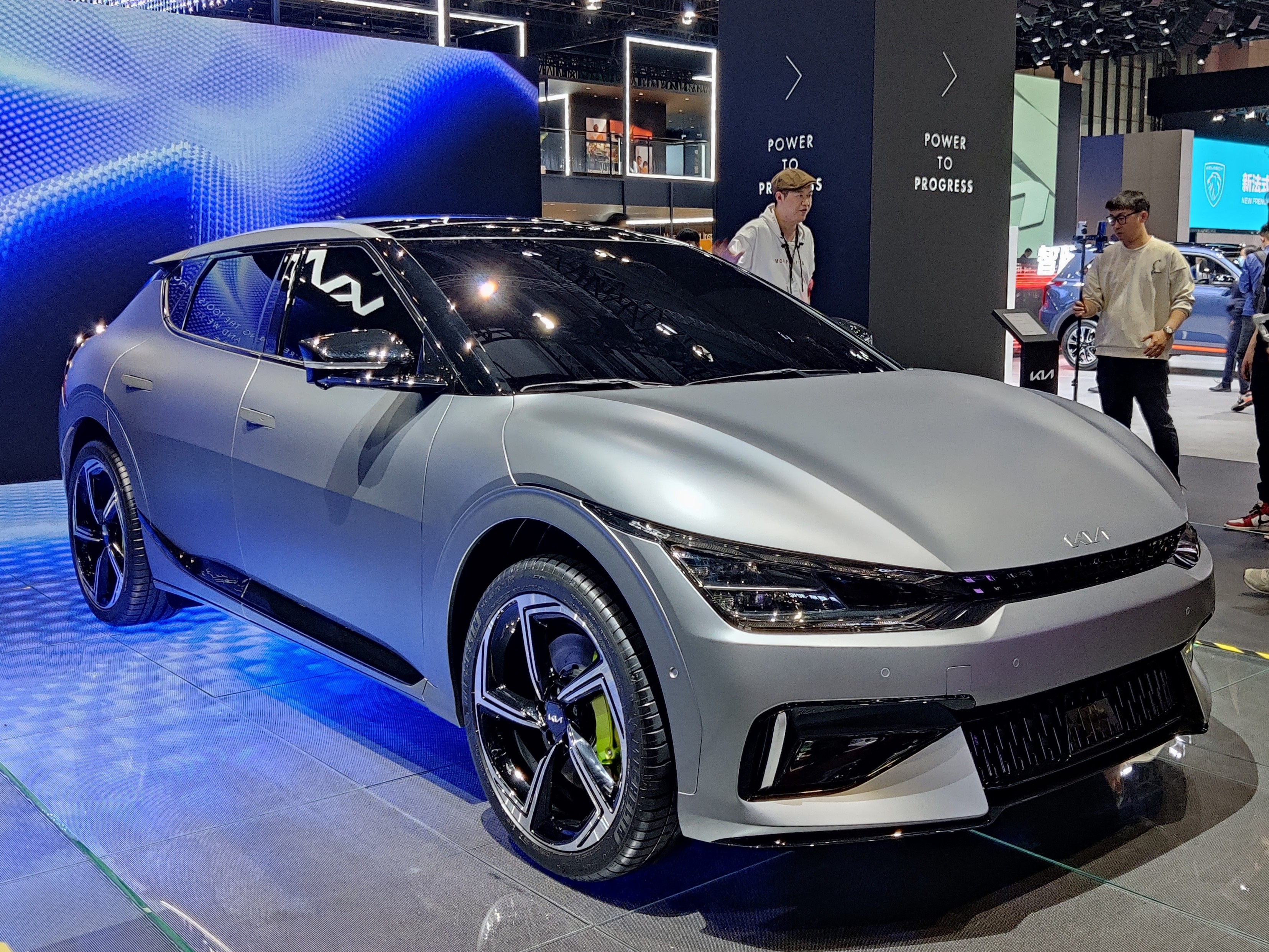
Kia EV6
"[941.0s] And then the EV6 which is a new generation of the from the same company [945.7s] 95 point 95 so very good as well Volvo EX40"
The Kia EV6 is said to do very well in battery health testing after lots of miles. The implication is that its battery holds onto usable capacity for a long time.
The Kia EV6 is described as a “new generation” EV in this segment and is also reported to score very high on battery health (about 95.95%). That suggests strong long-term capacity retention compared to many other EVs.
Volvo EX40
"[945.7s] 95 point 95 so very good as well Volvo EX40 [951.7s] Which is also LFP. It's CETL. I don't know if it's LFP"
The Volvo EX40 is brought up as having strong battery health results. The host also says it uses an LFP battery, which is often associated with long-lasting packs.
The Volvo EX40 is mentioned as another EV doing well on battery health, and the host notes it uses LFP. The segment also ties this to the idea that LFP packs can be especially durable over time.
CETL
"[951.7s] Which is also LFP. It's CETL. I don't know if it's LFP [958.4s] Um, 94 kilowatt hour Polestar also CETL"
CETL is a battery-related label mentioned in the discussion, but the host doesn’t clearly confirm what it stands for. It sounds like it’s tied to which battery type or supplier is used.
CETL is referenced as a battery-related label in the segment, but the host isn’t fully confident about what it means here (“I don't know if it's LFP”). Because the transcript doesn’t define it, listeners may need clarification on whether CETL refers to a cell supplier, chemistry, or pack configuration.

Audi Etron
"the Polestar with the LG Chem battery pack A little three we already discussed. So this is a isn't the top ten, but number eight and the e-tron is doing well, too Volkswagen doesn't show up until 14 with the IV4"
The Audi e-tron is an electric SUV. The podcast mentions it because it’s doing well compared with other electric cars, based on ranking or sales. It’s also part of a broader discussion about EVs and their battery setups.
The Audi e-tron is an electric SUV that’s discussed as performing well in EV rankings. In the podcast context, it’s referenced as being around the top ten (specifically “number eight”), and it’s grouped with battery-pack and EV market comparisons. That’s why it comes up: it’s a mainstream EV option with measurable sales or ranking presence.

Volkswagen Id3
"...st one that were in the top 20 right now like the ID3 the Q4 e-tron the model Y with the LG Chem You ar..."
The Volkswagen ID.3 is an electric hatchback, meaning it’s a small car that runs on batteries. The podcast mentions it because it’s one of the more common electric models people talk about. It’s included in a discussion about EV popularity and battery details.
The Volkswagen ID.3 is an electric hatchback that’s often used as a benchmark for mainstream EV adoption. In the podcast context, it’s grouped with other popular EVs and discussed alongside battery-related topics and market positioning. That makes it relevant because it represents a widely recognized, volume-oriented EV platform.
LG Chem
"With the worst one that were in the top 20 right now like the ID3 the Q4 e-tron the model Y with the LG Chem You are over the next 100,000 kilometers."
LG Chem makes EV battery cells. The idea here is that different battery makers can behave differently over time, so range can fade at different rates.
LG Chem (often written LG Energy Solution today) is a major battery cell manufacturer. The segment links battery degradation differences to the battery supplier, implying that cell chemistry/quality can affect how quickly capacity drops.
EV rebate program
"Moving on from Tesla the California state the state of California has announced its official new EV rebate program We've heard about it for quite a bit now"
An EV rebate program is money the government gives you to help pay for an electric car. In this segment, California’s rules include specific rebate amounts and price limits that decide whether a car qualifies.
An EV rebate program is a government incentive that reduces the purchase price of qualifying electric vehicles. Here, California’s program is described with specific dollar amounts and MSRP thresholds, which directly determine which EVs and buyers qualify.
MSRP
"So it's a 3500 dollars for new EVs with an MSRP of up to 50000 dollars Then if you have headquarters in, California"
MSRP is the official sticker price for a car set by the manufacturer. The rebate rules in this segment depend on whether the MSRP is under (or sometimes over) certain dollar limits.
MSRP (Manufacturer’s Suggested Retail Price) is the sticker price a manufacturer sets for a vehicle. The segment uses MSRP caps (like “up to $50,000”) to determine eligibility for California’s EV rebate.

Rivian R1S
"...e recorders so Lucid also so that's a lot for the R1s The R2 also is because the R2 with the performanc..."
The Rivian R1S is an electric SUV. It’s made for people who want room for passengers and cargo, while still driving on batteries. The podcast brings it up when comparing Rivian’s different models and capabilities.
The Rivian R1S is an all-electric SUV built on Rivian’s R1 platform, designed for families and adventure use. In the podcast context, it’s mentioned alongside other Rivian models and battery/production or performance comparisons. The R1S is a key reference point because it’s one of Rivian’s earlier, higher-profile vehicles.

Tesla Cybertruck
"...e not available anymore. It's basically just a no cybertruck get access to the 135 million It's more it's more..."
The Tesla Cybertruck is an electric pickup truck. It’s known for its unusual, sharp-edged design. The podcast is talking about it in terms of whether it’s available or accessible through a program or offer.
The Tesla Cybertruck is an electric pickup truck designed with a distinctive, angular body and a focus on utility. It comes up in discussions about availability and access, since production and distribution have been a major topic since launch. In the podcast context, it’s mentioned as not being available anymore for a specific access or program.
Lucid
"And he writes a lot about lucid and he wrote that lucid was considering bankruptcy Or a take private deal ... Lucid is not doing well it might go bankrupt in the next few years"
Lucid is a company that makes electric cars. Here, the discussion is about whether Lucid is struggling financially and could end up in bankruptcy or be bought out privately.
Lucid is an electric-vehicle company known for premium EVs and a focus on long-range efficiency. In this segment, the host discusses Lucid’s financial stress, including the possibility of bankruptcy and the idea of a take-private deal.
take private deal
"And he writes a lot about lucid and he wrote that lucid was considering bankruptcy Or a take private deal"
A take-private deal means a company that’s publicly traded gets bought so it no longer trades on the stock market. It can be used to reorganize the company with more flexibility.
A take-private deal is when a public company is bought out so it becomes privately held rather than traded on stock exchanges. This is often pursued to restructure the business away from public-market pressure.
Alvarez & Marsal
"Because I've heard that someone sent me an email about that earlier this week saying hey, they hired alex partners They're looking to go to to bankruptcy ... So i'm like, okay, if if that was just a connection here That's that's obviously not enough and then I reached out to that guy"
Alvarez & Marsal is a company that helps other businesses when they’re in financial trouble. Here it’s mentioned because it does restructuring work, including situations that may involve bankruptcy.
Alvarez & Marsal is a consulting and restructuring firm that helps companies navigate financial distress. In the segment, the host mentions it in the context of bankruptcy-related work and restructuring outside formal bankruptcy proceedings.
Chapter 11 bankruptcy
"Lucid's pr released a memo saying this is false that we have not considered chapter 11 bankruptcy at all [1589.0s] I don't think that the"
Chapter 11 bankruptcy is a legal way for a struggling company to reorganize rather than just disappear. If an EV company faces it, it can affect who keeps funding it and whether suppliers and investors trust the plan.
Chapter 11 bankruptcy is a U.S. legal process where a company reorganizes under court supervision instead of immediately shutting down. For an automaker or EV startup, it can change how creditors, investors, and suppliers handle the company’s future.
raise more money
"But they have options they can raise more money And they still have over a billion dollars in the bank so they can"
Raising more money means getting additional funding so the company can keep working. For an EV maker, that can affect whether they can build cars on time and keep the business running.
Raising more money typically means securing additional funding—often from investors, lenders, or other financing sources—to keep operations going. For EV startups, this can directly impact engineering, manufacturing ramp-up, and how quickly new models reach customers.
range
"For something very competitive with the model y. So the base version doesn't have as much range [1822.4s] So far at 45 kilometers versus 535 34 for for the model y"
For electric cars, “range” is how far you can drive on one full charge. Higher range usually means fewer charging stops on trips.
In EV discussions, “range” means how far the car can drive on a full battery charge (or under a specified test standard). It’s one of the most important specs because it affects whether the car fits daily driving and longer trips.
e-pump
"You get an e-pump you get the six kilowatt [1859.4s] The equal to low the heated and seated front seat panoramic roof and then on the ultra trim"
An e-pump is a pump powered by electricity. In an EV it helps move fluids around so the battery and electronics stay at the right temperature.
An e-pump is an electrically driven pump used in EVs to circulate fluids (commonly coolant or battery thermal-management fluid). Using an electric pump can improve efficiency and gives better control over temperature management.
VLE 2.0
"The the the bigger motor 285 kilowatts of motors you also get the vle 2.0 [1880.9s] With the two touring chips. However, I do not approve just like if it's these just now being approved in europe"
VLE 2.0 sounds like a specific version of Volkswagen’s EV setup. The way it’s mentioned suggests it’s part of the car’s drivetrain/tech package on the higher trim.
VLE 2.0 appears to be a specific vehicle/technology variant or software/hardware package the speaker is referencing for a Volkswagen EV. In this context, it’s tied to the car’s motor output and trim/feature set, so it likely denotes a particular drivetrain or platform configuration.
VLA
"VLA is uh expected to be approved [1893.0s] next year, I think [1895.7s] And as I talked before I tested vla in china and it's"
VLA is a label for an EV-related thing that needs official approval. The host says it’s expected to be approved soon and that they tested it in China.
VLA is referenced as an approval-related designation expected to be approved next year, and the speaker compares it to Tesla after testing it in China. Given the surrounding discussion, it likely refers to a particular EV technology or model variant that has to be certified/approved country-by-country.
52 kilowatt hour nickel manganese and mc pack
"So a little bit fewer a little less range too with a 52 kilowatt hour nickel manganese and mc pack [1955.7s] You get 427 kilometers to an existing five miles of range"
That’s the battery’s size and type. “52 kilowatt-hours” is how much energy it can store, and the nickel-manganese chemistry is the specific recipe inside the battery cells.
This describes the battery pack capacity (52 kWh) and chemistry (nickel manganese, often associated with NMC-style lithium-ion formulations). Battery chemistry affects cost, energy density, and how the pack performs over time, while kWh is the headline measure of how much energy the battery can store.

Volkswagen ID. Cross
"115 horsepower on this you can get a little bit of an upgrade with the id cross life or style which both have 99 kilowatt of power"
Volkswagen’s ID. Cross is an electric SUV/crossover. In this segment they’re talking about different battery sizes, and how the smaller battery makes the car cheaper but reduces range.
Volkswagen ID. Cross is an electric crossover in Volkswagen’s ID lineup, and the episode discusses its battery sizes and power output. The key point here is how the smaller battery option changes both the starting price and the real-world range expectations.
kilowatt hour battery
"So it's a 52 kilowatt hour because it start with a 37 kilowatt hour pack 1987.9s So that's why the price is a little cheaper to you"
For EVs, the battery’s size is measured in kilowatt-hours (kWh). Bigger kWh usually means more energy, which typically means more driving range, but it can also cost more.
A kilowatt-hour (kWh) battery is the way EVs measure how much electrical energy the pack can store. In this segment, Volkswagen’s EVs are discussed with different kWh sizes (like 37 kWh vs 52 kWh), and that directly affects both price and range.

Volkswagen ID. Polo
"Yeah, and that's the next article too because that's the new base model for Volkswagen 2016.6s So they have the id cross launching with the 37 and now the id polo 2020.8s Which are as already launched with the bigger battery pack is now launching with uh, so already launched with the 52 kilowatt battery pack"
Volkswagen’s ID. Polo is an electric car they’re positioning as a cheaper entry model. They mention it starts with a smaller battery, which helps keep the price down, and they also talk about the car’s software and screen.
Volkswagen ID. Polo is described as a new base-model EV in the ID family, with a starting battery size of 37 kWh. The segment focuses on how Volkswagen is positioning it as a lower-cost entry point while still offering software and infotainment features.
WLTP
"With still 207 miles of range 237 kilometers, but that's wltp 2049.2s If it was api probably would be closer to 150 kilometers of range so"
WLTP is a standardized testing method used in Europe to estimate how far an EV can go on a charge. It’s a lab-style number, so real-world range can be different.
WLTP (Worldwide Harmonised Light Vehicle Test Procedure) is the standardized test used in Europe to estimate EV range. The episode notes that WLTP numbers can look higher than what you might expect in other real-world or alternative testing methods.
api
"2049.2s If it was api probably would be closer to 150 kilometers of range so 2054.2s While the price is interesting"
They’re comparing two different ways of estimating EV range. The point is that the test method matters, and one method can show a smaller range than another.
In this context, “API” is being used as an alternative range-testing reference that would produce a lower range figure than WLTP. The speaker implies that different test standards can make the same EV look like it has very different range.
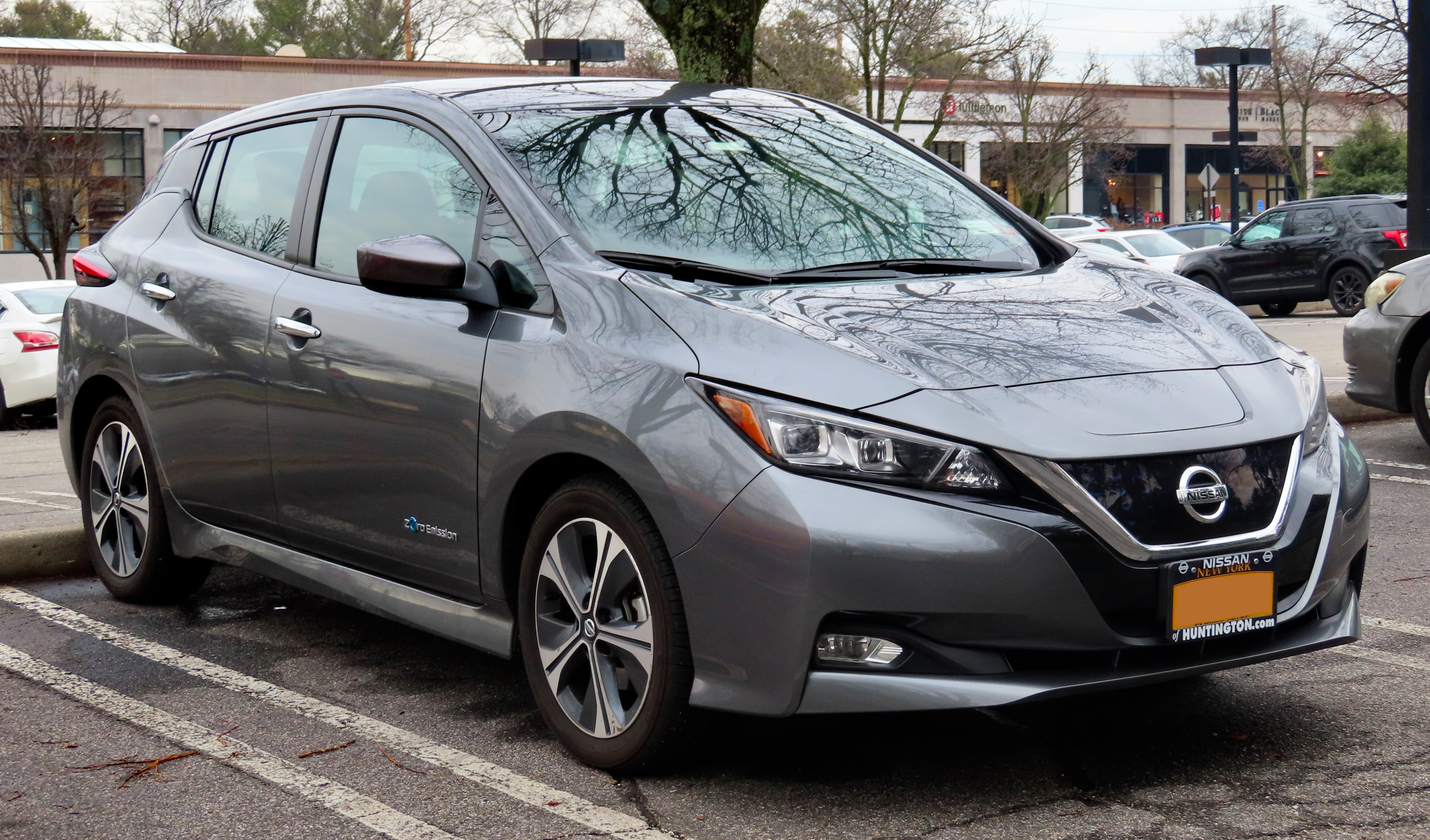
Nissan Leaf
"It's like the Nissan leaf in 2016 or something like it's just it feels 2078.8s um going backward a little bit, but 2082.6s The Nissan leaf in 2016 was probably around what 30 000 to 32 000 of that"
The Nissan Leaf is one of the best-known early electric cars. Here it’s used as a historical example to compare EV prices and how much range you got back in 2016.
The Nissan Leaf is an early mainstream mass-market EV, and the speaker uses the 2016 Leaf as a reference point for how EV pricing and range expectations have shifted over time. The comparison is meant to illustrate that the segment can feel like it’s “going backward” when range and pricing don’t move together.
DC fast charging
"DC fast charging limited to 90 kilowatts with the smarter battery pack But you get 10 to 80 percent in 22 minutes."
DC fast charging is the quickest way to charge many EVs. It uses special chargers that push power into the battery faster than regular charging, so you can add range in less time.
DC fast charging is a method of charging an EV using direct current, which lets the battery accept high power for quicker top-ups. It’s typically measured in kilowatts (kW), and the higher the kW, the faster the charge—up to the limits of the car and charger.
battery pack
"DC fast charging limited to 90 kilowatts with the smarter battery pack But you get 10 to 80 percent in 22 minutes."
The battery pack is the big battery inside an EV that stores the electricity. How it’s built can affect how fast you can charge and how much range you get.
A battery pack is the EV’s main high-voltage energy storage unit, made up of many individual cells managed as a system. Its design affects charging speed, usable range, and how the car manages heat and power delivery.
10 to 80 percent
"But you get 10 to 80 percent in 22 minutes. So you can you can still you know do some Some distance on this"
This is a typical EV charging test: how fast the car charges from about 10% battery to about 80%. It’s used because charging speed changes as the battery fills up.
“10 to 80 percent” refers to a common EV charging benchmark: how long it takes to charge from a low state of charge to a mid-high level. Charging is usually fastest in the middle of the battery’s range, so this metric is often used to compare real-world fast-charging performance.
compliance car
"No, it was the gulf a compliance car Even though it had less than 100 miles, but"
A “compliance car” is a car made mainly to satisfy government rules. It may not be the most ideal car for buyers, but it helps the company meet regulations.
A “compliance car” is a vehicle built or configured primarily to meet regulatory requirements rather than to be a fully optimized product. In EV discussions, it often refers to limited-range or limited-production models that exist mainly to satisfy emissions or credit rules.
spy shots
"So you do get an idea of it. It's Some are calling it the wagon To me it looks more like a fastback suv"
Spy shots are leaked photos of a prototype car while it’s being tested. Camouflage is used to hide details, but you can still get a sense of the design.
“Spy shots” are unauthorized photos taken during testing or development, often showing a prototype with camouflage. They’re used to give enthusiasts and analysts an early look at styling and design direction before official reveals.
fastback SUV
"Some are calling it the wagon To me it looks more like a fastback suv Very aggressive"
A fastback shape means the roof flows smoothly toward the back of the car. Calling it a fastback SUV usually means it looks more sporty than a typical boxy SUV.
A “fastback” refers to a body shape where the roofline slopes smoothly down toward the rear, rather than ending abruptly. When paired with “SUV,” it usually describes a crossover with a sportier, more coupe-like silhouette.

BMW i3
"The i3 is coming with the wagon. It's coming with a Grand tour version too. So I I don't think we're going to get it in north america"
The BMW i3 is BMW’s older compact electric car. Here they’re talking about a new i3-style wagon/Grand Tour version and whether BMW will sell it in North America.
The BMW i3 is BMW’s compact electric car that’s known for its lightweight design and early EV-era engineering. In this segment, the hosts discuss an “electric wagon”/Grand Tour version of the i3 and whether BMW will bring it to North America, which matters because it changes the i3’s body style and practicality.
mileage
"but uh, it's the get a lot of mileage out of it You know, it's gonna be a you you probably with that with a wagon from factor on the i3 you're gonna get"
Here “mileage” doesn’t mean gas mileage—it means how far the EV can drive on one charge (its range).
In EV context, “mileage” is being used to mean how far the car can go on a charge (range). The hosts argue that the i3 wagon’s efficiency should translate into very high miles-per-charge.

Prologue
"the uh, they didn't even Rumors they've denied rumors about it. We all know it was coming. They've cancelled basically everything in the north american market with Artura sx"
The Prologue is GM’s electric SUV. They’re saying it’s been canceled/pulled from North America, and they describe it as being similar to an Equinox setup with Apple CarPlay.
The Prologue is a General Motors electric SUV that’s positioned as a mainstream EV offering. The hosts say GM has effectively ended or pulled it from the North American market, and they add a comparison to an Equinox-based setup with Apple CarPlay, which frames what kind of EV it is.

McLaren Artura
"...ally everything in the north american market with Artura sx zero series SUVs in sedan"
The McLaren Artura is a high-performance sports car. It uses a hybrid system, so it combines an engine with electric power. The podcast mentions it because of where it’s sold and how it relates to other models in the lineup.
The McLaren Artura is a high-performance sports car that uses a hybrid powertrain, combining electric assistance with a traditional engine. The podcast mentions it in the context of where it’s sold in North America and how it fits within McLaren’s lineup. That makes it relevant because availability and market positioning often come up when discussing performance cars.

Honda Prologue
"...sedan Everything has been pulled off now. Uh, the prologue which wasn't even their car. I was Like said said..."
The Honda Prologue is an electric SUV made by Honda. The podcast mentions it in a way that suggests it may not be entirely unique to Honda in how it’s built. The key point is that it’s part of Honda’s EV lineup, but the discussion is about its origins.
The Honda Prologue is an electric SUV introduced to expand Honda’s EV lineup. In the podcast context, it’s mentioned as “wasn’t even their car,” implying the discussion is about how the vehicle relates to other production sources or platforms. That’s why it comes up—buyers may care about who actually builds it and what that means for design and parts.

Chevrolet Equinox
"... their car. I was Like said said this basically a equinox cv with uh with apple carplay Which was nice. It ..."
The Chevrolet Equinox is a compact SUV meant for regular daily use. The podcast mentions it because it has features like Apple CarPlay, which lets you use certain phone apps through the car’s screen. It’s being used as a comparison point for what people might expect in a similar vehicle.
The Chevrolet Equinox is a compact crossover SUV aimed at mainstream buyers who want comfort and everyday practicality. In the podcast, it’s referenced as being similar to another vehicle concept (“Equinox CV”) and specifically mentions Apple CarPlay support. That makes it relevant to discussions about infotainment and how EVs or tech features compare to familiar gas models.
Apple CarPlay
"Like said said this basically a equinox cv with uh with apple carplay"
Apple CarPlay lets you connect your iPhone to the car and use things like maps and music on the car’s screen. It’s a common feature that makes the infotainment easier to use.
Apple CarPlay is a smartphone integration system that mirrors a compatible iPhone’s apps and navigation onto the car’s infotainment screen. Mentioning it here helps listeners understand the Prologue’s in-car tech experience and how it’s meant to feel familiar to mainstream buyers.
low speed vehicle
"They're calling it the life utility vehicle luv [2354.0s] This is a low speed vehicle [2355.9s] It's it's not let's not reinvent the category here."
A low speed vehicle is a small electric car that’s limited in how fast it can go. It’s meant for short trips in neighborhoods and is usually allowed on some local roads, but not like a normal highway car.
A low speed vehicle (LSV) is a legally defined class of small electric vehicles that are limited in top speed (typically around 25 mph / 40 km/h in the U.S.). Because of that speed limit, they’re often allowed on certain local roads but not treated like full-speed cars.
112 volt
"They're talking about 100 miles you can charge on you know, regular 112 volt or 240 volt [2402.9s] With a max connector"
Charging on 112 volts means using a normal household-style outlet. It usually charges more slowly than a dedicated EV charger, but it can be easier to do at home.
Charging on 112 volts refers to using a standard household-style AC outlet level (lower power than dedicated EV charging). Lower-voltage charging typically takes longer, but it’s convenient for home charging.
240 volt
"They're talking about 100 miles you can charge on you know, regular 112 volt or 240 volt [2402.9s] With a max connector"
Charging on 240 volts uses a higher-power home electrical setup than a regular outlet. That usually means faster charging, especially if you install a dedicated charger.
Charging on 240 volts uses a higher-power AC input than 112 volts, which generally allows faster charging. It’s commonly associated with home charging setups that use a dedicated circuit.
max connector
"They're talking about 100 miles you can charge on you know, regular 112 volt or 240 volt [2402.9s] With a max connector [2404.2s] No vc flash charging obviously with this kind of size of battery pack, but this is"
“Max connector” means the best (highest-capability) charging plug the vehicle can use. It helps you understand what kind of charging speed you can realistically get with the right cable/charger.
A “max connector” here refers to the highest charging plug/connector capability the vehicle supports for AC charging. It’s a way of saying the car can accept charging at the top end of its supported home/AC setup, even if it can’t do high-power DC fast charging.
flash charging
"With a max connector [2404.2s] No vc flash charging obviously with this kind of size of battery pack, but this is"
“VC flash charging” appears to refer to fast-charging capability (likely DC fast charging) that the vehicle does not support. With a small LFP pack like 15 kWh, the vehicle is positioned for slower home charging rather than rapid public fast-charge sessions.
LSV roads
"In uh, north america a lot of communities now are allowing more and more of these to be driven around and they are [2425.7s] Based on federal lsv roads allowed on roads with 35 miles kilometers at 35 miles per hour or less"
LSV roads are special rules for “low-speed vehicles.” They’re allowed only on certain roads where speeds are low enough to be safer for these smaller, slower cars.
LSV roads refers to low-speed vehicle–specific road rules that allow these cars to operate only under limited conditions. In North America, they’re typically restricted by speed limits and local permitting so they can be used safely in lower-speed areas.
chip go
"The differentiating factor on this other than the design itself and a few of the feature is what they call chip go [2447.0s] And it's for now. It's actually remote driving"
“Chip go” sounds like the name of a technology feature for this low-speed vehicle. In this segment, it’s mainly associated with being able to control the car remotely.
“Chip go” is presented as the differentiating feature name tied to the vehicle’s remote-driving capability. The transcript doesn’t clearly identify the company or the exact technology, but it’s being treated like a branded system for control/autonomy.
remote driving
"And it's for now. It's actually remote driving [2450.5s] So when there's no one in the car you can send the car somewhere else you can [2455.0s] the car can [2456.9s] Someone can take control of the equal and drive it somewhere else"
Remote driving means someone can control the car from far away, like taking over the steering and driving. It’s often used as a temporary step before fully autonomous driving.
Remote driving is a system where a person can take control of a vehicle from outside the car. The speaker describes it as a near-term capability that can move the vehicle when no one is inside, as a stepping stone toward full autonomy.
full autonomy
"But the goal long term is to have actual full autonomy and [2465.7s] Not rely on a remote operator"
Full autonomy means the car can handle driving on its own, without a person controlling it from elsewhere. The idea is to move beyond remote control toward self-driving.
Full autonomy means the vehicle can drive itself without relying on a remote operator to take over. The discussion contrasts this goal with remote driving as an interim approach.
lithium-ion batteries
"We don't think it's necessarily a replacement from lithium ion batteries [2534.8s] but"
Lithium-ion batteries are the common battery type used in most EVs. The discussion here is comparing sodium-ion to lithium-ion and how sodium-ion could change demand for lithium.
Lithium-ion batteries are the dominant battery chemistry used in most EVs and many consumer electronics. The episode contrasts sodium-ion with lithium-ion, arguing sodium-ion may complement or reduce demand for lithium-ion in certain stationary storage roles.
stationary storage
"It might be for storage or for stationary storage because [2540.2s] The the big advantage is the cycle time"
Stationary storage means batteries that stay in one place, like at a power station or on the grid. They’re used to hold electricity for later, not to power a moving vehicle.
Stationary storage refers to batteries installed in a fixed location—typically to store electricity from the grid or renewable generation. It’s different from automotive batteries because the priority is long-duration, repeatable cycling rather than weight and packaging.
cycle time
"The the big advantage is the cycle time like the life cycle of this is pretty huge [2545.3s] so these are rated at 15 000 cycles"
Cycle time is basically how many times the battery can be charged and discharged before it starts to wear out. A longer cycle life means it can last much longer in real use.
Cycle time (more commonly called cycle life) is how many charge/discharge cycles a battery can complete before its performance drops significantly. Longer cycle life matters for stationary storage because the system can run for many years with fewer replacements.
10 000 cycles
"so these are rated at 15 000 cycles and [2550.2s] Warranty for 25 to 30 years of service life"
“15,000 cycles” is a durability number—how many times the battery can be charged and discharged before it gets too weak. Higher numbers generally mean the battery lasts longer.
“15,000 cycles” is a battery durability rating indicating the expected number of full charge/discharge cycles before the battery degrades beyond an acceptable level. It’s a key metric when comparing battery chemistries for long-duration energy storage.
CTL
"And what what's the news this week is that ctl? [2562.3s] So sodium a quite new ctl is leading the front there"
CTL is a company working on sodium-ion battery technology. The episode credits them with prototypes and early deals tied to energy storage.
CTL is a battery company mentioned as leading the sodium-ion effort, including prototypes for electric vehicles using sodium-ion batteries. In this context, the host is highlighting CTL’s role in moving sodium-ion from concept toward deployed energy storage.
sodium ion batteries
"they have a prototype electric vehicles that have sodium ion batteries, but [2572.0s] The the real value is it's good to be in the energy storage"
These batteries work like lithium-ion batteries, but they use sodium instead of lithium. They’re especially interesting for storing electricity for long periods, like for the power grid.
Sodium-ion batteries use sodium ions instead of lithium ions to move charge between electrodes. They’re often discussed as a potential alternative for grid-scale energy storage because sodium is generally more abundant and the cells can be designed for long cycle life.
Halfen
"you just signed the first big deal for it with [2578.8s] Halfen it's a Dutch energy company a big five gigawatt hour of tenor sodium"
Halfen is a Dutch energy company mentioned here as the customer for a large sodium-ion storage project. That matters because it suggests the technology is moving into real installations.
Halfen is described as a Dutch energy company that signed a major deal for sodium-ion energy storage. The mention is relevant because it signals real-world deployment beyond prototypes.
energy storage system
"a big five gigawatt hour of tenor sodium [2584.5s] Energy storage system that are going to be deployed in Europe"
An energy storage system is the whole package that stores electricity and then releases it when needed. It’s commonly used to smooth out the grid when renewable power fluctuates.
An energy storage system is the full setup used to store electrical energy and deliver it later—typically including batteries plus power electronics and controls. In grid applications, these systems help balance supply and demand, especially with intermittent renewables.
LFT batteries
"And that's great. That's more batteries for cars [2608.8s] That's that that's the great point that people are not thinking about a lot is like it's going to people are like it's going to kill lithium [2615.8s] Not necessarily it might make lithium a little bit cheaper"
LFT batteries are another kind of battery chemistry mentioned as currently popular for energy storage. The host’s point is that sodium-ion might compete with them for grid storage use.
LFT batteries is mentioned as another battery type competing in energy storage. In many discussions, “LFT” is used as shorthand for lithium iron phosphate–based chemistries (though the exact expansion can vary by speaker/source), and the key point here is that sodium-ion could take some share in stationary storage.
tariffs
"they are they still have tariffs on those that's ... 18 to 25 percent tariffs depending on the automaker"
Tariffs are extra taxes on imported products. If an electric car is imported into Europe, tariffs can make it cost more, which changes how competitive it is versus local cars.
Tariffs are taxes governments add to imported goods. In this context, the speaker says EVs shipped into Europe face tariffs that can raise the final price, affecting how “affordable” Chinese EVs can be.

5 Renault 5
"...igher profits on compact electric models like the renault 5 And then began how our other oems doing with bev ..."
The 5 E-Tech Electric is a small electric car. The podcast mentions it because it’s an example of a compact EV that’s important for profits and strategy. It’s part of a discussion about how companies are planning their electric models.
The 5 E-Tech Electric is a compact electric car focused on higher profitability in the small EV segment. In the podcast context, it’s used as an example of how other automakers are approaching battery-electric vehicles (BEVs) and where they expect financial success. That makes it relevant because it ties a specific model to broader EV strategy.
BEV margins
"renault ceo said that they are making higher profits on compact electric models like the renault 5 ... began how our other oems doing with bev margins"
BEV margins means how much profit automakers make on fully electric cars. Higher margins suggest the company is doing better financially on EVs, not just selling them.
BEV margins are the profit margins (profit relative to revenue) specifically for battery-electric vehicles. The speaker is pointing out that Renault is reportedly making higher profits on compact EVs, and then asks how other automakers are doing on BEV profitability.

chevy bolt
"You know the vehicles like the chevy bolt were kind of pulled out because [2751.3s] They were hard to make a profit on so that'll be interesting to find out"
The Chevrolet Bolt is an electric car that was aimed at regular buyers, not luxury. The point here is that it may have been difficult for the company to make money on it.
The Chevrolet Bolt is an EV model known for being one of the more affordable, mass-market options in the U.S. The host mentions it as an example of an EV that was “pulled out” because it was hard for the company to make a profit on.
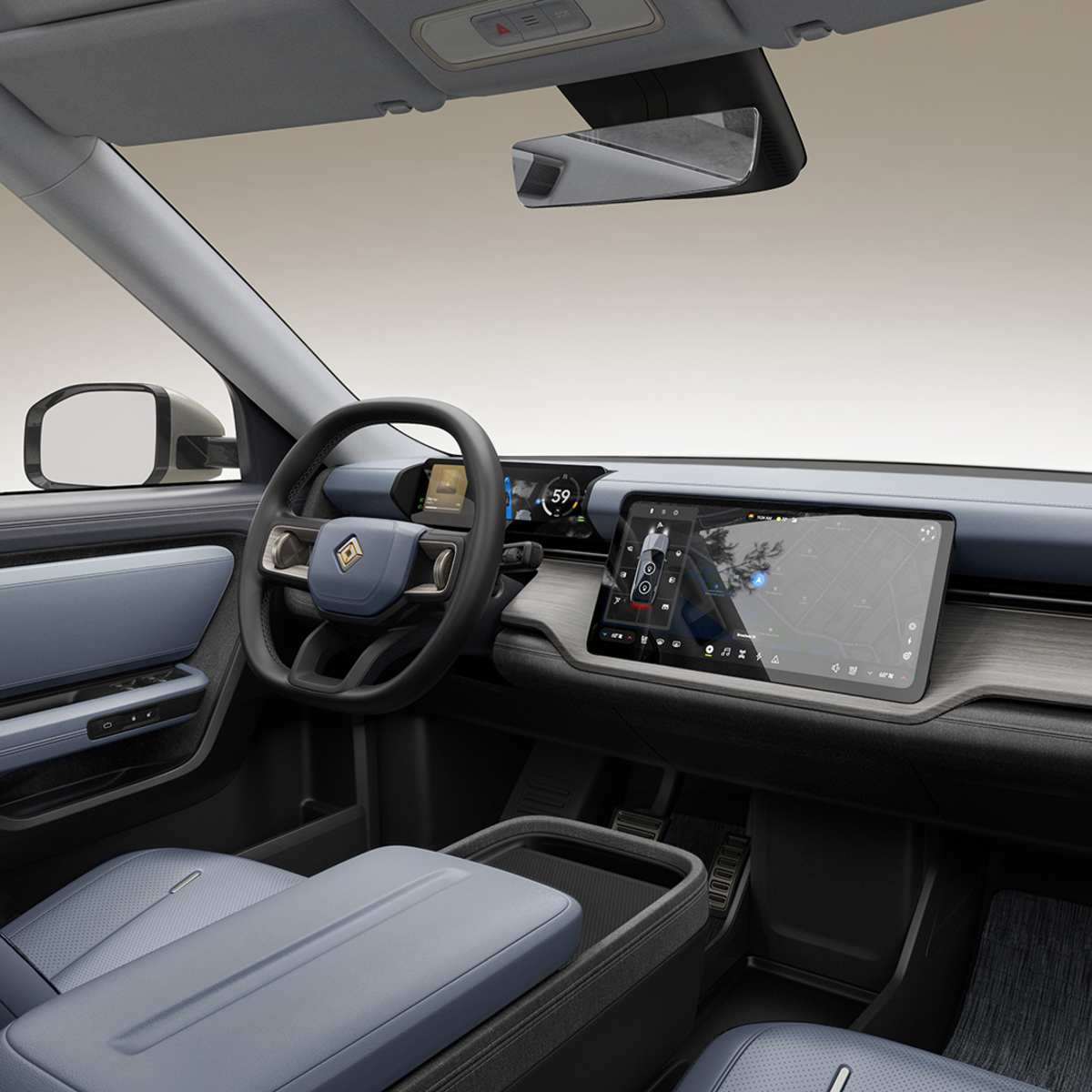
Rivian R2
"All right with the r2 coming could you explain rivian's revenue streams specifically? [2760.2s] What percentage of revenue comes from their fleet vehicles compared to their consumer vehicles plus their software programs? ... [2801.0s] But I do hope that they break out the r2s [2803.2s] versus the r1s"
The Rivian R2 is the next Rivian electric vehicle they’re planning to sell in higher volume. The host is basically saying Rivian needs to show how well the R2 is doing, not just mix it together with other models.
Rivian R2 is the next-generation, more affordable model in Rivian’s lineup, positioned to broaden the brand beyond its current premium focus. The discussion centers on whether Rivian can show healthy progress with R2 deliveries and avoid “bundling” results that hide how the program is performing.
fleet vehicles
"What percentage of revenue comes from their fleet vehicles compared to their consumer vehicles plus their software programs? [2765.7s] How does rivian break that out?"
“Fleet vehicles” are electric cars used by businesses, usually in larger numbers. The host wants to know how much of Rivian’s money comes from business buyers versus regular customers.
“Fleet vehicles” are EVs sold or operated for business customers—like companies that buy cars in bulk for employees, deliveries, or service operations. The host is asking how much of Rivian’s revenue comes from fleet sales versus consumer sales, which matters because fleet demand and margins can behave differently.
software program
"They do break out their software program [2777.4s] I mean we're gonna get their earnings in in in a week ... [2787.2s] Software programs revenue are somewhat new and I don't think they are as stable"
Here, “software program” means money Rivian makes from digital features and services, not from selling the car. The host is saying it’s newer, so it can change a lot from quarter to quarter.
In this context, “software program” refers to revenue Rivian earns from software offerings (often tied to features, subscriptions, or services) rather than just selling the vehicle itself. The host notes that this revenue line is newer and may be less stable quarter to quarter.

Rivian R1
"But I do hope that they break out the r2s [2801.0s] versus the r1s [2803.2s] something that"
Rivian’s R1 is their current lineup of electric vehicles. The host wants Rivian to separate R1 results from the new R2 results so it’s clear how the newer car is doing.
Rivian R1 refers to Rivian’s current flagship electric vehicles (the R1T pickup and R1S SUV). The host contrasts R1 with the upcoming R2 to argue that Rivian should report performance separately so investors can see whether the newer program is progressing.
software updates
"2019 model 3 hardware 3. Yeah, do any of those like [2836.8s] Websites that kind of track [2839.2s] software updates do they"
“Software updates” are the digital updates that can change how a car works—like adding features or fixing issues. The host is asking if there are websites that can tell you what updates are coming or rolling out.
“Software updates” are over-the-air (OTA) or otherwise delivered changes that add features, fix bugs, or adjust vehicle behavior in a modern connected EV. The host references websites that track these updates, suggesting update availability can depend on the car’s hardware and version.
Rivian R3
"Kwame Says i'm confused about the difference between r2 and r3. They seem so similar... I think the r3 the hatchback and one's a kind of a suv... Yeah, maybe it's the r3 and the r3x... I think we are we even seen a regular r3 Or just the r3x... I think the r3 is just going to be a little bit more regular Hatchback."
Rivian R3 is a smaller electric Rivian than their bigger trucks/SUVs. Here, the host is saying it’s the more normal, everyday hatchback version, meant for more mainstream buyers.
Rivian R3 is a smaller Rivian electric vehicle concept compared with the company’s larger models. In this discussion, the host contrasts it with the R3X, implying the R3 is the more “regular” hatchback aimed at a broader audience.
Rivian R3X
"Yeah, maybe it's the r3 and the r3x... I think the r3x is you know, I'm all a bit more like performance off-road oriented... And I think the r3 is just going to be a little bit more regular Hatchback."
Rivian R3X is positioned as a more performance- and off-road-oriented variant of the Rivian R3. The host describes it as “performance off-road oriented,” suggesting it’s tuned for tougher driving and a more adventurous buyer than the standard R3.

Ford Edge
"...t more like performance off-road oriented Kind of edge back support the edge back And I think the r3 is ..."
The Ford Edge is a crossover SUV, meaning it’s built for everyday driving with a higher seating position. The podcast mentions it because it’s meant to feel more capable and comfortable, including how the seats support you. It’s used as a reference for what people might want in a similar vehicle.
The Ford Edge is a midsize crossover SUV known for a comfortable ride and family-friendly practicality. In the podcast, it’s referenced as having an “off-road oriented” and performance-leaning character, including mention of “back support,” which suggests seating comfort or driving feel is part of the discussion. It’s brought up as a comparison point for how different vehicles feel and fit real-world use.
form factor
"Take everything we learned for from our most popular vehicle, which is the r1... That's you know, Nailed the r1 into a smaller form factor make it even better make it cheaper"
“Form factor” just means the car’s overall design and size category—like whether it’s a smaller hatchback versus a bigger vehicle. The host is saying Rivian will reshape what they learned into a different-sized vehicle.
“Form factor” here means the vehicle’s overall size and shape category—how the car is packaged and what body style it resembles. The host uses it to explain how Rivian plans to take lessons from one model and apply them to a smaller, cheaper design.
internationally into europe
"I hope for rivian with the r3... And then that smaller vehicle is going to be the vehicle that doesn't take us Internationally into europe and other markets where no bigger vehicle or not as popular as in north america."
The host is talking about Rivian selling cars outside North America, especially in Europe. They’re saying a smaller vehicle could fit better with what European buyers want.
This refers to Rivian’s expansion plan—selling the smaller vehicle in Europe and other markets. The host argues that a smaller model is better suited for international demand where larger vehicles may be less popular.
Hardware 3
"Dean says I added back fsd with the hope of using 14 light on my hardware 3 tesla, but it's not available yet So we're all on the same boat here, which is disappointing. I don't need unsupervised fsd"
“Hardware 3” is the computer inside a Tesla that runs the self-driving software. Different Tesla cars have different computer generations, and that can affect which software updates and features you can use.
“Hardware 3” refers to Tesla’s third-generation onboard computer used to run driver-assistance and autonomy software. The episode implies that whether a new FSD version (and its features) is available can depend on which hardware generation is installed in the car.
autopilot
"So we're all on the same boat here, which is disappointing. I don't need unsupervised fsd But fsd needs to be better than autopilot on hardware 3"
Autopilot is Tesla’s driver-assist feature that helps with things like steering and keeping speed. It doesn’t fully drive the car by itself in most situations, and the discussion is basically about whether the newer FSD software is actually better than Autopilot on the same car hardware.
Autopilot is Tesla’s driver-assistance system that can handle tasks like steering and maintaining speed under certain conditions. The episode contrasts FSD versus Autopilot performance on Tesla’s “hardware 3,” implying software capability depends heavily on the car’s compute platform.
v14 light
"Yeah, I mean from what I've seen right now the v14 light is is very good. Like it's not too far behind v14 It's it's It's within Acceptable distance of it"
“v14 light” sounds like a smaller or simplified version of Tesla’s newer software (version 14). The host is saying it’s very good and not too far behind the full version, at least based on what they’ve seen.
“v14 light” appears to refer to a lighter or scaled-down release of Tesla’s FSD software version 14. The speaker compares its capability to the full v14, suggesting the “light” build is close enough to be “acceptable” for driving tasks.
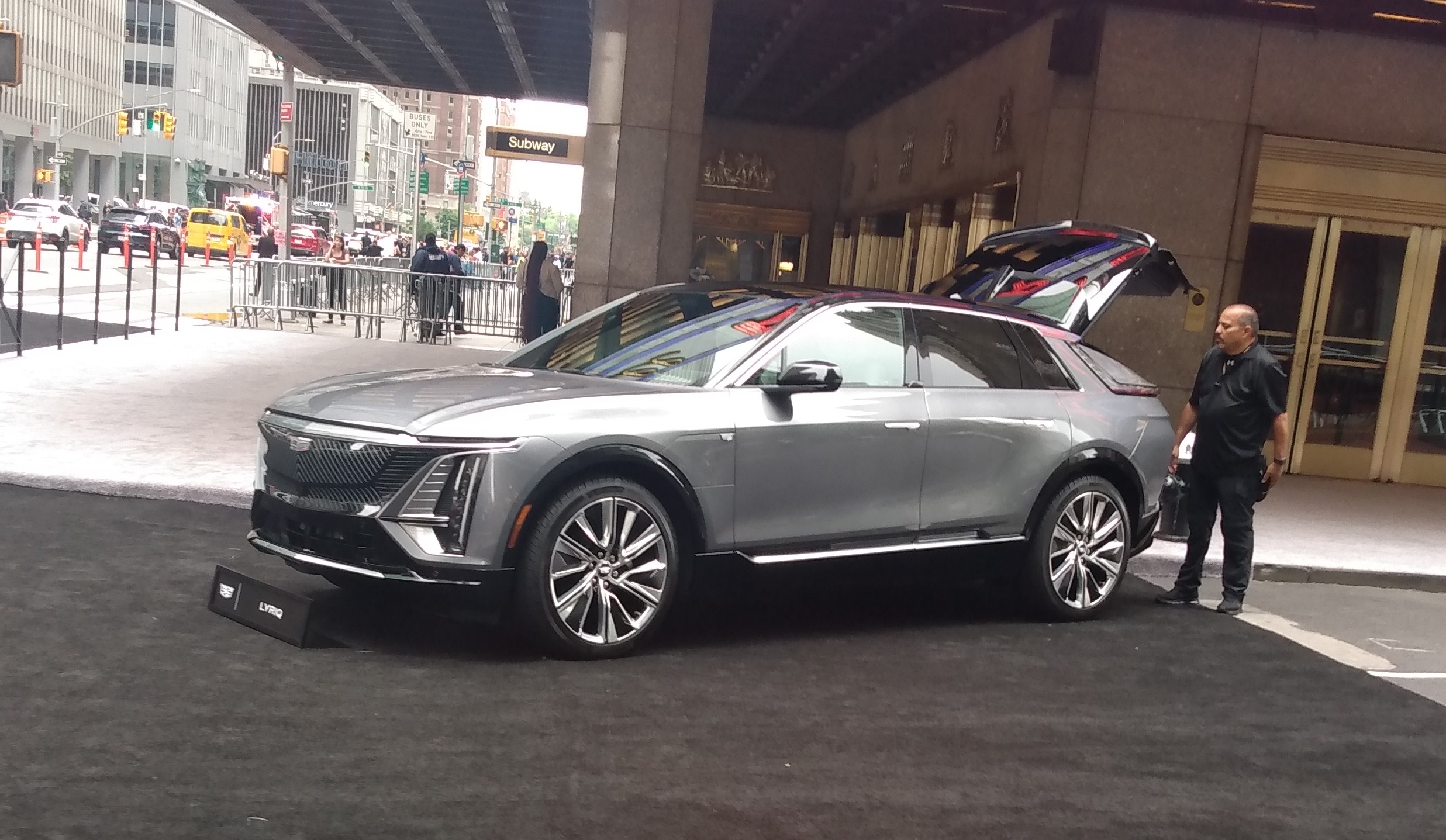
Cadillac Lyric
"... he was just in my house yesterday and he had the lyric So he's doing a review of the lyric before that h..."
The Cadillac Lyriq is an electric SUV. The podcast mentions it because someone is doing a review after spending time with it. That usually means they’re looking at how it feels and works in everyday use.
The Cadillac Lyriq is an electric SUV positioned as a premium offering, and it’s often discussed for its tech and comfort features. In the podcast context, it’s mentioned because someone is reviewing the Lyriq after having it at their home. That makes it relevant as a real-world ownership and evaluation topic rather than just specs.

Tesla Model Y Standard Range
"So, uh, well, you're gonna see a bolt review soon. You're gonna see a model y standard range review soon with the the scoring system"
The Tesla Model Y is an electric SUV. “Standard Range” is the version with less battery/range than the higher trims, usually aimed at being more affordable. The host is saying they’ll review that specific trim soon.
The Tesla Model Y is an electric crossover built on Tesla’s compact SUV platform, and the “Standard Range” trim targets a lower price and shorter range versus higher trims. The episode mentions a planned review of the Model Y Standard Range using the new scoring system.
MCS
"Uh, so if unless you want to go with the performance version that's most likely has an mc [3117.2s] Uh [3118.7s] Then then you should be good."
“MC” sounds like a shorthand for a specific version or configuration of the car. In this segment it’s tied to whether the car has a different battery setup than the base model.
“MC” is mentioned as part of a battery/variant discussion around the R2, implying a specific configuration that likely changes the battery chemistry. Without the transcript spelling it out, it’s unclear exactly what “MC” stands for here.
buffer
"All right, Dan overstayed do any of the cars with impressive battery health use buffers on their battery stats If they're just dipping into buffer to boost health statistics, that would be sneaky dishonest in my home opinion"
A “buffer” is extra battery capacity the car doesn’t fully use. It’s like a safety margin that helps the battery last longer, even if it means you can’t access the full rated range.
In EV battery talk, a “buffer” is reserved capacity that the car’s battery management system avoids using. That helps protect battery health by keeping the cells away from the most stressful high/low states of charge.
wheelbase
"Is carry a lot here. It's like six inches more of a wheel base"
Wheelbase is how far apart the front and rear wheels are. Changing it can affect how roomy the car feels and how it rides and handles.
Wheelbase is the distance between a car’s front and rear axles. A longer wheelbase can change ride comfort, interior space, and stability characteristics, which is why it’s mentioned when discussing a “new car for sale.”
unsupervised autonomy at scale
"Making hardware changes hardware product Anticipating that unsupervised autonomy at scale is going to be solved and then it's in it's not solved and then you have to pivot"
This phrase means a car that drives itself without a person watching closely or ready to take over. “At scale” means it’s supposed to work for lots of cars and lots of trips, not just a few test runs.
Unsupervised autonomy at scale means self-driving that can operate without a human monitoring or intervening, across large numbers of trips and vehicles. The key idea is that Tesla’s product hardware decisions are being made based on a timeline where this level of autonomy is expected to work broadly.
Request an Explanation
Heard something you'd like explained? We'll add it to this episode.
Sign in to request explanations for terms you heard.
Want to learn more?
Browse our glossary for plain-English explanations of automotive terms, jargon, and concepts.
Help improve this episode
See something that's not quite right? Our annotations are AI-generated and can sometimes miss the mark. Click the flag icon on any annotation to suggest a correction.