We drive Aptera's solar car, Tesla Cybercab specs revealed, Lucid Cosmos design leaks, and more
About this episode
Jamie Dowell joins Electrek after driving Aptera’s solar car and visiting the company, and the hosts dig into what’s still rough—especially NVH, cooling noise, and mirror-screen limitations. They also break down how Aptera’s solar output is measured (e.g., 450 watts) and how zoned panels help with shading, plus the “X port” charging efficiency. Tesla Cybercab specs and autonomy rollout get scrutinized, while Lucid Cosmos design leaks and software timing enter the mix.
In the Electrek Podcast, we discuss the most popular news in the world of sustainable transport and energy. In this week’s episode, we discuss Jamie's first drive in Aptera's solar car, Tesla Cybercab specs revealed, Lucid Cosmos design leak, and more.

Aptera
"...u is one of the lucky few to have ever driven the Aptera Solar Car. And he also visited the company earlie..."
Aptera is an electric vehicle company. The podcast mentions someone who drove the Aptera Solar Car and visited the company, which connects to Aptera’s focus on using less energy. The solar idea is meant to help extend how far the car can go.
Aptera is an EV company known for designing extremely efficient vehicles, including the Solar Car concept. The podcast mentions that someone has driven the Aptera Solar Car and visited the company, which highlights the brand’s focus on efficiency and alternative energy ideas. It’s discussed because Aptera’s approach centers on reducing energy use as much as possible.
NVH
"it looked more complete than I expected it to look, but still maybe not as much progress as I [179.8s] would have expected since the factory video that they put out six months ago. But in terms of the [186.6s] car, which is the real thing that we should talk about first is that it's all right. I think still [194.5s] needs quite a bit of work, especially on NVH, noise, vibrations, and harshness."
NVH means noise, vibrations, and harshness. It’s basically how loud and bumpy the car feels inside, and whether the ride feels smooth or unpleasant.
NVH stands for noise, vibrations, and harshness—how much sound and vibration the car transmits to the cabin, and how “sharp” or uncomfortable it feels. It’s a key metric for EVs and other performance cars because even if powertrain output is smooth, chassis and suspension can still create cabin harshness.

Tesla Roadster
"And I drove down there in a Tesla Roadster, which is a very, very rough car. [214.1s] Yeah. But this was maybe a little rougher."
The Tesla Roadster is an early Tesla electric sports car. Here, the host mentions it because it rides and feels rough, so you can compare how rough (or not) the other car feels.
The Tesla Roadster is an early Tesla electric sports car known for being a high-performance EV with a very direct, “raw” feel. In this segment, it’s used as a reference point because the host says it’s a very rough car, helping frame how the other EV compares in ride quality and noise.
carbon tub
"even though it's a carbon tub, one really interesting thing with carbon tub cars is that [224.5s] they're very noisy when you get rock chips and stuff from the ground."
A carbon tub is a car’s main body structure made from carbon fiber. Carbon fiber can make the car light and rigid, but it can also make the cabin feel louder when rocks or debris hit the underside—unless the car is designed to keep that debris away.
A carbon tub is a vehicle body structure (often a monocoque or tub) made largely from carbon fiber. Carbon tubs can be lightweight and stiff, but they can also transmit more impact noise from the road—like rock chips—unless the design and wheel packaging keep debris away from the cabin.
pods
"they're very noisy when you get rock chips and stuff from the ground. And this wasn't like that [229.6s] because the wheels that would kick up the rock chips are in pods really far off from the body, [236.9s] so they don't kick up anything into the car, which is kind of nice."
In this context, “pods” refers to wheel/track packaging that places the wheels inside or behind enclosed housings. That geometry can reduce how much debris the tires throw toward the body, which helps with cabin noise and keeps rock chips from getting into the passenger area.
throttle pedal
"I'm always really very specific about what I want my throttle pedal [255.6s] to feel like on an electric car."
The throttle pedal is what you press to ask the car for power. On EVs, the software decides how quickly power comes in, so pedal feel can make the car seem smooth or jerky.
The throttle pedal is the driver’s input that the car’s control system converts into torque request. On electric cars, pedal mapping strongly affects how “natural” or “touchy” the power feels, so the host is evaluating the pedal feel and response rather than just straight-line acceleration.
power delivery
"I think the power delivery was, [262.7s] you know, a little bit on the weak side, but it's supposed to be a hyper efficient vehicle, you know."
Power delivery is how the car gives you power as you press the pedal. Even if an EV is efficient, it can feel like it has less punch if the power ramps up gently.
Power delivery describes how the car releases torque to the wheels over time—how quickly it ramps up, how linear it feels, and whether it feels weak or strong at certain pedal positions. EVs can have excellent efficiency, but if the torque ramp is conservative, the driver may still perceive it as “weak” even when it’s optimized for efficiency.
hyper efficient vehicle
"I think the power delivery was, [262.7s] you know, a little bit on the weak side, but it's supposed to be a hyper efficient vehicle, you know."
A “hyper efficient vehicle” is built to waste as little energy as possible. That can mean it’s not always the quickest-feeling car, because it may hold back power to save energy.
A “hyper efficient vehicle” is one designed to use energy extremely sparingly—through aerodynamics, lightweight construction, and powertrain control strategies. The tradeoff is that it may not feel as forceful in acceleration if the system prioritizes efficiency over maximum torque output.
solar power
"And yeah, and it was producing solar power while I was driving, which is pretty cool. [303.7s] That was my next question."
Solar power means the car can make electricity from sunlight. Here, the host says it was generating power while driving, not just when it was sitting still.
Solar power in a vehicle context means the car is generating electricity from sunlight, typically using solar cells integrated into body panels or a roof. The host notes the car was producing solar power while driving, which implies the solar system is actively contributing energy rather than only charging when parked.
integration
"So what was your experience with the solar [310.7s] while driving and or parked? What kind of product did you see? What kind of integration [316.7s] in the car that they have deployed so far?"
Integration means how the solar system is built into the car’s electrical system. It affects whether solar actually helps in real driving or only provides a small amount of charging.
Integration here refers to how the solar system is connected into the vehicle’s electrical architecture—what it powers directly, what it charges, and how it’s managed alongside the main battery. That determines whether solar is a meaningful contributor or just a small trickle.
CarPlay
"Now they say eventually they're gonna have like a window there for carplay if you want to have carplay, which is interesting."
CarPlay is Apple’s system that lets you use your iPhone through the car’s screen. If a car supports it, you can use things like maps and music without touching your phone.
CarPlay is Apple’s in-car system that mirrors a compatible iPhone’s apps and interface onto the vehicle’s infotainment screen. In this segment, the host is discussing whether the solar car’s main screen will eventually support CarPlay, which affects how you use navigation, music, and calls while driving.
wattage
"But yeah, so it shows you how much wattage you're generating at any given moment."
Wattage is a way to describe how much power something is making or using. In this case, it tells you how much electricity the solar panels are producing right now.
Wattage is a measure of power—how quickly energy is being produced or consumed. Here, the host is using wattage to describe how much electricity the solar panels are generating at a given moment (e.g., 450 watts), which helps you understand real-world solar output while driving.
offset some percentage of your driving
"but it is enough to offset some percentage of your driving and to probably offset your daily"
“Offset” here means the solar panels help cover part of what the car needs to run. So you may use a little less battery energy than you otherwise would.
In an EV with solar panels, “offsetting” means the solar energy contributes to the car’s energy needs, reducing how much you must draw from the battery. The host is emphasizing that even if solar output (like ~450 watts) can’t fully drive the car, it can still reduce the net energy taken from the battery during daily use.
ECU
"Mm-hmm. ... So around the bezel here, is that a fan? That's the fan for the ECU? [528.5s] Yeah. That's where the HVAC comes in, which is kind of a weird..."
An ECU is the car’s computer. It reads data from sensors and then decides how to run different systems.
ECU stands for Electronic Control Unit. It’s the car’s computer that monitors sensors and controls systems like power electronics, HVAC behavior, and other functions depending on the vehicle.
HVAC
"Yeah. That's where the HVAC comes in, which is kind of a weird... Now, there are two HVAC vents on the dash, on the corners, also."
HVAC is the system that controls heat and airflow in the cabin, including the air conditioning.
HVAC means Heating, Ventilation, and Air Conditioning. In this context, the speaker is describing how the HVAC venting is integrated around the screen area to manage cabin comfort and also help with cooling the display.
production validation units
"But yeah, the production validation units for less than a year now, [594.0s] so I guess that's the best comparison point."
These are early cars built to test the factory and parts before the real production starts. They’re a good preview of what the final cars will be like.
Production validation units are early, pre-production vehicles used to prove that the manufacturing process and components work correctly before full-scale production. They’re often used as the best reference point for what the final customer cars will feel like.
air conditioning pump
"there's some NVH they need to do, unlike the air conditioning pump, for example, [621.7s] they really need to isolate that from the chassis. Because when you turn on the air conditioning,"
This pump helps move the cooling/heating fluid around so the A/C works. If it’s not mounted well, it can make the car vibrate or sound rough.
An air conditioning pump is part of the vehicle’s thermal system that moves refrigerant or coolant to deliver cooling/heating. The speaker is pointing out that this component can create vibration or noise that needs isolation from the chassis.
cooling system
"And you feel more vibration when the fan of the cooling system turns on than when the vehicle is actually just running."
An EV has a cooling system to keep important parts from overheating. When the cooling fan turns on, it can create vibration or noise you can feel in the cabin.
The cooling system manages temperatures for key EV components (like the battery and power electronics) and often includes fans and pumps. Fan operation can be a major source of cabin vibration and sound, especially when it cycles on at low speeds or idle.
telescoping steering wheel
"It would be nice if they had a telescoping steering wheel, which they don't currently have, because the way it works is the seat only has one movement, you can move forward or back."
A telescoping steering wheel can move in and out (toward/away from the driver) to help fit different body sizes. In this segment, the host says the current setup only allows seat movement, which forces a tradeoff between headroom and getting comfortable/close to the wheel.
rear view and side view mirrors
"They do have to fix the screens for the rear view and side view mirrors. Now all the all the mirrors are cameras in this,"
Instead of normal mirrors, the car uses cameras to show what’s behind and beside you on screens. That means the screens have to be set up correctly so you can see safely.
The host is discussing mirror systems that are replaced by cameras and displays. Instead of traditional mirrors, the driver uses screen-based views for rear and side visibility, which can introduce calibration, latency, and packaging challenges during production.
window safety structure
"So it has to ship with mirrors in some states... I think it's both structural to help increase the stiffness of the, you know, the window safety structure, side safety structures, and then also aerodynamic..."
That’s the reinforced body framework around the window. It’s there to help keep the car rigid and protect people if there’s a crash.
A window safety structure refers to the body framework around the glass that helps protect occupants and maintain structural integrity in crashes. The host ties the small operable window area to both stiffness/structure and safety, not just convenience.
aerodynamic
"So it has to ship with mirrors in some states, but the mirrors are actually genuinely useless... So it's both structural to help increase the stiffness of the, you know, window safety structure... and then also aerodynamic because by doing that, you reduce the amount of opening for the window."
Aerodynamics is about how air moves around the car. If the window opening is smaller, air can flow around it more smoothly, so the car doesn’t get as “slowed down” by drag.
Aerodynamics is how air flows around the vehicle, affecting drag and efficiency. The host explains that limiting the window opening area helps channel airflow around the window, so the car loses less efficiency even when the window is opened.
polarized sunglasses
"But yeah, so one thing they need to fix is the screens for the side and rear view mirrors because you can't use them with polarized sunglasses, which is something that I always note on cars."
Polarized sunglasses block glare using a special filter. Sometimes that filter can clash with screens or mirror displays, making the image look dark or invisible.
Polarized sunglasses can interact badly with certain display or optical surfaces, especially if the surface has a polarization filter or screen. Here, the host notes that the side and rear mirror screens can’t be used with polarized sunglasses because the polarization makes the view unusable.
storage room
"One thing that I think a lot of people don't appreciate enough about this, you know, auto car, whatever you want to call it. It's the storage room is actually storage. Yeah, storage."
They’re talking about a real, usable storage space inside the vehicle. The point is that it’s big enough to be practical, not just a small hidden cubby.
Here, “storage room” is being used as a design feature of the vehicle’s interior space—space that can be used for stowing items rather than just a seat area. The host emphasizes that it’s not just a token compartment; it’s large enough to matter for real use.
solar cells
"...they put just like three solar cells on each side here... It's four main panels..."
Solar cells are small panels that turn sunlight into electricity. On a solar car, they can help charge the battery when the car is sitting in the sun.
Solar cells are semiconductor devices that convert sunlight into electrical power. In a solar car, they’re used to trickle-charge the battery while the vehicle is parked or during low-power driving.
split up into distinct zones
"...the solar panels on the car is they are split up into distinct zones, so they're not all wired together... if one of them gets shaded, it can decrease the efficiency of the entire panel..."
Instead of one big solar panel acting as a single unit, the car’s solar setup is divided into sections. If one section gets shaded (like by a tree), the other sections can still make power.
Splitting solar cells into distinct zones means the solar array is electrically separated into multiple sections. This helps prevent shading on one area from dragging down output from the entire array, improving real-world charging when the car isn’t parked perfectly in full sun.
efficiency
"...One thing with solar cells is if one of them gets shaded, it can decrease the efficiency of the entire panel..."
Efficiency means “how much useful electricity you get from the sunlight.” If part of the solar setup is shaded, the car may make less electricity.
Efficiency here refers to how effectively the solar cells convert sunlight into electricity. Shading can reduce efficiency, and if the cells are wired together without separation, that reduced output can spread to the whole panel.
X port
"They have an X port. They're the, in fact, the first automaker outside of Tesla that announced they would use the next port."
The “X port” is the plug your car uses to charge quickly at fast-charging stations. If more cars use the same port, it’s easier to find chargers that work with your vehicle.
An “X port” is a standardized DC fast-charging connector used for high-power charging. In this discussion, the hosts tie it to automakers adopting the same charging ecosystem as Tesla, which affects how easily owners can find compatible chargers.
DC
"But they were the first and Jamie's right. Yeah. And it is a, I think it's like a 50 kilowatt DC or something and you're like, oh, well, that's kind of low, but it's also a 44 kilowatt hour battery."
“DC” is a type of electricity used by fast chargers. It’s what allows an EV to charge much quicker than regular home-style charging.
“DC” refers to direct-current charging, which is how DC fast chargers deliver power to recharge an EV quickly. Compared with slower AC charging, DC charging is designed for shorter stops and higher power transfer.
100 watt hours a mile
"And the car is so efficient, it's 100 watt hours a mile, as opposed to like the 300 ish watt hours a mile that most electric cars are, that it charges at three X the rate in terms of miles per kilowatt."
“Watt-hours per mile” tells you how efficiently the EV uses electricity. If the number is lower, the car goes farther on the same amount of energy.
“Watt-hours per mile” is an efficiency metric for EVs that describes how much electrical energy the car uses to travel one mile. Lower numbers mean the car is more efficient; here, 100 Wh/mi is contrasted against typical EVs around 300 Wh/mi.
kilowatt hour battery
"And it is a, I think it's like a 50 kilowatt DC or something and you're like, oh, well, that's kind of low, but it's also a 44 kilowatt hour battery."
A “kilowatt hour” (kWh) battery is how much energy the car can store. More kWh usually means more potential range, because there’s more energy available to use.
A “kilowatt hour” (kWh) battery is the EV’s energy storage capacity, measured in kWh. A 44 kWh battery means the car can store a finite amount of electrical energy, which strongly influences range and how much energy you can add during charging sessions.
miles per kilowatt
"that it charges at three X the rate in terms of miles per kilowatt."
“Miles per kilowatt” is a practical way to think about charging: it’s about how many miles of driving you get from the electricity you add. More miles per kilowatt means the car uses energy more efficiently.
“Miles per kilowatt” is a way to translate charging power and vehicle efficiency into how many miles of range you gain per unit of energy. It’s used here to argue that a more efficient car can effectively deliver more usable range from the same charging energy.
kilowatt hour kilowatt charging rate
"So you can consider it as being like 150 kilowatt hour kilowatt charging rate because it's three times more efficient than everyone else."
They’re basically estimating how fast the car adds usable range, not just how many kilowatts the charger can deliver. A very efficient EV can make charging feel quicker even on modest charger power.
This phrase is describing an “effective” charging rate by combining charger power (kilowatts) with vehicle efficiency (how many miles you get per unit energy). The point is that efficiency can make a lower-power charger feel faster in terms of range gained.
hub motors
"They were originally going to do hub motors. They switched to an inboard single motor because it would be simpler."
A hub motor is an electric motor built into the wheel area. Instead of sending power through a drivetrain, it helps turn the wheels directly.
Hub motors are electric motors integrated into the wheel hubs, so they directly drive the wheels without a separate driveshaft. Aptera originally planned hub motors but changed course due to supplier reliability concerns.
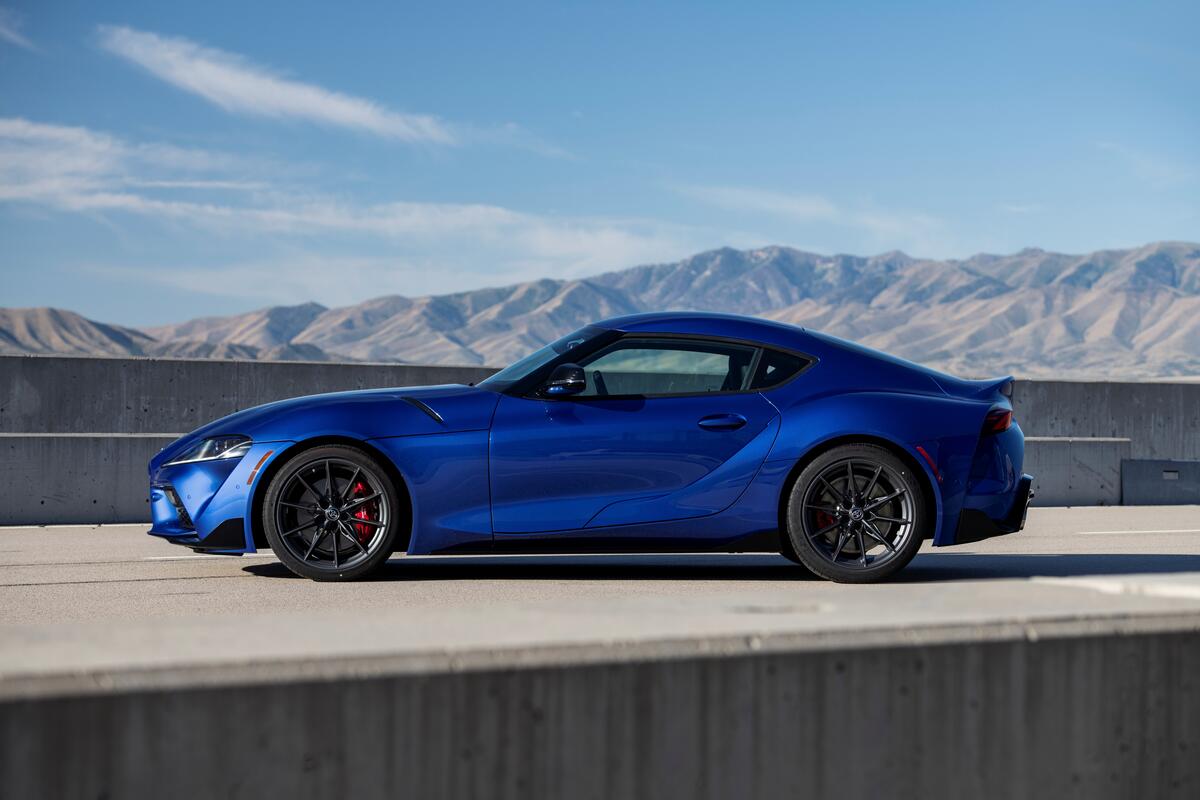
Toyota A80
"They were originally going to do hub motors. They switched to an inboard single motor because it would be simpler. And because apparently the hub motor supplier was having like a 80% failure rate or something. So they're like, Yeah, this doesn't sound right. We shouldn't use this."
The Toyota Supra is a sports car built for fast, fun driving. In this podcast, it’s mentioned in connection with a decision about how an electric motor should be placed and whether a certain motor supplier had a high failure rate. The goal is usually to make the system simpler and more reliable.
The Toyota Supra is a performance sports car known for its strong driving feel and enthusiast following. In the podcast context, it’s being discussed indirectly as part of an engineering decision about electric motor setup (hub motors versus an inboard single motor) and reliability concerns with a hub motor supplier. That kind of conversation matters because motor choice affects efficiency, packaging, and long-term durability.
inboard single motor
"They switched to an inboard single motor because it would be simpler. And because apparently the hub motor supplier was having like a 80% failure rate or something."
An inboard motor sits inside the car instead of inside the wheel. It usually uses a simpler power path to move the wheels.
An inboard single motor places the motor inside the vehicle rather than in the wheel hub, typically driving the wheels through a more conventional mechanical layout. Aptera chose this approach to simplify the system after issues with the hub motor supplier.
carbon fiber sheet molding compound
"A body made by a company called CPC group, and it uses carbon fiber sheet molding compound. So it's basically fiberglass, but carbon fiber reinforced, which was pretty neat."
This is a type of composite material made from carbon fiber and resin. It’s used to make car body panels that are light but strong, and it can be produced faster than some other carbon-fiber methods.
Carbon fiber sheet molding compound (often abbreviated as SMC) is a composite material where carbon fibers are combined with a resin system and formed into panels. In this context, it’s used to make a lightweight body with better strength-to-weight than plain fiberglass, while still being relatively quick to produce.
CPC group
"And the body is made in Italy, right? A body made by a company called CPC group, and it uses carbon fiber sheet molding compound."
CPC group is the supplier that makes the car’s body panels. The supplier choice can affect how quickly and cheaply the parts can be made.
CPC group is the company the speaker credits with making the Aptera body. That matters because body manufacturing method and supplier capability can strongly affect cost, lead times, and production scalability.
designed to be solar
"is designed to be solar because to make a car solar, you really do have to design it around it. You can't just make a car and slap solar panels on the top."
This means the car is built with solar power in mind from the beginning. Instead of just sticking solar panels on top, the whole design is shaped so the panels can actually help charge the battery.
A solar car has to be engineered around solar power from the start, not just fitted with panels afterward. That means the body shape, surface area, aerodynamics, and energy management are all designed to make solar charging practical.
DC quick chargers
"instead of having to put in DC quick chargers everywhere at your business, you could put in 120 volt..."
DC quick chargers are fast public chargers that can put a lot of power into an electric car battery quickly. They’re different from regular outlets, which charge more slowly.
DC quick chargers provide direct current at high power, allowing faster charging than standard outlets. The speaker contrasts this with using lower-power AC charging (like 120V) for business fleets, which changes how charging infrastructure is planned.
120 volt
"you could put in 120 volt, 120 volt out like it's this thing, 13 miles an hour..."
120 volt is basically a normal wall outlet voltage. Charging from it is slower than fast chargers, but it can be enough if you have lots of time (like overnight).
120 volt refers to a standard household AC outlet level used for slower charging. The speaker is arguing that a solar car could reduce the need for expensive DC fast-charging infrastructure by relying on lower-power charging overnight.
charge controllers
"They have a separate charge controller just for the solar because the normal charging system..."
A charge controller is the part that controls how electricity gets from the charger (or solar) into the battery. It helps make sure the battery is charged safely and efficiently.
A charge controller is the electronics that manage how power flows into the battery while charging. In this setup, the speaker says there are two separate controllers: one dedicated to solar input and another for normal charging, to improve efficiency.
overhead
"uses like 200 watts of overhead or sometimes even more, which means that the efficiency you get when charging... on a lower powered charging port is a lot lower..."
Overhead here means some of the electricity is used by the charging system itself, not stored in the battery. When the charger is low-power, that “extra” usage matters more and you get less battery charge per hour.
In charging, “overhead” refers to the energy used by the charging electronics and supporting systems that doesn’t directly go into the battery. The speaker claims that when charging power is lower, overhead becomes a bigger fraction of total input, reducing overall charging efficiency.
rebalance the batteries
"And then they kind of rebalance the batteries by activating the full charge system every once in a while."
Rebalancing means making sure the battery’s internal cells don’t end up at very different charge levels. Doing it periodically helps the battery perform well and last longer.
“Rebalancing” is the process of equalizing charge across battery cells or groups so they stay at similar states of charge. The speaker says the system periodically activates the full charge system to keep the battery properly balanced after solar-only charging.
watts
"you would have, you know, you'd be charging it whatever 450 watts during the day while you're [1778.7s] driving around and then 1300 1500 watts or whatever overnight."
Watts measure power—how quickly energy is delivered. In EV charging discussions, quoting watts (like 450 watts during the day or 1300–1500 watts overnight) tells you how fast the vehicle can gain energy from solar or a charger.
miles per hour
"100 on 120 volts, just a regular outlet, you get 13 miles per hour [1791.3s] on my model three, which is, you know, pretty efficient."
They’re using “miles per hour” as a simple way to say how quickly the EV is gaining driving range while it charges. Higher miles-per-hour means faster charging.
“Miles per hour” is a shorthand some EV owners use to estimate charging speed—how many miles of estimated range the car adds each hour. It’s a practical way to compare slow 120V charging versus faster charging methods.
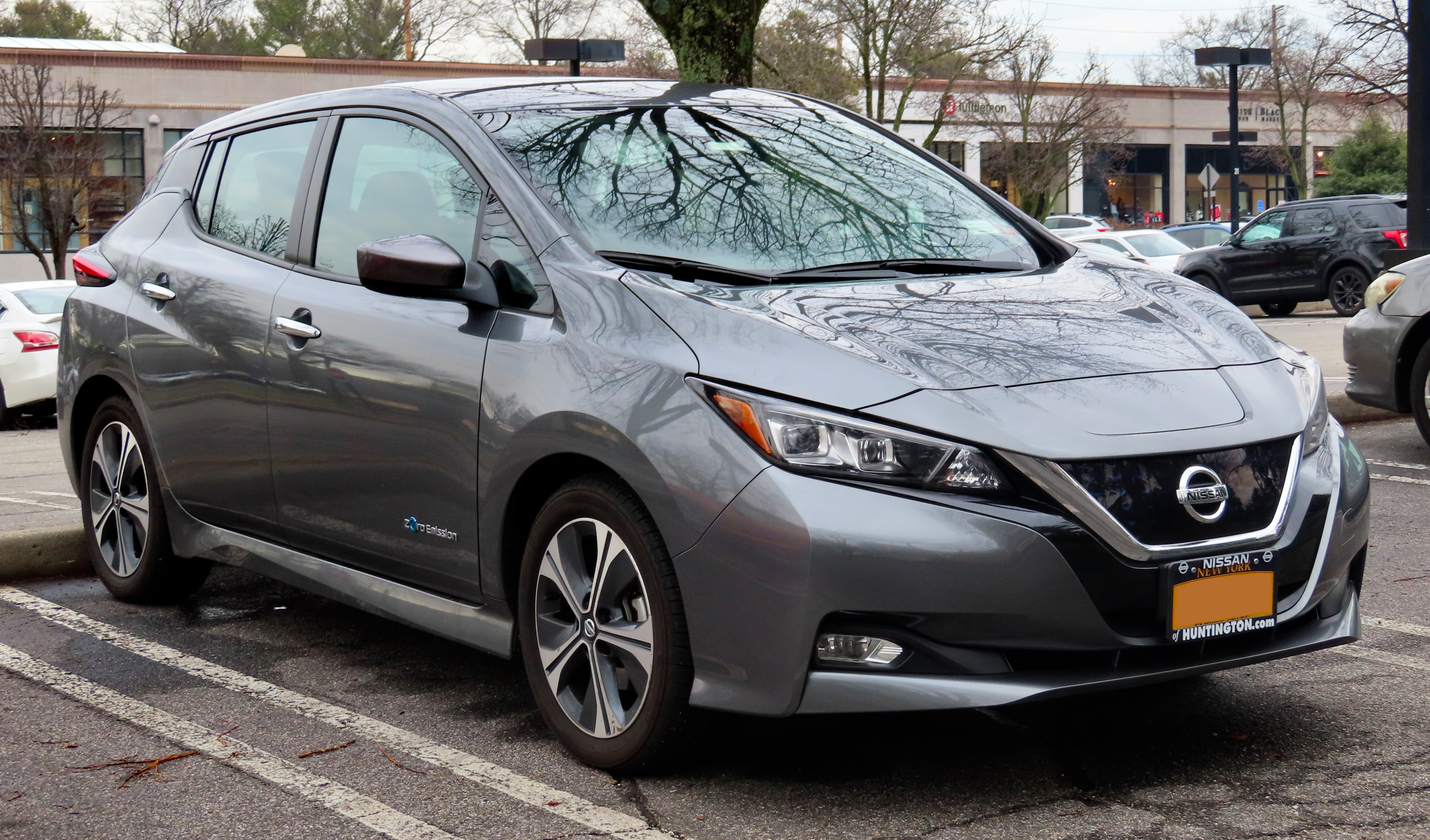
leaf
"Will people take it over the bolt or the leaf or the cyber cab? If the cyber cab happens, as we're about to talk about."
They’re referencing the Nissan Leaf, a common electric car meant for daily driving. The discussion is about which EV people would pick instead of Aptera.
The Nissan Leaf is a long-running mass-market electric car, often associated with being a straightforward commuter EV. Here it’s used as a benchmark for the kind of buyer that might choose an Aptera instead.

cyber cab
"Will people take it over the bolt or the leaf or the cyber cab? If the cyber cab happens, as we're about to talk about."
They’re talking about Tesla’s “Cyber cab,” which is envisioned as a taxi-like vehicle rather than a typical personal EV. The point is that if it arrives, it could change what people buy or choose instead of other EVs.
“Cyber cab” refers to Tesla’s planned autonomous taxi-style vehicle concept that’s discussed as an alternative product category to traditional EVs. In this segment, it’s brought up as a potential competitor for the same customer attention and market share.
compromised vehicle
"it's still a rough road. Even if they get the money, it's still a rough road because [1905.2s] it is a compromised vehicle. It's cool. It's different, but not everybody wants cool and [1910.4s] different, you know, yeah."
They mean a vehicle that isn’t perfect in every way. It’s built with trade-offs, so it might be great for some people but not fit everyone’s needs.
A “compromised vehicle” is one designed around trade-offs—often cost, weight, packaging, or technology constraints—that can limit performance, range, or usability compared with more conventional designs. The speaker argues Aptera may be “cool and different,” but that trade-off could limit broad appeal.

Aptera
"Or it can be also any other topics that we're discussing today or any, any topics in the UV world that you would like set Jamie or I stake on it. But yeah, the cyber cab... And the Akterra is also 1000 pounds lighter. It's 2200 ish. Yeah, as one fewer wheel though."
Aptera is brought up as a very light vehicle compared to the Tesla Cybercab. They’re using it to show how much weight (and even the vehicle layout) can affect efficiency.
Aptera is referenced as a much lighter solar-assisted EV concept/production effort, used here to benchmark efficiency and weight. The hosts compare Aptera’s roughly 2,200-ish pounds figure and note it’s lighter partly due to design choices like having fewer wheels.
Tesla cyber cab
"But yeah, the cyber cab. What happened this week is AP certification. It was it was teased a few weeks ago by Tesla that it was the newly record efficiency for any kind of vehicle officially certified by the EPA. And we can we can confirm that to the filings of this week."
They’re talking about Tesla’s Cybercab, an electric car designed to be extremely efficient. They share official numbers like battery size, motor power, and how heavy it is, based on EPA certification paperwork.
The Tesla Cybercab is Tesla’s newly certified, highly efficiency-focused electric vehicle. In this segment, they cite EPA certification details including a 47.6 kWh battery pack, a three-phase permanent magnet motor, and front-wheel drive—plus a stated curb weight of 3,113 pounds.
EPA
"It was it was teased a few weeks ago by Tesla that it was the newly record efficiency for any kind of vehicle officially certified by the EPA. And we can we can confirm that to the filings of this week."
EPA is a U.S. government agency that tests and certifies how efficient cars are. If something is “EPA certified,” it means the numbers come from official testing, not just marketing.
EPA refers to the U.S. Environmental Protection Agency, which certifies vehicle efficiency and emissions-related ratings. When Tesla says a vehicle is “EPA certified,” it means the efficiency claims are backed by official test procedures and filings.
three phase permanent magnet motor
"It's using a three ferries, a three phase permanent magnet motor rated at 163 kilowatts, which is just over 200 horsepower. It is a front wheel drive."
This is the electric motor design inside the car. “Three-phase” is how the electricity is fed to the motor, and “permanent magnet” means magnets help create the magnetic field for efficient power.
A three-phase permanent magnet motor uses three electrical phases to drive the motor, and permanent magnets to create the magnetic field. This design is common in modern EVs because it can be efficient and deliver strong torque across a useful speed range.
front wheel drive
"It is a front wheel drive. So we already knew that the weight. So the weight was a big question because you know the goal was to make this car as efficient as possible."
Front-wheel drive means the front wheels get the power to move the car. That can simplify the drivetrain and sometimes helps with efficiency and packaging.
Front-wheel drive (FWD) means the motor sends power to the front axle, so the front wheels do the driving. In EV packaging, FWD can help reduce drivetrain complexity and can support efficiency goals, depending on weight distribution and traction needs.
curb weight
"3113 pounds. It's that that's curb, you know, your curb weight is the yeah, that's right. Yeah, that's the unladen weight."
Curb weight is basically how heavy the car is when you’re ready to drive it, without people or extra stuff. Heavier cars usually take more energy to move, which can hurt range.
Curb weight is the vehicle’s weight as it sits ready to drive, typically including standard fluids and a baseline amount of equipment, but not passengers or cargo. For EVs, curb weight matters because it affects energy use and range, especially when efficiency is the headline goal.
fully autonomous
"It's, the main feature is the fact that it's supposed to be pedal less, steering less, steering wheel less, it's supposed to be fully autonomous. And, and so far there's just Tesla hasn't really solved unsupervised self-driving at any kind of meaningful scale"
Fully autonomous means the car is supposed to drive itself without you having to steer or control it. The host says that, so far, Tesla hasn’t proven it can do that reliably at large scale without supervision.
Fully autonomous means the vehicle is intended to drive itself without a human driver performing the driving task. The host argues Tesla has not yet solved “unsupervised self-driving” at meaningful scale, which is why the concept can feel confusing to people watching the rollout.
unsupervised self-driving
"It's supposed to be fully autonomous. And, and so far there's just Tesla hasn't really solved unsupervised self-driving at any kind of meaningful scale, which makes the vehicle kind of a confusing to other people"
Unsupervised self-driving means the car drives itself without a person watching closely or being ready to take over. The host says Tesla hasn’t yet reached a level where that works broadly and consistently.
Unsupervised self-driving refers to autonomous driving where a human is not actively monitoring or ready to take over. The host’s point is that Tesla has not achieved this reliably at “meaningful scale,” even though many vehicles are already operating in limited areas.
geofence
"And it's unclear what's the actual use case of them, because I don't think they can be used on anything else outside of Tesla's current, you know, limited geofence, rubber taxi services, particularly in Texas"
A geofence is a “geo boundary” on a map. It means the self-driving system may only work inside certain areas and not outside them.
A geofence is a defined geographic boundary where an autonomous or assisted driving system is allowed to operate. The host says Tesla’s robotaxi-style operation is currently limited to a “limited geofence,” meaning it can’t be used everywhere.
Texas
"And it's unclear what's the actual use case of them, because I don't think they can be used on anything else outside of Tesla's current, you know, limited geofence, rubber taxi services, particularly in Texas where regulation is, is the most relaxed out there."
Texas is the U.S. state the host points to as having more relaxed rules for this kind of self-driving taxi operation. That can make it easier for Tesla to run and test services there.
Texas is mentioned as the state where robotaxi-style operations face relatively relaxed regulation compared with other places. In this segment, it’s used to explain why Tesla’s autonomous testing and deployment may be more active there.
California
"Tesla hasn't even applied for a permit to fully self-drive in California. So I mean, we've seen, we've seen the efforts going on right now in Arizona, in Nevada."
California is mentioned because it has strict rules around self-driving cars. The host says Tesla hasn’t yet applied for permission to run fully self-driving service there.
California is referenced in the context of regulatory approval for fully self-driving operation. The host says Tesla hasn’t even applied for a permit to fully self-drive in California, highlighting how state rules affect deployment.
Arizona
"So I mean, we've seen, we've seen the efforts going on right now in Arizona, in Nevada. So I would assume that the goal for Tesla is to expand for take what they learned in Austin, Austin and Dallas"
Arizona is one of the places the host says Tesla is working on self-driving. It’s mentioned to show the rollout is happening in some states before others.
Arizona is named as one of the states where Tesla has been running self-driving efforts. In this segment, it’s part of the comparison showing where Tesla is actively testing versus where it hasn’t yet secured permits.
Nevada
"So I mean, we've seen, we've seen the efforts going on right now in Arizona, in Nevada. So I would assume that the goal for Tesla is to expand for take what they learned in Austin, Austin and Dallas"
Nevada is another state the host brings up as where Tesla is testing self-driving. It’s part of the point that the rollout depends on local rules.
Nevada is mentioned alongside Arizona as a location where Tesla’s self-driving efforts are underway. The host uses these states to illustrate that autonomous deployment is progressing unevenly across the U.S.

Tesla Model Y
"...ow, not too crazy. And, and then not just use the Model Y, which they're doing right now for the rubber tax..."
The Tesla Model Y is an electric SUV. In the podcast, it’s brought up because it’s being used as an example for how rules or taxes might affect where parts or vehicles come from. It’s a common model, so it’s often used in those discussions.
The Tesla Model Y is a compact electric SUV that’s widely used as a baseline vehicle for Tesla’s technology and production. The podcast mentions using the Model Y in the context of “rubber tax,” implying it’s part of a discussion about policy-driven sourcing or manufacturing decisions. Because it’s a high-volume model, it often comes up when companies talk about logistics and supply chain impacts.
spy shots
"Oh, probably, yeah. You know, we're seeing a lot of them, we see spy shots all the time, but they all have steering wheels."
Spy shots are leaked photos of cars being tested before they’re officially announced. People use them to guess what the final design will look like.
“Spy shots” are photos taken of prototype vehicles in public—often with camouflage—before the car is officially revealed. They’re used to infer design details, size, and sometimes testing progress, which is why the hosts mention them when talking about self-driving validation vehicles.
stress test
"you need to test the efficiency, the driving performance, you need to, you know, put it to a stress test. So I think they're doing that at the same time."
A stress test is when engineers test a car under tough conditions to make sure it can handle real-world strain. It helps reveal weaknesses before the car is released.
A “stress test” is an evaluation where a vehicle is pushed beyond normal conditions to see how systems behave under strain. In this context, it’s about validating EV hardware (like suspension and chassis) and overall efficiency/performance while also supporting self-driving development.
Cosmos Lucid Cosmos
"...ade to be super efficient EV. And now we have the Lucid Cosmos, that's also, you know, Lucid is known for its ef..."
“Cosmos” here refers to the Lucid Cosmos, which is an electric vehicle meant to be very efficient. The podcast is highlighting that it’s designed to use less energy. That usually means better range and fewer charging stops.
In the podcast context, “Cosmos” refers to the Lucid Cosmos, which is described as a highly efficient EV. The conversation frames it as part of Lucid’s reputation for efficiency-focused design, suggesting the Cosmos aims to maximize range and minimize energy use. It’s discussed because efficiency is a central theme in EV adoption and real-world practicality.
design patent filings
"And what happened this week is that thanks to some design patent filings with the European Union Intellectual Property Office, we get, you know, the most official, let's look at the design."
A design patent filing is paperwork that shows what a product is supposed to look like. In this case, the hosts say those filings reveal the vehicle’s design details.
“Design patent filings” are official applications that disclose the visual design of a product—like the shape of a vehicle body—before it’s publicly launched. Here, the hosts say European Union filings let them see the “most official” look at the Lucid Cosmos design.
European Union Intellectual Property Office
"thanks to some design patent filings with the European Union Intellectual Property Office, we get, you know, the most official, let's look at the design."
This is a European government office that registers and protects things like product designs. The hosts mention it because filings there can show what a new car is going to look like.
The European Union Intellectual Property Office (EUIPO) is the EU agency that handles intellectual property registrations, including design protections. In this segment, it’s referenced as the source of design patent filings that reveal the official vehicle design.
shrunk gravity
"But now you see, you see what, you know, I guess I would describe that as kind of a shrunk gravity. What do you guys think?"
“Shrunk gravity” is a descriptive, not technical, comparison used to communicate the vehicle’s proportions and stance—suggesting it has a similar look to a larger concept but scaled down. It’s essentially a listener-friendly way to describe design language rather than a defined engineering term.
R2 version of the R1
"Mm-hmm. Yeah, kind of like the R2 version of the R1."
They’re comparing two versions of something—like saying one is a smaller or updated take on the other. The exact meaning depends on what “R1” and “R2” refer to, which isn’t spelled out here.
“R2 version of the R1” is a comparison framework implying a smaller or updated model (R2) derived from a prior concept or product (R1). The transcript doesn’t define what R1/R2 refer to, so it’s best treated as an analogy rather than a clearly labeled automotive term.
software issues
"And I pray that this thing actually gets popular and they fit, you know, the iron out all their software issues, which I'll let Bastille do the full review. But from his experience, he was extremely impressed by the vehicle other than the software problems that come with it."
“Software issues” means problems in the car’s computer systems—things like bugs or glitches. The host is basically saying the car drives well, but the software isn’t perfect yet.
In modern EVs, “software issues” typically refers to problems in the vehicle’s control systems—like infotainment glitches, driver-assistance behavior, or how the car manages power and driving modes. The host contrasts those issues with strong impressions of the vehicle’s driving feel.
FSD competitor
"And, you know, they're releasing their FSD competitor at the same time. They're going to start releasing the lower price versions of it."
“FSD” means software that tries to handle more of the driving automatically. When they say “FSD competitor,” they mean another company is building its own version of that kind of self-driving tech.
“FSD” stands for Full Self-Driving, a software package aimed at advanced driver-assistance and automated driving features. Calling it a “competitor” here means Lucid is planning its own self-driving software offering to go up against Tesla’s approach.
Lucid Cosmos
"And we're supposed to see that thing in full quite soon. I think it's coming in the end of the year. From what I understand, they're actually going to start production of this in Saudi Arabia, and then bring it in the US."
The Lucid Cosmos is an upcoming Lucid electric car. The hosts are talking about it as a big deal because it could help Lucid sell more cars and make money, not just build prototypes.
Lucid Cosmos is Lucid’s upcoming electric vehicle positioned as a key step toward higher-volume, more profitable production. In this segment, the hosts discuss it as a potential success factor for Lucid’s broader business goals and timing for when it will be fully revealed.
Saudi Arabia
"From what I understand, they're actually going to start production of this in Saudi Arabia, and then bring it in the US. What I've heard, I don't know if I, that's wild."
The hosts discuss Lucid starting production in Saudi Arabia before bringing vehicles to the US. This is a notable supply-chain and manufacturing decision because it can affect cost, lead times, and how quickly new models ramp up.

Tesla
"but I think it's mostly like the same thing that Tesla was doing back in the day in the Netherlands, you remember, like they were like shipping cars there, right?"
Tesla is referenced as a comparison point for manufacturing strategy—specifically shipping cars to another country before producing them there. The host uses this to frame what Lucid’s Saudi production plan might resemble.

Lucid Air
"I mean, I've only driven the air, but the air for me is like, it's on par, if not better than the as I really enjoy driving that car. It's really a driver's car."
The Lucid Air is Lucid’s main luxury electric car. The host is saying it feels great to drive and compares that driving confidence to another Lucid model.
The Lucid Air is Lucid’s flagship luxury EV, built around a very efficient powertrain and a comfortable, driver-focused chassis. Here, the host is describing how the Lucid Air feels behind the wheel and comparing it to another Lucid model.
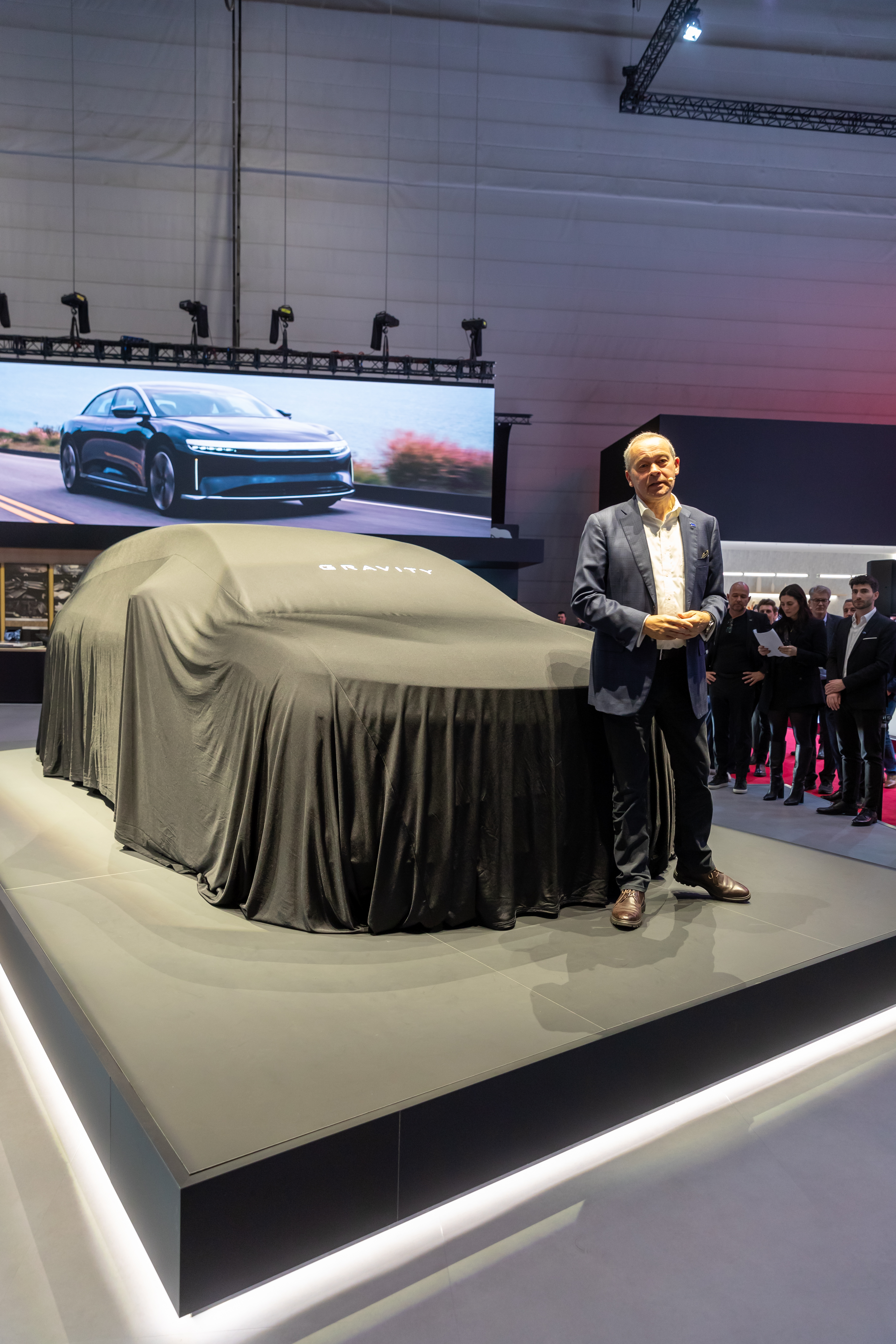
Lucid Gravity
"I drove the gravity last week, a little bit, just for like, like 20 minutes or so, and it was a blast. I don't think there's a car that makes me feel more confident driving it than a Lucid so quickly."
The Lucid Gravity is Lucid’s bigger electric SUV. Even with only a short drive, the host says it was fun and made them feel confident behind the wheel.
The Lucid Gravity is Lucid’s larger, SUV-style EV offering, positioned as a more spacious alternative to the Air while keeping Lucid’s efficiency and driver-oriented feel. The host says they only drove it briefly and still found it “a blast,” emphasizing confidence and usability.
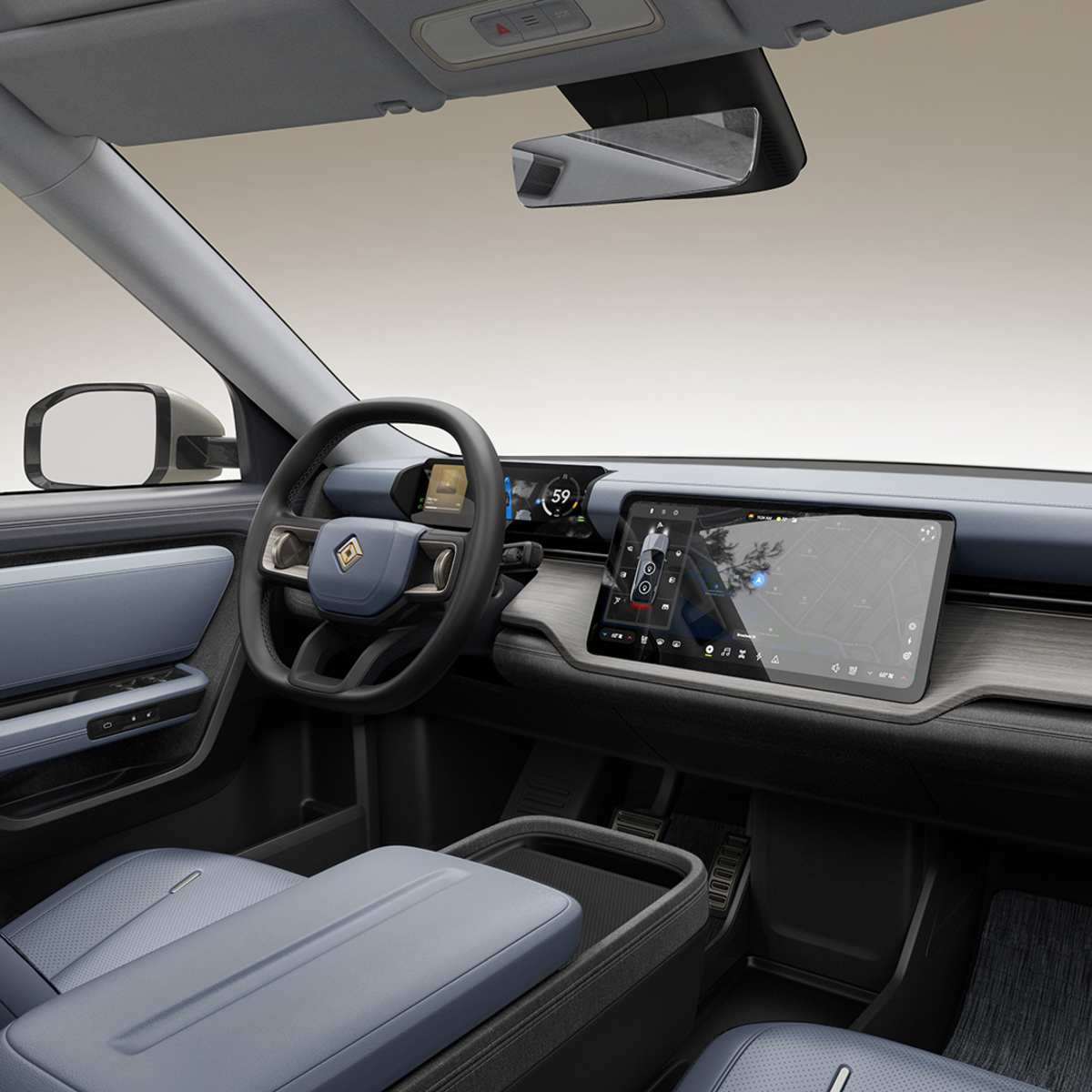
Rivian R2
"All right, a quick word on Rivian. We talked a lot about Rivian last week, which sets R2 first drive. But, you know, they're doing the rounds right now with a little press tour around the R2."
The Rivian R2 is Rivian’s next, smaller electric SUV/car. The discussion here is about whether it will have advanced driver-assist features soon enough, and how that affects buying decisions.
The Rivian R2 is Rivian’s smaller, more affordable EV positioned below the R1 lineup, and it’s a key part of Rivian’s push into broader EV adoption. In this segment, it’s discussed specifically in the context of an owner considering it now versus later due to self-driving/autonomy features tied to hardware timing.
L3
"so it's interesting because Lucid has all these problems with deliveries and set up and some software issues... but not right now because of the L3 capabilities only being available hardware-wise with the vehicles coming later this year."
L3 is a level of self-driving where the car can do a lot of the driving by itself, but you still have to be ready to take control if it asks. The host is saying Rivian’s L3 features depend on when the car’s hardware is available.
L3 refers to SAE Level 3 driving automation, where the car can handle most driving tasks under specific conditions, but a human driver must be ready to take over when the system requests. The segment notes that L3 capabilities are only available via hardware in vehicles arriving later, affecting buyers’ timing.
level four
"he doesn't see the capability to charge for these, you know, point-to-point driving that is not real level four, just like what FSD is right now."
Level 4 is a higher level of self-driving where the car can drive itself without needing you to take over, but only in certain situations. The host is saying today’s “point-to-point” claims don’t fully reach that level yet.
“Level four” refers to SAE Level 4 automation, where the vehicle can perform driving tasks without human intervention within defined conditions (like a geofenced area or specific operating domain). The host contrasts this with point-to-point autonomy that isn’t truly Level 4 yet, implying current systems can’t reliably handle all scenarios end-to-end.
autonomy plus package
"he sees as a window right now where the offering is limited where you can actually charge for it and Rivian is charging $2,500 for their autonomy plus package or $50 a month."
This is a bundle where the car’s advanced driving features are sold as an extra add-on. The host says Rivian charges extra money for it, either as a one-time price or a monthly subscription.
An “autonomy plus package” is a bundled offering where advanced driver-assist or self-driving-related features are sold as an add-on rather than included in the base vehicle. The segment says Rivian charges $2,500 for this package (or $50/month), framing it as a monetization strategy for autonomy features.
advanced driving feature
"He actually linked it, sorry, linked the features to the advanced driving feature to airbags and other safety"
An “advanced driving feature” is a set of higher-tech safety and driving helpers in a car. The host is saying these features depend on the car’s safety hardware, not just software.
An “advanced driving feature” is a marketing umbrella for driver-assist systems that go beyond basic cruise control, often including lane centering, adaptive behavior, and automated driving functions. The host links these features to safety hardware like airbags, implying the feature set depends on vehicle design and safety systems.
point-to-point driving technology
"he thinks that the same thing is going to happen with this point-to-point driving technology in the future, which, you know, I agree with that."
Point-to-point driving means the car can handle the drive from where you start to where you want to end, instead of just helping in small parts of the trip.
Point-to-point driving refers to automated driving that can handle an entire route from a start location to a destination, rather than only short, limited maneuvers. It’s typically discussed as a step toward higher automation where the system manages more of the driving task for longer stretches.
XPENG VLA
"All these FSD competitors are there, EYD's GodEye, XPENG VLA, Aishami, Huawei all have very similar technology to what FSD offers."
XPeng is an EV company, and “VLA” is the name of its driving-assist tech. The host is saying it’s meant to do similar things to Tesla’s self-driving software.
XPENG VLA is referenced as a driver-assistance/autonomous-driving technology offering from XPeng. The speaker groups it with other “FSD competitors,” implying it targets similar capabilities to Tesla’s system.
Huawei
"All these FSD competitors are there, EYD's GodEye, XPENG VLA, Aishami, Huawei all have very similar technology to what FSD offers."
Huawei is a tech company. Here it’s mentioned because the speaker says it has driving-assist technology that competes with Tesla’s self-driving features.
Huawei is mentioned as a company with driver-assistance technology that the speaker says is similar to what Tesla’s FSD offers. In the context of the discussion, Huawei is treated as one of the major “competitors” in advanced driver-assist systems.
level three
"Rivian aims to have, you know, be on par with FSD by the end of the year and then go further in that next year with a through level three system where you can actually, you know, start paying attention for meaningful periods of times."
Level three means the car can do most of the driving for a while, and you don’t have to watch the road constantly—though it can still ask you to take over if needed.
“Level three” is an automation tier (commonly from SAE’s driving automation scale) where the car can perform the driving task under certain conditions, and the driver may not need to continuously monitor. The system can request the driver to take over when it reaches its limits.
level two
"But for actual, you know, FSD level two advanced, do you want to call it level two plus now? That's what they're like. We have six levels to work with and we're having them come up every, everyone's in level two..."
Level two means the car can help with steering and speed, but you still have to stay alert and ready to take over at any moment.
“Level two” refers to partial driving automation where the car can control steering and speed, but the driver must remain engaged and monitor the road continuously. It’s why level two systems are often described as “driver-assist” rather than true self-driving.

model three
"a friend of mine, Paul, just got a new model three and he started paying FSD the subscription because I have FSD, but I have, I paid for it like years ago."
The Tesla Model 3 is the electric car in this story. The hosts are talking about how Tesla’s FSD software works on Model 3 cars, and how the experience can differ based on what computer hardware the car has.
Tesla Model 3 is the electric car being discussed as the platform for Full Self-Driving (FSD) subscriptions and hardware differences. The episode segment focuses on how FSD behavior and user experience can vary depending on the car’s installed compute hardware.
hardware three
"And then you have to look at hardware three, which, you know, those are the people that are really getting screwed because they also are paying $100 a month for now, a very inferior product to, to what we have on hardware four."
“Hardware three” is the older computer inside some Tesla cars that runs the self-driving features. If your car has older hardware, the self-driving software may not work as well as it does on newer cars.
“Hardware three” refers to Tesla’s older FSD computer generation (often called HW3) used to run advanced driver-assistance and autonomy software. The key point here is that HW3 is less capable than newer compute hardware, so the same FSD subscription can feel “inferior” on older cars.
hardware four
"paying $100 a month for now, a very inferior product to, to what we have on hardware four. My primary experience using FSD in my mom's model three is every like five minutes I cut off FSD."
“Hardware four” is the newer computer inside some Tesla cars that powers the self-driving features. The host is saying cars with this newer computer tend to get better results from FSD than cars with older computers.
“Hardware four” refers to Tesla’s newer FSD computer generation (often called HW4), which is designed to run autonomy software with more capability than earlier generations. In this segment, the speaker contrasts HW4 with HW3 to argue that newer cars get a better FSD experience for the same subscription price.
blacklisted
"I'm sure your, your mom's all three has already been blacklisted now. [2983.1s] They're not blacklist. Exactly. To be fair, your mom is on"
Here “blacklisted” is a casual way of saying the car may start limiting or changing how it behaves if you keep turning off the self-driving features. The speaker is joking that the system may have learned from repeated cancellations.
In this context, “blacklisted” is used informally to describe Tesla’s system flagging a driver or behavior after repeated disengagements of FSD. The idea is that frequent overrides or cancellations may reduce how often the system attempts certain maneuvers.
boost mode
"Like, you have a small 47 kilowatt hour more, a kilowatt motor on this, but then you talk about a boost mode that brings it to 70s, like almost double the capacity. But even with the boost mode, like, don't expect to win a drag race with this thing..."
Boost mode is a “turbo” setting for an electric car that gives you extra power for a short time. It’s meant for quick acceleration, not for using all the time.
Boost mode is an EV software setting that temporarily allows higher power output from the motor(s). It’s typically limited by battery temperature, battery state-of-charge, and thermal limits, so you can feel faster acceleration but shouldn’t use it continuously.
WLTP
"I love it. Yeah. WLTP of 128 miles. So this is kind of we're back to like the the Leafs day like the early lead."
WLTP is a standardized testing method used to estimate how far an EV can go on a charge. It’s not exactly what you’ll get in real life, but it helps compare different cars fairly.
WLTP (Worldwide Harmonised Light Vehicles Test Procedure) is a standardized test cycle used to estimate EV range and fuel economy. Because it’s a lab-based procedure, WLTP numbers often differ from real-world driving, but they’re useful for comparing cars under the same rules.
body in white
"One, the announced manufacturing partner for for the chassis for the body. So the body in white is going to be made by a different company"
“Body in white” means the car’s body shell is built and welded up, but it hasn’t been painted or finished yet. It’s like the raw structure stage before the rest of the build.
“Body in white” (BIW) is the vehicle body shell after major metal forming and welding, but before paint and final interior/exterior assembly. It’s a common manufacturing handoff point between suppliers and automakers because it defines a stage of structural completion.
form factor
"So first of all, like the Tello is interesting for its design and engineering of the actual form factor where you look at that wheelbase here."
“Form factor” just means the physical shape and size of a part, and how it’s laid out to fit in the vehicle. It matters because packaging affects space, weight distribution, and how practical the vehicle is.
In EV battery and packaging discussions, “form factor” means the physical shape and layout of a component—how it fits into the vehicle. Here, the host is emphasizing how the battery pack and related design are packaged around the vehicle’s wheelbase and overall dimensions.
wheelbase
"So first of all, like the Tello is interesting for its design and engineering of the actual form factor where you look at that wheelbase here."
“Wheelbase” is the distance between the front and rear wheels. A longer wheelbase usually means more room inside and can change how the car feels when driving.
“Wheelbase” is the distance between the front and rear axles. It’s a key dimension because it strongly influences interior space, ride/handling characteristics, and how a vehicle’s packaging (like battery placement) can be optimized.
800 volt
"So so good on them. But my article today was more focused on the battery pack announcement. So first of all, like the Tello is interesting... But what they're doing now with this bag that I found really cool is that they are solving the issue of you go 800 volt or 400 volt."
In an EV, “800 volt” means the battery system runs at a higher electrical voltage. That can help the car charge faster because it can move the same charging power with less current, but it only works well if the charging station supports high-voltage charging.
“800 volt” refers to a high-voltage electrical architecture in an EV. Higher voltage can reduce current for the same power, which helps enable faster charging and thinner/lighter cabling—assuming the charger and vehicle charging electronics support it.
400 volt
"So they are solving the issue of you go 800 volt or 400 volt. What, you know, you do compromises between the two. And especially in North America, where our infrastructure or charging infrastructure is still very much 400 volt..."
“400 volt” is the voltage level many EVs and chargers use most often. If your car is built for a different voltage, it may not charge as quickly or efficiently at the usual public chargers.
“400 volt” is the more common EV high-voltage standard used by many vehicles and charging networks. If an EV is designed around 800 volts, it may not charge as efficiently on 400-volt infrastructure unless it has supporting electronics or a strategy to bridge the gap.
charging infrastructure
"And especially in North America, where our infrastructure or charging infrastructure is still very much 400 volt, it's not really optimized by our world."
“Charging infrastructure” means the public charging network—what kinds of chargers are available where you live and drive. If most chargers are one type (like 400-volt), cars built for a different type may not charge as fast.
“Charging infrastructure” refers to the network of public and private EV charging stations, including their electrical standards and capabilities. The host is pointing out that North America is still heavily oriented around 400-volt charging, which affects how well 800-volt vehicles can charge in practice.
split pack
"So they do a split pack now, where they can they can both switch between the 400 volt and all the volt system without having to compromise on either one, or at least not compromised as much on either one..."
A “split pack” is a battery-pack strategy that lets the vehicle switch between different voltage architectures (here, 400-volt and 800-volt operation). The goal is to avoid the usual compromises—so the car can charge faster on high-voltage chargers while still working well on the more common 400-volt network.
Request an Explanation
Heard something you'd like explained? We'll add it to this episode.
Sign in to request explanations for terms you heard.
Want to learn more?
Browse our glossary for plain-English explanations of automotive terms, jargon, and concepts.
Help improve this episode
See something that's not quite right? Our annotations are AI-generated and can sometimes miss the mark. Click the flag icon on any annotation to suggest a correction.