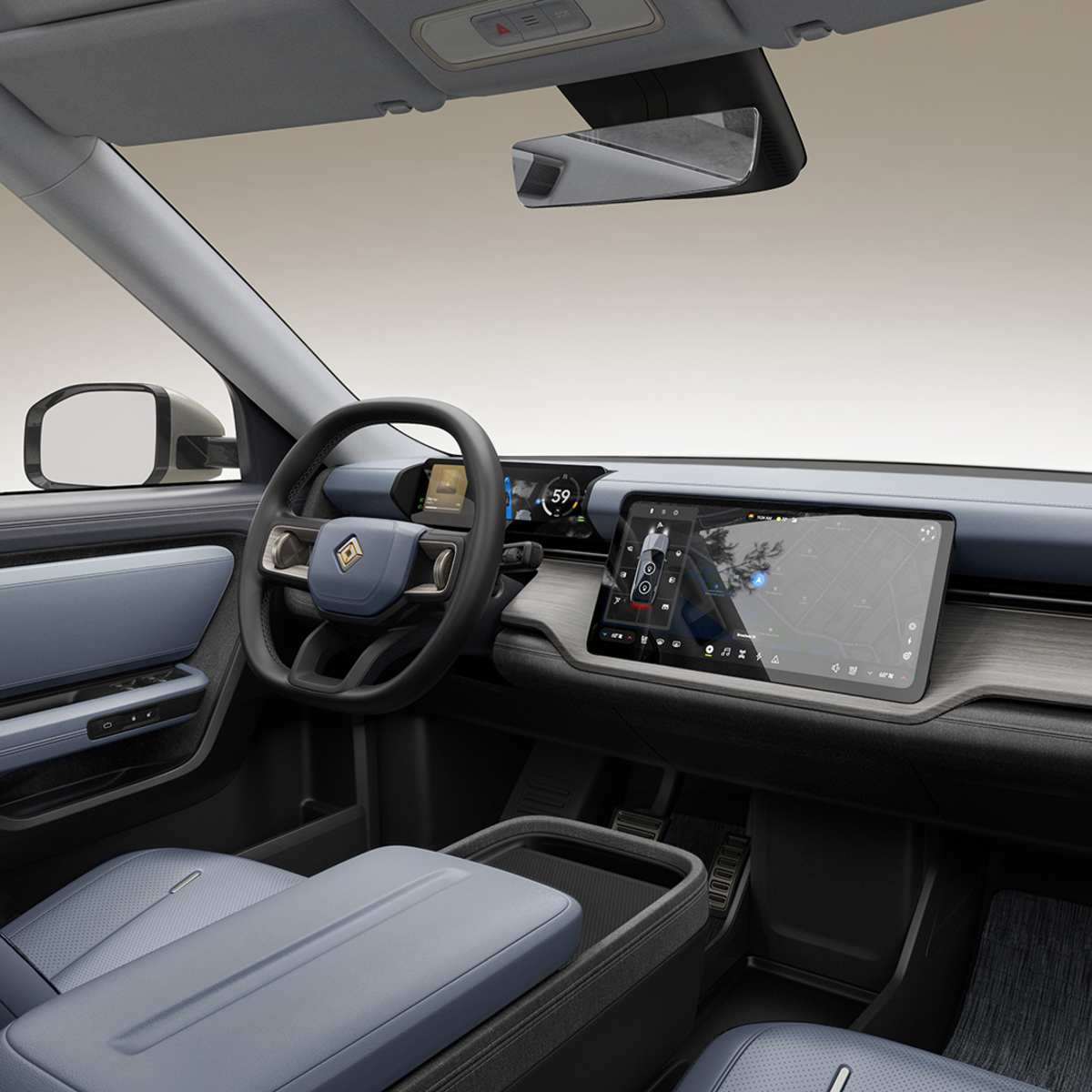
Aptera is an electric vehicle company. The podcast mentions someone who drove the Aptera Solar Car and visited the company, which connects to Aptera’s focus on using less energy. The solar idea is meant to help extend how far the car can go.
The Tesla Roadster is an early Tesla electric sports car. Here, the host mentions it because it rides and feels rough, so you can compare how rough (or not) the other car feels.
A carbon tub is a car’s main body structure made from carbon fiber. Carbon fiber can make the car light and rigid, but it can also make the cabin feel louder when rocks or debris hit the underside—unless the car is designed to keep that debris away.
In this context, “pods” refers to wheel/track packaging that places the wheels inside or behind enclosed housings. That geometry can reduce how much debris the tires throw toward the body, which helps with cabin noise and keeps rock chips from getting into the passenger area.
The throttle pedal is what you press to ask the car for power. On EVs, the software decides how quickly power comes in, so pedal feel can make the car seem smooth or jerky.
Power delivery is how the car gives you power as you press the pedal. Even if an EV is efficient, it can feel like it has less punch if the power ramps up gently.
Concept
hyper efficient vehicle
A “hyper efficient vehicle” is built to waste as little energy as possible. That can mean it’s not always the quickest-feeling car, because it may hold back power to save energy.
Solar power means the car can make electricity from sunlight. Here, the host says it was generating power while driving, not just when it was sitting still.
Integration means how the solar system is built into the car’s electrical system. It affects whether solar actually helps in real driving or only provides a small amount of charging.
CarPlay is Apple’s system that lets you use your iPhone through the car’s screen. If a car supports it, you can use things like maps and music without touching your phone.
Wattage is a way to describe how much power something is making or using. In this case, it tells you how much electricity the solar panels are producing right now.
“Offset” here means the solar panels help cover part of what the car needs to run. So you may use a little less battery energy than you otherwise would.
These are early cars built to test the factory and parts before the real production starts. They’re a good preview of what the final cars will be like.
An EV has a cooling system to keep important parts from overheating. When the cooling fan turns on, it can create vibration or noise you can feel in the cabin.
A telescoping steering wheel can move in and out (toward/away from the driver) to help fit different body sizes. In this segment, the host says the current setup only allows seat movement, which forces a tradeoff between headroom and getting comfortable/close to the wheel.
Instead of normal mirrors, the car uses cameras to show what’s behind and beside you on screens. That means the screens have to be set up correctly so you can see safely.
Concept
window safety structure
That’s the reinforced body framework around the window. It’s there to help keep the car rigid and protect people if there’s a crash.
Aerodynamics is about how air moves around the car. If the window opening is smaller, air can flow around it more smoothly, so the car doesn’t get as “slowed down” by drag.
Polarized sunglasses block glare using a special filter. Sometimes that filter can clash with screens or mirror displays, making the image look dark or invisible.
Concept
storage room
They’re talking about a real, usable storage space inside the vehicle. The point is that it’s big enough to be practical, not just a small hidden cubby.
Instead of one big solar panel acting as a single unit, the car’s solar setup is divided into sections. If one section gets shaded (like by a tree), the other sections can still make power.
The “X port” is the plug your car uses to charge quickly at fast-charging stations. If more cars use the same port, it’s easier to find chargers that work with your vehicle.
Term
DC
“DC” is a type of electricity used by fast chargers. It’s what allows an EV to charge much quicker than regular home-style charging.
A “kilowatt hour” (kWh) battery is how much energy the car can store. More kWh usually means more potential range, because there’s more energy available to use.
“Miles per kilowatt” is a practical way to think about charging: it’s about how many miles of driving you get from the electricity you add. More miles per kilowatt means the car uses energy more efficiently.
Term
kilowatt hour kilowatt charging rate
They’re basically estimating how fast the car adds usable range, not just how many kilowatts the charger can deliver. A very efficient EV can make charging feel quicker even on modest charger power.
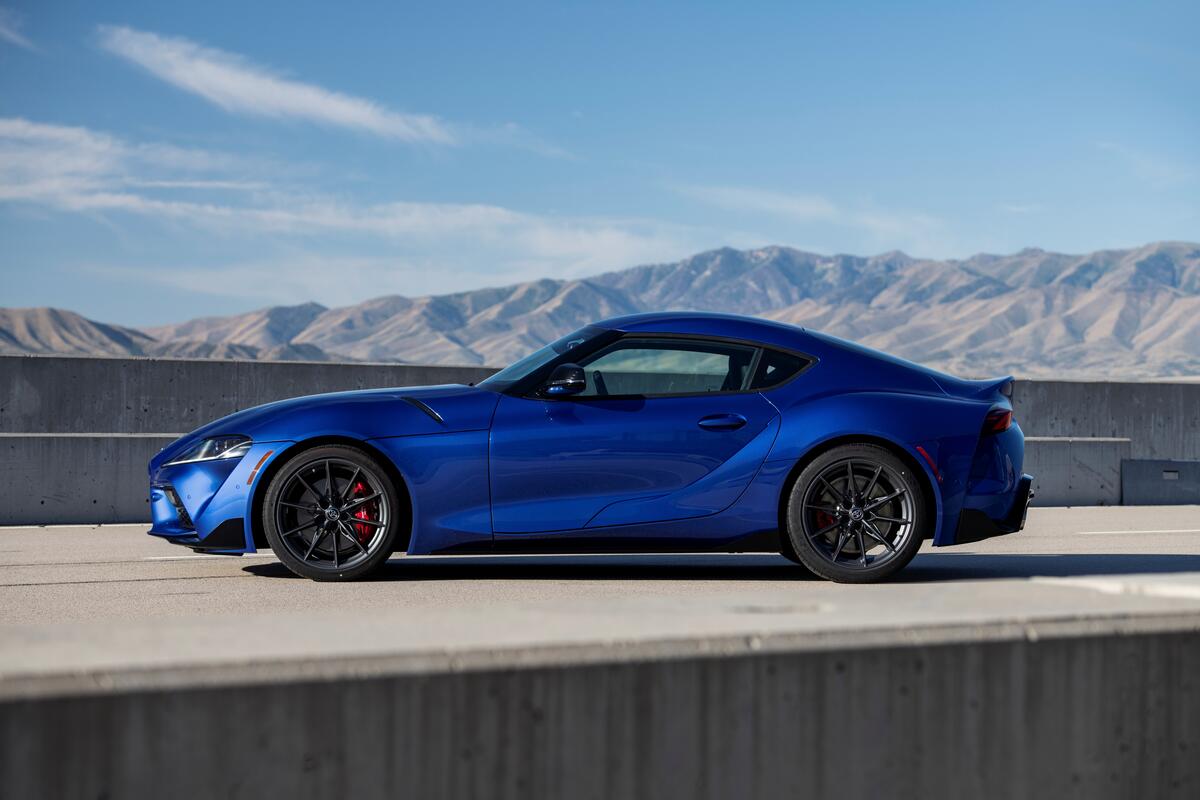
The Toyota Supra is a sports car built for fast, fun driving. In this podcast, it’s mentioned in connection with a decision about how an electric motor should be placed and whether a certain motor supplier had a high failure rate. The goal is usually to make the system simpler and more reliable.
This is a type of composite material made from carbon fiber and resin. It’s used to make car body panels that are light but strong, and it can be produced faster than some other carbon-fiber methods.
This means the car is built with solar power in mind from the beginning. Instead of just sticking solar panels on top, the whole design is shaped so the panels can actually help charge the battery.
DC quick chargers are fast public chargers that can put a lot of power into an electric car battery quickly. They’re different from regular outlets, which charge more slowly.
120 volt is basically a normal wall outlet voltage. Charging from it is slower than fast chargers, but it can be enough if you have lots of time (like overnight).
A charge controller is the part that controls how electricity gets from the charger (or solar) into the battery. It helps make sure the battery is charged safely and efficiently.
Overhead here means some of the electricity is used by the charging system itself, not stored in the battery. When the charger is low-power, that “extra” usage matters more and you get less battery charge per hour.
Rebalancing means making sure the battery’s internal cells don’t end up at very different charge levels. Doing it periodically helps the battery perform well and last longer.
Watts measure power—how quickly energy is delivered. In EV charging discussions, quoting watts (like 450 watts during the day or 1300–1500 watts overnight) tells you how fast the vehicle can gain energy from solar or a charger.
They’re using “miles per hour” as a simple way to say how quickly the EV is gaining driving range while it charges. Higher miles-per-hour means faster charging.
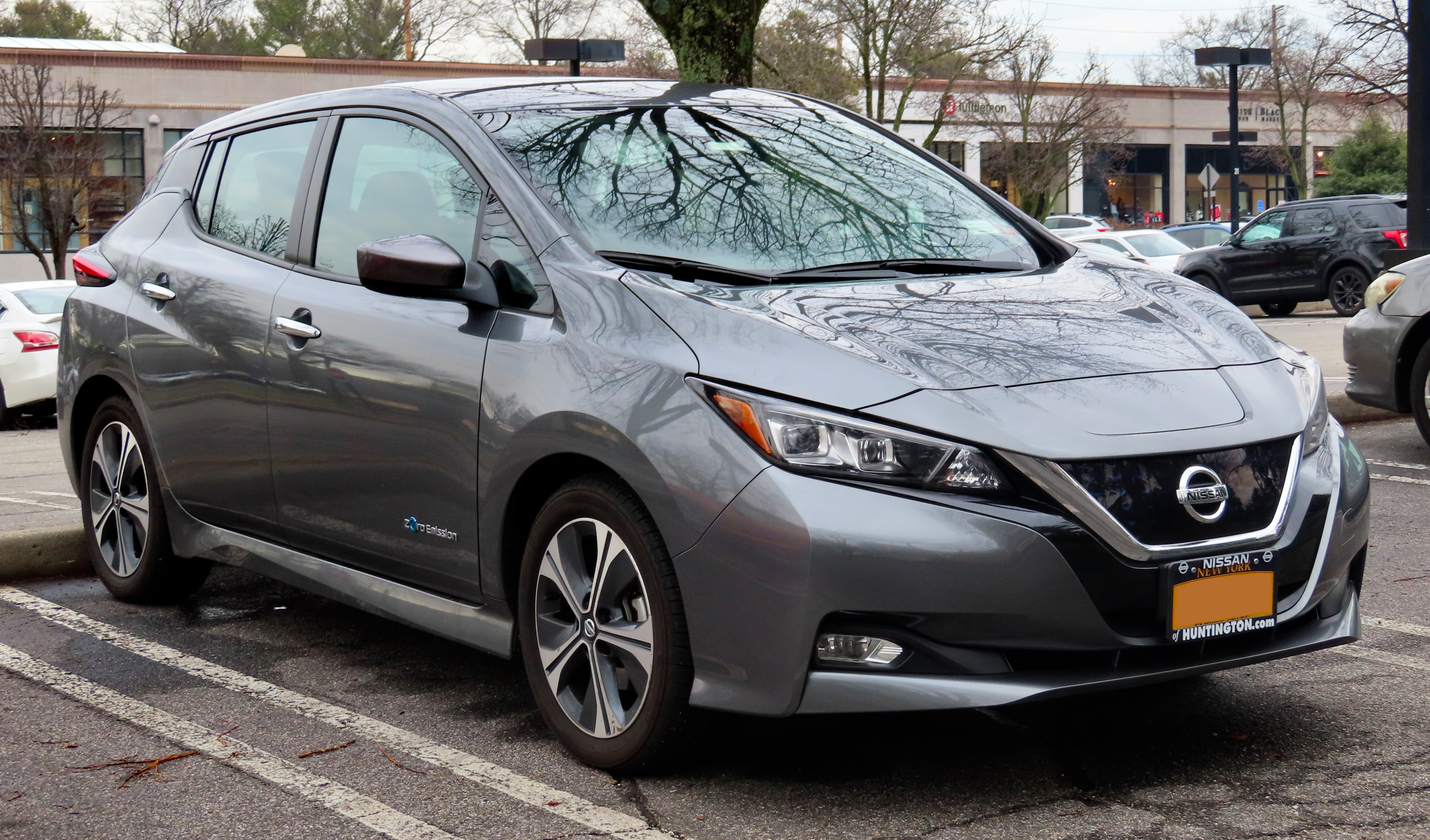
They’re referencing the Nissan Leaf, a common electric car meant for daily driving. The discussion is about which EV people would pick instead of Aptera.
They’re talking about Tesla’s “Cyber cab,” which is envisioned as a taxi-like vehicle rather than a typical personal EV. The point is that if it arrives, it could change what people buy or choose instead of other EVs.
They mean a vehicle that isn’t perfect in every way. It’s built with trade-offs, so it might be great for some people but not fit everyone’s needs.
Car
Aptera
Aptera is brought up as a very light vehicle compared to the Tesla Cybercab. They’re using it to show how much weight (and even the vehicle layout) can affect efficiency.
They’re talking about Tesla’s Cybercab, an electric car designed to be extremely efficient. They share official numbers like battery size, motor power, and how heavy it is, based on EPA certification paperwork.
EPA is a U.S. government agency that tests and certifies how efficient cars are. If something is “EPA certified,” it means the numbers come from official testing, not just marketing.
This is the electric motor design inside the car. “Three-phase” is how the electricity is fed to the motor, and “permanent magnet” means magnets help create the magnetic field for efficient power.
Front-wheel drive means the front wheels get the power to move the car. That can simplify the drivetrain and sometimes helps with efficiency and packaging.
Curb weight is basically how heavy the car is when you’re ready to drive it, without people or extra stuff. Heavier cars usually take more energy to move, which can hurt range.
Fully autonomous means the car is supposed to drive itself without you having to steer or control it. The host says that, so far, Tesla hasn’t proven it can do that reliably at large scale without supervision.
Unsupervised self-driving means the car drives itself without a person watching closely or being ready to take over. The host says Tesla hasn’t yet reached a level where that works broadly and consistently.
Texas is the U.S. state the host points to as having more relaxed rules for this kind of self-driving taxi operation. That can make it easier for Tesla to run and test services there.
California is mentioned because it has strict rules around self-driving cars. The host says Tesla hasn’t yet applied for permission to run fully self-driving service there.
Arizona is one of the places the host says Tesla is working on self-driving. It’s mentioned to show the rollout is happening in some states before others.
The Tesla Model Y is an electric SUV. In the podcast, it’s brought up because it’s being used as an example for how rules or taxes might affect where parts or vehicles come from. It’s a common model, so it’s often used in those discussions.
A stress test is when engineers test a car under tough conditions to make sure it can handle real-world strain. It helps reveal weaknesses before the car is released.
“Cosmos” here refers to the Lucid Cosmos, which is an electric vehicle meant to be very efficient. The podcast is highlighting that it’s designed to use less energy. That usually means better range and fewer charging stops.
A design patent filing is paperwork that shows what a product is supposed to look like. In this case, the hosts say those filings reveal the vehicle’s design details.
This is a European government office that registers and protects things like product designs. The hosts mention it because filings there can show what a new car is going to look like.
Concept
shrunk gravity
“Shrunk gravity” is a descriptive, not technical, comparison used to communicate the vehicle’s proportions and stance—suggesting it has a similar look to a larger concept but scaled down. It’s essentially a listener-friendly way to describe design language rather than a defined engineering term.
Concept
R2 version of the R1
They’re comparing two versions of something—like saying one is a smaller or updated take on the other. The exact meaning depends on what “R1” and “R2” refer to, which isn’t spelled out here.
“Software issues” means problems in the car’s computer systems—things like bugs or glitches. The host is basically saying the car drives well, but the software isn’t perfect yet.
“FSD” means software that tries to handle more of the driving automatically. When they say “FSD competitor,” they mean another company is building its own version of that kind of self-driving tech.
The Lucid Cosmos is an upcoming Lucid electric car. The hosts are talking about it as a big deal because it could help Lucid sell more cars and make money, not just build prototypes.
The hosts discuss Lucid starting production in Saudi Arabia before bringing vehicles to the US. This is a notable supply-chain and manufacturing decision because it can affect cost, lead times, and how quickly new models ramp up.
Tesla is referenced as a comparison point for manufacturing strategy—specifically shipping cars to another country before producing them there. The host uses this to frame what Lucid’s Saudi production plan might resemble.
The Lucid Air is Lucid’s main luxury electric car. The host is saying it feels great to drive and compares that driving confidence to another Lucid model.
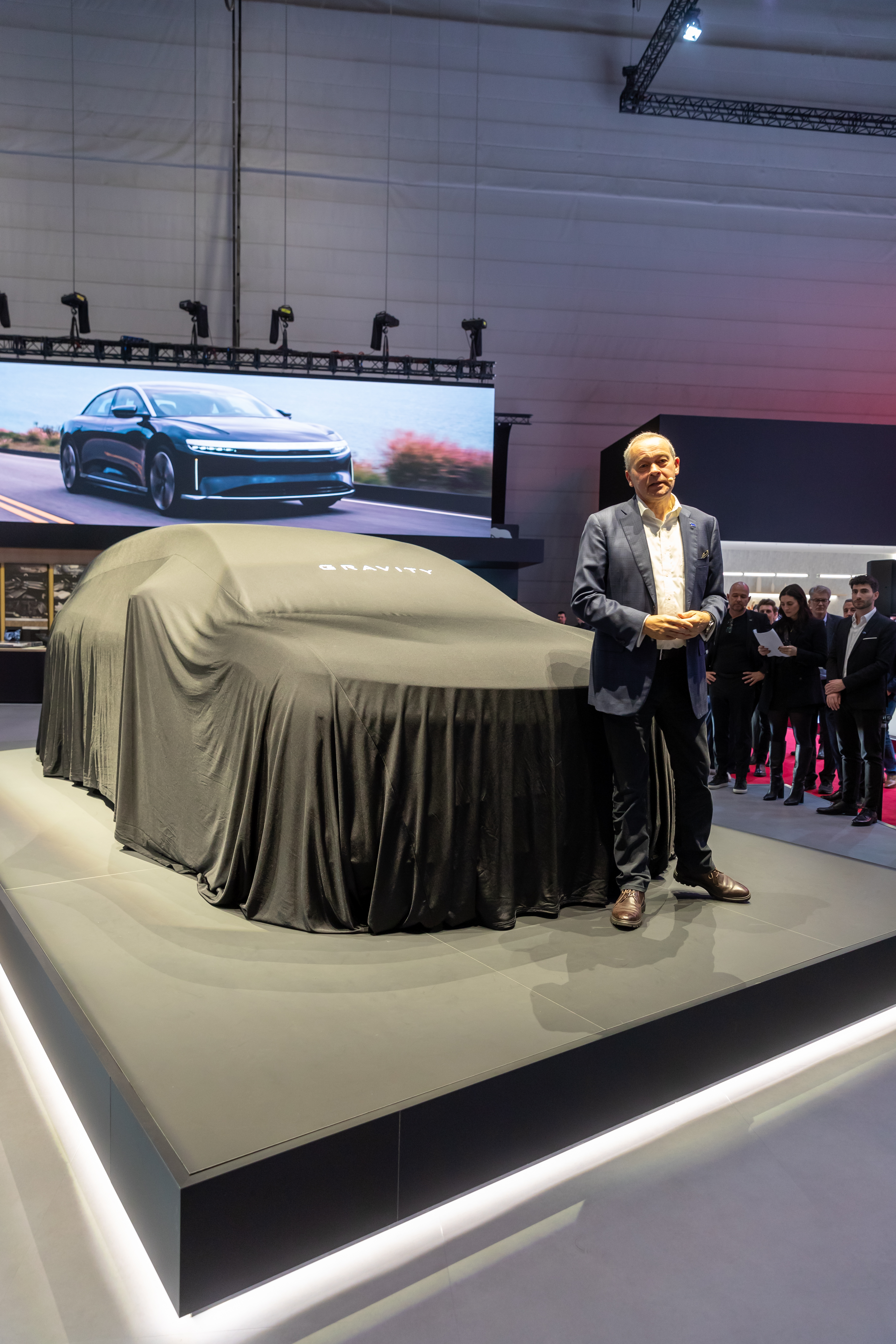
The Lucid Gravity is Lucid’s bigger electric SUV. Even with only a short drive, the host says it was fun and made them feel confident behind the wheel.
The Rivian R2 is Rivian’s next, smaller electric SUV/car. The discussion here is about whether it will have advanced driver-assist features soon enough, and how that affects buying decisions.
Term
L3
L3 is a level of self-driving where the car can do a lot of the driving by itself, but you still have to be ready to take control if it asks. The host is saying Rivian’s L3 features depend on when the car’s hardware is available.
Level 4 is a higher level of self-driving where the car can drive itself without needing you to take over, but only in certain situations. The host is saying today’s “point-to-point” claims don’t fully reach that level yet.
This is a bundle where the car’s advanced driving features are sold as an extra add-on. The host says Rivian charges extra money for it, either as a one-time price or a monthly subscription.
An “advanced driving feature” is a set of higher-tech safety and driving helpers in a car. The host is saying these features depend on the car’s safety hardware, not just software.
Point-to-point driving means the car can handle the drive from where you start to where you want to end, instead of just helping in small parts of the trip.
XPeng is an EV company, and “VLA” is the name of its driving-assist tech. The host is saying it’s meant to do similar things to Tesla’s self-driving software.
Huawei is a tech company. Here it’s mentioned because the speaker says it has driving-assist technology that competes with Tesla’s self-driving features.
Level three means the car can do most of the driving for a while, and you don’t have to watch the road constantly—though it can still ask you to take over if needed.
The Tesla Model 3 is the electric car in this story. The hosts are talking about how Tesla’s FSD software works on Model 3 cars, and how the experience can differ based on what computer hardware the car has.
“Hardware three” is the older computer inside some Tesla cars that runs the self-driving features. If your car has older hardware, the self-driving software may not work as well as it does on newer cars.
“Hardware four” is the newer computer inside some Tesla cars that powers the self-driving features. The host is saying cars with this newer computer tend to get better results from FSD than cars with older computers.
Here “blacklisted” is a casual way of saying the car may start limiting or changing how it behaves if you keep turning off the self-driving features. The speaker is joking that the system may have learned from repeated cancellations.
Boost mode is a “turbo” setting for an electric car that gives you extra power for a short time. It’s meant for quick acceleration, not for using all the time.
WLTP is a standardized testing method used to estimate how far an EV can go on a charge. It’s not exactly what you’ll get in real life, but it helps compare different cars fairly.
“Body in white” means the car’s body shell is built and welded up, but it hasn’t been painted or finished yet. It’s like the raw structure stage before the rest of the build.
“Form factor” just means the physical shape and size of a part, and how it’s laid out to fit in the vehicle. It matters because packaging affects space, weight distribution, and how practical the vehicle is.
“Wheelbase” is the distance between the front and rear wheels. A longer wheelbase usually means more room inside and can change how the car feels when driving.
In an EV, “800 volt” means the battery system runs at a higher electrical voltage. That can help the car charge faster because it can move the same charging power with less current, but it only works well if the charging station supports high-voltage charging.
“400 volt” is the voltage level many EVs and chargers use most often. If your car is built for a different voltage, it may not charge as quickly or efficiently at the usual public chargers.
“Charging infrastructure” means the public charging network—what kinds of chargers are available where you live and drive. If most chargers are one type (like 400-volt), cars built for a different type may not charge as fast.
A “split pack” is a battery-pack strategy that lets the vehicle switch between different voltage architectures (here, 400-volt and 800-volt operation). The goal is to avoid the usual compromises—so the car can charge faster on high-voltage chargers while still working well on the more common 400-volt network.
LIVE
We are alive for a new episode of the Detrek podcast. I am Fred Lambert, your host. And
as usual, I'm joined by Seth Wintraub. Are we doing set? I'm good. All right. And we
have a special guest today. We have our one and only the unique Jamie Dowell. How are
you doing, Jamie? Hi, everybody. Howdy, howdy, doing good? Jamie's joining us because you
is one of the lucky few to have ever driven the Aptera Solar Car. And he also visited the
company earlier this week, last week. How was it? It was last week. I took a little while to
write it up and to edit the videos and all that kind of stuff. All right. If you haven't had the
chance to look up his videos and his article on the Aptera and his visit, I suggest that you do.
It was very interesting, but you'll have plenty of time to learn about it because we're going to
interview him about his little visit in the drive this week. And if you guys have questions,
I'm going to remind you of that later on on the show as more people come in live.
But you're going to be able to ask him questions directly if you're listening to the show
live. But yeah. All right. Let's dive right in. How was it? Well, it was, I mean, it was
interesting. Obviously, I've been waiting for this for a long time. As I mentioned in the article,
I've been driving electric cars for, what is it, 18 years now, 17 years, something like that.
And Aptera has existed that entire time, sort of. And so, yeah, some version. Yeah, yeah, yeah.
There was an Aptera, then there wasn't, then there was, then there wasn't. Now there is.
Something like that. But the fact that it has been this long. And finally,
there's a car that is available to be driven by somebody who isn't an Aptera employee is very
interesting. And, you know, the long history of Aptera, there were a lot of early EV fans or,
you know, at the first incarnation of it wasn't an EV, but there were a lot of early EV fans who
did feel jilted by Aptera, you know, promising a car for so long and then failing. So,
there's a lot of sort of pent up frustration about that. But they finally have something
which may or may not be a full vehicle. But it's progress. It's progress. It's not certified
to be sold or anything like that, but it is going in the right direction.
Yeah, for sure. Absolutely. And it did, you know, I mean, I checked out the factory too,
it looked more complete than I expected it to look, but still maybe not as much progress as I
would have expected since the factory video that they put out six months ago. But in terms of the
car, which is the real thing that we should talk about first is that it's all right. I think still
needs quite a bit of work, especially on NVH, noise, vibrations, and harshness. You know,
they said that they've been tuning the suspension. It was too loose for a while. Now I would say
it's too tight. And I drove down there in a Tesla Roadster, which is a very, very rough car.
Yeah. But this was maybe a little rougher. However, really interesting,
even though it's a carbon tub, one really interesting thing with carbon tub cars is that
they're very noisy when you get rock chips and stuff from the ground. And this wasn't like that
because the wheels that would kick up the rock chips are in pods really far off from the body,
so they don't kick up anything into the car, which is kind of nice. And they are fully covered too.
Yeah. But yeah, so, you know, it accelerated fine. It wasn't anything to write home about
in the acceleration. I'm always really very specific about what I want my throttle pedal
to feel like on an electric car. And it was close enough to that. I think the power delivery was,
you know, a little bit on the weak side, but it's supposed to be a hyper efficient vehicle, you know.
And, you know, the air conditioning worked, all this kind of stuff. So it, you know,
it was all right. It handled a lot better than I expected for being a weird three wheeled vehicle.
It did feel pretty planted on the road, which is cool. And I even did manage to take it down
like a little bit of a curvy road because they're up there in the hills of San Diego. So mostly big
business park roads, but we got on a couple ones that had some curves and hills and stuff.
And yeah, and it was producing solar power while I was driving, which is pretty cool.
That was my next question. So what was your experience with the solar
while driving and or parked? What kind of product did you see? What kind of integration
in the car that they have deployed so far? So it's got a screen in the car that shows you
how much solar power you're generating live. I mean, the main screen of the vehicle
shows it in like the bottom right corner. Now they say eventually they're gonna have like
a window there for carplay if you want to have carplay, which is interesting.
Maybe they'll do it before Rivian does. I don't think you're ever gonna do it.
I know. No, Rivian's never gonna do it. But, you know, the excuse is, oh, we've got our user
interface. We don't want to confuse anybody. And it's like, well, I have terrorists figuring it
away. I actually am in favor of Rivian not using it. But that's my hot take.
What about GM not using it?
Also fine. I'm also fine. I know I'm the only person in the industry who says this.
Everybody's gonna get angry at me. But I think it's fine. I think GM's interface is pretty good,
actually. But yeah, so it shows you how much wattage you're generating at any given moment.
It was a very sunny, perfect San Diego day in June, so like literally ideal
circumstances. And it was generating 450 watts of electricity, which I think is a little less than
what they say is the peak. I think it's 700 watt panel worth of panels. But, you know, they're all
curved and everything. So I think you can get a little more if you park it and you point it
directly at the sun. But I think in normal driving around scenarios, it was around 450 watts,
which is, you know, that's a chunk of energy. It's not enough to really drive the car,
but it is enough to offset some percentage of your driving and to probably offset your daily
driving if you're a low mileage type of person. And then it tells you how much solar you've
generated since the last time you parked the car, too. It tells you how many miles you've
generated. It's a little bit further down on the weight on the page from where you are, I think.
I've got a little picture of it in there somewhere. It's not weight, maybe it's up
from where you were. It's right above the, I don't know where it is, whatever. You'll find it
somewhere on there. It's the screen. There it is. Yeah. And it shows you 450 watts,
eight miles since last parked. That was right when we had just pulled it out to drive.
Mm-hmm. The interface is, I think, pretty good, honestly, because it's all one
screen. Like, you can switch screens, but the settings, there's very few settings. There's very
few other things on the other screen. So you're just going to leave it on that main screen all
the time. And I know people don't like having non-physical controls, like everything on the
touchscreen. But the fact that everything's in the same place all the time, I think, is acceptable.
And there was a really cool thing to open and close the windows. You just slide your
finger up and down on that little picture of a car. And it opens and closed the windows,
depending on if you slide it up or down, which was neat. And it worked well. Yeah.
That's cool. So around the bezel here, is that a fan? That's the fan for the ECU?
Yeah. That's where the HVAC comes in, which is kind of a weird... Now, there are two HVAC
vents on the dash, on the corners, also. But the main vent is around the screen. I thought that
was really interesting, because then you get the cooling from the AC, which helps keep the screen
cool, which is nice. But then also, when it's heating, I wonder if it might overheat the screen
I was wondering the same thing, but at the same time, I don't know how hot that screen would get.
Right. Yeah. And the problem with it, they did have a little fiddly bit. The things that channel
the air, they're a little fiddly feeling, but they said, oh, we're going to make it better. I mean,
basically, every time I said, oh, that's a problem, they say, we're going to make it better. And it's
like, okay, well, you'll probably make some of them better, but maybe some of them, you won't make
it better. Yeah, realistically. But so it's been a decade, so
all the better done. But yeah, the production validation units for less than a year now,
so I guess that's the best comparison point. So, okay, you talked a little bit about the
driving experience. I mean, I guess you described it as okay. Yeah, it's, I mean, there is better
out there, obviously. But I think, I think if they loosen the suspension a bit,
there's some NVH they need to do, unlike the air conditioning pump, for example,
they really need to isolate that from the chassis. Because when you turn on the air conditioning,
the whole thing shakes. And the rear trunk area acts as like sort of a sound magnifier baffle
that like just shoots the sound of the HVAC pump into your brain. And it's like, I mean,
it's not loud loud, but it's like, I would rather this be quieter. Yeah, I mean,
that those are things that you figure out when you you're actually bringing one of those vehicles
production, especially with the smaller EVs, like we've seen it, we have in the garage right now,
I had the can amp pulse, the motorcycle, that best thing is reviewing for us. And you feel more
vibration when the fan of the cooling system turns on than when the vehicle is actually just running.
Exactly. But yeah, you wouldn't even think about that when making a gasoline motorcycle. But when
you do an electric one is like, you actually have to improve that quite a little bit. It's not,
it's not like crazy, but, but still. So yeah, the driving experience is, you know, passable.
So if you look at like the interior, for example, the interior, you just talked about it a little
bit. But if you were to put like a percentage on it, how much do you think it's like production
already? Let's see, I think I mean, the storage options seemed pretty close to done. In terms of
the like, they've got a little, a little thing that you can pop up to put like your USB chargers
and things in, they've got a center console, they've got cup holders, they don't have a glove box,
but I don't think they're ever going to have a glove box. So it's just a little zip up
like thing for your documents and stuff. There's really not a lot of stuff on the interior
to be done, you know, like it's a very small interior. I think it would be nice if they had
a telescoping steering wheel, which they don't currently have, because the way it works is the
seat only has one movement, you can move forward or back. When you move forward, you get a little
less headroom and headroom is already kind of a premium in this car. So I like to sit with my seat
a little bit forward. So I'm a little closer to the steering wheel. But I lose a little headroom
when doing that. So if I could bring the steering wheel out a little bit, I think that would be
nice. But I don't know if they're going to do that. They do have to fix the screens for the
rear view and side view mirrors. Now all the all the mirrors are cameras in this,
which is pretty interesting, because every every car designer for decades has wanted to do that.
But they haven't been able to because regulations say you have to have mirrors
in a car, but you don't have to have mirrors on an auto cycle, which this is regulated as.
So it has to ship with mirrors in some states, but the mirrors are actually genuinely useless.
You cannot see through them. They're not adjustable. There's a little bar in the way,
so like literally you can see like a little tiny corner of like the wheel. So they tell you,
yeah, we have to ship with mirrors. Here's how you remove them. Put them in the trash when you're
done. This part here and and this will stay. Exactly. Yeah. Okay. So all right. And you're
like is I think I think that's interesting because you see like what we see here, the window that
you can actually operate is only this part right here. It's very small. So it's it's why do you
store basically? I think it's both structural to help increase the stiffness of the, you know,
the window safety structure, side safety structures, and then also aerodynamic because
by doing that, you reduce the amount of opening for the window, which means that you can channel
the air sort of around the window. Even if you open the window, you can kind of channel the air
around it a little bit so that you don't lose as much efficiency with the windows down, I think.
But yeah, so one thing they need to fix is the screens for the side and rear view mirrors because
you can't use them with polarized sunglasses, which is something that I always note on cars.
That's easy enough. All they need to do is put the screens the other way around.
But the supplier gave it to them with the wrong polarization. So, you know, that's just one of
those things that you put it on the car, you realize, oh wait, this doesn't work. And then you
have to go back and get them to do it the other way around. Yeah. One thing that I think a lot of
people don't appreciate enough about this, you know, auto car, whatever you want to call it.
It's the storage room is actually storage. Yeah, storage. It's pretty significant.
Yeah, I laid down it. I'm six feet tall. I did have to be on a diagonal, but I could lay down
completely, fully laid out with the seat back. And I had my head basically brushing against the seat
and my feet basically brushing against the end of the thing. But if I pushed the seat forward
or had a pillow in there or something like that, I could probably sleep in it.
Yeah, this could be like two people. There's this idea of having like a tent too that comes
out of the back. Two people if they really like each other. Yeah, I mean, not even having to
sleep in it, but like as a road trip car, like you can have your the back full of luggage.
Oh, for sure. And one other thing I like too is I just realized it's pretty crazy that
they put just like three solar cells on each side here. I don't think they were there on the final
one. I think that's a earlier version of it because they didn't have that on the one I was in.
It's four main panels. The one weird panel is they have one on the dash,
which produces like 30 watts or something like that. It's pretty low, but it is something,
but it is a little weird too because it's kind of a little bit reflective. I didn't see that
problem, but I've seen other reviews that had that problem where they had the sun
coming in through the dash and it made it really hard reflection on the interior of the
interior of the windshield. I don't I don't know if that one has the dash. Yeah, this picture
doesn't have the solar on the dash, but they do have a solar dash piece for the car.
It seems kind of low as well. It's like one of those little $12 solar panels.
Right. Yeah, that one in particular just seems like they were just trying to find a place to put
a solar panel. The other cool thing about the solar panels on the car is they are split up into
distinct zones, so they're not all wired together. And that's in case you like park halfway under a
tree. One thing with solar cells is if one of them gets shaded, it can decrease the efficiency
of the entire panel. So when you cut it up into separate panels, then if shade is on half of
the panels, then the other half of panels can still be generating it maximum. Yeah, that's nice.
I can see it's being cool. Like if you're like going on vacation or something and you're taking
a flight, you can get the cheaper outdoor parking at an airport. You leave this in for a week,
two weeks, and you'll be fully charged by that time instead of having to negotiate a parking
spot with charging or which they often overcharge at airports. So for things like that, that's
really cool. But for people that are going to daily drive this and use this as their main
commuter, unless they have a limited commute, they're going to have to charge this either overnight
or a public charging station. What's the charging solution that they have on this?
They have an X port. They're the, in fact, the first automaker outside of Tesla that announced
they would use the next port. They got the ball rolling. Yeah, well, I think they even
pre-gated an X. weren't they going to use a Tesla port before?
They asked for it actually. They asked before Tesla made it an open standard.
But they were the first and Jamie's right. Yeah. And it is a, I think it's like a 50
kilowatt DC or something and you're like, oh, well, that's kind of low, but it's also a 44 kilowatt
hour battery. And the car is so efficient, it's 100 watt hours a mile, as opposed to like the 300
ish watt hours a mile that most electric cars are, that it charges at three X the rate in terms of
miles per kilowatt. So you can consider it as being like 150 kilowatt hour kilowatt
charging rate because it's three times more efficient than everyone else.
Exactly. I don't think in the podcast posts, I've put your visit because I
got the factory one. Yeah, but we can pull that up. Yeah. So that was the other interesting thing
is the factory tour was, I think, I think pretty enlightening for me because they really did feel
like they were showing me everything. I don't think they were hiding much. There were times when
I was walking around and I was like, should I be taking pictures of this? And they're like,
maybe not. And I'm like, I had to ask you guys that. Shouldn't you have put the things away
that I'm not supposed to look at yet? So unless they were doing with executive or with PR?
With PR. Yeah, Chris, Chris Cameron, Chris McCammon, I forget. He's their, their like,
Colm's head and Ken Paccio were there. I did meet with Chris Anthony and talk to him for a little
while, the co-CEO. But I didn't write up that as a separate interview. I just kind of put the
information we talked about into the various articles. But yeah, and they seemed to be quite
open about things. Obviously, they're talking in PR methodology. They're hyping things up and
saying we're working on that and all that kind of stuff. But they had more cars around than I
expected. They had more parts ready to go. They had the stations laid out nicely and everything.
Now, you know, the place isn't really built for high volume. It was a lot of manual stuff.
But they've only made 15 cars so far. It wouldn't make any sense for them to have
some sort of mechanized assembly line for thousands of vehicles per year.
15 cars in various stages of production? Are 15 validation units completed?
So that's more my own number of just what I saw in the factory.
Yeah, somewhere around 15 or 20 cars. And I would say most of them were in the
roughly this validation stage. There were a number of prototypes from previous stages.
And I took pictures of some of them. But I think most of them were this sort of
phase of car, which I guess they're calling this prototype Artemis. They have all the
different names for prototypes and I can't keep it straight.
That drive unit is pretty beefy. Yeah, for a vehicle that size.
They were originally going to do hub motors. They switched to an inboard single motor because
it would be simpler. And because apparently the hub motor supplier was having like a 80%
failure rate or something. So they're like, Yeah, this doesn't sound right. We shouldn't use this.
And the body is made in Italy, right? A body made by a company called CPC group,
and it uses carbon fiber sheet molding compound. So it's basically fiberglass, but
carbon fiber reinforced, which was pretty neat. And it's very low labor cost. So that's why they
do that. Because, you know, you can squirt out one of these bodies and like 10 minutes per piece.
And there's only I think six pieces. I don't know if they've been hit by a tire of situation
importing those. Well, I mean, the nice thing is they've taken 10 damn years to build the
thing so they could just wait, wait 30 days and something will change. Yeah, that's the thing.
They'll have that much time or in this case, money, which money is time, time is money. But
last I checked, they had like $17 million in the bank and they basically are burning
to $10 million a quarter. They did say they've got arrays coming up sometime soon.
They're preparing arrays. They didn't give me any details on that. And it sounds like
they're going to need more money, but having themselves listed on the NASDAQ helps in terms of
making it possible to raise money, you know, they can do arrays more easily that way than having to
do the crowdfunding that they've done and all that kind of stuff. At the detriment of shareholders
to dilution, obviously, because you're looking at like an $80 million market cap. So, you know,
if you're raising at $15 million apoc, you dilute your stock pretty fast. But look, at this point,
I think it's the only way to try to get there anyway. So I'm not an older, by the way.
There's one other way to get capital, though. They could start selling some cars.
Yeah, that's true. That's true. Talking about that, or they could,
what did they tell you? They could just make everything up merge with XAI and whatever. I
don't know. Sorry. Sorry. Sorry. I said that. I love that later on. What's your, so did you talk
about that timeline to certification timeline to potential deliveries? What does it look like?
So that is actually one thing that I didn't ask them specifically, and I realized that I should
have. But also, I think every other time they've given a date, it hasn't held. So it's kind of
as useful as asking Elon when self-driving is going to happen, you know, at this point.
End of the year. Yeah. Yeah. So I just said at the beginning of this, the mantra will remain
wait and see. And I think that's just, I think any fans, any reservation holders, any shareholders
just have to kind of, you know, meditate on nothing happening for a while. But, you know,
they got cars that run, which is, that's not nothing, you know? No, no. Everything is impressive.
And I do like just the idea of the car itself, high efficiency. I think it's awesome.
I do think that, you know, solar car producing your own energy that you're running on,
there's something romantic about this, something like really cool. Even in, it's the first time,
it's not the first time that it's been done. It's the first time it's been done in a way that feels
useful rather than gimmicky. So I think that's, that's right. And on a vehicle that like both
is designed to be solar because to make a car solar, you really do have to design it around it.
You can't just make a car and slap solar panels on the top. But it also looks kind of cool enough
and kind of uncompromised enough that you could still use it. And there are particular use cases
like the CEO, co-CEO Chris Anthony told me that he's really interested in commercial.
Now, I think that's either a long shot or a retreat. A lot of these companies kind of
retreat to commercial from trying to make mass market consumer vehicles. But the idea of having
these for, you know, food delivery or something like that, you know, it's not too far off from
the idea of using cybercabs for this. High efficiency. It's all about, right. Insanely
high efficiency, very low cost per mile. And it still has a lot of room in the back. So, you know,
there's, it's just as useful as cybercab, which we're going to get into next, but
two seater and this one, you don't have to charge. You don't have to set up a whole charging system
at your, your business, you know, instead of having to put in DC quick chargers everywhere at
your business, you could put in 120 volt, 120 volt out like it's this thing, 13 miles an hour,
which is, you know, that's 130 miles overnight. That's enough for a shift, right?
You do charge. Can you, can you charge a battery through solar and through, through connector?
Yeah, I believe so. The way it works is, so they were telling me about the charge system. They have
two separate charge controllers. They have a separate charge controller just for the solar
because the normal charging system, and this is true on any electric car, uses like 200 watts of
overhead or sometimes even more, which means that the efficiency you get when charging an electric
vehicle on a lower powered charging port is a lot lower because you're using a lot of that energy
on overhead or that power on overhead. So they designed a separate solar charge controller
that uses only like eight to 15 watts of overhead so that that way, they're not using up half of
their solar running the charge system. And then they kind of rebalance the batteries by activating
the full charge system every once in a while. So I think that you could do that. I don't know
specifically, but I think you can by just plugging it in and also having the solar going. And then
you would have, you know, you'd be charging it whatever 450 watts during the day while you're
driving around and then 1300 1500 watts or whatever overnight. Yeah, that's cool. Yeah,
for reference, like you said, 100 on 120 volts, just a regular outlet, you get 13 miles per hour
on my model three, which is, you know, pretty efficient. Pretty efficient. I'll get like less
than five miles per hour. So yeah, pretty big difference for sure. Yep. Yeah. So it's it is
sort of when you're charging on 120 volts on a normal car, electric car, it just
feels like, oh, that's, it's kind of slow. You can maybe make it work, but you always feel like
you're having to make it work on this 13 miles an hour, 130 miles overnight, like that's enough for
the vast majority of people's commutes. Yeah, this is closer to like an e-bike or a very efficient
e-motorcycle. All right, we're about halfway through the show. Maybe we can wrap up like,
what do you think, Abtara is going to, like, what's going to happen here?
I don't know, man. It's, I mean, right now is a great time to go to the market to get
ridiculous amounts of money for stupid bets, as we this week specifically is the perfect time.
So if they can manage to raise a good chunk of money in this ridiculous market before whatever
happens sometime soon, you know, it's possible they could give them, themselves
enough runway to actually get this going, but I think it's still going to take a good amount
of runway. So it's really about them either finding a trillionaire who wants to have something to do
with this, or, you know, getting some banks involved or whatever. And if they can get the money,
you know, maybe. But then the question is, what market do we go into? Will people take it over
the bolt or the leaf or the cyber cab? If the cyber cab happens, as we're about to talk about.
So it's still a rough road. Even if they get the money, it's still a rough road because
it is a compromised vehicle. It's cool. It's different, but not everybody wants cool and
different, you know, yeah. Well, we wish them the best, obviously. Yes. All right. So Jamie's
going to stay on comment a little bit on the few other articles that we have on and then at the end,
as usual, for people watching live, we can we can take you guys questions. So if you have a question
for Jamie about his visit on Apptera, question about Apptera, you can ask them in the comment
section right now and get to it in a few minutes. Or it can be also any other topics that we're
discussing today or any, any topics in the UV world that you would like set Jamie or I
stake on it. But yeah, the cyber cab. What happened this week is AP certification. It was it was
teased a few weeks ago by Tesla that it was the newly record efficiency for any kind of
vehicle officially certified by the EPA. And we can we can confirm that to the filings of this week.
But there's a few other, you know, some things that were confirmed, something that we weren't
sure about, just a few points to to to discuss in terms of actual specs of the of the vehicle.
So we are 47.6 kilowatt hour battery pack. It's using a three ferries, a three phase
permanent magnet motor rated at 163 kilowatts, which is just over 200 horsepower. It is a front
wheel drive. So we already knew that the weight. So the weight was a big question because you know
the goal was to make this car as efficient as possible. 3113 pounds. It's that that's curb,
you know, your curb weight is the yeah, that's right. Yeah, that's the unladen weight. That's
300 pounds heavier than my roadster. I think I personally I thought it was it was heavier than
I was expected. You know, I thought it could get on the 3000. Yeah, it's tough with with batteries,
you know, yeah, and without using carbon fiber and all that kind of stuff. Yeah, I think I think
another like the battery is definitely part of it. There's this, but we've seen that I think there's
some decisions that are unrelated to batteries also led to that because we we see other vehicles that
you know, lighter, like the, the, you know, we're going to talk about the Honda and later I think
that's a little bit lighter than this, you know, it's a smaller footprint, but it's more practical
probably overall. There's, you know, the long bow in Great Britain that you know, it's a roadster
also, but it's lighter than your roadster too. I think it's 1000 pound lighter than this.
Obviously, it's optimized for that or for driving condition, but still.
And the Akterra is also 1000 pounds lighter. It's 2200 ish. Yeah, as one fewer wheel though.
Yeah, one fewer wheel as a heavy wheel. Yeah, that's a similar size battery. It's 44 kilowatt
hour battery. So almost the same size and two seats, fewer, probably fewer safety structures
and things, maybe even more cargo though. Maybe the combined EPA range, but that's the
unadjusted range. So it's not, it's not like the official one. I know we're near the reality of
real world driving this car. 418 combined trim and 75 highway, but we know Tesla's goal is
about 300 miles of range on this thing and only 48 kilowatt hour battery pack.
And they kind of wait. I'm not, not a crazy powerful motor. It's, it looks very achievable.
But yeah, this is, this is the inside of the car here though. So like, it's, you know,
it's definitely bigger than the interior of the Akterra, but it's not, you know,
significantly bigger. The seats look a little bit thicker. The interior storage looks smaller
actually or non-existent even. But I mean, obviously the biggest thing with, with the
cyber cab is just, you know, whatever you think of the actual vehicle, the design of it and its,
its utility. It's, the main feature is the fact that it's supposed to be pedal less, steering
less, steering wheel less, it's supposed to be fully autonomous. And, and so far there's just
Tesla hasn't really solved unsupervised self-driving at any kind of meaningful scale,
which makes the vehicle kind of a confusing to other people, myself included, because
we're starting to see, you know, a decent amount of them around Tesla is supposed to be in production
since April. If something Tesla is good at, it's, it's ramping up production of mass market EVs.
And we've seen the hundreds of them coming out of the factory being tested all over the US.
And it's unclear what's the actual use case of them, because I don't think they can be used on
anything else outside of Tesla's current, you know, limited geofence, rubber taxi services,
particularly in Texas where regulation is, is the most relaxed out there. Tesla hasn't even
applied for a permit to fully self-drive in California. So I mean, we've seen, we've seen
the efforts going on right now in Arizona, in Nevada. So I would assume that the goal for Tesla is to
expand for take what they learned in Austin, Austin and Dallas, and then, you know, expand that
locally, bring that to probably Las Vegas, bring that to Phoenix, where regulation also, you know,
not too crazy. And, and then not just use the Model Y, which they're doing right now for
the rubber taxi in Texas, and then use the cyber cab as well. Are we, are we guys in agreement on that?
Oh, probably, yeah. You know, we're seeing a lot of them, we see spy shots all the time,
but they all have steering wheels. Yeah, they are just being valid. So that's the thing, like
they are being validated for self-driving, but they're also being validated as actually like
the driving, like any kind of EVs running, coming out for production. You need to test
like the suspension, you need to test the chassis, you need to test the efficiency, the driving
performance, you need to, you know, put it to a stress test. So I think they're doing that at
the same time. And, you know, you kind of have to have a steering wheel for that.
Yeah, yeah, you need someone in it to feel what it feels like. And they can't just ride it right
now because they haven't solved self-driving, so. We're really on a show on efficiency, very
efficient EVs right now. We started with the Abterra, now we have the Cybergtab, which, you know,
I think that the headline is the self-driving part, but, you know, it's made to be super
efficient EV. And now we have the Lucid Cosmos, that's also, you know, Lucid is known for its
efficiency and its luxury vehicle, and you're trying to bring that down market now with these
three mid-range EVs in the $50,000 range that you're trying to launch, with the Cosmo being the
flagship one as a kind of, you know, crossover, a SUV wagon that meant compete with, you know,
the Molo Y and all the best-selling vehicles in that very popular segment. And what happened this
week is that thanks to some design patent filings with the European Union Intellectual Property
Office, we get, you know, the most official, let's look at the design. We've seen some prototypes
around. Just a few weeks ago, we even had one right next to the Molo Y, which gave us like a
pretty good idea of the size of it, even though it was camouflage. But now you see, you see what,
you know, I guess I would describe that as kind of a shrunk gravity. What do you guys think?
Mm-hmm. Yeah, kind of like the R2 version of the R1.
You know, it looks a little less minivan-ish in the back, possibly.
I mean, that profile looks very much gravity, but the size of it makes it look less minivan,
like the fact that it is smaller. I just feel like the back of the gravity is more
straight and like doesn't curve down. Like just a slight amount, but I don't know.
I mean, I had a gravity here last week. Best thing was doing the review that it's going to
post probably next week, a full review for electric. And when it's the suspension is down,
for me, it's like, it's a wagon. It's not even a minivan. It looks like a wagon. And I pray that
this thing actually gets popular and they fit, you know, the iron out all their software issues,
which I'll let Bastille do the full review. But from his experience, he was extremely
impressed by the vehicle other than the software problems that come with it. And, you know, they're
releasing their FSD competitor at the same time. They're going to start releasing the lower price
versions of it. So I'm still hoping to see what they can come up with in terms of
volume and profitability, though I think the profitability will only come if this
cosmos is successful. And we're supposed to see that thing in full quite soon. I think it's coming
in the end of the year. From what I understand, they're actually going to start production of
this in Saudi Arabia, and then bring it in the US. What I've heard, I don't know if I,
that's wild. Yeah, because they have a factory in Saudi Arabia now, but I think it's mostly like
like the same thing that Tesla was doing back in the day in the Netherlands, you remember,
like they were like shipping cars there, right? Just yeah, yeah, yeah. But well,
to produce ones from scratch there. Given the Saudis reputation on labor issues,
I hope that is not the case, but we won't get too deep into that. Yeah.
I will say that Lucid, of the cars that I've driven, I think Lucid is the only one that I
would put on the same tier as Tesla in terms of how I like the way the pedals feel, the way the
steering, everything, the way it all works, the drive software, drive feel, those are my top tier
and everything else is at least a half a tier below. I'm putting Ruby in that I really like.
I mean, I've only driven the air, but the air for me is like, it's on par, if not better than the
as I really enjoy driving that car. It's really a driver's car. That's not true. I drove the
gravity last week, a little bit, just for like, like 20 minutes or so, and it was a blast. I don't
think there's a car that makes me feel more confident driving it than a Lucid so quickly.
Like I start driving it, I'm like, oh, this is, I feel very confident in this car.
I felt the same. I only did a test drive with gravity to like 20 minutes. I felt the same.
Seth? Yeah, so it's interesting because Lucid has all these problems with deliveries and set up
and some software issues. But like once everything's working out, people seem to love them.
I agree. All right, a quick word on Rivian. We talked a lot about Rivian last week, which sets
R2 first drive. But, you know, they're doing the rounds right now with a little press tour around
the R2. And Rivian, CEO, RG's current gave a very interesting interview with
Fire last week. I recommend you go check it out. I linked it in this article here. But
I thought you had an interesting point about self-driving. So we spent a bunch of time on
talking about that because of, you know, Seth at a good point where he's an R2 buyer,
but not right now because of the L3 capabilities only being available
hardware-wise with the vehicles coming later this year. So, Wyatt talked a little bit about,
you know, more details of Rivian's approach to not just self-driving, but just autonomy in general.
And he had an interesting point about that I've been making actually for a while,
that he doesn't see the capability to charge for these, you know,
point-to-point driving that is not real level four, just like what FSD is right now.
For a meaningful, you know, looking forward for any kind of midterm capabilities,
he sees as a window right now where the offering is limited where you can actually charge for it
and Rivian is charging $2,500 for their autonomy plus package or $50 a month.
But he admits that he doesn't see Rivian be able to do that going forward. He actually linked it,
sorry, linked the features to the advanced driving feature to airbags and other safety
features that, you know, you used to charge for that. You used to have to pay to get airbags in
your car back in the 80s and 90s. Now it's included and actually it's mandated. And he thinks that
the same thing is going to happen with this point-to-point driving technology in the future,
which, you know, I agree with that. We've seen it in China already.
All these FSD competitors are there, EYD's GodEye, XPENG VLA, Aishami, Huawei all have
very similar technology to what FSD offers. And they are all included in the price of the vehicle
to some degrees. And we are not seeing that right now in North America because Tesla is,
I think, the only one that has, at least in terms of capabilities, they are on the level of their own.
But I don't think that's going to last that long. I think people are catching up fast and
I think Rivian aims to have, you know, be on par with FSD by the end of the year
and then go further in that next year with a through level three system where you can actually,
you know, start paying attention for meaningful periods of times. And I think that's where you
actually add value. When there's, you take responsibility for the system, however, for
where specifically or for how long, then you actually add a lot of value and then you can
charge for that. But for actual, you know, FSD level two advanced, do you want to call it level
two plus now? That's what they're like. We have six levels to work with and we're having them
come up every, everyone's in level two, so we have to differentiate them somehow, huh?
Yeah, but in China, they're loving that the level two plus, it's really becoming a thing now.
That I think is right. I think we don't, we won't see them charge for that looking forward.
I don't see it happening. Yeah.
That makes sense. And the reason it's not doing it in the US is even if there are other companies
that have something, some sort of capability on their car, it's harder to use, it's not marketed,
so nobody knows about it, all this kind of stuff. So it feels like Tesla is the only one.
But I should say RJ had a good point too. He said, it doesn't mean that you, you should not work on
it and try to deliver the car because when it becomes, you know, standard, then if you don't
have it, you're behind anyway. So you still need to work on it. It's just, it's not going to be
what Elon Musk has been selling to Tesla shareholders for a long time. It's going to be a
big, you know, margin driver and it has been for a long time, but I don't think it's going
to be in the future. And we already see it. He's already been proven right by Elon himself
who said that the price of FSD will keep going up and you know, it would reach $15,000 for the
package at some point. It's been down now to $8,000. Now they remove the ability to buy it
all together and just, it's just subscription, but I don't see it. And it's already, I didn't,
I didn't even know this until a friend of mine, Paul, just got a new model three and he started
paying FSD the subscription because I have FSD, but I have, I paid for it like years ago.
He started this subscription in Canada. It's a hundred dollars a month,
which is the same in the U.S. I don't know if you guys know this, but the Canadian dollar
is doing great. It's like on the U.S. dollar right now. So it's 30% cheaper in Canada than
the U.S. 40. We have the exact same product right now. And then you have to look at hardware three,
which, you know, those are the people that are really getting screwed because they also are
paying $100 a month for now, a very inferior product to, to what we have on hardware four.
My primary experience using FSD in my mom's model three is every like five minutes I cut off FSD.
It asks me for a 15-second clip of what, of why I did it. I press the button and I say 15 seconds
worth of things that I cannot say on this broadcast about why it won't stop changing lanes.
I'm sure your, your mom's all three has already been blacklisted now.
They're not blacklist. Exactly. To be fair, your mom is on
an hardware three or before. Yeah, it's, well, it's one of the first
model three. It's the one that I reviewed when we, when we first got it. So it's
been 2,500 or so. So is it 2.5 or 3? It was. Yeah. It was 2.5. It got the upgrade. Yeah.
The, on the Super N, another very cool little EV that we won't get in North America,
but they just launched it in the UK and it started the equivalent of $25,000 for a little,
little, a little at-ach, a little four door at-ach kind of reminiscent of like the K car.
I don't think, I don't think it really would fit the category officially, but
you know, very reminiscent of that. And it's 2,400 pounds. Yeah. It's not heavy at all.
Yeah. That's hot as heck. That's hot. That's hotter than most hot hatches, right? Hot hatches are
3,000 pounds. Normally around that. What's hilarious is like every time there's a super cool car that
I want, it's never in the US. Yeah, never. And I'm sure it would be popular too. Like,
I'm not crazy popular, obviously, but you have a small 47 kilowatt hour more, a kilowatt motor
on this, but then you talk about a boost mode that brings it to 70s, like almost double the
capacity. But even with the boost mode, like, don't expect to win a drag race with this thing,
because there's 30 to 62, 100 kilometers an hour is 10 seconds. Yeah. But you do win almost
five seconds, just driving it in a standard mode. So that motor is really optimized for
efficiency, obviously, is you don't want you to use that boost too long for too long. Look at the
interior. That's like, that's kind of like the best tune pony, which is a Chinese electric car
that I drove. It's $4,000. And it had a boost mode. And I could not tell the difference,
because it was like, it was like the difference between 30 and 36 horsepower or something like
that. Just like, okay, this is this one, because it's like five seconds, 4.5 seconds faster on
the 62. It's that that you feel for sure. So we're talking about the Abtera 44 kilowatt
hour battery pack in their cyber cab 48 kilowatt battery pack this on the super n is 29.6 kilowatt
hour. I love it. Yeah. WLTP of 128 miles. So this is kind of we're back to like the the Leafs
day like the early lead. Yeah, give me some small battery pack options. I just see the car. There's
a beautiful car. I love it. I love the design of it. Yeah, that thing. Now our friends in
on the other side of the pond in the UK can actually get that good for them.
All right, another company that I put in a similar category as Abtera is Tello trucks.
And they had a couple of updates this week. One, the announced manufacturing partner
for for the chassis for the body. So the body in white is going to be made by a different company
Schwab's Industries based in Michigan, which is a tier one supplier. So you know, for a small
company securing a tier one supplier is actually a big accomplishment. So so good on them. But
my article today was more focused on the battery pack announcement. So first of all, like the
the Tello is interesting for its design and engineering of the actual form factor where
you look at that wheelbase here. The equal I think it's no bigger than a mini Cooper. Yeah,
it's the length. It's the total length of a mini Cooper 152 inches long. Yeah. But the still has
like a five feet bed on it, which is impressive. And then it's a four door full cab. You know,
it's a useful truck. And in that form factor, they're fitting a 77 and or 100 kilowatt hour,
these two battery pack size 77 kilowatt hour for 260 miles of range or 160 kilowatt hour for 350
plus mile range. So now you they won't win Jamie on that because they're big battery packs.
It's too big. But it is impressive for the form factor itself. But what they're doing now with
this bag that I found really cool is that they are solving the issue of you go 800 volt or 400
volt. What, you know, you do compromises between the two. And especially in North America,
where our infrastructure or charging infrastructure is still very much 400 volt,
it's not really optimized by our world. You if you go with a dollar volt architecture in your car,
you will have serious compromise at those front of all station and and not charge as fast.
So you can you can advertise a crazy fast charge rate for this and start charging session,
but you won't actually get them most of the time.
So they do a split pack now, where they can they can both switch between the 400 volt and
all the volt system without having to compromise on either one, or at least not compromised as
much on either one, which I think is, you know, it's not completely novel. There's a few other
companies that are doing that. But for a vehicle like this, like, I think they're just doing a
lot of smart decision as a company for bringing this vehicle to market. Because, you know, with
this type of vehicle, you cannot afford to, you know, make too many mistakes.
Yeah, it's already different enough that like, they need to get it right, get it right the first
time. I, I've talked to these guys a bunch of times, and they do seem like they've,
they're doing it right, which I really like. I did take a ride in this thing,
actually, I didn't get to drive it, but I did take a ride in it.
That was the when?
When they first revealed the that red one that you were looking at right there, they first
revealed it to us in Irvine. And it was what year was that was March of last year.
Um, and it was, you know, it's pretty impressive. There's a journalist around here who's six foot
eight, and they stuffed him in the car and he fit just fine.
Yeah, the design utility of it, how they make it useful is really impressive. So when, when you,
you didn't drive your road in it last year, if you were to compare the readiness to production
compared to after this week, where does it sit?
I think they were both kind of in a similar position. It was a rough ride, a noisy ride,
both times, uh, you know,
probably except I would say that the, the fit and finish of the tello was higher.
Okay. Already.
Then the, then the outtero was for sure. But in terms of drive feel and all that stuff,
I think they both had similar issues in terms of suspension and so on and so forth. Now that said,
I rode the tello and I drove the outtero. So I don't have the exact same comparison there.
I was actually the first one to ride in the tello.
A lot of firsts.
It's interesting and beautiful. Uh, it's funny that it looks like the front wheels
actually extend further out than the actual chassis of the car.
That's real. I know.
That's real. They said that they could, they could technically like climb a wall with it or something.
Yeah. Well, that's because if the front wheels are going and they hit a wall, it'll just like
start. And then, uh, you know, obviously it's an Irvine where Rivian is. I wonder if they
share any, uh, engineers. And then also I was thinking, uh, it's funny, but you know,
who'd be a good buyer for this company would be mini Cooper. Like they could basically,
they already make a car that size. They could just, you know, use this, you know, frame and
right. A little design accidents from them. And yeah, yeah, there you go.
It's cause they're going to need money. Like that's the same thing with Aftera.
Like they, they were actually pretty good at raising money compared to Aftera pre, uh,
going public. They're not going public yet, but yeah, about $30 million, but I think they're not
necessarily as, it doesn't mean that this position as good as Aftera because it is a full car. It's
a full passenger truck and the certification process, the validation process for that is a lot
higher, more difficult, more costly than it is for, uh, the, uh, what, what do you call the
Aftera category? Uh, they call it an auto cycle. I call it a motorcycle because I think it's
roughly the same, but they call it auto cycle to differentiate from motorcycle.
Yeah. So the, uh, the process for that for an auto cycle is, uh, is a lot less costly and
and longer than it is for a passenger vehicle. Yeah. I think that Aftera will actually have a
motorcycle plate on it when it does. And that's good because it has such an aerodynamic back
that it doesn't have much room for a regular. Exactly. You couldn't fit a normal, you could
do the European plate, but you couldn't do the North American, the tall plate.
All right. Let's go real quick over the, the Jeep, um, Rickon. Is that how you pronounce that?
Rickon, Rickon, Rickon, because, uh, we're already an hour in and we have a lot of questions from
people here that I'm seeing on comments. So yeah, this thing has just been made fully available.
So the Jeep Rickon EV at $67,000 is coming to the US. So, you know, Stenlentus Jeep have had the,
they haven't been super willing to bring their electric offering to the US. They have,
I think they're only the wagon here right now is available. So the, the Rickon is adding to it.
250 miles of range on a hundred kilowatt battery pack. So that balances out with all the efficient
EVs that we've been talking about. It's not that efficient. That's for the normal version. Then
you have a Moab version that gets only 222 miles of range. Is that great for a hundred kilowatt
hours? That's crazy. Is that because the Moab doesn't have doors? Doors would maybe help.
Yeah, all the doors are very useful. How many times have you been driving an SUV and you're like,
man, these doors are just pissing me off. Jeep drivers are a different breed though, you know.
Yeah. Yeah. Zero to 60 in 3.6 seconds, 250 kilowatt, um, motor. Man, with power like that,
that's enough to blow the doors off this thing. Yeah. So is the same in the back? Yeah, that's
pretty powerful. Yeah. Interesting offering. I'm wanting to give it a shot. I'm going to drive it,
but we'll see how popular it is at $67,000. I think in that price range, you have a lot of option.
And obviously with the R2 coming out, the term of adventure vehicle,
you know, it's a different offering, but it's going to be tough to compete, I think.
I mean, I have a feeling this would maybe compete more with the R1 despite size differences, I
presume, just in terms of being a true off-road vehicle because the R2 is kind of like a glamping
off-road vehicle, you know what I mean? Well, the specs on it aren't really not bad for the
off-roading specs. I think, uh, I think your R1. I know the R1 is just like the best off-roading
vehicle ever made, so maybe my bar is just high. All right, let's jump into the conversation.
All right, Dean, welcome, Jamie. Thanks for reviewing the Abterra. What struck me most
about your video and article was how much the Abterra still seems like a prototype rather
than a production-intent vehicle. Yeah, it is a little bit. A little bit. It's, I mean, it's
better than the last prototype, but it's, you know. Yeah, are they making, are they improving fast
enough to get to a point before the cash dries up? And I guess that's always been the case.
All right, 29 Mato says, BYD installed flash charger in Zagreb Croatia this week,
showed 1.5 megawatt charging at 10 C current on blade 2.0 LFP battery. Oh, wow, LFP battery.
They don't know any other words. 10 to 95% in nine minutes. Yeah, this thing is,
I mean, I know these are real. I've seen them. I've seen them in person. I've seen them run,
but every time I, someone mentions it, it's just, it's nuts to me. And we talked about it last week
that the deployment rate of BYD, or maybe two weeks ago, but the deployment rate of these things
is absolutely insane. They are popping up everywhere so fast. Yeah. They said they're
going to have like 10,000 of them in Europe by the end of this year or something. Not that,
not much, but I think it's 6,000 internationally by the end of next year. Okay. Most of them in
Europe. The rest, I think it's going to be like a few like Asian market and Canada. It's coming
to Canada. Exclusive last week from the next track, it's coming to Canada. Nice. Maybe we can
jump up to Canada, get a charge and come back down before
there's going to be some places around the border that's going to make more sense doing
that than going to customs. That's all. Yeah. Well, they won't let you do it because they're
the Michigan congressmen are trying to ban the cars from coming over here on vacation.
Well, that's the thing too. Like we were talking about the chargers, but one of the
reasons that we don't have these kind of chargers in North America is that we don't have the cars to
take the capacity anyways. Yeah. All right. Sceptic says, I've been an Aptara cheerleader for years,
but I don't see a path of viability. They should have stuck with the original plan to hand build
hundreds of cars instead of trying for mass production. Probably, you know, they may end up
handing build hundreds of cars anyway, because that's, you know, they don't, they can't do mass
production right now. Dan overstate says I've ridden a slingshot, which I think is a similar
three wheeled car. So I know with two wheels, you can see around all potholes with four wheels.
You can straddle many potholes with three wheels. You can hit every pothole you encounter
unless you're quick. Yeah. Yeah. I know a guy who was, who was thinking about doing an
archimodo, using archimodo as a camera vehicle for film shoots. And they decided not to because
the middle, the third wheel means that they hit more bumps on the road, you know?
All right. William Pesano says my problem with Aptara is how long it's taking and the slate
is almost ready to go. He's got kind of a diatribe here. The one thing that tells me Aptara might
never come these last 10 years, everyone hates the stupid windows. And Aptara
used to just do a split window. Might give you five miles of range. But I mean, that's what I need.
It's about efficiency. Yeah. People complain in your article and your videos and the comments
of the complain of the windows. I don't know that I've seen that many people. It's pretty well on
also, I think if you're in a little pod, you want as many metal bars as you can,
you know, somewhere to help dissipate some energy in case anything happens. That said,
it's made of carbon fiber, which is a very strong material, not, not, you know, a carbon
reinforced material. So I have a feeling the crash structures will be okay, but not,
it's still, you know, you still don't want to hit a Rivian. Yeah, it's a light vehicle. But I don't
get the comparison to slate too, like we was cross shopping a slate and then add to our solar
cars. Yeah, different cars. Well, you know, similar price range, maybe once the Aptara gets the thing
down. But also slates got a lot of money, you know, so money buys you speed and all kinds of things.
All right, skeptic says the public charging infrastructure has gotten so much better since
Aptara started pitching this vehicle having onboard solar isn't nearly the selling point. It was
back then. While that's a fair point, there are lots and lots of people who either beach, like
people who live near the beach and have street parking, they don't have off street parking is
that's very common where I'm from. And that would be ideal for a solar person because they live in
a sunny area, or apartment people, people who have apartments, or who live in like dense areas,
they have to find a place on the street to park. That's a possibility because then you're always
charging the car a little bit every day, you don't maybe you have to supercharge every couple of
weeks or something, you know, exactly. Yeah. Right, from San Diego, most people don't drive
more than 40 miles a day on average. That's just not after his magic estimate is transportation
industry knowledge. Yeah, that's a good point. And that's most people, some people drive less than
that. So, you know, you can have a car that charges up with an extra 20 or 30 miles a day. And
maybe it's enough for you. Yep. Jamie, did Chris Anthony give you any sense of his confidence in
being able to raise the hundreds of millions they still need? They were talking about doing a raise.
They said something about needing 40 million, which is seems a little low. But, you know, it's not a
car, so they have fewer costs. But they didn't have any real details on the raise. And they did
say the fact that we're listed on NASDAQ does open up more options for us, which is true. But who
knows what happens if they try to raise 40 million when they are 80 million valuation, you know,
because then you're giving away half the company, literally. Yeah, if they can do the math, that's
50% delusion. But I think 40 million, they can get to selling a few vehicles at least. And I don't
think they've become financially sustainable with that. But at least they get there. And then, you
know, maybe the stock, you know, pumps a little bit. And then you do another raise. And then you
can maybe, you know, with some extreme, you know, financial tightness, like being very on your
expenses as much as possible, you can maybe get there. So I see, to quote Lisan Al-Gaib,
I see a pat, but it's a very narrow one. Yeah.
All right, William. Son, after I could just announce that they're going to have FSD next
year in the stock, which I'm 20%. Yeah, I hear a million Abteras on Mars, just around the corner.
Well, we'll see the full sun driving. To go back to reality here. I remember back in the day,
but that was like a long ago, Abteras talking about using OpenPilot from Koma AI.
No, they're using it. Oh, that's cool. That's cool. And they talked about that. They said
they're using a Snapdragon 845 processor, which only draws eight watts. And that's their FSD
computer, basically. And they're all the way and then just uploading OpenPilot in there.
Yeah. Yeah. Well, no, it's a, I mean, the processor is a Snapdragon 845. So it's a smartphone
processor, basically. Yeah. But that is with the Koma, because you can buy the Koma one,
but you don't have the Koma one in there. So they have their own camera, their own processing,
and then they use the OpenPilot software in there. I'm not clear on what cameras they're using,
but they do have a, side and rear cameras anyway, because they're doing that for
their, yeah. So, you know, it wouldn't be that hard to just add a front camera and call it a day.
All right. Carl says, when I hear about Honda pouring money into South State Battery Company,
heck, you can't help but think they would be better spent partnering with Aptera.
I mean, manufacturing would help, would be nice, I guess. Yeah. That's a reference to the
Quantum skate field at Honda this week. And they already tried to partner with Sony, so might as
well. Dan overstate notes that you only get 13 miles per hour of charging on level two on a
Silverado Lightning Hummer. Like six times more efficient, you know? Didn't they say one of the
things Aptera was known for was it had the same coefficient of drag as the rear or the side windows
on a Ford F-150. Just the mirrors. So they didn't tell us about the drag,
because they sent the car to Italy. This actually, this was maybe the only, like, skeptical part of
the trip is when I talked to them. They said they sent the car to Italy. They did that wind tunnel
thing. I asked them, did you ever get results back? And they said, no, we didn't really get good
results back from that, because it wasn't a rolling tunnel. And so, like, we had to raise the rear
wheel, and it wasn't representative and all that stuff. To me, it sounded like they were saying
our CD was lower than we wanted it to be, and we didn't want to tell anybody.
Interesting. But I'm sure that it is. I mean, it's shape, the most,
teardrop is the most aerodynamic shape, and it's the closest thing we've ever seen to a teardrop.
The reason you know that the teardrop is an aerodynamic shape is if you drop a drop of water,
it looks like a teardrop, because that's the natural shape that the air goes around it.
So, if you can make a car that shape, you've done it. And screw it up pretty easily. It's just,
something misdesigned. And then, yeah, it's the two front wheels and the suspension thing. That's
the worst part of the aerodynamics. So, all of their development has been focused about
reducing the complexity of the suspension of the things that run out to the wheels,
because if you have less disturbed air at the front of the vehicle, that
gives you gains all the way to the back of the vehicle. Yeah.
All right. We're going to jump through a little because we're getting late. In your opinion,
between Tesla, Slate and Efterra, will any of them be released to the public in the next six to
12 months? And will any of them be out of business by the end of 2027? I don't think any are coming
in six to 12 months. Slate could do 12. Yeah. Maybe. Okay. Maybe. Efterra could deliver something
next year. I think if they raise enough, I think it's doable. Like, no, I'm not talking about,
you know, ton of deliveries, but a handful of cars, it's possible.
It's possible. Lucid needs to get to work on their software. It's about time for me to replace my
air, but I won't buy another Lucid with the present OS. I don't get it.
Especially now, like with AI, I'm not on board with for AI with everything, but for software,
it's getting so good, like you cannot have like a small team of smart people, like producing some
very, very good software and just going through bugs at a high speed. I don't understand why
they're falling so far behind on that is just I hope that like the new CEO coming in, I hope that
he's addressing that right away because they are losing a lot of customers just to that because
the hardware is impressive as it gets. Especially when you compare it to the software, you're like,
what's, it looks like two different companies. The hardware is almost too impressive on the list.
Yeah. So waiting for an invitation to order an R2. So far, it looks like they just a tiny
trickle of orders are being allowed by Rivian. It's ramping up this week. I've seen a lot more
people getting their ability to order right now. It has been only 10 days. Yeah. Have you got it?
I have not. No. You said that you drive one or you drove one at the event, of course, I knew that.
But you do one or two. So at the same time, I thought maybe you are faster off the list.
Fred, did you get a test drive yet? I went down a tester of it day the day they opened.
No, I didn't even check, but I'm not in Montreal right now. Maybe when I'm back in Montreal,
I'll see if they have one to test. But I don't know if they made it to Canada.
Always a little bit late with Canada. Yeah.
All right. I'm just going through a couple. Total massive liability means it will be withdrawn.
See, it's great that you are highlighting more efficient vehicles here. This is the
direction that we need to go moving away from being dependent on other countries and smoggy
inefficient vehicles. That's what the error of the Hummer EV, I feel like, is needs to end.
But I'm RVs still more efficient than a Prius. Yeah, that's my point. I mean,
my point has always been, if I see someone driving an Hummer EV, especially here in Quebec,
I don't care. I know this has been powered by hydroelectricity. If you're doing at home and
you're doing with solar, it's pretty good. Especially batteries are recyclable. I don't
feel bad. I think you can build four Chevy Volts. Yes. That's where you lose. But I always say
it's a lot easier to make more efficient vehicles, even if they're big than it is to convince a pickup
buyer to buy a Prius. Are they slashing tires in Quebec yet? Of SUVs? Or is that not a thing
that has happened there? They're doing that in London, right? I haven't seen all your slashing
people in London. Oh, come on. Okay. Okay. Hey, America has more knife crime than London.
Per capita by like a large amount. You guys are leading a lot of things when it comes to
a lot of things. They're number one, USA. All right, a couple more questions. Do you think there
are any chance of Tesla bringing back the FSD transfer incentive? Look, if they tell you,
you can't transfer your FSD, you tell them, yes, you are transferring the FSD. They didn't
deliver that software. You bought the software, they didn't deliver it. They have to transfer it
forever. I will literally sit there, chain myself to a desk until they give me, I mean,
I'm not buying another Tesla, but if they tried to pull this on me, they would never hear the end
of it. It blows my mind that they are not doing it. I was talking about my friend Paul earlier
that just got the FSD and he exchanged a Model 3, a 2021 Model 3 in which he bought FSD and they
didn't let him transfer it. I would have refused. You got to entice by the price of the Model 3 in
now, which to be fair is extremely cheap. It's cheaper than in the US, which is extremely rare
for us. It was too enticing for him, but I would have died on that hill. You have to transfer my
FSD. Yeah, I'd sue them. I'd do anything. They have to do it. You bought software, they didn't
deliver it. You still have a license to software that hasn't been delivered. They need to either
give you all the money back or give you that license to let you transfer forever until they
deliver it. Because I wrote an article yesterday about the effort that they have in Europe right
now to sue Tesla and the giant class action over the Hardware 3. I'm so glad. I didn't talk about
it in the podcast, but I guess I'll mention it real quick. I'm so glad that the people behind
this effort are smart enough that they are doing it. It's an old channel where if you bought FSD,
you get reimbursed FSD, but then everyone, whether you bought FSD or not, also actually,
you get a bigger part of the claim for just having bought a car with Hardware 3 for the claim that
you're supposed to have the hardware that enables unsupervised self-driving. They're going all in
on that. It's 7,000 people right now, and we're talking about tens of thousands of dollars,
potentially per people. Tesla needs to take this seriously and do something about it.
They've been doing the minimum. Just using the FSD transfer window as an incentive to buy is
this guy, Tim Head, and back the FSD transfer incentive. We shouldn't be referred to this
as an incentive. It's not an incentive, and it's not their choice whether to bring it back. You
have that software. You bought that software. They didn't deliver it. They have to deliver it,
and if they don't deliver it, they're in breach of that contract, period.
What you should do is go to Small Claims Court, get the money back from FSD, and then buy it again.
People have done that. that, and it's unfortunate that they've had to do that,
because it's an extra hassle, but you can get all of the money back, potentially, by doing that.
All right. We're at $5.20. Let's just do one more. Aptaro could become as popular as the
Beetle in the 1960s. It looks so unique, and it is a significant paradigm shift. To me,
more viable EV evolution weapon than a crossover that looks like ice. I do not think it's going to be
that popular. It would be nice. Everybody seemed like fun, but when it comes to time to pay $30,
$40,000 for a two-seater, I don't know that everybody that is in love with this thing is
going to buy one. Yeah, you could buy a Beetle for $50 in the 60s. Now, let's also look at the name.
Carl is in San Diego, which is where Aptaro is. Also, in San Diego, this vehicle really makes a
lot more sense. Someone living on the beach in Carl's bed makes so much sense. I don't know if
people who aren't from around here have been in terms of the culture, in terms of parking on the
beach and taking your surfboards to the beach and all that stuff. There's a lot of ways that this
thing makes sense, but the same way that the Arkimoto made sense in beach communities, then you
got to sell it in Kansas or whatever, and you've got a different calculus. How many cars can you
sell? How many Mazda Miata's sell per year? Those are cars that only sell in California,
sell in California, that kind of thing. That's a good point. I think the comparison with the
Miata, in terms of volume, if you want to look at what kind of volume is possible with Aptaro,
I think a Sunday drive car to see is probably your best bet, would expend it to the efficiency
nerds like us too that just want to drive as efficiently as possible. Yes, that's it for
us this week for the Electric Podcast. I hope you guys enjoyed it. Thanks for Jamie for joining
us. It was very fun. I think people appreciated it. We're going to see you same time, same place
next week. Have a good one. Bye-bye.
About this episode
Jamie Dowell joins Electrek after driving Aptera’s solar car and visiting the company, and the hosts dig into what’s still rough—especially NVH, cooling noise, and mirror-screen limitations. They also break down how Aptera’s solar output is measured (e.g., 450 watts) and how zoned panels help with shading, plus the “X port” charging efficiency. Tesla Cybercab specs and autonomy rollout get scrutinized, while Lucid Cosmos design leaks and software timing enter the mix.
In the Electrek Podcast, we discuss the most popular news in the world of sustainable transport and energy. In this week’s episode, we discuss Jamie's first drive in Aptera's solar car, Tesla Cybercab specs revealed, Lucid Cosmos design leak, and more.