TSLA shareholders wake up, Xpeng targets EU, VW goes cheaper, and more
Electrek
TSLA shareholders wake up, Xpeng targets EU, VW goes cheaper, and moreElectrek · Jul 17, 2026
Annotations will appear as you listen
0:00
68:04
Topic
Robotics deployment growth
They’re talking about why a robotaxi/robotics service seems to be expanding on the map, but the number of cars actually doing trips isn’t growing much. It’s a question about whether the service is really scaling yet.
Term
supervise FSD
“Supervised FSD” is Tesla’s self-driving feature where you’re still responsible for watching the road and being ready to step in. It’s not fully hands-off driving.
“FSD 3” means a specific version of Tesla’s driver-assistance software that’s marketed as “Full Self-Driving.” The question here is what happens to people who paid for that version if the promised features or rollout don’t match expectations.
Here, “hardware upgrade” means updating parts inside the car—like the computer that runs the driving software—so it can support newer features. The question is whether owners will have to pay for that to keep getting FSD.
“Micro factories” are small plants or service sites that could be used to do upgrades to cars locally instead of shipping everything around. The speaker thinks the plan is unlikely to materialize.
A trade-in is when you give your current car to the seller and they count it toward the price of the new one. They usually quote how much your current car is worth first.
Supervised self-driving means the car can do some driving, but you still have to watch closely and be ready to take control. The criticism is that the update being discussed doesn’t reach that level yet.
This refers to Tesla’s onboard computer generation. If your car is a “Hardware 3” car, it has the newer computer that Tesla uses for advanced driver-assistance features.
Term
compensation plan
A compensation plan is the company’s rules for how executives or key people get paid, often based on hitting certain targets. In this quote, it’s being used as a condition before the company considers a deal like an acquisition or merger.
Term
acquire or merge Tesla
This is about big company deals. “Acquire” means one company buys another, and “merge” means they combine—here it’s being discussed as a decision that depends on hitting certain targets.
Battery health means how strong the battery still is after you’ve driven the car for a while. It’s basically a way to see how much battery capacity has been lost over time.
The Model 3 is Tesla’s main electric car. Here, the hosts are talking about how its battery performs after lots of driving, and comparing it to other battery types.
Battery energy retention tells you what percent of the battery’s original “stored energy” is still available after lots of miles. If it stays high, the battery is degrading more slowly.
LFP is a lithium battery type that’s generally built to last a long time. In this segment, they’re saying LFP packs may be the best choice if you care about battery health over many miles.
The Kia E-Niro is mentioned as having excellent battery health after a lot of driving. The takeaway is that its battery doesn’t seem to degrade much over time.
The Hyundai Kona EV is mentioned as doing extremely well in long-term battery health. The point is that its battery seems to lose very little capacity even after lots of miles.
Degradation means the battery slowly losing its ability to store energy. In this segment, they’re using it to explain why some EV batteries keep their range much better than others.
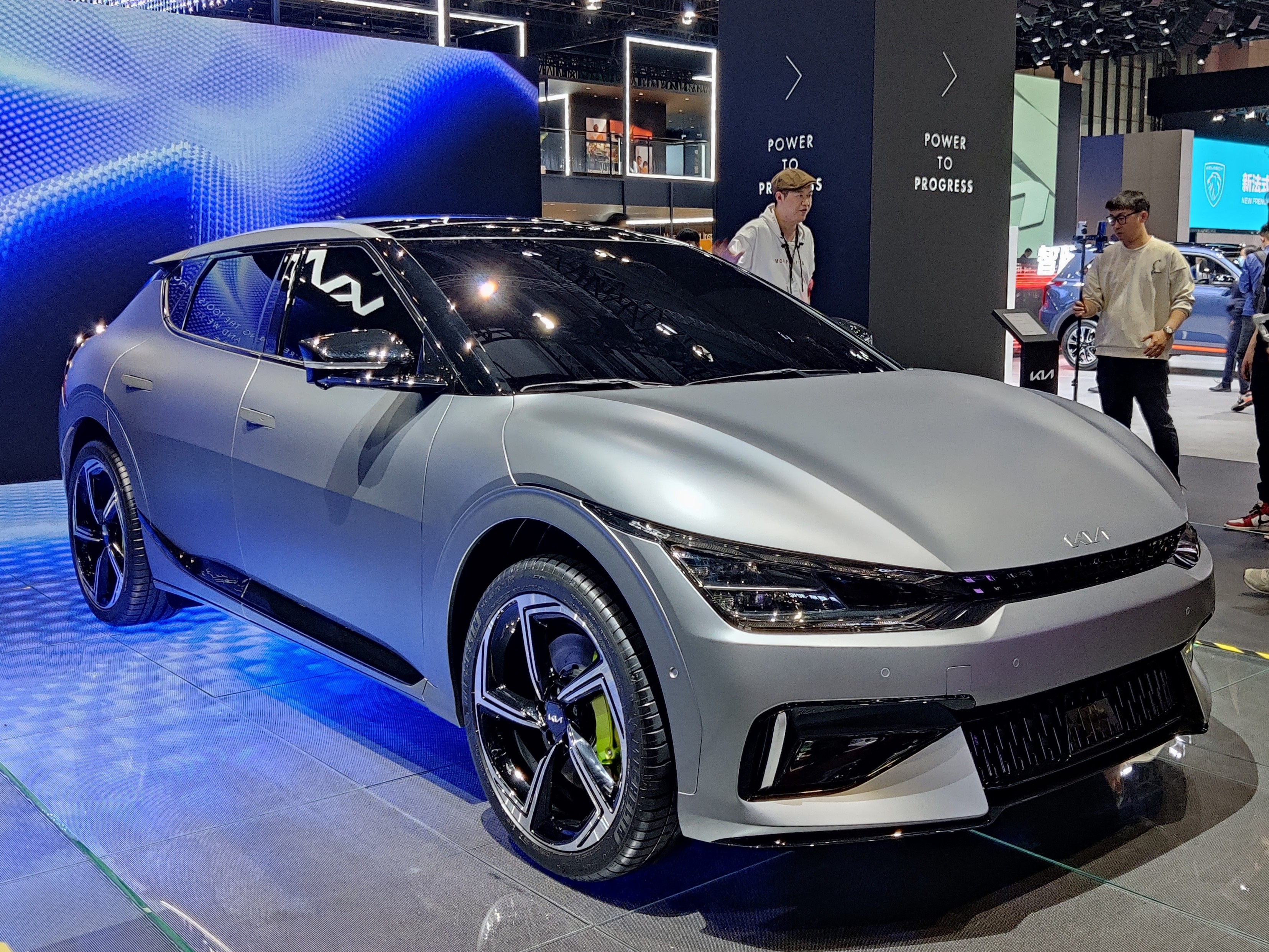
The Kia EV6 is said to do very well in battery health testing after lots of miles. The implication is that its battery holds onto usable capacity for a long time.
Car
Volvo EX40
The Volvo EX40 is brought up as having strong battery health results. The host also says it uses an LFP battery, which is often associated with long-lasting packs.
Term
CETL
CETL is a battery-related label mentioned in the discussion, but the host doesn’t clearly confirm what it stands for. It sounds like it’s tied to which battery type or supplier is used.
The Audi e-tron is an electric SUV. The podcast mentions it because it’s doing well compared with other electric cars, based on ranking or sales. It’s also part of a broader discussion about EVs and their battery setups.
The Volkswagen ID.3 is an electric hatchback, meaning it’s a small car that runs on batteries. The podcast mentions it because it’s one of the more common electric models people talk about. It’s included in a discussion about EV popularity and battery details.
An EV rebate program is money the government gives you to help pay for an electric car. In this segment, California’s rules include specific rebate amounts and price limits that decide whether a car qualifies.
MSRP is the official sticker price for a car set by the manufacturer. The rebate rules in this segment depend on whether the MSRP is under (or sometimes over) certain dollar limits.
The Rivian R1S is an electric SUV. It’s made for people who want room for passengers and cargo, while still driving on batteries. The podcast brings it up when comparing Rivian’s different models and capabilities.
The Tesla Cybertruck is an electric pickup truck. It’s known for its unusual, sharp-edged design. The podcast is talking about it in terms of whether it’s available or accessible through a program or offer.
Lucid is a company that makes electric cars. Here, the discussion is about whether Lucid is struggling financially and could end up in bankruptcy or be bought out privately.
Concept
take private deal
A take-private deal means a company that’s publicly traded gets bought so it no longer trades on the stock market. It can be used to reorganize the company with more flexibility.
Company
Alvarez & Marsal
Alvarez & Marsal is a company that helps other businesses when they’re in financial trouble. Here it’s mentioned because it does restructuring work, including situations that may involve bankruptcy.
Chapter 11 bankruptcy is a legal way for a struggling company to reorganize rather than just disappear. If an EV company faces it, it can affect who keeps funding it and whether suppliers and investors trust the plan.
Concept
raise more money
Raising more money means getting additional funding so the company can keep working. For an EV maker, that can affect whether they can build cars on time and keep the business running.
VLE 2.0 sounds like a specific version of Volkswagen’s EV setup. The way it’s mentioned suggests it’s part of the car’s drivetrain/tech package on the higher trim.
VLA is a label for an EV-related thing that needs official approval. The host says it’s expected to be approved soon and that they tested it in China.
Term
52 kilowatt hour nickel manganese and mc pack
That’s the battery’s size and type. “52 kilowatt-hours” is how much energy it can store, and the nickel-manganese chemistry is the specific recipe inside the battery cells.
Volkswagen’s ID. Cross is an electric SUV/crossover. In this segment they’re talking about different battery sizes, and how the smaller battery makes the car cheaper but reduces range.
For EVs, the battery’s size is measured in kilowatt-hours (kWh). Bigger kWh usually means more energy, which typically means more driving range, but it can also cost more.
Volkswagen’s ID. Polo is an electric car they’re positioning as a cheaper entry model. They mention it starts with a smaller battery, which helps keep the price down, and they also talk about the car’s software and screen.
WLTP is a standardized testing method used in Europe to estimate how far an EV can go on a charge. It’s a lab-style number, so real-world range can be different.
They’re comparing two different ways of estimating EV range. The point is that the test method matters, and one method can show a smaller range than another.
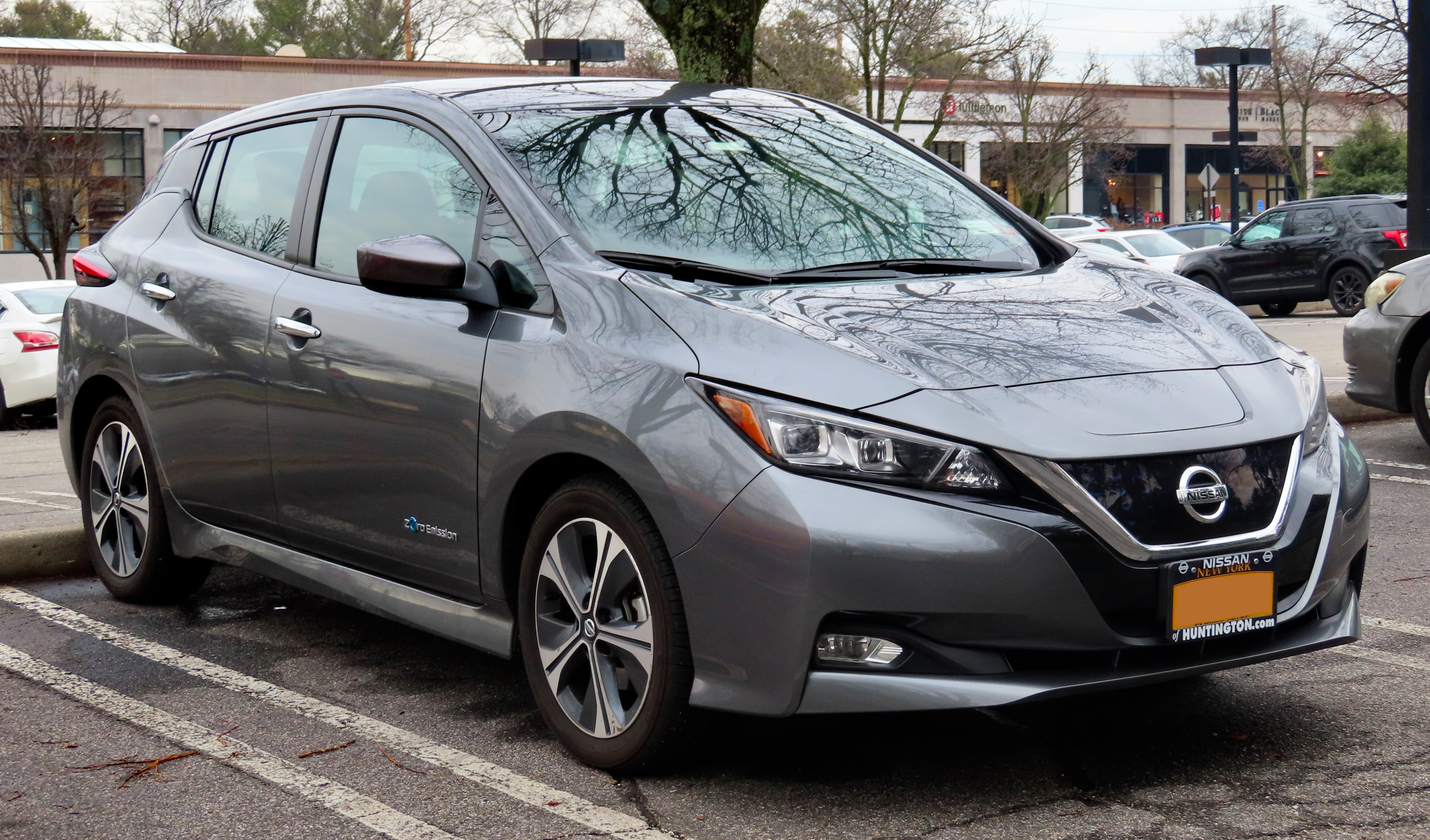
The Nissan Leaf is one of the best-known early electric cars. Here it’s used as a historical example to compare EV prices and how much range you got back in 2016.
DC fast charging is the quickest way to charge many EVs. It uses special chargers that push power into the battery faster than regular charging, so you can add range in less time.
The battery pack is the big battery inside an EV that stores the electricity. How it’s built can affect how fast you can charge and how much range you get.
This is a typical EV charging test: how fast the car charges from about 10% battery to about 80%. It’s used because charging speed changes as the battery fills up.
A “compliance car” is a car made mainly to satisfy government rules. It may not be the most ideal car for buyers, but it helps the company meet regulations.
Spy shots are leaked photos of a prototype car while it’s being tested. Camouflage is used to hide details, but you can still get a sense of the design.
A fastback shape means the roof flows smoothly toward the back of the car. Calling it a fastback SUV usually means it looks more sporty than a typical boxy SUV.
The BMW i3 is BMW’s older compact electric car. Here they’re talking about a new i3-style wagon/Grand Tour version and whether BMW will sell it in North America.
Here “mileage” doesn’t mean gas mileage—it means how far the EV can drive on one charge (its range).
Car
Prologue
The Prologue is GM’s electric SUV. They’re saying it’s been canceled/pulled from North America, and they describe it as being similar to an Equinox setup with Apple CarPlay.
The McLaren Artura is a high-performance sports car. It uses a hybrid system, so it combines an engine with electric power. The podcast mentions it because of where it’s sold and how it relates to other models in the lineup.
The Honda Prologue is an electric SUV made by Honda. The podcast mentions it in a way that suggests it may not be entirely unique to Honda in how it’s built. The key point is that it’s part of Honda’s EV lineup, but the discussion is about its origins.
The Chevrolet Equinox is a compact SUV meant for regular daily use. The podcast mentions it because it has features like Apple CarPlay, which lets you use certain phone apps through the car’s screen. It’s being used as a comparison point for what people might expect in a similar vehicle.
Apple CarPlay lets you connect your iPhone to the car and use things like maps and music on the car’s screen. It’s a common feature that makes the infotainment easier to use.
A low speed vehicle is a small electric car that’s limited in how fast it can go. It’s meant for short trips in neighborhoods and is usually allowed on some local roads, but not like a normal highway car.
Charging on 112 volts means using a normal household-style outlet. It usually charges more slowly than a dedicated EV charger, but it can be easier to do at home.
Charging on 240 volts uses a higher-power home electrical setup than a regular outlet. That usually means faster charging, especially if you install a dedicated charger.
Term
max connector
“Max connector” means the best (highest-capability) charging plug the vehicle can use. It helps you understand what kind of charging speed you can realistically get with the right cable/charger.
“VC flash charging” appears to refer to fast-charging capability (likely DC fast charging) that the vehicle does not support. With a small LFP pack like 15 kWh, the vehicle is positioned for slower home charging rather than rapid public fast-charge sessions.
LSV roads are special rules for “low-speed vehicles.” They’re allowed only on certain roads where speeds are low enough to be safer for these smaller, slower cars.
Term
chip go
“Chip go” sounds like the name of a technology feature for this low-speed vehicle. In this segment, it’s mainly associated with being able to control the car remotely.
Remote driving means someone can control the car from far away, like taking over the steering and driving. It’s often used as a temporary step before fully autonomous driving.
Full autonomy means the car can handle driving on its own, without a person controlling it from elsewhere. The idea is to move beyond remote control toward self-driving.
Lithium-ion batteries are the common battery type used in most EVs. The discussion here is comparing sodium-ion to lithium-ion and how sodium-ion could change demand for lithium.
Stationary storage means batteries that stay in one place, like at a power station or on the grid. They’re used to hold electricity for later, not to power a moving vehicle.
Cycle time is basically how many times the battery can be charged and discharged before it starts to wear out. A longer cycle life means it can last much longer in real use.
“15,000 cycles” is a durability number—how many times the battery can be charged and discharged before it gets too weak. Higher numbers generally mean the battery lasts longer.
These batteries work like lithium-ion batteries, but they use sodium instead of lithium. They’re especially interesting for storing electricity for long periods, like for the power grid.
Halfen is a Dutch energy company mentioned here as the customer for a large sodium-ion storage project. That matters because it suggests the technology is moving into real installations.
An energy storage system is the whole package that stores electricity and then releases it when needed. It’s commonly used to smooth out the grid when renewable power fluctuates.
Term
LFT batteries
LFT batteries are another kind of battery chemistry mentioned as currently popular for energy storage. The host’s point is that sodium-ion might compete with them for grid storage use.
Tariffs are extra taxes on imported products. If an electric car is imported into Europe, tariffs can make it cost more, which changes how competitive it is versus local cars.
The 5 E-Tech Electric is a small electric car. The podcast mentions it because it’s an example of a compact EV that’s important for profits and strategy. It’s part of a discussion about how companies are planning their electric models.
BEV margins means how much profit automakers make on fully electric cars. Higher margins suggest the company is doing better financially on EVs, not just selling them.
The Chevrolet Bolt is an electric car that was aimed at regular buyers, not luxury. The point here is that it may have been difficult for the company to make money on it.
The Rivian R2 is the next Rivian electric vehicle they’re planning to sell in higher volume. The host is basically saying Rivian needs to show how well the R2 is doing, not just mix it together with other models.
“Fleet vehicles” are electric cars used by businesses, usually in larger numbers. The host wants to know how much of Rivian’s money comes from business buyers versus regular customers.
Here, “software program” means money Rivian makes from digital features and services, not from selling the car. The host is saying it’s newer, so it can change a lot from quarter to quarter.
Rivian’s R1 is their current lineup of electric vehicles. The host wants Rivian to separate R1 results from the new R2 results so it’s clear how the newer car is doing.
“Software updates” are the digital updates that can change how a car works—like adding features or fixing issues. The host is asking if there are websites that can tell you what updates are coming or rolling out.
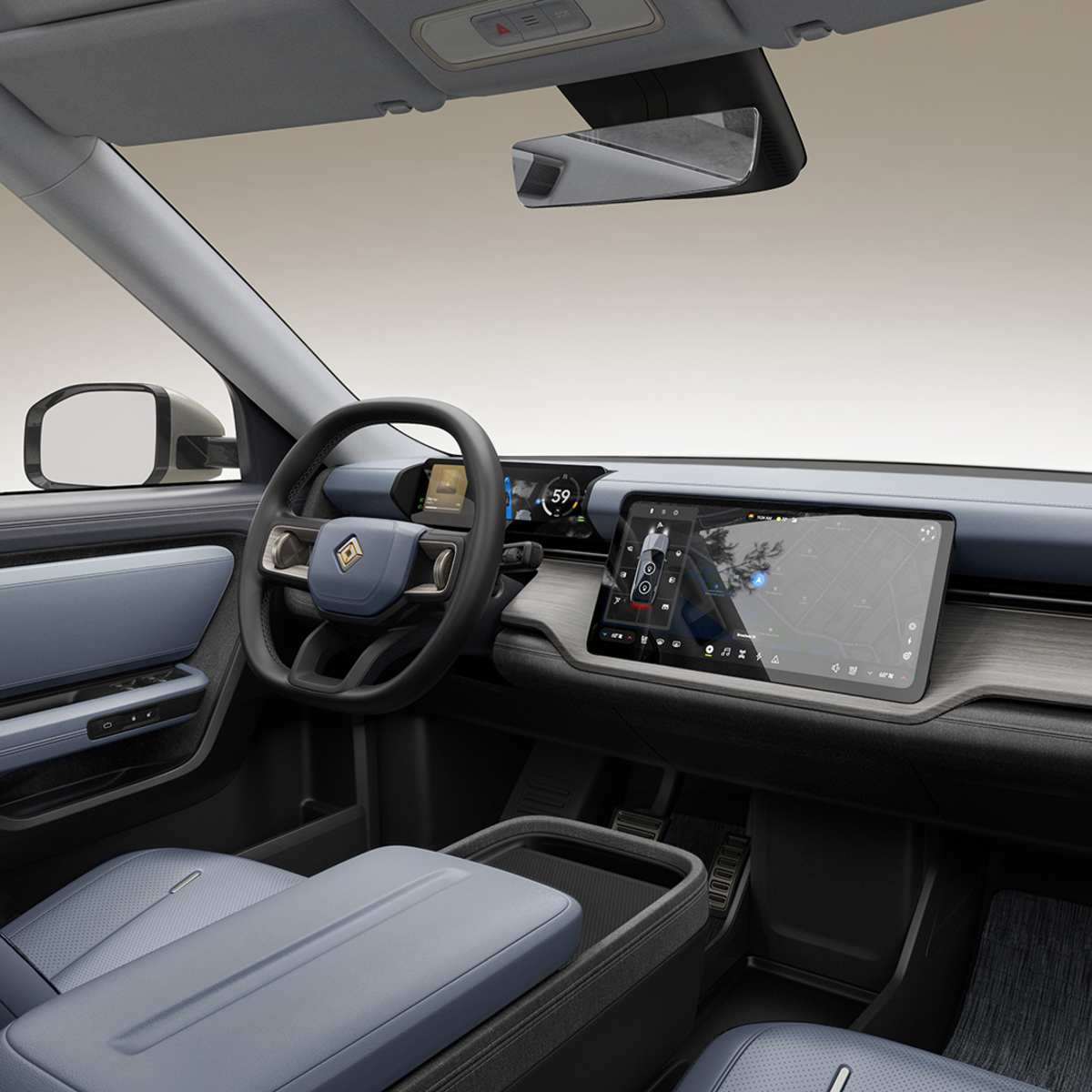
Rivian R3 is a smaller electric Rivian than their bigger trucks/SUVs. Here, the host is saying it’s the more normal, everyday hatchback version, meant for more mainstream buyers.
Car
Rivian R3X
Rivian R3X is positioned as a more performance- and off-road-oriented variant of the Rivian R3. The host describes it as “performance off-road oriented,” suggesting it’s tuned for tougher driving and a more adventurous buyer than the standard R3.
The Ford Edge is a crossover SUV, meaning it’s built for everyday driving with a higher seating position. The podcast mentions it because it’s meant to feel more capable and comfortable, including how the seats support you. It’s used as a reference for what people might want in a similar vehicle.
“Form factor” just means the car’s overall design and size category—like whether it’s a smaller hatchback versus a bigger vehicle. The host is saying Rivian will reshape what they learned into a different-sized vehicle.
Concept
internationally into europe
The host is talking about Rivian selling cars outside North America, especially in Europe. They’re saying a smaller vehicle could fit better with what European buyers want.
“Hardware 3” is the computer inside a Tesla that runs the self-driving software. Different Tesla cars have different computer generations, and that can affect which software updates and features you can use.
Autopilot is Tesla’s driver-assist feature that helps with things like steering and keeping speed. It doesn’t fully drive the car by itself in most situations, and the discussion is basically about whether the newer FSD software is actually better than Autopilot on the same car hardware.
“v14 light” sounds like a smaller or simplified version of Tesla’s newer software (version 14). The host is saying it’s very good and not too far behind the full version, at least based on what they’ve seen.
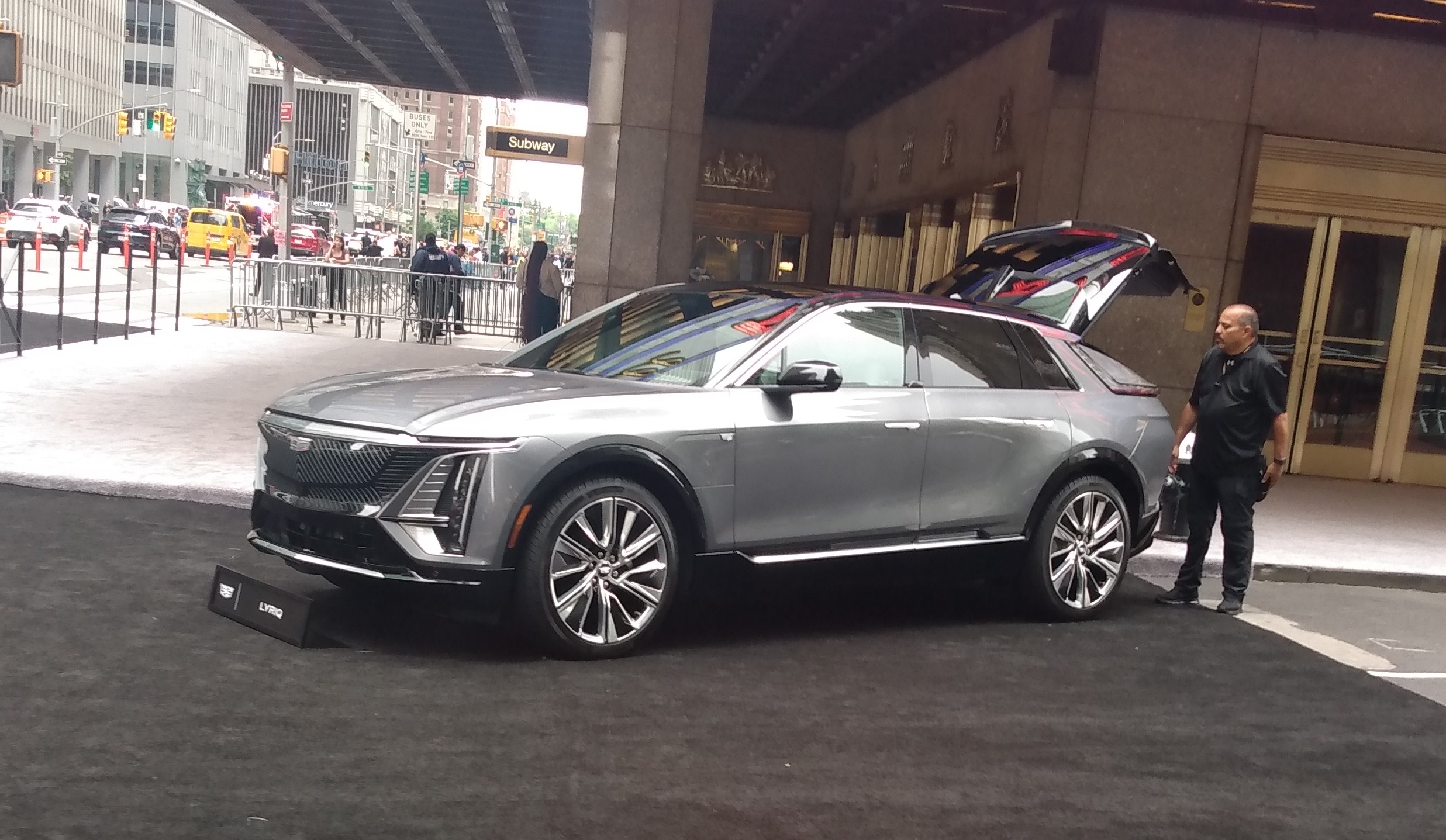
The Cadillac Lyriq is an electric SUV. The podcast mentions it because someone is doing a review after spending time with it. That usually means they’re looking at how it feels and works in everyday use.
The Tesla Model Y is an electric SUV. “Standard Range” is the version with less battery/range than the higher trims, usually aimed at being more affordable. The host is saying they’ll review that specific trim soon.
“MC” sounds like a shorthand for a specific version or configuration of the car. In this segment it’s tied to whether the car has a different battery setup than the base model.
A “buffer” is extra battery capacity the car doesn’t fully use. It’s like a safety margin that helps the battery last longer, even if it means you can’t access the full rated range.
This phrase means a car that drives itself without a person watching closely or ready to take over. “At scale” means it’s supposed to work for lots of cars and lots of trips, not just a few test runs.
LIVE
We're live
When you've solo that you podcasting I'm Fred Lamberg your host and I apologize for the little delay
Some black magic was going on with my Mac
Audio wasn't working. Couldn't hear set we cannot go through a show without hearing set. Are you doing set? I'm well. How are you?
All right, pretty good pretty good. So now
Five minutes late
Oh
I think I lost your audio again
The mind back on your back on oh, okay, that was
Streamyard not my son. I'm like you didn't me
But sorry to dance. Sorry to skeptics. Sorry to everyone. That's already that was already on it's on me
All right, let's jump right right in with the show this week. We're gonna start with Tesla
Kind of a little preview of next week
Next week, we're gonna likely gonna talk about the earnings call. What's gonna come up with your call and
Obviously, we expect a decent quarter
thanks to the higher deliveries and expected and
You know with the caveat that the spending is likely gonna go up it's our understanding that
They are going crazy with spending and they did, you know warrant investors that
They might turn negative cash flow with higher capital expenditure
regardless, what's always more interesting with these
With these earnings is the
call that follows and the question that's has to you to Elon and
Funny enough now, we do have access to
The questions ahead of time at least some of the question of our time thanks to say technology which pulls
Question from the shareholders and asked to be asked during the conference call
Now what's interesting about this? This has been going on for like a year or two now at Tesla and see technology you is
It's not a democracy. It doesn't it works like stocks works, which means you don't get one vote per
Shareholder you get one vote per share. So if you have a lot of shares, you can technically, you know influence the vote in a certain way and
Earlier this week, you know, I was I knew I was gonna make this article
I wasn't sure when I was gonna make it either at the end of the week or next week right before the earnings call
So I just took a look earlier in the week
I think on Monday I took a look at the question on say technology just get an idea what's going on and then you know
It was slow day yesterday and I was like, oh, let me let me write the article that day then and
Pull out the question. So I go back to the questions and the questions are completely different. The two top questions
asked at the
On say com for Tesla were completed completely different. We were two soft balls question that's just like
What or the next step in order to achieve a higher volume of cybercab and you know some things that you can
Whistle around the question easily
And what was interesting is like the I saw this question and they were way further down on Monday and a big whale a
Tesla whale that had like 4000000 shares
Which is worth hundreds of millions dollars
So someone that controlling a lot of share the test that came in and upvoted these these two questions to come at the top
To bring further down some real questions
So there's there's two contrasts here
Then there's two there's two stories in this one is like this one main story is like someone that holds a lot of Tesla shares
Clearly doesn't want to answer so there's no one Elon to answers the specific questions
And I'm gonna get into it now and to the second part of the story is that
looks like actual like
shareholders
Retail investors into Tesla are starting to wake up a little bit to
To the reality of the situation at Tesla
You know when I when I sold my shares in 2024
I said that the main reason why I'm selling my share because I still you know believe that then Tesla's mission
And I still I would like to still be part of that is that I don't feel aligned with the shareholder base anymore
They just you know, they are completely okay to offload any kind of responsibility. Everything is Elon Elon can do whatever he wants
that comes with some consequences and
We're seeing them now. Some of the questions are actually like very
Very good issue
like the first one the one that
Was the most upvoted before the well came in is pretty rough
Tesla has missed short-term guidance on Robotics C3 earnings report in a row
From 50% coverage of USA, which we always said was completely ridiculous by end of 2025
To most recently seven new cities in the first half of 2026
What is keeping Tesla back from accomplishing the short-term goals that they set for themselves?
You know, there's always this running gag set of like the two weeks with Elon
but there's also obviously the more like grand
Jozo long-term goals and
It's you know, long-term goals are easier to get away from those predictions
But the short-term goal when you say something is gonna happen like this quarter
It's a little bit harder to then explain after that. Okay. Why did you not meet that goal?
So when you set that goal publicly
You you had to have seen like, you know, it's it's very doable in the next few weeks
And then what happened that made that not true anymore or were you just lying?
So
This is a good question here and it's obviously in regards to Tesla
not having really expanded Robotics C much if
Anything other than technically new geographical area with, you know
Houston and Dallas which are very like small three to five vehicle fleet and then more recently Miami
Which is exactly the same thing while Austin is really not growing in size whatsoever
The the map area has grown though. I think it's stabilized over the last few months
But the actual fleet performing rides there is not expanding
So they want to to ask that and then there's like this very much question. Why has growth of Robotics City goes tall?
Why are the new milestone of Robotics deployment the prior milestone I've missed there's like 20 different version of that in
The top voted
shareholder questions again other than the 4000000 shares that were voted on the two softball
So I think it's obvious that you know shareholders are starting to wake up. It's like what's happening with XC? We're
Where we dumbed to believe Elon when he said that I was about to happen all at once
Yes, you were
Set that's a question that's related to you hardware three question
You don't confirm all the words we cannot achieve on supervise FSD. What is the plan for owners who paid for FSD 3?
Hardware upgrade transfer or refund. What is the timeline and what costs as the start crude for this?
So this is something that we want Tesla to Tesla should have answered that a long time ago and they haven't and
Actually, this is one question that might not be answered during the call because of the voting of the other question by the big-time shareholders
Which is still going on also because there's still three
Five day left until the earnings
So obviously this
You know the Elon last time like throughout there are some things like micro factories to retrofit all the cars and
he mentioned something like a
Discount for upgrading to another vehicle, but that these the micro factories is pipe dream
I don't think that's gonna happen at all
Then the refund things not the refunds that the discounts on new vehicles. There was
higher
Quotes for trade-ins that Tesla offered on order word 3
So I don't know if that was it
That's also not a full solution
There's some people doesn't want to upgrade like some people if they get screwed by a company on the product
They might not want to upgrade to the next product. It's just as simple as that
So it's not a full solution Tesla needs to have a clear concrete plan on it now
I guess with v14 light, which by the way said have you received it yet?
It's weird. I I know
Internal and insiders have gotten it, but I have not got it
It's not weird because apparently it hasn't gone wide yet. So this it's still it's it has expanded
But not by that much so it's not going full wide. It's a lot of some people are getting it many are not so
But even then we've always said that a light version of something that is still not on supervised self-driving is not a solution either
So I but I guess it's a you know
It's one of the many stalling tactic that Tesla has implemented to you know, slow down the rat
that's coming with all the hardware three owners and that's one less
Stalling tactic the 14 like is it's has been released already. So now you need to move on to a real solution
And now the last question that I thought that was really interesting that
It's almost it's laughable. Really. It's kind of the liars that you in the ask that
Do I did I put again? So?
Must they are asking must to commit and now I'm quoting here
commit to achieving at least half of the goals outlined in your 2025
Compensation plan before considering any offer to acquire or merge Tesla
So let's dive in into what so this is one of the top voted question again aside from the well
That's that's a voting other things
So this is Tesla shareholders asking Elon to
achieve a few more goals on his compensation plan before
Absorbing Tesla into SpaceX, which you know clearly seems to be the long-term goal of Elon here
and
Why are they asking that but first of all because the the goals on a consensus plan to compensation plan are a link to market
Valuation milestones. So they are basically asking
Elon to boost the value of Tesla as promised before
Merging into SpaceX because they are aware that he could trigger her that
compensation plan instead through a merger with SpaceX
without
Any benefits to test the shareholders or at least I'm sure they would be a
Deal that would be over the current share price of Tesla
But not by any meaningful amount and the share has been share prices been moving sideways
You know moving between 200 and 400 up and down for the last five years
So there's been no real value for any long-term shareholders
aside from traders
So they are they are saying please before you do what we expect you to do which is
You know a shitty move for investors, but you know
The incentive are there for you
Please give us a few candy like a few more
Pump to a two to 23 trillion dollars so that we can make some money, too
And I think that tells everything about Tesla right now is you just
You know, it's just about the stock like it's just like how much value can we pump out of this? It's not
I'll what kind of product we can create that can actually like
Move forward the mission to accelerate the advent of that you transport renewable energy. It's
Completely detached from that
But and it's also interesting that someone doesn't want these questions asked like I mean I know somebody who doesn't want those questions asked I
Mean someone someone might have you know
So someone went into the trouble of listing
validating their shares on say technologies and
We're able to validate 4000000 of them about 4000000 of them, which is worth, you know hundreds of millions of dollars
So obviously aliens even as a billion
Shares in Tesla over a billion. So it might doesn't mean that it's him
But you know all these shares are not necessarily held in the same account or something so
You might have you know validated an account and do that so it's possible that's in two
But it's also possible. That's like, you know, one of Ian's rich friends that are that you know did it also
It's it's clearly it's someone that holds a lot of Tesla stocks and doesn't want these questions to ask and wants softball a question asking
All right moving on from Tesla stocks on the very interesting study out of
Sweden here Karla, it's a giant
Used EV retailer that has a lot of data on used EVs
that did a very interesting study of
battery health after
62,000 miles of 100,000 kilometers of
Of mileage on a bunch of that I put the actual number of vehicle that were tested here, but I feel it like it wasn't
22,000 so yeah, it's it's a decent size amount here. So like it's good data and
What's interesting is like they compare we compared them all three
So they add four different batch pack of model three here's that had achieved over a 100000 kilometers 62000 miles and
The LFP from CATL is the one that scored the best at 93 point three percent
Held battery energy retention after a 100000 kilometers
LG Chem with the NMC technology at 91 point five
Then the Panasonic cells are the one that's performing the worst with the NCA
On the bigger 78 kilowatt power pack at 89 point eight and then 88 point two with the the smallest
Endured range of battery pack
so
The LFP you know even though for a lot of people in your mind
It's like it's a cheaper option. It's more option
No joke in a Tesla vehicle the LFP might very well be your best batch pack you can buy
Which is really interesting because especially like in the US for example, there's a lot fewer LFP cells because they're all coming from China
But in Europe, you have a ton of LFP options in Canada. We have LFP options
So, you know, even though you're buying the cheaper standard mode three more why it might be better off
buying the LFP option and
Then they they put it
listing of the 20 top
performing EVs when it comes to battery health after a 100000 kilometers 60000 miles and
Hyundai is performing very well with taking the top three Kia Hyundai with the E-Niro and the Kona
60 which is I think the same pack either way both scoring 97%
So basically no degradation on the new road. Yeah, that's very good
And then the EV6 which is a new generation of the from the same company
95 point 95 so very good as well Volvo EX40
Which is also LFP. It's CETL. I don't know if it's LFP
Um, 94 kilowatt hour Polestar also CETL
94 as well. Yeah, and then you have a bunch of them in the 93, 92 percent range with the I3 from the end of all view
the Polestar with the LG Chem battery pack
A little three we already discussed. So this is a isn't the top ten, but number eight and the e-tron is doing well, too
Volkswagen doesn't show up until 14 with the IV4
But the good news is like most of them are all over 90% after a 100000 kilometers
So and and also on my product note from the data that we've seen with more mileage
The curb flattens out over time. So even though you can lose as much as like, you know, almost 10%
With the worst one that were in the top 20 right now like the ID3 the Q4 e-tron the model Y with the LG Chem
You are over the next 100,000 kilometers. You're probably gonna lose less than what you lost in the first hundreds
So that's good
Good news
Moving on from Tesla the California state the state of California has announced its official new EV rebate program
We've heard about it for quite a bit now and we've heard, you know, they were they were trying maybe to cut Tesla out
They were rumors about that they have not completely cut this out
They've made a deal that's you know better for Lucid and Rivian than it is for for Tesla, but
It's still very much beneficial to Tesla
So it's a 3500 dollars for new EVs with an MSRP of up to 50000 dollars
Then if you have headquarters in, California
the MSRP can be over 50000 dollars and
Rivian and Lucid even though I thought I thought technically Rivian's headquarters were normal, but I guess they're right in Irvine
Counts and then obviously Lucid as a bunch of
Establishment in California including the recorders so Lucid also so that's a lot for the R1s
The R2 also is because the R2 with the performance version first edition does launch over 50000 dollars
So Rivian is eligible for this all of the Lucid's are eligible for this
But there's also a little threes and a little wise that are under 50000 dollars. They are eligible. So that's good
There's a 1700 and fifty dollars on use the EV up to 25000 dollars
That's also very good for the use of the market
Then zv buyer, okay, so are they all first buyer only yeah, so the
You know one thing I should mention too. Everything is for first time
zv buyers
It's California is a smaller amount of people
Yes, still a majority of the market, but a small amount of people it's confirmed by buyer at the station
So I don't you know, I guess
I don't know how much data they have
You won't even hear that but
It's at your own risk
The curb weight of no income cap, which there was before
At the federal level curb weight limit of 8500 pounds
In california risen only they already unlock a hundred and 35000 dollars
125 million dollars for this which is which is pretty good
And yeah, you know, I think it's a pretty good program
Yeah, first time EV buyers. It's not a bad idea
Because I think
You know it helps convince them
That they're getting that first step in two electric vehicles if you get an incentives a little bit better if you don't
Uh, if you already have an EV you're probably gonna get another one now
Should you also benefit from the fact that you're you know buying another car?
Yeah, I mean it does
Put another car another EV in circulation
Creates a use EV which can be used by someone that has lower income. So yeah, I don't know. What do you think sir?
Yeah, I mean any incentive is gonna move them the needle a little bit. I do like that. They're uh
Focusing on people who don't already have EVs. Mm-hmm. They might have missed out on some of the bigger
uh incentives that were around
A few years ago. It seems like just yesterday
but
You know, it's it's good good that they're
Trying to get some more incentives back in
Obviously you and I have discussed this a million times what everybody should do is just make gas more expensive
and
We see when gas gets more expensive like I ran that that really does
Boost EV sales in a great way
Better than anything else
Right so
No, I agree with you
I don't know about the california headquarters loophole though because I think it's a weird one like I get it
I it's a slight of tesla for moving the headquarters in california to texas
That doubt that much is clear
um
But also even though rivian and lucid both have their headquarters in california. They're producing their cars
in
Illinois and arizona
And that's where the bulk of the jobs are
um
And tesla is still producing a lot of cars in california at freeman
More than anyone else in california
And you know, they're they have their engineering headquarters in california. They have a lot of engineers in california. So
I
Obviously and all of those people pay taxes in california also
So I I don't know like if to me I feel like it's just you know
It's just targeting tesla for political reason right there then you know the logic of it
Because I if you if you look at who's more deserving of access to this
I think I think tesla is the winner here
But at the same time if I was in charge of california, and I'm not
Thank god. Yeah
I
I I would have a similar
Way of thinking about ilan musk with this because obviously ilan musk quit california on a public school vendetta
and in california
It's I can I can these both of these things are true
And I know they're gonna have set people the both of these things are true without
ilan musk tesla would have failed without california tesla would have failed
I think that both of these facts are true
So, you know, ilan was didn't really respect the role that california played into making tesla possible without the state of california
Let's be clear like they help tesla quite a bit. So, yeah, I don't
It was a pity move from from ilan to leave and now it's a pity move from from
california to
carve tesla a little bit out of this
To be another the mall s and x are not available anymore. It's basically just a no cybertruck get access to the 135 million
It's more it's more about that than anything else
All right, let's let's talk a little bit about lucid and what happened with lucid this week
Going back to the stock market a little bit because that was that was a crazy story
So the this guy
Which is like one dude that runs a blog called
Electric no c vehicles like he misspell electric
Technically, you could say that electric mix misspell electric
Yeah, it's it's all name at least for the the website is electric vehicle
dot com
Guy named alfonso round this apparently I was told that I met him
Or you're at this here in china. I don't I don't remember meeting him
If I met him it was probably just in passing very quickly
But he runs this blog
And he writes a lot about lucid and he wrote that lucid was
considering bankruptcy
Or a take private deal
And he wrote this on the blog
I saw it because you know, I have a bunch of our ssv that feeds me all the the news I look at it and
Because I've heard that someone sent me an email about that earlier this week saying hey, they hired alex partners
They're looking to go to to bankruptcy and then I didn't know that guy that was an anonymous source
I look alex partners because it it did ring
a bell in me the alex partners and because they didn't do the bankruptcy of like
gm and ron and a few others
But then I look into it as like yes, they used to be specialized in bankruptcies and they still do bankruptcies
But they also allow like a 2000000000 dollars consultancy firms that do a bunch of restructuring outside the bankruptcies and take private deals
So i'm like, okay, if if that was just a connection here
That's that's obviously not enough and then I reached out to that guy and I guided and respond with that guy or girl
I was anonymous
So i'm like moving on from that, you know
Lucid is not doing well it might go bankrupt in the next few years
But they still have a runway for at least another year
And and the Saudis haven't pulled the trigger
They went to market just a few months ago and got like uber as a new investors also
So i'm like, yeah, it's it feels like it's just a nothing burger
Even though the trajectory is still bankruptcy
whether what
But I don't think they are considering it right now, but that guy probably wouldn't be surprised got the same note, but he
He went with it and the
The market did its thing
Probably a bunch of butts trading on on a headline, but still it crashed 40 percent
White out almost half of the entire value of lucid
Which is a big deal because then then it's harder to go back to market and raise more money because your work a lot less
And uh, and it was it was kept falling. It was halted twice. It had to be halted twice and then lucid intervened
um
Lucid's pr released a memo saying this is false that we have not considered chapter 11 bankruptcy at all
I don't think that the
The blood guy
Did uh, did the retraction or anything, but then the next day so that lucid, you know, recuperates a little bit
I think you know, it's down just 20 on the day after that it's a 40
And the next day the ceo the new ceo silvio got got in law and released his own statement
In which he doubled down saying yes, we have our deluxe partners, but no
bankruptcy has not been discussed at all
And then the stock went up again 20 percent from that so now it's back up and today
I looked at it earlier and it was still going up like crazy like now now
It's like way up compared to what it was even before the fake news
Yeah, it's up 14 30 percent today
and it seven dollars and
And in 30 and it was a 550 before the the false rumor
started
So crazy week from for lucid, but uh good
We came out good. It came out a bit good there
I think the the market, you know, believes them more than we believe the the blog
Which I think is the right move and again
cannot be more clear
The trajectory the financial trajectory of lucid is in the bankruptcy
But they have options they can raise more money
And they still have over a billion dollars in the bank so they can
They they they can still finance their
operation for quite a bit
And the goal is obviously cosmos
They're a mid-sized suv to launch later this year
But probably in the introduction next year
And it's been spotted this week. It's been seen around Arizona. So
We released some images a few weeks ago
It's uh
It's gonna be interesting. I hope they can at least get there that will give them a real shot
All right, we have 123456 more news items to discuss
Sorry and before that after that we're gonna have time to get into the comment section. So
Uh, if you have question for us, I see
Speculators already here asking questions. We have a few others pikes is here dean is here
Here's a question for us. You can put in the comment section right now when I get to it in
10 50 minutes
Expand add a big offensive in Europe this week
They had a huge launch event in unique and the
They've brought in the launch their new lo 3
their new model y competitor
Which already launched in in china
But they're bringing it to europe and the very very competitive price
Uh, let me see here
So the starting the prices are different in all the the countries because they include that and everything but
the
Well, I guess except norway because norway well except norway if you have the right price because they the lower the
price of
The price tag on the vehicle to get the that exemption
But they are right under it for for them. So in norway it's
Um
So 35 000 euros in france and belgium
35 6 in germany same thing. No 36 6 in austria
expensive in austria same thing in the netherlands and then
2900 the mom 300 000 kroners in in in norway, which I think is did I put the price on this somewhere?
I think it's like $30 000
Yeah, $31 000 in
in norway
For something very competitive with the model y. So the base version doesn't have as much range
So far at 45 kilometers versus 535 34 for for the model y
Uh, but it charges a lot faster. It charges in just 18 minutes get up to 236 kilowatts versus 175
They they have also a bigger batch pack version too and they're gonna launch a range extender
So they're gonna try to bring the range extender trend that's going on in china right now
They're gonna try to bring that to uh to europe
It's gonna be more expensive though, but you're gonna get a little more range out of it
You get an e-pump you get the six kilowatt
The equal to low the heated and seated front seat panoramic roof and then on the ultra trim
Which is uh, the more expensive at 46 000 euros
but you also get
The the the bigger motor 285 kilowatts of motors you also get the vle 2.0
With the two touring chips. However, I do not approve just like if it's these just now being approved in europe
country to country
VLA is uh expected to be approved
next year, I think
And as I talked before I tested vla in china and it's
Extremely competitive with tesla with this as a facet
But yeah, a new chinese eevee uh trying to take over the world
And Volkswagen this week came out with uh two new well two new version of their vehicles in the cheaper sides of Volkswagen
has been doing a big push on the
Lower end of the eevee market and now we have the id cross
The new entry level of the id cross at just the equivalent of 30 000 dollars 28 000 euros
So basically the same starting price of uh, well, I guess that's going to be in germany because that's actually a little bit cheaper than the
The model l o3 from from xpang
So a little bit fewer a little less range too with a 52 kilowatt hour nickel manganese and mc pack
You get 427 kilometers to an existing five miles of range
Um, also like the motor is not crazy. This is the 85 kilowatt hour kilowatt motor
115 horsepower on this you can get a little bit of an upgrade with the id cross life or style which both have
99 kilowatt of power
Oh, sorry the the range that I just talked about is it with the optional bigger battery pack too
So it's a 52 kilowatt hour because it start with a 37 kilowatt hour pack
So that's why the price is a little cheaper to you
You get a lot of uh, you know the latest software from from Volkswagen in there on the amd plus platform 10 inch display
pretty uh decent interior
Do you like the design of the exterior it starts at 37 kilowatt hour battery that seems pretty low
Yeah, and that's the next article too because that's the new base model for Volkswagen
So they have the id cross launching with the 37 and now the id polo
Which are as already launched with the bigger battery pack is now launching with uh, so already launched with the 52 kilowatt battery pack
starting at 34 000 euros 40 000 dollars roughly now they have
They are starting to take orders for the 37 thought at you pack and it starts at 25 000 euros for 29 000 dollars roughly
With still 207 miles of range 237 kilometers, but that's wltp
If it was api probably would be closer to 150 kilometers of range so
While the price is interesting
it's kind of uh, you know we
The
It's hard to track ev prices
So because you have to compare them with overall car prices too
If sometimes it feels like oh, we're going back to 150 miles cars
It's like the Nissan leaf in 2016 or something like it's just it feels
um going backward a little bit, but
The Nissan leaf in 2016 was probably around what 30 000 to 32 000 of that
Something like that. Yeah. Yeah, and now we're talking about 20 equivalent of 20. Well, that's with you know, that's it's a 25 000 car
With equivalent range so the price actually gone down while the average price of
vehicles have gone up to 50 000 with with inflation and all that so
I think overall this it's still pretty good like it's a good look for evs
Even though I do agree that this is more like a city vehicle
You know, not just size wise but also with with the kind of range
um
DC fast charging limited to 90 kilowatts with the smarter battery pack
But you get 10 to 80 percent in 22 minutes. So you can you can still you know do some
Some distance on this
You know you drive 150 miles you stop for charging for
Half an hour and then you good to go
and people people really liked the
The Volkswagen well in the u.s. They liked the
Commuter car the polo was it the polo? No, it was the gulf
The gulf a compliance car
Even though it had less than 100 miles, but
Still very popular. Yeah. Yeah, and data too was popular
We get our first images of the ix4 from the nw
The latest new class of the e-codes of hv e-codes coming from the brand. So these are spy shots with the camouflage on it
So you do get an idea of it. It's
Some are calling it the wagon
To me it looks more like a fastback suv
Very aggressive
Chunky looking but you never know what the camouflage on it too
But we don't we don't really need to wait like a lot of people are thinking like we want to see an electric wagon from the nw
But we just saw on the like track today the
The i3 is coming with the wagon. It's coming with a
Grand tour version too. So I I don't think we're going to get it in north america
But uh, yeah, it's still you know, bmw is working on making, you know
Taking I mean they've developed a great power train on this like it is chunky
It is this 112 kW battery pack some the most efficient thing on there, but uh, it's the get a lot of mileage out of it
You know, it's gonna be a you you probably with that with a wagon from factor on the i3 you're gonna get
Easily over 400 500 miles range
Because it is more efficient. Yeah
I
Think I don't know what's gonna. Thanks yet for for north america to embrace the wagon back with maybe maybe that's gonna be it
Maybe a electric i3
Yeah, it's weird that we just don't like that anymore
Or having these issues like it we cannot we cannot bend to to get inside the car and we need needs to be hired up for people
Package
yeah
All right, uh, it's the end for the prologue
on the as pull the plug officially
the uh, they didn't even
Rumors they've denied rumors about it. We all know it was coming. They've cancelled basically everything in the north american market with
Artura sx
zero series SUVs in sedan
Everything has been pulled off now. Uh, the prologue which wasn't even their car. I was
Like said said this basically a equinox cv with uh with apple carplay
Which was nice. It wasn't because the equinox is a nice car
And it's like now you can also have it, you know with a Honda badge and apple carplay like was there to complain about
Yeah, um, yeah
But now now there's uh, there's nothing
They all the they confirm that after the 2026 model year. They won't be a 2027 on the prologue
They're kidding
All right, I'm not great use
Something new that was released this week and I saw some people in the comments asking question about this the chip chip motors
So I don't know about that. It was it was a big launch. They had prototypes of this
So like this it feels real and everything but the a lot of marketing aspect to it too
They're calling it the life utility vehicle
luv
This is a low speed vehicle
It's it's not let's not reinvent the category here. It's a low speed vehicle with a
better design maybe well
Something goes it looks weird like it looks like it's standing tall and everything but
I didn't put too many pictures of the interior, but the interior looks actually like it's uh
It's got well designed and there's a bunch of different configuration that you can have of it
You can not like go top like that an actual like close top
There's a few interesting things about this about this configuration
It comes with a 15 kilowatt hour battery pack lfp battery pack
So it should get like a decent range out of it. You can get it with a four seater or six seater configuration
They're talking about 100 miles you can charge on you know, regular 112 volt or 240 volt
With a max connector
No vc flash charging obviously with this kind of size of battery pack, but this is
An lsv
You know like jam like wing like you know other companies have been selling for years and it is a growing market
In uh, north america a lot of communities now are allowing more and more of these to be driven around and they are
Based on federal lsv roads allowed on roads with 35 miles kilometers at 35 miles per hour or less
But this top speed is 25 miles per hour
Now the big
uh
The differentiating factor on this other than the design itself and a few of the feature is what they call chip go
And it's for now. It's actually remote driving
So when there's no one in the car you can send the car somewhere else you can
the car can
Someone can take control of the equal and drive it somewhere else
But the goal long term is to have actual full autonomy and
Not rely on a remote operator
I guess there's and things that are interesting about that where like the low speed, you know
This thing is capped at 25 miles per hour, you know the lower speed
Less risk of an accident the better
So maybe this is a good step towards automation
But I I would take everything with with the grain of salt because this is still like 15 000 dollars
So it is expensive when lsv and you know, I'm sure that chip goes gonna cost more on top of that
So I just I don't I don't know how much of uh, like if you
People on the market for like a super luxury golf court that sometimes can drive autonomously
Maybe I'm wrong, but I don't think there's a huge market for that
I'm not chomping at the bit by one of these either. Yeah
I wouldn't think so
All right, last quick piece of news before we jump into the
The comment section
Very good news on the sodium front. So we've been really hyper-electric for for what sodium can do
We don't think it's necessarily a replacement from lithium ion batteries
but
It might be for storage or for stationary storage because
The the big advantage is the cycle time like the life cycle of this is pretty huge
so these are rated at 15 000 cycles and
Warranty for 25 to 30 years of service life
So so you install these and they are good for decades literally
And what what's the news this week is that ctl?
So sodium a quite new ctl is leading the front there and you know, they have a prototype electric vehicles that have sodium ion batteries, but
The the real value is it's good to be in the energy storage and you just signed the first big deal for it with
Halfen it's a Dutch energy company a big five gigawatt hour of tenor sodium
Energy storage system that are going to be deployed in Europe
So I think this is one of the first big step that we're going to see for energy storage for sodium ion energy storage going forward
I think this is going to take over like low batteries and
Lithium ion batteries and even LFT batteries now, which have become the leader
And that's great. That's more batteries for cars
That's that that's the great point that people are not thinking about a lot is like it's going to people are like it's going to kill lithium
Not necessarily it might make lithium a little bit cheaper because you know, not as much demand for it for
energy storage so leaving some
Demand for for some supply
For EVs lowing the price. It's all good. It's it's going to be
Just positive stuff
All right, let's move into the comments
29 Mato says do europe's oems have a chance against
Great EVs like xpang lo3. I don't see how they can offer so much so affordable in europe
I
It does seem quite daunting
With xpang
lo3 and a bunch of other vehicles entering europe at like
You know half the price and with 90 of the capabilities
Which is like kind of the hallmark for chinese cars
um
The price are pretty close still but they are they still have tariffs on those that's
I don't know if I discussed that earlier, but right you still like you know 18 to 25 percent tariffs depending on the
On the automaker there
um
And xpang is looking to get around that they're looking to to to deploy
Manufacturing in europe right now. They're looking for factory
Yeah, and and the yd is already doing that too. So um, so the question long term is going to I think it's going to be hard
But it is feasible. There's there's no there's no magic to it like it's
It's feasible
And it go to the heard several people say they would wait and rather buy an xpang lo3 than 3 or y
If quality
Charge and range is really like advertised with that price
And then renault ceo said that they are making higher profits on compact electric
models like the renault 5
And then began how our other oems doing with bev margins
Oh, yeah, I'm gonna look that up later because that's very interesting comment if it's true
Yeah, the prevailing wisdom is that
electric vehicles worked on
more the luxury or sport side of vehicles and the uh,
You know the vehicles like the chevy bolt were kind of pulled out because
They were hard to make a profit on so that'll be interesting to find out
All right with the r2 coming could you explain rivian's revenue streams specifically?
What percentage of revenue comes from their fleet vehicles compared to their consumer vehicles plus their software programs?
How does rivian break that out?
I don't know if they break out specifically fleet vehicle versus consumer vehicle. They do break out their software program
I mean we're gonna get their earnings in in in a week
so we can definitely do that after the next earnings to to to get a good view at it and uh, you know the
Software programs revenue are somewhat new and I don't think they are as stable depending on like what is delivered during that quarter
So we need to look out for that
But I do hope that they break out the r2s
versus the r1s
something that
You know this does for the trend that I don't like where they don't you know
Try to hide the health of the program by bundling them up together. So I hope they don't do that
I hope we get to see just how well the r2 progresses over the next few quarters because that's critical for rivian
Dan overstays says I haven't gotten my light up
It's 14 light update
2019 model 3 hardware 3. Yeah, do any of those like
Websites that kind of track
software updates do they
Have a percentage of vehicles
I don't know if they really can tell a real percentage of vehicles, but yeah, I think you know, I
I'll just put some figures out there here this week to get an idea of who gets it or not
It looks like it's still like less than 50 percent. It's the hasn't gone fully wide yet. It's been two weeks now
all right
Kwame
Says i'm confused about the difference between r2 and r3. They seem so similar how these two cars
Be marketed to different consumers. I mean they
Seem pretty different to me like yeah much smaller. I think the r3 the hatchback and one's a kind of a suv
Yeah, maybe it's the r3 and the r3x. I don't know
Yeah, yeah, I think I think people don't yeah, we don't we are we even seen a regular r3
Or just the r3x. I think we've only seen the r3x. Yeah
So that might be what's confusing people. So the r3x is you know, I'm all a bit more like performance off-road oriented
Kind of edge back support the edge back
And I think the r3 is just going to be a little bit more regular
Hatchback. Yeah, I think I'm really excited about the r3 like the r2 where it is obviously a focus right now
But I think I like r3x and I think they're really smart. I think their idea is really like all right
Take everything we learned for from our most popular vehicle, which is the r1 people like the r1. That's you know
Nailed the r1 into a smaller form factor make it even better make it cheaper
and then
You know, take everything learn for that and do a completely new form factor for us at least
I hope for rivian with the r3
r3x
And then that smaller vehicle is going to be the vehicle that doesn't take us
Internationally into europe and other markets where no bigger vehicle or not as popular as in north america. I think it's a very smart plan
All right
Uh
Dean says I added back fsd with the hope of using 14 light on my hardware 3 tesla, but it's not available yet
So we're all on the same boat here, which is disappointing. I don't need unsupervised fsd
But fsd needs to be better than autopilot on hardware 3
Yeah
Yeah, I mean from what I've seen right now the v14 light is is very good. Like it's not too far behind v14
It's it's
It's within
Acceptable distance of it
All right spikes 43 says love the new review format. Do you have any upcoming reviews scheduled?
Yeah, well, thanks. Thanks to bastion for that. My friend bastion is the one that designed the new
scoring system for the reviews and
All all our reporters are welcome to to to do it to use the the system
It's just that I say is a little bit more proactive into getting into the these new cars
And yes, there's a bunch of them coming. I mean he was just in my house yesterday and he had the lyric
So he's doing a review of the lyric before that he had a new bolt
He did it
So he's gonna do a review the blue ball to you
He's a little bit just behind on the on the writing of them all because you spend a lot of time on them
So, uh, well, you're gonna see a bolt review soon. You're gonna see a model y standard range review soon
with the the scoring system
lyric I said
uh, can am
Pulse more cycle. So he has his motorcycle license. We did the can and pulse too
um
Yeah, I think these the three that I know that are coming and yeah, it's gonna be more get all the motorcycles done before winter hits
Yep, I'm gonna have some of those two soon. Oh nice
I was slight delivering has the company attempted to make any fleet details prior to their q4 launch
I don't know that they have any fleet plans public fleet plans
view
No, uh, I haven't focused on that at all, but uh, I could I could see it.
You know some you know
If you have a fleet of you big pickup trucks and then you start asking the guys like
How often you are using the full capacity of the truck you're like, uh, maybe we can afford to have
You know half of our vehicle the slate size rather than you know full size pickups and things like that
Yeah, I think there's uh, there's an argument to be made for a fleet of slate
All right skeptic says my biggest concern moving from my model three to the r2 is losing the lfp chemistry
Doesn't the r2 have lfp? Yeah, I think the well the base one must have it, right?
Uh, so if unless you want to go with the performance version that's most likely has an mc
Uh
Then then you should be good. Yeah, I it's a weird thing like you know what we're talking about, you know
Premium vehicle here the r2 and you're like you want the cheapest lefty batteries in there because they are durable
They are you can charge them a hundred percent without you know, even though I think nowadays like I don't know how much I believe the
That I like driving
Starting to hire a person I charge 100% fairly often. It's doesn't really affect my that she held that much
Uh, and I do have an mc
at your pack in my car
um
Yeah, is that uh winter performance to get together
All right, Dan overstayed do any of the cars with impressive battery health use buffers on their battery stats
If they're just dipping into buffer to boost health statistics, that would be sneaky dishonest in my home opinion
I don't think it's sneaky or dishonest. It's just
how they
roll like
It's actually kind of nice, uh
You know, you'll also charge faster because you don't get to the full thing. There's kind of a lot of nice stuff to buffering
Yeah
Yeah, as long as the so if they tell you
Uh, it's a 64 kilowatt hour battery pack
and it happens to be 67
But they tell you it's 64 and then you look at the battery health of it and you still
You get you get 100 of 64 on the first day after 100,000 kilometers 6,000 miles
You get 97 of 64. They haven't lied or anything like that. You're still so I guess the question is if the
if instead of
comparing it to what they said it is the
They let the
Buffer degrade
And now you're really at 64. That would be dishonest, but I don't I I don't think that's how they do it
That would that would be something to keep an eye on
Autobakers I've been known to trickery in the past
These will get
All right Dean says worldwide LFP batteries are advancing quickly in capability with sodium ion poised to gain for stationary storage
But there's no solid news about the us getting chinese batteries anytime soon
I mean, there's going to be tariffs on them. You can get them. There's going to be tariffs on them
So it's just no way around it. Uh, there is an fp production now
in the us in north america
And I think it's going to keep going. So I think I think that's the solution for now. Yeah, ironically, it was invented in the u.s
Entanda too
All right, are you able to confirm that chip is a real company? I think the chances that thing delivers are close to zero
Uh, it can be real and still not have a chance for delivering. So that's the right thing. Yeah, because I yeah
It is real. I've confirmed a bunch of employees. I look at the linkedin
I look at the people behind it. They are there are real people working on this thing. They have, you know, real financing
The the two main entrepreneurs behind it. They had a real company before they had an exit and everything
So they assumed they were able to finance it and stuff a little bit now
Is it going to get to production? I don't know. Is there going to be any real demand for it? I don't know
I wish them the best. Oh, I think it's a cool project. Anyone that wants to make electric vehicles. I think it's pretty cool
Yep, uh, so william
Pisano says tesla makes 4000000000 a year toyota makes 25 billion in profits, but tesla is worth 100 times more
Yeah, it's something we talk about quite a bit. So it's toyota making
Humanevated robots though
That's right. It's toyota led by a visionary like even musk
Think about it
Yeah, uh, tesla and spacex need to lose one or two zeros in their valuation. Will they?
Spacex is going exactly like I said it would it would happen and the uh,
The luck up period is only open for like five or ten percent of the people right now
How much is it close to that? I have to check
124
124 brilliant. Yeah brilliant
So
I
Invested with the ito like I told you guys
Uh, and I sold right away when it got to 200 dollars and then I bought some puts on it
For
$100 at two when I sold them
I used the money that I made from except to put the puts on them and I just let it ride since then and I think it doubled in money
Yeah, it's uh, I'm sure there's some sort of metaphor about
returning home
Yeah, never bet never bet against Elon musk
Stuck it's down 50%
All right, the cap limit loophole is good for lucid and rivian
But don't think that it will hurt tesla much because the bulk of their big EV sellers are priced under 50k
But make a good point
So yeah, it's not it's not big like that's the thing they they're like, oh we get you tesla with that
But it's like tesla doesn't care. It's just like I said, it's basically just hybrid truck. That's not gonna get it
Uh specular question given that the iran war is back on again. How do you see the ev being affected by it and responding to it?
I think it'll just be like before personally. I think the prices of gas will go up
As it does and then people buy more evs. That's just
Yeah, I mean, I'm curious to see how it goes because
like the the gas prices that the barrel prices have been going up a little bit since like
Since then the war restarted whatever you want to call it. Um,
But not as much like we're not back to a hundred dollars a barrel just yet. So so
And and it feels like people are like are done with the iron war now. It's like when we're not people are not talking it talking about it as much
it's uh
That's the magic of trump. Like you just
You fuck up so much that
At one point like it's it's a point talking about it. Like you just oh, yeah, we're still in the war with iran by the way
You haven't solved that yet
All right question does tesla plan to introduce new vehicles for sale to customers
They were talking about only robo taxes for a while, but the yl's sort of a new car for sale. Will there be more
your thoughts on that
I mean sort of a new car is sort of
Is carry a lot here. It's like six inches more of a wheel base
I mean it is I'm glad that that's this sign that is uh, you know for a moment even kind of
Intend that they won't even sell it in north america, which I think was really close
But uh, what else could be a lunch? I mean
I guess I the separate cab to me is still
Is still a mystery. It's like well not not that much a mystery
More like it's a mystery of like how can no one have stopped it from happening at tesla like
It's another example of tesla
Making hardware changes hardware product
Anticipating that unsupervised autonomy at scale is going to be solved and then it's in it's not solved and then you have to pivot
You know we're talking about
um
The driving stock the the the turn signal stock the the driving
Inputs the the the drive gears
the
All of those changes are related to like, uh, we won't need those and then
It extends now to pedals and steering wheels with the cyber cab
so I do
I I thought that at one point someone would have intervened it's like, you know what?
There's a really good chance that we won't have unsupervised autonomy at at scale by the time we can scale cyber cab production
about
We changed the design a little bit of the cyber cab
make it a five-seater
and
Put the steering wheel and and pedals on it and sell it as a you know
What it was supposed to be originally which is the model two for
You know, let's say 27 30 000 dollars, whatever it is. Yeah
I I thought someone would have you know, shaking it out of elan at one point, you know at tesla, but like I said
my
In 2024 2025
I spent losing a lot of hope at this because I saw a lot of people leaving that
I tell word of people that were doing that to elan that was like
And and I think they're all done at this point. You know, it's funny. Um, or maybe interesting is that
With tesla's steer by wire
technology
They could just slap a steering wheel on there. Yeah, you know, put put a wire in and
You would you automatically have a car at that point. I mean you and they have the prototypes
Testing out there all have the steering wheel and so that but I just I just don't know how much it would sell though
With just that because it's still just a two-seater at that point and
Yeah, it's just and it's like a two-seater like it has to be a fun sports car to drive around
So that that's also I think would require quite a bit of change with the cyber cab, which is
Very much an efficiency focus vehicle
I I think there's ways to modify a little bit and make it like a decent bag seat on this, but who knows
All right, uh specular says question
Wtf is han is ev plan. Do they have an ev plan or just continue to stall with ice and hybrids?
They've got a few evs in europe that are not too bad
Um
Yeah, the clarity was that was that honda? Yeah, you know awful
But they have a like the richer one too. There are a few things that's interesting like
Last time I met honda was at the
Uh
Concord legans like the the the munter ratio brought me there
And I had a talk with a few top execs on the there
And the feel that I got from them is like
Is there a kind of company that has just their finger on the pulse of the demand like and any kind of little change
They just they follow that
And when they saw like the us is taking away their incentive and everything it's like, all right
No evs evs are done in the us. We're just we're just pulling out of that
They seems to be very very reactive to any kind of change in demand
Which you know, it it it can be good to do that
but in the specific case we're talking about an industry-wide
full-on transition from combustion engines to electric power train and
So far we've seen that the ones that have been able to better capitalize on that change for the legacy of the makers
I think those are like the the hundays of this world
Are they are doing better than those that are just drying their feet
All right, we're covering more and more evs that are not coming to usa. We should rename to eu electric
We we've always covered europe and asia
Well our strategy is like if we keep talking about them and frustrating you enough not having access to them
You're gonna get frustrated your neighbors gonna get frustrated and eventually
We're gonna get a free market of evs in north america
That would be nice. We're just we're one step closer in canada
And I I think once we are one step closer in canada and in mexico and we just start an ev invasion of the us
yes
ev invasion I said ev invasion don't don't send
Your guest up after me. All right
Any plans for tesla for sodium ion power wall should be cheaper for sure?
I don't think there's anything official, but it would make sense
Everything is an fp now. So tesla strategies and all their storage show the fp
I think sodium is a little bit too new for them
Ct that that's the problem with tesla tesla is an aggregator of energy storage system that use battery cells from other companies
They're starting to use their own battery cells in the us now with the production california
But ctl and dyd right now
They saw what tesla is doing and it's like well, we can't do all that and we produce the cells
So I think like ctl is having a big advantage with sodium now
It's like why why would I sell sodium battery cells to tesla to put them in their system?
Or I can just put them in mine and sell that to actually get the full margins
I think I think that's what we're seeing right now
yeah
I think you guys are vastly underestimating the potential success of sodium batteries and evs not just stationary storage
I don't think you are yeah, I think it's very
I think I think they're gonna be a big part of uh, I think I think they I think it's gonna move
I think uh, they call base battery chemistries are gonna move higher and higher hand with like the the solution that needs
Hull through a high energy density and then the LFP cells are gonna
Are gonna move up market and the soil jump is gonna come take the lower market from there
And then you have the solid state batteries too that I think are gonna
Go the other way around they're gonna squeeze from the top and and and so on. So yeah, I think I think the all out there places
in the
transportation
All right, dean says the biggest competition for these low-cost limited neighborhood golf carts are quality used sub 15,000 evs
From chevy and tunday and tesla. Yeah, I think that's probably right
I guess the only other advantage is that uh, and correct me if I'm wrong here, but
The license the driver's license
Registration insurance all that stuff is cheaper
If I were to
Delving a home storage, I'd be seeking fireproof cells packs stash d has done some scary reporting about LFP off-gassing
Leading to explosions in the rare event of thermal runway LFP was supposed to
Be safer. We we need safety safe fireproof batteries like china recently pledged to solve
That's interesting. I had not heard about the danger of LFP batteries
Yeah, I'm gonna have to look that up. He said off-gassing because I I don't know what that means exactly
So it releases some gas because I've seen
I've seen dyd in front of me drilling two LFP cells and they didn't upload so
yeah
Or a thermal runway all these little neighborhood evs are more expensive and less useful than my canam outlander
I guess you're paying for a roof and side-by-side seats
Yeah, I'm outlander electric is $13,000. So it's not that much. It's basically the same price and
I think it has completely different use case of this
Totally agree the LSV is a niche market 25 miles per hour is too slow outside of retirement villages
I don't I don't think that the LSV
Places is a niche market. I think it can be much bigger, but
You're right like a Chevy bolt from 2017 is going to be a much better deal than any new
$15,000 LSV. I mean if you make an LSV that's $4,000
Then all of a sudden we're talking and there's plenty of those in china
Slate definitely has people talking to fleet managers
All right, that's right. We'll send Joe out for that
Information. Joe will send Joe over to scooter's house. So Boris
All right, put one of those fisher price steering wheels in the cyber cab. There we go
That's that's a solution. Mm-hmm. All right. Well, that's it for electric podcasts this week
I hope you enjoyed it if you did please give us a like a subscribe
Thumbs up whatever it is on the app you're watching it helps to show more than you think
There's a second to do it. We appreciate when you do it
We're gonna see you same time save same place next week. Have a safe weekend. Bye. Bye
About this episode
Tesla shareholders are gearing up for the next earnings call, with hosts flagging spending and cash-flow risk, plus repeated guidance misses. The discussion turns to FSD 3 questions, “v14 light” vs supervised self-driving, and board/compensation milestones tied to any Tesla merger timing. Outside Tesla, the hosts cover EV pricing pressure in Europe, Volkswagen’s cheaper ID Cross strategy, and Lucid’s bankruptcy-rumor fallout. The show also dives into battery durability (LFP vs others), incentives, and sodium-ion storage deals.
In the Electrek Podcast, we discuss the most popular news in the world of sustainable transport and energy. In this week’s episode, we discuss Tesla shareholders potentially starting to wake up, Xpeng targeting the European market, VW going cheaper with its EVs, and more.