Nissan Restructures, Hyundai Santa Fe Hybrid, Canadian Tesla Adventure
Car Stuff Podcast
Nissan Restructures, Hyundai Santa Fe Hybrid, Canadian Tesla AdventureCar Stuff Podcast · Apr 20, 2026
Annotations will appear as you listen
0:00
56:32
Concept
hybrid conversion concept
Sometimes people take an older classic car and modify it to be a hybrid. That means adding an electric motor and battery so the gas engine doesn’t have to do all the work. It’s usually a custom project rather than something you’d find on a showroom floor.
A “hot hatch” is a regular small hatchback, but tuned to drive more aggressively. Think: more power and sportier handling, while still being practical for daily life.
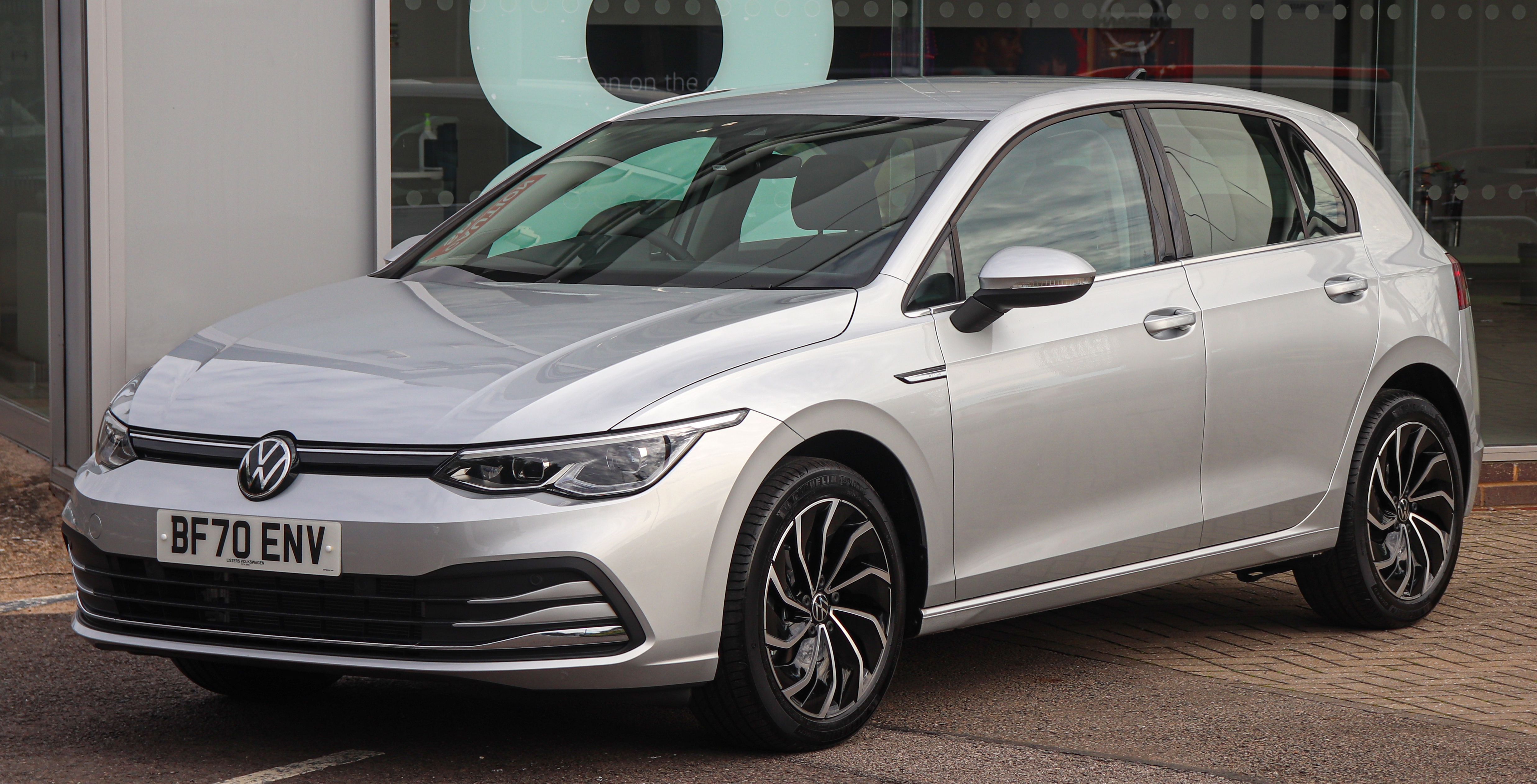
The Volkswagen Golf is a small car that’s made for everyday driving. The Golf GTI is a sportier version that’s meant to feel more exciting to drive. People mention it because it can be both practical and fun.
Instead of using steel for the truck’s outer panels, Ford used aluminum. Aluminum can make the truck lighter, but it often means different repair techniques than you’d use on a typical steel-bodied vehicle.
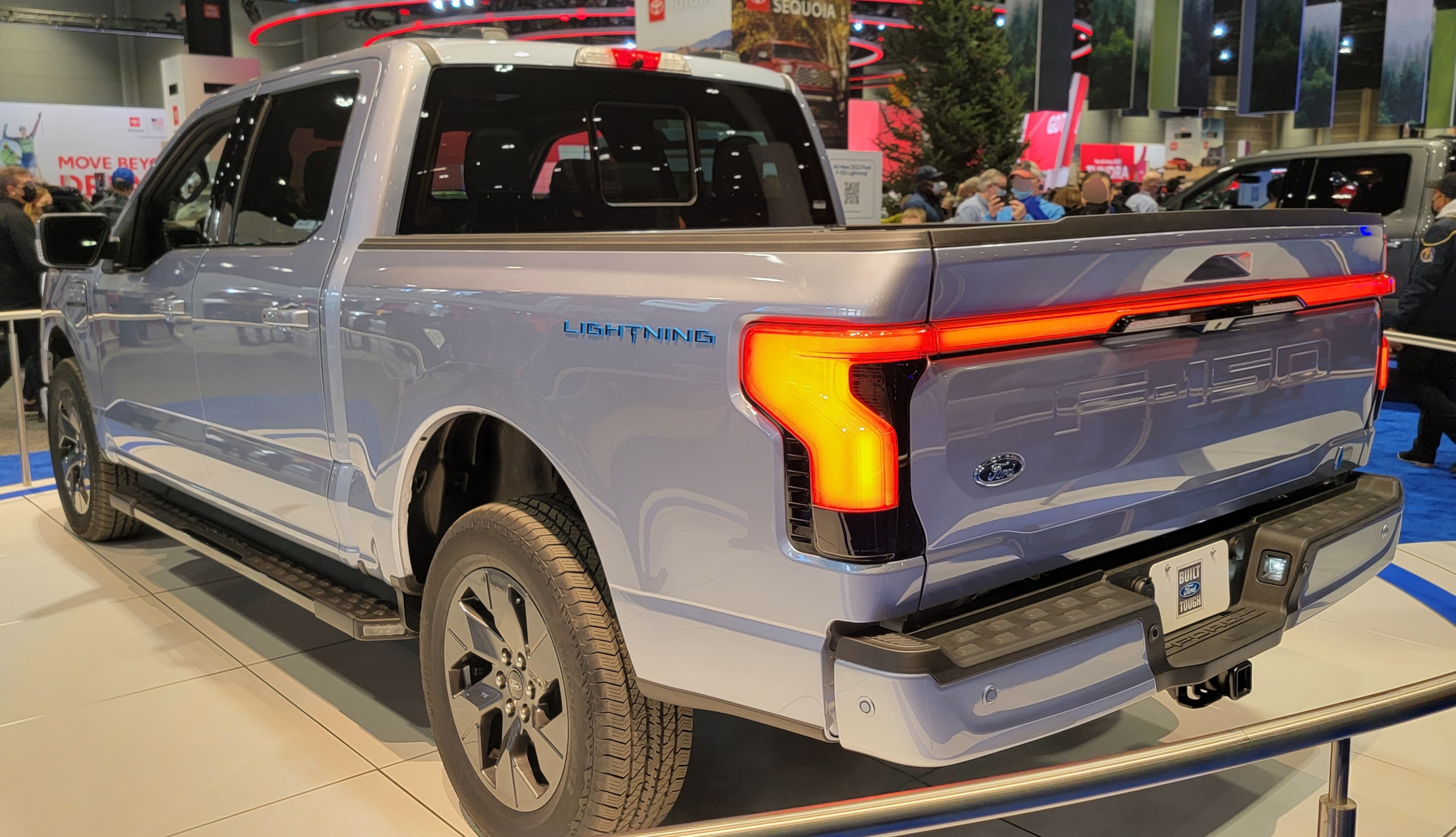
Ford’s F-150 is a popular truck, and Ford switched part of the body to aluminum to make it lighter. Lighter trucks can use less fuel, but aluminum can be trickier and more expensive to build and fix than steel.
Weight savings just means making the vehicle lighter. The hope is that a lighter truck will get better fuel economy, but it doesn’t always work out as much as people expect.
Contaminating aluminum during welding or repairs means mixing it with incompatible metals or materials (like steel) in a way that can weaken the weld or create corrosion risks. Aluminum repair often needs dedicated tools, processes, and workspace controls to avoid cross-contact.
They’re talking about a fire at a company that supplies aluminum to Ford. If a key supplier has an accident, it can slow down or complicate making cars and trucks that rely on that material.
A supply shortage means the materials needed to build cars aren’t available. When that happens, fewer trucks get made, so dealers have less inventory and prices tend to rise.
They’re talking about Nissan, the car company. The big idea is Nissan’s sales have been dropping, so they’re trying new strategies to sell more cars again.
They’re talking about the Nissan Rogue, Nissan’s main seller in the U.S. The point is it should be doing better, but Nissan got hurt by the post-COVID supply problems and ended up with the wrong inventory timing.
They mention the Honda CR-V because it’s a popular SUV that sells well. The comparison is basically: the Rogue is good, but it doesn’t sell as strongly as the CR-V.
They’re referring to the global shortage of computer chips used in cars. When chips were hard to get, car production got delayed, and that can mess up how many cars dealers have and when they arrive.
They’re describing a situation where dealerships had too many cars, so the cars sat around longer than they should. That can lead to discounts and makes the company look like it’s struggling.
The Nissan Leaf is an all-electric car. The point here is that it arrived early, but you don’t see as many of them as you do Teslas, so its impact on the roads has been smaller.
The Tesla Model S is an electric car that became really popular. They’re using it to show that Tesla’s EVs spread much more widely than the Nissan Leaf.
The Toyota Prius is a hybrid car that was one of the first big-name hybrids. They’re talking about how it was surprising at the time, and how it ended up lasting a long time while hybrids spread through Toyota’s lineup.
They’re saying hybrids aren’t just one specific car anymore. Now you can get hybrid tech in more different models, so the Prius isn’t the only option people should consider.
The Corolla Hybrid is a regular, everyday Toyota sedan that uses a hybrid powertrain. The point here is that it’s an easier, more practical recommendation than a Prius for most people.
Resale value is what you can sell the car for after you’ve owned it. They’re saying the Corolla Hybrid might be easier to sell later and keep its value better.
The RAV4 is a compact SUV, which means it’s bigger than a sedan and good for everyday use. A RAV4 Hybrid uses both a gas engine and an electric system to help save fuel. The speaker is saying they had a hybrid and liked the newer one too.
“Fleet” here means a company’s pool of cars—like rental cars that many different people drive. Automakers care about fleet sales because it can bring big volume, but it may not be as profitable as selling to regular customers.
The Toyota Camry is a very common family sedan. In this discussion, they’re talking about the new Camry being hybrid-only, meaning you’re choosing it mainly for better efficiency rather than a regular gas engine.
The Nissan Xterra is a rugged SUV built like a truck, not like a typical car. That “truck-style” construction is part of why it feels tough and outdoorsy.
Body-on-frame is when the car’s “shell” sits on a separate metal frame underneath. It’s common on trucks and rugged SUVs because it can handle rough roads better.
Term
rough rack
They’re talking about the roof rack feeling noisy or bumpy. Roof racks can make the car louder and less smooth, especially at highway speeds.
A supercharged engine uses a device that forces extra air into the engine. More air usually means more power, so it can make the SUV feel quicker than you’d expect.
Concept
affordable at the time
They’re saying that back then, this model was cheaper than you’d think. That kind of pricing can make a car feel like a “no-brainer” purchase when it’s new.
The hosts are pointing out a color trend—yellow Xterras were especially common or memorable during that period. Color popularity can influence how a model is perceived and how often you see it on the road.
Concept
"Rich kid" car handouts / status-car culture
The hosts are describing a local pattern where certain cars are treated like social-status props—handed out or expected—rather than carefully purchased. That kind of “status-car culture” can shape how people perceive brands and models, even if the cars aren’t necessarily the best fit for the owner’s needs. It’s also a reminder that some cars become symbols in specific communities.
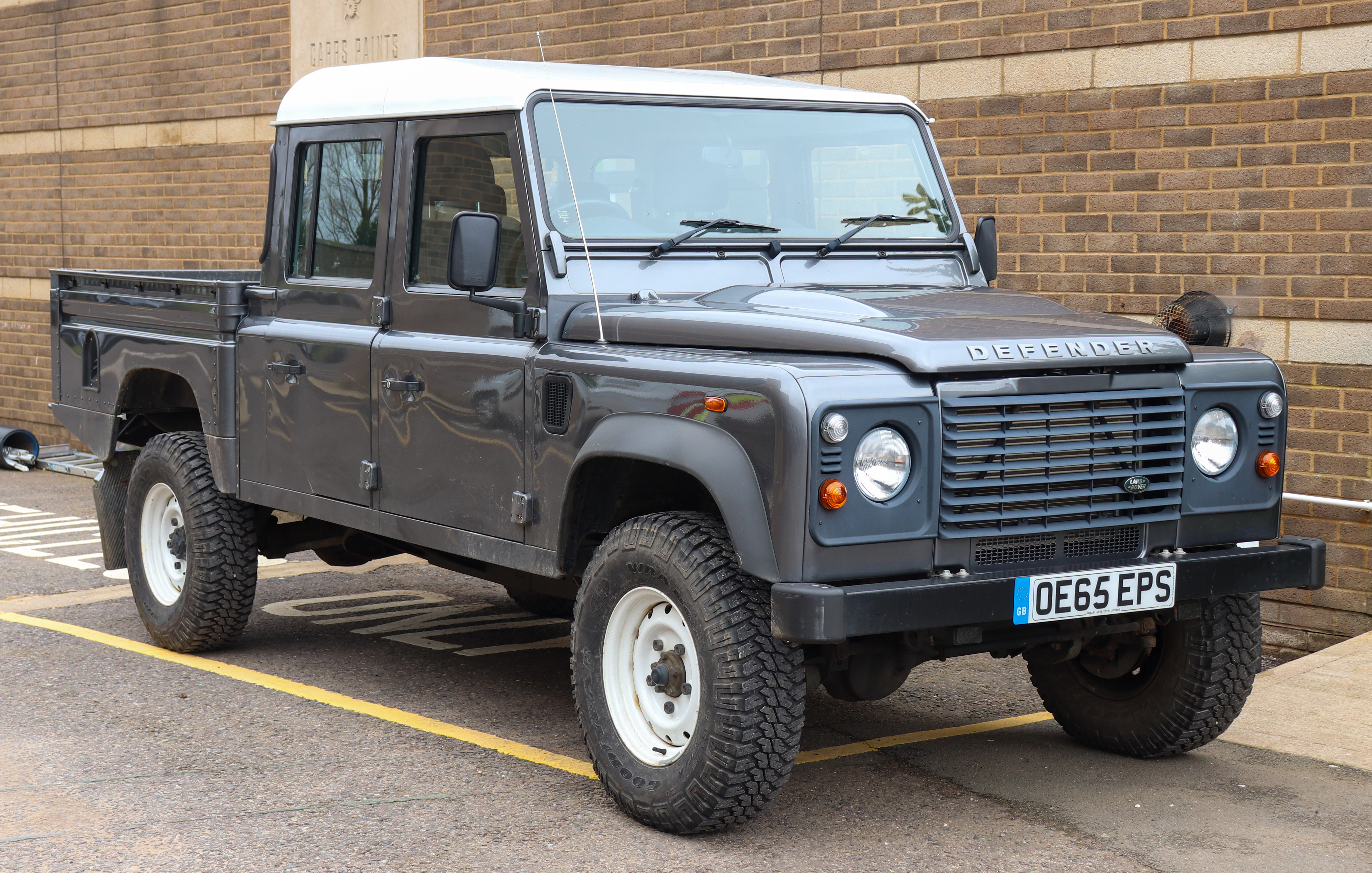
The Land Rover Defender 90 is the shorter-wheelbase version of the Defender, built for rugged off-road capability. In the transcript, it’s described as a common graduation gift for wealthy kids in Barrington, Illinois. The “90” refers to the wheelbase length, and the Defender’s reputation is tied to durability and go-anywhere styling.
The Toyota 4Runner is a rugged SUV built on a separate frame, not just a unibody shell. That design is popular with people who want something tough and long-lasting, and it tends to sell well.
The Toyota Highlander is a family-friendly SUV that’s built more like a regular car (on a unibody). It’s aimed at comfort and daily driving rather than extreme off-road use.
The Lexus GX is the luxury version of a rugged, frame-based SUV. It’s aimed at people who want the toughness of a truck-style SUV but with more comfort and luxury.
The Nissan Versa is Nissan’s budget-friendly small car. The hosts are saying it’s one of the cheaper models that’s going away, and it was one of the last ones you could buy for under about $20,000.
The Nissan Kicks is a small SUV-style crossover. It’s popular with buyers, but the discussion here is about Nissan not making much money on it right now.
Sometimes a car sells a lot, but the company still doesn’t make much money on each one. That’s why automakers may shift focus to more expensive models that have better profit margins.
The Nissan Murano is a bigger, more upscale Nissan crossover. The hosts are saying Nissan wants to concentrate on the more expensive models because they’re more profitable.
The Jeep Wrangler is a compact off-road SUV famous for its trail capability and strong brand identity. The hosts pair it with the Nissan Xterra when discussing “off-road versions,” highlighting that Wrangler-style vehicles are a major reference point for the off-road segment.
The Ford Bronco is a rugged SUV meant for off-road driving. The hosts are saying that when it first launched it was very popular, but later the market cooled and it became less profitable to sell.
A fad means something gets popular for a short time, then interest drops. The hosts are implying that some people buy these rugged SUVs for the look or trend, not for real off-road use.
The CJ7 is a Jeep model from the classic CJ lineup (often associated with the 1970s–1980s era). It’s being referenced as the speaker’s old Jeep, and the conversation notes its lack of a floor, which points to how basic and open the cabin can be on older CJs.
A three-speed manual is an older-style stick shift with fewer gears. With fewer gears, the engine often spins faster on the highway, so it can feel loud or strained.
This is a Hyundai Santa Fe that’s powered by a hybrid system, and it’s in the Calligraphy trim (a higher, more upscale version). The point here is that it costs more than a typical Santa Fe, but the tradeoff is a nicer interior and a quieter, smoother ride.
“Three-row” means the SUV has three rows of seats, usually for a bigger group of people. The hosts are pointing out that Hyundai’s crossovers here are meant to carry more passengers.
The Hyundai Palisade is a larger SUV with three rows of seats, so it can fit more people. It’s designed for family use and comfort. People mention it because it can come with lots of features for the price.
Interior noise level is how loud or quiet the car is inside. They’re saying this Hyundai feels extremely quiet, with very little road or engine noise getting in.
A hybrid uses both a gas engine and an electric motor. The electric part can help with acceleration and reduce fuel use, and in this case it’s also part of why the car costs more.
This is about whether the car can speed up quickly when you need to get into traffic or pass another car. It’s more about everyday acceleration feel than maximum specs.
“Quiet” is a refinement metric that often improves in hybrids because the electric motor can propel the car at low speeds with less engine noise. It can also reduce vibration and harshness during typical city driving.
Term
smooth
Smooth means the car doesn’t feel jerky when you accelerate or when it switches between gas and electric. A well-tuned hybrid system makes those changes feel seamless.
Horsepower is a number that roughly indicates how strong the car is. But how fast it feels when you press the gas—especially at low speeds—depends on more than just that peak number.
Miles per gallon (MPG) tells you how efficiently the car uses fuel. Higher MPG means you spend less on gas, and “observed” MPG means what they actually got while driving.
The third row is the back-most seat area in some SUVs. Some third rows are tight and only work for kids, but this conversation is about whether it’s actually comfortable enough for bigger people.
“Duck and cover” was a safety message people were taught during the Cold War. The idea was to quickly get down and protect yourself, but it was more about public fear and preparedness messaging than a guaranteed real-world solution.
When it’s cold, electric cars often don’t travel as far as they do in mild weather. The battery doesn’t work as efficiently, and warming the car uses extra power.
The Tesla Model Y is an all-electric SUV from Tesla. If it’s very cold outside, an electric car may not go as far on the same charge, so starting with a full battery is important.
Range anxiety is the stress of wondering if your electric car has enough battery to get where you’re going. People usually solve it by planning charging stops ahead of time.
Charging stops are planned intervals where an EV is plugged in to add energy during a trip. In extreme cold, the reduced efficiency can mean you need more frequent charging to maintain your schedule.
They’re saying the car doesn’t come with the usual tools to lift the car and change a tire. That matters because if you get a flat, you may need a different plan than a gas car with a spare.
In very cold weather, an electric car can’t go as far on the same charge. Part of it is the battery working less efficiently, and part is the car using power to keep you warm.
They’re seeing the tire pressure warning go off and the pressure keeps falling. That usually means the tire is leaking, and you should treat it as urgent for safety.
A flat tire means the tire is punctured and won’t hold air. It can happen from things like screws on the road, and it usually needs a replacement or repair.
These are the places where a Tesla can plug in to charge its battery. If you’re traveling and something goes wrong, having chargers nearby can save a lot of time.
A flatbed truck is a tow truck style where the vehicle is loaded onto a platform. It’s commonly used when the car can’t be driven safely or when towing needs to protect the vehicle’s drivetrain and wheels.
“Self driving mode” refers to Tesla’s driver-assistance system that can take over certain driving tasks under specific conditions. It typically still requires driver supervision, and its behavior can influence how stressful a long trip feels.
A Tesla service center is Tesla’s official repair location for diagnostics and warranty/paid repairs. For road trips, getting a quick appointment and turnaround time can be the difference between continuing immediately or losing hours.
Replacing a tire after a puncture or damage is a common EV road-trip disruption. Tire replacement also affects range indirectly because tire condition and pressure influence rolling resistance and efficiency.
Electric motors can deliver power right away, not after the engine revs. The hosts think that quick shove of power can stress tires and wear them out faster.
EVs can spin the tires and stress them more because they deliver power very quickly. “EV rated” tires are made to last longer under that kind of hard use.
Electric motors can give power right away, so the tires get “hit” with force immediately. That can make them wear faster than on a car that ramps up more gradually.
Tire rotation means moving tires to different corners of the car. It helps because different tires wear at different rates, and rotating them evens that out.
Discount Tire is a place you can go for tire service. The point here is that some shops will rotate your tires for free, so it’s easier to keep up with maintenance.
Concept
EVs don't need maintenance
People sometimes think EVs are “set it and forget it.” In reality, they still need regular checkups and cleaning so small issues don’t turn into bigger ones.
Tire sealant is a gooey compound used with a compressor to temporarily seal a puncture. It’s designed for short-term “get you home” use, and the tire often needs inspection or replacement afterward.
LIVE
Did you know Fast-Growing Trees is America's largest and most trusted online nursery with
thousands of trees and plants and over 2 million happy customers?
Whether you're planting fruit trees, adding privacy, brightening things up with flowers
or bringing in house plants, Fast-Growing Trees has it all.
Even better, they can help you find options that are right for your climate, your space,
and lifestyle.
Click order grow.
Every plant arrives healthy with the alive and thrive guarantee, straight to your door.
So, if you're ready to get planting, this is the moment.
Right now, they have great deals on spring planting essentials.
Up to half off on select plants.
And listeners to our show get 20% off their first purchase when using the code WWO at
checkout.
That's an additional 20% off.
Better plants and better growing at FastGrowingTrees.com using the code WWO at checkout.
FastGrowingTrees.com code WWO.
Now is the perfect time to plant.
Let's grow together.
Use WWO to save today.
Offer is valid for a limited time.
Terms and conditions apply.
Go to growingfasttrees.com for details.
All right, this is the Consumer Guide Car Stuff Podcast.
I am Tom.
Thank you for joining us today.
When you get a chance, do me a favor.
Check us out at consumerguide.com.
Lots of stuff there, including my latest reviews.
Plus you can stream the podcast right there.
Plus sometimes I get to do fun stuff.
I just did something on the Chevy Belair Hybrid, I'm sorry, Concept from a few, no, 20 plus
years ago.
Cool looking car.
Should I happen?
Didn't happen.
And you can read all about it right there.
All right, in studio with me is not Jill.
Jill is doing something.
I think she's driving some infinity or something.
In her seat, literally in her seat.
In her seat, Dave Paluski, good friend.
You are a mechanical engineer.
Yes.
You are a car lover and you've been my friend for down near half a century.
Yeah, yeah.
It's really hard to quantify that at this point.
As I'm famously insufferable, congratulations to you for hanging out with me.
Yeah, no, I do.
I get a commendation every year that's sent from some obscure government agency.
So I've got that going for me.
But yeah, with RTM Engineering in headquartered in Chamberg, Illinois, we've got 29 offices.
We are in architectural engineering, mechanical, electrical, plumbing, civil and structural.
You are one of those guys.
And by that, I mean, you're one of those people that works in a place where the name is on
the building.
This was negotiated.
Yes.
So.
It's always interesting to know people who work in a building where the name of the
place they work is on the building.
My wife worked at True Value for years.
Yeah.
And Chicagoans know that you can see the True Value building from 90 from the Kennedy.
Right near Cumberland Avenue, yes.
Yeah, close to the airport.
Interesting thing about that, they took up like two floors.
Oh, yeah, we take up one floor.
Yeah, they were the plurality talent attendant, but they were not in any way taking up most
of that building.
So there you have it.
I have a quick question for you.
You may know the answer.
What is a Luke Combs?
Oh, this is a country music artist.
Yeah, how do I make this never happen to me again?
I got into a test car today and I should have been happy.
It's a Golf GTI and I am happy.
Sure.
I am happy.
Great car.
Oh, my gosh.
What a great car.
But this Luke Combs fellow who was playing when I got in.
Yeah.
Wow.
Yeah.
I've complained about contemporary country before, but dang.
I don't know if he's the one with long neck, beer or something.
But every country star has written a song entitled that, so we don't really know.
Every single male country artist sounds exactly the same.
Yeah.
It's, yeah, and I didn't have time to change things because I just got in the car.
Oh, and just drove over here, so that's a five minute ride.
I have 90 seconds on that car.
Yeah.
Well, from the donut shop.
Oh, okay.
You can check out the donuts anytime.
I went with a completely no-jill worries assortment today.
Right.
There's a lot of pushbacks sometimes on some of these I've heard, but...
They're donuts.
You won't get that from me.
Donuts?
Like what's bad?
It's like when Wendy's used to have a salad bar.
What was bad on it?
No.
I mean, technically, everything was bad, but nothing was bad.
True.
True.
I think they had a bean salad, a mixed bean salad.
I like those.
Yeah, it's good.
A little vinegar.
Do you remember?
I think it was called the Wendy's Super Bar.
That was what they called that thing.
And they used to make garlic bread by cutting hamburger buns in half.
I do.
I do.
And didn't it have the mastic-choli?
A lot of...
I think three bean salad.
Yeah, it had things that you couldn't order off the menu, but somehow they showed up in
the Super Bar.
None of that stuff could have been more average.
Yeah, no.
It was...
Put some French dressing on it, though, and then I'll pep it right up.
Yep.
In other car-related news...
Yes.
Actually, this is an interesting story.
Years and years and years ago now, two generations ago, Ford redesigned the F-150 with aluminum
body panels.
And I don't think they ever got the play out of that, that they thought they were going
to get.
I don't think consumers care.
And I don't know that they got the weight savings they needed to actually really impact
fuel economy.
And that was the intent, was weight savings?
Yeah, ultimately, it was weight savings.
Yeah.
Yeah, and it was kind of a mess because, not a mess, but it was just very complicated
because dealers who had body shops had to set up separate body shops because you couldn't
contaminate aluminum, especially when you're welding, with steel and other stuff.
But, a few months ago, Ford's aluminum supplier in the U.S., in New York, caught fire.
Oh.
Oh.
So that's bad.
Yes.
I think I saw that on the news, yeah.
And they're not back up.
That is bad.
Yeah, so Ford is scrambling to find aluminum, and this is all complicated by the Iran conflict
because I didn't know this.
Things you learn during weird times, 9% of the globe's aluminum comes from the Middle
East.
I had recently heard that too, yeah.
That's who knew.
Who knew?
Yeah, I didn't know that, but Ford knows it now.
Yeah.
Yeah.
So, the news here, and I've got to check my notes, so I'm going to be a little slow in
doing this.
Here it is.
Nope, I lost it.
Dang.
Anyway, about, oh, here it is, Ford's current inventory of F-150s, is it 50, 43% of normal?
Oh, wow.
Yeah.
So, there is a shortage of F-150s.
If you are looking for an F-150 right now, expect to probably pay close to retail and
not get the color you want.
Interesting.
Because there just aren't any there.
So bigger news, and you and I were talking about this before we went on air, Nissan held
a big event back in April, not back in April, this April, back on the 14th.
That's what I meant to say, back on the 14th in Yokohama, Japan, but the news is big, they're
trying really hard to break out of a funk, and the funk is pretty extreme.
Global sales fell 14% last year, they're down 7.5% this year in the U.S., and they're
way, way, way down in China.
And China is a whole different story, because I don't think anyone ever made money in China,
but they were selling cars there, and lots of them.
So Nissan's got a bunch of stuff going on, but they want everyone to know, which is why
they had this event, they have plans.
Right.
So, and the plans are interesting, and their best-selling vehicle in the U.S. the Rogue,
which is a very good vehicle, does not sell nearly as well as it probably should.
It doesn't sell as well as the Toyota RA4, it doesn't sell as well as the Honda CR-V,
but it sells well for them.
And they got into real trouble after COVID and after the chip shortage, where somehow
they mismanaged that, and all of a sudden they had way, way, way too many rogues, and
all of a sudden they were selling vehicles that were a year old deep into the next year.
So that's the trouble.
So now they're looking at some new stuff, and there's a bunch of crazy stuff.
I know you read about this too, but what surprises you here?
Well, it's, you know, thinking about Nissan as having come out with the Leafs so many
years ago, and electrification, and kind of being on the cutting edge of that, they've
been behind in that marketplace.
Yeah.
You know, they still have the Leaf out there, but, you know, just seeing that the Rogue,
which is a really good, nice car, I've rented those a lot, and, you know, the new model,
the fit and finish, the interiors are really nice.
So to see that go to a hybrid, plug-in hybrid, I think it is, is just, I think it's going
to change things for them.
Yeah, they've got stuff coming.
And you mentioned the Leaf, which is a really interesting story, because I've often thought
about this.
They came out first.
Right.
I mean, the Leaf came out around the same time that the Tesla Model S came out.
One of those companies handled that better.
Yeah.
Right?
There's millions of Teslas on the road, and there aren't millions of Leafs on the road.
But the other part of that that's a little weird is that Toyota came out with the Prius
way back when.
And that was shocking and strange, but people slowly bought them.
And the interesting thing about the Prius is people are telling stories now.
They're writing stories about the fact that the Prius is selling really poorly.
That's like, yeah, well, it survived 25 years, and every other vehicle in the Toyota lineup
is now a hybrid.
Right.
Of course it is.
Yeah.
I don't even know why you would think about the Prius anymore, unless you really like
that styling.
The compact, right.
And it is kind of a different styling, but now that you could get the hybrid in pretty
much everything that they make, it's not a standalone like it was when it first came
out.
Yeah, I do not think.
Maybe for myself, but I'm not a good customer.
But I don't think I would ever recommend someone buy a Prius instead of a Corolla hybrid.
Sure.
I would just go with the more obvious thing.
We'll probably have the better resale value, and it's Corolla.
Right.
Oh, yeah.
It's got it written all over it.
Yeah.
And then the RAV4.
I rented a RAV4.
So I travel, you know, as you know, probably 20 trips a year, and I always try to rent
something different.
So, you know, I don't get the driver cars, but you're all you should be slowing down.
Well, oh, yeah.
Well, I do.
I move slower, but still.
I move way slower.
Getting out.
Getting out there.
But yeah.
So I had a RAV4 hybrid, really nice.
So the new one.
Yeah.
Okay.
Yeah.
Yeah.
I haven't driven that yet, and I've heard great things about it.
I keep trying to get into it, and it keeps getting moved.
Oh.
Like it's on my schedule, and then it disappears from my schedule.
Well, that's another thing.
I don't know who I...
Stop.
Well, that's another thing to note is that, you know, rogues are very heavy in the fleet
for rental companies.
Which is interesting, actually, because that comes up in this Nissan story.
One of the things that Nissan wants to do for profitability reasons is get out of fleet.
And they got really heavy into it.
Something like close to 20% of their vehicles were showing up in US rental fleets.
And that's not money.
That's just you keeping volume up to maintain efficiencies, but you're not making money
selling cars into fleet.
Toyota does this for an entirely different reason.
They are advertising those cars.
Sure.
And they're very selective about what they put out there.
And I don't know this.
Do you see Camrys out there?
Actually no, not really.
Because the new Hybrid Camry is really good.
Yeah.
And that's Hybrid only.
Mm-hmm.
So, back to Nissan and their move.
One of the interesting things that they're doing, and it's funny because everything
seems backward these days, we're no longer moving towards efficiency, is they're bringing
back the XTERRA.
Oh, yeah.
And when I say bringing back, they're building a new vehicle that they're calling XTERRA.
Right.
Everyone always says that.
They're bringing it back.
It's like, it's different.
Right.
Was it the previous XTERRA?
Was that a body on frame?
Yes.
Okay.
Yeah.
And it was crazy looking.
And you and I were young enough to maybe have the bug to buy one at the time.
Yeah.
It looked cool.
They looked cool.
And they had that crazy rough rack.
Oh, yeah.
And they sold a supercharged V6 version of it.
Right.
And I cannot remember what the deal was with that or why they were doing a supercharged
V6, but they were shockingly affordable at the time.
Like, I remember prices like around $22,000 or something like that.
Yeah.
And they were cool looking and they sold like hotcakes.
And the thing that should annoy you as much as it annoys me, there's always a car that
it seems like young, spoiled, rich boys get when they graduate high school.
Oh, yeah.
And for a while, I think it was yellow XTERRAs.
Oh, yes.
That yellow was predominant in that model, for sure.
And then you and I had a buddy that went to Northwestern College down in Evanston, Illinois,
just north of Chicago, and it seemed like every rich kid there got a red 944.
Oh, yeah.
944.
Sure.
And screw those guys.
Yeah.
Well, they just passed those out.
That's basically, they don't even buy those.
They're just handed out because they're like hand bills on the street.
Another one, and you remember this, it seemed like in Barrington, Illinois, also not far
from here for a while.
Every rich kid that graduated from high school up there got a Land Rover Defender 90 in yellow.
Yeah.
Oh, yeah.
The yellow is...
Screw these guys.
These cars are so cool.
Oh, yeah.
That stuff does bug me.
Yeah.
Yeah.
I didn't get a car when I graduated high school.
Years and years later, I'm still...
I think I got a briefcase.
I don't remember what I got.
Wow.
I don't know.
See?
But that exterior is interesting because Toyota is making money selling the forerunner.
Yeah.
And it's interesting how much money they make because they sell a Highlander.
They sell a RAV4, and those are unit body, nice cars for nice people.
But if you wanted to survive an apocalypse, and the forerunner still feels like that.
It feels really solid.
But that's a body-on-frame vehicle.
It's rough and tough.
It works really well for Toyota.
And they sell a Lexus version of that too, the GX.
What is that called now?
The GX500.
Oh, yeah.
Is it 500?
450?
500?
I can't remember.
But the GX.
So these body-on-frame vehicles are probably a money opportunity for them.
And one of the problems that Nissan has now, and this has a lot to do with the current administration
in Washington, they had three vehicles.
They still have two vehicles that were really high-volume, really appealing, but they were
built in Mexico.
Oh.
And this is problematic.
And that was the Versa, which is going away.
I think they built the last Versa.
Subcompact car was available under $20,000.
There's some reports of that.
The last under $20,000 car was the last Versa.
Oh, is that right?
Yeah.
Okay.
Yeah.
And then the Nissan Kicks, which is a great little crossover, and it's one that my daughter
test drove when we were looking for vehicles, and the Centra, the Nissan Centra, which I
just drove.
So they have those, and they're appealing, they're good, and they sell in some volume,
but they don't make any money on them.
And they're not going to make any money on them for a while.
So yeah, they're focusing on Murano and kind of their higher end.
And then, so something like the off-road versions that we've got, that's kind of the hot thing
right now, right?
Yeah.
And I wonder too about that, right?
So you've got the off-road things that they want to do, including the Xterra, and the Wrangler
and the Bronco seem to have beat each other up pretty badly, and they've had to lower
prices, resell values have fallen a little bit, and they're not making as much money
on them as they used to.
And now, Hyundai is threatening to join in there.
Did you see the bolder concept out of New York?
I have not seen that.
So it's a Hyundai body-on-frame vehicle for door, looks very much like a Wrangler Bronco
competitor because that's what it is.
And that's going to enter the fray at some point, probably, they haven't committed to
it.
But then all of a sudden there's a lot of vehicles in there, and I don't know how big
that pie is, and I don't think that pie is going to get bigger.
When the Bronco first came out, it seemed like there was money for everybody.
Like Bronco sales went up and Wrangler sales didn't go down happy day, but since then
it's been ugly.
Well, I think there was a certain novelty to the Bronco, coming out with the retro looks
and whatnot, and there was that throwback feel.
But you've talked about this.
And it's a good name.
Oh, yeah.
It's a historic name.
And you've talked about this a number of times, you know, the fact that this, it could be
a fad and it's, you know, people kind of, you know, they're never going to touch, these
things aren't going to touch mud, they're not going to touch rocks, you know, they're
going to drive them to a movie theater in the grocery store and that's about it.
My thing about the Wrangler is it's a vehicle I wish no one would buy and I want one.
Oh, yeah.
You know, because I completely get it.
I want that.
I owned a CJ7.
You know that?
Yeah.
You drove my CJ7.
Yes.
We both should be dead.
Because there was no floor.
There was no floor, there were seat belts, I don't know, things like that.
And who equipped that thing new?
It was the V8, the 304 V8 and a three-speed manual.
Three-speed manual.
Whatever.
No, high revs.
Definitely.
If you needed high revs, you had them.
Yeah.
Yeah.
Ten miles on the highway.
Ten miles.
Oh, man.
But yeah, we'll see how that goes for them.
But there's a lot of stuff here.
Watch Nissan.
They're going to be making more news soon.
Last week I drove, speaking of Hyundai, the Hyundai Santa Fe Hybrid Calligraphy.
Okay.
And for people who aren't familiar with the Hyundai lineup, they have two mid-sized crossovers.
Both of them are three-row, interestingly.
But the Santa Fe is the smaller of the two and the more affordable of the two, although
not by much.
Well, it's gone more upscale since the restyling a couple of years ago.
And that is exactly where I wanted to go with this.
The vehicle I drove, first of all, I want to get to the hybrid part of it, but the interior
is glorious.
Oh, yeah.
This is 52 grand.
You're like, well, 52 grand for a Hyundai seems high, but you can get a Palisade up to 60
if you try.
But that's not the deal.
The interior is really, really nice.
And the ride quality is really, really nice.
And the interior noise level is non-existent.
Right.
And then you mix that now.
Part of that price is about three grand retail for the hybrid system.
It's really good.
And that changes everything.
Right?
I mean, you get a lot more power out of that, it seems.
This is what's interesting.
I read some other reviews.
I shouldn't do this before I write my own.
And people were complaining about power.
Really?
But if you read about their complaint, it's mostly like higher-endy, you know, merging
and passing kind of power.
Yeah.
All the power out of this hybrid system is really available immediately around town.
Yeah.
Like driving around here, suburban Palatine, Illinois.
Right.
It's quick.
Yeah.
It's quiet.
It's smooth.
The power is very progressive.
I had one of those, too.
Good job.
Yeah, that's how I could talk about it.
But yeah.
231 or 232 horsepower.
I forget.
That's actually kind of a lot of horsepower in the class.
Mm-hmm.
That's a good number.
Yeah.
And then my 35 miles per gallon observed.
That's what the computer told me.
We assume that that's accurate.
Sure.
I remember when they weren't.
Yeah.
That's a scandal from many years ago.
They seem to be pretty accurate these days.
But 35 miles per gallon, dang good.
Yeah.
So, I'm digging this vehicle.
Also, this is important.
I sometimes have a problem with Toyota vehicles, and this is specifically a me problem.
I'm a very, very big guy.
Getting into and being comfortable in the vehicle, some Toyotas, even though they're
big vehicles.
Oh, yeah.
Not easy for me.
Sometimes the console's too wide.
Like the old RAV4.
I didn't fit in that well.
Oh, okay.
But, like, I'm driving this Golf.
Yeah.
I fit great.
Oh.
And I'm driving when I drove the Santa Fe.
I fit great.
Mm-hmm.
Yeah.
But that's a very good use of space.
Also, the third row, you could actually put you back there.
Oh, yeah.
In a normal size.
Well, you're tall, 6'1", whatever.
Yeah.
But a normal size, a big adult, would fit back there okay.
Yeah.
Would be happy about it.
Yeah.
Well, and a lot of times it's an afterthought, but this is actually usable, you're saying.
It's usable.
It's not great.
I mean, ideally, it's for the teens, for the kids.
Yeah.
The kiddos.
But you can get some kids back there.
Throw them back there.
We're going to take a break in a moment.
Afterwards, we talked to my old friend Robert Calangelo, previously of GreenSense Radio,
but Robert's a sustainability expert and renewable energy consultant, and he wants to check in
and talk a little Tesla.
Awesome.
He took a road trip.
Oh.
I don't even have notes.
I don't take notes when I talk to Robert.
It's just, it's Robert.
Yeah.
So, we'll be right back.
FastGrowingTrees.com, using the code WWO at checkout.
FastGrowingTrees.com code WWO.
Now's the perfect time to plant.
Let's grow together.
Use WWO to save today.
Offer is valid for a limited time.
Terms and conditions apply.
Go to growingfasttrees.com for details.
Your budget.
So, whether you're picking out your first policy or just looking for something that works better
for you and your family, they make it easy to see your options.
Visit progressive.com.
Find a rate that works for you with the Name Your Price tool.
Progressive Casualty Insurance Company and Affiliates Price and Coverage Match Limited
by State Law.
Need parts fast?
Oh, Riley auto parts as fast.
Need them now?
We've got now.
No matter what you need, we have thousands of professional parts people doing their part
to make sure you have it.
We're O'Reilly fast.
Just one part that makes O'Reilly stand apart.
The professional parts people.
Oh, oh, oh, oh, Riley auto parts.
Welcome back to the Car Stuff Podcast.
And we're back.
This is the Consumer Guide Car Stuff Podcast.
I'm Tom Appel.
He is Dave Poulouski.
Hey, Tom.
Old friend hanging around today.
We're talking cars and he's sitting in for Jill.
Jill, I think, is doing infinity things today.
Yes.
Never ending.
Never.
Yes.
We just talked a little bit about Nissan and Infinity.
On the phone, on the phone is my good friend, Robert.
We haven't spoken a while.
It's Robert Colangelo, a sustainability expert and renewable energy consultant.
Robert, how are you?
Fantastic, Tom.
It's always good to be on the show.
I miss talking to you.
I miss talking to you too, sir.
We talked briefly on the phone this week, but not long enough.
But you're a busy man and an interesting man and it's always good to catch up with you.
We have a lot to talk about today, but just basically just how are you doing?
What are you working on these days?
Well, I'm working on citing data centers and I'm back into commercial industrial real
estate.
One is a data center development.
The other is a intermodal development.
Wow.
And I'm also writing my book with my colleague.
We spent seven years in the Soviet Union from 1990 to 1997 and a lot of what we worked
on there in oil and gas and on nuclear programs is coming true right now in Iran.
So we're trying to tie all that together.
So that keeps me busy as I have a new granddaughter and a grand puppy.
Congratulations.
Congratulations on both.
I didn't know this Russian-Soviet thing.
That's really interesting.
That is.
Yes.
I was there from 1990 to 1997.
We had a contract with the Department of Commerce.
We wanted a competitive bid to set up.
I was like a quasi-formed commercial service center.
They had an experiment at that time as the Soviet Union broke up.
A lot of companies were coming to Moscow and St. Petersburg, but they weren't going beyond
those big cities.
And as you know, Russia has 11 time zones.
It's the largest landmass.
And they wanted people to go out into the other cities.
And so we picked a town called Nizhny Vartovsk, which was the heart of the oil, Russian and
gas industry.
And we provided project finance and assistance to U.S. companies trying to work with the
Russian oil industry, make it more sustainable and productive.
So it was a great experience.
Wow.
And then I worked at Arga National Labs, and we won a project to write a small report,
a little book on how to transfer technologies that were defense technologies that had dual
use applications, and mainly to clean up environmental issues at the Department of
Energy complex of the labs.
And so I got to see just lots of cool technologies and evaluate whether they had application
to be commercialized.
And that was really part of stopping brain drain.
Russia had at one time 50% of the world scientists, a lot of them working on nuclear programs.
And the idea was if we can create companies and keep them employed in Russia, then they
wouldn't go off to other countries and do bombs.
So yeah, it was a great experience.
Wow.
Every time I talk to you, I learn a new line on your resume.
That was a secret.
Does the book have a published date?
When should we look for that?
We're hoping to have it finished at the end of the year.
My co-author, Al Bodica, he worked for me on the center we set up in Siberia.
And then when I left in 1997, he stayed on for 20 more years, married a nice Ukrainian
woman and really has just incredible experience over there, just seeing all the change that
they went through.
So our goal, we meet once a week to keep us on track and keep writing a couple of pages
every week.
So we're hoping in the next six months to have it done.
Well, good.
Congratulations on that.
That's super cool.
And obviously we'll have you on to talk about that too.
It's called duck and uncovered.
Do you remember the duck and covered?
Oh, it chills me.
I will leave to that because duck and cover sounds cute and it's not cute.
It's actually horrifying.
Yes.
And people who don't know about that don't know about what things were like.
Yes.
And Tom, did you grow up in, I can't remember, Chicago or Palatine?
Well, mostly Palatine.
I was in Chicago until I was six.
So do you know about the Nike base complexes that were.
Right?
Yes.
And so I grew about two blocks away from the Nike base.
And so there's a lot of myth around those.
And that's that's what the duck and uncovered.
You know, I started this story about growing up next to a Nike base and,
you know, teasing the guards as they walked over the rain because I couldn't get
out across the fence.
Oh, man, people need to check this out and I will link to it from our show notes.
But if you don't know about duck and cover, my daughter is pretty fascinated
by this stuff and all the all the war propaganda.
It was post-war Cold War propaganda from that time.
But the notion that a turtle in the cartoon can give you advice that would
save you from a nuclear blast is deeply troubling.
And that somehow covering your head with your hands.
Yes.
It's going to make it better.
Or even going on your desk, which is right.
That'll do it.
And yeah, that's actually live action video.
There's like a flash and all the kids scramble into their desk.
Oh, they're safe now.
Yeah, no, it's all good.
Oh, man, what else is going on, Robert?
Well, I thought I'd start with a little story.
What do the guess who the guess who flat tire
and the coldest day of this winter haven't come?
I don't know, but I suspect it has something to do with a Robert Colangelo road trip.
Well, let me tell you a little story and I'll connect it.
And we'll answer that at the end of the story.
OK.
So if the audience remembers, we had a really cold winter
and on Friday, January 30th at seven in the morning,
I climbed it to my fully charged Tesla Model Y
for a 300 mile drive to Hamilton, Ontario.
And it was 10 degrees that morning.
So why did I leave so early?
Because we all know freezing weather crushes EV range
and nothing wrecks a good road trip more than range anxiety.
And so I wanted to leave enough time
in case I had to make multiple charging stops.
So with a time change and lunch, the border crossing
and the fact that I'd have to stop at least three times the charge
because the extreme cold, I figured the trip would take about eight to nine hours.
OK, that meant I'd get to my friend's house around four p.m.
Just enough time for a shower dinner
and then we get a good night's rest before we went to see the concert the next morning.
And so what was the big event?
It was front row seats.
The guests who front row seats on their final tour.
Wow.
The for those that don't know, that was a legendary Canadian band.
They were big in the 60s, 70s and 80s.
They starred Bert Cummings and Randy Bachman.
And this just wasn't a concert.
It was the last time for me to see two Canadian rock legends.
And Tom, I know you're a music aficionado.
So I want to play a little quiz for you.
Can you guess the three of the five classic sharp topping guess who songs?
Was was American Woman one?
Bingo, that's one. OK.
The guess who jump right in because I'm not going to get this.
Yeah, American Woman.
Was Magic Carpet Ride them? No. No.
Well, producer Reddy is really disappointed in me.
He's a music guy.
He's a big time music American Woman.
Oh, professor. Yeah, I like him.
I'm drawing a blank myself.
I don't know how I'm going to get the others now.
I will. I will tonight.
When I tell you that you're going to say, oh, yeah, no time.
Remember, no time. No time. Yeah.
No time. Yeah.
That sounds like a bird song. Yeah.
They did sound very similar.
How about these eyes?
Oh, yeah. Yeah.
How about laughing?
Don't know that one.
I do.
Randy says I know it.
You do. I've certainly heard of it.
Well, they had a bunch of classics.
And as I said, I thought they were a great band
and it was great a chance to see two legends.
That's great.
So Chicago was super into classic rock.
They were played them all the time.
Yes, especially American Woman.
Oh, yeah.
Well, I got to tell you, I love my Tesla.
But after having it for two years, to be honest,
it has a couple of quirks.
First, there's no jack or spear.
Yeah. Second, it seems unusually committed to flat tires,
because I've had three in two years.
And third, as we all know,
you get a decrease in range in extreme cold weather.
Yeah. So I went towards the cold weather.
You went to Canada.
Yes, I was in Canada.
Drove to the nexus.
How could I have picked a worst day?
I was like the coldest day in Canada that year.
That's funny.
So I make it to my first charging stop in Marshall, Michigan.
It's around 1130.
I grab my third coffee, plug it in.
I sit back and wait for the charger to to renew the battery.
Then I see on the screen what no driver wants to see.
And my rear tire pressure starts dropping like the stock market
after the closing of the street or news.
It went from 42 to 15 and three.
Oh, no.
And so at that moment, one thought entered my mind.
John Steinbeck's the best lead plans of mice and man
often go astray and the day started so well.
So I step onto the freezing cold, get out my hands and knees
and I inspect the tire and immediately I hear a sss.
Yeah, that's not a good sound.
And I see a big screw lodged in the tire and I go, oh, no.
And it's cold. It's freezing.
I'm not going to fix it. I'm not going to mess with it.
So lucky me, the Tesla chargers were located at one of these gas station
mini mark combos and it had a washroom.
So that was great.
And if you it's a great location, if you need coffee or windshield fluid,
but bad if you need a Pirelli tire.
Very expensive Pirelli's under Tesla.
So I called three near my tire shops in Marshall.
None of them had my tire in stock.
And they said the earliest they could get one is Monday.
And that's that's not going to do me any good.
So I thought, perfect, because when you're trying to get to a concert
in Canada, what you really want to hear is wait until Monday.
So yeah, I gave Tesla call and thankfully Tesla roadside assistance
kicked in. I had a free tow.
Only problem is it took about two hours for the tow truck to arrive.
And by the time the car was on the flatbed truck, it was past three
thirty PM and the nearest Tesla service center in Ann Arbor, Michigan.
And it closed at five.
And guess what?
It wasn't open on weekdays.
So I had to get there to get my tire fixed.
And I did not want to spend a night stranded in Marshall or Ann Arbor,
Michigan, especially without a car.
Sure. So then things got weird.
The tow truck driver.
Then they got real.
He was really a nice guy, but lacking dental care.
And he had his lady riding with him in the front seat of the truck.
The only way to go.
And I didn't want to have fear with that whole arrangement.
So I asked, can I sit in my Tesla?
Well, it's on top of the flatbed truck.
So it's sure you're the customer.
No, I'm sure it's sure.
And I thought, here I went from a successful adult to a man riding
his own car on top of a tow truck cruising down the interstate,
not caring if it's legal or not.
I just want to get to the dealer before five.
But honestly, I got to tell you, it was kind of fun.
I felt like I was in my Tesla with self driving mode without losing any charge.
So we pulled into the Tesla service center is around four forty five
p.m. into their credit.
They agreed to stay late.
Good news, they could fix it.
Bad news by by fix it.
That meant replace the tire.
That'll be four and fifty dollars.
Thank you very much, sir.
Yeah.
Oh, man, I still remember seventy five dollar tires.
Yeah, oh, yeah, that would be a dream.
So at that point, I was stressed.
I was tired.
I had too much bit coffee to argue with them.
You know, why didn't they just plug it?
And I was just happy that my tire was fixed.
So they got me back on the road just before six p.m.
And then reality set in.
I still had at least 200 miles to go.
So that across the border still needed to stop two or three more times to charge.
So I looked at myself in the mirror and had an executive meeting as the chief,
the cook and the bottle washer.
We all agreed it's time to turn around and go home.
Oh, so I finally got home around 10 p.m.
Exhausted, defeated and lost my chance to see rock history.
And while I was waiting at the Tesla dealer,
I started wondering, are you these more prone to flat tires than gas park cars?
And Tom, I checked and I could not really find a reliable source.
They compared flats per thousand vehicles by maker model.
Yeah.
Or even a solid EV versus ice ice engine breakdown.
But I did find that flat tire trouble comes down to a couple of things.
It's really the tires.
It's run flat tires, oversized wheels, low profile sidewalls, no spare,
no jack and extra weight or performance too.
And those last two hit right in the EV pocketbook.
Most of these don't come with a spare jack.
So when you get a flat, you want to fix it.
You're either waiting for assistance or rethinking your car choices about
why does it have to be right.
Right.
E-fee's are also heavier and that weight
combined with instant torque can be really tough on tires and wear them much quicker.
So here's my public service announcement for needed drivers.
Put your Tesla in chill mode most of the time.
I know the instant acceleration is fun, but the price to pay for flats
and new tires every 20,000 miles gets very expensive.
Yeah, and also there are some stories about Tesla Model S's
and how quickly they burn through tires and it's not good news.
It's like 20, 25,000 miles.
I'm sure that that particular scenario of the 20, 25,000 meant aggressive driving.
But still, aren't manufacturers like Pirelli and Michelin coming out with
or don't they have on the market EV rated tires at this point?
Yeah, they're actually, yeah, special purpose.
And they're usually the carcasses line to to a big noise as well.
OK, yeah, they have some foam in there, but they still wear because,
you know, that that instantaneous torque is just very hard on the tires.
And when you're in chill mode, it evens out that acceleration curve.
So it doesn't wear them so quick.
So so that's definitely an issue.
And those tires are running about two thousand dollars a set.
So that's not a cheek thing.
Other thing is you have to rotate your tires regularly about every six thousand
miles and they're on the same side and they're back to front.
Is a way to change them.
That is interesting, Robert, because one of the sort of advantages of an EV
is that you don't have to bring it in for maintenance, like oil changes.
But yeah, but a tire rotation is maintenance.
You do have to make time and schedule it.
It doesn't cost very much, but it's a thing you have to do.
And it's so it's not bundled with with a rotation and an oil change
and other service that would normally happen, right?
Yeah, discount tires will rotate them for free.
But it's just something people usually don't think about,
because that's pretty often every six thousand miles.
And Tom, I think that's a fallacy that EVs don't need maintenance.
They don't need the maintenance of ice engine heat.
But there's all sorts of we could talk about this maybe another time.
There's lots of little things that need to be cleaned,
like your filters and your radiators.
And those can cause trouble or even drain holes for water when it rains.
Interesting. So so it's not the main thing you think of.
It's a lot of little things, but but you got to do it.
Interesting. The other is I would say there's AC powered air compressors
and tire sealant and you need special pucks, jack pucks in the car.
Because if you ever get lifted up on a hydraulic jack,
it'll hurt. It can damage the battery at these pucks out there where the jack goes.
And so carrying those in your car is probably
a good thing to have and gives you at least a fighting chance to fix a flat tire.
Interesting. Yeah.
I also saw that Tesla saw it sells a tire repair kit that can be an option.
I've never used one.
I don't know if it's practical or just an expensive way to feel optimistic
that you can fix your your flat.
But when it's 10 below, you don't want to be on your hands and knees.
You know, the false hope kit.
Oh, so I got to know, did your friend end up going to the concert?
Why do you should ask?
In the end, my friend used his concert ticket.
He took his nephew to see the guest who and not to rub it in.
But he told me that these two old guys in their eighties put on a great show.
But so I missed the show.
I spent the day with a screw in my tire, a hole in my plans
and I drove home tired, but I arrived safe.
So what do they get?
Well, let me finish.
Here's the big one. Yeah.
What do the guess who flat tires in the coldest day of winter have in common?
A failed mission for Robert.
Very close.
They all answered the same question.
Guess who didn't make it to Canada to see a concert?
Oh, oh, I didn't I didn't see the pun coming.
Oh, man. Fantastic.
Yeah, but I'll tell you, I got I got to ride on a flatback truck, which is cool.
Which is cool.
Also, after the fact, horrible things are fun things to retell.
So you do have a story to tell. True.
I do.
So I hope that to help your listeners with EVs to just have some preparation
in the car in case they get flat tires.
Robert, I did notice I talked to a number of my friends with these
and they've had multiple flat tires, too.
So I don't know that's worth looking into, and I will do that.
Have you noticed more flat tires just in regular cars and in your driving?
No, one of the interesting things is
while my daughter was at Monmouth College at Monmouth, Illinois,
she got like a flat a month.
It was irritating. Really?
Yeah, we don't know what the deal was.
But that was a car with low profile tires and and expensive sporty tires.
The nail factory near Monmouth College might have had something to do with it.
Well, I'm wondering, do you think that there's more debris on the road,
more construction?
I just I've never had that many flat tires.
I've been driving for I don't know, decades.
I don't know where she was driving around.
There might have been crud everywhere because she also rode horses.
She took horseback lessons.
And I think that the back roads that she took to these barns.
Sure. Not good. Yeah.
Not good for a Nissan Juke's tires.
Yes.
Well, Robert, we're completely out of time.
But how can people keep track of what you're working on?
Should they follow you on LinkedIn?
Yes, I'm on LinkedIn.
That's probably the best place to find me.
And I really it's always been a joy to talk with you, Tom.
You're so knowledgeable.
And I appreciate the opportunity to be back on the show.
And I still love my EV.
Although in the longer I have it, the quicker it gets.
Well, thank you for sharing that story with us, Robert.
All right. Thank you.
Have a great day.
That was Robert Calangelo.
We're going to take a break when we come back.
Quiz time.
Quiz time.
I understand.
Questions or comments?
Drop us a line at carstuffatconsumerguide.com.
That's carstuffatconsumerguide.com.
Welcome back to the Car Stuff podcast.
And we're back.
This is the Consumer Guide Car Stuff podcast.
I'm Tom.
Hey, Tom.
Hey, Tom.
How's it going?
I'm Tom.
He's Dave.
Dave's sitting in for Jill this week.
How you doing, sir?
Doing great.
That Robert can spin a tail.
He really can.
And I feel so bad about my guess who knowledge.
It stopped after American Woman.
Yeah.
But yeah, all famous songs.
You know why?
Because I'm sure there was a K-Tel record.
Oh, yes.
And Man That Ages Me.
They had American Woman on it.
Oh, yeah.
And we just saw the commercial 3,800 times.
And you had the Lenny Kravitz cover of it back in the late 90s, early 2000s.
And people who don't know about K-Tel records just go to YouTube and look up K-Tel record
commercials.
Oh, they're great.
They're fantastic.
They're fantastic.
But it was really weird, the artists they would get.
Because every now and then they'd get like a big artist and you wonder how that was licensed.
Like Elton John.
Yeah.
You know, when he was super, super hot.
Right.
Which show up on these things.
They catch him at the right time.
But the Beatles and the Stones?
Never.
No.
Never.
Right.
So there you have it.
All right.
It's quiz time.
Yeah.
In celebration of the fact that I've known you for way, way, way too long.
Today's topic is what came first, 1980s edition.
Oh, all right.
I'm going to give you two things.
You just have to tell me which came first on the calendar.
The very big broad timeline of life.
All right.
Are you ready?
Yes.
It's that easy.
Which came first?
The Cadillac Cimarron or the aforementioned but off air Pontiac Fiero.
Cadillac Cimarron.
The shockingly disappointing Cimarron.
Yeah.
Or the super cool Fiero.
I think that the Fiero was 84.
Cimarron based on a Chevy Cavalier was 86.
No.
No.
You got the 84 right.
Ah.
The others 82.
Oh.
Yeah.
The Cimarron.
You remember you and I sitting around a bar and there were guys talking about.
Never happened.
Yeah.
There were guys there.
We were at college.
We were actually up at Northern Illinois University and some guy was talking about having driven
his buddy Cimarron with the V6 and then he went 140 miles an hour.
In reverse.
Yeah.
I think he said.
You didn't do that.
But nice story.
Yeah.
No.
Great.
But the Cimarron dates back to 1982.
It's when.
Yeah.
When the Cavalier came out.
Right.
I think it was called the Pontiac J2000.
What?
First.
It would solely become sunburned.
Sunburned.
Yeah.
Over time.
And then there was the old Fiero or Farenza.
Farenza.
Maybe Skye.
Hawke.
Yeah.
Yeah.
Those were the J-cars.
All right.
And they were disappointing.
Yeah.
All right.
All right.
I had no points.
No points.
You have no points, sir.
All right.
Thank you.
Number two.
The Porsche 944 or the first episode of Cheers or did they came out the same year?
Oh, why are you doing that?
That I had.
944 would be.
Hmm.
Was there ever a car that was more benchmark than that?
It was just, it was shockingly brilliant.
Oh, yeah.
And you drove a 924S, right?
Yeah.
924S.
Yeah.
Which was like an inexpensive version of this that came later.
Right.
And the dollar was in a free fall at the time in the mid-80s.
And they really wanted to get this thing to the US for like 22 grand.
Right.
And they couldn't do it.
Same platform.
It lacked the fender flares.
It had kind of more of a trimmed down body.
And cast iron aluminum, cast iron suspension bits instead of aluminum.
Okay.
So.
Yeah.
944 or Cheers?
Cheers came first.
About the same time.
Ah.
Yeah.
They both came out in 82.
Okay.
Okay.
All right.
Next one here is interesting.
Chrysler Concorde or Ronald Reagan's second term.
All right.
Ronald Reagan's second term.
Our friend Josh had one of the first Concords I ever saw.
Oh, yeah.
He bought a loaded Concorde.
I don't remember.
Was it called Alex?
I don't remember what that was with the bigger engine with a 3.5 liter engine.
So second term.
That car was brilliant and so deeply flawed.
It was in the shop all the time.
Oh, really?
It ran.
It was fantastic to drive.
I wouldn't have expected that.
Yeah.
It was problematic.
So.
Chrysler Concorde, the LH cars.
Yeah.
The cab forward design.
Right.
So Ronald Reagan's second term began in 84.
Yes.
The Concorde came out later.
It did.
Yes.
Yep.
Okay.
You're on the board, sir.
Thank you.
You're going to like this one because it involves you.
Oh, all right.
Which came first, the first ever Acura Integra or Star Trek, the next generation.
All right.
We have an Integra story to tell because you owned the first generation and second generation.
Right.
And I owned the third generation.
So we covered the full Integra run.
Yeah.
And every one of those cars, so good.
Yeah.
So.
So very, very good.
If you wanted a Honda to start to take over the world, it was cars that good.
Yes.
Yes.
Because it was basically just like an awesome Civic.
Yeah.
And at the time 16 valve engines were new.
Yeah.
And they did them so well.
It was great.
It was great.
So I had an 87, I think it came out in 86, however.
And next generation came out in 88.
Close, 87.
So you got this one.
All right.
Yeah, it was later.
I thought next generation was much later, like closer to 90.
Yeah.
I was, but it was, it was troubling me to think that late.
My, I'm a Star Trek geek.
I love Star Trek.
I'm not a geek.
Like I don't memorize crap and I wouldn't go to a convention, but, but I love the show.
And I remember my grandmother getting like a huge big screen, like 40 inch Mitsubishi TV.
Yeah.
And I was there helping her install it and Star Trek next generation came on.
It's like, I'm just coming here every week.
Yeah.
And that was a, that was a CRT.
There was a tube TV.
It was a big heavy thing.
Ways a thousand pounds.
Yeah.
I don't know what came of that TV.
Hmm.
Probably not worth anything now.
So it doesn't matter.
Right.
All right.
Speaking of Star Trek, which came first, the Ford, you have two points.
We, we didn't talk about this.
There's five questions plus the bonus question.
Six total.
You need three for a victory.
All right.
You have to get one of the next two, which came first, the Ford Taurus or the Wrath of
Khan.
Oh.
Hmm.
And we haven't mentioned Ricardo Montovon in a couple of weeks.
Yeah.
So we're the Cordoba.
Oddly enough.
And the FCC is going to be reaching out about that.
So we had a buddy that had a Taurus.
Didn't we?
Didn't Tony have a.
Tony had a Taurus wagon.
Yeah.
Yeah.
Yeah.
I think he, I think that served him well.
Yeah.
The Taurus also showed up in Robocop.
It's a really good use of that car.
Yeah.
Cause they just all matte paint.
Right.
So I'm going to say that was a Taurus came out in 85.
And wait, what are, what are we comparing it to?
Wrath of God.
Wrath of God.
Or Star Trek II, as it's known.
Yeah.
And really should be Star Trek one.
We just ignore the first movie like it never happened.
Uh, Wrath of Khan came out.
Later.
Earlier.
Yeah.
Yeah.
Yeah.
82.
Yeah.
The, the, the forgettable Star Trek.
The motion picture was 80 and then Wrath of Khan was 82.
Okay.
And I think that was every two years after that.
I think search for sock was 84.
Yeah.
All right.
Two points.
The bonus question matters for you, sir.
All right.
It's related to the topic of the day.
The bonus question.
That's what I've.
Never been more true than today.
I've heard.
Uh, Petticoat Junction.
Fuck it.
All right.
Okay.
A terrible TV show, uh, ran from 1963 to 1970 was part of what CBS was calling briefly
it's rural programming and it was related to Beverly Hillbillies and Green Acres.
Yes.
Both of which were brilliant.
Yeah.
By the way.
Right.
And, and if you were drunk, they were more brilliant.
All right.
Cause any, any Jethro episode of, of, of the Beverly Hillbillies totally worth watching.
Crazy.
I've yet to talk my daughter into sitting down and watching a full episode of the Beverly
Hillbillies.
Really?
Cause she probably just thinks it's a sitcom and doesn't know that it's a weird psychedelic
That's deep.
Yeah.
It's deep.
Um, Petticoat Junction.
Yeah.
The least entertaining of the three rural shows on CBS, uh, followed a family of people
who were running the shady rest hotel, which existed on some weird line branch of a railroad,
whatever.
Yeah.
But at the beginning of the show, during the opening credits, they did make a point
of showing you the three daughters.
Yes.
Who worked at the shady rest.
And in fact, they were nude.
You just couldn't see the nudeness.
They were in a water tank of some sort.
Yeah.
And they were not unattractive.
No.
Uh, there were three of them.
I've got four names here.
You have to tell me which one is not one of the daughters.
All right.
The ones, the naked daughters at the shady rest.
Are you ready?
Um, as ready as I can be.
This could not be dumber.
Um, Billy Joe Bradley, Bobby Joe Bradley, Betty Joe Bradley, Bonnie Joe Bradley.
One of them is a faked, uh, maybe she died very young and hunts them as a ghost, but
uh, one of them is fake.
I'm going to jump right in, uh, Bonnie Joe Bradley.
You just saved your butt, sir.
There was no Bonnie Joe.
All right.
So I was going to give the names of the, of the actresses who played these young ladies
except they did.
Apparently the actress didn't matter and they just changed a lot.
So it was like, yeah, there was really no keeping track of it.
Just plug somebody in.
If you were to go to, for some reason, a petticoat junction convention, all right, I'm not convinced
there ever was such a thing.
I'm going to look it up.
But if there were people signing autographs, there'd be like 90 of them because there were
so many different people who played the daughters.
Yes.
So.
It wasn't, it wasn't as notable as a switch between Dick York and Dick Sargent.
No.
Um, okay.
So I was going to tell you the story off here, but I'll just get to tell it to you
on here.
You know about my refrigerator.
I do.
All right.
Did I tell, I didn't do this.
No, but I, you mentioned your refrigerator and I know when you switched refrigerators
the last time because I got your old one as a garage beer fridge.
Do you still have it as a garage?
No, it blew up a long time ago.
God rest its soul, but.
I'd like to claim the contents of your beer fridge, but now I have no legitimate claim.
So to move the refrigerator into the house, we live in an old bungalow, nothing's roomy.
We had to move our entertainment center.
On our entertainment center is my very, very sad stereo.
It's sad because I haven't played it in 25 years.
Literally since my daughter was born, I have almost never used my old stereo.
And as you know, every guy our age had a stereo.
You started having a stereo in your early teens and then you just swap things out over
time so that it grows with you.
So my project was looking at the sad stereo that I haven't used in decades was to just
move all four speakers that are way, way, way too large for my 10 square foot, my 10
square foot.
Into my office.
And it should have been simpler than it was.
But there are things that had to be moved and shuffled and I had books up there that
had to find a place to go and what I'm disappointed in is my wife and daughter's lack of interest
and actual irritation.
I'm not surprised.
With me for trying to move all the speakers.
So really this morning was the first time that I enjoyed all four speakers.
And I gotta tell you what, I had a very nice Bose Bluetooth speaker on my desk, but that's
right in front of you.
Right in front of you.
This is room filling.
This is room filling.
Yeah.
I'm digging it.
Yeah.
I'm really happy about it.
And I needed a Bluetooth.
I had to spend money on a Bluetooth receiver.
Okay.
And two days ago I didn't know that you even know there was such a thing, but there you
go.
Yeah.
Well, yeah.
I mean, other than, so is that in the office too or is it typed in from?
No, no.
It's all there.
I've got to remote the size of Iowa.
I mean, it's huge.
It's like the size of a sword.
Yeah.
The remote for it.
And then because of my monitor, I have to hold it up over the monitor.
Oh.
But still, the sound is good.
Nice.
I'm pretty happy.
Yeah.
All right.
That was a therapeutic, really.
So you're not going back to, you're not going back to the stereo, you know, with records
or CDs or anything.
This is still.
The turntable and the tape deck, their future is uncertain.
Okay.
All right.
All right.
Guess what we did?
Yeah.
I think we used up all the time.
Thank you so much, Dave, for sitting in for Jill.
Thanks for having me.
I appreciate it.
Thank you to Robert Calangelo, always entertaining, especially entertaining today.
Thank you to producer Randy and the good folks here at Talk Zone.
Let's talk more about cars again.
Next time.
Next week.
Thank you for listening.
About this episode
Nissan’s struggling sales get a deep dive, including why the Rogue is stuck in fleet-heavy limbo and how a new hybrid-plug-in direction and a revived Xterra nameplate aim to reset profitability. Hyundai’s Santa Fe Hybrid Calligraphy impresses with quiet, upscale comfort, strong immediate power, and real-world MPG. The show also pivots to EV reality: Robert Colangelo recounts a brutal Tesla Model Y road trip derailed by a cold-weather flat tire, then shares tire-maintenance tips for EV owners. The episode ends with a fast “what came first” quiz and classic car/pop-culture trivia.
Car guy Dave Piluski of RTM Engineering Consultants sits in for Jill this week. Tom opened the show by complaining about contemporary country music, especially someone named Luke Combs. This because Tom did not have time to Bluetooth connect with his new test car prior to recording.
Dave and Tom discuss two major news items: Ford's constricted F-150 pickup supply, and Nissan's newly revealed turnaround plan. Because of the Iran Conflict, Ford is struggling to source aluminum for the F-150's body panels, and Nissan is working to rebuild sales in the U.S. and globally. Listen in for details.
Tom also reviews the 2026 Hyundai Santa Fe Hybrid Calligraphy. Turns out there's little here not to like.
In the second segment Dave and Tom are joined by friend of the show Robert Colangelo. Robert shared the details--some horrifying--of his recent Model Y voyage from Northwest Indiana to Canada to catch a Guess Who concert. You don't want to miss this.
In the last segment Dave is subjected to Tom's "Which Came First: Eighties Edition: quiz.
Hosted by Simplecast, an AdsWizz company. See pcm.adswizz.com for information about our collection and use of personal data for advertising.