
Nissan Restructures, Hyundai Santa Fe Hybrid, Canadian Tesla Adventure
About this episode
Nissan’s struggling sales get a deep dive, including why the Rogue is stuck in fleet-heavy limbo and how a new hybrid-plug-in direction and a revived Xterra nameplate aim to reset profitability. Hyundai’s Santa Fe Hybrid Calligraphy impresses with quiet, upscale comfort, strong immediate power, and real-world MPG. The show also pivots to EV reality: Robert Colangelo recounts a brutal Tesla Model Y road trip derailed by a cold-weather flat tire, then shares tire-maintenance tips for EV owners. The episode ends with a fast “what came first” quiz and classic car/pop-culture trivia.
Car guy Dave Piluski of RTM Engineering Consultants sits in for Jill this week. Tom opened the show by complaining about contemporary country music, especially someone named Luke Combs. This because Tom did not have time to Bluetooth connect with his new test car prior to recording.
Dave and Tom discuss two major news items: Ford's constricted F-150 pickup supply, and Nissan's newly revealed turnaround plan. Because of the Iran Conflict, Ford is struggling to source aluminum for the F-150's body panels, and Nissan is working to rebuild sales in the U.S. and globally. Listen in for details.
Tom also reviews the 2026 Hyundai Santa Fe Hybrid Calligraphy. Turns out there's little here not to like.
In the second segment Dave and Tom are joined by friend of the show Robert Colangelo. Robert shared the details--some horrifying--of his recent Model Y voyage from Northwest Indiana to Canada to catch a Guess Who concert. You don't want to miss this.
In the last segment Dave is subjected to Tom's "Which Came First: Eighties Edition: quiz.
Hosted by Simplecast, an AdsWizz company. See pcm.adswizz.com for information about our collection and use of personal data for advertising.
hybrid conversion concept
"I just did something on the Chevy Belair Hybrid, I'm sorry, Concept from a few, no, 20 plus years ago. [109.7s] Cool looking car."
Sometimes people take an older classic car and modify it to be a hybrid. That means adding an electric motor and battery so the gas engine doesn’t have to do all the work. It’s usually a custom project rather than something you’d find on a showroom floor.
A “hybrid concept” in the context of a classic car like a Bel Air usually refers to a custom build where electrification components are integrated into an older vehicle. These projects can range from mild assist systems to full hybrid drivetrains, and they’re often done to improve drivability, efficiency, or emissions.
hot hatch
"It's a Golf GTI and I am happy. Sure. I am happy. Great car."
A “hot hatch” is a regular small hatchback, but tuned to drive more aggressively. Think: more power and sportier handling, while still being practical for daily life.
A “hot hatch” is a compact hatchback tuned for performance—usually with a stronger engine, sportier suspension, and quicker steering/braking than a regular model. The idea is to keep the practicality of a hatchback while adding real driving excitement.
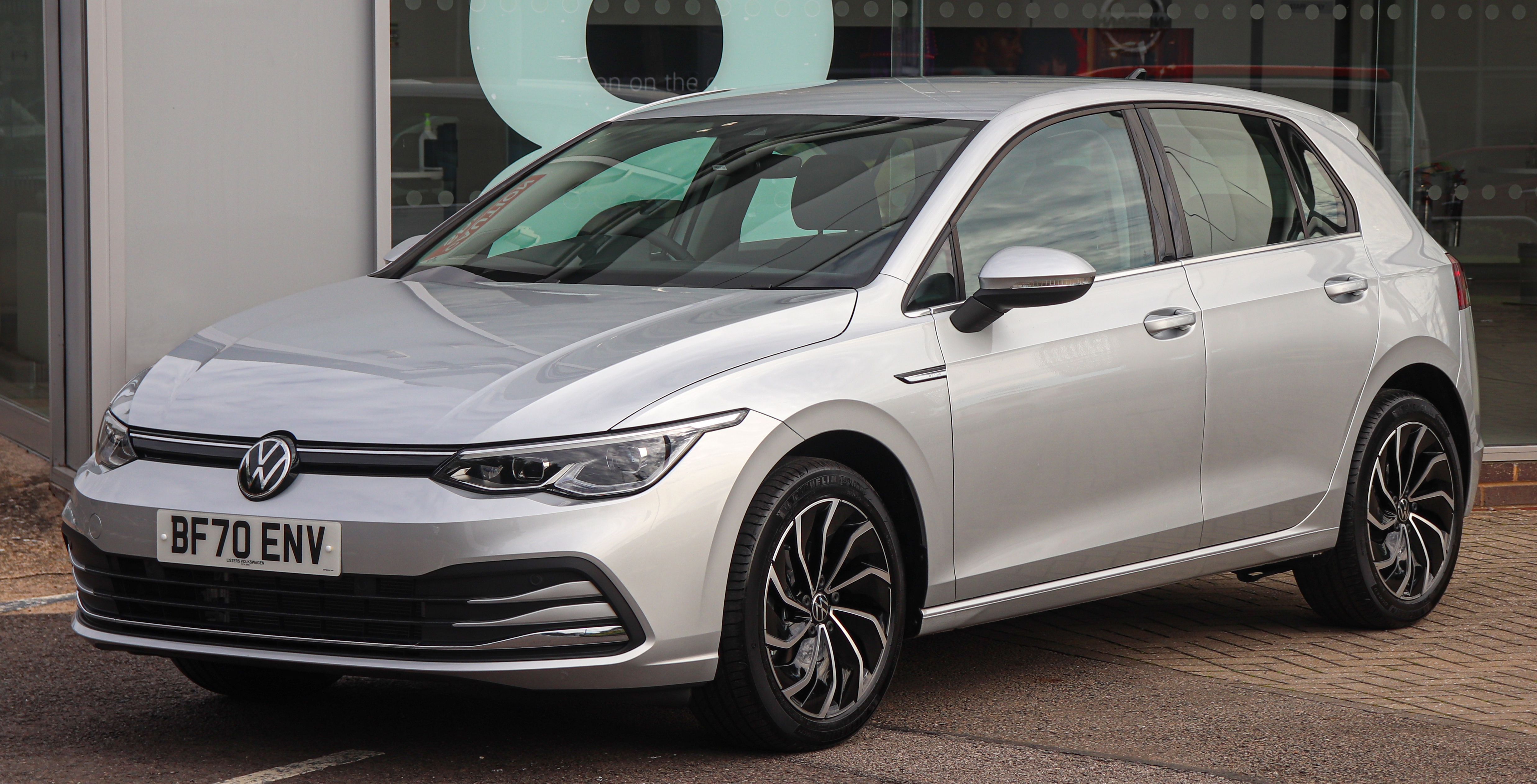
Volkswagen Golf Gti
"...t car today and I should have been happy. It's a Golf GTI and I am happy. Sure."
The Volkswagen Golf is a small car that’s made for everyday driving. The Golf GTI is a sportier version that’s meant to feel more exciting to drive. People mention it because it can be both practical and fun.
The Volkswagen Golf is a compact car that’s known for being practical while still offering driving engagement, especially in performance trims. In the context you provided, the speaker specifically mentions a Golf GTI, which is the sportier version of the Golf line. That’s why it comes up: it’s a common, relatable car that can be both everyday-friendly and fun.
aluminum body panels
"Ford redesigned the F-150 with aluminum body panels... because dealers who had body shops had to set up separate body shops because you couldn't contaminate aluminum, especially when you're welding, with steel and other stuff."
Instead of using steel for the truck’s outer panels, Ford used aluminum. Aluminum can make the truck lighter, but it often means different repair techniques than you’d use on a typical steel-bodied vehicle.
Aluminum body panels are outer sheet-metal parts made from aluminum instead of steel. They can reduce vehicle weight, but they require different welding/repair procedures and careful handling to avoid contamination and corrosion issues.
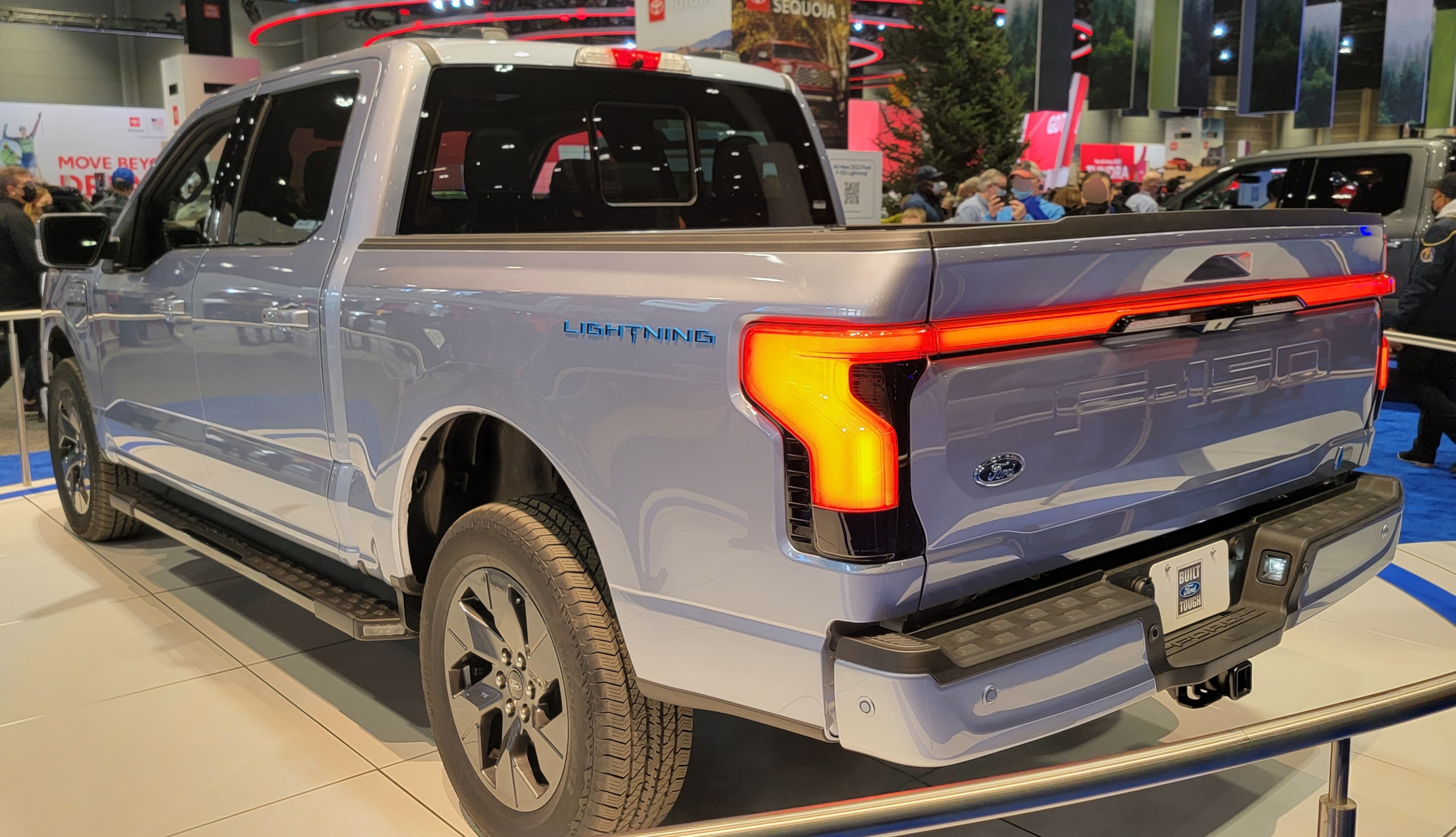
Ford F150
"Years and years and years ago now, two generations ago, Ford redesigned the F-150 with aluminum body panels."
Ford’s F-150 is a popular truck, and Ford switched part of the body to aluminum to make it lighter. Lighter trucks can use less fuel, but aluminum can be trickier and more expensive to build and fix than steel.
The Ford F-150 is the long-running full-size pickup that Ford redesigned with aluminum body panels. The idea was to reduce weight, which can help fuel economy and performance, but it also introduced new manufacturing and repair challenges.
weight savings
"And I don't think they got the weight savings they needed to actually really impact fuel economy... And that was the intent, was weight savings?"
Weight savings just means making the vehicle lighter. The hope is that a lighter truck will get better fuel economy, but it doesn’t always work out as much as people expect.
“Weight savings” is the goal of reducing a vehicle’s mass so it can accelerate and brake more easily and use less fuel. In practice, the benefit depends on how much weight is actually saved and whether the rest of the vehicle (engines, tires, aerodynamics, calibration) offsets the change.
contaminate aluminum
"...dealers who had body shops had to set up separate body shops because you couldn't contaminate aluminum, especially when you're welding, with steel and other stuff."
Contaminating aluminum during welding or repairs means mixing it with incompatible metals or materials (like steel) in a way that can weaken the weld or create corrosion risks. Aluminum repair often needs dedicated tools, processes, and workspace controls to avoid cross-contact.
Ford's aluminum supplier in the U.S., in New York
"But, a few months ago, Ford's aluminum supplier in the U.S., in New York, caught fire."
They’re talking about a fire at a company that supplies aluminum to Ford. If a key supplier has an accident, it can slow down or complicate making cars and trucks that rely on that material.
The episode mentions a fire at Ford’s aluminum supplier in the U.S. (New York). Supplier disruptions like this can affect production schedules and availability of specific materials used in vehicles like the aluminum-bodied F-150.
aluminum supply shortage
"Yeah, so Ford is scrambling to find aluminum... Ford's current inventory of F-150s... 43% of normal?... So, there is a shortage of F-150s."
A supply shortage means the materials needed to build cars aren’t available. When that happens, fewer trucks get made, so dealers have less inventory and prices tend to rise.
A supply shortage is when a critical input (like aluminum) isn’t available in the quantities needed. In automotive terms, that can reduce production volume, shrink dealer inventory, and push pricing closer to (or above) normal retail levels.
retail
"So, there is a shortage of F-150s. If you are looking for an F-150 right now, expect to probably pay close to retail and"
“Retail” is basically the usual dealer price. When cars are hard to find, it’s harder to negotiate, so you may end up paying near that usual price.
“Retail” here refers to the typical selling price level you’d expect a vehicle to cost at the dealership. In a shortage, buyers often lose negotiating leverage, so prices can land closer to retail (or above) instead of discounted sale pricing.
Nissan
"So bigger news, and you and I were talking about this before we went on air, Nissan held a big event back in April... Global sales fell 14% last year... and they're way, way, way down in China."
They’re talking about Nissan, the car company. The big idea is Nissan’s sales have been dropping, so they’re trying new strategies to sell more cars again.
The hosts discuss Nissan’s recent corporate push to reverse a sales slump. They reference Nissan’s global and U.S. sales declines and how the company is trying to “break out of a funk” with new plans.

Nissan Rogue
"their best-selling vehicle in the U.S. the Rogue, which is a very good vehicle, does not sell nearly as well as it probably should... they had way, way, way too many rogues, and all of a sudden they were selling vehicles that were a year old deep into the next year."
They’re talking about the Nissan Rogue, Nissan’s main seller in the U.S. The point is it should be doing better, but Nissan got hurt by the post-COVID supply problems and ended up with the wrong inventory timing.
The Nissan Rogue is described as Nissan’s best-selling U.S. vehicle, but the hosts say it isn’t selling as well as it should. They connect the Rogue’s trouble to supply-chain disruption after COVID and the chip shortage, which led to inventory problems.

Honda Crv
"It doesn't sell as well as the Toyota RA4, it doesn't sell as well as the Honda CR-V, but it sells well for them."
They mention the Honda CR-V because it’s a popular SUV that sells well. The comparison is basically: the Rogue is good, but it doesn’t sell as strongly as the CR-V.
The Honda CR-V is cited as a benchmark for how well the Rogue “should” sell. This highlights how Nissan is competing in the same compact SUV category where the CR-V has strong demand.
chip shortage
"they got into real trouble after COVID and after the chip shortage, where somehow they mismanaged that, and all of a sudden they had way, way, way too many rogues..."
They’re referring to the global shortage of computer chips used in cars. When chips were hard to get, car production got delayed, and that can mess up how many cars dealers have and when they arrive.
The hosts blame part of Nissan’s inventory and sales problems on the chip shortage, which disrupted vehicle production worldwide. When supply is constrained and then later swings back, automakers can end up with mismatched inventory timing and heavy discounting or older stock.
inventory timing / selling cars a year old
"...they mismanaged that, and all of a sudden they had way, way, way too many rogues, and all of a sudden they were selling vehicles that were a year old deep into the next year."
They’re describing a situation where dealerships had too many cars, so the cars sat around longer than they should. That can lead to discounts and makes the company look like it’s struggling.
The segment describes a classic retail problem: having too many vehicles at once and selling them long after they should have moved. When cars sit on lots, they can become “stale” inventory, which pressures pricing and hurts brand momentum.
electrification
"years ago, and electrification, and kind of being on the cutting edge of that, they've been behind in that marketplace."
Electrification means automakers are moving toward electric driving. That can include fully electric cars or cars that mix electricity with gas.
Electrification is the shift from traditional internal-combustion vehicles toward electric powertrains, including full battery-electric vehicles and hybrids. In the segment, it’s used to frame how automakers compete on EV and plug-in technology and how being “behind” can affect market position.
plug-in hybrid
"So to see that go to a hybrid, plug-in hybrid, I think it is, is just, I think it's going to change things for them."
A plug-in hybrid is part electric and part gas. You can charge it at home or at a charger, and it can still use gas when the battery runs low.
A plug-in hybrid electric vehicle (PHEV) combines a gasoline engine with an electric motor and a battery you can recharge by plugging in. The key advantage is that you can often drive short trips on electricity alone, while still having a gas engine for longer journeys.

Nissan Leaf
"And you mentioned the Leaf, which is a really interesting story... I mean, the Leaf came out around the same time that the Tesla Model S came out... There's millions of Teslas on the road, and there aren't millions of Leafs on the road."
The Nissan Leaf is an all-electric car. The point here is that it arrived early, but you don’t see as many of them as you do Teslas, so its impact on the roads has been smaller.
The Nissan Leaf is an early mass-market battery-electric vehicle (BEV) that helped popularize EVs. The hosts compare its real-world adoption to Tesla’s, noting that Leafs are far less common on the road than Model S-era Teslas.

Tesla Model S
"I mean, the Leaf came out around the same time that the Tesla Model S came out... There's millions of Teslas on the road, and there aren't millions of Leafs on the road."
The Tesla Model S is an electric car that became really popular. They’re using it to show that Tesla’s EVs spread much more widely than the Nissan Leaf.
The Tesla Model S is a flagship battery-electric sedan that launched in the early EV era and became a benchmark for EV performance and technology. In this segment, it’s used as a comparison point for how quickly one EV brand scaled versus another.

Toyota Prius
"But the other part of that that's a little weird is that Toyota came out with the Prius way back when... the interesting thing about the Prius is people are telling stories now... the fact that the Prius is selling really poorly... it survived 25 years, and every other vehicle in the Toyota lineup is now a hybrid."
The Toyota Prius is a hybrid car that was one of the first big-name hybrids. They’re talking about how it was surprising at the time, and how it ended up lasting a long time while hybrids spread through Toyota’s lineup.
The Toyota Prius is one of the earliest and most influential hybrid vehicles, introduced long before hybrids became mainstream. The hosts reference its long-term survival and how perceptions have shifted over time, including claims that it “survived 25 years” while Toyota’s lineup increasingly became hybrid.
hybrid availability across models
"...now that you could get the hybrid in pretty much everything that they make, it's not a standalone like it was when it first came out."
They’re saying hybrids aren’t just one specific car anymore. Now you can get hybrid tech in more different models, so the Prius isn’t the only option people should consider.
The host is referring to the idea that hybrids are no longer limited to a single model line. As more automakers (and more Toyota models) offer hybrid versions, the Prius stops being the only “default” hybrid choice.

Toyota Corolla
"But I don't think I would ever recommend someone buy a Prius instead of a Corolla hybrid... We'll probably have the better resale value, and it's Corolla."
The Corolla Hybrid is a regular, everyday Toyota sedan that uses a hybrid powertrain. The point here is that it’s an easier, more practical recommendation than a Prius for most people.
The Toyota Corolla Hybrid is a mainstream hybrid option in the compact-sedan category. The host argues it’s a more sensible recommendation than a Prius because it’s the “more obvious thing,” and they expect better resale value.
resale value
"We'll probably have the better resale value, and it's Corolla. Right."
Resale value is what you can sell the car for after you’ve owned it. They’re saying the Corolla Hybrid might be easier to sell later and keep its value better.
Resale value is how much money a vehicle is likely to be worth when you sell it later. The host is using it as part of their buying logic—suggesting that choosing a more mainstream model (like a Corolla Hybrid) may hold value better than a more niche choice (like a Prius).

Toyota RAV4
"And then the RAV4. I rented a RAV4."
The RAV4 is a popular Toyota SUV. The host is just saying they rented one for a trip and like switching up what they drive.
The Toyota RAV4 is a compact SUV that’s commonly rented because it’s practical and widely available. In this segment, the host mentions renting one as part of their travel routine and trying different vehicles.
Rav4 Hybrid
"But yeah. So I had a RAV4 hybrid, really nice. So the new one."
The RAV4 is a compact SUV, which means it’s bigger than a sedan and good for everyday use. A RAV4 Hybrid uses both a gas engine and an electric system to help save fuel. The speaker is saying they had a hybrid and liked the newer one too.
The Toyota RAV4 is a compact SUV that’s popular for its versatility and wide availability. In your context, the speaker mentions a RAV4 Hybrid, highlighting the appeal of combining SUV practicality with improved fuel economy. The RAV4 often gets discussed because it’s a mainstream choice that works well for many kinds of drivers.
fleet
"Well, that's another thing to note is that, you know, rogues are very heavy in the fleet [666.9s] for rental companies. [670.4s] Which is interesting, actually, because that comes up in this Nissan story. [673.6s] One of the things that Nissan wants to do for profitability reasons is get out of fleet."
“Fleet” here means a company’s pool of cars—like rental cars that many different people drive. Automakers care about fleet sales because it can bring big volume, but it may not be as profitable as selling to regular customers.
In this context, “fleet” refers to vehicles owned or managed by companies (like rental firms) and used by many drivers over time. Fleet sales can be a major volume channel for automakers, but it can also create pricing and margin pressures compared with retail sales.

Toyota Camry
"Do you see Camrys out there? Actually no, not really. Because the new Hybrid Camry is really good. Yeah. And that's Hybrid only."
The Toyota Camry is a very common family sedan. In this discussion, they’re talking about the new Camry being hybrid-only, meaning you’re choosing it mainly for better efficiency rather than a regular gas engine.
The Toyota Camry is Toyota’s mainstream midsize sedan, and this segment specifically mentions the new Hybrid Camry. Hybrid-only availability changes the buyer’s decision because it ties the model’s appeal to fuel economy and powertrain feel rather than offering a traditional gas-only lineup.
Hybrid Camry
"Because the new Hybrid Camry is really good. Yeah. And that's Hybrid only."
A Hybrid Camry is a Camry that uses both a gas engine and an electric motor. That’s why it can be more efficient than a regular gas-only Camry.
A Hybrid Camry uses a hybrid powertrain that combines an internal combustion engine with an electric motor and battery. In practice, “hybrid-only” means the model’s efficiency strategy is built around that system rather than offering a conventional engine alternative.

Nissan Xterra
"Was it the previous XTERRA? Was that a body on frame? Yes. ... And for a while, I think it was yellow XTERRAs."
The Nissan Xterra is a rugged SUV built like a truck, not like a typical car. That “truck-style” construction is part of why it feels tough and outdoorsy.
The Nissan Xterra is a body-on-frame SUV known for rugged styling and off-road capability. In this segment, the hosts are talking about an earlier Xterra they considered buying when they were younger.
body on frame
"Was that a body on frame? Yes. Okay."
Body-on-frame is when the car’s “shell” sits on a separate metal frame underneath. It’s common on trucks and rugged SUVs because it can handle rough roads better.
“Body-on-frame” means the vehicle’s body is mounted on a separate ladder-like frame, similar to trucks. This usually improves durability and off-road toughness, but it can make the ride feel less refined than unibody designs.
rough rack
"And they had that crazy rough rack. Oh, yeah."
They’re talking about the roof rack feeling noisy or bumpy. Roof racks can make the car louder and less smooth, especially at highway speeds.
A “rough rack” refers to a roof rack that transmits more vibration and noise, or feels less smooth than a well-damped setup. On SUVs like the Xterra, roof racks can also affect aerodynamics and fuel economy.
supercharged V6
"And they sold a supercharged V6 version of it. Right."
A supercharged engine uses a device that forces extra air into the engine. More air usually means more power, so it can make the SUV feel quicker than you’d expect.
A supercharged V6 uses a forced-induction system (a supercharger) to push more air into the engine, which can increase power. The hosts mention the Xterra being sold with a supercharged V6, which is notable because it’s a performance-oriented twist on a typically rugged SUV.
affordable at the time
"...but they were shockingly affordable at the time. Like, I remember prices like around $22,000 or something like that."
They’re saying that back then, this model was cheaper than you’d think. That kind of pricing can make a car feel like a “no-brainer” purchase when it’s new.
The hosts are discussing how the supercharged Xterra variant was surprisingly inexpensive when new. In car talk, “affordable at the time” often reflects pricing strategy, competition, and how desirable the model was in the market.
yellow XTERRAs
"for a while, I think it was yellow XTERRAs. Oh, yes. That yellow was predominant in that model, for sure."
The hosts are pointing out a color trend—yellow Xterras were especially common or memorable during that period. Color popularity can influence how a model is perceived and how often you see it on the road.
"Rich kid" car handouts / status-car culture
"That's basically, they don't even buy those. They're just handed out because they're like hand bills on the street. Another one, and you remember this..."
The hosts are describing a local pattern where certain cars are treated like social-status props—handed out or expected—rather than carefully purchased. That kind of “status-car culture” can shape how people perceive brands and models, even if the cars aren’t necessarily the best fit for the owner’s needs. It’s also a reminder that some cars become symbols in specific communities.
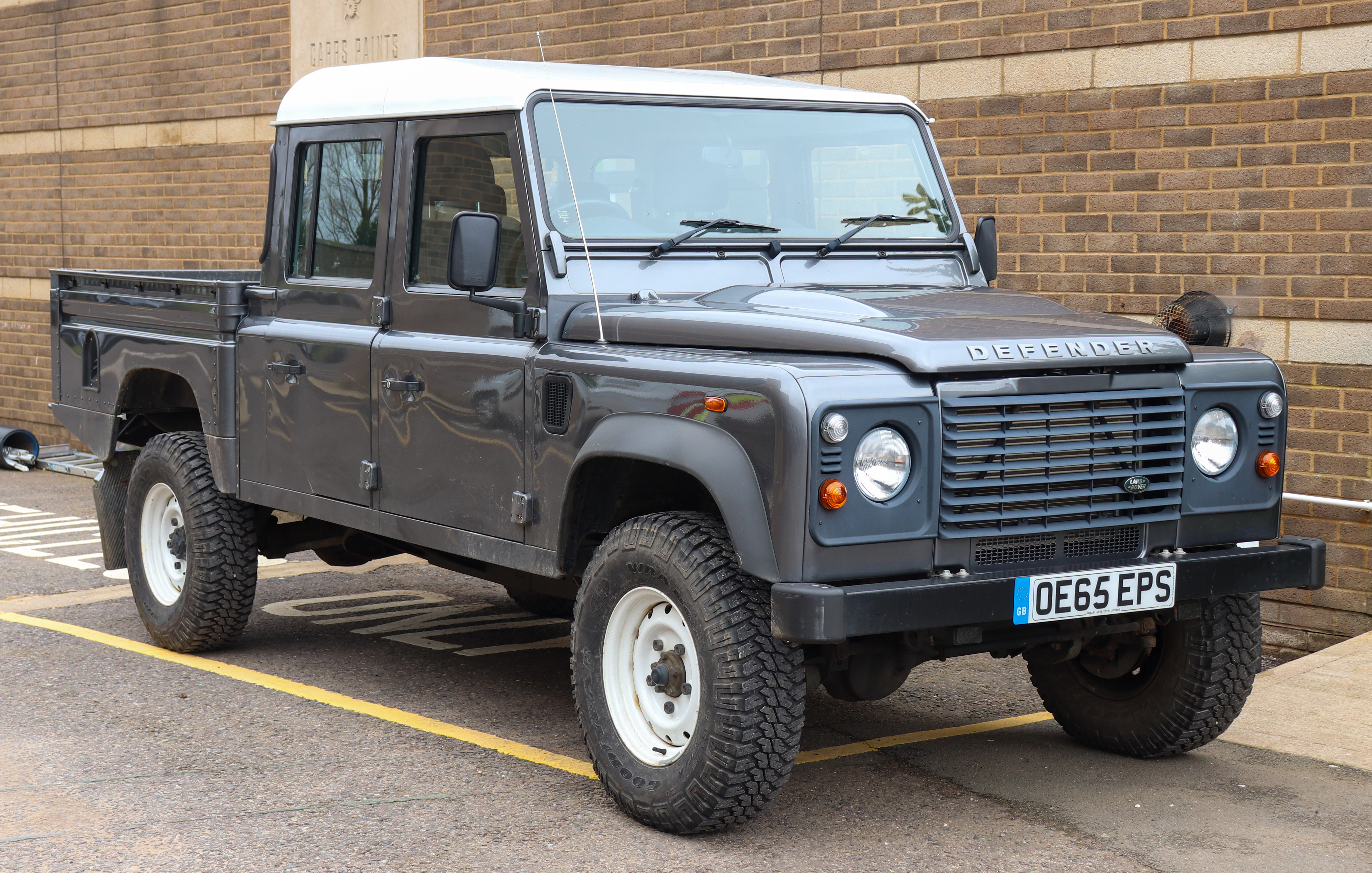
Land Rover Defender 90
"Every rich kid that graduated from high school up there got a Land Rover Defender 90 in yellow. Yeah. Oh, yeah. The yellow is..."
The Land Rover Defender 90 is the shorter-wheelbase version of the Defender, built for rugged off-road capability. In the transcript, it’s described as a common graduation gift for wealthy kids in Barrington, Illinois. The “90” refers to the wheelbase length, and the Defender’s reputation is tied to durability and go-anywhere styling.

Toyota forerunner
"But that exterior is interesting because Toyota is making money selling the forerunner. Wow. I don't know."
The Toyota 4Runner is a rugged SUV built on a separate frame, not just a unibody shell. That design is popular with people who want something tough and long-lasting, and it tends to sell well.
The Toyota 4Runner is a body-on-frame SUV known for durability and off-road capability. In the segment, the hosts point out that Toyota makes strong profits from selling the 4Runner, implying it’s a high-demand, high-margin model for the brand.

Toyota Highlander
"And it's interesting how much money they make because they sell a Highlander. They sell a RAV4, and those are unit body, nice cars for nice people."
The Toyota Highlander is a family-friendly SUV that’s built more like a regular car (on a unibody). It’s aimed at comfort and daily driving rather than extreme off-road use.
The Toyota Highlander is a unibody crossover SUV positioned more for everyday comfort than hardcore off-roading. The hosts contrast it with more rugged, frame-based SUVs to explain why Toyota has multiple profitable vehicle types.

Lexus GX
"And they sell a Lexus version of that too, the GX. What is that called now? The GX500."
The Lexus GX is the luxury version of a rugged, frame-based SUV. It’s aimed at people who want the toughness of a truck-style SUV but with more comfort and luxury.
The Lexus GX is a luxury SUV built on a body-on-frame platform, closely related in spirit to Toyota’s rugged truck-based lineup. The segment mentions the GX’s newer naming (GX500), highlighting how Lexus is leveraging the same durable architecture for a premium buyer.

Nissan Versa
"And that was the Versa, which is going away. I think they built the last Versa. Subcompact car was available under $20,000."
The Nissan Versa is Nissan’s budget-friendly small car. The hosts are saying it’s one of the cheaper models that’s going away, and it was one of the last ones you could buy for under about $20,000.
The Nissan Versa is a subcompact car that’s been positioned as an affordable entry-level model. In this segment, the hosts discuss it as a high-volume vehicle that’s being discontinued, with the “last Versa” tied to the end of a sub-$20,000 price point.

Nissan Kicks
"And then the Nissan Kicks, which is a great little crossover, and it's one that my daughter test drove... they sell in some volume, but they don't make any money on them."
The Nissan Kicks is a small SUV-style crossover. It’s popular with buyers, but the discussion here is about Nissan not making much money on it right now.
The Nissan Kicks is a subcompact crossover SUV aimed at buyers who want SUV styling and practicality without the size or cost of larger crossovers. The hosts call it a “great little crossover” that sells in volume but doesn’t generate profit for Nissan in the near term.
high-volume but low-profit models
"...they sell in some volume, but they don't make any money on them. And they're not going to make any money on them for a while."
Sometimes a car sells a lot, but the company still doesn’t make much money on each one. That’s why automakers may shift focus to more expensive models that have better profit margins.
The hosts describe a common automaker challenge: selling a lot of units (“high-volume”) but not earning much profit per vehicle. This can happen when pricing is pressured, incentives are high, or the product mix doesn’t support healthy margins, leading companies to refocus on higher-end models.

Nissan Murano
"So yeah, they're focusing on Murano and kind of their higher end. And then, so something like the off-road versions..."
The Nissan Murano is a bigger, more upscale Nissan crossover. The hosts are saying Nissan wants to concentrate on the more expensive models because they’re more profitable.
The Nissan Murano is a mid-size crossover positioned higher in Nissan’s lineup than entry-level models. The hosts say Nissan is focusing on Murano and “higher end” vehicles, implying a shift toward more profitable segments.

Jeep Wrangler
"...that's kind of the hot thing right now, right? Yeah... including the Xterra, and the Wrangler"
The Jeep Wrangler is a compact off-road SUV famous for its trail capability and strong brand identity. The hosts pair it with the Nissan Xterra when discussing “off-road versions,” highlighting that Wrangler-style vehicles are a major reference point for the off-road segment.

Ford Bronco
"and the Bronco seem to have beat each other up pretty badly, and they've had to lower prices, resell values have fallen a little bit... When the Bronco first came out, it seemed like there was money for everybody."
The Ford Bronco is a rugged SUV meant for off-road driving. The hosts are saying that when it first launched it was very popular, but later the market cooled and it became less profitable to sell.
The Ford Bronco is a modern off-road SUV built to compete with other rugged, body-on-frame competitors. In this segment, the hosts discuss how Bronco sales and resale values changed after the initial launch hype, affecting profitability.
fad
"you know, the fact that this, it could be a fad and it's, you know, people kind of... they're never going to touch, these things aren't going to touch mud, they're not going to touch rocks..."
A fad means something gets popular for a short time, then interest drops. The hosts are implying that some people buy these rugged SUVs for the look or trend, not for real off-road use.
A “fad” in automotive terms is when a vehicle style or segment becomes temporarily popular due to novelty, marketing, or cultural trends rather than long-term demand. The hosts suggest that some buyers may not actually use these off-road vehicles for their intended purpose, which can lead to softer sales and resale values after the initial excitement fades.

Jeep Cj7
"I owned a CJ7. You know that? Yeah. You drove my CJ7. Yes."
The CJ7 is a Jeep model from the classic CJ lineup (often associated with the 1970s–1980s era). It’s being referenced as the speaker’s old Jeep, and the conversation notes its lack of a floor, which points to how basic and open the cabin can be on older CJs.
304 V8
"And who equipped that thing new? It was the V8, the 304 V8 and a three-speed manual. Three-speed manual. Whatever."
The 304 V8 is a specific older V8 engine size. It’s being used to describe what powered the Jeep—basically, it had a bigger, older-style V8.
The “304 V8” refers to a 304 cubic-inch V8 engine, commonly associated with AMC/Jeep-era powertrains. In this context, it’s the specific engine the CJ7 had, and it’s mentioned alongside a manual gearbox, emphasizing the old-school, high-rev driving feel.
three-speed manual
"It was the V8, the 304 V8 and a three-speed manual. Three-speed manual. Whatever. No, high revs. Definitely."
A three-speed manual is an older-style stick shift with fewer gears. With fewer gears, the engine often spins faster on the highway, so it can feel loud or strained.
A three-speed manual transmission has only three forward gears, which usually means the engine runs at higher RPM at highway speeds compared with modern multi-gear gearboxes. The hosts connect this to the CJ7’s “high revs” and the joke about only getting about ten miles on the highway before it feels too busy.
V8
"And who equipped that thing new? It was the V8, the 304 V8 and a three-speed manual. Three-speed manual. Whatever."
A V8 is a type of engine with eight cylinders. It usually makes more power than smaller engines, which can feel great in a vehicle like an old Jeep.
A V8 is an engine with eight cylinders arranged in a V shape, typically producing strong power and smoothness compared with smaller engines. Here, it’s part of the CJ7 setup the speaker owned, paired with a manual transmission.
high revs
"Whatever. No, high revs. Definitely. If you needed high revs, you had them. Yeah."
“High revs” means the engine is turning fast. On older cars with fewer gears, the engine may need to spin faster to keep the vehicle moving.
“High revs” means the engine is spinning at higher RPM. In older vehicles with fewer gears (like a three-speed manual), high RPM can be a normal consequence at steady highway speeds, which can affect comfort and perceived strain.

Hyundai Santa Fe Hybrid Calligraphy
"Last week I drove, speaking of Hyundai, the Hyundai Santa Fe Hybrid Calligraphy. Okay. And for people who aren't familiar with the Hyundai lineup, they have two mid-sized crossovers."
This is a Hyundai Santa Fe that’s powered by a hybrid system, and it’s in the Calligraphy trim (a higher, more upscale version). The point here is that it costs more than a typical Santa Fe, but the tradeoff is a nicer interior and a quieter, smoother ride.
The Hyundai Santa Fe Hybrid Calligraphy is a three-row midsize crossover with a hybrid powertrain and Hyundai’s Calligraphy trim. In this segment, the hosts focus on how the hybrid system affects pricing and how the cabin, ride quality, and quietness feel in real use.
three-row
"Okay. And for people who aren't familiar with the Hyundai lineup, they have two mid-sized crossovers. Both of them are three-row, interestingly."
“Three-row” means the SUV has three rows of seats, usually for a bigger group of people. The hosts are pointing out that Hyundai’s crossovers here are meant to carry more passengers.
“Three-row” describes vehicles with seating across three rows, typically to fit seven or eight passengers. In this segment, it’s used to characterize Hyundai’s midsize crossover lineup and to explain why these models are practical for families.

Hyundai Palisade
"...grand for a Hyundai seems high, but you can get a Palisade up to 60 if you try."
The Hyundai Palisade is a larger SUV with three rows of seats, so it can fit more people. It’s designed for family use and comfort. People mention it because it can come with lots of features for the price.
The Hyundai Palisade is a midsize three-row SUV aimed at families who want room and comfort without stepping into luxury pricing. It’s discussed because it can be optioned with higher-end features, making it a value-focused choice in the SUV segment. The Palisade’s popularity often comes up when people talk about how much space and equipment you can get for the money.
ride quality
"And the interior is really, really nice. And the ride quality is really, really nice. And the interior noise level is non-existent."
Ride quality is how comfortable the car feels when the road isn’t perfect. If the ride quality is good, you feel less bouncing and jostling.
Ride quality is how smooth and controlled a vehicle feels over bumps and road imperfections. The hosts say the Santa Fe Hybrid Calligraphy has “really, really nice” ride quality, tying it to overall comfort.
interior noise level
"And the ride quality is really, really nice. And the interior noise level is non-existent. Right."
Interior noise level is how loud or quiet the car is inside. They’re saying this Hyundai feels extremely quiet, with very little road or engine noise getting in.
Interior noise level refers to how much sound you hear inside the cabin from the engine, tires, wind, and road surfaces. The hosts describe it as “non-existent,” implying strong insulation and quiet operation—often a benefit of hybrid drivetrains at certain speeds.
hybrid system
"And then you mix that now. Part of that price is about three grand retail for the hybrid system. It's really good."
A hybrid uses both a gas engine and an electric motor. The electric part can help with acceleration and reduce fuel use, and in this case it’s also part of why the car costs more.
A hybrid system combines an internal-combustion engine with an electric motor and battery to improve efficiency. Here, the hosts note that a portion of the Santa Fe’s price is tied specifically to the hybrid hardware.
merging and passing kind of power
"But if you read about their complaint, it's mostly like higher-endy, you know, merging and passing kind of power."
This is about whether the car can speed up quickly when you need to get into traffic or pass another car. It’s more about everyday acceleration feel than maximum specs.
“Merging and passing power” refers to the usable acceleration you need for real-world highway situations, not just straight-line peak numbers. It’s often about how quickly the car can build speed and how smoothly it delivers that thrust.
power available immediately
"All the power out of this hybrid system is really available immediately around town."
This means the car responds fast when you press the gas. Hybrids often feel strong right away because the electric motor can deliver torque instantly.
“Power available immediately” describes throttle response and torque delivery at low speeds. In hybrids, the electric motor can provide instant torque, which makes passing and merging feel quicker even if peak horsepower isn’t the whole story.
quiet
"It's quick. Yeah. It's quiet. It's smooth."
“Quiet” is a refinement metric that often improves in hybrids because the electric motor can propel the car at low speeds with less engine noise. It can also reduce vibration and harshness during typical city driving.
smooth
"It's quiet. It's smooth. The power is very progressive."
Smooth means the car doesn’t feel jerky when you accelerate or when it switches between gas and electric. A well-tuned hybrid system makes those changes feel seamless.
“Smooth” describes how consistently the car delivers power and how unobtrusively it transitions between electric and gas operation. Hybrids can feel smooth when the control system blends torque seamlessly.
power is very progressive
"The power is very progressive."
Progressive power means the car speeds up in a gradual, predictable way as you add throttle. It helps the driving feel easier to control.
“Progressive” power delivery means the car ramps up thrust in a controlled, predictable way as you press the accelerator. That feel is often tied to how the hybrid’s electric motor and engine are blended by the vehicle’s control software.
231 or 232 horsepower
"But yeah. 231 or 232 horsepower."
Horsepower is a number that roughly indicates how strong the car is. But how fast it feels when you press the gas—especially at low speeds—depends on more than just that peak number.
Horsepower is a measure of an engine’s (or system’s) ability to produce work, but it doesn’t fully describe how the car feels in daily driving. For hybrids, torque delivery and how quickly power is available can matter as much as the peak horsepower number.
miles per gallon
"[1167.6s] And then my 35 miles per gallon observed. [1170.8s] That's what the computer told me. [1172.1s] We assume that that's accurate."
Miles per gallon (MPG) tells you how efficiently the car uses fuel. Higher MPG means you spend less on gas, and “observed” MPG means what they actually got while driving.
Miles per gallon (MPG) is a fuel-economy rating that tells you how far the vehicle can go on one gallon of fuel. When the host says “observed” MPG, they’re referring to real-world results from driving, not just a lab test.
third row
"Also, the third row, you could actually put you back there. Oh, yeah. In a normal size. Well, you're tall, 6'1", whatever. Yeah. But a normal size, a big adult, would fit back there okay."
The third row is the back-most seat area in some SUVs. Some third rows are tight and only work for kids, but this conversation is about whether it’s actually comfortable enough for bigger people.
A third row is the extra set of seats in many SUVs, typically meant for occasional passengers. The key point here is whether it’s truly usable for adults or just a “kids-only” space, which affects real-world family practicality.
Name Your Price tool
"[1352.6s] Visit progressive.com. [1354.3s] Find a rate that works for you with the Name Your Price tool. [1357.1s] Progressive Casualty Insurance Company and Affiliates Price and Coverage Match Limited"
This is an insurance website feature where you pick the price you want to pay. Then it shows insurance options that could match that budget.
“Name Your Price” is an insurance pricing tool that lets you enter a target premium and then shows options that fit that price. It’s meant to help shoppers quickly narrow down coverage choices.
Progressive Casualty Insurance Company
"[1354.3s] Find a rate that works for you with the Name Your Price tool. [1357.1s] Progressive Casualty Insurance Company and Affiliates Price and Coverage Match Limited [1361.1s] by State Law."
Progressive is an insurance company that sells auto insurance. This part is basically telling you to use their website to compare prices and coverage.
Progressive Casualty Insurance Company is an auto insurance provider. The segment is an ad for using their tools to compare rates and coverage options.
O'Reilly fast
"[1376.2s] to make sure you have it. [1378.1s] We're O'Reilly fast. [1380.0s] Just one part that makes O'Reilly stand apart."
O’Reilly Auto Parts is a store that sells car parts you might need for repairs. “Fast” here just means they try to get the parts to you quickly.
O’Reilly Auto Parts is a major U.S. aftermarket parts retailer. When the hosts say “O’Reilly fast,” they’re emphasizing quick availability and fulfillment of replacement parts for repairs.
duck and cover
"“It’s called duck and uncovered.” … “But if you don't know about duck and cover, my daughter is pretty fascinated… It was post-war Cold War propaganda from that time.”"
“Duck and cover” was a safety message people were taught during the Cold War. The idea was to quickly get down and protect yourself, but it was more about public fear and preparedness messaging than a guaranteed real-world solution.
“Duck and cover” was a Cold War-era civil defense drill and slogan meant to teach people how to respond during a nuclear attack. It was paired with war propaganda that framed the threat and instructed civilians to take quick protective actions, even though the effectiveness was limited for real nuclear events.
cold weather reduces EV range
"So if the audience remembers, we had a really cold winter and on Friday, January 30th at seven in the morning, I climbed it to my fully charged Tesla Model Y for a 300 mile drive to Hamilton, Ontario. And it was 10 degrees that morning."
When it’s cold, electric cars often don’t travel as far as they do in mild weather. The battery doesn’t work as efficiently, and warming the car uses extra power.
Cold temperatures can reduce an EV’s usable battery range because the battery chemistry and power electronics become less efficient, and cabin/defrost heating uses energy. That’s why the host leaves early and starts with a fully charged Tesla for a long drive in 10°F/10 degrees conditions.

Tesla Model Y
"So if the audience remembers, we had a really cold winter and on Friday, January 30th at seven in the morning, I climbed it to my fully charged Tesla Model Y for a 300 mile drive to Hamilton, Ontario."
The Tesla Model Y is an all-electric SUV from Tesla. If it’s very cold outside, an electric car may not go as far on the same charge, so starting with a full battery is important.
The Tesla Model Y is Tesla’s compact electric SUV. In this story, the host emphasizes it was fully charged before a long winter drive, which matters because cold weather can reduce electric range.
range anxiety
"Because we all know freezing weather crushes EV range and nothing wrecks a good road trip more than range anxiety. And so I wanted to leave enough time in case I had to make multiple charging stops."
Range anxiety is the stress of wondering if your electric car has enough battery to get where you’re going. People usually solve it by planning charging stops ahead of time.
Range anxiety is the worry that an EV won’t have enough charge to reach the next charging station. It often leads drivers to plan more conservative routes and add extra charging stops.
charging stops
"And so I wanted to leave enough time in case I had to make multiple charging stops. So with a time change and lunch, the border crossing and the fact that I'd have to stop at least three times the charge because the extreme cold, I figured the trip would take about eight to nine hours."
Charging stops are planned intervals where an EV is plugged in to add energy during a trip. In extreme cold, the reduced efficiency can mean you need more frequent charging to maintain your schedule.
no jack or spear
"First, there's no jack or spear. Yeah. Second, it seems unusually committed to flat tires, because I've had three in two years."
They’re saying the car doesn’t come with the usual tools to lift the car and change a tire. That matters because if you get a flat, you may need a different plan than a gas car with a spare.
Many EVs (including some Tesla trims) don’t include a traditional spare tire jack setup. Instead, they may rely on tire-repair tools or mobility solutions, which changes how you handle a flat on the road.
decrease in range in extreme cold weather
"And third, as we all know, you get a decrease in range in extreme cold weather. Yeah. So I went towards the cold weather."
In very cold weather, an electric car can’t go as far on the same charge. Part of it is the battery working less efficiently, and part is the car using power to keep you warm.
EV range drops in extreme cold because the battery’s usable capacity decreases and the car uses energy to heat the cabin and battery. This is why EV drivers often plan extra charging stops when traveling in winter conditions.
rear tire pressure starts dropping
"Then I see on the screen what no driver wants to see. And my rear tire pressure starts dropping like the stock market"
They’re seeing the tire pressure warning go off and the pressure keeps falling. That usually means the tire is leaking, and you should treat it as urgent for safety.
A rapid drop in tire pressure indicates a leak or puncture and can trigger warnings and reduced safety. EVs are sensitive to tire condition because correct pressure helps efficiency and stability, and driving on underinflated tires can worsen damage.
flat tire
"and I inspect the tire and immediately I hear a sss. Yeah, that's not a good sound. And I see a big screw lodged in the tire and I go, oh, no."
A flat tire means the tire is punctured and won’t hold air. It can happen from things like screws on the road, and it usually needs a replacement or repair.
A flat tire is when a tire loses air and can’t support the vehicle properly. The speaker describes finding a screw lodged in the tire and then deciding not to try to fix it on the spot due to the cold and the situation.
Tesla chargers
"So lucky me, the Tesla chargers were located at one of these gas station mini mark combos and it had a washroom."
These are the places where a Tesla can plug in to charge its battery. If you’re traveling and something goes wrong, having chargers nearby can save a lot of time.
“Tesla chargers” refers to Tesla’s charging stations used to replenish an electric vehicle’s battery. In road trips, where you can find working chargers matters as much as the car itself, especially when you’re dealing with an unexpected problem like a flat tire.
Pirelli tire
"but bad if you need a Pirelli tire. Very expensive Pirelli's under Tesla."
They needed a specific tire brand—Pirelli. If that exact tire isn’t available nearby, you may have to wait longer and pay more.
A “Pirelli tire” is a tire made by Pirelli, a premium tire brand. The speaker’s point is that the specific tire they needed was a Pirelli model, which can be harder to find quickly and may cost more than common tire brands.
roadside assistance
"So yeah, I gave Tesla call and thankfully Tesla roadside assistance"
Roadside assistance is help you call when your car can’t drive safely. It can arrange things like towing or getting you back on the road.
Roadside assistance is a service that helps you when your car is disabled—commonly for things like flat tires, towing, or battery issues. For EV owners, it can also coordinate help while you’re trying to reach a charger or get back on the road.
free tow
"kicked in. I had a free tow. Only problem is it took about two hours for the tow truck to arrive."
“Free tow” means someone is paying for the tow truck to come get you. It’s often part of roadside help when your car can’t be driven.
A “free tow” usually means roadside assistance covered the towing cost. Many automakers and insurance plans offer this when you’re stranded due to a breakdown or tire issue.
flatbed truck
"And by the time the car was on the flatbed truck, it was past three thirty PM and the nearest Tesla service center in Ann Arbor, Michigan. And it closed at five."
A flatbed truck is a tow truck style where the vehicle is loaded onto a platform. It’s commonly used when the car can’t be driven safely or when towing needs to protect the vehicle’s drivetrain and wheels.
tire fixed
"So I had to get there to get my tire fixed. And I did not want to spend a night stranded in Marshall or Ann Arbor, Michigan, especially without a car."
They needed help with a tire—basically getting it repaired or replaced. That’s a common reason cars end up needing a tow.
The speaker needed to get a tire repaired, which is a common roadside situation. Depending on the damage, the fix might be a patch/plug, a replacement tire, or a wheel swap.
self driving mode
"I felt like I was in my Tesla with self driving mode without losing any charge. So we pulled into the Tesla service center is around four forty five p.m. into their credit."
“Self driving mode” refers to Tesla’s driver-assistance system that can take over certain driving tasks under specific conditions. It typically still requires driver supervision, and its behavior can influence how stressful a long trip feels.
Tesla service center
"So we pulled into the Tesla service center is around four forty five p.m. into their credit. They agreed to stay late. Good news, they could fix it."
A Tesla service center is Tesla’s official repair location for diagnostics and warranty/paid repairs. For road trips, getting a quick appointment and turnaround time can be the difference between continuing immediately or losing hours.
replace the tire
"Bad news by by fix it. That meant replace the tire. That'll be four and fifty dollars."
Replacing a tire after a puncture or damage is a common EV road-trip disruption. Tire replacement also affects range indirectly because tire condition and pressure influence rolling resistance and efficiency.
low profile sidewalls
"It's run flat tires, oversized wheels, low profile sidewalls, no spare,"
Low profile tires have less “cushion” on the side. That can make them more likely to get damaged when you hit rough roads.
Low profile sidewalls are tires with less rubber between the rim and the road. Less sidewall height can reduce cushioning and increase the chance of damage from potholes or curbs.
oversized wheels
"It's run flat tires, oversized wheels, low profile sidewalls, no spare,"
Oversized wheels mean bigger rims. They often go with shorter, thinner tire sidewalls, which can make the tire easier to damage.
Oversized wheels usually mean larger wheel diameters paired with thinner tire sidewalls. That setup can make tires more vulnerable to damage and can affect ride comfort and tire wear.
no spare
"It's run flat tires, oversized wheels, low profile sidewalls, no spare, no jack and extra weight or performance too."
“No spare” means the car doesn’t include a backup tire. If you get a flat, you usually have to wait for help or get it fixed another way.
Many modern cars—especially some EVs—omit a spare tire to save weight and space. The hosts connect this to the inconvenience and cost of flats because you can’t quickly swap a tire and keep going.
instant torque
"E-fee's are also heavier and that weight combined with instant torque can be really tough on tires and wear them much quicker."
Electric motors can deliver power right away, not after the engine revs. The hosts think that quick shove of power can stress tires and wear them out faster.
Instant torque is a hallmark of electric motors: they can deliver strong twisting force immediately from a stop. The hosts argue that this can be tough on tires, increasing wear and potentially contributing to more frequent tire issues.
chill mode
"Put your Tesla in chill mode most of the time. I know the instant acceleration is fun, but the price to pay for flats and new tires every 20,000 miles gets very expensive."
Chill mode is a setting that makes the car accelerate more gently. The idea is to avoid stressing the tires by not launching as hard.
Chill mode is a driving setting that typically reduces throttle response and limits how aggressively the car accelerates. The hosts recommend it to reduce tire stress by softening the immediate torque delivery.
EV rated tires
"But still, aren't manufacturers like Pirelli and Michelin coming out with or don't they have on the market EV rated tires at this point? Yeah, they're actually, yeah, special purpose."
EVs can spin the tires and stress them more because they deliver power very quickly. “EV rated” tires are made to last longer under that kind of hard use.
EV rated tires are designed for the higher torque and often heavier weight of electric vehicles. They’re typically built with stronger sidewalls and compounds to handle rapid acceleration and sustained loads without overheating or wearing out quickly.
Michelin
"But still, aren't manufacturers like Pirelli and Michelin coming out with or don't they have on the market EV rated tires at this point?"
Michelin is a big tire company. The discussion is basically: do tire brands like Michelin already have tires made for electric cars?
Michelin is another major tire maker known for performance and long-life tire development. Here, it’s mentioned alongside Pirelli as an example of whether EV-rated tires are available.
instantaneous torque
"OK, yeah, they have some foam in there, but they still wear because, you know, that that instantaneous torque is just very hard on the tires."
Electric motors can give power right away, so the tires get “hit” with force immediately. That can make them wear faster than on a car that ramps up more gradually.
Instantaneous torque is the immediate twisting force an EV delivers from a stop, often before the driver even finishes pressing the accelerator. That quick shove can overwhelm tire grip, leading to faster tread wear and heat buildup.
tire rotation
"Other thing is you have to rotate your tires regularly about every six thousand miles and they're on the same side and they're back to front. ... But yeah, but a tire rotation is maintenance."
Tire rotation means moving tires to different corners of the car. It helps because different tires wear at different rates, and rotating them evens that out.
Tire rotation is the scheduled swapping of tires from one position to another to even out wear patterns. EVs can wear tires quickly due to torque and traction demands, so staying on rotation intervals helps maximize tread life.
discount tires
"Yeah, discount tires will rotate them for free."
Discount Tire is a place you can go for tire service. The point here is that some shops will rotate your tires for free, so it’s easier to keep up with maintenance.
Discount Tire is a retail tire and service chain that offers tire services such as rotations. The host notes that they may rotate tires for free, which can reduce the “maintenance” friction of EV ownership.
EVs don't need maintenance
"And Tom, I think that's a fallacy that EVs don't need maintenance. They don't need the maintenance of ice engine heat."
People sometimes think EVs are “set it and forget it.” In reality, they still need regular checkups and cleaning so small issues don’t turn into bigger ones.
The hosts push back on the idea that electric vehicles (EVs) require no upkeep. Even without an internal-combustion engine, EVs still need routine care like cleaning and inspecting components to prevent problems.
radiators
"There's lots of little things that need to be cleaned, like your filters and your radiators. And those can cause trouble or even drain holes for water when it rains."
A radiator helps move heat out of the car. If it’s dirty or blocked, the car can run hotter than it should.
Radiators are heat exchangers that remove heat from fluids. Even on EVs, cooling systems still rely on radiators or radiator-like heat exchangers, and keeping them clean helps maintain proper temperatures.
filters
"There's lots of little things that need to be cleaned, like your filters and your radiators."
Filters are parts that trap dirt. If they get clogged, the car can’t breathe or cool itself as well, and you may start having problems.
“Filters” here refers to service items that collect dirt and debris over time. Clogged filters can reduce airflow and cooling performance, which can lead to drivability or overheating-related issues.
tire sealant
"There's AC powered air compressors and tire sealant and you need special pucks, jack pucks in the car."
Tire sealant is a gooey compound used with a compressor to temporarily seal a puncture. It’s designed for short-term “get you home” use, and the tire often needs inspection or replacement afterward.
Request an Explanation
Heard something you'd like explained? We'll add it to this episode.
Sign in to request explanations for terms you heard.
Want to learn more?
Browse our glossary for plain-English explanations of automotive terms, jargon, and concepts.
Help improve this episode
See something that's not quite right? Our annotations are AI-generated and can sometimes miss the mark. Click the flag icon on any annotation to suggest a correction.