The Nissan Rogue is a smaller SUV that is great for families because it has a lot of space inside. It's also known for being good on gas and has some newer versions that can use electricity to help save fuel. People like to talk about it because it’s practical and has many features.
An aero kit is a collection of parts added to a car to help it move through the air more efficiently. This can make the car faster and more stable at high speeds.
A manual transmission is a way to change gears in a car by using a stick and a pedal. It lets you control how the car drives more than an automatic transmission does.
A 1.5-liter Turbo 4 is a small engine that has four cylinders and uses a turbo to make it more powerful. It's designed to be efficient while still giving good performance.
Torque is a way to measure how strong an engine is when it starts moving. Higher torque means better acceleration and the ability to carry heavy things.
The Honda Integra is a small car that many people enjoy for its fun driving experience and dependability. It's been around for a long time and is popular among car fans.
A muscle car is a type of car that is designed for speed and power, usually with a big engine. They are often sporty and have a strong, aggressive look.
CVT means Continuously Variable Transmission. It's a special kind of automatic gear system that helps the car speed up smoothly without the usual gear changes.
Front-wheel drive means that the front wheels of the car are the ones that get the power from the engine. This can help the car handle better in bad weather and makes the inside of the car more spacious.
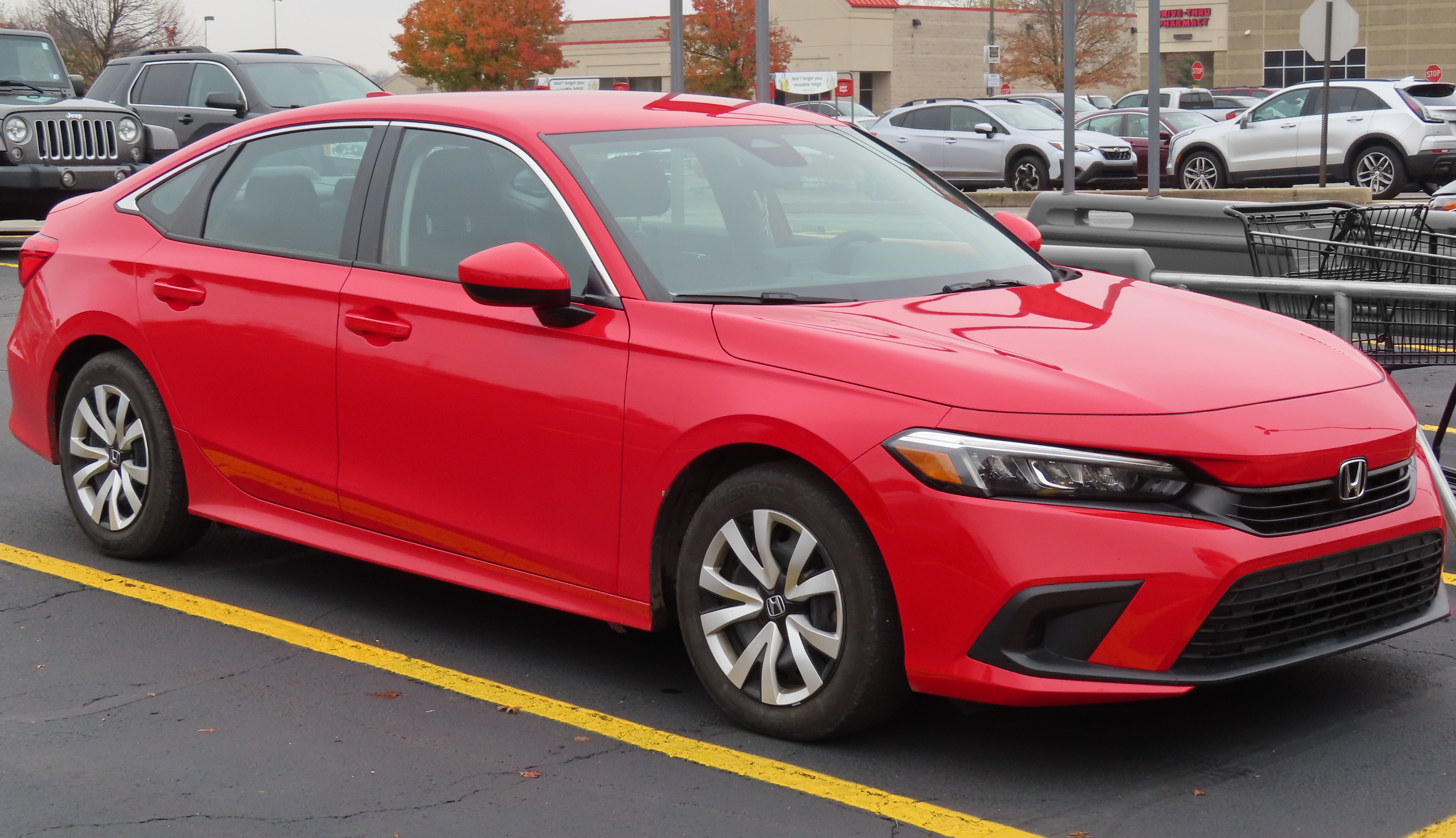
The Honda Civic Si is a fun version of the regular Civic that is designed for people who enjoy driving. It has a manual transmission, which means you can change gears yourself, making it more engaging to drive.
The rev-match feature helps your car change gears smoothly by speeding up the engine when you shift down. This makes it easier to drive without stalling or jerking the car.
Heel-toe downshifting is a way to change gears smoothly in a manual car. You use your heel to brake and your toe to speed up the engine at the same time, which helps the car shift without jerking.
A notchy shifter is a gear lever that feels very precise when you change gears, making it easier to know when you've shifted. Many drivers like this feeling because it adds excitement to driving.
The powertrain is the part of a car that makes it move, including the engine and the parts that transfer power to the wheels. A good powertrain helps the car perform well and feel fun to drive.
A plug-in hybrid is a car that can use both gas and electricity. You can charge it by plugging it in, which helps it drive longer distances on electricity alone before using gas.
The Audi A5 is a stylish car that looks sporty and is fun to drive. It has a nice interior and lots of modern technology, making it a popular choice for people who want a luxury car. It’s often talked about because it combines good looks with great performance.
A mild hybrid system is a type of vehicle that uses a small electric motor alongside a regular engine. It helps save fuel and reduce pollution, but it can't run only on electricity like full hybrids can.
A 48-volt system is a type of electrical system in cars that helps improve fuel efficiency and performance. It can power some parts of the car using electricity instead of just the regular battery.
A generator is a machine that makes electricity. In cars, it helps save energy that would be wasted and uses it to power things like lights and the radio.
Recouping energy means saving energy that usually gets lost, like when you stop the car. This saved energy can be used again to help the car run better.
This is an engine type with four cylinders that uses a turbo to make it more powerful. It helps the car use less fuel while still being strong enough to drive well.
The Kia EV6 is a new electric car that looks very modern and is designed to be eco-friendly. It can go a long distance on a single charge and has some cool features that make it stand out. People are talking about it because it shows how car companies are moving towards electric vehicles.
The Audi RS5 is a super sporty version of the A5 that goes really fast and handles well. It’s designed for people who love to drive and want a luxury car that feels exciting. People talk about it to compare it with the regular A5 and see what makes it special.
MSRP is the price that the car maker suggests you should pay for a car. It's a starting point for how much a car costs before any discounts or negotiations.
EV sales mean how many electric cars are being sold. These cars run on electricity instead of gas, and their popularity can change based on things like government support and how much people want to buy them.
Hybrid sales mean how many hybrid cars are being sold. These cars use both gas and electricity to run, helping people save on fuel while still being able to drive long distances without worrying about running out of battery.
The Mitsubishi Outlander is a smaller SUV that is good for families and is usually affordable. It’s been talked about because it shares parts with other cars, which is common in the car industry. People like it for its practicality and value.
The Mercedes-Benz SL is a fancy sports car that looks great and drives really fast. It has a roof that can go up and down, making it fun to drive in nice weather. People talk about it because it’s a symbol of luxury and has many cool features.
The Mustang GTD is a special version of the Ford Mustang that focuses on performance and speed. It's built for driving enthusiasts who want a powerful and exciting car.
A gas engine is a type of engine that runs on gasoline. It's commonly found in many cars and works by burning fuel to create energy, but in this case, it's used differently.
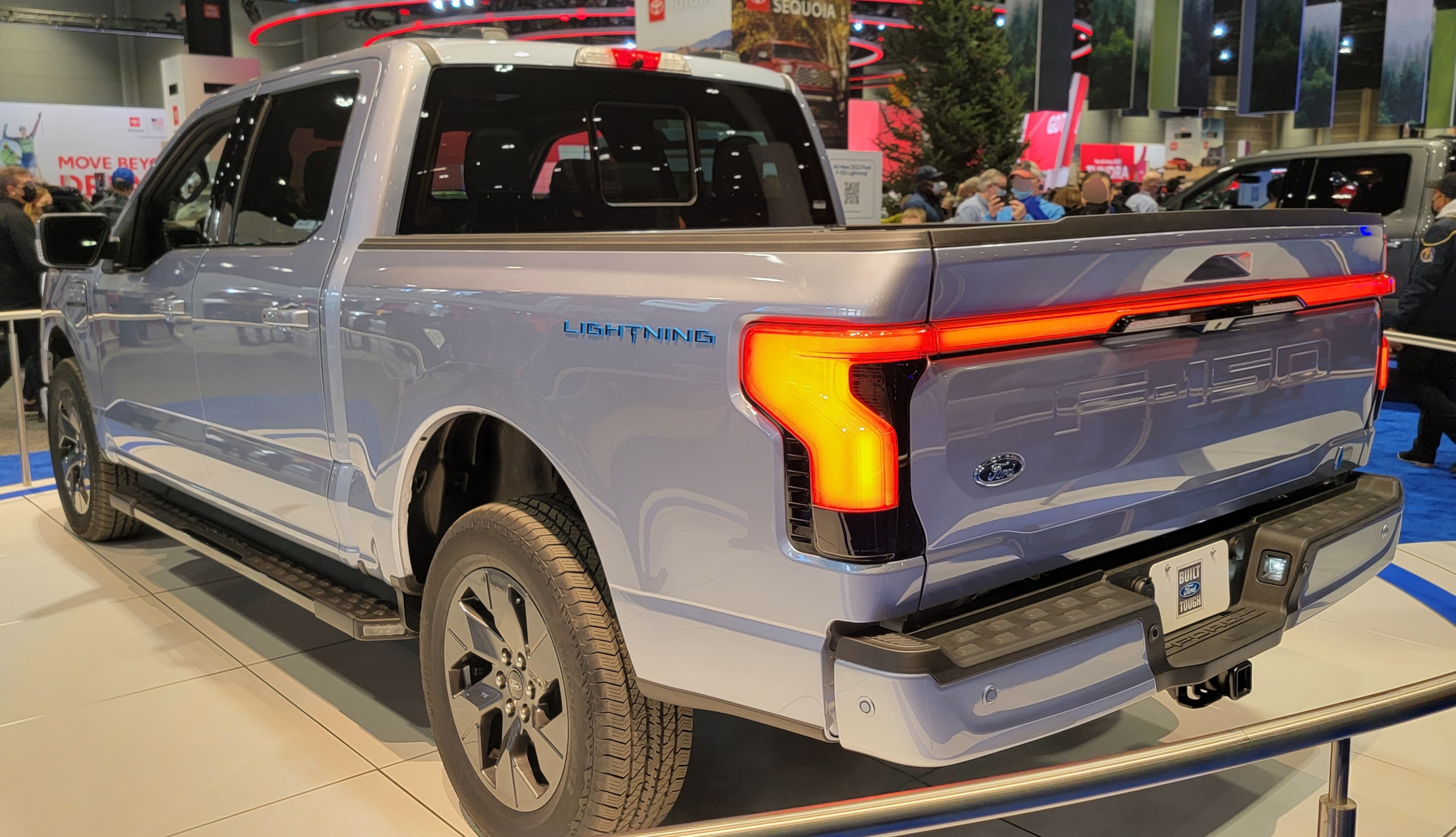
The Ford F-150 is a big truck that many people use for work and everyday driving. It's popular because it can carry heavy loads and comes in different styles. The Lightning version is an electric version of this truck, showing that Ford is moving towards electric cars.
The Nissan XTerra is a tough SUV made for driving on rough roads and going on adventures. It’s coming back to the market, and people are excited because it has a unique look and is good for outdoor activities. It’s often talked about because many people remember it fondly from before.
The Nissan Pathfinder is a large SUV that can carry families and their gear comfortably. It's known for being strong and good for trips, especially if you need to drive on rough roads. People talk about it because it has changed a lot over the years to be more family-friendly.
The Nissan Frontier is a smaller truck that is tough and can handle rough terrain. It's known for being reliable and is a good choice for people who need a truck for work or fun activities. Many people like it because it's strong and not too big.
The Ford Ranger is a smaller truck that is great for driving off-road and doing tough jobs. It's popular because it's easier to handle than bigger trucks while still being strong. Some people love the older versions because they are simpler and smaller.
LIVE
Welcome to the podcast of MotorWeek, television's original automotive magazine.
MotorWeek is made possible by AutoValue and Bumper2Bumper and TireRack.com.
Here's your MotorWeek podcast host, John Davis.
And welcome everyone to MotorWeek podcast number 368.
I am indeed your host, John Davis.
Glad to have you with us.
And as we wrap up 2025, well, as they say, we have a lot to talk about, including three
of the newest vehicles to come under our radar.
We're going to cover today the very interesting, for a whole lot of reasons, Nissan, Rogue,
Plugin Hybrid, the latest and always fun sports sedan series from Audi, the redesigned
A5, and the refreshed, but always entertaining, Acura Integra.
Joining me today are our over-the-edge reporter, Greg Carlos.
I am here and bundled up because it is absolutely freezing.
Our studio today is like a refrigerator, it's appropriate, I guess, for December.
Our digital producer, Jessica Rae.
Yeah, sorry, we only just got the lights on in here.
Yeah, well, lights are on anyway in my house.
Staff writer, Alex Kellum, if his teeth are not chattering.
I'll stick with my trademark, Howdy.
All right, Alex, we're going to start with you and the Acura Integra.
What's new, what's not, and what's still important about this little machine?
Oh, wow, we're hopping right into it.
Right into it.
Yeah, so the 2026 Acura Integra sees a very mild refresh.
Now, if you're familiar with this current gen Integra and you were to see a 26 on a lot,
not next to a 25 or a previous model year, you would think what I just said
is a total fabrication, but I promise that it has been refreshed.
And once you kind of point out some of those things, depending on the color,
and I'll explain that in a second, it's a bit more striking.
So kind of alluded to it already.
I'll start with the outside, then the inside, and then talk about the drive
experience. So outside, the Integra sees a paint
matched or a body matched front grille, but that is only on certain colors,
one of which is double apex blue pearl, a color that was debuted on the ZDX Type S.
So you can get that now on the Integra, specifically, I think, only A-spec models.
The trim structure stayed the same.
It's Integra, and then A-spec, and then A-spec with Tech Package.
Two other colors join.
It's solar, silver, and urban gray.
If you want that paint matched grille, and this is where it gets convoluted
or a little convoluted, if you want the paint matched grille,
you get blue or you get red.
If you get one of the other colors, but only certain colors,
you can option for a paint matched grille.
Otherwise, it's gloss black.
If you get blue or red, you can then option for a gloss black grille.
Would you like to say all that again for the microphone?
Not in the slightest, no.
So in other words, if you're not really an Integra aficionado,
you probably won't notice.
Yeah, you probably won't care.
Nor will you notice the A-specs arrow kit that it gets.
Now, when you hear arrow kit, you think like a massive rear wing
in a crazy front dive plane situation.
Yeah, but this is accurate.
Yeah, so it's a couple new ground effects.
I went in the builder and I compared an A-spec and a not A-spec,
and you really have to look for it.
But it is still, in my opinion, at least
a very attractive vehicle.
When you get inside, that's where the changes are also
minimal, but I think maybe more substantial.
I think more people will care that every grade doesn't
matter which Integra you get.
It gets a larger 9-inch touchscreen
and wireless smartphone projection.
Everything else has pretty much stayed the same.
I think if you get the Orchid interior like we had,
which is like a very nice white kind of interior,
there's like a blue suede insert now.
They've also changed some of the bezels,
extended the ambient lighting, that kind of stuff.
The Type S, in case anyone is wondering,
other than the A-pecs blue pearl paint has not changed.
So that is that.
You can still get a manual transmission.
You can still get a manual, and that's the thing.
All right.
So they did this when the Integra first came out,
and I didn't understand it then, and they still do it,
and I still don't understand it.
If you want a manual transmission Integra,
you have to specifically get the A-spec with tech package,
which is the highest trim barring the crazy Type S.
What a flip from where manuals used to be
the standard transmission.
Now it's basically the premium transmission.
Yeah, it's an interesting decision,
and that is paired to a 1.5-liter Turbo 4,
which we've seen, it's one of Honda's standby choices.
It's still here.
It's unchanged.
It's 200 horsepower, 192 pound-feet of torque.
And before I talk about the drive experience real quick,
which, believe it or not, has not changed much
from our first drive, our road test,
and our long-term Integra,
I have a personal anecdote about this vehicle.
So I brought it home one day,
and my roommate is not a car guy.
He appreciates a good car, but he's not
an enthusiast like us.
Normally, if I bring something home,
he says nothing about it.
Maybe every now and then, he's like,
oh, that's kind of cool, or whatever.
This car, he made a point to talk to me about it.
Like, yeah, that's really cool.
I really like that car.
What is that?
Oh, and I'm explaining it to him.
We go outside.
He's like, I love this blue.
I love the interior.
I love all this.
And he doesn't know all the terminology
to explain the kind of exaggerated fenders
or the pointed front end and stuff.
But he's looking at it, and he's like,
it looks very muscular.
It reminds me of a muscle car.
And I'm like, OK, that's an interesting point.
I'm sure you had nothing to say about that.
You know, I kept my mouth shut.
Yeah, I got to look at that.
Alex, you were recall a podcast recently
where you were almost on the table talking about muscle cars.
That doesn't sound like me.
Alex is Mr. Muscle Cart, where are we?
Doesn't sound like me.
But I gave him a ride in it, and he really liked it.
The one thing he said, and he drives a Honda Accord,
so that kind of gives you an idea of what he's
used to driving, is he said,
if I had a bunch of people just filled it up
every seat with people, he's like,
I feel like I'd be maybe just a little cramped.
But outside of that, he's like, I love this interior.
The ride is so smooth.
And he was seriously thinking about buying one,
because he is looking to upgrade.
No, no, he would probably do an automatic,
which if you don't know, the Integra's automatic is a CVT.
So you get a choice between either CVT or six-speed manual
if you go A-spec with tech.
And the drive experience, I mean, the Integra is still,
I mean, 200 horsepower, I know this is maybe crazy to some,
but 200 horsepower isn't exactly a lot these days.
We're used to seeing these big numbers,
but in a car like this, small,
especially with the manual transmission,
it feels lively, it feels fun.
It's front-wheel drive, I should have said that.
The novelty has sort of worn off a little bit for me,
not to say that this isn't a good car.
This is a very good car,
and it's understandable why so many people like it
and why it's, let me get it out of my system,
integral to the Accura strategy these days.
All right, got that done.
The fact that they're still offering a car,
you know, in their market is notable.
This, along with something like Honda's Civic Si,
I think are great like first cars
if you want a manual transmission,
because one of the things I've talked about this before
is this car, like the Civic, has a lot of assists in it.
So a brake hold, if you're worried about rolling back
on a hill, you can have that feature on,
and it's got like a rev-match feature.
So if you're not quite used to heel-telling,
you can let the machine do it for you,
and then you can turn all that off
when you're ready to practice those things,
you get better at it.
The rev-matching is, yeah, that one you have to stop,
you have to go through the infotainment,
it's kind of like splitting the atom,
it's a little bit of a pain, but.
I left it on because of that.
I wanted to turn it off, but then I remember,
because we had a long term, like a year ago,
so we spent a ton of time in it.
We spent a lot of time in it.
And yeah, I was ready to turn it off,
and then in the last year,
I've forgotten where it was in the menu system,
and then realized you can't do it while you're driving,
so I just quit, and just stuck with the rev-matching.
Yep, and so to kind of end it,
one with pricing is that now the Integra starts
a little bit more than it did when it first came out.
They start around 35, 36.
The A-spec with tech, so if you want the manual,
you're paying about 41, 42,
which is a lot of money,
but at the same time, compared to, again, like a Civic,
this has got a more upscale feel,
more premium fit and finish, in my opinion.
And it does.
And I would be willing to bet
you can probably do some real haggling on that price.
I'm sure you can.
And it just goes to show that while, yes,
the number of choices out there
for a small manual transmission, sporty car,
it's certainly dwindled,
there still are some options out there
and some pretty practical options.
I think that's record time for me.
Before the podcast, Jess, rather aggressively,
I should say, told me to keep it short,
so I open the floor to comments and then we'll move on.
And thank you.
Whoa, we haven't even had our holiday party yet.
I plead the fifth.
Should I call it?
Just blink twice as much as I should call HR, Alex.
You looked away when I blinked.
I feel like we were talking about this car too.
I know it's a little bit like
you have to spend more to get the manual transmission.
I think for the A-spec with tech,
it's like just over $40,000, so...
It's probably so the dealers won't get stuck with the manual
that most people don't want.
But what we were talking about too is the new prelude
is coming out and this, a loaded Integra
still manages to undercut the prelude.
Granted, the prelude is a bit different,
but still, I mean, if you're looking for,
if you're looking for manual transmission
like this sporty little car, it's a great option.
It's worth also mentioning, in my opinion,
of all those options I've kind of said,
like, oh, there's manual transmissions out there.
Honda, at least to me, for consumer grade manuals,
this is one of the best in the business.
Oh, it always has been.
The shifter is notchy, the throws are short,
the clutch has always been the thing
that's been a little iffy to me.
Pickup points great, but it's a little light for my taste,
which driving this thing in traffic
is very much appreciated.
But it's spirited drives, I'd like something more weighted.
Outside of that, this is just such a great powertrain.
And we should point out it's still
one of our all-time favorite, you know,
small sporty cars.
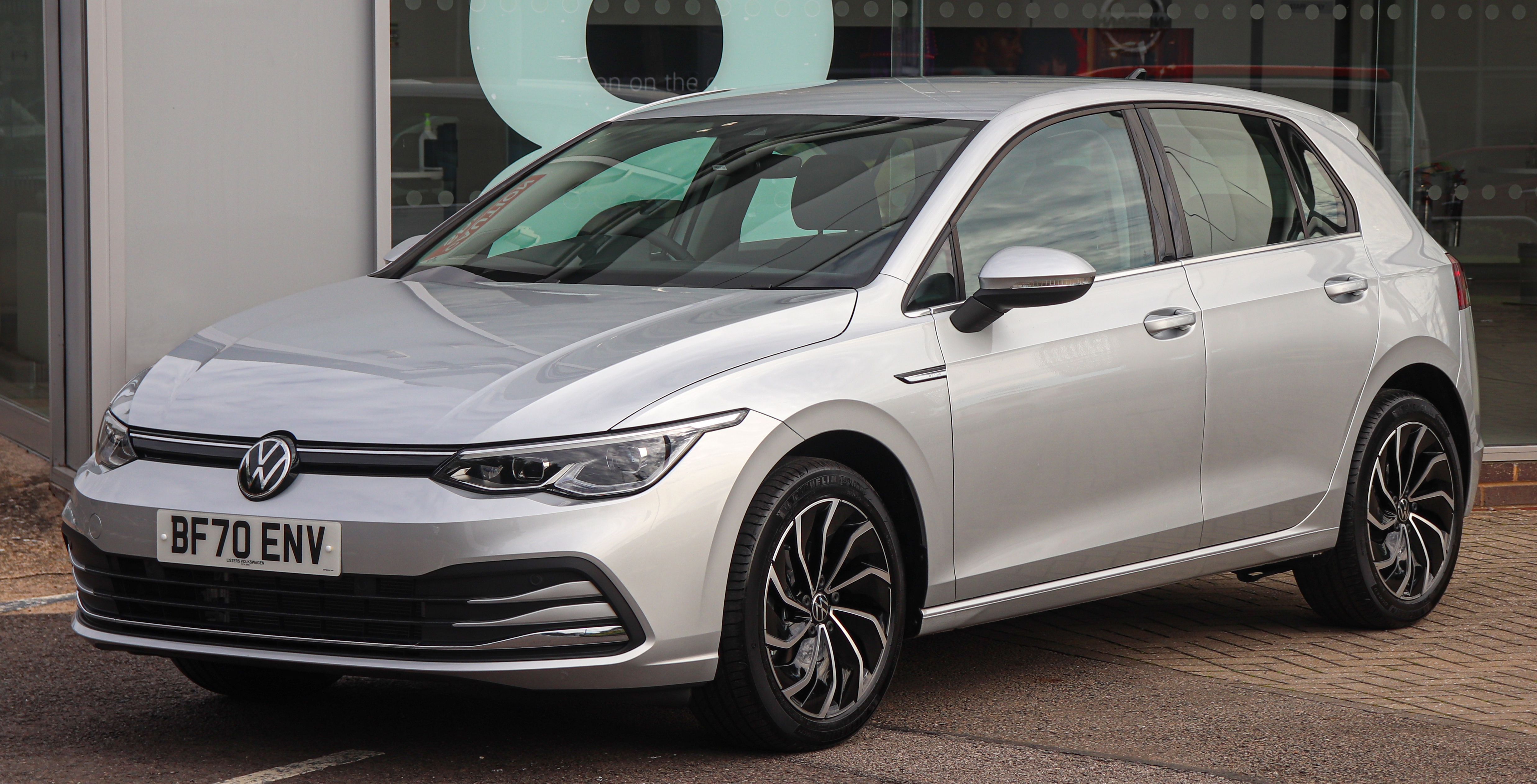
I mean, that along with the various versions of the Golf,
I mean, it's right up there and it's a pleasure to drive.
Yep.
Anything else for Greg?
No, I agree.
I was being reacquainted with an old friend.
It was nice.
OK, thanks, everybody.
That brought us up to date on the Integra.
Thanks, Alex.
Don't forget we're going to talk about this new plug-in hybrid
PHEV from Nissan coming up a bit.
But first, more sports sedan news
with the new Audi A5 and Greg Carlos.
It's all yours.
Sort of sports sedan.
I mean, it's the A5.
You've always sort of called it that even though it's
gotten plusher and plusher over the years.
Yeah, and also like, what is a sedan?
Because so the A5 traditionally was
the coupe version of the A4.
That means two doors.
Years ago, coupe used to mean two doors.
Then they started calling it a sport back
and they added two doors.
So it was the A5, a four-door coupe with a hatchback.
With a hatchback.
So now for the third gen, they've just
gotten rid of the sport back terminology
and it's just called the A5.
But it still has that coupe-ish kind of slanting style.
And it's still a five-door.
And it's still a five-door, which we absolutely love.
I mean, we all love the utility of a hatchback.
So how?
We have finally joined the European circus
because the five doors have been what they've
favored for decades.
And it was a hard sell here.
It's a little odd because now I'm getting off topic.
The two series grand coupe has gone away from the hatchback
now it's just a regular deck lid.
But anyway, moving on to the powertrain.
We have a mild hybrid system, which
I feel like we kind of don't really talk about anymore.
Mercedes was doing a mild hybrid,
which is very briefly not a dumb-down version.
A very light, think of like a hybrid vehicle,
but light version of it.
Really small battery.
It's a 48-volt system.
So it's how Audi describes the system
is it's like partial electric drive.
So it is capable.
It gives you a little bit of umph when you need it.
Correct.
It's capable at very low speeds to run on electric power alone.
But it's very briefly and at very low speeds.
And actually at higher speeds, the whole thing disconnects.
And then you're just running on gas.
So what they do is they put a little,
they call it a generator.
And it's a motor.
They stick it directly to the transmission output shaft.
And it helps, like I said, in low speeds.
And what it can do, though, is it recoups energy, typically
lost to breaking heat and actually feeds it back into the system.
And you can use that for all sorts of things,
all your tech inside and for driving and things like that.
It helps with the fuel economy.
It helps with technology.
But it's not like a full-on hybrid system.
You're also working with a four-cylinder turbocharged
engine, 268 horsepower, which I feel like is enough.
Certainly not over the top, but I
didn't feel like it was underpowered.
Alex drove it at the track.
And I just drove it around town.
So I feel like it was fine.
That's what they have the S5 for.
You get a B6 turbo.
It's a nice car.
I mean, it's a pleasant car to drive.
A pleasant, I think, is a really accurate word.
From just looking at it, it kind of lost some of its
sportiness.
And it's not as edgy of a design
and art-particular color.
I'm blanking on the name of it right now as sort of like
blah, blah.
It was definitely blah.
Yeah, but exciting.
But you hop inside and it's Audi.
I think I've given Audi some crap about stagnant interior wise.
They're riding a wave of having some of the most acclaimed
interior.
And I can't say what they've done is my favorite.
But at least they're starting to change a little bit.
They have two huge screens that kind of looks like one
screen, which is the whole, it's a fad right now.
So you have your big gauge screen.
And then to the right of it is your big infotainment screen.
It sticks up from the dash.
It's not quite as integrated as it used to be.
And then if you hop up to the top trim for the prestige
model, the passenger, the front passenger,
can get a screen because everybody
deserves screens these days.
My interesting feature on the interior
was if you hop up to the middle grade, which
is premium plus about 55 grand as opposed to the base,
like 50 grand A5, you get the variable light control roof.
So it's not a typical sunroof that can open and close
physically.
And it doesn't have an actual shade.
It has it has like a electrochromic.
Exactly.
Electrochromatic.
You still use it the same way.
There's like a slider button up top.
And you can quote unquote open it by that.
That was what was different, though.
I think that you could actually do it in stages.
Correct.
Usually those electrochromatic roofs, it's like all or nothing.
All exactly.
So typically it's like either frosted or not frosted.
But what they've done is they've you
can do it in different patterns almost.
And which sounds kind of stupid.
But it was cool.
Like why would I ever use it?
But like anecdotally, I'm driving around
and I'm just messing with it.
And the sun is blasting through the top.
And I hit it to where that it was segmented.
You have some non-frosted, some frosted.
And it actually was nice because it did happen to be
where the sun was positioned.
I had a nice frosted spot to get it out of my eyes.
But you still let light into the vehicle
through the other unfrosted area.
So a luxury feature for sure.
Do you need it?
No, but it is a cool feature.
And it advanced something.
We've had, you know, we've seen these frosted
and unfrosted sun roofs, gosh, for years.
I mean over a decade, almost two.
But it's usually been all or nothing.
And this is the first one I remember
that sort of mimicked a mechanical roof.
Yep, for sure.
And as far as driving, smooth Audi experience,
I would definitely call this a luxury experience
and not just a premium experience.
A little bit of sport thrown in there.
And then the only thing I can think of
that we had some debate about,
and Alex specifically.
That's a tough word for me to say too.
We were actually shooting the exteriors.
And I thought, so they've switched to these
electric switch door handles for Aero,
whatever, just looks, whatever.
You can't actually physically open a door handle.
It doesn't move.
So you reach your hand under there
and then you just hit a little switch button
and that's how it opens.
I think it's, I don't know what's wrong
with regular door handles.
I will say that it does look cool,
but I didn't think the operation was particularly smooth.
But I know, like Alex said,
he didn't really mind it as much.
And I think Logan at the time wasn't super opposed to it.
Yeah, like, cause they work
and I can still get in the vehicle.
So as long as I can do that, that's cool.
But at the same time, like,
there's an art to the door handle.
Like many things I say on this podcast
that starts from my dad, something he told me,
which is, oh, you know, back in the day
it was chrome door handles.
That's how you break up the side profile of a vehicle.
You have chrome bits.
Now you don't do that anymore.
And I always thought like, you're a crazy old man.
But, and I know you're listening to this.
Sorry.
But, like that car.
The unfiltered Alex Cohen.
This is still filtered.
But that A5, I remember looking at it thinking like,
you know, like a nice like chrome door handle
actually would look kind of nice on this.
Like, I don't know.
Like maybe that's just because of the.
You can still see, they're not totally hidden.
Like to give you an idea.
They're technically flush door handles.
But they're not like a Kia EV6
where they're like hidden and they pop out.
You can still like reach under.
Right.
And that's what I like about them is
it's not something that is dependent on a mechanism
for it to pop out or something.
When you put your hand in there,
like to me, once the hand's in there
it still feels like a door handle.
It's a one step motion where it's like those.
If you don't have the powered door handles from the Kia
you have to like push in and pull out.
That's a two step motion to open the door now
which is totally ridiculous.
I wonder if that would be a plus
in icy and cold weather.
Cause a lot of those flush door handles
not the ones you pop out
but the ones you reach under and pull out.
If they get iced over, it's hard to do it.
And this obviously has got to switch just on the back.
I wonder if that's a plus.
It wasn't here when we got snow.
So I don't know.
But anyway, we spent about 10 minutes
talking about door handles.
Anything else you want to mention about it?
The headrest speakers is a very interesting feature.
And it's one of those things where if you're not expecting it
it'll like kind of freak you out a little bit.
Cause you have the navigation playing
and it'll tell you like turn left at this street.
But it's hyper directed at your ears
which me personally kind of threw me off.
Like I don't know if it mess with my equilibrium or what
but like it was almost too focused on my ears.
It felt artificial in a way.
But it is a debt.
I mean, the goal was to focus the nav directions
on your ears and it absolutely does that.
I can't like, I guess I would assume nobody else in the car
heard it nearly as much as I did.
I don't know about that.
But it's one of those things where like I tried it out
and I'm like, I get it.
Like it is kind of cool.
But then I'm like, it's also a little gimmicky
which to me luxury cars,
they always got to throw some gimmicks in
and that's fine.
But you have to find a way to slice
that onion a little thinner.
It's not something I like when I have nav in my car
like I almost never use the voice.
So for me, it's already just kind of lost on me.
I'm not the target audience for headrest speakers.
Jessica anything to add?
You know, one of the interesting things I thought
about the A5 was that it had a lot of sneaky aspects
of it that brought it to like a level I wasn't expecting.
Like I remember we were talking about the head up display
in it and how it was like so it was.
Borderline too good.
Almost too good.
Like it was so crisp.
It had so much information on it.
We're talking about the...
Unnecessary graphics.
Very, yeah, unnecessary graphics.
But it was like, wait, this isn't like their top
of the line sedan.
And like this isn't even the, this is the A5.
This isn't even the S5 or an RS5.
And I think that head up comes in at the mid grade.
So like 55 grand.
So 55 grand.
I think we're talking about a bunch of these features
and even the prestige is, I think at MSRP is at 56.
So we'll just say under 60 grand.
I think it just was, had a lot more of these really
premium features that you wouldn't expect.
Like a few years ago you'd only see in like an A8
exactly or something that cost about 25, 30% more.
Yeah, exactly.
Interesting.
Wow, it's an intriguing car.
I think it's one, a new Audi has a history
of taking a vehicle and giving it more content
than you expect.
That's how they made their names for themselves.
And I think they've done it again with the A5.
Well, before we move on to the next vehicle,
I wanna thank our sponsors of the podcast
and of everything Motor Week, Auto Value
and bumper to bumper and the folks over at tirerack.com.
We know our viewers and listeners appreciate
your dedication to Motor Week.
Okay, I'm sure most all car fans
have seen the headlines about EV sales dropping like a stone
after federal tax incentives expired earlier this fall.
But they may have missed the just as big news
that hybrid sales are booming as Americans
and Europeans look for efficiency without range anxiety.
And Nissan didn't wanna be left out of this surge.
So they took an old but effective approach
to getting something to their dealers lots quickly.
Jessica, tell us more about the Nissan Rogue PHEV.
Yeah, so a very interesting product
that was everything I expected it to be
because it is a car we've all driven before.
Yeah, so it's very interesting.
We talked a little bit about this vehicle
in the last podcast when Nissan debuted it.
I went to drive it and Nissan was pretty
like just straight up about this product.
They're like, we have no hybrids.
People come to our dealerships asking for a hybrid
and we needed to say we have a hybrid we could offer you.
And this is the easiest way for them to do that
in the shortest period of time.
Which is, we haven't really told people what it is yet.
Literally putting a Nissan badge
on a Mitsubishi Outlander plug-in hybrid.
This badge engineering returns.
But technically the Mitsubishi Outlander is a Nissan Rogue.
So like it goes in one hand and Nissan Rogue
is the basis for the Outlander.
But now the Outlander is the Nissan Rogue B&GV.
It's very...
It's the age old question.
What came first, the Rogue or the Outlander?
Yes.
Exactly, it's so true.
And the fact that we like the Mitsubishi PHEV so much
and we've had the previous version of it here for you
and we like the vehicle.
It's good.
We like the vehicle a lot.
It's a really solid plug-in hybrid.
We like the gas version as well, both very solid.
It takes the Rogue's platform
and it actually is a bit longer.
So it makes the...
This is the first time the Rogue I guess is...
Or maybe not the first time.
Don't quote me on that actually
because I don't know all the Rogue's history.
Sorry, you've been quoted.
This becomes a three-row SUV.
I don't think they've ever done a three-row.
The Rogue traditionally has not been a three-row.
So the third-row's, it's fine,
but you could fit seven passengers in this if you want to.
So it's a bit bigger.
And of course this looks nothing like the gas-powered Rogues
that you're still going to see on lots at Nissan dealers.
And I do actually think that this Rogue plug-in
is a little bit more attractive than the Outlander
just because the Outlander has a lot more Chrome bits
on the front and Nissan just decides
to make that all black.
So I think it just has like a sleeker look to it as well.
It's like I said, it's a plug-in hybrid.
So this goes up to 38 miles on a single charge,
which we always found that the 20 kilowatt hour battery
while it on level two,
it does take a bit of time to charge
about seven and a half hours.
But most people,
you're probably not driving more than 40 miles a day.
So this could handle a lot of people's commutes.
Pretty easily.
So that's really nice.
The powertrain, we've always found to be really solid.
It has just the right amount of power.
It's relatively seamless when it's going back and forth
between the gas engine and the electric driving experience.
Like even when you have it on EV mode,
it's really comfortable and relatively efficient.
And then when it switches back over
to the gas engine, say,
when you got to like put a lot more oomph to it,
it's a solid vehicle.
One thing I will say is, you know,
this isn't just, you know,
Mitsubishi doesn't get like the raw end of this deal.
The way that the Rogue plug-in is offered
is it's only going to be in two pretty well-equipped
grades, the SL and the Platinum.
But the Outlander,
and while we haven't seen the 2026 Outlander plug-in
quite yet, there's still some features
that you're not going to get in the Rogue,
like massaging seats, ventilated seats.
So the Outlander does have a little bit of an edge
compared to this Rogue plug-in hybrid.
The interior is really nice with the quilted leather.
It has, the Mitsubishi already had Nissan's
like infotainment system.
So yeah, overall, I almost like don't have much more
to say about it because we've said it all before.
Here's a big plus.
Mitsubishi doesn't have nearly the number
of dealers that Nissan has.
So this takes a very good vehicle
and exposes it to a lot of people
that probably would never even have considered going in
to a Mitsubishi dealer if they could find one.
Yeah, I mean, I think that's a huge, huge plus.
And also, I guess this means that like
if you had a Mitsubishi, you could start getting
a service at an Nissan dealer.
A more convenient dealer.
So it kind of, yeah, it works hand-in-hand.
Pricing-wise, they did talk about,
we don't have exact pricing quite yet,
but they did say that this would be
at the higher end of the Rogue lineup.
So the highest end of the Rogue lineup right now
is about 50 grand.
So that's probably what we're looking at.
I think the PHEV adds like almost 10 grand
to the Outlander.
Yeah, I think it's like 45.
It's not like a hybrid that costs you maybe
1500 or 2000. You're paying for the battery.
For a bigger battery, yeah.
Yeah, I'm seeing MSRPs for the Mitsubishi plug-in hybrid.
Actually is for 2025 is about $40,000.
But again, the Outlander does come
with more trim levels.
And like I mentioned,
the Rogue plug-in hybrid is only available
in those higher trims.
I just saw something yesterday.
They were talking about the German car market
where plug-in hybrids have all of a sudden become
the hottest thing out there.
And the average transaction price is
about 12 to $13,000 more with a PHEV
than without in Germany.
So that jives with that.
You're paying a lot for the battery
and all the other.
Yeah, because it is.
Compared to a regular hybrid battery,
it is significantly bigger.
20 times as large.
Well, you do have two powertrains now.
And that's a factor, too.
But I think the real angle here is
they wanted Rogue to be associated with hybrid.
Because really, truly, the biggest news here
is that a hybrid powertrain is coming to the Rogue.
And we're going to talk about that next.
Because since this is the last show of 2025,
I want everybody around the table
to look into their crystal wall.
And we're going to ask the group what they're looking forward
to driving in 26.
And Alex, what New Year's gift are you
looking most forward to?
Is it something that we've had in mind
or something out of left field?
Man, I don't know.
First, I'll make the same joke I make about every Nissan
looking forward to driving the Nismo version for the Rogue
PHEV.
Well, we've got some cars on the list here.
It could be not on the list.
Yeah, it has to be on the list.
We'll talk about a lot of these things.
But if you had anything else.
What am I looking forward to driving?
What am I looking forward to seeing?
Period.
I mean, is there anything new?
I mean, you're the Mustang, guys.
You're coming down the pike there.
Someone wants to toss me the keys to a Mustang GTD.
I'll take it around the ring.
We all would like to do that.
But outside of that pass, I'll have to think on it.
All right, let's go back to Jessica.
You started talking about the real standard-ish hybrid
coming from the Rogue and Nissan.
So why don't you keep on that track?
This is really when I went to go drive the Rogue.
It's actually bringing to the US
something they're already doing.
Correct, yes.
So when I went to go drive the Rogue,
they also gave me drive time in a thing called the Nissan
cash-kai, which is a car I had never heard of and never seen.
And you probably haven't either, because it's
a car only available in Europe.
It's a global market vehicle.
The reason that they brought out this car, which I'm sure
it wasn't easy to import to the US and tag,
and for us to even drive on a public road,
was because it's powered by their new traditional hybrid
system, which they call E-Power, which functions
very differently than all the other hybrids,
the traditional hybrids, the Toyotas, the Fords,
the Kia's, the Hyundai's.
But it's where the industry's going.
It's where the industry's going.
So in the simplest way to explain it
is that it has a gas engine under the hood.
But the gas engine does not power the wheels.
It's a pure generator.
It's a pure generator, which means that the electric motor,
and this one has a larger battery
than a typical hybrid, it's a two kilowatt hour battery pack,
which you might not think versus a normal typical hybrid
in a Toyotas about a little over one,
a little over one kilowatt hours.
You would think, oh, that's not that big of a difference.
But in Nissan, the way that they explained it
was that it actually allows it to be more efficient
in a lot of its highway driving.
That helps having the slightly larger battery.
Anyway, in the simplest terms,
it drives more like an EV,
because just the EV motor and the battery,
that's what's running the car.
It's a two-motor hybrid.
Yes.
But it's a little something different.
They aren't working in tandem.
They aren't sort of alternating with each other.
They're doing two different roles.
So they're separate.
And so what was interesting about that, too,
is they said that they were able to brace
the gas engine differently
and even better than they typically would be
because it's functioning differently
than if it was powering the wheels.
So they're able to, I guess, secure it a little differently.
Yeah, because it's not,
I guess it's not spinning the flywheel to spin the wheel
so you wouldn't have to brace it as much, I guess.
I mean, I'm not an engineer.
That was the basics of, I think,
what they were trying to explain.
So that helps with NVH.
Also, everybody looks at Nissan.
They have a lot of bad press because of their transmissions
and their CVTs.
The good news is this doesn't have a transmission at all.
It doesn't need one.
So less parts.
This also leads in the two-motor hybrid approach,
which we're seeing more and more of.
That's also what Ford is getting ready to do with their F-150,
the Lightning EVs going away.
And they just announced that they're going to basically
do a two-motor hybrid, which, you know,
a gas engine up front that's just a generator
and a battery for the electric motor like Ram is doing.
So, I mean, we're seeing, going to see a lot more of that.
And I'm actually very interested in driving
one of the pickups with that system in it,
whether it's the F-150 or the Ram.
Yeah, I think that...
I believe that's a really smart approach.
I think it's going to be a lot to get
wrap people's heads around these things.
That you don't actually have a pickup truck
that it doesn't really have.
You really have to.
Like, it's just, you need to...
I mean, the proof is in the pudding.
How much will it tow and how far will it go?
Right, like, I don't think you need to, like,
think about the dealer experience,
the guy who wants to walk in and buy an F-150.
I mean, most of them probably don't care how it tows
the weight, it's just that it can't tow the weight.
They don't care that, you know,
how it gets to 700 miles, it's just that you don't,
you can drive 700 miles and guess what?
You can still fill up your gas tank
and you're not, you are not at the mercy
of the electric infrastructure.
I mean, that was the problem with the lightning.
I think it could tow 10,000 pounds, but not very far.
It definitely, yeah, like, even if you had
an extended range, like, current lightning,
which I think on the normal could get close to 300 miles,
if you towed anything with it, it would cut that down
to a little over 100.
I've forgotten what we did when we saw our test,
but it was somewhere around 150 years from now.
Especially now, cause like we're already getting away
from Average Joe working on their new car.
A lot of times you can't even check the oil
or transmission fluid.
I mean, you gotta go through the system
and I mean, it's getting to the point now
where like they are, automakers are actively trying
to keep you from working on your vehicle, so.
Let's focus though, let's go back to something
that we've heard a lot about
and is coming slowly into focus.
I mean, just because we're seeing more of these
hybrids, it doesn't mean that some of the manufacturers
are giving up on EVs.
We do have the new Chevy Bolt coming,
which will be interesting cause that'll give.
That was the best selling EV and the model
in the country for a while.
But Scout, Scout Motors, you know,
they're edging towards production end of 27 or 28,
as a 28 model year, they just got approval
to go do direct to customer sales in Colorado
and bypass dealers.
What do you think about Scout?
And is anybody around the table looking forward
to actually experiencing it?
For sure.
I know they spent a lot of money on advertising.
They had a Super Bowl commercial last year,
if I'm not mistaken, and I've seen it a few times
just watching TV, so they seem serious financially.
They're building a plant, they've got their headquarters
now, they're building a plant in South Carolina
and they're putting their headquarters
in Charlotte, North Carolina, not sure why.
But I mean, they're, and it's Volkswagen,
in case folks don't know, and it's causing quite a stir
because VW has a lot to dealers
and they'd love to get their hands on a truck
and a rugged SUV and they're basically saying nope,
we're gonna try and sell it directly
to consumers like Tesla, so.
That would top my list as something I'm most interested
in coming in the year.
I think it's, with how successful Rivian has been
and how they've been able to really become mainstream.
Like you, if you talk to somebody now
and you mention Rivian, chances are they've seen one,
they know what you're talking about.
Scout seems to be following a very similar formula,
a very similar ethos, in a very similar look.
And a look that I think pulls a lot more on nostalgia
than maybe the Rivian does.
Oh, I think a lot of, they're banking a lot
on the few people of my age that might remember
the last of Scout.
But it's funny because like,
Scout is where Rivian was a few years ago
and Rivian is in a really nice position now
and they've graduated to now, it's like, all right,
you've shown us what's the next step
and which is what they're gonna take this year
with the R2, hopefully we'll see it.
So they need something else to prove
that they can stay on top or near the top of the EV game.
But they came, Rivian came in at a hot time for EVs.
Like I'm not sure they could have come in at a better time.
Scout isn't really getting that advantage.
So there's no incentives there,
the government incentives are going on.
They might be working uphill
whereas Rivian was kind of working
on a level playing field.
Yeah, and even Rivian's gonna have a hard time.
I mean, they've yet to make a profit on a vehicle
and everybody's been using these EV credits.
Well, they're gone away.
So it's gonna be tough for them too, and lucid.
R2 is, this is their cheaper model
but the idea I guess too with the R2
is like they have to start doing some serious volume.
I mean, to be a successful automaker
you have to be doing some sort of volume
and as much as we really like the R1 series trucks
they are just not affordable for most people.
I mean, $80,000, they're nice.
We get in there and they are very nice vehicles.
They're incredibly capable.
But yeah, I think we're really looking forward
to the R2 that's coming first
and then the R3 which will be on the way
I guess after that sometimes.
While we were talking about Nissan
just to note the XTERRA is coming back.
So I think that's gonna be,
that's gonna excite talking about more rugged SUVs.
Yeah, Nissan kind of talked very little about this
but what they did say is they confirmed
it's going to be a body on frame truck.
So it's not just gonna be like a Pathfinder copy.
Another crossover.
They're bringing a body on frame SUV back
and sort of also the, they said it's gonna come sooner
than we think.
I think the idea is that it'll probably come around
the time that they redesign the frontier.
The frontiers probably do for a significant platform update
within the next like two, three years.
I don't think they can wait that long.
I think they gotta need to do it now
on the chassis they've got.
It's a solid bone.
Well, me and Alex talk a lot about the frontier
how it's just a really solid.
I think it's a great truck.
More than the average person probably talks about the frontier.
Yeah, I love that thing.
I have an old Ranger before the current larger one
and the one alternative truck I constantly look at
is the Frontier because of the powertrain
and just the driving experience.
It's a great truck.
You put a cab on the back of a Frontier today
and shorten it up a little bit
and boom, you're a forerunner competitor.
Anyway, before we move on to our last thing
of before we wrap up this podcast,
anything else, anything from the performance era area
that we on our radar, you mentioned the Mustang.
Well, and I have another Mustang entry
is they're partnering with RTR ready to rock
to bring a from the factory kind of like,
I'm gonna use the phrase drift ready.
I don't know if that's maybe quite what it should be
referred to as, but a more performance spec model
of a consumer Mustang.
And to that end, it's actually gonna be based
on the EcoBoost, so the 2.3 liter turbo four.
And it's not just a body kit.
It is like the big thing that it gets
is a factory anti lag system,
which will keep the turbo spooled up
during shifting and driving, which is pretty neat.
It is a 10 speed auto.
Well, they haven't confirmed this,
but right now the EcoBoost is only a
available with the 10 speed auto.
So I think it's gonna be a 10 speed auto only,
but outside of that, that should be pretty interesting.
Trying to think of other performance entries.
I'm sure there's more in the pipeline,
but now that I'm in the hot seat, I can't think of it.
And we'll save that for the first podcast of 2026.
Sounds good to me.
Hey, before we wrap things up,
just wanna remind everybody,
if you haven't discovered it yet,
go to your favorite app store
and look for the free motor week app.
It works on just about every phone and tablet
that we're aware of, free download as I said,
and you can get all of our motor week road test videos
and all of our features.
It also has this very unique power tab
that allows you to quickly search
for the specs of every clean fuel vehicle
for sale now both old and used.
That means every hybrid, every PHEV,
every EV, E85, natural gas, you name it,
it's on there.
So we invite you, go out and download
that motor week app today.
It's a nice holiday present and it's free
and you'll never miss a mile of motor week.
Hey, our Rant and Raves,
anybody got something they wanna get off their chest
or has a new year's driving resolution or?
PSA, so this is a rant that has gone back years now
that I was always, when it comes to parking,
a pull in and back out kind of person
don't pull through, I'll admit.
And you have gone this podcast.
You have gone ballistic on it.
I have since, I've gotten older,
a little more understanding, a little more patient.
I understand it, but if I can make a pitch back
to my original point, holiday season,
lots of people out driving.
It is 2025, a lot of cars,
I would say at this point,
the vast majority have backup cameras, right?
A lot of those have rear cross traffic alert,
not as many have front cross traffic alert and assist features.
So with this in mind,
maybe we do a little more pulling into spaces,
not pulling through and backing out
because I will argue that I think
with the current state of vehicle technology,
backing up is more often than not safer
than pulling out of a busy parking space.
I would agree with you on that.
Because you have a wider angle of view,
you have all the systems that are in there,
and they're good, and they work,
and they alert you ahead of time,
and sometimes they'll even break for you.
So you're saying don't back into a space?
No, no, he's saying don't pull through
so you can pull straight out.
Also yes, because that's what you're going to back in either.
But how does he pull through?
That's my better drive,
especially at a grocery store when I'm backing in.
I can't stand it.
What do you do?
Why are you backing into a space
if you're going to go get groceries?
You need that access to the back.
It's funny you bring that up
because the grocery store is one of the few places
that I won't back into a space.
Because it doesn't make sense.
Because I have to get into my trunk
to load up all my groceries.
So yeah.
No, that's a great point.
I think, I feel like I saw somewhere,
maybe like six months ago to a year ago,
there was something somewhere where somebody was advising,
like if you have a younger driver,
you should be,
and they have like a rear cross traffic alert,
they have a car that has a backup camera.
They should be pulling in because,
especially if you're in a parking lot
and say you're in a smaller car
and you're in between two trucks.
You can't see. Somebody coming down the aisle
can't see you.
The camera can because it's way behind you
and it has a wide angle
that you can't even see with your physical eyes.
And it's crazy.
I mean, either the sensors on our cars are so good
or the cameras seem to catch things,
but like you could be backing up
and your eyeball does not see that car,
like right on the edge of your screen.
Like you can't catch it with your eye,
but the car can.
The sensor does.
And then it stops you.
It's time to start trusting these systems a little more.
My wife doesn't even fully trust her backup camera.
It kind of like, it's like with the lines and stuff.
Everything about it.
I've had, I've had somebody actually tell me
they don't trust what the camera is showing.
They don't trust what they can see with their own eyes.
And I get it like you're like, there's the old school,
like I want to do everything myself,
but like, man, these things are so good.
And we drive way more than the average person
we use these systems.
We use good ones and we use bad ones.
I was gonna say, not all cameras and sensors are equal.
But even the worst ones are still.
Are better than you looking through mirrors.
Or trying to crank your head around,
which I know a lot of people still do,
but as you get older, it gets harder to do that.
So let the systems do it.
Yes, you shouldn't do, she's absolutely right.
You shouldn't let the cameras do everything.
The camera completely, it's a tool.
But think about how cool you look
when you put your hand up on the passenger headrest.
You look behind, I'm doing it right now.
So when, that was part of the driving test
when I was 16, you had to put your arm over.
Really?
And I smacked my driving instructor right in the face.
He probably thought, dang, this guy looks cool.
He was an older dude and like, I can't,
like, backhand right across the face.
And he was like, God, he had to be in his 70s
at the time he did the whole,
I felt so bad.
Oh my God.
And here we are on the podcast many years later.
But he passed me.
Wow.
The moral to this story or the summary is
when you get to a spot, just pull in straight,
don't block the aisle, trying to back in
and use the sensors when backing out,
they're safer than your eyeballs at times.
Yeah, especially this holiday season
when every parking lot is going to be slammed.
Or threaten your driving instructor
to slap him silly.
You'll pass.
Maybe it is why I bet now.
It was a hit.
This guy was kung-fu.
He didn't want you to come back.
All right, thanks everybody.
Thanks to our over edge, over the edge reporter,
Greg Carlos, for that great memory.
Digital producer, Jessica Ray, staff writer, Alex Kellam.
Thanks everybody out there for listening
to our podcast today.
And for all the times this year you have,
if you're wondering what time motor we can be seen
on your local public television station,
go to our website, MotorWeek.org,
click on the tab, watch MotorWeek,
then enter your zip code for the days and times in your area.
You can also watch current episodes of MotorWeek
and other fine PBS programming anytime, anywhere
with the free PBS app.
Download that app now to your smartphone, tablet
or smart TV and we're proud to announce
that recent seasons of MotorWeek are now available
on a variety of streaming services,
including Roku and Tubi.
All of the old road tests are there,
along with all of them and many more features
on our YouTube.com slash MotorWeek site.
If you've got a screen, there is no excuse
for you not catching MotorWeek.
Thanks to our podcast producer, Jessica Ray again.
Audio engineer, Nicole Phillips-Naylor,
podcast creator, Bob Mixter.
Remember for the fastest way to find new car reviews
or new NUs, be sure to include MotorWeek
in your search engine.
I'm John Davis from all of us.
Happy New Year and thanks for being a part of MotorWeek.
You've been listening to the podcast of MotorWeek,
television's original automotive magazine.
MotorWeek is made possible by AutoValue
and Bumper2Bumper and Tyarac.com.
Visit our website at MotorWeek.org
for more car reviews and the latest automotive news
and watch MotorWeek, television's longest running
automotive magazine series each week
on your local PBS station or the MotorWeek app.
About this episode
The latest MotorWeek podcast dives into the first drive of the Nissan Rogue PHEV, alongside road tests of the refreshed Audi A5 and Acura Integra. The team discusses the subtle updates to the Acura Integra, including a new touchscreen and color options, while highlighting the driving experience and manual transmission availability. The Audi A5 is explored for its mild hybrid system and luxurious features, including a unique electrochromatic roof. Finally, the Nissan Rogue PHEV is revealed as a badge-engineered Mitsubishi Outlander, offering a solid plug-in hybrid option for consumers seeking efficiency without range anxiety.
In Podcast #368, John Davis and the MotorWeek crew are back to discuss a nice variety of new vehicles. Alex starts us off with his time spent with the lightly updated Acura Integra and then Greg takes things up a luxury notch with the Audi A5. And Jessica is freshly back from a trip to drive the Nissan Rogue PHEV…which brings some badge engineering back. Our Lightning Round looks to the future and what we’re excited about in 2026 and beyond!