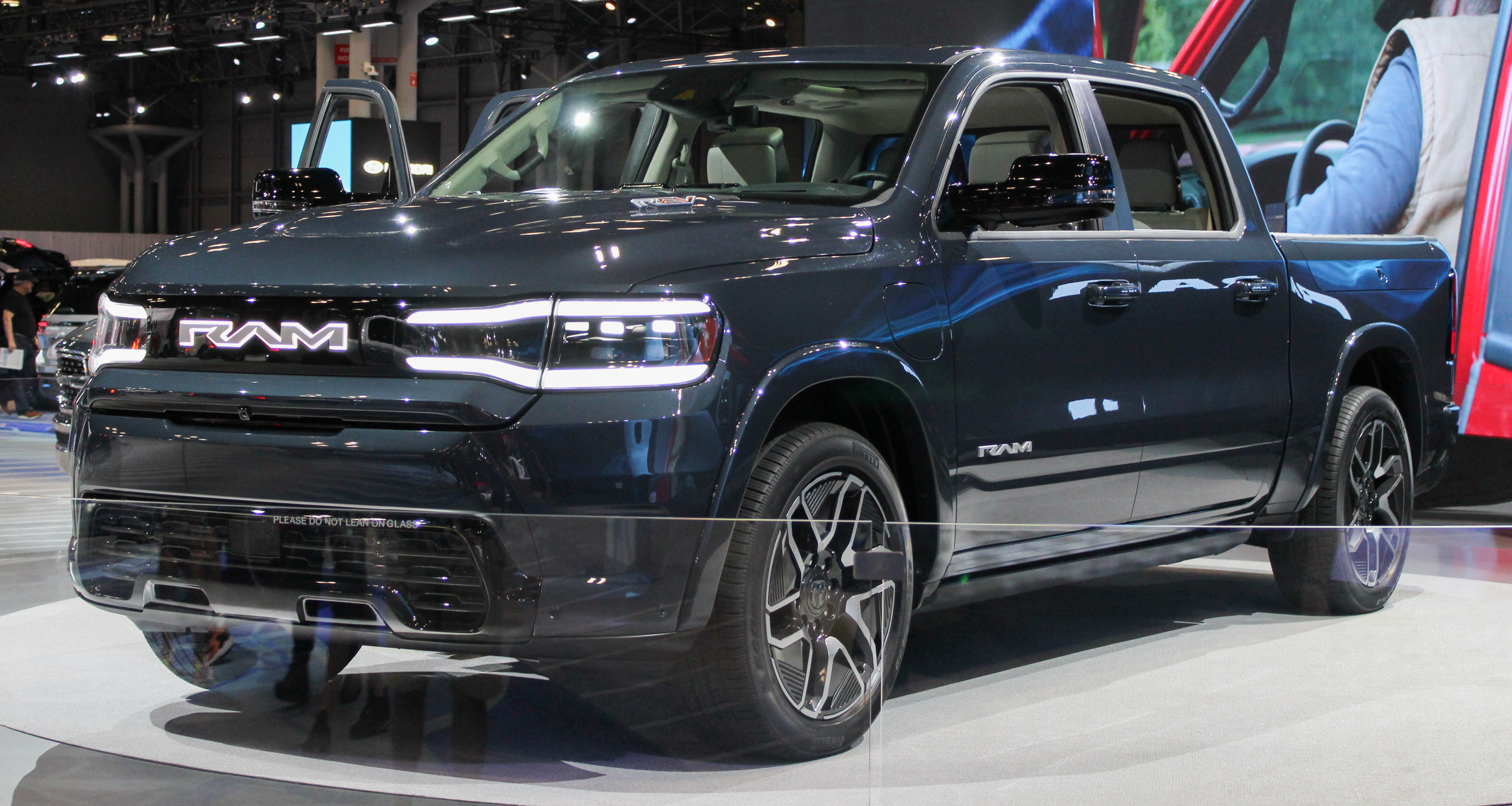
Stellantis is a big car company that makes many different brands of vehicles, like Jeep and Dodge. It was created when two car companies joined together.
Zero emission vehicles are cars that don't produce any harmful emissions while driving. This includes electric cars and some types of hydrogen-powered cars.
Nextar Energy is a company that makes batteries for electric cars. It was created by two other companies to help meet the need for more electric vehicles.
The Jeep Cherokee is a type of SUV that can handle rough roads and off-road adventures. It's popular because it offers a lot of space and is good for both city driving and outdoor activities.
The Jeep Wrangler is a tough vehicle that you can take on adventures, like going off-road or driving in the mountains. It stands out because you can take off the roof and doors, making it fun to drive in nice weather.
Pricing adjustments are changes made to how much cars cost. Sometimes prices go up or down based on how well the company is doing or how much it costs to make the cars.
The Jeep Compass is a smaller SUV that is good for driving around town and also going on trips. It combines the tough look of a Jeep with features that make it comfortable for everyday use.
The Jeep Gladiator is a pickup truck made by Jeep that is great for off-roading and can also carry heavy loads. It's perfect for people who want a truck that can go off the beaten path.
Upselling is when a salesperson tries to get you to buy a more expensive version of what you're looking for. In car sales, this might mean suggesting a fancier model or extra features.
Loyalty means how much customers stick with a brand they like. If people are loyal to a car brand, they are more likely to buy from that brand again in the future.
Off-road capability means how well a vehicle can drive on rough roads or trails. Vehicles with good off-road capability can handle bumps and dirt better than regular cars.
The regulatory landscape is like the rules that car companies have to follow. These rules can include things like how much pollution their cars can make and how safe they need to be.
A plug-in hybrid is a car that uses both gas and electricity. You can charge it up like an electric car, but it also has a regular engine that can use gas.
ICE powertrain means Internal Combustion Engine, which is the type of engine that uses gas or diesel to run. It's what most cars have used for many years before electric cars became popular.
An electrified powertrain is a system that uses electricity to help power a vehicle. It can be fully electric or work alongside a regular gas engine to save fuel and reduce pollution.
A 1.6 liter turbocharged engine is a type of engine that is smaller in size but uses a turbo to make it more powerful. It helps the car use less fuel while still being strong.
A four by four system means that all four wheels of the car can get power from the engine at the same time. This helps the car grip the road better, especially on rough surfaces.
Select Terrain is a feature that lets you pick how the car drives based on the road conditions, like if it's snowy or muddy. It helps the car perform better in those situations.
LIVE
Hi, everyone, and welcome to the October 3rd, 2025 episode of the Automotive News Canada podcast. I'm your host, Greg Lason, the digital and mobile editor at Automotive News, Canada. Coming to you from just outside Windsor, Ontario, the Automotive Capital of Canada. Today on the show, we hear from Stellantis, Canada, head of product planning, Mike Simquitz. He recently spoke with our publisher, Tim Demopolis, at a Jeep Off Road event in vodka.
The two talks, tariffs, Stellantis leadership, new product, at Jeep in particular, and pricing and affordability. But first, look at some of the top Canadian Automotive stories of the week.
Hybrid seemed to have hit their stride in Canada. Sales of full hybrid vehicles overtook those of zero emission vehicles in the first half of 2025, that according to the latest data from S&P Global Mobility.
Hybrid's captured about 13% of the overall market compared to the 9.5% captured by ZEVs. S&P says the end of the federal government's $5,000 consumer EV incentive program, along with a consumer shift toward practicality and affordability, were among the contributing factors.
As Andrew King, managing partner of Derosier Automotive Consultants, quote, consumers want a power train that doesn't cost a lot of extra money to buy upfront, and will save the money in operating costs, and where they don't have to worry about charging infrastructure.
He says, hybrids, check all those boxes. In retail news, Australia's largest dealership group is expanding into Canada. Eager's Automotive is purchasing a majority stake in Canada 1 auto for $953 million Canadian dollars.
When the deal closes, Eager's will own 65% of the Edmonton-based dealership group. The publicly traded Eager's says the deal will allow it to put down roots in the highly attractive Canadian market, and provide an entry point for possible growth within North America.
Eager's owns more than 300 dealerships in Australia and New Zealand.
And on the manufacturing front, Nextar Energy has finished construction of its $5 billion plant in Windsor, Ontario. Nextar is a joint venture electric vehicle battery company owned by Stellantis and LG Energy Solution.
The company on September 30 said it received its occupancy permit, marking the official end of construction.
Danny's Lee CEO of Nextar Energy says in a statement that the company will now quote transition from construction to operations. Lee also says the plant was, quote, completed safely and on schedule.
The factory has an annual production capacity of 49.5 gigawatts hours. That's enough to power about 450,000 EVs. It will supply batteries to Stellantis factories in North America.
And that's a look at some of the top Canadian automotive stories of the week coming up. We hear a conversation between automotive news Canada publisher Tim Demopoulos and Stellantis Canada Head of Product Planning, Mike Simkoitz.
Okay, Mike. Everybody wants to talk about tariffs to certainly impact the industry quite a bit. Tell me a little bit of the impact's having for for Jeep in particular. And how is that of kind of affecting the past word?
Yeah, it's the tariff impact and you know, the changes coming out of the US trade policy implications has had a big impact on what we do on a day-to-day basis.
We've been trying to navigate that and untangle it over the past six months. You know, it's it's been frustrating a little bit.
It feels like the rules change on a day-to-day basis. Sometimes an hourly basis. We're starting to get some clarity discussions at the federal level and with our representative bodies at CVMA and to a certain extent, the CADA.
We're starting to sort through it. Some of the things we've done to make it a little more palatable in Canada is we're looking at where we source our a lot of our production.
So a lot of our stuff will come out of Mexico now. So our RAM 1500 comes from Mexico or heavy duty trucks, the new Cherokee will come from Mexico compass.
So a bigger percentage of our production volume will be sourced from Mexico just because the cost profile is much more favorable from that from that market.
So things will continue to evolve and you know, we'll adapt as best we can, but those are some of the things we're doing to kind of make things a little easier for us now.
I'll be on that. You've also had a big leadership change and that's given you with the opportunity for us to land this goes for a big reset in the company.
So tell me a little bit about what that impact is going to have with with a slant to send Jeep.
Yeah, lots of changes. So we have a new brand CEO with the Jeep brand Bob Brotador, you know, I've known Bob for many years. He's a great sales guy, great product guy.
He's going to put his thumbprint on the brand for sure. Tim Caniscus is back, probably the best product guy in the industry, very passionate, lots of great ideas. He's got the engineering teams working on, you know, a hundred different projects.
And then Antonio Filoso, we have a new CEO, you know, we talked earlier today, but to me, my personally, I feel like he's completely changed the mindset of people within the company in a good way.
I've asked down, you know, to the markets, a lot more flexibility to make market decisions, to do things that are right for your market, including us here in Canada.
So as a product planner, I mean, that has me excited because it gives me the opportunity to do some cool things for Canada. That maybe I couldn't have done a year ago.
I'm asking my product that there's a lot of new product coming and a lot of very important product coming, particularly on the Jeep side. So tell me a little bit about that.
Yeah, it's going to be a busy few months for the Jeep brand. So lots of investment, a lot of product actions coming to market. The big one for Jeep this year will be the launch of the all new Jeep Cherokee.
And the old Cherokee went out of production that left a massive hole in our product portfolio, having this vehicle back as a huge opportunity for us.
Mid-size UV is the biggest segment in Canada, over 400,000 units sold last year, you know, one in four vehicle sold in Canada or UV.
So not having that in our UV four by four portfolio has been a big challenge.
But grand Cherokee for 26 is going to get a mid-cycle refresh. That's another big one for us.
Grand wagon year gets a mid-cycle refresh for 26. And then early in 26 calendar year, we're going to watch the all new Jeep recon.
So that'll be the another mid-size UV. But the first battery electric trail rated vehicle from Jeep. So it's going to deliver all the cool things that you find on a Wrangler, the roof comes off, the doors come off, super capable off road.
But it's going to deliver up maybe a little nicer, smoother on-road driving experience with its independent front and rear suspension.
All this new product that's coming comes after, you know, what was a little bit of a lull for at least North American product just in terms of what was in the pipeline.
That's great news, but it's also great news for dealers. How are you working with your dealers to get them excited and get them ramped up for everything that's coming?
Yeah, so we the past couple weeks, we we do an annual dealer road show. We travel across the country to, you know, several key markets. We were in Montreal, we were in Halifax, Vancouver, Calgary, Winnipeg.
And we talked to them about the forward plan, some of the marketing, marketing strategies, pricing, what's coming and excitement for this vehicle is through the roof.
You know, when I present to them, I wanted them to leave those meetings feeling good. You know, I see what's coming five, 10 years out.
And we've definitely turned a corner and that's going to start with the new Cherokee. They're super excited about this vehicle.
With all of these changes and with all of these new products, you also have your current product portfolio that's gone through a bit of a pricing adjustment almost across the board.
So tell me a little bit about that, the strategy behind the price adjustments, what they look like. And again, how are you working with your dealers to kind of spread the good news that that Jeep and still answers are working on the affordability front.
Yeah, and that's one of the flexibilities Antonio has given us and he's been super supportive.
We've rolled out significant pricing adjustments across, you know, a number of our legacy products, compass, you know, pricing reductions up to $6,000.
A couple of weeks ago, we reduced gladiator pricing up to 11,400 on a Willys. And there's a couple of other models we're working on.
But you know, he's been crystal clear and Tony wants us to grow sales and share.
And we have targets that we need to hit, but he's given us some flexibility on how we hit those targets in terms of profitability.
So if he's, you know, if we see opportunities to add more value to give our dealer sharper price points to give our consumers sharper price points, he's been supportive of that.
And the goal of doing this is to, you know, get people into our showroom to get these vehicles back onto consumers consideration lists to give our dealers a chance to have these customers come in to talk to them and maybe upsell them to some of the higher end trims.
So the end game is to grow sales. And so far it's working for us. Compass, we're going to double our sales this year, you over here.
We're going to follow a similar strategy with Cherokee Cherokee's priced at $39.995. So sub $40,000 price point, but that's going to get that vehicle on people shopping lists and hopefully into our dealer showrooms and we'll let them take it from there.
So where is all this going to start in terms of the reengagement with with the Jeep brand traditionally Jeep has has had a high degree of loyalty from customers.
We're going to get people reengaged with with the brand, particularly when with the new product and the great adjustments in pricing.
Where do you think you're going to start seeing that reentry for Jeep on the consideration list is it going to be with people who have had experience with Jeep before is going to be conquest.
Where do you think the customers are going to come?
Yeah, I think I think both. Yeah, the loyalty on the Jeep brand is very high. So I mean, certainly we're trying to give our customers a reason to come back.
And you know, hopefully we can conquest some new customers and get new fresh blood into our showroom. And I think we'll do that with the Cherokee.
I mean, I think we have a winning formula with that vehicle. If you looked at why people bought the old Cherokee reasons they purchased that vehicle versus the reasons they rejected it, you know, the Cherokee ticks the box for all the reason.
It's the same purchase reasons, styling for by four capability towing. But all the reasons they didn't purchase it, fuel efficiency wasn't so good cargo capacity wasn't so good.
Some of the tech and safety features weren't really competitive in the segment.
So that's been addressed with the new model. We really think it's going to be a hit. We think it's priced in the heart of the market. So I think Cherokee is going to be a key lever to conquest some new customers from some of our key competitors.
Okay, we had an opportunity to take a Wrangler and gladiator through its paces off road. It was, you know, the capability of these vehicles off road certainly is legendary.
Again, we talked earlier about loyalty. There's a big, big element of loyalty with Wrangler and maybe less so with gladiator considering the new wish model, but Wrangler certainly has a, you know, storied past.
Tell me a little bit about the history of and the DNA of its off road capability and, you know, how that kind of creates a stickiness with with the name plate.
Yeah, for sure. I mean, it's amazing what these vehicles can do off road. I think people, I think people know.
Jeeps are capable, but a lot of times they don't get a chance to do what we did today. It's incredible what these vehicles can do, but Wrangler and gladiator are really the heart and soul of the Jeep brand.
They represent everything the Jeep brand is about. The idea of freedom, 4x4 capability, being able to go anywhere fun. That's a legacy that goes back to the early days of World War II.
And we're proud of that legacy and that DNA you spoke of really drives our engineers and our designers to make sure anything that has a Jeep badge delivers on that idea of freedom capability and fun.
You're right. Wrangler and gladiator, there's almost like a, there's a whole subculture out there. You go to these Jeep Jamboree events or events in Moab and, you know, the vehicles people show up with and the passion they put into their vehicles in terms of customizing them, you know, the wheels, the lift kits, you name it.
It's awesome. It's a really cool thing to see. And you see why people love these vehicles so much, right? And it's, I love it. I think it's gladiator, especially I think it's the coolest thing you make. There's nothing like it. Roof comes off, doors come off, can fold the windshield down, you can haul, you can tow, there's nothing else like it.
What's always strikes me about gladiator and Wrangler in particular is there's a lot of trims. And like you mentioned, there's a lot of ability to customize. And Mopar gives them the ability to customize the the jeeps to people's liking. So tell me a little bit about the high degree of customization that's available with these vehicles through, through Mopar parts.
Parts, cheap performance parts. There's a huge catalog of accessories that customers can, you know, select from to modify and upgrade their, their jeeps.
And if you look at a Wrangler, a gladiator, they're the most modified vehicles from the factory of all of our name, place like by a wide margin.
They represent a significant chunk of Mopar's annual sales and their sales volume.
The catalog includes engine upgrades, wheels, suspension lift kits, rock rails, you name it.
The last time I looked it was well over 250 accessories available within their catalog. So the customers love it and they do a lot, they're able to do a lot to their vehicles.
No, my last question. I wanted to talk a little bit about electrification. It's a topsy-turvy world out there when it comes to electrification for, you know, all the brands and all the car makers out there in Stellantis is not immune to some of the disruption.
There is in the electrified space. I mean, we found out this week that the gladiator 4XC is no longer going to be made.
But tell me a little bit about Jeep in particular, the future for electrification for that brand and whether or not we'll see more or less, or are we going to go just with the way the market demand kind of shakes out what's the strategy.
Yeah, I think we're not walking away from electrification and I don't think any OEM can.
So there's been lots of changes on the regulatory side, regulatory landscapes, the ZF mandate, the federal mandate, anyways in Canada has been been paused.
Things have changed in the US where we're strong.
I think as a company, a lot of our platforms, most of our platforms are super flexible in terms of how they can be configured so they can be built with an ice powertrain, they can be built as a plug-in hybrid, they can be built as an EV.
So a lot of our plans are being reassessed and I think that's true for most OEMs.
Pretty much everything we have coming over the next 10 years will have an electrified offering.
Are we going to be at the percentage or the thresholds the governments wanted as part of these mandates? We're just not there yet.
Electrification is coming. I just think the road's going to be a little bumpier than anyone could have predicted.
We might zig and zag a little bit more, but most of our name plates coming to market over the next few years will have an electrified powertrain.
I think you'll see more phefs come to market because you know a country like Canada, the infrastructure isn't quite there in certain markets outside the major metros.
We drive further distances like a plug-in hybrid is the perfect powertrain for Canada in my opinion, but in the short term we're going to let the consumer decide.
Some people ice works for them. Some people it's a plug-in hybrid. Some people if you live in Toronto, Montreal or Vancouver, maybe it's a bet.
We'll have all of those powertrains in most of our name plates going forward.
Right in the front of me is the Cherokee and it's the first time it's premiered in Canada.
So again this is a very important vehicle for Jeep and it's the land this particular in this country.
So tell me a little bit about the plan ahead for it and why it's so important.
Yeah so huge launch for us I you know I touched on how big of an opportunity is it is for us biggest segment in Canada.
It's been a huge hole in our product portfolio so I'm thrilled it's it's back.
Cherokee will probably be number two volume seller after the Ram 1500 but four models were open for dealer ordering right now.
There's a base there's a Laredo limited in Oberland. This is in Oberland.
Ordering has come in super strong so far but all Cherokees will be powered by a 1.6 liter turbo have engine so it's not a plug-in hybrid.
It's not a full electric. It's a traditional have set up 210 horsepower 230 pound feet of torque.
It's going to be super capable off road. All Cherokees come with our active drive one four by four system and they all come standard with select terrain up to 800 kilometer driving range.
So much more fuel efficient than the old model but we think it's a big opportunity for us production for Canada.
It's going to start in November so we'll probably see the first dealer delivery sometime early in the new year.
We priced it you know right in the heart of the market.
That's why we think it's going to do so well if you look at where our key competitors do most of their volume were priced right on top of that.
The cars are contented well. It's going to start at $39.95 so sub $40,000 price point so we think it's going to do a lot to get people into our showrooms.
Give our dealers a chance to talk to them about how great the vehicle is.
Thanks very much. Thanks for coming. Appreciate it.
I'd like to thank Mike for his time and Tim for conducting the interview.
If you'd like to be a guest have a suggestion or simply want to comment.
And remember you can listen to all our previous podcasts on Spotify, iTunes, Google Play or on our website, AutomotiveNews.ca.
Just scroll to the podcast hub in the middle of the home page.
And don't forget you can follow Automotive News Canada on X-WearWear at Automotive Canada.
And you can find me there too under at G-Lacen ANC.
Finally, look for us on LinkedIn. Just search AutomotiveNews Canada.
That does it for this episode of the Automotive News Canada podcast. We hope you'll join us next time.
So long everybody.
About this episode
Stellantis Canada's Mike Szymkiewicz discusses the impact of tariffs on Jeep production and the company's strategic shifts in sourcing and pricing. With hybrids gaining traction in Canada, Szymkiewicz highlights the upcoming launch of the new Jeep Cherokee and other models, emphasizing affordability and market adaptability. The conversation also touches on leadership changes within Stellantis and the brand's electrification strategy, including the introduction of plug-in hybrids and electric vehicles. Insights into dealer engagement and customer loyalty further enrich this informative episode.
Canadians choose hybrids; Australia’s Eagers buys into CanadaOne; NextStar battery plant complete. Plus, Stellantis Canada Head of Product Planning Mike Szymkiewicz on tariffs, Jeep Cherokee, EVs, affordability and more.