
Our 2026 Monaco GP predictions
About this episode
Monaco GP predictions take center stage as Matt and Tommy get set for a trip, hype the weekend’s “bad rep,” and talk logistics—no live-streaming, just quick releases after. They explain why Monaco is uniquely chaotic: “there is no straight mode,” energy “recharge” is frequent, and slipstream can matter more than DRS. Their picks lean toward Ferrari strength in corners, a “big flop Mercedes” call, and bold qualifying chaos like “a driver from the top four teams does not make it into Q3.”
We’re officially into Matt’s Momentum Month™ as the F1 calendar picks up steam. And where next? The most legendary circuit of all.
Our brand new live show 'Super Podding' is coming to the UK and Amsterdam this autumn! Get your tickets here: http:/tix.to/p1live
Sign up to our Patreon for just $5 a month! You'll get access to every P1 episode ad-free, extended versions of every 2026 race review, early access to tickets & merch, and access to our Discord server where you can chat with us and other F1 fans! Click here to sign up now: http://patreon.com/mattp1tommy
Follow us on socials! You can find us on Twitter, Instagram, Twitch, YouTube and TikTok
P1 with Matt and Tommy is the world's biggest F1 podcast. Subscribe for new podcasts around every single race throughout the 2026 Formula 1 season!
Hosted on Acast. See acast.com/privacy for more information.
BWT
"I may be in the minority that I'll miss the BWT pink because I like the Alpine. I think it looks really cool and really stands out. But it's a cool thing for Formula One."
BWT is a sponsor brand that shows up on Formula 1 cars. Here they’re talking about the famous pink look BWT is associated with, and how it might change next season.
BWT is a branding partner that has appeared on Formula One cars via title/sponsor-style livery colors. In this segment, the hosts talk about the “BWT pink” and how iconic it is, implying a likely livery change with new partnerships.
Alpine
"I may be in the minority that I'll miss the BWT pink because I like the Alpine. I think it looks really cool and really stands out. But it's a cool thing for Formula One."
Alpine is a Formula 1 team. The hosts are saying they like Alpine’s color scheme and how it looks on the car compared with another sponsor’s pink.
Alpine is a Formula One team/brand, and the hosts reference its livery colors as something that “stands out.” They’re contrasting Alpine’s look with the “BWT pink,” suggesting the car’s visual identity may shift with sponsorship changes.
livery
"And it is one of those things where when we get to car launches next season, it's probably going to be the most anticipated one because you know it's going to be a new livery."
A livery is the car’s design—its paint colors and sponsor stickers. They’re excited because next season’s cars will have a brand-new look.
In Formula One, a livery is the car’s paint scheme and sponsor graphics—basically the visual design on the bodywork. The hosts say next season’s car launches will be highly anticipated because there will be a “new livery,” meaning a new look with different branding colors and decals.
Bottas
"So over to another bit of news, which is of course, Bottas. Now this was a rather large rumour circulating around him being replaced."
Bottas is a Formula 1 driver. They’re talking about rumors that he might lose his seat, and they say it’s likely because his recent results haven’t been great.
Valtteri Bottas is a Formula One driver, and the hosts discuss rumors about him being replaced. They connect the talk to his recent race performance, framing it as a reason why replacement speculation would circulate.
rumour circulating around him being replaced
"So over to another bit of news, which is of course, Bottas. Now this was a rather large rumour circulating around him being replaced."
They’re talking about rumors in Formula 1 about whether a driver will be replaced. It’s basically “who might lose their seat” news, and they’re saying this one may not be true.
This segment is about Formula One driver-seat rumors—whether a driver might be replaced by another. The hosts treat it as a news item and discuss whether the speculation is credible or has been dismissed.
Ocon
"it seems as though similar to Ocon in Canada, that this has also been dismissed."
Ocon is another Formula 1 driver. They’re saying Bottas’s rumor sounds similar to a past rumor about Ocon, and that one ended up being wrong too.
Esteban Ocon is a Formula One driver, referenced here as an example of a similar situation. The hosts compare the Bottas replacement rumor to “Ocon in Canada,” implying that earlier speculation was later dismissed.
Cadillac
"It took it with a pinch of salt anyway before Cadillac themselves dismissed it and said it's not true, particularly because they were talking about Colton Herter, replacing him..."
Cadillac is a car brand. Here, the hosts are talking about Cadillac as the team behind the scenes, making decisions about which drivers should race.
Cadillac is the American luxury brand that, in this context, is being discussed as an F1 team owner/manager making driver decisions. The hosts mention Cadillac dismissing rumors and choosing drivers to build the team’s foundation.
Colton Herter
"...Cadillac themselves dismissed it and said it's not true, particularly because they were talking about Colton Herter, replacing him who doesn't even have enough super license points yet."
Colton Herter is the driver name mentioned in the rumor. The hosts say he can’t realistically take the seat yet because he doesn’t have the required Formula 1 license points.
Colton Herter is referenced as the potential replacement driver being discussed in the rumor about a seat change after Monaco. The hosts argue the move is impossible because he lacks sufficient FIA super license points.
super license points
"...particularly because they were talking about Colton Herter, replacing him who doesn't even have enough super license points yet. So it can't have it literally can't happen anyway."
To drive in Formula 1, you need permission from the FIA. One part of that is earning enough “super license” points, and the hosts say the driver in the rumor hasn’t earned enough yet.
In Formula 1, a driver needs enough FIA super license points to be eligible to race. The hosts are saying Colton Herter doesn’t yet have the required points, so the rumored seat change can’t happen.
Perez
"...particularly because they were talking about Colton Herter, replacing him who doesn't even have enough super license points yet. So it can't have it literally can't happen anyway. And so he needs to do more to be able to get that seat... if he gets, completely whooped by Perez the entire year..."
Perez is another Formula 1 driver in the comparison. The hosts are saying if Bottas is consistently beaten by Perez, the team might decide to change drivers.
Perez is mentioned as the driver Bottas would be compared against, with the hosts implying that being “whooped” by Perez all year could lead to a replacement. This is framed as a performance-based driver evaluation within the team.
DRS
"And finally, there is no straight mode at Monaco. Not one single one. We're not going to see the old rear and front wings moving. I was gonna say old DRS and I didn't say it and then it makes absolutely no sense."
DRS is a Formula 1 trick that makes the rear wing open in a specific way to reduce drag. Less drag means the car can go faster for a short time. The hosts are saying Monaco’s layout doesn’t give DRS much opportunity to help.
DRS (Drag Reduction System) is a Formula 1 feature that temporarily reduces aerodynamic drag by opening a flap in the rear wing. It’s designed to help cars build speed and make overtaking easier, especially on long straights. At Monaco, the hosts argue there’s effectively “no straight mode,” so DRS-style benefits are limited.
drag
"So it's full, just drag send full drag. Yeah, opposite of full send. Yeah, true, actually. But but the straights are so short that they shouldn't, in theory, super clip."
Drag is the “air resistance” that slows a car down. In racing, engineers try to reduce drag when they want top speed, but they also need enough grip from the wings. The discussion is about how Monaco’s short straights change that trade-off.
Drag is the aerodynamic force that resists a car’s motion through air. In F1, teams constantly manage drag with wing angles and bodywork to balance top speed on straights against downforce for cornering. The hosts connect Monaco’s short straights to the idea that reducing drag (and using “straight mode” aero) may not be as beneficial.
super clipping
"But but the straights are so short that they shouldn't, in theory, super clip. And, you know, part of that was because it had to reduce the drag."
“Super clipping” sounds like a nickname for a situation where the car’s aero setup is too extreme for the track. If you run the “straight” setup where it doesn’t really fit, you can end up losing too much speed. The hosts are saying Monaco’s straights are short enough that this would be a problem.
"Super clipping" here is a colloquial way of describing excessive aerodynamic drag or aero inefficiency if the car were allowed to run an aggressive “straight” aero configuration on a circuit that doesn’t suit it. The hosts argue that without Monaco-specific constraints, the straight-aero setup could be so draggy that it would cost too much speed on the straights. It’s tied to the drag discussion rather than a formal technical term.
active arrow
"That that's why this was kind of introduced any way that the active arrow, but it's not needed at Monaco. And I think this is absolutely the right, the right choice."
An “active arrow” is a way of adjusting the rear wing so the car can be set up differently depending on what’s happening on track. The idea is usually to help on straights by reducing air resistance. The hosts think Monaco’s track layout means you don’t really benefit from that adjustment.
"Active arrow" refers to an F1-style adjustable rear-wing concept where the wing’s aerodynamic settings can change to optimize performance. The hosts say it was introduced to reduce drag on straights, but they believe Monaco doesn’t need it because the circuit doesn’t offer the same straight-line advantage. (They’re using it as shorthand for the adjustable aero system.)
slipstream
"Definitely the right choice is not needed. It will help with slipstream. I think if the cars are slower, that's better for Monaco."
Slipstream is when you drive close behind another car and benefit from the air being pushed out of the way. That can help you carry more speed and catch up for an overtake. The hosts think Monaco could be better for that kind of racing.
Slipstream is the reduced air resistance a car experiences when it follows closely behind another car. The lead car disrupts airflow, and the trailing car can gain speed with less drag. In Monaco, the hosts suggest slower overall speeds could make slipstream-based passing more effective.
overtakes
"it's not going to be a million overtakes, is it? But it's something, I think."
An overtake is when one driver gets around another car. If it’s easy to overtake, races tend to be more exciting because positions change more often.
In racing, an overtake is when one car passes another on track. It’s a key measure of how easy it is to pass at a given circuit, which depends on speed differences, braking zones, and how much the cars can draft each other.
recharge
"they need every bit of help down a lot of the straights this year, whereas with Monaco, there's plenty of places to recharge."
“Recharge” here refers to energy recovery and deployment cycles used in modern F1 power units. Cars can store energy (for example via braking) and then deploy it later, so circuits with longer straights or more time between heavy energy use let teams “recharge” before the next push.
qualifying of old
"I'm interested to see whether we do get the qualifying of old on the Saturday, and we're not seeing any kind of lifting or any kind of super clipping"
They’re talking about qualifying feeling like the older style—drivers going all-out to set the starting order. The hope is that it’ll be more dramatic and less limited by the current system.
“Qualifying of old” means the more traditional qualifying format where drivers push hard for a single-lap (or short runs) to set grid positions. The speaker is hoping Monaco’s qualifying will feel like the past—more decisive, more exciting, and less constrained by current rules or energy management.
lifting
"and we're not seeing any kind of lifting or any kind of super clipping, that would be lovely."
In F1, “lifting” is when a driver eases off the throttle earlier than expected to manage power usage, traction, or energy deployment. It often shows up when the car is trying to stay within limits rather than driving flat-out the whole way.
boost
"with basically such a big advantage of a boost behind someone, that whether you could get past"
“Boost” means extra power for acceleration. In racing, if you have more power than the car ahead, it can help you close the gap and try to pass.
“Boost” here refers to extra power delivered to the car—typically via turbocharging in conventional engines, or via energy deployment in modern F1 power units. The key idea is that having a big power advantage while following someone can change how (and whether) you can pass.
harbour
"Someone's ended up in the harbour if we had the same difference in speed."
They’re talking about Monaco’s track being close to the water. If cars are much faster than others, it can get dangerous and lead to big accidents.
The “harbour” is a reference to Monaco’s coastal track layout, where mistakes can lead to cars ending up near the water. It’s used here as a safety/chaos example: if speed gaps are too large, the risk of incidents increases.
Japan
"I think that is asking for trouble if we had those big, like we saw in Japan, for example, with Oli and Franca."
They’re referencing a race in Japan as an example of what can go wrong when cars have very different speeds. The point is to avoid repeating that kind of chaos.
“Japan” is used as a shorthand for a recent F1 race there where the speaker says they saw big speed differences lead to incidents. It’s referenced as a cautionary example for what could happen if Monaco also has unusually large performance gaps.
pole position
"Last time we went to Monaco, he nearly got pole position. He was absolutely unbelievable..."
Pole position means starting first on the grid. It’s earned by being fastest in qualifying. Starting first is a big advantage in F1, especially on a track like Monaco where overtaking is hard.
Pole position is the starting spot at the front of the Formula 1 grid, awarded to the fastest car in qualifying. Starting from pole is valuable because it gives clear air and track position, which can be especially important at Monaco’s tight, slow corners. The hosts are debating how close Esti Besti was to pole and whether others were also in contention.
final sector
"I'm sure he was let me have a look because it was the year where it was a Stappen and Alonzo fighters and Max did that amazing final sector..."
Tracks are split into sections for timing. The final sector is the last part of the lap. If someone is really fast in the final sector, it can be a sign they’re close to the best overall lap time.
A sector is a timed portion of the track used to analyze lap performance; the “final sector” is the last segment of the lap. Monaco is often decided by small differences in each sector because the circuit is tight and traction-limited. The hosts reference an “amazing final sector” as evidence of how close Esti Besti was to pole.
podium
"And yeah, he obviously got on the podium that race, which was insane for an Alpine."
A podium in F1 means finishing in the top three. The top three drivers get trophies on the podium. Getting a podium is a big deal because it usually means you had a strong race.
In Formula 1, the podium refers to finishing in the top three positions (1st, 2nd, or 3rd). It’s a key performance benchmark because it brings major points and prestige. The hosts call Alpine’s podium at Monaco “insane,” emphasizing how difficult it is to achieve top-three results there.
Ferrari power unit
"I think Haas could go quite strong with that Ferrari power unit, of course, as well. And yeah, going for Esti Besti."
In F1, the power unit is the car’s main engine system, including the hybrid parts. It’s a big reason why cars have different speed and acceleration. Here, they’re talking about how a Ferrari-supplied power unit could help another team at Monaco.
A power unit in Formula 1 is the complete hybrid engine system (engine plus energy recovery and related components) that provides propulsion. The hosts mention the “Ferrari power unit” as a performance factor for Haas, implying that Monaco’s characteristics can make certain engine packages more effective. They also debate whether it’s a “good thing” in the current era, highlighting how competitive the Ferrari package is perceived to be.

Ferrari
"But I have to go with my gut and I do genuinely believe that Ferrari will be strong around here because their whole deficit is down massive straights and we don't have one of those in Monaco."
Ferrari is a famous Formula 1 racing team. In Monaco, the course is very twisty and slow, so teams that handle well at low speed and stay consistent can do especially well.
Ferrari is an Italian Formula 1 team known for building race cars that can be very quick in the right conditions. In Monaco, the track’s tight, slow-corner layout can make teams with strong low-speed traction and confidence through traffic particularly competitive.
massive straights
"Ferrari will be strong around here because their whole deficit is down massive straights and we don't have one of those in Monaco."
“Massive straights” means long straight sections where cars can go very fast. If a team is especially good at top speed, it often benefits on tracks with lots of straightaway time.
“Massive straights” refers to long, high-speed sections of a circuit where cars can build top speed. Teams that are strong at generating speed and efficiency on straights can look better there than on twisty tracks.
Monaco
"is down massive straights and we don't have one of those in Monaco. So sign me up. ... Ferrari could well be fastest and look, let's look about the history of Monaco as well."
Monaco is a famous Formula 1 race track in Monaco. It’s very twisty and slow with lots of walls, so it’s easy to make mistakes and hard to recover.
Monaco refers to the Monaco Grand Prix circuit, famous for being extremely tight, slow, and unforgiving. Because it has very few long straights and lots of barriers, small setup and driver errors can have outsized consequences.

Mercedes
"I'm going for two pointers left right and centre Mercedes. Yeah, yeah, yeah, yeah, come on. Easy, easy. ... So this could go either terribly or wonderfully, but I've gone for big flop Mercedes."
Mercedes is a major Formula 1 team. The idea here is that Monaco is different from many tracks because it doesn’t have long straight sections, so Mercedes might not have the same edge.
Mercedes is a top Formula 1 team that often builds cars optimized for high-speed performance and efficiency. The hosts are arguing that Monaco’s lack of long straights can reduce the advantage Mercedes typically gets on faster circuits.
Chalet Claire
"Yeah, I'm glad I didn't go first this time because I knew that even if you went for good surprise, Chalet Claire, I'm popping Ferrari and so like, you know,"
“Chalet Claire” sounds like a named spot people associate with the Monaco Grand Prix. In this context, it’s being used like a shorthand for a “surprise” outcome rather than a car or technical detail.
“Chalet Claire” is a specific location/area reference at the Monaco Grand Prix, used by fans to describe a particular viewpoint or hospitality spot. In prediction talk, it’s often shorthand for “a surprise result” tied to that part of the event atmosphere.
Max Verstappen
"I think this could be the same here and Max Verstappen more recently, of course, you know, there have been opportunities for other teams and other drivers to get involved and win..."
Max Verstappen is a famous Formula 1 race driver. The hosts mention him to talk about how dominance can happen, but Monaco can still shake things up.
Max Verstappen is a top Formula 1 driver, and the hosts use him as an example of a driver/team that can dominate for stretches. In this segment, they’re implying that even if one team is strong, Monaco can still disrupt expectations.
Franco Colopinto
"I've gone for Franco Colopinto. I was just looking down the order and Colopinto had an amazing race last time out..."
Franco Colapinto is a Formula 1 race driver. In this segment, the hosts are picking him as a prediction because they think his recent performances could translate to Monaco.
Franco Colapinto is a Formula 1 driver being discussed in the context of Monaco GP predictions. The hosts are weighing his recent race form and how well he might suit Monaco’s unique demands.
engine merchants
"I don't think Alpine would be as strong around here as they have been in the past because again, they're Mercedes engine merchants as well."
“Engine merchants” means a team is using another company’s engine. So their speed can depend a lot on how strong that supplied engine is.
“Engine merchants” is a motorsport slang phrase meaning a team that relies on an external manufacturer’s engines rather than building its own. In this context, it implies Alpine’s results are strongly tied to Mercedes power-unit performance.
off-gasly
"Oh, wait, he was in a wheelie bin. He's in a wheelie bin. It's still, it was still off, off-gasly, but I don't think it's one of his better, better tracks."
“Off-gasly” is about what the car does when you lift off the gas pedal. The hosts are suggesting the car’s behavior in that moment was related to throttle-off handling.
“Off-gasly” is shorthand for behavior when the driver lifts off the throttle—often describing how the car feels or rotates as engine torque drops. The hosts are using it to judge whether Colapinto’s Monaco incident was tied to throttle-off handling rather than something else.
Franka Colopinto
"You've done it. Oh, Franka Colopinto. Good last two races."
Franka Colopinto is a racing driver the hosts are talking about. They’re saying she had a strong run in the last two races, then had a bad one right after.
Franka Colopinto is referenced as a driver in the context of recent race results. The hosts are discussing how her last two races went well, followed by a major setback (“big flop”).
Charlotte Clair
"Pole position. Charlotte Clair. Easy dub. Thank you very much. Thanks for the point. ... Charlotte Clair is unbelievable around this circuit."
Charlotte Clair is the driver the hosts expect to do well at Monaco. They’re saying she’s strong around this track and should be able to turn pole into a win.
Charlotte Clair is mentioned as the driver who would secure pole and then convert it into an “easy dub,” implying a likely win. The hosts also say she’s “unbelievable around this circuit,” tying her performance to Monaco’s track characteristics.
Hamilton
"Oh, no, let's go with Hamilton. Screw it. Why not?"
Hamilton is a famous Formula 1 driver. Here, the host is picking him for a strong finish in the Monaco race.
Lewis Hamilton is a top-tier Formula 1 driver who has won multiple World Championships. In this segment, the host is choosing Hamilton as part of their Monaco race prediction, implying they think he can convert qualifying momentum into a strong race result.
McLaren
"There is a world where McLaren are fastest here. This is the beauty of Monaco, right?"
McLaren is the Formula 1 team Lando Norris drives for. The host is saying McLaren could be the quickest team at Monaco in this race.
McLaren is a Formula 1 constructor known for strong chassis development and frequent contention for podiums. Here, the host says there’s a “world” where McLaren are the fastest at Monaco, which is a track where qualifying position and car balance matter a lot.
pecking order
"I feel like the excitement leading up to it of not knowing the pecking order qualifying, potentially being amazing."
“Pecking order” here just means who’s currently the fastest. The host is saying Monaco can be exciting because you don’t always know who’s on top until qualifying.
In motorsport talk, “pecking order” means the relative ranking of teams or drivers—who is faster and more competitive. The host is saying Monaco can be exciting because you may not know that order until qualifying.
Lando Norris
"So yeah, I've gone for Lando Norris P3. [1127.5s] P3. [1128.4s] I have gone for Lewis Hamilton."
Lando Norris is an F1 race driver. Here, the hosts are predicting he’ll finish in third place at Monaco.
Lando Norris is a Formula 1 driver known for strong qualifying pace and consistent race results. In this segment, he’s being predicted to finish third (P3) at Monaco.
P3
"So yeah, I've gone for Lando Norris P3. [1127.5s] P3. [1128.4s] I have gone for Lewis Hamilton."
“P3” just means third place. In F1, the top three finishers are the ones who make the podium.
In Formula 1 predictions, “P3” means finishing in third place. It’s shorthand for the podium positions (P1, P2, P3), where P1 is first and P3 is third.
Nico Rospega
"[1151.3s] Nico Rospega was used to be really good around, around there as well. [1154.9s] As well. [1156.6s] So yeah, Lewis, I've gone for Lewis still with a good result in P3"
This sounds like a transcription error for Nico Rosberg, another former F1 champion. The point is that he was known for doing well at Monaco.
This appears to be a mis-transcription of “Nico Rosberg,” a former Formula 1 World Champion. The hosts are saying Rosberg used to be especially strong at Monaco.
Second place
"[1163.0s] Yeah. [1163.8s] Very fair. [1164.4s] Second place. [1166.0s] Second place."
“Second place” means finishing just behind the winner. It’s the P2 spot, which is still on the podium in F1.
“Second place” means finishing in P2, the runner-up position. In F1, P2 is still a podium finish and is often discussed alongside P1 and P3 when making race predictions.
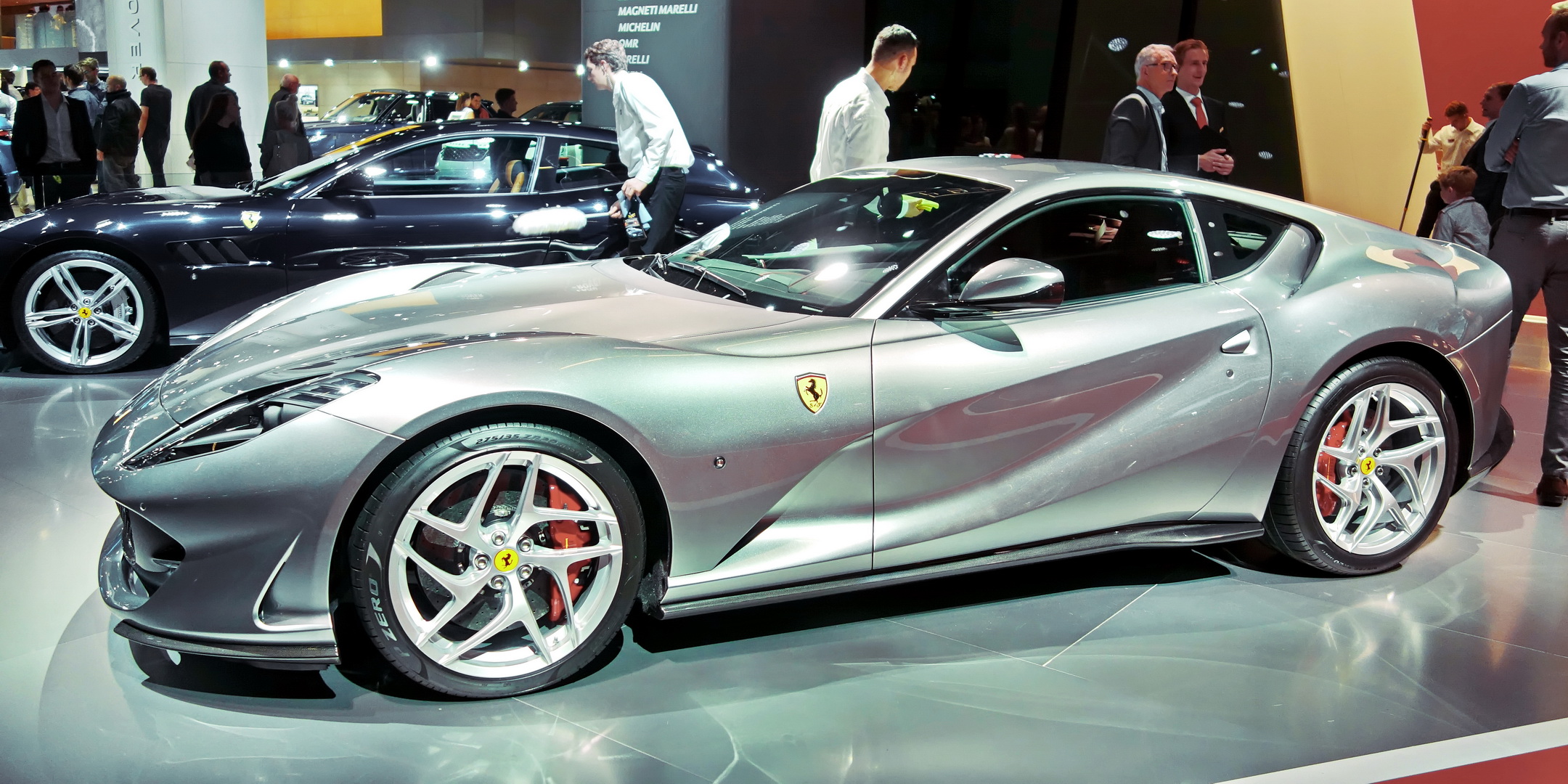
Ferrari 12
"...ce, I'm going for Lewis Hamilton. Whether it be a Ferrari 12 who knows? But I know for a fact that that pick i..."
The Ferrari 812 Superfast is a very expensive, very fast sports car made by Ferrari. It’s designed for high-speed driving and it uses a big V12 engine. People bring it up because it’s one of the most extreme versions of a Ferrari you can buy.
The Ferrari 812 Superfast is a high-performance grand touring coupe built by Ferrari, known for its powerful naturally aspirated V12 engine and strong focus on straight-line performance. It’s often discussed in podcasts because it represents the “top end” of classic Ferrari V12 engineering and is a standout choice when people talk about dream supercars. The mention in your context fits the idea of picking a specific Ferrari as a fantasy or prediction.
Charle-Claire
"The amount of times I've predicted Ferrari to win or Charle-Claire to win... have you seen the amount of times things have gone wrong around Monaco for Charle-Claire?"
That’s Charles Leclerc, one of Ferrari’s Formula 1 drivers. Monaco is a track where tiny errors can ruin your race, so people talk a lot about how he performs there.
This refers to Charles Leclerc, Ferrari’s driver in Formula 1. In Monaco, his qualifying pace and race strategy often get discussed because the circuit is unusually sensitive to small mistakes and traffic.
power rankings
"I actually saw that the power rankings at Formula 1 do. He was like 10th, which I think is quite insane actually."
Power rankings are basically a “who’s doing best right now” list. It’s not the official standings, but people use it to guess who might be strongest in the next race.
Power rankings are a fan- or media-compiled way to rank teams or drivers based on recent performance. They’re not an official F1 metric like race results, but they’re used to argue who looks strongest at a given point in the season.
fourth or lower
"The winner will start the race from fourth or lower."
They mean the winner starts the race from 4th place or worse. On Monaco, it’s tough to pass, so winning from farther back is a big deal.
“Fourth or lower” refers to the grid position the winner starts from. In Monaco, starting further back is usually harder because overtaking is limited, so a win from a lower starting spot is a meaningful statistical pattern.
Olivier Panis
"The last time this happened was 1996 when Olivier Panis won."
Olivier Panis is a Formula 1 driver from France. He won the Monaco Grand Prix in 1996, and that win is remembered because Monaco is a track where starting position matters a lot.
Olivier Panis is a French Formula 1 driver who won the Monaco Grand Prix in 1996. His win is often remembered because Monaco is unusually dependent on qualifying position and track position, so a victory from a lower grid slot is notable.
Hülkenberg
"So my Patreon prediction instead is from Alex C 0302 [1671.2s] Hülkenberg gets his first points of the season. ... [1694.6s] they get a good start or at least Hülkenberg for my points."
Hülkenberg is a Formula 1 race driver. Here, the hosts are betting that he’ll finally score points at Monaco.
Nico Hülkenberg is a Formula 1 driver who has often been a strong qualifier but has had stretches without scoring points. In this segment, the hosts are predicting he’ll score his first points of the season at the Monaco GP.
Audi
"[1677.0s] I nearly went for big flop Audi, but I thought they, yeah, I don't feel [1681.8s] like Audi are going to be that strong, but you never know. ... [1699.2s] I've gone for that because how Audi and Hülkenberg has not scored [1702.4s] any points."
Audi is a car company. In this prediction segment, the hosts are talking about whether Audi’s F1 effort will be strong enough to score points at Monaco.
Audi is a major automotive brand that competes in motorsport and is referenced here as a Formula 1 team/constructor in the context of Monaco qualifying and race starts. The hosts are discussing whether Audi can be strong enough to score points, especially for Hülkenberg.
third place
"For some reason, third place, Gasly. Okay."
“Third place” means the car finishes third in the race. It’s one of the podium spots, so it’s a big deal for points and bragging rights.
In Formula 1, “third place” means finishing a race in P3, which is the podium position just behind the winner and runner-up. It’s a key prediction target because it affects points and team momentum.

Mclaren 12
"Okay. McLaren 12 and an Alpine. I mean, if it comes true, you look..."
The McLaren 12C GT Sprint is a McLaren sports car made for track use. It’s based on the 12C but tuned for faster, more race-like driving. People mention it because it’s a more performance-focused version rather than a normal everyday car.
The McLaren 12C GT Sprint is a track-focused variant of the McLaren 12C, built to deliver race-style performance with a setup aimed at sprint events. It’s significant because it shows how McLaren takes its road-car platform and adapts it for more aggressive, competition-oriented driving. In the podcast context, it’s mentioned alongside other cars as a possible “if it comes true” type of pick.
Mercs
"Sorry, Fred, but, you know, bored of going with the Mercs now, so, yeah. Okay."
“Mercs” is slang for Mercedes in Formula 1. The speaker is basically saying they don’t want to keep picking Mercedes as the likely winner.
“Mercs” is shorthand for Mercedes-powered or Mercedes-backed cars/teams in Formula 1. When someone says they’re “bored of going with the Mercs,” they mean they’re tired of predicting Mercedes to be the top pick again.
Request an Explanation
Heard something you'd like explained? We'll add it to this episode.
Sign in to request explanations for terms you heard.
Want to learn more?
Browse our glossary for plain-English explanations of automotive terms, jargon, and concepts.
Help improve this episode
See something that's not quite right? Our annotations are AI-generated and can sometimes miss the mark. Click the flag icon on any annotation to suggest a correction.