
Reaction to Belgian GP practice
About this episode
Practice two wraps up with “No rain at all” despite forecasts, and the hosts dig into what that means for upgrades, pace, and energy management at Spa. They compare Mercedes’ aero and alleged “loophole” behavior to Red Bull’s reverted wing and battery/ICE expectations, while noting big gaps for Aston Martin and component-related penalties. From tire-return referrals to track-limit deletions and slipstream chaos, the weekend setup feels shaped as much by regulations as by outright speed.
Two races to go before the summer break, and we've got an actually interesting day of F1 practice? Sign us up!
Our brand new live show 'Super Podding' is coming to the UK and Amsterdam this autumn! Get your tickets here: http:/tix.to/p1live
Sign up to our Patreon for just $5 a month! You'll get access to every P1 episode ad-free, extended versions of every 2026 race review, early access to tickets & merch, and access to our Discord server where you can chat with us and other F1 fans! Click here to sign up now: http://patreon.com/mattp1tommy
Follow us on socials! You can find us on Twitter, Instagram, Twitch, YouTube and TikTok
P1 with Matt and Tommy is the world's biggest F1 podcast. Subscribe for new podcasts around every single race throughout the 2026 Formula 1 season!
Hosted on Acast. See acast.com/privacy for more information.
Belgian Grand Prix
"Hello, everybody, and welcome back to the P1 podcast with Matt and Tommy. Belgian Grand Prix. We're here. Practice two of the three, done. Friday running, done."
The Belgian Grand Prix is one of the Formula 1 races. It’s run at Spa, and weather and track conditions can change a lot, so teams pay close attention during practice.
The Belgian Grand Prix is a Formula 1 race held at Spa-Francorchamps. It’s known for fast corners, elevation changes, and often unpredictable weather, which can make practice and qualifying particularly important.
practice two
"We're here. Practice two of the three, done. Friday running, done. No rain at all on the day where it was supposed to rain."
“Practice two” is the second practice session in an F1 weekend. Teams use it to try changes to the car and learn how the tires and track feel before qualifying.
In Formula 1, “practice two” refers to the second on-track session of the weekend. Teams use it to test car setup changes, evaluate tire performance, and prepare for qualifying.
super clipping
"But there's actually quite a lot to break down and upgrades. And I'm sure we'll dive into certain things that we love to talk about, like super clipping and things as well. Oh, no, not immediately, Tommy. No, don't worry. We'll save that for the end."
“Super clipping” is a way of describing very aggressive cornering—hitting the apex as tightly as possible while staying in control. It’s about driving right at the edge of grip.
“Super clipping” is an F1 term for pushing the car’s traction and braking/turn-in behavior to the point where the driver can “clip” the apex very aggressively. It’s often discussed in the context of how close the car can run to the limit without losing grip.
upgrades
"But there's actually quite a lot to break down and upgrades. And I'm sure we'll dive into certain things that we love to talk about, like super clipping and things as well."
In F1, “upgrades” are improvements teams add to the car. They’re meant to make the car faster or easier to drive, especially for the track they’re racing on.
In F1, “upgrades” are new or revised parts and software updates brought to improve performance. They can target downforce, drag, cooling, or how the car behaves in specific corners.
Charlotte Clair
"I've had about seven different renditions of the Belgian Grand Prix when I've been trying to get to sleep and all kinds of stuff. Charlotte Clair won the ball. Charlotte won absolutely all of them by at least three laps."
This sounds like a reference to an F1 driver (likely Charles Leclerc). The host is joking about a dream where that driver wins easily.
This appears to refer to Charlotte/Charles Leclerc, an F1 driver for Ferrari. The speaker is describing a hypothetical or dream scenario where Leclerc dominates the Belgian Grand Prix.
Aston Martin
"Wow. Aston Martin still finished last, so even in the dreams, they can't do it. They're still slow."
Aston Martin is one of the racing teams in Formula 1. The speaker is making a joke that even in a dream, they still don’t do well.
Aston Martin is a Formula 1 team and constructor that competes in the sport’s top class. The hosts mention it in a humorous “dream” context, saying the team still finished last.
lower drag rear wing
"Mercedes have brought three, which includes a lower drag rear wing, revised rear brake drum winglets and revised front wing end plates."
The rear wing helps the car stick to the track at speed. “Lower drag” means the wing is designed to push the air out of the way more efficiently, so the car loses less speed on straights.
A rear wing is an aerodynamic device that helps generate downforce. A “lower drag” rear wing is shaped to reduce aerodynamic drag, which can improve straight-line speed while still providing stability.
revised rear brake drum winglets
"Mercedes have brought three, which includes a lower drag rear wing, revised rear brake drum winglets and revised front wing end plates."
Winglets are little fins that change how air flows around the car. If they’re near the rear brakes, they’re likely there to make the airflow cleaner so the car handles better and/or goes faster.
Winglets are small aerodynamic fins added to bodywork to manage airflow. “Rear brake drum winglets” suggests the team has updated the small aero pieces around the rear brake area to improve aerodynamic efficiency and balance.
revised front wing end plates
"Mercedes have brought three, which includes a lower drag rear wing, revised rear brake drum winglets and revised front wing end plates."
The front wing end plates are the side “walls” at the edges of the front wing. Changing them can help the car grip better and turn more predictably.
Front wing end plates are the vertical sections at the outer edges of the front wing. Revising them changes how the wing controls airflow, which can affect downforce distribution and steering feel.
revised rear wing pylon profiles
"Red Bull Tommy, you'll be very keen to know that they've brought one upgrade, which is called the revised rear wing pylon profiles."
The rear wing is held up by supports (the pylons). If the team changes the pylon shape, it can smooth the airflow around the wing so the car stays more stable at speed.
The rear wing pylon is the support structure connecting the wing elements to the car. “Revised pylon profiles” means the team changed the pylon’s shape to alter airflow around the rear wing, which can improve aerodynamic efficiency and stability.
Macarena wing
"Is that what the category is for we're not using the Macarena wing anymore? So here's our new rear wing."
“Macarena wing” is a fan/nickname for a particular rear-wing shape. They’re saying they’ve stopped using that exact wing design and gone back to an older-style one with some changes.
“Macarena wing” is a nickname for a specific rear-wing configuration that resembles the “Macarena” dance pose/shape. The host is saying Red Bull isn’t using that particular wing design anymore and has switched to a different rear-wing setup.
sealed engine document
"So you know how back in 2019, we had a sealed engine document, we're going to have a sealed cost cap document at the end of this year."
In F1, some engine parts get “locked in” for a race weekend. That means teams can’t keep tweaking the engine whenever they want, because the rules limit changes.
A “sealed engine” rule in Formula 1 means teams can’t freely modify certain engine components after they’re set for the race weekend. The hosts mention a “sealed engine document” from 2019 as a reference point for how stricter controls can limit changes.
sealed cost cap document
"So you know how back in 2019, we had a sealed engine document, we're going to have a sealed cost cap document at the end of this year."
F1 has rules that limit how much teams can spend. A “sealed cost cap” is basically the official, locked-in way the sport checks and enforces that spending limit.
A “sealed cost cap” refers to Formula 1’s spending limit being enforced with formal controls, so teams can’t exceed the budget without consequences. The hosts frame it as a new end-of-year document that further constrains how much money teams can spend.
free practice one
"Right, let's get into some running shall we and begin with free practice one where the top three were Max Verstappen, Lewis Hamilton and Charles Leclerc."
FP1 is the first practice session on race weekend. Teams use it to try things and learn how the car behaves, so it’s not the final answer for race speed.
“Free practice one” (FP1) is the first on-track session of an F1 race weekend where teams test setups and gather data. Results in FP1 don’t always reflect race pace, but they’re an early indicator of which cars look quick.
second fastest car
"Question from Lydia Joyce Acolle. Do you think Red Bull will be the second fastest car this weekend? It's very hard to say."
“Second fastest car” just means the team that looks like it’s quickest after the top team. They’re debating whether Red Bull will be that runner-up this weekend.
In F1 commentary, “second fastest car” is a shorthand for the team that appears to be next-best after the fastest car in that session. The hosts discuss whether Red Bull will be that second-best contender based on early practice signals.
FP1
"So you know how back in 2019, we had a sealed engine document, we're going to have a sealed cost cap document at the end of this year. Let's not let's not question how much money Ferrari is spending this year and just let them win it all. Right, let's get into some running shall we and begin with free practice one where the top three were Max Verstappen, Lewis Hamilton and Charles Leclerc. Question from Lydia Joyce Acolle."
FP1 is short for the first practice session. The hosts are saying early practice results can be confusing because teams may not be showing their true pace yet.
FP1 is the abbreviation for “free practice one,” the first practice session of the F1 weekend. In the segment, the hosts use FP1 standings to argue that a team’s position can look misleading early on.
penalty
"You know, he'll have issues. He's got issues with a penalty. But yeah, for Red Bull, it is looking more promising at the moment."
In F1, a “penalty” is what you get when you break a rule. It usually costs you time or starting position, even if you were driving fast.
A “penalty” in F1 is a rule violation consequence—commonly a time penalty, grid penalty, or drive-through—that affects race position. The mention suggests a driver had to serve or absorb a penalty even while showing good pace.
old wing
"And fingers crossed that continues, particularly with the fact that they've now reverted to the old wing. So maybe it wasn't as extremely good as maybe we thought..."
In F1, wings aren’t just for looks—they help the car stick to the track by pushing it downward. “Old wing” means they stopped using the newest wing update and went back to an earlier version.
In Formula 1, a “wing” is an aerodynamic element that shapes airflow to generate downforce and stability. Reverting to the “old wing” means the team switched back to a previous aerodynamic configuration instead of using the latest upgrade.
ICEs
"Interestingly, of course, they supposedly, by the FIA, have the best ICE. And Spa is very much a energy-starved circuit."
ICE means the car’s regular gasoline engine part. In F1, the hybrid system can store and use extra energy, but at some tracks the ICE ends up mattering more.
ICE stands for “internal combustion engine,” the gasoline engine portion of an F1 power unit. The hosts connect it to Spa being “energy-starved,” meaning the car may rely more on the ICE’s output rather than energy deployment from the hybrid system.
energy-starved circuit
"And Spa is very much a energy-starved circuit. So there's going to be more impetus from the internal combustion engine."
An “energy-starved circuit” is a track where you can’t use your stored hybrid power as much as usual. So the team leans more on the engine’s normal power to get through the laps.
An “energy-starved circuit” is a track where the hybrid energy system can’t be used as aggressively because of limited opportunities to deploy stored energy. That shifts the balance toward what the engine can deliver directly, especially the ICE contribution.
deployment
"You would then assume that Red Bull may well be a little bit quicker because they're not relying so much on the deployment. Although it seems like some drivers are having lots of trouble with their deployment..."
“Deployment” is how drivers use the extra power from the hybrid system when they need it. If it’s not working right, the car can feel inconsistent when you try to accelerate.
In modern F1, “deployment” refers to using stored hybrid energy (and related power modes) during acceleration and overtake phases. The hosts note drivers having trouble with deployment, implying inconsistent or poorly timed power delivery.
gaps
"Although it seems like some drivers are having lots of trouble with their deployment because the gaps are just ridiculous between teammates as well."
“Gaps” means how far apart the cars are in time. If teammates have big gaps, it can suggest one car is struggling more than the other.
In F1, “gaps” are the time differences between cars—often measured between teammates or cars on track. Large or unusual gaps between teammates can indicate setup, strategy, or power delivery differences.
Free Practice 3
"That's something I noticed once again. I think Silverstone, we also noted this, didn't we? But in Free Practice 2 in particular, there's a few to highlight."
Free Practice 2 is one of the practice sessions before qualifying. Teams use it to try different setups and see how fast they can be, but it doesn’t guarantee race results.
Free Practice 2 (FP2) is the second on-track session before qualifying, used to test setups, tire behavior, and race pace. Results here often hint at how competitive teams could be in the race, though it’s not definitive.
internal combustion engine
"with a fifth internal combustion engine, a fifth turbo, and a fifth exhaust."
The internal combustion engine is the fuel-burning engine that makes the car go. In F1, teams can only use a limited number of these parts before they get penalties.
In F1, the internal combustion engine (ICE) is the part that produces power by burning fuel. F1 has strict component usage limits, so exceeding them can trigger grid penalties.
turbo
"with a fifth internal combustion engine, a fifth turbo, and a fifth exhaust."
A turbo is a device that helps the engine make more power by pushing extra air into it. In F1, you can’t replace it too many times without getting penalized.
A turbocharger (often shortened to “turbo”) forces more air into the engine, improving power output. In F1, turbos are also limited by usage rules, so running a “fifth turbo” can result in a grid penalty.
exhaust
"with a fifth internal combustion engine, a fifth turbo, and a fifth exhaust."
The exhaust is the system that carries the engine’s gases out of the car. In F1, teams can’t keep swapping exhaust parts indefinitely without consequences.
The exhaust system in F1 includes components that manage how spent gases leave the car and can affect engine performance. Like other power-unit parts, it has a limited number of allowed uses before penalties apply.
control electronics
"He has a 10-place grid penalty as well with a fourth control electronics unit."
The control electronics unit is the car’s main computer hardware that helps run and manage the engine systems. In F1, there are limits on how many times you can use it, and exceeding those limits can push you back on the grid.
The control electronics unit (CEU) is the car’s electronic control hardware that manages key functions like engine and power-unit behavior. In F1, it’s a regulated component with usage limits, so using a “fourth” CEU can trigger a grid penalty.
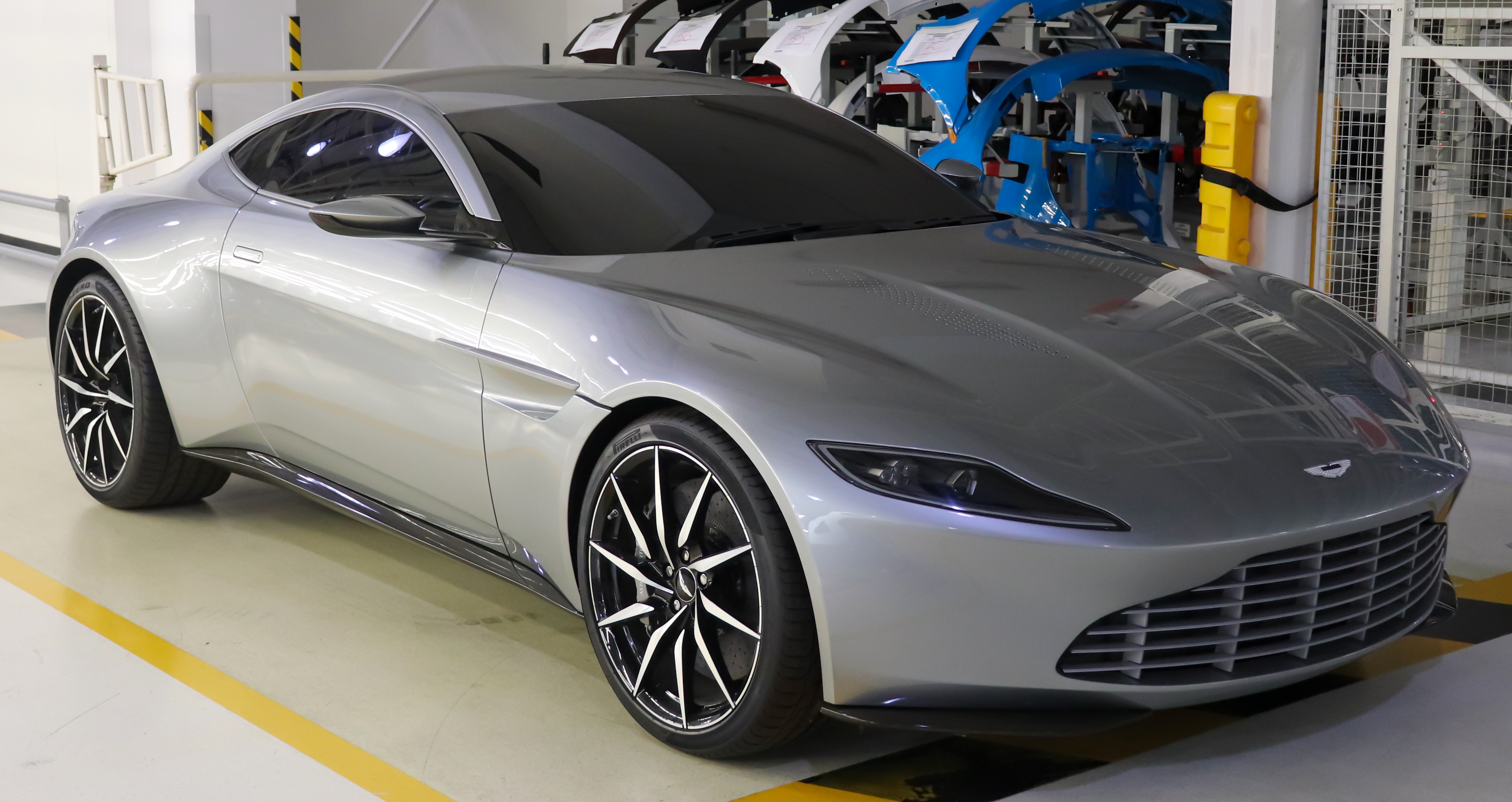
Aston Martin
"Jack Crawford was. And they are absolutely miles off, by the way. Can we just talk about? Aston Martin in free practice one, 5.7 and 6.1 seconds behind."
Aston Martin is the F1 team they’re talking about. They’re saying Aston Martin was much slower than the front of the field in practice sessions.
Aston Martin is a Formula 1 constructor/team known for its performance cars and racing heritage. In this segment, the hosts are discussing Aston Martin’s pace in Free Practice 1 and Free Practice 2, comparing lap-time gaps to other teams.
time sheets
"Question, because of course Antonelli showed some very good speed in free practice two, topping the timesheets, but George Russell all the way down in eighth, almost 1.3 seconds behind."
“Timesheets” are the leaderboard for practice. It shows who set the fastest lap times, and in what order.
In Formula 1, “timesheets” are the official timing results from a session, listing each driver’s lap times and ranking. When someone “tops the timesheets,” it means they set the fastest laps in that practice session.
Spa
"I mean, Charlotte Leclerc is down to 11th. Anyway, the question was about George Russell... There is no way in hell George Russell is 1.3 seconds slower than Kimi Antonelli around a lap-round spa."
“Spa” is the Belgian race track where Formula 1 drives. It’s a tough circuit with lots of different corner types, so car setup really shows.
“Spa” refers to Circuit de Spa-Francorchamps in Belgium, one of F1’s most famous tracks. It’s known for long lap distances, big elevation changes, and a mix of high-speed and technical corners—so car balance and power delivery both matter a lot.
down shifting
"So we have the second one of downshifting through Blanchimont. Oh, yeah. Okay."
Downshifting means switching to a lower gear. That makes the engine spin faster so the car can pull harder when you need it, especially when setting up for a corner.
Downshifting is when a driver selects a lower gear to increase engine speed (RPM) for better acceleration or to match the car’s speed before a corner. In F1, it’s tightly linked to braking and traction because the car’s grip and engine response change with gear.
Blanchimont
"So we have the second one of downshifting through Blanchimont. Oh, yeah. Okay. Shall we just go dive into the regulation chat?"
Blanchimont is a well-known fast corner at Spa-Francorchamps. Drivers have to brake and turn in carefully there because it’s easy to lose grip at speed.
Blanchimont is a famous high-speed corner on the Circuit de Spa-Francorchamps in Belgium. It’s known for being approached fast and for testing braking stability and traction as drivers set up for the next section.
regulation chat
"Oh, yeah. Okay. Shall we just go dive into the regulation chat? Yeah. I mean, it was all kind of battery related."
They’re talking about the F1 rules and how those rules change what the cars can do. They think the current rules are making the racing less exciting in practice.
This refers to discussion of F1 rules and how they’re affecting the racing. In this segment, the hosts connect the regulations to on-track behavior like pace and how the cars feel in different sectors.
battery
"Yeah, I mean, it was all kind of battery related. I just segued to another segue to another segue, you know."
In today’s F1 cars, there’s a battery that stores energy. The team decides when to use that stored energy to help the car go faster, but it can’t be used all the time.
In modern F1, the battery stores electrical energy used by the car’s hybrid power unit. That energy can be deployed to add power, but it also has to be managed carefully across laps and sectors.
FP2
"They showed quite a few on boards towards the start of FP2. And my word, it was like someone had run out of fuel."
FP2 is the second practice session before qualifying. Teams use it to try settings and learn how the car behaves so they can be ready for the faster sessions.
FP2 means the second Free Practice session of the Grand Prix weekend. Teams use FP2 to test car setup and systems (including hybrid energy behavior) before qualifying and the race.
Formula One
"And it's just absolutely awful. It's an awful, awful watch to see Formula One cars doing that. ... because these regulations have actually allowed this to happen."
Formula One is the highest level of open-wheel race car racing. The rules are very strict, but teams still find ways to get an advantage within (or around) those rules.
Formula One (F1) is the top tier of open-wheel racing run under the FIA. It’s known for highly regulated technical rules, where small design choices and rule interpretations can strongly affect lap times and race strategy.
loophole
"And then, of course, sorry, I was going to say an even worse now, like, I love a loophole, Formula One's about loop holes, but there's a new loophole that Mercedes have found..."
A “loophole” here means a gap in the rules that a team can use to get an advantage. The host is saying Mercedes found a way to follow the rules while still making the car act in a way that shouldn’t be possible.
In motorsport regulation, a “loophole” is an unintended gap in the rules that a team can exploit to gain an advantage. The host argues Mercedes used such an interpretation to change how the car behaves near the finish line.
accelerator
"Mercedes have found where they can basically not accelerate going across the line, easing off before the line, taking their foot off the accelerator, and it's quicker than if they were to be accelerating."
The accelerator is the pedal you press to tell the engine to make more power. The host is saying Mercedes apparently got faster by letting off that pedal before the line, which they think is wrong or at least against what you’d expect.
The accelerator is the pedal that controls engine throttle input, which in turn affects power delivery. The host’s point is that Mercedes allegedly becomes quicker by lifting off the accelerator before the finish line, which they say violates the normal expectation of throttle behavior.
lifting off
"Mercedes were lifting off and going, oh, maybe they're sandbagging a little bit or don't want to share their full hand."
“Lifting off” just means taking your foot off the gas. In F1, that can be used to save energy or follow the rules about how much power the car is allowed to use.
In Formula 1, “lifting off” means the driver eases off the throttle (reduces engine power demand) rather than staying at full power. It’s often used to manage energy usage and comply with the car’s power/energy rules during a stint.
kilojoules of energy
"if you've got three seconds to get to the finish line, and you're using 300 kilojoules of energy... 150 straight away in that first second, 100 in the second second and 50 in the third second"
In F1, the car has a limited amount of stored energy it can use, measured in kilojoules. The point is that teams decide when to spend that energy—early for acceleration, and later more carefully.
F1 hybrid cars have an energy budget measured in kilojoules (kJ), which limits how much usable energy can be deployed over a period. The hosts are describing how Mercedes meters that energy across seconds to maximize acceleration out of corners while managing the remaining allowance.
power at the start of the coming out the corner
"it allows you to basically use more power at the start of the coming out the corner, and then use non at the end."
It’s about using more power right after you leave a turn. That’s when the car can accelerate well, so spending energy there can make you faster.
This refers to the strategy of deploying more of the allowed power immediately after exiting a corner, when the car is accelerating and traction is available. In energy-limited systems, timing that power burst can improve speed and lap time.
driver power demand
"unless, which is this is the loophole, and this is in the regulations, the driver power demand is negative."
This is basically how much power the driver is asking the car for at that moment. The key idea here is that the rules treat it differently if it goes into a “negative” state, which affects energy usage.
“Driver power demand” is the amount of power the driver is requesting through the throttle/controls at a given moment. In these regulations, it can be “negative,” which effectively changes how the energy system behaves and can be used to exploit timing around energy limits.
the stewards
"free practice one. So they've been referred to the stewards. Some things never change."
The stewards are the officials who make sure everyone follows the rules in F1. If something breaks the regulations, they can investigate and hand out penalties.
In Formula 1, “the stewards” are the officials who review incidents and enforce the rules. They can investigate breaches and apply penalties when teams or drivers don’t follow regulations.
dry weather stints
"They've been referred to the stewards because neither Hamilton nor Leclerc, two sets of dry weather tires were not physically returned to the appointed tire supplier before the start of FP2."
Dry-weather tires are the kind of F1 tires teams use when the track is dry. They’re made to grip well on dry asphalt, not for wet or rainy conditions.
In Formula 1, “dry weather tires” are slick tires designed for dry track conditions. They have no tread pattern for water evacuation, so they work best when the asphalt is dry and warm.
throttle
"He's like, oh, I think Kimmy just took his foot off the throttle going over the line."
Throttle is how the driver controls how much power the engine makes. In racing, even tiny changes to throttle timing can affect speed and performance.
The “throttle” is the driver’s control of engine power by regulating how much air/fuel is allowed into the engine. In F1, small throttle changes can affect lap timing and energy deployment behavior.
overtake button
"And his exact quote was, I pushed the overtake button and I had more horsepower than Lewis, and there we go."
The overtake button is a switch the driver presses to get extra power for a short time. It’s meant to help you make a pass when you need a burst of speed.
The “overtake button” is a driver-controlled system that temporarily increases power for passing. In modern F1 cars, it’s typically tied to the car’s energy deployment strategy (like boosting output for a short window).
qualifying side of things
"But Tommy, the qualifying side of things, how do you think that's going to unfold? In terms of what, the super clipping?"
They’re talking about how qualifying might go. Qualifying sets the starting order for the race, so getting your lap prep right matters a lot.
This is the discussion segment about how qualifying will play out. In F1, qualifying determines grid position, so strategy around preparation laps and timing is crucial.
slipstream
"…about everyone trying to get a slipstream. And it's actually… it happens every year at Spa. They all just try…"
Slipstream is when one car gets a speed advantage by driving close behind another car. The air behind the lead car is “cleaner” and creates less drag, so the follower can go faster and have an easier chance to pass.
In racing, a slipstream is the reduced air resistance a car gets when it follows closely behind another car. The trailing car can gain speed and make it easier to overtake, which is why drivers often try to position themselves to benefit from it.
Monza
"It's a bit like the Hockenberg situation at Monza, where he messed up at the corner, and went over…"
Monza is a famous race track in Italy. It’s known for fast racing, and the hosts are saying similar “everyone’s messing up” situations can happen there too.
Monza is a historic Italian circuit famous for high-speed racing and tight chicanes. The hosts reference it as a similar example of how drivers can get tangled up in traffic and lose the racing line, leading to chain reactions.
Pierre Gasly
"…happened in exactly the same place as where Pierre Gasly crashed. Of course, a massive one for Pierre."
Pierre Gasly is a professional Formula 1 driver. In this segment, they mention him because he previously crashed at the same location they’re talking about now.
Pierre Gasly is a Formula 1 driver who has competed for multiple teams and is known for strong racecraft. Here, he’s referenced because his crash occurred in the same spot as the described Formula 3 incident.
rear tyre
"…the way that wall just comes out a little bit… Rear tyre, I want a piece of you."
The rear tyre is the tire at the back of the car. If it gets hit or loses grip, the car can suddenly spin or become unstable—exactly what they’re describing here.
The rear tyre is the tire at the back of the car, which is critical for traction and stability during braking, cornering, and recovery from slides. In the described crash, contact with the rear tyre is portrayed as a trigger for the car to rotate and break apart.
gravel
"…dips a wheel on the gravel, momentum takes him that way. Next thing you know…"
Gravel is used as a safety zone at the side of the track. If a car goes off, the loose stones slow it down, but if the wall is close, the car can still hit hard.
Gravel traps are safety areas filled with loose stones designed to slow cars down when they leave the track. They work by increasing rolling resistance and disrupting the car’s momentum, but they can still be dangerous when barriers are close.
runoff
"…There's these, these kind of circuits where you don't have like 1000 meters of runoff to run into."
Runoff is the safety space next to the racing surface. More runoff gives a car a chance to slow down if it goes wide; less runoff means it’s more likely to hit a wall.
Runoff is the extra space beside the track intended to give a driver room to slow down and regain control if they go off-line. Short runoff increases the chance of hitting barriers, which is why the hosts call out circuits without “1000 meters of runoff.”
run wide
"you actually watch the replay and he's just run wide and, and the damage is, is done from the nature of the circuit."
“Run wide” is when a driver misses the corner and ends up going farther out than planned. It usually slows you down and can cause damage if you hit curbs or barriers.
“Run wide” means a driver exits a corner with too much speed or too little steering input, so the car goes beyond the intended track edge. In racing, it often costs time and can lead to contact or damage, especially on circuits with tight curbs or barriers.
reliability issues
"The only one to really suffer with reliability issues as far as, I think we had something fly off one of the, another camera flew off and I think in FP1 of one of the cars, didn't it, as well,"
“Reliability issues” means the car had a problem that made it not work as it should. In racing, that can force the driver to stop or lose a lot of time.
In F1, “reliability issues” refers to mechanical or systems problems that prevent the car from running normally—often forcing a driver to stop, limp back, or retire. These can be caused by components failing under stress, overheating, or damage from earlier incidents.
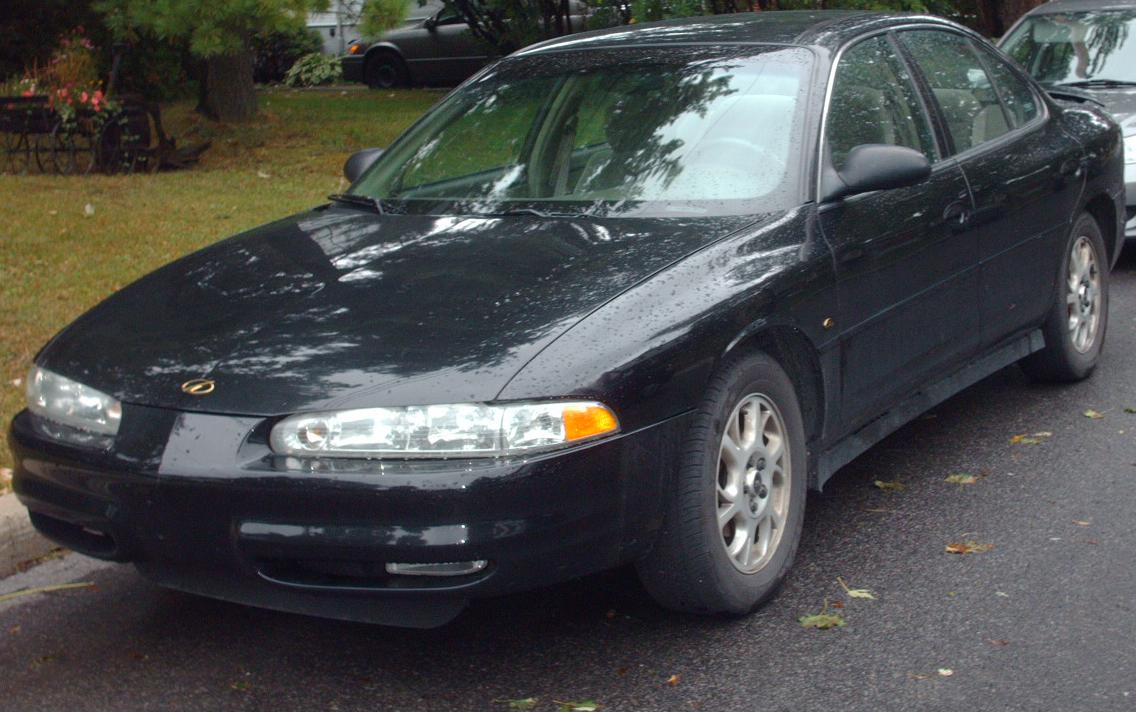
Oldsmobile Intrigue
"...ourse. See what they can do. And there's a lot of intrigue going into it. And actually, one more shout out t..."
The Oldsmobile Intrigue is a mid-size four-door car (a sedan) that was made for comfortable everyday driving. It was meant to feel more refined than basic commuter cars. People might mention it when discussing older cars and what they were like to own and drive.
The Oldsmobile Intrigue is a mid-size sedan from the 1990s, built to offer a comfortable, family-oriented ride with a more upscale feel than many mainstream sedans of its era. It’s often discussed in podcasts when people talk about “intrigue” as a theme—because it represents a specific chapter of American-brand styling and engineering. It may come up as a used-car example of how these cars were positioned for everyday driving.
Request an Explanation
Heard something you'd like explained? We'll add it to this episode.
Sign in to request explanations for terms you heard.
Want to learn more?
Browse our glossary for plain-English explanations of automotive terms, jargon, and concepts.
Help improve this episode
See something that's not quite right? Our annotations are AI-generated and can sometimes miss the mark. Click the flag icon on any annotation to suggest a correction.