Lenny Lawson shares personal anecdotes about the importance of recognizing individual differences, stemming from childhood experiences and his mother's influence. He discusses how these observations apply to customer interactions in the automotive industry, emphasizing the need for understanding diverse personalities. The episode also explores the evolving role of artificial intelligence in enhancing the driving experience, including smart ignition and climate control features. Lenny reflects on the balance between technology and human interaction in customer service, offering insights into improving dealership experiences.
"They talked about something that's really popular with a lot of these folks and that's smart ignition. What is that? Well, that's where the car knows that you're approaching it."
Smart ignition is a feature in some cars that lets the car know you're nearby because you have a special key fob with you. This means you can unlock and start the car without taking the key out of your pocket.
Smart ignition refers to a system that allows a vehicle to recognize the presence of its owner through a key fob. This technology enables features like keyless entry and push-button start, enhancing convenience and security.
"...terday when I was driving my daughter's 2025 Ford Expedition. Not only because I don't really like the squared..."
The Ford Expedition is a large family vehicle that can hold a lot of people and their stuff. It's great for long drives and has lots of modern gadgets to make driving easier and safer. The 2025 version has some new features that make it even better than before.
The Ford Expedition is a full-size SUV known for its spacious interior, powerful engine options, and advanced technology features. It is significant for families and those needing ample cargo space, making it a popular choice for road trips and daily commuting. The 2025 model continues to build on its reputation with modern updates and improved safety features.
"...Not only because I don't really like the squared off steering wheel. That's very weird."
A squared off steering wheel has flat sides instead of being completely round. Some people like it because it feels sportier, while others find it uncomfortable.
A squared off steering wheel is designed with flat edges, often seen in performance cars to provide a sportier feel and better grip during aggressive driving. This design can be polarizing among drivers.
"I remember when Ford first came out with sync, S-Y-N-C and it was supposed to be the end all and be all with voice activation."
SYNC is a system in Ford cars that lets you control things like music and calls using your voice. It makes it easier to use your phone while driving.
SYNC is an in-car communication and entertainment system developed by Ford that allows users to control various functions using voice commands. It integrates with smartphones and provides features like navigation, music playback, and hands-free calling.
"...solve known issues, like blind spot monitoring, rear emergency braking, without forcing them to basically change how they drive."
Rear emergency braking helps stop your car automatically if it senses something behind you when you're backing up. This can help avoid crashes.
Rear emergency braking is a safety feature that automatically applies the brakes if a collision is detected while reversing. This helps prevent accidents and injuries when backing up.
"...solve known issues, like blind spot monitoring, rear emergency braking, without forcing them to basically change how they drive."
Blind spot monitoring helps drivers see cars that are in areas they can't easily see. It warns you if there's a car in your blind spot, making it safer to change lanes.
Blind spot monitoring is a safety feature in vehicles that uses sensors to detect vehicles in the driver's blind spots. It alerts the driver, usually with a visual or audible warning, when it is unsafe to change lanes or merge.
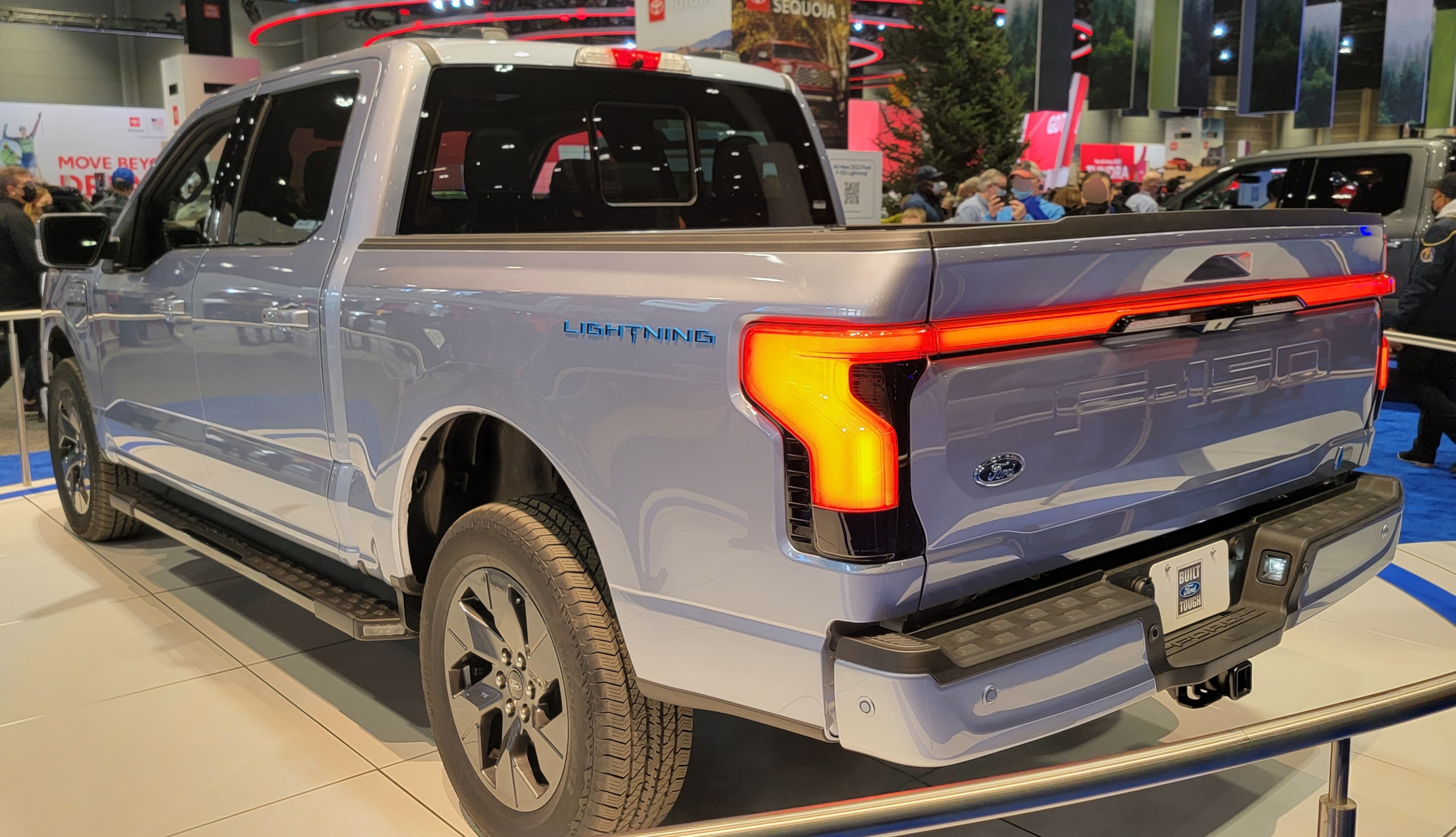
"...Have you checked your air pressures lately? You know, the air pressure in your tires is that's very important..."
Air pressure is how much air is in your car's tires. It's important to keep it at the right level so your tires work well and keep you safe on the road.
Air pressure refers to the amount of air inside a tire, measured in pounds per square inch (PSI). Maintaining the correct air pressure is crucial for tire performance, fuel efficiency, and safety.
"...If you just have just normal breathable air in there, if you put pure nitrogen in them..."
Nitrogen inflation means using nitrogen gas to fill your tires instead of regular air. It can help keep the tires inflated longer and may be better for the tires overall.
Nitrogen inflation involves filling tires with nitrogen gas instead of regular air. Nitrogen helps maintain tire pressure longer and reduces the risk of oxidation, which can extend tire life.
"You can text me your VIN number on your vehicle. I'll tell you what it's worth."
A VIN is like a social security number for cars. It's a special code that helps identify your vehicle and can tell you important details about it.
The VIN, or Vehicle Identification Number, is a unique code assigned to every motor vehicle when it's manufactured. It serves as a fingerprint for the vehicle, providing information about its make, model, year, and place of manufacture.
"That's pretty handy when you go into trade cars. That's one of the things I always recommend you do before you go into trade cars."
When you trade cars, you give your old car to the dealership and they give you money off the new car's price. It's a way to make buying a new car easier.
Trading cars refers to the process of exchanging your current vehicle as part of the payment for a new or used car. The value of the trade-in is deducted from the price of the new vehicle, making it a common practice in car dealerships.
Select text to request an explanation
Hey, folks, Lenny Lawson here, the car guru.
Occasionally, I do get in trouble because I see something behavior wise on another individual,
maybe going down the road or just see, well, let's just say how somebody looks and I'll
make a comment and she'll say, well, that's being judgmental.
She being my wife and I'll say, no, I'm just making an observation and then she always says
the same thing, PAD, people are different and she is 100% right.
My mom taught me that many years ago.
I had a bad reaction to the chicken pox when I was four and I fainted in the bathtub
and went under the water.
Well, my mom had left me for just a minute.
When she came in, there I am submerged.
Well, she reaches over, jerks me up out of the water and I was okay, but I was heartbeat
and all that stuff.
She called the ambulance, but I was still with her.
They rushed me to the hospital and I remember just bits and pieces of this.
They hooked up all these wires to my head and I remember that.
And I was in the hospital room and I had an African American nurse.
And quite frankly, I hadn't really been around black people that much in my youth.
One of my favorite shows was Amos and Andy, however.
And mom noticed me.
I was one of those kids that would just blurt out things, can you imagine?
And when I saw something, I called it out.
And so if mom saw somebody interesting coming down the street when I say
interesting, you know what I'm talking about.
And she felt like I was getting ready to unload a comment.
She would actually cross the street so that she could avoid the embarrassment.
Well, in the hospital room, you know, with this nurse going around checking
if she saw me, I was giving her the eyeball the whole time.
And finally one day I said, ma'am, she said, yes, son.
And I said, you are blacker than George Kingfish Stevens.
Now if you don't know who he was, he was on Amos and Andy.
And this is an innocent little child, so don't judge me in this regard.
But that's an example of me and of people being different and making observations.
I talk about observations a lot on this program about how people respond differently
to certain types of stimuli when they come into a car dealership or doing business
in general with anybody.
And it's the way they approach it that I try to help coach folks
into approaching it differently so that they can be more successful.
Another thing my mom did several years ago was she had a marketing company
where they would go into businesses and help them improve their customer service.
And one of the things that she always did, of course,
with the approval of management was to give the key employees personality profiles.
The ones that she used was by a company called Performax.
And so it would identify certain types of personalities.
I've got a little card that she would pass out showing all the different personalities.
Agent pattern is one of them.
Counselor pattern, a developer pattern.
When I flip over, I can find mine here.
Let's see, inspirational objective.
Yeah, I was actually in the inspirational or no, I was in the, here it is,
persuader pattern.
Let's see what that says.
Emotions, I trust others.
I'm enthusiastic.
Goal, authority and prestige, a variety of status symbols.
I don't know about that.
Judges others by their ability to verbalize and flexibility.
Influences others by a friendly manner and openness.
Bullseye, a value to the organization.
A seller, closer, delegates responsibility, poised and confident.
Okay, overuses.
This is what I overuse.
Enthusiasm, sometimes over sale.
That was a big problem when I was younger in my sales days and optimism.
Under pressure, I don't agree with this at all.
It says become soft and persuadable, organized when desires to look good.
Okay, I'm throwing this thing down.
That's not me.
Yeah, but it is interesting though when you take this, there's a sheet that you fill out
and it just has four different words and you have to describe the one that best fits you.
I think it has the best and then the least.
And you have to choose.
Been a long time since I took one.
And it's really a good exercise for any business to understand the personalities.
I can't tend to over talk in a meeting.
I got that from my dad.
Can be very opinionated and but I'm not easily offended.
I used to be a lot more easily offended.
My son had a problem with that when he was a service advisor for us.
He would just, somebody would get really difficult, which some people tend to do sometimes
when they go into a service department and they're, they're upset.
They've been there several times.
They tend to unleash occasionally.
Sometimes they absolutely go off like a bottle rocket and those are the people that end up
not getting what they want.
Hint, hint.
But my son had a big problem with that.
He'd get real defensive and, you know, try to defend the technicians.
You know, they would accuse him of doing things.
He said, well, I didn't do the work on the car.
You know, that's the guy back there.
Don't blame me.
See, you can't do that.
You have to take ownership of it and he struggled with that.
I did too early on, but I used to listen to Zig Ziglar a lot and he said that you get
what you want by helping other people get what they want.
And so what did I want?
You know, I wanted their business and I wanted to have run a profitable business.
But in order to get that I had to be nice even when they weren't.
And to fix it right the first time and do all the things that people need and deserve
so that they want to come back and do business with you again.
So if more people had that kind of attitude, it would be better, wouldn't it?
Wouldn't it be a better world?
So is that a gift?
Is that just a personality trait that you kind of roll into?
I did by necessity because I knew that eventually all these people in the dealership were
going to be working for me and I need to win their affections.
Not just their affections, but respect as well.
And that was tough.
You know, when you're the owner's son, you're going to be treated differently.
But thank goodness I had some people that, or my dad had some people that worked in
the dealership that were determined not to treat me differently, to treat me just
like everybody else, which was good, but you know, no special breaks or anything.
And that's important when you have kids working in your business.
Now I have two daughters, a son-in-law and my nephew, and they're all working here.
And lots of the time I'm just trying to stay out of their way so that they can make decisions
that I used to have to make.
And that includes some bad decisions because that's how you learn.
So I'm going to get out the personality profiles.
I have some left over from when mom was doing this probably 20, 25 years ago.
I don't think personalities and people have changed that much since then.
A lot of our habits have changed, you know, with the advent of cell phones and the internet
and all that stuff.
Yeah, these first personality profiles were done by her in our dealership back in the,
I'm going to say early 80s, maybe sometime during the 80s decade.
That's when I found out what my personality was.
And I'm just going to say that I have aged like fine wine.
You'll see.
I think I'll be back in just one minute.
Okay, let's talk a little bit about artificial intelligence and what it's going to be doing
for us in the not too distant future.
Recently, JD Power did a US tech experience index study.
And it dealt with a lot of different, well, thousands of different car owners and how
they felt about modern technology and vehicles and what AI is going to be able to do to, I
guess, improve the experience with some and eliminate the experience altogether for others.
They talked about something that's really popular with a lot of these folks and that's
smart ignition.
What is that?
Well, that's where the car knows that you're approaching it.
Because you have a key fob in your pocket that tells it that.
And it knows what you typically want when you get into your car.
And so as soon as you close the door, it has learned that you immediately start the car.
So why should you have to do anything?
The car should just start.
And that's what these automated systems do.
So, you know, I know it's a real strain.
I mean, we were used to have to turn a key, which took a lot of energy.
And then for goodness sake, we had to push a button.
Well, now you're not going to even have to do that.
This is coming.
Also smart climate control.
So the vehicle knows that when you get in the morning, you have typically set the
temperature at 68 degrees.
So it automatically does that.
And in the afternoon, maybe you change it, maybe make it a little cooler or a little
warmer or maybe on your ride home, you like to have your heated seats on.
So it memorizes all of this stuff and delivers it to you.
Now according to this survey, I don't know who these people are.
They sound a little overprivileged.
They say that tire, I'm sorry, drivers are tired of trying to manage in-car systems.
So they really don't want to have to do anything.
They just want to be able to think it.
I guess that's coming as well.
We might be plugging into our own cars, have some type of an implant in our brains.
But for now, the in-car systems are somewhat complicated.
I was pretty frustrated yesterday when I was driving my daughter's 2025 Ford
Expedition.
Not only because I don't really like the squared off steering wheel.
That's very weird.
It has mouse pads, basically, that you use with your thumbs on either side of the
steering wheel.
Don't like that.
And also all the different screens and how you change the screens.
I was struggling with that.
Even, of course, I was just sitting still in the car and I still couldn't figure
out how to get a map off of the screen that's right next to the gauges and
all that and then the screen that's on the infotainment system.
Both of them had maps on it.
I don't need two maps.
Just need one.
Couldn't figure out how to get it off.
So with AI, you'll be able to use a lot more voice commands.
So you turn off that upper screen and it goes off.
Instead of showing a map, show me what's playing on the radio and it will show that.
Is that something you want?
Would that make your life so much better to be able to just use voice commands?
You remember how bad they used to be?
I remember when Ford first came out with sync, S-Y-N-C and it was supposed to be the
end all and be all with voice activation.
So you had to push this little button.
It was a person's face with looks like sound waves coming out of their mouth.
And it said, say your command.
And I would say, turn on the air conditioning.
I'm sorry.
Could you repeat that?
I mean, I know I have a Tennessee accent.
But for goodness sake, turn on the air conditioning.
So I would want it to raise the temperature two degrees, drop the temperature,
turn on the radio.
It didn't understand hardly anything I was saying.
That's not the problem anymore because AI has really improved voice recognition.
And it's working in our cars today in things such as smart headlights,
the automatic door opening that I think I mentioned, ambient lighting.
And folks want features that will help them solve known issues,
like blind spot monitoring, rear emergency braking,
without forcing them to basically change how they drive.
Voice commands are fine if they work and if they work the first time.
I've got an AI company pursuing the dealership right now,
wanting to answer our telephone's force and direct phone calls.
And it's slick.
It really is.
I mean, it understands.
Well, I heard some demonstrations of people presenting different types
of issues to the AI bot or whatever you want to call it.
And it pretty much related to that real person as a real person.
I mean, the real person tried to throw some curveballs at it
and it still was able to handle it and end up making an appointment
and scheduling it in the dealership's operating system
and actually even scheduling a tech to actually do that work
when the vehicle arrived.
I mean, that's connecting the dots pretty good.
Does it eliminate manpower?
I don't know.
Maybe it does.
Maybe in the future it will.
Initially, no.
We always want to be able to rescue our customers
if they get caught in or lost in some type of a telephone tree.
Nothing can be more frustrating than that.
So we want to have access to a real person.
I mean, it's a real dilemma.
I know that you would rather talk to a real person.
Well, maybe you wouldn't.
Some of you that are younger, you're used to that kind of stuff.
You're online all the time
and you just don't like human interaction
unless it's absolutely necessary.
You might not.
But I like talking to a human.
But I tell you what, I want to talk to a human
who knows what they're talking about
who can actually get me what I want.
I mean, if I had to call into the dealership
and I wanted to order a bed cover for my F-150
that I just bought, and if there was a voice assistant AI
that could handle that transaction, I'd be fine with that.
I'm not real sure.
I want to give it my credit card number.
But I mean, is that more unsafe
than giving it to an individual that you don't know?
I don't know if it is.
I do use Amazon a lot.
Do you?
I probably use it.
Well, I don't use it as much as my wife does.
She uses it for a whole bunch of stuff.
But when I go into my Amazon Prime account
and I need to order a new American flag,
our American flag is 20 feet by 30 feet.
It's a biggin.
And when I first started buying them,
let's see, that was around 2011.
I was paying about $350 for a 20 by 30 flag.
Now it's $1,200.
Same flag.
Maybe not even as high quality
as the one I was buying back then.
And what Amazon does for me is all these different things
that I've bought.
So if I go in to order something,
it throws up a little reminder.
Hey, you bought an American flag six months ago.
You're ready for another one?
And I might be.
You know, those types of little reminders,
I don't resent those.
I don't mind them.
I get all kinds of reminders from the doctor's office.
All of those are automated.
So do you mind those?
I mean, I think they're handy.
Would you mind it if it came from your car dealer
reminding you to service your vehicle?
Have you checked your air pressures lately?
You know, the air pressure in your tires
is that's very important
because you will lose two pounds per month.
If you just have just normal breathable air in there,
if you put pure nitrogen in them,
you'll lose one pound a month.
If you lose five to six pounds,
your tires are gonna start wearing
but I've seen people come in with their cars.
They got half as much pressure in them
as they're supposed to.
And it's been months and they never checked
or they went to a quick loop place
and they didn't check their air pressures
when they were getting their oil change.
So it's been many miles, many moons
since they had their tire pressures checked.
And they wonder why the outside tread on their tires
is wearing on both sides.
And then they end up needing new tires prematurely.
Would you like those kind of reminders?
Let me know.
Four, two, three, five, five, two, 2020.
And if you want the My Car Guru Godbook
that will teach you pretty much everything
you need to know about buying, selling, trading.
Well, I mean, there's some other things.
I got some chapters I need to add on some mechanical stuff.
I had somebody tell me, get into more detail, Lenny.
I will.
If that's what you really want.
But the main thing I'm trying to teach you
how to do is save money.
Just simple things.
Negotiating, dealing with dishonest salespeople.
How to know.
How to read someone.
There's a few phrases that a dishonest salesperson will use.
Maybe even a dishonest service advisor.
You know, recommending all these different flushes.
Watch out for that.
Because that's a way to spend a bunch of money
you don't need to spend.
Okay, I'll take my last break
and I'll be back in one minute.
Yeah, to get the My Car Guru guidebook, it's simple.
Just send a text message to my cell phone, 423-552-2020.
It's the only cell phone I have.
And I need your email address.
And I will send you a PDF that is a digital file.
It's 32 pages long.
And it's great reading.
You just look at whatever circumstance
you happen to be going through right now.
If you're trying to buy a car, go to the buying a car section.
And it will guide you through all the different things
you need to watch out for.
If you're getting ready to take your car in for service,
certain things you need to look for, certain words.
Also, if you're having a problem
and you don't know how to get it handled,
you've been back to the shop two or three times
and it's still not fixed, what do you do?
It's in the My Car Guru guidebook.
And then if what you really need is not in there,
you've always got me.
So you can text me your concern.
You can text me your VIN number on your vehicle.
I'll tell you what it's worth.
That's pretty handy when you go into trade cars.
That's one of the things I always recommend you do
before you go into trade cars,
is let me make you an offer on your vehicle.
Or let me tell you what it's worth
and then I'll agree to buy it.
If you live close enough or if you live in California,
you can ship it to me.
But that phone number again, 423-552-2020
or my email address is Lenny, L-A-N-N-I-E, Lawson,
L-A-W-S-O-N, 2020, at gmail.com.
And I checked the other day,
I've got right at 500 episodes
of this particular podcast, 500,
covering everything that you can imagine
as far as your vehicle and your car life.
And so you can listen to them any time you want to
in full stereo, if you have a stereo.
And get the full richness of this voice
just by going to Apple Podcast or Google Podcast
or just Google the My Car Guru podcast
and it will come up.
Well, thanks for listening to this edition of My Car Guru
and I'll see you on the next one.
Request an explanation for:
2 cars
2 cars featured
Request an Explanation
Heard something you'd like explained? We'll add it to this episode.
Sign in to request explanations for terms you heard.
Want to learn more?
Browse our glossary for plain-English explanations of automotive terms, jargon, and concepts.
See something that's not quite right? Our annotations are AI-generated and can sometimes miss the mark.
Click the flag icon on any annotation to suggest a correction.