A Jeep Rubicon is an off-road version of the Wrangler. Here, the problem is that the dashboard screens and indicators aren’t working right, which usually means the car’s computer modules aren’t talking to each other correctly.
The odometer is what shows how many miles the car has. Here it’s not behaving normally, which suggests the dashboard isn’t receiving correct information from the car’s computers.
The body control module is one of the car’s main computers that controls lots of the electronics in the cabin. If it’s failing, the dashboard can lose information and the screens can shut off or show weird results.
Cars have a network of wires and signals that let different computers share information. If that network has a wiring problem, the dashboard may not get the messages it needs and can shut off or display nonsense.
Modern cars have a shared communication system that different computers use to talk. If one computer has an electrical short, it can mess up the whole network and other systems may stop working correctly.
The seat module is the car’s computer that controls the power seat. If it’s not communicating (or has an electrical short), it can affect other systems too.
The airbag module is the computer that monitors the airbag system. If it has a wiring or communication problem, it can cause warning lights and other related issues.
The instrument cluster is the dashboard screen and gauges. If it starts acting up first, it can be a clue that something in the car’s electronics is causing problems elsewhere.
A column shifter is the gear lever on the steering column. If it moves but the car doesn’t go into the gear you selected, it often means something in the connection to the transmission is worn or misadjusted.
Bushings are small parts that act like cushions in the linkage between the shifter and the transmission. If they wear out, the shifter can move but the transmission doesn’t get the correct movement to select the gear.
In an automatic transmission, the valve body is like the control panel that directs fluid to make the car shift. If it’s not working right, the transmission can get stuck and won’t shift into the right gear. That can cause issues like not going into reverse or delayed shifting.
Park is the gear position that should keep the car from rolling when you’re stopped. The expert is asking whether the car stays locked in Park or rolls anyway. If it doesn’t stay locked, shifting into other gears can become delayed or unreliable.
Reverse is the gear position that lets the car go backward. The expert is asking what happens when you select Reverse—whether it engages immediately or takes a long time. Delayed Reverse can indicate a problem with how the transmission is being commanded or controlled.
The cable is the physical connection that tells the transmission what gear you selected with the shifter. If that cable is loose, slipping, or broken where it attaches, the transmission may not shift when you expect. That can cause delays—like taking minutes to finally go into Reverse.
The ball-and-socket is a joint that helps the shift linkage move smoothly while still transferring the shifter’s movement. If it’s worn or not seated correctly, the shifter may not properly move the transmission into the gear you selected. That can cause problems like delayed Reverse engagement.
A bracket is the part that holds the shift cable in place. If the cable attachment at the bracket breaks or slips, the shifter won’t reliably move the transmission into the right gear. That can make the car stay in Park or take a long time to go into Reverse.
Part
shifter solid
That “shifter solid” is the solid connection that helps the gear shifter move the transmission controls. If it pops loose, the shifter may not work right, and it might not go back into place correctly by itself. You usually have to put it back on the right way.
They’re referring to the transmission—the part of the car that changes gears. The cable connects the shifter to the transmission’s gear-control mechanism. If the cable setup is loose, the transmission may not get the correct movement every time.
“Full synthetic” means the base oil is chemically engineered rather than refined from conventional crude. In practice, synthetic oils often handle heat and oxidation better, which can help with longer service intervals—though you still follow the right spec for your engine and driving conditions.
Rotella T61540 is a particular brand and type of engine oil the owner is using. It’s made for diesel engines, which tend to need oil that can handle more contamination.
The 4R100 is the automatic transmission in the truck. Owners pay attention to how often they change its fluid and how well it’s cooled because heat can shorten transmission life.
An external cooler is an extra radiator-like part that helps keep transmission fluid from getting too hot. Cooler fluid helps the transmission last longer.
Service intervals are how often you do maintenance, like changing oil or transmission fluid. The discussion is basically about whether it’s safe to wait longer between those services.
Oil changes are when you replace the engine’s oil. It helps the engine run smoothly and stay clean. In this segment, they’re talking about sticking to the usual schedule rather than changing it randomly.
Towing means pulling a trailer or heavy load. It makes the car work harder and run hotter, so some maintenance—like transmission service—may need to happen sooner.
Fluid is the liquid that keeps the transmission working and shifting correctly. They’re saying if you change it too often when you don’t drive much, you’re spending extra money for no real benefit.
“Excessive range” means changing something more often than you really need to. They’re saying if you don’t drive or tow much, you can usually go longer between transmission services without harming the car.
If the fluid turns black, it can mean it got too hot and started to break down. With towing, that’s a warning sign that something isn’t cooling properly.
They’re talking about a suggested mileage interval for changing fluid. If you tow a lot, the fluid can wear out faster, so you may need to change it earlier.
A fuel filter is like a screen that keeps junk out of the gas before it gets to the engine. If it gets dirty or clogged, the engine may not run smoothly. Replacing it on a schedule helps prevent fuel-system problems.
The host is talking about how many people don’t keep up with car maintenance, even though it helps prevent breakdowns. But they also point out that some people do too much and change things more often than necessary. The goal is doing the right maintenance at the right time.
The Jeep Renegade is a small SUV. The podcast is talking about possible transmission problems, which are issues with how the car shifts power to the wheels. If you’re considering one, it’s important to check for transmission symptoms and service history.
The Dodge Nitro is an SUV. The podcast is talking about possible transmission problems, meaning issues with how the car changes gears. If you’re looking at one, it’s smart to check how it shifts and whether it has any warning signs.
When transmission fluid gets too hot for too long, it can chemically break down. That breakdown is what the host means by oxidation, and it can make the fluid look dark.
A transmission fluid flush is a service intended to remove old fluid and replace it with new fluid. The host’s point is that if the underlying cooler problem remains, the fluid can darken again quickly—so a flush alone may not fix the root cause.
Car air conditioning is the system that cools the inside of the car. If it’s not cooling as well, it can be because the refrigerant is low, there’s air/moisture in the system, or there’s a leak.
Coolant is a liquid that helps keep a car from overheating. But when people talk about “coolant” for air conditioning, they usually mean the A/C refrigerant, which is serviced differently.
The Lucid Air is an electric car. In cold weather, some systems can behave differently, and people may notice issues that seem related to air or airflow. That’s why winter experiences can be important to understand for owners.
This means the shop removes the old refrigerant, pulls out air and moisture with a vacuum, and then adds the correct refrigerant back in. It’s usually more effective than just adding a little more.
These are the little valve fittings the shop uses to hook up tools to your car’s A/C. If they’re leaking, the refrigerant can slowly run out, and the A/C won’t cool well.
The technician pulls a vacuum on the A/C system to get rid of air and moisture. That helps the system work correctly once it’s refilled.
Term
professionally recharged
“Professionally recharged” usually means a shop refills the car’s air-conditioning refrigerant so it blows cold again. They should also check for leaks, not just add more.
Term
valves replaced
“Valves replaced” means swapping out parts that control how the air-conditioning refrigerant moves. If the system isn’t working right, replacing the faulty parts can help it cool again.
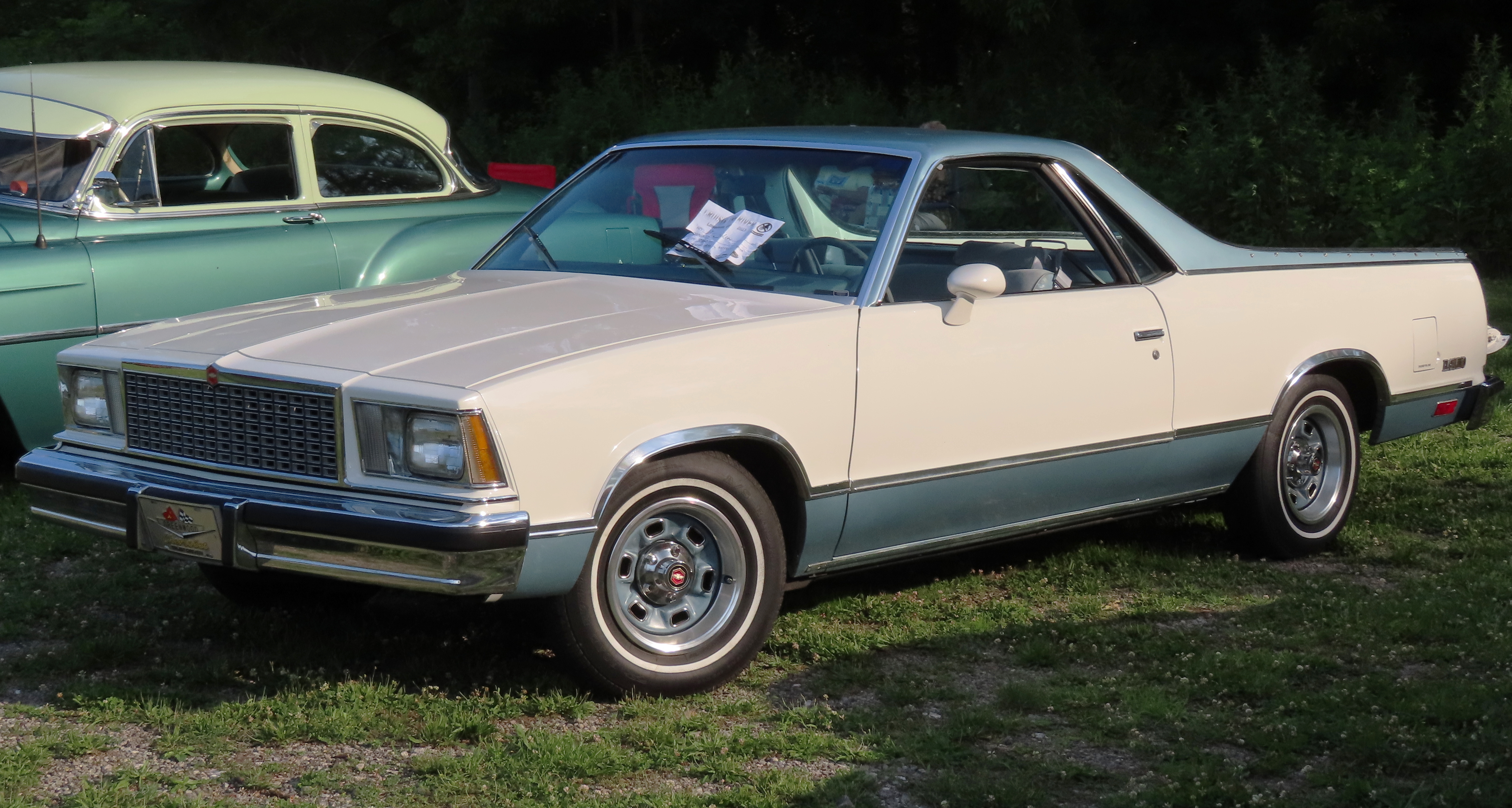
The Chevrolet El Camino is a car that also has a truck bed. It’s a unique type of vehicle that can carry some cargo like a pickup but drives more like a car. People often bring it up because it’s a distinctive classic.
Car
2005 Lexus RX330
The 2005 Lexus RX330 is a luxury SUV with a 3.3-liter V6 engine and an automatic. People buy it because it’s comfortable and tends to last a long time if it’s cared for.
A car battery provides electrical power for starting the engine and running electronics when the engine isn’t producing power. If a battery is failing or was sold with an issue, you can see symptoms like hard starts, warning lights, or intermittent electrical problems.
Term
factory radio guy
That phrase means a specialist who installs or fixes the car’s radio and related wiring. It’s the kind of person you’d call when the audio system needs work.
Current draw is how much electricity your car uses when it’s sitting. If it’s too high, the battery slowly drains even though the car is off. Checking it helps you figure out whether something is causing the drain.
When the car is “asleep,” its computers and electronics are supposed to go into a low-power mode after you turn it off. That’s the best time to measure how much power is still being used. If it’s still using a lot, something may be draining the battery.
Milliamps are a measure of how much electricity the car is still using while it’s off. The speaker is giving a rule-of-thumb number—around 150 milliamps—to judge whether the battery drain is normal or excessive. Higher than that can mean a problem is keeping something powered.
The Chevrolet Camaro is a sporty car made for performance and driving fun. If it sits unused for a while, the battery can lose charge. People talk about how long they can leave it parked before they need to recharge or maintain the battery.
The Dodge Charger is a larger car that can be built for strong performance. If you don’t drive it often, the battery can run down. A battery maintainer helps keep the battery at the right level so the car starts when you need it.
Optima is a company that makes car batteries and battery chargers. Here they’re recommending one of their chargers to help keep a battery healthy when the car sits.
When a car isn’t driven, the battery can still lose power slowly. Small electronics keep using a little electricity until the battery gets too low to start the car.
“100% charge” refers to the battery reaching its full state of charge. The host is explaining that if the battery has dropped low, it may take longer than expected to fully recover, especially with a maintainer that prioritizes safe, gradual charging.
A clear hose is just a see-through piece of fuel line. It lets you watch whether fuel is flowing smoothly or if air is getting in, which can cause the engine to run poorly.
The suction side is where the fuel pump is “pulling” fuel from the tank. If something is blocking the flow or letting air in, the engine may not get enough fuel.
If you see bubbles or the fuel seems to vanish in the clear line, that usually means air is getting into the fuel system. That can stop the engine from getting the fuel it needs.
They’re talking about cheap tools you can put in the fuel line to help you see what the fuel is doing. It’s a way to diagnose problems without guessing.
The fuel pump is the part that sends gas from the tank to the engine. If it can’t keep up (especially when it’s hot), the engine may not get enough fuel and will die.
Fuel pressure is how hard the car’s fuel pump pushes gas to the engine. If that pressure is too low, the engine doesn’t get the right amount of fuel and can stall or die.
The coil is the part that boosts the car’s electricity so it can create the spark at the spark plug. If the coil isn’t getting the right voltage, you may have no spark and the engine won’t run.
A voltmeter is a tool that measures electrical voltage. In this context, it’s used to see if the ignition-related power is present until the moment the engine shuts down.
The primary side is the part of the ignition coil that gets the car’s regular battery-level power. If that side loses power, the coil can’t do its job and you’ll lose spark.
A Ford F-150 is a popular full-size pickup truck. Here, the problem is happening in the rear drivetrain area—the rear differential—so the truck can make unusual noises and vibrations.
The rear differential is the part that sends power to the rear wheels and allows them to turn at slightly different speeds. If it’s rebuilt and then you get vibration or metal in the fluid, it can mean the gears or bearings may still be damaged or misassembled.
The rear axle is the assembly that carries the differential and delivers torque to the rear wheels. If the shop is planning to replace the rear axle along with bearings and seals, it suggests they suspect damage or misalignment in the axle/differential mounting area, not just internal differential gears.
A bearing supports rotating components and allows them to spin smoothly with controlled friction. A seal prevents differential fluid from leaking out; if either is damaged, you can get noise, vibration, and fluid loss—sometimes also leaving debris that worsens wear.
If there’s metal in the oil, it usually means parts inside are grinding or wearing down. That debris can cause rough running or vibration because it’s moving through the system.
“Rear end” here means the parts in the back of the car that help the wheels work together. If there’s metal in the fluid, it usually means something inside is wearing out or got damaged.
Term
certified use one
“Certified use one” appears to mean a certified used replacement unit—an axle/differential assembly that’s been inspected and verified by the seller or rebuilder. The host contrasts this with paying for a rebuild, framing it as a way to reduce cost while still getting a known-good unit.
Bearings are small parts that let rotating gears spin smoothly. If the shop replaces the bearings, it can remove the cause of vibration even if there was debris in the fluid.
The Subaru Forester is a popular Subaru SUV/crossover. It’s usually straightforward to transport because it’s a normal, everyday vehicle size and shape.
A flatbed is a trailer that has a flat platform for hauling cars. Cars can be loaded using ramps or a lift instead of being driven on like a normal car carrier.
A hydraulic lift is a machine that uses fluid pressure to lift heavy things. For shipping a car, it helps raise the car onto the truck and lower it back off safely.
The Dodge Dakota is a pickup truck. The podcast is talking about finding them for low money, which usually means older or higher-mileage examples. If you’re shopping on a budget, it’s the kind of truck people look for because it can be relatively affordable.
A reefer van is a truck with a built-in cooling system. The speaker is saying sometimes a car gets shipped along with other goods in that kind of truck.
A tow truck is a specialized vehicle used to recover and move cars, typically with equipment like a boom, winch, or flatbed. Here, it’s used as a comparison for a more direct, pickup-at-your-house style of transport.
“Insured” means the carrier has coverage that can pay for certain losses or damages during transport. “Bonded” means the carrier has a surety bond, which provides financial protection if the carrier fails to meet contractual or legal obligations.
LIVE
Welcome to the Under the Hood show podcast. Thanks very much for listening. And don't forget you can subscribe to our YouTube page or follow us on Facebook and watch our Facebook live videos when we do the show every week, Thursday morning from 9 to 11 central. And we do have some podcast sponsors.
Like Berkeley One Classics, your key to collect your car insurance.
And Road Ready Wheels, replica OEM wheels at huge savings. Use the offer code hoodie for even more.
And by car dash part, over 200 million used parts ready to ship to you fast.
Thanks for listening to the Under the Hood show podcast. Here's the show.
This is Under the Hood.
Welcome to the Under the Hood show. We are glad to have you with us. Russ Evans is here to answer your automotive questions.
Thanks for joining us under the hood.
Shannon Nordstrom not here this week. I am here. I'm Chris Carter here to answer your calls at 866-594-4150.
Any deadline emergency news to get to?
No.
I saw more recalls. I think we talked about this last week. I think it's just that we all see all the recalls now because they're just in the news and you get news from different places now.
Yeah. If they need fillers when the news is the cycle slow or they've repeated the same thing 100 times and they're like,
let's throw some stuff in there to throw them off.
Subscribe to automotive stuff in your news feed. You see it all and it just seems like there's a lot of it.
So let's get to the calls. 866-594-4150. Let's start in Minnesota with Jason. You're on the Under the Hood show. Jason, what can we do for you?
Well, first, I'm very happy to be able to get through to you. It's been a few Thursdays. I've been trying to get off work, but I've got a 2018 Jeep Rubicon.
And in the past, the odometer, sometimes when I get in it, it'll just read 9,990 on all 9s all the way across.
It just appears after a few miles, so I really kind of gave up on dealing with it.
However, new and exciting the last week, for the first time on the dash side of it, I have no direction indicator.
It doesn't show any miles whatsoever. And my main screen pretty much just shuts off and then starts trying to turn back and on a few times.
So I'm just confused if all this is tied together or what might be happening.
Well, it's either losing communication so it can't get the signal it needs to display what it needs, which is, that's a pretty common thing to give either dashes or 9s on there when it can't read information from its body control module.
That screen will do the same thing. It'll shut off or just give you like a white screen or some lines on there.
And that can be caused by either a wiring issue with the communication network or it could be caused by a failure in the body control module of the vehicle.
Those are the common things, but it could also be caused by one of those modules being shorted interrupting the communication.
So if you have anything on that CAN bus network, that control area network that's shorted, it'll shut the whole thing down.
It's like if you take your home computer and you've got, let's say you've got five of them all plugged into your home router, but they're plugged in with cables instead of Wi-Fi.
Cars should all have Wi-Fi, right?
If you take one of those cables from any one of the computers and you, you short it, you know, short to stick a pin through the cable, you're going to kill the, interrupt that network and it can affect the other computers on the network too.
So the same thing happens in the car.
So what they need to do to diagnosis is look for any codes, see if there's any communication errors in there and then start fixing those.
A lot of times we will scan a system and we'll do a complete scan where it's looking for every module.
And if I see that there's only five modules on the line and they're supposed to be six, I look for the one that's missing.
And if it's like a seat module that's missing or airbag module or something like that, if I see it's missing, I know that that's the one that's probably causing this short if it's operating.
So if I know the seat works, but it doesn't, it doesn't talk to the rest of the computers.
That's the module that's shorted.
So I'll start with unplugging that and see if the other ones are working now.
And if they are, then I go for replacing that module.
So it takes a little bit of time to diagnose it, but that's what they need to do to find out what's going on.
I don't think it's going to fix itself like your, your instrument cluster.
Some weird stuff for a while, but being that that was the first and only thing that happened for a while, it may be that that is the culprit that's causing the rest of the items.
It's starting to go.
Okay.
Cause I know there was a TSB out on the field about reading all nines and having to go away.
But everything I read on it didn't indicate that anything else would occur.
And so that's why I kind of just live with it.
It doesn't happen all the time.
Maybe it only wants you twice a week.
Maybe it didn't occur then yet.
And now, now they're going to go, well, Jason's got issues with it too.
So we're going to send out a new TSB.
There you go.
Okay.
We'll get in.
Thanks, Jason.
Thanks very much for the call.
Good luck.
I've noticed that mine connects and when I, it, every once in a while, it's a little spotty.
The screen won't come on or, and I've talked to, talked to the dealer about it.
And he goes, the guy said.
They once in a while, yeah, it'll just happen.
He goes, I drive that exact same car.
It happens a couple of times a year.
And it'll go come back on, but it will, when I connect, if I'm not in the perfect spot,
it will connect and it will read the Eastern time and like a default maps section.
And then it, you know, it happens as soon as it starts up.
I see the wrong time.
I look and see the wrong map and then it fixes itself.
I know what you're thinking.
Can't I just get one car that everything works on?
No, no, I don't think there, I, I've decided there isn't one.
There are no more ever, no, no more.
There never were.
Everyone knows.
Yeah.
You know, there's always something with every car.
It's always something 866-594-4150.
Let's go to Virginia and talk to Timothy.
You're on the end of the hood show.
Timothy, what can we do for you?
Hey, I got a 09 heavy Suburrata and the column shifter sometimes doesn't go into the reverse
or anything, but sometimes it does.
And I can't figure out why it's doing that.
All right.
What are you saying?
You pull on it and you can't take it out of gear or you move it and it doesn't do anything.
Yeah.
Yeah, it moves, but it just doesn't move the shift.
Doesn't like engage.
What does it say on the dash?
Does it say it's in reverse and say it's in drive but just doesn't go anywhere?
No, it doesn't say.
That's the shifter just moves freely.
Oh.
Oh, okay.
Moves like, like it's not connected to anything.
Right.
Like it's a three on, like it's a three on the tree with a clutch pushed in.
Yeah, that is weird because there's bushings that wear out on those transmissions and they
come undone and it moves freely, but then it never goes back.
It never starts working again and the valve body is mechanically connected in that transmission.
It has to move.
It's not going to move freely.
It's going to be the brake.
Timothy, does it stay in park when you do it or does it roll?
What happens?
It stays in park until I can get it into reverse.
Okay.
And then like when it first started, it was going to like try once your class and then
now it's going to like maybe two or three minutes and then it'll get and they'll finally
get into reverse.
And then it wouldn't once I get it to drive and it drives fine and it goes back to park
and no problem.
Yeah, you know where the cable connects underneath.
I'm guessing that maybe the cable is staying connected to the transmission and to the column
on the end where the ball and socket is, but the cable may be slipping in the housing down
in the bracket down there.
And if that is the only thing I could picture that would move that would if it was free,
you could move it around and then when it when you put it back up in park and it gets stuck
on the edge, then it could go into gear.
It's still going to feel a little weird, but it could go into gear.
I bet if you look at it, you're going to see that where the cable attaches to the metal
bracket, probably on the transmission end, it's probably broken there and it's probably
slipping back and forth.
Occasionally it, it sticks and rides, but it won't be the ball on the end because once
that comes off, it's off.
It's never going to go back on, but the cable could slide in and out of that bracket if
it's broken there.
I bet that's what's going on.
Yeah, because I've had that, I've had it disconnect there before, but I fixed that and now this
has happened.
Yeah, it's got to, it's got to be outside because there's nothing inside of that transmission
that could break and then start working again.
Is there anything that works, Timothy?
Can you, you know, move the steering wheel or, or knock on it three times before?
Is there any tricks that you've tried that have worked?
I've tried everything.
I've even, sometimes I'll put the brake on even harder.
Sometimes that'll work.
But that's about it.
I'll just keep on pulling it and try to push it down to reverse.
Are you parking it in a garage?
No.
Okay.
I was just, because what I would do, I would imagine is I would try it and then I would
forget and I would, it would be not working and I'd put it in drive instead of reverse
and I'd hit the bench in front of me or something.
That's not good.
No, Timothy, does that help you out?
Do you kind of got something to look for there?
Yeah, I can look at the table and I was hoping it would be something in the column where
I could, where it's like not engaging in a column.
That's what I was saying.
If you connect it to that shifter solid to it, it's not coming off.
If it comes off, it's never going to go back on again.
And then the cable snaps in there, but then the cable has a little sleeve and a bracket
up top and then it also has one of the transmissions.
So if it's coming loose up top or down at the bottom, it could slide in and out and then
lock and go back again.
But the ball on the end of it could never come off because once it comes off, it won't go
back on.
You have to put it back on.
Yeah.
It's got to be something sliding that cable.
And those cables do fail when they get replaced pretty often.
We've done a number of them.
So it's possible the cable is just catching in a weird enough way to grab
it sometimes.
Yeah.
Timothy, thanks very much for the call.
Good luck.
866-594-4150.
Let's go to Montana and talk to Tony here on the end of the hood show.
Tony, what can we do for you?
Great to talk with you.
Love your show.
I found you a few years ago on KLYQ out of Hamilton, Montana.
Thanks.
Love what you're doing.
Cool.
Thank you very much.
So, hey, anyway, I have an 02 F-250 Super Duty 7.3.
I have about 155, 156 on it and just wanted some information.
I'm pretty meticulous maintenance-wise on this vehicle.
I've been using a Dello 1540, the SDE, which they no longer make.
So I switched over to Rotella T61540, which is a quote unquote full synthetic.
I generally change the oil and filter on this about every 3,500 to 4,000 miles with
the Dello 1540 I was using.
Wondering with this T6 if I can go any longer than that or what you would recommend and
then also have a question for you on my trans.
The 4R100, which was kind of one of the weak links on this vehicle, but I have bullet-proof
that transmission.
I generally change the fluid on that about every 5,000 or so, and I've got an external
cooler on it, which I also drain blowout with some low pressure air.
Kind of wondering what you guys might recommend for service intervals on these two items.
Can I take a shot at this one?
If you change anything now, if you start lengthening your oil changes, you're always going to wonder.
Right?
If I were him, if Tony, if I were you, I wouldn't change anything on the oil changes.
Transmission, I don't know.
I wouldn't do anything different on the oil changes.
I'd keep the same one.
You're changing the oil, but just keep with the same schedule.
You'll feel better and I think you'll be better off.
But the transmission, we need to know how are you using the vehicle?
Are you towing with it?
Are you driving 1,000 miles a month with it?
Are you driving 4,000 miles a month with it?
200 miles?
How are you operating it?
It's generally around town.
Every once in a while, I'll get on the highway, but not very often.
It might sit for a week before I drive it because I've got an old beater car that I usually drive around for errands and stuff like that
and just leave the power stroke parked.
Every once in a while, I haul a trailer with my tractor on it.
I would say probably every 30,000 miles on the transmission.
That's kind of what I'm thinking.
Not long?
Yeah, because it's long because you're thinking you don't drive it much.
It's time-wise.
It's going to take a long time to get that many miles on it.
If that turns into three years, I'd probably say change it then.
But if it's just driving and you're not really hauling with it, you get more than that.
You're into the excessive range where you're wasting your money and the fluid to do that.
But that's about where people are going to be at if they're towing.
If you were towing with this thing, I'd say inspect that fluid.
If it's turning black, you're burning it because you're not keeping it cool enough.
It's either you're overloaded or you don't have the proper cooler on it
or you've got a failed cooler and it's burning the fluid.
So 30,000 is a pretty secure spot.
Now let me jump in again and say, Tony, on this one, I'm on your side.
If I were you, I would keep doing what I'm doing there too.
You're saying it's way too soon.
Yeah, if you want to, it doesn't hurt.
You could change it every day if you want.
You could drive it every hour and change it.
I mean, it's not going to hurt anything, but it's money you don't really have to spend on changes because it's not real cheap.
No, it's not.
But I told myself when I bought this rig, it's going to be the last truck I ever bought.
And that's the way that I'm treating it.
Yeah, if you want to look at it, I don't know where you get 30,000 miles on it.
That might be five years for you where you're driving.
I mean, I've got a truck that only picks up in the last five years.
It's only got 9,000 miles on it.
And I feel like I'm driving it all the time, but I'm really not.
And that's had the transmission fluid changed every couple years.
So you might just do it by year-wise and just do it every two years or 30,000 miles, whichever comes first.
Sounds like it's going to be years before time.
Right.
Okay.
Well, great.
That gives me some more info.
And what about the fuel filter on this also?
Because I changed that probably about every 5,000 to 6,000.
I'd probably changed it every oil change.
Ford really recommends stepping up fuel filters.
You can't hurt it by having a clean filter on it with the fuel.
It's very important to keep that system spotless.
Cool.
That feels, Tony, that feels like advice you want.
Yeah.
Yeah.
I think I wouldn't change a thing, Tony, if I were you, because the way you're going, it's working.
And you'll always wonder if you change anything.
Thanks very much for the call, Tony.
Thanks, guys.
Bye.
866-594-4150.
You know what I mean?
Because he's trying for it.
So if he changes anything and it doesn't go.
Yeah.
Maintenance on vehicles in general is, it's something, a lot of people don't do it when they should,
but then some people get over prescribed.
So you go into a quick loop place and not all quick loops are this way, but you can go into a quick loop and they can look at your car and say, you know, here's your fluids.
You've everybody's seen the thing where they come out with the rag and they should be, this is what are the drops.
This should be clean and red or blue and orange.
And this is what you got.
You should change it.
Well, if you're thinking, I can't remember the last time I changed that, you should, you should really get it done to save the life of your car.
But if you know you've just had it done, you need, you owe it to them and yourself to say, I had this done 10,000 miles ago, 20,000.
And then ask them the question to see if they know their stuff.
Why would it be this dirty already?
If I just changed it and they might give you a little, I don't know.
That's what you need to talk to mechanic because let's say you've got a one vehicle that does this.
The Jeep Renegade, the Dodge Nitros, they would have a problem with the transmission coolers starting to collapse and they would get a little hot.
And as they did, they would start to oxidize the transmission fluid.
They would start to turn black.
If you caught them in time, you could put a new cooler on it, a few hundred bucks, change the fluid and you were good.
And we had people come and say, I just flushed my transmission like three months ago and it's already starting to turn black.
You got a cooler problem. Let's fix it.
So that's a good way to gauge what's happening and prevent future problems.
So maintain those fluids, keep an eye on it, but also write it down.
Keep a schedule in your glove box.
Did you hear Tony's reaction when you told him 30,000 miles?
He's like, oh my gosh, that's forever.
But it's really not.
The end of the hood show podcast is brought to you by exclusive sponsors like Berkeley One Classics.
Celebrating 50 years, your key to collector car insurance.
And by car-part.com with over 200 million parts, find them online at car-part.com.
And by Road Ready Wheels, OEM replica wheels at a huge savings, roadreadywheels.com.
Thanks for listening to the Under the Hood Show podcast.
Simply transfer yours over when you replace the wheel.
With near perfect ratings on Google, Amazon and eBay, consumers like you are extremely satisfied when it comes to roadready wheels.
Maybe your wheels leak air or maybe you want to upgrade from an old rusty steel wheel.
Road Ready Wheels has both aluminum alloy and new steel wheels to fit many cars on the road today.
They stock thousands of wheels ready to ship and have free returns and shipping.
Plus save 10% more when you use the code HOODY at checkout.
Aftermarket wheels can be very expensive.
And it's so hard to choose what you want.
With Road Ready Wheels, you get an OEM looking wheel that fits like it should but costs much less.
Save money today and get yours at roadreadywheels.com.
Special discounts apply for large quantities and dealers.
And they have a special electronic data feed and online portal waiting for you.
Find out more by going to roadreadywheels.com where you can use their online vehicle selection tool to find your Road Ready Wheels today.
That's roadreadywheels.com
And keep my coverage year round and still save money.
I did not know that my homeowners policy did not cover my car when it was stored in my garage for the winter.
For 50 years, Berkeley One Classics has ensured a wide range of vehicles from sports cars and rare exotic cars to antique vehicles including cars, trucks, tractors and motorcycles.
Berkeley One Classics makes it easy to get a quote.
Just visit them on the web at BerkeleyClassics.com and use their online quote tool or give them a call 1-800-603-3330.
That's 1-800-603-3330.
When you need parts for your car, finding them is half the battle.
And we have a great source for you to find those parts you need at great prices.
If you need parts, whether it be for a brand new car or going back about 20 years, it doesn't matter, check out car-part.com.
It's fast and it's easy.
Over 200 million parts strong all across North America.
Over 4,000 recyclers to choose from, giving you the largest selection available.
Whether it's an engine, transmission, doors, seats or wheels, you can find them on car-part.com.
We even let you know what parts from other models and years fit your car.
Many recyclers supply pictures of their parts too.
We even have a mobile app.
Search US and Canada or buy from your local independent recycler.
Whichever you choose, buying recycled is good for the environment and good for your wallet.
If you're a repair shop, there is a professional version available for you at no charge.
That's car-part.com.
Car-part.com.
Check it out today.
Welcome back everybody.
It's time to get back under the hood with our motor medics.
866-594-4150.
That's the number to reach us here at the end of the hood show.
Don't forget, if you miss an episode, you can find it wherever you get your podcasts.
And you can watch the show at our YouTube channel.
If you subscribe there and join the Hoodie fan club at underthehoodshow.com, you could win a hoodie.
Like Abby McKenzie, congratulations from our friends over at Berkeley One Classics.
And they're celebrating over 50 years of collector car coverage.
And they can take care of you.
Just give them a call.
Get a quote.
You should.
You'll be amazed at what you can save and the coverage you're going to get.
They're not cheating you out of any coverage by giving you a better price.
That agreeing on it ahead of time and also covering work that isn't done or parts you have that they're not just...
You can talk about not just the car as it sits.
The car as it sits with the new engine sitting over on the bench.
Spare parts coverage, whether the car is running or not.
In any condition, they can work with you on whatever you have on your car.
866-594-4150.
Let's go to Michigan and talk to Terry.
You're on the end of the Hood Show.
Terry, what can we do for you?
I talked to you a couple times before.
First of all, thank you so much.
On 59-0 Camino, you've got that thing just running so sweet.
It runs cool.
It runs great.
I want to thank you guys publicly for all of that.
We like it.
I've got a couple of questions on different vehicles.
Okay.
We've got an 11-month thing, 3.7 liter automatic air conditioning.
It's a convertible right now.
And I've turned the year on.
And just like every other year that we've had the cars since...
Oh, I've had six or seven years now.
The air conditioning stays longer and longer to cool off.
Yesterday, it finally started to cool off a little bit.
Now, my question is this, since it's still got some kind of juice in it,
should I just go ahead and put like a bottle of coolant in it
or should I have the entire thing flushed out and redone?
Trying to figure out what I need to do for the convertible.
At this point, with the amount of years that it's done this a little bit each year,
I'm afraid that what's happening is you've got air in there too,
because in the wintertime when it drops down very cold,
it will allow air in as well.
So you've probably got some air mixed in that system.
I would have it completely evacuated and recharged.
And while they're at it, they can take a look for leaks.
They can run their sniffer over it, see where the leaks may be.
Could be that it's just the service port valves that are leaking.
So I would say at the minimum vacuum it down, you know, evacuate it,
pull the service valves out, put new service valves in.
And this is like for me, if you come to me and I say it's this much money to recharge it,
well, how much to put two new service valves in?
Typically, it's another $20 total.
So put those two valves in there like tire valves, put them in, and then recharge it.
That may be your whole problem.
The chances of him putting something in is...
It's probably going to make it a little better, a little, but it's not going to be amazing.
Yeah, and it's been so long.
I think he's going to be better off just to get it professionally recharged
and have those valves replaced.
Before we get to your next question, before we get to your next question,
I just want to say I want an El Camino and a Mustang convertible.
That's what I... that sounds fun.
Okay, go ahead.
Go with your next question.
Okay, I'm just making myself a go to the Mustang.
Okay.
All right, we'll get that.
The other car is my undercar when I put the Mustang away.
A couple of years ago, we bought a 2005 Lexus RX330 beautiful car.
I love it.
It's a 3.3 liter automatic of course.
Came up from Florida.
Absolutely no rust, no nothing.
Runs fabulous.
But I've got an issue with the battery I bought it from.
I bought it from a dealer at Brand New Chevy dealer.
We took this car in and they just said,
we're a brand new Chevy dealer in the middle of Indiana.
We don't really need to sell a Lexus here, do we?
And I said, no, you sure don't.
So I said, I worked with it with the car.
This is not in the car.
But with it for many, many years.
And I said, you get ready to just put it on the auction.
They said, probably yes, because not too many people in Tarn County want a Lexus.
And I said, tell you what, make me an offer and I'll take it.
Because this is exactly what I'm looking for.
So I got the car.
I knew I needed a couple of things, which we got fixed immediately.
But it was maybe about a couple months later, the factory radio guy.
And I said, OK, I've got a wonderful mechanic who's done tremendous amount of stuff for me over the years.
I bought a new Ken with you there because I wanted something with a CD player
because I still have lots of CDs with me.
He put it in its work perfectly.
And then the battery was in there was an older battery and it just died.
No problem with a brand new battery in.
But what I found this spring when I was getting the Mustang out,
I had to leave the Lexus sitting in the driveway for a couple of weeks.
And we had to go on an emergency situation with our family out in Portland, Oregon.
And I was getting ready to move the Lexus out of the way so we could get the other cars away.
On a brand new battery, it was dead.
I mean, it didn't even flash.
And I called a local service company.
They came out and instantly got it started.
And I just decided, OK, I'm going to put a battery tender on it.
And it's working fine right now.
But if I leave the car without driving it for a couple of weeks, it's going to go flat again.
Where should I start to look for maybe a band, a band of ground, whatever?
Because the car runs great as long as I drive it.
I'm going to take a shot at this one too.
Go for it.
There's no problem, right?
Maybe.
Maybe.
But two couple of weeks.
A couple of weeks is enough for a vehicle like that with a lot of accessories to start getting low enough to run down and then quit.
So really, where you start is you check the current draw with everything shut down and everything asleep.
You look and see what that draw is.
And if it's less than like 150 milliamps or so, that's low.
That's where it's supposed to be.
That thing shuts down.
I mean, a lot of modern cars, some will go longer than others.
But for my car, I've got a Camaro that if it sits for, it's about four weeks.
It's dead less than that.
It's, it's not, but that's just what it, it does.
Is it pulls?
It's got a lot of, a lot of residual, things going.
We have various customers with different cars and some of them will go six weeks.
Some of them will go two weeks before they get weak.
But with the Alexis like that, I've had some come to my place that, you know, they drop them off and they're completely dead.
If they've sat for two and a half, three weeks because we're waiting for a part or something, you know, and they leave it early.
So it's very possible.
I would definitely get a battery maintaining device.
Optima makes a great maintainer charger that tells you the state of the battery and it just does everything you'd need to do for that vehicle.
You plug it in and leave it on it when you're not using it.
And it'll keep the battery in good condition because if a battery is not being used, a couple of things happen.
I mean, it's going to slowly go down, but it, it's not, the battery likes to exercise.
It likes to be, have electrons flown and moving all the time.
So with a maintainer on it, it's going to fluctuate that battery and keep it in an active state more so than just a battery sitting on the shelf disconnected.
It's going to keep that thing alive.
And I mean, audiobatteries.com has great information on all that too.
It'll give you more details on how all that works and why cars go dead when they sit and things like that.
And I'll say this, Gary, just as someone who does the exact same thing, we have one that sits.
And the other day I was getting in and I hadn't, I hadn't driven it in maybe a week and a half or two.
And then I noticed, oh, it's been like a month.
And when, if I think, if we go back and listen to this, Gary, you said a couple, few days at first and then a couple of weeks, I think it just gets longer than you think without noticing.
But is that possible that it's, it's, it's longer than it seems like it should be?
Three would definitely do it.
Right?
Yeah, especially, especially with a virtually brand new battery.
But what I did was this last effect, I just unplugged it a couple of days ago.
What I did was I put a battery, a battery counter on it.
Everything seemed fine. It was starting just great everything.
So then I unplugged it, drove it for a day or so, came back, plugged it back in.
But I want to know, what do I need to do to, should I just drive it every, say once a week or something to drive it through running around town or something for that day and then put it away for another week.
Try to figure out because it's a 20 year old Lexus.
I mean, it's got stuff on it. Yeah, as far as options and things, but it doesn't seem like it have that much from a 20 year old vehicle.
I would think that putting the battery tender on it.
Battery maintainer is going to keep it charged.
And just do it all the time because what's going to happen is you're going to pull it in and go, I'll drive it again in a few days and not put it on and then it's a couple of weeks.
There's nothing you have to do once you use the battery maintainer, right?
And if it gets low and you want it, you think you can drive it to get it charged up again.
The car's got a lot of accessories, things running.
It will never fully charge if it's gotten pretty low.
If it'll start on its own, you think, well, it's starting now.
It's not going to really get to 100% charge.
It's going to take up like a week of driving to get there because it creeps up slowly.
It doesn't go real fast.
So that maintainer will keep that battery fresh and maintained and it will just be better overall and also using an AGM battery in there.
Those are a lot tougher.
They last longer when they're subject to sitting.
They hold up a lot better than a regular flooded lead acid battery will.
So just keep that maintainer on whenever you're not out of the garage and you'll be fine, right?
If you know you're not going to drive it for at least 34 days.
If you know you're driving it every few days, don't worry about it.
But if you know it's, hey, I don't know.
The next time I'm going to drive it.
Yeah, if you're not sure, plug it in.
Does that help you out there, Gary?
It does.
I do look back on the, you know, on one I got it's a battery about a year ago.
I do wish now I bought an AGM battery.
I've got it in my wife's mother and that son of a gun just keeps going.
I should expect the money and gotten one of them.
Yeah, let them learn.
There you go.
And now, well, the good news is you're going to need one sooner.
If you keep leaving the battery gender off it, yeah.
You'll get your opportunity.
Don't worry about it.
866-594-4150.
That's the number to reach us here at the end of the hood show.
Let's talk to Roger.
You're on the end of the hood show.
Roger, what can we do for you?
I've got a X300 John Deere riding a lawnmower.
And I could start up fine, run fine for about, I could be mowing for about 30 to 40 minutes
and then act like it's running out of gas.
I'll stay running.
I've had the gas tank off clean.
I put a new fuel line on.
It will fuel pump on, new spark plugs on, and the fuel go over.
After I set the fuel out, it'll start right back up again.
Have you, have you looked, what else have you done to it?
Yeah, the other one, just one another.
So if you've taken the tank off and you cleaned it, but do you have a, a clear fuel line anywhere on it near the, near where it runs into the engine?
Or is it all dark?
Okay.
You're going to need to, okay.
I would replace that with a, after the, you know, where the fuel pump, before it comes in there on the suction side, I would replace that with a section of clear hose.
So you can see, so you can see what it looks like.
If you see that the fuel is disappearing and it's turning to air there, that means you've got something going on.
There's a restriction in that tank.
There might, there's something missed in there.
Somehow it's getting air in there.
And then you can go on the output side of the fuel pump.
They do sell really cheap fuel gauges that you can, you can pick up online, like for 10, 20 bucks that you could put in line and leave it there to, to see what you're at.
That's how you're going to diagnose it.
That's how a shop's going to do it.
Lawnmower shop's going to put that on there.
And then if they have to run this thing for an hour, they're going to charge you an hour time for driving it around their parking lot until they get it to die.
So you could save that diagnosis and find out what's going on.
I've had one, I had a little John Deere lawnmower like that.
And it had a, where the, where the drain was in the tank, where the, you know, I cleaned the tank out and everything, but it had a below the screen, like the screen was in there.
But past that there was some trash in there that was clogging up the line.
So it would, it would starve it for fuel every once in a while.
And when I took it apart, I ended up blowing air backwards through the line.
And when I did, it blew the screen off inside.
And when the screen came off, then the trash behind the screen came out.
I wasn't able to see it because all I saw was a good clean screen, but I didn't know that dirt had collected past it and gone down into that line.
It just was, because I couldn't see it.
I bet that's, you've got to be losing, either you're losing fuel pressure because the pump is not doing it or you're losing fuel.
We need to make sure with a clear line, we're getting feed up to the pump.
And if that's not good, then the pump can't pressurize it and move it through.
But if it is good and we don't have any pressure coming out of the pump, then we know that the pump is, is getting weak.
When it's getting hot, it's not able to pump fuel.
Yeah, cause I've got some new pump on it.
No, it wouldn't be there.
Ignition is still on line water.
Well, we need to find out, do we have, is it a fuel problem where we're losing fuel or are we losing spark?
Because if the, if the ignition's a problem, yeah, that'll shut it down too, just like it'll seem like fuel cause it'll just kill it.
But, you know, we need to, we need to diagnose that.
There's two steps there.
Let's verify we've got fuel, spark.
And if you don't want to mess with the fuel system, you can just check the spark side, get a voltmeter put on the, on the coil and drive it and watch it.
And if it shows that you've got battery voltage there until it dies and then the battery voltage goes away, you haven't disconnected anything to the fuel.
You haven't made it, you know, I get the mess of the fuel running out and you say, there's my problem.
I've lost, I've lost it.
It's shut down right there.
But, you know, are we losing the primary side of that coil for the, are we losing like voltage going into it?
Or is the engine side, which is controlling the spark stop in there?
I mean, it's, it's just a step by step.
It's exactly like diagnosing a car just on something smaller.
So he just needs to pick which, which angle he wants to start with.
Figure out where you want to start fuel or spark.
Go from, go from there.
I ever had to think off and collect for everything new.
Roger, thanks very much for the call. Good luck.
866-594-4150.
So let's talk to Frank here on the end of the hood show. Frank, what can we do for you?
I have a 22 F-150.
I called a couple of weeks ago regarding a whistle noise.
I brought it in and they determined that it was, they had to rebuild the rear differential.
After they did that, they said that they caused a vibration.
They had it for a couple more days.
They swapped out a bunch of parts trying to figure out what it was that came up with.
That it was the, there was a lot of metal back in the fluid, the rear differential fluid.
They have now ordered a new housing.
They're, they're having to replace the rear axle, a bearing and a seal.
But my question is with finding a lot of metal in the rear differential fluid,
did they damage the newly built rear differential?
Should I be asking them to replace that again or how do I determine if that was,
if that was damaged when they, when they caused that vibration or had the vibration?
I don't, I'm wondering where the, so it didn't have a vibration before they rebuilt it?
No, it did not.
All right. So that's, that's a significant vibration.
That's a problem right there for me.
So if I rebuild it, let's say I rebuild the differential, if I bring it in and I drive it
and it's a little looser making some noise, but it's smooth.
And then I rebuilt it and it's vibrating.
One, when I rebuild that, I'm going to say, Frank, you've got metal in the oil in the rear end.
We're going to, let's just replace the whole unit with a certified use one, save you a ton of money or a rebuilt unit.
But two, if there really was no metal in that oil when they rebuilt it and now there's a vibration after it's rebuilt.
I think the vibration was wearing, was something wearing and caused the metal to fill up the rear end.
So at that point for me, if I read, just rebuilt it for you and you bring it back in, I'm like, oh, it's vibrating.
And I got metal in there.
I'm like, nope, I'm done with this.
I'm putting another one in, I'm putting another unit in because something I did caused the metal in there and caused the vibration.
Now, if they're going to cover, if you just paid for the differential only, you had to pay for something because something was definitely broke.
If they're covering the cost of fixing the vibration and cleaning it up, then it's, then they're probably fine.
And I think, Frank, that's kind of what you said, right?
Correct.
Yes, they cause, they even said they caused the vibration after they rebuilt the rear differential.
There was no vibration prior to that, just a noise.
Is there any charge for this extra work?
No.
And luckily it was a warranty item.
So it cost me a hundred bucks.
Okay.
Then you're probably good there.
I don't think that, you know, if you got some metal filings in there, those are big, heavy gears back there.
And it's very unlikely there's going to be any damage there.
And they're probably replacing the bearings anyways, which would take the load of that problem.
And that may be where the vibration came from.
So I wouldn't have any worries there.
But once they change this fluid and they've got it all done, I would definitely inspect that fluid down the road, like in 500 to 1000 miles, make sure it's still clean.
And that there's no metal filings in it, that it doesn't need to be changed again.
And it sure seems, Frank, it seems like you can trust them on this one.
Well, if they told you right out.
Yeah.
They're replacing it.
They, they'd noticed the difference.
So they're fixing it.
The question should, should he put in, should he do anything with the different, they replace the different.
I think it'll be fine because they're, I mean, they're already replacing whatever parts were bad.
They're going to inspect.
And if they needed to do some of that differential, it sounds like they'd probably be doing it again anyways.
And you know, shops aren't perfect.
We all have things that happen like that.
Whether it was, you know, oh, we got a little careless.
We missed it.
Well, we got to fix it.
Yeah.
Or it broke because it was a failure and a part.
Those things happen.
It's good to know that they're doing this.
Cause like I said, if it was fine before and you paid them to replace this and now it does it, then they should be covering it, which it sounds like they're doing what they should.
Does that help you out there, Frank?
No, no, they've been doing it.
Oh yeah.
100%.
That's exactly what I was looking for.
I just wanted to know if there was going to be any kind of concern that I don't think so.
What to look for.
But yeah, looking at the fluid 500 miles or 1000 miles was a great thing to do.
There you go, Frank.
Thanks very much for the call.
And it sounds like if you do find something weird or something happens, you can bring it back.
They're going to be with you on it.
866-594-4150.
Let's go to Georgia and talk to Peter.
What can we do for you, Peter?
Guys, thanks for your show.
Appreciate it.
I love listening to you every week.
Cool.
Thank you.
I do have a question.
I need to transport a car from Georgia to California.
The question is, how do I find a reliable, trustworthy transporter?
Reliable carriers.
That's the one I know.
It just comes to my mind when I'm watching Barrett Jackson and I see that pop up all the time.
What's the vehicle?
A Subaru Forester.
There's many, many ways to get that transported.
You don't necessarily need to go with somebody like that within closed transportation.
If you get online and look up companies that do that, you'll find them that there's plenty out there.
And there's a lot of guys that have flatbeds, independent drivers, they're towing other stuff
and they'll put a car on.
You'll see them moving across country as well.
They need a dock to get it loaded where you're at.
That'll save you money if they get a low truck that has a ramp on it
where they can come to your house and get it like reliable carriers or whatever that has a hydraulic lift.
That's going to be more money.
So if you can find a place with a ramp to get it on the back of the truck and then a ramp to get it off
and they're going that direction, it could be less than half, maybe even a third for that transportation cost.
Because I've had some come from like down in Georgia, Texas, up here to South Dakota.
And they're 1300 bucks when they're thrown on a flatbed load with something else
or in the back of a reefer van when there's other stuff coming.
But when they're hauled by a professional carrier that comes to your house,
drives it in like a tow truck, it could be 2,500 bucks.
So yeah, look online, you'll find them.
And there's a lot of them that'll say certified to move it.
They're insured and bonded.
Things like that.
Peter, thanks very much for the call. Good luck.
That's going to do it for The Under the Hood Show. Thanks for listening.
With Russ Evans, this is Shannon Orts from Thank You for tuning into The North's Under the Hood Show.
Have a great day and remember PTLA.
The opinions heard on this program based on the many years of experience of Russ and Shannon
are offered for entertainment value only and as a guide to your repair needs.
No claim to repair or cause is given or implied.
Always consult with your own certified technician and follow all safety procedures before attempting any repair.
To be a part of the show, call 866-594-4150.
Find out more by visiting UnderTheHoodShow.com.
Under the Hood is produced by Prairie House Productions.
All content is the property of Nordstroms Automotive Incorporated
and may not be used without our permission.
Copyright Nordstroms Automotive, Inc.
About this episode
Callers bring a wide range of car problems to Under The Hood show: a Jeep dashboard that can’t read info from the body control module, CAN-bus shorts that shut down modules, and infotainment screens that won’t reliably power on. The team also tackles intermittent reverse engagement on a column shifter and a delayed Reverse caused by shift-cable/bracket issues. Later, they shift to maintenance and diagnostics—transmission fluid intervals, cooler failures, battery drain, and even shipping a Subaru from Georgia to California.
We are the Motor Medics working in our shop every day for decades now and broadcasting on over 250 radio stations and podcast helping people fix their cars and trucks since 1990. The call cost nothing but could save you thousands. Call us any day Here are today's callers... Why does my Jeep dash have all 9s or dashes? 2018 Why does my Silverado shifter move but not move the truck? 09 Silverado When should I do maintenance on my f250 Ford truck Diesel? When to change fluids on a car? 11 Mustang A/C recharge or DIY can? Why does my car battery go dead so fast? 05 Lexus RX330 John Deere X300 lawnmower seems like it runs out of gas 22 F150 Differential vibration after repairs How to get a vehicle transported across the country?