
People Have Car Questions and We Have The Expert Advice Call Us
About this episode
Callers bring a wide range of car problems to Under The Hood show: a Jeep dashboard that can’t read info from the body control module, CAN-bus shorts that shut down modules, and infotainment screens that won’t reliably power on. The team also tackles intermittent reverse engagement on a column shifter and a delayed Reverse caused by shift-cable/bracket issues. Later, they shift to maintenance and diagnostics—transmission fluid intervals, cooler failures, battery drain, and even shipping a Subaru from Georgia to California.
We are the Motor Medics working in our shop every day for decades now and broadcasting on over 250 radio stations and podcast helping people fix their cars and trucks since 1990. The call cost nothing but could save you thousands. Call us any day Here are today's callers... Why does my Jeep dash have all 9s or dashes? 2018 Why does my Silverado shifter move but not move the truck? 09 Silverado When should I do maintenance on my f250 Ford truck Diesel? When to change fluids on a car? 11 Mustang A/C recharge or DIY can? Why does my car battery go dead so fast? 05 Lexus RX330 John Deere X300 lawnmower seems like it runs out of gas 22 F150 Differential vibration after repairs How to get a vehicle transported across the country?

Wrangler Rubicon
"Well, first, I'm very happy to be able to get through to you... I've got a 2018 Jeep Rubicon... for the first time on the dash side of it, I have no direction indicator... my main screen pretty much just shuts off"
A Jeep Rubicon is an off-road version of the Wrangler. Here, the problem is that the dashboard screens and indicators aren’t working right, which usually means the car’s computer modules aren’t talking to each other correctly.
The Jeep Rubicon is Jeep’s off-road-focused Wrangler trim, known for hardware aimed at serious trail use. In this call, the 2018 Jeep Rubicon is experiencing dashboard display problems, which points to electronics communication issues rather than a simple gauge failure.
odometer
"I've got a 2018 Jeep Rubicon... in the past, the odometer, sometimes when I get in it, it'll just read 9,990 on all 9s all the way across."
The odometer is what shows how many miles the car has. Here it’s not behaving normally, which suggests the dashboard isn’t receiving correct information from the car’s computers.
In this context, the odometer display is acting like a symptom of a deeper electronics problem, not a mechanical mileage counter. When the cluster can’t get valid data, it may show placeholder values (like repeated digits) or stop showing mileage entirely.
body control module
"Well, it's either losing communication so it can't get the signal it needs to display what it needs... when it can't read information from its body control module... it could be caused by either a wiring issue with the communication network or it could be caused by a failure in the body control module of the vehicle."
The body control module is one of the car’s main computers that controls lots of the electronics in the cabin. If it’s failing, the dashboard can lose information and the screens can shut off or show weird results.
The body control module (BCM) is the vehicle computer that manages many “body” functions like lighting, door-related electronics, and various dashboard-related inputs. If the BCM fails or can’t communicate, the instrument cluster and screens can behave erratically or go blank.
communication network
"And that can be caused by either a wiring issue with the communication network or it could be caused by a failure in the body control module of the vehicle."
Cars have a network of wires and signals that let different computers share information. If that network has a wiring problem, the dashboard may not get the messages it needs and can shut off or display nonsense.
A vehicle communication network is the wiring and data system that lets modules (like the BCM and the instrument cluster) exchange information. If there’s a wiring fault or network problem, the cluster may show incorrect values, go blank, or reboot because it can’t receive the data it needs.
CAN bus network
"So if you have anything on that CAN bus network, that control area network that's shorted, it'll shut the whole thing down."
Modern cars have a shared communication system that different computers use to talk. If one computer has an electrical short, it can mess up the whole network and other systems may stop working correctly.
CAN bus network (Controller Area Network) is the car’s internal data network that lets modules—like the body control, airbags, and seat electronics—talk to each other. If one module shorts and disrupts the CAN bus, it can cause multiple systems to stop communicating or behave oddly.
control area network
"So if you have anything on that CAN bus network, that control area network that's shorted, it'll shut the whole thing down."
This is just the full name for the car’s communication network. It’s what the car’s computers use to share information with each other.
“Control area network” is the expanded name for CAN bus. It’s the same car-wide messaging system described as the CAN bus network, used for communication between electronic modules.
codes
"So the same thing happens in the car. So what they need to do to diagnosis is look for any codes, see if there's any communication errors in there and then start fixing those."
When a car senses a problem, it often saves an error message. A scan tool can read those messages to help figure out what’s wrong.
In diagnostics, “codes” usually refers to stored fault codes recorded by a module when it detects an error. Scanning for codes helps identify which system is failing and whether communication faults are present on the network.
scan a system
"A lot of times we will scan a system and we'll do a complete scan where it's looking for every module."
A scan tool plugs into the car and reads what the car’s computers are reporting. It can check multiple systems to see which ones are acting up.
“Scan a system” means using a diagnostic tool to communicate with the car’s electronic modules and read their status and fault information. A “complete scan” can check every module the tool can reach over the car’s networks.
seat module
"And if it's like a seat module that's missing or airbag module or something like that, if I see it's missing, I know that that's the one that's probably causing this short if it's operating."
The seat module is the car’s computer that controls the power seat. If it’s not communicating (or has an electrical short), it can affect other systems too.
The seat module is the electronic control unit that manages power seat functions and related features. If the seat module is missing from the network or is shorted, it can prevent the rest of the modules from communicating correctly over the CAN bus.
airbag module
"And if it's like a seat module that's missing or airbag module or something like that, if I see it's missing, I know that that's the one that's probably causing this short if it's operating."
The airbag module is the computer that monitors the airbag system. If it has a wiring or communication problem, it can cause warning lights and other related issues.
The airbag module is the safety system control unit responsible for monitoring airbag readiness and triggering deployment if needed. Because it’s networked into the car’s electronics, a short or communication fault involving the airbag module can cause broader electrical/safety-related issues.
instrument cluster
"I don't think it's going to fix itself like your, your instrument cluster. Some weird stuff for a while, but being that that was the first and only thing that happened for a while, it may be that that is the culprit that's causing the rest of the items."
The instrument cluster is the dashboard screen and gauges. If it starts acting up first, it can be a clue that something in the car’s electronics is causing problems elsewhere.
The instrument cluster is the dashboard display area that shows driver information like speed, warnings, and other vehicle status. If the cluster is the first symptom, it can sometimes point to a communication or module issue affecting other systems later.
TSB
"Cause I know there was a TSB out on the field about reading all nines and having to go away."
A TSB is a manufacturer’s official memo to mechanics about a known problem and how to fix it. It helps ensure repairs follow the right procedure.
TSB stands for Technical Service Bulletin, which is an official notice from a vehicle manufacturer to dealers about known issues and recommended repair procedures. It’s often used when a specific symptom pattern is common enough to warrant a standardized fix.
column shifter
"“...the column shifter sometimes doesn't go into the reverse… That's the shifter just moves freely.”"
A column shifter is the gear lever on the steering column. If it moves but the car doesn’t go into the gear you selected, it often means something in the connection to the transmission is worn or misadjusted.
A column shifter is the gear selector mounted on the steering column (instead of on the center console). Because it uses linkages and/or a shift mechanism to communicate with the transmission, worn parts can cause the lever to move while the transmission doesn’t actually engage the selected gear.
bushings
"“Yeah, that is weird because there's bushings that wear out on those transmissions and they…”"
Bushings are small parts that act like cushions in the linkage between the shifter and the transmission. If they wear out, the shifter can move but the transmission doesn’t get the correct movement to select the gear.
Bushings are rubber or polymer mounting pieces that isolate vibration and allow controlled movement in linkages. In shifter/shift-linkage systems, worn bushings can let the shifter move “freely” without transferring the motion correctly to the transmission, causing intermittent gear engagement.
valve body
"It never starts working again and the valve body is mechanically connected in that transmission."
In an automatic transmission, the valve body is like the control panel that directs fluid to make the car shift. If it’s not working right, the transmission can get stuck and won’t shift into the right gear. That can cause issues like not going into reverse or delayed shifting.
The valve body is the hydraulic control center inside an automatic transmission. It routes pressurized fluid to the clutches and bands that create different gear ratios. If the valve body is mechanically stuck or not moving correctly, the transmission may fail to engage gears reliably.
park
"Timothy, does it stay in park when you do it or does it roll? ... It stays in park until I can get it into reverse."
Park is the gear position that should keep the car from rolling when you’re stopped. The expert is asking whether the car stays locked in Park or rolls anyway. If it doesn’t stay locked, shifting into other gears can become delayed or unreliable.
Park (often abbreviated as P) is the transmission mode that locks the drivetrain so the car should not roll. In the transcript, the expert is checking whether the vehicle truly stays locked in Park or can still move. If Park engagement is compromised, the car may roll or require extra time/steps to shift into Reverse.
reverse
"It stays in park until I can get it into reverse. ... now it's going to like maybe two or three minutes and then it'll get and they'll finally get into reverse."
Reverse is the gear position that lets the car go backward. The expert is asking what happens when you select Reverse—whether it engages immediately or takes a long time. Delayed Reverse can indicate a problem with how the transmission is being commanded or controlled.
Reverse is the transmission gear used to move the car backward. Here, the expert is troubleshooting a delay or failure to engage Reverse, which can point to a stuck linkage, a control issue, or internal hydraulic problems. The fact that Drive works fine but Reverse is delayed helps narrow the likely fault.
cable
"Yeah, you know where the cable connects underneath. I'm guessing that maybe the cable is staying connected to the transmission and to the column on the end where the ball and socket is..."
The cable is the physical connection that tells the transmission what gear you selected with the shifter. If that cable is loose, slipping, or broken where it attaches, the transmission may not shift when you expect. That can cause delays—like taking minutes to finally go into Reverse.
This is the shift cable/linkage that connects the gear selector (column shifter) to the transmission’s internal selector mechanism. If the cable is slipping, stretched, or disconnected at a bracket, the transmission may not receive the correct position command (like moving out of Park into Reverse). That can produce symptoms such as delayed engagement or a “stuck then suddenly shifts” behavior.
ball and socket
"I'm guessing that maybe the cable is staying connected to the transmission and to the column on the end where the ball and socket is..."
The ball-and-socket is a joint that helps the shift linkage move smoothly while still transferring the shifter’s movement. If it’s worn or not seated correctly, the shifter may not properly move the transmission into the gear you selected. That can cause problems like delayed Reverse engagement.
A ball-and-socket joint is a common shift-linkage connection that allows movement while still transmitting motion from the shifter to the transmission. If the joint or its surrounding housing/bracket is worn or misaligned, the cable may not move the selector correctly. That can lead to the transmission getting stuck in Park or requiring repeated attempts to engage Reverse.
bracket
"but the cable may be slipping in the housing down in the bracket down there. ... you're going to see that where the cable attaches to the metal bracket, probably on the transmission end, it's probably broken there..."
A bracket is the part that holds the shift cable in place. If the cable attachment at the bracket breaks or slips, the shifter won’t reliably move the transmission into the right gear. That can make the car stay in Park or take a long time to go into Reverse.
The bracket is the mounting point that holds the shift cable/connection in the correct position relative to the transmission. If the cable attachment at the bracket is broken or slipping, the selector mechanism may not move fully or may only move after the linkage shifts under load. The expert’s description points to a likely failure at the cable-to-bracket attachment on the transmission side.
shifter solid
"If you connect it to that shifter solid to it, it's not coming off. [649.3s] If it comes off, it's never going to go back on again."
That “shifter solid” is the solid connection that helps the gear shifter move the transmission controls. If it pops loose, the shifter may not work right, and it might not go back into place correctly by itself. You usually have to put it back on the right way.
A “shifter solid” is the rigid linkage/connection between the shifter and the transmission control mechanism. If it’s not properly seated, it can prevent the shifter from engaging correctly and can also lead to parts binding or coming loose. The host’s point is that if it comes off, it may not re-seat reliably without being physically reinstalled.
transmissions
"And then the cable snaps in there, but then the cable has a little sleeve and a bracket [657.8s] up top and then it also has one of the transmissions."
They’re referring to the transmission—the part of the car that changes gears. The cable connects the shifter to the transmission’s gear-control mechanism. If the cable setup is loose, the transmission may not get the correct movement every time.
In this context, “transmissions” is being used to mean the transmission’s shift mechanism/actuation point that the shifter cable ultimately controls. The cable’s sleeve and bracket alignment determine whether the motion transfers correctly. If the cable assembly is loose, the transmission control can intermittently engage and disengage.
full synthetic
"So I switched over to Rotella T61540, which is a quote unquote full synthetic. I generally change the oil and filter on this about every 3,500 to 4,000 miles with"
“Full synthetic” means the base oil is chemically engineered rather than refined from conventional crude. In practice, synthetic oils often handle heat and oxidation better, which can help with longer service intervals—though you still follow the right spec for your engine and driving conditions.
Rotella T61540
"So I switched over to Rotella T61540, which is a quote unquote full synthetic. I generally change the oil and filter on this about every 3,500 to 4,000 miles with"
Rotella T61540 is a particular brand and type of engine oil the owner is using. It’s made for diesel engines, which tend to need oil that can handle more contamination.
Rotella T61540 is a specific Shell Rotella oil product the speaker uses in their Ford F-250 Super Duty 7.3. Diesel-focused oils like Rotella are formulated for the higher soot load and wear characteristics of diesel engines.
4R100
"then also have a question for you on my trans. The 4R100, which was kind of one of the weak links on this vehicle, but I have bullet-proof that transmission."
The 4R100 is the automatic transmission in the truck. Owners pay attention to how often they change its fluid and how well it’s cooled because heat can shorten transmission life.
The 4R100 is a Ford 4-speed automatic transmission used in many Super Duty trucks. It’s known among owners as a durable unit, but it’s also a common topic for fluid-change intervals and cooling because transmission heat strongly affects long-term wear.
external cooler
"I generally change the fluid on that about every 5,000 or so, and I've got an external cooler on it, which I also drain blowout with some low pressure air."
An external cooler is an extra radiator-like part that helps keep transmission fluid from getting too hot. Cooler fluid helps the transmission last longer.
An external transmission cooler is an add-on heat exchanger that helps remove heat from automatic transmission fluid. Lower fluid temperatures reduce oxidation and wear, which is why owners often pair coolers with more confident service intervals.
service intervals
"Kind of wondering what you guys might recommend for service intervals on these two items. Can I take a shot at this one? If you change anything now, if you start lengthening your oil changes, you're always going to wonder."
Service intervals are how often you do maintenance, like changing oil or transmission fluid. The discussion is basically about whether it’s safe to wait longer between those services.
Service intervals are the planned time or mileage gaps between maintenance actions like oil changes and transmission fluid changes. The key question here is whether the owner can safely extend intervals based on oil type, driving conditions, and how the transmission is cooled.
oil changes
"[831.2s] I wouldn't do anything different on the oil changes. [833.6s] I'd keep the same one. [834.6s] You're changing the oil, but just keep with the same schedule."
Oil changes are when you replace the engine’s oil. It helps the engine run smoothly and stay clean. In this segment, they’re talking about sticking to the usual schedule rather than changing it randomly.
“Oil changes” are the scheduled replacement of engine oil to keep it lubricating and carrying away contaminants. The key idea here is that the schedule matters, but the host is also implying you shouldn’t change the transmission’s maintenance plan just because you’re doing oil work.
towing
"[839.8s] But the transmission, we need to know how are you using the vehicle? [845.0s] Are you towing with it? [846.2s] Are you driving 1,000 miles a month with it?"
Towing means pulling a trailer or heavy load. It makes the car work harder and run hotter, so some maintenance—like transmission service—may need to happen sooner.
Towing is pulling a trailer or load behind the vehicle, which increases drivetrain load and heat. That extra stress can accelerate wear in components like the transmission and can shorten the recommended service interval for transmission fluid.
fluid
"[903.0s] If that turns into three years, I'd probably say change it then. [908.2s] But if it's just driving and you're not really hauling with it, you get more than that. [915.7s] You're into the excessive range where you're wasting your money and the fluid to do that."
Fluid is the liquid that keeps the transmission working and shifting correctly. They’re saying if you change it too often when you don’t drive much, you’re spending extra money for no real benefit.
Transmission fluid is the hydraulic fluid used to lubricate internal parts and help control shifting. The expert’s point is that changing it too early—“in the excessive range”—wastes money and the fluid itself, especially if the vehicle isn’t used heavily.
excessive range
"[908.2s] But if it's just driving and you're not really hauling with it, you get more than that. [915.7s] You're into the excessive range where you're wasting your money and the fluid to do that."
“Excessive range” means changing something more often than you really need to. They’re saying if you don’t drive or tow much, you can usually go longer between transmission services without harming the car.
“Excessive range” here means going beyond a sensible maintenance interval—so far that you’re not gaining protection, just increasing cost. The expert frames it as a balance between time-based and usage-based wear: light, non-towing use can justify longer intervals than heavy use.
turning black
"[926.2s] If you were towing with this thing, I'd say inspect that fluid. [928.8s] If it's turning black, you're burning it because you're not keeping it cool enough. [932.8s] It's either you're overloaded or you don't have the proper cooler on it"
If the fluid turns black, it can mean it got too hot and started to break down. With towing, that’s a warning sign that something isn’t cooling properly.
Blackened fluid usually indicates overheating and breakdown of the fluid’s additives. In a towing context, it often points to inadequate cooling or a failing cooler, which can accelerate wear.
failed cooler
"[932.8s] It's either you're overloaded or you don't have the proper cooler on it [936.5s] or you've got a failed cooler and it's burning the fluid. [940.3s] So 30,000 is a pretty secure spot."
If the cooler fails, it can’t cool the fluid anymore. Then the fluid overheats, which can lead to expensive drivetrain damage over time.
A failed cooler can’t transfer heat away from the fluid, so temperatures spike under load. That can cause fluid to darken and degrade quickly, increasing the risk of transmission problems.
30,000 miles
"[936.5s] or you've got a failed cooler and it's burning the fluid. [940.3s] So 30,000 is a pretty secure spot. [945.9s] Now let me jump in again and say, Tony, on this one, I'm on your side."
They’re talking about a suggested mileage interval for changing fluid. If you tow a lot, the fluid can wear out faster, so you may need to change it earlier.
“30,000 miles” is being used as a service interval for fluid changes. The point here is that towing and heat can shorten the useful life of fluid, so the interval may need to be sooner.
fuel filter
"And what about the fuel filter on this also? Because I changed that probably about every 5,000 to 6,000. I'd probably changed it every oil change. Ford really recommends stepping up fuel filters."
A fuel filter is like a screen that keeps junk out of the gas before it gets to the engine. If it gets dirty or clogged, the engine may not run smoothly. Replacing it on a schedule helps prevent fuel-system problems.
A fuel filter is the part that traps dirt and debris before fuel reaches the engine’s fuel system. If it’s clogged, fuel flow can drop and cause hard starts, rough running, or loss of power. The host is emphasizing that keeping the fuel filter clean helps the whole fuel system stay healthy.
maintenance on vehicles in general
"So if he changes anything and it doesn't go. Yeah. Maintenance on vehicles in general is, it's something, a lot of people don't do it when they should, but then some people get over prescribed."
The host is talking about how many people don’t keep up with car maintenance, even though it helps prevent breakdowns. But they also point out that some people do too much and change things more often than necessary. The goal is doing the right maintenance at the right time.
This is a discussion of how vehicle maintenance is often neglected until problems show up, even though regular upkeep can prevent failures. The host also notes that some people go too far and over-prescribe maintenance. The underlying idea is balancing manufacturer guidance with real-world needs.

Jeep Renegade
"...you've got a one vehicle that does this. The Jeep Renegade, the Dodge Nitros, they would have a problem with..."
The Jeep Renegade is a small SUV. The podcast is talking about possible transmission problems, which are issues with how the car shifts power to the wheels. If you’re considering one, it’s important to check for transmission symptoms and service history.
The Jeep Renegade is a compact SUV designed for everyday driving with available off-road capability features. In the podcast context, it’s grouped with other models that “would have a problem with the transmission,” which makes it relevant to reliability and long-term ownership concerns. Transmission issues are a major factor for used-car buyers, so this kind of mention often signals a known area to research.

Dodge Nitro
"...icle that does this. The Jeep Renegade, the Dodge Nitros, they would have a problem with the transmission ..."
The Dodge Nitro is an SUV. The podcast is talking about possible transmission problems, meaning issues with how the car changes gears. If you’re looking at one, it’s smart to check how it shifts and whether it has any warning signs.
The Dodge Nitro is a mid-size SUV that was built for practical family use with available off-road-oriented features. In the podcast context, it’s mentioned alongside the Jeep Renegade regarding transmission problems, which makes it relevant for reliability-focused buying advice. Transmission health is especially important on SUVs because it affects drivability and repair costs.
transmission coolers
"The Jeep Renegade, the Dodge Nitros, they would have a problem with the transmission coolers starting to collapse and they would get a little hot."
A transmission cooler is like a radiator for your transmission fluid. If it fails, the fluid gets too hot and wears out faster.
Transmission coolers are heat-exchange components that help keep automatic transmission fluid within a safe temperature range. In this segment, the host says cooler failure (collapse) leads to overheating and fluid oxidation, which can show up as fluid turning black.
oxidize
"And as they did, they would start to oxidize the transmission fluid. They would start to turn black."
When transmission fluid gets too hot for too long, it can chemically break down. That breakdown is what the host means by oxidation, and it can make the fluid look dark.
Oxidation of transmission fluid is a chemical breakdown process that happens faster when the fluid runs too hot. The host links overheating from a failing transmission cooler to oxidation, which they say turns the fluid black.
flushed
"And we had people come and say, I just flushed my transmission like three months ago and it's already starting to turn black. You got a cooler problem. Let's fix it."
A transmission fluid flush is a service intended to remove old fluid and replace it with new fluid. The host’s point is that if the underlying cooler problem remains, the fluid can darken again quickly—so a flush alone may not fix the root cause.
air conditioning
"The air conditioning stays longer and longer to cool off. Yesterday, it finally started to cool off a little bit."
Car air conditioning is the system that cools the inside of the car. If it’s not cooling as well, it can be because the refrigerant is low, there’s air/moisture in the system, or there’s a leak.
“Air conditioning” in a car refers to the refrigerant-based system that removes heat from the cabin. When it “stays longer and longer” or “finally started to cool off,” it often points to refrigerant loss, air/moisture contamination, or leaks that affect how well the system can circulate and absorb heat.
coolant
"Now, my question is this, since it's still got some kind of juice in it, should I just go ahead and put like a bottle of coolant in it or should I have the entire thing flushed out and redone?"
Coolant is a liquid that helps keep a car from overheating. But when people talk about “coolant” for air conditioning, they usually mean the A/C refrigerant, which is serviced differently.
Coolant is the fluid used to manage engine and heat-system temperatures. In an A/C context, people sometimes say “coolant” when they really mean the air-conditioning refrigerant, which is a different substance with different service procedures.

Lucid Air
"...r, I'm afraid that what's happening is you've got air in there too, because in the wintertime when it d..."
The Lucid Air is an electric car. In cold weather, some systems can behave differently, and people may notice issues that seem related to air or airflow. That’s why winter experiences can be important to understand for owners.
The Lucid Air is an electric luxury sedan known for its advanced battery and efficiency-focused design. The podcast context mentions “air” during wintertime, which suggests a concern related to how the car behaves in cold weather—often tied to battery performance, charging, or system operation. That’s why it may come up in troubleshooting or seasonal ownership discussions.
evacuated and recharged
"I would have it completely evacuated and recharged. And while they're at it, they can take a look for leaks."
This means the shop removes the old refrigerant, pulls out air and moisture with a vacuum, and then adds the correct refrigerant back in. It’s usually more effective than just adding a little more.
“Evacuated and recharged” is A/C service: the technician removes refrigerant and pulls a vacuum to remove air and moisture, then refills the system with the correct amount of refrigerant. This is different from simply topping off, because trapped air/moisture can reduce cooling and can contribute to corrosion or component wear.
service port valves
"Could be that it's just the service port valves that are leaking. So I would say at the minimum vacuum it down, you know, evacuate it, pull the service valves out, put new service valves in."
These are the little valve fittings the shop uses to hook up tools to your car’s A/C. If they’re leaking, the refrigerant can slowly run out, and the A/C won’t cool well.
Service port valves are the fittings on the A/C system used to connect gauges and recovery/recharge equipment. If these valves leak, refrigerant can slowly escape, leading to weak cooling; replacing them can be a relatively small fix compared with chasing deeper leaks.
sniffer
"They can run their sniffer over it, see where the leaks may be. Could be that it's just the service port valves that are leaking."
A “sniffer” is a tool a shop uses to find A/C leaks. It helps them locate exactly where the refrigerant is escaping.
In A/C diagnostics, a “sniffer” is a leak-detection tool that detects refrigerant escaping from the system. It helps pinpoint where the leak is so the technician can repair the correct component instead of guessing.
vacuum it down
"So I would say at the minimum vacuum it down, you know, evacuate it, pull the service valves out, put new service valves in."
The technician pulls a vacuum on the A/C system to get rid of air and moisture. That helps the system work correctly once it’s refilled.
“Vacuum it down” refers to pulling a vacuum on the A/C system during service. The goal is to remove air and moisture before recharging, because both can interfere with refrigerant circulation and cooling performance.
professionally recharged
"I think he's going to be better off just to get it professionally recharged and have those valves replaced."
“Professionally recharged” usually means a shop refills the car’s air-conditioning refrigerant so it blows cold again. They should also check for leaks, not just add more.
“Professionally recharged” usually refers to having an A/C system serviced by a shop, where refrigerant is added to restore proper cooling. A proper service typically includes checking for leaks and verifying pressures rather than just topping it off.
valves replaced
"I think he's going to be better off just to get it professionally recharged and have those valves replaced."
“Valves replaced” means swapping out parts that control how the air-conditioning refrigerant moves. If the system isn’t working right, replacing the faulty parts can help it cool again.
In an A/C context, “valves” often means components in the refrigerant system (such as service valves or related A/C hardware) that control flow. Replacing them is typically part of fixing a cooling problem, especially if the system can’t hold pressure.

Ford Mustang
"I just want to say I want an El Camino and a Mustang convertible. That's what I... that sounds fun."
A Mustang convertible is a Ford Mustang with the roof that can open. It’s the same fun, sporty Mustang, just with the top down.
The Ford Mustang convertible is the open-top version of Ford’s iconic pony car, known for its long hood, short deck, and strong aftermarket support. Convertibles add extra complexity (like additional bracing and top-related maintenance) compared with a coupe.
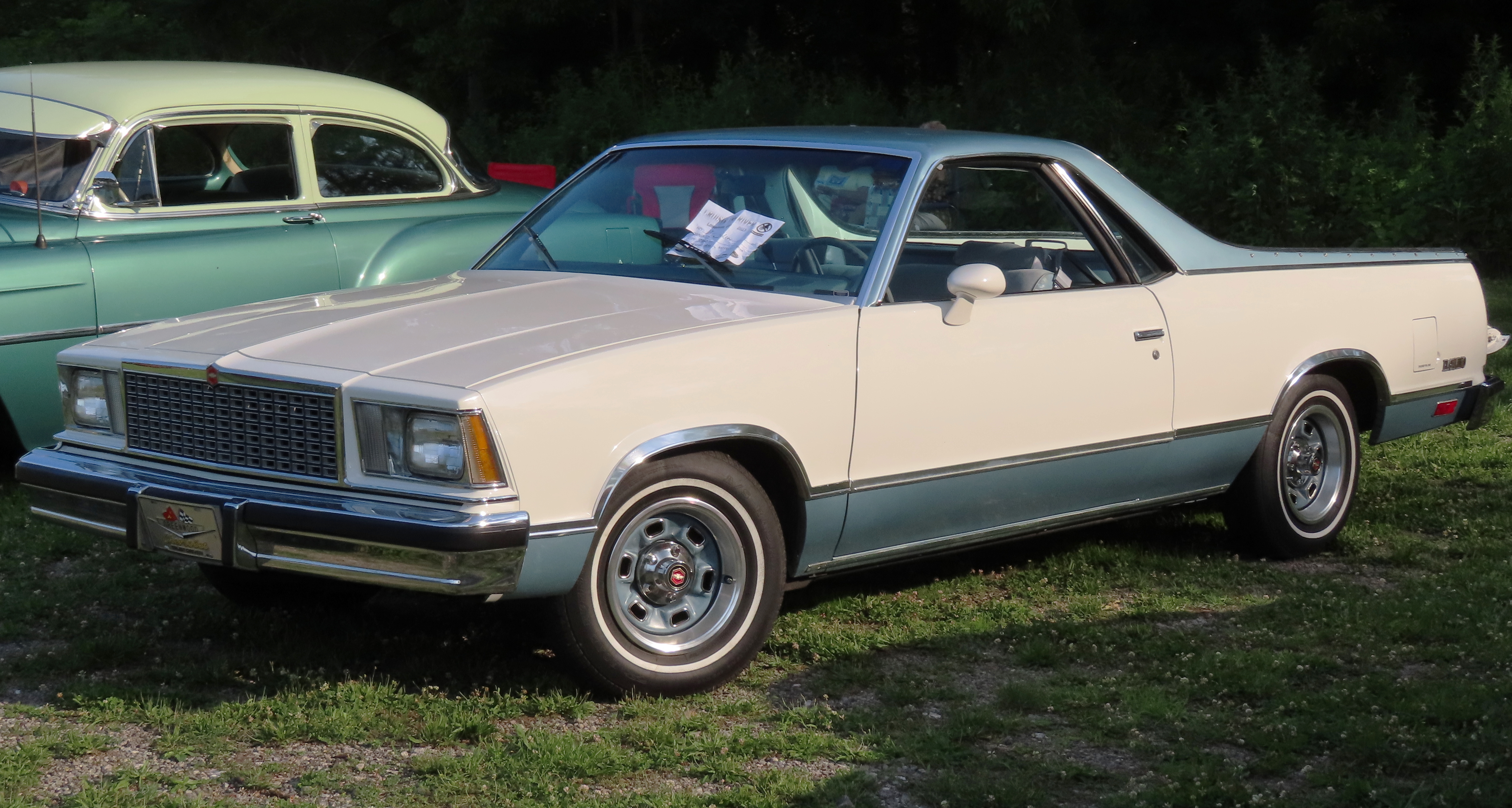
Chevrolet El Camino
"... your next question, I just want to say I want an El Camino and a Mustang convertible. That's what I... that ..."
The Chevrolet El Camino is a car that also has a truck bed. It’s a unique type of vehicle that can carry some cargo like a pickup but drives more like a car. People often bring it up because it’s a distinctive classic.
The Chevrolet El Camino is a classic “car-based” pickup, built on a passenger-car platform with a truck bed. It’s often discussed as a unique blend of style and utility, which is why it comes up in enthusiast conversations alongside other iconic cars. In the podcast context, it’s mentioned as a personal wish list item, reflecting its cultural and collector appeal.

2005 Lexus RX330
"A couple of years ago, we bought a 2005 Lexus RX330 beautiful car. I love it. It's a 3.3 liter automatic of course."
The 2005 Lexus RX330 is a luxury SUV with a 3.3-liter V6 engine and an automatic. People buy it because it’s comfortable and tends to last a long time if it’s cared for.
The Lexus RX330 is a mid-size luxury SUV from Lexus’s RX line, powered by a 3.3-liter V6 and paired with an automatic transmission. It’s often chosen for a smooth ride and long-distance comfort, and it’s known for being relatively durable when maintained.
battery
"But I've got an issue with the battery I bought it from. I bought it from a dealer at Brand New Chevy dealer."
A car battery provides electrical power for starting the engine and running electronics when the engine isn’t producing power. If a battery is failing or was sold with an issue, you can see symptoms like hard starts, warning lights, or intermittent electrical problems.
factory radio guy
"But it was maybe about a couple months later, the factory radio guy. And I said, OK, I've got a wonderful mechanic who's done tremendous amount of stuff for me over the years."
That phrase means a specialist who installs or fixes the car’s radio and related wiring. It’s the kind of person you’d call when the audio system needs work.
“Factory radio guy” refers to an installer or shop specializing in the car’s audio system—often including wiring, head-unit installation, and integration with the factory electronics. In older cars, radio installs can be sensitive to power/ground connections and accessory power behavior.
CD player
"I bought a new Ken with you there because I wanted something with a CD player because I still have lots of CDs with me."
A CD player is the part of the car stereo that plays music from CDs. The speaker wanted it because they still had lots of CDs.
A CD player is an in-dash audio unit that reads compact discs for music playback. The speaker specifically wanted one because they still had a library of CDs, which affects what head unit they chose to install.
current draw
"So really, where you start is you check the current draw with everything shut down and everything asleep. You look and see what that draw is."
Current draw is how much electricity your car uses when it’s sitting. If it’s too high, the battery slowly drains even though the car is off. Checking it helps you figure out whether something is causing the drain.
“Current draw” is how much electrical current the car consumes while it’s parked and not actively running. Measuring it (with the car “asleep”) helps you find whether something is draining the battery too much. In this segment, they’re using it to diagnose why the battery goes flat after a couple of weeks.
everything asleep
"So really, where you start is you check the current draw with everything shut down and everything asleep. You look and see what that draw is."
When the car is “asleep,” its computers and electronics are supposed to go into a low-power mode after you turn it off. That’s the best time to measure how much power is still being used. If it’s still using a lot, something may be draining the battery.
“Asleep” refers to the car’s electronic control units entering a low-power state after the vehicle is shut off. This is when you want to measure parasitic draw, because most systems should be dormant. If the draw is still high while “asleep,” it points to an electrical component staying awake or failing.
150 milliamps
"And if it's less than like 150 milliamps or so, that's low. That's where it's supposed to be."
Milliamps are a measure of how much electricity the car is still using while it’s off. The speaker is giving a rule-of-thumb number—around 150 milliamps—to judge whether the battery drain is normal or excessive. Higher than that can mean a problem is keeping something powered.
Milliamps are a unit of electrical current, and “150 milliamps” here is being used as a rough threshold for acceptable parasitic draw. The idea is: if the car’s off-state current draw is below that level, it’s likely normal; if it’s higher, something may be draining the battery. This is a practical diagnostic benchmark for no-start/flat-battery complaints.

Chevrolet Camaro
"...go longer than others. But for my car, I've got a Camaro that if it sits for, it's about four weeks. It's ..."
The Chevrolet Camaro is a sporty car made for performance and driving fun. If it sits unused for a while, the battery can lose charge. People talk about how long they can leave it parked before they need to recharge or maintain the battery.
The Chevrolet Camaro is a performance-focused American sports coupe/convertible known for its powerful engines and strong enthusiast following. In a discussion about battery or vehicle “sitting” time, it’s relevant because owners may notice how long the car can sit before the battery needs attention. That kind of real-world ownership detail often comes up when talking about maintenance and storage.

Dodge Charger
"...intaining device. Optima makes a great maintainer charger that tells you the state of the battery and it ju..."
The Dodge Charger is a larger car that can be built for strong performance. If you don’t drive it often, the battery can run down. A battery maintainer helps keep the battery at the right level so the car starts when you need it.
The Dodge Charger is a full-size, performance-oriented sedan that’s often discussed for its powertrain options and everyday drivability. In the podcast context, it’s mentioned alongside a battery maintainer, which points to a common ownership topic: keeping the battery healthy when the car isn’t driven regularly. That makes it relevant for discussions about preventing battery drain and starting issues.
maintainer charger
"Optima makes a great maintainer charger that tells you the state of the battery... So with a maintainer on it, it's going to fluctuate that battery and keep it in an active state..."
This is a special kind of charger meant for leaving on for days or weeks. It helps keep the battery ready without overcharging it.
A maintainer charger is designed for long-term connection to a battery, unlike a typical charger used only for recharging after a deep discharge. It uses controlled charging to keep the battery in an “active” state and reduce the risk of sulfation and self-discharge effects while the car is parked.
Optima
"Optima makes a great maintainer charger that tells you the state of the battery and it just does everything you'd need to do for that vehicle."
Optima is a company that makes car batteries and battery chargers. Here they’re recommending one of their chargers to help keep a battery healthy when the car sits.
Optima is a battery brand known for performance-focused batteries and chargers/maintainers. In this segment, the host points to an Optima maintainer charger that monitors battery condition and helps prevent discharge during storage.
cars go dead when they sit
"It'll give you more details on how all that works and why cars go dead when they sit and things like that."
When a car isn’t driven, the battery can still lose power slowly. Small electronics keep using a little electricity until the battery gets too low to start the car.
This describes a common storage problem: when a car sits, the battery can discharge due to self-discharge and small “parasitic” electrical loads (like alarm systems, modules, and clocks). Over time, the battery voltage drops enough that the engine won’t crank.
100% charge
"It's not going to really get to 100% charge. It's going to take up like a week of driving to get there"
“100% charge” refers to the battery reaching its full state of charge. The host is explaining that if the battery has dropped low, it may take longer than expected to fully recover, especially with a maintainer that prioritizes safe, gradual charging.
clear hose
"I would replace that with a, after the, you know, where the fuel pump, before it comes in there on the suction side, I would replace that with a section of clear hose. So you can see, so you can see what it looks like."
A clear hose is just a see-through piece of fuel line. It lets you watch whether fuel is flowing smoothly or if air is getting in, which can cause the engine to run poorly.
A clear hose is a transparent section of fuel line you install temporarily so you can visually inspect fuel flow. In this context, it helps you spot air bubbles or fuel starvation as the fuel pump pulls fuel from the tank.
suction side
"I would replace that with a, after the, you know, where the fuel pump, before it comes in there on the suction side, I would replace that with a section of clear hose. So you can see, so you can see what it looks like."
The suction side is where the fuel pump is “pulling” fuel from the tank. If something is blocking the flow or letting air in, the engine may not get enough fuel.
The suction side is the part of the fuel system where the fuel pump pulls fuel from the tank. Air leaks or restrictions on this side can cause the pump to ingest air instead of liquid fuel, leading to intermittent running or stalling.
fuel is disappearing and it's turning to air
"So you can see, so you can see what it looks like. If you see that the fuel is disappearing and it's turning to air there, that means you've got something going on."
If you see bubbles or the fuel seems to vanish in the clear line, that usually means air is getting into the fuel system. That can stop the engine from getting the fuel it needs.
This describes a diagnostic sign where the fuel line shows bubbles or the fuel level drops as the pump draws in air. It typically indicates air ingestion from a leak, a clogged pickup/screen, or a restriction that prevents steady fuel supply.
restriction
"If you see that the fuel is disappearing and it's turning to air there, that means you've got something going on. There's a restriction in that tank."
A restriction is a blockage or narrowing in the fuel path. It can limit how much fuel gets through, so the engine doesn’t get a steady supply.
A restriction is anything that partially blocks fuel flow in the line or pickup inside the tank. Even if the tank is clean, a restriction can still cause fuel starvation by preventing enough liquid fuel from reaching the pump.
fuel gauges
"They do sell really cheap fuel gauges that you can, you can pick up online, like for 10, 20 bucks that you could put in line and leave it there to, to see what you're at."
They’re talking about cheap tools you can put in the fuel line to help you see what the fuel is doing. It’s a way to diagnose problems without guessing.
In this segment, “fuel gauges” refers to inexpensive inline fuel-level indicators that can be installed in the fuel line to monitor flow/condition. The idea is to use them as a temporary diagnostic tool to see what’s happening during operation.
screen
"And it had a, where the, where the drain was in the tank, where the, you know, I cleaned the tank out and everything, but it had a below the screen, like the screen was in there. But past that there was some trash in there that was clogging up the line."
The screen is a small mesh filter near the tank outlet. Dirt can build up behind it, blocking fuel flow even if the screen surface looks fine.
A screen in the tank pickup area is a filter-like mesh that helps keep debris from entering the fuel line. If dirt collects behind the screen, it can still clog the line and cause intermittent fuel starvation even when the screen itself looks clean.
starve it for fuel
"But past that there was some trash in there that was clogging up the line. So it would, it would starve it for fuel every once in a while."
“Starve it for fuel” means the engine isn’t getting enough fuel. When that happens, it can run poorly or shut off until the fuel supply is restored.
To “starve” the engine for fuel means the engine isn’t receiving enough fuel to run consistently. In fuel-line diagnostics, this often happens when debris or air ingestion interrupts steady fuel delivery to the pump and engine.
fuel pump
"But if it is good and we don't have any pressure coming out of the pump, then we know that the pump is, is getting weak. When it's getting hot, it's not able to pump fuel."
The fuel pump is the part that sends gas from the tank to the engine. If it can’t keep up (especially when it’s hot), the engine may not get enough fuel and will die.
A fuel pump is the component that supplies pressurized fuel to the engine. When it’s weak—especially when it gets hot—it may not deliver enough pressure, causing fuel starvation and engine shutdown.
fuel pressure
"I bet that's, you've got to be losing, either you're losing fuel pressure because the pump is not doing it or you're losing fuel."
Fuel pressure is how hard the car’s fuel pump pushes gas to the engine. If that pressure is too low, the engine doesn’t get the right amount of fuel and can stall or die.
Fuel pressure is how strongly the fuel pump pushes gasoline (or other fuel) through the fuel lines to the injectors. If fuel pressure drops, the engine may start poorly, run rough, or shut down because the injectors aren’t getting enough fuel.
coil
"And if you don't want to mess with the fuel system, you can just check the spark side, get a voltmeter put on the, on the coil and drive it and watch it."
The coil is the part that boosts the car’s electricity so it can create the spark at the spark plug. If the coil isn’t getting the right voltage, you may have no spark and the engine won’t run.
The ignition coil is an electrical transformer that steps up battery voltage to the high voltage needed to produce spark. The host mentions checking voltage at the coil with a voltmeter to determine whether the coil is being commanded properly.
volt meter
"And if you don't want to mess with the fuel system, you can just check the spark side, get a voltmeter put on the, on the coil and drive it and watch it."
A voltmeter is a tool that measures electrical voltage. In this context, it’s used to see if the ignition-related power is present until the moment the engine shuts down.
A voltmeter measures electrical voltage, which can help diagnose whether the ignition system is receiving power. Here, it’s used to watch battery/coil-related voltage while the engine is running and then dying.
primary side
"But, you know, are we losing the primary side of that coil for the, are we losing like voltage going into it?"
The primary side is the part of the ignition coil that gets the car’s regular battery-level power. If that side loses power, the coil can’t do its job and you’ll lose spark.
The coil’s primary side is the lower-voltage input side that receives power from the ignition system. Checking whether the primary side loses voltage helps pinpoint whether the problem is upstream (power/control) versus on the engine-side ignition output.

Ford F150
"I have a 22 F-150. I called a couple of weeks ago regarding a whistle noise."
A Ford F-150 is a popular full-size pickup truck. Here, the problem is happening in the rear drivetrain area—the rear differential—so the truck can make unusual noises and vibrations.
Ford F-150 is a full-size pickup known for being widely used as a daily driver and work truck, so drivetrain noises and wear issues are common topics. In this call, the owner’s 2022 F-150 has a whistle noise that the shop traced to the rear differential, which is a key part of how power is delivered to the rear wheels.
rear differential
"they had to rebuild the rear differential. After they did that, they said that they caused a vibration."
The rear differential is the part that sends power to the rear wheels and allows them to turn at slightly different speeds. If it’s rebuilt and then you get vibration or metal in the fluid, it can mean the gears or bearings may still be damaged or misassembled.
The rear differential is the gear unit that lets the rear wheels rotate at different speeds while transferring engine torque to the axle. When it needs a rebuild, metal in the differential fluid can indicate internal wear or damage, and any new vibration after the repair can suggest something is not set up correctly.
rear axle
"They're, they're having to replace the rear axle, a bearing and a seal. But my question is with finding a lot of metal in the rear differential fluid,"
The rear axle is the assembly that carries the differential and delivers torque to the rear wheels. If the shop is planning to replace the rear axle along with bearings and seals, it suggests they suspect damage or misalignment in the axle/differential mounting area, not just internal differential gears.
bearing and a seal
"They're, they're having to replace the rear axle, a bearing and a seal. But my question is with finding a lot of metal in the rear differential fluid,"
A bearing supports rotating components and allows them to spin smoothly with controlled friction. A seal prevents differential fluid from leaking out; if either is damaged, you can get noise, vibration, and fluid loss—sometimes also leaving debris that worsens wear.
metal in the oil
"One, when I rebuild that, I'm going to say, Frank, you've got metal in the oil in the rear end. We're going to, let's just replace the whole unit with a certified use one, save you a ton of money or a rebuilt unit. But two, if there really was no metal in that oil when they rebuilt it and now there's a vibration after it's rebuilt."
If there’s metal in the oil, it usually means parts inside are grinding or wearing down. That debris can cause rough running or vibration because it’s moving through the system.
“Metal in the oil” refers to metal particles circulating in the differential/axle fluid, typically from gear or bearing wear. In this segment, the idea is that debris can accumulate and contribute to abnormal behavior like vibration, and it’s used as a diagnostic clue for whether the rebuild addressed the root cause.
rear end
"One, when I rebuild that, I'm going to say, Frank, you've got metal in the oil in the rear end. We're going to, let's just replace the whole unit with a certified use one, save you a ton of money or a rebuilt unit."
“Rear end” here means the parts in the back of the car that help the wheels work together. If there’s metal in the fluid, it usually means something inside is wearing out or got damaged.
In this context, “rear end” means the drivetrain components at the back of the car—most importantly the differential and related gears. When the host talks about metal in the oil in the rear end, they’re pointing to internal wear or damage inside that rear drivetrain unit.
certified use one
"We're going to, let's just replace the whole unit with a certified use one, save you a ton of money or a rebuilt unit. But two, if there really was no metal in that oil when they rebuilt it and now there's a vibration after it's rebuilt."
“Certified use one” appears to mean a certified used replacement unit—an axle/differential assembly that’s been inspected and verified by the seller or rebuilder. The host contrasts this with paying for a rebuild, framing it as a way to reduce cost while still getting a known-good unit.
bearings
"I don't think that, you know, if you got some metal filings in there, those are big, heavy gears back there. And it's very unlikely there's going to be any damage there. And they're probably replacing the bearings anyways, which would take the load of that problem."
Bearings are small parts that let rotating gears spin smoothly. If the shop replaces the bearings, it can remove the cause of vibration even if there was debris in the fluid.
Bearings are precision components that support rotating parts and reduce friction inside the differential. The host suggests that bearings are likely being replaced during the rebuild, which can help eliminate the source of vibration even if metal debris was present.

Subaru Forester
"What's the vehicle? A Subaru Forester."
The Subaru Forester is a popular Subaru SUV/crossover. It’s usually straightforward to transport because it’s a normal, everyday vehicle size and shape.
The Subaru Forester is a compact crossover known for standard all-wheel drive and practical, family-friendly packaging. In a transport question like this, it’s a useful example because it’s common and typically easy to ship compared with low-clearance exotics.
flatbeds
"And there's a lot of guys that have flatbeds, independent drivers, they're towing other stuff [2762.6s] and they'll put a car on."
A flatbed is a trailer that has a flat platform for hauling cars. Cars can be loaded using ramps or a lift instead of being driven on like a normal car carrier.
A flatbed is a type of tow/transport trailer with a flat, open deck for loading vehicles. Because it’s open and can be equipped with ramps or a winch, it’s commonly used to move cars across long distances without driving them onto the trailer.
hydraulic lift
"where they can come to your house and get it like reliable carriers or whatever that has a hydraulic lift. [2778.8s] That's going to be more money."
A hydraulic lift is a machine that uses fluid pressure to lift heavy things. For shipping a car, it helps raise the car onto the truck and lower it back off safely.
A hydraulic lift is a powered lifting mechanism that uses pressurized fluid to raise and lower a platform or ramp. In vehicle transport, it can make loading/unloading easier at a customer’s location, especially when there’s no dock available.

Dodge Dakota
"...rom like down in Georgia, Texas, up here to South Dakota. And they're 1300 bucks when they're thrown on a ..."
The Dodge Dakota is a pickup truck. The podcast is talking about finding them for low money, which usually means older or higher-mileage examples. If you’re shopping on a budget, it’s the kind of truck people look for because it can be relatively affordable.
The Dodge Dakota is a pickup truck known for being a more compact, practical truck option compared with larger full-size pickups. In the podcast context, it’s mentioned in relation to pricing and availability (“they’re 1300 bucks when they’re thrown on a…”), which suggests a discussion about budget used trucks and what you might realistically find. That makes it relevant for cost-conscious ownership and shopping conversations.
reefer van
"And they're 1300 bucks when they're thrown on a flatbed load with something else [2801.4s] or in the back of a reefer van when there's other stuff coming."
A reefer van is a truck with a built-in cooling system. The speaker is saying sometimes a car gets shipped along with other goods in that kind of truck.
A reefer van (refrigerated trailer) is a cargo vehicle with temperature control. In the context of car shipping, the speaker is describing cars being transported as part of a mixed load in a refrigerated carrier rather than on a dedicated car trailer.
tow truck
"But when they're hauled by a professional carrier that comes to your house, [2809.0s] drives it in like a tow truck, it could be 2,500 bucks."
A tow truck is a specialized vehicle used to recover and move cars, typically with equipment like a boom, winch, or flatbed. Here, it’s used as a comparison for a more direct, pickup-at-your-house style of transport.
insured and bonded
"And there's a lot of them that'll say certified to move it. [2818.7s] They're insured and bonded. [2820.5s] Things like that."
“Insured” means the carrier has coverage that can pay for certain losses or damages during transport. “Bonded” means the carrier has a surety bond, which provides financial protection if the carrier fails to meet contractual or legal obligations.
Request an Explanation
Heard something you'd like explained? We'll add it to this episode.
Sign in to request explanations for terms you heard.
Want to learn more?
Browse our glossary for plain-English explanations of automotive terms, jargon, and concepts.
Help improve this episode
See something that's not quite right? Our annotations are AI-generated and can sometimes miss the mark. Click the flag icon on any annotation to suggest a correction.