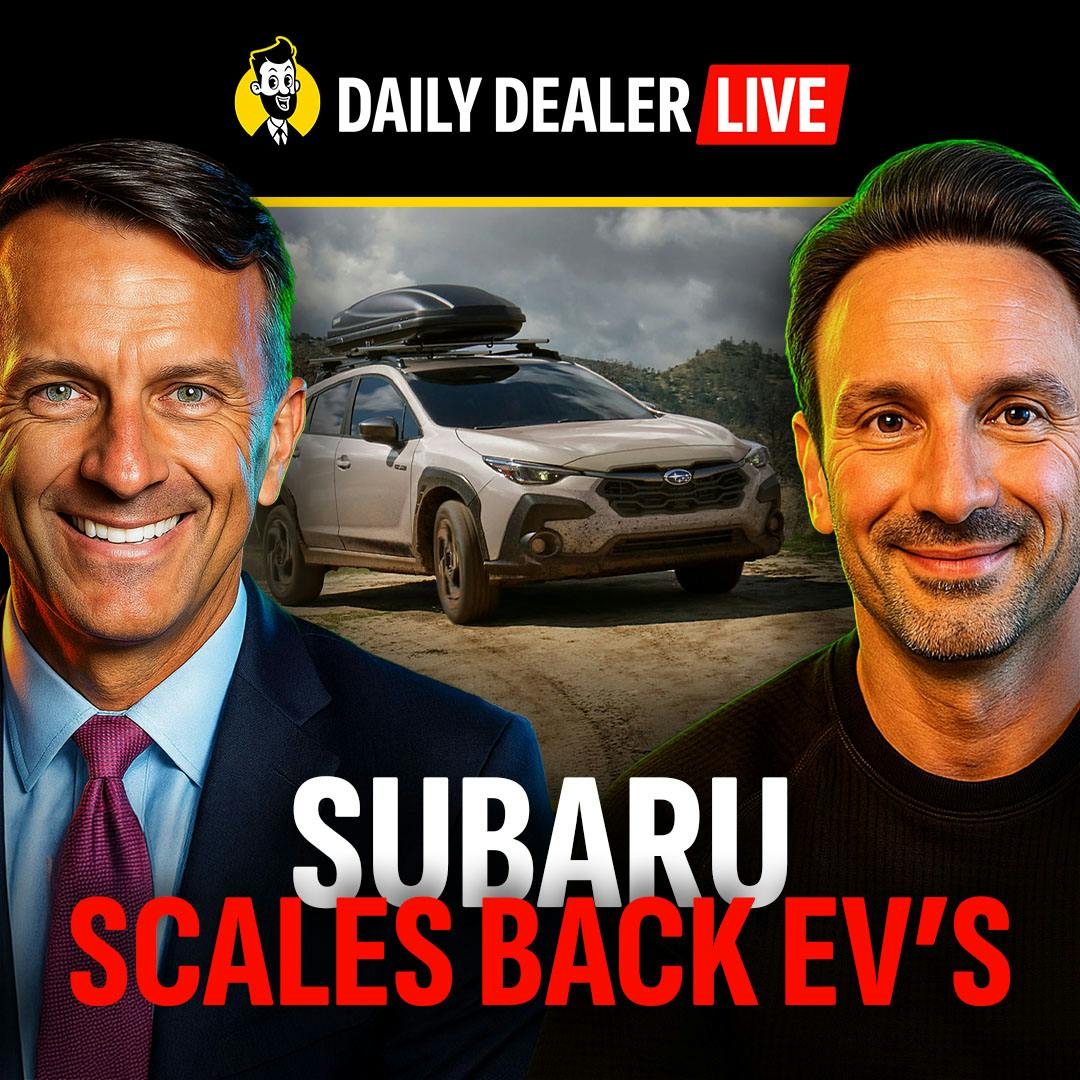
C.M. Dark hosts a lively discussion on the current state of the automotive industry, featuring insights from Alex Perdicas on navigating the government shutdown's impact on sales, and Michael Wood on improving dealership performance. The episode highlights Lithia Motors' recent acquisitions, the challenges in the used car market, and strategies for managing subprime financing. Nick Huff shares his approach to sourcing used cars and the importance of maintaining strong relationships with customers. The conversation emphasizes community engagement and adapting to market changes, making it a valuable listen for industry professionals.
Today's show features:
Alex Perdikis, CEO, Koons Motors, Inc.
Michael Wood, GM of Jaguar Land Rover Chantilly
Nick Huff, Used Car Director at Fred Martin Superstore
This episode is brought to you by:
Stream Companies – A full-service, fully integrated, tech-enabled advertising agency that drives measurable results through performance marketing, creative and content development, and proprietary AdTech solutions. Our innovative platforms, including the Retail Ready platform and Integrated Marketing Cloud, empower brands to optimize performance and accelerate growth. To learn more, visit https://www.streamcompanies.com/
CDG Circles – A modern peer group for auto dealers. Private dealer chats. Real insights — confidential, compliant, no travel required. Visit https://cdgcircles.com/ to learn more.
Car Dealership Guy is back with our second annual NADA Party—happening in Las Vegas on Thursday, February 5th. It’s the hottest ticket at NADA 2026. Spots are limited and unfortunately we can't invite everyone —so RSVP today at https://carguymedia.com/cdglive and we hope to see you in Vegas!
—
Check out Car Dealership Guy’s stuff:
CDG News ➤ https://news.dealershipguy.com/
CDG Jobs ➤ https://jobs.dealershipguy.com/
CDG Recruiting ➤ https://www.cdgrecruiting.com/
My Socials:
X ➤ https://www.twitter.com/GuyDealership
Instagram ➤ https://www.instagram.com/cardealershipguy/
TikTok ➤ https://www.tiktok.com/@guydealership
LinkedIn ➤ https://www.linkedin.com/company/cardealershipguy/
Threads ➤ https://www.threads.net/@cardealershipguy
Facebook ➤ https://www.facebook.com/profile.php?id=100077402857683
Everything else ➤ dealershipguy.com
"...Lithia Motors is back in the headlines after acquiring Porsche, Beverly Hills and Audi Santa..."
Lithia Motors is a big company that owns many car dealerships in the U.S., selling different car brands.
Lithia Motors is one of the largest automotive retailers in the United States, operating numerous dealerships across various brands. They focus on acquiring and managing dealerships to increase their market presence.
"...Lithia Motors is back in the headlines after acquiring Porsche, Beverly Hills and Audi Santa..."
Porsche is a famous car company from Germany that makes fast and luxurious cars, like the 911 sports car.
Porsche is a renowned German automobile manufacturer known for its high-performance sports cars, SUVs, and sedans. The brand is famous for models like the Porsche 911 and Cayenne.
"...acquiring Porsche, Beverly Hills and Audi Santa..."
Audi is another well-known car brand from Germany that makes luxury cars, known for their quality and technology.
Audi is a German automobile manufacturer that is part of the Volkswagen Group. Known for its luxury vehicles, Audi combines performance with advanced technology and design.
"Automotive has picked up right-way Hyundai in Jamesboro, Virginia from Mark Wright. The newly renamed Williamsboro Hyundai continues Fred Timbrook Jr.'s steady expansion along the eastern seaboard."
Hyundai is a car company from South Korea that makes many types of vehicles, including sedans and SUVs. They are known for making affordable and reliable cars.
Hyundai is a South Korean automotive manufacturer known for producing a wide range of vehicles, from compact cars to SUVs. The brand has gained popularity for its value, reliability, and warranty offerings.
"...expansion along the eastern seaboard. Timbrook has now grown to 20 dealerships adding several Hyundai, Mazda and Chevy stores in the past year alone."
Mazda is another car company from Japan that makes cars known for being fun to drive. They have a reputation for stylish designs and good performance.
Mazda is a Japanese automaker recognized for its innovative engineering and sporty vehicles. The brand is particularly known for its use of the rotary engine and its focus on driving dynamics.
"...expansion along the eastern seaboard. Timbrook has now grown to 20 dealerships adding several Hyundai, Mazda and Chevy stores in the past year alone."
Chevrolet, or Chevy, is a well-known car brand in the United States that makes many types of vehicles, including trucks and sports cars. They are famous for models like the Corvette and Silverado.
Chevrolet, often referred to as Chevy, is an American automobile brand known for a wide range of vehicles, including trucks, SUVs, and sports cars. It is a subsidiary of General Motors and has a long history in the automotive industry.
"According to Edmunds, the average transaction price for three-year-old vehicles hit $31,067 in Q3."
The average transaction price is the usual price people pay for cars after they negotiate. It helps show how much people are spending on cars these days.
The average transaction price refers to the typical amount paid by consumers for vehicles after negotiations and discounts. It serves as a key indicator of market trends and consumer spending in the automotive industry.
"But EVs were the exception ahead of the federal tax credit cutoff. They sold faster than any other segment averaging just 34 days on lot."
The federal tax credit is money the government gives back to you when you buy an electric car. It helps lower the price you pay for the car.
The federal tax credit for electric vehicles (EVs) is a financial incentive provided by the government to encourage the purchase of EVs. This credit can significantly reduce the overall cost of the vehicle for buyers, making it more affordable.
"...but Cox says lenders offset that by writing more subprime loans, stretching loan terms past 72 months and allowing smaller down payments."
Subprime loans are loans given to people who might have trouble paying them back because of bad credit. They usually have higher interest rates because of this risk.
Subprime loans are offered to borrowers with lower credit scores, indicating a higher risk of default. These loans typically come with higher interest rates to compensate for the increased risk.
"...when many of these customers return to the dealership in a more precarious financial position, a.k.a. upside down on that 72 or Heaven Help Us 84-month loan."
If you're 'upside down' on a loan, it means you owe more money than your car is worth. This can make it hard to sell or trade in your car without losing money.
Being 'upside down' on a loan means that the borrower owes more on the loan than the asset is currently worth. This situation can lead to financial difficulties, especially when trying to sell or trade in the vehicle.
"Finally, up today, Subaru is tapping the brakes on its EV plans. The automaker says it's retooling..."
Subaru is a car company from Japan that makes vehicles known for being safe and good for driving in tough weather conditions.
Subaru is a Japanese automaker known for its all-wheel-drive vehicles and a strong reputation for safety and reliability. They have a loyal customer base, particularly among outdoor enthusiasts.
"Finally, up today, Subaru is tapping the brakes on its EV plans. The automaker says it's retooling..."
An EV, or electric vehicle, is a car that runs on electricity instead of gas. They are better for the environment and can save you money on fuel.
EV stands for electric vehicle, which is a type of vehicle that is powered entirely by electricity rather than gasoline or diesel. EVs are known for being environmentally friendly and often have lower operating costs.
"...what customers actually want right now, which is more hybrids and fuel-efficient gas models."
Hybrids are cars that use both gas and electricity to run. This helps them use less fuel and produce fewer emissions than regular cars.
Hybrids are vehicles that use both an internal combustion engine and an electric motor to improve fuel efficiency and reduce emissions. They can run on either or both power sources, depending on driving conditions.
"...anybody that owns a Ford Lincoln or Mazda, and it does not have to be purchased from any, any of the Coons Motors dealerships. Okay. So anybody in the DMV that owns a Ford Lincoln or Mazda, that it was..."
Lincoln is a luxury car brand that is part of Ford. They make high-end cars that focus on comfort and style, similar to brands like Lexus or BMW.
Lincoln is the luxury vehicle division of Ford Motor Company, known for producing premium sedans and SUVs. The brand emphasizes comfort, technology, and upscale features.
"...anybody that owns a Ford Lincoln or Mazda, and it does not have to be purchased from any, any of the Coons Motors dealerships. Okay. So anybody in the DMV that owns a Ford Lincoln or Mazda, that it was..."
Ford is a well-known car company that makes many types of vehicles, like trucks and cars. They have been around for a long time and are famous for making the first cars that were affordable for many people.
Ford is a major American automotive manufacturer known for producing a wide range of vehicles, including cars, trucks, and SUVs. Founded by Henry Ford in 1903, the company is famous for its innovative assembly line production techniques.
"...they got their car in for service, and they're staring at a $6,000 transmission bill. And, you know, they got to make a decision..."
The transmission is like the part of the car that helps it change gears and move. It connects the engine to the wheels, making sure the car can drive smoothly.
The transmission is a crucial component in a vehicle that transfers power from the engine to the wheels, allowing the car to move. It can be either automatic or manual, affecting how the vehicle operates and performs.
"...we're also a volume Stellantis dealer. So we are put into that play of the..."
Stellantis is a large car company that makes many different brands of vehicles. It was created when two big car companies joined together.
Stellantis is a multinational automotive manufacturing corporation formed from the merger of Fiat Chrysler Automobiles and PSA Group. It encompasses a variety of well-known automotive brands, including Jeep, Dodge, Chrysler, and Peugeot.
"...For everybody who's not familiar with the stair step program, in particular Stalantis, tell us what it is."
A stair step program is a way for car manufacturers to reward dealers for selling more cars. The more cars they sell, the bigger the bonuses they can earn, similar to climbing stairs.
A stair step program is an incentive structure used by automakers to encourage dealerships to sell more vehicles. Dealers earn bonuses based on the number of cars sold, with increasing rewards at different sales thresholds, hence the term 'stair step.'
"...those subprime customers you keep for life. Let's get into, you know, a little bit of the how..."
Subprime customers are people who have lower credit scores, making it harder for them to get loans. Car dealerships often work with these customers to help them buy cars and keep them as long-term clients.
Subprime customers are individuals with lower credit scores who may have difficulty securing traditional financing for a vehicle. Dealerships often target this demographic to sell cars, as they can build long-term relationships with these customers.
"...we're sourcing a lot from our trade-ins, our new car department, which is our favorite way..."
Trade-ins happen when someone gives their old car to a dealership to help pay for a new one. This helps the dealership get more used cars to sell.
Trade-ins refer to the practice of customers exchanging their old vehicles as part of the payment for a new or used car. This is a common way for dealerships to acquire used inventory.
"...we're also very aggressive from what we call a street purchase, you know, acquisition front..."
Street purchases are when dealerships buy cars directly from people in the community who want to sell them. This helps the dealership get more cars to sell.
Street purchases involve acquiring vehicles directly from individuals in the community who want to sell their cars. This method allows dealerships to expand their inventory without relying solely on trade-ins or auctions.
"Well, in summary, it's just a flat commission we pay per car they buy. And we recently changed it."
A flat commission means that salespeople earn a set amount of money for each car they buy, no matter how much the car costs. This encourages them to buy more cars quickly.
A flat commission is a fixed amount paid to sales staff for each sale they make, regardless of the sale price. This incentivizes salespeople to acquire more cars quickly, as their earnings are directly tied to the number of transactions they complete.
Term
$10,000 to $20,000 cars
"which for our area is, you know, 10,000 to 20,000 dollar cars. And for those cars, just to throw a number out there..."
$10,000 to $20,000 cars are vehicles that cost between ten and twenty thousand dollars. These are usually more affordable options for many buyers.
This price range refers to the typical market value of the cars being acquired by the sales staff. Cars in this range are often considered affordable and appealing to a wide range of buyers, making them easier to sell quickly.
"...what are you doing to maintain synergy between these departments? Well, we have a good person in place that manages our reconditioning for the majority of our pre-owned cars..."
Synergy means working together effectively. Here, it means the used car department and the service department are cooperating to do their jobs better, which helps the dealership run smoothly.
Synergy between departments refers to the collaborative interaction between different areas of a business, in this case, the used car and service departments. This collaboration can enhance efficiency and improve the overall performance of the dealership.
"...manages our reconditioning for the majority of our pre-owned cars. And again, he's just like our other managers..."
Reconditioning is fixing up used cars so they look and work better before selling them. It includes cleaning and making any necessary repairs.
Reconditioning refers to the process of repairing and refurbishing used cars to bring them up to a saleable condition. This can include mechanical repairs, cleaning, and cosmetic touch-ups to enhance the vehicle's appeal.
"so in some of those OEMs that do stair step. So Stellantis, Hyundai, Nissan, some of those,"
Nissan is a car company from Japan that makes a variety of vehicles, including electric cars and popular sedans.
Nissan is a Japanese automotive manufacturer known for its diverse lineup, including electric vehicles like the Leaf and popular models like the Altima and Rogue.
"... How do you deal with CarMax and Carvana offers that walk into your store? ..."
CarMax is a company that sells used cars at set prices, making it easier for people to buy without negotiating.
CarMax is a used car retailer known for its no-haggle pricing and large inventory of vehicles. It simplifies the car buying process by offering fixed prices.
"...it was Mercedes Benz. It was Infinity. It was JLR, Jag Land Rover,..."
Infiniti is a luxury car brand that comes from Nissan. They make high-end cars that are designed for comfort and style.
Infiniti is the luxury vehicle division of the Japanese automaker Nissan. It offers a range of premium sedans and SUVs that focus on performance and comfort.
"...It was Infinity. It was JLR, Jag Land Rover,..."
Jaguar Land Rover is a company that makes luxury cars. Jaguar is known for sporty cars, while Land Rover makes tough, off-road vehicles.
Jaguar Land Rover is a British automotive company that produces luxury vehicles under the Jaguar and Land Rover brands. They are known for their stylish designs and off-road capabilities.
Select text to request an explanation
Hey everybody, welcome back to another episode of The Daily Dealer Live!
I'm your host C.M. Dark and welcome to this the space where Automotive comes together to learn,
to share, to grow. Thanks for choosing to be here on this Wednesday, November 12th. Let's jump
straight into today's auto industry headlines. First up today we turn to the CDG Bicell Tracker
Lithium Motors is back in the headlines after acquiring Porsche, Beverly Hills and Audi Santa
adding an estimated $450 million in annual revenue to its portfolio. Lithia says the two
stores are positioned to become among the highest volume dealerships in the world for their respective
brands. That brings Lithia's total acquired annualized revenue for the year to an estimated $2.1
billion larger than some of the largest private groups. Meanwhile on the east coast, Timbrook
Automotive has picked up right-way Hyundai in Jamesboro, Virginia from Mark Wright. The newly
renamed Williamsboro Hyundai continues Fred Timbrook Jr.'s steady expansion along the eastern
seaboard. Timbrook has now grown to 20 dealerships adding several Hyundai, Mazda and Chevy stores
in the past year alone. Lithia keeps scaling at the national level while operators like Timbrook
are carving out regional dominance. Both are betting on growth through consolidation as retail
competition tightens heading into this next year in the 2026.
Next up today, the used car market's traditional role as a pressure release valve for affordability
is being tested. It's being challenged, leaving buyers and dealers alike in a delicate dance
searching for value of mid-rising costs. According to Edmunds, the average transaction price for
three-year-old vehicles hit $31,067 in Q3. That's up 5% year over year, meaning late model used cars
are now brushing up against certain new car model prices, forcing buyers and dealers into tough
for trade-offs. But EVs were the exception ahead of the federal tax credit cutoff. They sold faster
than any other segment averaging just 34 days on lot. The conversation at the dealership level
is turning from simple supply and demand to the nuanced calculus of who can afford to buy and
what they're willing to sell for. And next up today, turning to the finance market,
auto credit loosened slightly in October, even as approval rates dipped according to a new Cox
automotive report. The company's all loans index inched up to 98.3, marking a small month-over-month
gain and a 4% jump year over year that continues a gradual trend of easier credit that started
late last summer. Approval rates actually fell to 72.6%, but Cox says lenders offset that by
writing more subprime loans, stretching loan terms past 72 months and allowing smaller down payments,
all of which made it easier for buyers to get financed. And when lenders loosen credit access,
the dealers often benefit from increased sales volume and higher gross profits in the short
term, especially among subprime and near-prime customers. However, the true operational impact
surfaces during the next purchase cycle when many of these customers return to the dealership in a
more precarious financial position, a.k.a. upside down on that 72 or Heaven Help Us 84-month loan.
Finally, up today, Subaru is tapping the brakes on its EV plans. The automaker says it's retooling
its $10 billion electric fasion strategy to better match what customers actually want right now,
which is more hybrids and fuel-efficient gas models. Subaru president Atsushi Asaki told
reporters the company will delay full-scale EV investments, calling it a growth investment
instead of an all-in-EV push. For dealers, this could bring some near-term relief,
a product lineup that moves faster, aligns better with current buyer demand,
and doesn't require heavy new infrastructure. But at the end of the day, Subaru isn't
abandoning electrification, it's just slowing the pace to protect profitability and align with
market reality. Something Subaru has done all the way through COVID and certainly very well over
the last five to 10 years. And that's a wrap on today's industry news. Yuli, welcome back.
Happy to be here. Joining back in the co-host chair, we got a lot of cool stuff coming up,
not only today. We do. We've got a dealer here to talk a little bit. Government shut down. We've
got great conversation and used cars coming up among other things. But tomorrow on Friday,
Brian Benstock's joining the show for a special roundtable to announce an industry first.
He's teased it in the past on the show last week. 900 service drive vehicle sales. So if you want to
know a little bit more about that, be sure to check in tomorrow, 1 p.m. Eastern, or I'm sorry,
Friday, 1 p.m. Eastern. What would that be? The 14th of November, 1 p.m. And Yuli,
CDG circles. We've talked a little bit about that. The CDG circles are a cool tool. It's a great
conversation as dealers chat peer to peer with other like dealers, similar roles, responsibilities.
Signups close at the end of November. So whoever doesn't register now will be placed,
won't be placed in a group till at least April of 2026, which, I mean, come on, in a world
race to execution, it's kind of a waste of time. So if you want in on that, make sure you join up.
And what a cool conversation we had yesterday or went on Monday with a bunch of dealers,
including with, let's see, we had, oh my goodness, why am I, my mind is probably went blank.
We had, well, so Monday, we had a great conversation. Anyway, there were some,
there were there, there was some information dropped. We're going to actually get a response
to it coming up on Monday. There was some information dropped on Cox's Viato.
Oh, Brian's, Brian Cramer, Brian Cramer. Yeah. Yeah. So Brian Cramer made some comments about
accessibility. Their tool has cars.com to to Carvana and Carmax data. And we're going to give
Cox a chance to respond with their Viato products. So Monday, we'll have a response on that. So
be sure to join us for that if you want more information on that. Other than that,
anything else you leave before we dive into today's show? I think we just got to crush this one.
All right, let's do it. All right. First up today, let's turn to CEO Coons motor,
a not a stranger to the show, Alex Perdicas. Alex, welcome to the show.
Hey gentlemen, how's it going today? It's fantastic. Thanks for being back. We always
enjoy having you on the show. Alex, how's biz? Thank you. Hey, we're ready for this government
to reopen. We're here in the DC market. Business is actually fixed ops is killing it for obvious
reasons. And sales has been not, October was a little softer, a little pullback from the September
and August numbers that we were trending. Traffic was still up, believe it or not,
in September over, I'm sorry, in October, over the prior year. And sales were up a little bit.
So that's a positive. And I think right now, November is actually is trending in the right,
in a better direction. We're actually ahead of October. I think a lot of our, not to say
constituents, but clients that are, you know, government workers here in the area,
because we have several hundred thousand, you know, government employees here,
I think they're feeling the end's coming. So that being said, people are starting to make a,
you know, they're gaining confidence to make a purchase decision. And, you know, we're also running
with a government shutdown program that we launched on October 1, when the government shut down.
So before we go into that, Alex, because I want you to share the program with us.
It's interesting. Anyone who's ever tried to get on an airplane in the past week, 10 days,
has felt the impact of this shutdown through TSA and airport delays, which actually is kind of a
smart strategy. If you think about it from the government standpoint, trying to get
max pressure applied, obviously snap benefits and some of the other programs that government
has out there have been a pain point for those in need of that. How have you in your dealership,
in your dealerships, given your geography, what, how has the shutdown manifest back to you?
Is it a topic talking point with customers? Is it something that they're less interested in
making purchases over? Where are you seeing the pain point, Alex? So the pain, though, I think
it's not every customer that's in the area, but you've got a government shutdown that also
that impacts also federal contract, you know, defense contractors or different government
contractors that are in the area. So it's not just the government employee, you know, that
one person in and of itself. So it kind of spreads, right? It's kind of like a web of,
you know, there's some involvement with the government somewhere, you know, with most,
with a lot of organizations and a lot of people in the area. So it's more of just, I think it's
just more of a concern and it's a confidence issue, right, in terms of wanting to make a decision.
And so I think for us, it's doing what we can as a leader in the community to offer them some
sort of a peace of mind to say, you know what, you know, you've helped us become who we are
in this market. You know, we're, you know, not even seven, eight miles north of the city,
even though we're in Maryland, you know, where our main stores are in Silver Spring, Maryland,
and Bethesda, Maryland, Bethesda, Maryland's not even, you know, it borders on to Washington DC,
Northwest Washington DC. So we're right there. And so we get a lot of, you know, we have a
lot of people that are clients that are obviously been government employees lifetime or even just
current government employees that have been, you know, they might be attorneys, they might, you
can go on and on, all the different facets of employment within the government. So it's just,
it's an impact and somebody may not be a government employee, but they might have a child or a relative
or a niece, nephew, whatever it may be, aunt, uncle, parent that works. And so it kind of has a
trickle down effect on everybody in the area. It's all really people talk about. Now, so with
that said, you know, it's our, I feel like it's our responsibility because these, these clients are
foundation of who our organization has become. And I feel like it's, it's our responsibility to kind
of take that leadership role and offer something back. So it's interesting, you bring that up. So
Grant Cardone was on the show and he once talked about how an automotive, we get really good at
like creating opportunity in chaos, right? Opportunity in adversity. So you've got your
message, which is you want to give back to the customers that put you in the position where you
are. What specific programs did you put in place to help attract those customers? And what was the
net impact of that? So, so two specific items that are out there. Number one, anybody that
owns a Ford Lincoln or Mazda, and it does not have to be purchased from any, any of the Coons
Motors dealerships. Okay. So anybody in the DMV that owns a Ford Lincoln or Mazda, that it was
either, either furloughed or laid off, you know, through this, through this, this, you know, government
shutdown, we will provide you with the free in-home mobile service that includes a whole change and a
tire rotation. So, you know, you never have to, you don't have to come into the dealership, nothing.
I mean, you know, you know, these people obviously aren't at work. So, you know, coming into their
home is probably perfect for most of them. So we will actually come to your home, take advantage of
our mobile service vans that we have with Ford and Lincoln, because we can work on any vehicle.
And it doesn't have to be, you could have bought a used car from us too. It doesn't have to, you
know, you know, we will handle those clients as well. That's a non-brand, right? So with that
being said, you know, anyone, anyone that, that, that takes advantage of it, the van is going to
come to your driveway, we will pull up and it's great, it's great for the client and it's great
for us. We get to show off our vans and all these fantastic neighborhoods around the DMV.
The customer gets a free all change, free tire rotation. Again, they do not have to have bought
a car from us. So that's been, you know, that's one of the big things, right?
So this is only, only during the shutdown, Alex, right? Or once it, okay. And how many
takers have you had on this? So we're over 50, right? We've done 50 so far as of this morning.
We've probably got about another dozen or two dozen, about a little over a dozen
scheduled already for the next week. Because, you know, we're just trying to, you know,
working into the schedule. And we've told everybody too, when the government reopens,
it's going to hopefully, you know, get voted on by the house tonight at 7pm. Once that reopens,
even if you've got it scheduled, as long as it's done scheduled by the time it reopens,
we're still going to honor it. And so Alex, what's your cost in doing those? And then,
and then how would you measure ROI on that? So look, I mean, the, the, the ROI,
no, I'll start with that, is just all the, all the goodwill, right? You can't really measure,
I can't really put a number on it. I've gotten count, I mean, a dozen plus emails, text messages
from, from different clients that have gone either to me or the service writer or the,
or the start service managers, where they just can't believe we're doing this, right?
And so they're the good wills and not to be, not to be negative on other organizations, but
Carmack's ain't doing this. Carvana ain't doing it. Asbury ain't doing it. AutoNation
ain't doing it. I can go on and on, right? Not to, you know, I've challenged them to do it.
I think it'd be great if they did and they, and they can make decisions, but we're the ones that
are also, you know, sponsoring your local youth club. We're the ones, you know, we're going to
hand out 2,000 pies Friday night at this Thanksgiving dinner. Like we do these types
of things. And I'm not saying us Coons as an organization. Oh, the local dealers. And so what
I think is important is that people remember your local privately, family-owned, operated
organization when it comes to times like this, right? Because these other organizations, while
they love to, their bureaucracy would never let them get it done. And what's genius about this,
Alex, is it has a predetermined start, right? And then, you know, it can't drag on forever.
And you're showing support for a group that has been severely impacted by something and letting
the general public know, hey, we support them. Like, you almost want to do two free oil changes
for the TSA guys who will show up and help you gals, who will help you get through the deal.
What does it cost you? Did Ford give any money to help with this? Or what does it cost you for
that oil change in the customer drive? We have, with mobile service, we have some incentives,
just normal standard incentives that Ford has put out there that, you know, just the
usage and the mobile incentives that we have internally with the fixed operations side with
Ford. But there's no extra money or anything like that coming in on this. Again, it's just,
and then, again, the goodwill, getting our name out there, reminding people what we do for the
community. I really don't care if we get card deals out of it or not, whatever. But I mean,
you know, a lot of the press has picked it up. And I mean, you know, obviously, the free advertising
is great. But at the end of the day, I just want those people to remember, especially the ones
that didn't buy from us, that bought maybe from, you know, another store. You're thinking about
that. You're doing something nice, right? I'm going to go to the Coons Ford store in Silver
Spring this time to buy my 1550 because this other store, you know, when I called them up,
they told me to pound Sam. So, you know, like, you know, I think, I think people will always remember
that. And then on the flip side, too, if you want to buy a car, and you've been affected by the
shutdown, we are making your monthly payments until the government reopens. So when did you
start that, Alex? Okay, so and that was on it, we've done a handful of deals, we haven't that
that's been, you know, that and and that were just like with the with the in-home services,
we're charging all this stuff, you know, to our to our goodwill internally, right? So Alex, how
did you ideate this? So it's the beginning of a crisis, you're starting to sense it's significant,
you're hearing everybody in your marketplace talking about it. How did you get to the point
where you're like, Hey, this is the idea, and we can make this work for us. And so I think that the
key is keeping it simple. And so and we were going to elaborate on some other, you know,
inspection items and things like that. My fixed ops director, who's fantastic, you know, we both
just said, you know what, let's just make it about all changes, right? Keep it simple. It's
like the Ford, you know, employee pricing program back in the summer, keep it simple. When we're
saying free and home old change, right? That's straightforward. And obviously comes with tire
rotation and so forth as well. But we just said, let's just hammer this, you know, free and home
old change. And so I think keeping the message simple resonates well with the customers, with
our clients. There's other industries in our area have done something like, you know, like a couple
of the local burger joints, for example, they're giving away, you know, free cheese burger to
government employees, like things like that. You just keep it simple. And I think the messaging
resonates really, really well. And I think that's why the service part of it is, you know, is obviously,
you know, gotten so much attention. The sales side of it, it's a little different. It's a little
more, you know, I think as a, as a, someone that just got laid off or not sure what's happening
with their, with their pay, with their pay, hard to make a $50,000 decision, you know, during this
time. So we get that. But we, you know, the handful of deals that we've done were kind of
distressed situations where, you know, at least a couple of them that I was involved with where,
you know, they got their car in for service, and they're staring at a $6,000 transmission bill.
And, you know, they got to make a decision. And so, look, hey, we're here for you folks,
you know, let's get you in a new vehicle, we'll take care of the payments until the government
reopens. And, and we know it's going to last, you know, maybe it does last a few months. But
the reality of it is it's never gone more than what I think 35 days now it's gone over 40.
So it's only going to go for so long. So Alex, just a ton of great comments off
social media, I want to go to a few of them. So Strada Works AI says it's nice to be nice, right?
Which by the way, everybody who's a MASH fan would remember Frank saying it's nice to be
nice to the nice, but MASH fan dates me. So Paul, Paul Salisman says the local dealer is important
to any community because it has more agility to make local impact. Hyper local action is so
important. And yet it's fascinating, Alex, not a lot of people take, I don't want to say take
advantage of it, but a lot of people hear negative news in the news. They wring their hands, run
around circles. The teams kind of get frustrated because it's like, Hey, this is impacting our
sales, this is impacting ourselves, our ability to be excellent. You've often talked about clarity
and consistency as being the backbone of your leadership strategy. This relates to that because
you identified the problem, you went clear to a message that was clear and consistent. And then
you as a team executed on it. Strada Works AI says, do you think your staff feel like they
have a positive purpose too along those lines? What impact to your team? Definitely, absolutely.
I mean, they love the messaging. And I mean, when you're dealing with a client that you've never
dealt with before, that might be 40 miles away and you're launching a mobile service
van into their neighborhood. And they're like in disbelief. They're like, we've never even done
business with you before and you're coming to my home to do this. So I think the service writers
and the service managers that get the feedback, it's a good feeling, right? And I look at our
industry as we're so blessed to be in this business. I feel so lucky to do this every day. I really
do. I have to pinch myself sometimes. I'm like, I can't believe I get to do this as a career.
And you can make such a big impact on people so quickly with just the smallest things. And so we
don't have to overthink it. And, you know, sometimes I think, and I've been, I've been guilty of
trying to come up with these ideas and programs and you start to overcomplicate things and then
you don't really understand why they work, right? So Alex, that would be my next question. So one of
the risks of a program like this is appearing to be tone deaf or trying to capitalize on pain
by tragedy. How do you get to that clear message with confidence that both serves your team because
you've got to win hearts and minds among your employees, but then also connects with the public
in a way that doesn't come across as like predatory or, you know, ambulance chasing, right?
I think the key is don't tie it into any sort of a payment, right, in a sense of so forget the
sales side of it for a second. Think about the fixed ops, you know, the in-home mobile service.
We're not qualifying it with anything. We're not, you know, because we had those ideas too,
like, you know, give them a, you know, give everyone a $500 credit, but then that means
you got to spend something like, you know, I think as long as you don't qualify it with,
you got to do this to get that, right? You actually keep it simple and you got to be
willing to do it, right? Exactly. You got to be willing to do it, right? That's the,
that's the next part, right? So fortunately, knock on wood, you know, we have a really great
organization. We've got great leaders. Our teams perform at an extremely high level,
and we can, we can afford to do it. I mean, if this went on for a year, we could continue to do it.
You know, I'm not, I've no, no hesitation, no doubt. I'm already thinking about the next time,
you know, the next shut down happens, right? It's your government shutdown program go.
I just, I think about it from a customer perspective, and even from an employee
perspective, doing good creates more good. When I just think about that, your, your
mobile service Ford van pulls into the driveway to do a free oil change. And I'm pissed off because
I'm a TSA agent and I've had nothing but grief for the past three or four weeks. Like, you're
going to own me as a customer for a long time. I mean, you're going to have my loyalty and I,
I hope so. Props to you and the entire team for doing that, right? That, that is, that, that,
that is a bold statement in the marketplace and it landed really well. So transitioning a little
bit from that before we have to go, you have really grown into a powerhouse in the mid-Atlantic.
What's, what's driving your current expansion mindset and what's your goal relative to the
expansion? I would tell you, well, first off, it's been like kind of, and we know when it rains
of course, right? So other than what we're already working on, because we're, we're working on
expanding our current operations just from a footprint standpoint, right? So, you know, we've
got, you know, as an example, we've got 40, 46 service bays. I got 47 technicians. Like, you
know, we need, you know, we're looking, we're looking to ramp up our fixed ops. And I can say
that with confidence because of one thing and it's our people. Okay. And I, and, and with, with the
right people, you know, anything's possible, right? You can't do it on yourself. You know,
as much as we try, I get up very early every day. I'm up at four o'clock studying my traffic
reports, studying my grosses, studying all our leads. I mean, that's, I'm obsessed with that,
but I can't do it myself, right? I have to be kind of the person to get people going in my mind.
Like I've got to, you know, I got to, I got to start that day early and get, and get people
tuned up, but I can't do it myself. And I think over, over, you know, I'm going to be going on
30 years in this industry soon. Like you start to realize, you know, after, after, you know,
after a while, how important your people are. So we've had a lot of, I mean, it's been, it's
almost mind boggling the amount of opportunities that have been presented to us in the last,
I'd say 90 days and had a long meeting with a broker yesterday and it was a great meeting. And
I can go into these meetings with confidence because I've got great leaders and without the
great leaders, it's kind of hard to really, you know, sit down and say, okay, we want to do this.
This is what we want to expand in. These are the franchise, you know, and start to really look at
deals in a confident manner. If you don't know who's going to run it at the end of the day.
And truly, I agree 100% with you. The ability to grow and expand is directly proportionate to the
quality of leaders you have. So from your perspective, getting GMs and sales managers and
finance people and sales people to care about the business as much as you do,
execute at a high level, what are one or two key takeaways for other dealers listening
to creating the culture that elicits that care and concern about your business as much as
I would say it starts with the general manager, right? That's the head coach of the team. I look
at, I played football through college and my head coach was everything to me, right?
And your position coach is important. I was a linebacker, defensive coordinator is critical.
Like, you know, you got these important, you know, and I look at those kind of like in the
dealership, like the head coach, the GM, you got the offensive coordinators like the GSM,
you know, the defensive coordinators, your fixed ops director, like, you know, I've already played
this scenario so many times. And you got to have great, you got to have a great head coach.
And so that general manager, okay, not only compensated well, but they have an opportunity
to have some skin in the game, right? Or ownership options, right?
Give them ownership a little bit. You got to give them, you got to give them that opportunity,
right? So and that, and that's where, you know, I, my, my, my mentor, Jim Coons over the years,
you know, obviously, you know, he's retired now, but how he grew his, you know, his empire,
really, he had great general managers that people, you know, gave them opportunity to,
to put skin in the game. And so once you've got that, not just, you know, ownership from a mental
perspective, but from a financial perspective, and you've got the right people in place,
the rest kind of takes care of itself. As long as you're on the same page with, you know,
ethics and business policy and business practices and certain, you know, certain, you know,
certain processes that you want to see in place, you got to let those, you got to let
those general managers run. So Alex, what's the right percent buy-in? And the producers
are going to kill me because they're giving me notes. We got to move on. But Alex, having a
conversation with you is absolutely fascinating. So I'm going to hear, I should have two more
questions. So what's the max buy-in that you'll allow the GMs to have? And then another quick
question. Well, I think you start at five. Okay. And then it goes there. And you have, and the
buy-ins aren't, aren't a given, right? There, you have to have certain preset criteria that you
all agree on. And you'll say, Hey, Jim, look, you know, if we hit this in 2026, let's agree
that these are the three criteria. Here's a sales option. Here's a new car market share
number. Here's a profitability number. Here's a, you know, fixed option, whatever they might be,
right? The different criteria, obviously prerequisite is always going to be great CSI.
That's never an option to not have great CSI. As long as we hit these things, okay,
here's your initial 5%. And this is the value of, at that 5%, right? And then it's kind of,
you build it up over time. And I think you give that option, if things are going well,
you give that option every year. Will you allow them to buy it out? Or is there a max buy-in?
I'm not, for me personally, no, I mean, not in my, no, I mean, I'm looking to grow. I'm looking
to acquire and, and, but, but look, a general manager making a general manager commission,
plus 30% or 40% of a net, your build is a pretty, it's a great income. Good life.
Yeah, it's a great life. Well, Alex Perdica, CEO of Coons Motors. I have so many other questions.
We'll have to do it another time. No problem. But we appreciate you being on and sharing your
strategies during the shutdown. Hopefully to your point tonight, it's all over. So Alex, thanks for
being on. Let's go. Let's push it through. Let's do it. All right, guys. Thanks, Alex. Thank you.
Thanks for being on. Absolutely. So Yuli, that's always a lot of fun. And, and I do think, you
know, that is the challenge of our day is how do you get leaders, general managers, sales managers,
even different roles to care as much as you care. And, and to his point from a sport, I was going
to ask him who he played for. We got to ask that. I want to know, he said he played football through
college. I don't know who he played for, but maybe if he breeds positivity, man. Yep. Igor K says
he personally knows the Coons organization. So if anyone knows where Alex played, put that into
the comments. I'd love that. But let's talk stream companies real quick. Be first to market with
retail ready from stream companies, the proprietary platform that gets custom designed, compliant
specials live on your site within four hours. Learn how at streamcompanies.com. Again, streamcompanies.com.
We appreciate stream for supporting the great content we have today, including that phenomenal
conversation just now with Alex. And maybe stream can help us figure out where Alex played because
I thought his talk, his conversation about how it relates back to sports and leadership and
coaching is just spot on. So special thanks to stream companies for supporting the content today.
I don't see any notes on that yet in the comment field. Somebody has got to know. So I want to
know it just as a quick stream has four hours. Yeah, yeah. As we segue into our next guest,
just a couple of reminders, you can sign up for the fixed ops newsletter, which started last
Wednesday fixed ops Friday has been a huge feature. We actually have a brand new graphic. So on our
next fixed ops Friday, we're going to show a cool graphic. And we hope everybody fixed ops related
is here to enjoy the conversation. And then of course, as a reminder, you can sign up for the
annual NADA party in Las Vegas Thursday, February 5. It's a hot ticket for NADA 2026. We can't have
everybody, but we want to be able to have as many as we possibly can. So just dropped in the comments
here, Richmond. Oh, Richmond. Okay, very good. Very good. Did he did he put it in or through
put it right in the show notes? Yeah. All right, very good. I love the analogy of business back
to sports and the comparison back to it and just spot on about that ownership and how important
that great GM role is. One day we need to do one day, I would love to get a dealer panel. Maybe
this is for Hannah where we have a bunch of dealers on talking about the key things they look for in
a general manager. And then maybe even debating, do you give ownership or do you just pay really
well? Like what's the best way to get them to care? Because I think there's two sides to that
ownership argument that would be fascinating to have a conversation through. Use car director
at Fred Martin Superstore. Let's turn to Nick Huff. Nick, welcome to the show. Let me ask you
our signature question. While you're telling us how busy is, tell us who you are and what you're
doing. Yeah, Nick Huff, Fred Martin Motor Company in Norton, Ohio. We're just a little bit south
of Cleveland. Currently, I manage our use car operations here. And the famous question, how's
this? This is okay. I'll also be the one that says it always could be better. We're a big use
car store and we're also a volume Stalantis dealer. So we are put into that play of the
stair step program with Stalantis. And we're living the dream of that right now. And we're
just some context there. You say you're a big use car store and a volume Stalantis dealer.
What are the numbers looking like? We got some big dogs listening right now.
Yeah, well, maybe not as big as some, but we average about 230 retail use cars from this
location. We also have several independent use car stores in our market. From a new car standpoint,
Stalantis anyhow, we're averaging probably about 150, 155 new cars the last few months. So that
number that stair step program they put out there for us is really important. We're chasing that
number hard. We're seeing gross profits suffer a little bit because of it. For everybody who's
not familiar with the stair step program, in particular Stalantis, tell us what it is. What
is the program and what are you chasing right now? We're chasing volume. That's all it is. I mean,
from a Stalantis perspective, we're assigning objective and you need to chase that number to
hit that objective. And if you do, you're rewarded with a good lump sum incentive payment. If you
don't, you're left holding the bag. So there's different schools of thought here when chasing
volume, especially when tying in use cars. I'd love to know your take, given that you're selling
so many use cars, when chasing volumes, what are you doing with the use car ACVs? Are we trading
the use cars for what they're worth anyway? Or are you going back and adjusting anything to make
sure we're showing a profit? How are you treating this? Well, we're aggressive. At the end of the
day, do I want to be playing this game of chasing this volume? No. But that's the word we're in
right now. So we're going to, if we don't, there's just a whole many repercussions that we're just
not suited to absorb. And we need to get that volume. We need to take those trade-ins. We
do appraise cars for what we think they're worth. Are there times where we step up and pay too much
to make one of those new car deals? There are. But based on the volume, we can do that from time
to time, still move that car, put that on a used car a lot, and turn it in a quick amount of time
to make it make sense. Now, are you seeing any of those moves affecting your turn?
No. There's some trades that aren't ideal for our inventory from a retail perspective. I wouldn't
say it's affecting our turn, but there are trades that we take in that, not something I really want
to use car a lot, that we're going to wholesale relatively quickly just to get rid of that.
But now I think it's affecting our turn. Good. Well, you had said something in the green room
that's near and dear to my heart. Use cars. We all love them. And subprime credit. I mean,
I love subprime. I think Sam does as well. But not every dealership out there is really going full
bore into the subprime. You guys seem pretty comfortable with it. Let us in on some of your
strategies. How are you tackling the subprime? Well, we're in a market that supports subprime.
So we've got that going for us. There's a good amount of the business here. I will say, pre-COVID
happened. We had a few competitors. COVID happened. It made a lot of our at least new car
competitors get in the used car game, which now some of them are dipping their toe in the
subprime market. So I will say there's more competition, at least in our local market in
subprime than there ever has been. But we have a reputation. We've been doing this for a long time.
Some of our, a couple of our independent locations that we have do subprime leasing for the
lowest of subprime, let's say, or the lowest credit tiers to kind of get them driving a car,
get them something reliable. And then we have a path that allows them to graduate up into,
you know, more conventional car loans. And many customers we've seen over decades of doing this
started with a, you know, 3,000-hour buy here, pay here car. And today you're driving, you know,
brand new jeeps. Now, is that something you guys are doing in-house with a customer like that,
or do you tap someone outside? We do do it in-house. We recently strengthened our relationship
with credit acceptance, and they're absorbing some of that as well. But we do a huge amount of it
in-house for 25 years. So both get the answer. So you're leasing used cars then in-house,
and then once the customer has the wherewithal to finance the vehicle on their own, you're
allowing them the opportunity to do that. Yeah, or they just turn it into us and they go a more
conventional loan route, either on a used car or a new car. It's a great program to see people
graduate up through and, you know, you help people when they're down and out and are going through
something difficult in life, and they become super loyal customers over a long term.
I couldn't agree with you more. Listen, I've been beating the drum with my teams for
decades that we don't sell cars, we sell dreams, right? So that vehicle that you're putting in
someone's driveway is going to give them the opportunity to get to work, to go on a date,
meet their future partner, get married, like this is a big deal, you know, and those subprime
customers you keep for life. Let's get into, you know, a little bit of the how. You know,
how are you sourcing so many used car vehicles to support the operation?
Well, the good news of the SteerStep program is we're sourcing a lot from our trade-ins,
our new car department, which is our favorite way, you know, of sourcing a used car, of course.
We're also very aggressive from what we call a street purchase, you know, acquisition front.
That's people in our community and even outside of our community that have a car they want to sell.
We have dedicated processes in place to purchase those quickly,
write checks immediately, and then pay our staff, our sales staff, to do those transactions.
What's that look like for your sales staff? Because, I mean, a lot of people want to get
into this market, you know, buying cars from the street, and you just mentioned the compensation
piece. Walk us through what that looks like for your team.
Well, in summary, it's just a flat commission we pay per car they buy.
And we recently changed it. Now we're doing it based on the price of the car that they acquire,
putting emphasis on what we need to turn quick in our market, which for our area is, you know,
10,000 to 20,000 dollar cars. And for those cars, just to throw a number out there,
you know, we're paying almost $500 for one of our salespeople to acquire that car.
I look at it kind of like an auction buy fee. But I don't have to transfer the car,
it's going to show up on my lot for free. And I have the opportunity to ride,
drive, and do an OVD scan on that car before I buy it. So I'd much rather pay one of our salespeople
to administer that transaction and let me get a good read on the car,
opposed to go buy in the car somewhere else. And ultimately, we're just trying to drive down those
auction rental car acquisition numbers. And paying our salespeople a good amount of money to
acquire them is a big part of how we're doing that. I agree. As a used car director, obviously,
you have your hands on a lot of places. How do you make sure that you have this unified process?
Because I mean, I assume you're not numbering every car, you give some autonomy by rooftop.
Yeah, there's, well, there's a lot of great people involved, because it'd be impossible for
anyone person to put numbers, acquire or analyze appraisals in real time to acquire the amount
of cars that we do. There's a lot of good people, there's dedicated buyers that we have that have
been with us forever, that are not only veterans of the trade, but, you know, we have a lot of
trust in and they know what to do. They know how to appraise the cars. We have many used car
managers, same thing, most of which have, you know, our 10 year of used car managers, our average 10
years, probably 12, 13 years. So we have just people that have been with us for a long time,
with a high amount of trust that do great things, and really just comes down to having
those people around for a long time. They know what to do, they know how to do it.
And then we do go back and we look at some of the results and just make sure everybody's,
you know, doing what they're supposed to. But it's easy to manage when you have a good team.
For sure. And we talked about a little bit on Monday with Tully. We talked about the
relationship between the used car department and the service department. So what are you doing,
you know, under your rooftops to ensure that that's, that there's synergy between these two
departments so you can get those retail cars, even your auction cars. I'm sure you still check
them before you ship them out. What are you doing to maintain synergy between these departments?
Well, we have a good person in place that manages our reconditioning for the majority of
our pre-owned cars. And again, he's just like our other managers I was talking about, been with
us for a long time. He knows what to do. He's compensated on speed, a heavy way on speed and
efficiency. And he does great at getting those cars into the shop and dispersing that work
amongst our technicians, obviously, who were there to perform the work and get paid on it.
But it really just comes down to good people. We do have a great process that's refined from time
to time, small refinements from time to time. But really, again, it's just having a good person
that manages it and using a good tool, plug rapid recon, very basic, but good tool to help give us
that data and insight to make sure things are moving through the process that we need them to.
So you are using rapid recon. Now, when you say speed, what's that look like for you? How many
days to front line? Today, thanks to the executive summary by Rapid Recon, it's about 4.93, which is
a little on the high side of where we want to be. But when you look at the diverse
make and models that we service, overall, I'm happy with it. I just think we could see a small
amount of improvement there as well. So a lot of good comments coming in from social media. Maybe
we'll entertain a few of these before we jump. So any dealers giving lower ACV values or costing
new car department sales, according to Igor, agree or disagree with that, that lower ACV values
are costing new car department sales? I would generally agree with that. If you're trying to
sell new cars and the used car department has a trade that comes across the desk,
you can't be hitting it later. You're not going to get the car.
Just pay what it's worth and make a strong offer.
So as a Stellanus dealer in this rush for the volume on new cars,
from a used car director perspective, is that dangerous? Is that tougher? Do you like that?
Because you're seeing higher volume and new cars can make a sacrifice to the benefit of
used cars. What advice would you give Stellanus? Would, hey, continue this stair step program
that we chase or do away with it and let's have a more even and consistent approach over time?
I generally, you know, I can't say that I have a great solution replacement. I say I generally
don't like the idea of the stair step program. I don't think it's great for dealers. I don't
think it's good for the manufacturer long term. I don't think it's good for consumers. I mean,
we see, unfortunately, I'll just talk to these brands that are dear our heart. You know, if you
look at somebody that bought a wagon year, for example, two years ago and what they could buy it,
you know, now, a new one now for, I mean, it's really killing those resale values. So I don't,
it's not good for the brand long term. I'm hoping this is a temporary engagement that they have us
playing, but we'll see. I like having the opportunity of the trade. Yeah. Yeah. It is interesting
because in the news, we reported how used cars aren't quite the release valve. They were affordability.
They used to be the gap between new car and used car pricing is narrowed. And I think probably more
so in some of those OEMs that do stair step. So Stellanus, Hyundai, Nissan, some of those,
you're seeing a narrow or margin between what potentially you're seeing in some of those
used cars. Eager case as statistically data shows that dealers who hold back on trades to make value
values lose new car deals because of low trade offers, wholesale profit is not worth it over
retail profits. Agreed. You potentially miss. And that was actually a part of the whole conversation
with Brian Kramer. Last show was that there's value in actually over bidding on private sales,
trade ins, service trade ins in an attempt to get it and be competitive with some of these
national retailers who are just throwing bids out there all over the place. How do you deal with
CarMax and Carvana offers that walk into your store? Do you compete? Do you tell them, hey, go
trade the car in there and then come buy the new from us? What do you do there?
We absolutely compete. I will say it's a case by case basis. There are sometimes where we see
a CarMax or Carvana offer where they seem like they're on another planet and we'll let
out of those bids. CarMax specifically, my personal experience, just looking at their values
that they're putting on cars over the last two months, CarMax has not been Uber aggressive
right now. So it's been a little easier there. They're putting fairly light offers on cars
from what I've seen. So they haven't been a competitor. They normally are.
Okay. All right. Jason Pittock says hard to focus on the content with Uli's nice stash. So,
there we go. There's your stash there. So, Nick Huff, thank you so much for joining us,
talking about all things used cars, used car director at Fred Martin's super stores.
And you are also a member of CDG circles. Long time or just recent, Nick?
Just recent, just recent. I'm eagerly waiting the next steps.
Okay. All right. So you'll be joining in and you'll be participating in those conversations.
And we wish you all the luck as you continue to compete in this world of Stalantis and
stair step and all the things, new car, used car acquisitions. So thanks for being on the
show, sharing your perspectives today. Well, I appreciate you guys doing this a few times a
week and it's a pleasure to be here. Thank you. Thanks, Nick. All right. So we are going to make
another try at this and actually Michael Wood, GM Jaguar Land Rover, Chantilly coming live from
the lot on the dealership. Michael, there. Here. There he is. There he is. Nothing but blue sky behind
you. All right. So you were telling us, you recently made a shift. You're at a new dealership
with all the new things going on. As you work to make an impact on this store, what are the top
one or two things that you're doing this month to make high impact at your new store?
I'd say the first thing that I'm doing is really just, you know, making the charitable assumption.
You know, this dealership has been underperforming for a long time and I have to think after meeting
the vast majority of the staff that it's not predicated on bad apples. It's a lack of processes
and standards. So initially, I'm going to make the charitable assumption that they just haven't been
brought up the right way. And then hopefully we can teach them the way that needs to happen
before any attrition occurs. I don't like being a part of a buy sell where people go in and just
start chopping off stuff because their initial assessment is X. I don't judge a book by a cover.
I like to read a couple of chapters first to make sure it's something that's going to fit for me. And
if it's not, hey, I'm not opposed to getting a new book, but ultimately, I think the number one thing
is just making the charitable assumption with my staff, seeing if there's anything I can do to
help them better, make them better. And I need to be able to check the box that I've done that before
I can move on with trying to move on with anybody. I love that concept. Where did you get that concept
of charitable assumption and giving them the benefit of the doubt? It's another way of saying it,
but I like it. Will Gidera from Unreasonable Hospitality. Yeah. I think it's in chapter
seven of his book. He talks about that aspect about making a charitable assumption. Yeah. All
right. So you walk into an acquisition. This is an acquisition. Everything is in flux for a while.
What's one or two things that has surprised you that's been difficult in the beginning of the
acquisition in this particular one? Fortunately, this is my second buy sale that I've gone through.
And I think what was surprising about this one was the lack of information from the company that
was initially selling. So that's definitely kind of like slowed us down when it came to really
getting off the ground and everything like that. But really, it was how excited the staff was. I
mean, the organization I'm with now, Euro Motor Cars, has a phenomenal reputation in the marketplace.
And really the thing that got me to go to the company was I paid a visit to their Bethesda
Mercedes store. And in that store, they have a wall that has all of their technician pictures on
it. And on that wall, there were three father-son combinations. And I couldn't think of a better
testament to the culture of an organization that, listen, I don't have kids, but if I did,
I'm surely not telling them to get into the car business. Hopefully I can turn one of them to
like a lawyer or a doctor or something. But you know, more than likely or not, I probably wasn't
going to bring them into my organization. So the fact that there was three like that, I mean,
that said, that spoke volumes to me about the organization, how they treat about treat their
customers and their employees, I should say. So it's interesting, Yuli. I've done a bunch of
acquisitions as part of the Zigguratta group. So when I first came aboard, they were just in the
middle. If you can imagine this, they put they began a buy sell and bought what then was our
biggest acquisition. It was Mercedes Benz. It was Infinity. It was JLR, Jag Land Rover,
which makes me think of him in his situation. And then the COVID shutdown happened. And it was like,
Oh, no, like you have all these brand new team members, you have all this uncertainty and challenge
of, you know, economics and whatever, it ended up being one of the best acquisitions, I think Aaron
would say that that he'd made up to that point, because it was at a time of change and everybody
kind of rallied together, put new systems and processes in place. And now I think Hoffman
estates Mercedes Benz. Well, it's certainly within our group is one of the best run, best executed
stores in the group. So I love what he's doing. There's a lot of flux in this moment as he's
trying to implement these new practices and procedures. And it's just fun. I almost think
it'd be a cool business to like be a turnaround artist where you go into just poorly run stores.
In fact, we should do that as a show here one time, you go into a poorly run store,
and you see how quickly over and over and over you could turn it around. Because my theory is
culture is everything and systems and processes are everything and then attracting and hiring
and recruiting from Alex's point is everything and you combine those three things in a poorly
run store. And you can you can turn it pretty doggone quick. We should do that. We need to do that.
What's the cooking show Hell's Kitchen, right? Isn't that the one where they go to restaurants
and they turn it around in whatever and they, yeah, to your point, listen, adversity brings
our breeds strength or at least gives the opportunity to become stronger. So J420ACK says
there is a movie about that. And we need to find out what the movie is remake it yoga car says
fixer upper dealer. So we'll see fixer see all that eager case as Euro motors Mercedes in Bethesda,
Maryland is an awesome store. They compete with ASC Mercedes of Arlington, Virginia.
And then J420ACK says incredible. I have a staff from 1989. So that's long standing. And then back
to the car, CarMax Carvana Convo eager case as I match CarMax and Carvana offers 100% also use
tax credits as additional savings to the customer. So customers get higher trade value based on
tax savings. Then eager K finishes up with his most recent comment as we group made the best new
acquisition. They bought out herb chambers over 40 stores in New England. And all the stores
are highly profitable. They've got a great culture. They're well run. So yeah, that's fun. Well,
you know what? We're not going to have him back today. I don't think Michael Wood and his sunny
background there. But I do believe we'll bring him back on and we'll hear the rest of his story.
But for everybody, Brian Benstock, again, coming up Friday, we're excited to have him on the show
to make an announcement and show us this path to a ton of service lane business. Oh, 420ACK
says the goods. The goods. That's that's the one by the way with a with a cameo from Will Ferrell.
It's a it's a classic classic film and unknown says hey, that's what credit acceptance likes
to help with. We love helping dealers grow their business, give them tips on how to improve their
dealerships and what's trending in the mark. So props to CAC, again, a subprime lender and
provider. So, well, Yui, let's wrap it up to our entire Daily Dealer Live audience. Thanks for
watching Daily Dealer Live, where we break down the biggest moves in the car business as they
happen. Don't forget we're live here every Monday, Wednesday and Friday. So if this is your world,
hit like, subscribe, turn on those notifications so you never ever miss a beat. And we'll see you
next episode, everybody. Thanks for being here. Thanks guys.
Request an explanation for:
Request an Explanation
Heard something you'd like explained? We'll add it to this episode.
Sign in to request explanations for terms you heard.
Want to learn more?
Browse our glossary for plain-English explanations of automotive terms, jargon, and concepts.
See something that's not quite right? Our annotations are AI-generated and can sometimes miss the mark.
Click the flag icon on any annotation to suggest a correction.