A number plate is the license plate attached to a vehicle for legal identification. In car-collector contexts, people sometimes use personalized plates to reference a specific model (like a Ferrari 250 GTO) for identity and bragging rights.
The Nissan GT-R is a high-performance sports car made by Nissan. It’s known for being very quick and capable, not just for show. The podcast mentions it as a well-known, collectible performance car.
Topic
Crash's Ferrari
They’re talking about a Ferrari story that sounds like it was written up like a headline. The exact details of the car aren’t clear from this snippet.
An editorial compliance department is the internal group that enforces a broadcaster’s rules on what can be said or shown—especially around advertising, sponsorship, and conflicts of interest. Here, it’s referenced to explain why the Ferrari loan and book promotion were considered sensitive under BBC policies.
Product placement is when a TV show features a product (like a car or a book) and it can feel like an ad. The segment is about rules that decide whether they’re allowed to mention it on air.
A “car collector” is someone who buys cars mainly to keep them and build a collection. Nick Mason says that wasn’t really what he wanted—he wanted to race instead.
“Pre-war” means before World War II. In car collecting, it usually implies a classic, older era of cars that many enthusiasts value because of their history.
The Austin 7 is an older British car that was popular because it was relatively simple and affordable. It’s a classic choice for someone’s first car.
Concept
mod sport
“Mod sport” is being used as a shorthand for a motorsport category or scene, and the host is drawing a comparison to music. In context, it’s about how both worlds involve building skills, connections, and opportunities rather than just enjoying the hobby.
Special effects are the tricks and engineered effects that make a show look bigger or more dramatic. In concerts, they can be things like controlled flames, smoke, or moving stage elements—done in a planned, safe way.
Health and safety are the rules that are meant to keep people from getting hurt. For big shows, that usually means tighter controls on anything dangerous—like fire or explosives—so it’s done safely.
F1 is Formula 1, the top tier of open-wheel motorsport. It’s used here as a comparison for how complex modern operations are—like how an F1 team coordinates many systems and people to run a race weekend.
They’re talking about buying a car mainly because you expect it to become worth more later. That’s different from buying a car just to drive it and have fun.
The McLaren F1 is a very rare, very fast supercar made by McLaren. It’s famous because it was built to be exceptional in performance and technology. People bring it up when talking about the most important cars in history.
A private plate is a license plate you choose that has personal meaning, like your name or a reference to your car. It’s a popular way for car owners to make their car feel more “theirs.”
This is a website the host recommends for getting a personalized license plate. They’re saying it’s a trusted place to choose and transfer number plates.
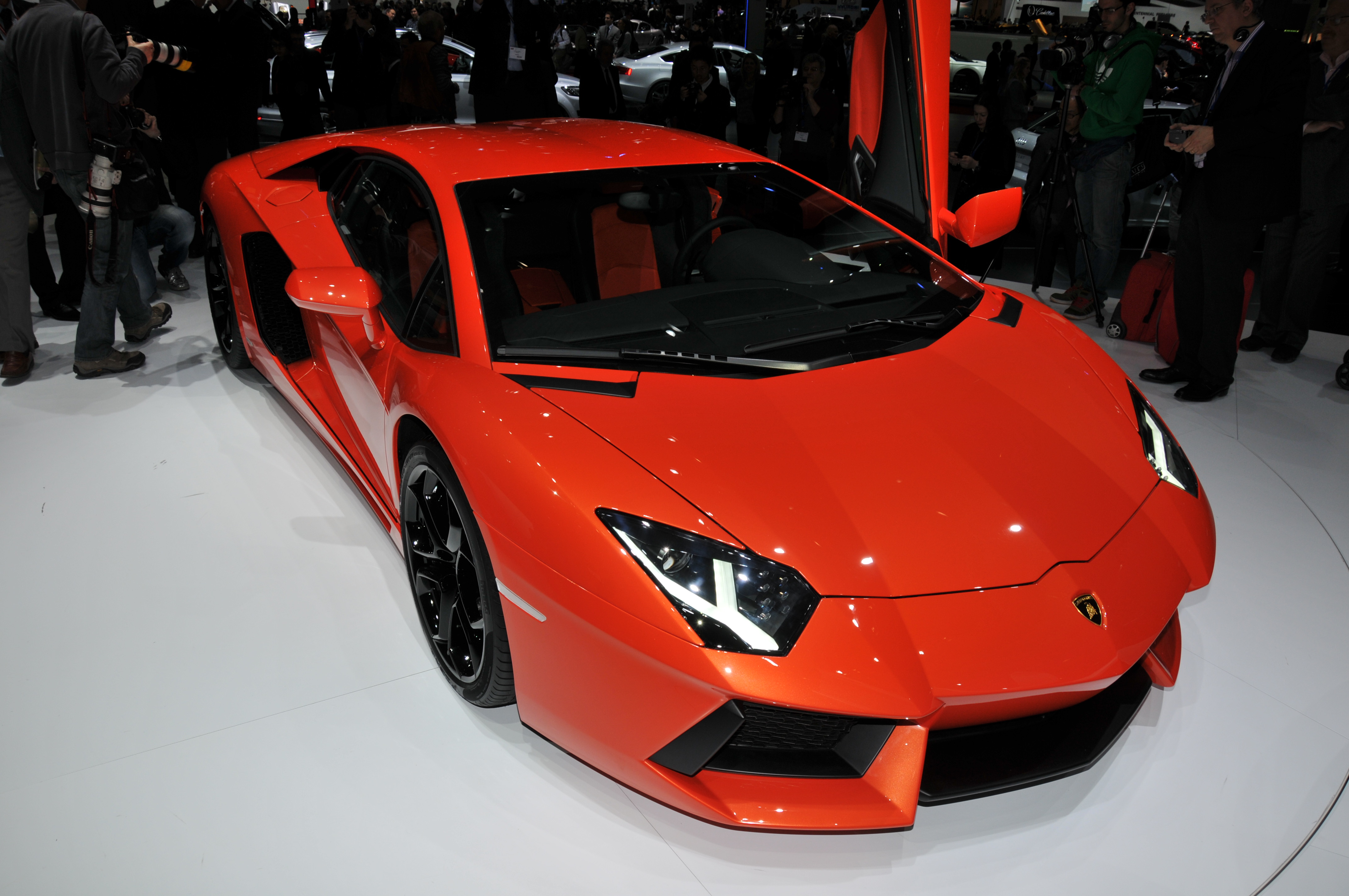
A personalized plate is a license plate you choose so it says something specific, like your initials or a year. The host made one that matches his Lamborghini.
Part
spare gearbox
A gearbox is the part that helps the car shift gears. The host is saying that money could be better spent on a useful mechanical spare instead of a pricey plate.
The Cadillac V16 is an old luxury car that used a very large 16-cylinder engine. It was built to feel smooth and powerful. The podcast mentions it because it’s an unusual and complex piece of automotive history.
Car
V16 BRM
This is a very unusual BRM race car with a massive V16 engine. It was impressive, but it was also hard to keep working and maintain.
The Ferrari Enzo is a famous, very high-performance supercar with a powerful V12 engine. Nick Mason sold his Enzo when he decided to buy the La Ferrari instead.
The Ferrari La Ferrari is a modern Ferrari supercar that’s known for being very technically advanced. Mason says he liked how it was made by the factory and still thinks it’s an extraordinary car.
Reaction time is how fast you can respond after you notice something. Mason is saying he worries he’s slower now than when he felt like he was really good at it.
Car
Ferrari red
“Ferrari red” is the classic red paint color people associate with Ferrari. Mason is basically saying the cars look so recognizable in that color that you don’t even need to see the badge.
“Dino” is a Ferrari model line from the late 60s/early 70s. In this conversation, it’s mentioned as an example of older Ferraris that are harder to drive than today’s hypercars.
The LaFerrari is one of Ferrari’s most extreme supercars. The host is basically saying that newer hypercars are so advanced you can drive them more easily than older, more old-school cars.
The Ferrari 250 GTO is a very famous classic Ferrari from the 1960s, closely tied to racing. The episode is pointing to it as one of those “dream car” moments for enthusiasts.
The McLaren F1 is one of the most famous supercars ever made. The F1 GTR is the racing version, and the guest is saying he owned that specific race car before changing it into something else.
A “two seater” just means the car has seats for two people. Here, it matters because it changes how practical the car is for taking others along.
Car
Aston Martin Ulster
The Aston Martin Ulster is an older Aston Martin race car. In this episode, Nick Mason says it was the first car he raced, and that it’s one of the longest-kept cars in his collection.
“Analog” here means the car feels more mechanical and less like it’s being managed by computers. It’s usually the opposite of modern cars that rely heavily on electronics.
“Middleware” sounds like the name of an event or place where people ask him what car he’s driving. The clip doesn’t say exactly which event it is.
Topic
Revival
“Revival” is a track event where people race and drive classic cars from the past. They’re talking about what happened to a 250 GTO there and how the driver should treat the car.
Battle damage means the car gets hurt during racing—like dents or scratches from close driving. The speaker is saying that’s okay, but they don’t want the car to get badly wrecked.
Martin Brundle is a well-known British racing driver and TV commentator. In this segment, he’s mentioned as having driven the (replica) 250 GTO during the Revival event, including how he handled it in wet conditions.
The Ferrari F40 is one of Ferrari’s most iconic supercars. It’s known for being raw and exciting, and it’s the kind of car that makes people instantly want to talk about it.
Car
McLaren
McLaren is a well-known racing and supercar brand. The speaker is saying that a McLaren can feel just as special and exciting as the Ferrari F40, even if they don’t name the exact model here.
Le Mans is one of the most famous endurance races in the world. It’s a big deal because cars have to last and perform for a whole day, not just for a short sprint.
Maranello is where Ferrari is based in Italy. Fans often visit it because it’s basically Ferrari’s home.
Car
Lamborghini
Lamborghini is a famous Italian brand that makes supercars. The hosts are debating whether it’s the kind of car people expect celebrities to buy compared with Ferrari.
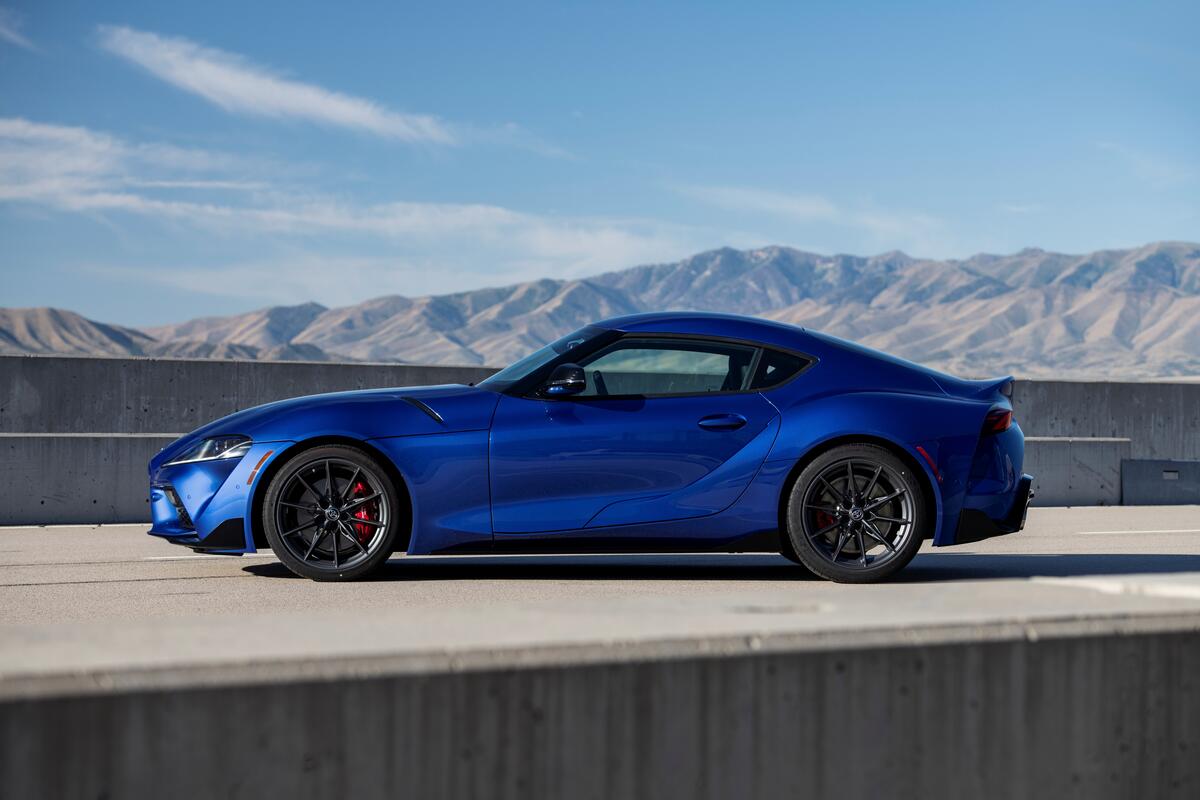
The Toyota Supra is a sports car made by Toyota. It’s known for being quick and for having a big fan community. In the podcast, it’s mentioned as a well-known car from earlier decades.
The Ford GT40 is a famous race car made by Ford. It was built to win in endurance racing, and it became well known for its success. The podcast brings it up because it’s a standout historic car people dream of owning.
These are things on roads that make the driving space smaller, like pinch points or traffic-calming layouts. Wider cars have a harder time fitting comfortably through those areas.
London is a good example of a city with older, tighter streets. The speaker is saying wide cars can be more difficult there.
Car
250F Maseratis
Maserati 250F is a famous old Formula 1 race car from the 1950s. It’s the kind of car enthusiasts love because it’s historically important and built for racing.
LIVE
What for you was the hardest moment in Pink Floyd, was it said?
Yeah, I think so, because I think it's sort of traveled with us for 50 years or whatever it is.
We really didn't understand what the problem was.
A lot of it is to do with the sort of realisation that we were to some extent selfish
and that what we wanted was said to recover so we could carry on with the band.
I remember being introduced to you on Top Gear.
I'd been approached by Top Gear to Lentham, Sienzo.
How much of a thrill was it when you got the call from Ferrari to say that you could have one of these?
And I said, well, Jeremy, it was probably as exciting as the moment when I actually got my hands on my book.
Dark Side of the Moon went on to be one of the biggest selling albums of all time.
Did you guys have any inkling when you were doing that? How big that album could be?
The answer is sort of no, but we knew that it was certainly the best thing we'd done.
You have 250 GTO with the number plate, 250 GTO.
Clarem F1 GTR, you still got that car?
Rockstar Supercar, he loves racing.
That sounds like a headline for Nick Mason, Crash's Ferrari.
I certainly had some spins into the arm cover.
Have you let go of something that you regret?
Oh, I regret every car I've ever saw.
Thank you to RedStransfers for partnering with us for this podcast.
Nick, a few weeks ago, I watched NASA blast off and go around the Dark Side of the Moon,
but you accomplished that years ago with one of the best selling albums in history,
but you're not only an incredible musician, you're also a wonderful car collector with
an eclectic mix of different machines, and there's so much more in between to your story.
But if I asked you, Nick, in your own words, who are you and what do you do?
I'm Nick Mason.
I've been a member of a band called Pink Floyd for the last 57 years or something like that,
and I'm not retired yet, although I think Pink Floyd is retired.
I'm still playing and I've been out touring with my own band,
but this year I decided I'd actually like to spend more time with the cars, so that's
my game plan.
It's quite nice to kick things off with cars because this is a car slash success podcast.
It's actually cars, really, that the embryo that's brought us together today for this
conversation because you opened up Grounds Middlewick House to have an amazing car event
just at the weekend, didn't you, raising money for charity?
Like, how long have you been doing that?
About 14, well, I think we started 14 years ago, but I think COVID knocked a couple of years from
my head. But it's something like that, and it's sort of more or less grown throughout.
It actually started, it was my wife who wanted to do a garden event.
It was part of, I think, we'd been approached to see if we'd open the garden,
and then we put a couple of cars in and people liked that, and then we put more cars in and
people liked that even more, and so it's sort of grown into partly garden and quite a lot of cars.
It's a good excuse to actually extend the car collection a bit further, a bit further.
Well, we've just got this more space that we need to fill, but it's fitting, really, because
me being a 1999 child, the first time I remember being introduced to you was in 2005
on Top Gear while sat on my dad's knee, and it was the first time that Jeremy Clarkson and the BBC
ever shouted out someone's book because they were not allowed to do advertising on the BBC back
there, because you'd lent them a car. What was that? Yeah, basically, I'd been approached by
Top Gear to lend them, can't remember which car it was, I think it was the Enzo, and there were
only a few in the UK anyway, I think one, I think Eric had one and JK had one, but none of us were
none of us were enormously keen on lending the car for free, so
that ruled out initially, ruled the whole thing out, but I was talking to Jeremy about it,
and I said, it's a shame because I've just done this book, and it'd be quite a nice thing to
get it on television. He said, give me a little time to have a look at this,
and so basically what he did was a total overkill on selling the book.
Inside out, the definitive history of Pink Floyd, one of the world's greatest bands by
founder member Nick Mason, and I actually sent a WhatsApp to Andy Willman, and I can't even
say in these words, I got a text back from Mr. Willman last night that said, my favourite memory
of Nex is his Top Gear appearance with the Enzo, it immortalised us in the BBC editorial
compliance department, by BBC rules we weren't supposed to plug his book in exchange for the
loan of the Enzo, but we thought, eff it, we're happy to do that, and from then on,
that film was used in every editorial standards lecture to newcomers about the rules of product
placement in the BBC. Nick and I's Badge of Honor. Well, it was fun that, what did I
Well, first of all, if anyone hasn't seen it, the shot opens with the car and Jeremy saying,
what was it like when Ferrari said that you could have one of these cars? And I said, well, Jeremy,
nearly as exciting as the moment my book was published. It sort of came into shot. And that
was all terrific. And then it all, they move over to the barn and they'd got Jerry Halliwell,
that's the star and the reason for us to come. And Jeremy said, so what are you up to? And Jerry
said, oh, well, I've got this album out. And so Jeremy went, no, we're not allowed to plug
things on the programme. At that point, the camera moves back out. And you see that all of
audience are wearing t-shirts saying Nick is a great author. This book, this would make an
ideal Christmas present or stuff like that. I mean, it was just completely overkill.
And completely various people said, oh, it's okay, because he doesn't need the money. So,
I mean, it was, yeah, the sort of aftershock of it was nearly as good as the moment.
Well, to be able to have that moment, you had to have the car. And that wasn't one of your
first Ferraris. We'll go into that today. But the Enzo has gone on to be like many of your other
cars, a legendary vehicle. You seem to be very good at picking vehicles that are going to do
very, very well in the future. Yeah, it's not a great skill, really. It's sort of,
you look at something and you think, oh, that would be fun. I was never keen on the idea of
being called a car collector, because that wasn't what I wanted to do or be. What I wanted to do
is go motor racing. And so initially, I bought a car that had the pre-war Aston Martin.
And of course, what happened was that with the success of the band, instead of having to sell
that car to move up to something else, I could keep one and get another. And after a while,
you get so fond of the cars that you don't really want to unload them.
How many years was it or just a rough period of time between you kind of starting Pink Floyd as a
commercial business outside of being a student band and getting into one of your first WoW cars?
Well, basically, we really kicked off in 1967. That's when we signed the record deal. And when
we started working, pre-1967, the band had probably done a dozen gigs.
Really? It hadn't been going like years and fighting for every opportunity.
No, we didn't do anything like that. A friend of mine, in fact, gave me a other suitable t-shirt,
which just said, some men strive for fame, this man loitered into it.
Which is interesting, because obviously, any news article source, the internet,
calls you in the founding members of the band. And when we think of founders,
high energy, let's go, let's go do some business. Was that how you were then when you got that
record deal? Were you still almost loitering into it? No, once we had a record deal, then
that changed everything. I mean, up to that point, we were a student band. We rehearsed in
the common room at the Regent Street Poly. And we were a support act for a couple of,
oh, what we're called hops. And we automatically became a sort of support act for proper bands
coming. But then, as I say, as soon as we'd actually got the deal, if you like, it meant,
well, first of all, I had to leave the pulley. There was no way I could pretend to be going to
the lectures and being leads playing some rock gig. Tell us about, paint a picture for a few
minutes of what your life was growing up that led you to be in a student band. What were the
things that cooked together that recipe? Well, I think again, there certainly wasn't a clear
direction for me. There's quite a lot of chance in my story, if you like, because actually,
the big thing about being at the Poly and studying architecture, which is what I was doing for
three or four years. Well, the big thing was that there were two or three like minded people in
my year, one being Richard Wright and the other being Roger Waters. And I think it's
quite well documented, but basically someone in the Poly had written some songs and wanted them
played to a publisher. And he just said, does anyone in the year, do any of you play instruments?
And I said, well, I've done, messed around with the drum kit and Roger went, I've done a bit.
And Rick said, more or less the same. And so we, I think by then we'd probably,
can't remember if we had Bob Close or who the other members of the band were,
but basically we played these songs for him. And the publisher said,
oh, songs aren't bad. The band is complete rubbish. And I think that probably fired Roger up.
So you hadn't long, because I think that it's really important sometimes to contextualize a vision.
What, what age do you reckon it would have been when you first picked up a pair of drumsticks?
Oh, 14, 13, 14, something like that.
Side at six years old, you'd imagine that in a story like yours,
one of the greatest drummers of all time, that you'd have had sticks in your hand at two years old.
That's what people may have thought. They may have thought that they'd be wrong. I just,
everything was sort of, well, maybe, maybe, you know, dead. I was absolutely not driven.
We had a particularly poor local band, I mean, friends of mine in Hampstead. And yeah, it was,
it's hard to, you're right, people do expect that there's this sort of enormous drive.
But someone like Roger has that quality, but we certainly weren't driven at that stage
to do very much more than messing about. That's why I do these conversations in the van,
because I think it's important for a wide array of people to realise not everybody's success story
has to be them blazing and shouting and pushing and going forward so that people get successful and
people have moments of luck and the stars align, but then it's what you do with that. It's like what
you said, you made a comment, which is like, we were sort of loitering, we're doing this. And it
seems like it was a moment your head switched on when you had that record deal that you had to be
on it. Where do you think that came from inside of you, the knowledge to do that?
The trouble is knuckle down sounds like work. And of course,
what we were doing was the joy of being in a band, the joy of actually playing rather than
rather than watching. It's one of those difficult things about
the advice is always follow your dreams, work hard. Actually, the problem is,
with a whole load of things, you can't do that because you don't know how to work
or what you can do to improve things or whatever. And following dreams is,
it's all very well, but how do you follow? How do you physically make things happen?
Were you quite a good kid at school and in your teens, were you like well behaved or
you're always mischievous or running out of classes? Oh, no, I was reasonably well behaved and
recently, average has not been particularly engaged. Because to me, what's amazing is it's
like there's this lion inside that's been there since the start. You wouldn't imagine someone
of that description, fairly average, loitered in his role, calm, well behaved individual,
suddenly being on stage in front of hundreds of thousands of people with blaring music and
lights and craziness going on all over the place. Well, I think stopped there because you don't,
we didn't suddenly go on stage to 90,000 people. You know, it was more progressive than that.
And we were lucky, as I say, when we actually signed with an agent with Brown Morrison,
we would sort of number five on the bill and we'd quite often work with the same people
through the same agent. And someone like Gina Washington Ramjam band or
would be the headliner and would be down at number five, say. So there's,
it's experience, it's not drive. This is my version of things because,
you know, one of the reasons for the success of the band is we did have a driven character
in the case of Roger. But it's certainly not me. But I think what's important is we were engaged
in something that really, we really wanted to do. And so, you know, going to Abbey Road,
you don't think all you can think of is this is terrific. This is,
it's fun, but it's interesting. And there's an opportunity to learn things and to
grasp. Yeah. What's the word? It's, as I say, it's experience. You get better at doing it
and you enjoy getting better at doing it as consistency as well as just keeping out something,
keeping something together. It's like, I know for podcasts that 99% of podcasts don't make it past
episode three. So sometimes just keeping on playing and keeping a band together, which we'll
obviously get into because I'm one individual in here doing my role. But when you're a band,
you have to have glue and you have to have support and people to bring you together. But
on your timeline, your story, it seems like a significant milestone of that early story of
Pink Floyd was getting that deal. What's another like bullet or pin in the wall of like another
significant moment after that for you? Well, I think it's the realisation that it's working
that you are that you're selling records or selling tickets for shows. Do you remember
a moment where you really thought, oh my God, this is working? No, I don't. And people are
always asking that thing about, was there some moment when the light went on? Actually, the light
went on and we quite often ignore it or we were doing something else. I mean, certainly, you know,
the success of Dark Side was very important, changed things around. But actually, when it
actually came out, we were on tour in America. And I think
very nice gold record presentation and so on. But the reality was that we were in full
live playing mode. And that was in some ways more important.
Do you remember what got you like into motor racing, into wanting to buy a car and go and
escape and do that as part of your journey? Well, yeah, very different and long really before
music sort of hit me. And my dad was amateur racer, but professional documentary filmmaker
and made films specifically about cars and the whole series on the history of motor racing and
so on. He was a director. And so the ultimate treat for me was to go with him to Silverstone
when he was racing, help get the car ready. And which meant it was a vintage Bentley,
which we still have. And I absolutely loved that and then ended up starting my racing with
the vintage sports car club, which is exactly where he would sort of come from with his racing.
I try and get context by taking these little pins, as I call them in the world, so that people can
get an idea of sticking that memory of going to Silverstone over the top of where something
else is in a timeline. Did you, did racing ever become an escapism of the loudness of the band
and the craziness of that life at all? Or was it just something on the side that was fun?
I think, well, it was, it wasn't that it was required to keep me sane or anything like that.
I'd always enjoyed it. My first car was an Austin 7, Jummy, 1927. And so that,
it could have been stamp collecting. I mean, it's very separate, one to the other. It's just that
what happened was that the success of the band enabled me to go to go and get the right car or
meet the right, meet people who could help me get the car to Silverstone or,
um, yeah, just set it up. Is it similar to music industry in some way? Or not really,
there are similarities, of course, between mod sport and music, but you have to sort of work
to try and make them fit. Who was the other automotive member of the band that liked their
cars? Was there anyone that liked them as much as you? Well, no, not as much as me.
Because I know J.K. is obviously, everybody knows J.K. loves his cars. You said he had an Enzo at
the same time. You had yours. And I know more recent artist Guy Berryman loves his cars as well,
Coldplay. But you were the real car guy out of the group then.
Definitely. But having said that, various Roger had a BMW M1 when they
produced those. It kept it for quite a long time. David did a little bit of racing as well. So
we had everyone sort of quite liked cars, but probably not as much as I did.
When you got into the band, you say it happened so quickly and you started drumming when you're
in your early teens. And then you'd done 12 gigs away from the band signing a commercial deal.
Could you read music? No. None of us read. It's just not a requirement,
interestingly. I mean, I have done some recording where it was really required to
read. And the guy who I was working with, Mike Mantler, sort of more or less taught me.
You know, it was a particularly complicated and interesting thing.
But I was reading a drum part. It's not like a piano yet.
I always found for me reading music when I was trying to drum was not taking some of the focus
off the drumming itself, but it was difficult to get you in that flow state. And I think
drummers love to get in a anyone member of band loves to get in that flow state.
And I don't know if you heard that word before, but when you're on stage and you're all clicking
together and you're rocking and rolling your mid gig, does that feel like for you as well
similarities in motor racing like almost being on track that level of focus like
there's there's nothing else to think about but what I'm doing now.
And yeah, but that's what I was complaining about earlier of trying to make the fit as a
the two complement each other. They do in a way but only in a way rather vague way.
They're not the same ones. I mean, they are really if if you're racing.
That's all about just you. Whereas if you're on stage, it's all about you, Roger, David, Rick.
It's very different.
What was it like for your mum and dad? Obviously, your dad was a director,
which is someone that has a vision and makes it kind of happen and follows a process and an idea.
And he's obviously a creative, which is where some creative juices probably flowed into you.
What was it like when you did sign that record deal and did go up that graduate thing?
What was it like for your parents to watch that happen? Did they support you much?
Do they guide you much or did were you all just like because it's a different period to what
I've grown up? Were you all like free birds? You were just out and gone or did you see them much?
Yeah, no. And in fact, when I was at college, I lived at home after time because
that was the easiest way to live, really. And sometimes in some of the early days,
probably rehearsed. My parents were sort of liberal, let's say. So pretty happy to just let me get on
with it. I was very lucky in one way, which was that when I actually more or less had to say,
I can't stay here at the Poly. I'd done three years and a year in an office and I'd started
the fourth year or fifth year. And my year master was terrific. He said, well, give it a go.
You can come back next year and you'd have to start the year again, but we'll fit you in.
So to be able to go home and say, look, I'm stopping
my architecture, but I can go back next year. So my parents didn't have to sit me down and say,
this is not a good move. Who was the most fiery member of the band at the beginning that you
would kind of have to control a little bit? Any of them, Roger?
No. I mean, the answer, of course, is Sid. But actually, Sid was initially,
we didn't have to control him or we wouldn't. What we tried to do was look after him,
which we did very badly because we didn't understand what the problem was with Sid.
And we still don't really. There's all sorts of explanations, but he definitely had a breakdown
of sorts. That's why I ask you those questions about remembering the first time you go out and
stand on stage in front of that many people and lights and noise and they do it so well in
documentaries and those moments where the bright light comes on, you see the crowd.
It is to me, I'm fascinated with people that's got to do something to you. That amount of noise,
that amount of travel. You know, because it's a progression. So you never go out for the first
time to 90,000 people. You've been going out from the room at the back of the pub up to the theater,
onto the bigger theater, onto the, you know, it's progressive and you get more and more used to
it. So when was that time you stepped out in front of a, oh my God, this is insane?
Don't remember ever going out thinking this is insane. By the time we're going out, you're
in front of a lot of people. You're much more engaged in getting the show right.
You know, you're actually, you know, a lot of what we did involved special effects or working
with film or whatever. And it's quite a technical operation. And that is far more interesting than
going, oh, so many people. Because didn't you, because health and safety has obviously changed
a lot since some of those concerts. I've heard stories of like you lighting metal pigs on fire
or something and setting over the crowds and firing stuff into the audience. Like,
no, we engineered quite a lot of quite complicated effects. We never,
we wouldn't do things that were deliberately or dangerous. I mean, we certainly had all sorts of
power. And we did have odd accidents and things that, you know, where there was too much powder in
the thing or there was, there were, there were sort of reasons why things sometimes went wrong.
But as far as we were concerned, that was not good. It was better when they worked properly.
They had some great people working with us over the years. And certainly, we had a guy called
Terrick Meddings, who his last job had been to do all the power in the James Bond film.
I can't remember which one it was or which two, but he, he came aboard and he was terrific. But
and in a way made, that's the sort of thing where you have the right people doing the right jobs.
That's success allows you to work with the best possible people. We had him and then we had Arthur
Max, who's lighting a lighting deck guy. And it started, I think, doing follow spots at
Woodstock. And Arthur was an irresistible personality, but very good at it and ended up as
Ridley Scott's sort of chief designer, I think. Certainly, he's part of his almost any Ridley
Scott film seems to have Arthur somewhere in the early credits. How many people are like,
would it take to make something like that happen? Hundreds?
Uh, yeah. Again, if it's the full size thing, we were, you know,
20 years ago now, I'm all 200. But that's partly because you're leapfrogging. You're actually
setting up one stage and building the stage at the next gig two days ahead, if you see what I mean.
Like F1? Very like F1. I mean, F1 now is so extraordinarily sort of complex and interesting.
It's totally overtaken music, but there was a point at which music could give some advice
on how to travel things. Yeah, because F1 now, I see the adverts where it's like
DHL that support them or something like that. And they are back to music tours and flashbacks
of what they've done during the adverts. So you can see there's kind of like some correlation
there between the two. Yeah. No, the art of packaging is really something now, the flight cases.
Well, actually, music does it pretty well with it. And mainly, of course, it's all computers,
boxes for computers. Car thrown in. Dark Side of the Moon went on to be one of the
biggest selling albums of all time. Potentially the biggest. No. Not quite.
Michael Jackson, I think, has always seen this. Number one. Number one.
Did you guys have any inkling when you were doing that? How big that album could be? Did you feel the
weight of there's an ability to deliver something extremely special here? I think
the answer is sort of no. But we knew that it was certainly the best thing we'd done
up to that point. At that point in time, people didn't sell. They sold lots and lots of records,
but it was always, it was still seen as ephemeral, but actually it would be all over,
not forgotten, but it would all be over in a couple of months and be thinking about the next
thing. I mean, I think one of the things I regret is that we do have Pink Floyd at Pompeii,
which shows exactly what we were doing at the time, which is sort of 1971.
I do think when we were struggling with Wish You Were Here, that would have been better off
doing more touring than we did. We didn't do that much touring. And it's quite nice now to have
on record, as I say, the sort of 71 period, which was just before Dark Side,
beginning to start work on it, would have been nicer to have taken that and probably better for
all of us not to be struggling with the follow-up album. When you come out and show Garden and play
some music or go away for an evening with a drink and listen to something, are you putting on Pink
Floyd? Absolutely not. What are you putting on? Probably my contemporaries. So, you know, Jimmy
Hendrix or Nick Drake. I mean, there was so much music and you tend to lock in on when you really
discover the music and it stays with you. So, I have no, if you ask me what albums are in the
charts now, I wouldn't have a clue. I used to drum a lot with these very sticks to, oh, come on,
Ben, Jesus, the angry mob by the Kaiser chief. And I really, that was kind of like my era growing
up and that was the songs that I drum to. I didn't do too much of the Beatles, but these are all bands
that people know the names of. They're all huge. At the time, were you guys in the same way that F1
teams would be in a competitive mindset against these other bands? We've got to sell more tickets,
we've got to sell more records. Like, how was that? Well, it's, you know, it's not a sport.
There was a little bit of that. And certainly, when it came to the stadiums, everyone was going,
oh, well, et cetera, and did 93,000. There we go. But actually, it's also an element of so what?
Because the reality is you're usually, you sell out, but you're all going to do the same numbers
because you're selling out Soldier Field in America. And so you can't sell more than that.
And then you go for the numbers. And really, it's a bit of a nonsense. I mean,
the biggest live gig would probably be some of the Stones. No, I don't even know who
it would be, but Rock and Rio, because there's half a million people on the beach to see you.
But that's that count. Or do you include, do you include television? You're doing live television?
You know, it can go on and on. It's a marketing thing rather than something that
I'm particular. You've answered that question looking back on it with hindsight and wisdom.
And what I'm also trying to get to is a little bit of the mindset at the time,
like whether you were that way at the time or whether at the time you and the boys were like,
Led Zeppelin has done this. Like, come on, guys, come together. We're going to do this.
Was it always about the music? It's about the music and about the show, you know,
what? I really don't think we spend very much time sort of
arguing the toss of his salt most records or
yeah. People buy cars these days, half the time, especially when it's like a supercar or
with a full investment head on or they try and rationalize it. I've done it many times
where you think, I'm going to buy that and it's going to go up in value or I'm going to buy this
to go up in value. I'm going to buy this car because it's one of X amount.
Back then, were you just buying cars to blim and enjoy them and blim and race them?
Yeah. On the occasions when I have tried to think it through as to what would be worth
laying down like fine wines, it usually comes unstuck. It was always about what I could do with
the car rather than put me there. I'd always had this thing about GTOs and I could draw it in my
sleep and so the interesting thing with that is that by the time I bought mine,
the values were rising but none of us realized it. I mean, it's very strange that
for the last, I bought the car in 77 I think and I think probably the lowest price ever was
probably somewhere around 72, 1973. After that, it was the beginning but I don't think
we saw very much of it. I mean, I don't think we anticipated where it was going to go.
Because cars back then, even the pre-war ones weren't going mad or anything like that,
were they in terms of things? It's funny because you can obviously tell the type of
character that you are, extremely humble, extremely well thought out. We even said before
we don't want to talk about big numbers and all the rest of it. I'd rather reflect on a moment
where you were told about big numbers which was when you went on with Jeremy, the bombastic
character on the Grand Tour and he sort of said, and now they're worth this and you went.
Do you have to kind of have that mindset though with the car because you bought it to enjoy it
and it is a case of just why would you sell it even if it did have some wild number?
Yeah, I mean, it's that thing of, it's quite funny really, the small boy saying,
used to say, cool, mister, what will it do in speed? Another guy, cool, mister, what's it worth?
No, where were we with that? I think that's a really poignant thing to say actually,
because there's been so much change like that, fundamental change in the way that we do things
throughout your story. Like what, but now it's, excuse me, mister, can I have a selfie please?
Yeah. Back then, what did fame look like around that time you bought that GTI?
Little graphs. Was it? Yeah, that would have been it.
What was your life? How has it changed in a period of say 20 years from being in that
college and being in there to be in a super famous rock star? Like what was
life like just walking down the street? Well, walking down the street has always been the same
for me, I would not easily recognise and it's not something where you think
that hasn't changed. Of course, you grow older and your life changes, you stop being
a band of four, you're actually a bit more separated and you have children and that changes
a lot. Yeah, you hopefully grow up.
But don't stop buying silly cars. No, because in history, there are some cars, McLaren F1,
the Mercedes girl wings, that people, you know, unicorn cars, but I think it's fair to say there
isn't any unicorn car quite like the Ferrari 250 GTO, the way it's spoken about the magic
around that car. And you've not got any 250 GTO, if you have a 250 GTO with the number plate,
250 GTO. Did the car come with the plate when you bought it?
The guy who sold me the car, I think, had engineered getting the number plate. But that's
quite a good example, number plates. So talking of number plates, Nick obviously has quite the
collection. But if you've been thinking about getting a private plate for one of your vehicles,
then you need to head over to redstransfers.co.uk, they'll make your pride and joy look amazing
with a new plate. They are trusted by literally everybody in the industry, and I and even some
of my podcast guests have bought multiple plates from them in the past. No matter what it is you're
looking for, whether it be something relating to your name, something relating to your car,
and even brilliant for marketing this, something relating to your company. Redstransfers really
are the people to go to for this, guys. Now, my name is very obviously Ben. So if I search Ben on
Redstransfers, it will display me so many plates relating to my name, and you should head over there
and try your name too. But if a name isn't for you, then you should try searching for your car's
make or model to see what the closest options are that come available. I actually tried searching
for Lambo last week because I bought a Lamborghini, and these were some of the plates that it found
me. And I actually ended up buying a new number plate from Redstransfers to go on my new Lamborghini
Aventador, and it's BF for Benedict Fowler, 13 for the year the car was made, being an original LP
700. It was from 2013, and then Lam for Lamborghini. I quite like an understated plate that kind of
features my initials, something about the car and the year of the car too. Now, believe it or not,
this personalized plate was less than £500. But no matter the price of your plate on Redstransfers,
whether it's less than £500, more £1,000, or even more than £10,000,
then you can pay for that plate monthly and directly through the Redstransfers website.
Yes, you can finance your dream number plate directly through the website.
So with over 20,000 five-star reviews, and you can use my code RTS for a discount,
you should head over to Redstransfers, either search for your name, your car, or something special for
and get yourself a personalized plate to enhance your vehicle's look. Honestly, every time I go
out to one of my cars and I see a plate relating to the car, it adds that special something which
just finishes it off for me. Anyway, thank you to Redstransfers for partnering with us for this
podcast, and back to our conversation. You know, no one's really thought through number plates.
And now, I mean, they'll try and sell anything. It's an important number plate.
I've got a friend. It's called the number plate history on Instagram called Kit Jobert,
and he's got such a passion for private plates. He makes content and videos and
is just completely infatuated by them. And just through watching his content, I've learned that
countries own private plates, embassies like the people and different
plates that around are insane. But was it your 250 GTO that got you infatuated with private plates?
Because you've got a few different ones on other cars that haven't been meetings, haven't you?
No, I tend to think it's nice to put a plate on the car that maybe has some
relationship with the car itself. But I certainly have never paid that much money for a number plate,
because there's always something better that you could do with the money like a spare gearbox or
whatever. And fairly, you know, 500 quid grand, maybe possibly for a number plate that relates to
a car, but not much more than that. Did you ever sell many cars ever? And I know you said
you were keeping one after another, but have you let go of something that you regret?
Oh, I regret every car I've ever sold. I'm totally hopeless in that respect.
No, the only car I was glad to say goodbye to, I think, probably the V16 BRM, because
wonderful thing, but so complex and so difficult to run and look after.
I actually went to Bernie Eccleston, and it's far better run by his people who do it for him
than with me. And there's a couple of other cars that I thought I'd like to race and then realized
I didn't particularly like them. Did you sell your Enzai? Yes, I did. But I
sold the Enzo because I think around the time I bought the La Ferrari, because I thought that was
more interesting. And I'd certainly find, as I get much, much older, that I pick cars are less
and less exciting. It's not exciting, but I'm not confident about my reaction times now,
compared to when I thought I was actually at it. Would you rather have the Enzo now than the La
Ferrari? No, because I really like particular aspects. The La Ferrari actually was the car that
the factory made themselves, rather than sending out the bodywork or whatever. And I think it's
still technically really extraordinary car, and so not quite so interesting. But I'm sitting here
trying to justify when I never have this sort of thought process. Your Enzo was red, your 250
GTO is red, Ferrari red, the kid knows the car already without seeing the horse because it's red.
Your La Ferrari, however, is probably a similar color to the jacket you're wearing,
it's dark blue. When did you buy your first non red Ferrari? Oh, quite early on. I mean,
certainly, with older Ferraris, you tend to try and keep them looking more or less as they,
I won't say left the factory, but period. When did I first buy it? Well, I had a Dino for a while
that was not red. It was a strange bronze color, and it was actually recently up for sale, I think.
I can't remember. I actually prefer dark blue.
That's, yeah. Rockstar, supercars, loves racing. That sounds like a headline for
Nick Mason crashes Ferrari on X or Y or Z back in those days. Did you ever have any
incidents or problems or crashes in any of the cars? Nothing, nothing major. I mean,
I certainly had some spins into the arm cover sort of thing. But
I've never, never totaled a car. Yeah, I really have. There's a bit of caution then,
but maybe helps in some cases. Do you have a breakdown in those much back in the day?
Obviously a LaFerrari now, it's pretty much you could drive it with your pinky on top of the
steering wheel. But like the cars back in the day, the Dinos, the 250s, what were they like?
Did you find yourself really good actually in defense of older cars? You might be able to drive
it with your little finger, but the reality is you're more likely to have software problems
with hyper cars than some nice sort of early 70s, early 70s car.
I watched a tremendous piece of film by another podcast guest that sat in that seat,
Jodie Kidd, where she went out for the day with your wife, Nat, in the 250 GTO and your
Daytona GTO, the yellow one. And it is just absolutely fabulous because it shows two
absolutely wild car enthusiasts at the peak of human enjoyment basically in that film,
helicopters, cars, Ferraris, lunch. You must have missed the invite on that one. It looked like a
fun day out. When did you meet Nat and was she always in the cars as well?
Well, she always says she's not really into cars, but she is into speed and she loves the driving.
She's not very interested in the sort of, I won't call it the technical side, but
she's very easily bored by car bores. No, it still bothers me slightly that you can see the
speedometer.
You're the only other person than Jay Leno that I've had on to learn the McLaren F1.
And yours is a McLaren F1 GTR. Have you still got that car?
No, I haven't because I actually really transformed it into an earlier car
an Aston Martin Zegato because I couldn't see myself doing very much with it. The problem with
the GTR is it's actually a two seater, not the three seater because it's got a lot of race
stuff on it. And I just could see it being used less and less and less. And I sort of
began to, and it's also to my age, I don't really want to find that I've got a garage
full of cars that I'm not driving.
Actually, I'm really enjoying that thing of looking back to earlier cars now.
Sorry. No, it's all right. I was looking for my phone, you know, to show you.
Yeah, go on. Is it in?
No, I'll just do it afterwards.
Okay, no worries. So run us through some of the cars that you've kept in the collection
other than the GTO maybe for the longest period of time and then why you've got those still.
Well, longest period of time is the Aston Martin Ulster, which is the car I did my first race in.
And I've actually almost won my last races as well. Good, good.
I absolutely loved it.
I liked it so much, I bought more of them. We've got three in the family. In fact,
the other two cars, which are part of the same team,
got up. Both belong to my daughters,
both of whom have done a lot of racing.
So it flows in the family blood.
Yeah. You've kept your F40?
Yeah. That was a sure, yeah. That was a solid, yeah.
Because it's still so analog. There are no computers. And that's a bit of an advertisement
for those earlier cars. And it's still really exciting and frightening.
So how do you make your mind up? You must have been asked this a million times,
especially on the lawn at middleware. How do you make your mind up what you are driving,
what you like to take to the pub these days?
I'm not a huge drive to the pub thing. It's much more, shall we enter this in that event?
You know, I'd far rather take a car to a circuit than to the pub.
Goodwood for you must be something, then, especially revival that comes around that's
a really special event. You just mentioned that. You nearly had an off there then?
No, I don't think so.
Oh, yeah, I just meant because I've sort of retired from racing. I have retired from racing
and no longer have a competition. It wasn't a near death experience then because I actually
heard, I listened to a podcast that Joe Rogan did with Roger and he recalls this moment where he
nearly killed you. Do you know what he's gonna say? What I'm gonna say? Yeah.
With a cup of tea. Yeah. That would have been the most British death ever.
Yeah, we know. What happened? Well, we can't remember really what happened. Basically,
he made some joke, got me just as I was drinking this tea and it just one of those things where
I very nearly drowned in tea. But what the joke was or what we were laughing at, I have no idea.
But characters like Roger obviously were really close to like brothers,
putting you in the band, etc. Do you still get to meet up, see some of the guys like
how frequently are you still in contact? Occasionally.
Suddenly enough, I saw, I've seen both Roger and David recently ish
lunch with David, who's moved house recent or recently moved much closer.
And Roger, we were both in Barbados at the same time.
So when there was, if you're going to have amazing moments and do these performances and gigs where
everything comes together, the music, you're feeling wonderful, your tour in America must
have been there must be so many stories, you don't even know which one to pick out at any given point.
But what for you was the hardest moment in Pink Floyd? Was it said?
Yeah, I think so, because I think it's sort of traveled with us for 50 years or whatever it is.
And the fact that we really didn't understand what the problem was. So we didn't,
you know, I think Roger probably came the closest to trying to do something, but also
isn't a lot of it is to do with the sort of realisation that we were to some extent selfish
in that what we wanted was said to recover so we could carry on with the band because it
up to that up to the moment he said left and he'd written all the well 90% of the songs
and he was the front man who's the guitarist. It was it's extraordinary that we that we still
thought we could do it without him. It's rather that we wanted to do it without him.
Roger said on Joe Rogan, if the guy who writes the songs in the bang goes crazy,
you're after essentially. And he's right, isn't it? It's like it's like pulling a major part of
one of your cars. And the story with Sid from what I've learned and listened to. But I find
must have been really challenging for you guys is it's almost reminiscent in a way maybe of what
happened to Michael Schumacher in the sense of once he had his accident, people that knew him,
they couldn't see him anymore. Like he was there, but he maybe wasn't there.
Was that similarity for you guys? Like a struggle to you'd want to see someone, but maybe you can't?
I don't know. The idea of Schumacher and Sid, they're so different.
That's okay. They're so different.
In terms of the situation for the friends and family, as in what I've heard is that once Sid was
gone, it was very difficult. You guys didn't see much of him again. No, we didn't. The view was that
the family felt that he should be left alone.
Now, whether that was the right thing, I don't think it made any difference, actually. I think
he had the breakdown. He wasn't going to come back. And the whole thing of
leaving him in peace, I think, was the way. If you've enjoyed this podcast, please,
would you consider subscribing to it? How did you keep the band going? How did you carry on
and do so well despite that big knock? Because to anybody that doesn't know the full context,
Sid was responsible for writing a lot of what you guys play and wrote, wasn't he?
Well, a quite good example of exactly what happened was when Peter Gabriel left Genesis.
How on earth did they possibly continue without him? The answer is someone stepped up and
carried on. Here was that. And in our case, it was Roger who started writing.
And what songs came after that that were maybe moments where you thought, yeah,
we've still got this. This still works. Well, what we did was we carried on and with
Sid's songs sung by Dave. So that's how we sort of dealt with it.
And we just kept and once Sid had gone, we could get on with the business of being the band.
And that's the point at which we probably really started working. Because with Sid, it was quite
a lot of on off. Where we were touring and when we were touring and losing gigs because Sid wasn't
in a condition to play. And yeah, so I think when he was there, it was a relief.
Did you ever very nearly stop? Did you very nearly stop in between that kind of segue between those
two? No, I think we more or less went, you know, the famous story, I'm not sure quite
how true it is that we were heading off for a gig and someone said, we're stopping to pick up Sid.
And someone else said, let's not bother. And I didn't think it was quite as brutal as that,
but basically we went and did the gig without him. Which we knew we could do that in some ways. We'd
had one experience on the Jimi Hendrix tour where Sid didn't make it to the show.
And we used Dave Olyst from The Nights and just made sure the lights were dim and
no one noticed. Do you have a standout show moment, time with the guys for you that was like
your favorite years in terms of memories?
No, because I hate the expression, it's a journey. But there were great early days where it was just,
you know, students being in a band with a Benford, French quid's worth of Benford
Dolmobile. And then the ones sort of, I suppose the first American tours were really exciting to
be there. Japanese tour really exciting to be there. The period where we've got a, you know,
charter jet rather than, rather than a regular flight. Because it used to,
was a point at which you could fly as much luggage as you like for $10 of,
$10 a parcel. And that meant that we could take all our kit, which would be sort of 37 boxes
and fly commercial. Didn't last very long, I think. Airlines finally got sick of us. But,
you know, there's such different occasions.
Which is, what's best? And there isn't a best. Most of them are really good.
What do you think? You guys clearly had a stronger bond than most, I would say, because
young men, money, alcohol, music, rock and roll lifestyle, keeping the band together
is a difficult thing when you've got all these different personalities. Was there one of you
that was almost like the glue to make sure everybody was on the straight and narrow? Or you
and certainly the comparison to sell the other band? What? Like who? No, no, it's no pectoral.
No, I mean,
yeah, I haven't got a good example I'd like to use. Do you plan to still attend
Goodwood this year and keep racing and getting back?
Well, I'm not going to race myself, I've got a fair range of drivers in the family.
So I'd certainly still love running the cars. Because sometimes it doesn't go to plan. There
was a 250 GTO that was crashed on Revival one year, wasn't there? Did you see that?
It spun off and smacked into the wall and everybody went
Oh, yes. But I think, fortunately, it was that was a replica.
I think. Yeah, I think. I mean, battle damage is okay. I'd rather have the car with
I mean, I definitely don't want to roll it or get it to Somersault or whatever.
But, well, at the revival, there was a few years ago, Martin Bahrain drove the car.
There's a great, no, Martin Bahrain. What am I saying? No, I'm London Martin.
So Martin Brundle drove the car, Joe that really well wet. But before he went out,
he was standing by the car and he said, you know, more or less, how do you want me to play it?
I send it or don't send it. I said, well, I don't want the car coming,
coming back looking like this. And just in front of your face. It's all right for a child.
I said, I don't want it coming back all shiny. You know, if I can't remember exactly what I said,
but I tried to think he should race the car. You know, we're not talking about parade.
It was a very gallant second to almost certainly a cobra.
Do you think the F1's legendary status is deserved compared to cars like the 250 GTO?
Or you ever, because you obviously, when I asked about your F40, you went, oh, yeah,
like straight away, it's obviously got that thing that that fires you up.
Did the F1 ever make you feel like that, the McLaren?
Oh, yeah. Yeah. It's a very special car, the GTO, because again, it's history. I mean,
the car won Le Mans on its sort of first outing. There are other cars
done anything quite like that. And no, there's some remarkable things out there.
And they all give you different things. GTO is important because apart from the value,
it's about the fact that you could drive it to the race. So, you know, they used to take the car
from the factory, drive it to Le Mans, finish second overall, and drive it back to the factory.
I mean, that's extraordinary. It took my girls to the church for their weddings.
You can, that range of what you can do with a car is unbeatable, really.
When you've got those cars, and then you open up for the day where people can come and see you
and see the cars, how much pressure do you get from a slidey car salesman to come over and say,
come on, can we do something? Can you say, are they on your back all the time?
No. I mean, the dealers who are sort of relevant to that level of car,
they know exactly what's going on. They don't have to sidle up to me.
You know, if there's any movement with the major cars, the dealers are well ahead of everyone.
Are you still on? Because there's a story, and I don't know if you have this experience, that
gets selected at the chosen one after Enzo for La Ferrari, etc., that a box would just turn up
on the door, and there's just like a singular key in it. Did you have that kind of thing,
or is it just like you've got one? No, it's...
I sort of know that if there was something I'd really like, I've got a good relationship with
the factory. There's a bit of a give and take. I've loaned the factory. factory
cars for a special exhibition, maybe, or something like that. And I invited most of the factory to
the gig. I'm good playing Modena. That helped. Playing in Modena near Ferrari. That must have
been somebody. There's a little restaurant there. If anybody goes on a pilgrimage to Maranello in
Modena, it's called Restaurante Montana, right next to the track. And the lady that owns that place
has photos of every single. She must be a celebrity, like, on every day. Who's who? Who's
who? Because she has a picture with anybody who's anybody inside that cafe in Modena. But
there's no other special place like Italy. And I've got to ask you, who were the Lamborghini
men in the bands? Like, who was buying Lambos versus Ferraris? No one. Because you watched the
film, you know, like the Ferrari versus Lamborghini and Fruccia Lamborghinis building his cars,
etc. But did you have any Lambos in the A70s, A80s, 90s? Because Lambos don't have the same
rating per degree. The reason I'd ask, which is a fair response, but the reason I'd ask is,
you could picture, I think it's a fair stereotype to make, a rock star buying a Lamborghini.
Well, yeah, I would. Yeah, I've said what, so. You never even got tempted to try one?
No, I didn't. The odd occasions when I drove one, I found them a bit. Actually, they felt almost
what's the word. I didn't like the visibility out of them that tended. And yeah, I just never
quite engaged. It's a bit curiously in that respect. It's a bit like music, you know,
there's something that you probably ought to like, but he'd never really sort of given it the
chance. Did you ever have a GT40? No, I didn't, but I very nearly did. And I would have, I sort of
missed out on the GT40, I think. Yeah, I would certainly, they sort of, the price it overtook
what I could afford at the time. You've been very good at picking cars, that's for sure,
that you're able to hold on to and keep and enjoy as that car without putting the number
to the side and just like, I'm just going to enjoy my car.
Being a Ferrari man, being so close to the factory, loving the journey that they're on,
you got anything new on order? Does any of the new cars still give that same fears as what the
Enzo's, the LaFerrari's? Nothing at the moment. But I've always interested in what they're doing
and when they're doing it and so on. There's someone that's so passionate creatively.
What do you think about some of the design directions and decisions like this new electric one?
Well, I have a sort of complaint with all the automotive manufacturers that the cars are
getting too big. Sadly, you can build the cars as wide as you want, but the streets aren't getting
any wider and it becomes more and more of an effort. Certainly, take the car into London and
try and get through some of those sort of road narrowing devices and so on.
I think I'm drawn more and more to the old Ferraris than the new, but that's just because
that's true of sort of everything. You're clearly a man that loves speed,
and so is Annette, as you said earlier, because you're not just into racing and cars,
you're also into flying, right? Clearly, those charter injects had an effect,
I bet you're right up in the cockpit looking at how they're being flown. When did you get into
your flying? Well, the flying was a story where I have a friend called Vic Norman who runs
Aerosuperbatics and I've known Vic for years. In fact, I embraced against him. We both had
250F Maseratis. I was talking to him one day about touring. I said, the only trouble with touring is
I get so nervous about the flying. We all do. It's sort of almost catching that.
We had a couple of trips where there was sort of thunderstorms and we all got a bit freaked
by it. I ended up doing some touring by car rather than flight, which was absurd because it
was sort of a seven hour journey or a one hour journey. I said to Vic, the flying that bothers
me, he said, oh, what do you need to do? You need to land to fly. It's the most expensive therapy
I've ever dealt with. He introduced me to Brendan O'Brien, who was an instructor and air show
performer. It was brilliant. Absolutely right. Sort of loved it. Brendan was the perfect teacher.
He was not ex-group captain. It was first lesson, we're going to
fly to Paris to get you the right flying jacket. That was my first flying lesson,
was the trip to Paris. I thought, this is good. Anyway, yes, I learned to fly and
I sort of enjoyed that. Then Dave, David, discovered helicopters. Both in that,
when I saw thought this was particularly in that, I think we should join in.
And so we both eventually moved on to our helicopters, which we could actually,
we could see how it could be a really good way of traveling.
And then we got sort of, you get more involved in the world of helicopters.
They're very different to piloting a car, right? They're very different to man.
Well, the interesting thing with flying and motorsport is with motorsport,
you're trying to push the envelope and with flying, you're trying to push for safety
rather than take it rather than risky. It's funny how you picked out your instructor there and
how he just sort of got on with it and taught you what to do. When we take it back to Drummen,
something that we both absolutely love, I find that there's only very few things that can fully
switch someone's brain off and one is racing and one's drumming or like playing a musical
instrument because you're in just, there's nothing else you can think about what you're
having for dinner with when you're doing that activity. Some of my favorite drummers was,
I used to love drumming the cosy pow dance with the devil. And there was another song.
Oh, there was the B-50. What was that? It was to do with the bomber American...
B-52, was it? For me, I remember dancing with the devil with cosy pow and then there was another
song I used to love to play, Wipe Out. I used to love for a workout. It was...
And it was that, the workout that you would get on your arms. I don't think people necessarily
realised. How long would some of your gigs go on for in an evening when you were playing?
Because it's one hell of a workout. Two and a half, three hours.
It's a hell of a physical exercise, isn't it? Yeah, yeah.
And how many pieces in your kit were you playing at any point? So how big did the kits get?
Some of the drum and 123455 toms.
Would you always relatively have the same, the same kit? Or did it change much? Like,
depending on what you were doing, would you like add to it? Because sometimes,
I'm thinking of cosy pow, for example. I used to be able to play dance with the devil,
relatively alright, with kind of my snare, two toms there, two big toms down there.
And I'd relatively do alright. And then you see the video on YouTube, 200 million views or whatever.
It's like a gazillion drums, like here. Did you ever feel the need to do that? Or was that kind
of a little bit overkill? Well, I think I just said once you're into a double bass drum,
you would sort of, that's about enough for me.
It's interesting that up until from 1967, when I changed from Premiere to Ludwig,
until the 80s, I probably only had one kit, you know, that was the one that I used for playing
live and for recording. Now I've probably got a dozen, you know, because you'd sort of think,
actually, we'll do a, we'll do a kit for the recording studio and it will stay there.
So we don't have to reset everything. And then you'd do two studios. So that's two kits and so on.
As a drummer, that obviously a drum kit, and especially the ones that were in the band all
those years, acoustic drum kits, rock kits, proper kits made out of, you know, wood and things.
When electric kits started to arrive on the scene, were they viewed upon a bit like
automotive fans would view an electric car? Like I don't want that. It's not got the same
style. It's not got the same X. Is that how you'd feel towards that kind of new tech coming out?
No, no. What you'd feel is that you couldn't trust it. You know, there was still a software thing,
actually. And I remember when we were touring with on the momentary laps tour,
with Gary Wallace was doing percussion, if he did a lot more than that.
But he was running a relatively, at the time, a lot of electric pads.
And the amount of time he spent programming was absurd. You know, you just go,
why bother? Just easier to use a real car. I still don't know. I haven't seen
any bands, particularly where it's an electric kit. There's quite often a load of pads that are on
the acoustic. But there's always that feeling that, well, you can still hit the drum.
My music definitely comes from, my mum's a pianist. She used to be a piano teacher for many,
many, many years, loves it. I've got my business side from my dad and my musical side from my mum.
And my uncle Paul actually makes drumsticks for the BBC orchestra. And for many other people,
in his shed behind his house, he's got these big log cabins. You go in there and it is like,
nothing you've ever seen. He's got all different grades of wood, all different sticks, all different
tops on every different one, I think. It's a bit like cars, really, is why I make so many
comparisons between the two, because we're both passionate about the two things. When you think
about it, everybody obviously thinks of drumming and say one set of sticks or one kit, but it's
such a vast, there's so many different kits and ways to tune them and ways to get them right.
Like, how much time did you spend perfecting your kits, getting them tuned perfectly, getting
them right? Well, quite a lot of it I did with drum doctors. I think when we were working on
yeah, mandatory laps again, was my introduction to LA and that thing of bringing in a specialist who'd
force snare drums and sort of go, well, try this one, try that one.
I mean, in the case of what eventually the last big tour, it was all DW. And DW are fantastic,
in that respect, because John Good goes, I mean, I would trust him to put a kit together.
But he could do it so much better than I ever could. He's an amazing man, amazing
amazing kit. When was your last gig together as a band?
Live eight, yes, live eight. That's the one that is known as being the last gig. I didn't know
if you ever got together to perform together after. What was that like emotionally,
like the last of something? It was really nice because it wasn't billed as the last gig. What
it was was a band who was sort of becoming best known for inviting would grown up enough to be
able to go, all right, no, we'll do this as it's for a cause. It's more than
interesting. Led Zeppelin did the same. They did the gig, but they didn't then immediately
get touring. You said you still know Roger now, but did some of the other members of the band not
spoken for a few years prior to that gig or? Yeah. I don't know who spoke to who, but...
It wasn't as close as it was when you were on the road touring in America, etc.
That I think we all thought it was a good thing to do. That's the main thing.
There's no sort of why we're doing this or any of that.
A event that you open up your house, the cars, it's an aid of a charity and today I'd like to
say to everybody that we donated our whole sponsor fee from this episode that we've got from our
sponsor to over £3,000 that we've put in to make a start. Thank you for that.
To the cause. What is the cause that you raise the money for? Well, there's a couple of things.
One is the air ambulance, which is, well, it's a wonderful thing and there's no government
funding. Most of us have at some point known someone... My dad, yeah. I landed in our field
for him. Particularly if you do things like motorsport or riding, which is
my wife. You know people who've called on it. So, air ambulance and then an interesting thing
called the Bobby Van Trust, which is basically it looks after the older people who've been
victims of crime. So, if someone's been broken into, the police might come and make a report,
but the Bobby Van, which is the sort of police of... What's that? Basically, they will turn up with
their van and put your door back together and they will also go through with you
whether if there's some problems with scamming and...
Cyber security and stuff. All of that. Well, what I'm going to do is underneath this
episode in the pinned comment, as well as our sponsor, Reg Transfers, have kindly sponsored
this episode. Private plate sponsor for the episode. Be able to get whatever you want for
different cars and everything. We're also going to leave a link that if you want to make a donation
to those charities, then it's down below to be able to do so. Nick, it's been utterly fascinating
to hear from someone that has lived quite the life, yet with you, it's just such a crazy thing
that I can see is like rock star, noise, sound, concerts, yet you're such a calm, level-headed...
I would argue with the thing about rock star. I mean, yes, I've been part of an incredibly
successful band, but I don't think rock star quite fits me. And partly it's because I haven't got my
hill boots on, Lord the Moustache or the cowboy hat. Well, also don't forget, just like Clarkson
didn't, to check out your book from right back in the day. It's been a pleasure having you in the
back of the van for this conversation on Road to Success. Thank you so much. Oh, pleasure.
About this episode
Nick Mason opens up about Pink Floyd’s turning points and the “experience” behind their success, then pivots into cars: Ferrari 250 GTO mystique, Enzo/LaFerrari stories, and even a McLaren F1 GTR that became an Aston Martin Zegato. The conversation also covers Top Gear moments, including BBC rules around product placement, plus how Mason thinks about analog driving, collector value, and safety-minded staging. Along the way, the show ties drumming focus to motor-racing mindset and reflects on touring logistics.
Nick Mason is one of the founding members of Pink Floyd, the drummer behind one of the biggest bands in music history, and the owner of one of the most iconic car collections in the world.
In this episode, Nick sits down to talk about the real story behind Pink Floyd, the success of The Dark Side of the Moon, the early days of the band, Syd Barrett, Roger Waters, David Gilmour, Live 8, touring the world, and what it was really like being part of one of the most influential bands ever.
But Nick’s story goes far beyond music. He also opens up about his lifelong love of cars, buying his Ferrari 250 GTO, lending his Ferrari Enzo to Top Gear, racing at Goodwood, owning a McLaren F1 GTR, his relationship with Ferrari, learning to fly, and why he still doesn’t really see himself as a “rock star.”
Don’t forget to subscribe to our channel for more exciting content about your favourite shows and celebrities. Hit the bell icon to stay updated on all our latest episodes
👍 Like, Comment, and Share this episode. Join our discussion in the comments section