
Pink Floyd’s Nick Mason: The Truth About The Band, The Ferrari’s & Top Gear
About this episode
Nick Mason opens up about Pink Floyd’s turning points and the “experience” behind their success, then pivots into cars: Ferrari 250 GTO mystique, Enzo/LaFerrari stories, and even a McLaren F1 GTR that became an Aston Martin Zegato. The conversation also covers Top Gear moments, including BBC rules around product placement, plus how Mason thinks about analog driving, collector value, and safety-minded staging. Along the way, the show ties drumming focus to motor-racing mindset and reflects on touring logistics.
Nick Mason is one of the founding members of Pink Floyd, the drummer behind one of the biggest bands in music history, and the owner of one of the most iconic car collections in the world.
In this episode, Nick sits down to talk about the real story behind Pink Floyd, the success of The Dark Side of the Moon, the early days of the band, Syd Barrett, Roger Waters, David Gilmour, Live 8, touring the world, and what it was really like being part of one of the most influential bands ever.
But Nick’s story goes far beyond music. He also opens up about his lifelong love of cars, buying his Ferrari 250 GTO, lending his Ferrari Enzo to Top Gear, racing at Goodwood, owning a McLaren F1 GTR, his relationship with Ferrari, learning to fly, and why he still doesn’t really see himself as a “rock star.”
Don’t forget to subscribe to our channel for more exciting content about your favourite shows and celebrities. Hit the bell icon to stay updated on all our latest episodes
👍 Like, Comment, and Share this episode. Join our discussion in the comments section
Check out Tweak: https://www.tweakuk.com/
🔗 Follow Us:
Instagram: @Roadtosuccessofficialpodcast
@benedictfowler
Contact: [email protected]
Top Gear
"I remember being introduced to you on Top Gear. I'd been approached by Top Gear to Lentham, Sienzo."
Top Gear is a famous car TV show in the UK. If someone was featured there, it usually means their car story reached a big audience.
Top Gear is the long-running British car TV show that became influential for mainstream car culture. Being introduced on Top Gear is a notable moment because it connects a car story to a widely watched automotive media platform.
number plate
"You have 250 GTO with the number plate, 250 GTO."
A number plate is the license plate attached to a vehicle for legal identification. In car-collector contexts, people sometimes use personalized plates to reference a specific model (like a Ferrari 250 GTO) for identity and bragging rights.

Nissan Gtr
"...250 GTO with the number plate, 250 GTO. Clarem F1 GTR, you still got that car? Rockstar Supercar, he lo..."
The Nissan GT-R is a high-performance sports car made by Nissan. It’s known for being very quick and capable, not just for show. The podcast mentions it as a well-known, collectible performance car.
The Nissan GT-R is a performance sports car known for combining everyday drivability with serious track-capable performance. It’s often brought up in conversations about modern supercars because it became a benchmark for fast, repeatable performance. In the podcast, it’s referenced as part of the lineup of famous cars people recognize and collect.
Crash's Ferrari
"That sounds like a headline for Nick Mason, Crash's Ferrari. I certainly had some spins into the arm cover."
They’re talking about a Ferrari story that sounds like it was written up like a headline. The exact details of the car aren’t clear from this snippet.
This is a reference to a specific Ferrari-related headline or segment being discussed in the conversation. It’s not enough context here to identify the exact car or event, but it signals a media framing around Ferrari ownership.
editorial compliance department
"…my favourite memory of Nex is his Top Gear appearance with the Enzo, it immortalised us in the BBC editorial compliance department, by BBC rules we weren't supposed to plug his book in exchange for the loan of the Enzo…"
An editorial compliance department is the internal group that enforces a broadcaster’s rules on what can be said or shown—especially around advertising, sponsorship, and conflicts of interest. Here, it’s referenced to explain why the Ferrari loan and book promotion were considered sensitive under BBC policies.
product placement
"…by BBC rules we weren't supposed to plug his book in exchange for the loan of the Enzo, but we thought, eff it, we're happy to do that, and from then on, that film was used in every editorial standards lecture to newcomers about the rules of product placement in the BBC."
Product placement is when a TV show features a product (like a car or a book) and it can feel like an ad. The segment is about rules that decide whether they’re allowed to mention it on air.
Product placement is when a show includes a brand or product in a way that can influence viewers—often without treating it like a straightforward advertisement. In this segment, the hosts are discussing BBC rules about when they’re allowed to mention or promote a book in exchange for access to the Ferrari.
car collector
"I was never keen on the idea of being called a car collector, because that wasn't what I wanted to do or be. What I wanted to do is go motor racing."
A “car collector” is someone who buys cars mainly to keep them and build a collection. Nick Mason says that wasn’t really what he wanted—he wanted to race instead.
“Car collector” is a hobby identity—someone who buys and keeps cars primarily for ownership and collecting. Nick Mason contrasts that with his actual goal: using cars as a stepping stone toward motor racing rather than treating them as museum pieces.
pre-war
"And so initially, I bought a car that had the pre-war Aston Martin. And of course, what happened was that with the success of the band, instead of having to sell that car to move up to something else, I could keep one and get another."
“Pre-war” means before World War II. In car collecting, it usually implies a classic, older era of cars that many enthusiasts value because of their history.
“Pre-war” means the period before World War II, and in car talk it usually signals classic-era engineering and design. When someone says “pre-war Aston Martin,” they’re pointing to an early, historically significant version of the brand’s cars that tends to be more collectible than later models.
Silverstone
"And so the ultimate treat for me was to go with him to Silverstone [1172.7s] when he was racing, help get the car ready."
Silverstone is a well-known race track in the UK. People go there to race cars, including older vintage cars.
Silverstone is a famous motorsport circuit in the UK, best known for hosting Formula 1. It’s also a major venue for historic racing and vintage car events, which is why it comes up when someone talks about preparing a car for track time.

Bentley
"And which meant it was a vintage Bentley, [1182.3s] which we still have."
Bentley is a British car brand known for luxury, but it also has a history in racing. Here, they’re talking about a vintage Bentley they still own.
Bentley is a British luxury brand that also has a long racing history, especially in vintage endurance events. In this segment, the speaker specifically calls it a vintage Bentley they still have, tying the brand to classic motorsport culture.

Austin 7
"My first car was an Austin 7, Jummy, 1927."
The Austin 7 is an older British car that was popular because it was relatively simple and affordable. It’s a classic choice for someone’s first car.
The Austin 7 is a small, early-20th-century British car that became famous for being affordable and widely used. Mentioning it as a “first car” highlights how the speaker’s roots in classic cars run deep, not just into modern supercars.
mod sport
"there are similarities, of course, between mod sport and music, but you have to sort of work [1291.9s] to try and make them fit."
“Mod sport” is being used as a shorthand for a motorsport category or scene, and the host is drawing a comparison to music. In context, it’s about how both worlds involve building skills, connections, and opportunities rather than just enjoying the hobby.

Bmw M1
"various Roger had a BMW M1 when they [1328.0s] produced those. It kept it for quite a long time."
The BMW M1 is a special BMW sports car that’s considered a classic. It’s known for being rare and built for real driving, not just everyday use.
The BMW M1 is a purpose-built BMW sports car created for high-performance road use and racing homologation. It’s a notable enthusiast car because it’s rare, historically important, and designed as a true driver’s machine rather than a regular production model.
special effects
"[1716.8s] You know, you're actually, you know, a lot of what we did involved special effects or working [1726.0s] with film or whatever. And it's quite a technical operation."
Special effects are the tricks and engineered effects that make a show look bigger or more dramatic. In concerts, they can be things like controlled flames, smoke, or moving stage elements—done in a planned, safe way.
Special effects are engineered visual or physical effects used to create something that would be hard or impossible to do safely in real time. In live concerts, this can include things like pyrotechnics, mechanical stage effects, and coordinated lighting/visual systems.
health and safety
"[1734.9s] going, oh, so many people. Because didn't you, because health and safety has obviously changed [1740.7s] a lot since some of those concerts."
Health and safety are the rules that are meant to keep people from getting hurt. For big shows, that usually means tighter controls on anything dangerous—like fire or explosives—so it’s done safely.
Health and safety refers to formal rules and procedures that reduce the risk of injury during events. In the context of live shows, it often means stricter controls around pyrotechnics, crowd proximity, and how effects are tested and operated.
F1
"[1901.2s] setting up one stage and building the stage at the next gig two days ahead, if you see what I mean. [1909.0s] Like F1? Very like F1. I mean, F1 now is so extraordinarily sort of complex and interesting."
F1 is Formula 1, the top tier of open-wheel motorsport. It’s used here as a comparison for how complex modern operations are—like how an F1 team coordinates many systems and people to run a race weekend.
buying cars to go up in value
"where you think, I'm going to buy that and it's going to go up in value or I'm going to buy this to go up in value. I'm going to buy this car because it's one of X amount."
They’re talking about buying a car mainly because you expect it to become worth more later. That’s different from buying a car just to drive it and have fun.
This is the collector mindset of treating cars like an investment asset, where the goal is appreciation rather than just enjoyment. The speaker contrasts that with earlier attitudes where people bought cars primarily to use, race, and experience them.

Mclaren F1
"...ars. No, because in history, there are some cars, McLaren F1, the Mercedes girl wings, that people, you know, ..."
The McLaren F1 is a very rare, very fast supercar made by McLaren. It’s famous because it was built to be exceptional in performance and technology. People bring it up when talking about the most important cars in history.
The McLaren F1 is a legendary, high-performance supercar known for its advanced engineering and standout performance when it was introduced. It often comes up in discussions of historic “greatest” cars because it represents a rare blend of speed, technology, and driver-focused design. In a podcast context, it’s mentioned as one of the cars that people recognize as truly special in automotive history.
private plate
"But if you've been thinking about getting a private plate for one of your vehicles, then you need to head over to redstransfers.co.uk,"
A private plate is a license plate you choose that has personal meaning, like your name or a reference to your car. It’s a popular way for car owners to make their car feel more “theirs.”
A private plate (also called a personalized number plate) is a license plate chosen for meaning—often using initials, a name, or a car-related reference. In the UK, it’s a common enthusiast way to add identity and branding to a vehicle.
redstransfers.co.uk
"then you need to head over to redstransfers.co.uk, they'll make your pride and joy look amazing with a new plate."
This is a website the host recommends for getting a personalized license plate. They’re saying it’s a trusted place to choose and transfer number plates.
redstransfers.co.uk is referenced as a UK service for acquiring and transferring personalized number plates. The host frames it as an industry-trusted option for making a vehicle’s plate match an owner’s name, car, or company branding.
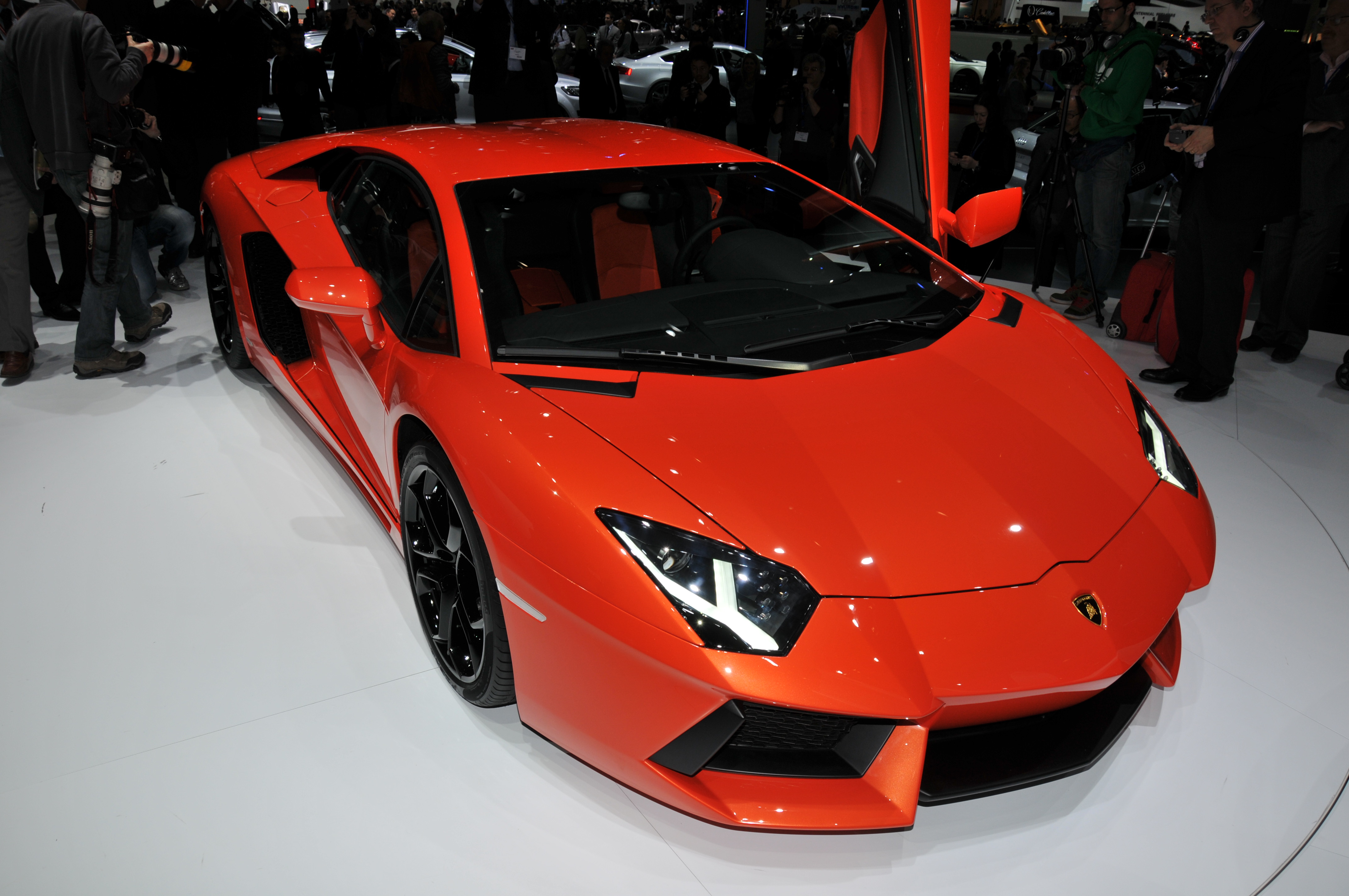
Lamborghini Aventador
"I actually ended up buying a new number plate from Redstransfers to go on my new Lamborghini Aventador, and it's BF for Benedict Fowler, 13 for the year the car was made, being an original LP 700."
The Lamborghini Aventador is a very high-end supercar from Lamborghini. Here, it’s the specific car the host put a personalized plate on.
The Lamborghini Aventador is a flagship supercar known for its aggressive styling and high-performance V12 character. In this segment, it’s the specific Lamborghini the host is personalizing with a custom number plate, so it’s the car context for the plate discussion.
personalized plate
"Now, believe it or not, this personalized plate was less than £500... every time I go out to one of my cars and I see a plate relating to the car, it adds that special something which just finishes it off for me."
A personalized plate is a license plate you choose so it says something specific, like your initials or a year. The host made one that matches his Lamborghini.
A personalized plate is a UK-style registration number chosen for meaning—often initials, a year, or a reference to the owner or the car. In this segment, the host designs one to match their name and the Aventador’s build details.
spare gearbox
"But I certainly have never paid that much money for a number plate, because there's always something better that you could do with the money like a spare gearbox or"
A gearbox is the part that helps the car shift gears. The host is saying that money could be better spent on a useful mechanical spare instead of a pricey plate.
A gearbox is the transmission unit that changes gear ratios to match speed and engine load. The host mentions a “spare gearbox” as an alternative use of money instead of spending heavily on a number plate.

Cadillac V16
"...was glad to say goodbye to, I think, probably the V16 BRM, because wonderful thing, but so complex and ..."
The Cadillac V16 is an old luxury car that used a very large 16-cylinder engine. It was built to feel smooth and powerful. The podcast mentions it because it’s an unusual and complex piece of automotive history.
The Cadillac V16 is a rare, early luxury car powered by a 16-cylinder engine, designed to deliver extremely smooth and powerful performance for its era. It’s often discussed because it represents a time when manufacturers pursued huge engine configurations to stand out. In the podcast, it’s mentioned alongside other complex historic machines, emphasizing how ambitious and intricate these vehicles could be.

V16 BRM
"No, the only car I was glad to say goodbye to, I think, probably the V16 BRM, because wonderful thing, but so complex and so difficult to run and look after."
This is a very unusual BRM race car with a massive V16 engine. It was impressive, but it was also hard to keep working and maintain.
The V16 BRM refers to BRM’s rare V16-cylinder racing car, known for its huge, complex engine package. In Nick Mason’s telling, it was wonderful but difficult to run and maintain compared with simpler cars.

Enzo
"Did you sell your Enzai? Yes, I did. But I sold the Enzo because I think around the time I bought the La Ferrari, because I thought that was more interesting."
The Ferrari Enzo is a famous, very high-performance supercar with a powerful V12 engine. Nick Mason sold his Enzo when he decided to buy the La Ferrari instead.
The Ferrari Enzo is a mid-engine supercar built around a high-revving V12 and designed for serious performance. Mason says he sold his Enzo around the time he bought the La Ferrari, choosing the newer car because it felt more interesting.

La Ferrari
"But I sold the Enzo because I think around the time I bought the La Ferrari, because I thought that was more interesting... The La Ferrari actually was the car that the factory made themselves, rather than sending out the bodywork or whatever."
The Ferrari La Ferrari is a modern Ferrari supercar that’s known for being very technically advanced. Mason says he liked how it was made by the factory and still thinks it’s an extraordinary car.
The Ferrari La Ferrari is a mid-engine supercar built to be technically special, including a focus on how the car is developed and packaged by the factory. Mason highlights that it was made by the factory themselves (not just outsourced bodywork), and that it remains “technically really extraordinary.”
reaction times
"And I'd certainly find, as I get much, much older, that I pick cars are less and less exciting. It's not exciting, but I'm not confident about my reaction times now, compared to when I thought I was actually at it."
Reaction time is how fast you can respond after you notice something. Mason is saying he worries he’s slower now than when he felt like he was really good at it.
Reaction time is the delay between noticing something and starting a response. Mason connects it to driving/racing ability, implying that as he’s gotten older he’s less confident in how quickly he can respond.

Ferrari red
"Your Enzo was red, your 250 GTO is red, Ferrari red, the kid knows the car already without seeing the horse because it's red."
“Ferrari red” is the classic red paint color people associate with Ferrari. Mason is basically saying the cars look so recognizable in that color that you don’t even need to see the badge.
“Ferrari red” is a specific, recognizable paint color associated with Ferrari’s branding and classic livery identity. Mason uses it as a visual shorthand—he says the kid already knows the car just because it’s red.

Ferrari Dino
"But like the cars back in the day, the Dinos, the 250s, what were they like?"
“Dino” is a Ferrari model line from the late 60s/early 70s. In this conversation, it’s mentioned as an example of older Ferraris that are harder to drive than today’s hypercars.
Ferrari Dino refers to a family of mid-engine Ferraris from the late 1960s and early 1970s, built around smaller-displacement V6 engines. Mason brings it up when comparing “back in the day” cars to modern hypercars, highlighting how older Ferraris demanded more from the driver.
Ferrari LaFerrari
"Obviously a LaFerrari now, it's pretty much you could drive it with your pinky on top of the steering wheel."
The LaFerrari is one of Ferrari’s most extreme supercars. The host is basically saying that newer hypercars are so advanced you can drive them more easily than older, more old-school cars.
The Ferrari LaFerrari is a modern-era hypercar known for its extreme performance and advanced hybrid system. In the segment, Nick Mason uses it as a contrast point to older Ferraris, implying it’s so capable and easy to drive that even casual control inputs feel effortless.

Ferrari 250 GTO
"Jodie Kidd, where she went out for the day with your wife, Nat, in the 250 GTO and your Daytona GTO, the yellow one."
The Ferrari 250 GTO is a very famous classic Ferrari from the 1960s, closely tied to racing. The episode is pointing to it as one of those “dream car” moments for enthusiasts.
The Ferrari 250 GTO is a legendary 1960s-era racing-derived grand tourer, famous for its rarity and motorsport heritage. The segment references a film featuring Jodie Kidd driving it, using the car as a symbol of peak enthusiast experience.
McLaren F1 GTR
"You're the only other person than Jay Leno that I've had on to learn the McLaren F1. And yours is a McLaren F1 GTR. Have you still got that car?"
The McLaren F1 is one of the most famous supercars ever made. The F1 GTR is the racing version, and the guest is saying he owned that specific race car before changing it into something else.
The McLaren F1 is a landmark supercar, and the F1 GTR is its race-focused variant built for endurance competition. Mason says the car he had was a McLaren F1 GTR, then explains he later converted it into an earlier Aston Martin Zegato, making this a key “what happened to the car” story beat.
two seater
"The problem with the GTR is it's actually a two seater, not the three seater because it's got a lot of race"
A “two seater” just means the car has seats for two people. Here, it matters because it changes how practical the car is for taking others along.
“Two seater” describes a car’s seating layout with two occupants, which affects how usable the car is for passengers and how it’s experienced day-to-day. In this segment, Mason contrasts the McLaren F1 GTR’s seating with the idea of a three-seater, implying that the layout influenced his decision-making.

Aston Martin Ulster
"Well, longest period of time is the Aston Martin Ulster, which is the car I did my first race in. And I've actually almost won my last races as well."
The Aston Martin Ulster is an older Aston Martin race car. In this episode, Nick Mason says it was the first car he raced, and that it’s one of the longest-kept cars in his collection.
The Aston Martin Ulster is a classic Aston Martin built for racing-era performance, and Nick Mason says it was the car he used for his first race. It matters here because it’s being contrasted with more modern cars—he’s describing it as part of his long-term collection and a personal milestone in his racing life.
analog
"Because it's still so analog. There are no computers. And that's a bit of an advertisement for those earlier cars."
“Analog” here means the car feels more mechanical and less like it’s being managed by computers. It’s usually the opposite of modern cars that rely heavily on electronics.
In car talk, “analog” means the vehicle relies more on mechanical systems and direct driver inputs rather than heavy electronic control. Mason uses it to describe the Ferrari F40’s character—he’s contrasting it with cars that use more computers for engine, stability, and other functions.
middleware
"So how do you make your mind up? You must have been asked this a million times, especially on the lawn at middleware."
“Middleware” sounds like the name of an event or place where people ask him what car he’s driving. The clip doesn’t say exactly which event it is.
“Middleware” appears to refer to a named event or venue where Mason is known to be asked what he’s driving. It’s mentioned as the setting for the recurring question about his car choices, but the transcript doesn’t provide enough detail to identify the exact location.
Revival
"There was a 250 GTO that was crashed on Revival one year, wasn't there? Did you see that? ... So Martin Brundle drove the car, Joe that really well wet."
“Revival” is a track event where people race and drive classic cars from the past. They’re talking about what happened to a 250 GTO there and how the driver should treat the car.
“Revival” here refers to a historic racing event where classic cars are driven hard on track. The conversation uses it as the setting for a crash involving a 250 GTO and for how drivers are asked to manage the car’s condition.
replica
"Oh, yes. But I think, fortunately, it was that was a replica."
A replica is a copy of a famous classic car. If the wrecked car was a replica, it’s usually less painful than destroying a rare original.
In classic racing, a replica is a car built to look like (and often perform like) a famous original, but it isn’t the original chassis. The speaker says the crashed 250 GTO was a replica, which changes the stakes because a replica can be risked more than an irreplaceable original.
battle damage
"I think. Yeah, I think. I mean, battle damage is okay. I'd rather have the car with"
Battle damage means the car gets hurt during racing—like dents or scratches from close driving. The speaker is saying that’s okay, but they don’t want the car to get badly wrecked.
Battle damage is the wear and damage a race car picks up during on-track competition—scrapes, dents, or other impacts from racing contact. The speaker distinguishes it from more serious outcomes like rolling or flipping, implying they can accept some racing-related damage but not a total wreck.
Martin Brundle
"But, well, at the revival, there was a few years ago, Martin Bahrain drove the car. ... So Martin Brundle drove the car, Joe that really well wet."
Martin Brundle is a well-known British racing driver and TV commentator. In this segment, he’s mentioned as having driven the (replica) 250 GTO during the Revival event, including how he handled it in wet conditions.
wet
"So Martin Brundle drove the car, Joe that really well wet. But before he went out, he was standing by the car"
“Wet” means the track was rainy or slick. Cars handle differently on wet roads, so driving well there takes extra skill.
“Wet” refers to track conditions with standing water or rain, which drastically changes grip and braking. The speaker notes Brundle drove the car “really well wet,” emphasizing skill in reduced-traction conditions.

F40
"Or you ever, because you obviously, when I asked about your F40, you went, oh, yeah, like straight away, it's obviously got that thing that that fires you up."
The Ferrari F40 is one of Ferrari’s most iconic supercars. It’s known for being raw and exciting, and it’s the kind of car that makes people instantly want to talk about it.
The Ferrari F40 is a mid-1980s supercar famous for being brutally focused: lightweight construction, a turbocharged V8, and a no-nonsense attitude. Here it’s mentioned as a car that instantly “fires you up,” highlighting how certain cars create an emotional connection beyond just specs.

McLaren
"Did the F1 ever make you feel like that, the McLaren?"
McLaren is a well-known racing and supercar brand. The speaker is saying that a McLaren can feel just as special and exciting as the Ferrari F40, even if they don’t name the exact model here.
McLaren is the British supercar and racing brand known for Formula 1 technology and high-performance road cars. In this exchange, “the McLaren” is referenced as another car that can create the same kind of immediate excitement as the Ferrari F40, even though the specific model isn’t named.
Le Mans
"the car won Le Mans on its sort of first outing. ... they used to take the car from the factory, drive it to Le Mans, finish second overall, and drive it back to the factory."
Le Mans is one of the most famous endurance races in the world. It’s a big deal because cars have to last and perform for a whole day, not just for a short sprint.
Le Mans refers to the 24 Hours of Le Mans endurance race in France, one of the most prestigious events in motorsport. Mason’s point is that the Ferrari GTO’s early Le Mans success—and the ability to drive the car to the race and back—made it extraordinary in a way that pure track-only cars can’t match.
Modena
"I'm good playing Modena. That helped. Playing in Modena near Ferrari. That must have been somebody."
Modena is a city in Italy that’s famous for car racing and supercars. The host is talking about it because it’s close to Ferrari’s world.
Modena is an Italian city strongly associated with motorsport and supercar manufacturing. In this segment, it’s specifically tied to Ferrari’s presence nearby and to the culture of visiting the Ferrari/track area.
Maranello
"If anybody goes on a pilgrimage to Maranello in Modena, it's called Restaurante Montana, right next to the track."
Maranello is where Ferrari is based in Italy. Fans often visit it because it’s basically Ferrari’s home.
Maranello is a town in Italy that’s home to Ferrari’s headquarters and main factory. The segment frames it as a “pilgrimage” destination for fans, linking the location to Ferrari culture and track proximity.

Lamborghini
"And I've got to ask you, who were the Lamborghini men in the bands? Like, who was buying Lambos versus Ferraris?"
Lamborghini is a famous Italian brand that makes supercars. The hosts are debating whether it’s the kind of car people expect celebrities to buy compared with Ferrari.
Lamborghini is an Italian supercar brand known for dramatic styling and high-performance engines. In this segment, the discussion contrasts Lamborghini ownership appeal versus Ferrari, including the idea of what rock stars “should” buy.
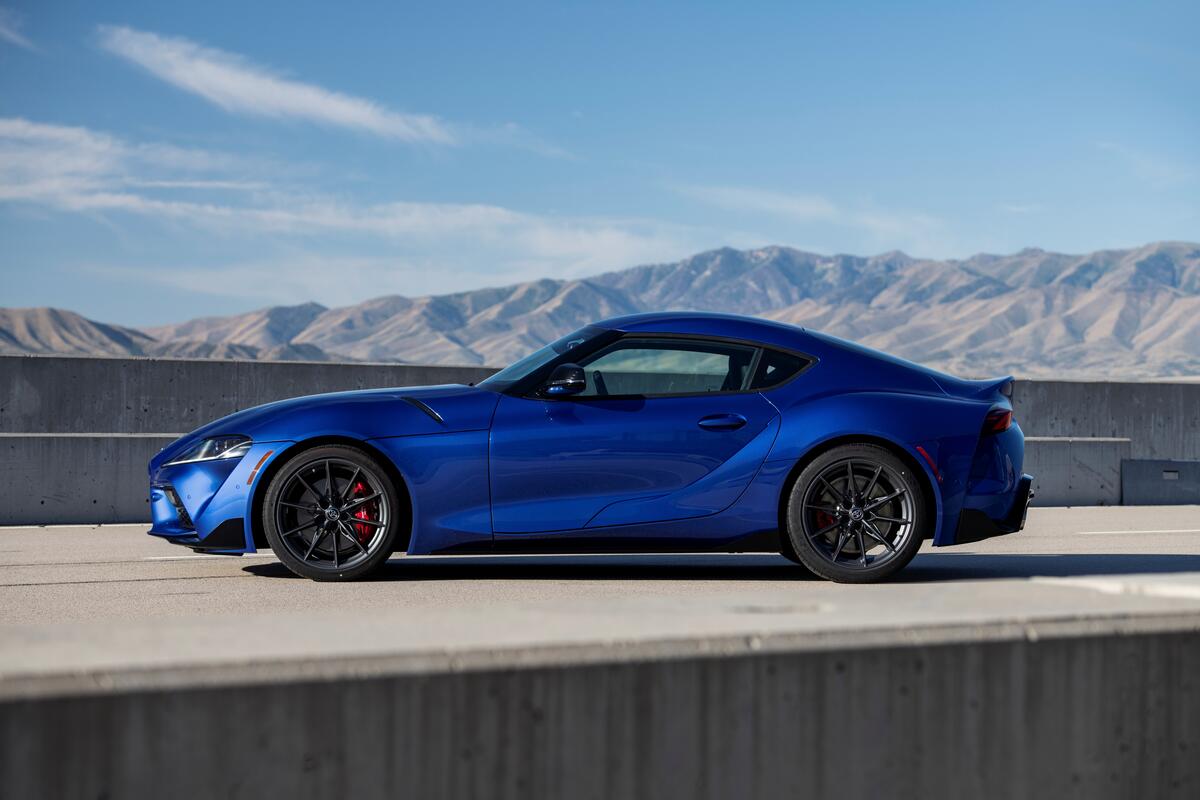
Toyota A80S
"...rs, etc. But did you have any Lambos in the A70s, A80s, 90s? Because Lambos don't have the same rating p..."
The Toyota Supra is a sports car made by Toyota. It’s known for being quick and for having a big fan community. In the podcast, it’s mentioned as a well-known car from earlier decades.
The Toyota Supra is a performance sports car best known for its long-running reputation and strong enthusiast following. It’s frequently discussed in the context of classic eras of sports cars because different generations became icons for their driving feel and tuning potential. In the podcast, it’s referenced as part of a broader conversation about notable sports cars from past decades.

Ford GT40
"... sort of given it the chance. Did you ever have a GT40? No, I didn't, but I very nearly did. And I would..."
The Ford GT40 is a famous race car made by Ford. It was built to win in endurance racing, and it became well known for its success. The podcast brings it up because it’s a standout historic car people dream of owning.
The Ford GT40 is a legendary race car built to compete at the highest level of endurance racing. It’s historically significant because it helped establish Ford’s success in major racing events during the 1960s. The podcast mentions it in the context of whether someone had the chance to own one, reflecting its status as a highly coveted piece of motorsport history.
electric
"What do you think about some of the design directions and decisions like this new electric one?"
“Electric” here means the car runs on electricity from a battery, not gasoline. That can change how the car is built and how it fits on roads.
When people say “electric” in car design discussions, they usually mean battery-electric vehicles (BEVs) that run on electric motors instead of a gasoline engine. That shift changes packaging, weight distribution, and even how the car’s shape can be optimized.
road narrowing devices
"Certainly, take the car into London and try and get through some of those sort of road narrowing devices and so on."
These are things on roads that make the driving space smaller, like pinch points or traffic-calming layouts. Wider cars have a harder time fitting comfortably through those areas.
“Road narrowing devices” refers to traffic-calming or street-design features that reduce lane width or constrain vehicle space. For wider modern cars, these can make driving more stressful—especially in dense cities with tight turning and clearance.
London
"Certainly, take the car into London and try and get through some of those sort of road narrowing devices and so on."
London is a good example of a city with older, tighter streets. The speaker is saying wide cars can be more difficult there.
London is used here as an example of a dense, older city with narrow streets and frequent traffic-calming layouts. The speaker’s point is that modern cars getting wider can be harder to maneuver in places like this.
250F Maseratis
"Well, the flying was a story where I have a friend called Vic Norman who runs Aerosuperbatics and I've known Vic for years. In fact, I embraced against him. We both had 250F Maseratis."
Maserati 250F is a famous old Formula 1 race car from the 1950s. It’s the kind of car enthusiasts love because it’s historically important and built for racing.
The Maserati 250F is a classic Formula 1 race car from the early 1950s, known for its lightweight design and competitive V12-era engineering. Mentioning “250F Maseratis” points to the speaker’s deep connection to historic, high-performance racing machinery.
Request an Explanation
Heard something you'd like explained? We'll add it to this episode.
Sign in to request explanations for terms you heard.
Want to learn more?
Browse our glossary for plain-English explanations of automotive terms, jargon, and concepts.
Help improve this episode
See something that's not quite right? Our annotations are AI-generated and can sometimes miss the mark. Click the flag icon on any annotation to suggest a correction.
1 community members have helped improve this episode.