
The Man Who SAVED Porsche After Loosing 90% Of Its Sales… Here’s How!
About this episode
Porsche’s UK turnaround is traced to a lack of product strategy, then a rapid reset: slim the company down, listen to dealers and customers, and rebuild the lineup around price, weight, and perception. The “club sport” approach—stripping cars, dropping suspension, and adding value through branding—helped shift press and buyer talk. The episode also widens into today’s brand pressures: EV timing, VW-group standardization risk, and China’s speed and investment.
Check out Tweak: https://www.tweakuk.com/
What does it really take to save one of the world’s most iconic brands?
In this episode, former Porsche GB CEO Kevin Gaskell shares the incredible story of how he helped transform Porsche during one of the most challenging periods in its history. From rebuilding a struggling business to leading BMW and Lamborghini, Kevin reveals the leadership principles, business strategies and hard decisions that shaped his career.
We dive into why some of the world’s biggest automotive brands are making costly mistakes, how listening to customers changed Porsche’s future, what modern businesses continue to get wrong, and the mindset required to build and lead successful companies.
Whether you’re passionate about cars, business or leadership, this is an episode packed with lessons from someone who has spent decades turning struggling companies into success stories.
Don’t forget to subscribe to our channel for more exciting content about your favourite shows and celebrities. Hit the bell icon to stay updated on all our latest episodes
👍 Like, Comment, and Share this episode. Join our discussion in the comments section
Check out Tweak: https://www.tweakuk.com/
🔗 Follow Us:
Instagram: @Roadtosuccessofficialpodcast
@benedictfowler
Contact: [email protected]
product strategy
"Well, I got that position because they were in such trouble. And why were they in that trouble? Because they didn't have a product strategy."
A product strategy is basically a company’s game plan for what to sell and who to sell it to. The speaker is saying Porsche didn’t have a clear plan for its cars, which hurt sales.
A product strategy is the plan for what products a company will build, for which customers, and how they’ll be positioned in the market. Here, the speaker says Porsche’s problem was that it lacked a clear strategy for its lineup and direction.
press
"The press were killing us. German engineers, they went away and started re-engineering stuff."
Here, “press” means car journalists and media. The speaker is saying bad reviews and coverage were hurting the brand, and their new approach helped turn that around.
In automotive business terms, “the press” refers to journalists and media outlets that review cars and shape public perception. The speaker says the press was “killing us,” and that showing the new concept changed the press’s mindset.
re-engineering
"German engineers, they went away and started re-engineering stuff. And we said, no, no, make it simpler than that."
Re-engineering means taking a component and redesigning it from the ground up. The speaker is saying the team didn’t want to overcomplicate it and instead went simpler.
Re-engineering means redesigning parts or systems rather than making small tweaks. The speaker contrasts it with a simpler approach, saying German engineers wanted to re-engineer things, but they chose a more straightforward direction.
suspension
"So we take everything out. So we take the waiter, we drop the car in suspension, plastic racing seats in it."
Suspension is the system that connects the wheels to the car’s body and controls ride comfort and handling. In the segment, the speaker describes stripping the car down to the base and then dropping it into suspension as part of building a more focused concept.
plastic racing seats
"So we take the waiter, we drop the car in suspension, plastic racing seats in it. We showed it at the British Motor Show."
Racing seats are designed to keep you locked in during aggressive driving. Using lightweight “plastic” racing seats is one way to make a car feel more track-focused and less like a comfort car.
Plastic racing seats are lightweight, bucket-style seats designed to hold the driver firmly during hard cornering. The speaker mentions using them as part of a stripped-down, track-inspired setup to change how the press viewed the car.
British Motor Show
"We showed it at the British Motor Show. It was a commercial success because it changed the mindset of the press."
The British Motor Show is a big car event in the UK where automakers show cars to journalists and fans. The speaker is saying they used that spotlight to help change how people talked about the brand.
The British Motor Show is a major UK auto show where manufacturers display new cars and concepts to media and the public. In this segment, the speaker says they showed the car there to influence press perception.
Lamborghini GB
"So I bought Lamborghini GB as a company. It was broken."
“Lamborghini GB” means Lamborghini’s operations for Great Britain. The speaker says they had problems there, then they improved things by asking customers what they wanted and building a new model.
Lamborghini GB refers to Lamborghini’s UK business/operations (the “GB” commonly meaning Great Britain). The speaker says it was broken, then describes fixing it by listening to customers and creating a specific Lamborghini model.

Lamborghini Diablo
"...rs, what do you actually want? And we created the Diablo SV. Porsche and Pieck family owned the business a..."
The Lamborghini Diablo is a supercar made by Lamborghini. The podcast is talking about the Diablo SV, which is a special version of the Diablo made for a particular performance direction. It comes up because it shows how Lamborghini developed and refined the Diablo over time.
The Lamborghini Diablo is a classic, high-performance supercar associated with Lamborghini’s late-20th-century lineup. The podcast context mentions the creation of the Diablo SV, tying it to a specific development goal and the brand’s internal decision-making. It’s brought up because the Diablo SV is a notable variant that reflects how Lamborghini evolved the original Diablo concept.
Porsche and Pieck family
"And eventually the Porsche and Pieck family who owned the business at that point, they decided they needed a change and they cleared out the board."
The “Porsche and Pieck family” refers to the family group that owned Porsche at that time. Their decision to “clear out the board” is a corporate governance action—replacing leadership when the company is underperforming.
cleared out the board
"And eventually the Porsche and Pieck family who owned the business at that point, they decided they needed a change and they cleared out the board."
“Cleared out the board” describes a governance move where the owners remove the company’s board of directors. It’s a high-level corporate action that typically happens when leadership is considered ineffective and a turnaround is needed.

Porsche 924
"Now, they had the four cylinder cars, the 924 and the 944."
The Porsche 924 is an older Porsche with a smaller, four-cylinder engine. The host is using it to explain that Porsche relied heavily on these smaller models for sales and money for a long time.
The Porsche 924 is a four-cylinder Porsche from the 1970s/80s era, known for being part of Porsche’s “entry” lineup. In this segment, it’s brought up as one of the four-cylinder models that made up a big share of Porsche’s sales and profit before those models aged out.

Porsche 944
"Now, they had the four cylinder cars, the 924 and the 944."
The Porsche 944 is an older Porsche with a four-cylinder engine. The point in the episode is that Porsche depended on cars like the 944 to make most of its sales and profits.
The Porsche 944 is a four-cylinder Porsche that became one of the brand’s most important volume models in the late 1970s through 1980s. Here, it’s mentioned as part of the four-cylinder lineup that carried Porsche’s sales and profit until those models reached the end of their product life.
end of their life
"they'd gradually run out of life around the 911. ... those vehicles reached the end of their life, [552.7s] your revenue's gone."
“End of their life” means the model is getting phased out and people stop buying it. The host is using it to show how Porsche lost money when its older, high-volume cars were no longer selling.
“End of their life” refers to the point when a car model is no longer current—either it’s discontinued or it’s no longer competitive—so sales decline. In this segment, it’s used to explain why Porsche’s revenue dropped when the 924/944 lineup reached that stage.

Porsche 928
"The 928 had been on its last legs for some time before."
The Porsche 928 is an older Porsche model that was meant to be a more comfortable, long-distance grand tourer. In the episode, it’s mentioned because it was already declining before Porsche’s situation improved.
The Porsche 928 is a grand touring Porsche from the late 1970s/80s era, notable for being a V8-powered alternative to the 911. The host mentions it as being “on its last legs,” using it to illustrate how Porsche’s lineup was running out of viable products over time.
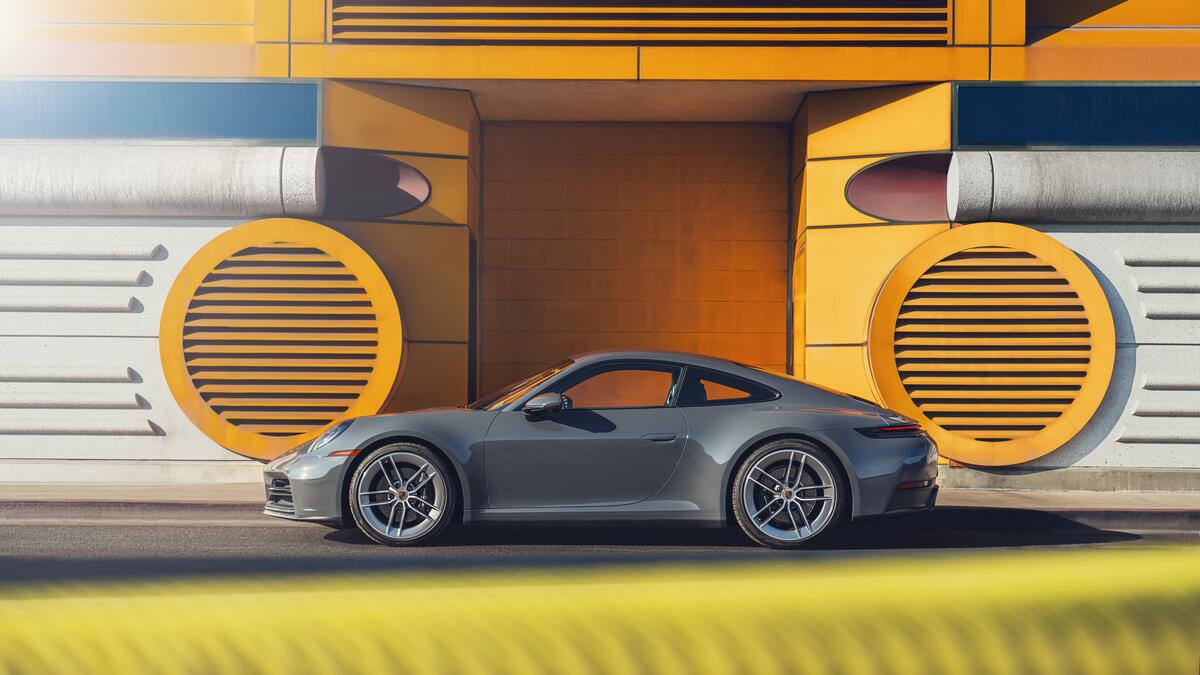
Porsche 911
"We had the 911. [538.2s] That was it."
The Porsche 911 is Porsche’s most famous model. The host is saying Porsche’s business was heavily supported by other models for a while, but once they aged out, the 911 became the main remaining product.
The Porsche 911 is Porsche’s flagship sports car, built around a rear-engine layout and a long-running model identity. In this segment, the host contrasts the 911 with the aging four-cylinder lineup, explaining that Porsche’s volume and profit were tied to the smaller cars until they ran out of “life.”
Club Sport
"One part of your story of how you turn that around was the word club sport. Oh, yeah. And it's funny because these days, if you add that word to the side of a Porsche, it adds value."
“Club Sport” is a Porsche trim/option package that typically emphasizes weight reduction and a more driver-focused setup by removing or deleting comfort-oriented items. Here, the host says adding the “club sport” word later increased perceived value, but at the time it coincided with taking things off the car—so it affected how buyers interpreted the changes.

Porsche 968
"And then the 968 was launched. And the 968 was, it was a gentle makeover of a 944. That's what it was."
The Porsche 968 is basically the next-generation version of the 944. In this segment, the host says it was a mild update, which is how Porsche tried to fix the brand without completely starting over.
The Porsche 968 is the successor to the 944, continuing the front-engine, four-cylinder sports-car formula. The host describes it as a “gentle makeover of a 944,” which is important because it shows Porsche’s strategy: refresh the existing platform to stabilize the brand rather than reinvent everything.
tax
"And part of it was about tax, part of it was about having a position in the market. So we said to the factory, guys, we need a car at under 29,000 pounds."
They’re saying taxes matter for what the car ultimately costs. If taxes push the price too high, the car can’t meet the target price they need to sell it.
In automotive pricing, “tax” can strongly affect the out-the-door cost of a car, which then determines whether a manufacturer can hit a specific price bracket. Here, the speaker ties the target price (“sub 29,000 pounds”) to tax-driven affordability constraints.
FED in headlights
"And we said, no, no, make it simpler than that. And there were some concepts made of 968 with FED in headlights, and you know, the thing looked like a dog's bollocks,"
They’re talking about a prototype headlight setup using a specific lighting idea (“FED”). The important part is that they were trying different headlight tech while working toward a lower price.
“FED” here appears to describe a lighting technology used in the prototype headlights. Because the transcript doesn’t spell out what FED stands for, the key idea is that they were experimenting with a specific headlight approach while trying to control cost and positioning.
price positioning
"but it wasn't going to help us with the price positioning. So we're in an internal meeting in Porsche GB, and we said, right, how could we do this?"
Price positioning is how a brand deliberately places a vehicle in the market relative to competitors—often tied to perceived value, target buyers, and margins. The speaker says the prototype’s look wouldn’t solve the bigger problem: hitting the right price positioning.
take everything out the car
"And so can you ever think about it, please? ... And we said, right, how could we do this? What could we do? And we said, let's take everything out the car. Let's start with a base of an engine, four wheels, and a chassis."
They’re describing a “strip it down” approach. The idea is to remove as much as possible to save weight and money, then add back only the essentials.
This describes a cost-and-weight reduction strategy: stripping a car down to a minimal baseline (engine, wheels, chassis) and then adding back only the necessary components. In practice, it’s a way to meet a strict price target while keeping the vehicle drivable and marketable.
weight
"So it takes the weight down, but a few bits and bobs back in."
Weight matters because a lighter car usually drives better and feels more responsive. They’re saying removing parts helps reduce the car’s weight.
Weight is a key engineering variable because reducing mass improves acceleration, braking, and handling response. The speaker explicitly connects removing parts to lowering weight, which is a common lever when trying to hit both cost and performance targets.
lower
"then change the suspension, which dropped it, you know, an inch... It was lower, it handled better."
“Lower” means the car sits closer to the ground. That can help it feel more stable in corners because the center of gravity is lower.
In performance-car context, “lower” refers to reducing ride height. Lowering the car typically improves handling because it reduces body roll and lowers the center of gravity.
steering wheel
"We've got really nice steering wheel in it, because you get in first thing you feel is a steering wheel."
The steering wheel is the driver’s primary control interface for direction and steering feel. The host’s point is that, in a stripped “club sport” style build, the steering wheel becomes one of the first things you notice—signaling a more driver-focused cockpit.
margin
"they used to have 15, 16% margin. Guys, your margin on this is 9%."
“Margin” is the profit dealers keep from each sale, usually shown as a percentage. The host is saying the new plan left dealers with less profit than before.
“Margin” here means the dealer’s profit percentage on the sale price. The host contrasts older dealer margins (15–16%) with a new, tighter 9% margin to show how the repositioning/strategy had to work even with less dealer profit.
wheels color coded
"So we produced it in yellow, red, white, black, or blue. Five colors, wheels color coded. We showed it in a British mode show."
“Color-coded wheels” just means the wheels are finished in a way that matches the car’s paint or theme. It’s mostly about looks—making the whole car look put together.
“Color-coded wheels” means the wheel finish or wheel accents are matched to the car’s exterior color scheme. It’s a styling choice that helps the car look more coordinated and can make a limited-color run feel more special.
decal
"And we slapped a decal on the side. Whereas Americans keep telling me it's decal. A decal on the side, four feet long and a foot high."
A “decal” is basically a graphic sticker put on the car. Here, the dealers kept calling because they wanted that side graphic included.
A “decal” is a sticker or graphic applied to the bodywork. In this segment, the speaker is emphasizing that customers and dealers specifically wanted the side graphic as part of the car’s identity.
order starts to come in
"Wow, we want one of those. And the thing starts to sell. The order starts to come in and in."
This is when people stop just being excited and start placing real purchase orders. It’s the point where a car show turns into actual sales momentum.
This describes the sales funnel moment where customer interest turns into actual purchase orders. In automotive terms, it’s the shift from marketing/show exposure to measurable demand.
go back to the roots
"And the car, the journalists loved it because it was back to the roots of Porsche."
“Back to the roots” means going back to what the brand is known for. In this case, the speaker says the journalists felt the cars were closer to Porsche’s original spirit.
“Back to the roots” is a positioning concept meaning the brand is emphasizing its original identity—typically the core driving character and heritage—rather than chasing new trends. Here, journalists liked the “club sport” look because it signaled Porsche was returning to what made it Porsche in the first place.
changing the perception
"It's a perfect car. But it changed the perception. And that was the beauty of it."
This means they tried to change what people thought about Porsche. Instead of only improving the cars, they also changed the story and image so journalists and buyers viewed Porsche differently.
“Changing the perception” refers to altering how people view a brand or product rather than changing the underlying engineering. In this segment, the speaker credits the “club sport” decal strategy with shifting how the press and customers talked about Porsche.
AutoCar
"And AutoCar gave it car of the year, which I blew my socks off. [963.5s] There's a great journalist called Steve Cropley here."
AutoCar is a car magazine that gives out awards. Saying it won “Car of the Year” means a respected publication publicly picked it as the best overall car that year.
AutoCar is a UK automotive magazine that runs major awards, including “Car of the Year.” When the host says AutoCar gave it car of the year, they’re referencing a high-profile editorial endorsement that can influence public perception and sales.
Steve Cropley
"[963.5s] There's a great journalist called Steve Cropley here. [966.0s] I used to meet now then. [966.9s] Steve said, can I come out and have lunch with you?"
Steve Cropley is a car journalist the host is talking about. In this story, his involvement connects Porsche to major car-media attention and awards.
Steve Cropley is a journalist the host mentions as part of the story behind the Porsche “club sport” moment. The key automotive relevance here is that press coverage and award recognition (like AutoCar’s) can shape how a brand is viewed.
brand that was thinking about the future
"It started the change from Porsche was a... [1003.2s] brand that was in trouble to Porsche was a brand that was thinking about the future again. [1007.7s] So that car was just axial to that shift."
The host is saying Porsche went from being in a tough spot to focusing on what comes next. That means planning new cars and a new direction, not just trying to get through the present.
The host contrasts Porsche as “a brand that was in trouble” with Porsche as “thinking about the future,” describing a turnaround in brand direction. In automotive terms, this is about shifting product strategy and messaging toward next-generation engineering and design rather than just surviving the current market.

Porsche Carrera GT
"... become legends in their own right. We've had the Carrera GT. We've had the launch of KNs that everybody sees ..."
The Porsche Carrera GT is a very special, very high-performance supercar from Porsche. It’s known for being rare and for delivering an extreme driving experience. The podcast mentions it because it’s considered a standout car in Porsche’s lineup.
The Porsche Carrera GT is a rare, high-performance supercar that has become a legend for its driving experience and exclusivity. In the podcast, it’s referenced alongside other Porsche model milestones, highlighting how certain cars can define a brand’s reputation. It’s discussed because its status and impact make it a meaningful part of Porsche’s modern history.

Porsche Panamera
"...of KNs that everybody sees on the road daily. The Panamera went down a treat with a whole different audience..."
The Porsche Panamera is a Porsche with four doors, so it’s easier to live with than a two-door sports car. It’s designed for people who want sporty performance but also need more everyday practicality. The podcast mentions it because it attracts a different group of customers.
The Porsche Panamera is Porsche’s four-door performance sedan, built to bring sports-car driving feel to a more practical body style. The podcast frames it as appealing to a different kind of buyer than the more traditional sports-car lineup. That “different audience” angle is why it comes up in discussions about product strategy and market fit.

Porsche Taycan
"...d of look at them and think, are they in trouble? Taycans everywhere, not selling, huge cost. Every mechan ..."
The Porsche Taycan is an electric sedan made by Porsche. The podcast talks about how many Taycans you can see, but also suggests the business side hasn’t been as smooth as expected. That’s why it comes up—both its popularity on the road and its sales/cost concerns are being questioned.
The Porsche Taycan is Porsche’s electric performance sedan, positioned as a direct alternative to traditional high-performance cars. The podcast mentions Taycans being common on the road while also raising concerns about sales and high costs, implying a mismatch between production and demand. That combination—visibility plus commercial pressure—is why it’s discussed.
electric one
"Every mechan on the road now you can only buy an electric one. [1066.2s] There's Chinese EVs everywhere."
Here, “electric one” means an electric car instead of a gas car. The point is that EVs are taking over the market, and that forces brands to adapt fast.
“Electric one” is shorthand here for an electric vehicle (EV) rather than a gasoline or diesel car. The host is arguing that the market is shifting so quickly toward EVs that it’s changing what people can buy and how automakers must compete.
Chinese EVs
"[1066.2s] There's Chinese EVs everywhere. [1069.5s] Do you think these brands are going to need saving?"
“Chinese EVs” are electric cars made by companies in China. The host is saying there are so many of them now that they’re making competition tougher for other automakers.
“Chinese EVs” refers to electric vehicles made by Chinese manufacturers, which have been expanding globally with aggressive pricing and rapid product development. The host uses this as evidence of intense competition that can pressure established brands’ sales and margins.
Volkswagen Group
"I think that Porsche has been absorbed into the Volkswagen group. [1084.9s] And with that come opportunities and come challenges."
The Volkswagen Group is a big car company that owns several different brands. The host is saying Porsche being part of that group affects how Porsche designs and builds cars.
The Volkswagen Group is the large automotive conglomerate that owns multiple brands, including Porsche. The host’s point is that Porsche being “absorbed” into the group changes how it’s managed—especially around shared parts and platform strategies.
group components
"The opportunities are you've got massive balance sheet behind you. The challenges are you'll be encouraged to use group components at every level."
“Group components” are shared parts that different car brands in the same company use. The concern is that using too many shared parts can make a brand feel less special or less “Porsche-like.”
“Group components” means parts shared across multiple brands within the same corporate group, such as shared engines, electronics, or other major hardware. The host suggests this can dilute a brand’s uniqueness if Porsche relies too heavily on common parts.
switch gear
"Everything from engines through to switch gear will be somewhere group components. [1104.3s] And I think the beauty of a brand like, and Ferrari is also part of a big group,"
In an EV, there’s a lot of high-voltage electrical equipment that controls power flow. The host is saying even that kind of hardware could be shared across brands.
“Switch gear” here likely refers to the high-voltage electrical switching hardware used in EVs and other electrified systems. It’s mentioned as an example of how even specialized electrical parts could become standardized across the Volkswagen group.
Ferrari
"[1104.3s] And I think the beauty of a brand like, and Ferrari is also part of a big group, [1110.5s] but they've managed to just stay aside and danger, but they're much full of volume than Porsche."
Ferrari is used as an example of a car brand that still feels unique, even though it’s part of a bigger corporate structure. The host is saying Porsche should try to keep that same kind of identity.
Ferrari is referenced as another brand that belongs to a larger corporate group but is described as having kept its distinct identity. The comparison is used to argue that Porsche needs to protect its brand character even if it shares more parts within a group.
brand identity
"But the point with Porsche is that I think it's just got to be carefully, it doesn't lose its brand identity and is to be distinct and different"
“Brand identity” means what makes a brand feel recognizable and different from others. The host is saying Porsche has to keep what makes it “Porsche” even as the company changes.
“Brand identity” is the recognizable set of traits that makes a brand feel distinct—its design language, engineering philosophy, quality expectations, and heritage. The host argues Porsche must avoid losing this while adapting to group-wide strategies and EV competition.
motorway basher
"My day-to-day motorway basher is a McCann and I love it."
“Motorway basher” is enthusiast slang for a car that’s comfortable and durable enough for lots of highway miles. In the segment, it’s used to describe the “McCann” as a practical, high-use daily driver rather than a niche weekend car.
Skunkworks back-office project
"And now they're running a Skunkworks back-office project to put an internal combustion engine in the new McCann because they have to."
A “skunkworks” project is basically a small team working fast on something experimental. In this case, they’re using that approach to try to get an engine solution into the new car.
“Skunkworks” refers to a small, semi-independent team set up to move fast on experimental or high-risk projects. Here, it’s described as a back-office effort to develop an ICE solution for the “new McCann,” implying Porsche is trying to work around constraints quickly.
internal combustion engine
"they're running a Skunkworks back-office project to put an internal combustion engine in the new McCann because they have to."
An internal combustion engine is the traditional gas/diesel engine that makes power by burning fuel. The speaker is saying Porsche may still need to keep using that technology for some buyers.
An internal combustion engine (ICE) is an engine that burns fuel inside the engine to create power. In this segment, it’s used to argue that Porsche still needs an ICE option for the “highest volume” car, despite an electric-only push.
knockdown
"asking them why that forklift goes through that hole, they're going into knockdown."
“Knockdown” usually means sending parts that aren’t fully assembled yet. The idea is that they get put together later, often in another location.
“Knockdown” refers to shipping products in partially assembled form (or as components) so they can be assembled elsewhere. The speaker connects it to factory logistics—forklifts moving parts through a specific process into knockdown—suggesting a manufacturing/assembly strategy rather than a single finished-car shipment.
EV
"And they may want to drive an electric car, but at the minute that audience isn't there. [1262.0s] There are some, some people want electric vehicles and good luck to them."
Electric vehicles are cars that run on electricity stored in a battery. Instead of burning fuel in an engine, they use an electric motor to move the car.
Electric vehicles (EVs) are cars powered primarily by electric motors and rechargeable batteries, rather than an internal combustion engine. They can be fully electric (battery-electric) or use electricity in combination with other power sources, but the key idea is that propulsion comes from electricity.
petrol engines
"But for a brand like Porsche, which is built on petrol engines and performance and noise and [1274.8s] and people don't buy a Porsche for transport."
Petrol engines are gas engines that use gasoline as fuel. They make power by burning that fuel inside the engine.
Petrol engines are gasoline engines that burn fuel to produce mechanical power. The host uses the phrase to emphasize Porsche’s traditional reliance on combustion-based powertrains rather than electricity.
sensory experience
"You buy a Porsche because you want experience. [1288.7s] And part of that experience for a lot of people is still lifting the bonnet [1293.4s] or the boot and which model you're buying and looking at that engine and smelling that engine"
The “sensory experience” is about what you can see and hear when you drive—like the engine sound and the feeling of the car. The host’s point is that some people buy certain cars for that whole experience, not just getting from A to B.
“Sensory experience” here refers to how a car feels and sounds during use—especially the sights and noises tied to a combustion engine. The host argues that for many buyers, part of what they’re paying for is the ritual and feedback (engine bay, sound, and driving feel), not just transportation.
engine on each wheel
"[1313.3s] I mean, I saw a report the other day about, I think it was the Luce who said, [1318.1s] and the report said he's got an engine on each wheel. [1320.9s] Yeah, well, congratulations."
That phrase means the car has a motor at (or near) each wheel. Instead of one engine sending power through the drivetrain, each wheel can get its own power, which can help with grip and control.
“Engine on each wheel” describes a wheel-hub motor setup, where electric motors drive individual wheels instead of using one central engine and drivetrain. This can improve traction and allow more precise torque control at each wheel.
digital marketing agency
"[1351.8s] Many of you might not know this, but away from the recordings that I do in my van studios, [1355.8s] I've actually got a digital marketing agency. [1358.0s] Now, we specialize in a lot of automotive clients, but we cover everything really."
A digital marketing agency is a business that helps companies get customers using online ads and content. Here, the host says they do that work for car-related businesses too.
A “digital marketing agency” is a company that plans and runs online marketing campaigns. In this segment, it’s used to describe the host’s business services like PPC and SEO for automotive clients.
PPC specialists
"[1362.2s] Our team is made up of PPC specialists, SEO specialists, [1365.6s] and the most talented designers I've ever seen, which have done work like the Starnagloss website, [1370.5s] the TWR website, and many more."
PPC means “pay per click.” The advertiser pays when someone actually clicks the ad, which helps target shoppers who are actively looking for something.
PPC stands for “pay-per-click,” an advertising model where you pay each time someone clicks your ad. In automotive marketing, PPC is often used to drive leads for specific models, trims, or dealer offers.
SEO specialists
"[1362.2s] Our team is made up of PPC specialists, SEO specialists, [1365.6s] and the most talented designers I've ever seen, which have done work like the Starnagloss website, [1370.5s] the TWR website, and many more."
SEO is how you make a website show up more often when people search online. It’s about getting your page to rank higher so more interested people can find it.
SEO stands for “search engine optimization,” the practice of improving a website so it ranks higher in search results. For automotive brands and creators, SEO can help people find model reviews, buying guides, and brand pages through Google and similar search engines.
Jaguar
"[1387.0s] We've seen so many enormous mistakes. [1389.5s] I actually thought when Jaguar did their rebrand a couple of years ago, [1393.3s] it was potentially one of the most amazing marketing stunts about to happen in history,"
Jaguar is a car brand known for luxury vehicles. The host is using Jaguar’s recent rebrand as an example of a big marketing strategy.
Jaguar is a British luxury car brand that has used major branding and product strategy shifts in recent years. The host references Jaguar’s rebrand as an example of a high-profile marketing move.
Porsche Turbo, 911 Turbo
"And he said, thank you for the right hand drive, Porsche Turbo, 911 Turbo. And I said, right, why are you thanking me for that?"
A Porsche 911 Turbo is a high-performance 911 with a turbocharger. Here, they’re talking about whether Porsche should make it in right-hand-drive or left-hand-drive for different countries.
The Porsche 911 Turbo is a performance version of the 911 line, known for turbocharging and a focus on high-speed stability and acceleration. In this segment, the speaker is discussing Porsche’s decision about whether to build the car in right-hand-drive versus left-hand-drive markets.
right hand drive
"There's a fact we're only going to build left hand drive, right? Because right hand drive market, oh, for 911 Turbo, I don't know."
Right-hand drive means the steering wheel is on the right side of the car. It’s used in countries where cars drive on the left, and the speaker is saying Porsche was considering whether to build for that market.
Right-hand drive (RHD) means the steering wheel is on the right side of the car, which is common in countries that drive on the left. This segment contrasts RHD versus left-hand drive for the Porsche 911 Turbo, implying Porsche was debating which market to prioritize.
left hand drive
"There's a fact we're only going to build left hand drive, right? Because right hand drive market, oh, for 911 Turbo, I don't know."
Left-hand drive means the steering wheel is on the left side of the car. The speaker is saying Porsche planned to make only that version, not the right-side steering version needed in some countries.
Left-hand drive (LHD) means the steering wheel is on the left side of the car, which is typical in countries that drive on the right. The speaker says the company planned to build only left-hand-drive versions, which would exclude right-hand-drive markets.
green credentials
"And people can say, yeah, but okay, if you need to think about the green credentials, [1560.9s] well, let's be careful when we start quoting green credentials"
“Green credentials” are the eco-friendly claims people make about something. Here, the host is saying those claims might not be as impressive as they sound for electric cars.
“Green credentials” means the environmental claims a product or company makes—like how clean it is or how low its emissions are. In this segment, the host is questioning whether electric vehicles truly meet those claims once you account for their full lifecycle.
ICE car
"So for me, I actually like an ICE car. [1583.2s] An ICE car, not a nice car, like nice cars, but like an ICE."
ICE car means a car with an engine that burns fuel to move the car. The host is saying he likes that style of car instead of switching to electric.
An ICE car uses an internal combustion engine—meaning it burns fuel (like gasoline or diesel) to make power. The host contrasts ICE cars with electric vehicles and says he prefers the driving feel and performance characteristics of fuel-burning cars.
petrol car
"I like a petrol car. [1588.7s] Actually, I've got diesel."
A petrol car runs on gasoline. The host is using it to describe the type of fuel-powered car he prefers.
A “petrol car” is a fuel-burning car that uses gasoline (petrol) as its energy source for the internal combustion engine. In the segment, it’s part of the host’s preference for traditional fuel power over EVs.

Audi Allroad
"Actually, I've got diesel. [1590.0s] I've got a twin turbo Audi all-road in the garage there. [1594.6s] What a machine."
An Audi allroad is a rugged-looking wagon made for everyday driving plus rougher roads. The “twin turbo” part means the engine uses two turbochargers to help it pull strongly, especially at lower speeds.
The Audi allroad is an all-terrain wagon/estate built on Audi’s A6 platform, designed to handle rougher roads than a typical station wagon. In this segment, the host specifically mentions a twin-turbo setup, which typically means a diesel engine with two turbochargers to improve low-end and mid-range response—hence the “rocket ship” feel and strong torque.
torque
"It's got such torque. [1602.8s] Wow, man, it's fantastic."
Torque is the engine’s pulling force. More torque usually means the car feels strong and quick when you press the accelerator, especially at lower speeds.
Torque is the twisting force an engine produces, and it largely determines how strongly a car accelerates—especially from low speeds. The host links torque to the “rocket ship” sensation, which is a common way drivers describe strong pulling power.
diesel
"when the government [1623.5s] thought diesel was the best thing since widespread. [1625.4s] And so they changed the tax system so that they promoted diesel"
Diesel is a kind of engine that works differently from typical gas engines. Instead of spark plugs, it uses high compression to ignite the fuel. Governments have sometimes encouraged diesel with tax rules, which changes what car companies focus on.
Diesel is a type of internal-combustion engine that compresses air and ignites fuel under high pressure, rather than using spark plugs like most gasoline engines. The speaker is referencing how governments have historically shifted incentives to favor diesel, which can strongly affect what automakers build and what buyers choose.
V6 hybrid
"And I feel like Ferrari with the 296 was like a V6 hybrid. [1674.3s] Many of their customers that bought lots of cars"
A V6 hybrid is a car that has a V6 engine and also uses electricity to help drive it. That can make the car feel different—sometimes smoother or quicker at low speeds—compared with a non-hybrid.
A V6 hybrid is a hybrid powertrain where the internal combustion engine is a V6 (six cylinders arranged in a V shape) and it’s assisted by an electric motor/battery. This can change how the car delivers power—often improving low-speed response and efficiency while altering the traditional engine sound and character.

Ferrari 458 Speciale
"But they still had [1686.5s] 458 speciales. They still had F40s in their collection."
The Ferrari 458 Speciale is a special, more hardcore version of the 458. It’s known for a high-revving V8 and for feeling more focused than a typical Ferrari.
The Ferrari 458 Speciale is a high-performance version of the 458 line, built around a naturally aspirated V8 and tuned for sharper track-style driving. Here, it’s referenced as part of the kind of multi-Ferrari ownership that defines a “normal Ferrari buyer.”

Ferrari F40
"But they still had 458 speciales. [1689.2s] They still had F40s in their collection."
The Ferrari F40 is one of Ferrari’s most famous old supercars. It’s known for being fast and kind of raw, like something closer to a race car than a luxury car.
The Ferrari F40 is a legendary 1980s supercar known for its lightweight, race-bred approach and turbocharged V8. In the segment, it’s mentioned as part of a collection that appeals to a different kind of Ferrari buyer.

Lamborghini Huracan
"The Tamario people are going, I'd rather just go and spend [1707.8s] 120 grand on a Huracan, which are all now going to 150, 160,"
The Lamborghini Huracán is a supercar with a famous V10 sound and a very dramatic driving style. In this discussion, it’s the “better choice” some buyers would make with their money.
The Lamborghini Huracán is a modern supercar known for its V10 engine and sharp, aggressive driving feel. The segment uses it as the alternative purchase that some buyers would rather make instead of the Porsche-branded option being discussed.
legislation driven
"And so you've got that poll, which is legislation driven. And then you've got the smaller poll, which is a customer saying,"
“Legislation driven” refers to decisions shaped by government rules—like emissions standards and EV mandates. The speaker contrasts that with customer demand, implying both forces influence how quickly automakers change.
sweet point
"And somewhere you've got to find that sweet, sweet point, which is satisfying your customer."
“Sweet point” means the best balance. In this case, it’s finding a car strategy that meets rules but still matches what buyers care about.
“Sweet point” here means the balance automakers need between regulatory requirements and what customers actually want. It’s the idea of finding a compromise that satisfies both sides so the product sells.
Diablo SV
"And we created the Diablo SV to the lightweight Diablo. And that was, again, done by team in Reading."
The Lamborghini Diablo SV is a special, lighter version of the Diablo. The idea is to make the car feel more exciting by removing weight and focusing on what drivers actually want.
The Lamborghini Diablo SV is a lighter, more aggressive version of the Diablo, built to feel sharper and more driver-focused. In this segment, the host links it to a “lightweight Diablo” approach—stripping weight and costs to make it more exciting for customers.
club support strategy
"And it was a club support strategy all over again. We stripped costs out of it."
A “club support strategy” means the company supports car enthusiast groups. That helps build a loyal fan base and makes people more likely to talk positively about the car.
A “club support strategy” is a marketing and community approach that focuses on enthusiasts and organized owner groups. The idea is that strong support for clubs can build loyalty and word-of-mouth, especially for niche performance brands.
headlights on
"It was always a bit embarrassing if it was dark because you put the headlights on and one had come up. And then the other had come up."
They’re talking about the headlights not working perfectly—like one side comes up and the other doesn’t. It’s a sign the car wasn’t always reliable.
In this context, “headlights on” is tied to a specific reliability/operation issue: one headlight lifting mechanism comes up while the other doesn’t. It’s describing a real-world symptom of how the car’s lighting system behaves.

Porsche GB
"So what are the people that currently are in charge of Porsche GB or Lamborghini GB and all these people?"
“Porsche GB” means Porsche’s business in Great Britain (the UK). The host is asking who’s responsible for Porsche’s UK sales and what decisions might be hurting demand.
“Porsche GB” refers to Porsche’s operations for Great Britain (the UK market). The host is discussing who is running Porsche’s UK business and what they might be doing wrong as sales decline.
V8
"but loads of V8s flew out. Then they replaced it with the Artira V6."
A V8 is an engine with eight cylinders. The host is saying that when McLaren had V8 versions, they sold really well.
A V8 is an engine configuration with eight cylinders arranged in a “V” shape. The host contrasts models with V8s that “flew out” (sold quickly) versus other models, implying buyers responded strongly to the V8 offering.
Aston Martin Signet
"It's called the Signet. And it was like the car that I think was positioned towards the wife or the partner of someone ... And it was a rebranded Toyota IQ that they bought in bulk. A load of these things put Aston badges on it."
The Aston Martin Signet was Aston Martin’s attempt to sell a cheaper, more efficient car. The host explains it was basically a Toyota IQ with Aston Martin branding added.
The Aston Martin Signet is a badge-engineered model Aston Martin sold as a more affordable, fuel-efficient option. In this segment, the host says it was essentially a rebranded Toyota IQ, with Aston badges added to a car that was otherwise Toyota-based.

Aston Martin DB9
"towards the wife or the partner of someone that had an Aston Martin, a DB9 or a DVS. And they then released the Signet."
The Aston Martin DB9 is a grand tourer (GT) that represents Aston Martin’s traditional lineup of larger, higher-performance cars. Here it’s used as a reference point for the kind of customer who might also buy the more practical Aston Martin Signet for a partner or spouse.

Toyota IQ
"And it was a rebranded Toyota IQ that they bought in bulk. A load of these things put Aston badges on it."
The Toyota IQ is a tiny, efficient car meant for city driving. The host says Aston Martin used it as the basis for the Signet by putting Aston branding on it.
The Toyota IQ is a small, fuel-efficient city car. In this segment, the host claims Aston Martin rebranded the Toyota IQ as the Aston Martin Signet and added Aston badges to sell it under the Aston name.
fuel efficient
"because I think everybody got it that they were trying to make enough models that were fuel efficient of this completely different things that they could keep making big V12."
“Fuel efficient” means the car uses less fuel for the same distance. The host is saying Aston needed more efficient cars in its lineup so it could still sell its big V12 models.
“Fuel efficient” refers to how little fuel a car uses to travel a given distance, usually tied to lower fuel consumption and lower emissions. In the segment, the host connects this to Aston Martin needing more efficient models while continuing to sell big V12 cars.
V12
"that were fuel efficient of this completely different things that they could keep making big V12. Yeah, they saw that in aggregate."
A V12 is a type of engine with 12 cylinders arranged in a V shape. The host is saying Aston wanted to keep building these big, powerful engines even while meeting efficiency rules.
A V12 is an engine with twelve cylinders arranged in a “V” shape. The host uses it to describe Aston Martin’s traditional performance focus—continuing to build large, high-output engines while also offering more efficient models.
emission standards
"Yeah, they saw that in aggregate. They met the emission standards."
Emission standards are laws that limit how dirty a car’s exhaust can be. The host is saying Aston Martin’s lineup strategy helped it meet those rules.
Emission standards are government rules that limit how much pollution a vehicle can produce, typically measured through exhaust gases. The host says Aston Martin “met the emission standards,” implying the Signet/efficiency strategy helped the brand comply while still selling higher-emission performance cars.
McLaren
"One of the really big car brands, Porsche, Lamborghini, McLaren. Do you think we're going to lose one with the direction they're going?"
McLaren is a well-known performance brand from the UK. The host mentions it alongside other top brands while discussing whether they’ll stay independent in the future.
McLaren is a British performance-car and motorsport brand associated with track-focused engineering. Here it’s grouped with other “big brands” as part of a discussion about whether iconic brands can remain distinct as the industry changes.
Fiat Group
"I think the Ferrari is part of the Fiat Group. They get absorbed into these big groups."
Fiat Group is a large corporate auto group. The host is saying that brands like Ferrari can end up owned or controlled by big parent companies.
The “Fiat Group” refers to Fiat’s corporate group structure that historically included or influenced other automakers and brands. In this segment, it’s used to illustrate the broader theme of brand consolidation under large parent companies.
absorbed into these big groups
"They get absorbed into these big groups. And the danger then is that they become neutralized. They become muted by the considerations of the big corporate."
This phrase describes industry consolidation where independent automakers or brands are folded into larger corporate groups. The speaker argues that this can dilute brand identity—making brands “neutralized” or “muted” by corporate priorities rather than their original vision.
Adrian
"I love to drive it. I think they're pulling up Adrian here. They've got a great CEO in aid."
The host mentions “Adrian,” but only by first name. The transcript doesn’t clearly say who that is, so it’s hard to pin down which person they mean.
“Adrian” is referenced as someone the speaker says they’re “pulling up,” but the transcript does not provide a last name or enough context to identify which Adrian is meant. This looks like a person connected to Aston Martin’s leadership discussion.
electrics
" [2207.5s] You have to respond. [2208.8s] Is the only thing that separates an electric"
The speaker is about to talk about electric cars. The clip ends before they fully explain what they mean, but it’s clearly setting up an EV-related point.
The speaker is beginning a discussion about electric vehicles, contrasting them with traditional internal-combustion competition. Because the segment cuts off mid-thought, this annotation flags the start of an EV-focused topic rather than a specific named technology.
ICE engine
"because people struggle to get their head around electric motors with an ice engine. [2223.5s] You can understand V6, V8, V10, V12."
ICE engine means the normal gas or diesel engine that burns fuel. The speaker is saying people are used to thinking about gas engines, but electric motors are a different concept.
ICE stands for internal combustion engine, the traditional gasoline/diesel engine that burns fuel to make power. The host contrasts how people understand gas-engine cylinder counts (V6, V8, etc.) versus understanding electric motor differences.
electric motor
"because people struggle to get their head around electric motors with an ice engine. [2223.5s] You can understand V6, V8, V10, V12."
In an electric car, the electric motor is what actually spins to move the car. Not all electric motors are the same, so different cars can feel different and use energy differently.
Electric motors are the components that convert electrical energy into spinning motion to drive the wheels in an EV. Different EVs can use different motor types and control strategies, which can affect smoothness, efficiency, and how the car feels.
V6
"You can understand V6, V8, V10, V12. [2228.1s] But I don't think people understand different electric motors in cars."
V6 is a type of gas engine with six cylinders arranged in a V shape. The speaker is using it as an example of something people already understand about regular engines.
A V6 is an engine with six cylinders arranged in a V shape. The host uses V6/V8/V10/V12 as examples of how people already understand traditional engine layouts compared with electric motor differences.
V10
"You can understand V6, V8, V10, V12. [2228.1s] But I don't think people understand different electric motors in cars."
V10 is a gas engine with ten cylinders arranged in a V. The speaker is just using it as another example of engine types people already know.
A V10 is a traditional internal combustion engine with ten cylinders arranged in a V shape. The host lists V10 among familiar cylinder-count engine formats to highlight that EV motor differences aren’t as widely understood.
brand positioning
"I'd be using the brand, brand positioning. [2270.8s] I think, I watched Le Mans on the weekend and you see who won Le Mans."
Brand positioning is how a brand tries to be seen by customers—what it wants people to think of when they hear the name. Here, the speaker says Porsche should be known for racing success and high quality.
Brand positioning is how a company wants customers to perceive it—its identity, values, and what it stands for. In this segment, the host says Porsche’s positioning should revolve around racing credibility, design, and integrity.
Le Mans
"I think, I watched Le Mans on the weekend and you see who won Le Mans. [2277.0s] It was Toyota again, and that's not good for Porsche."
Le Mans is a very famous long-distance race for sports cars. The speaker is using it to explain why Porsche cares about racing success and public image.
Le Mans refers to the famous endurance race in France, where manufacturers compete over long distances and multiple hours. The host uses it as an example of how racing results influence brand perception for Porsche.
world-class experience
"The phrase I used at Porsche when we were running it was, [2313.5s] we've got to be world-class at every point. Wherever you touch my brand,"
“World-class experience” means the company wants every part of dealing with them to feel top quality. The host is saying Porsche should make sure the car and the support around it are excellent, not just the product itself.
“World-class experience” is a customer-experience standard meaning every touchpoint—product, service, phone support, financing, and parts supply—should meet a top-tier quality level. The host frames it as a brand promise that must be delivered consistently to protect Porsche’s reputation.
dealer
"...help the dealers to improve because they'd had life very easy up until then. The brand had been amazing and they were taking orders they weren't selling..."
A dealer is a local business that sells cars for a brand and often handles service too. The speaker is saying Porsche dealers were used to an easier market where people would place orders without as much effort to sell.
A dealer is a retail business that sells and services cars on behalf of a manufacturer. In Porsche’s case, dealers were described as taking orders rather than actively selling, which is a key distinction in how sales performance can change.
BMW GB
"I rang, I called the chief executive of BMW GB, a guy called Tom Purvis, great guy..."
BMW GB means BMW’s UK organization. In the story, the speaker contacts the BMW UK chief executive to get help improving their situation.
BMW GB refers to BMW’s operations for Great Britain, i.e., the UK business unit of the BMW organization. The speaker is describing how they reached out to BMW leadership to help “fix this business,” which is a corporate/market discussion rather than a technical one.
Tom Purvis
"I rang, I called the chief executive of BMW GB, a guy called Tom Purvis, great guy..."
Tom Purvis is the BMW UK executive the speaker talks to. The speaker credits him with giving advice and support during a business-planning conversation.
Tom Purvis is identified here as the chief executive of BMW GB whom the speaker contacts for advice and coaching. The segment emphasizes mentorship and strategic guidance rather than any technical automotive contribution.
VW Group
"But you're still at mercy of the parent company, the VW group for argument sake in Germany."
The VW Group is the big parent company that owns several car brands. Here, the speaker is saying Porsche can’t act completely independently because it’s influenced by the parent company.
The VW Group (Volkswagen Group) is the large German automotive group that owns multiple brands, including Porsche. The speaker notes that Porsche’s business decisions are constrained by the parent company’s influence, which is important context for understanding the turnaround.

Porsche Macan
"...'s why I get so frustrated. You know, the Porsche Macan EV only, that's just frustrating. Just frustratin..."
The Porsche Macan is a smaller luxury SUV. In this podcast, the focus is on the Macan EV, which is the electric version. The speaker is upset because they think the electric model isn’t meeting expectations in the market.
The Porsche Macan is a compact luxury SUV, and the podcast specifically calls out the Macan EV. The discussion suggests frustration around the EV version’s market situation and how it’s performing commercially. It’s relevant because the Macan nameplate is a high-visibility model, so changes to its direction can become a talking point.
distribution strategy
"...just come and spend six months with us while we work out our product strategy and our distribution strategy, I'd love to do that."
Distribution strategy is how a car company gets its cars to customers. It often involves dealers and the sales setup in different regions.
Distribution strategy is how a manufacturer sells and delivers cars—typically involving dealer networks, regional coverage, and sales processes. For a brand like Porsche, it can strongly affect customer experience and how effectively cars reach buyers.
Munich
"I said, Tom, if you told me the interview was in Munich, then it would be a quarter. So he told me the interview was in Munich"
Munich is a city in Germany. The speaker mentions it because the interview was supposed to be there, and that changed what he had to do.
Munich is a major German city and the headquarters region for BMW. The host references it because the interview location affects the logistics of the recruitment process.
Ben Hightman
"And this guy opened the door and he said, hi, Kev, my name is Ben Hightman. And I've been told that we should appoint you to the role of, no, I've been told I should talk to you about joining us at BMW."
Ben Hightman is the person who comes to meet the host and talks about him joining BMW. In this story, he’s the recruiter/interviewer.
Ben Hightman is the person the host meets during the recruitment process. The segment frames him as the interviewer or recruiter who initiates the discussion about joining BMW.
BMW HR
"And then the official lines opened and BMW HR got involved and I got shipped out to Germany."
“HR” means the company’s people department. Here, it means BMW moved from a casual discussion to a formal hiring process.
“HR” stands for Human Resources, the department responsible for hiring, staffing, and employee processes. In the segment, BMW HR getting involved signals the transition from an informal conversation to an official recruitment process.
Germany
"BMW HR got involved and I got shipped out to Germany. I never did an interview in the UK, except in my own Porsche office."
Germany is the country the speaker was sent to for the job process. It’s mentioned because BMW’s next step involved moving him there.
Germany is the country where BMW’s corporate operations and major engineering facilities are located. The host says he was “shipped out to Germany,” framing it as a relocation tied to BMW’s recruitment process.
four cylinder inline
"I got shipped out to Germany and went to the four cylinder building, which for those who don't know is a very tall building, which is the home of BMW."
“Four cylinder building” is a nickname for BMW’s headquarters complex, referencing the idea of cylinders from an engine. The host explains it as a tall building with four “spheres,” tying the architecture to the “four cylinders” name.
four spheres
"It's four spheres. That's why it's called four cylinders, four spheres. And not spheres, tubes, cylinders, four cylinders."
The speaker is describing the building’s shape. He says it has four sphere-like sections, and that’s part of why it’s called the “four cylinders” building.
“Four spheres” describes the physical architectural feature the host uses to explain why the BMW building is nicknamed “four cylinders.” It’s a specific, place-based detail rather than an engine concept.
Ben Pitchesreeder
"And then the last person was Ben Pitchesreeder. And I was shown into Ben's suite, which is top floor."
Ben Pitchesreeder is the last person the host meets in the interview day. The host describes it as a big, top-floor suite, implying a senior role.
Ben Pitchesreeder is named as the last person the host meets during the day of interviews. The segment suggests a senior-level meeting, since the host is shown into Ben’s suite on the top floor.
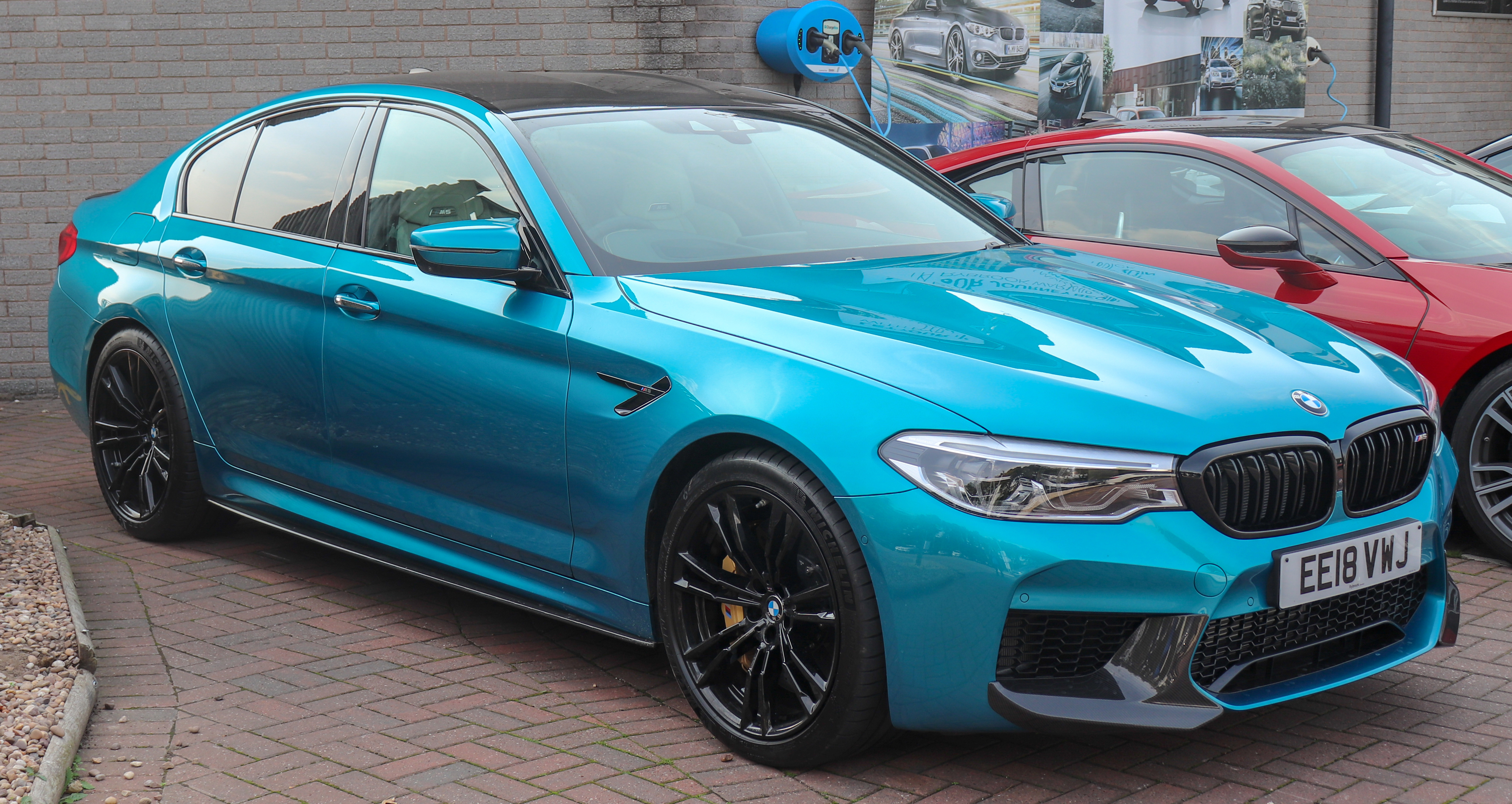
BMW
"Oh, Kevin. I'm told I should appoint you to run, [4021.5s] BMW, GB. I said, well, I'm very pleased to hear that. Thank you very much."
BMW is a major car company from Germany. In this segment, it’s mentioned because BMW was involved in developing the engine used in the McLaren F1 prototype story.
BMW is the German automaker involved here as the organization the speaker is discussing, and it’s also referenced in the context of developing the McLaren F1 BMW engine. That BMW engine development connection is part of why the McLaren F1 story matters to enthusiasts.

Mclaren F1
"And I don't know if you if you were aware, but when [4042.8s] they were declared when they were developing the McLaren F1 BMW engine, and burnt had gone out in [4049.0s] one of the prototype vehicles and taken it out for a run."
The McLaren F1 is a legendary high-performance supercar that used a BMW-developed engine. Here, they’re talking about an early prototype test car that crashed after a run, showing that early braking/handling problems can be dangerous before everything is finalized.
The McLaren F1 is a famous supercar built around a BMW-developed V12 engine and known for its extreme performance and unusual engineering choices. In this story, a prototype McLaren F1 BMW engine development car is described as having a crash after a test run, which highlights how early brake balance and traction issues can show up before a car is fully sorted.
front and rear brake bias
"And he said, well, it was a prototype [4073.4s] car. And there was a balance issue on the front and rear brakes. He said, and I braked and the [4077.9s] back wheels locked and off I went."
Cars have brakes on both the front and rear wheels. If the rear brakes grab too much compared to the front, the rear wheels can lock up and the car can slide or spin.
“Front and rear brakes” refers to how braking force is distributed between the front axle and rear axle. If that balance is wrong, the rear wheels can lock first, which can cause instability and a spin or loss of control.
back wheels locked
"And there was a balance issue on the front and rear brakes. He said, and I braked and the [4077.9s] back wheels locked and off I went."
“Back wheels locked” means the rear tires stop turning while you’re braking. That usually makes the car harder to steer and can cause it to slide or spin.
“Back wheels locked” means the rear tires stopped rotating during braking (a skid). When the rear locks, the car can lose steering ability and rotate, which is why brake balance and tire grip are critical in prototype testing.
Request an Explanation
Heard something you'd like explained? We'll add it to this episode.
Sign in to request explanations for terms you heard.
Want to learn more?
Browse our glossary for plain-English explanations of automotive terms, jargon, and concepts.
Help improve this episode
See something that's not quite right? Our annotations are AI-generated and can sometimes miss the mark. Click the flag icon on any annotation to suggest a correction.