Pivotal Moments
About this episode
The guys kick off with apartment/move banter and a running gag about Tim’s “Beverly Hills” setup, then pivot to space: Artemis’ successful launch, the excitement it’s bringing back to mainstream coverage, and what a moon base could realistically enable for Mars. They debate the launch broadcast camera choices and the bigger “what’s next after the moon?” challenge. Racing returns with talk of Max Verstappen’s “if I’m not having fun I’ll leave” stance, plus career “pivotal moments” from Rossi and Durham—culminating in how Rossi transitioned into broadcasting and how the podcast itself came together.
Artemis is in space, and the guys are excited about what this means for humanity's future. Hinch and Rossi try to get Thim in trouble with his new landlord. The guys talk about what may be behind Verstappen's comments on current racing in F1. Then, the guys reflect on the pivotal moments in their own careers, and why they're often not what people think they'll be.
+++
Off Track is part of the SiriusXM Sports Podcast Network. If you enjoyed this episode and want to hear more, please give a 5-star rating and leave a review. Subscribe today wherever you stream your podcasts.
Want some Off Track swag? Check out our store!
Check out our website, www.askofftrack.com
Subscribe to our YouTube Channel.
Want some advice? Send your questions in for Ask Alex to [email protected]
Follow us on Twitter at @askofftrack. Or individually at @Hinchtown, @AlexanderRossi, and @TheTimDurham.
Hosted by Simplecast, an AdsWizz company. See pcm.adswizz.com for information about our collection and use of personal data for advertising.
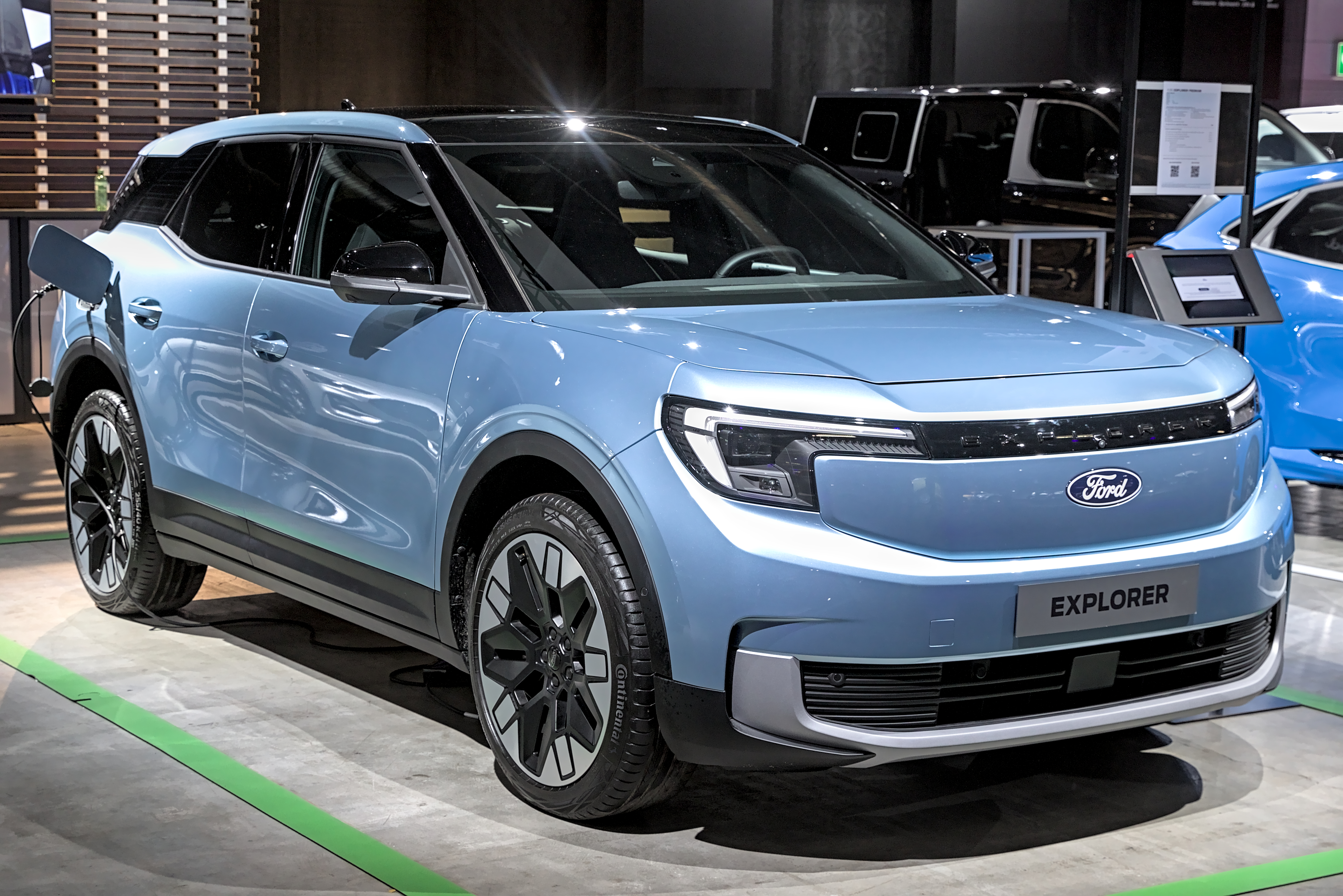
Ford Explorer
"... of us going to Mars is awesome. Like humans are explorers by nature, right? And the accomplishment of gett..."
The Ford Explorer is a family-sized SUV. It’s made to carry people and luggage comfortably, so it works well for trips and everyday driving. It’s the kind of vehicle people use when they want to go somewhere farther than usual.
The Ford Explorer is a mid-size SUV built for everyday driving with room for passengers and cargo. It’s often discussed because it’s a common, practical choice for families and road trips, and it represents how mainstream SUVs balance comfort, space, and capability. In a podcast context about exploration and big accomplishments, it can come up as a relatable vehicle for getting out and going places.
camera cuts
"[518.8s] When you watch the launch, did you notice some of the questionable like cuts from the director? [527.8s] Well, yes, some cameras broke. [530.3s] Sure. [531.5s] But there there should have always been like the default to like, hey,"
Camera cuts are the rapid transitions between different camera angles during a broadcast. Good camera-cut strategy is crucial in motorsport coverage so viewers can track the car’s launch, trajectory, and any issues without getting stuck on a failing or unhelpful angle.
outboard shot
"[531.5s] But there there should have always been like the default to like, hey, [535.4s] if any of the up close stuff stops working, let's just go to the outboard shot. [539.4s] Like one guy just looking at the thing launching from a safe distance"
An outboard shot is a camera view positioned to the side of the action, typically from a safer distance. In vehicle launches or track coverage, it’s often used as a fallback when close-up cameras fail, because it can still show the car’s movement and key visuals.
smoke for a long time
"[543.1s] because there were a lot of very question. [545.5s] We started a lot of smoke for a long time. [549.5s] And then yes, there was some darkness from from cameras that weren't working, [552.5s] but we stayed on that for a long time."
“Smoke for a long time” suggests prolonged tire spin or traction loss during a launch, which can be caused by wheel slip, insufficient grip, or aggressive throttle application. In a broadcast context, extended smoke can also obscure the car and make camera switching and visibility especially important.
live television direction
"[549.5s] And then yes, there was some darkness from from cameras that weren't working, [552.5s] but we stayed on that for a long time. [554.6s] Now, again, knowing what I know about TV direction. [557.6s] Live television is incredibly difficult to direct, but I was, you know,"
Live television direction is the real-time process of choosing camera angles, timing transitions, and keeping coverage coherent while events unfold unpredictably. Motorsport-style moments are especially challenging because the action changes quickly and technical issues (like camera failures) can force instant reroutes.
CGI renderings
"[563.4s] for one of the most significant moments, one of the like most watched things of late. [569.5s] I felt like just filled it in with some CGI renderings, you know, that was cool. [577.7s] Yeah, that I was watching like, why are we still looking at this?"
CGI is computer-made video. If the real camera shots aren’t working, producers may use CGI to show what’s happening so viewers aren’t left with nothing.
CGI renderings are computer-generated visuals used to show scenes or details that are difficult to capture live. In motorsport/launch coverage, they’re often used to keep the broadcast moving when camera feeds fail or to add context like car/track visuals.
F1 land
"Obviously with what's happening in F1 land, there's been a lot of talk from Verstappen about his displeasure and being like, if I'm not having fun, I'm just going to leave."
“F1 land” just means Formula 1 racing. They’re talking about what’s going on in that world, especially what a driver like Verstappen is saying.
“F1 land” refers to Formula 1, the top tier of open-wheel motorsport. When the conversation mentions Verstappen’s displeasure, it’s about how driver motivation and team/series dynamics can affect participation and public statements.
Verstappen
"from Verstappen about his displeasure and being like, if I'm not having fun, I'm just going to leave."
Verstappen is a famous Formula 1 race driver. When he talks about being unhappy, it matters because he’s one of the biggest stars in the sport.
Max Verstappen is a top Formula 1 driver (Red Bull Racing) and one of the sport’s most prominent voices. His comments about leaving if he’s not enjoying it highlight how driver sentiment can become a major storyline in F1.
contract to 2028
"So he's got a contract to 2028, 2026 isn't going stellar. And it's not just about the team."
Saying the contract runs to 2028 means the driver is committed for a long time. That can change how much freedom they have to move teams or renegotiate.
A contract “to 2028” indicates the driver is tied to a team or series for multiple seasons. Long-term deals can affect leverage—if a driver is locked in, they may still negotiate terms, but their options and timing are constrained.
GT3
"The fact that he's doing, I completely agree. The fact that he's exploring all the GT3 stuff as much as he is, I think solidifies that he seems to be enjoying that."
GT3 is a popular racing class using cars that are based on real production models. The rules are designed so different brands and models can race against each other.
GT3 refers to the FIA GT3 racing category, where production-based cars compete under standardized rules. Drivers often move between series and use GT3 as a platform for endurance-style racing and manufacturer-backed programs.
BOP
"I do find it a little bit ironic that he's really kind of gravitated towards a form of motor sports that literally has BOP like it. Adjusts each car to make it more even."
BOP means the race organizers tweak cars so they’re closer in speed. The idea is to reduce the advantage of the fastest car and make racing more about driver skill.
BOP stands for Balance of Performance. It’s a rule system used in GT racing to adjust things like weight, engine output, and sometimes aerodynamics so different cars can compete more evenly.
high downforce
"extract the [1201.4s] most out of a high downforce high powered single-seater car. [1206.2s] This probably forces him to get creative and adjust his driving style"
High downforce means the car generates significant aerodynamic force pushing it toward the track. In high-downforce cars, grip in corners is heavily influenced by aerodynamics, so changes in airflow or ride height can dramatically affect performance.
single-seater car
"most out of a high downforce high powered single-seater car. [1206.2s] This probably forces him to get creative and adjust his driving style [1210.0s] and find new things on the sim."
A single-seater car is built for just one driver. That lets the car be designed and tuned around how that driver will steer, brake, and accelerate at race pace.
A single-seater car is a race car built for one driver, typical of open-wheel series like F1. Because there’s no passenger, the chassis and aerodynamics are optimized for the driver’s inputs and the car’s balance at racing speeds.
sim
"adjust his driving style [1210.0s] and find new things on the sim. [1213.6s] and find new things on the sim."
“Sim” is racing video-game-style training that uses realistic physics. Drivers use it to practice and learn how a car behaves before or while adapting to changes.
“Sim” refers to racing simulation software and hardware used for practice and setup work. Drivers use sims to learn car behavior, refine braking/turn-in points, and test driving styles when regulations or cars change.
IndyCar
"He's already said he's not interested in doing IndyCar. ... It is such a bummer though that he doesn't want to give IndyCar a try"
IndyCar is a major open-wheel racing series in the U.S. Drivers race single-seat cars on tracks like ovals and road courses, and it’s a big deal for American racing fans.
IndyCar is the top open-wheel racing series in the United States, run primarily on ovals, road courses, and street circuits. It uses purpose-built single-seater race cars with a strong emphasis on racecraft and strategy, and it’s a common alternative path for drivers coming from other open-wheel or sports-car backgrounds.
Formula One car
"It's not as quick as a Formula One car, whatever."
Formula One is the top-level open-wheel racing series in the world. It’s known for cutting-edge technology and very fast cars, and the speaker is saying GT3 can still be exciting even if it’s not as quick as F1.
Formula One (F1) is the premier open-wheel racing series globally, known for advanced aerodynamics, hybrid power units, and strict technical regulations. The transcript contrasts F1’s overall pace with what the driver enjoys in GT3 racing, highlighting differences in racing style and performance focus.
driver's championship
"It is a driver's championship, more than a constructor's championship."
A driver’s championship means the points are mainly about how well each individual driver performs. It can make drivers race with their own season goals in mind, not just the team’s progress.
A driver’s championship awards points to individual drivers based on race results, rather than focusing primarily on the team’s car development. This can change how drivers approach risk and strategy, because their personal standings are directly at stake.
constructor's championship
"It is a driver's championship, more than a constructor's championship."
A constructor’s championship is about the team or manufacturer’s performance over the season. It’s more about the cars and the team’s results than one specific driver.
A constructor’s championship awards points to the team/manufacturer based on the performance of its cars. In series that run both championships, this can create different incentives: teams may prioritize car development and reliability, while drivers may prioritize maximizing personal points.
flat out
"And it's like good old fashioned, flat out, you know, go for it racing,"
“Flat out” means going as hard as possible, usually with the throttle fully open. The speaker is describing racing that feels like maximum effort.
“Flat out” describes driving at maximum or near-maximum throttle, typically used to emphasize full commitment and minimal restraint. In racing discussions, it often signals a style where drivers are pushing hard for speed rather than managing pace conservatively.
full season
"I would just love to see what he could do in a full season in IndyCar."
A “full season” is the complete schedule of races in a series, which is a better measure of performance than a one-off event. It accounts for setup development, reliability, and consistency over many weekends.
Williams
"The Williams thing didn't work out. I'm just gonna go do something different now."
Williams is a historic Formula 1 team, known for developing talent and competing at the front in earlier eras. The transcript references a “Williams thing” not working out, implying a driver/team situation affecting career moves.
Ferrari
"I'm gonna go try this for a couple of years till a Ferrari seat opens back up and I'll come back to Ferrari."
Ferrari is a famous F1 team. When someone says they’ll come back to Ferrari, it usually means they want to race for that team again when an opportunity opens.
Ferrari is one of the most iconic Formula 1 teams, with a long history and a large global fanbase. In driver terms, “coming back to Ferrari” usually means returning to a top-tier seat when one becomes available.
F1
"I wasn't an F1 guy though. You were. You kind of were. By the fact that you started F1 races and you were in F1."
F1 stands for Formula 1. It’s the highest level of open-wheel racing, where drivers race in teams using very advanced race cars.
F1 is Formula 1, the top level of open-wheel racing run by the FIA. Being an F1 driver typically means competing in a global series with highly technical cars and strict team structures.
BMW Sauber
"...then the World Finals, which got me the relationship with BMW Sauber and all of that sort of thing. Then the trickle on effect from that..."
BMW Sauber refers to the BMW-backed Sauber Formula 1 team. Partnerships like this matter in a driver’s career because they can provide a direct path from junior categories into top-tier single-seater racing.
global financial crisis
"and the global financial crisis and all the money dried up and all this stuff. And I had to switch from after a couple of years..."
They’re pointing to the global financial crisis as the reason money for racing dried up. When the economy gets bad, sponsors pull back and it’s harder to fund teams.
The global financial crisis (GFC) is referenced as the reason sponsorship and funding “dried up.” In motorsport, that typically means fewer sponsors, reduced budgets, and more difficulty for drivers and teams to secure seats and testing opportunities.
oval racing
"I had to switch over to Andy lights. I had to learn oval racing, all this stuff. And 09 was a pretty meh year for me in lights, but then in 10, you know, moved to a smaller team..."
Oval racing is when you race on oval tracks, usually with lots of left turns. It’s a different challenge than road courses because you have to keep the car fast for long stretches.
Oval racing is racing on banked, mostly left-turn circuits where maintaining speed through long-radius corners and managing tire wear and fuel strategy are critical. The speaker’s point is that oval racing requires a different skill set than road courses, so it took time to “figure it out.”
Newman Haas
"And it was the performance in 2010 that got Newman Haas to take notice and offer me a test. And that test went well, which led to me getting the ride."
Newman/Haas is a major racing team. Getting noticed by them and being offered a test is a big deal because it can lead to a real opportunity to race.
Newman/Haas is a well-known IndyCar team organization that has historically competed at the top level and also runs or supports feeder programs. Here, the speaker says their improved performance in 2010 led Newman/Haas to offer a test—an important career milestone.
indie lights
"But like there was no more money. Like, it's, you know, how hard it is to find money for indie lights, right? It's not a, it's a hard thing to sell back then."
They’re talking about Indy Lights, but specifically the smaller, independent teams. Those teams often struggle to get enough money to compete at the same level as the biggest outfits.
“Indie Lights” here is shorthand for Indy Lights as a series, but the speaker is emphasizing the “indie” (independent) team side of the ladder—finding sponsorship and funding is harder for smaller teams than for well-funded championship contenders. The discussion is about motorsport economics as much as driving skill.
Fox Sports one (FS1/FS2)
"We weren't on Fox Sports one or, you know, FS one or FS two. We didn't have it even now with that. It's still almost impossible to sell."
They’re talking about TV coverage. If a series or team isn’t on major channels like FS1/FS2, it can be harder to convince sponsors to pay for the team.
The speaker mentions Fox Sports One (FS1) and FS2 as broadcast platforms, implying that TV exposure affects how easy it is to sell sponsorship and attract funding. In racing, media reach can directly influence whether teams can afford to stay competitive.
weekend of Nashville in 2021
"And so yeah, man, it was, um, it was the weekend of Nashville in 2021. And I was kind of having these thoughts that it was maybe time for me to step back..."
A “race weekend” is the full event period around a specific track stop, typically including practice sessions, qualifying, and the race itself. Mentioning Nashville in 2021 anchors the timing of the discussion to a specific motorsport event.
after the podium
"And I was kind of having these thoughts that it was maybe time for me to step back and before after the podium before it would have been on the third. And then after the podium, you're like, you're mine."
The podium is for the top three finishers. “After the podium” means right after they did really well in the race.
“Podium” refers to finishing in the top three positions in a race. The phrase “after the podium” suggests the driver’s decision-making or career thoughts occurring immediately following a strong result.
podiums
"...I can still compete at a level where I can fight for podiums and whatever."
A podium finish means you place in the top three—usually first, second, or third. It’s a big deal because it shows you were one of the fastest cars that day.
A “podium” is finishing in the top three positions in a race. In motorsport, it’s a key benchmark because it usually comes with points, prize money, and strong team momentum.
Request an Explanation
Heard something you'd like explained? We'll add it to this episode.
Sign in to request explanations for terms you heard.
Want to learn more?
Browse our glossary for plain-English explanations of automotive terms, jargon, and concepts.
Help improve this episode
See something that's not quite right? Our annotations are AI-generated and can sometimes miss the mark. Click the flag icon on any annotation to suggest a correction.